The Battle of Korsun

· 7 min read
The Battle of Korsun is not just one of the resounding victories of Bohdan Khmelnytskyi’s army. It is an exemplary military operation carried out at the highest level. It is a masterpiece of military strategy and tactics that points to the enormous generalship talent of Hetman Bohdan. Even with this victory alone to his name, Khmelnytskyi would have entered world history as a great commander.
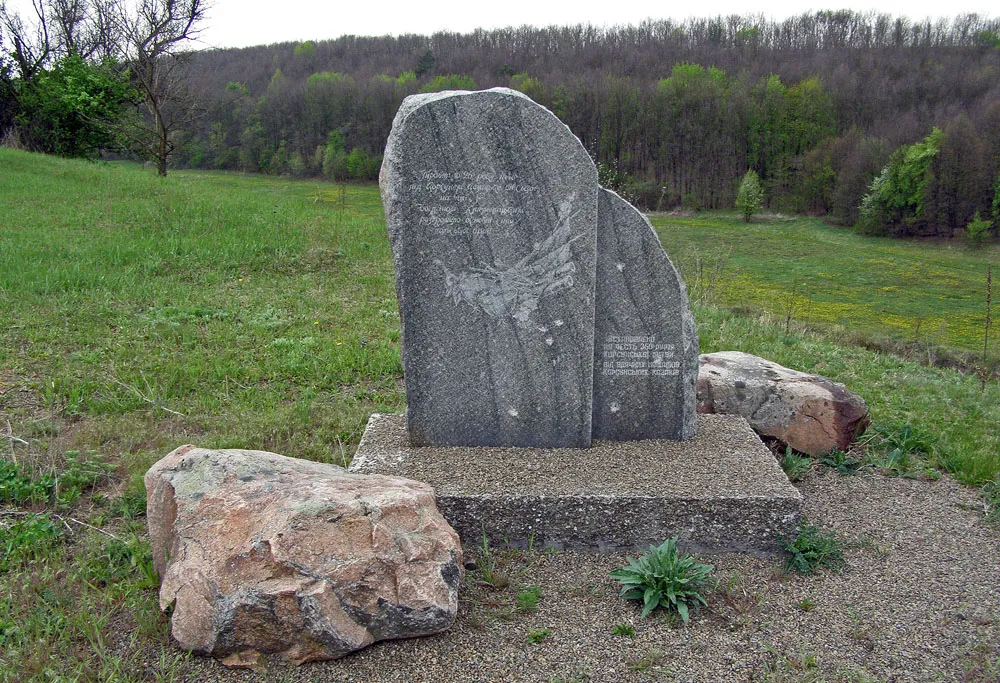
Memorial sign at the site of the battle (2008)
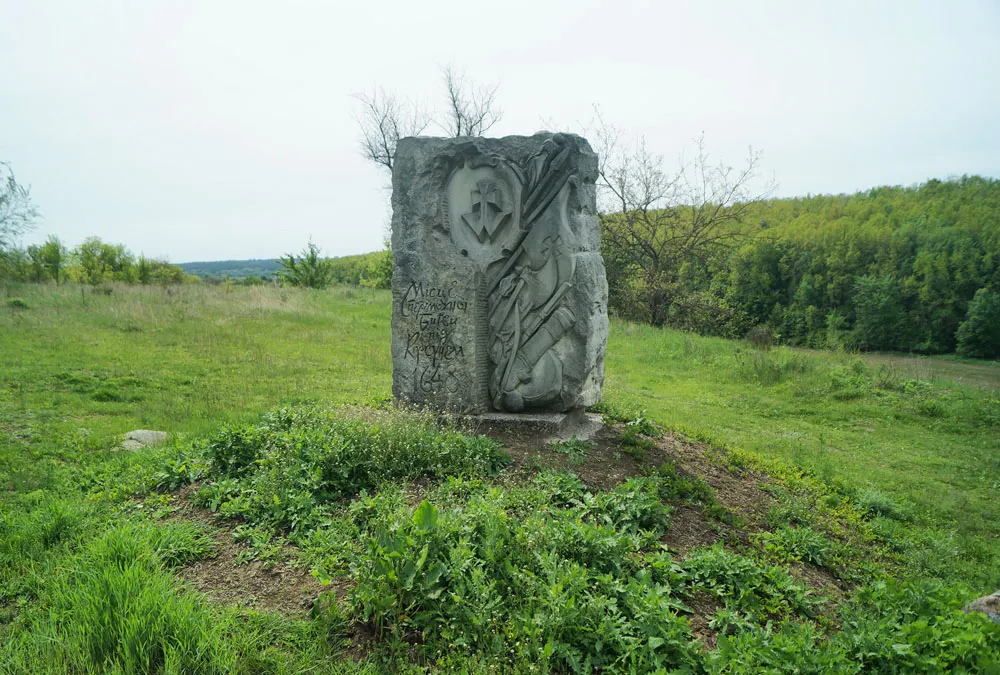
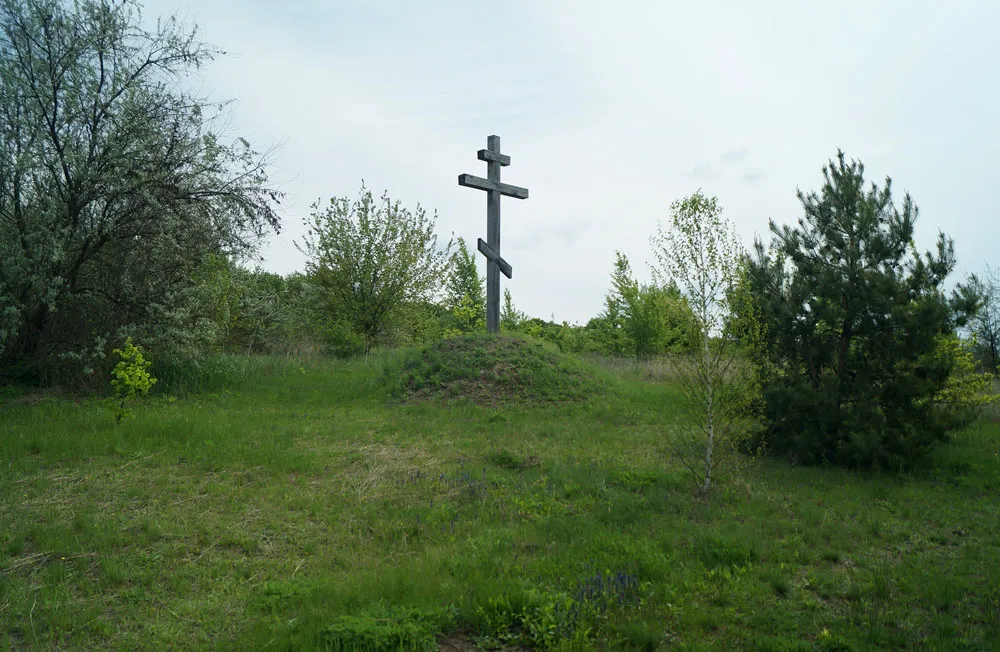
Memorial sign and cross at the site of the battle (2021)
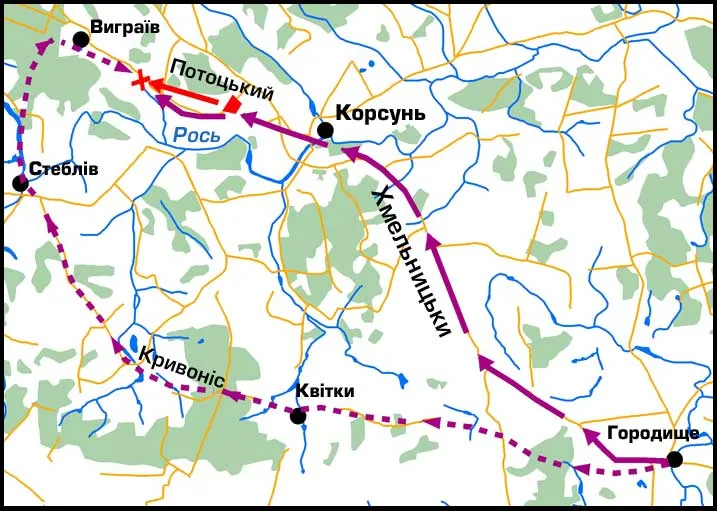
The Polish Crown army, led by Crown Hetman Mikołaj Potocki and Field Hetman Marcin Kalinowski, was hurrying to Zhovti Vody (Yellow Waters) to help Stefan Potocki, the Crown Hetman’s son. But not far from Chyhyryn they met a bloodied soldier – one of the few who had escaped at Zhovti Vody. The news the soldier brought stunned the hetmans: Stefan Potocki’s army had been utterly defeated, the commander himself was badly wounded, Khmelnytskyi’s forces were enormous, and the Tatars were allied with Khmelnytskyi. After such news the Polish hetmans had reason to think not about destroying the Cossack army but about saving their own. They turned back and went through Horodyshche in the direction of Korsun.
After a well-deserved three-day rest, the Cossack and Tatar army hurried towards Korsun. Khmelnytskyi hoped to stun the Poles with his swift advance. On the way, ever new detachments joined the Cossack army. On 24 May (New Style) 1648, Khmelnytskyi’s army was already standing at Horodyshche.
The Polish hetmans saw only one salvation – to reach Bila Tserkva Castle and fortify themselves in it. The road to Bila Tserkva ran through Korsun and Bohuslav. This was the Chumak (Beaten) Road, which stretched along the hills and slopes of the Ros valley. Near Korsun the Crown army crossed the Ros and halted. The reason for the halt was probably the news that Prince Jeremi Wiśniowiecki was hurrying to their aid with 6,000 warriors. The exact size of the Crown army that took part in the Battle of Korsun is unknown: Cossack chroniclers speak of 20–26 thousand, Polish sources give a figure of 5,000. It was a well-armed regular army, but it was heavily burdened by the gentry’s baggage train, which moved very slowly and hampered manoeuvres. On a high hill, not far from the Ros, the Poles set up a camp, which they dug in with entrenchments and ringed with wagons.
Khmelnytskyi’s army, numbering about 15,000 Cossacks and 4,000 Tatars, moved along a roundabout route running between Korsun and Stebliv, and approached Korsun from the west. On 25 May the hetman equipped a large detachment, which included the Vilshany and Korsun regiments, and sent it through Kvitky and Stebliv to bypass the Polish camp. This detachment numbered up to 6,000 Cossacks and was considerably reinforced with artillery. It was commanded by the Vilshany colonel Maksym Kryvonis. The main goal of the flanking manoeuvre was to set up an ambush on the Polish army’s probable route.
Pessimistic moods reigned in the Polish camp. The two hetmans, Crown and Field, could not agree on a plan of further action. Potocki wanted to continue the retreat, while Kalinowski wanted to engage the Cossacks in battle. The army grumbled. It had not received proper pay for a long time. So when a large army was spotted on the neighbouring hills not far from Korsun, something close to panic began in the Polish camp. The Poles had not expected at all that the insurgents would catch up with them so quickly. Almost immediately the first raids by Tatar and Cossack cavalry began. The Poles fired back from the trenches. But such resistance was of little effect. It was finally beginning to dawn on the Polish commanders that they had chosen a poor place for defence.
Khmelnytskyi decided to carry out one more manoeuvre, which many historians consider legendary. It is not known for certain whether it really took place. But the chronicles say that it did. It consisted in sending several volunteers to the Polish camp, posing as chance fugitives (or deserters), whose task was to misinform the Polish commanders. One of these volunteer suicides was Samiilo Zarudnyi (in one chronicle another Cossack appears – Mykyta Halahan).
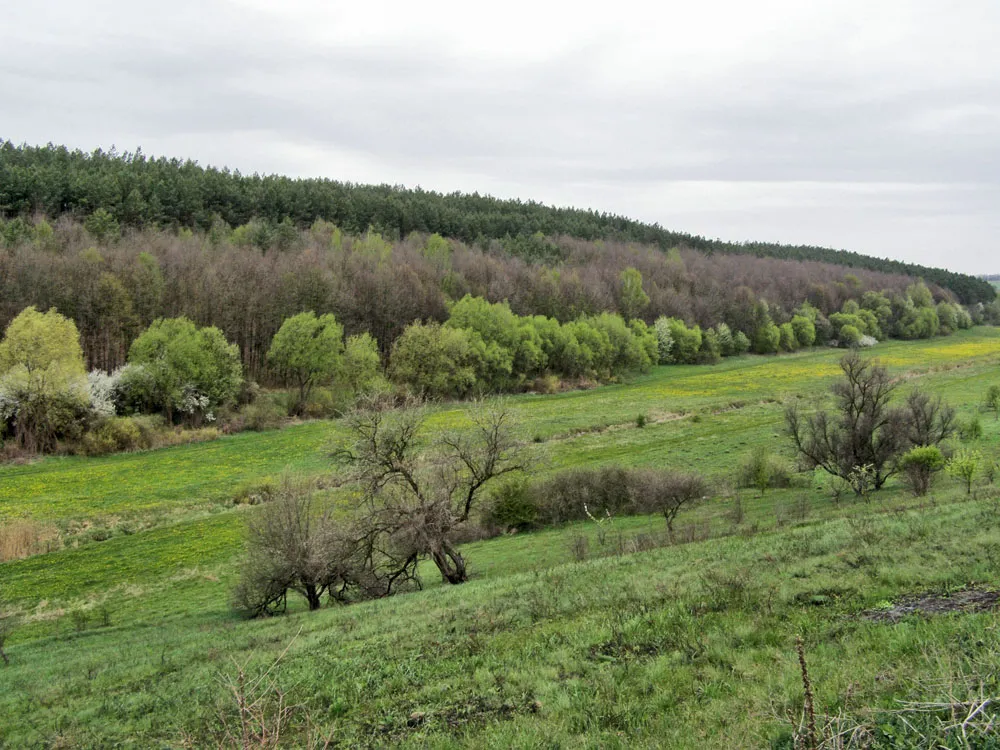
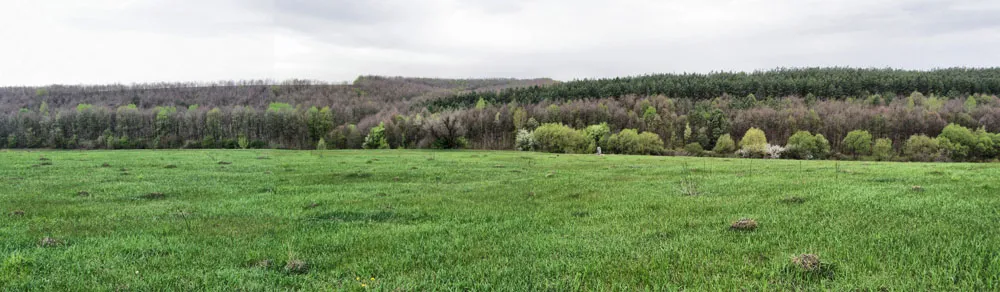
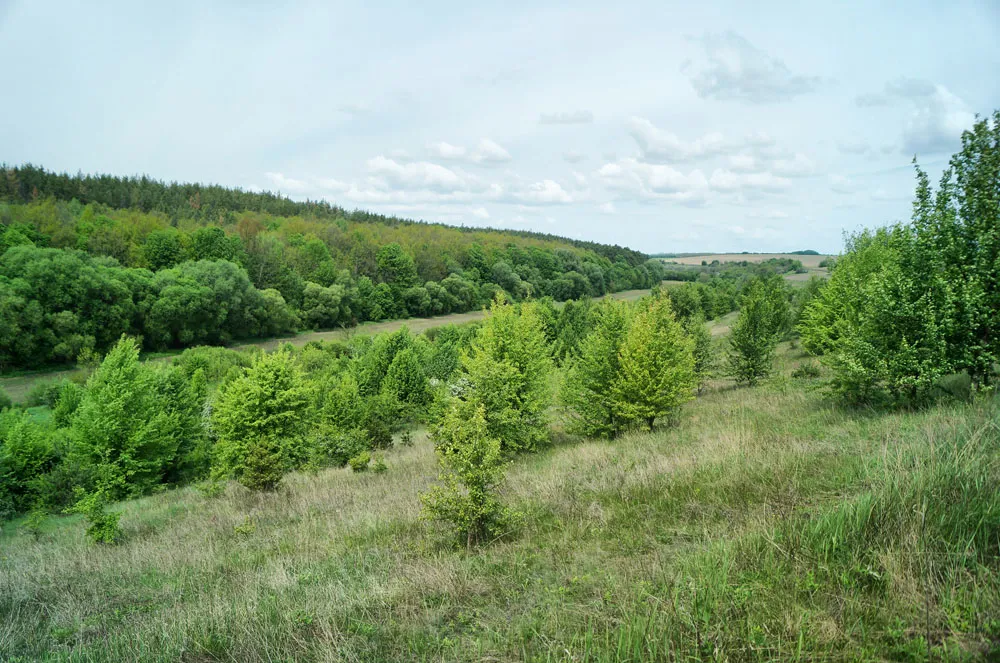
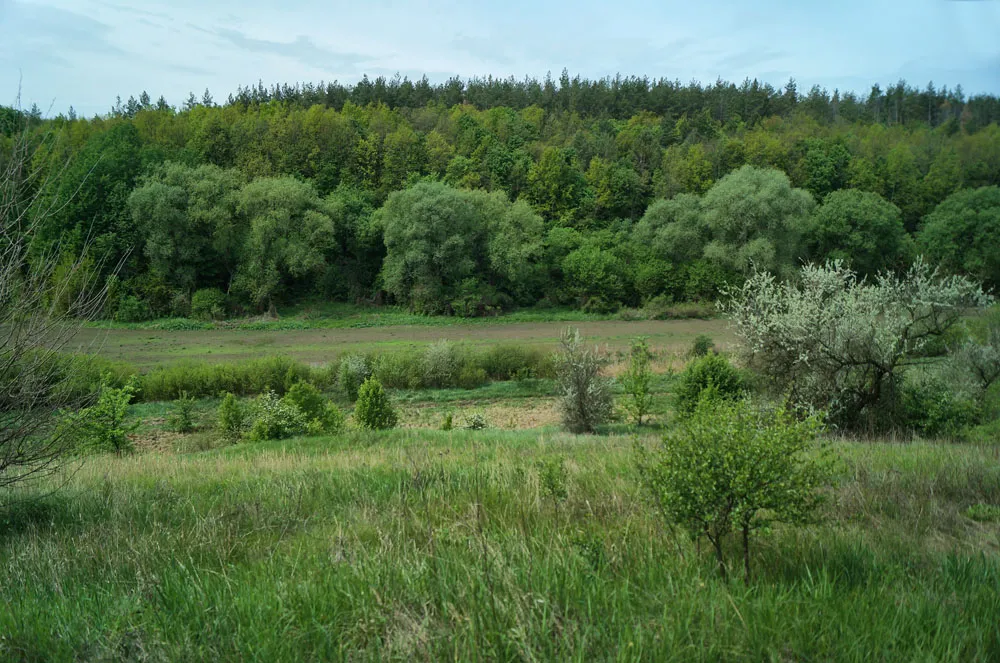
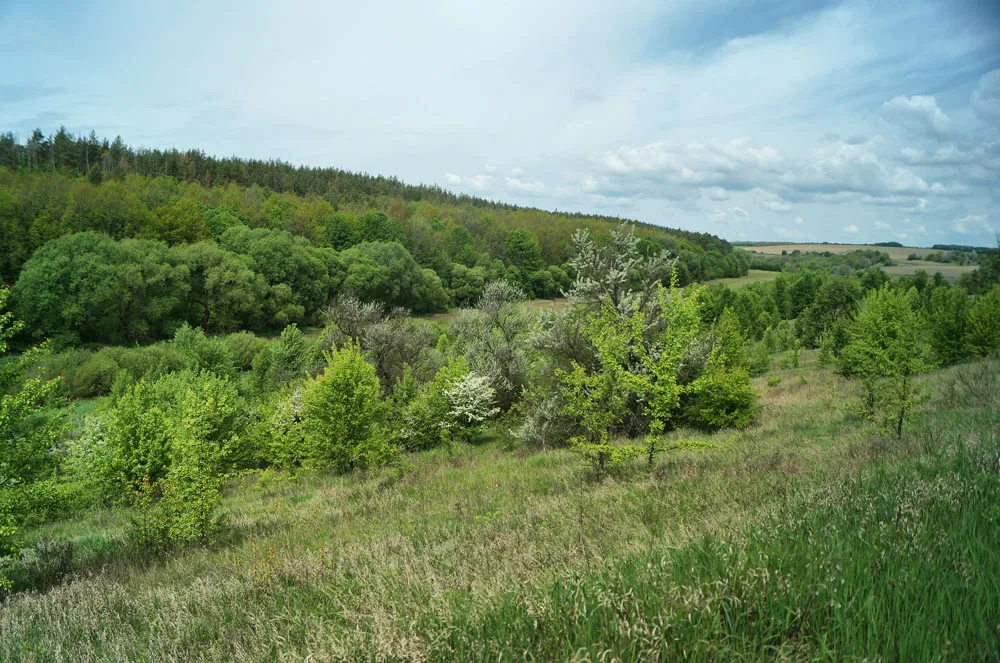
Rizanyi Yar (the Slaughter Ravine)
The Poles captured several “tongues” – fugitives from the Cossack camp. One of these fugitives was Samiilo Zarudnyi. At first the Poles did not believe his account of the numbers and further intentions of the Cossack-Tatar army. The fugitive was tortured, after which he said that Khmelnytskyi’s army was very large and, moreover, that the Tatar khan had come to Khmelnytskyi’s aid with his whole horde. In addition, the “traitor” said that he was a local resident and could lead the Polish army by a safe road. The hetmans believed the “traitor” – they thought that after such torture it was impossible to lie.
Kryvonis’s detachment crossed the Ros by the bridges at Stebliv and approached the Horokhiv Dibrova farmstead. Next to the farmstead lay a deep, wide ravine overgrown with forest and thickets, with steep slopes. The bottom of the ravine was swampy, and the slope on the Korsun side had been eroded by spring rains. The Bohuslav Road ran through this ravine, and it was here that Kryvonis decided to set the ambush. The Cossacks cut large logs and built a kind of barricades from them. They dug pits and ditches across the road and placed cannons in the thickets on the slope. So by the morning of 26 May the ambush was ready. Only one thing is surprising – how the Cossacks (mostly infantry) could move with such speed. Perhaps the ambush began to be prepared in advance with the help of the residents of Stebliv.
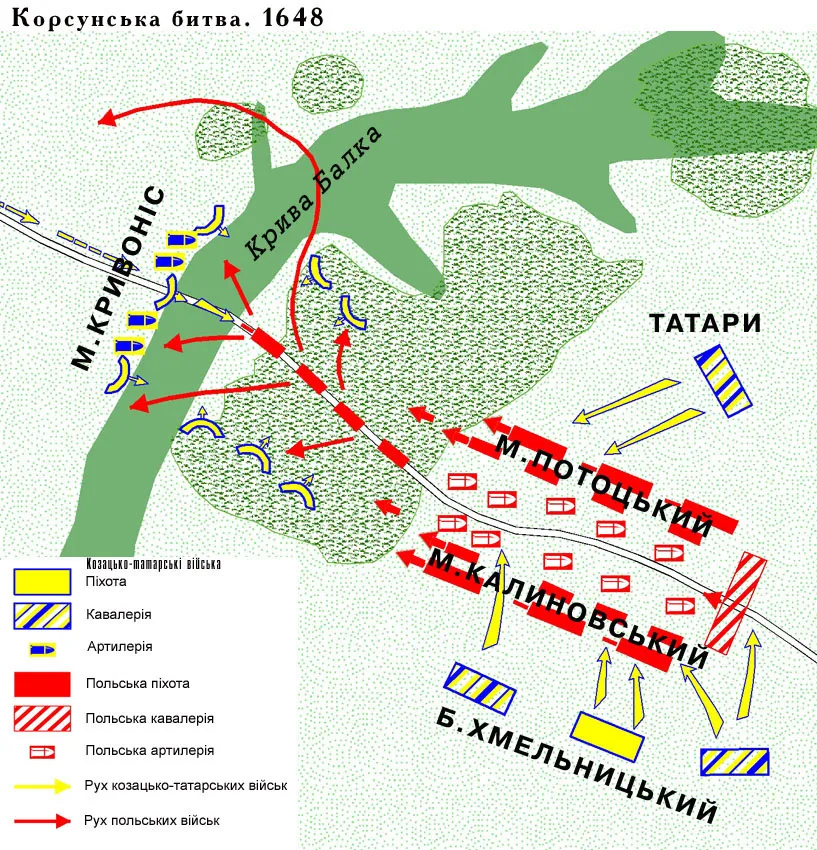
Horrified by the enormous army of the insurgents and aware of their own unfavourable position, the Poles began to retreat. To improve the army’s manoeuvrability among the ravines of the Ros valley, the hetmans ordered some mounted banners to dismount. The retreat was at first fairly orderly, but Cossack and, especially, Tatar horsemen pressed upon the Polish columns and created turmoil and confusion. Not far from the Horokhiv Dibrova farmstead the Poles began to descend into a ravine, which later came to be called Rizanyi Yar. The slope was very steep and slippery. For soldiers encased in iron, descending was very difficult. Heavy baggage wagons, which the horses could not hold on the steep slope, began to roll. And then Kryvonis’s cannons fired from the opposite slope. Real panic began in the Polish army. Some of the soldiers and servants started to flee. But there was nowhere to flee, because Khmelnytskyi’s main forces were already pressing in from the flanks and rear. The Tatar cavalry showered the Polish soldiers with a cloud of arrows.
Part of Khmelnytskyi’s army pursued the Poles, while the main detachments tried to outflank the Polish army. Khmelnytskyi’s columns moved on the left flank, the Tatars on the right. At Rizanyi Yar the Poles were already effectively surrounded, but Khmelnytskyi waited. Only when the soldiers reached the swampy bottom of the ravine did the Cossacks begin the main attack. *** The forward detachments of the Polish army fell into the swamp and began to bog down. Moreover, they could not climb the dug-up, obstructed slope from which cannons fired relentlessly. The rear detachments found themselves completely pinned: ahead, their own comrades who had “stalled” in the swamp blocked the way, while behind, wagons rolled onto them and the insurgents pressed in. The Poles’ numerous artillery proved effectively useless in the battle because of the huge crush. The Polish army was caught in a trap. At that very moment the main forces of the insurgents struck.
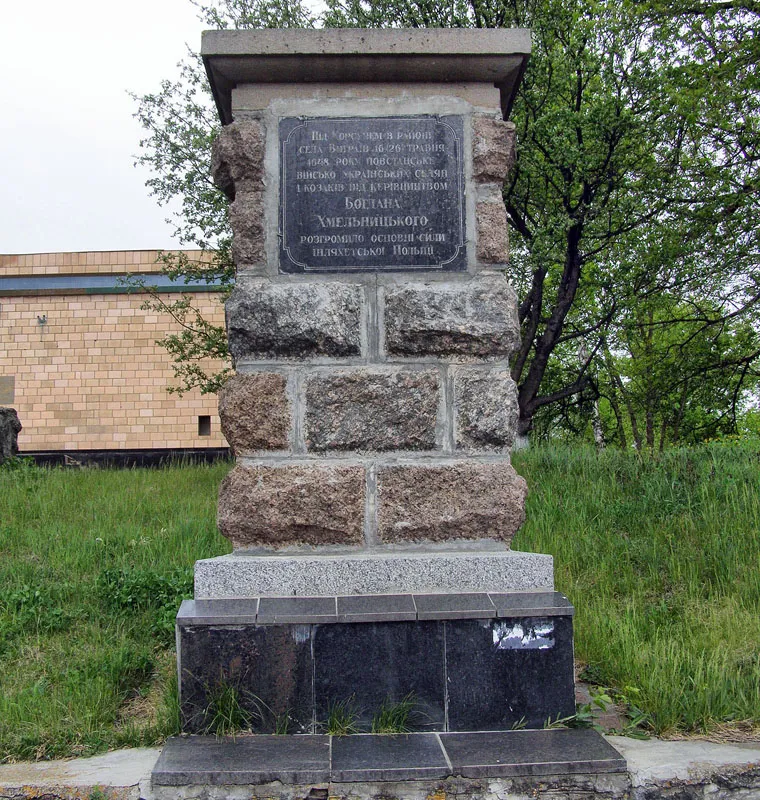
Memorial sign to the battle in the village of Vyhraiv
The battle at Rizanyi Yar (perhaps it is better to say slaughter) lasted about four hours. The Polish Crown army suffered a crushing defeat. Both hetmans were captured and given over to the Tatars as ransom. It was Khmelnytskyi’s triumph. Far from his last triumph.
Text and photos by Roman Malenkov