Horbuliv. The churches and the Sokolovskyi detachment

· 8 min read
The village of Horbuliv is located in the north-east of Cherniakhiv district, on the border with Radomyshl and Korostyshiv districts. Honestly, this village can be counted among the most interesting villages of Zhytomyr region, because there is a whole heap of sites here that could be tourist attractions: a beautiful wooden Cossack church, a 19th-century Roman Catholic church, the remains of a Derevlian hillfort, three granite quarries, a monument to the Cossacks of the Sokolovskyi insurgent detachment, another interesting monument (a Bolshevik one) and the enchanting nature of Polissia.
I will give the history of Horbuliv in the text of Wikipedia:
According to legend, the village was founded in the time of Kyivan Rus. In 1151 Prince Andrei Bogolyubsky built a monastery in the village. The settlement received the name Horbuliv because travellers going by the road from the village of Modeliv or Potiivka to Zhytomyr used to see on the left side a huge mound, which people called Divych-hora (Maiden Hill). Then came a settlement that the first settlers called Horbuliv (that is, a mound to the left).
In the 12th century, during the invasion of the Tatar-Mongol khan Batu, the village was completely destroyed. In written sources the village is mentioned in 1584.
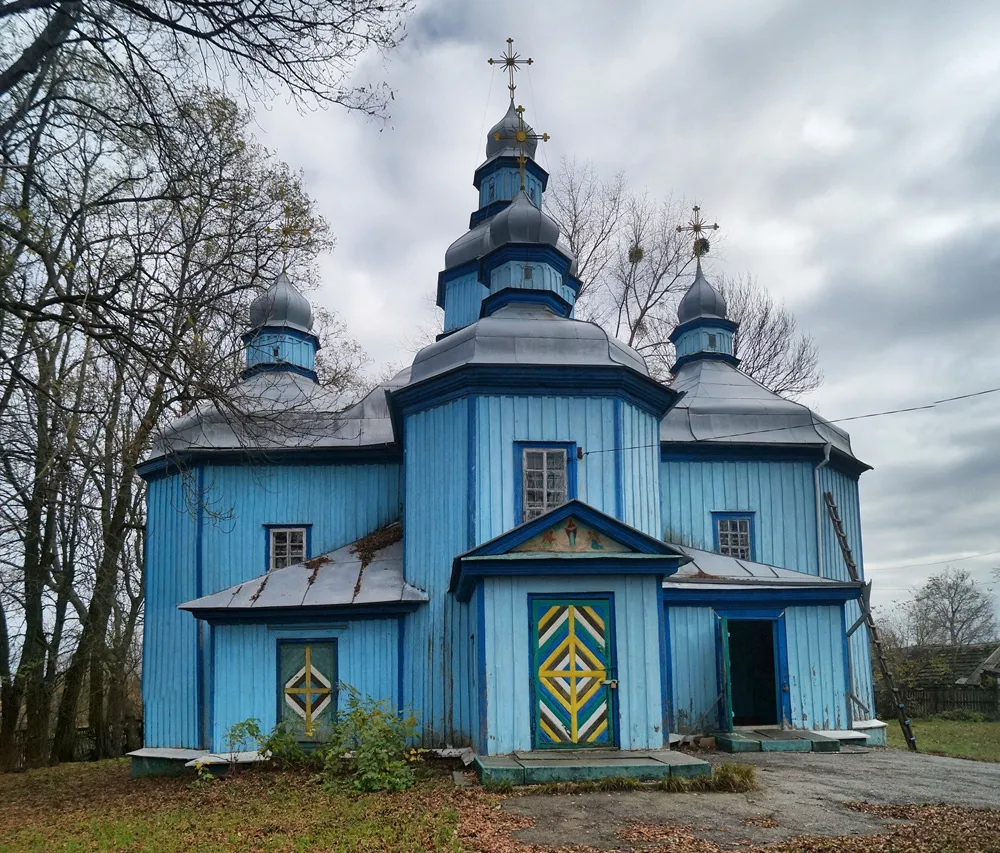
Church of the Intercession.
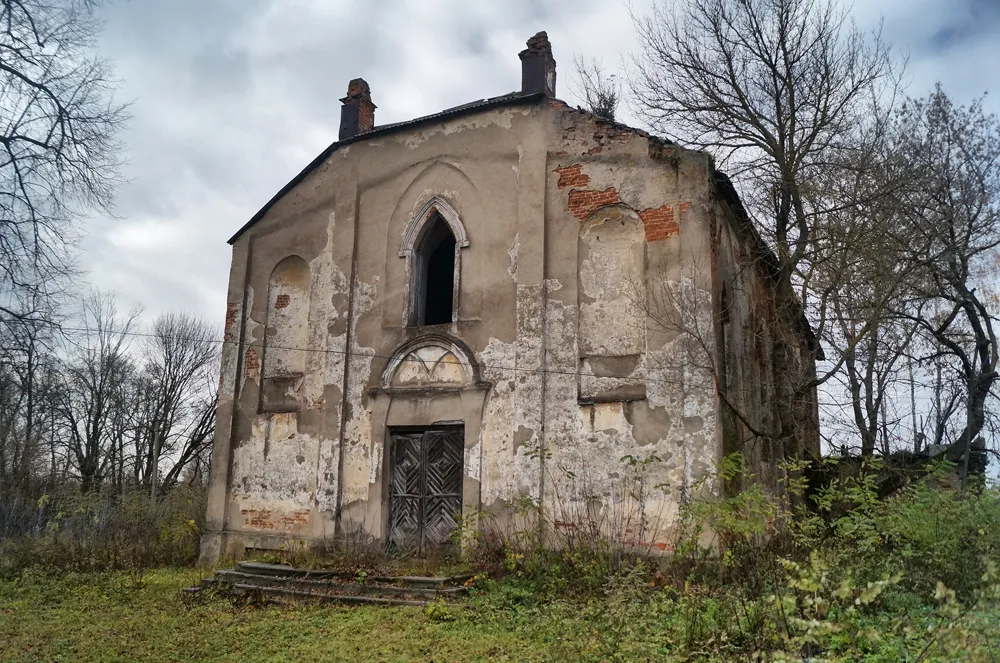
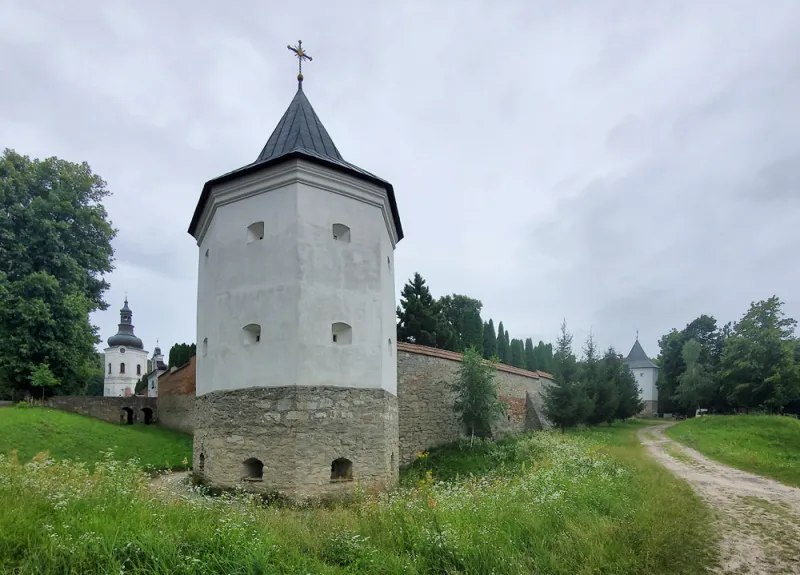
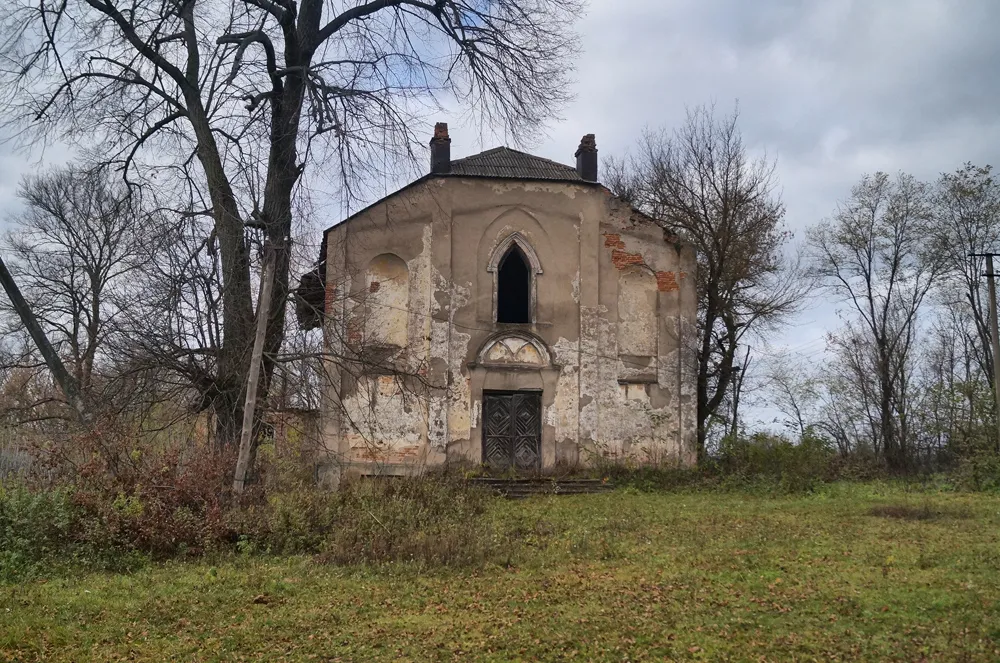
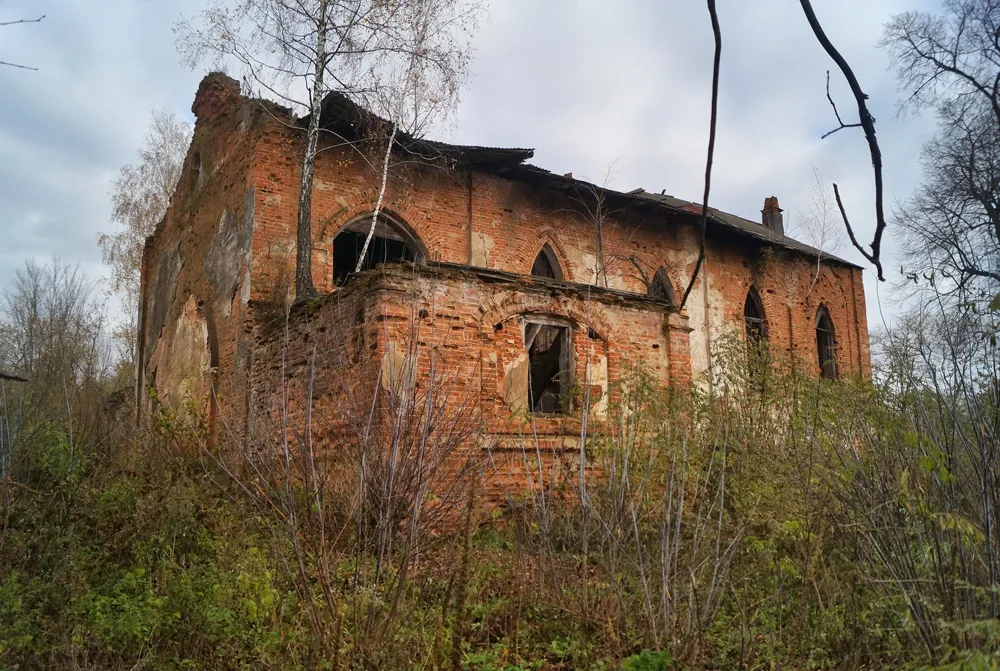
Church of the Immaculate Conception of the Blessed Virgin Mary.
From 1910, through the efforts of an Italian entrepreneur named Liva, the extraction of labradorite stone deposits began in the village. The extraction of stone continues to this day: 3 quarries operate in Horbuliv.
In 1917, immediately after the proclamation of the Ukrainian People’s Republic, the Horbuliv parish school, through the efforts of Tymofii Sokolovskyi (father of Oleksandra and Dmytro Sokolovskyi), became one of the first Ukrainian gymnasiums in Central Polissia, and its director became the wife of his son Dmytro, Nadiia Sokolovska.
Soviet occupation rule was established in the village at the beginning of 1918. During the liberation struggles a detachment fought against the Soviet occupiers in the territory of Horbuliv and the surrounding villages, led by a village resident, Sokolovskyi. The detachment was destroyed, and Dmytro Sokolovskyi was killed in 1919. On 7 November 1924 a monument to the victims of the revolution was erected in the village.
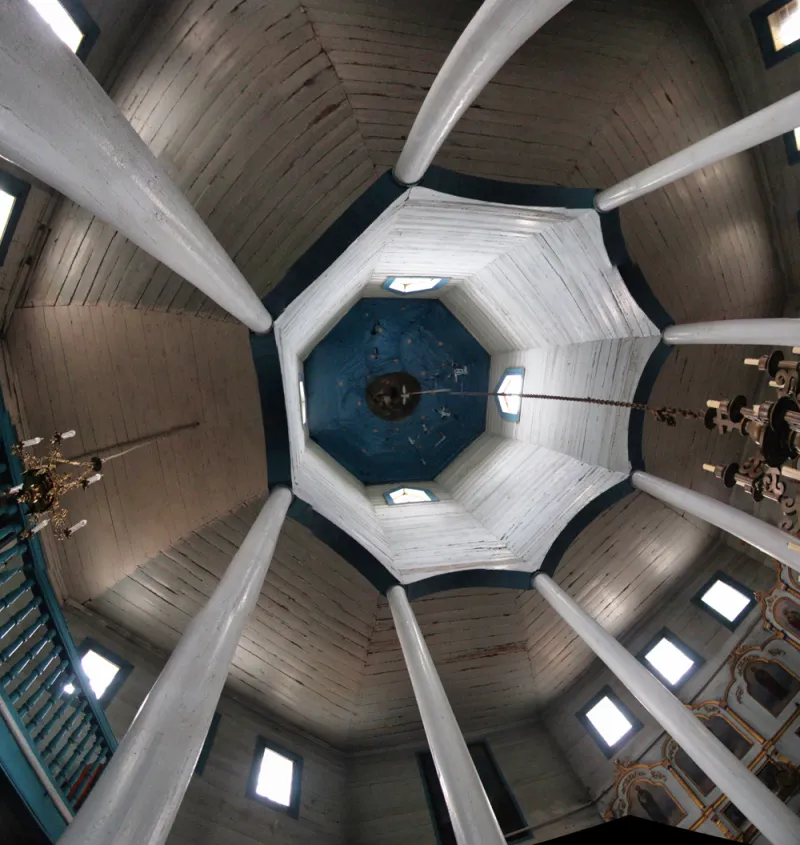
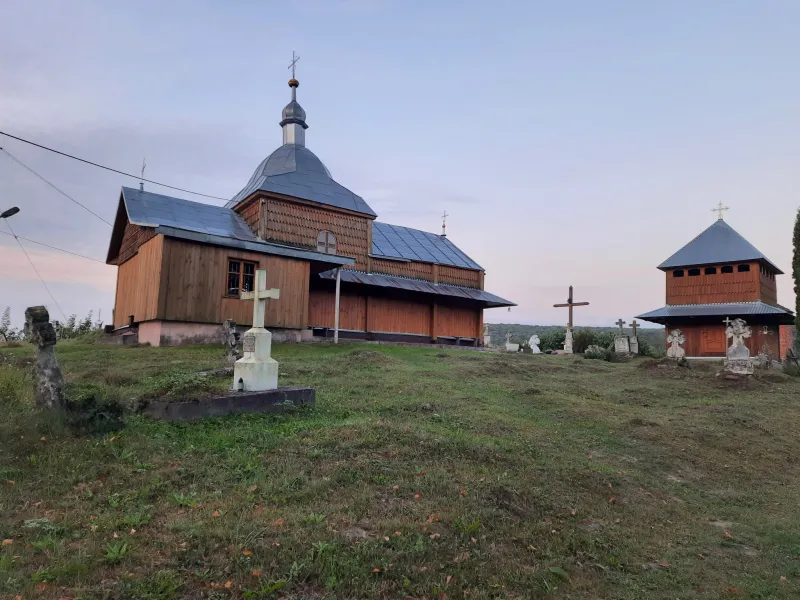
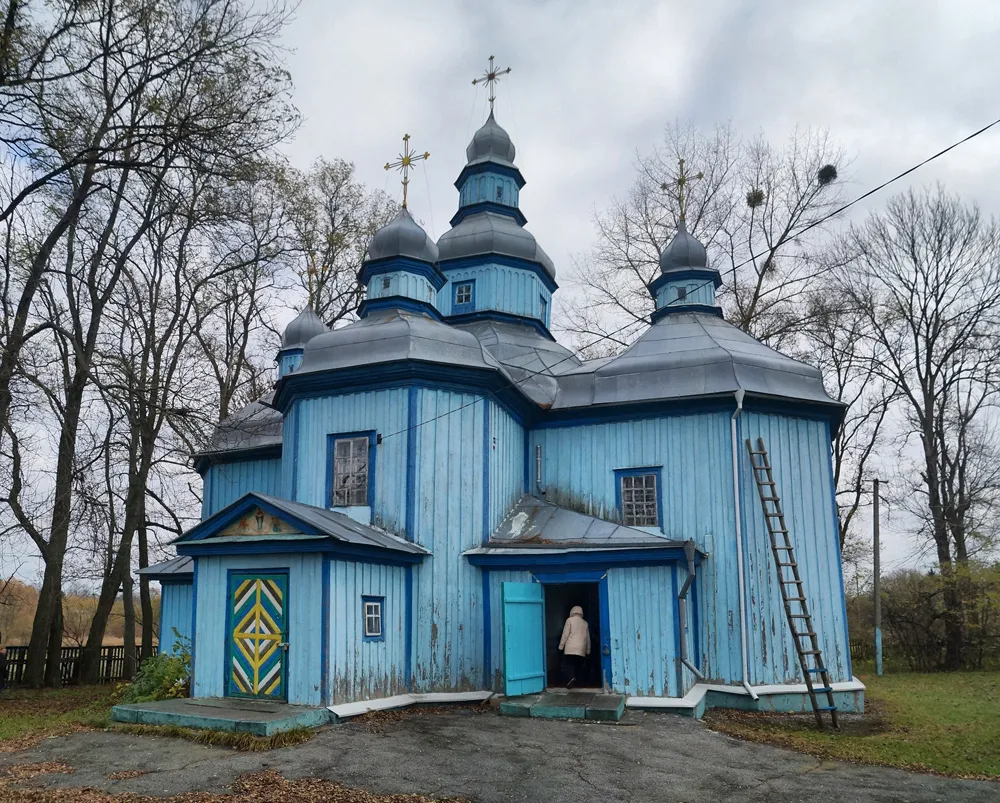
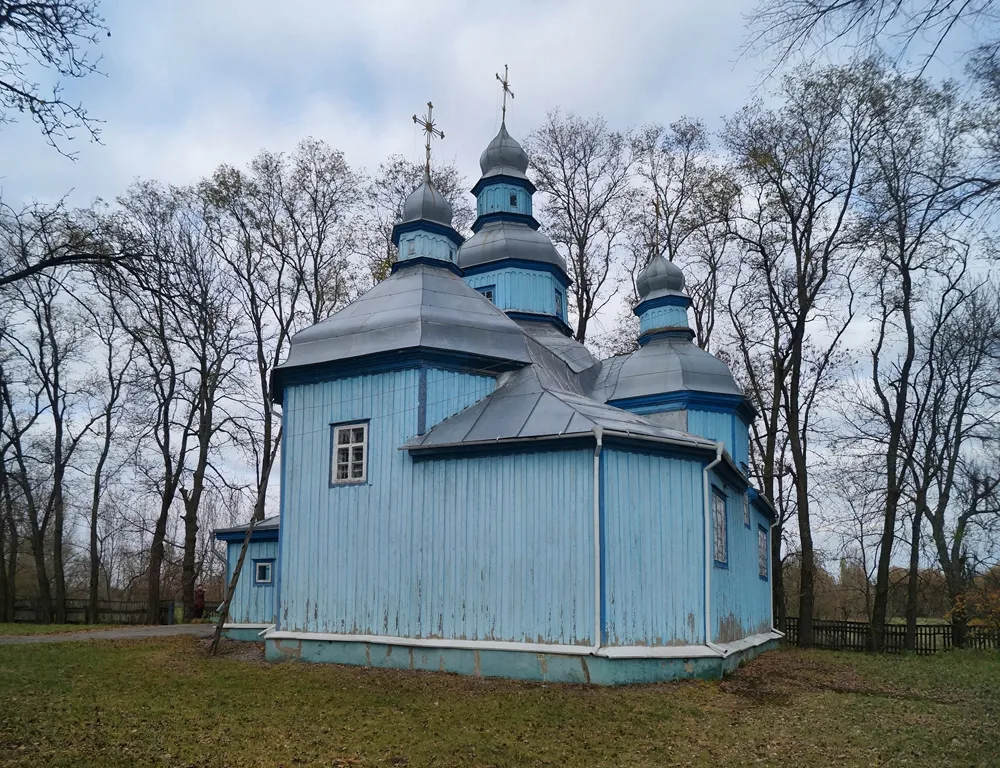
The main landmark of Horbuliv is the beautiful wooden Church of the Intercession, built in 1746. Andrii Vlasenko wrote about it very nicely on the “Our Parish” website. What follows is the text from there.
If in a general article about wooden Ukrainian church architecture we gave the Horbuliv church as the headline photograph, that means something. It made an indelible impression on us with the perfect purity of its forms, the divine simplicity of its outlines, the gentle Ukrainianness of its lines…
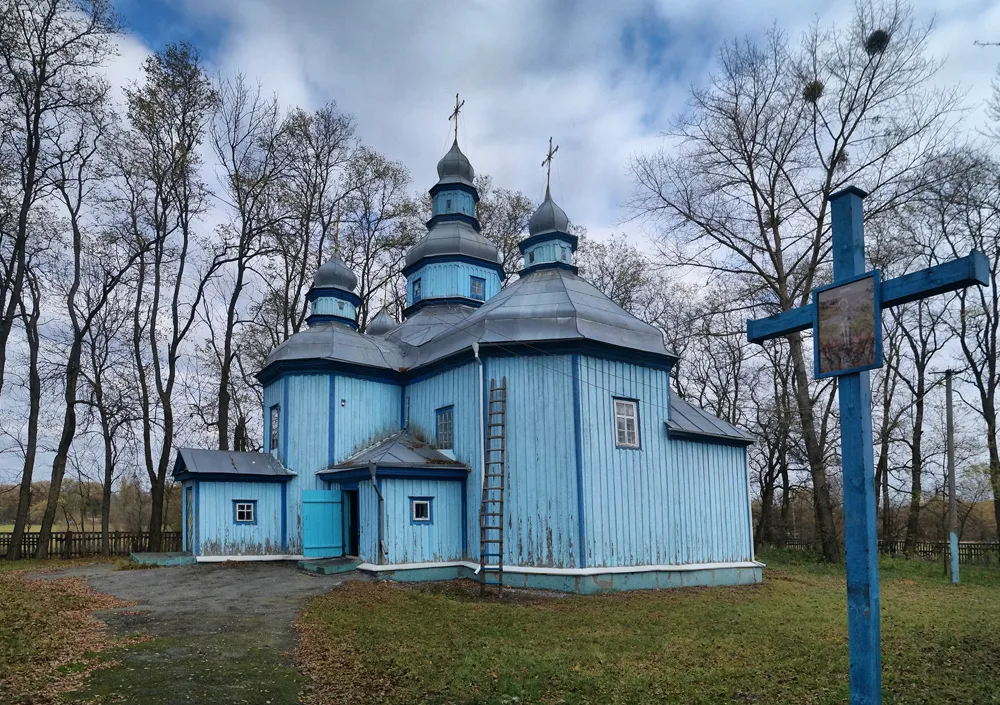
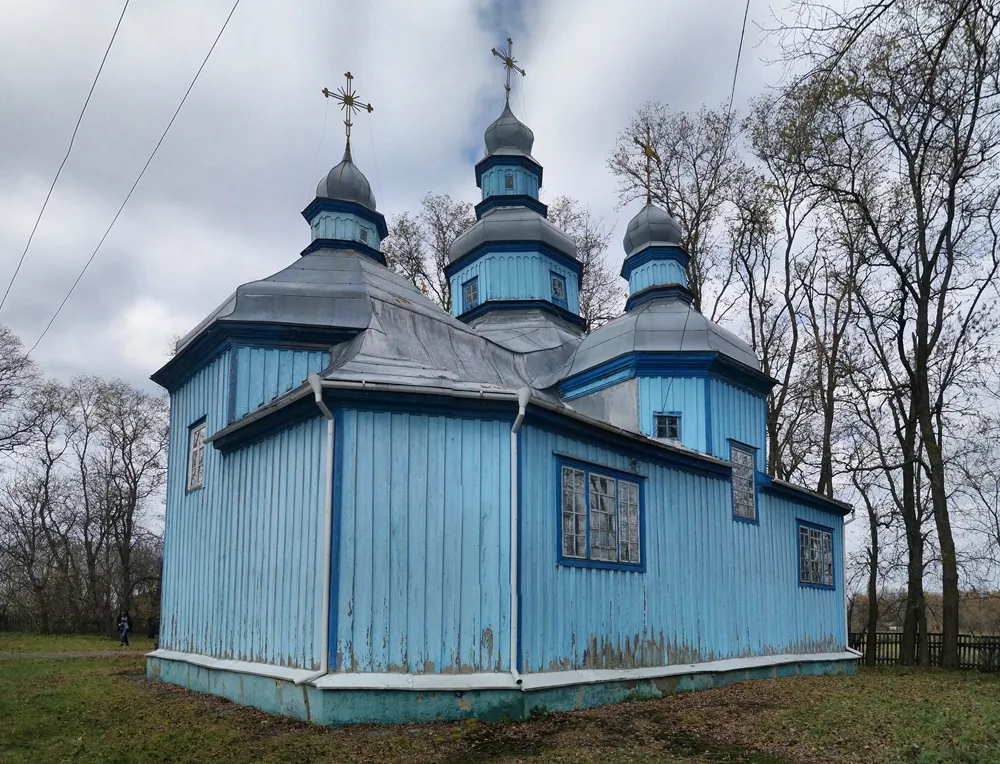
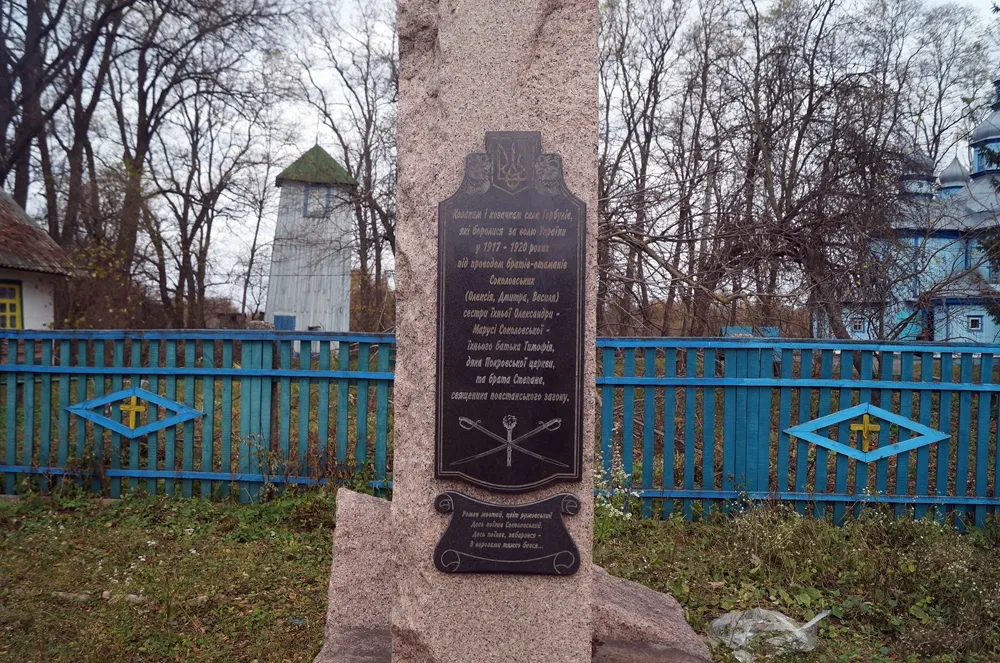
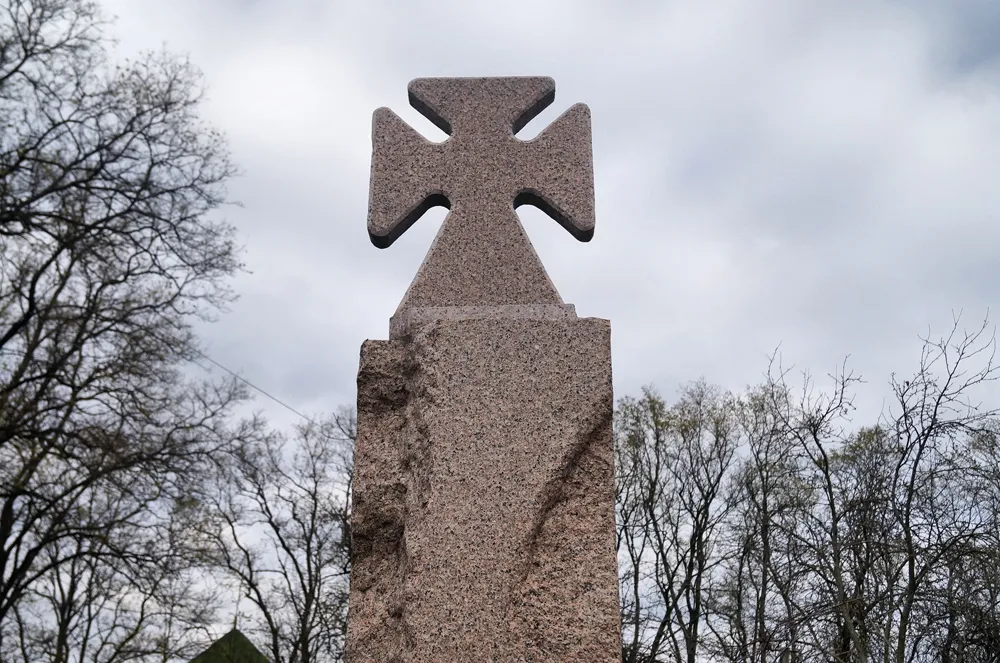
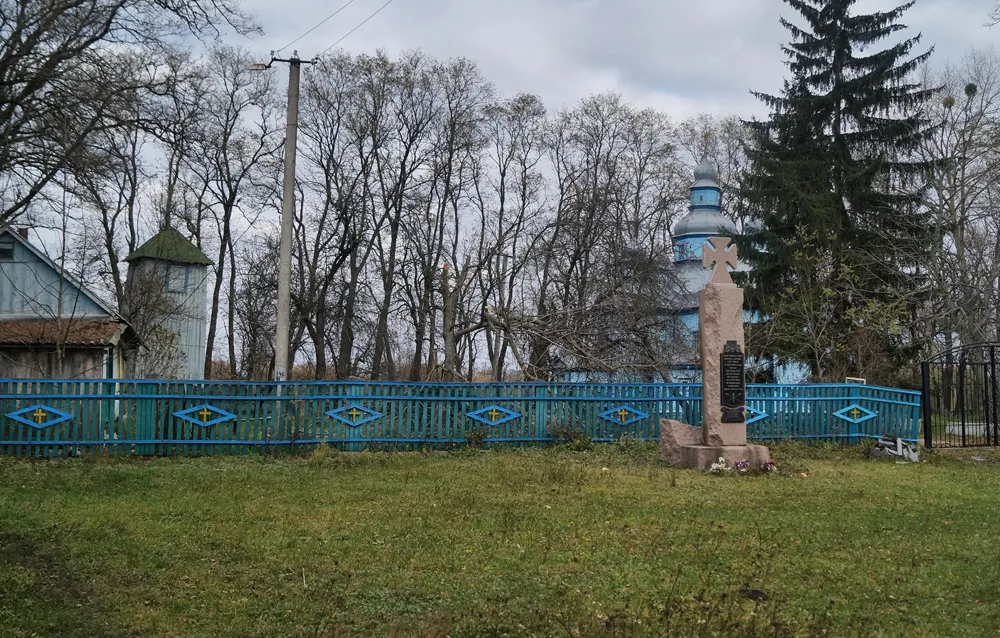
…The beaten road to the village, famous for the struggle for the freedom of the Motherland in the time of the Ukrainian People’s Republic, has practically not changed over the last century. Only now, instead of brave otamans and Cossacks, a grader keeps driving along it, turning the track into an old washboard and thus making one’s teeth involuntarily beat out a machine-gun rattle. Besides the road, the heroic times of Horbuliv are recalled by a memorial cross, set up in 2010 near the church grounds through the efforts and at the expense of visiting and local patriots.
Yes, the fighting Horbuliv spirit has not died out. We felt it in those few old women who came to the church for the all-night vigil. With what pride they talked about their amazing church, about their village, how they grieved over the fate of Ukraine… And we listened and looked around.
What a cosy church! Naively sincere and at the same time “delicate” murals covered almost all the surfaces, but most of all they turned out well in the southern chapel of St. Nicholas. By the way, we never understood why some respected researchers call the cross-shaped church originally three-part: its side chapels, with magnificent 18th-century carving, do not differ in any way from the main volumes of the church.
And then there was a service, and Church Slavonic prayers with a bright Ukrainian pronunciation soared high, high, much higher than the sky-blue vaults. And together with the quavering old voices we seemed to hear the spirited singing of the young otamansha Marusia Sokolovska, who fell in battle with the red horde, the daughter of a cantor and sister of the priest of the Church of the Intercession.
Glory to the heroes and eternal memory!
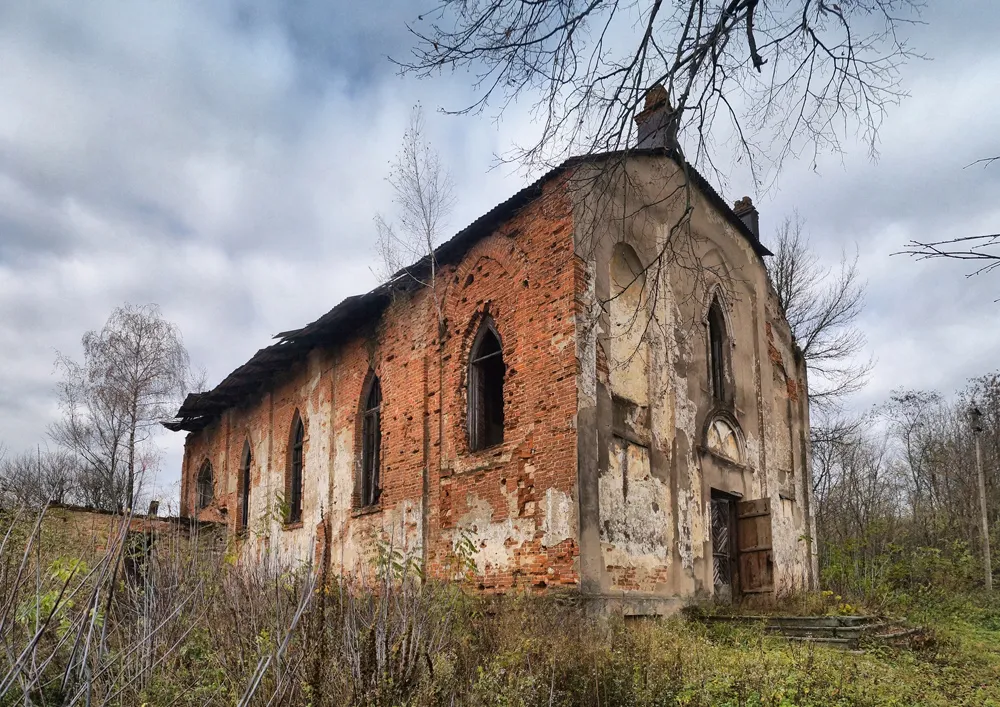
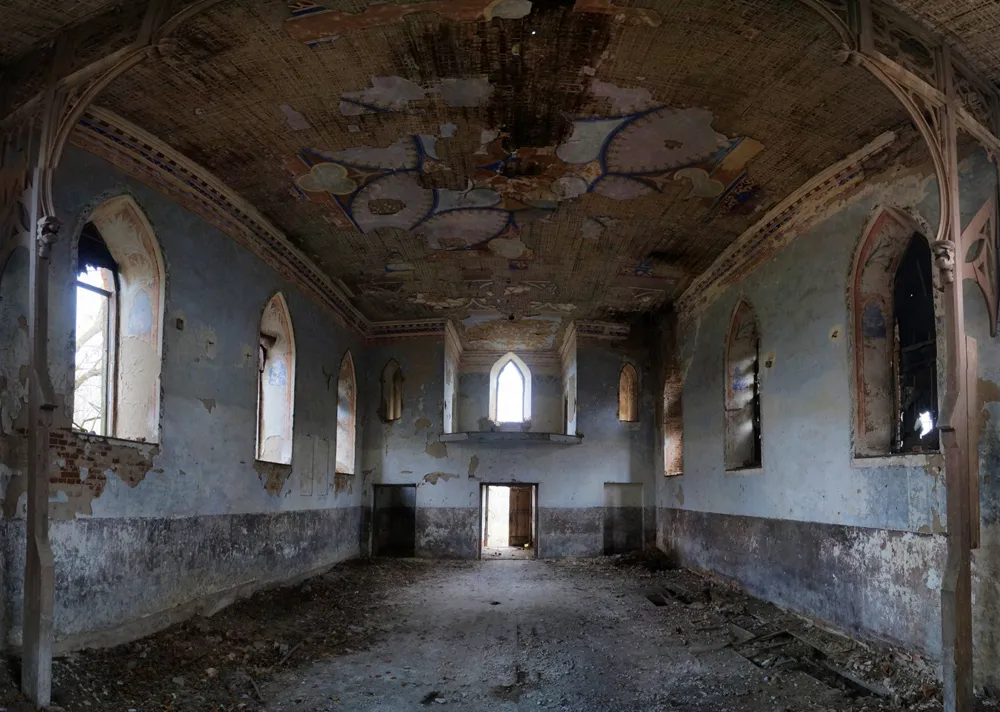
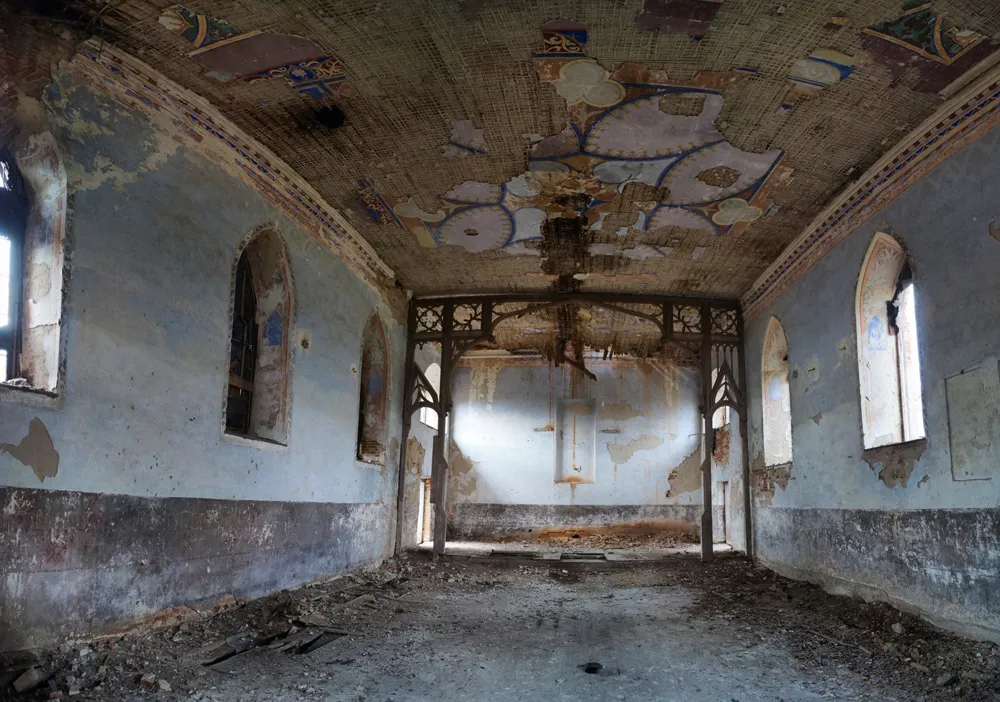
The Church of the Immaculate Conception of the Blessed Virgin Mary in Horbuliv was built in 1857, supposedly with funds from the then owner of the village, the landowner Podhorodenskyi. In Soviet times the church was closed, it suffered substantial destruction, and stands half-ruined. They say that funds are being collected for its restoration. Next to the church is an old Polish cemetery with 19th-century gravestones.
And once more I would like to mention the Sokolovskyi family. What follows is text from the site Zhytomyr Region News.
The most renowned of the residents of Horbuliv is the Sokolovskyi family, of the psalm-reader of St. Nicholas Church in Horbuliv Tymofii and his wife Yavdokha; it had many children and became famous for its heroic deeds throughout the Radomyshl area. With the beginning of the war against the Bolsheviks the Sokolovskyi family also actively joined the armed struggle, uniting peasants around itself.
In January 1919, during the suppression of a Bolshevik mutiny in Korostyshiv, the youngest of the Sokolovskyi brothers, Oleksa, was killed. The father, Tymofii Sokolovskyi, almost 70 years old, headed the staff of the insurgent detachment of the Radomyshl area, whose combat commander became his son Dmytro, a member of the Ukrainian Party of Socialists-Revolutionaries. The youngest daughter of the Sokolovskyis, the gymnasium student Sasha, also joined the detachment, becoming its liaison and carrying out ideological work.
After suffering several defeats, the Bolsheviks threw two additional infantry regiments and cavalry against Sokolovskyi’s detachments. However, the UNR Army sent to help the Polissia insurgents the detachments of Otaman Volynets from Podillia, who at the end of April 1919, together with the Sokolovskyi men, beat the Reds in Horbuliv and its surroundings and in May restored the UNR authority in Radomyshl, and in June, together with the detachments of Kolesnychenko and Palienko, also in Zviahel, today’s Novohrad-Volynskyi.
Otaman Dmytro Sokolovskyi was killed on the night of 8 August by a shot from behind a window during a meeting in his native Horbuliv. After the death of his brother the insurgents were headed by the elder brother Vasyl Sokolovskyi, who formed from the detachment the Dmytro Sokolovskyi Brigade, which as part of the 1st Corps of the UNR Army took part in the offensive on Kyiv. The Ukrainians defeated the Bolsheviks over most of Central Polissia, restoring control over Zhytomyr, but the third brother of the Sokolovskyi family, Vasyl Sokolovskyi, also died at the hands of traitors. The last of the four brothers, Stepan, held the rank of priest, which did not allow him to fight, and the detachment was headed by their sister, the young Oleksandra.
Among others, the writer Klym Polishchuk fought under the command of the otamansha Marusia Sokolovska; he later described in detail the “graceful image of the supple, golden-haired, blue-eyed maiden Mariika”, in particular giving her direct speech:
“Life forced me to become an otamansha. There was nothing to be done when everyone shouted with one voice: ‘If there is no Sokolovskyi, let Sokolovska be otaman! We want no other otamans!’ … Do you think I need war? What is there in it for me? I am still a young woman, I want to live, but what can I do? Everything we had has been smashed and plundered. They even burned the school where you once taught. … Now, as you see, there is no one to protect me, but on the contrary… I protect…”.
And the fragile otamansha, Cossack woman and charmer Marusia Sokolovska really proved to be a worthy military leader, like the legendary Joan of Arc.
“Before my eyes to this day stands the figure of a slender girl, small of stature, who was dressed like a man. She rode on horseback like the best Cossack. She handled a rifle well. … Like her brothers, she was of the bold sort and enjoyed authority among the insurgents … among the peasants Marusia was a legendary person, … very often she saved peasants from the Bolshevik food levies,” recalled another participant in the events, Feshchenko-Chopivskyi.
Marusia Sokolovska’s detachments continued to fight jointly with regular UNR units and Galicians of the UHA throughout Central Polissia, including during the capture of Kyiv, and also in Podillia, where Marusia took part in the district congress of otamans in Hermanivka.
In November 1919 the otamansha’s troops opposed the Russian Denikinists near Motovylivka and the Bolsheviks near Fastiv, but soon Marusia Sokolovska was killed, most probably also at the hands of a traitor named Naida, although there is other testimony indicating that the severely wounded Marusia was taken out beyond the Danube.
Nevertheless, in her native Horbuliv the new insurgent otaman Shabaturka set up a cross with the inscription: “Here sleeps the daughter of Ukraine Mariika Sokolovska, a native of the village of Horbuliv, Radomysl district. She fought for justice. She was killed by the hand of a traitor on 6 November 1919. Passer-by, bow your head before her untimely grave!”.
After the fall of Soviet power the graves of members of the Sokolovskyi family were restored in Horbuliv and a monument was erected to the Cossacks, men and women, the “Sokolovskyi men” who fell in the Ukrainian-Soviet war of 1917–1920.
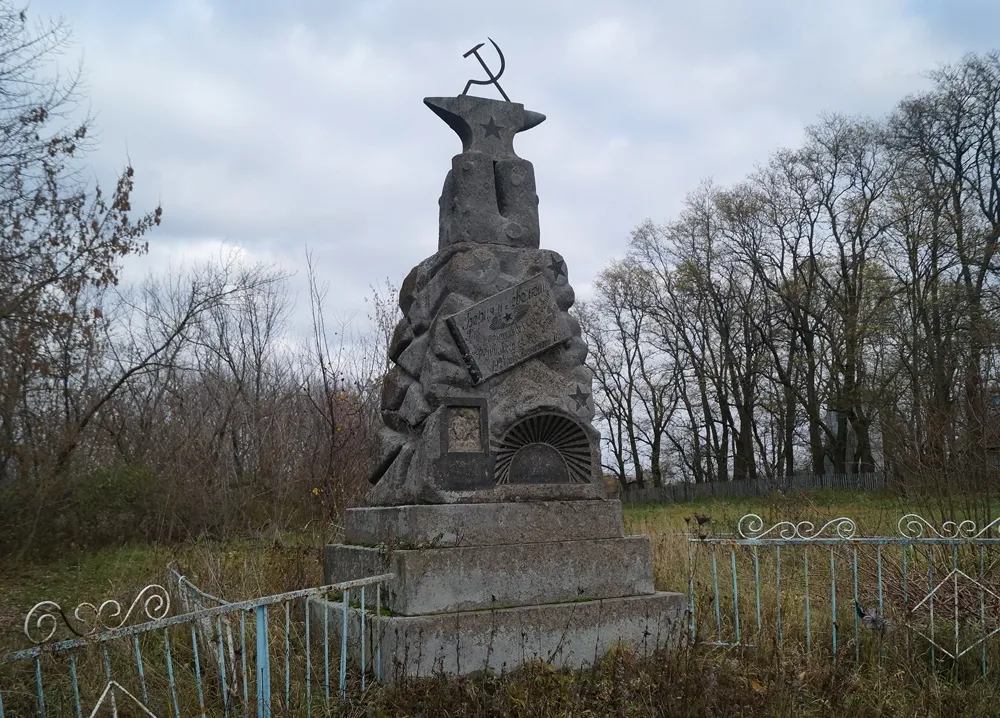
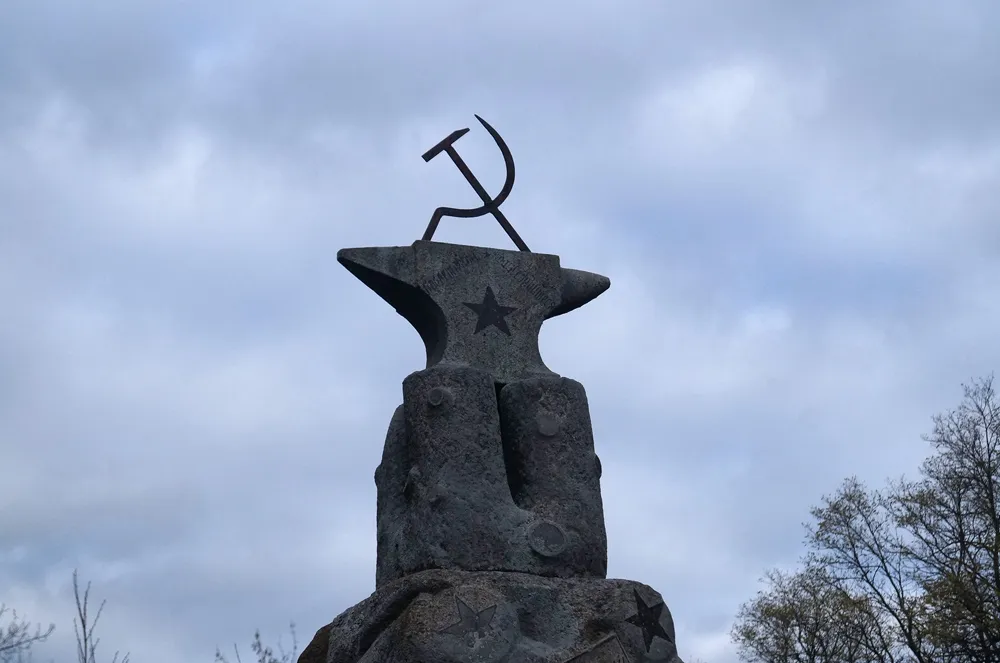
In Horbuliv there is a monument to the Bolsheviks, built in 1924 from cemetery gravestones.
Photos by Roman Malenkov and Serhii Shcherbii.