

Ivakhnivtsi: Tovtry ridges, cross-and-petal crosses and the memory of the Holodomor
The village of Ivakhnivtsi in Khmelnytskyi Oblast is known above all for its hills, on the basis of which the Ivakhnivtsi Nature Reserve was created.
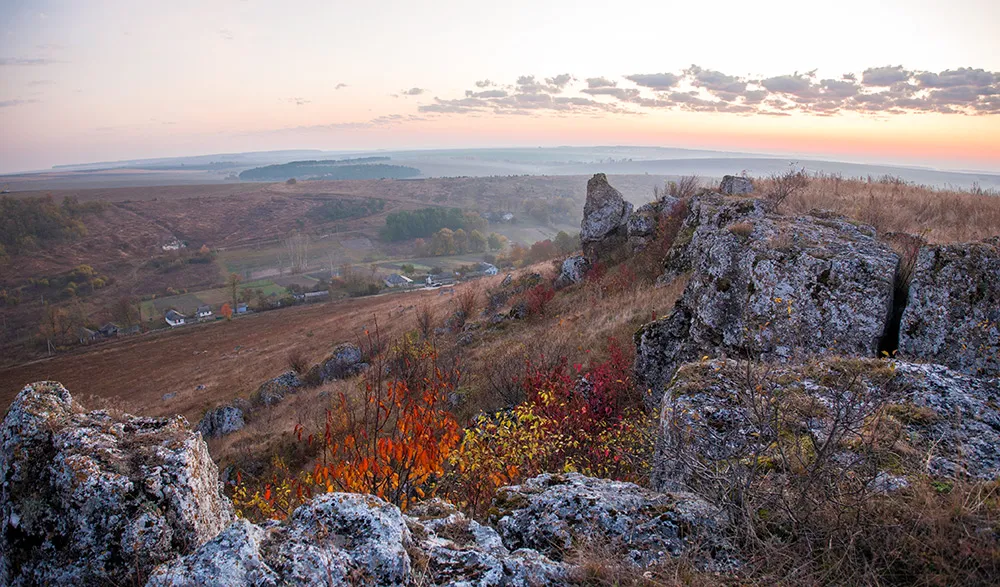
The Tovtry near the village of Ivakhnivtsi
It is a landscape reserve of national significance, established to protect the unique treeless Tovtry (in particular such ridges and rocks as “Baba”, “Yan”, “Vysoki Kameni” and “Sokolykha”) with valuable steppe and relict vegetation. It is part of the Podilski Tovtry National Nature Park.
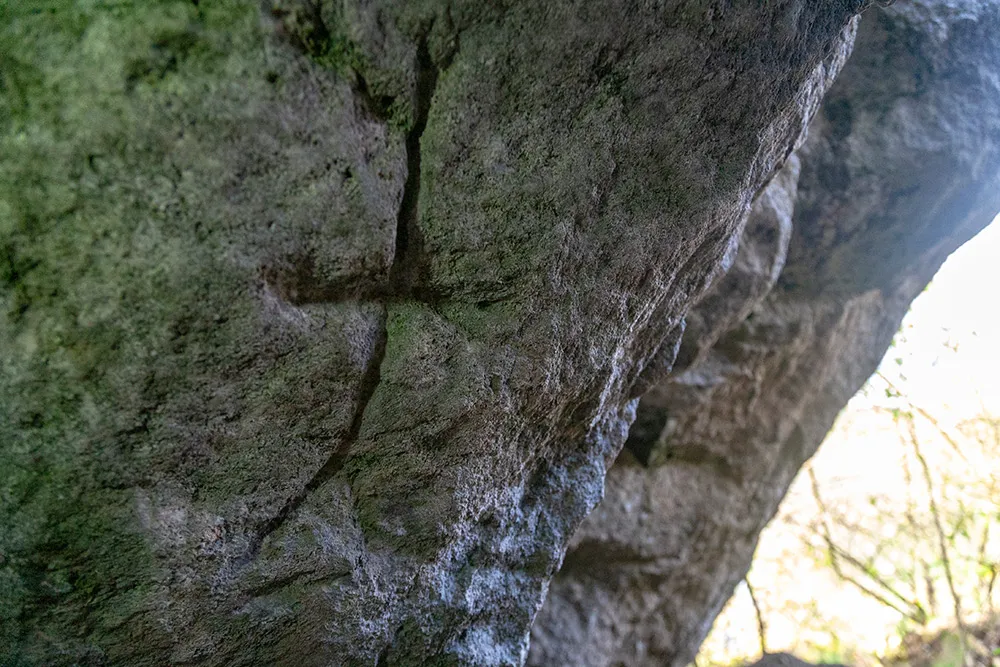
One of the petroglyph crosses
These hills are not only a natural monument but also a historical one. In particular, there are dolmen-like formations here, as well as a small karst cave where a hermit lived in the 17th century. Petroglyph crosses carved in the rock near the entrance have survived from that time.
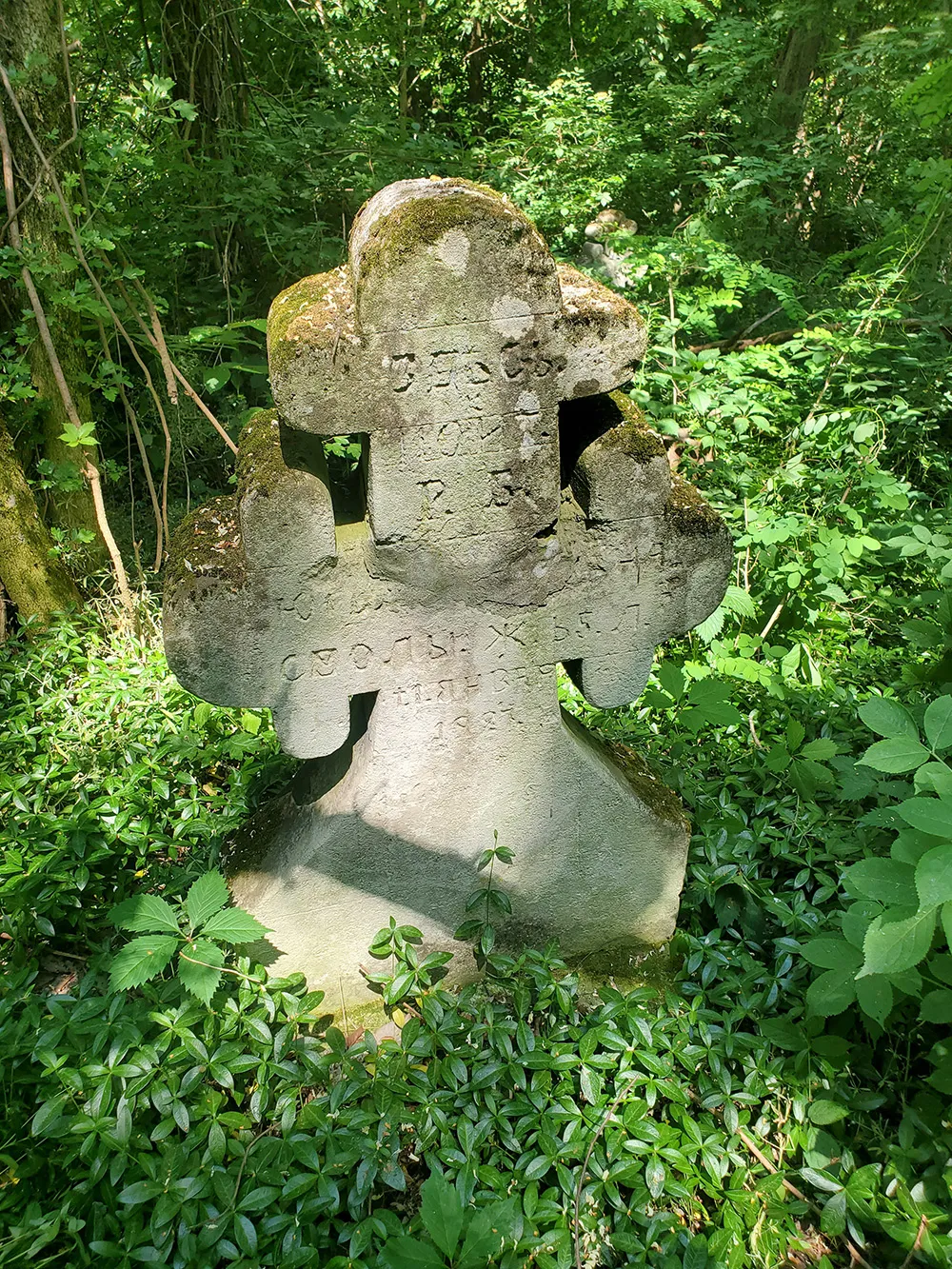
As for the local old cemetery, although the village has been known since at least 1542, the oldest gravestone cross found here by the Ukraine Incognita expedition dates only from 1887.
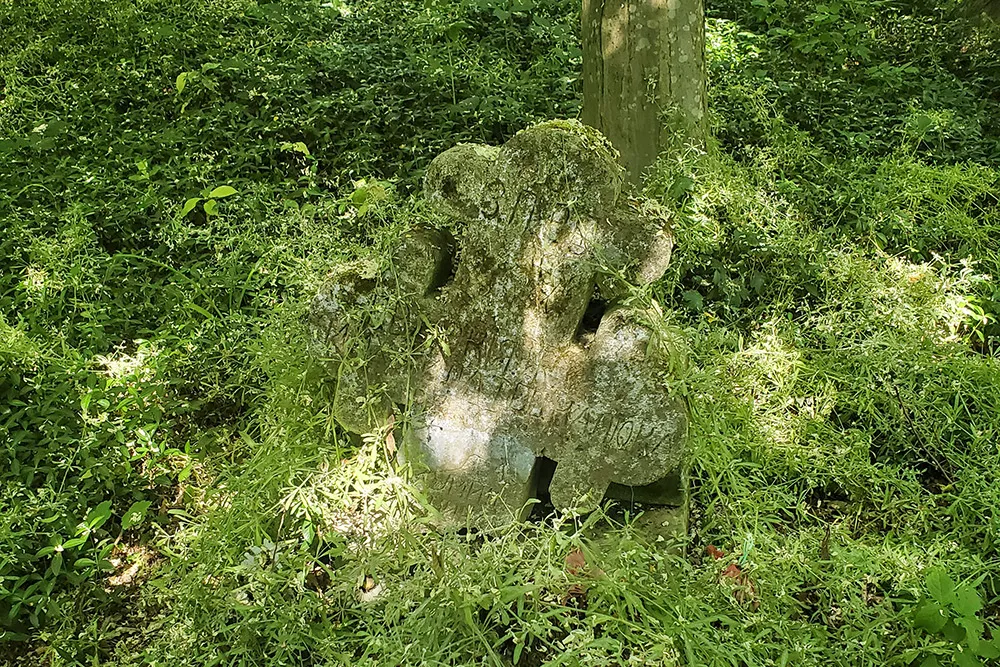
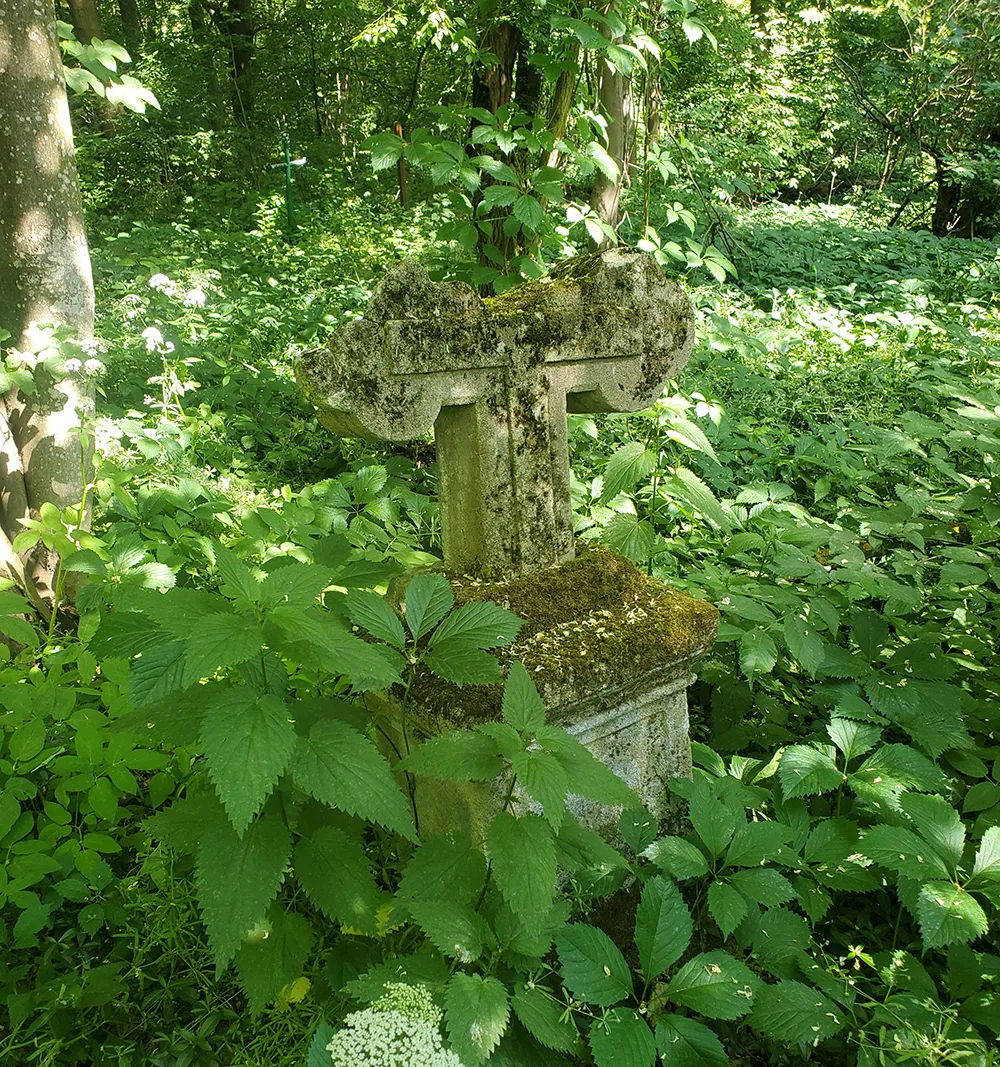
Most of the archaic gravestone crosses found belong to the so-called “cross-shaped” type, in which the upper and side arms are made in the form of separate crosses. In Ivakhnivtsi, however, we mostly see “cross-and-petal” crosses, in which the tips of the “secondary” crosses are rounded like flower petals.
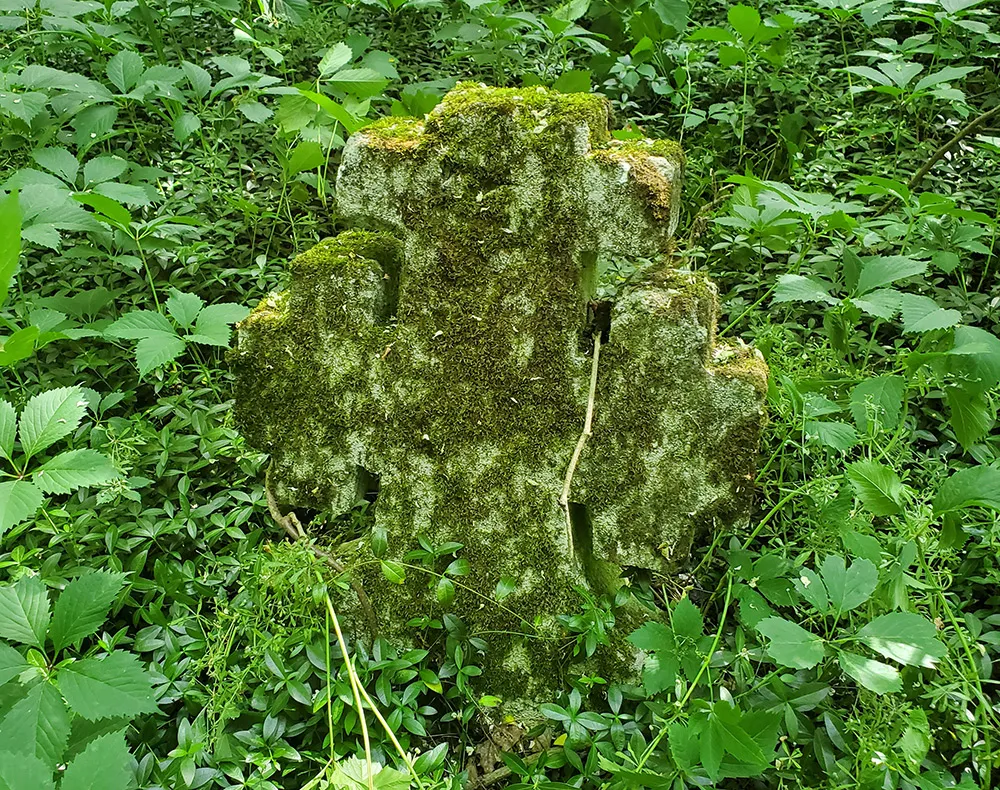
There are also several crosses of the “Cossack type” here.
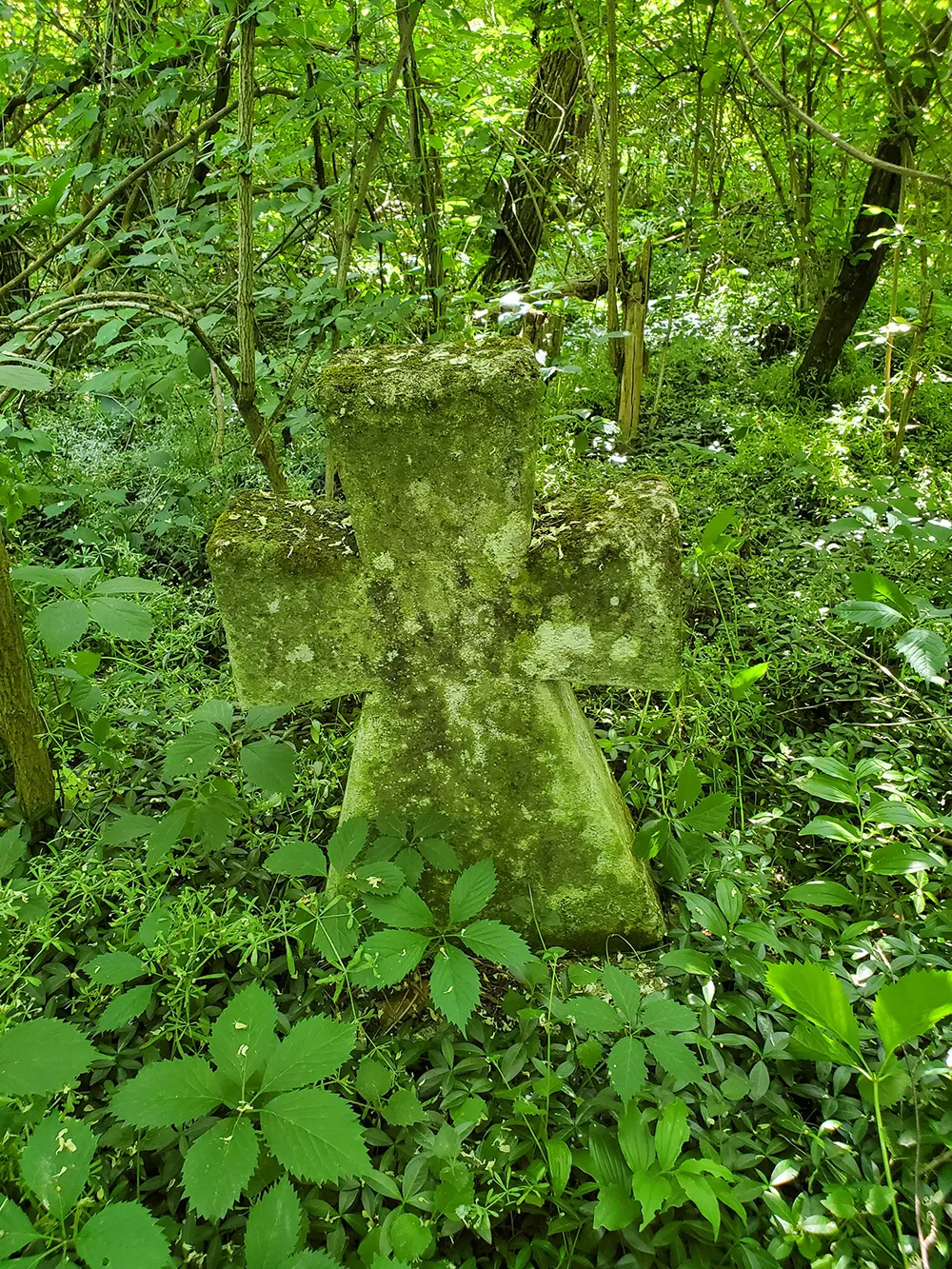
Interestingly, on several crosses there are clear traces of repair: pieces that had fallen off were carefully glued back with cement mortar. And this was clearly not done by relatives. A rare case.
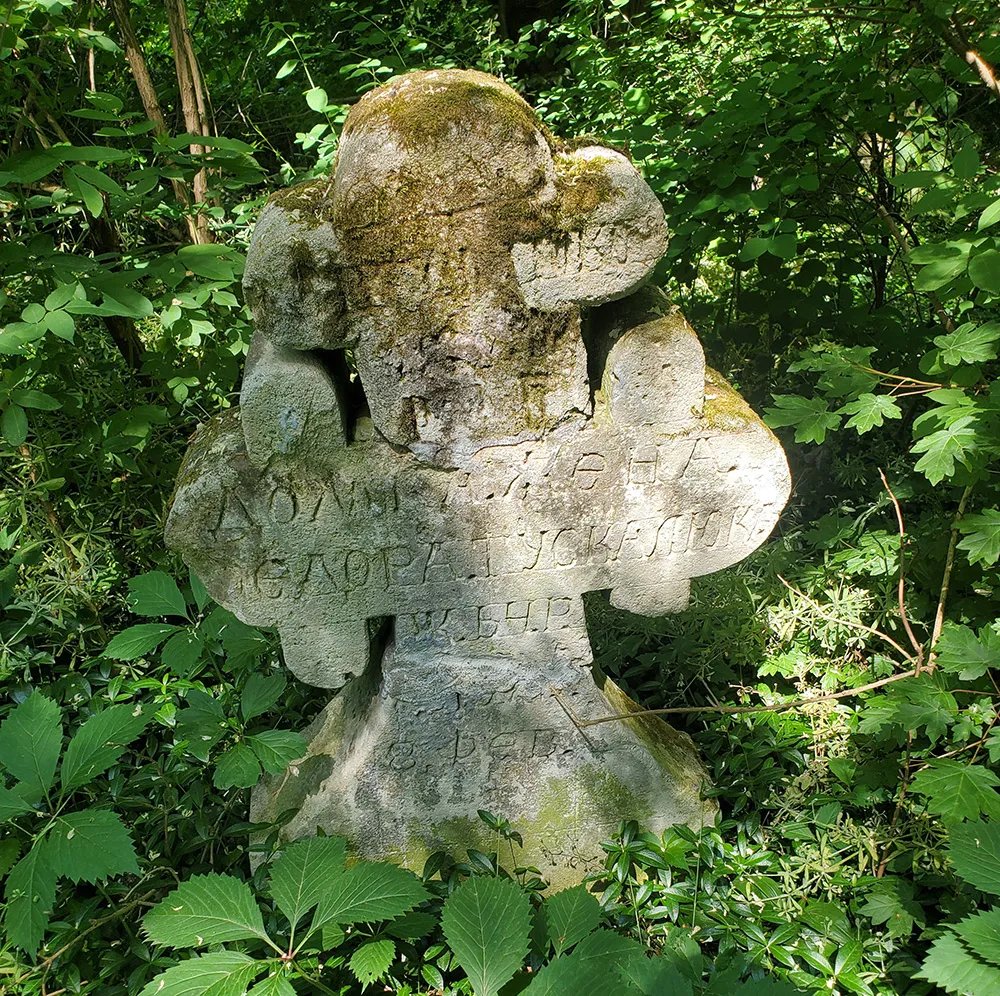
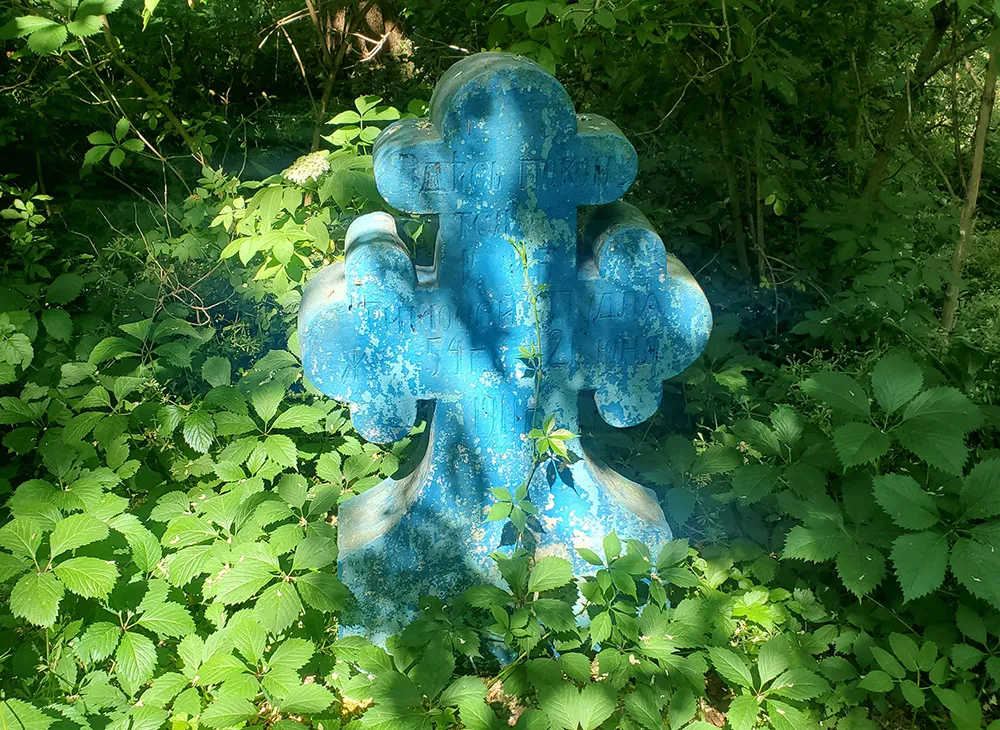
Most emotionally striking, however, were two clumsy concrete gravestones of the first half of the 20th century standing side by side. The epitaphs, scratched with some stick into wet cement, show that a family is buried here, probably husband and wife: Antonina Frantsivna Pudlo (1876–1933) and Pavlo Sazonovych Pudlo (1877–1933). No explanation is needed here — the date of death speaks for itself.
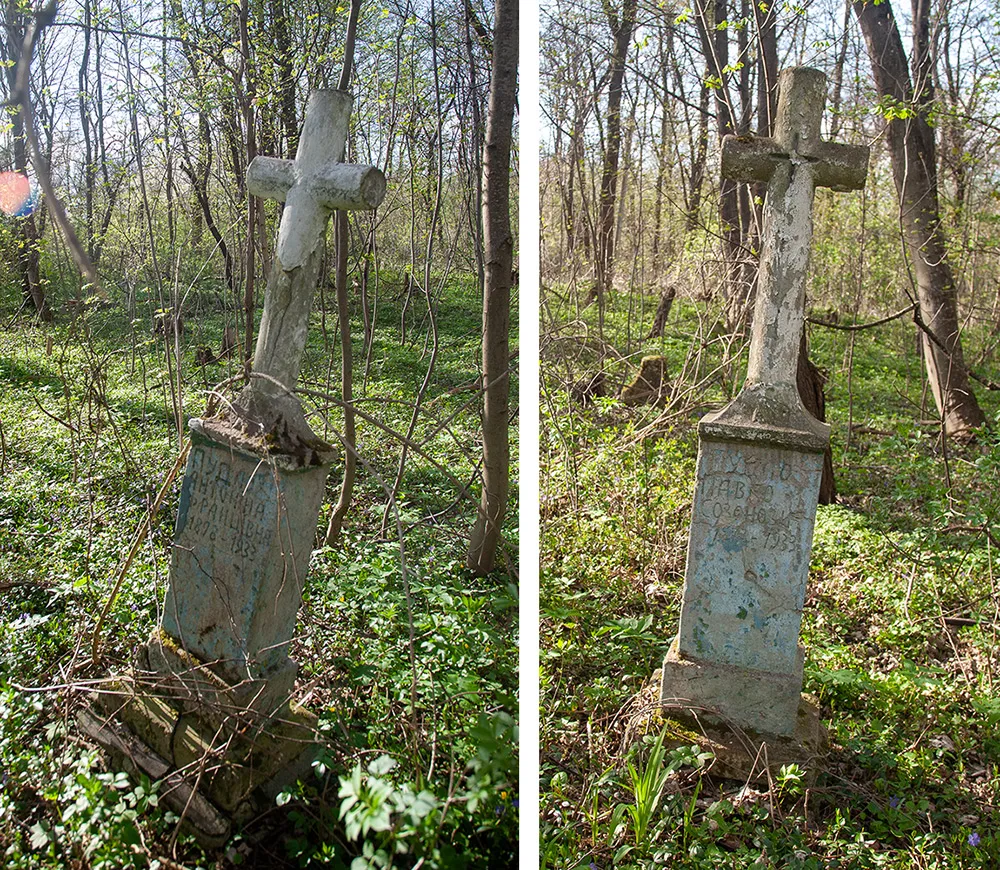
One more circumstance is worth stressing. Judging by the names, this was a mixed Ukrainian-Polish family. The latter clearly shows that at the end of the 19th century there was no hostility between the Ukrainian and Polish communities of the region, and Ukrainians and Poles not only lived in harmony but also started families together.
Text: Dmytro Poliukhovych
Photos: Roman Malenkov, Dmytro Poliukhovych


