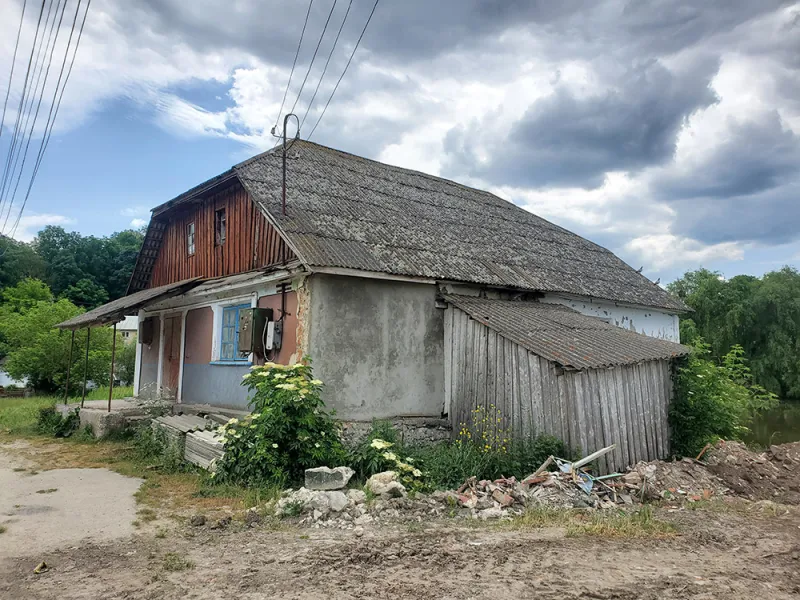
Smotrych — the first capital of Podillia
Perhaps nothing illustrates the saying “Thus passes the glory of the world” better than the small town of Smotrych in Khmelnytskyi Oblast. Today it is an ordinary urban-type settlement, one of hundreds (not even a district centre), but once it was the capital of the vast Principality of Podillia, which stretched from the interfluve of the Stryi and Zolotyi Potik (today’s Ternopil region) to the Dnipro. By the standards of the fragmented Western Europe of that time, it was no small thing.
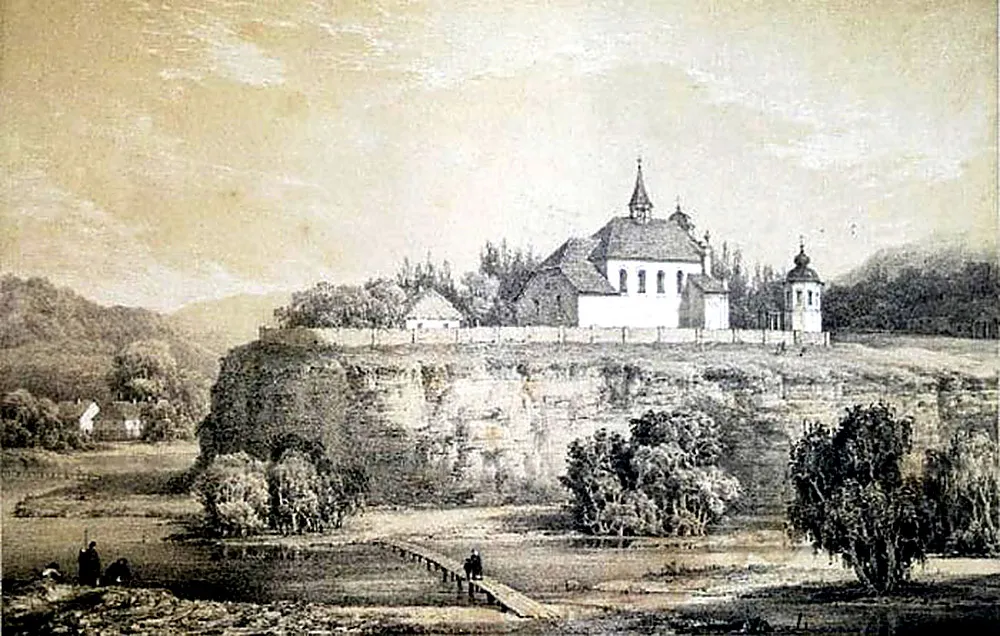
Smotrych. Napoleon Orda. Around 1870.
Under Prince Kostiantyn Koriatovych, in 1380–1391, Smotrych even minted its own coins. The obverse shows St. George (Yurii) slaying the dragon (the family coat of arms of the Koriatovych-Koriotaitis princes), and the reverse shows the royal coat of arms of the Anjou dynasty (the Koriatovych princes were vassals of Louis I, King of Hungary and Poland). The Latin inscription on them read: “Kostiantyn, prince, heir and lord of Smotrych”, and later: “Coin of Kostiantyn, prince, heir and lord of Podillia”.
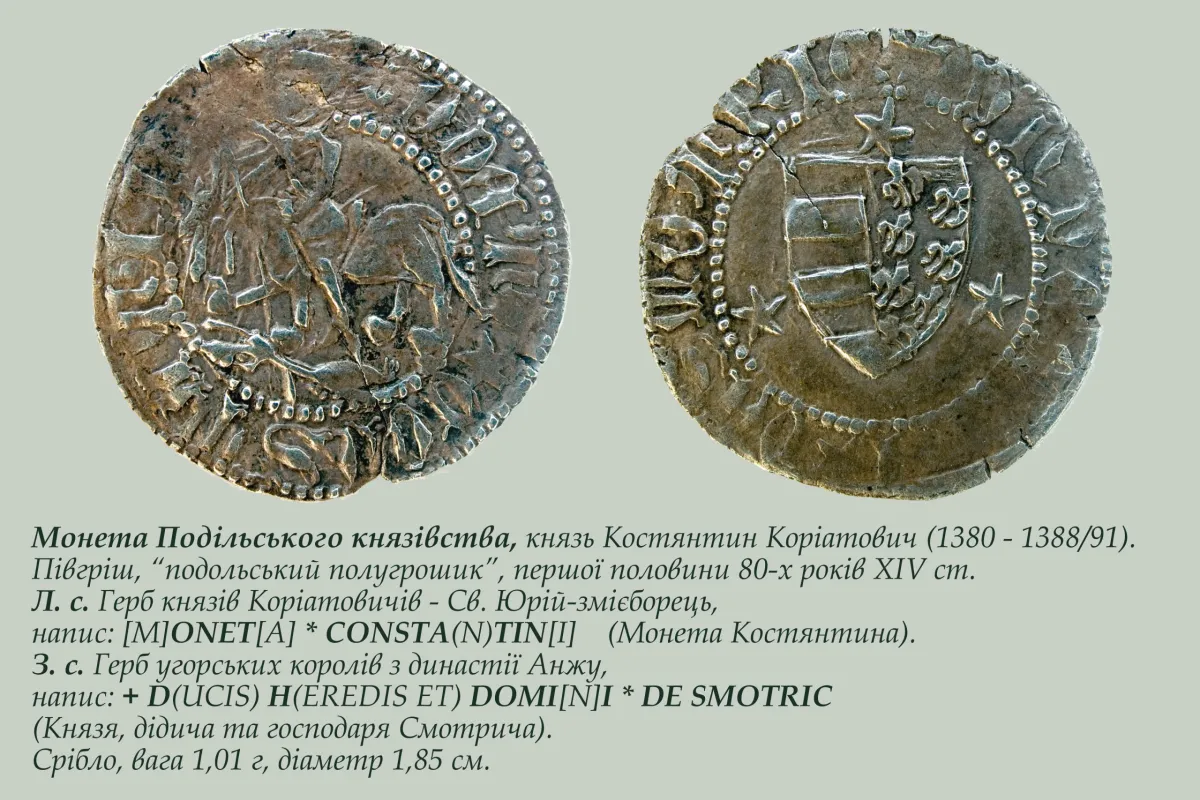
(Note. The photo of the coin was kept in our archive, but the source has been forgotten — remind us and we will insert it.)
Kostiantyn Koriatovych did not choose this place for his residence in vain. Here, where the Yaromyrka River flows into the Smotrych River, rises a sizeable rocky massif on which the prince built his castle. Earlier there was a Rus’ hillfort here, destroyed during Batu’s invasion. The remains of the prince’s castle survived into the early 20th century. This was noted, among others, by the “father of Podillian local history” Yukhym Sitsynskyi: “In the town, on a hill-promontory jutting out towards the Smotrych River, are the traces of a castle that once stood here; the hill or promontory is cut by a large transverse rampart, now occupied by homesteads; in the middle of the castle site now stands a Catholic church (a former Dominican monastery, from the 14th century).”
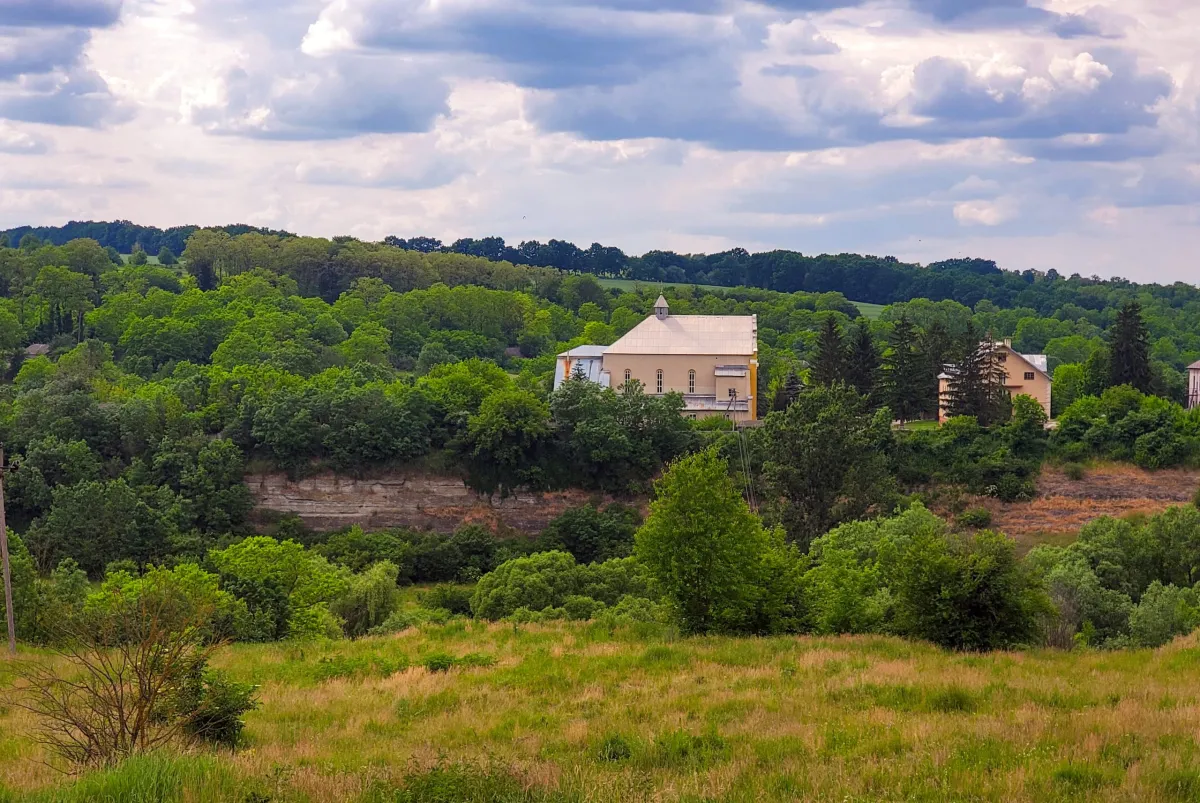
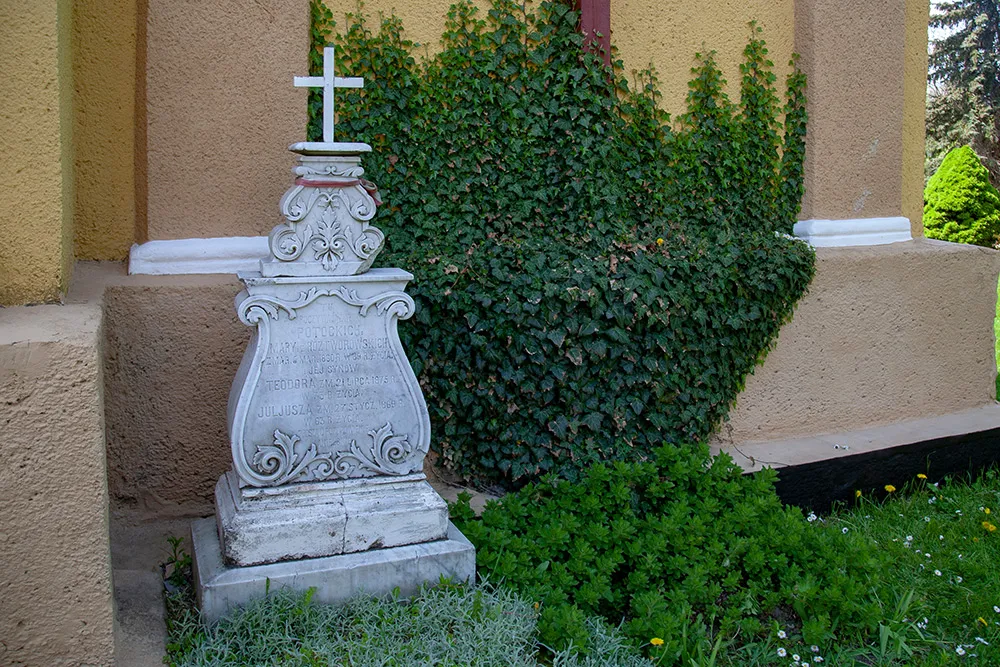
After the Koriatovyches, from 1430 Smotrych belonged to the Grand Duke of Lithuania Vytautas. At the beginning of the 17th century the town passed to the Bratslav voivode Jan Potocki. The Potockis owned Smotrych until the mid-19th century. They are still recalled by a handsome white marble tombstone set against the wall of the aforementioned church. The epitaph states that buried here are Maria Potocka, née Roztworowska, who died on 5 March 1850 in her 89th year, and her sons Teodor and Juliusz.
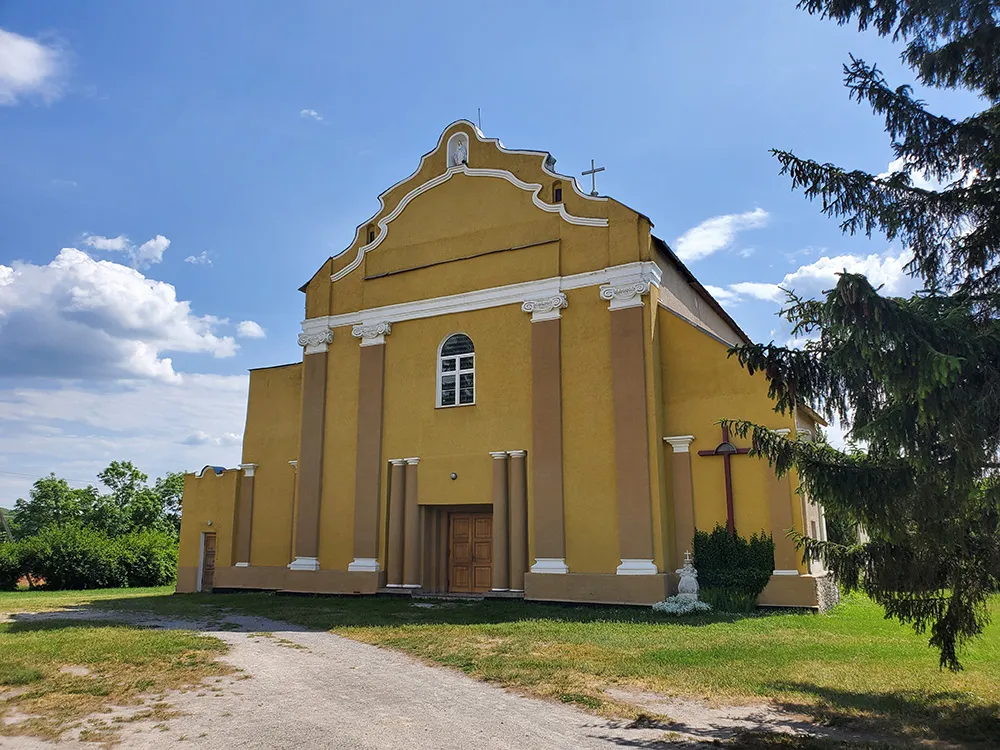
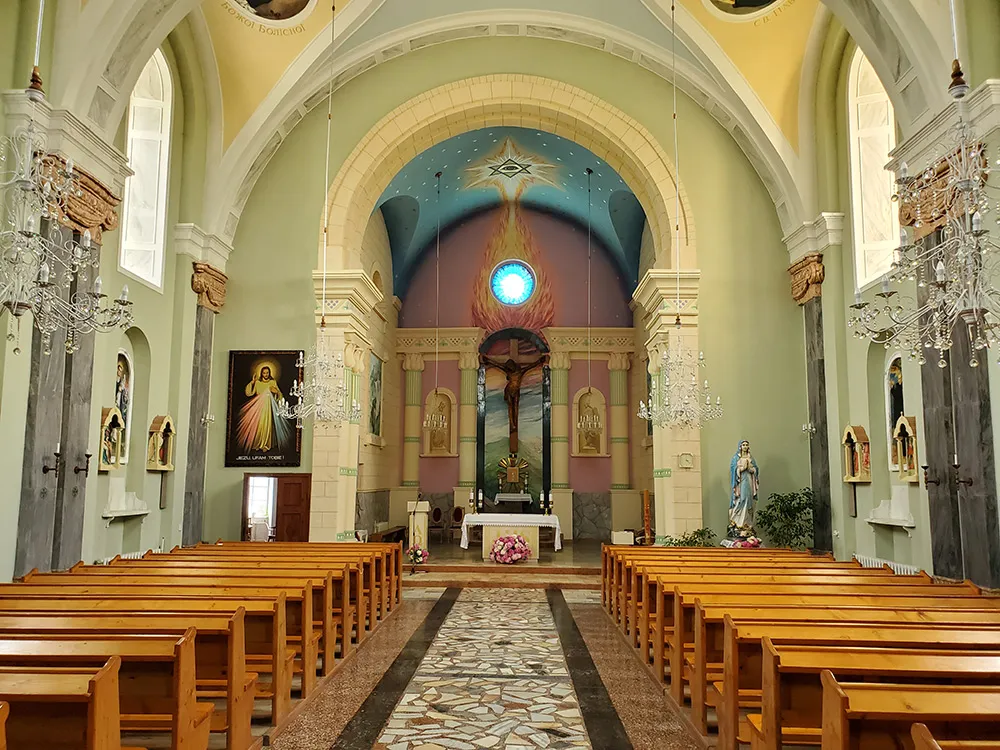
Of the wooden church built under the Koriatovyches around 1375, of course, nothing remains (Smotrych was burned by the Tatars more than once). The present masonry church began to be built in 1786 with funds from the Potocki family and through the efforts of the Dominican fathers. The building was completed in 1821. In 1935 the Smotrych church, as everywhere at that time, was closed by the Soviets. At least it was not destroyed. Afterwards, under the Germans, it was reopened for the faithful, but not for long. Then it housed a village club and dances. Only in 1989 was the Church of St. Nicholas finally returned to the faithful. Since 1991 pastoral work here has been carried out by the Passionist fathers.
The most famous of the natives of Smotrych, however, is not one of the Koriatovych princes (only historians and local historians know about them), but the educator Maksym Herasymovych, better known by his monastic name Meletii Smotrytskyi, author of the “Slavonic Grammar” (1619) and other books.
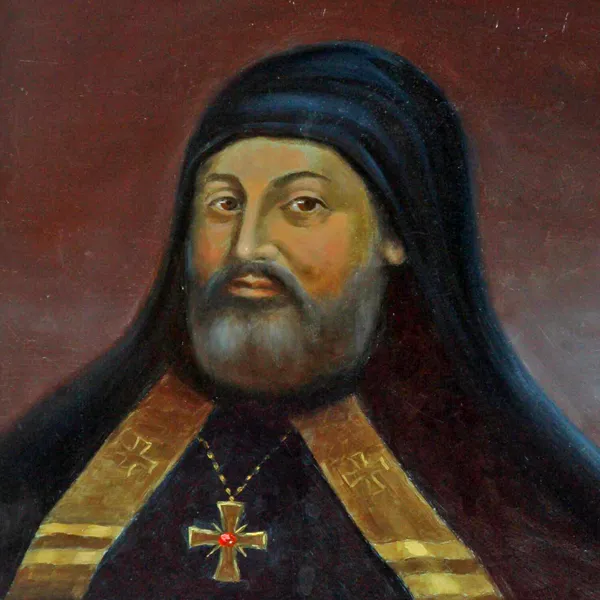
Meletii Smotrytskyi began his church career as an ardent champion of the union, but later radically changed his views. On 5 June 1631, in honour of his services, Pope Urban VIII granted Smotrytskyi the title of Archbishop of Hierapolis, which is under the jurisdiction of the Patriarch of Antioch. He was among the Uniate bishops who in 1629, in the Latin cathedral of Lviv, celebrated a joint service for the first time.
Since the 17th century Smotrych has been known as one of the large and distinctive pottery centres. The author first heard about Smotrych ceramics from the late Ivan Honchar (the very man after whom the famous museum in Kyiv is named). Ivan Makarovych had a sizeable collection of works by the local masters, of which he was rightly proud. And no wonder! Smotrych ceramics are not only very original but also expensive. Sometime in the mid-2000s, at the Kyiv antiques “vernisazh” market, I came across a very beautiful, huge Smotrych bowl with a fantastic bird (perhaps a peacock). But for all my wish, I could not buy it. The price “bit” — 150 North American dollars — no joke! Today that would be five hundred and more. The dollar was much weightier then.
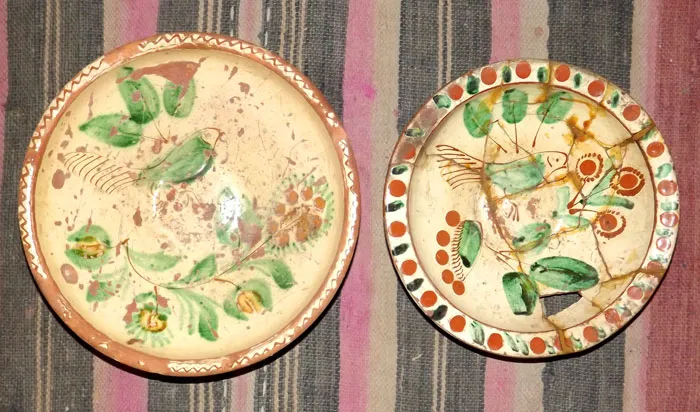
Smotrych bowls from the Horodok Local History Museum. Now this is “sharovarshchyna”…
Until recently, striking examples of Smotrych ceramics could be seen in the Horodok Local History Museum (now G-museum). But after the museum was renewed and began to operate under the “G” sign, all the artefacts that told of the region’s Ukrainian past ended up in storage, because conceptually the museum is modern, European and “innovative” (by the way, what is that?), while Ukrainian ethnography is “sharovarshchyna” (kitschy folklorism). At least the author has heard this very word repeatedly from people connected with the institution.
The ethnographic section, unfortunately, is absent from the “innovative” museum, even though the predecessors of the “innovators” gathered a huge body of unique (truly unique) exhibits.
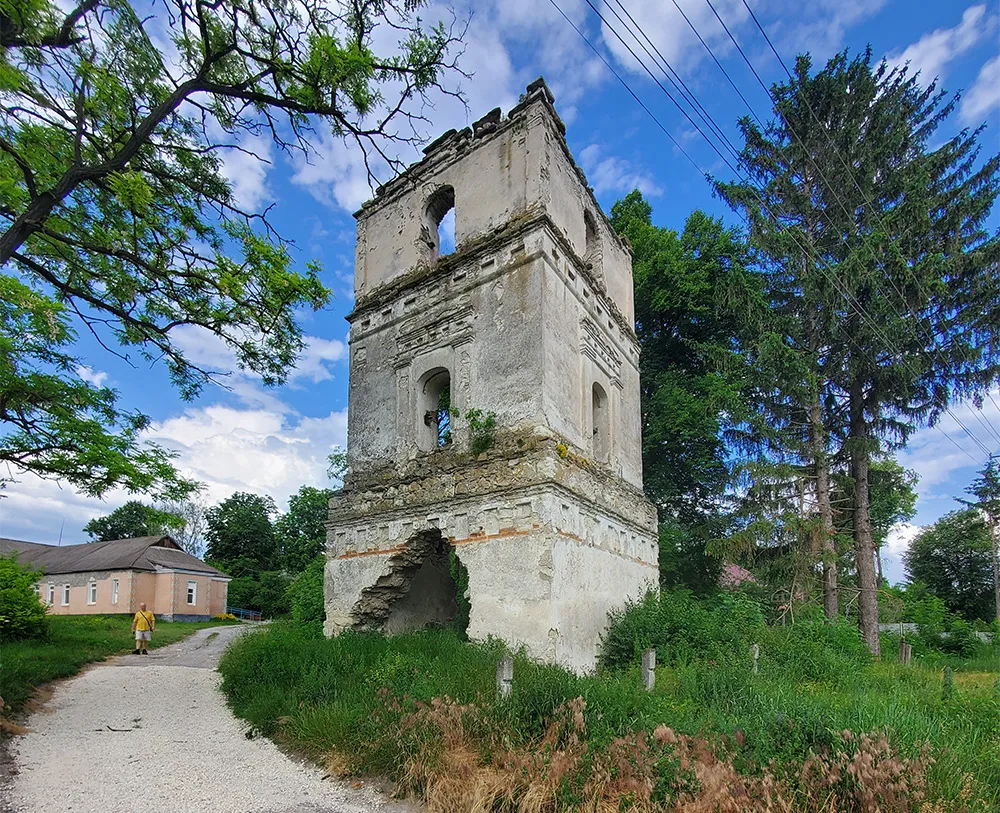
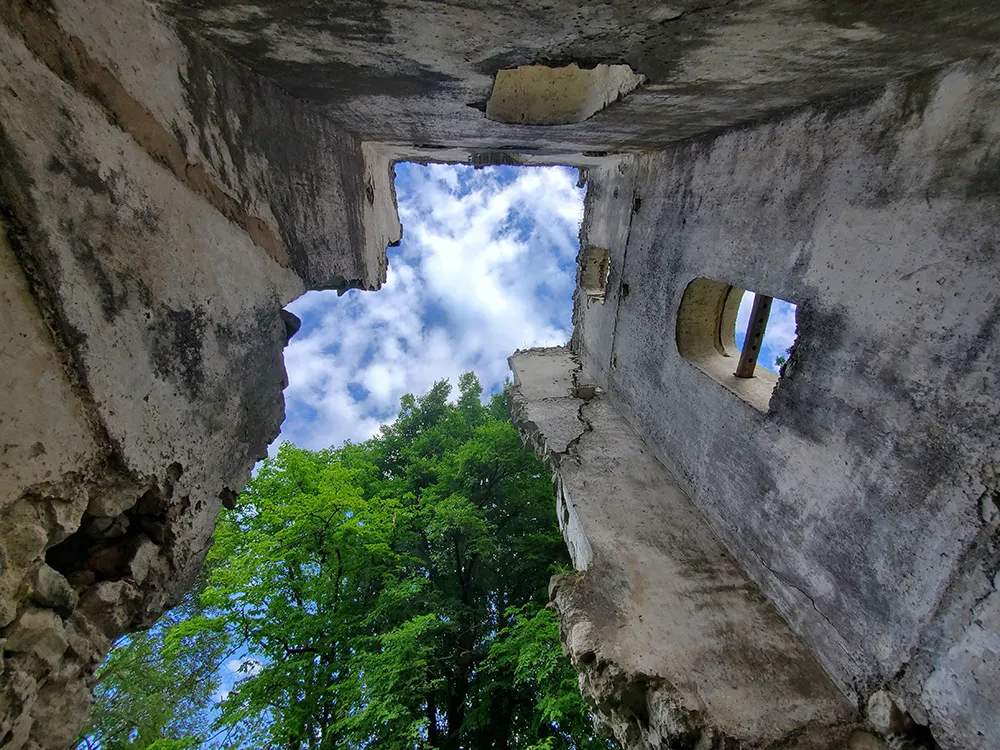
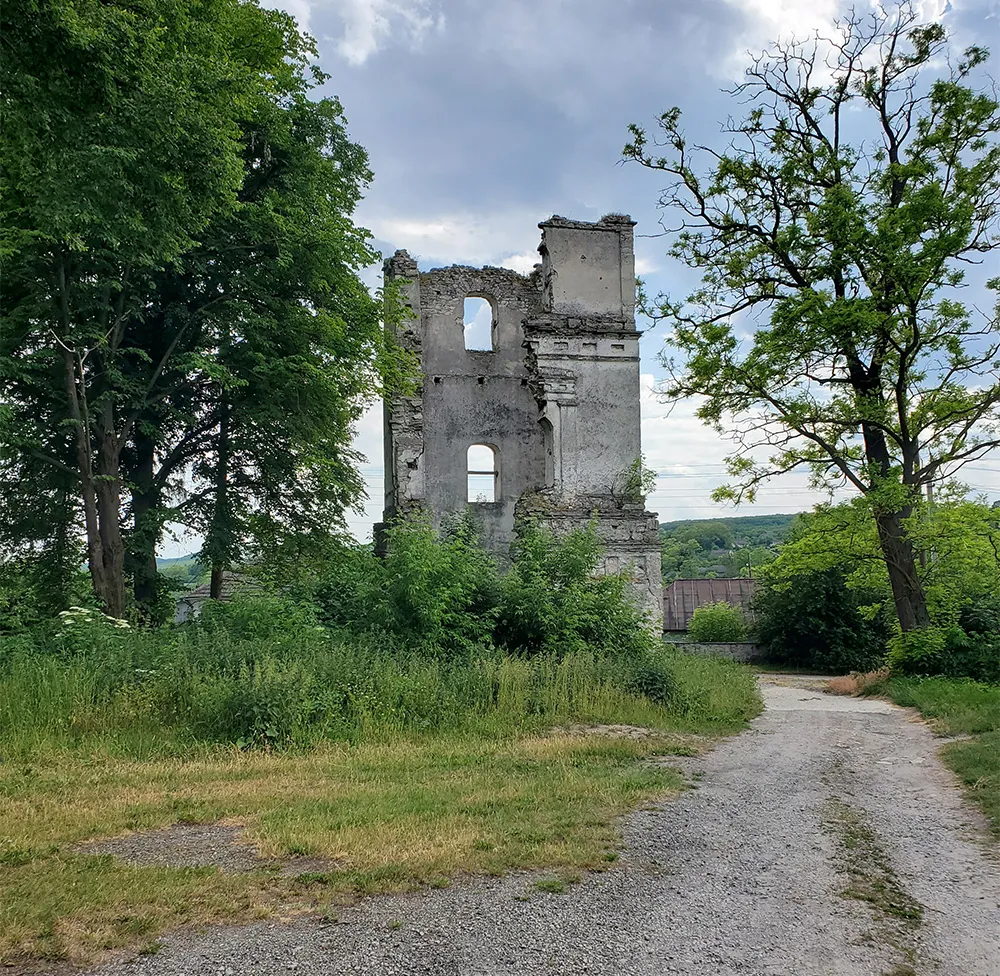
Another striking local monument is the bell tower of the destroyed Dormition Church. More precisely, its ruins. It is somewhat hidden from prying eyes, so it is better to ask the locals.
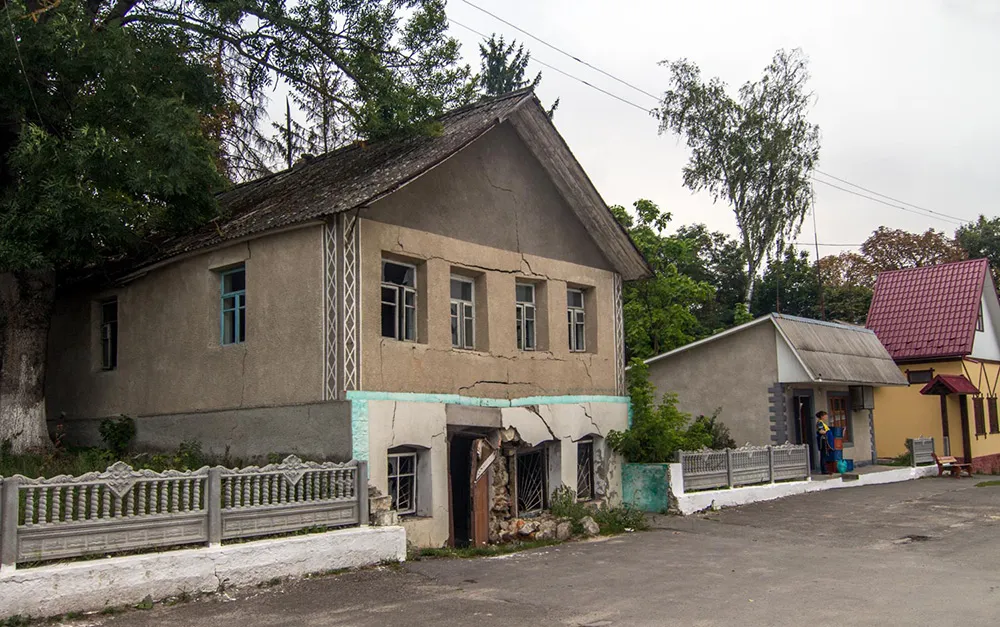
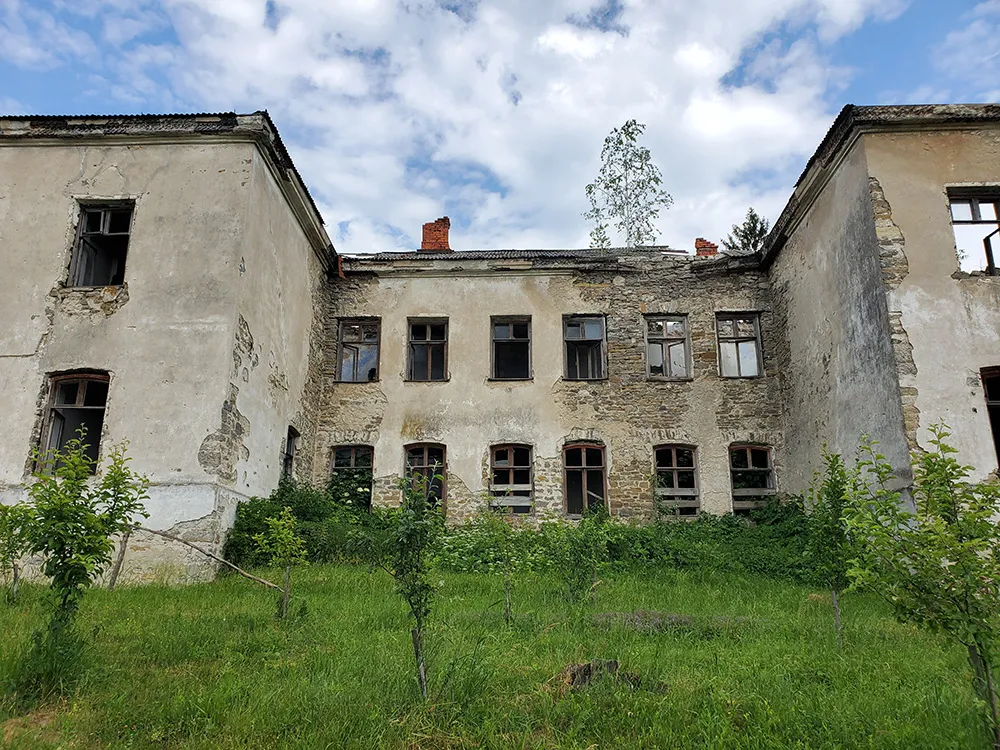
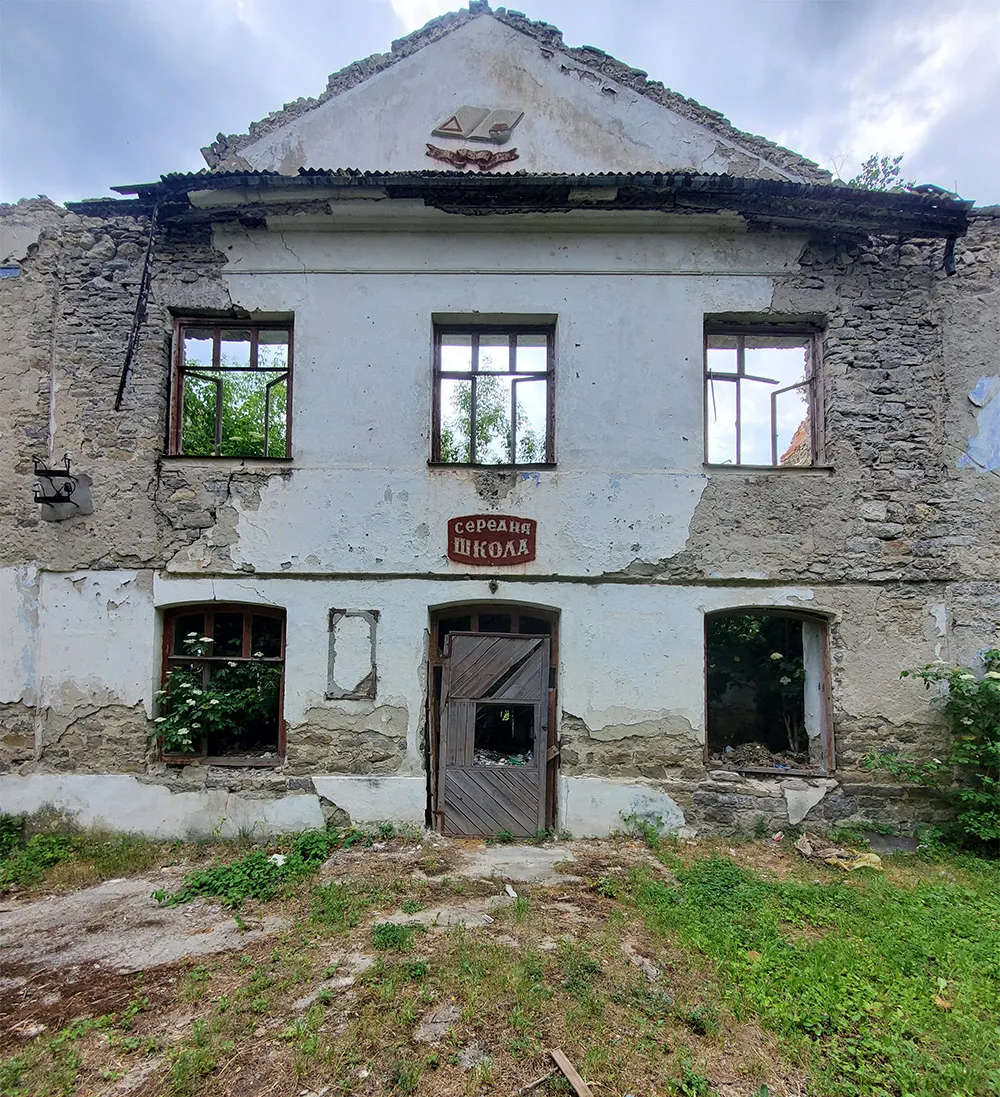
An interesting structure is the old school built of rubble stone. Unfortunately, we were unable to find out what building it is and from what period. It could have been built under the tsarist regime as well as in the 1930s.
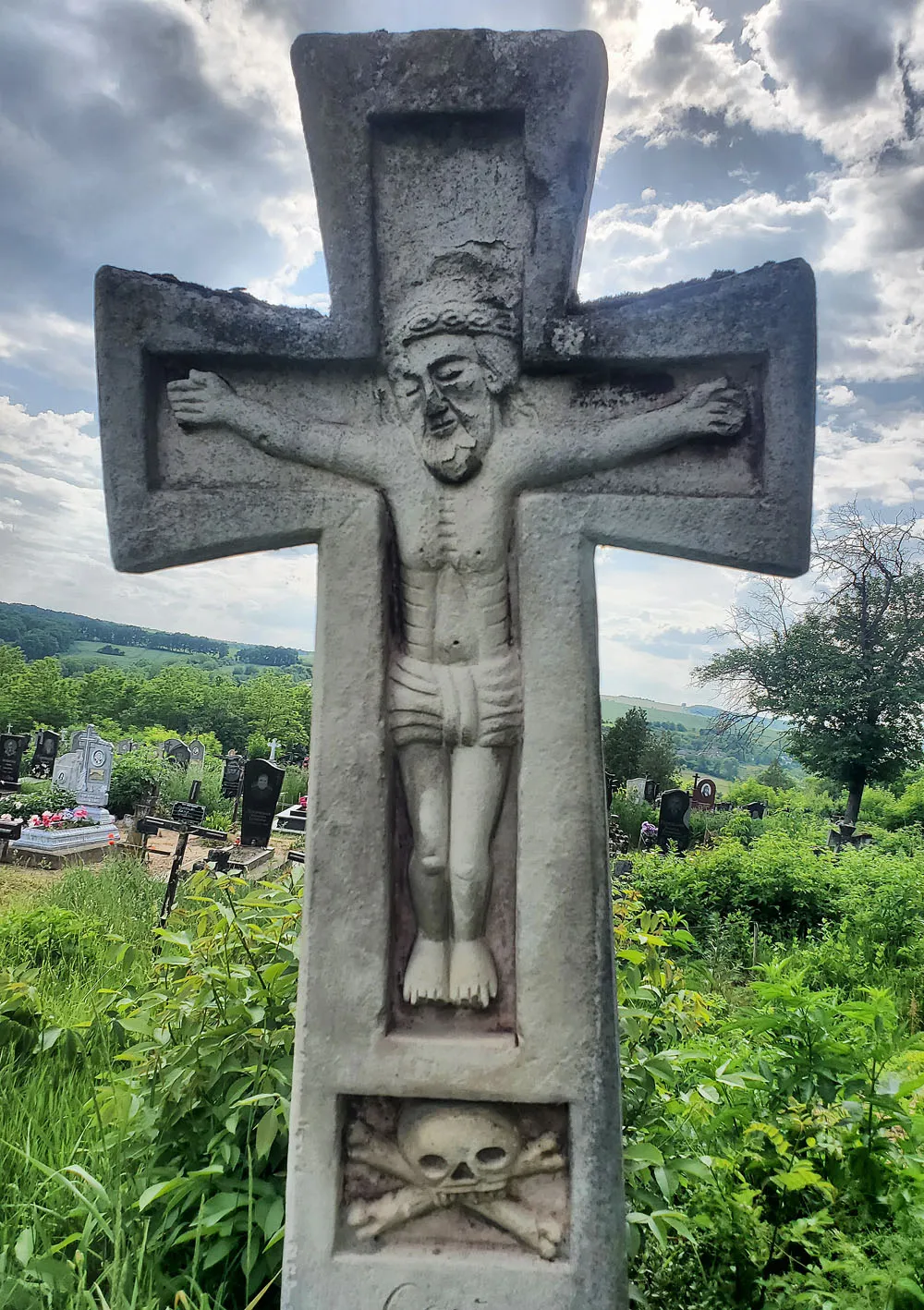
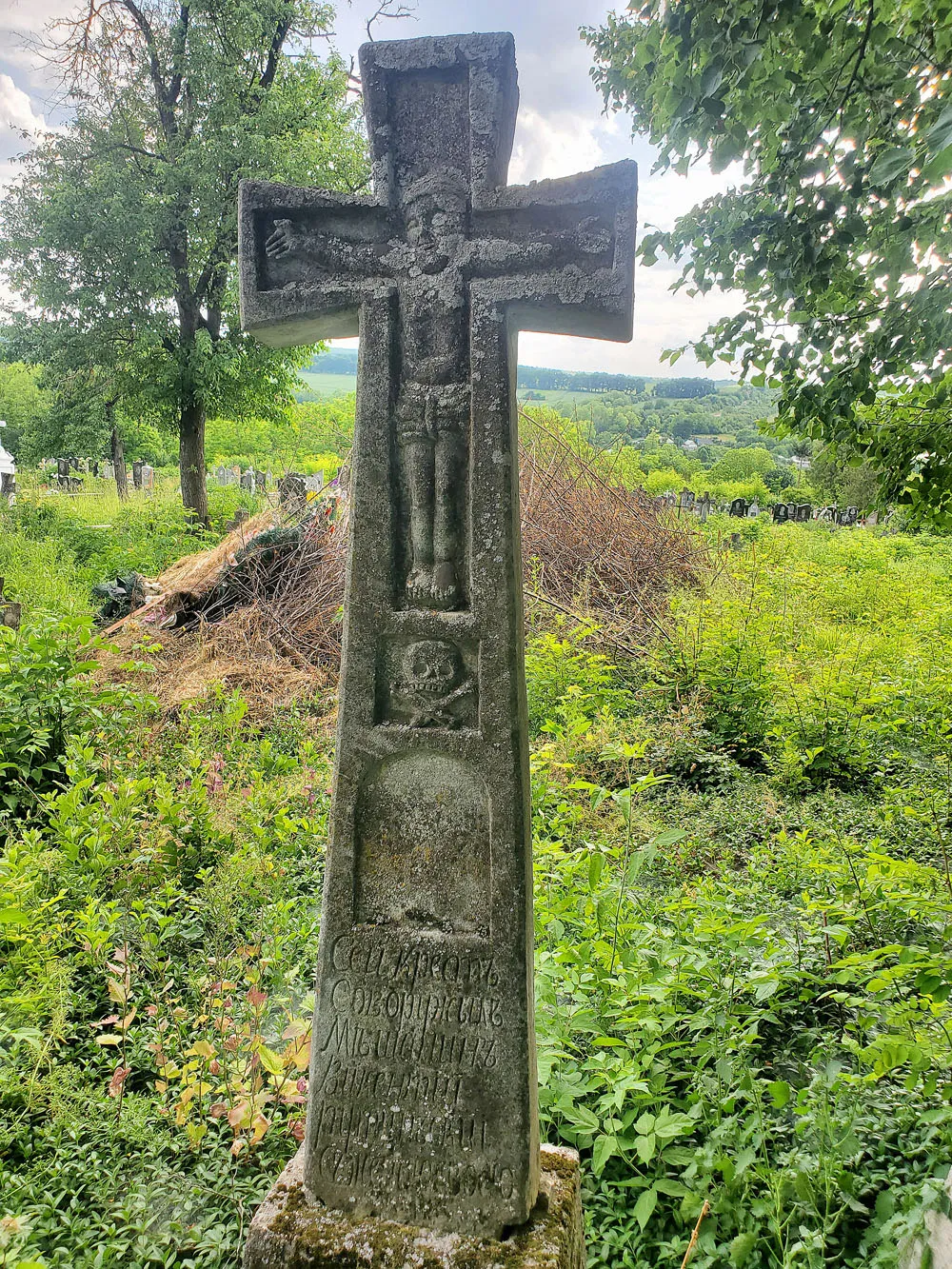
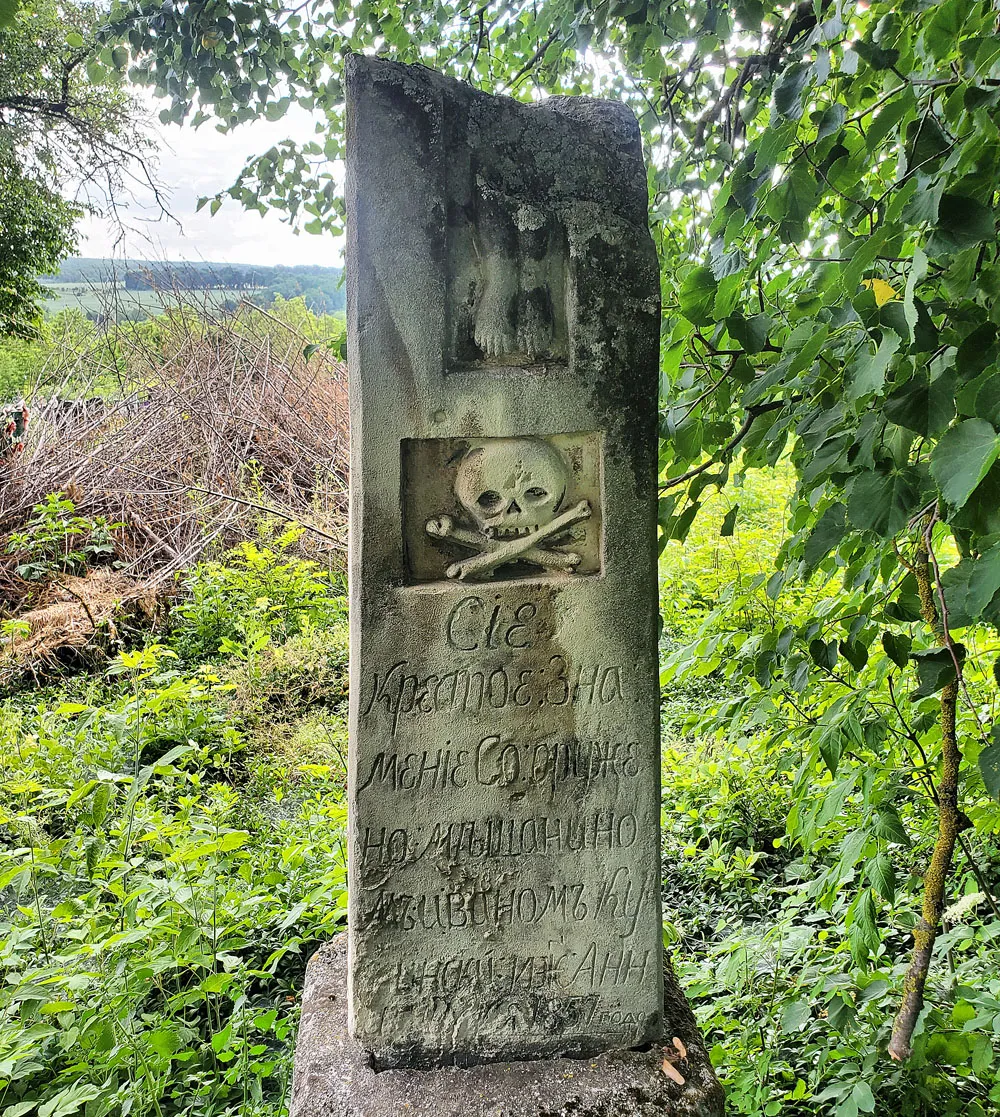
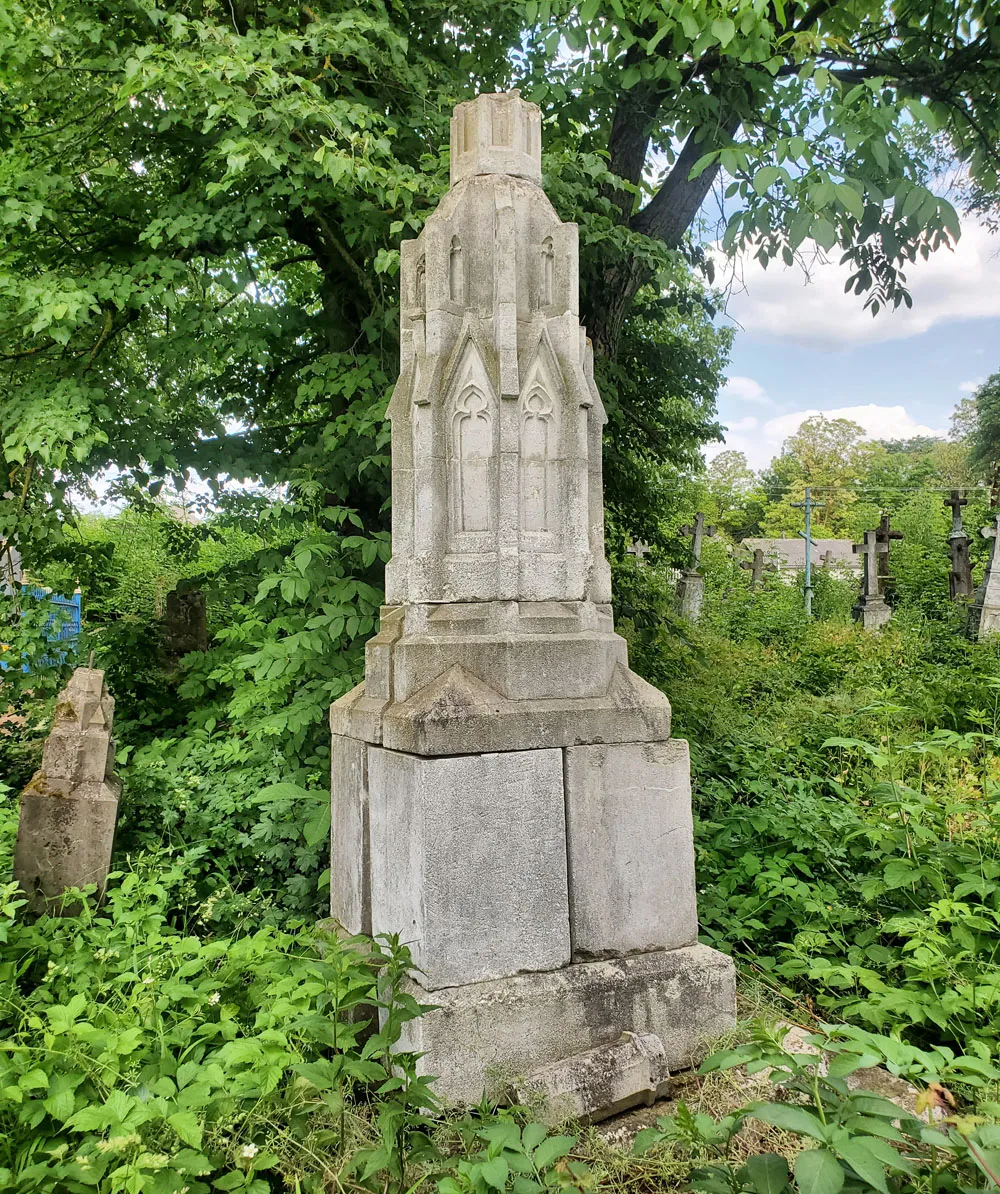
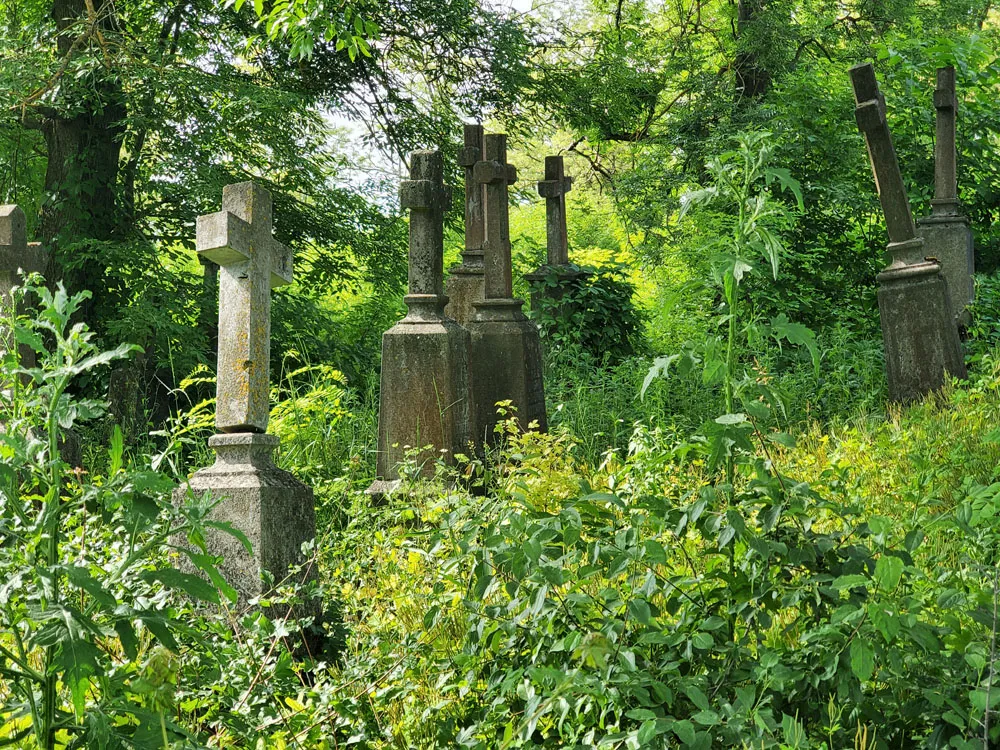
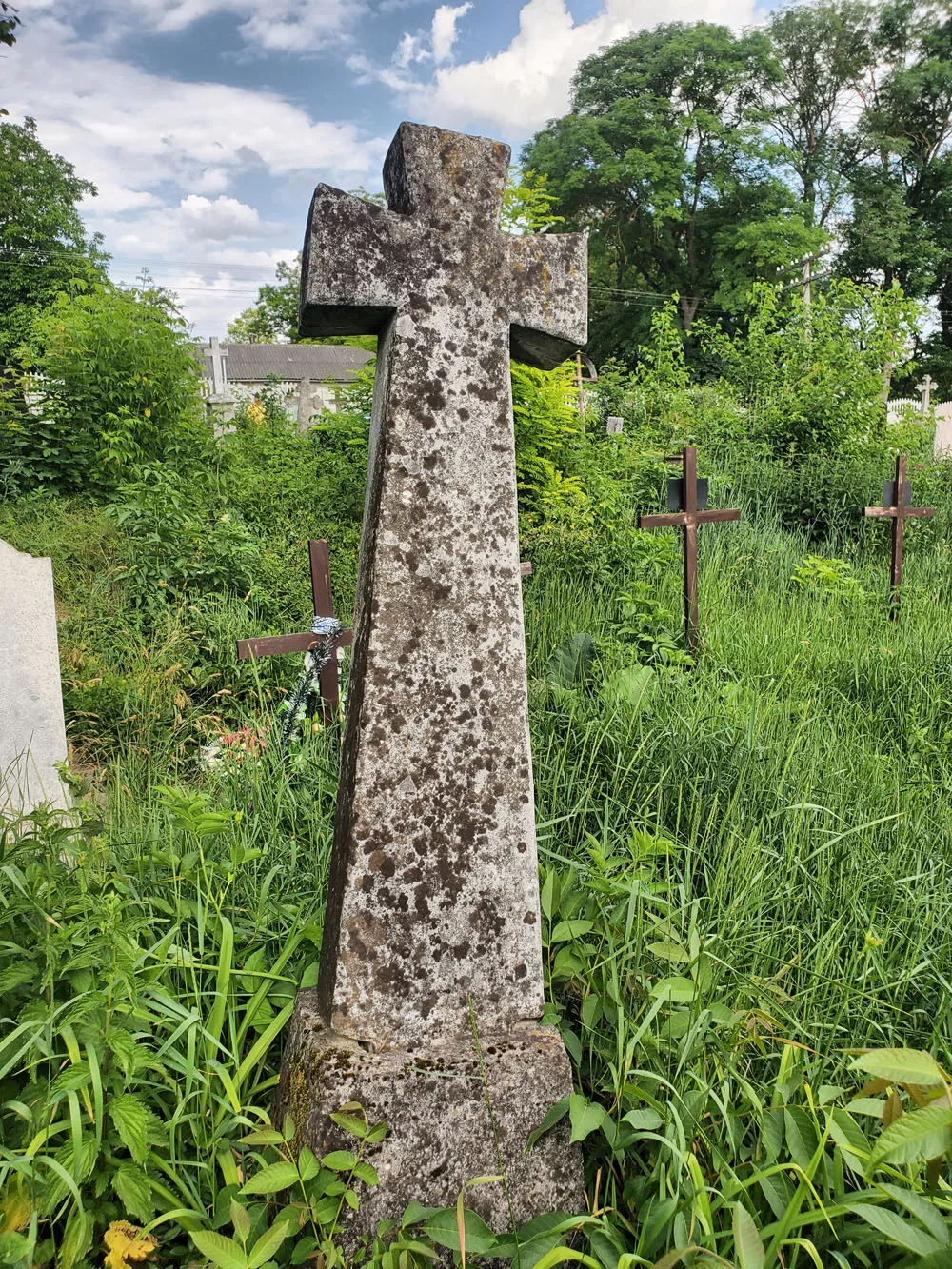
As for the cemetery, it has its own unique features. In particular, one can see here a number of mid-19th-century crosses that have no analogues in the necropolises of this part of Podillia. They are characterised by a very interesting depiction of the Saviour in the style of folk primitivism and of Adam’s skull, as if sunk into niches in the surface of the cross.
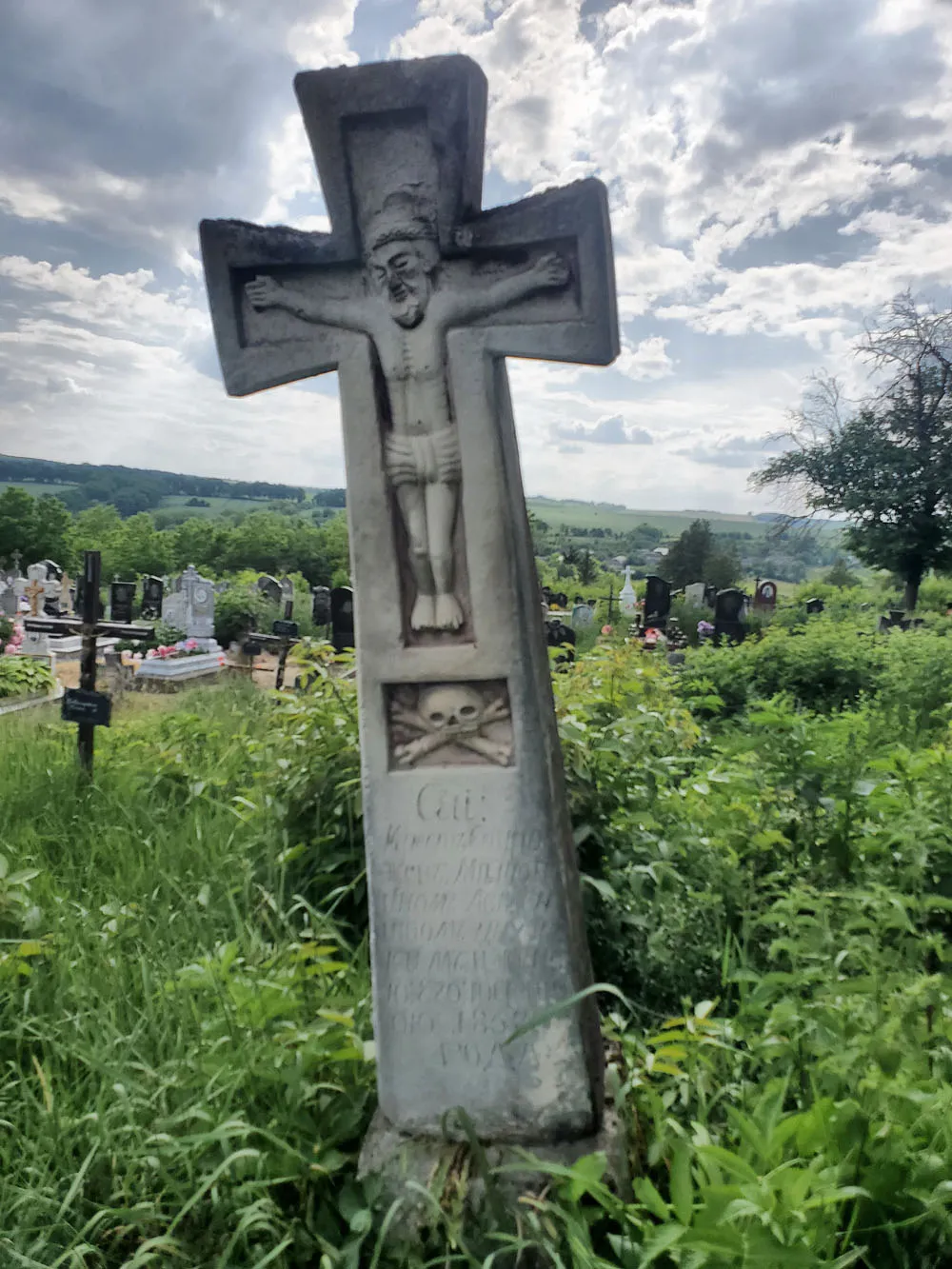
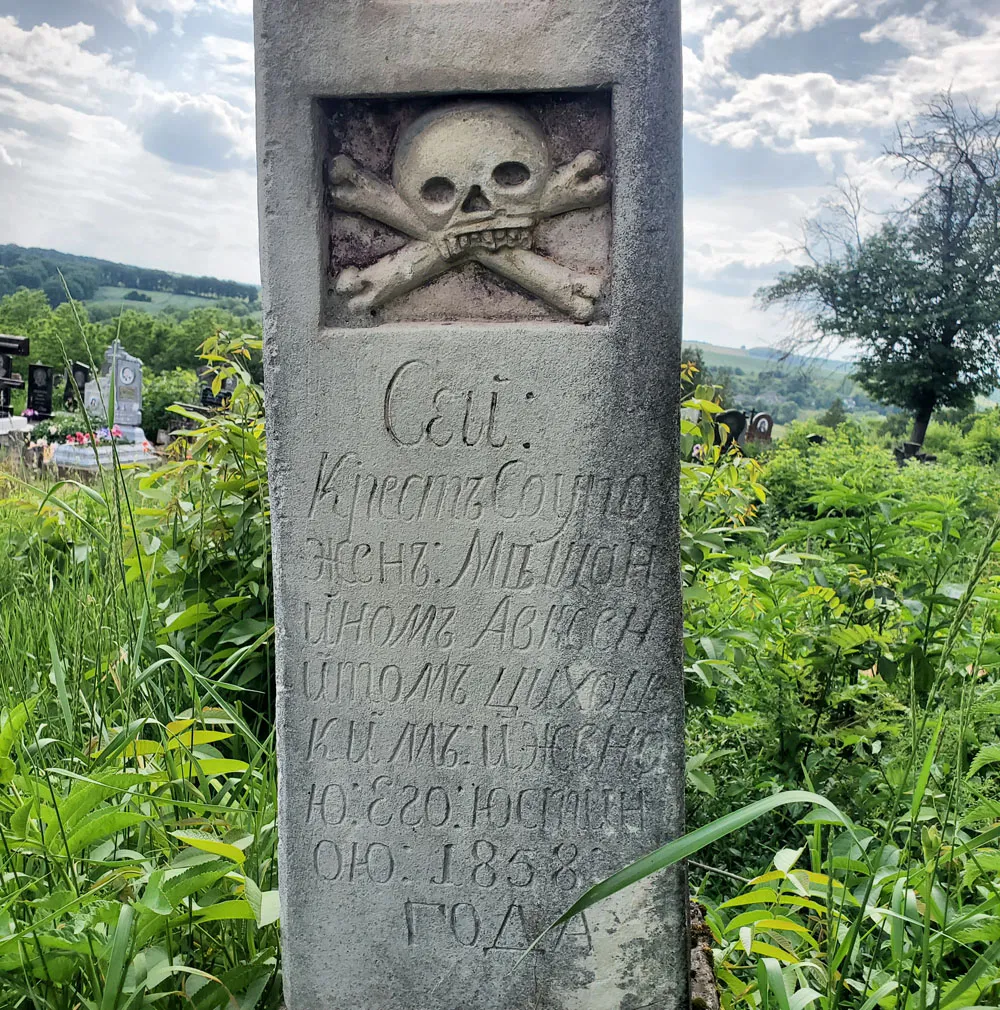
There are also crosses of the “Cossack” shape here. But the “cross-shaped” crosses (khreshchatyi type), which make up the main body of the cemetery in the neighbouring town of Kupyn (also on the Smotrych River), as well as in Horodok and its surroundings, we did not find here.
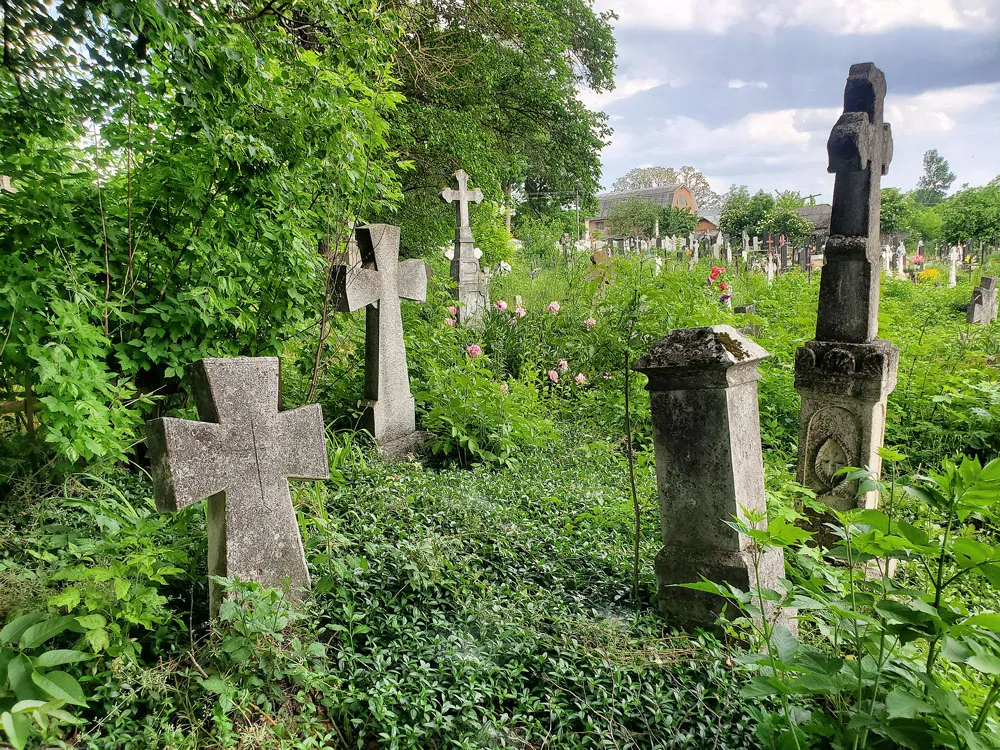
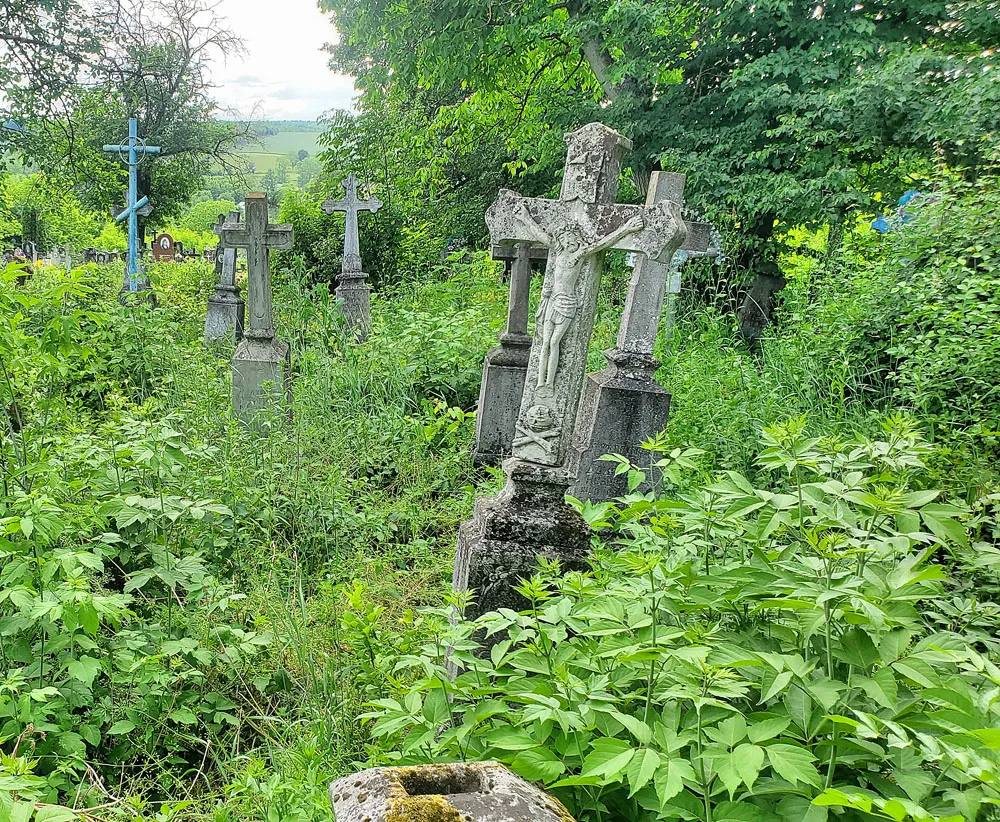
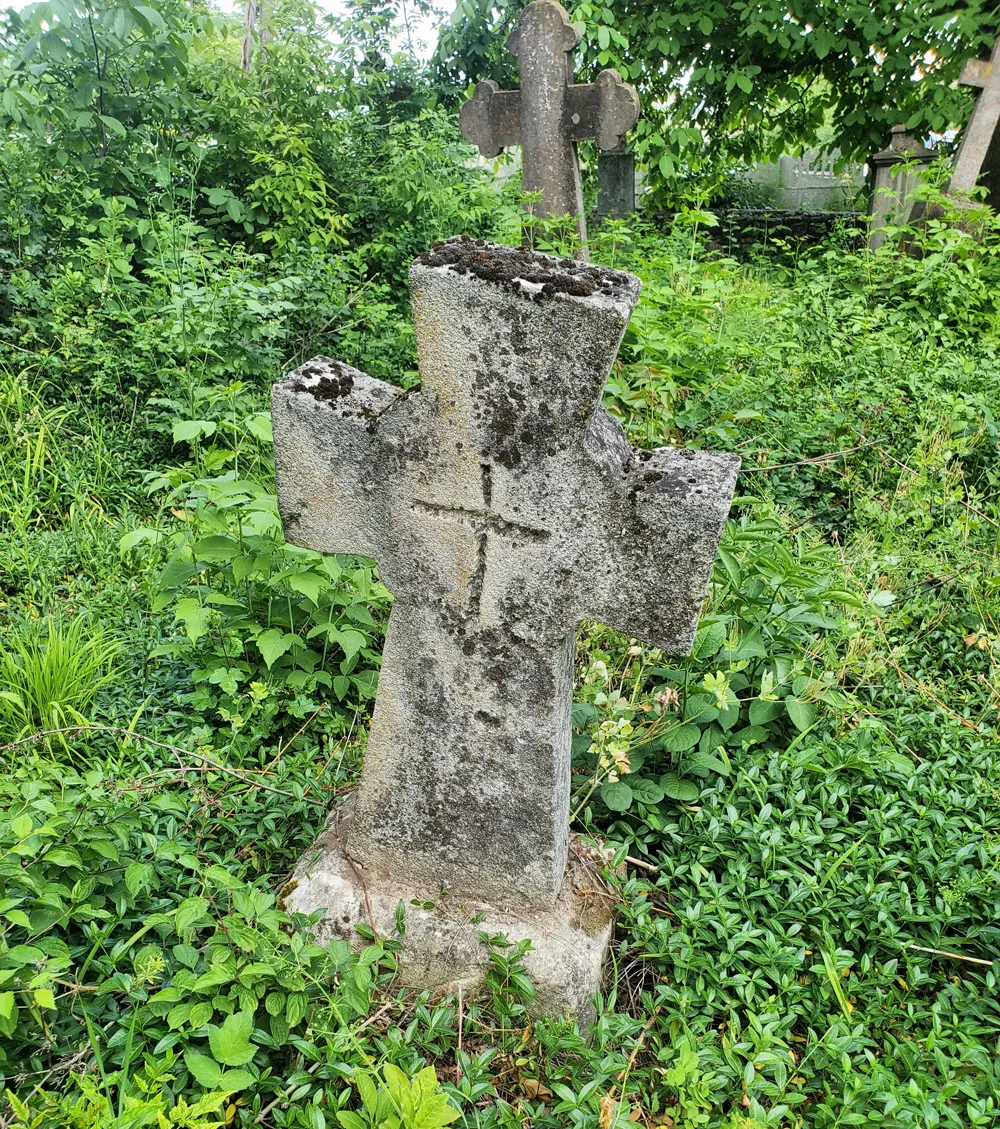
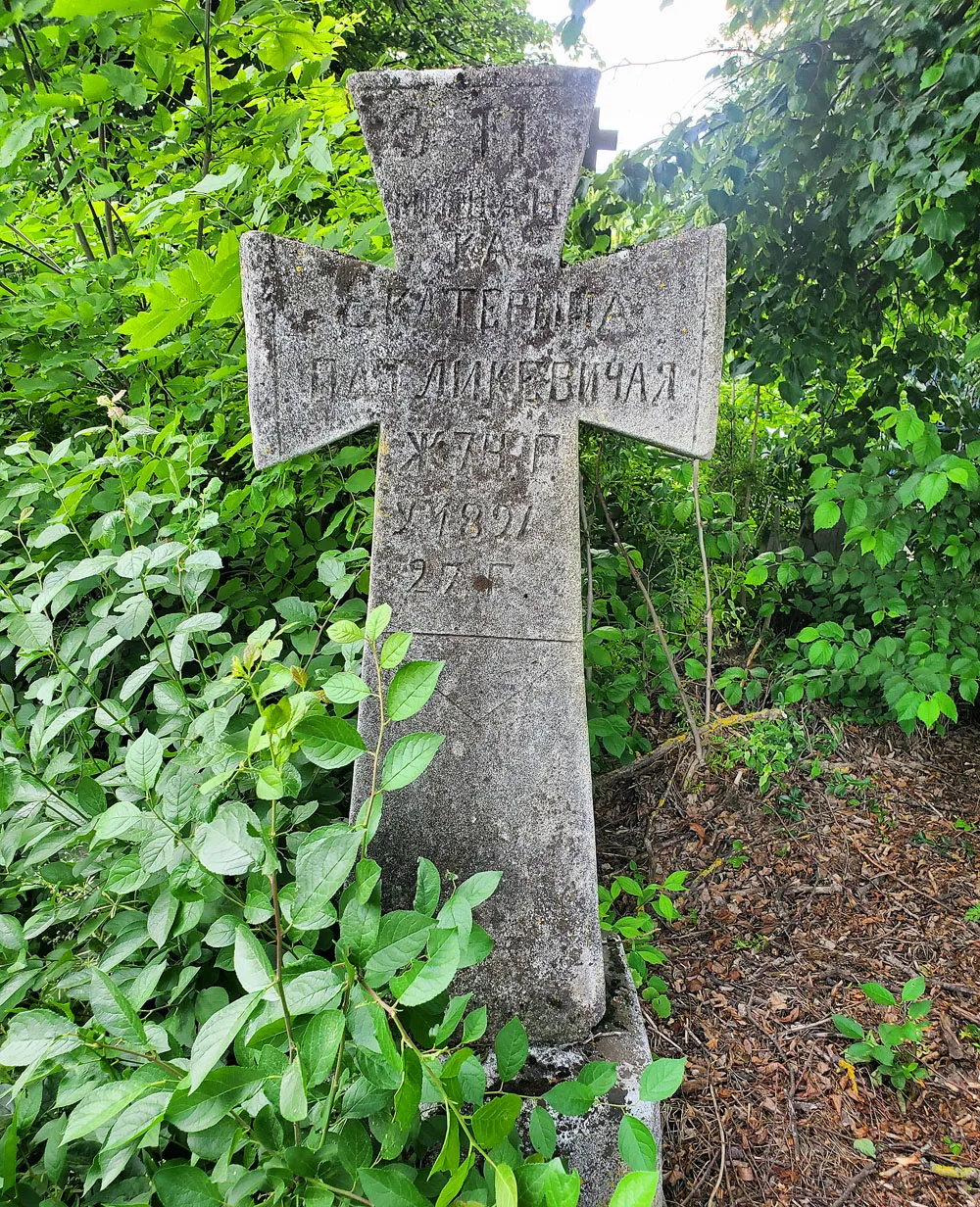
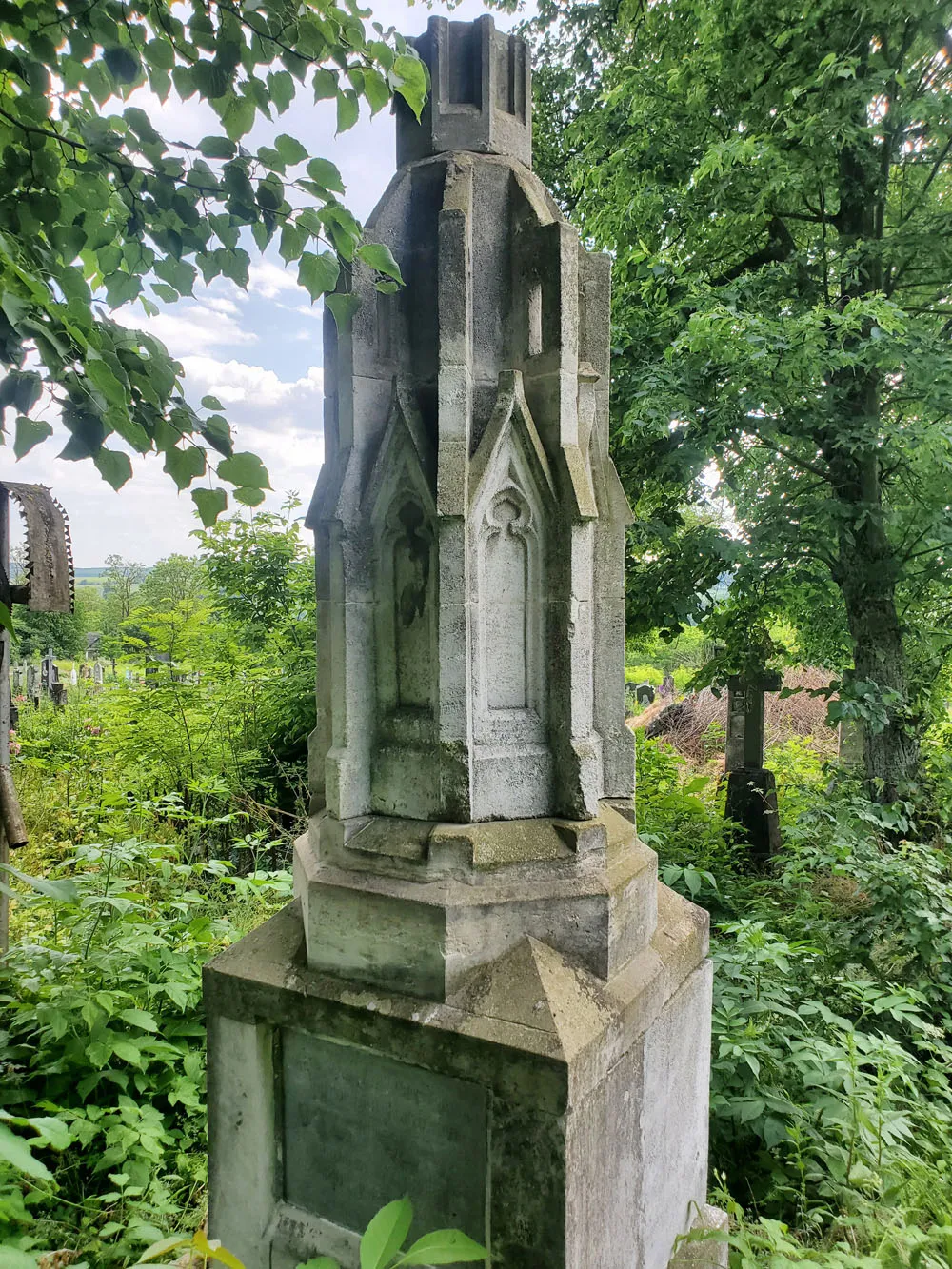
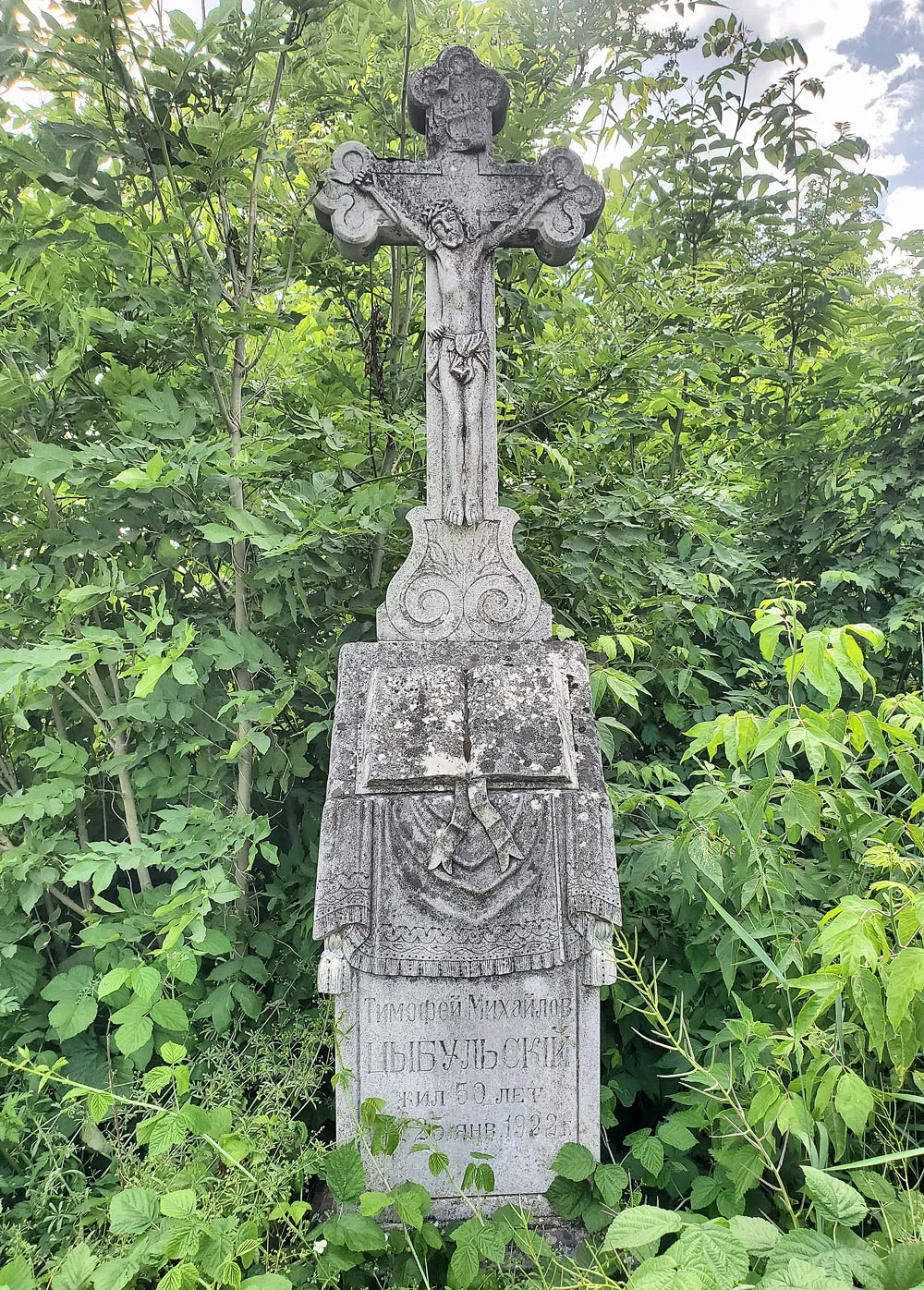
But we did find stone crosses with an open book and a shroud from the 1920s. Similar ones (and, in all likelihood, the work of the same master) were recorded by the Ukraine Incognita expedition in the cemetery of the village of Radkovytsi in the neighbouring Horodok territorial community.
In Smotrych we also have a whole series of Jewish monuments. In particular, the cemetery is one of the most interesting kirkuts of Podillia. But more on that later.