Greece. Corinth and Acrocorinth

· 5 min read
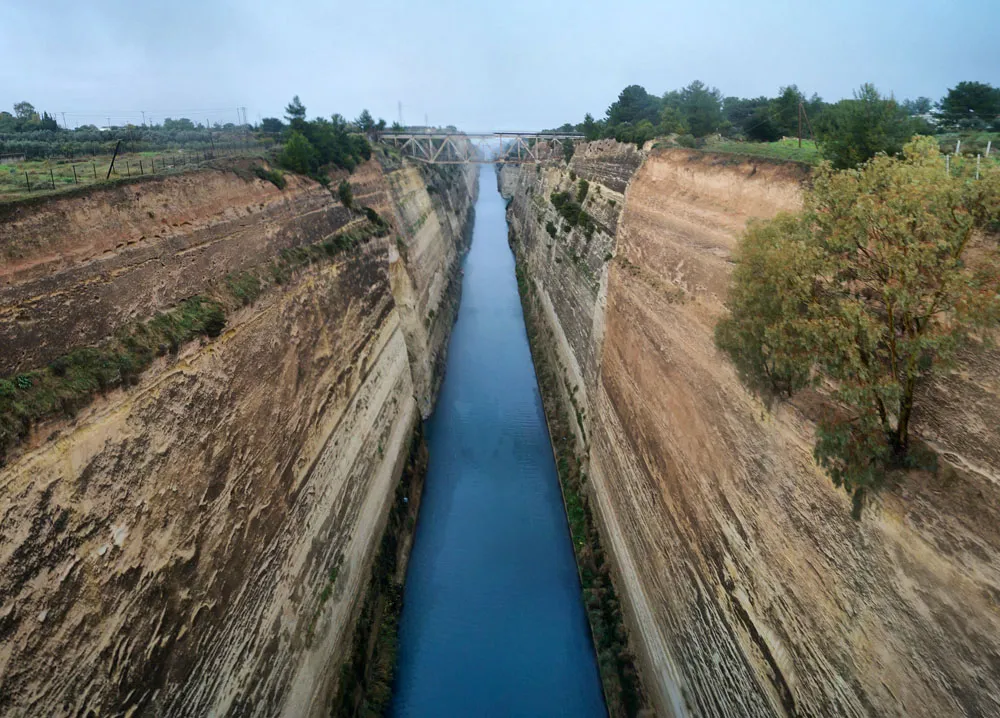
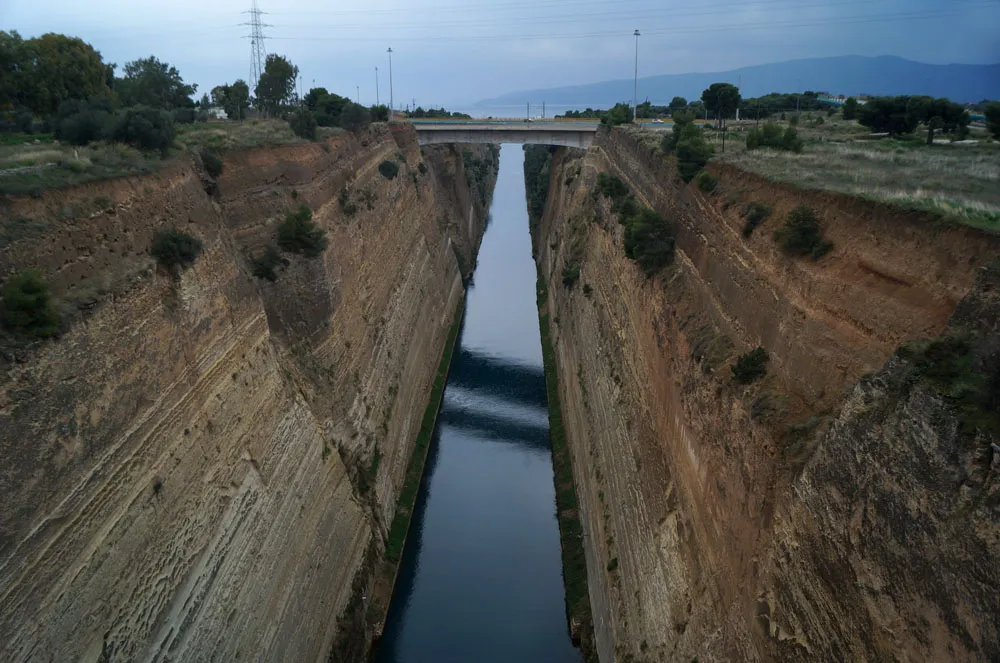
80 kilometres west of Athens along a toll motorway – and you are on the Peloponnese. The peninsula begins with the narrow six-kilometre Isthmus of Corinth, which was cut by a canal in the 1880s, in effect turning the peninsula into an island. The Corinth Canal connected the Ionian Sea with the Aegean and thus spared numerous merchant ships from having to sail around the whole Peloponnese. The canal is 24 metres wide and 8 deep, its walls are up to 75 metres high, and up to 11,000 vessels pass through it every year.
The Corinth Canal is the first attraction of the Peloponnese. It is best viewed from the bridge – two towering stone walls make the canal very photogenic, so no tourist skips it – everyone photographs the waterway and takes selfies against its background. But 15 kilometres away there is a far more interesting monument – the acropolis of the legendary ancient polis of Corinth. A unique acropolis with a name of its own – Acrocorinth.
Probably some 95 percent of tourists who love architecture have heard of the Corinthian order, and especially of its columns. It is the most perfect order of classical Greek architecture, and it is probably superfluous to say that only a highly developed country could reach such a level of art in architecture. They had the time and resources to create, and accordingly were so powerful that in that turbulent world they could afford to do more than just fight.
You have all heard of Sisyphus, who decided to cheat death and the god Hades, for which he was punished by Zeus with eternal labour – rolling a stone uphill. Sisyphean labour is absurd, hard, endless work. Well, Sisyphus was the founder of Corinth and its king, of course, if one believes the myths. And this labour was not absurd at all, since he created one of the best cities of the ancient world. And Sisyphus was also the father of Odysseus – you have probably heard of the greatest trickster of the ancient world too.
The city that preceded Corinth is believed to have been called Ephyra and to have been founded 8,000 years ago. In the 12th century BC the Dorians, who captured Corinth, created their royal dynasty. From then on the polis developed steadily, since it occupied an exceptionally advantageous trading and strategic position. Access to two seas – the Aegean and the Ionian – allowed Corinth to conduct brisk trade. On the isthmus the Corinthians set up a toll portage for cargo, and earned well from this too. Having built a powerful fortress on the isthmus, at the crossing of the main trade routes to the Peloponnese, to Sparta, Olympia, Mycenae and Argos, Corinth at some point became the richest city of Hellas. It began an active colonization of near and distant lands, reaching Albania, Macedonia and even Sicily – the legendary Syracuse is also a colony founded by Corinth.
Oligarchy, tyranny, an alliance with Sparta and constant wars led to Corinth’s decline in the 4th century BC. It turned into an ordinary city that stronger powers – Athens, Sparta, Macedonia – could easily subjugate. Several powerful earthquakes badly damaged the city, but in 44 BC Julius Caesar rebuilt it, renaming it Colonia Laus Iulia Corinthiensis. A new period of prosperity and enrichment of the polis began. It now grew not on the mountain, in the inconvenient and uncomfortable Acrocorinth, but below the mountain, in the lower city. In the Byzantine period Corinth was the capital of the entire Morea peninsula.
Then came the crusaders, who captured Constantinople and attached Corinth to the Principality of Achaea of the Villehardouins; later, in the 1350s, the city passed to the Florentines, then the Byzantines again, twice the Ottomans and twice the Venetians… Well, you get the idea – nothing original. From 1715 until Greek independence Corinth was the centre of the Morea sanjak of the Ottoman Empire. And in 1858 a powerful earthquake destroyed the polis and it was not rebuilt – a new city called New Corinth was built on the shore of the Ionian Sea. In time it came to be called simply Corinth, and the ruins of the ancient city began to be called Ancient Corinth. Such is the story.
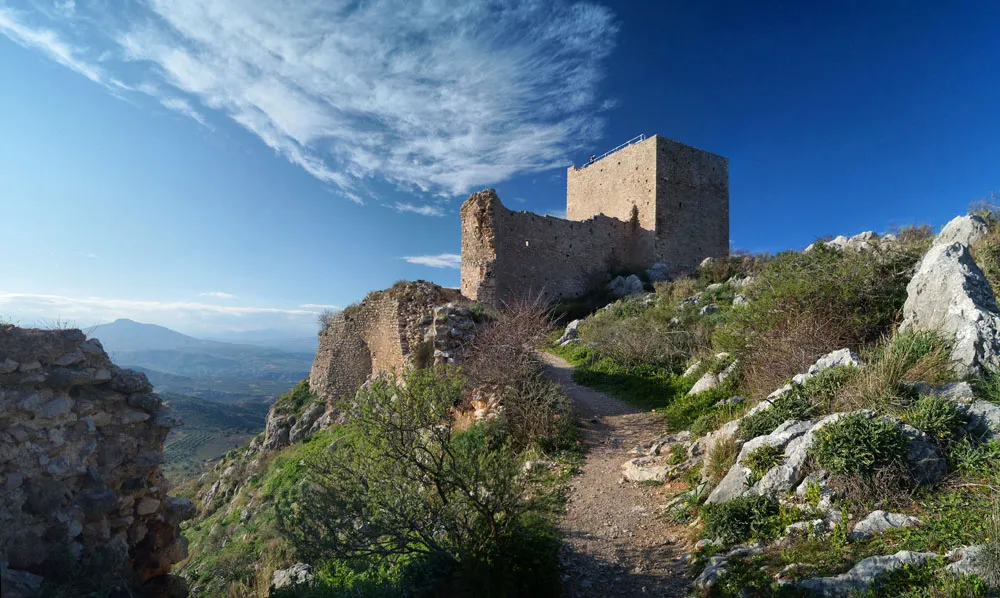
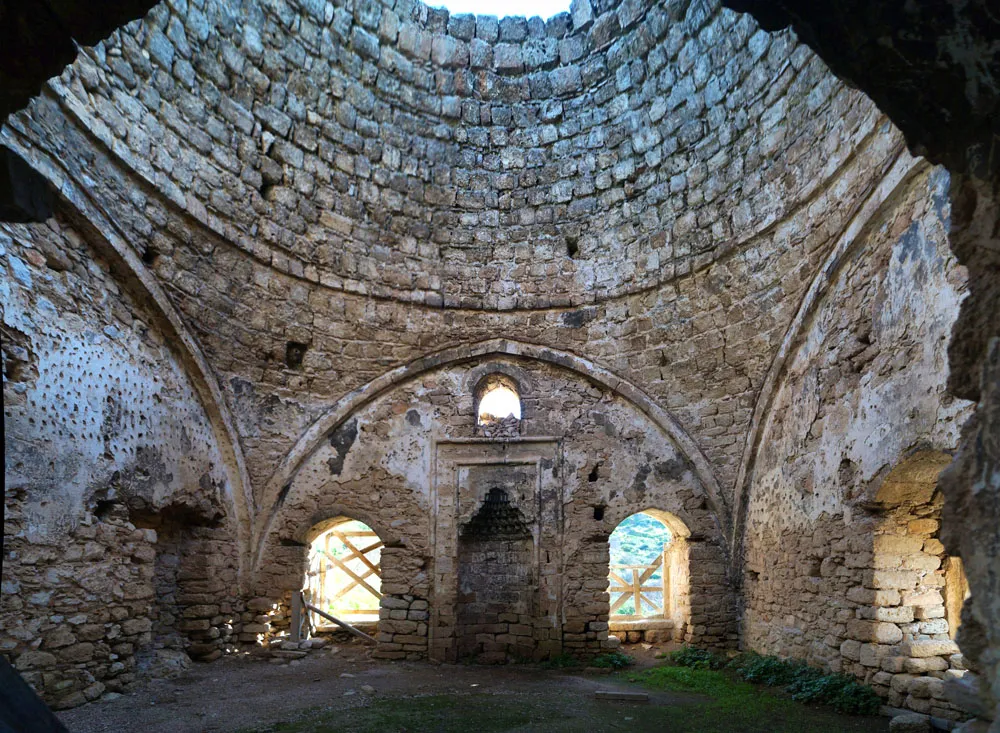
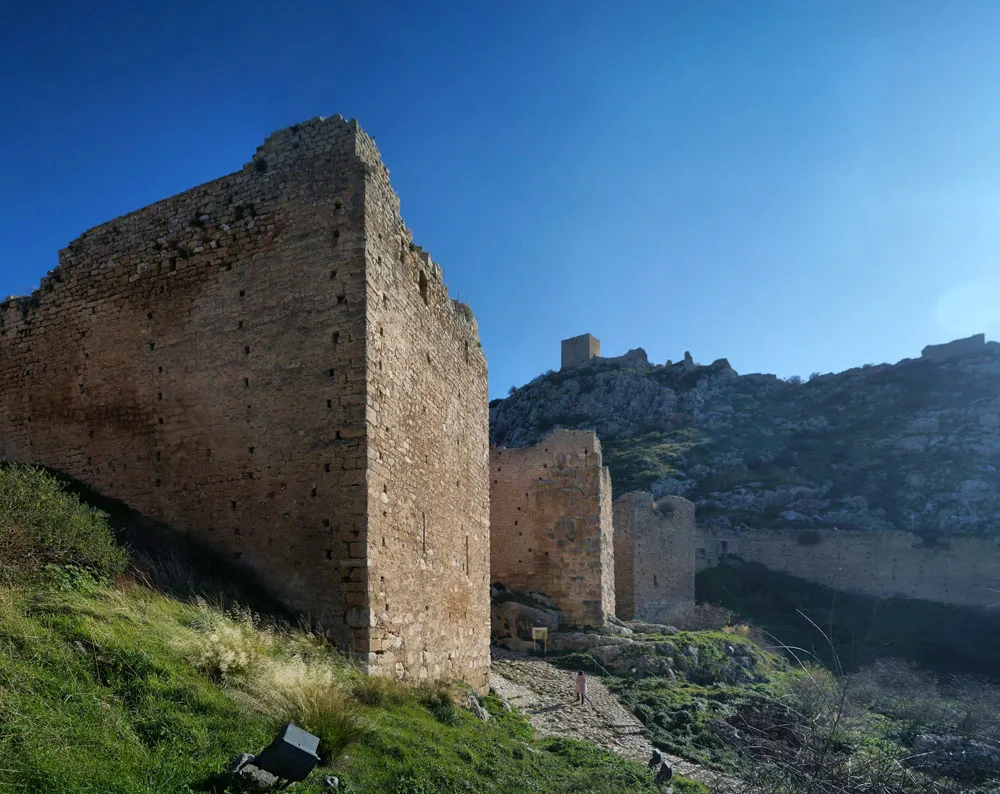
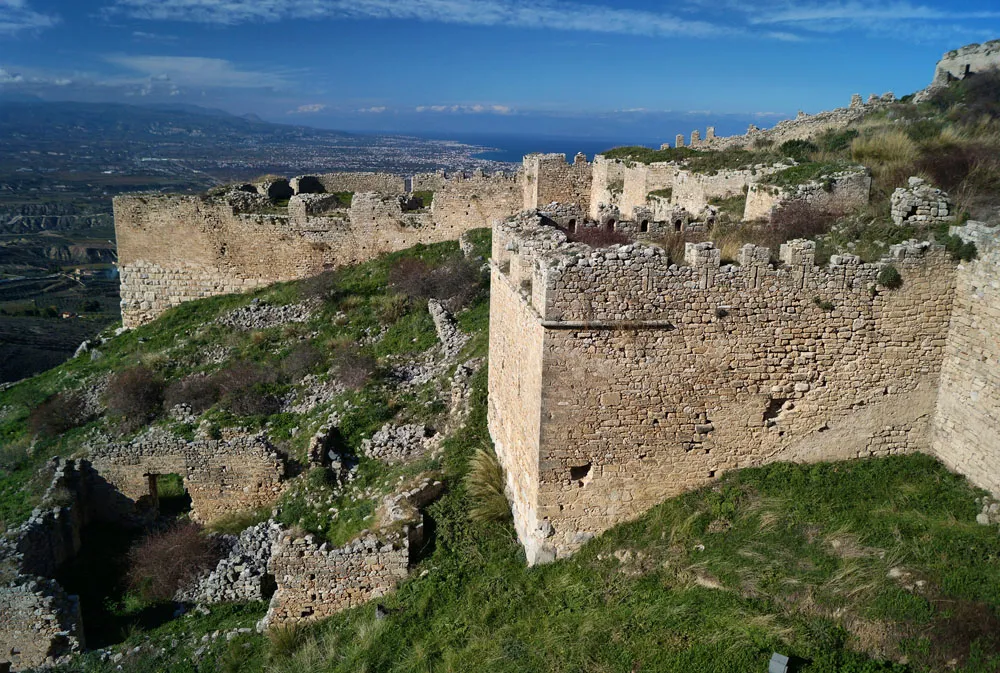
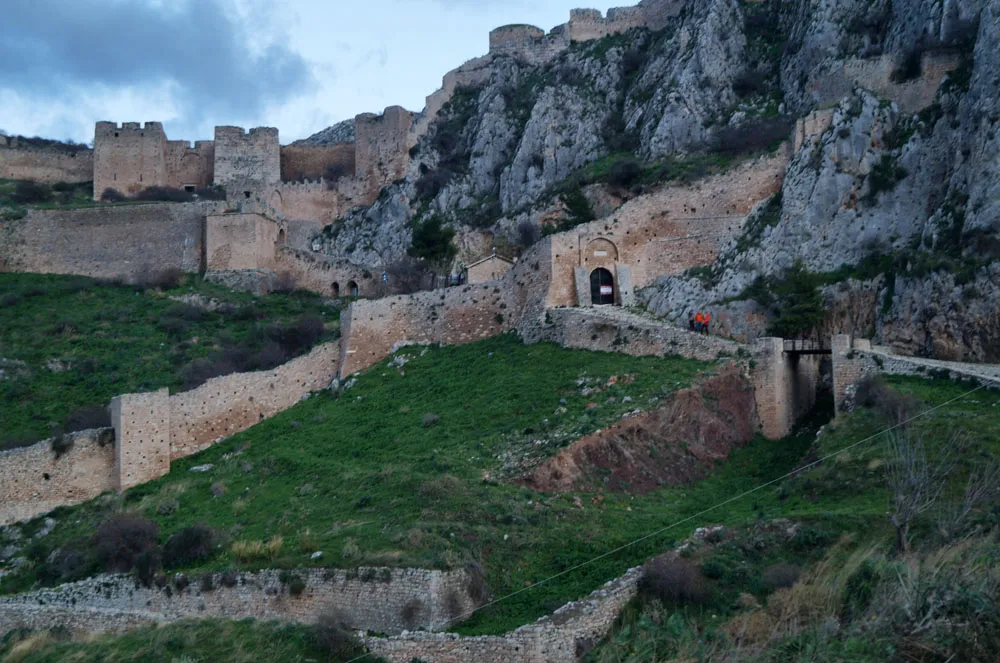
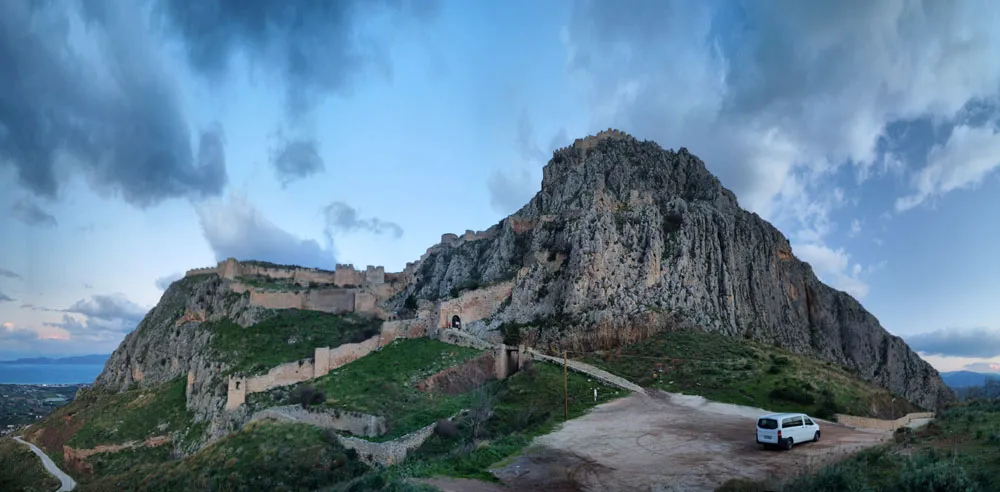
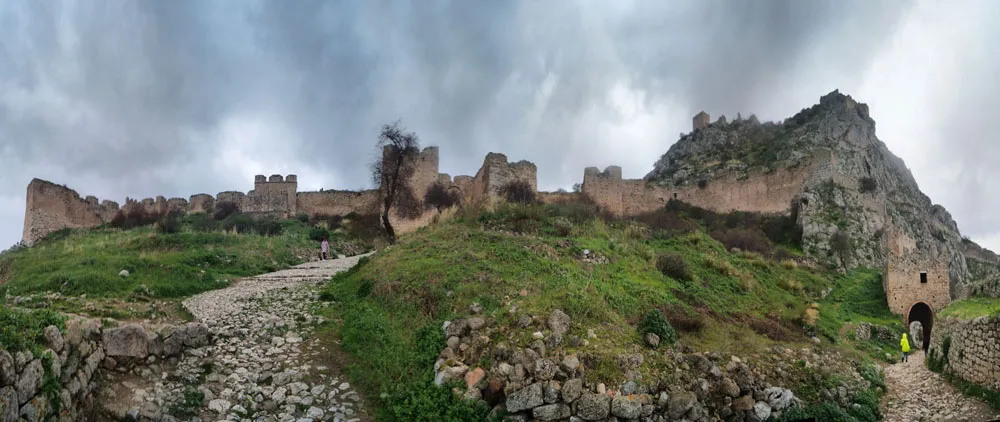
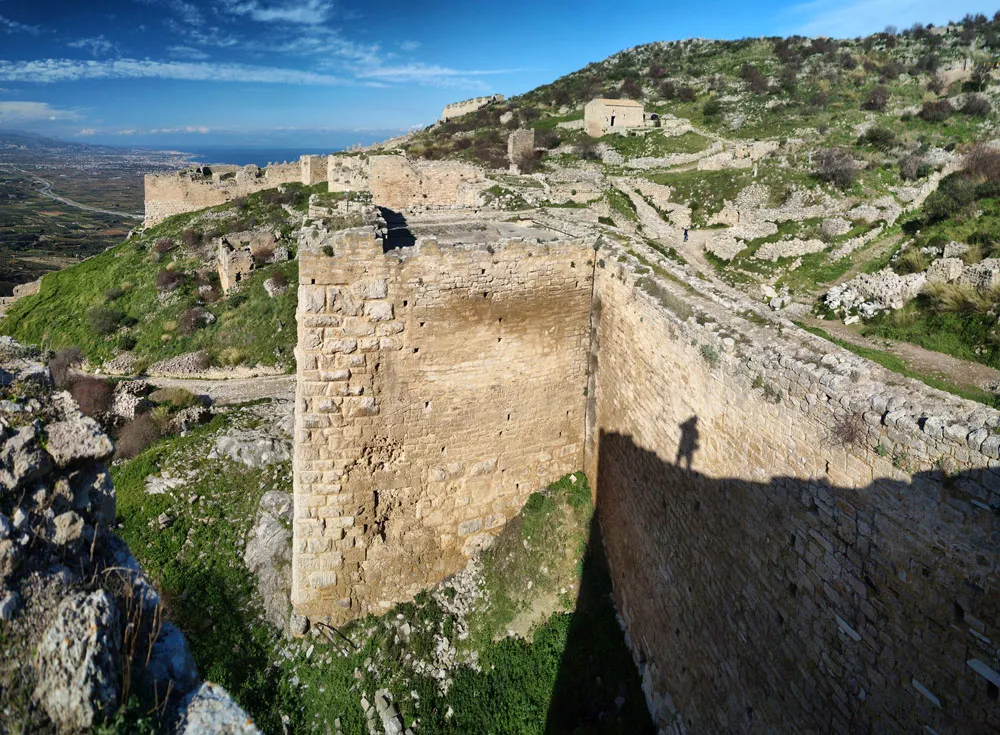
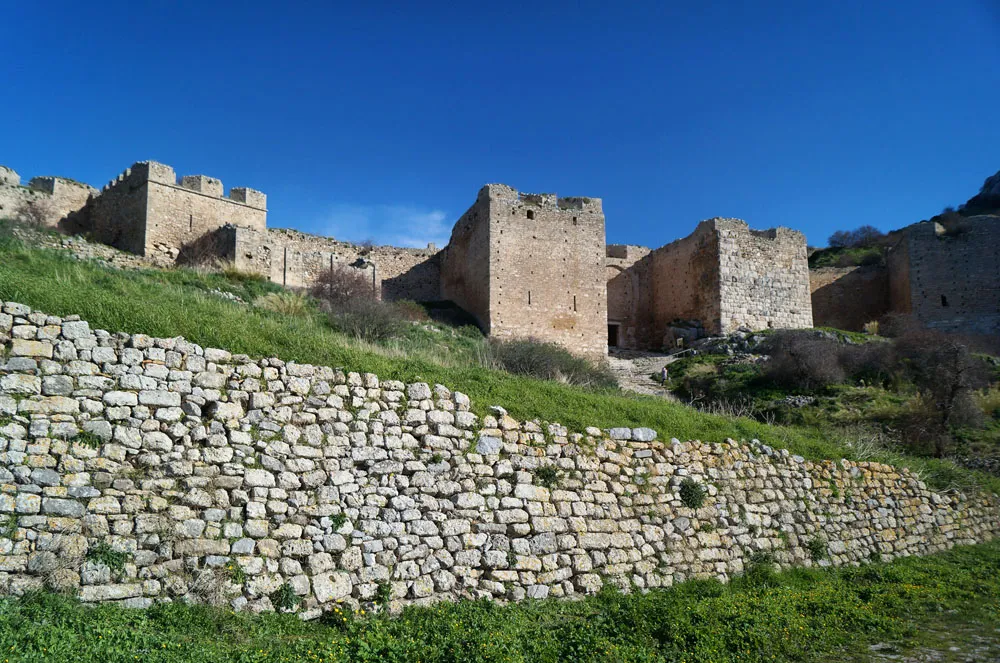
I got into Acrocorinth, onto the territory of the fortress, only on the third attempt. The thing is that in winter the fortress admits visitors only until 15:00, and we arrived first at 15:20, and then a little earlier. Only on the way back from the Peloponnese to Athens did we drive up the steep mountain where the ruins of Acrocorinth are scattered, at 13:00. Having entered the legendary city through the gate, I understood why they close so early. The territory here is gigantic and the cliffs are steep; there is no level road, only stony paths, so wandering here at night is dangerous to health and life. And in winter the day is short and it gets dark quickly.
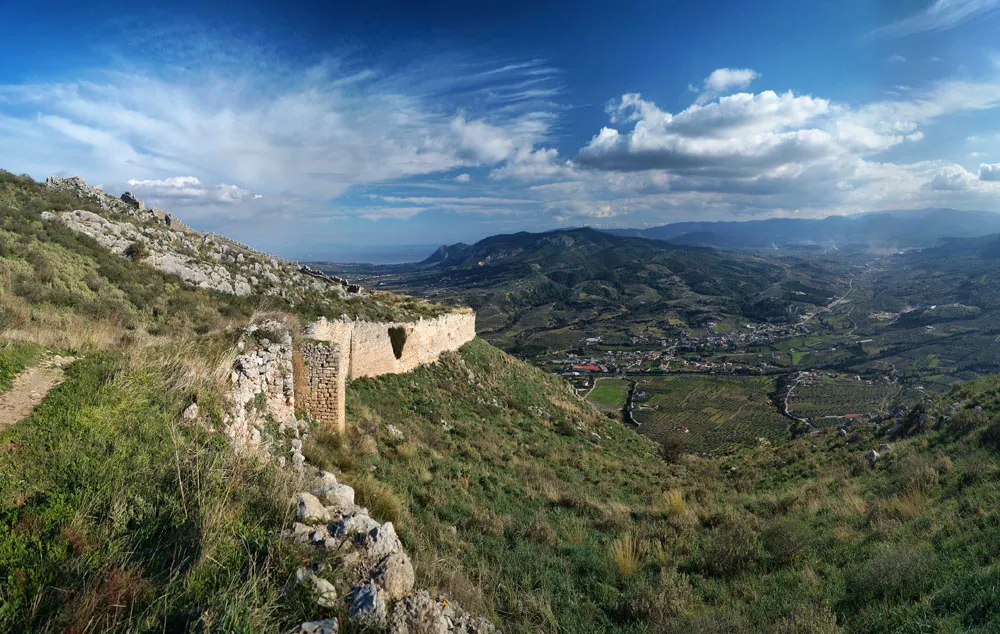
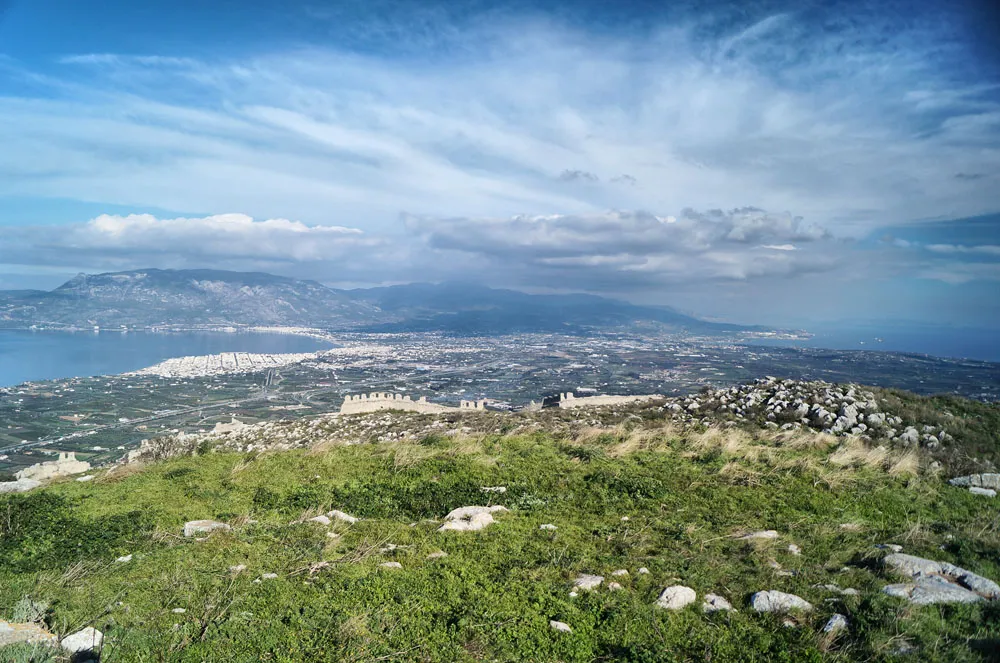
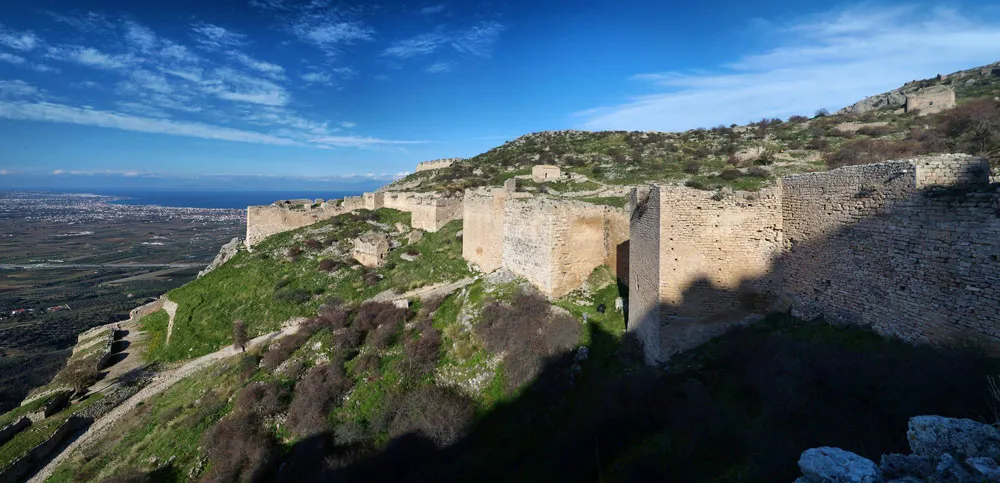
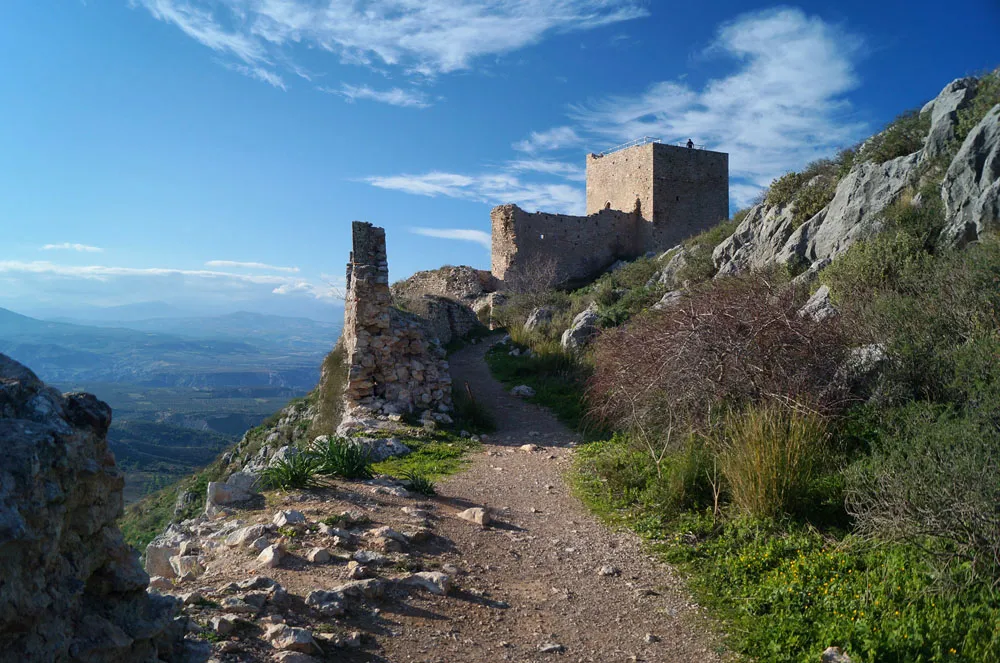
Numerous walls, towers, bastions, casemates, churches, mosques, minarets, posterns and stunning nature with fairy-tale views – this is Acrocorinth on a fine sunny day. Yes, almost everything here is half in ruins, but this is exactly what can be called a romantic ruin. And at the very top is a tower with a viewing platform. We left it with a loud siren, having given Acrocorinth three hours. We could have given more. Below, under the mountain, there are remains of the lower city, with baths, columns (of the Corinthian order) and cobbled streets, but believe me, that is not the same at all. Do not miss Acrocorinth.
Text and photos by Roman Malenkov.