

Kamianets in the circle of cultures
For three days, from 21 to 23 April, the first stage of the annual “Circle of Cultures” festival took place in the Podillia tourist gem, the city of Kamianets-Podilskyi. It was initiated by the Kamianets-Podilskyi State Historical Museum-Reserve and the city’s national communities with the support of the city council. As Podillia News reports, the first community to present its multifaceted culture and traditions was the Jewish one, with the support of the regional office of the Khmelnytskyi charitable foundation “Hesed Besht”.
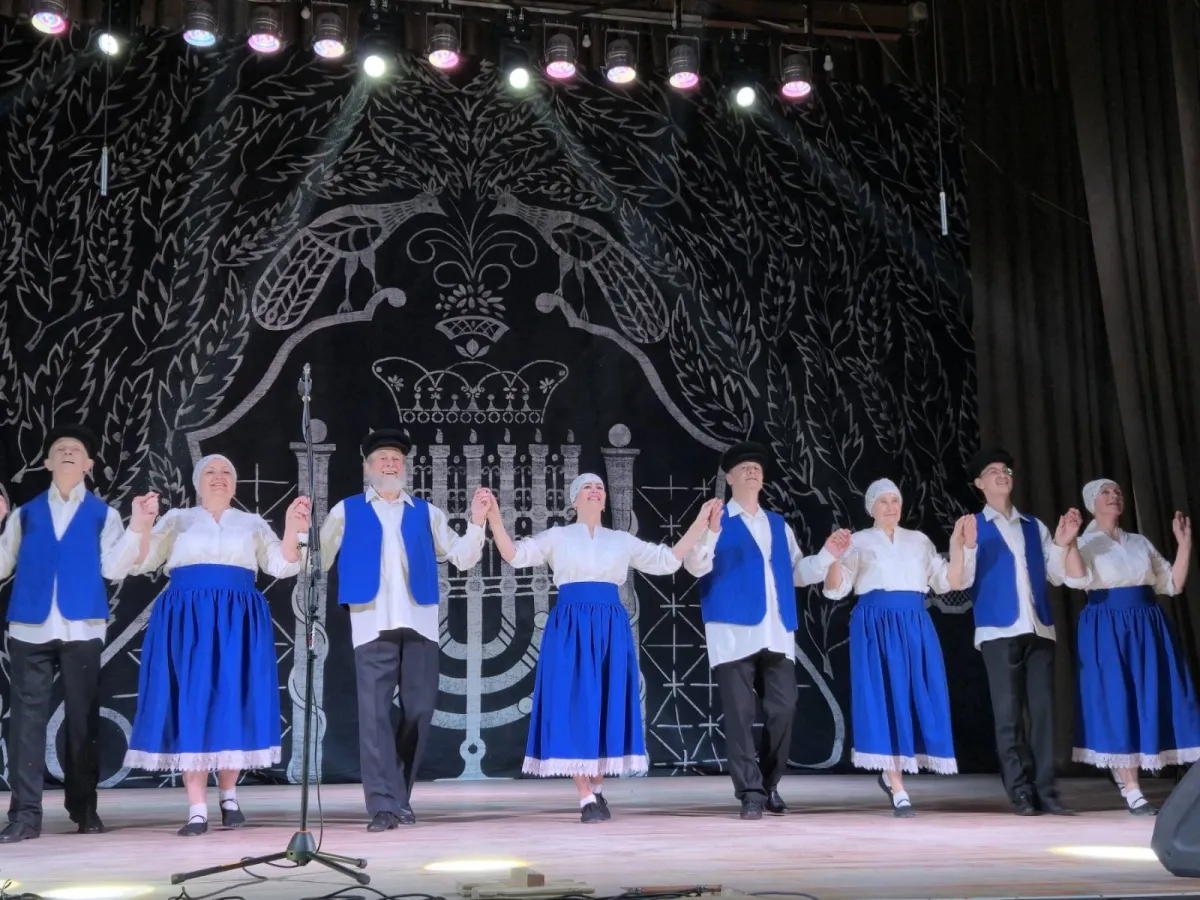
Lectures, culinary and creative workshops, educational exhibitions, excursions and a powerful festive concert — eleven events in all, each aiming to reveal to guests the beauty, diversity and meaning of the centuries-old traditions of the Jews who have lived in Podillia since the 16th century. Over the three days of their presentation at the festival, the Jewish community and the managers of the Hesed Besht charitable foundation decided to cover every available medium — from cuisine and history to immersion in the artistic aesthetics of traditional Jewish burials.
For whom and why the “Circle of Cultures” festival is held is clearly defined by its main initiator, the Kamianets-Podilskyi State Historical Museum-Reserve:
“These are several days filled with substance, history and living traditions: lectures, excursions, music, exhibitions and workshops that open up the multifaceted world of our city’s Jewish heritage. The programme ranges from an introduction to the culture and cuisine to conversations about historical memory and a modern reflection on the past. Each day has a different mood, a different emphasis, but a common idea: to understand, feel and see more.”
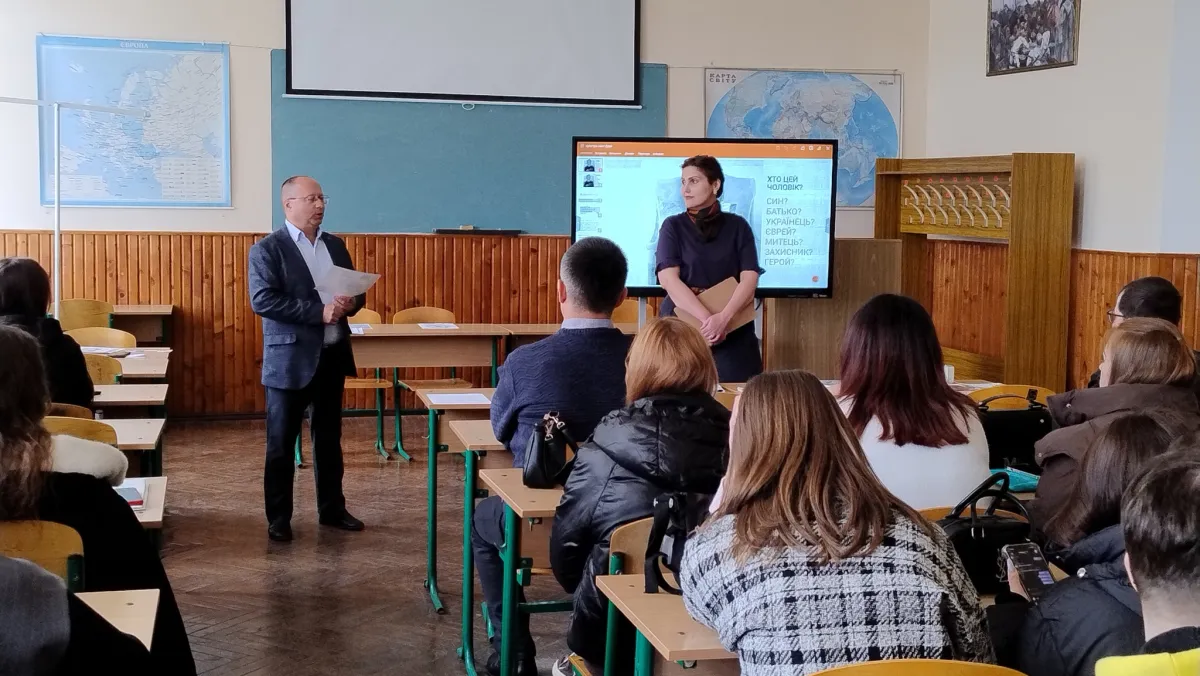
As part of the festival, a lecture from the series “Palette of Jewish Culture” was also given for students of the Faculty of History of Ivan Ohiienko Kamianets-Podilskyi National University by Olha Nikitina, public relations manager of the Hesed Besht foundation. The content and relevance of the information presented interactively to the students was commented on by the acting head of the Department of Ukrainian History, Doctor of Historical Sciences, Professor Oleksandr Komarnytskyi:
“The lecture revealed key aspects of Jewish culture, which is based on Judaism and on the languages — Hebrew and Yiddish. Participants learned about traditional educational institutions, in particular the kheder, about symbolism, and about the specifics of the life of the Jewish population within the so-called Pale of Settlement. Special attention was paid to cultural manifestations — music, art, literature and cuisine.”
The lecturer stressed that Jewish culture is distinguished by deep respect for knowledge, strong family values and a rich spiritual heritage. In this context, contemporary artists and figures were mentioned, in particular David Chichkan, Nikita Titov and Dmytro Klebanov, who in their work reflect on historical memory and cultural identity.
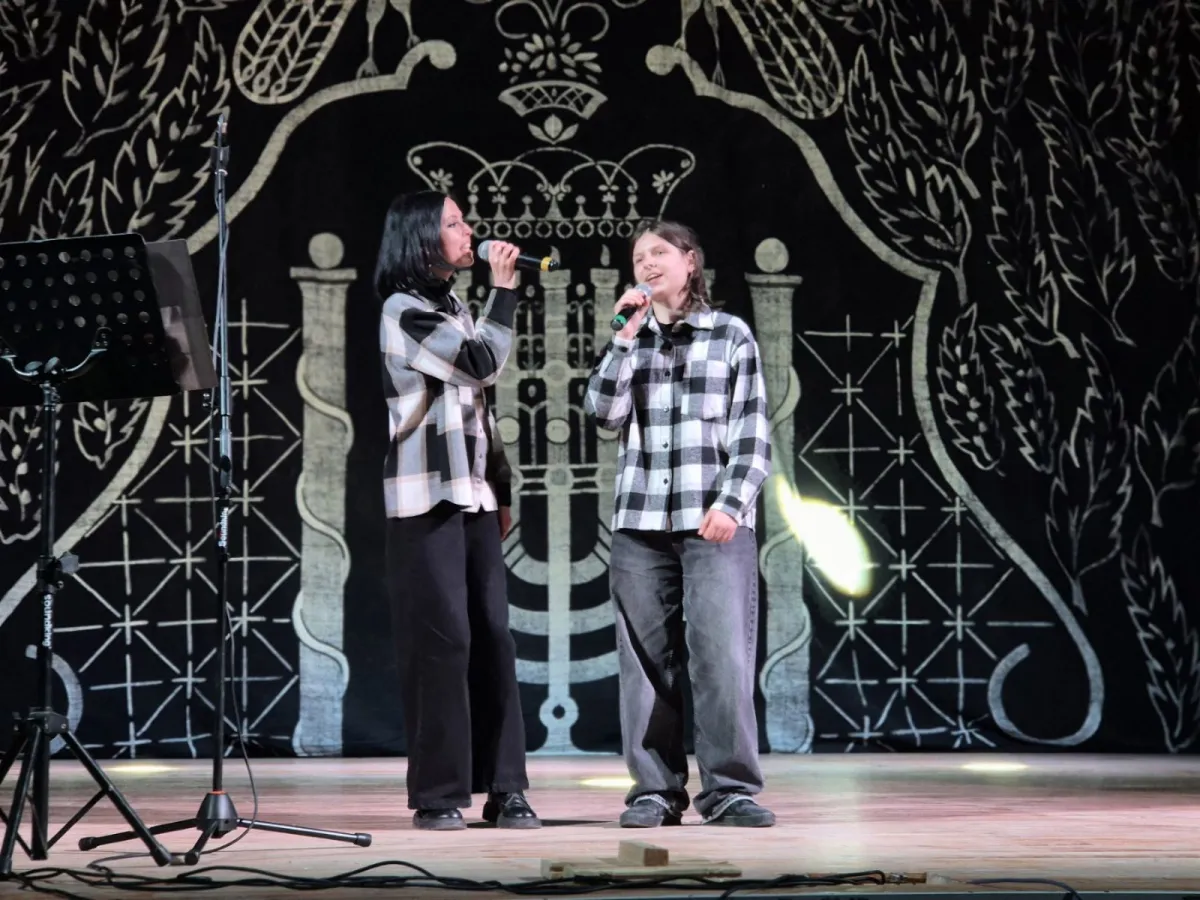
The resounding final note of the third day of this cultural and educational visit was the festive concert “Motifs of Jewish Heritage”, to which both local talents and guest performers from Khmelnytskyi — volunteers and managers of the Hesed Besht foundation — contributed. Before the concert began, an important interactive element was placed in the foyer of the “Rozmai” Centre of Culture and Arts, which hosted the event — a digital version of the exhibition “Matzevot: between the past and the present”. This exhibition opens up one more domain of Jewish culture and tradition — the making of matzevot, which served as gravestones in Jewish cemeteries.
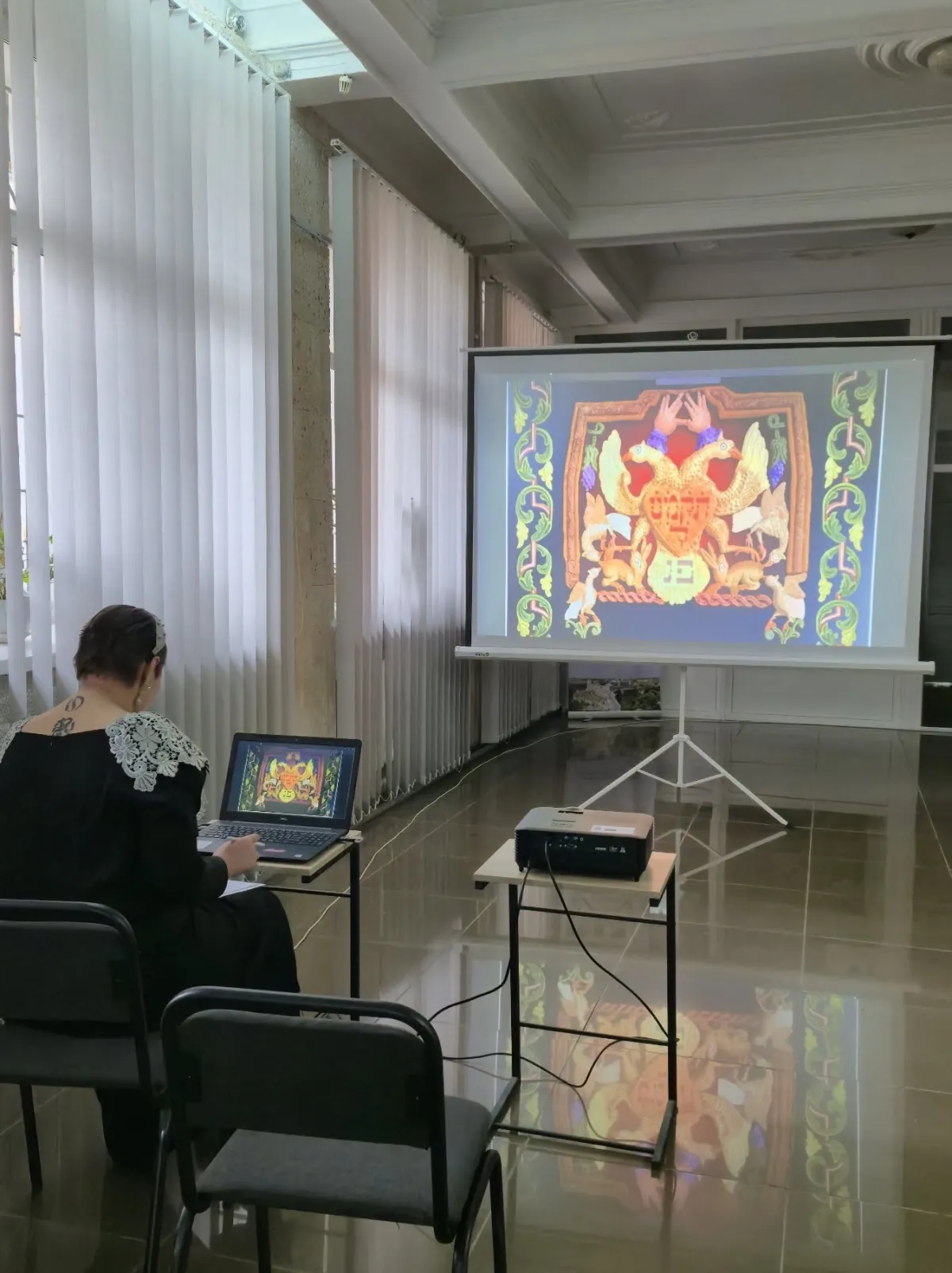
The double-headed eagle is a metaphor for God and has nothing in common with the coat of arms of the Russian Federation
The latter were the subject of a photo exhibition of works by Dmytro Poliukhovych, a member of the Ukraine Incognita team. After all, old Jewish cemeteries are perhaps the only place where traditional Jewish art can still be seen today in its “natural environment”, and not only in museum display cases or the pages of art albums. This is especially true of necropolises with burials of the 18th and early 19th centuries. This was precisely the time of the peak flowering of Jewish stone-carving art. Almost every matzevah of this period is a true masterpiece, worthy of the best museum displays. The bas-reliefs on matzevot are not mere decoration. Each image conceals deep meanings, mostly with references to the Torah and the Talmud. They reflect the worldview and beliefs of the shtetl inhabitants: the age-old expectation of the Messiah, the belief that after death the soul will enjoy the fruits of Paradise, and the hope of resurrection from the dead. Often the decoration of matzevot allegorically conveys the traits of the deceased, his habits, righteousness and good deeds.
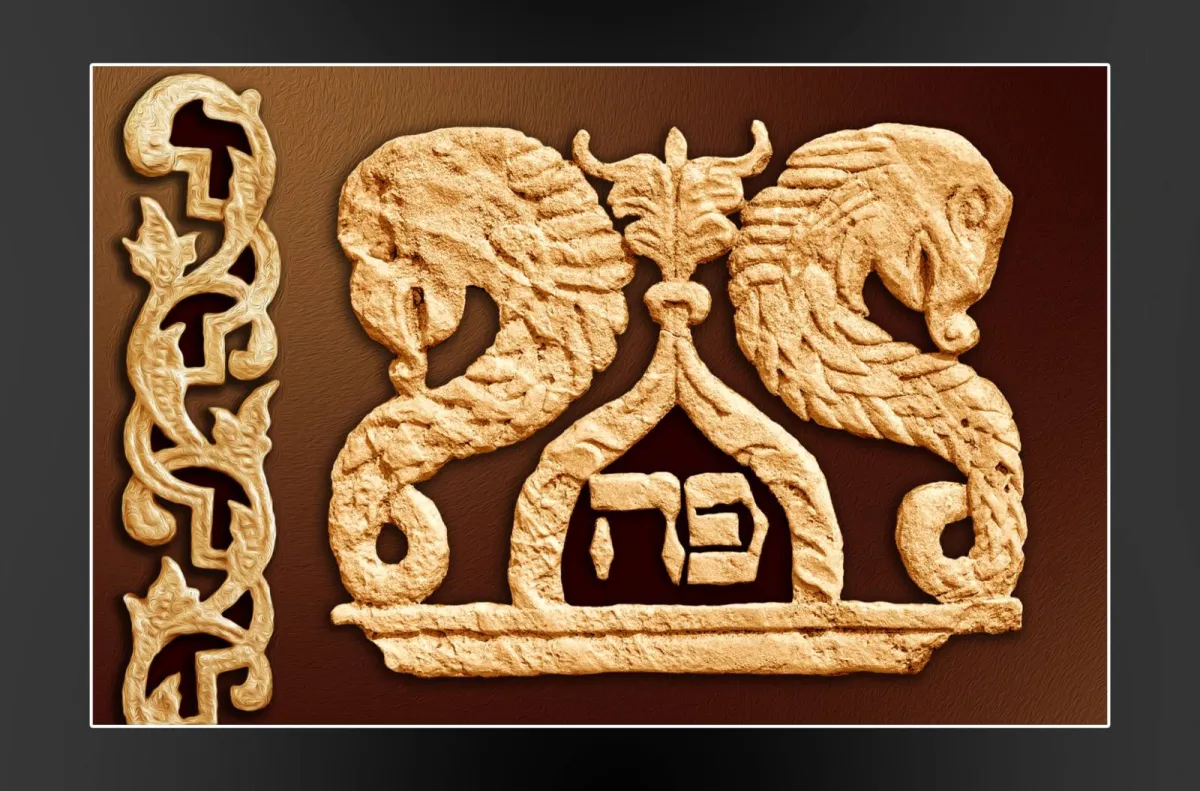
Dmytro Poliukhovych, a member of the Ukraine Incognita team, a historian and local-history researcher from Podillia who lives in the former small town of Horodok (Khmelnytskyi Oblast), has devoted much attention to studying the ancient Jewish necropolises of his region. He explains his interest in Judaica as follows:
“For me, the culture and history of my native Podillia are whole and indivisible. I am interested in the heritage of all the peoples who have lived on this land: Ukrainians, Jews, Poles, Armenians… even the Russian Old Believers who have lived here since the 17th century. It is impossible to imagine the culture and history of Podillia without the Jewish component. All the more so since the traditional Jewish culture of Ukrainian shtetls is quite specific and carries within it an enormous layer of the culture of local Ukrainians. After all, it lived and developed amid a boundless Ukrainian sea. At the same time, Jews noticeably influenced the development of Ukrainian culture as well. As for the cemeteries, the art of the stone-carvers simply enchants me — it is amazing. Here we see a combination of European traditions of the Renaissance and Baroque with Jewish symbolism and, at times, Ukrainian motifs. It is incredibly beautiful, and extremely interesting for its hidden meanings.”
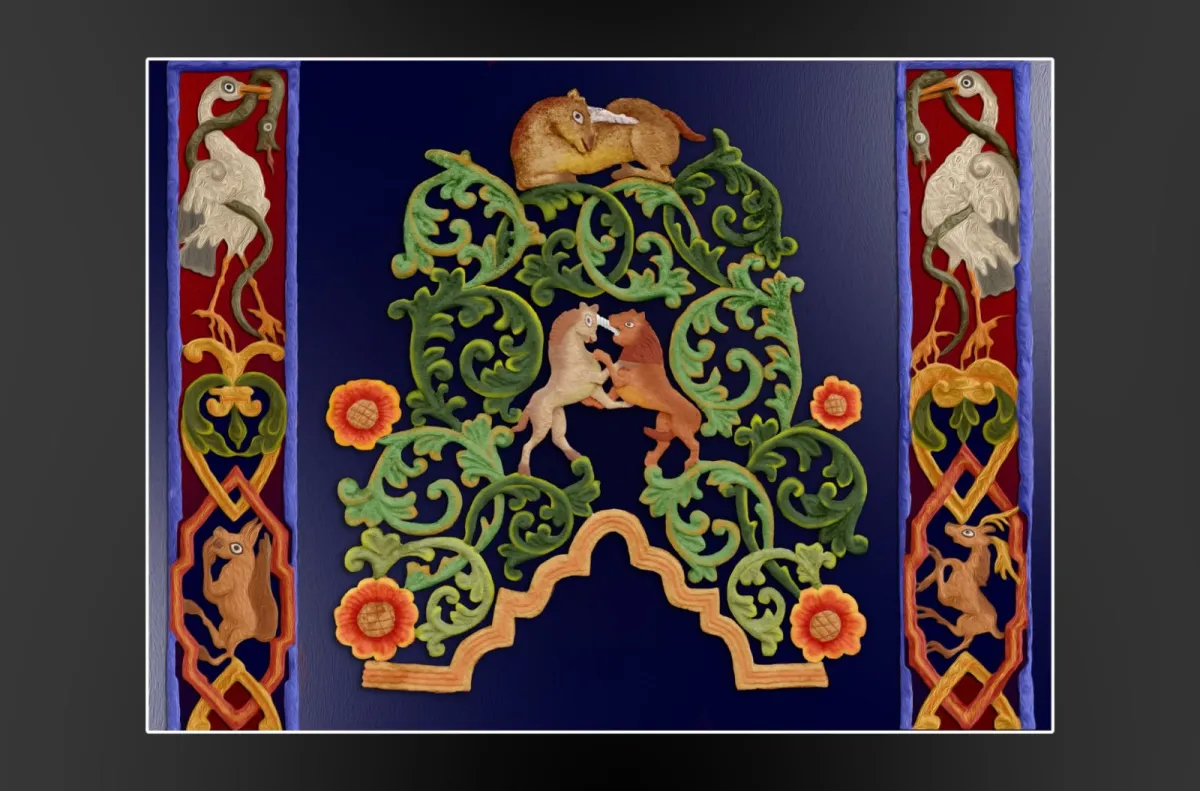
To show the beauty of the ancient bas-reliefs as well as possible, Dmytro developed his own know-how, which he called “vytynanky” (paper cut-outs). In some ways they echo the traditional Jewish art of “reizele”. The essence of the method is to separate the carving from the background, which, because of damage, often distracts attention from the composition.
“Creating each ‘vytynanka’ is not an easy process,” Dmytro says. “First you need to find an interesting bas-relief that you want to immortalize. Then it must be cleaned of moss and lichen and washed. This is a delicate job: iron brushes cannot be used, since we are talking about the 18th century. The tools are a soft brush and sharpened wooden scrapers. Sometimes cleaning a bas-relief takes 2–3 hours. Then comes photographing, and then computer processing, which can last from several hours to ten or more, depending on the level of detail and the need to restore damaged elements.”
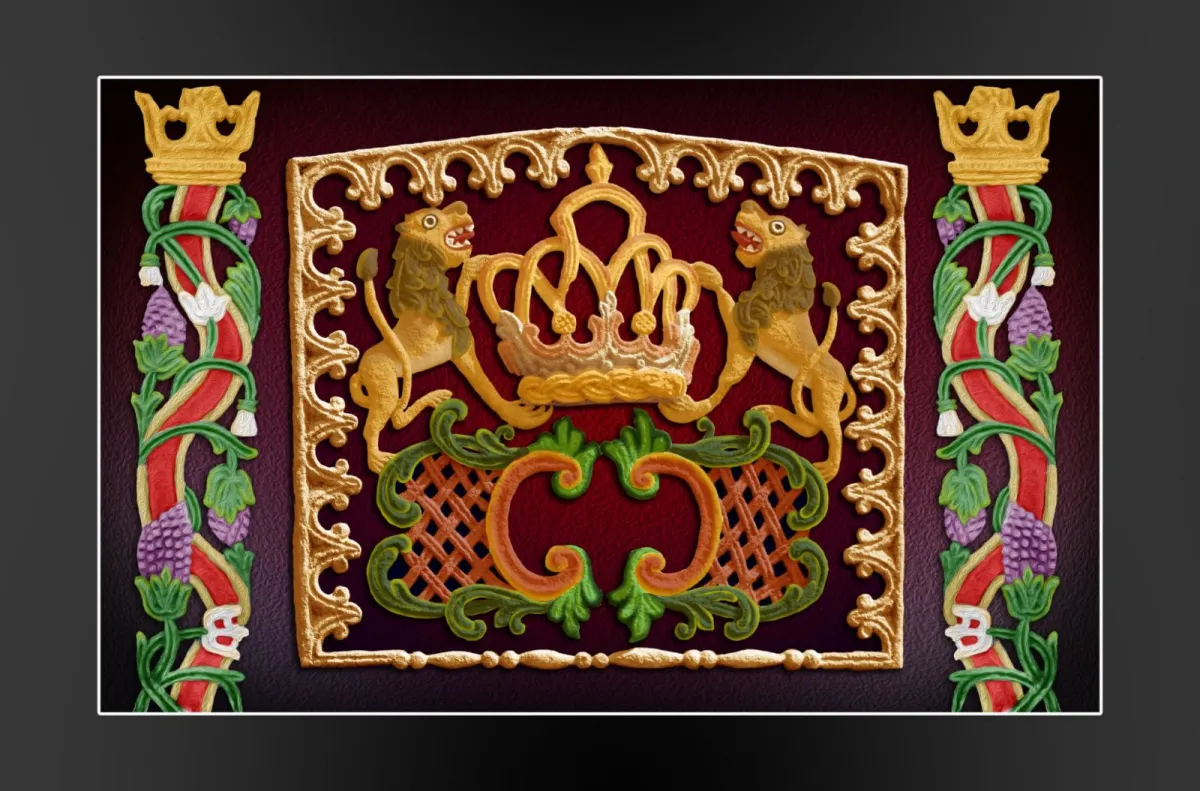
Later, on the basis of the “vytynanky”, he began to create whole compositions, and later decided to add colour: “In fact, the bas-reliefs on matzevot were polychrome from the start,” the historian says. “So I decided to colour them. The colouring is not imaginary: the colour scheme is taken from synagogue paintings, manuscript miniatures and other sources. The only difference is the form. My colouring and detailing are simpler than in manuscripts and synagogue paintings, but more complex than what was done on matzevot. It is unlikely that half-tones or a large number of colours were used there — usually 3–4.”
Kamianets-Podilskyi has always been a city where different peoples, cultures and religious traditions lived side by side. Ukrainian, Polish, Armenian, Jewish and Turkish heritage is part of our common history, which has shaped the city’s unique character over the centuries.


