Khrestyshche. A nuclear explosion

· 5 min read
Khrestyshche in the Krasnohrad district was called Dziaburivka until 1859. The village was founded in 1731, after the construction of the Ukrainian Defence Line. It was probably named after its founder, since the surname Dziabura is still very common here. Later the village became privately owned. After the construction of the Ukrainian Line, the lands on which the village stands were granted to Karl Minich, a favourite of the Russian empress Anna Ioannovna. At the end of the 18th century they belonged to Count K. H. Razumovskyi and later became the property of the Duke of Mecklenburg-Strelitz, who owned 60 thousand desiatinas of land in the Kostiantynohrad district alone. In 1859 the village belonged to the Kostiantynohrad district of Poltava Governorate, and the lands around the village belonged to the Tsekhmistrivka administration of the Karlivka estate of the Duke of Mecklenburg-Strelitz and the Princess of Saxe-Altenburg.
In 1902 the Karlivka estate, including the Tsekhmistrivka administration, became the scene of mass peasant protests. The peasants unlocked barns and warehouses and carted away grain, fodder, potatoes and farm implements, and drove out livestock. The Oryol Infantry Regiment was called in to suppress these protests, the reprisals lasted 2 weeks, and in Khrestyshche 12 peasants were arrested and sent to the district prison.
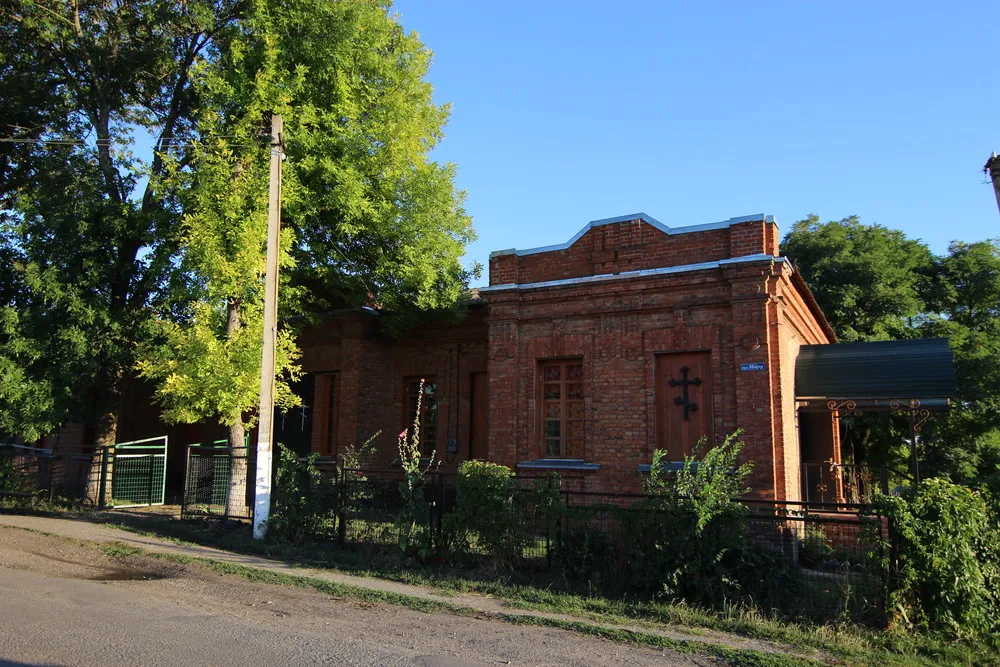
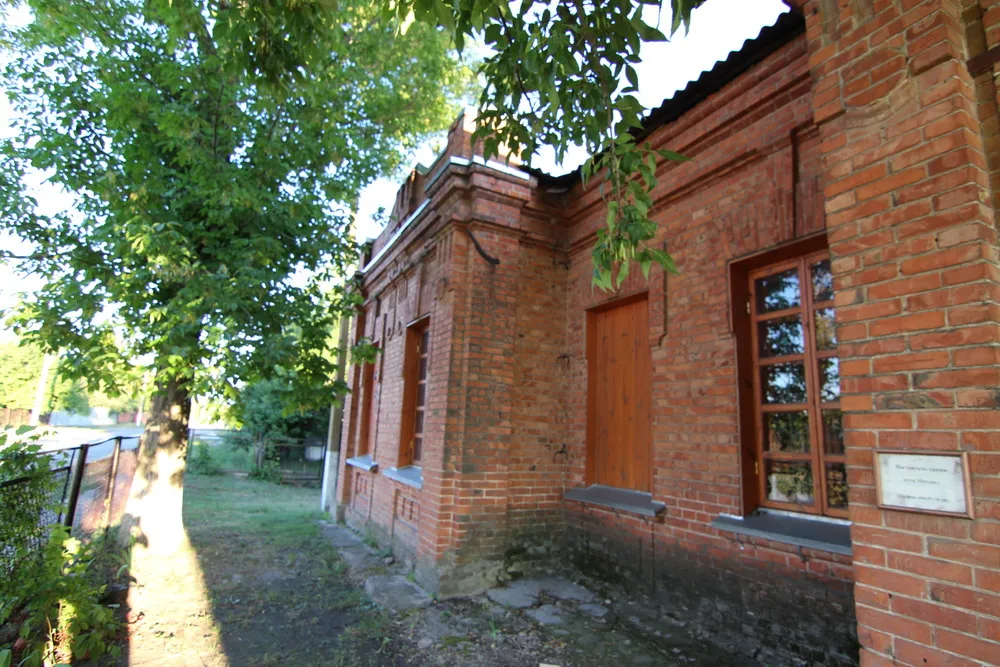
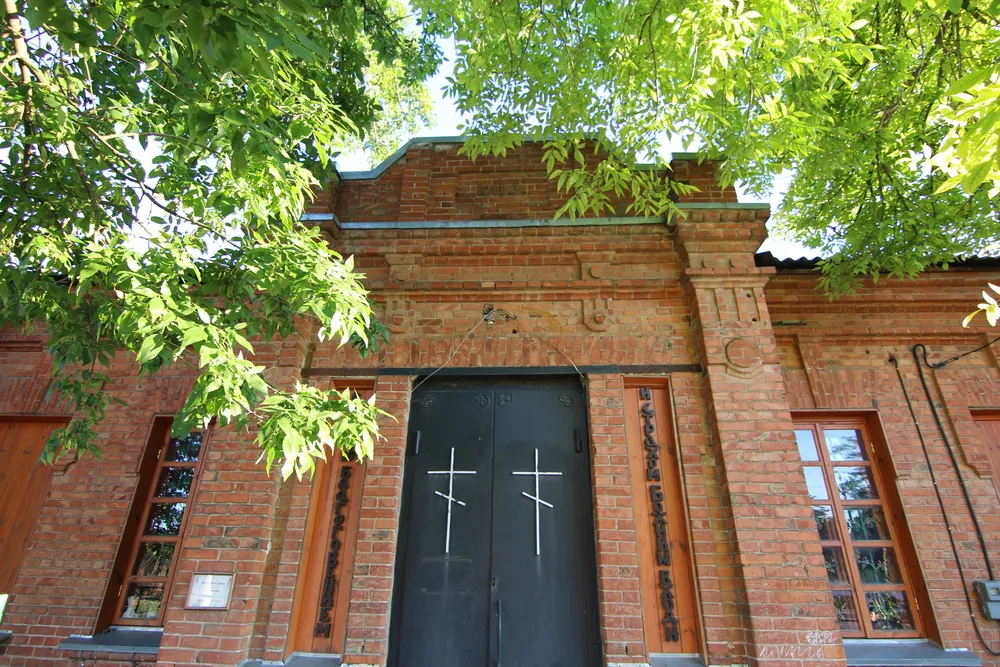
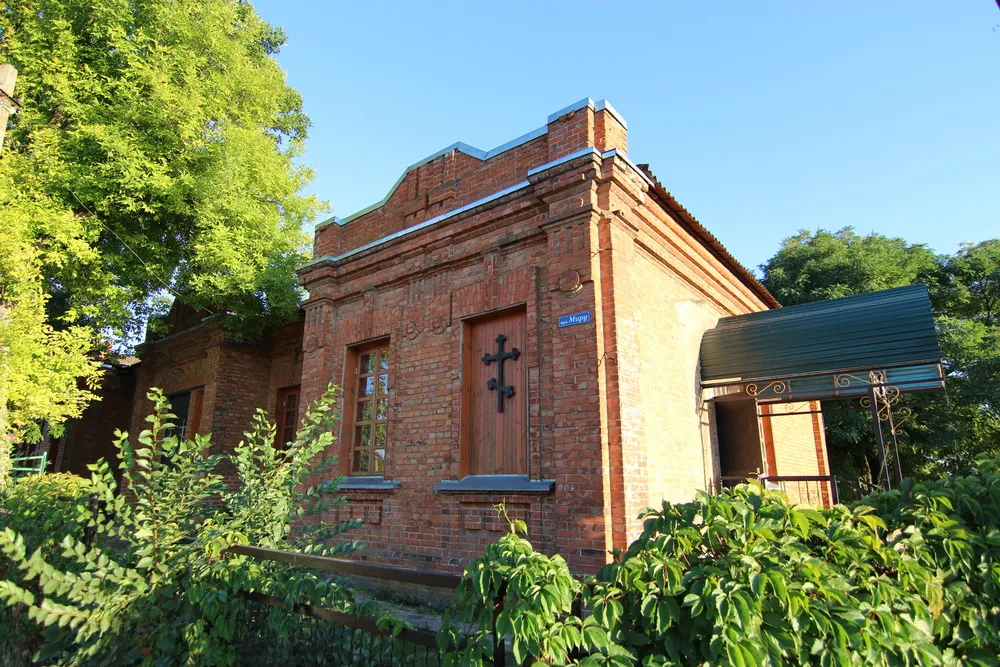
Before the revolution the village had a parish school and a zemstvo school. The zemstvo school building was built in 1911. In Soviet times the building also housed a school, and in 1997 it was given to believers for the Church of St. Seraphim of Sarov.
In 1971 a controlled underground nuclear explosion was carried out not far from the village of Khrestyshche. What follows is from Wikipedia.
“In 1966 the Khrestyshche gas field, the largest in Ukraine after Shebelynka, was discovered. In terms of gas reserves it is among the five largest fields in Europe. Scientists calculated that the volume of energy deposits in this area reaches three hundred billion cubic metres. Maximum gas production was reached in 1977, at 24 billion cubic metres.
In 1970 a powerful gas condensate field with reserves estimated at 300 billion cubic metres of natural gas was discovered not far from the village of Khrestyshche. By the end of 1971 there were already 17 wells operating on its territory. In July 1971, while a new well was being drilled, a gas condensate blowout suddenly occurred. The gas pressure was abnormal and reached about 400 atmospheres. The force of the blowout threw two engineers from the upper platform of the derrick to the ground, and they died after falling from a height of over 30 m. The gas release could not be stopped for a day, and to prevent accidental ignition and explosion it was decided to set the well on fire…
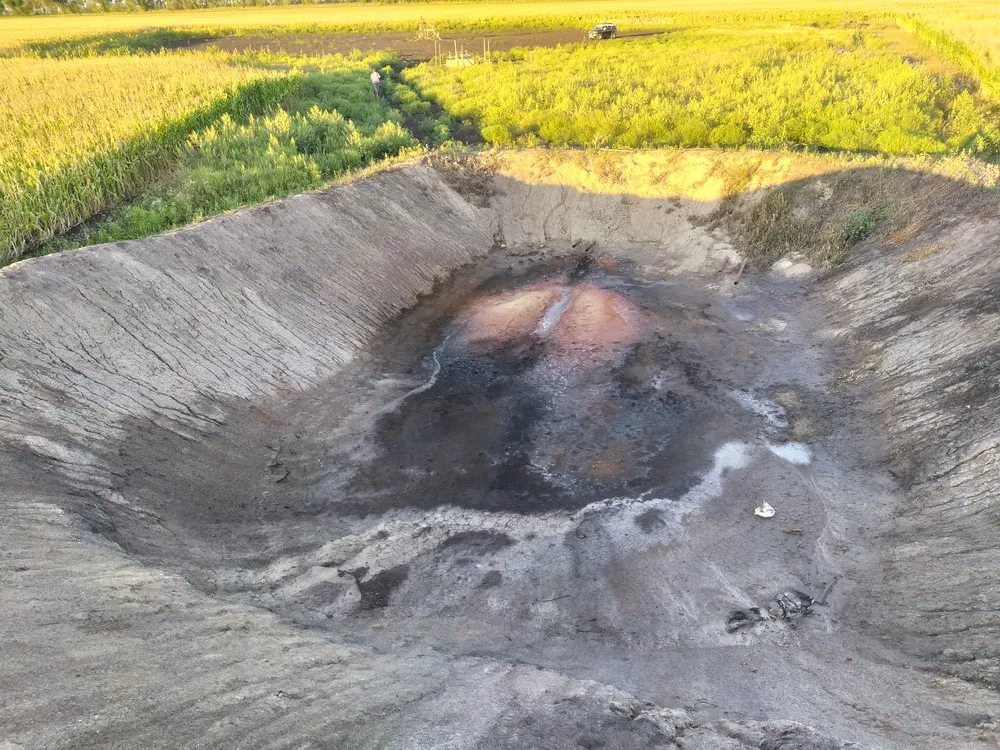
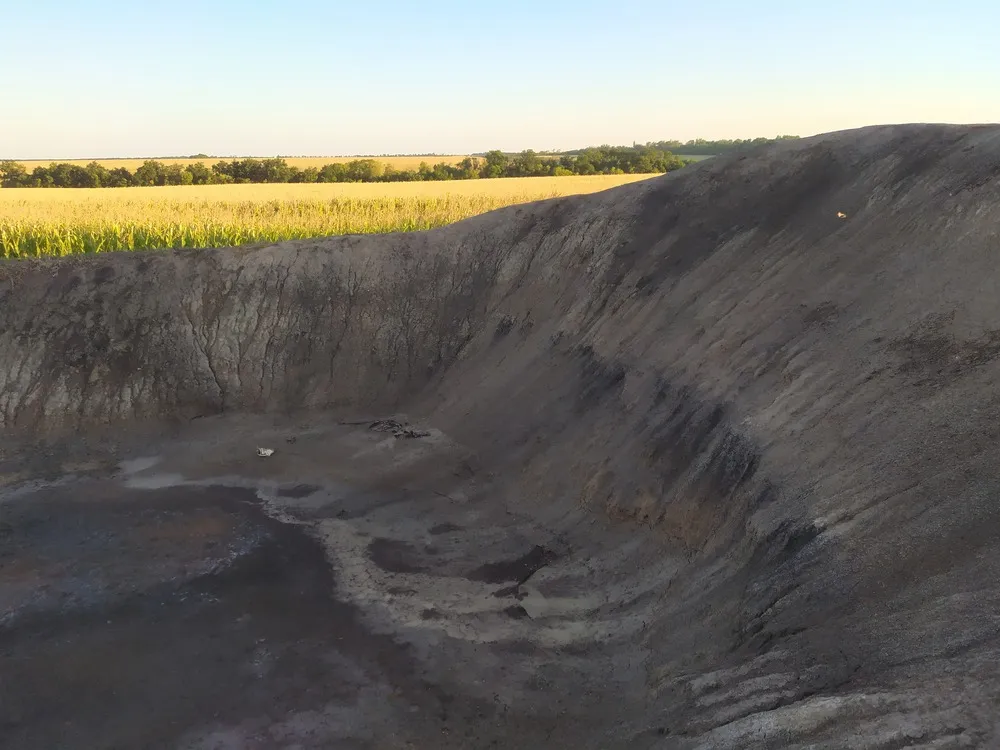
The flames rose to a height of several tens of metres and could not be extinguished for about a year. The entire drilling complex was gradually swallowed by a huge sinkhole that formed as a result of the accident. Taking into account the positive result of using a nuclear explosion to extinguish a gas well that had burned for three years at the Urta-Bulak field in the Uzbek SSR (1966), scientists proposed plugging the failed well with a nuclear explosion.
The decree on using an industrial nuclear explosion to stop the gas fountain was signed personally by Leonid Brezhnev and Alexei Kosygin. Carrying out the explosion was entrusted to the Ministry of Medium Machine Building (the department responsible for atomic science and industry in the USSR). None of the military units stationed in the Ukrainian SSR was involved in the special assignment. The area around the fiery fountain was guarded by KGB troops and Interior Ministry units from Moscow. All participants in the experiment signed a non-disclosure pledge for 15 years.
Preparation for the explosion took four months in an atmosphere of the strictest secrecy. By mid-summer 1972 the preparatory work in the area of the burning well was completed. An inclined well 2,400 m long was drilled beside the failed casing and a cylindrical special charge, a nuclear explosive device, was placed in it. The territory adjacent to the flare was divided into three ring zones with radii of 3, 5 and 8 km. The inner ring with a radius of 400 m from the epicentre of the future explosion was fenced off as a special zone and covered with a 20 m layer of river sand. At the boundary of each zone test animals, chickens, goats and beehives were placed. The village of Pervomaiske began 400-500 metres from the well, with about 400 residents at the time. An hour before the explosion all residents were temporarily evacuated to the village of Khrestyshche, located 2 km from the epicentre. The Moscow-Simferopol highway ran 8 km away. All water supply systems were shut off and power grids disconnected.
On 9 July 1972, at exactly 10 a.m. local time, the nuclear device at a depth of 2,483 m with a yield of 3.8 kt detonated. After 20 seconds a powerful gas fountain mixed with rock burst out of the crater around the well to a height of about 1 km, and a minute later the characteristic mushroom cloud of a nuclear explosion formed.
The experiment was not a success: it proved impossible to close the blowout with an explosion. People returned to the village 30 minutes after the explosion. All test animals in the special zone died. In the village of Pervomaiske the shock wave blew out window panes, and the walls of many houses cracked and collapsed. Restoration of housing (at the state’s expense) took more than a year. Eventually all residents received rebuilt houses in place of the destroyed ones, but the collective farm gradually ceased to function and life in the village declined.
The gas flare was extinguished within a few months by standard methods, by splitting the well. Over several months an annular pit 400 metres wide and 20 metres deep was dug. The flame was finally put out and the well shut off only in July 1973.”
Text and photos by Ihor Dorozhko, Maksym Nazarenko and Oleh Hodyna.