

Synagogue of the Turiisk Hasidim demolished in Mlyniv

· 2 min read
In the urban-type settlement of Mlyniv in Dubno district, Rivne Oblast, an owner has demolished a synagogue from the very beginning of the 20th century. This is reported by the newspaper “Holos Ukrainy”.
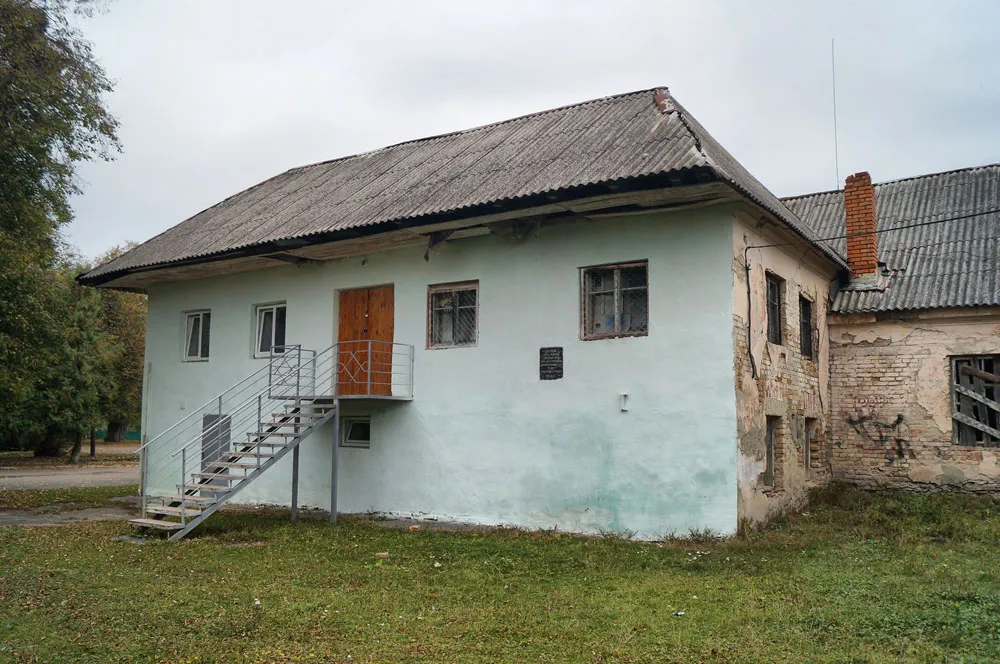
The synagogue in Mlyniv before its destruction. Photo: Ukraine Incognita
The Mlyniv synagogue stood in the central part of the town. In the post-war years it was converted into a gym for a children’s sports school – by then the Jewish community had vanished in the flames of the Holocaust.
The building originally had an L-shaped plan. Later a number of annexes were added to it. There are no decorative elements, and the façade itself did not differ from the town buildings of that period.
For a long time the synagogue stood empty and fell into ruin. Then its new owner took it down.
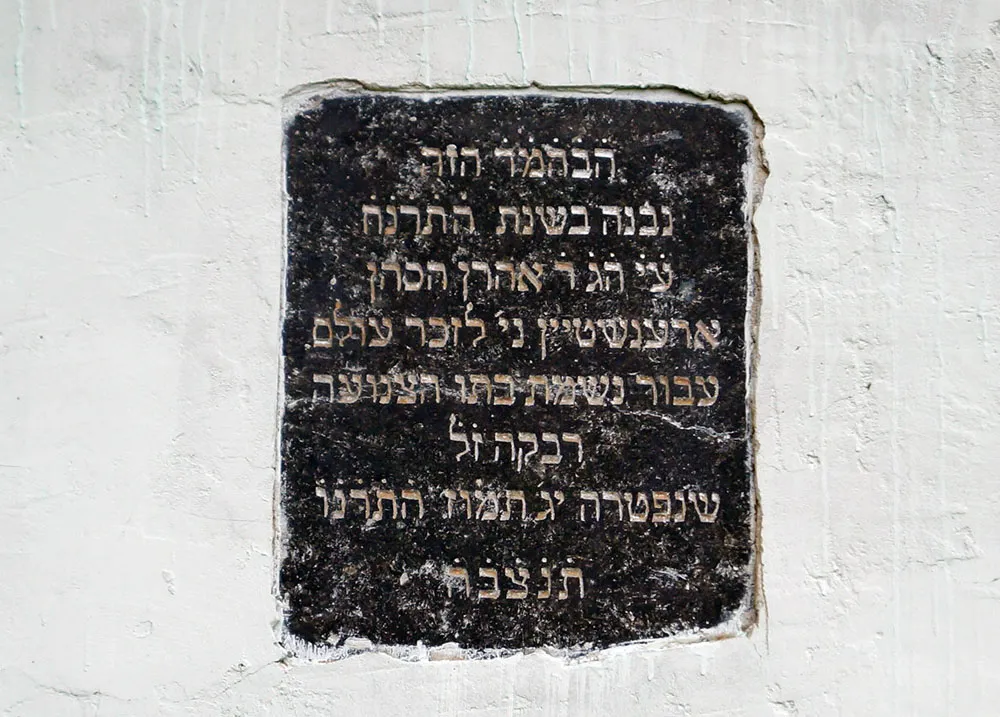
The inscription on the plaque reads: “This beit midrash was built by Rabbi Aron Orenshtein. 1903”. Photo: Ukraine Incognita.
Mlyniv is a fairly well-known town among Jews. It is the site of the grave of Rabbi and tsadik Aaron II Perlov (1802–1872), grandson of the famous rebbe Aaron I Perlov (1736–1772), who is considered one of the founders of Hasidism.
As reported by “Volyn Post”, after his death Aaron Perlov’s students were united by his son Asher Perlov of Stolin (1765–1826), who settled in the town of Stolin, south of Karlin. He was one of the best-known Hasidic preachers of his time. His son Aaron II Perlov enjoyed enormous respect among the Jews of the north-eastern region. In his lifetime he was called “the man from Mlyniv” or “the holy grandfather”.
The Karlin-Stolin Hasidic community, founded by the Perlov family, is present practically throughout the Jewish world. It has synagogues and schools and carries out extensive religious and educational activity. Many members of the Perlov family perished in the Stolin ghetto (Belarus) during the Second World War.
As Ukraine Incognita found out, the demolition of the old building was probably carried out by a community of Turiisk Hasidim, who intend to build a new house of prayer here.


