Map: Cossack Ukraine in 1740

· 2 min read
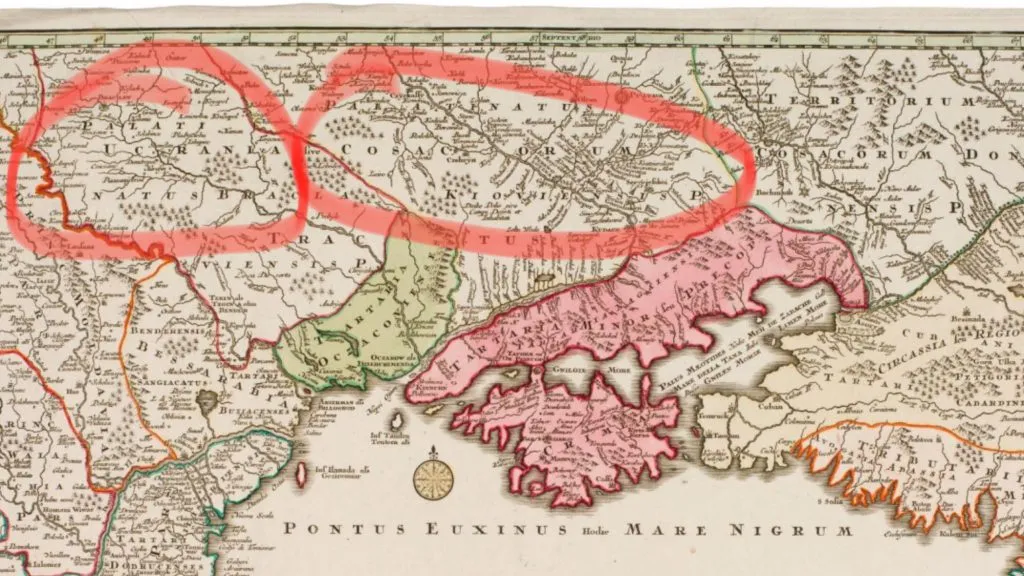
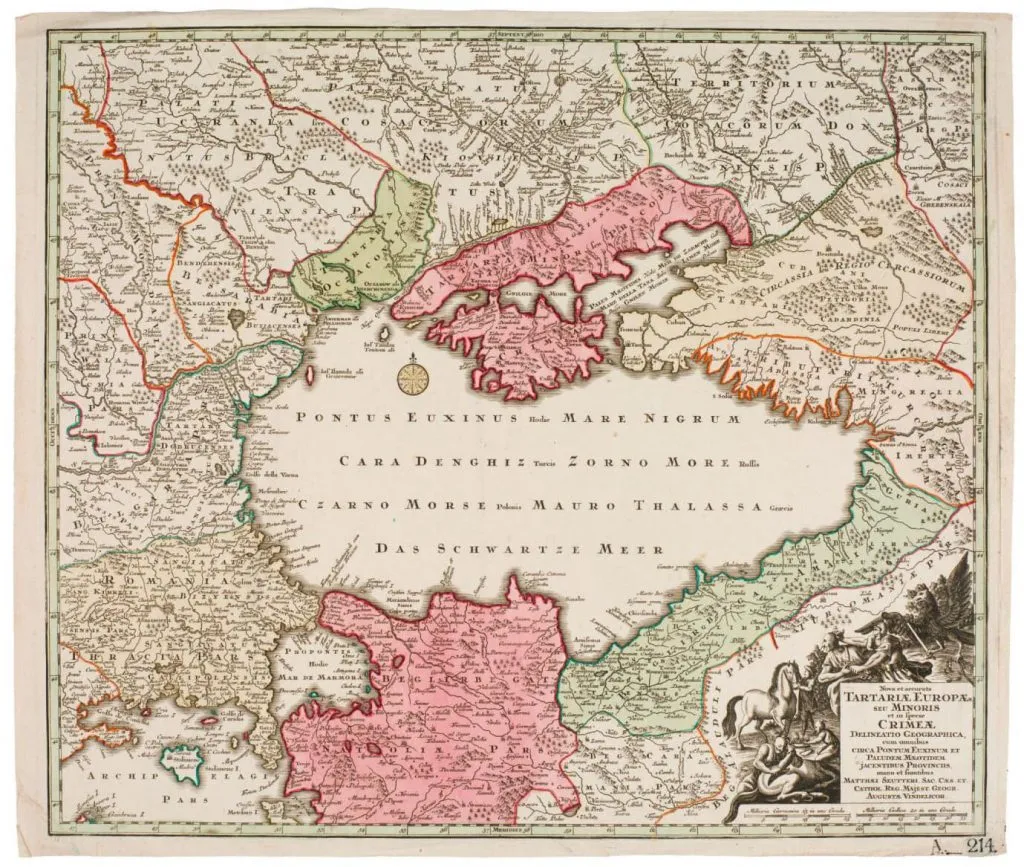
“Ucrania or Cosaccorum”: this is how our lands are marked on this beautiful map of the Black Sea, which I described under number 17 in the as yet unpublished book “Treasures of the Swedish Archives”.
The lands of Ukraine are joined with the territory of the Don Cossacks, as well as the Circassians, who are also called Cossacks here.
In the south are the lands controlled by the Perekop and Ochakiv Tatars.
The map was printed in Germany in 1740 by the publisher and geographer Matthäus Seutter (1678-1757). It shows how closely all these territories were connected with one another.
Around the same years the French diplomat Charles de Peyssonnel (1727-1790) worked in the lands marked on the map. In 1787 he published the “Treatise on the Commerce of the Black Sea”, which was later reprinted many times and translated into many languages. Speaking of our country, the Frenchman also uses the name “d’Ukraine”, by then already established in Europe, and gives data that will help to better understand the map shown:
“The Cossacks go down the Borysthenes in their boats to Ochakiv and Crimea, carrying various goods. They sell hides, tobacco (kasak-tutun), ropes, hemp, linen, charcoal and fish, and buy salt, wines, dried fruit, oil, soap, incense, horse gear and sheepskin coats called ‘felt coats’ (postaki)…”.
“Wine. Crimea produces excellent wine and in abundance: it is all very light, white and very diuretic. Only the wine of the canton of Sudak is strong and can be counted among liqueur wines. The cantons with the most esteemed wines are Soudag, Belbek, Katchi & Elma. The greatest quantity of these wines is sold in the country. However, the Cossacks of Ukraine & the Zaporozhians take out a hundred thousand ocques of wine every year, which they carry in wagons of a thousand ocques… The wine of Sudak usually costs from 5 to 6 paras; of Belbek from 3 1/2 to 4 paras; & in the other cantons from 2 to 2 1/2”.
Demolishing imposed imperial myths, it is worth noting here that Ukrainians had developed economic ties with Crimea and the Black Sea coast in general, conducted active trade and exchange of goods, and accordingly had great mutual influence, which showed itself not only in political and military but also in economic and cultural mutual expansion (See Illustration 20, Map 17 of the book).
Author: Ihor Poluiektov