

Budva

· 6 min read
The town of Budva is probably the best known to tourists from the post-Soviet space among all Montenegrin resorts. It is here that Russian is heard more often than Montenegrin. Even the billboards along the roads are in Russian. Budva lies practically in the centre of the Adriatic coast, and the coastal zone of the town is known as the Budva Riviera. Even if you are not interested in Budva’s beaches and nightclubs, the town is definitely worth a visit.
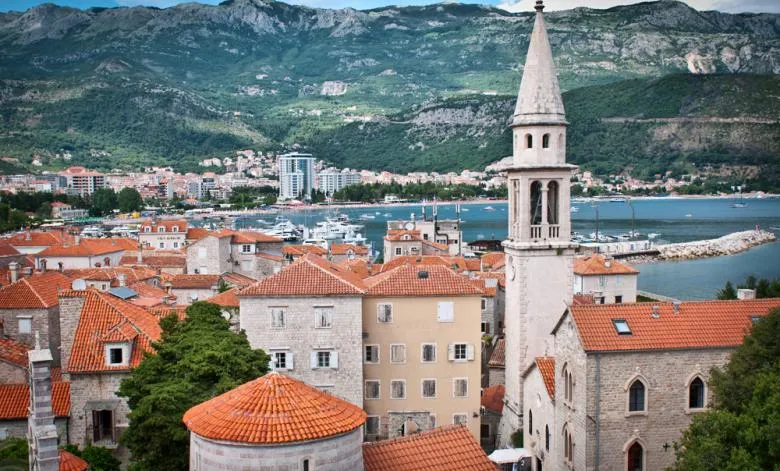
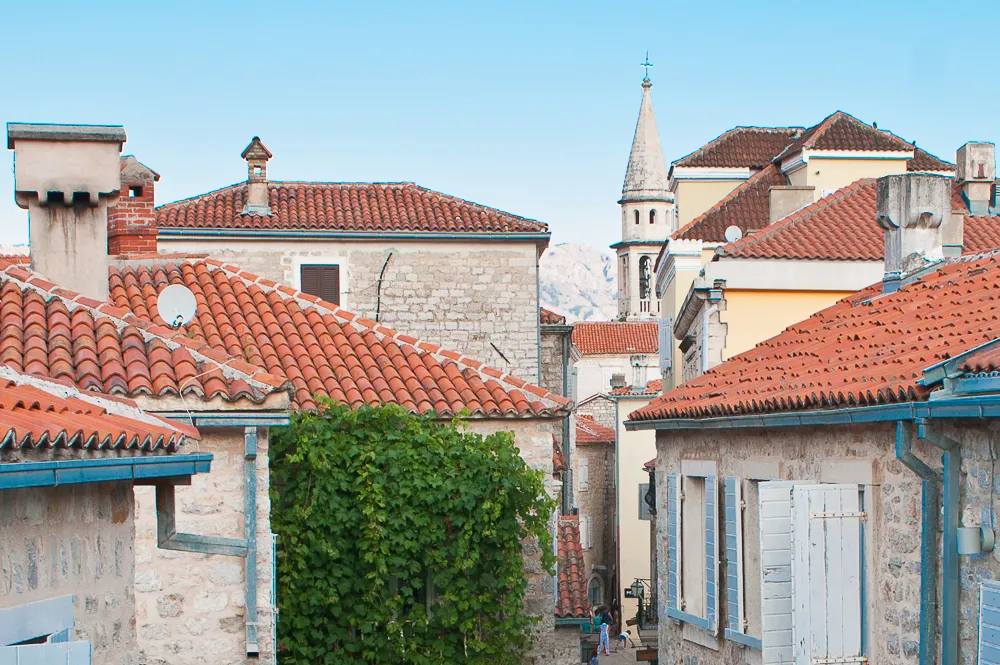
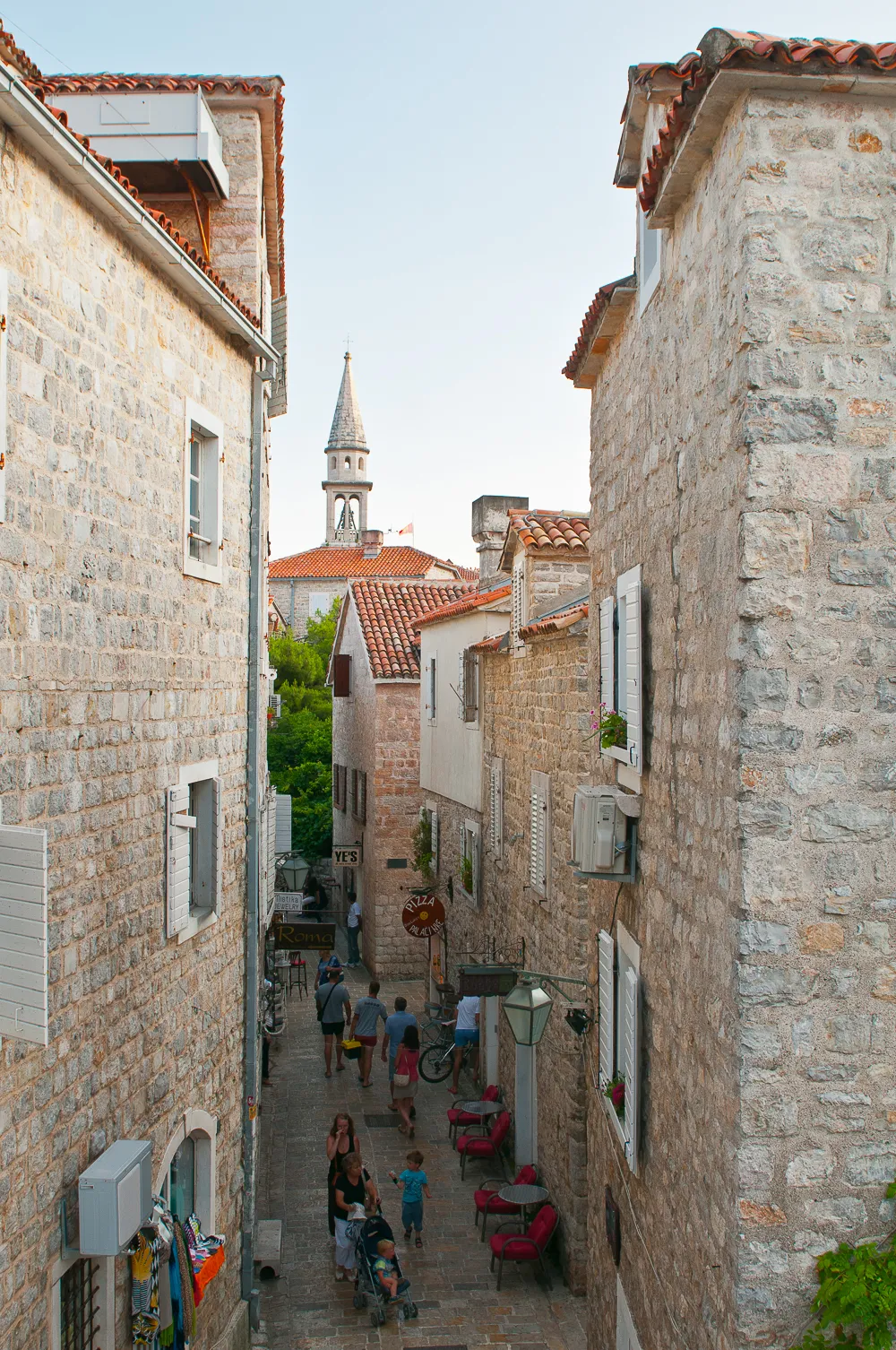
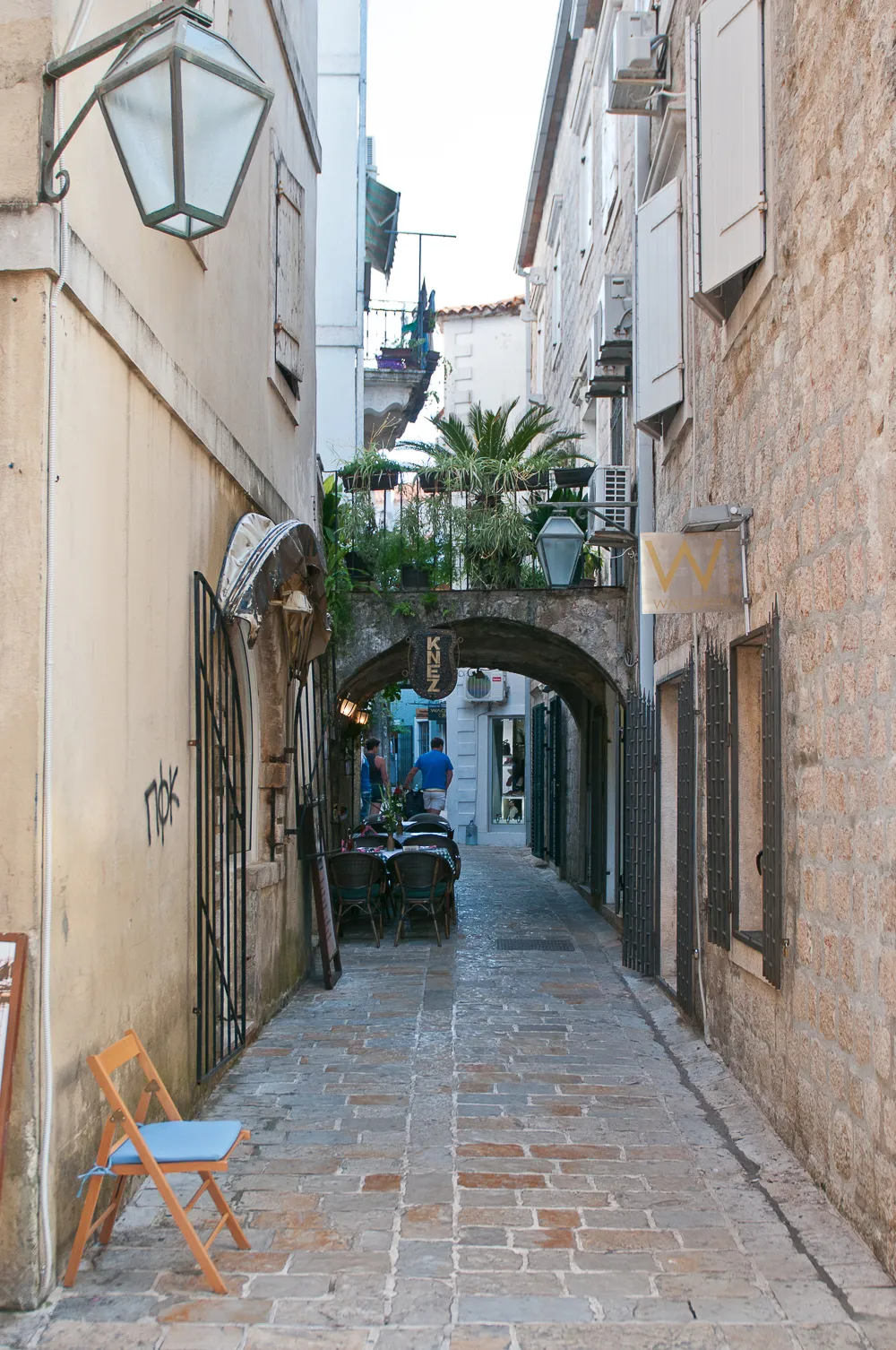
Although the historic old town is quite tiny and was rebuilt after the earthquake of 1979, a walk is still interesting, though it will take no more than an hour to an hour and a half.
The main symbol of Budva is two fish joined together.
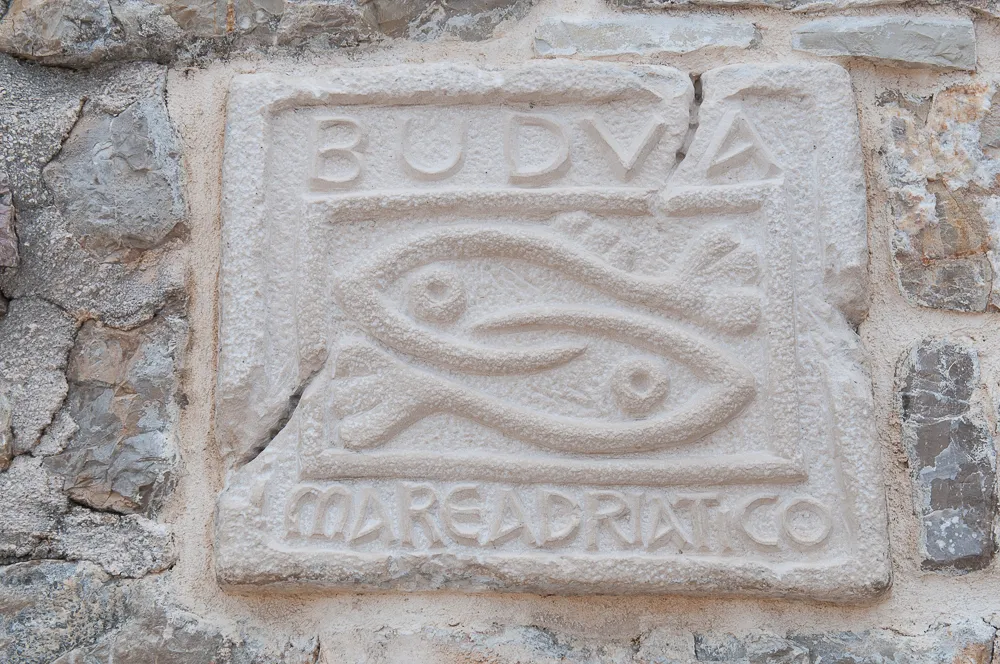
According to legend, once, a very long time ago, young lovers lived in Budva: the incomparable beauty Olena and the stonemason Marko Mytro. Olena’s parents were rich and so did not want to give their beauty to some labourer. In Sofia Andrukhovych’s novel “Felix Austria” the story of a stonemason-sculptor turns out well, but the two from Budva were not destined to be happy. You probably guess how it all ended? Right – the two of them threw themselves from the high cliffs into the stormy sea. However, as soon as they touched the water, they at once turned into two beautiful fish, so that they would never be parted again. Eyewitnesses said exactly this: “Ko jedno nek budu dva”, that is, “Let the two be one”. Thus, according to legend, the name of the town – Budva – appeared. So when you eat fish in Budva’s numerous restaurants, bear in mind that you risk parting lovers… Therefore order two fish.
Of course, you will not be able to leave Budva until you find the fish on the fortress wall and rub them, so that all your wishes come true, love never ends, and fish are always caught. Something like that. And bear in mind that this is not just a stone – it was found in Marko’s house and walled into the wall of the town citadel.
The Greeks, who were here a little earlier, had their own legend, about Cadmus. In short, he was the brother of Europa, who was abducted by the lustful Zeus-Jupiter. Quod licet Iovi (Jovi) non licet bovi, that is, what is permitted to Jupiter is not permitted to the ox. Cadmus searched for his sister, incidentally founded Thebes, killed a dragon and sowed its teeth, from which warriors grew, and took the gold. He married Harmonia and they had many children. However, it seems that not a single Greek mythical hero could live his life in harmony. His daughters, Semele and Ino, ended their earthly lives before their father’s eyes, although they were at once received into the host of Olympian gods. Actaeon, a victim of Artemis’s wrath, is a grandson of Cadmus. So in his old age Cadmus left Thebes. With his wife Harmonia he wandered long in foreign lands and finally came to distant Illyria. There Cadmus founded yet another city for himself and for his wife – Budva. Cadmus and Harmonia set out on the journey in a wagon drawn by oxen. And so (forgive me, I have abridged it all) it was thanks to the oxen that Budva got its name: bous – in Greek “ox”. Cadmus and his wife turned into Cadmium Cd, a chemical element of the periodic table. Although there is a version that they turned into snakes :).
According to the latest archaeological research, the age of the town of Budva exceeds 2,500 years.
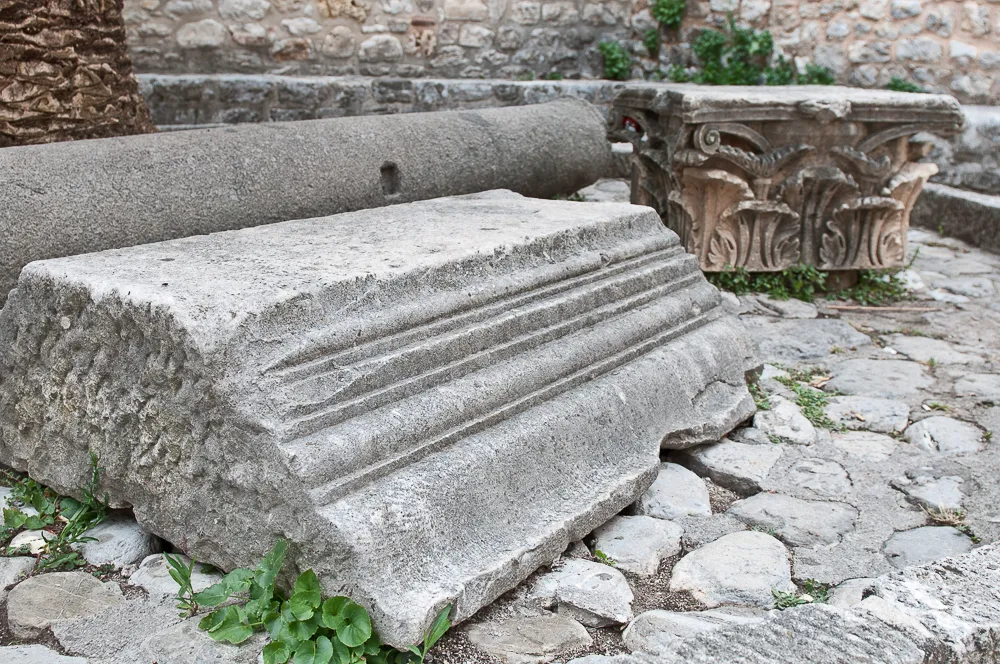
Unromantic historians, smiling at the oxen and fish, give the primacy in founding the town to the Phoenicians and derive the town’s name from the Phoenician word for “house”. From 1420 to 1797 the Venetian Republic ruled this small town. Budva was surrounded by fortress walls that protected its inhabitants from Turkish raids.
In 1815–1918 the town was part of the Austro-Hungarian Empire. After the First World War – part of the Kingdom of Serbs, Croats and Slovenes (from 1929 – Yugoslavia). During the Second World War the Italians returned here.
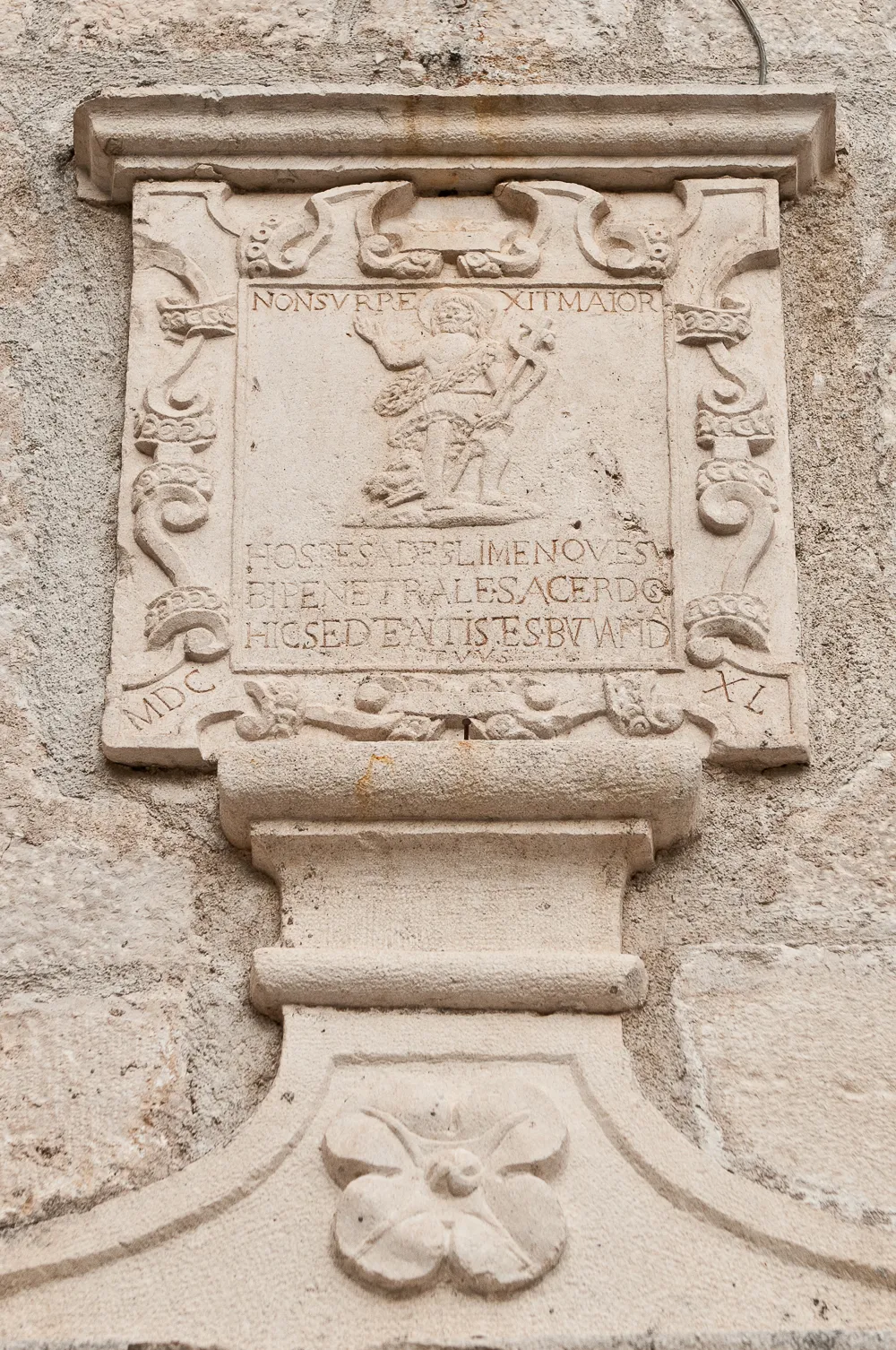
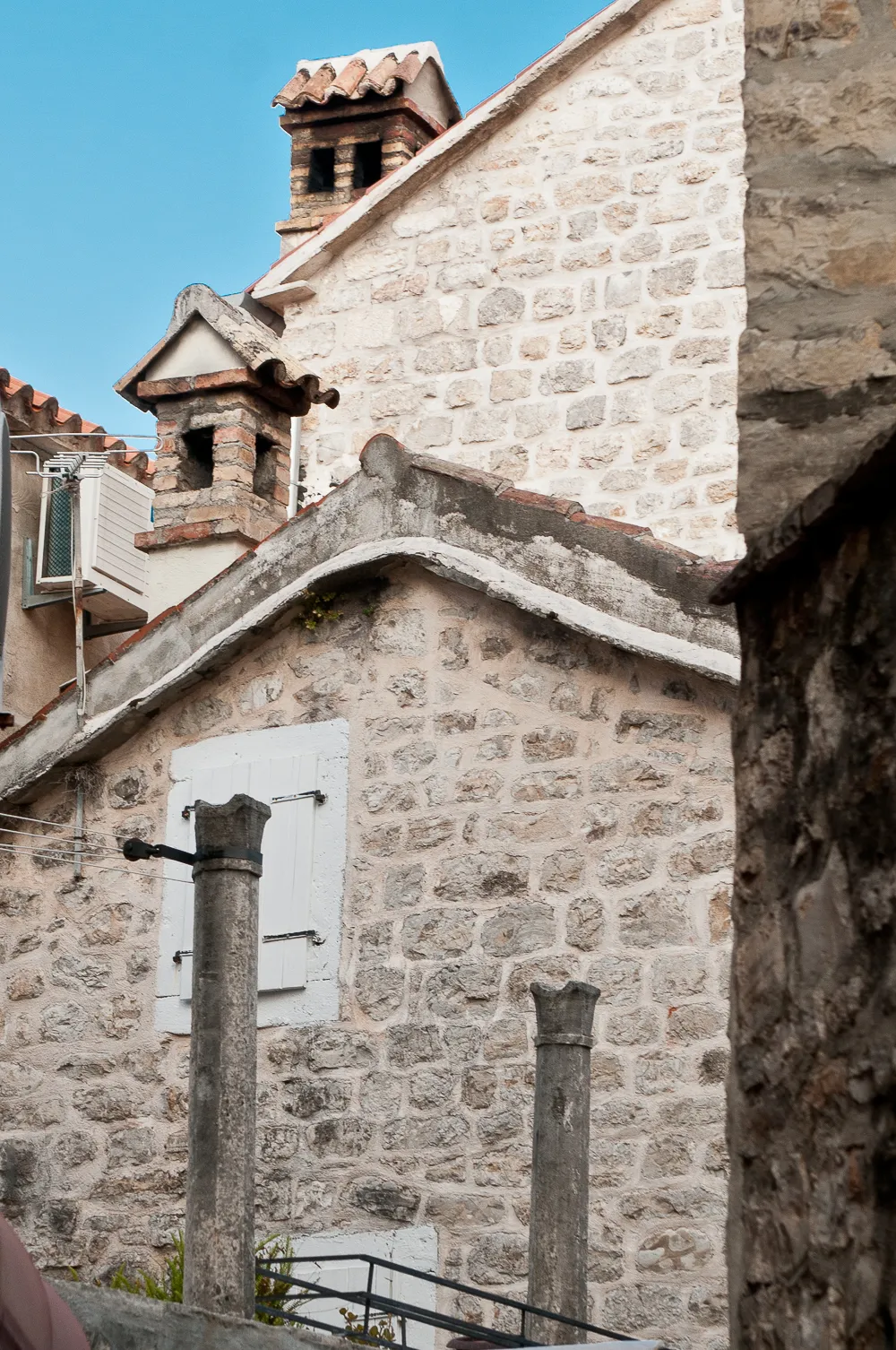
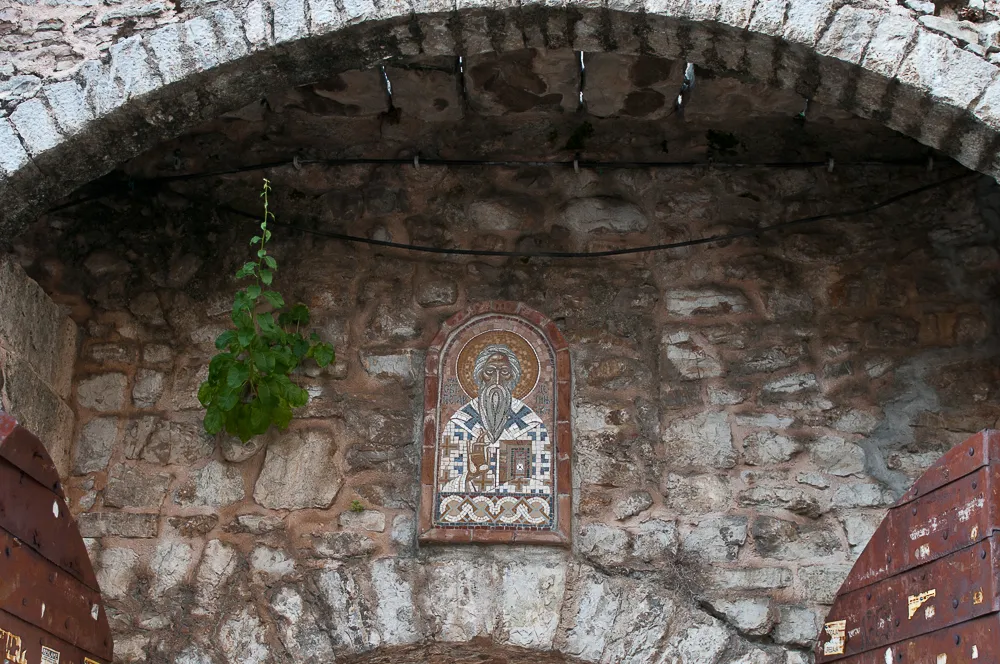
In ancient times the town was located on an island, which was later joined to the mainland by a sandy isthmus and turned into a peninsula. The houses of Budva’s residents went beyond the fortress walls only in the 20th century, but even now not only tourists but also locals live in the old dwellings.
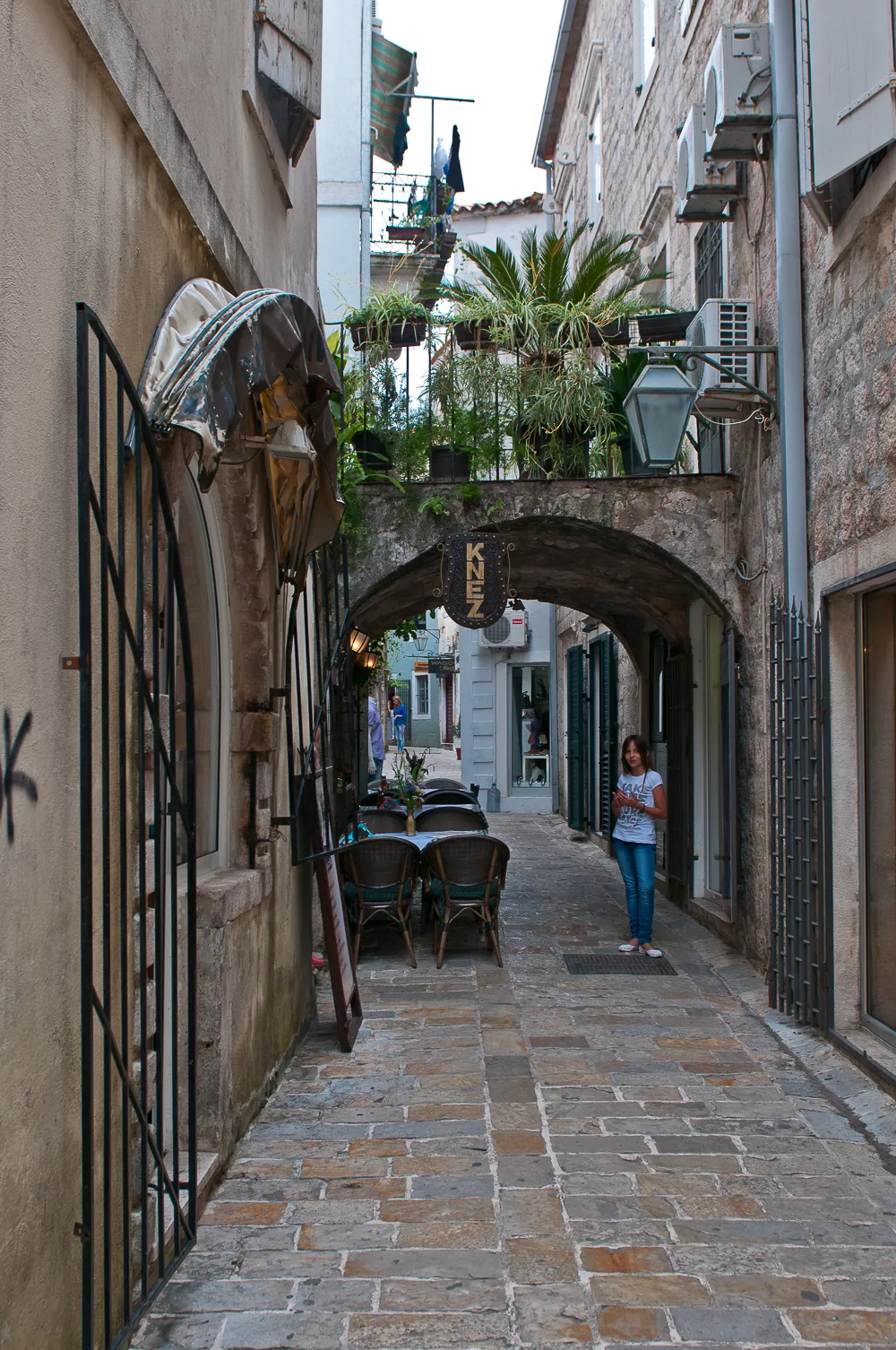
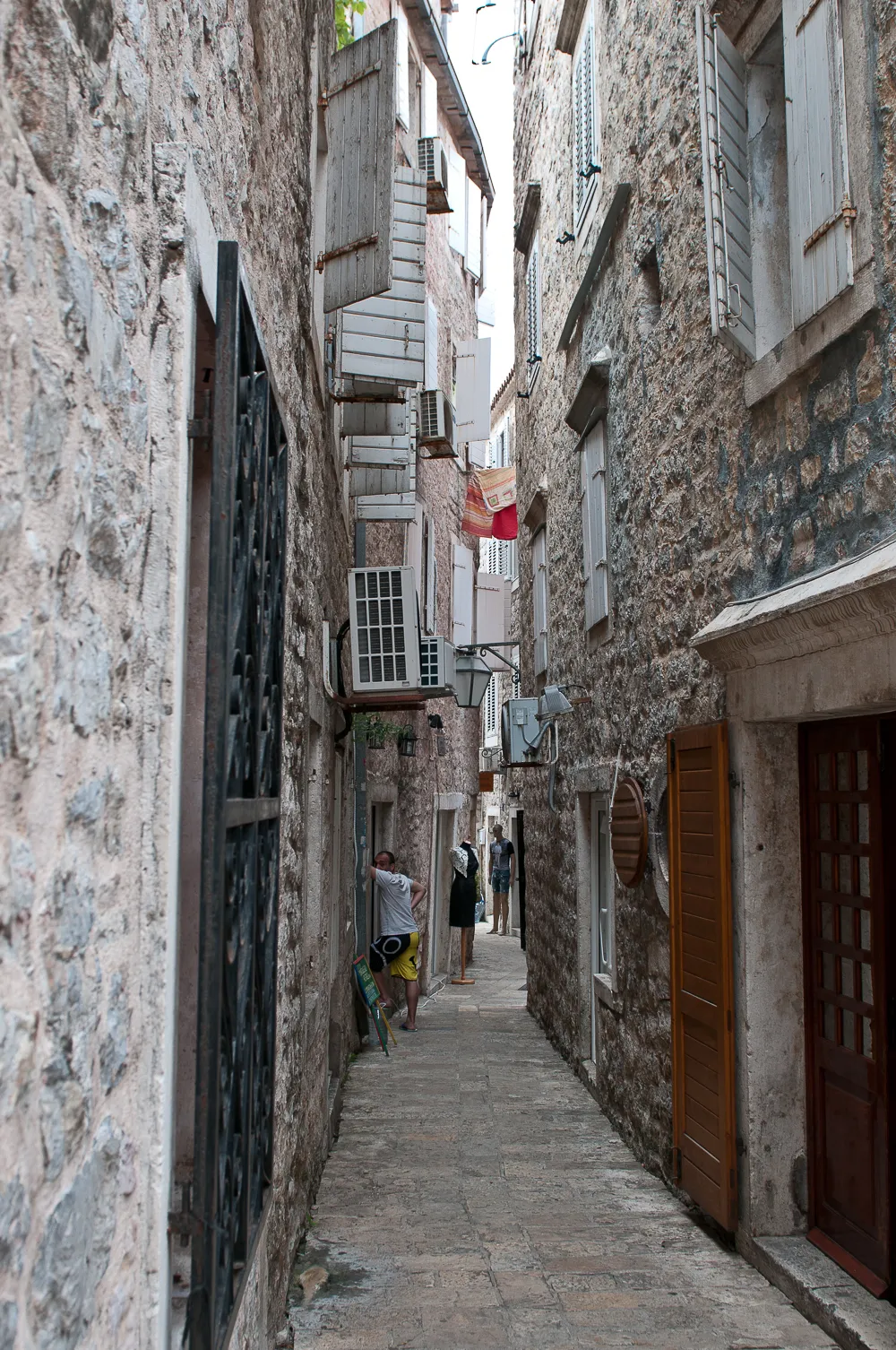
In the old town, surrounded by a high fortress wall, on crooked, narrow streets and tiny squares, you come across monuments of Roman, Venetian and Turkish rule.
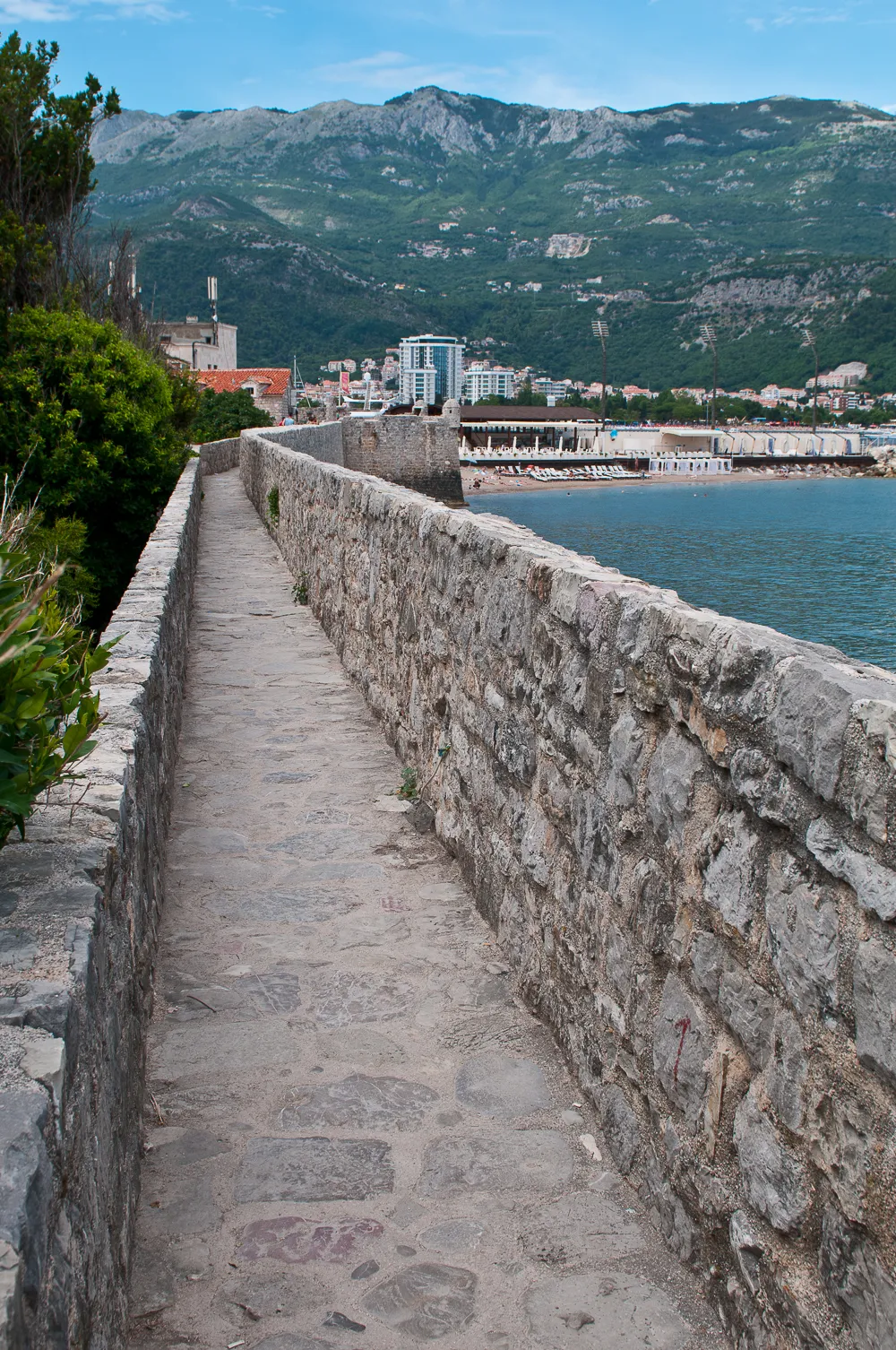
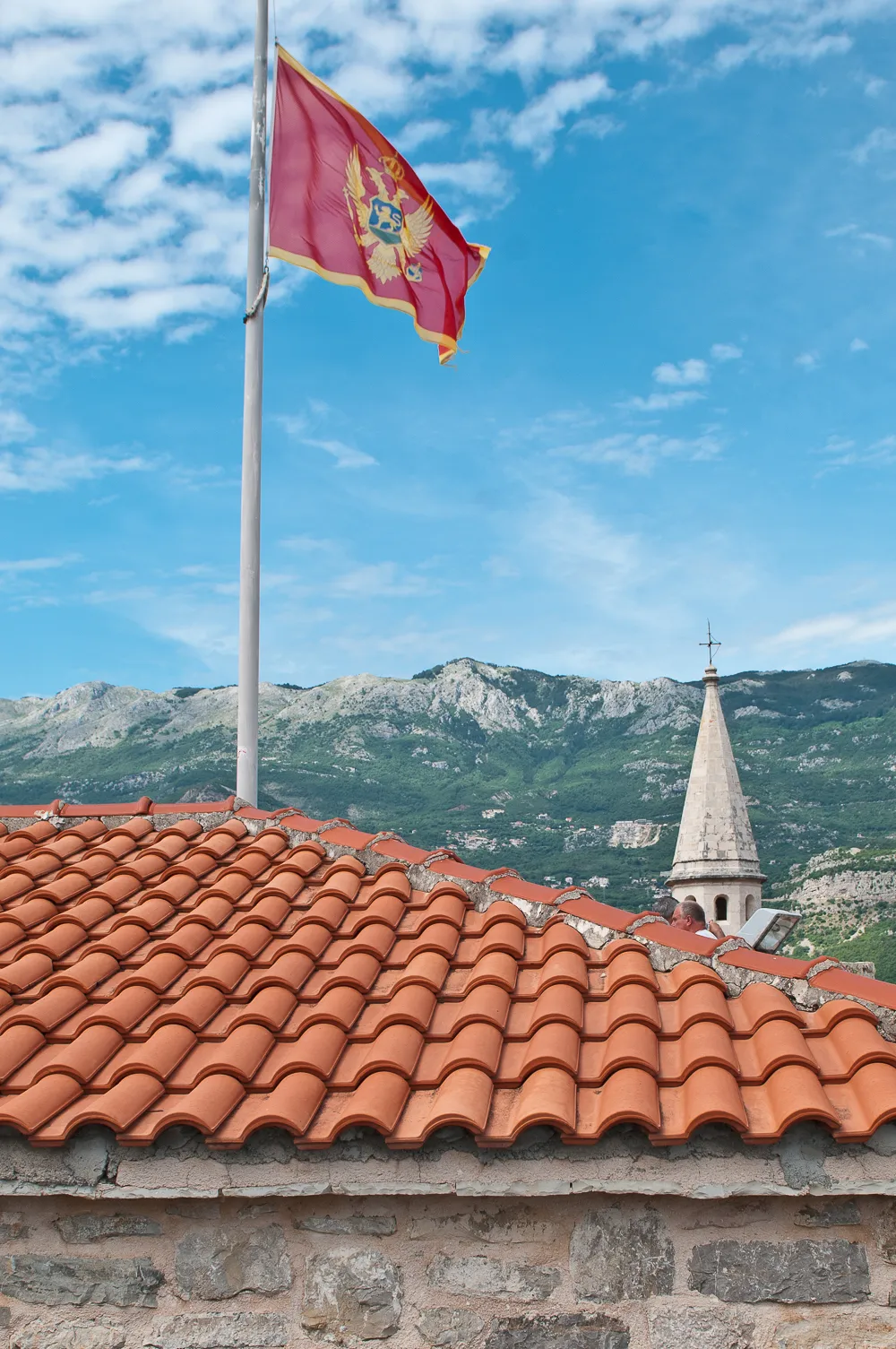
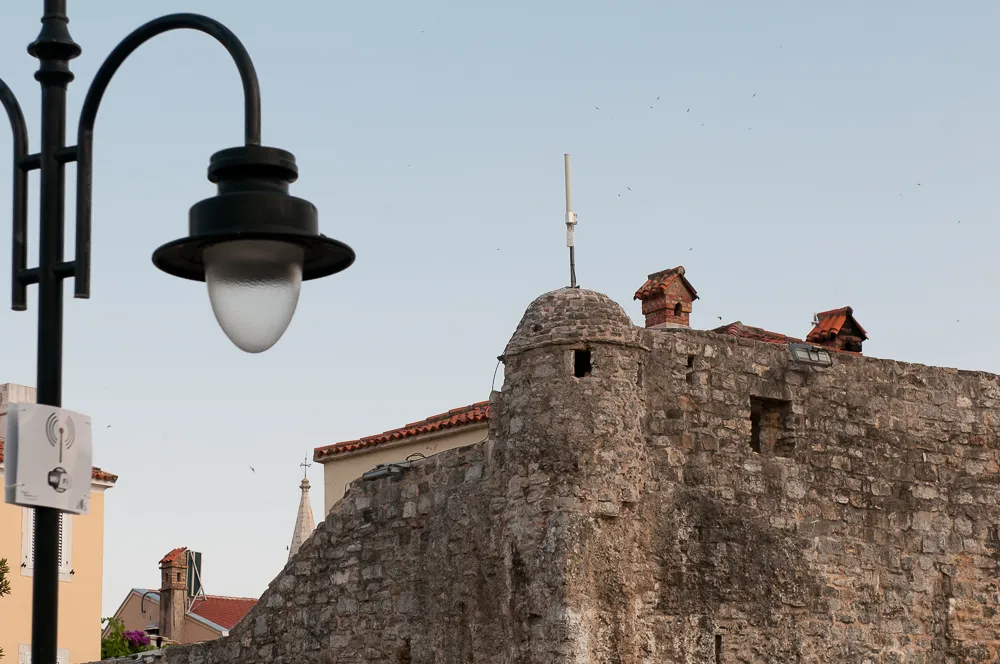
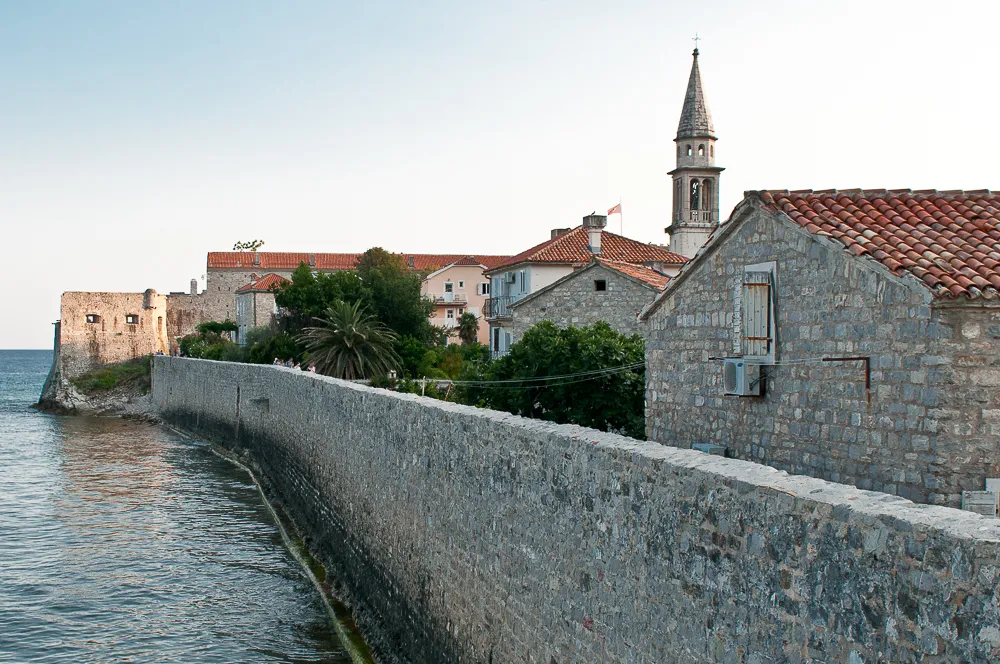
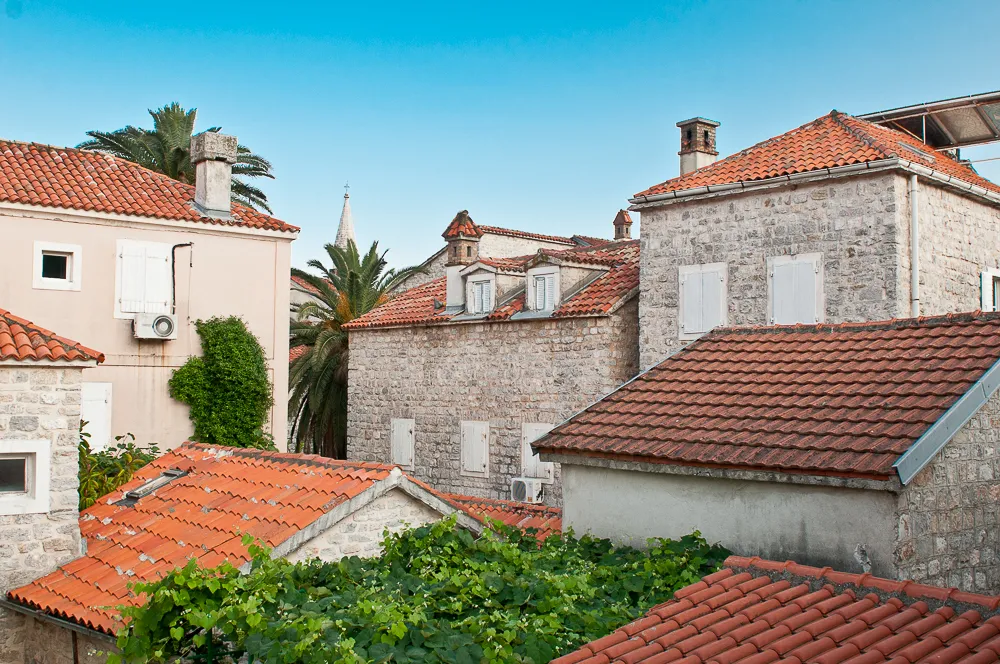
You can walk along the town walls, observing tiled roofs, grey churches, souvenir shops, the windows of little stores, cafés, bars, restaurants and numerous air conditioners. Strange. Several towers, gates and the Citadela, or Fortress of St. Mary, first mentioned in 1425, have survived. It was built to defend Budva from attacks from the sea.
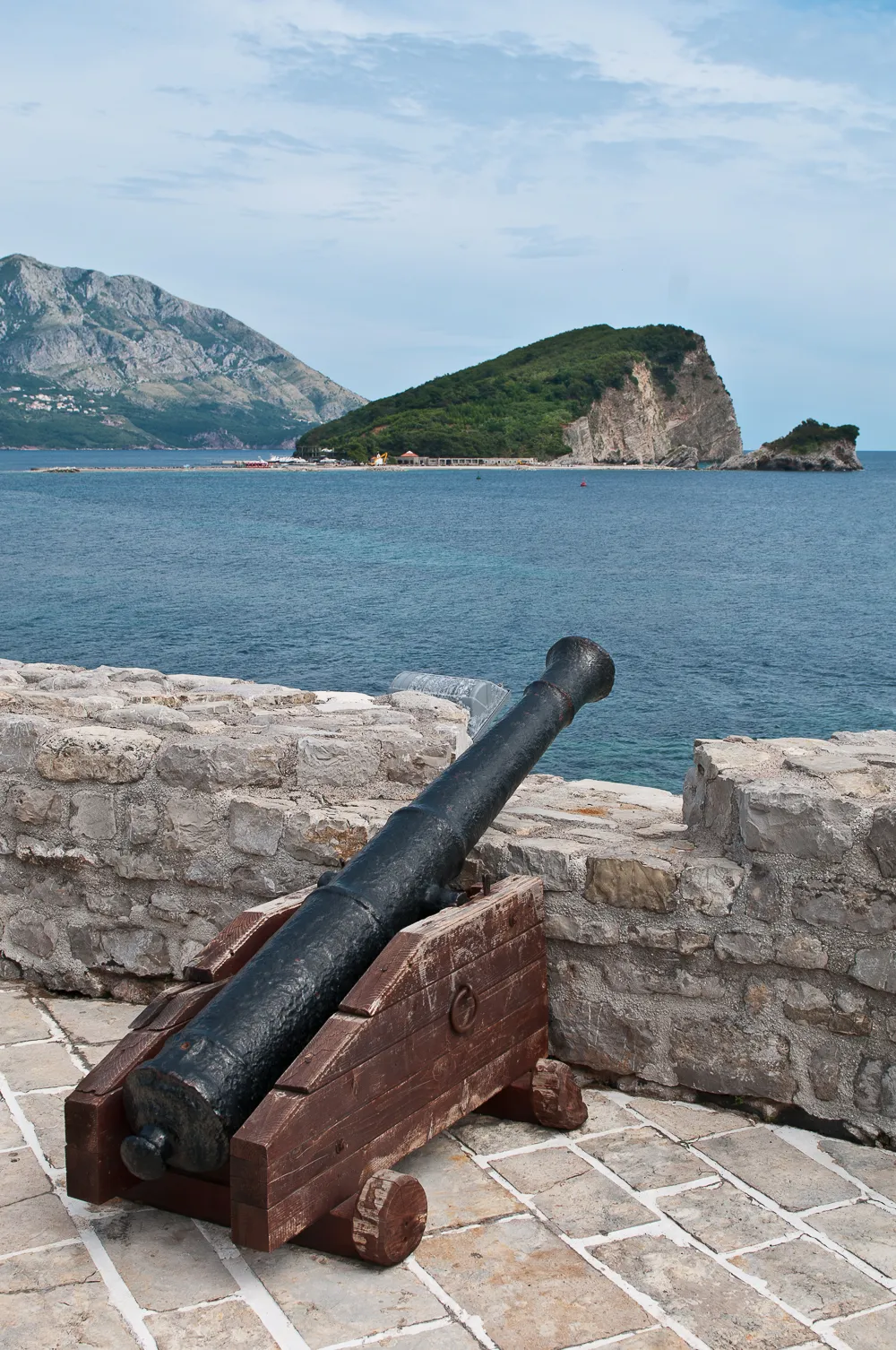
From the citadel the picturesqueness of the landscape is enhanced by the island of Sveti Nikola, which looks like a springboard for some giant’s wakeboard – gentle on one side and steep on the other. It is the largest island of Montenegro’s Adriatic coast, which locals call Hawaii.
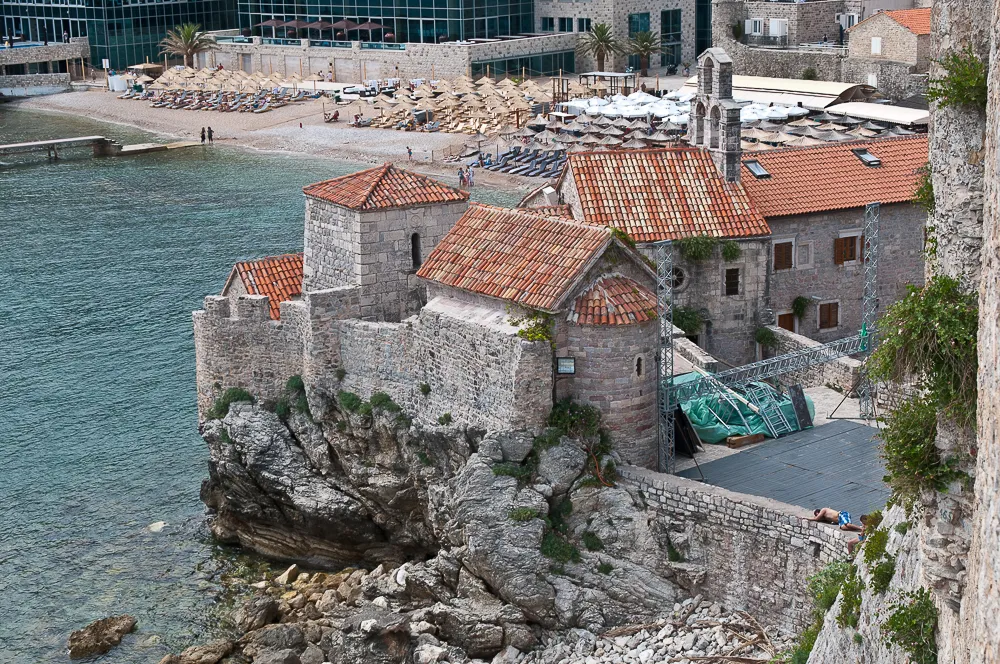
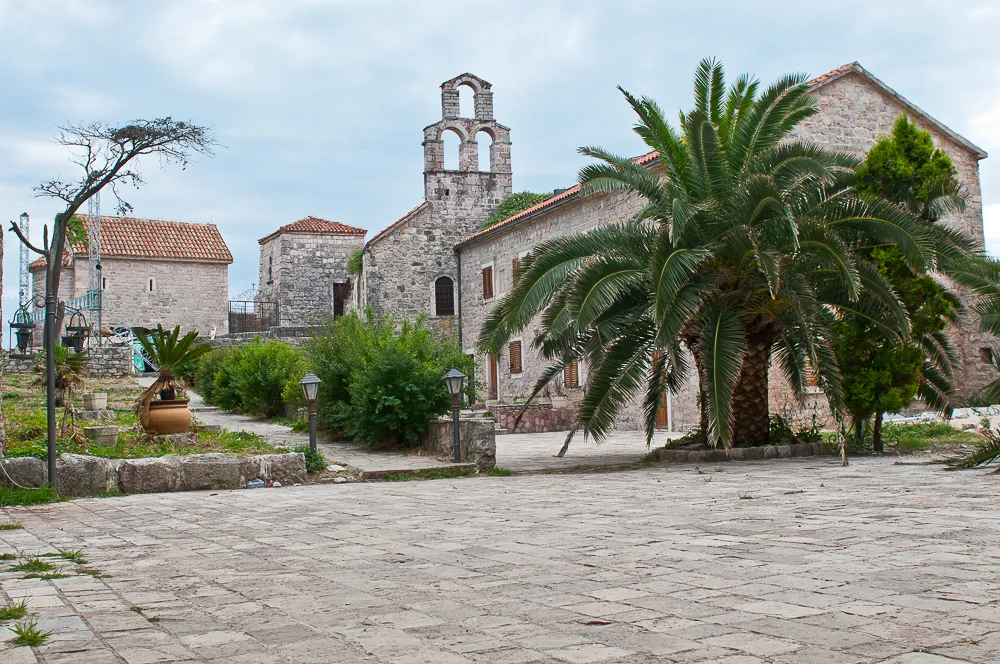
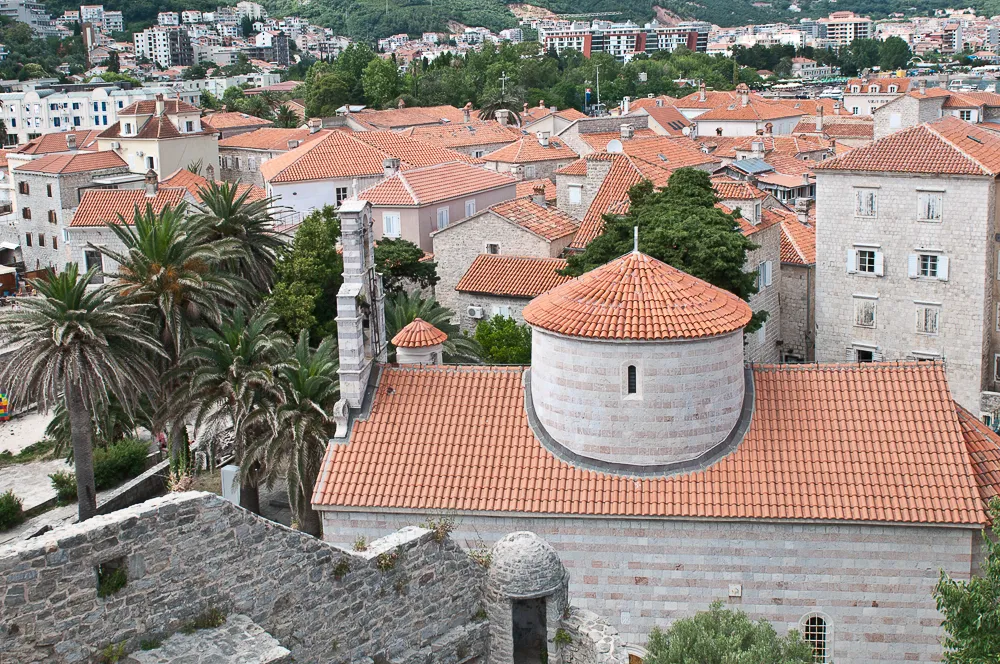
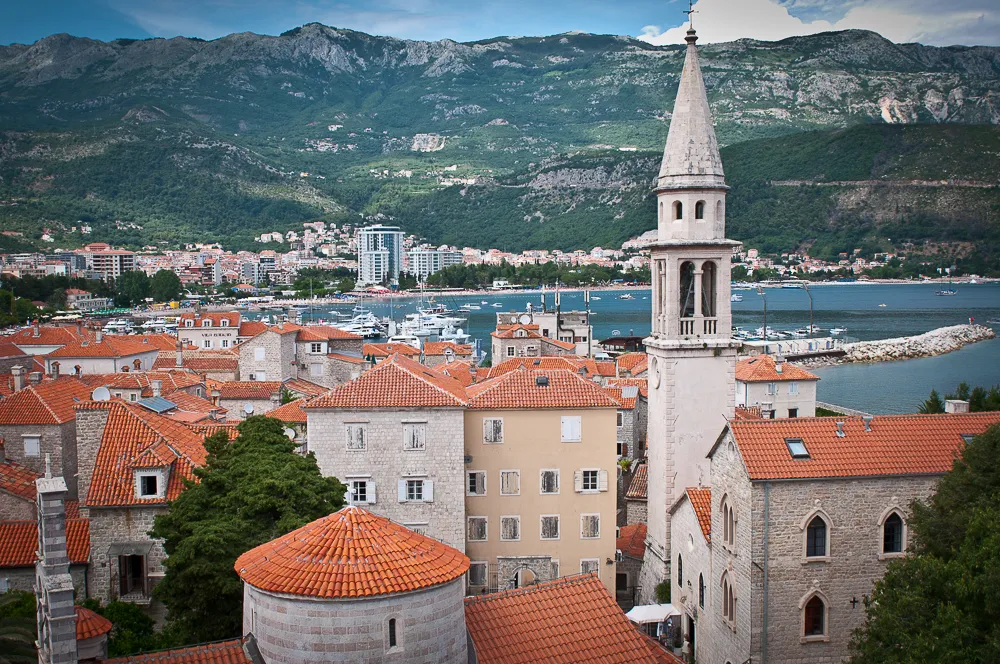
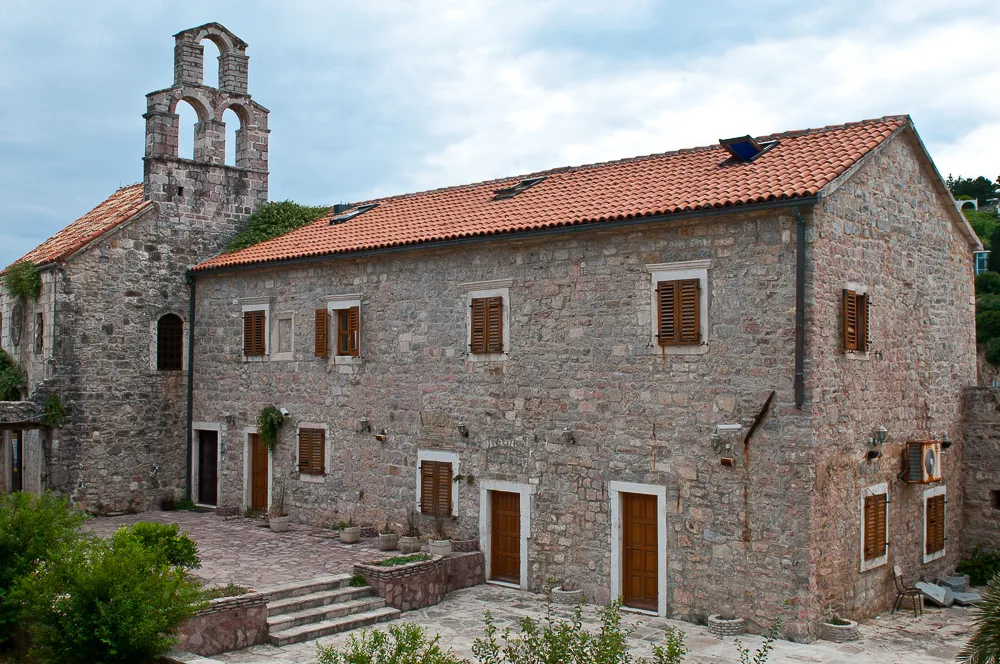
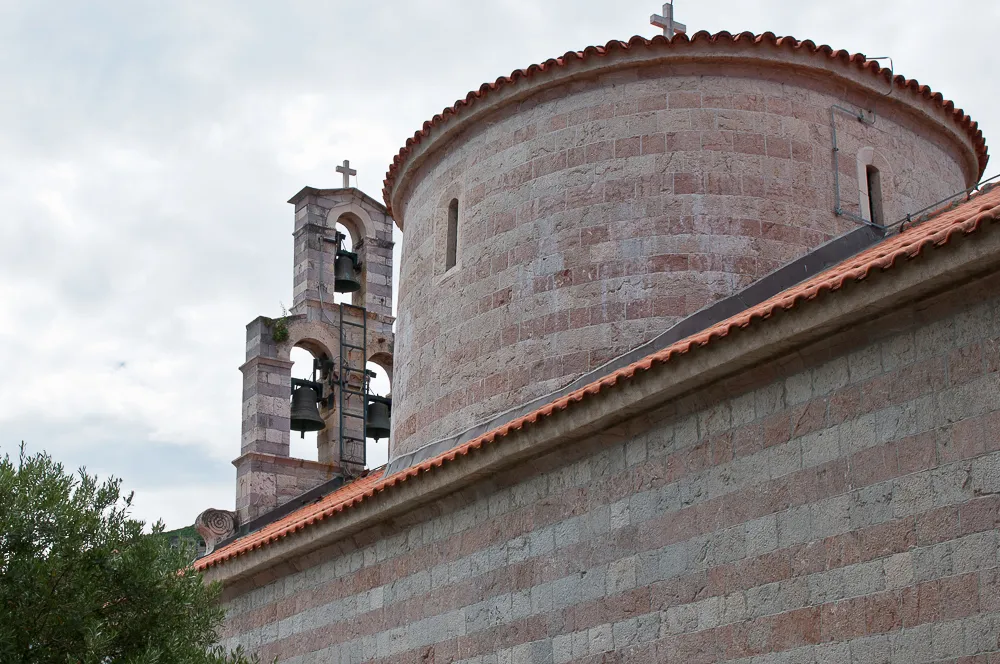
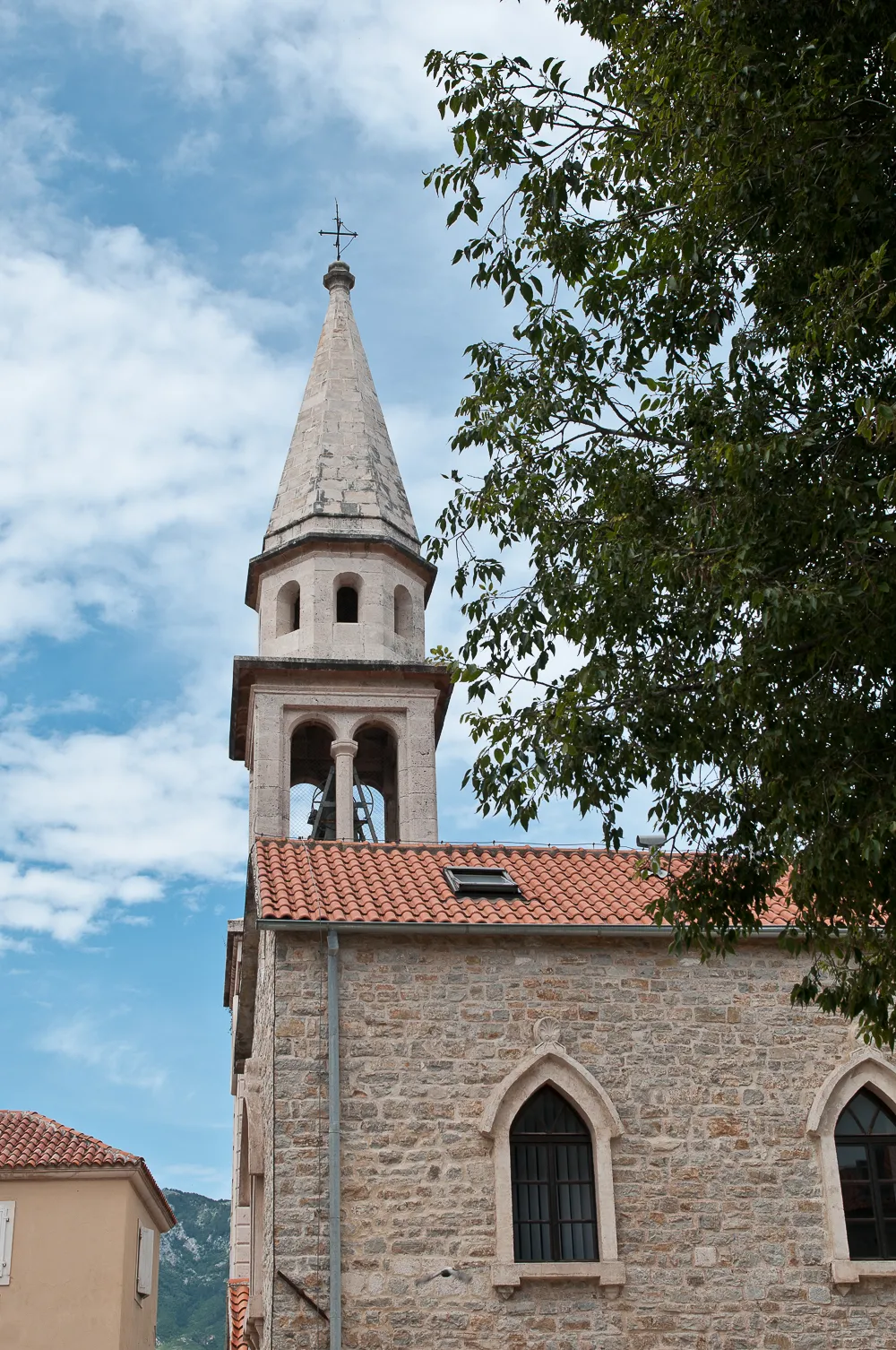
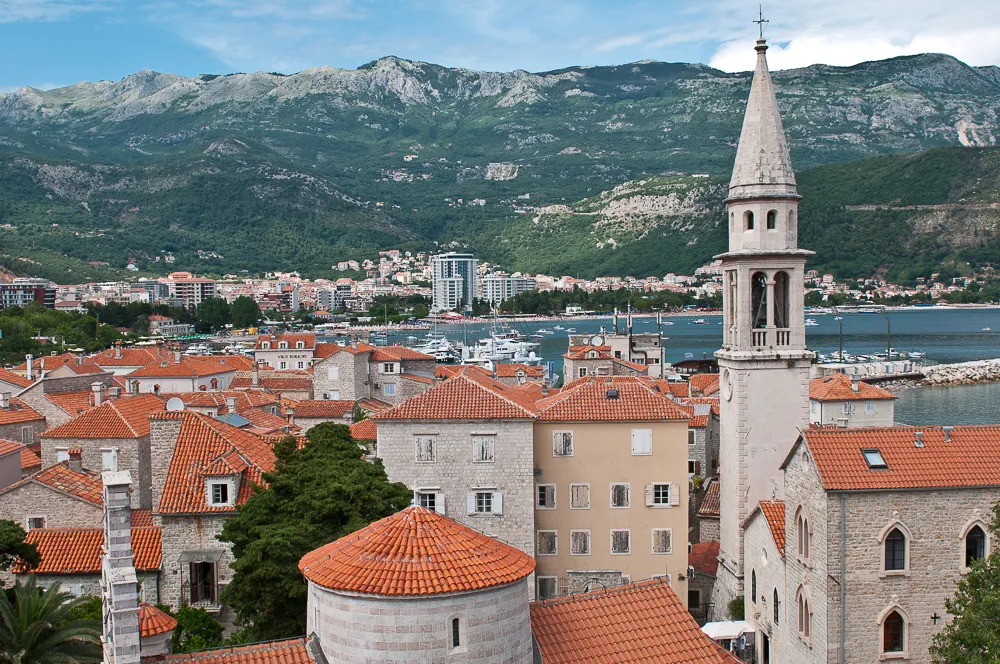
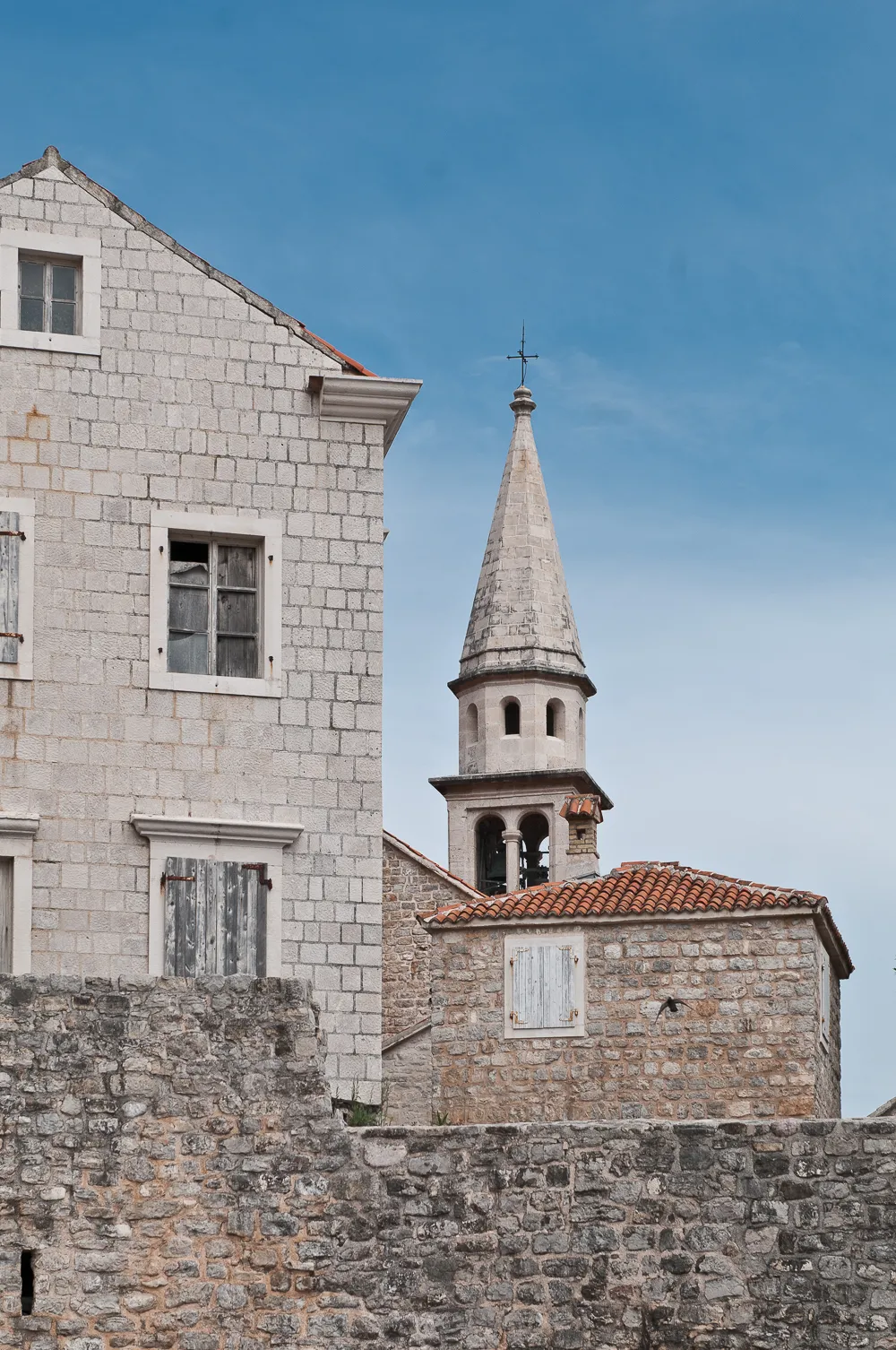
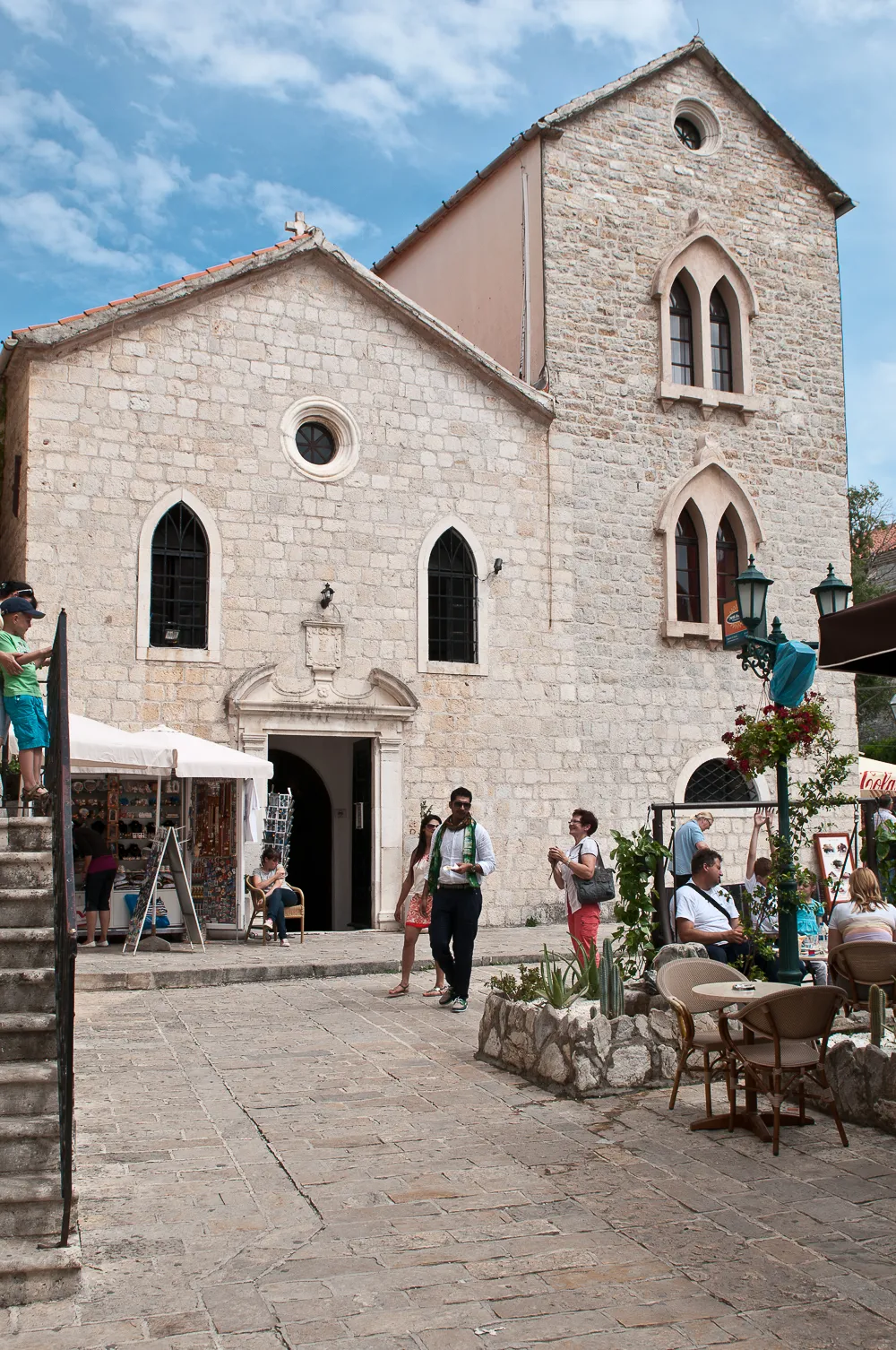
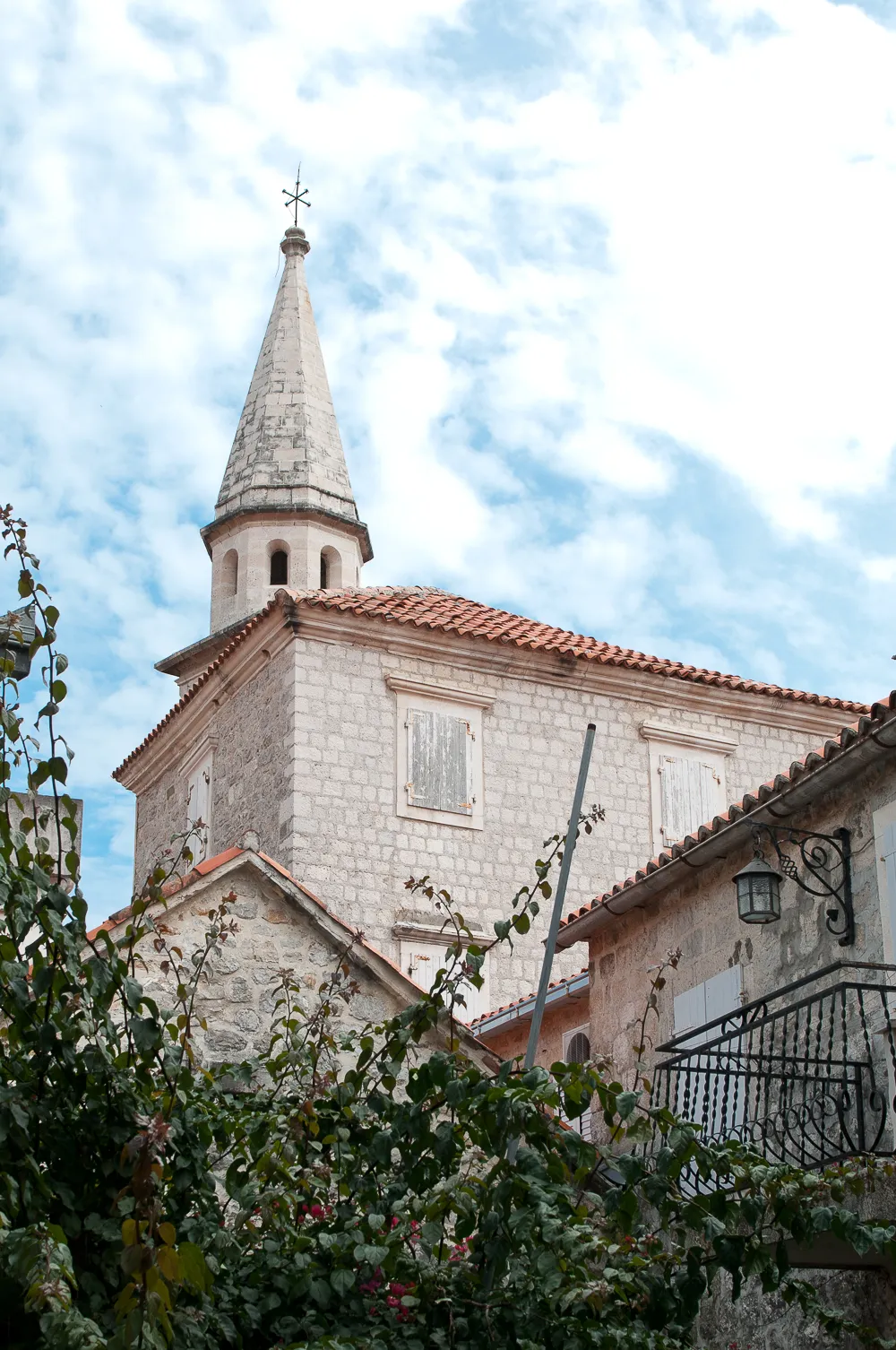
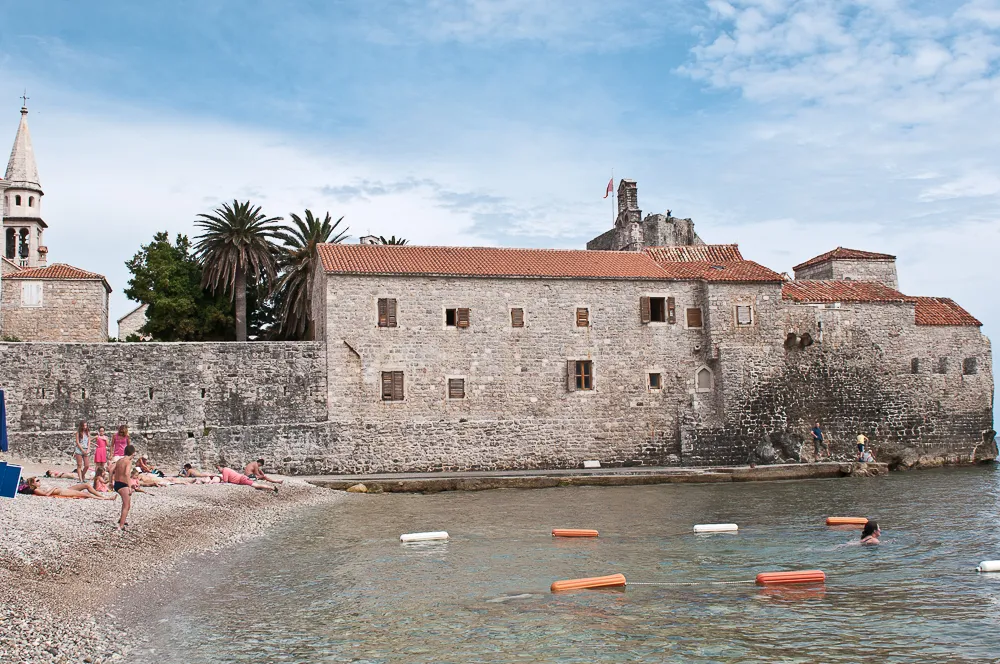
All four churches of the town have crowded together on one small patch. The tall bell tower of the Cathedral of St. John, whose beginnings go back to the 7th century and which was rebuilt in the 15th century, is clearly visible from any point of the town. The Catholic church holds icons and paintings, among them an icon of the Mother of God with the Child – the Budva Mother of God – which is attributed to the hand of St. Luke.
The neighbouring Orthodox Church of the Holy Trinity only looks old – it was built at the beginning of the 19th century.
Nearby is the miniature Orthodox Church of St. Sava, built in 1141. The church of hewn stone is dedicated to the founder of the Serbian Orthodox Church. According to legend, St. Sava set out from that spot on a pilgrimage to Jerusalem.
Considerably more venerable is the Catholic church of Santa Marija in Punta (St. Mary on the Cape), which also serves as part of the fortress wall and was built in 840. It was here that the town’s main shrine was kept – the miraculous icon of the Budva Mother of God, which for many years worked to protect the town from diseases and enemies. At the beginning of the 19th century, shortly before the siege of Budva by the French, it was moved to the Church of St. John, where it remains to this day.
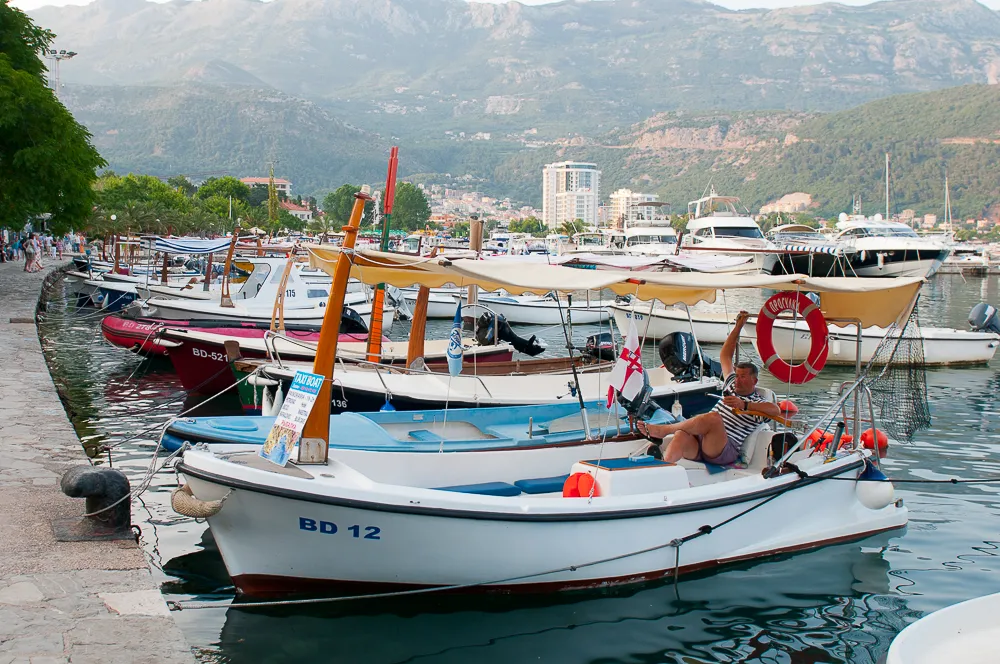
Montenegro has no traditional tea. Montenegrins say: “Why do I need tea, I am not ill.” But there is wine and fresh fish in the restaurants. That is where you should end your walk around Budva.
Text and photos by Serhii Shcherbii



