Romania. Syhit (Sighetu Marmației)

· 7 min read
In the late 1990s we were in the Transcarpathian town of Solotvyno, where most of the population speak Romanian.
“Here are a sanatorium, salt lakes, the Tysa, and over there, beyond the Tysa,” said the guide, “is Romania.”
Where is it, that Romania? From the lakes all one could see were willows on the Romanian side. That is how I first saw Romania.
“And over there, beyond the willows, is the Romanian town of Sighetu Marmației, or simply Syhit Marmorosky in Ukrainian.”
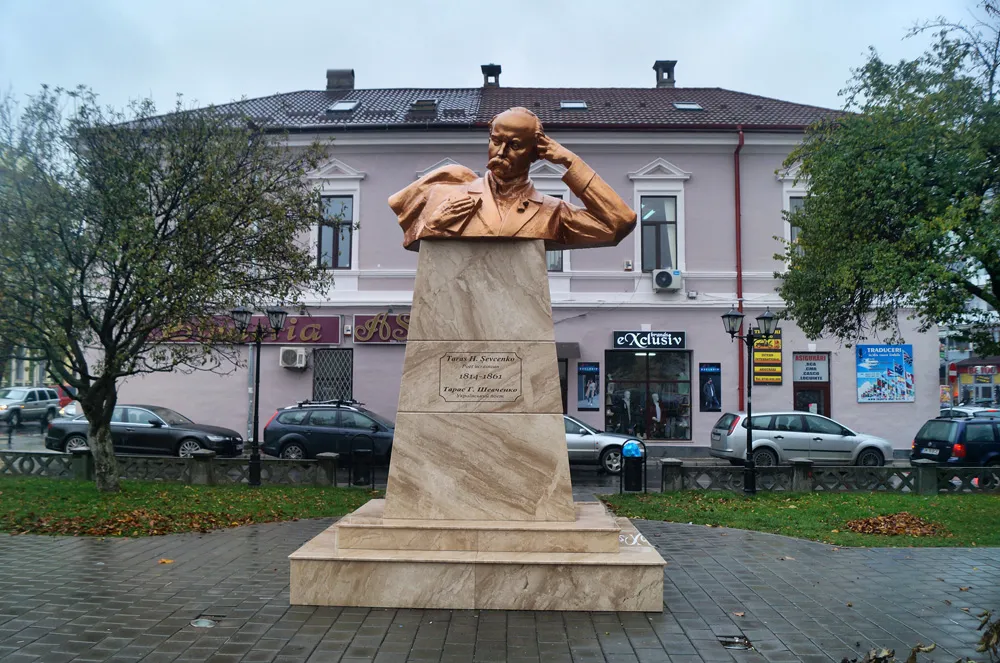
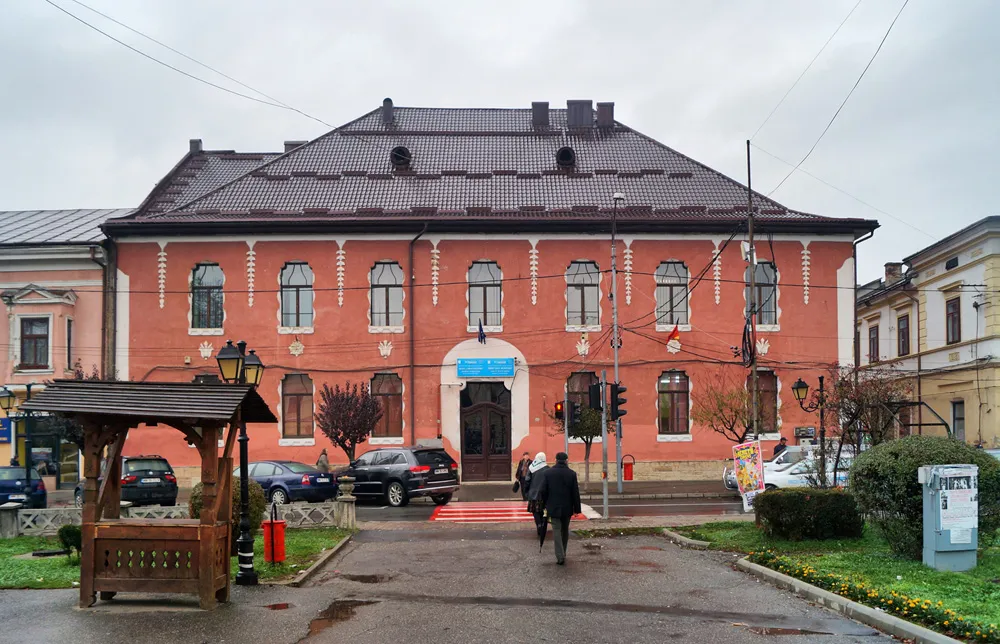
The monument to Taras Shevchenko and the lyceum named after him
It seemed to me then that it must be some tiny town that cannot even be seen behind the willows. And of course populated solely by Roma, because my father, when he travelled to Romania to sell all sorts of junk (in the early 1990s everyone went there), said that Romania was full of Roma. But why is it, then, that in our Solotvyno, Nyzhnia Apsha and Bila Tserkva, very rich villages where every house is like a palace and the population are ethnic Romanians, no Roma live at all? That is what I thought then. The bridge across the Tysa was then pedestrian only; the road bridge was opened by President Yushchenko in the first decade of the 21st century. It was by this bridge that we crossed the Tysa in 2017, when we first visited the mysterious Maramureș region.
We spent the night in Rakhiv, set out early and were the first at the checkpoint in Solotvyno. But we still had to stand for an hour: the Ukrainian border guards were changing shifts. An hour. Somehow among the Romanians, and the Poles, Slovaks and Hungarians too, shift changes happen unnoticed, but Ukrainians always line up a queue, as if to say this is all very serious, a shift change.
The bridge across the Tysa at Solotvyno is metal, covered with wood. It is designed exclusively for cars, so buses are not allowed. But our nine-seat minibus counts as a passenger car, so we were let through without unnecessary questions. Although there was one question, the same from our border guards and from the Romanian ones: do you have any cigarettes?
The bridge has already been repaired twice since it opened, and on the Romanian side the wooden decking was brand new, while on our side the old creaking planks sagged under the weight of our Ford Transit. But we were assured that underneath it is metal and that we were in no danger of falling through into the Tysa. And then came Syhit Marmorosky, the most Ukrainian town in Romania.
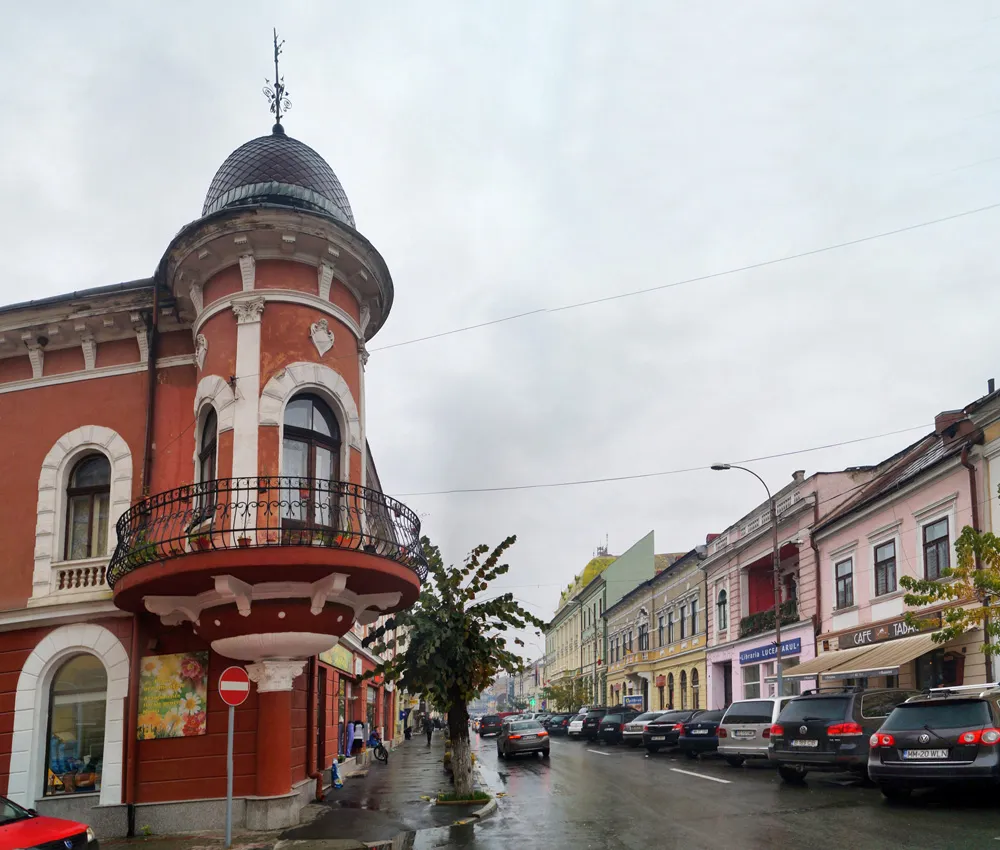
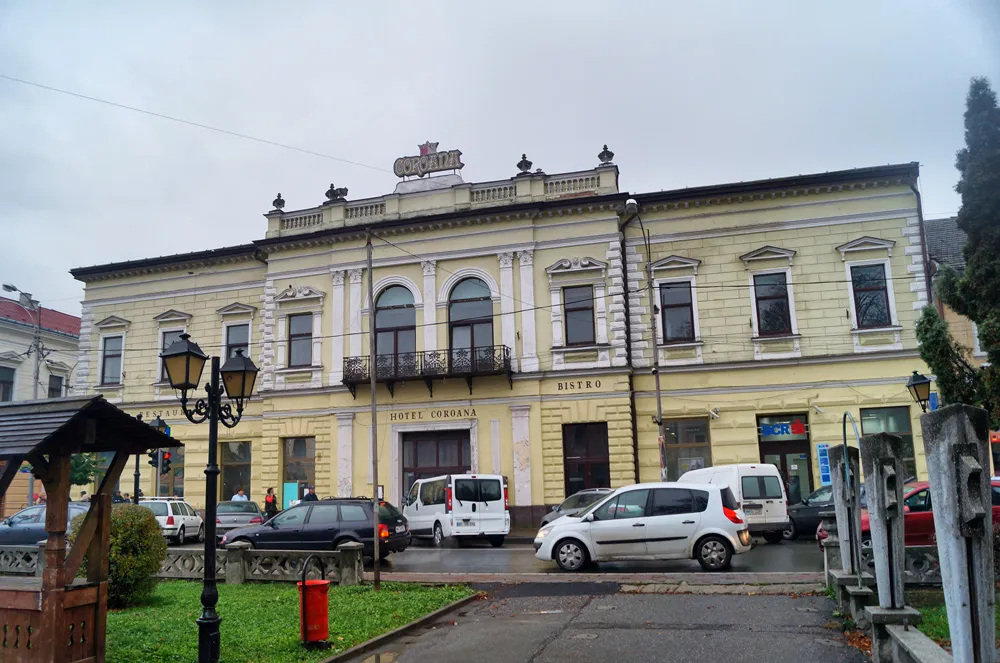
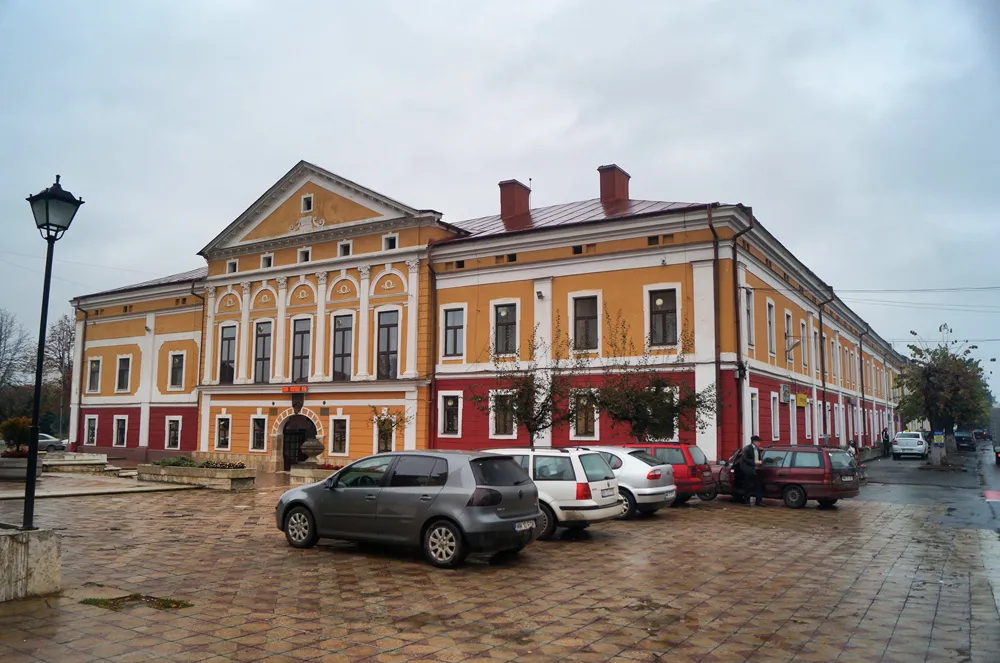
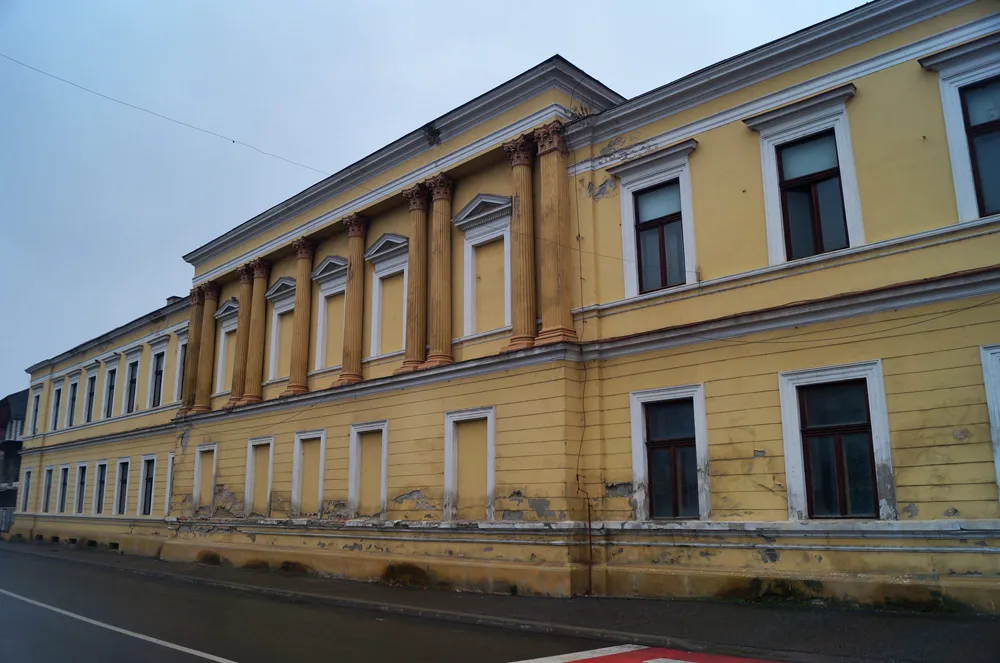
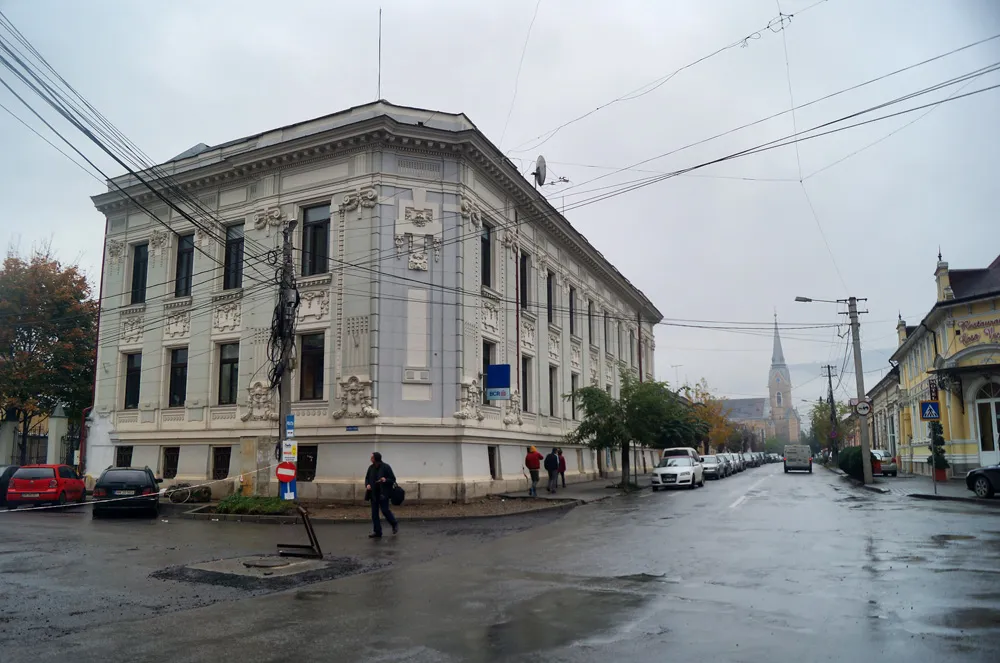
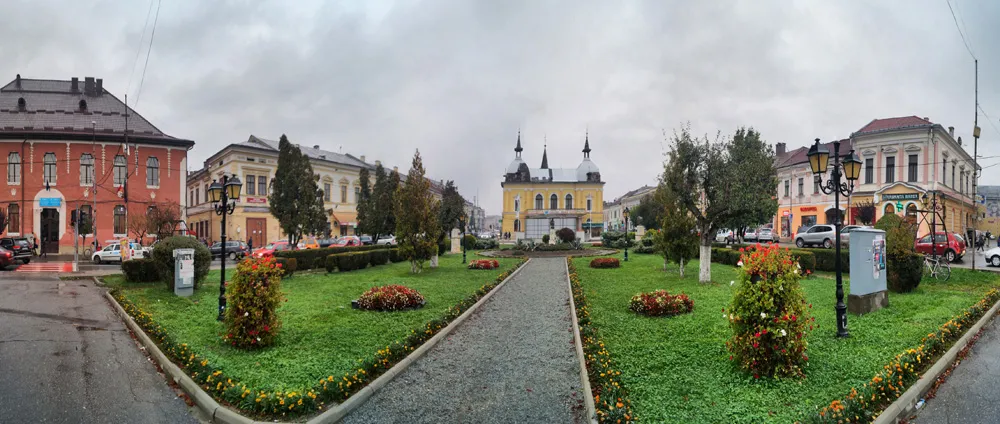
Syhit turned out not to be so small. The population is almost 40 thousand, of whom 1,200 officially declared themselves Ukrainians; how many more are of Ukrainian descent is not known for certain, but they certainly exist. In Syhit there is a monument to Taras Shevchenko and also the Taras Shevchenko Lyceum, the only Ukrainian lyceum in Romania. The lyceum is attended not only by Ukrainians from the town but also by many children from large mountain villages, often 95% Ukrainian. Moreover, both the monument and the lyceum are in the very centre of town. And the centre here is quite pleasant; I would compare it with the old towns of Uzhhorod, Mukachevo and Berehove. Syhit Marmorosky has a lot of old residential and administrative buildings and quite a few churches.
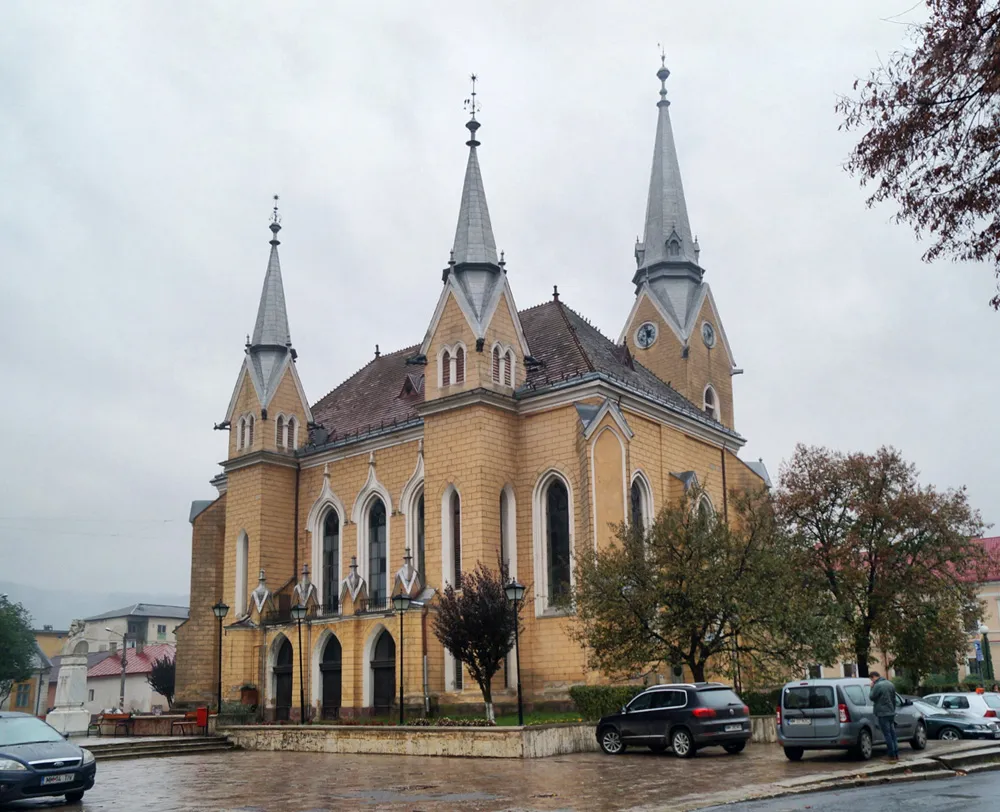
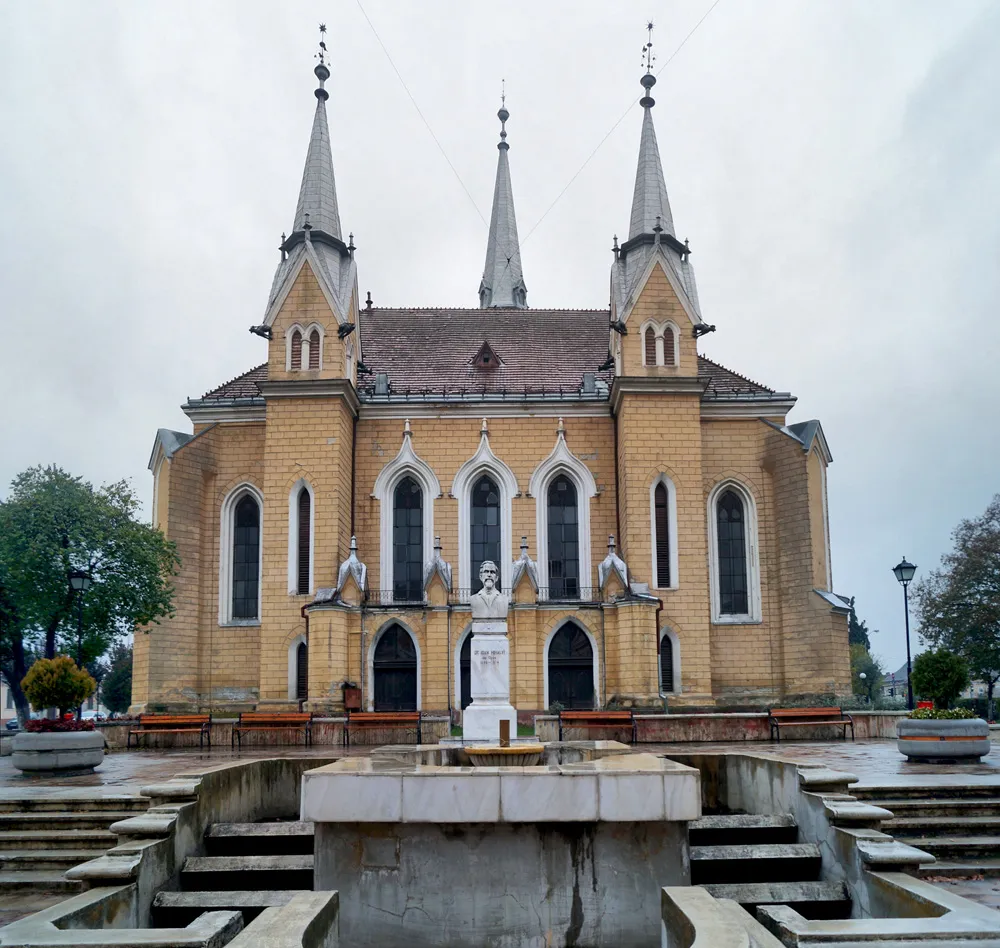
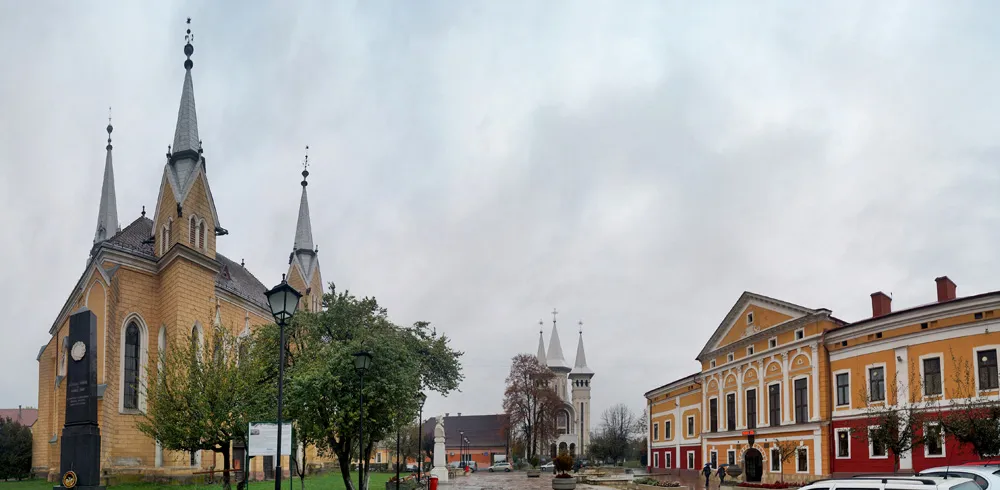
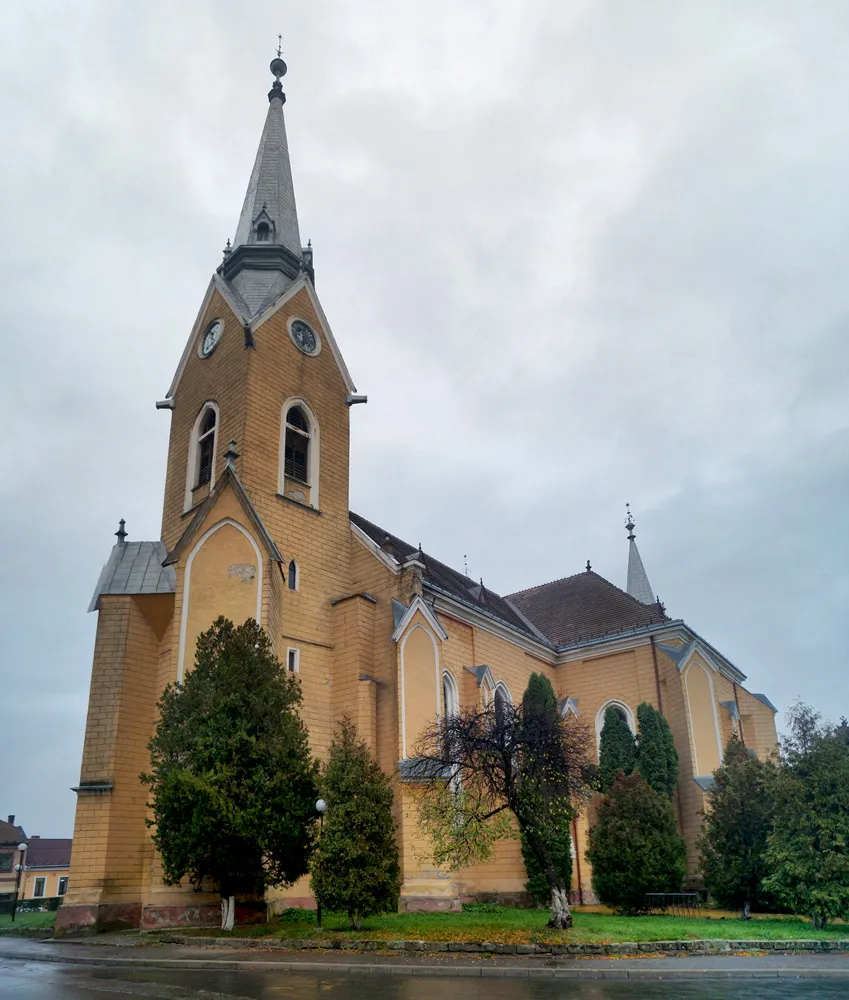
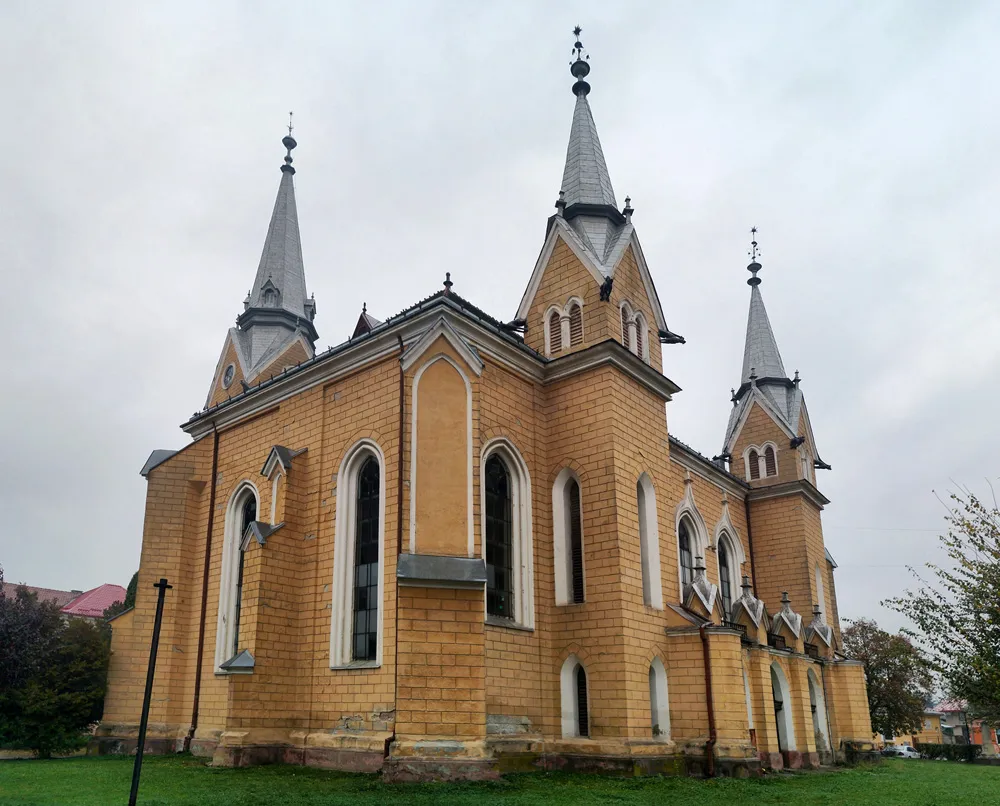
The oldest building in the town is the Protestant church. 14th–15th centuries.
The first official mention of Syhit dates from 1326. It was a town of the Kingdom of Hungary, which in 1394 became the centre of Máramaros County, an administrative-territorial unit of the kingdom. Maramureș, called Máramaros in Hungarian and Marmarosch in German, belongs to the Ukrainian ethnic lands. We have already spoken about this. In the surroundings of Syhit most villages spoke Ukrainian (Ruthenian), and it was Ukrainians who built in the surrounding villages the first wooden churches, the basis of Maramureș Gothic, now a UNESCO World Heritage site. In Syhit itself most of the population were Hungarians and Germans. Unfortunately, almost no monuments from those ancient times have survived, except the Reformed church, which is mentioned earlier than the town itself, in 1308. True, only part of one of the church’s towers, 15 metres high, is that old. It may have been a watchtower that appeared before the town. The rest of the church was built in the 15th century, in the Gothic style. We did not manage to get inside: local residents told us that it is opened only when German tourists arrive.
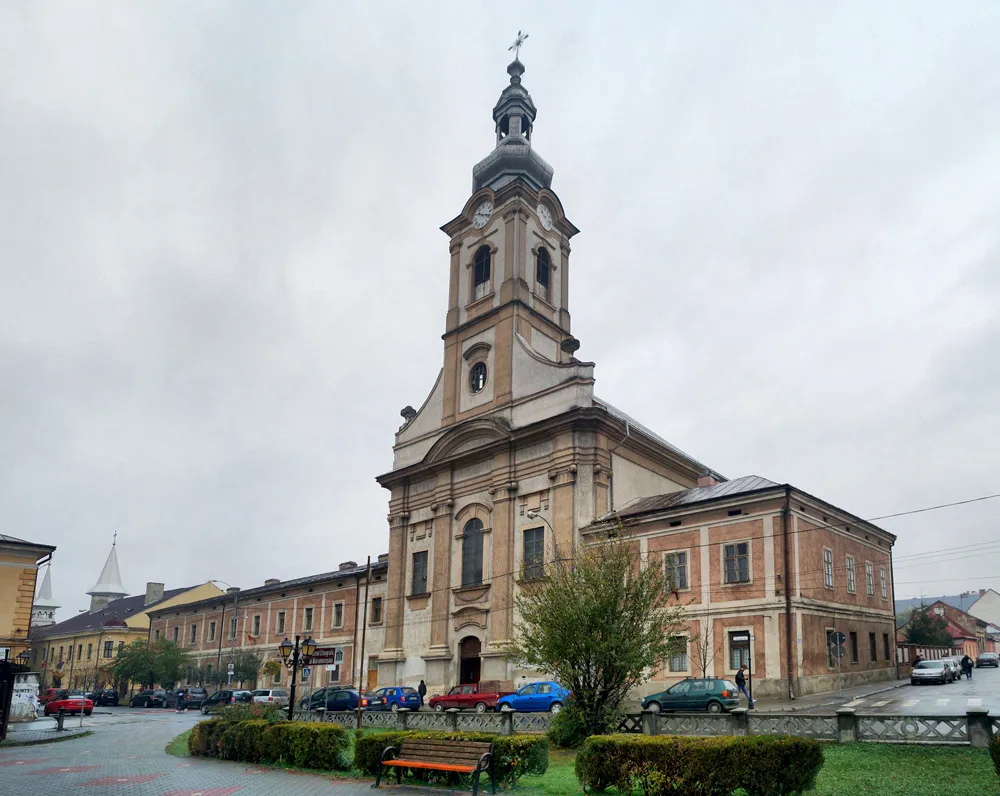
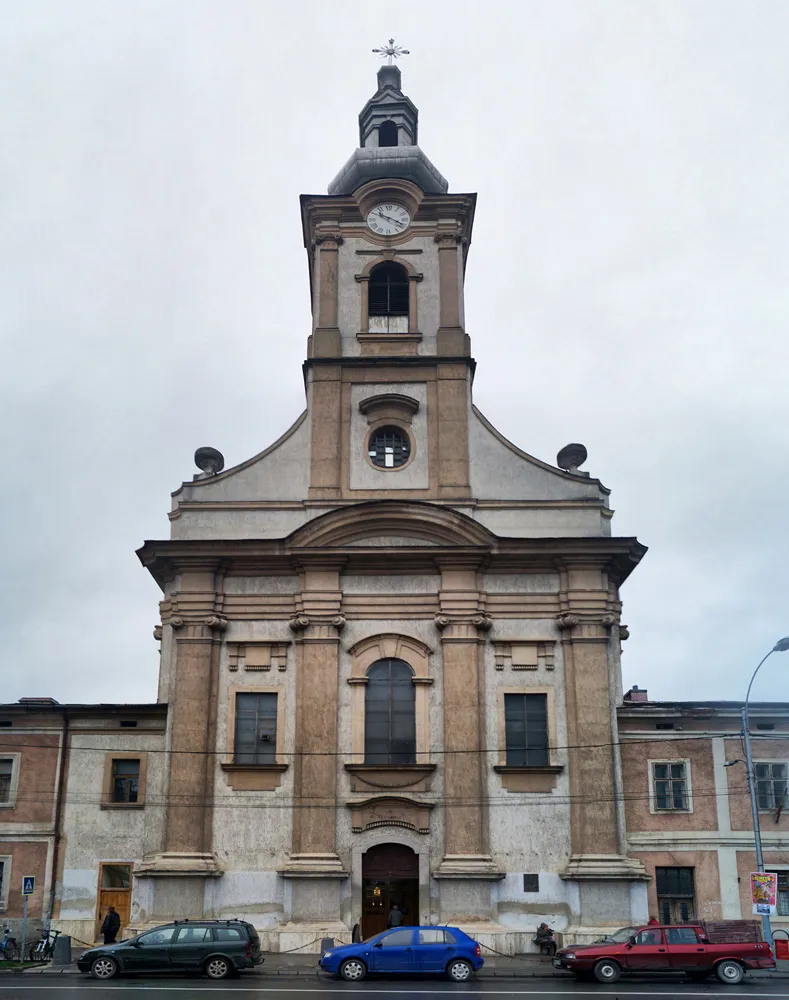
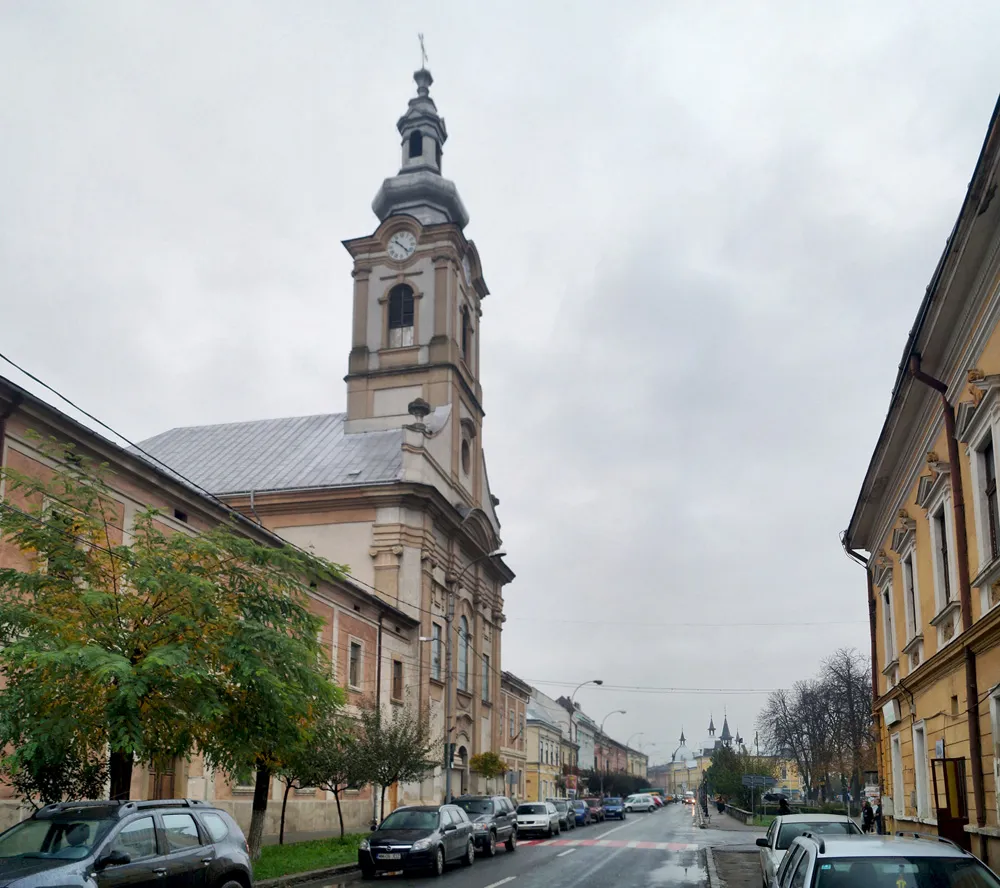
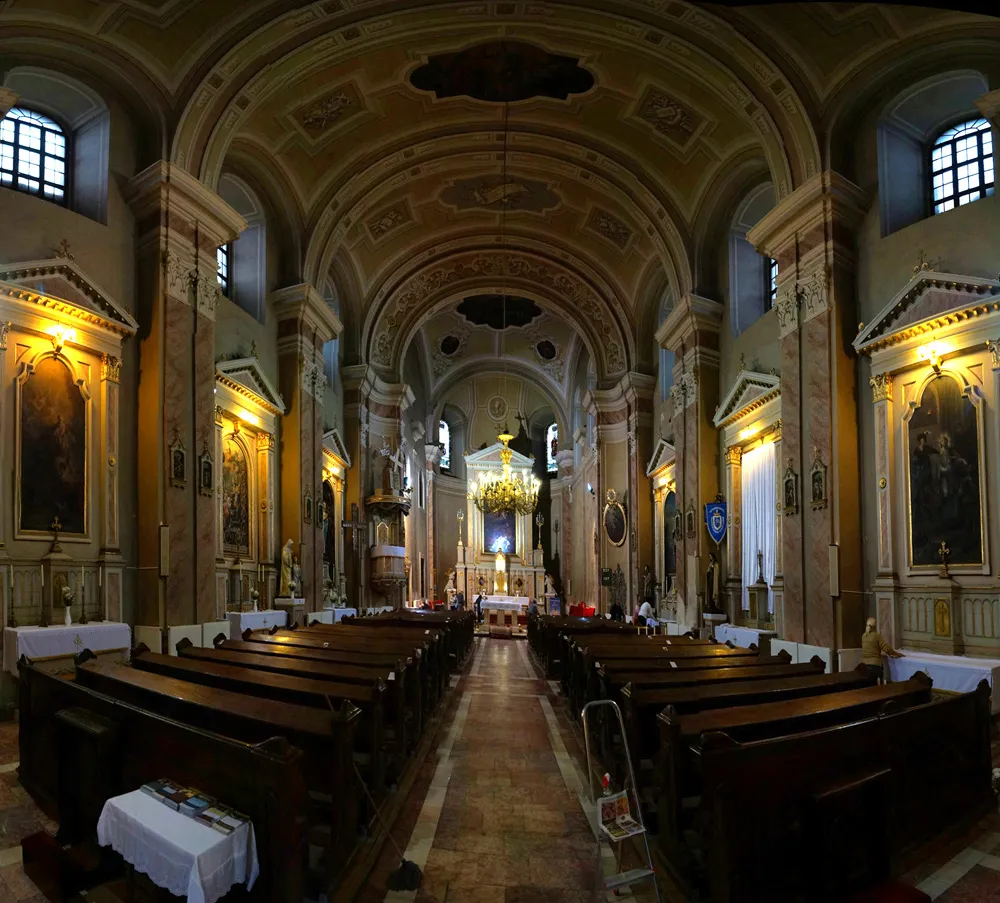
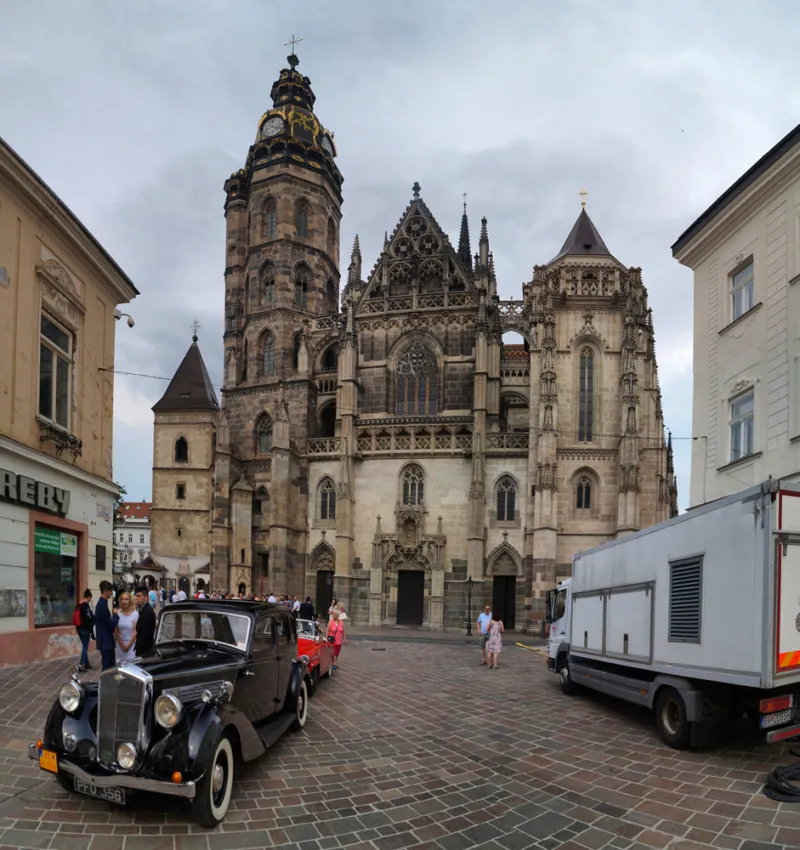
The Hungarian Roman Catholic church
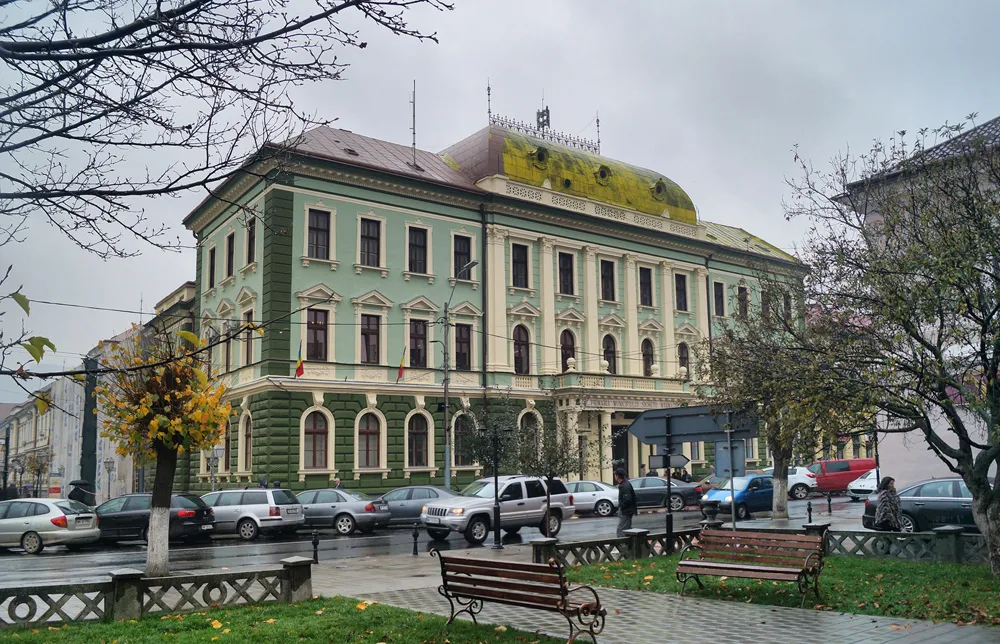
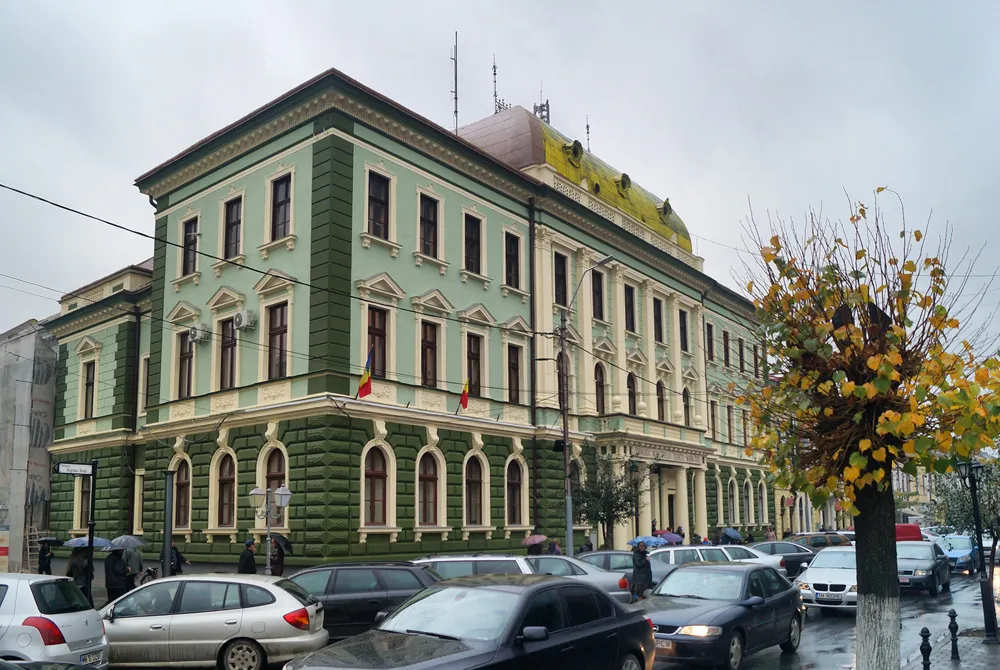
The next oldest object is the building of the former prefecture, built at the end of the 17th century. Now it houses the restaurant “Curtea Veche”.
The Piarist monastery was built in 1730, and the remaining monuments date from the 19th and early 20th centuries.
Syhit has a clear structure of development of the historic centre, formed according to the principles of Saxon (Hungarian) law, without a regular rectangular market square but with a central street that widens considerably and forms a fish-shaped main square. We saw this type of layout in the Prešov region in Slovakia. And almost all the town’s architectural monuments are tied to this street and those adjoining it. Even the historic prison, which Ceaușescu made a place of torture and execution of Romanian dissidents, and which is now a museum and perhaps the town’s main tourist attraction, is also located almost in the centre. Outside the old town there is only an open-air museum with rural architecture of Maramureș, including Ukrainian. But I was, unfortunately, not at the open-air museum, so I will not tell you anything about it.
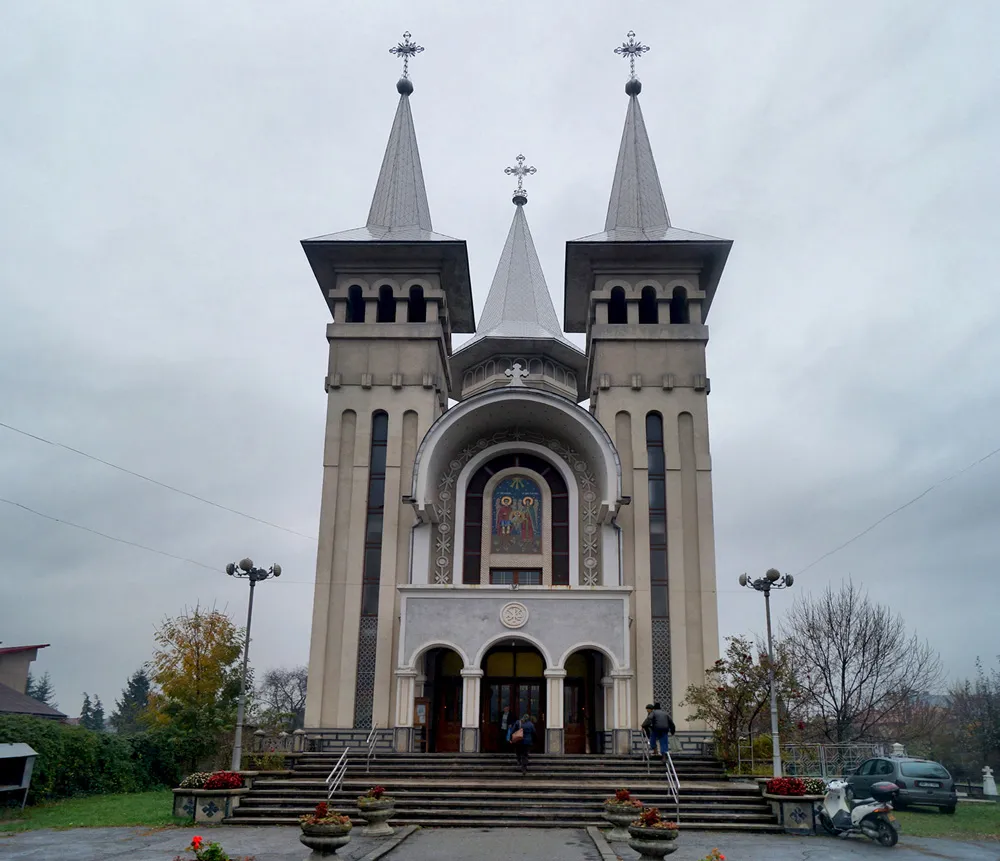
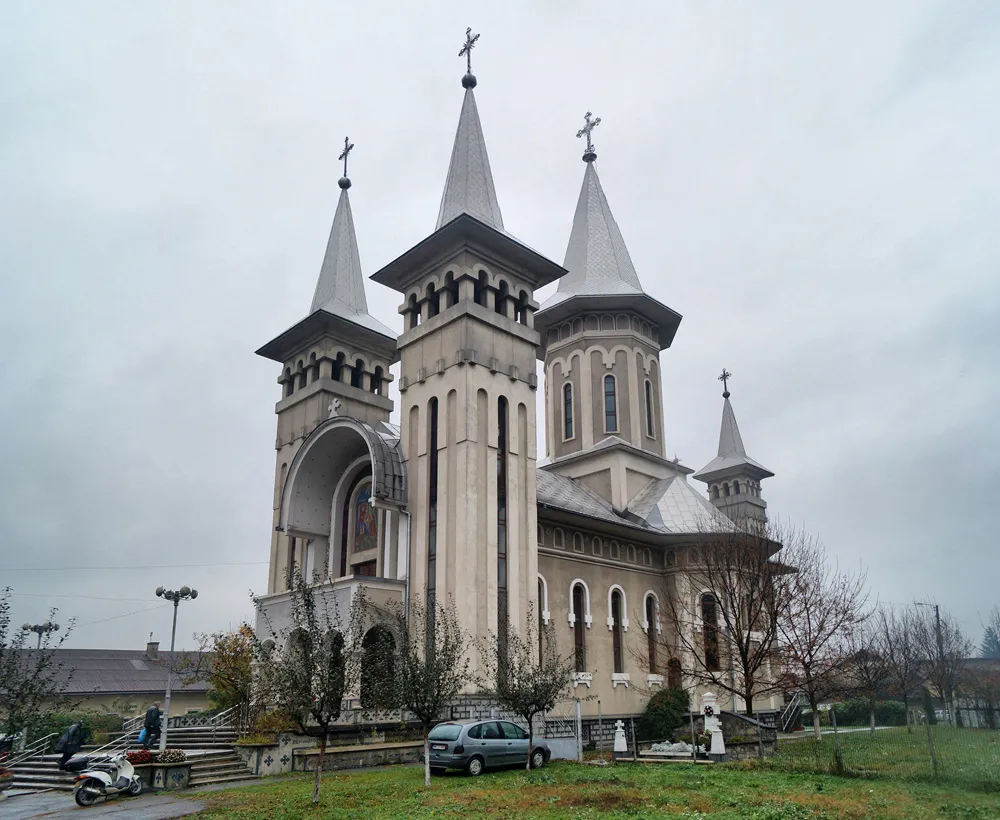
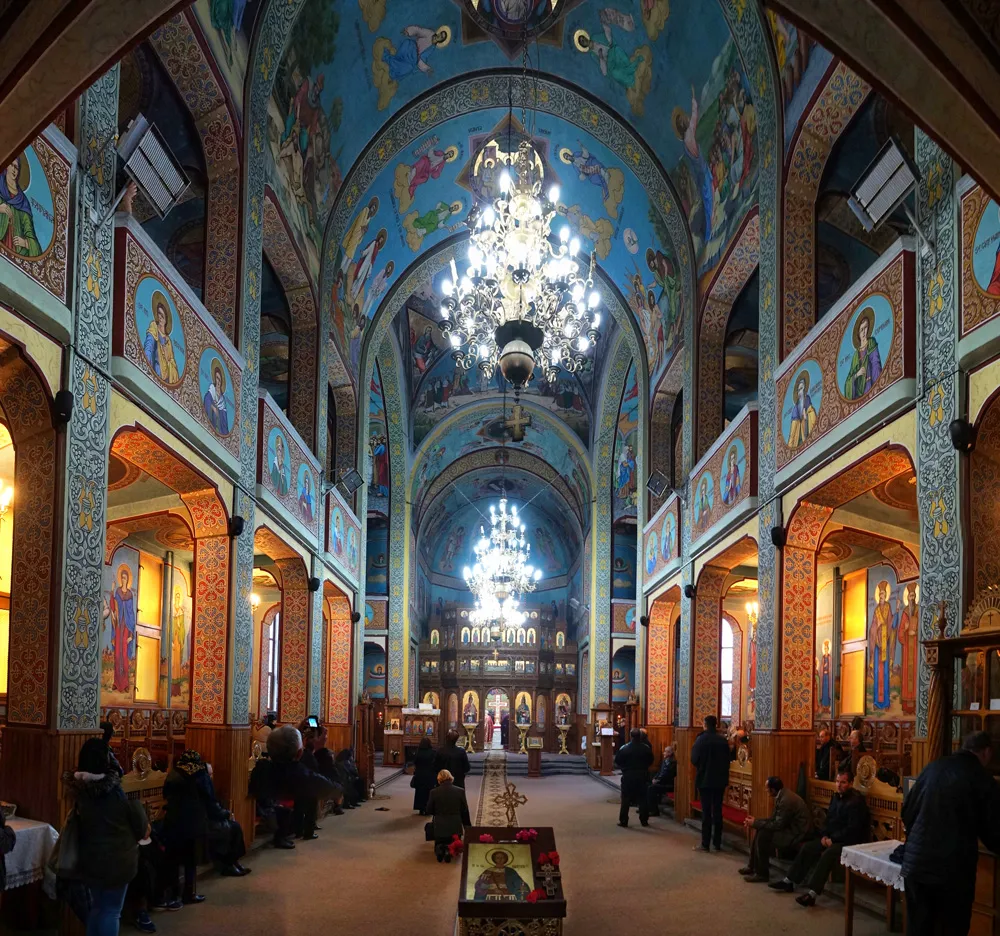
The Orthodox cathedral
The Hutsul Republic
Speaking about Syhit, I cannot fail to mention the Hutsul Republic, which existed in Transcarpathia in 1918–1919. After the victory of the Ukrainian uprising in Lviv in November 1918, crowded rallies took place in the towns and villages of Transcarpathia at which the population spoke in favour of joining the West Ukrainian People’s Republic. On 21 January 1919 the All-Carpathian Congress was convened in Khust, at which an official decision to join the Ukrainian state was adopted. At the same time in the Rakhiv region, with the support of soldiers of the People’s Defence, the Hutsul Republic was created.
After the end of the World War a large number of Austro-Hungarian army soldiers, Ukrainians, returned to the villages of the Rakhiv region. To prevent looting by the retreating Austrians and Hungarians, a militia was formed from Ukrainian soldiers and called the “People’s Defence”. The main task of this organization was to control the Austro-Hungarian soldiers who were returning from Ukraine through the Yablunytsia Pass and passing along the road to Rakhiv. In their path stood the wealthy little town of Yasinia. It was there that a detachment of 250 defenders was formed. This detachment became the basis for the creation of the Hutsul Republic, whose centre was Yasinia. The detachment was headed by an educated officer, Stepan Klochurak.
On 8 November 1918 the residents of Yasinia voted for the reunification of Transcarpathia with Ukraine and proclaimed the creation of the Hutsul People’s Council. Syhit at that time was one of the main centres of Transcarpathia. On 18 December a Hungarian congress was convened in the town, the aim of which was to include Maramureș in Hungary. Among the Ukrainians of Syhit this wish provoked considerable protest. A significant detachment of Hutsuls arrived by rail from Yasinia, on two trains, to support them. On 13 January 1919 an anti-Hungarian uprising began in Syhit, as a result of which the town joined the Hutsul Republic and the Hungarian troops were driven out.
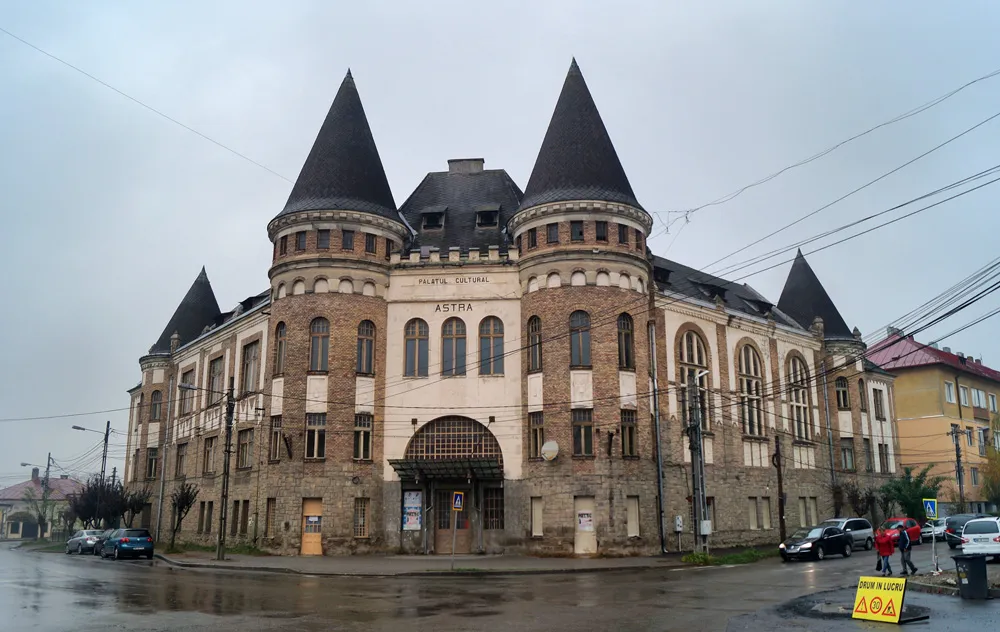
The Palace of Culture
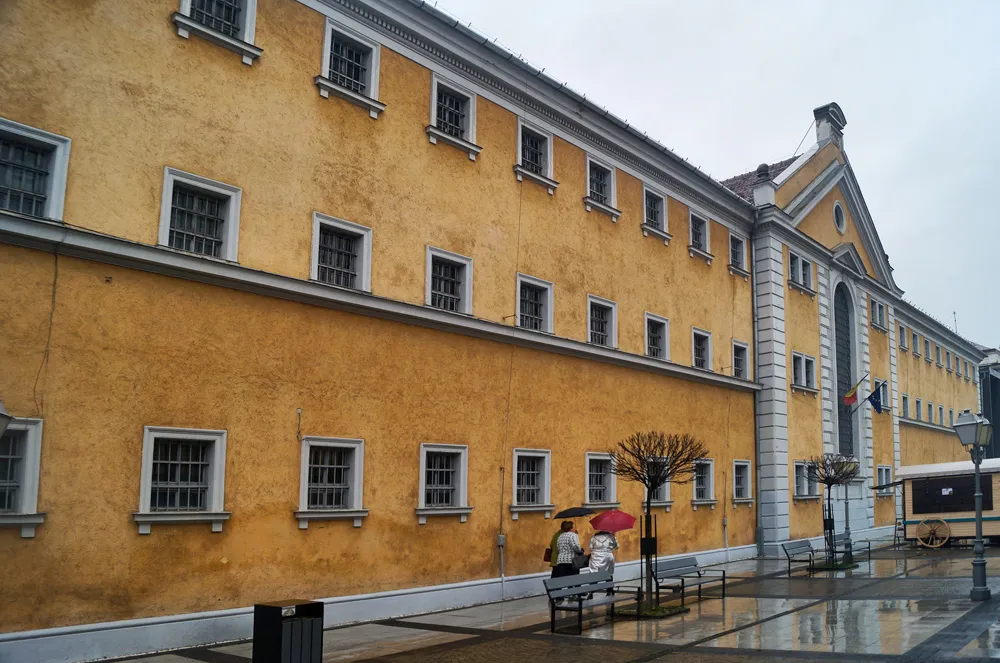
The historic prison
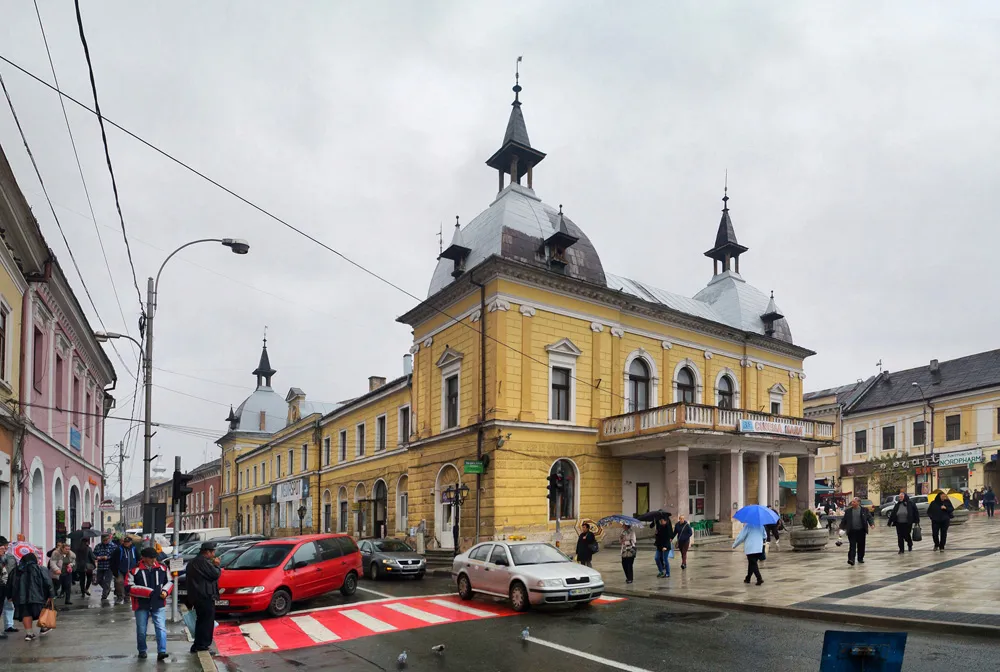
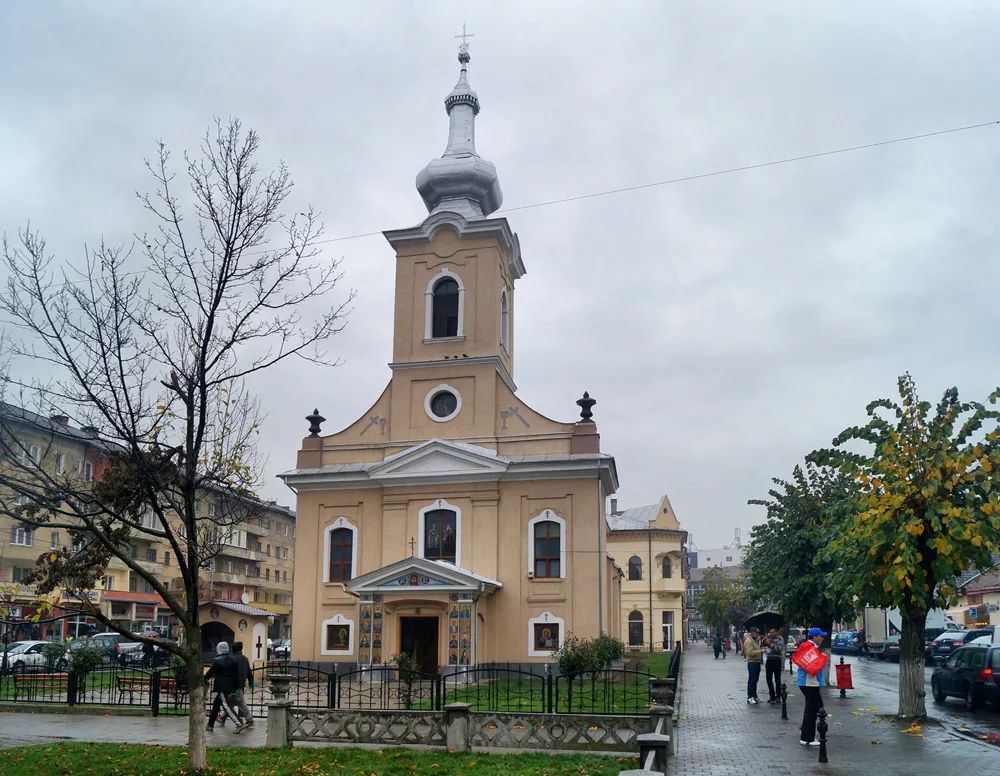
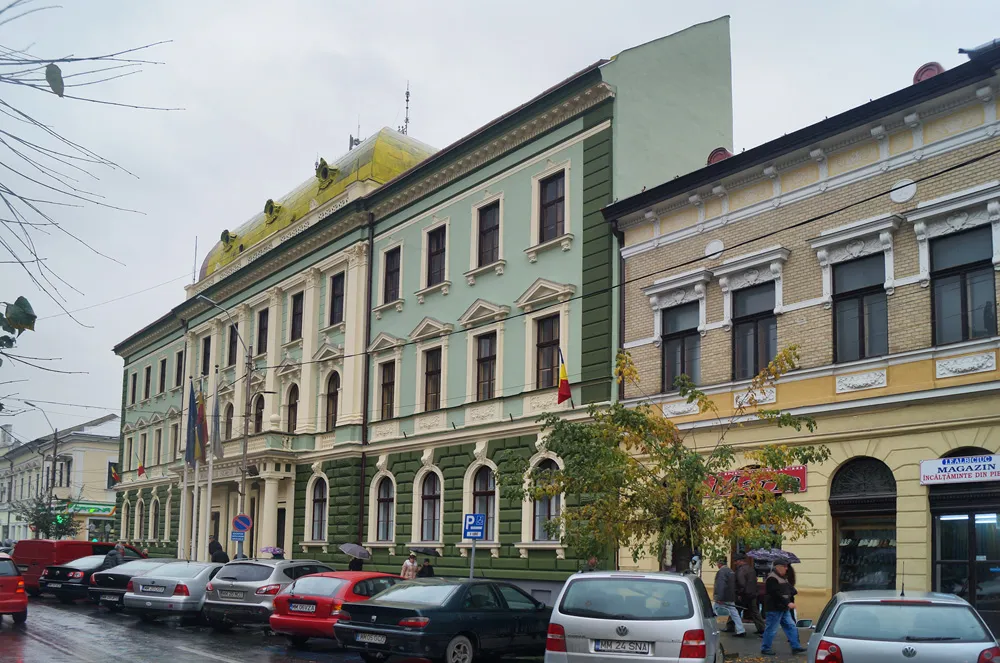
The town hall and the Greek Catholic church
If you look at modern historical maps of the Hutsul Republic, you will see that the only town among today’s Romanian ones on this map is Syhit Marmorosky. A significant part of Syhit’s residents at that time were Ukrainians. A bridgehead was created for the liberation of the whole of Maramureș from the Hungarians. And it began. In Syhit itself blue-and-yellow flags were hung out, and in many villages there were solemn welcomes of the Hutsul (Ukrainian) army. But… the Romanians thought otherwise. Their soldiers, also veterans of the Austrian army, formed a division in the town of Baia Mare, which attacked Syhit on 17 January. As a result the Ukrainian troops retreated and Syhit Marmorosky became Romanian.
Text and photos by Roman Malenkov