

Czech Republic. Lednice-Valtice
· 12 min read
Few people know that the Czech Republic makes not only tasty beer but also excellent white wine, though in small quantities and mostly for the domestic market. Why is Moravian wine unknown? If I understood one Czech man in Valtice correctly, the answer is something like this: “In Moravia there are three grades of wine: the first grade is good wine, the second grade is bad wine from which you can make mulled wine, and the third grade is wine that is sent to Prague.” What can one say about Kyiv, then. You are unlikely to find Czech Veltlínské zelené or Ryzlink rýnský here. So open a bottle of Austrian Grüner Veltliner or German Riesling, made from the same grape varieties, and let us look in on a family that left its mark in all three countries.
The Liechtensteins are one of the oldest noble families of Central Europe. If you think their ancestral seat is in the state named after them, Liechtenstein, you are mistaken. Their ancestral castle, from which their surname comes, is near Vienna: Burg Liechtenstein. Their largest estates, however, were in Moravia. Over 700 years the Liechtensteins built here one of the largest artificially created landscape ensembles in the world and… a paradise for cyclists. The fantastic “garden of Europe” is the 283 square kilometres of the Lednice-Valtice complex.
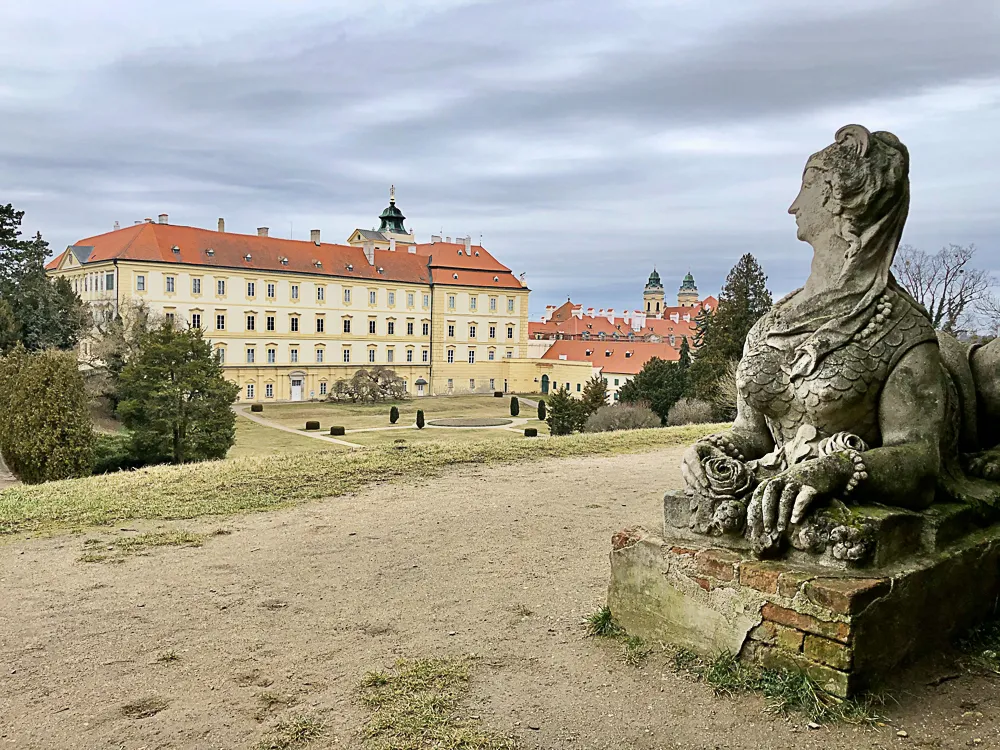
Have you not heard of the estates of the princes of Liechtenstein in Moravia? Of course not, because they no longer exist. For 75 years there has been litigation between the owners of the state of Liechtenstein and the Czech Republic. At the end of the Second World War the Czechoslovak authorities, on the basis of the Beneš decrees, confiscated the lands of the Liechtensteins. Incidentally, as much as 2 thousand sq. km of territory, which is more than ten times the current territory of the principality. These lands include the Baroque residence of Valtice and the Neo-Gothic castle of Lednice, which are on the UNESCO World Heritage list.
Lenta ira deorum est, in this case for as long as 300 years, but let the European Court of Human Rights seek the truth.
So the Liechtensteins’ estates in southern Moravia began with the transfer, in the 13th century, by the Bohemian king Přemysl Otakar II of the town of Nikolsburg, today Mikulov, to Heinrich I of Liechtenstein.
The Liechtensteins owned the castle in the Moravian town of Valtice (German: Feldsberg) from 1530. Family members most often served their suzerain with the sword. However, a fundamental change in the family’s status in Moravia was started by Karl I, who laid the foundations of wealth, title and prosperity.
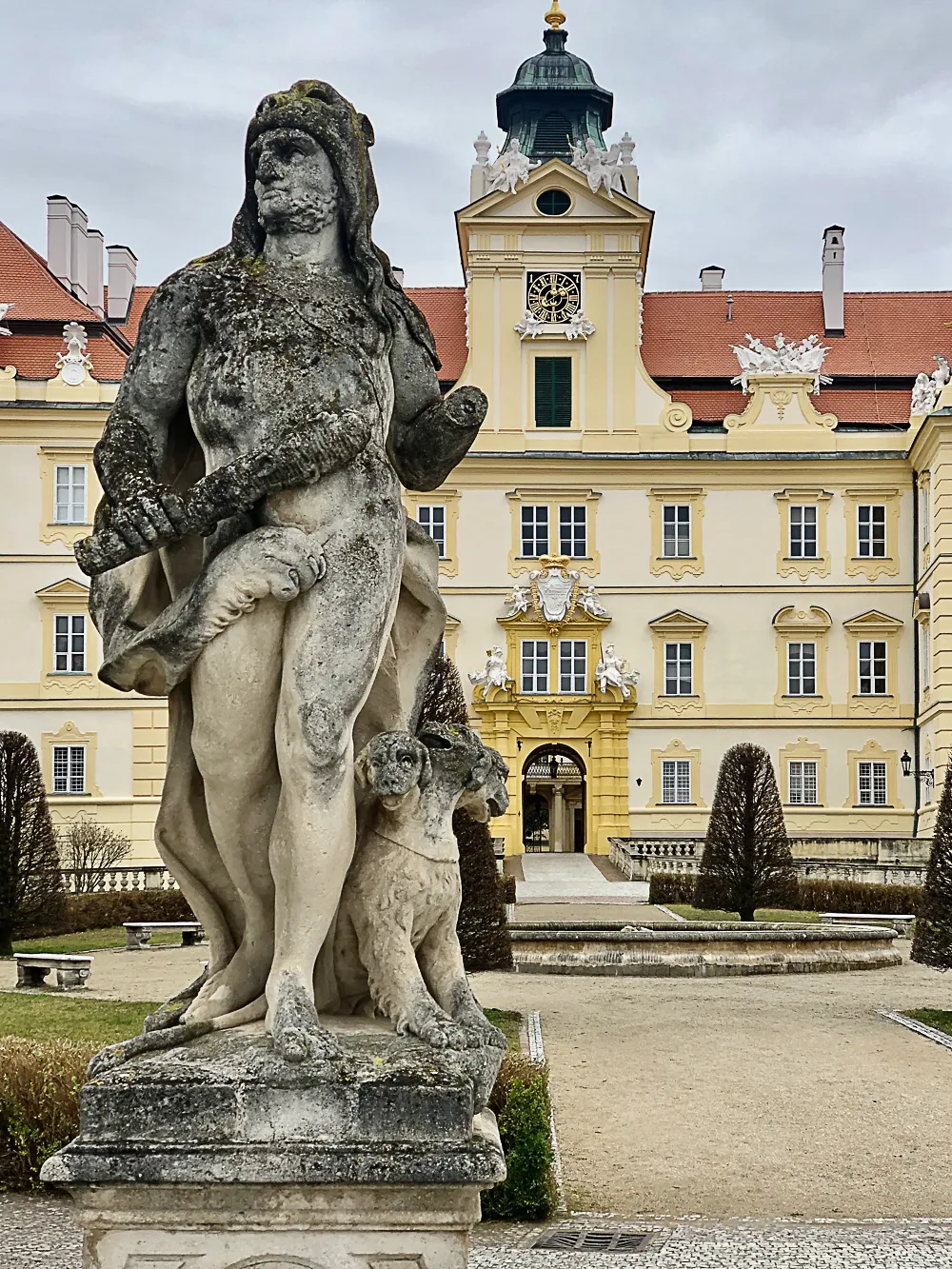
Karl I of Liechtenstein was born into a Protestant family and later converted to Catholicism, entering the service of the Holy Roman Emperor Rudolf II. The emperor spent most of his time in Prague and soon appointed him to the post of chief steward. Rudolf II, the sorcerer, alchemist and patron emperor, is one of the most enigmatic figures in history. While Rudolf was synthesising the philosopher’s stone, in 1611 the troops of Archduke Matthias approached Prague. Karl of Liechtenstein supported him too, for which, in gratitude, he received in 1608 the hereditary title of prince.
In 1618 the Thirty Years’ War began, when representatives of the newly crowned emperor, the staunch Catholic Ferdinand II of Habsburg, flew out of a window of Prague Castle. Karl sided with the Catholic League and fought on the side of the emperor, a warrior of the Catholic Church. After the victory at the Battle of White Mountain, Liechtenstein received the post of governor of Bohemia and a special task: punishing the guilty and the Catholic reconquista, returning the country to the bosom of the Catholic Church. At that time his possessions began to “swell” with numerous estates of Protestant nobles who fled religious persecution after the Battle of White Mountain. For some it was war, for others an opportunity to become the richest family in Bohemia and Moravia.
The newly minted imperial prince and owner of huge landed estates, Karl I decided that Valtice would be the princely residence and the smaller Lednice castle a dacha.
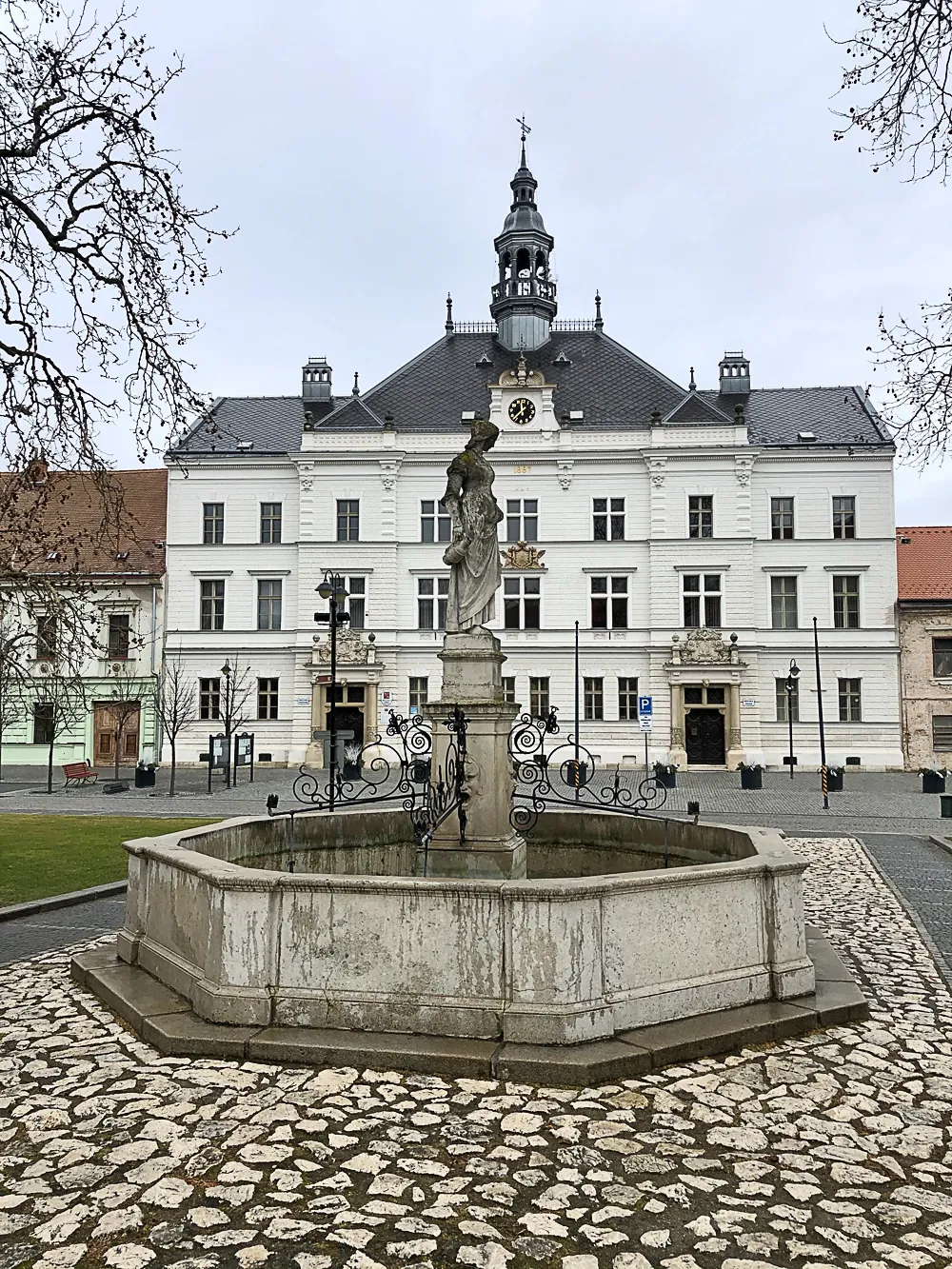
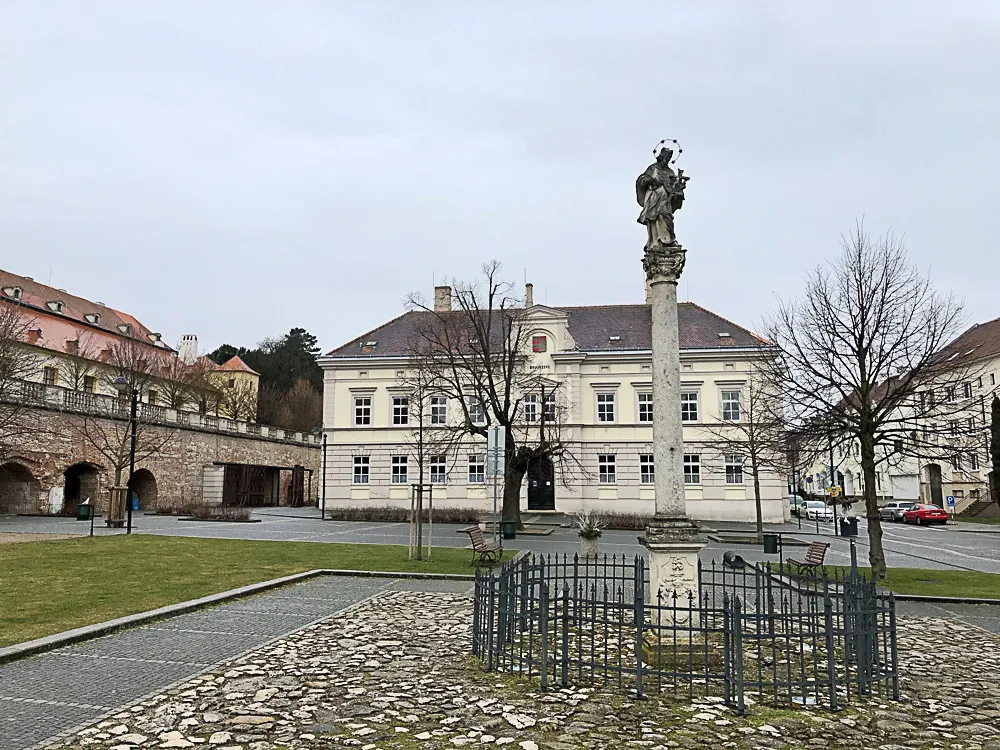
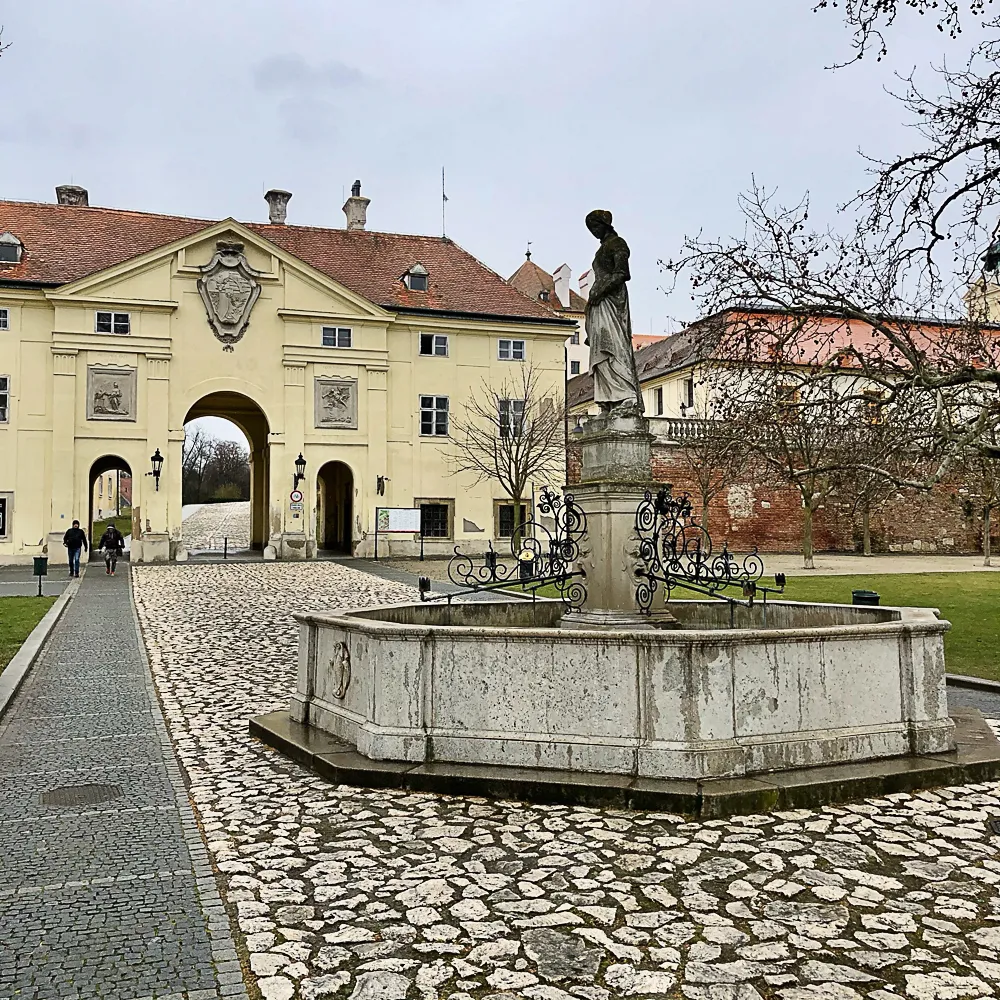
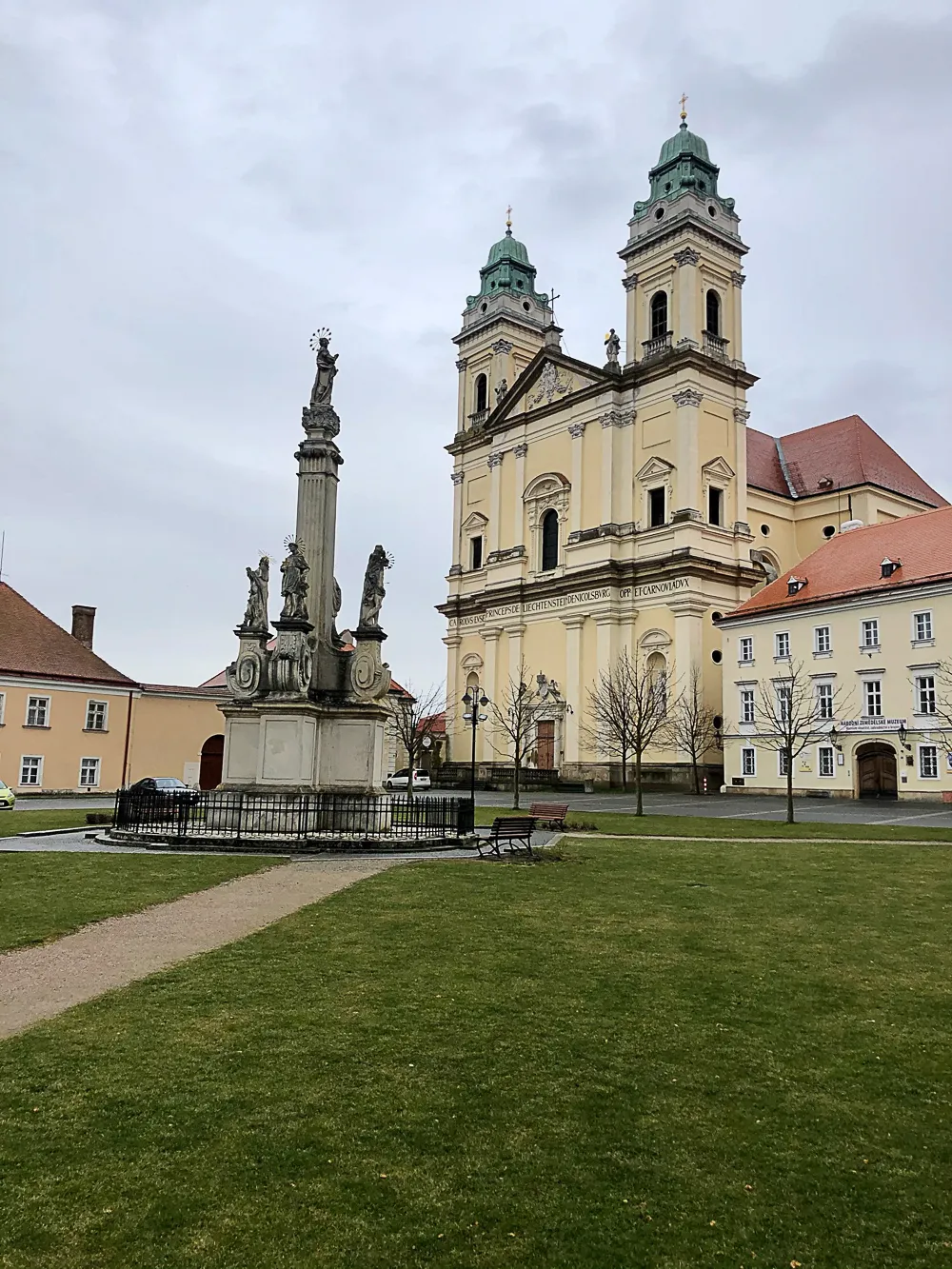
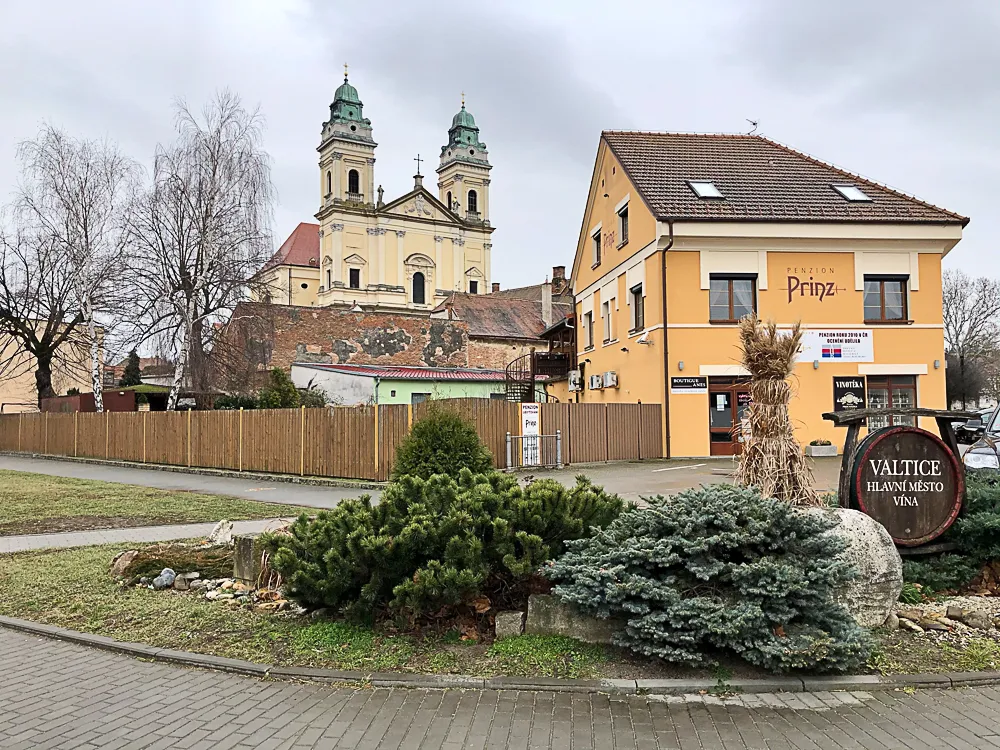
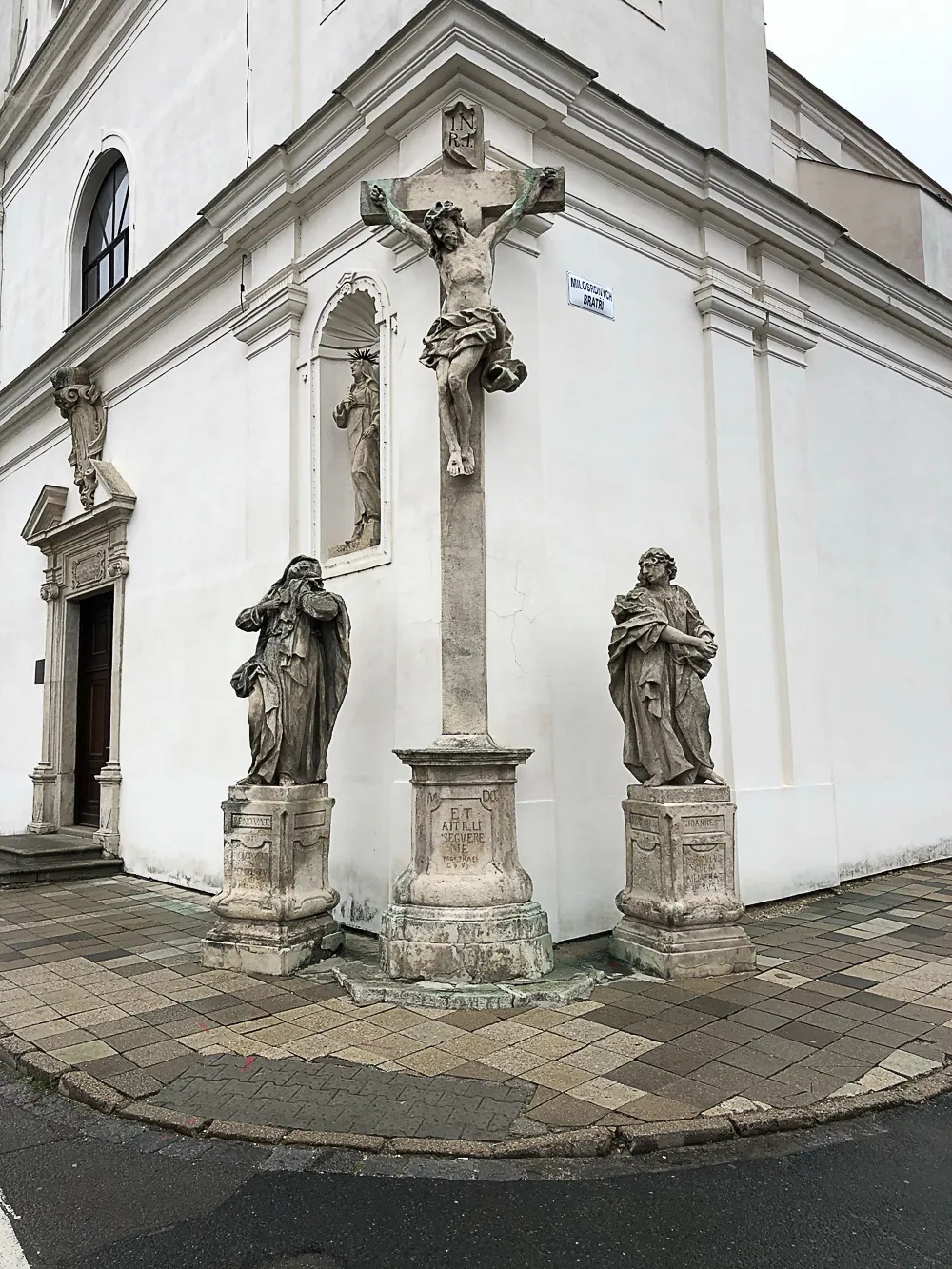
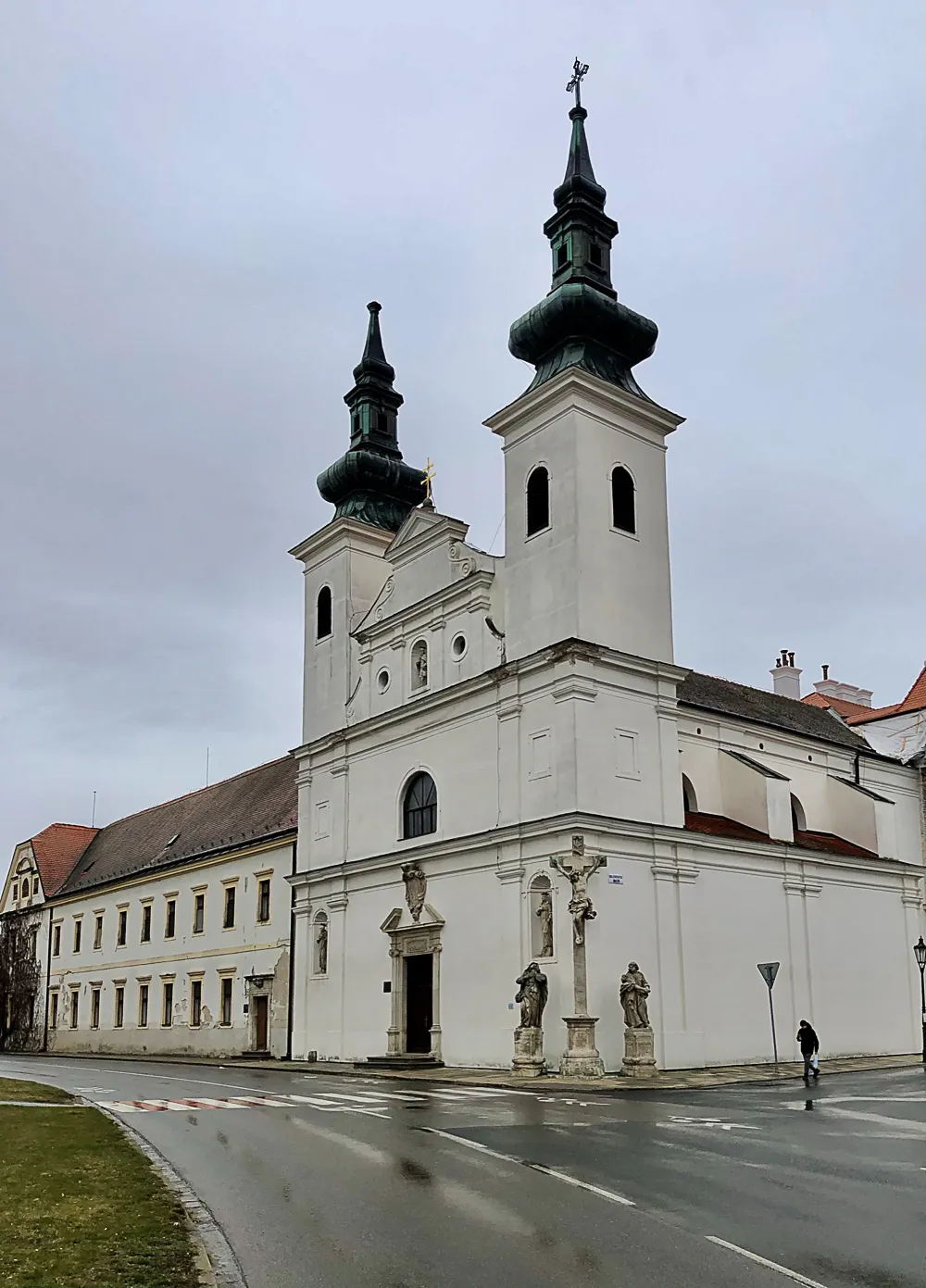
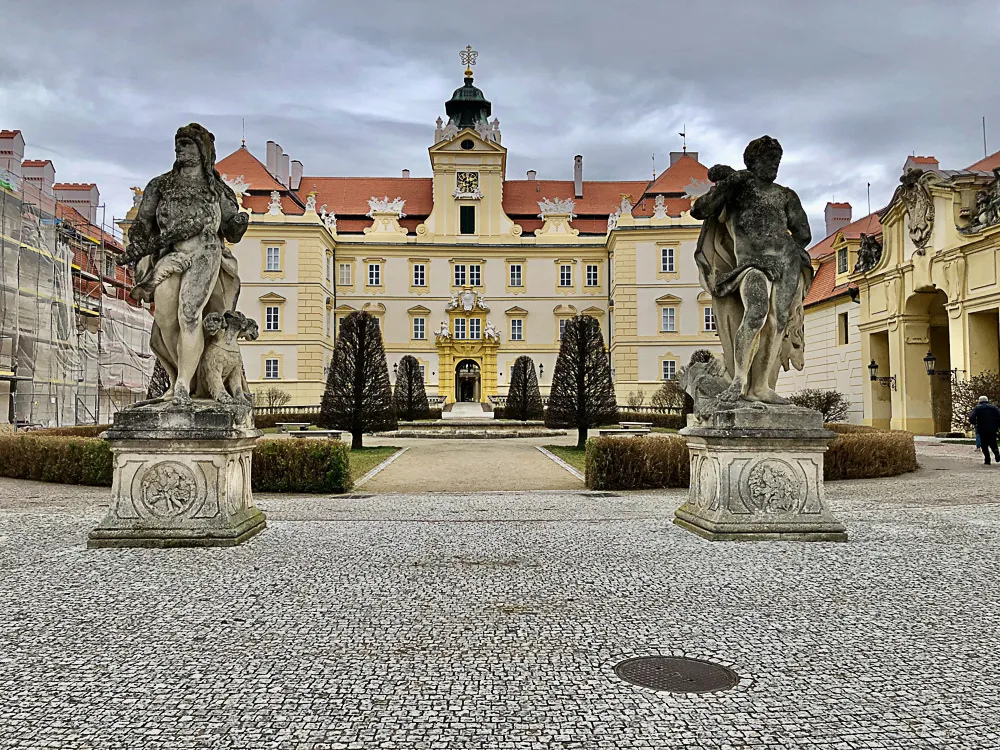
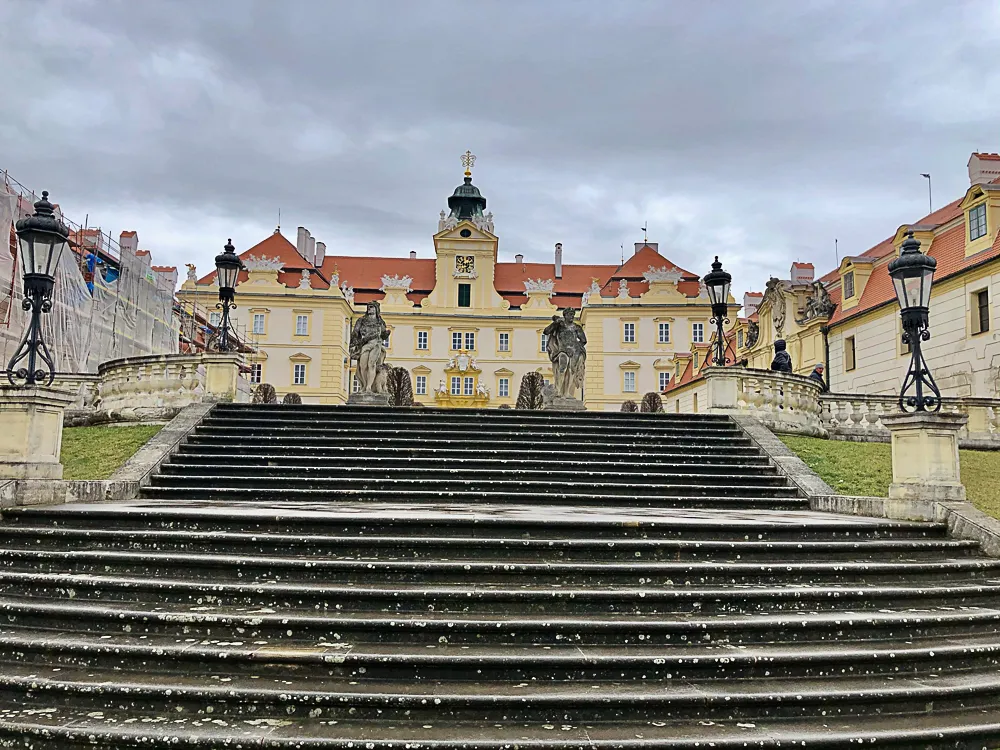
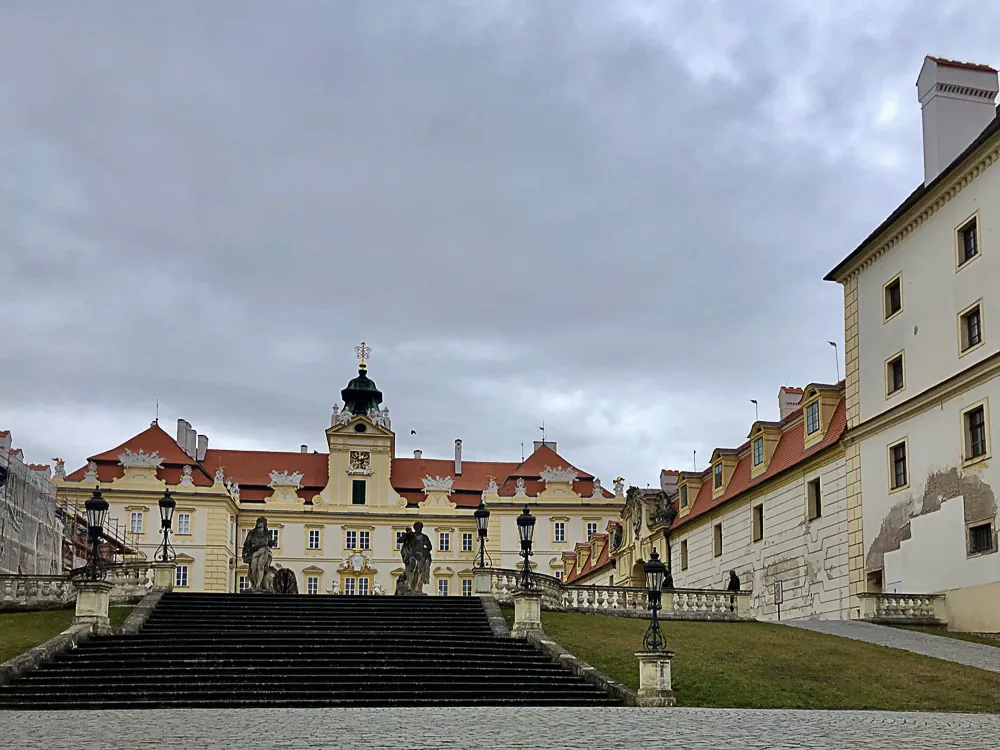
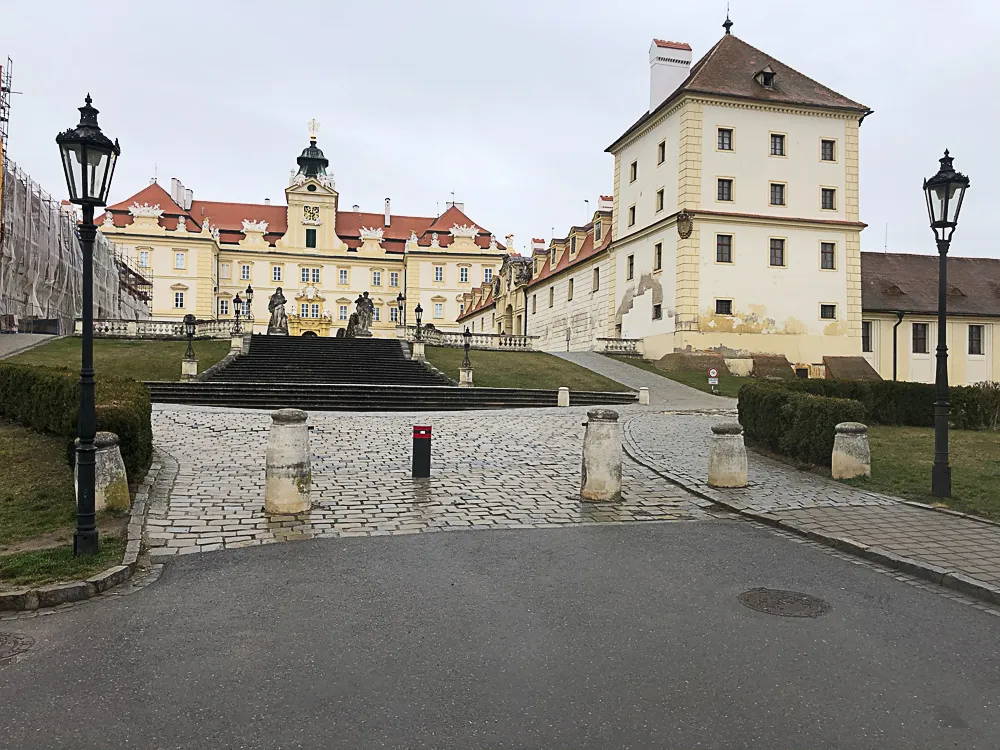
The 12th-century castle in Valtice no longer matched princely status, so a large-scale reconstruction began. At first the project of the palace complex was developed by the architect Giovanni Giacomo Tencalla, who, incidentally, built the fountain for the Bučovice palace Bučovice.
A change in fashion led to the rebuilding of the palace, carried out at the beginning of the 18th century in the High Baroque style by the architect Johann Bernhard Fischer von Erlach, court architect of Emperor Joseph I. Among his best-known projects are the imperial Schönbrunn Palace and the Karlskirche in Vienna, the winter palace of Prince Eugene of Savoy, the mausoleum of Ferdinand II in Graz and a number of Baroque churches in Salzburg.
But the park territory of Lednice-Valtice, which we can travel through, was created during the reign of Prince Johann I, who became famous as a field marshal and cavalry commander during the Napoleonic wars.
After the First World War, when Czechoslovakia was founded, part of the Liechtensteins’ property was nationalised for the first time with partial compensation.
But with the creation by the Germans of the Protectorate of Bohemia and Moravia in 1939, the Liechtenstein estates were largely incorporated into the Reich. By that time the princes of Liechtenstein had for 120 years owned their own independent principality of that name, but NOT ONCE had any owner yet appeared there. Prince Franz Joseph II of Liechtenstein travelled to his country for the first time and became the first prince of the state to have a permanent residence in Liechtenstein itself. Whether the country was so small that the Germans did not find it, or because of the alliance with neutral Switzerland, the Nazis did not occupy it in the Second World War. The Prince of Liechtenstein even supported the Czechoslovak government of Edvard Beneš in exile in London. Unlike, for example, Switzerland and the USSR, Liechtenstein did not recognise the Protectorate of Bohemia and Moravia created by the Nazis.
At the end of the Second World War the castles were devastated by Russian prisoners awaiting repatriation. They were shot as traitors after the arrival of the Red Army.
All the Liechtensteins’ property in Czechoslovakia was expropriated after the Second World War without compensation on the basis of the Beneš decrees, which declared the princes of Liechtenstein collaborators. They lost as many as 22 castles alone, and their landholdings shrank 6.5 times, from 1,600 km2 to 240 km2.
However, in the opinion of historians, the evidence for these accusations is rather disputable: family members did not support the Nazis and protected Jews. Moreover, the wife of the 13th prince, Franz I, Elsa von Gutmann, came from a Jewish family, being the daughter of a Viennese merchant originally from Moravia. One of the pieces of evidence was that the members of the princely house had no Czechoslovak citizenship. A strange thing and a half-truth: the Liechtensteins never had Czechoslovak citizenship because they were rulers of an independent principality.
Immediately part of the furniture of Valtice castle was stolen and destroyed, and in the middle of 1947 a women’s forced labour camp was set up in the east wing. The imprisoned women worked mainly on farms and in wine cellars. The whole castle, in view of the “iron curtain”, was devastated for good during the Communist totalitarian regime and misused as space for production, workshops and transport. The main building housed several warehouses and operations, a tobacco dryer was installed in the riding hall, and in 1964 the theatre was demolished and a tractor car park was built.
Gradual restoration of the castle began during the 1970s and continues to this day.
The country palace Lednice was built as a Renaissance villa of the Liechtensteins. The name of the village of Lednice (German: Eisgrub) comes from the cool streams of the Dyje River (German: Thaya).
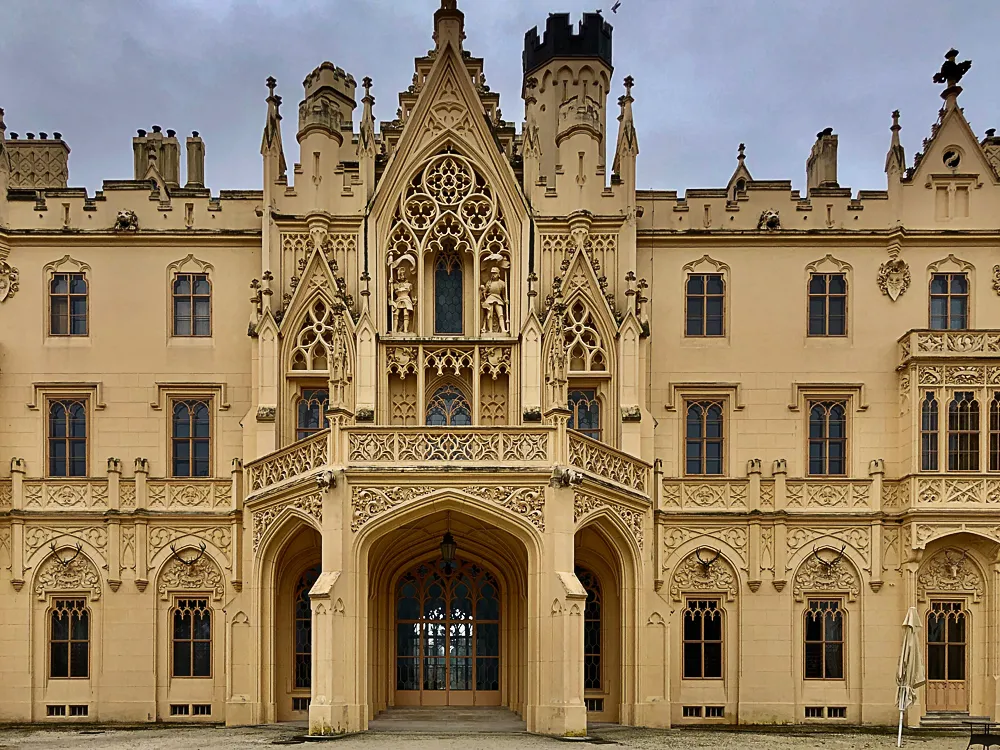
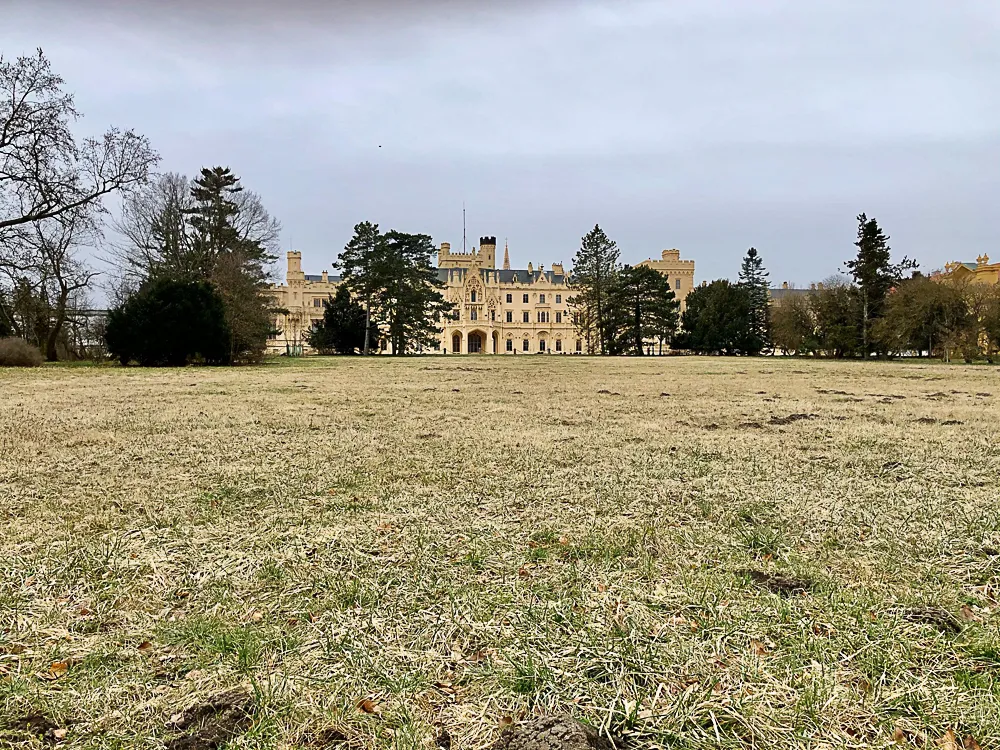
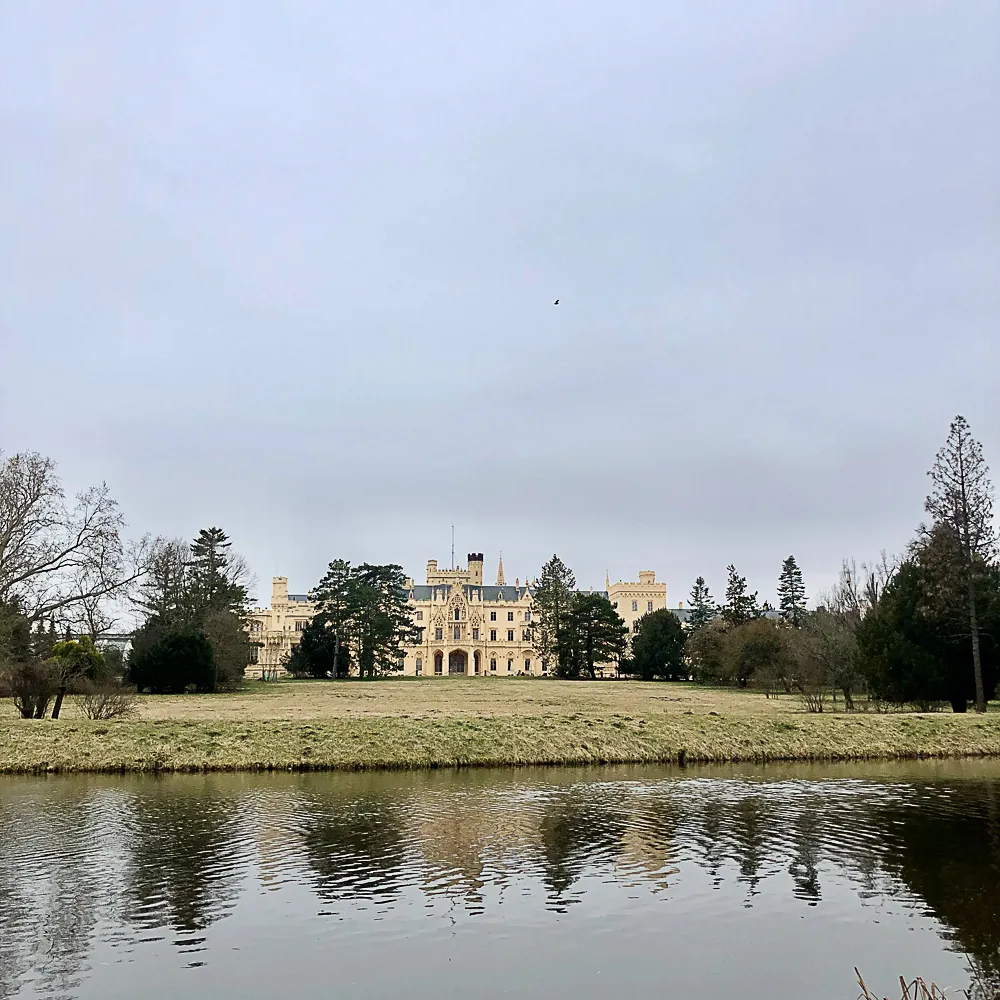
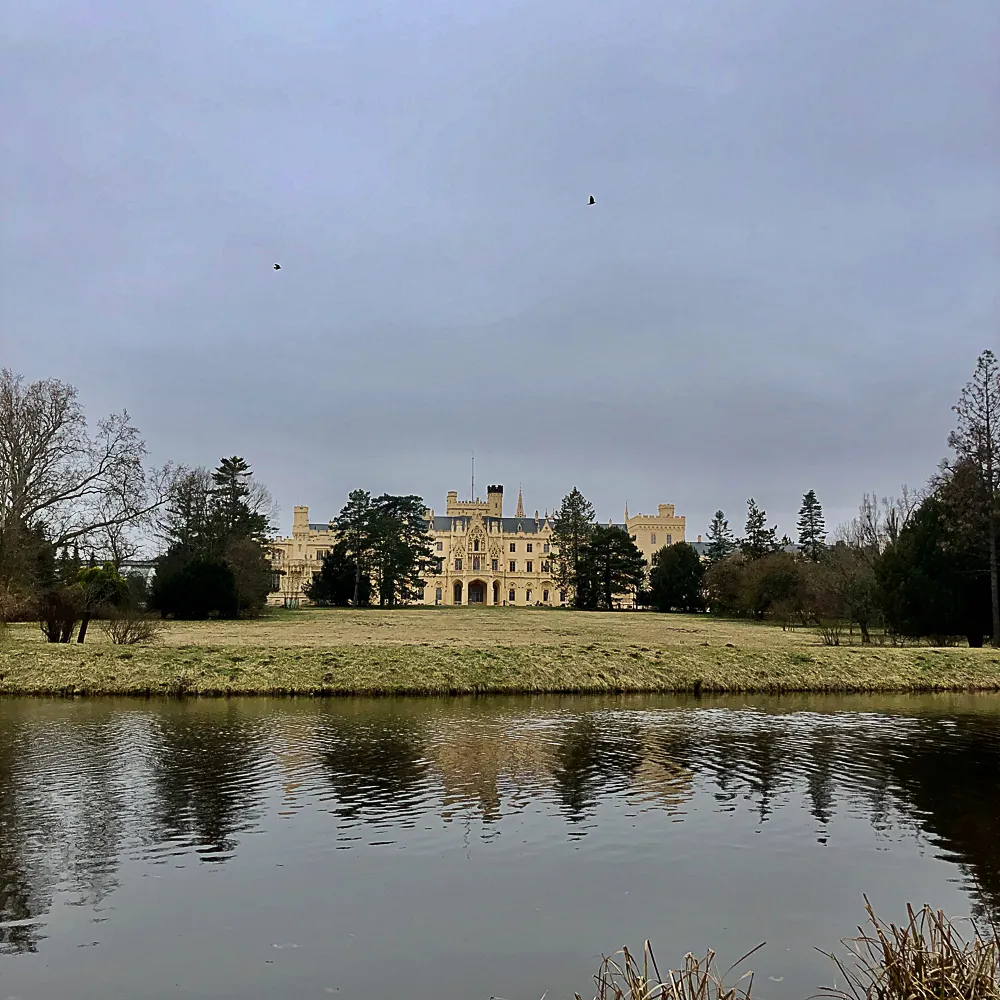
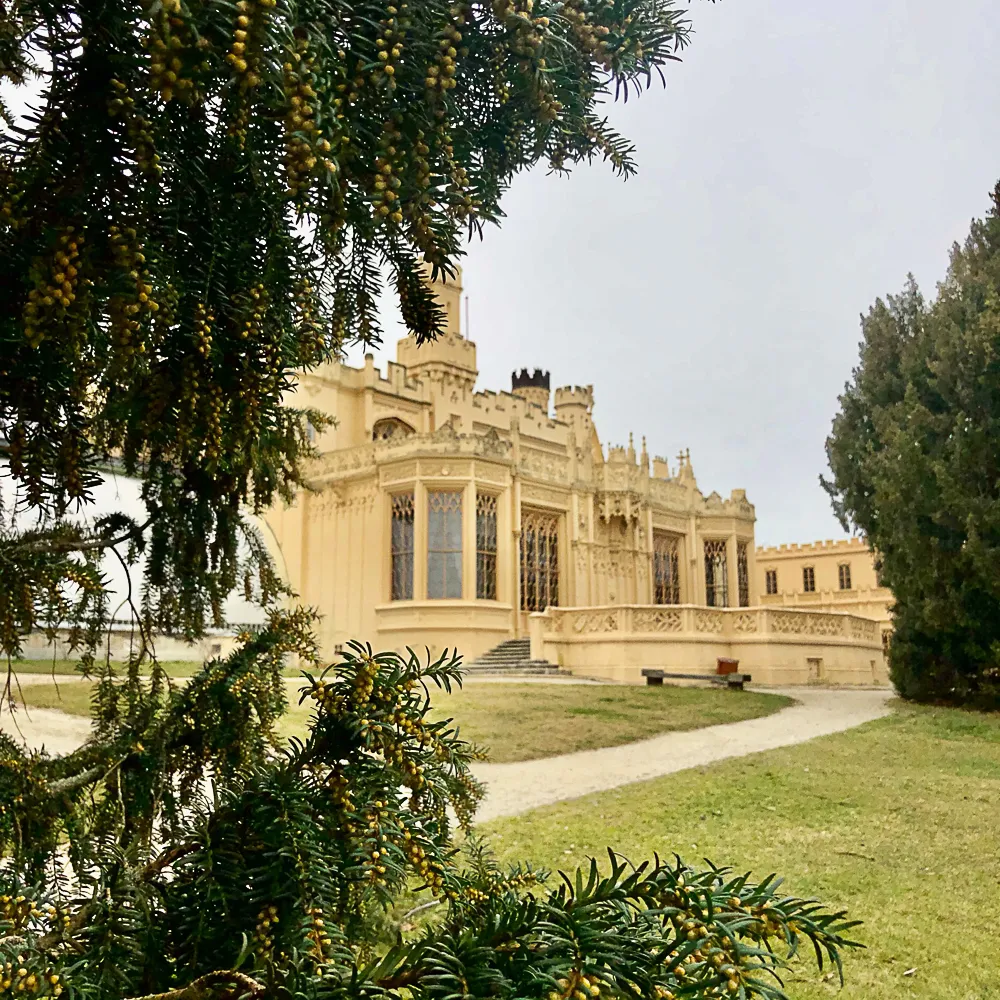
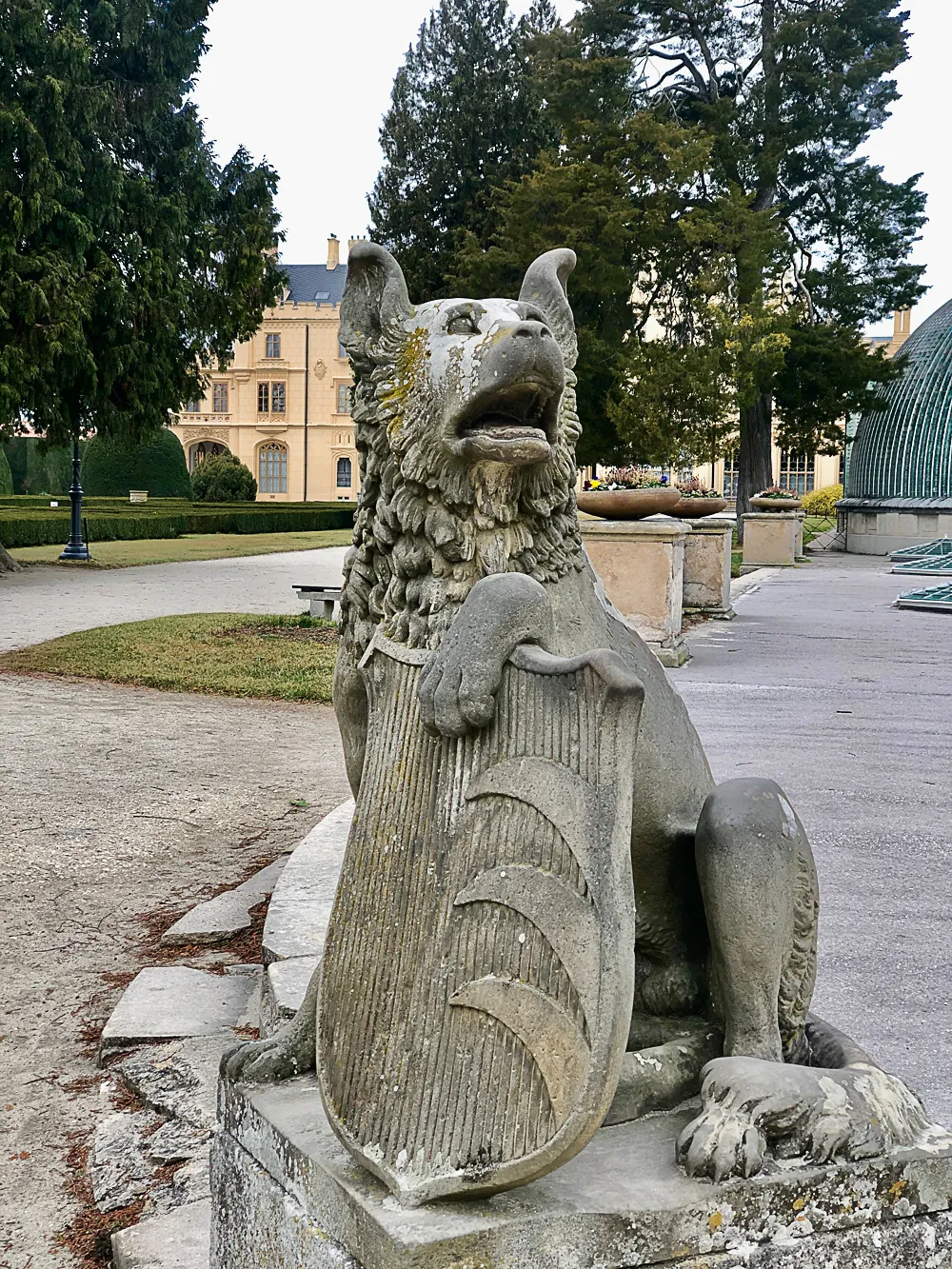
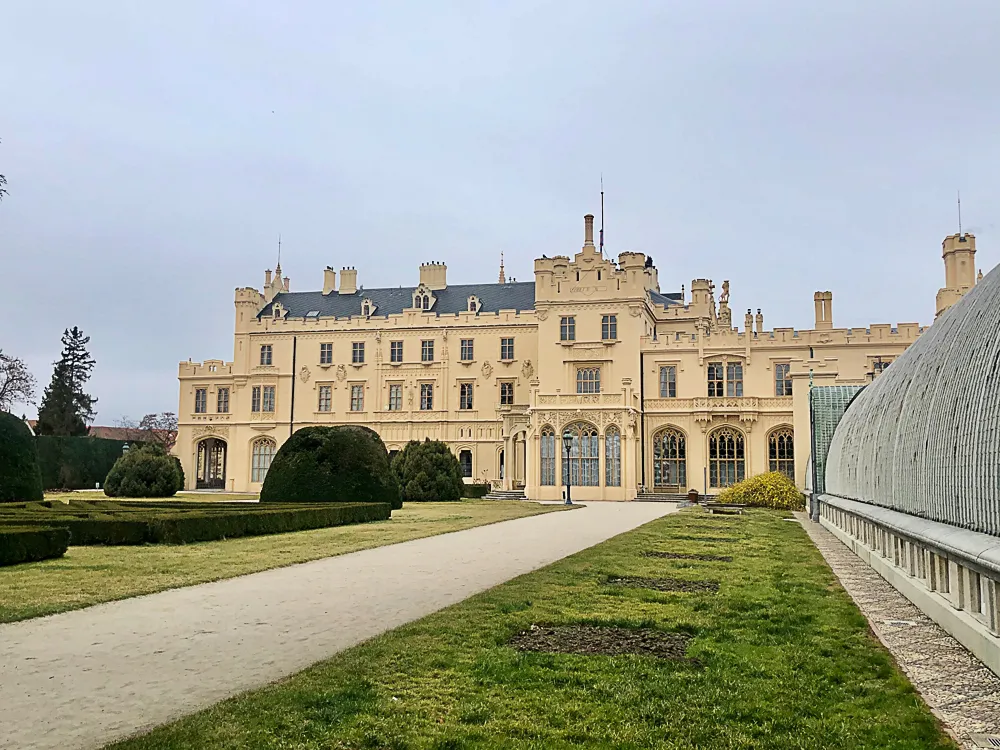
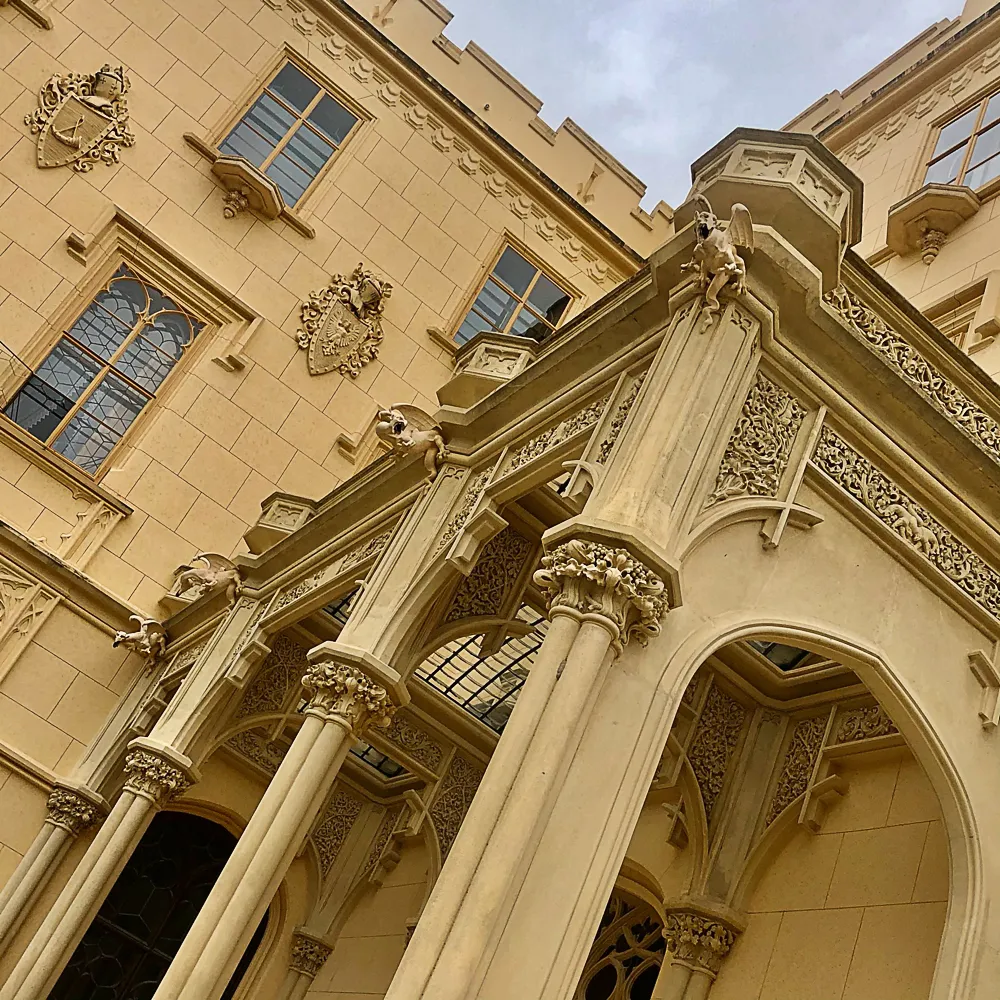
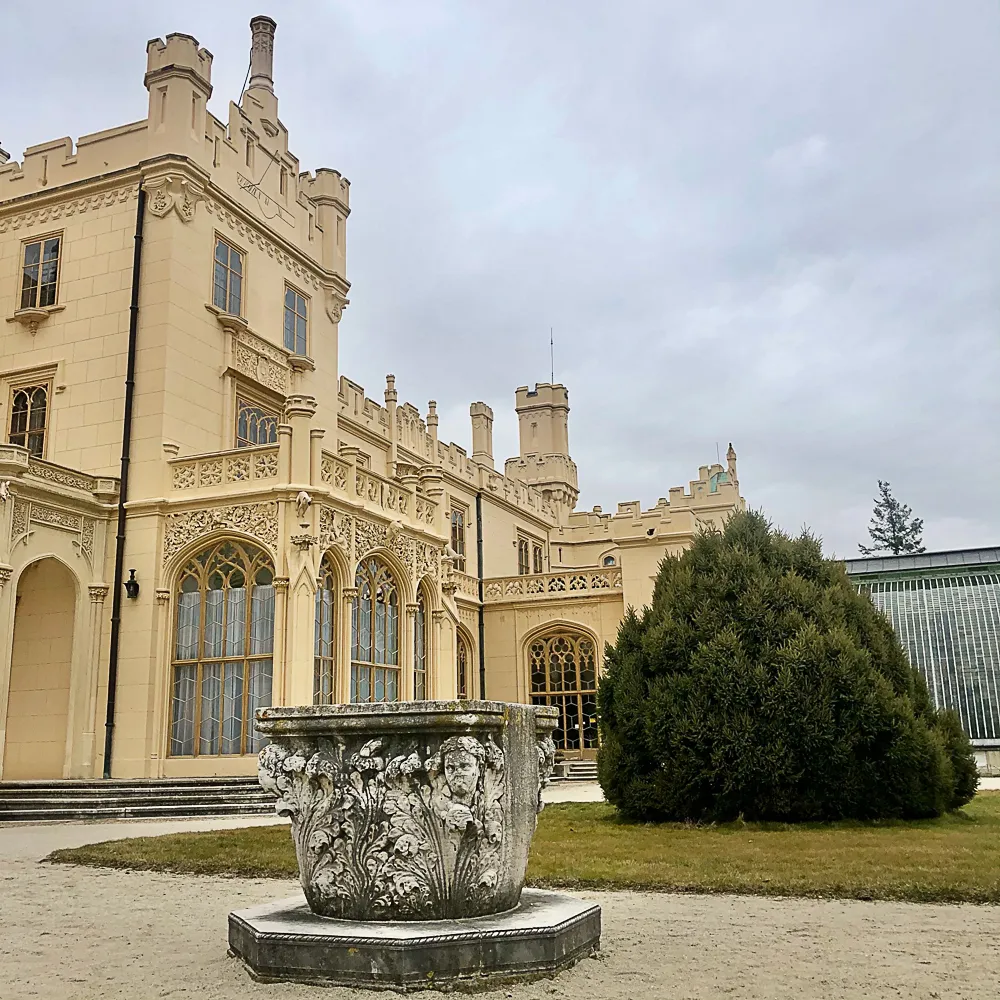
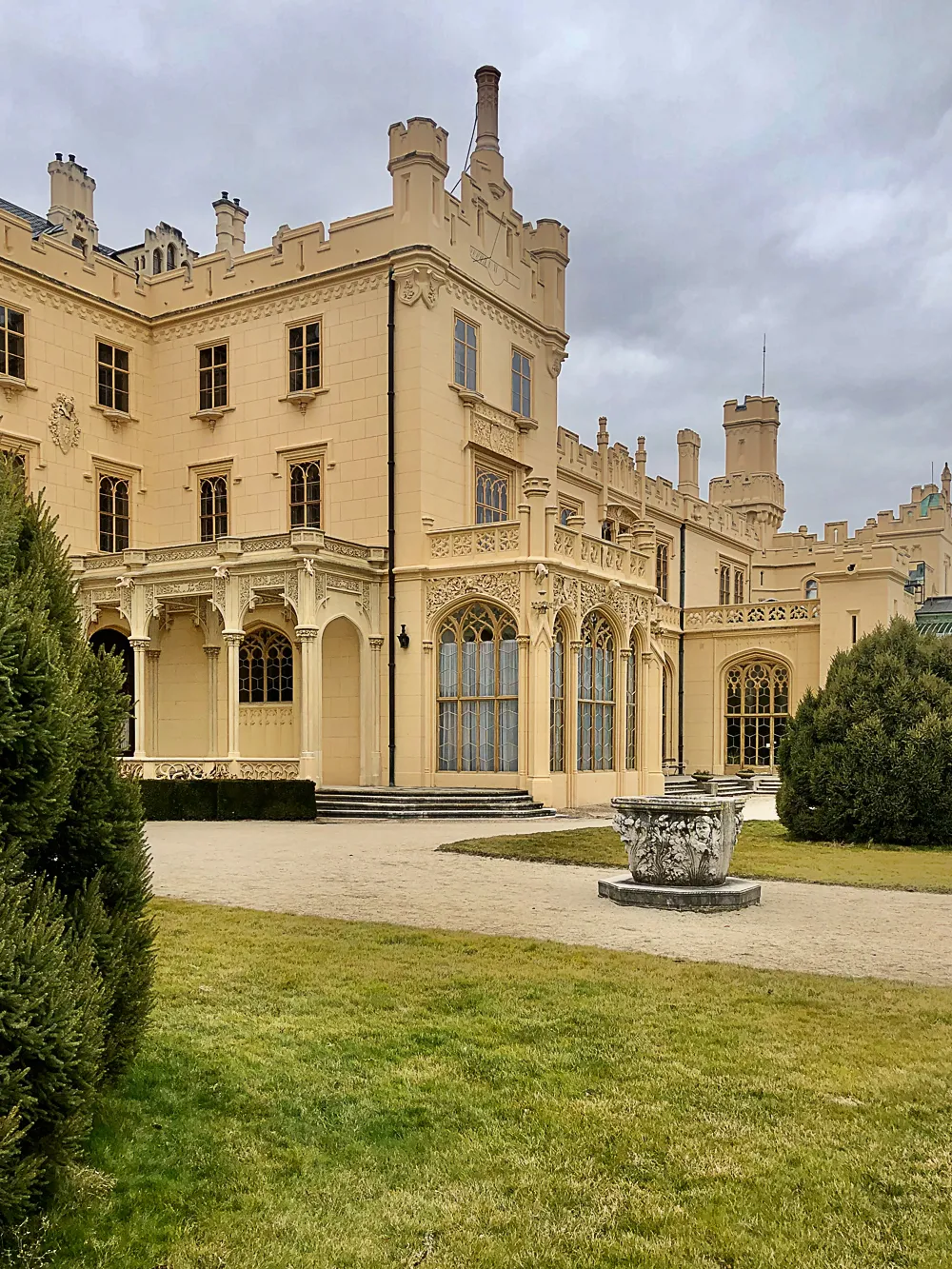
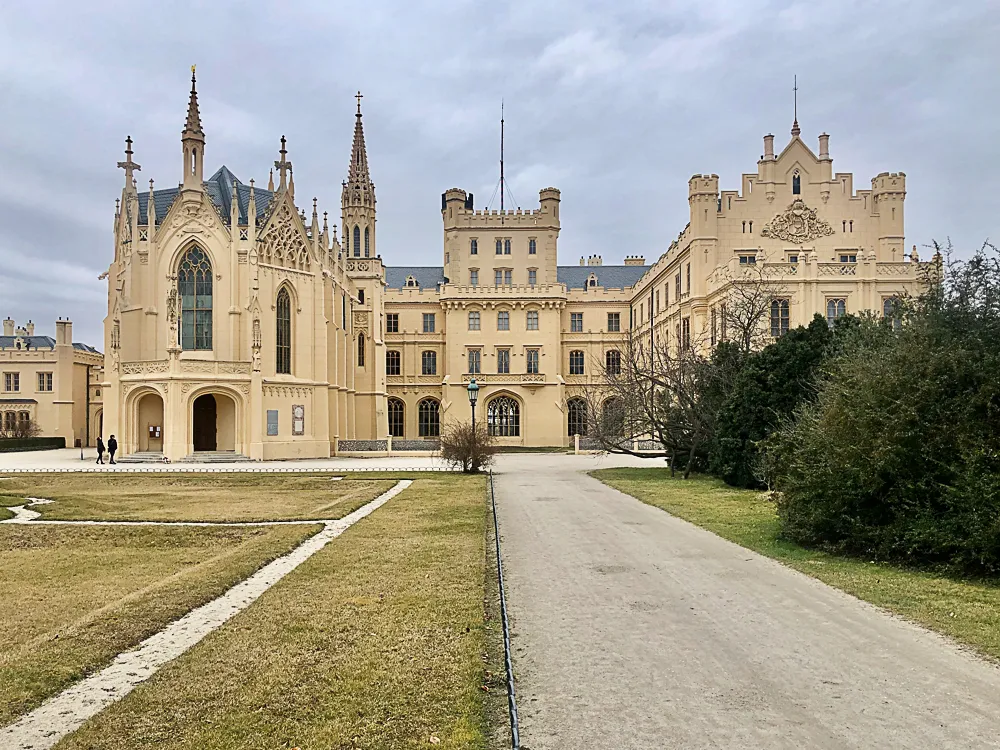
Lednice became a Liechtenstein possession much earlier than neighbouring Valtice. The Lednice estate belonged to the family for almost 700 years. The local castle was built as early as the 13th century, but around 1570 the owners demolished the medieval fortress. A Renaissance castle rose in its place. At the end of the 17th century tastes changed, and living in an unfashionable building was simply impossible. The old building was demolished again and a Baroque mansion was built, with a large architecturally designed park and a monumental riding school.
After the middle of the 18th century the castle was reconstructed once more. And its present appearance dates from 1846-1858, the reign of the Romantic era. Prince Alois II of Liechtenstein turned Lednice into a representative “dacha” in the spirit of English Romantic Gothic.
Narrow, graceful turrets, pointed windows and arches, openwork balconies: this castle seems to have stepped out of the pages of favourite fairy tales. By the way, the famous film “Three Wishes for Cinderella” was shot in Lednice.
In the 17th century grandiose landscape design work began, along with the laying out of avenues that would connect the family seats and other parts of the estate. The carrying out of this grand plan began and continued throughout the entire 18th century.
In the first years of the 19th century Prince Johann Joseph I decided to rebuild everything once more, in the concept of an English landscape park. Huge improvement projects were carried out, including raising the level of the Lednice park and digging a new channel for the Dyje River, and laying out small parks and gardens around three large ponds. A palm house was built next to the palace building.
An entire river system with locks and boats is regulated by one of the first hydroelectric power stations in Europe.
Most of the large and small palaces, pavilions and hunting lodges were created by the Liechtensteins’ chief court architect, Joseph Hardtmuth. In the course of his work he invented the graphite pencil so familiar to us and founded the firm Koh-i-Noor & Hardtmuth.
Only on a map and from a bird’s-eye view can one now see that the whimsical minaret, Lednice castle, Rybniční zámeček and Valtice castle lie on one axis from north to south. The two palaces are connected by a seven-kilometre avenue and a wonderful English park with whimsical landscape compositions.
Among the bends of the river and the trees of the English park, the romantic ruins of an aqueduct and the 62-metre spire of the Minaret are reflected in the waters of a small lake. Built in the Moorish style, it was never used for religious purposes but was a fashionable romantic addition to the castle ensemble.
As were other romantic structures on hills and on the banks of ponds and rivers:
– Janův hrad (John’s Castle), stylised ruins of an ancient medieval castle. It was built by Johann of Liechtenstein in the fashionable Romantic “artificial ruin” style in 1810. It stands on a promontory formed by a bend of the river.
– Hunting lodge Lovecký zámeček, a Neoclassical house from 1806.
– Temple of Apollo (Apollónův chrám), a Neoclassical hunting house of the 1810s on the bank of one of the Lednice ponds.
– Temple of the Three Graces (Tři Grácie), a semicircular gallery with allegorical statues of the sciences and muses.
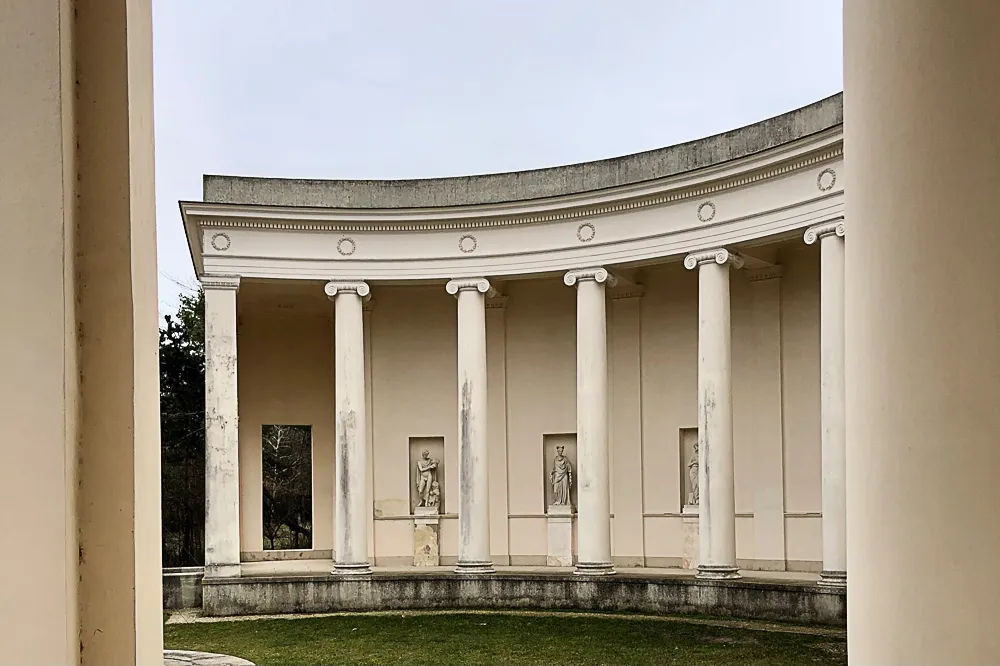
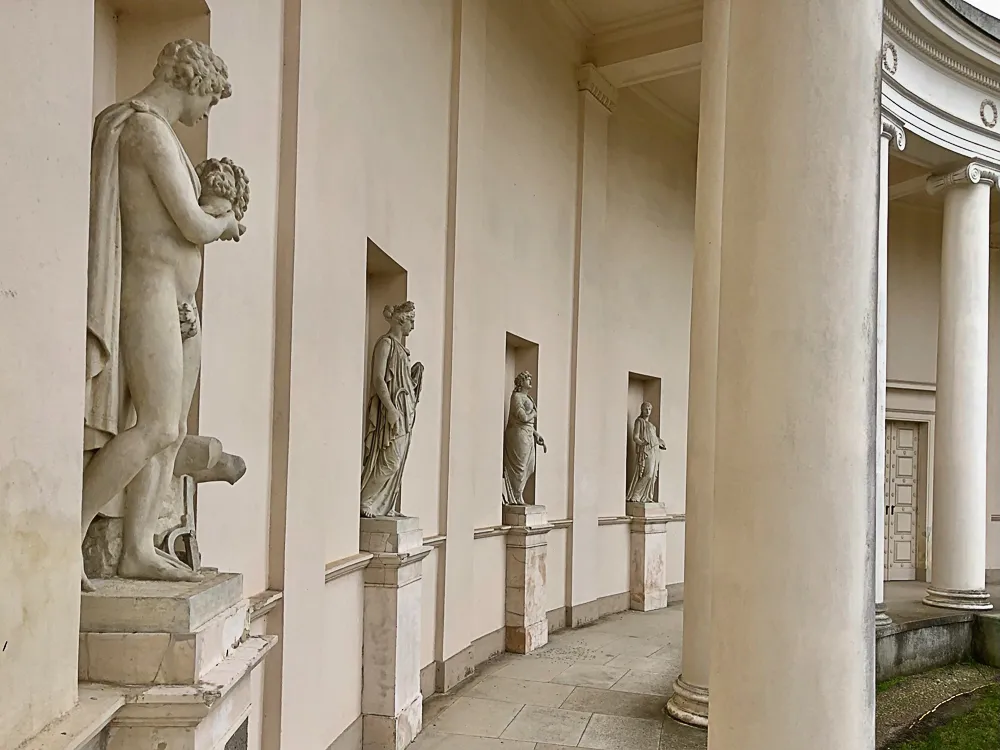
– Nový dvůr (German: Neuhof), a Neoclassical farm completed in 1809. It was originally used for cattle breeding, and now horses are bred here.
– Pond castle Rybniční zámeček on the bank of one of the ponds.
– Hraniční zámeček, a Classicist palace built in the 1820s right on the former border (until 1920) between Lower Austria and Moravia.
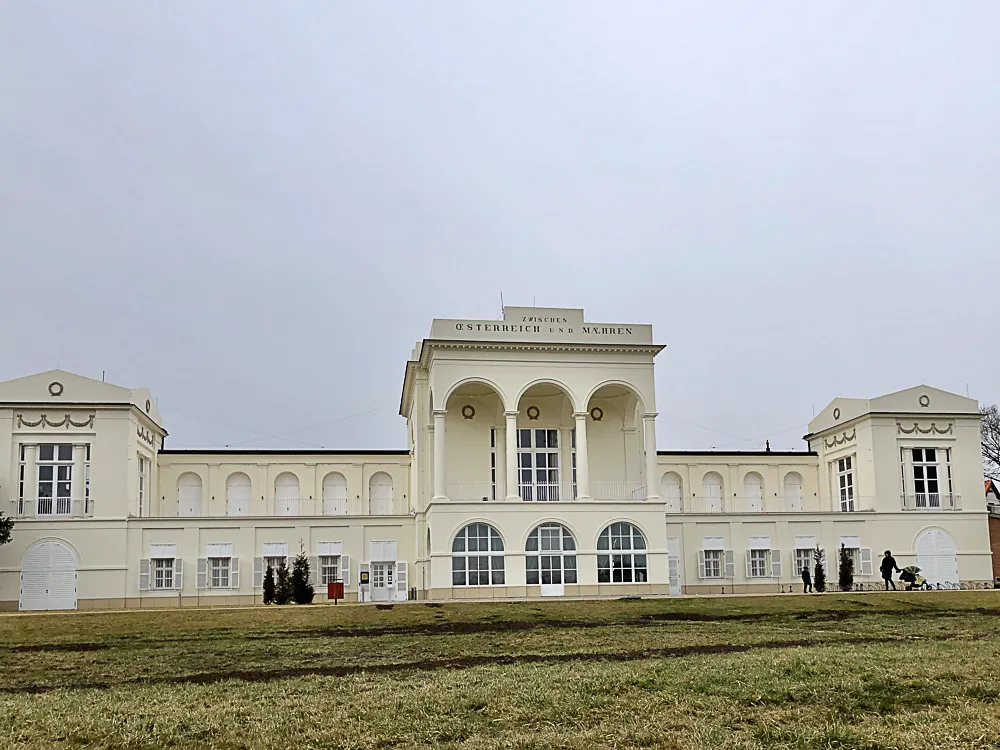
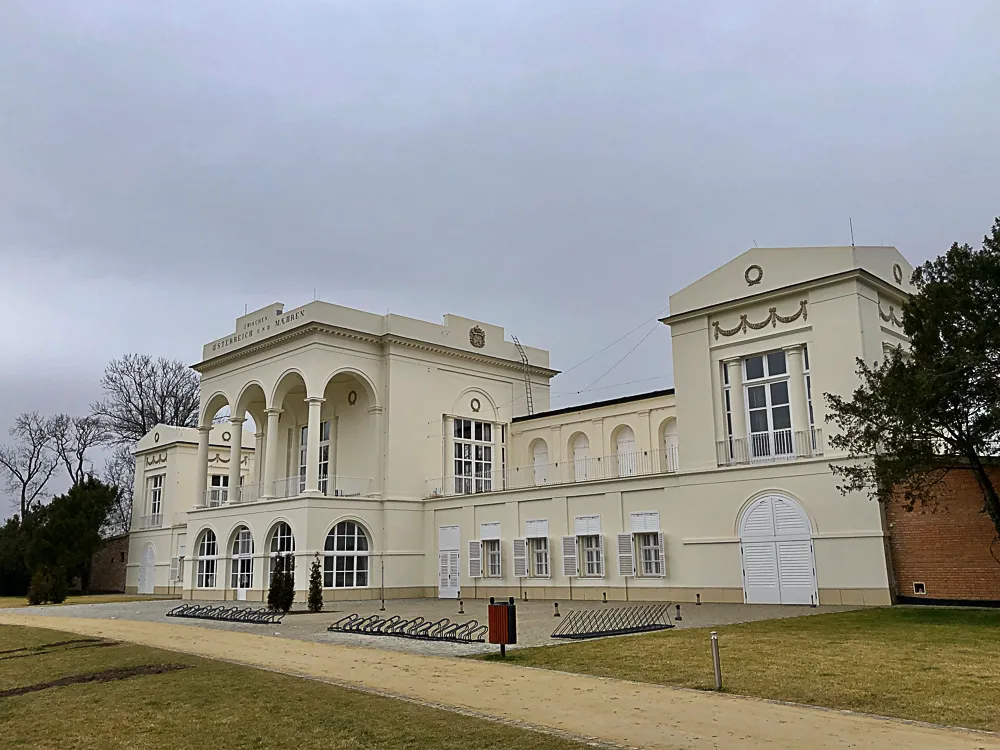
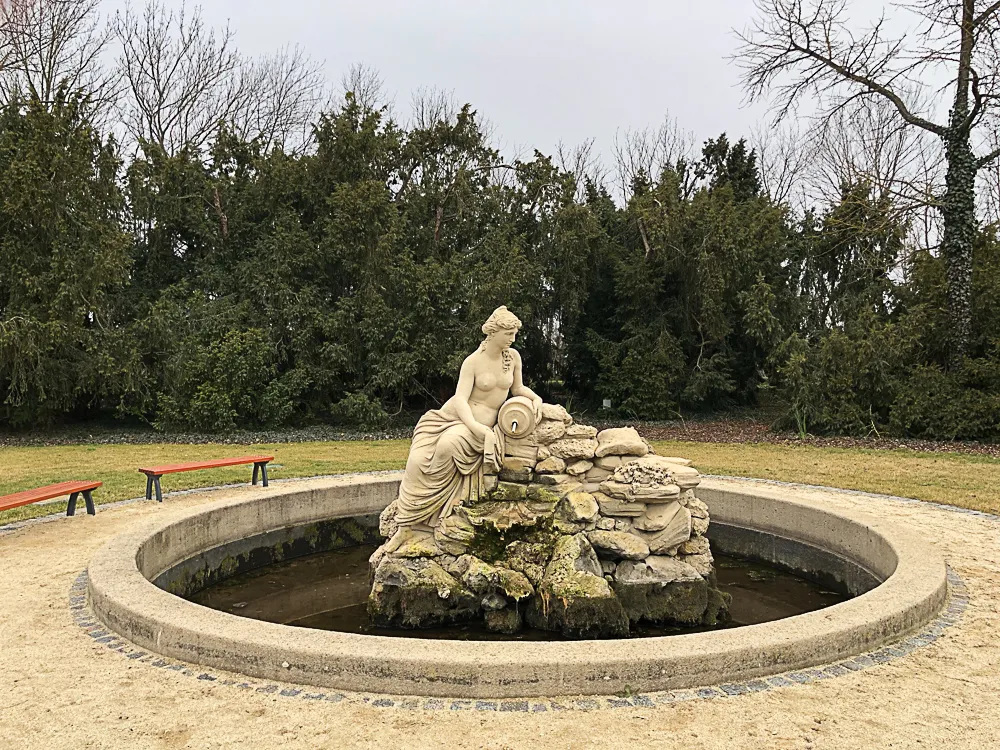
– Hunting lodge zámeček Belveder.
– Chapel of St. Hubert (Kaple svatého Huberta), dedicated to the patron saint of hunters, located in a pine forest
– Hunting lodge Temple of Diana, or Rendezvous (Lovecký zámeček Dianin chrám, or Rendez-vous, or Rendezvous), in the form of a Neoclassical arch of the 1810s. There were three reasons to build a triumphal arch. At the time of its construction the official historiography of the princely house of Liechtenstein promoted the legend that the founder of the family was the Roman patrician Gaius Accius, who lived in the 4th century. Besides, such arches were popular in the landscape parks of England, which inspired Johann I of Liechtenstein. And, perhaps a little immodestly, Johann I was a commander, cavalryman and field marshal who became famous in the Napoleonic wars. After the Battle of Austerlitz he also took part in the peace negotiations.
– Colonnade on Homole hill (Kolonáda na Reistně). Now almost on the border of the Czech Republic and Austria, west of Valtice. Prince Johann I built the colonnade in memory of his father Franz and his two deceased brothers, Philipp and Ludwig. Their figures were immortalised in statues in niches: ancient tunics were supposed to confirm the family’s alleged Roman origin. Johann’s devotion to his father and brothers is confirmed by the German inscription “A son for his father, a brother for his brothers” on the north side; on the south side we can read a similar dedication, also in German: “For unforgettable men, the only surviving son.” This monument is traditionally compared with the colonnade pavilion of Schönbrunn Palace in Vienna, the Gloriette.
– South of Břeclav there is another hunting lodge, Zámek Pohansko, in the Empire style, completed after 1812. Nearby are archaeological sites and reconstructions of Great Moravian monuments, as well as Czechoslovakia’s border fortifications
– Hunting lodge Lány (Zámeček Lány) in the Empire style from the early 19th century lies even farther than Zámek Pohansko.
The size and splendour of the complex still testify today that it was once the residence of one of the most powerful families of the Danube monarchy, and also that your trip will take several days.
Text and photos by Serhii Shcherbii



