

Love Valley. Cappadocia
· 3 min read
If you come back from Cappadocia without pictures of this valley, friends may say you were never here. In terms of the number of photographs, I think the Love Valley in Cappadocia has long since left Stonehenge behind. Although tourists more often call it the Penis Valley. Why on earth?
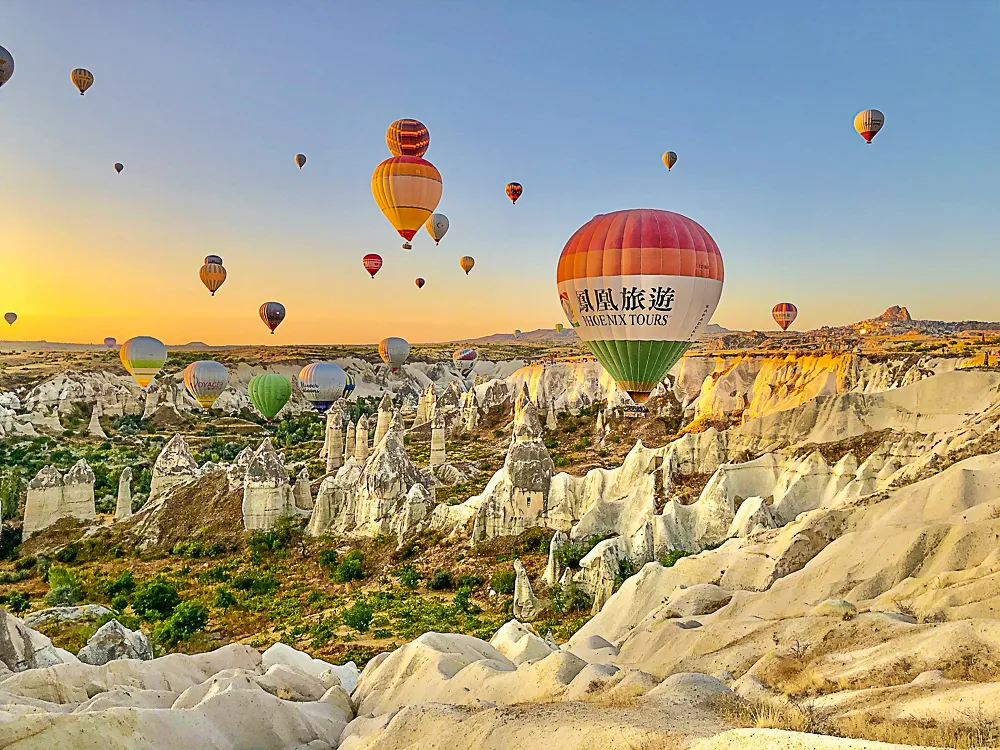
In the morning, when the hot-air balloons fly, hundreds of girls in wedding and evening dresses gather at the viewing platform to take such “casual and accidental” photographs. She was walking along in an evening dress, or driving a convertible (well, that is the only way people get around here), or maybe set up a picnic on the slope at five in the morning, and then, lo and behold, quite unexpectedly the balloons flew over the mushrooms. Do such coincidences happen in life?
Although there is some confusion about this valley. I do not mean the dispute over what the rocks look like most. On diagrams and maps it is marked sometimes as Love Valley, sometimes as the White Valley, Bağlidere Vadisi (Baglidere). And on the stone signposts on the road there is no Love Valley at all. The point is that Love Valley is only one of the three parts of Bağlidere Vadisi, the White Valley. Looking from the side of Çavuşin, it goes like this: Bağlidere = Love + Bağlidere + Honey.
So Bağlidere stretches for four and a half kilometres between Uçhisar and Çavuşin. Accordingly, you can get into it by the first route from Uçhisar. On leaving the town towards Göreme, from the car park a dirt road goes off to the left, which soon forks, and the way to the valley is to the right. The second option. You set off along the road from Göreme to Çavuşin. At the fork you need to turn left towards Nevşehir. After 300 metres there is another left turn onto a dirt road with a sign “Bağlidere Vadisi”. After about 500 metres there is another milestone with the inscription Bağlidere Vadisi. From here it is another 400–500 metres to the phallus-shaped rocks.
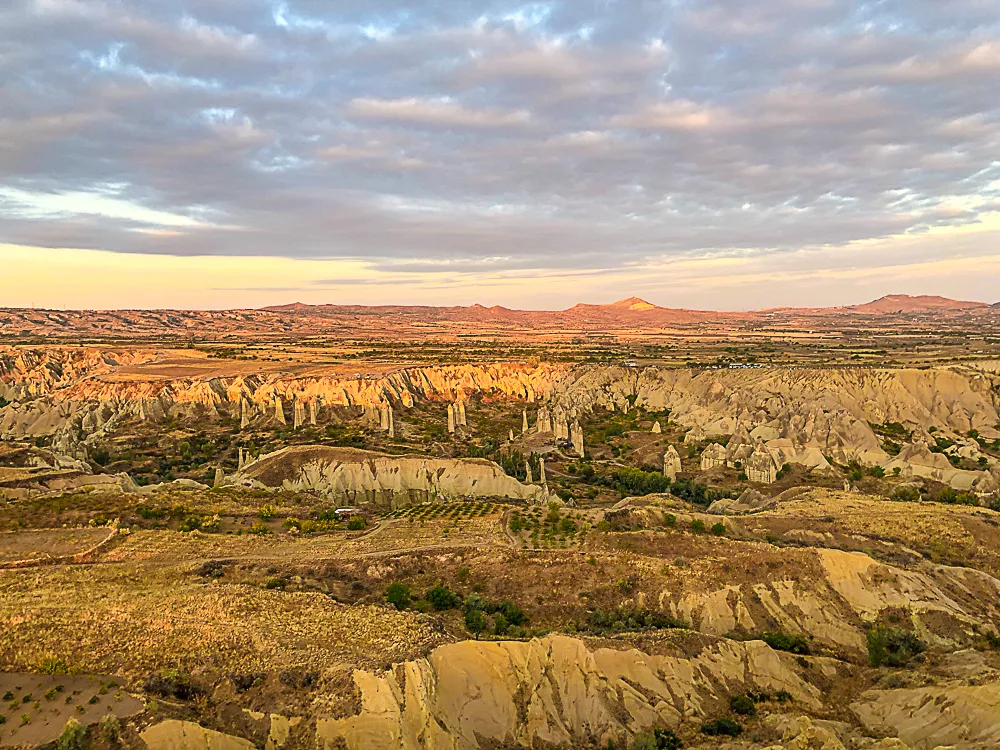
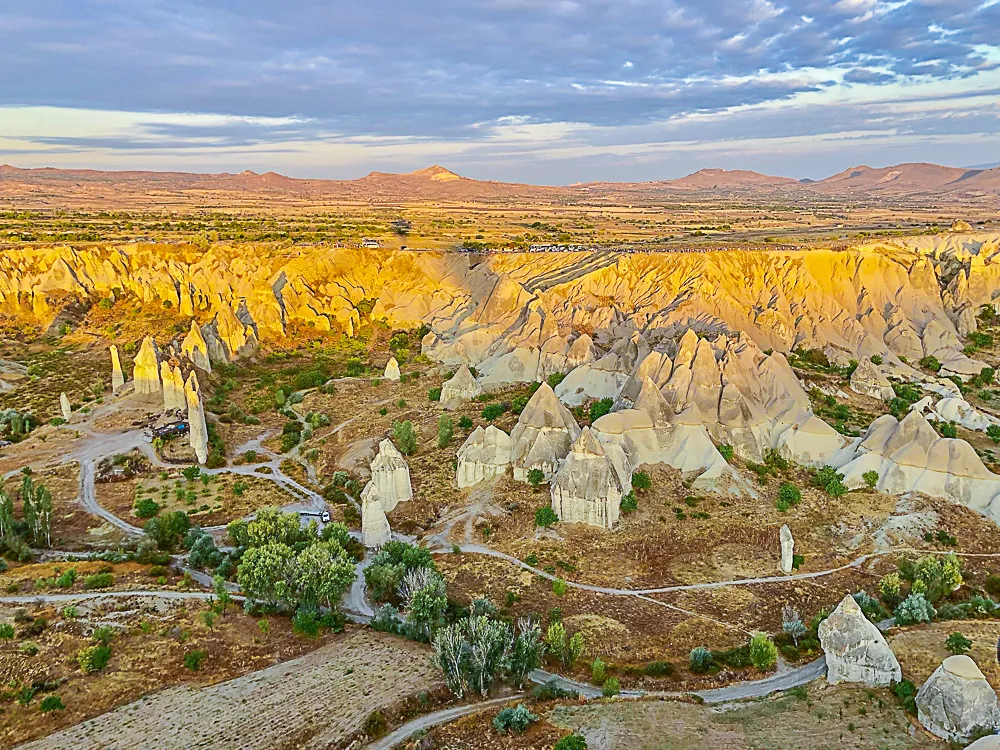
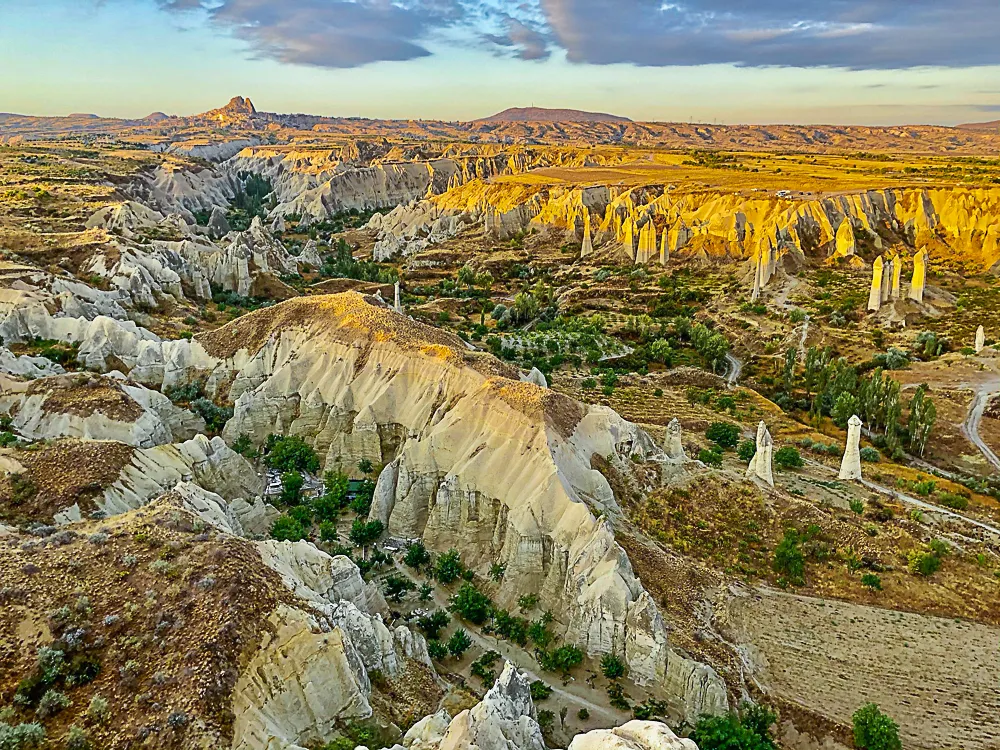
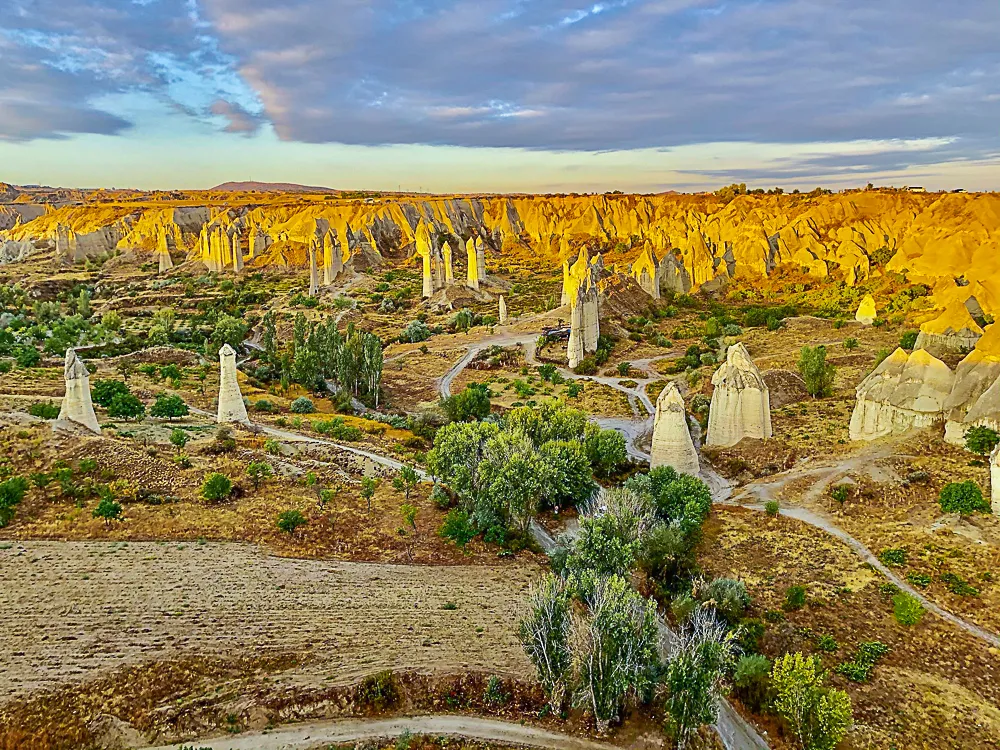
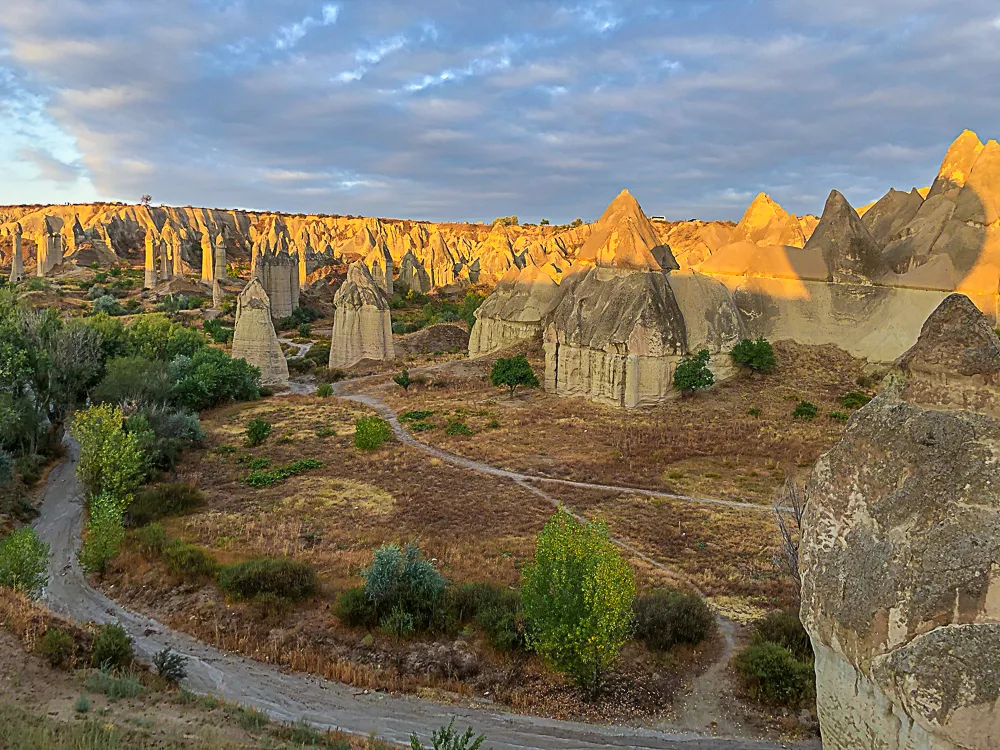
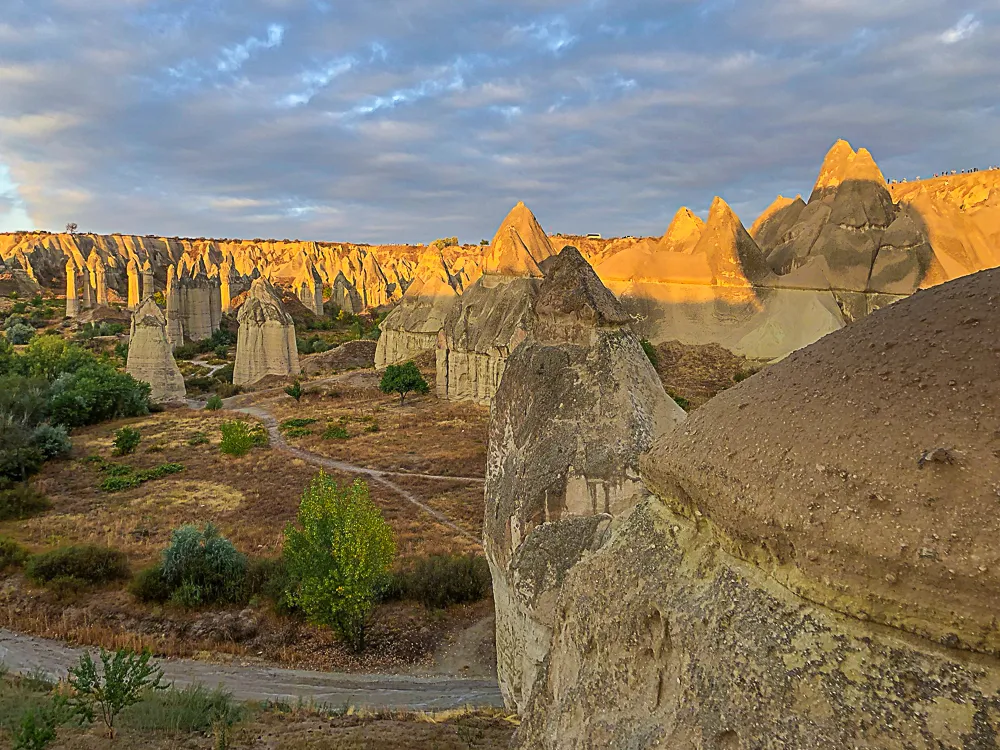
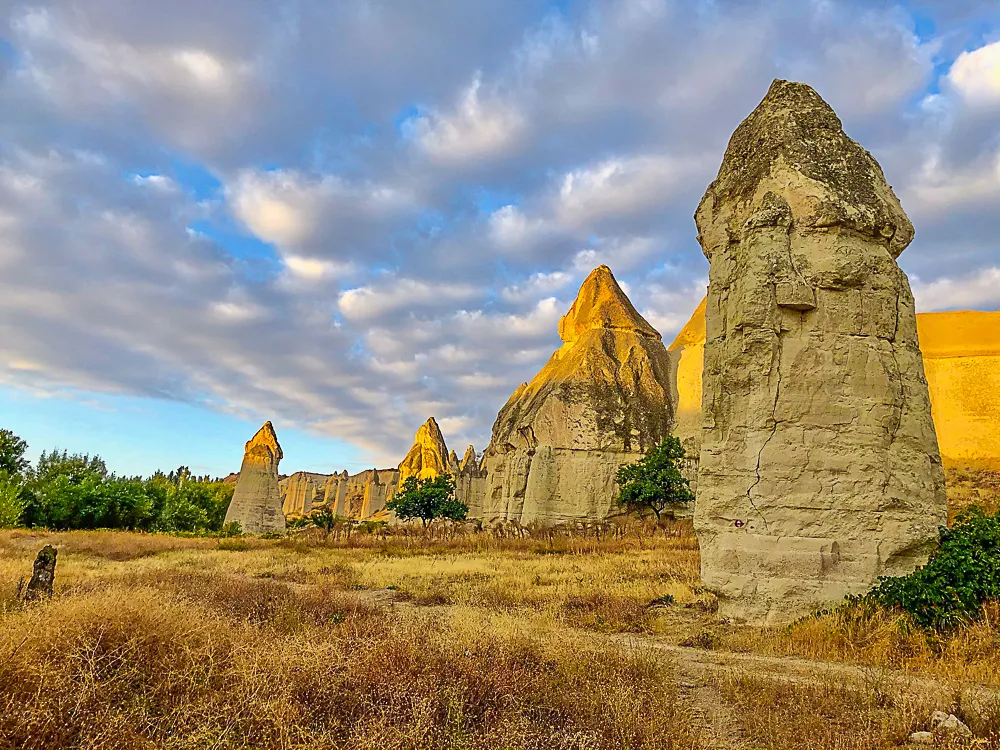
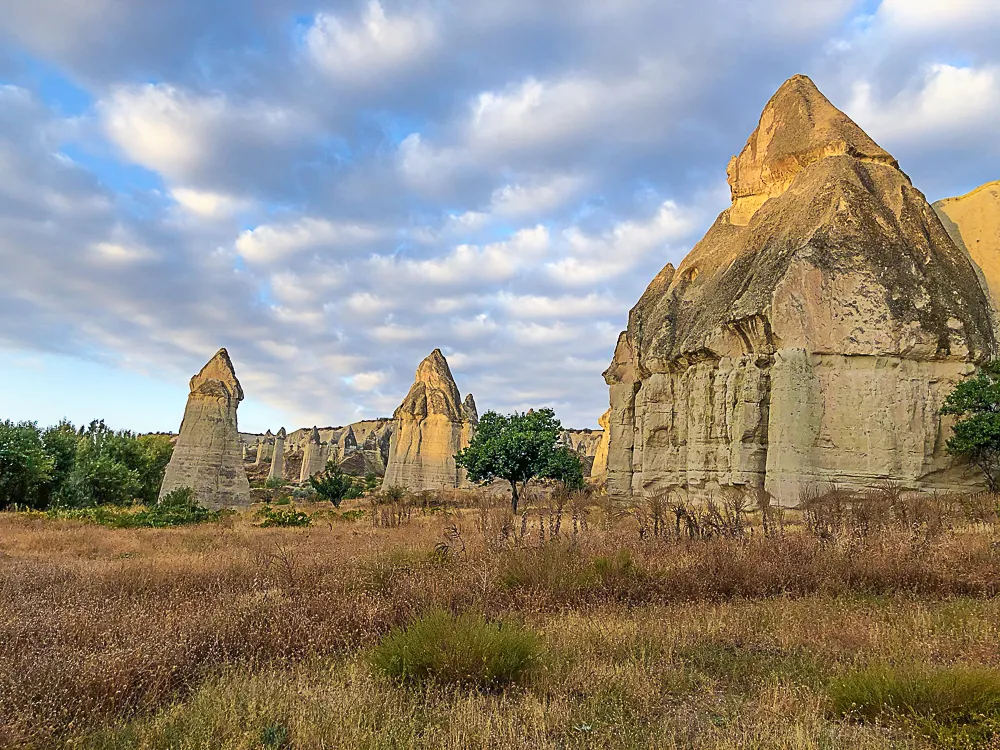
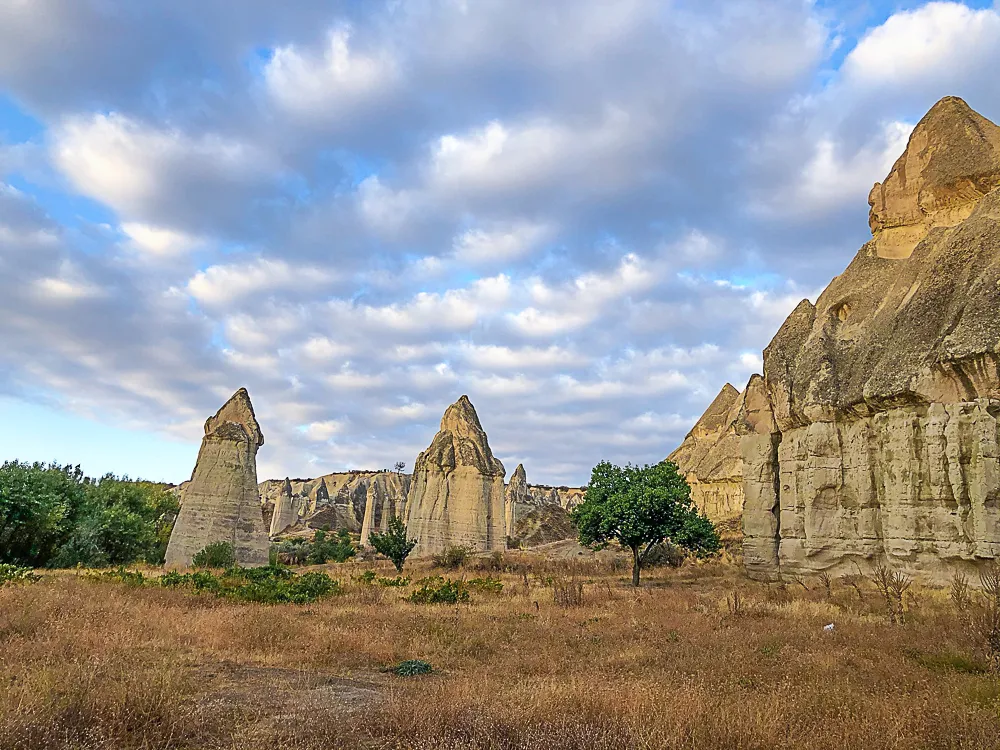
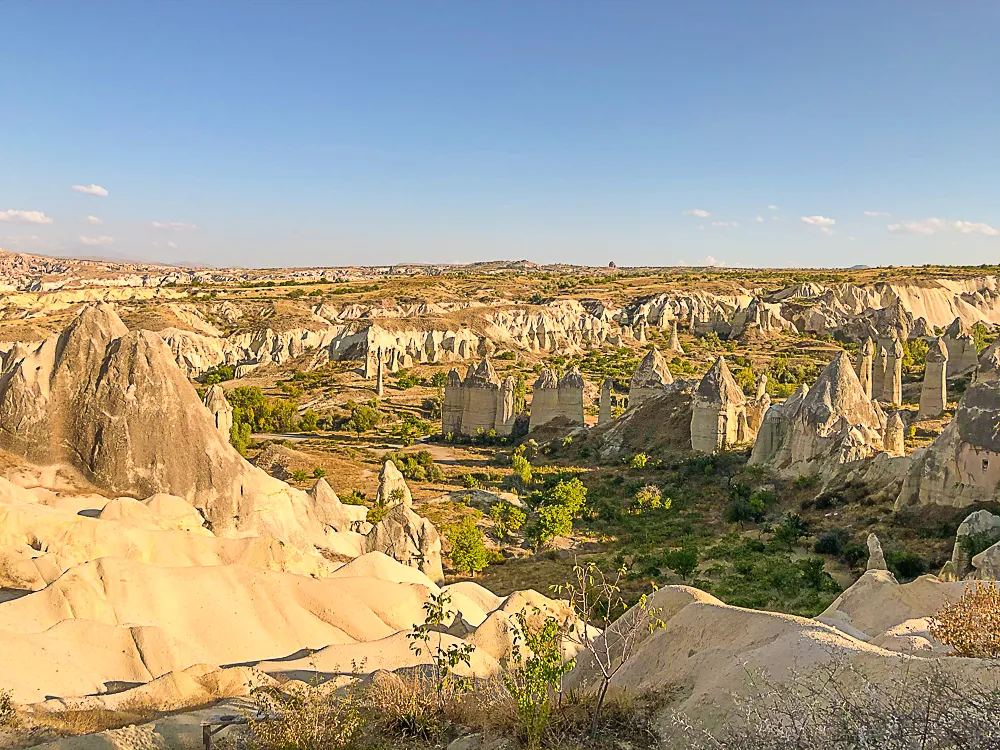
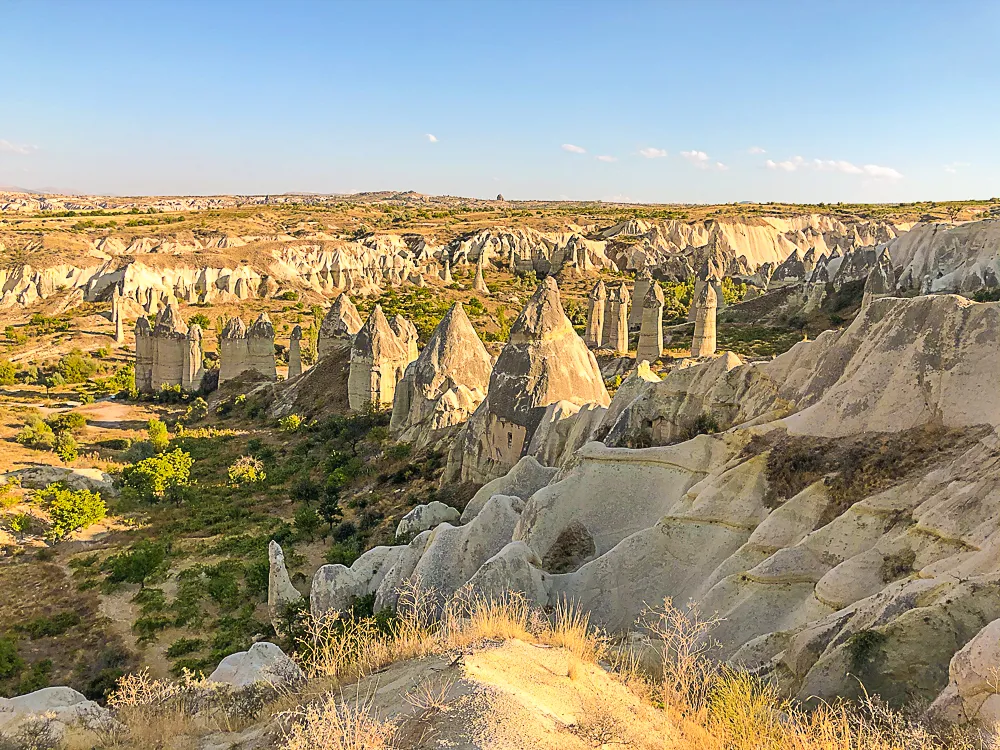
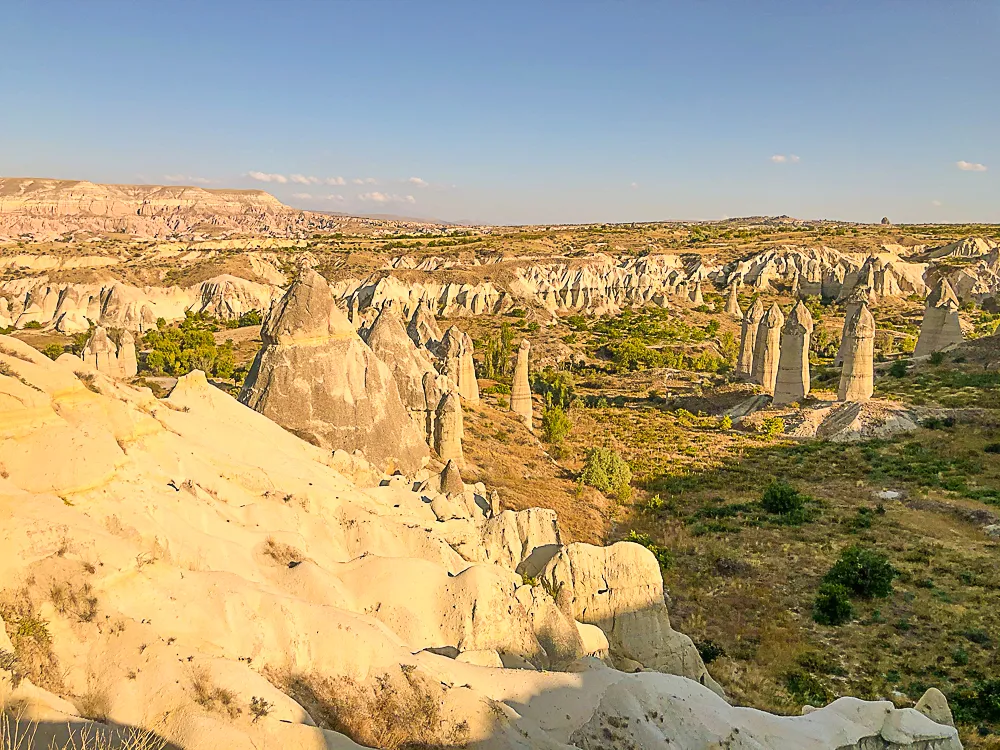
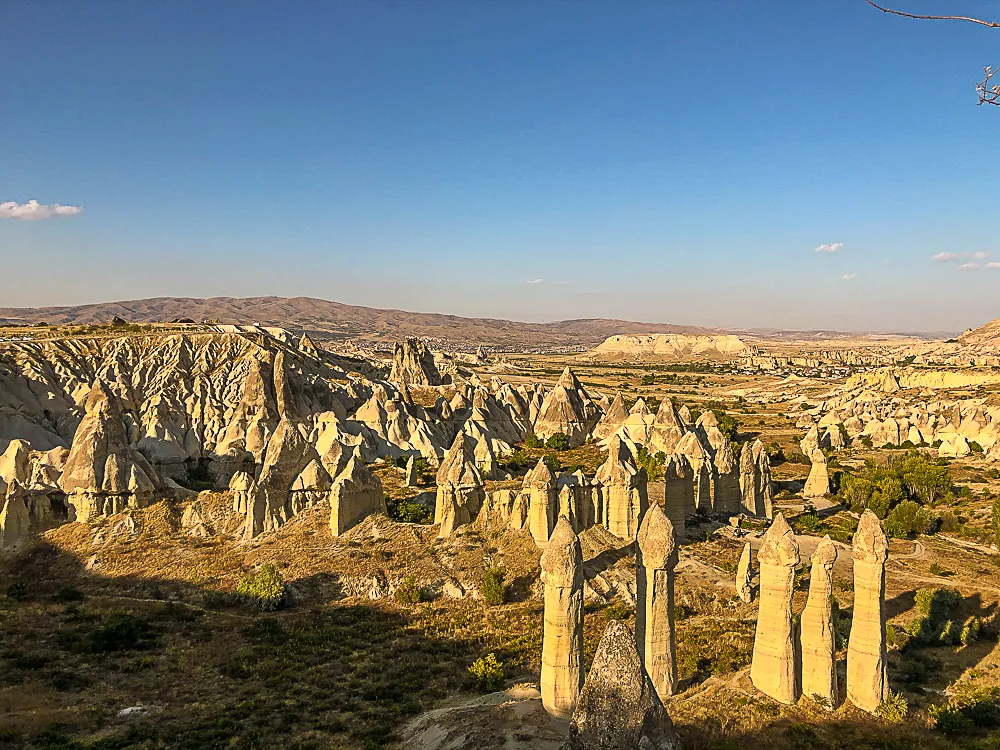
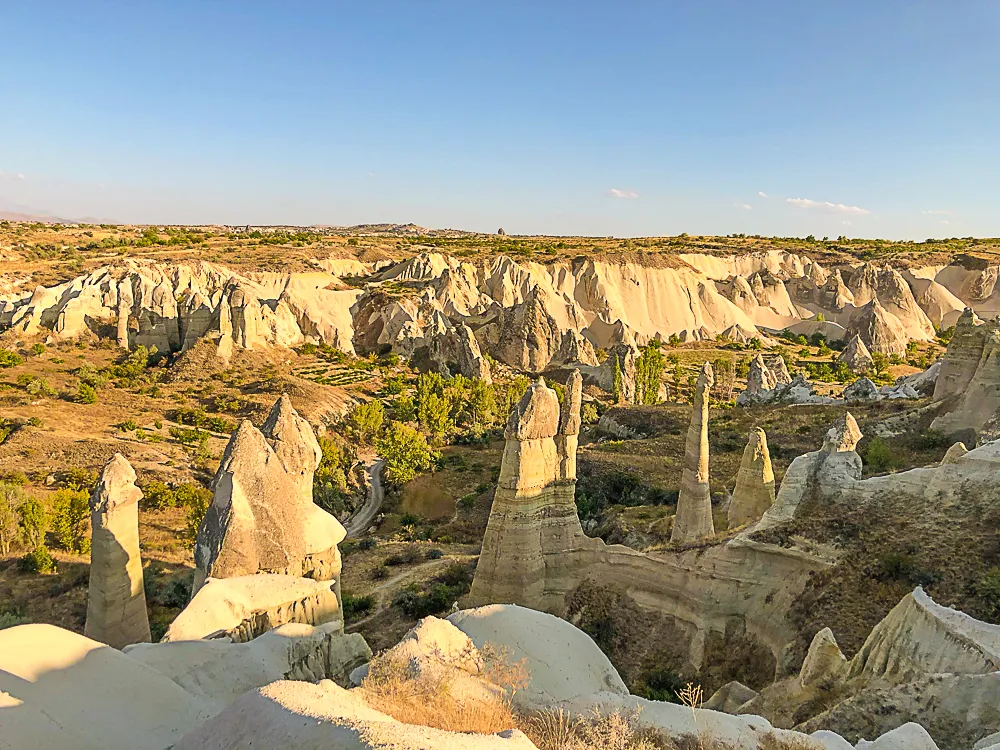
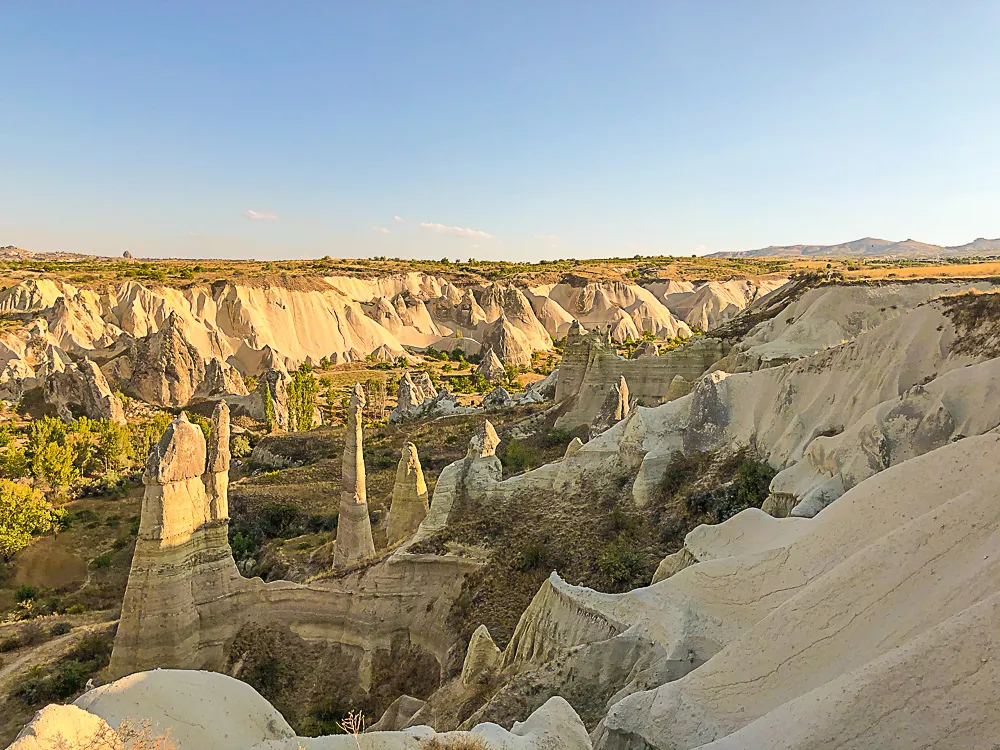
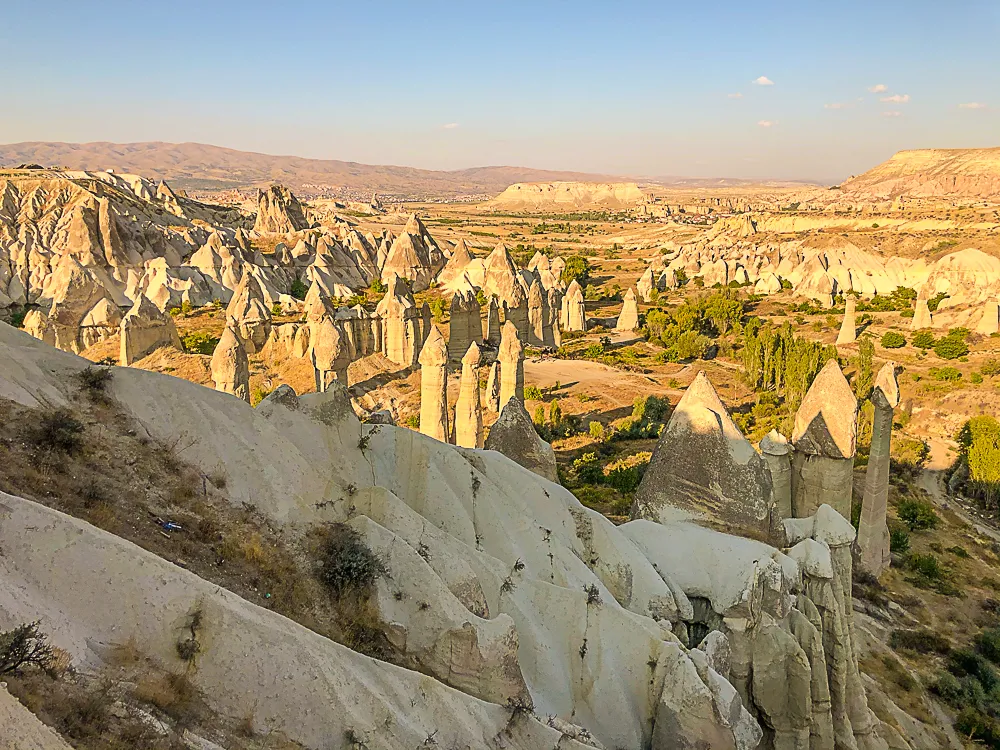
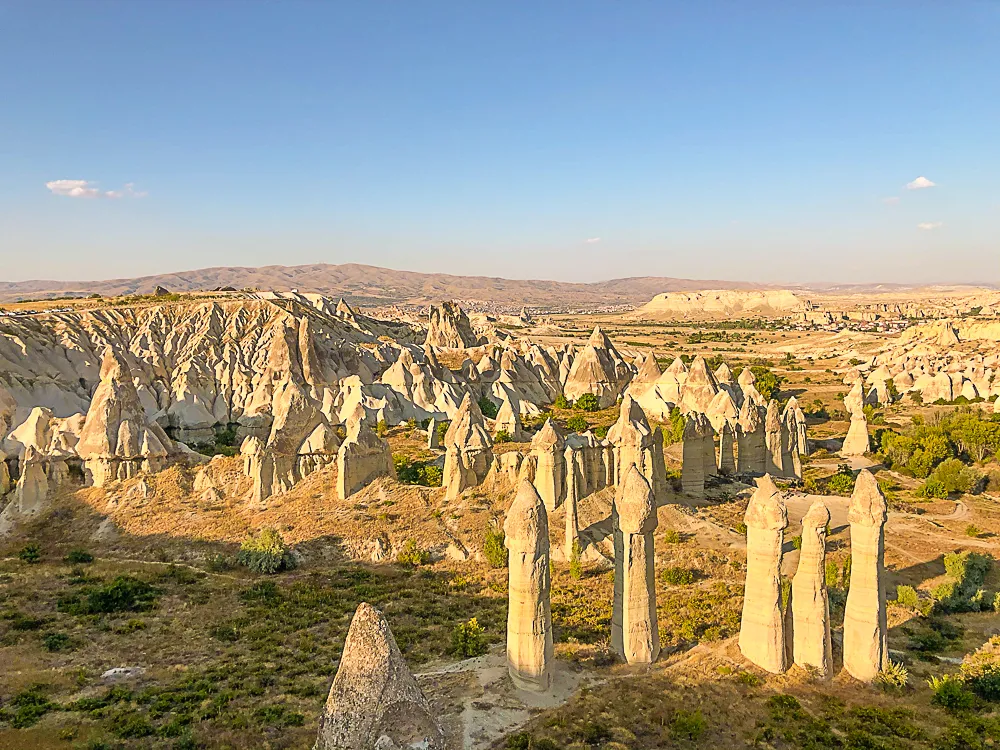
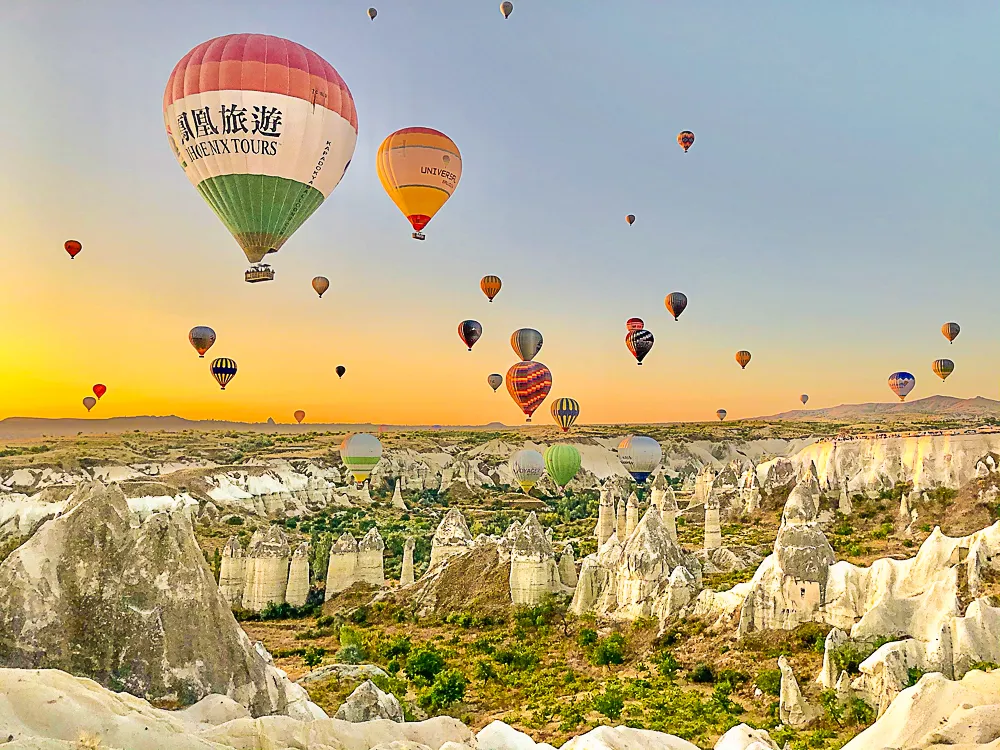
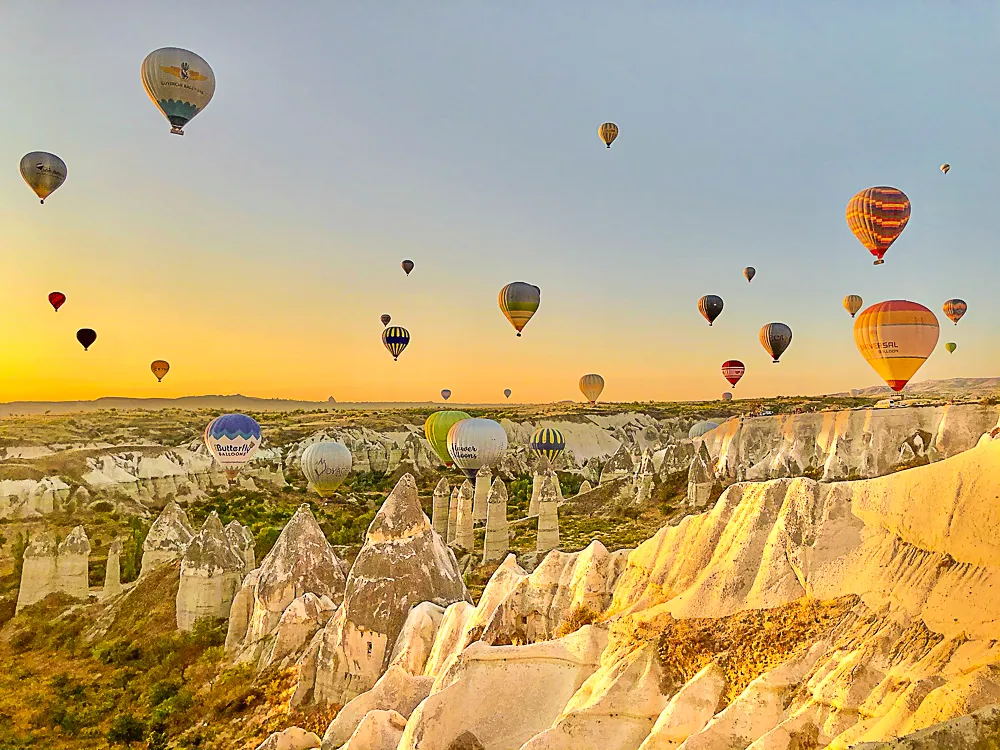
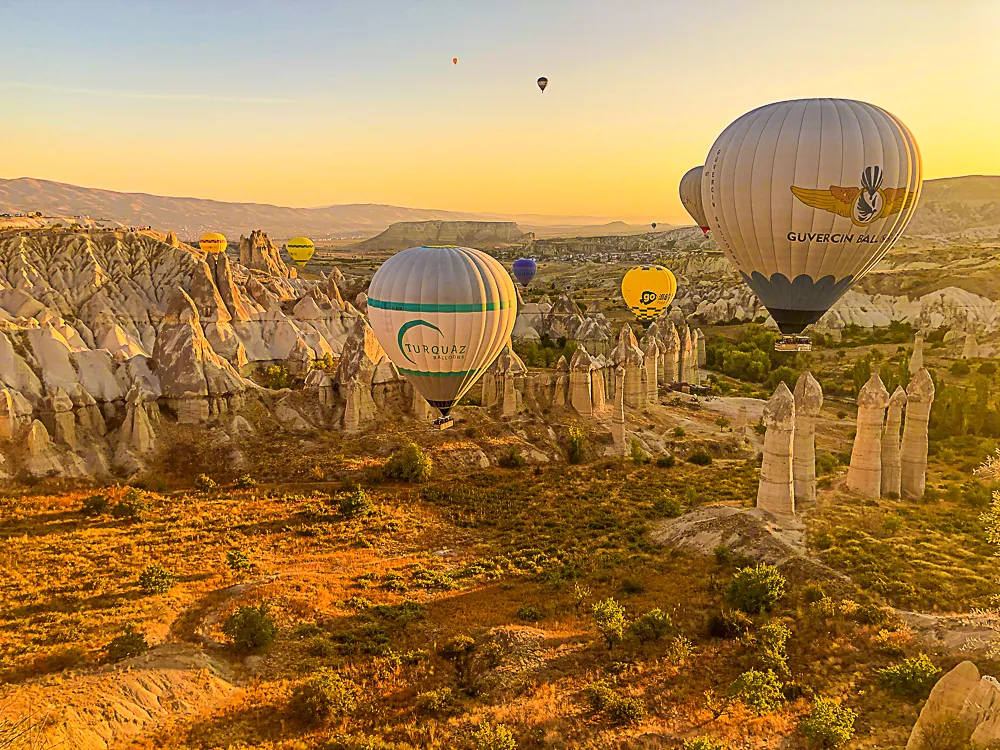
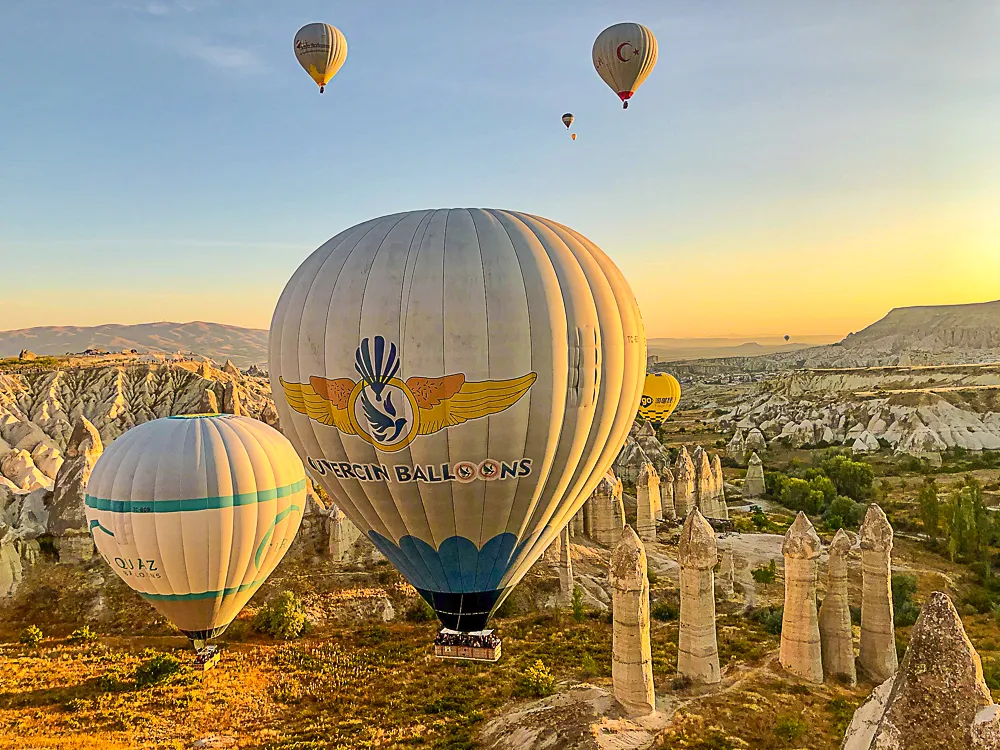
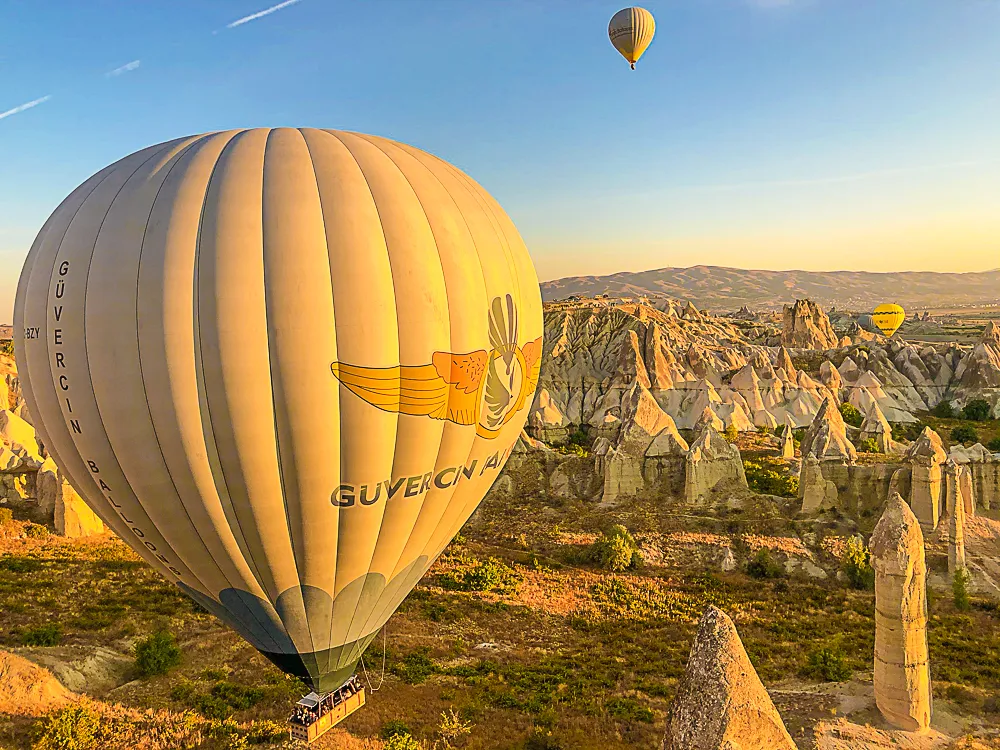
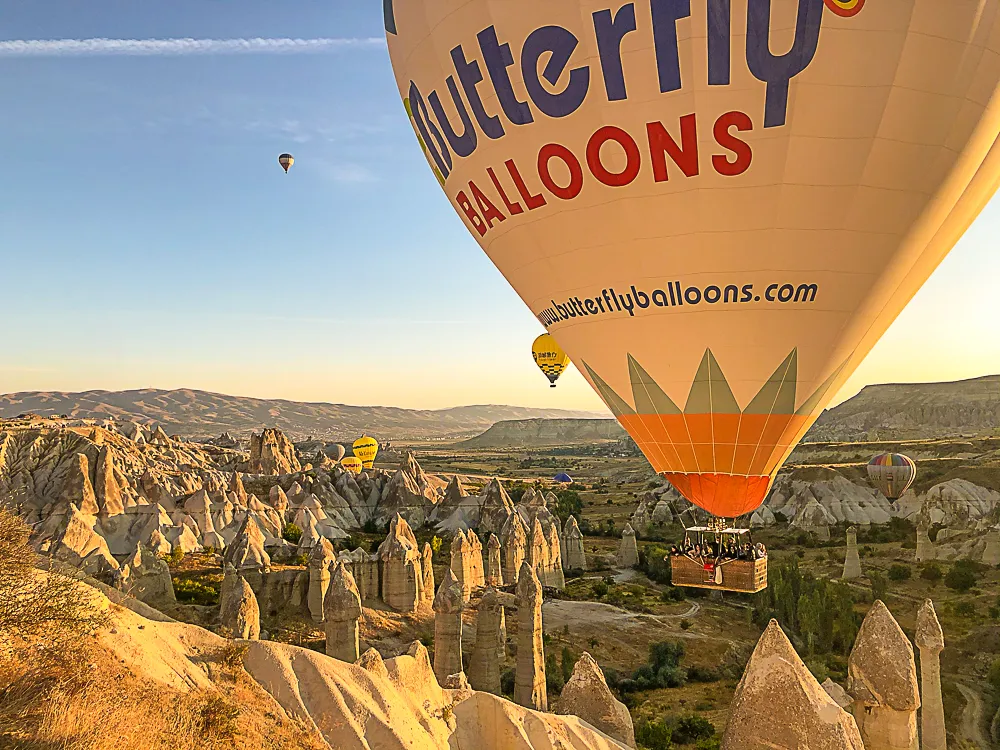
If you do not want to wear out your legs walking through the valley, there remains the viewing platform mentioned above over Love Valley 1. In addition, there is another very similar valley – Görkündere, Görcelid (Göreme), or Love Valley 2, practically in Göreme.
There are no rock churches in the valley, but the question of what to see in the valley does not arise. That is, there is something to see, but the question does not arise. How did the mushroom-penises “grow”? Millions of years ago volcanoes smoked and smoked, sowing the valley with ash, and then ejaculated lava. They flooded a huge territory of 20,000 sq. km, preserving beneath it fragile layers tens, and sometimes hundreds, of metres thick. In cross-section the ground became a layer cake. Later volcanic activity subsided, and water and wind took up forming the present-day relief. The lava flows hardened and turned into strong basalt, which concealed the soft lower layer of tuff. Water wears away stone – that is exactly this case. Millions of years passed, and the basalt too was eroded, turning into separate boulders, which became umbrellas protecting everything beneath them from destruction. Around them the rock was washed and blown away. Here too the softer tuff weathered and washed away faster than the basalt, so that whimsical mushrooms on stems formed, which in places “grew together”. . The basalt caps are darker in colour than the tuff stems. Rock climbers, by the way, do not climb these things, because the main part of the column is very soft.
Text and photos by Serhii Shcherbii



