Ivankivtsi. An ancient Ukrainian cemetery

· 4 min read
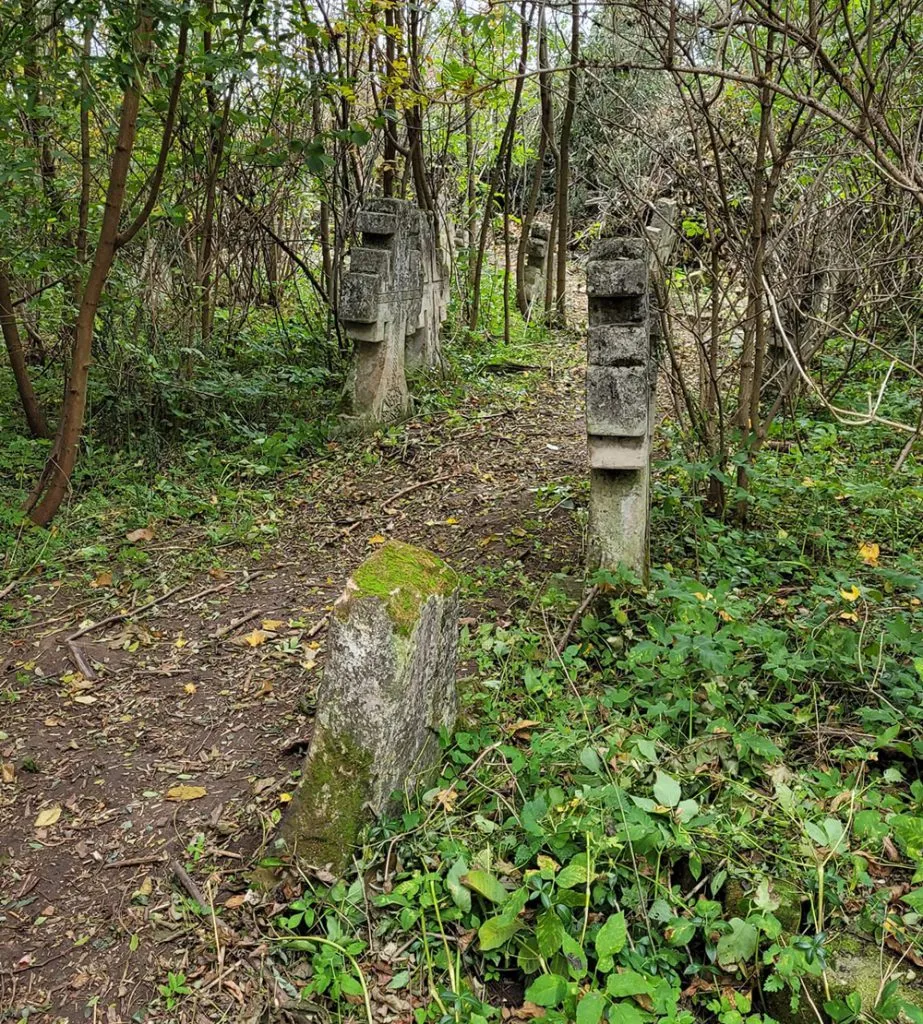
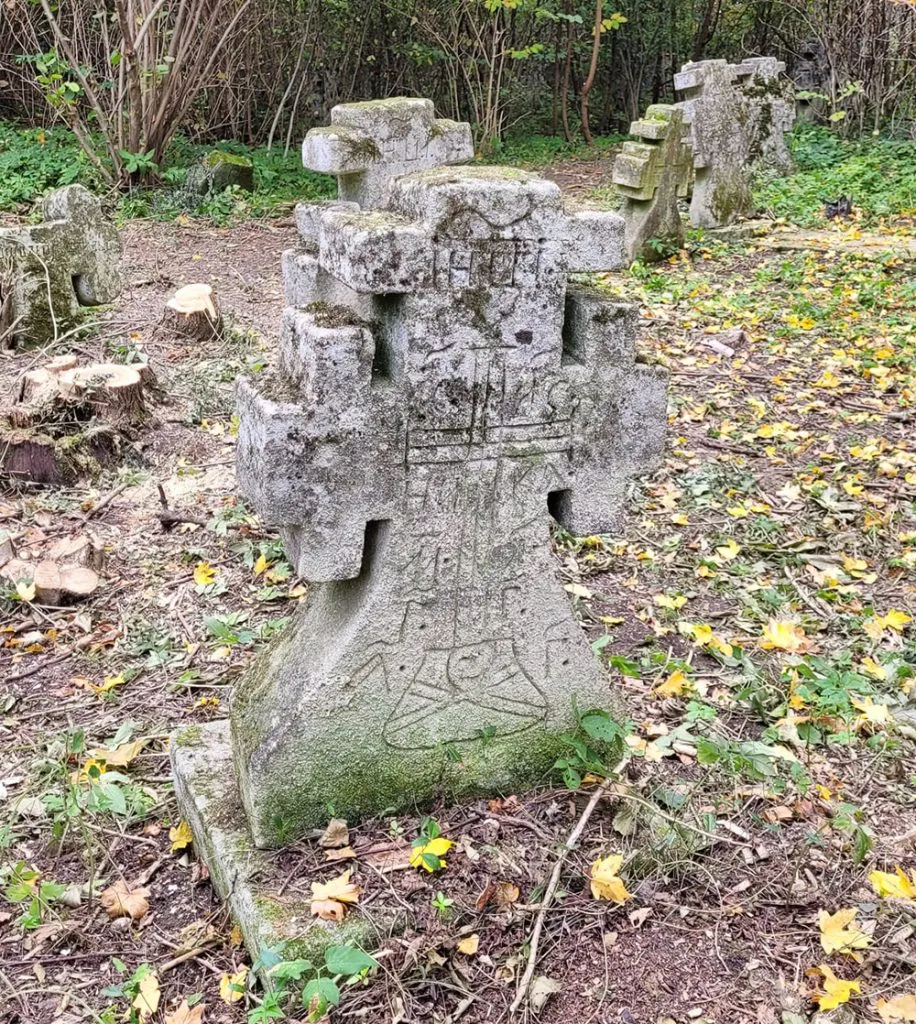
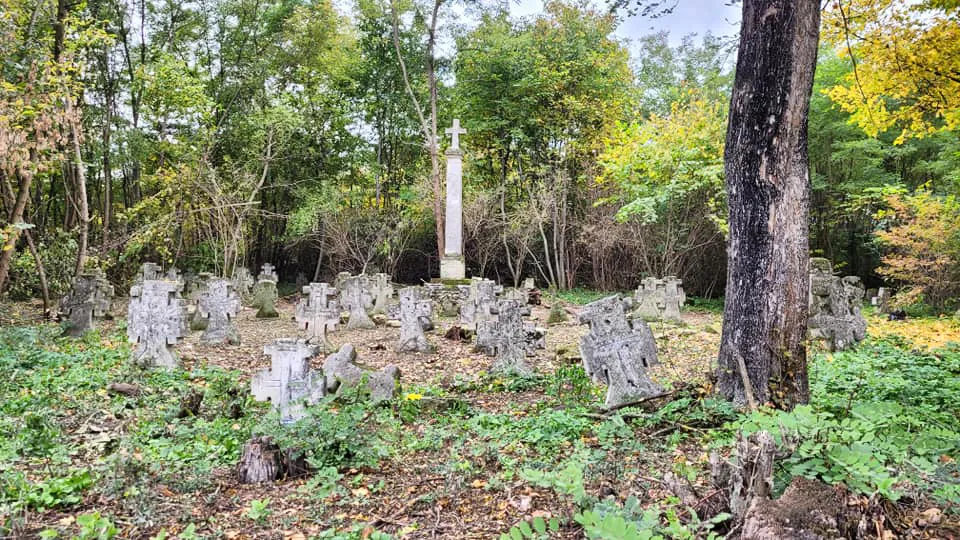
The village of Ivankivtsi is now located in Horodok district of Khmelnytskyi Oblast, 5 km south of Satanov. The village is quite large, with about 1,500 residents. It is strange that with so many inhabitants the old cemetery, the village’s main monument, is not even easy to find among the thickets. How many people would it take to clear the undergrowth – at least by this one could honour the memory of one’s ancestors.
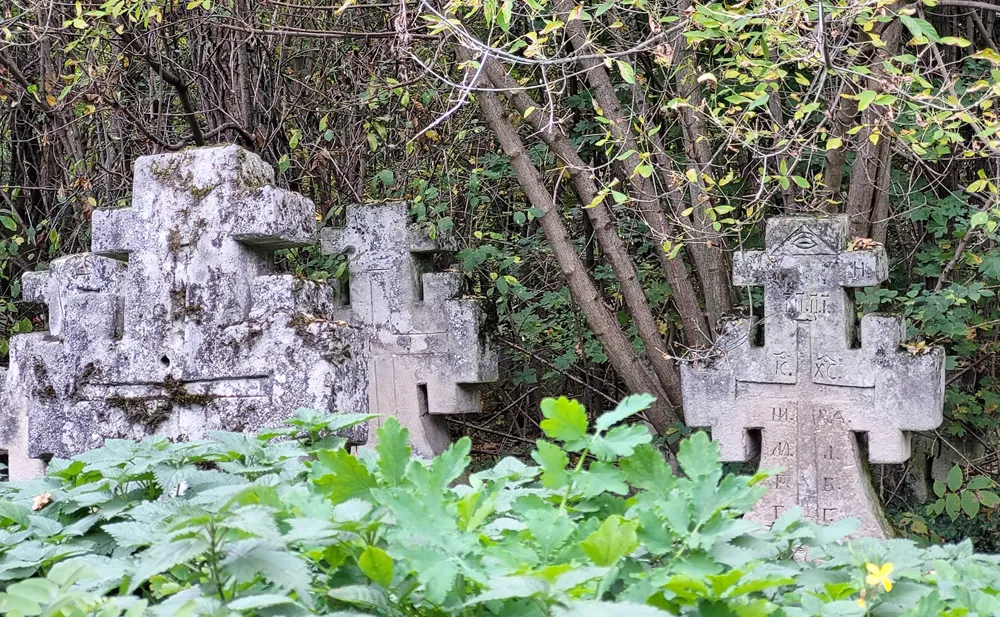
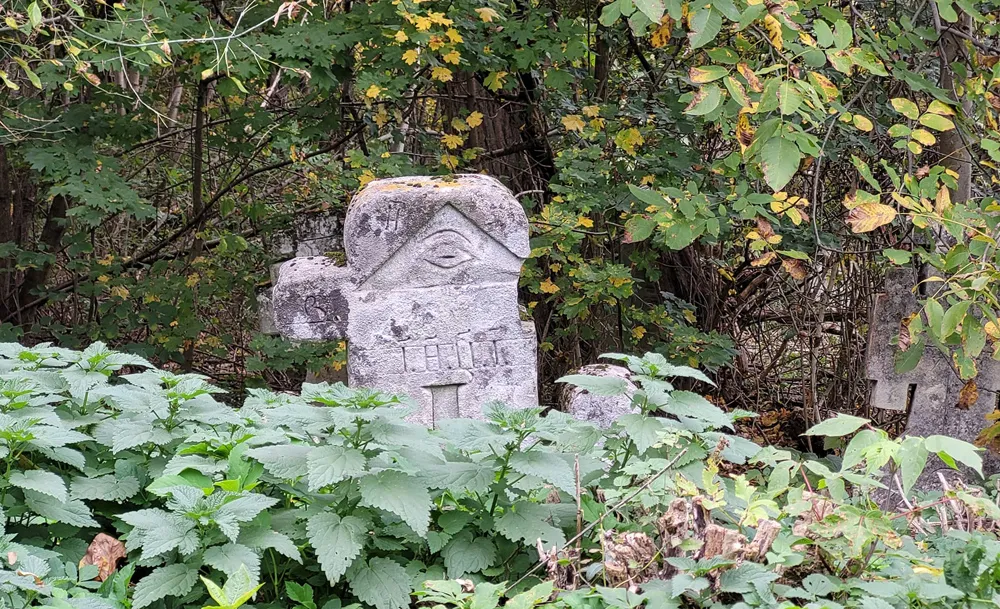
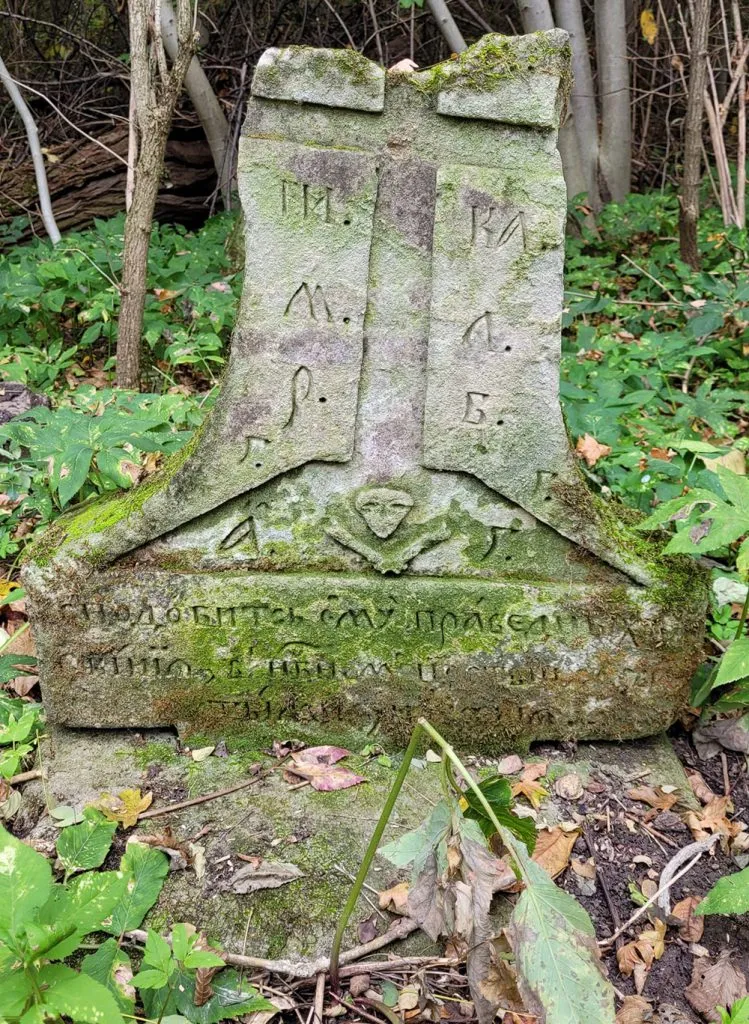
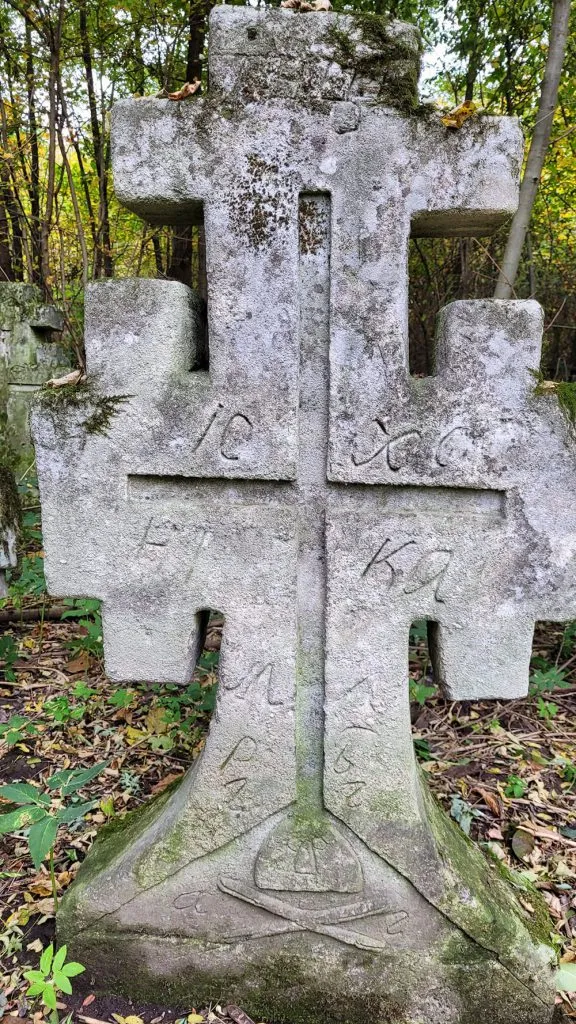
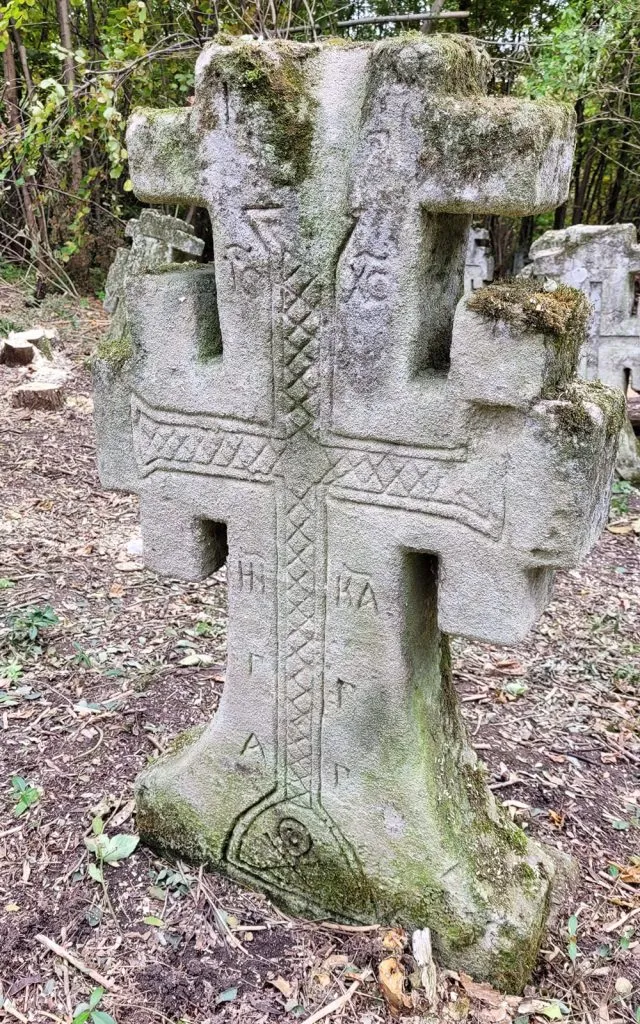
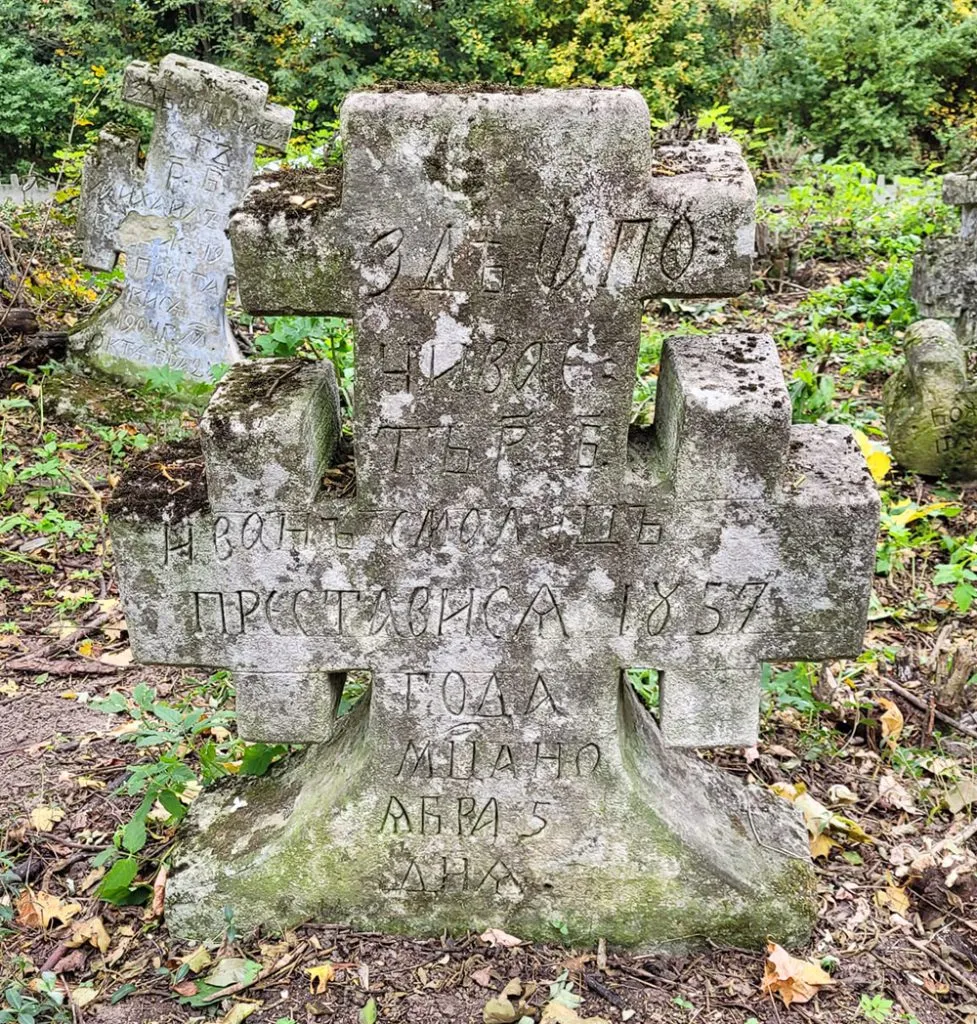
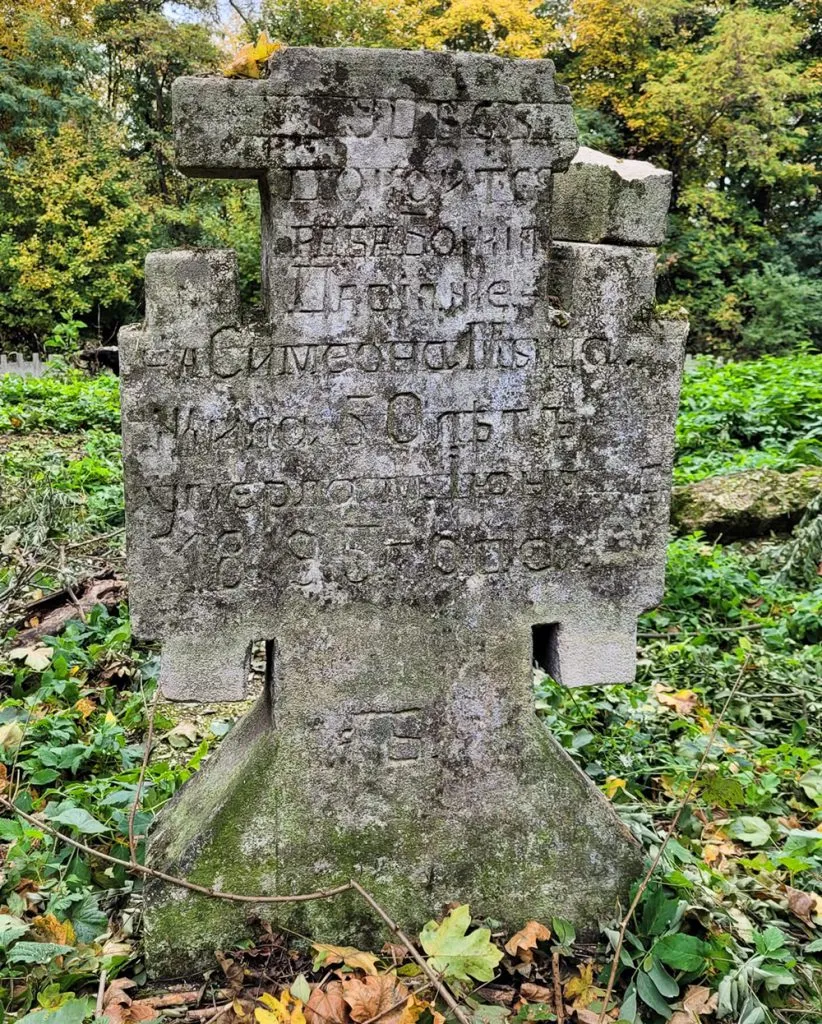
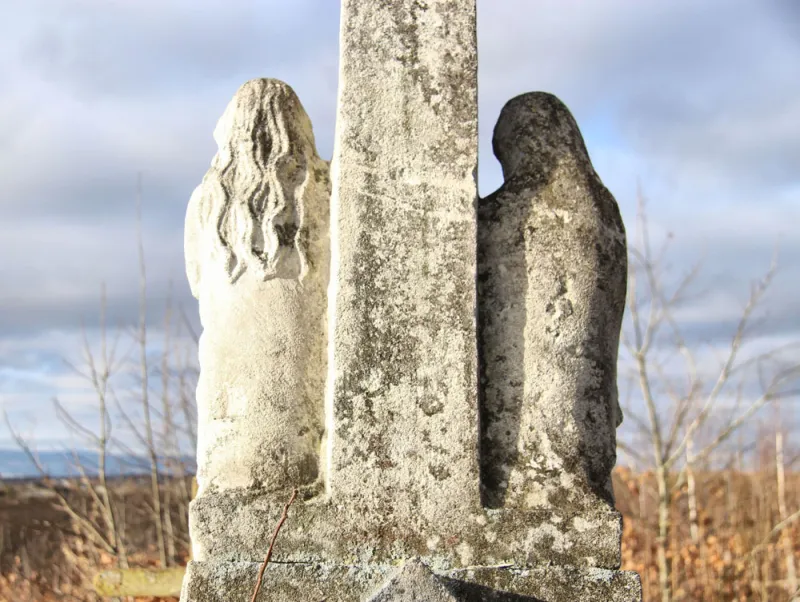
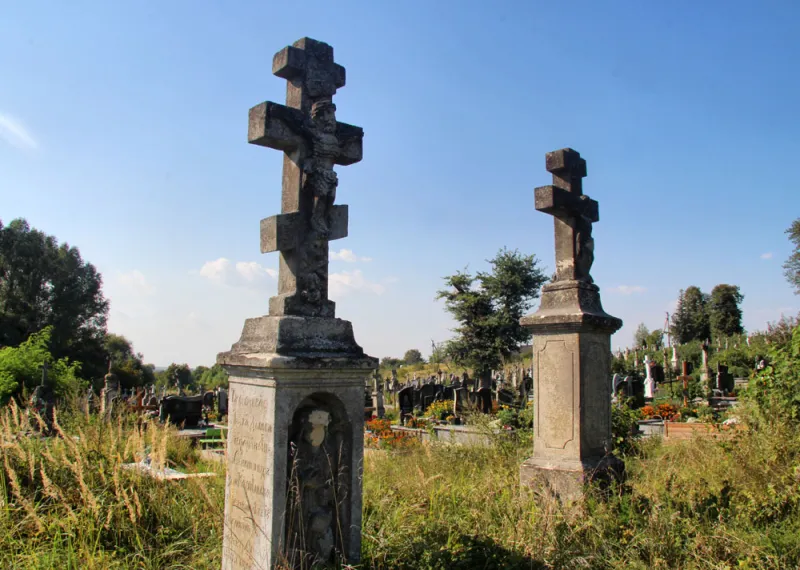
We learned about the cemetery in Ivankivtsi from Volodymyr Halaidiuk. Judging by the epitaphs and dates on the crosses, the cemetery holds burials of the 18th and 19th centuries (there is a modern part too, but it is not what interests us). The crosses here are extraordinarily interesting, as they bear lettering not found in the Dnipro region or the Black Sea coast and somewhat close to the austere lettering of the Catholic cemeteries of Galicia. In addition, the crosses of the old cemetery in Ivankivtsi are, by Valerii Malyna’s definition, of the cross-ended type, that is, with separate small crosses on the arms of the crosses. Similar crosses are found in the Cossack necropolises of the south, but in Podillia they are rare (or perhaps the question has simply not been studied).
Cross-ended crosses probably came to us from the lands of Byzantium and Bulgaria. They are not characteristic of the lands west of Ukraine.
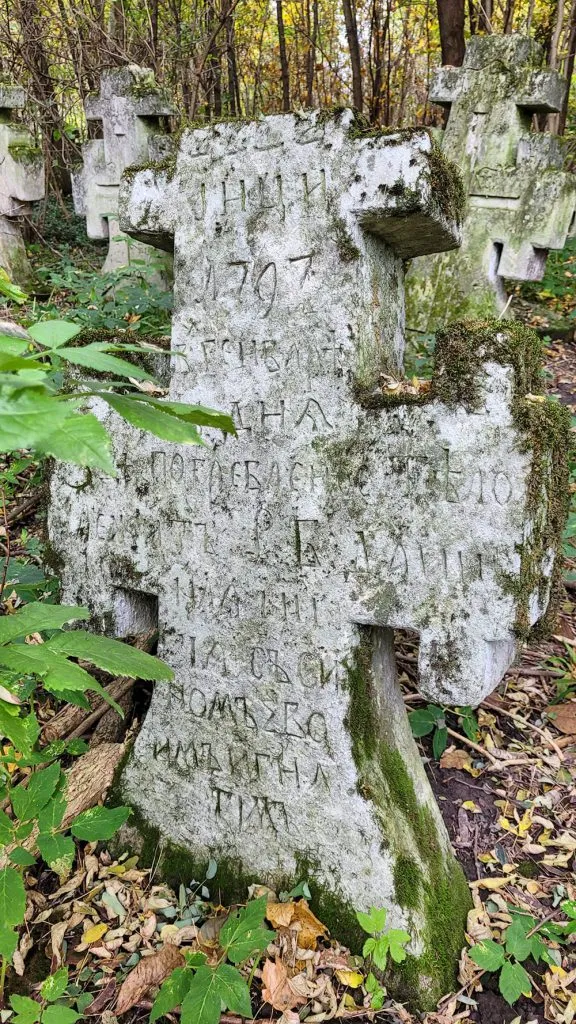
One of the crosses stands on the grave of a Don Cossack, not a Zaporozhian. In this connection I would like to quote the text by Dmytro Poliukhovych from the website “Zbruch”:
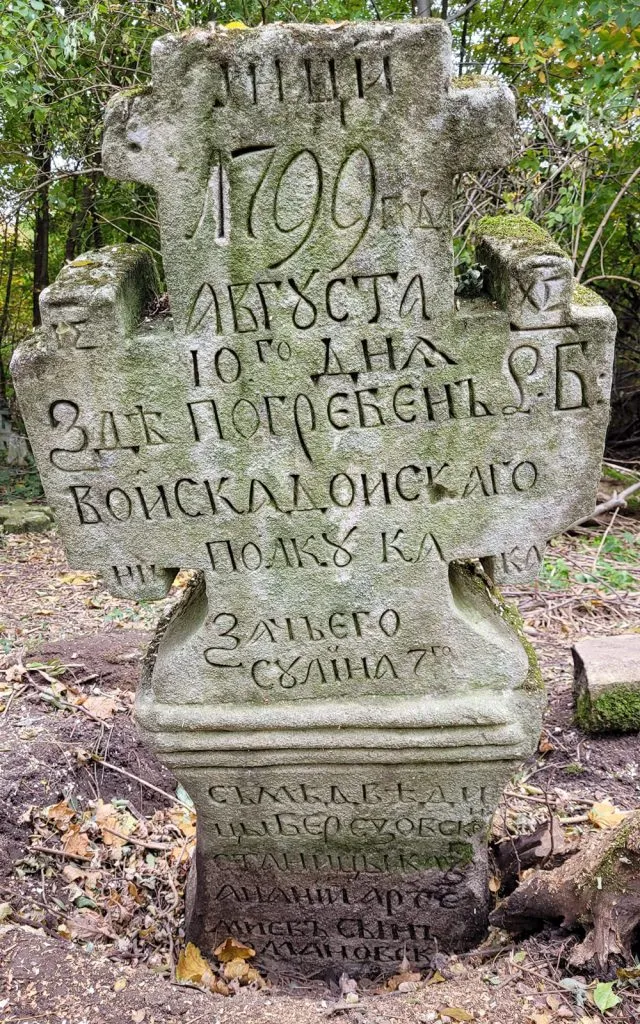
The first thing that caught the eye was the numerals 1799 carved at the top of a stone cross. That was already something! Christian cemeteries, and especially village ones (this applies to Podillia as well as Galicia), cannot boast of overly ancient gravestones. There are several objective reasons for this, but it is superfluous to mention them in this publication. Even burials from the first half of the century before last are already a rarity. And here is the whole 18th century, if only its very end.
The epitaph was simply striking:
“1799 year
August 10th day
here is buried G.S. (God’s servant – author’s note)
of the Don Cossack regiment of Sulin
……..
from Medveditsa BEREZOVSKAYA…”
The rest of the text has sunk into the ground, and most likely it is precisely there that the name of the buried man is hidden.
Sulin’s regiment is obviously the regiment under Colonel Andrei Sulin (1755-1820). This military unit entered Ukrainian history by its active participation in the liquidation of the Sich and by “restoring order” on the Zaporozhian lands for a year afterwards. It is possible that the buried Don Cossack, still a young man, also took part in this.
The Medveditsa mentioned in the epitaph is a river, a tributary of the Don, and Berezovskaya is a Cossack settlement on its bank.
At the end of the 18th century Sulin’s Cossack regiment was based in the west of the Russian Empire. Little is known of what the “Sulin men” did then, but it can be assumed with great probability that they guarded the border, including in Podillia.
It is hard to say why a Cossack who grew up on the banks of the Medveditsa was laid in the ground on the “eastern” bank of the Zbruch. The border at that time was fairly quiet. There was practically no smuggling as such either. However, given the hilly and wooded terrain (the Tovtry ridge stretches here), there were plenty of brigands, in a clash with whom the Don Cossack could have died. Nor should one rule out that the Cossack died quite naturally or of illness.
In any case, the “guest” from the Don most likely was on the banks of the Zbruch on a border mission, and the gravestone on his grave can today be considered the oldest relic of the “Old Border”.
It is likely that this is not the only Don burial in the Ivankivtsi cemetery. The author plans a large study of it for late autumn, so there may be new discoveries.
How many secrets and mysteries old Ukrainian cemeteries with stone crosses hold. Time and again we are convinced that our ancestors are for us like the Forerunners from the science-fiction novels of Andre Norton. Who they were, what traditions they had, where such forms came to them from?.. All of this remains a puzzle for now.
Roman Malenkov, photos by Volodymyr Halaidiuk