Cossacks and musketeers

· 7 min read
All my childhood I was fascinated by the French musketeers. And only now have I learned that the musketeers themselves were fascinated by the Ukrainian Cossacks. Eeee… (stop!) don’t rush to turn the page, I haven’t lost my mind and this is not a joke, is it?
This is a historical fact that I managed to uncover. Shock! Sensation! Or however it is customary to write in such cases?) So settle in comfortably; this adventure will be more exciting than the one by A. Dumas.
So, here is what I managed to find in four months of work in the French archives. When the musketeers of the King of France were only beginning to be formed in 1622, the fame of the Cossacks already resounded across Europe: they went on campaigns against Bulgarian Varna, Turkish Constantinople (and a number of other Turkish cities), Czech Prague (in effect deciding the unenviable fate of the Czechs for many years), they took Muscovy and had even already been under Vienna (the list there is such that I will devote a separate long article to it, with many new, little-known facts)…
But so that this does not sound pompous, we will not talk about the whole of Europe, but will concentrate only on the French and on the horizon of knowledge that the king’s musketeers could have had.
And these facts will show us that if A. Dumas had not been such a patriot in love with France, the world might know more about the Cossacks than about the musketeers, and we would now be re-reading “The Cossacks, Twenty Years After” in French? The thing is that as early as 1605 the information pages of the “Mercure français” (a forerunner of regular printed newspapers) began to appear in France, introducing ordinary French people to the situation in the world, and especially in the theatres of war, where it was almost never without the Cossacks. This was the first bell, which could not have been unfamiliar to those who were engaged in military service under the King of France (the future musketeers).
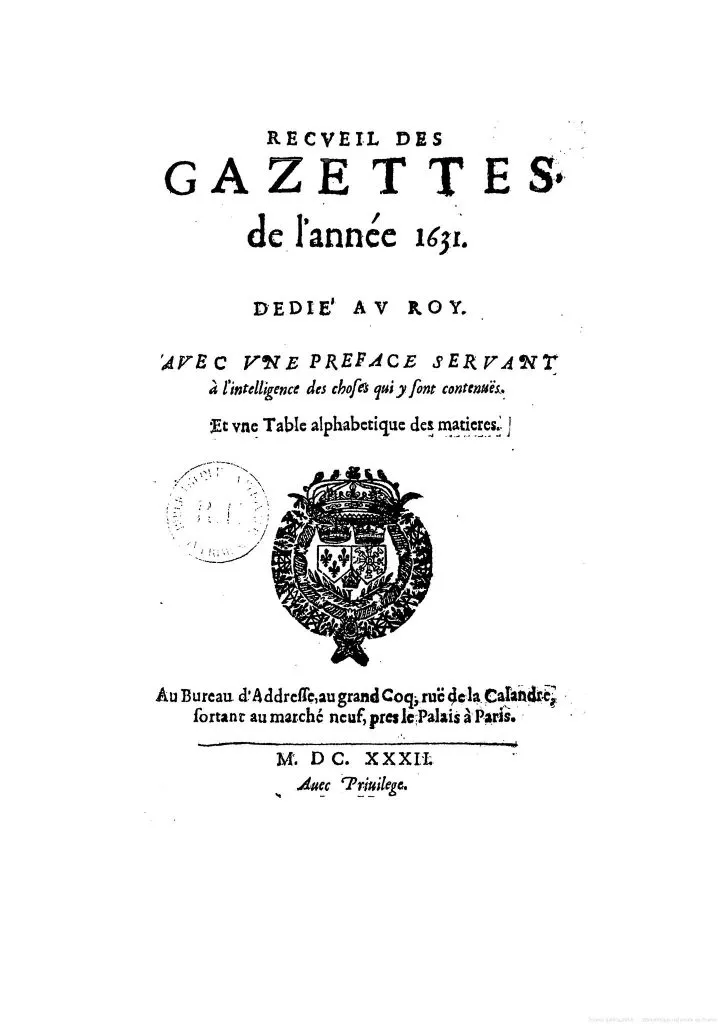
And in 1631 one of the first (by today’s standards, the first) newspapers in Europe began to appear regularly, and it would set the fashion for the name of this kind of publication: “Gazette”. I will write a separate long post about it, with quotations about the Cossacks, descriptions of interesting stories from the lives of our leaders and other descriptions that could themselves serve as a decent “History of Ukraine”.
So, in this “Gazette”, literally in the very first issue, it is reported that the Cossacks had again destroyed the Turkish city of Mizene, and that therefore the Turks “are sending their whole Embassy to Poland to demand peace and the recall of the Cossacks, who are ruining their plans”.
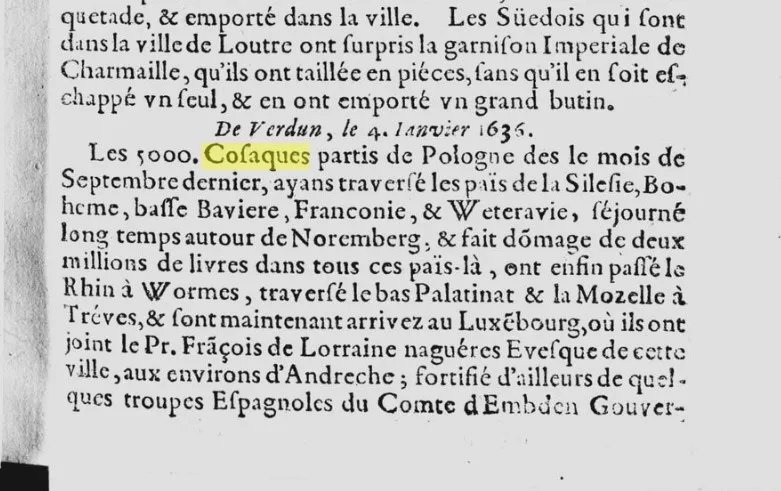
There are many other mentions of their numerous exploits there, but what struck me especially was a report that I am sure every king’s musketeer read avidly, in issue No. 7 of the newspaper (a report dated 4 January 1636), a rather everyday one, as if routine for the Ukrainian Cossacks, but in fact just look at it:
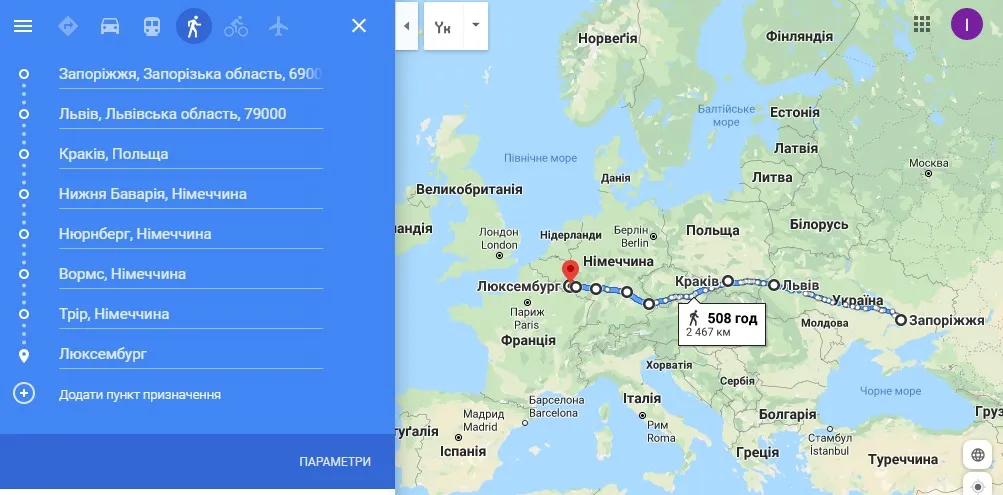
“5,000 Cossacks, who left Poland in September last year, crossed Silesia, Bohemia, Lower Bavaria, Franconia and Wetterau, spent a long time around Nuremberg, where they demanded two million pounds from all these lands. Then, finally, they crossed the Rhine at Worms, crossed the Lower Palatinate and the Moselle at Trier, and are now arriving at Luxembourg…”
That is the whole of Europe! That is 2,500 km! These are unique countries and cities, seeing which would be an adventure for a lifetime. And here people march as a whole army, as if at home, and even carry out combat missions! As a modern traveller, I even took the trouble to sketch a map of this campaign (in the photo below). It amazes me! And imagine how the hair stood on end on the head of Tréville, captain-lieutenant of the royal musketeers, when he read this newspaper aloud to the musketeers on the morning parade ground in 1636!
And he did read it aloud, because this publication was official, from the king, and so it was bound to be on Tréville’s desk.
Have you ever read anything like this about musketeers? Exactly! ) And after that every musketeer dreamed of becoming a Cossack?
And this is only part of the joke, because all these newspaper reports, the events described and the surnames named are real. Did you know about this?
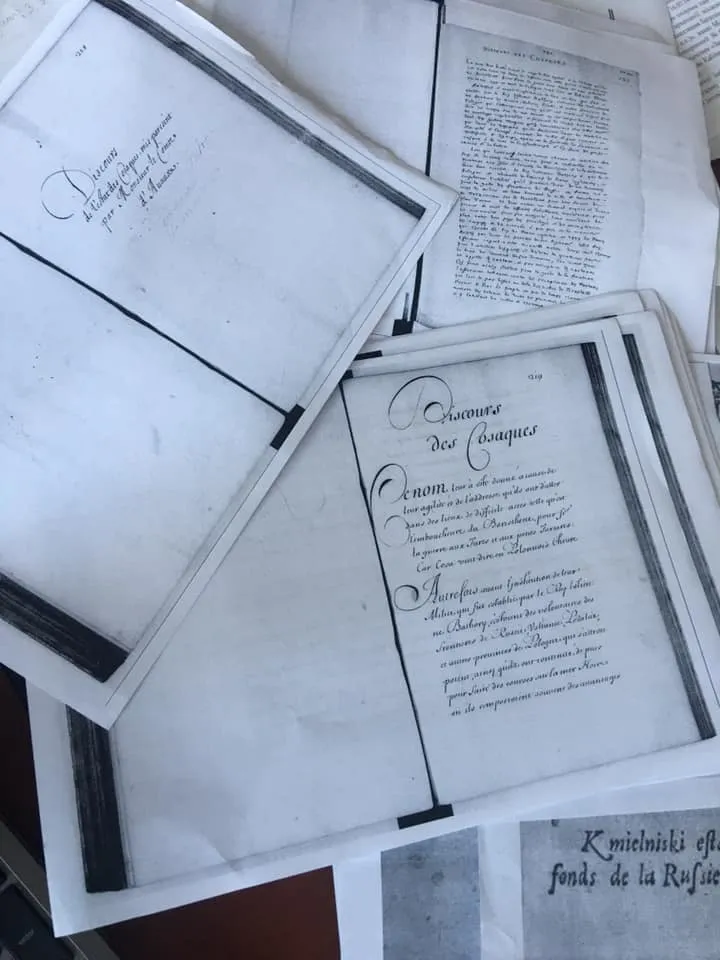
Later I will write more about these newspapers, and also about the Dutch “Couranten” (published since 1618), which also wrote a good deal about our people. So there was nothing to be surprised at when I found in the French archives a manuscript from the late 1640s and early 1650s, which is called precisely “Discours des cosaques” (it describes in considerable detail all the most important events in the history of Ukraine (and the name of the country there is precisely Vkraine!) at that time). It belonged (wholly or in part? that is the question) to a very interesting figure, Claude de Mesmes, comte d’Avaux (died in 1650), a French diplomat who was notable for being involved in the most important peace negotiations and as many as three treaties: the Treaty of Stuhmsdorf, the Treaty of Hamburg and the Peace of Westphalia.
My own investigation suggests that this manuscript text was copied many times (I found three different copies of it in the archive, written by different people), so everything that has come down to us has already been edited by someone (it is assumed to be by P. Chevalier, to whom this document would later be attributed, since identical material would appear in his book).
What do we know about this? Nothing. But the musketeers did!)
And the next important episode in time in informing the king’s musketeers about their idols, the Ukrainian Cossacks?, was the huge book by the secretary of the French ambassador in Poland, Pierre Chevalier, devoted entirely to the Ukrainian Cossacks and to the customs of our people in general: “History of the War of the Cossacks against Poland” (published in 1663).
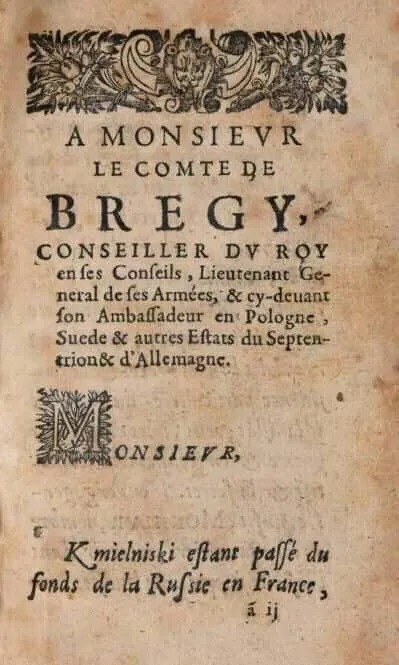
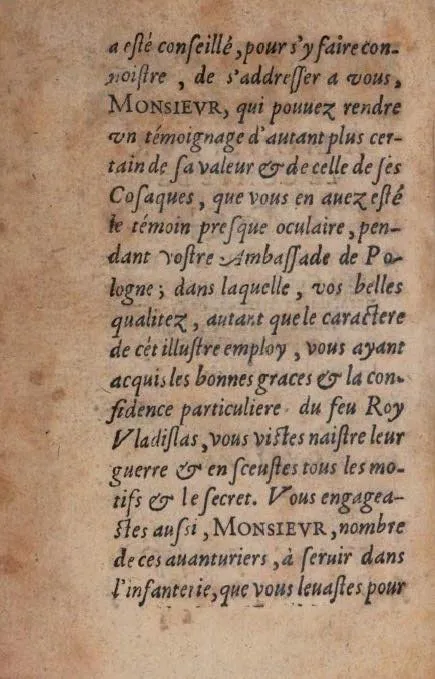
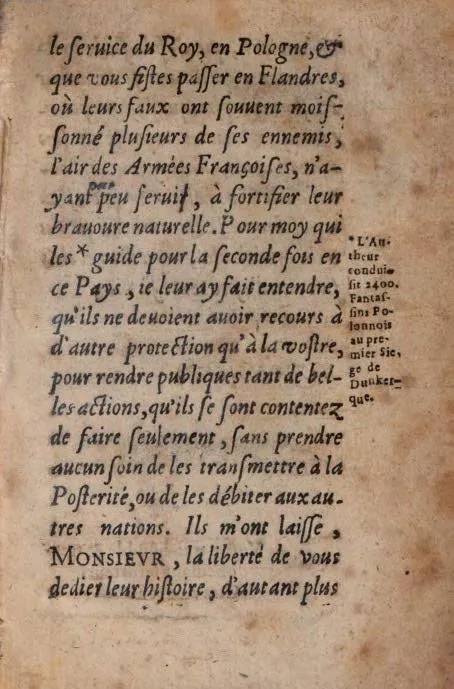
Below is the author’s letter to his chief, the ambassador (the original is in the photo), later attached to the book, which I want to publish here as the last important episode of this story of mine about musketeers and Cossacks:
“To Monsieur the Count de Brégy, counsellor of the King, member of his council, lieutenant general of his armies, formerly his ambassador in Poland, Sweden and the other states of the North and of Germany.
Sir!
Khmelnytsky, who came to France from the depths of Rus, was advised that, if he wished to be known here, he should address himself to you, sir, because you can attest to the valour of him and his Cossacks with all the more certainty as you were almost an eyewitness of their valiant deeds during your stay as ambassador in Poland; you then saw with your own eyes the very beginnings of the Cossack war and learned all its motives and its secret, since your excellent qualities, as well as the nature of your honourable position, won you the great favour and particular trust of the late King Władysław. You also recruited, sir, many of those adventurers for service in the royal infantry, whom you selected in Poland and led to Flanders, where their weapons often destroyed numerous enemies; and the French troops did not have to inspire them with warlike spirit, since their innate courage was enough for them.
As for me, who am leading them for the second time (!) to this country, I convinced them that they should turn only to your protection so that their feats of arms might become known, feats which they performed without any intention of gaining fame among future generations or spreading news of themselves among other nations. They allowed me, sir, to dedicate their history to you, all the more willingly because it is the only reward they give me, their historiographer, who nevertheless considers himself sufficiently compensated for his labour: it gave him a fitting opportunity to assure you solemnly and truthfully of the ardent desire with which he promises to remain for life,
Chevalier
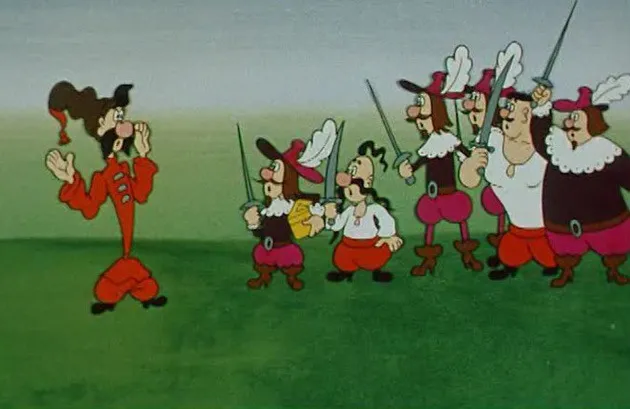
So what do you make now of the cartoon about Cossacks and musketeers? ? Who learned from whom, do you think?)
Author: Ihor Poluiektov
Read the continuation:
How the Cossacks beat the musketeers