Krenychi. A unique church

· 4 min read
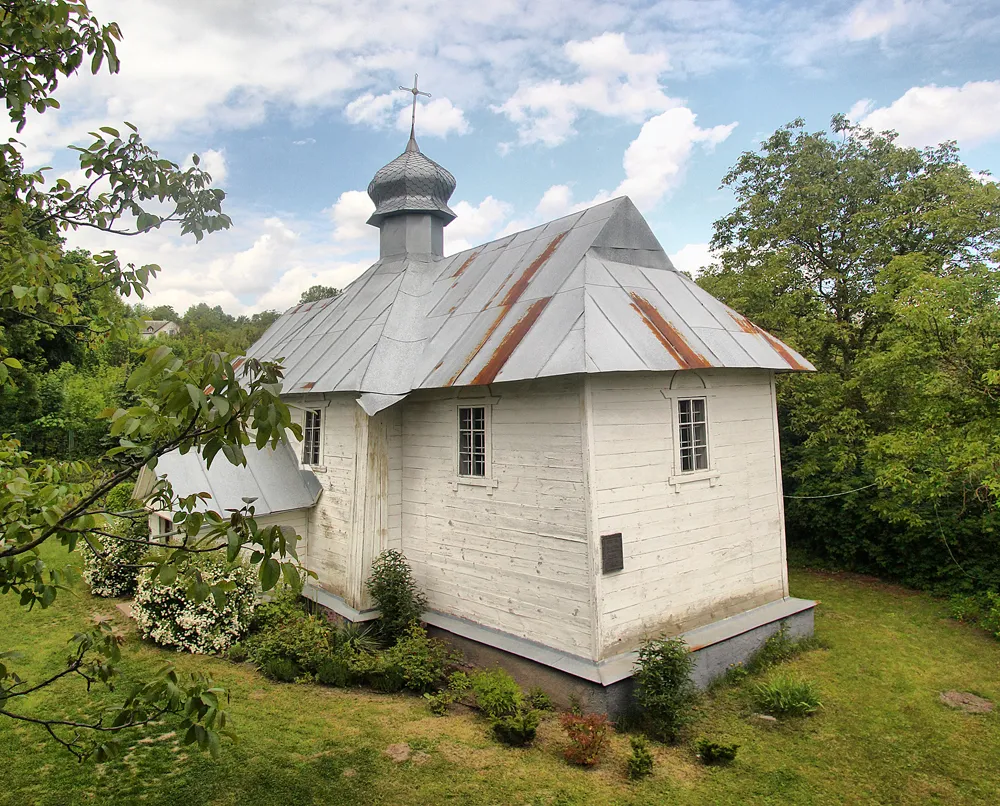
Krenychi lies in a valley between the high hills of the Kyiv plateau. The terrain here is very much like mountains: narrow, serpentine roads, deep ravines and small village houses nestling right under hills overgrown with forest and scrub. The village got its name from the numerous springs flowing from under the hills, called krynytsi (krenytsi). Krenychi was founded in the 16th century (the oldest mention dates from 1586), and in 1761 Xanthia Protanska, abbess of the Bohoslovskyi Convent, built a wooden Church of the Intercession of the Mother of God here. From the outside the building seems very simple: horizontal weatherboarding, three small log sections covered by a gable roof with one small dome. But its architectural roots go back to the oldest examples of Ukrainian wooden architecture, the times of Rus, at least so researchers write. Archaism (in a good sense) pervades not only the church but also the bell tower, which harmoniously complements the architectural ensemble, although the bell tower was built 90 years after the church.
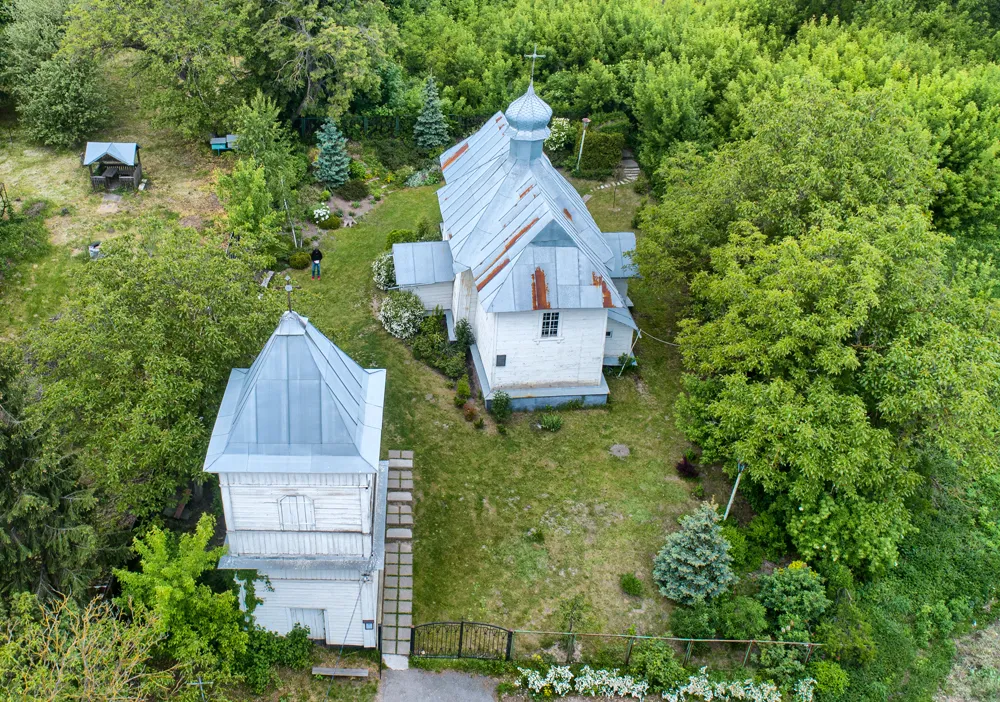
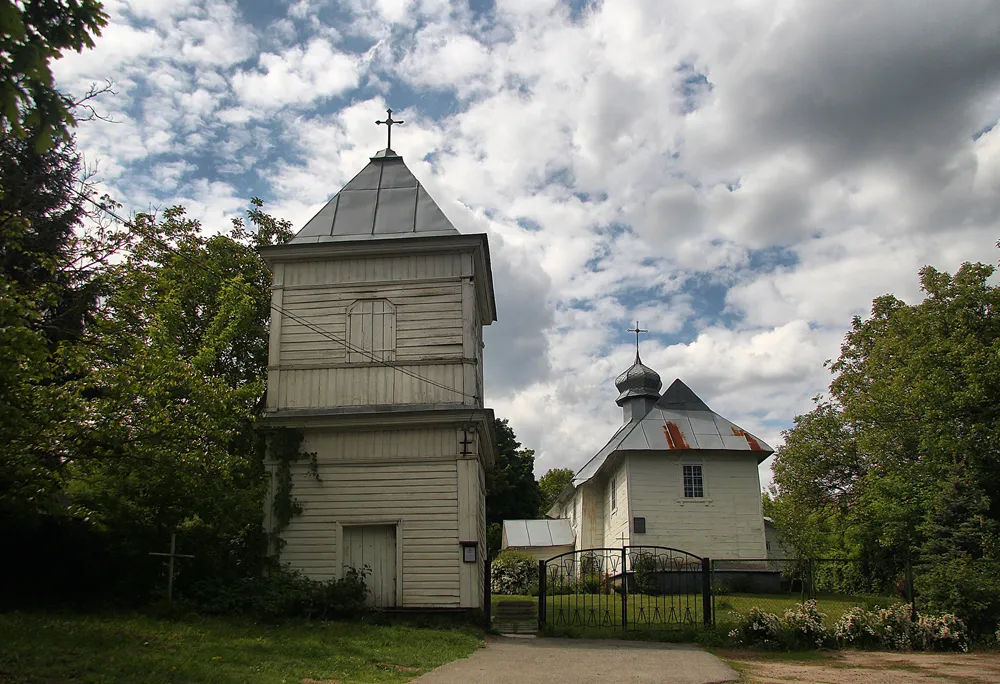
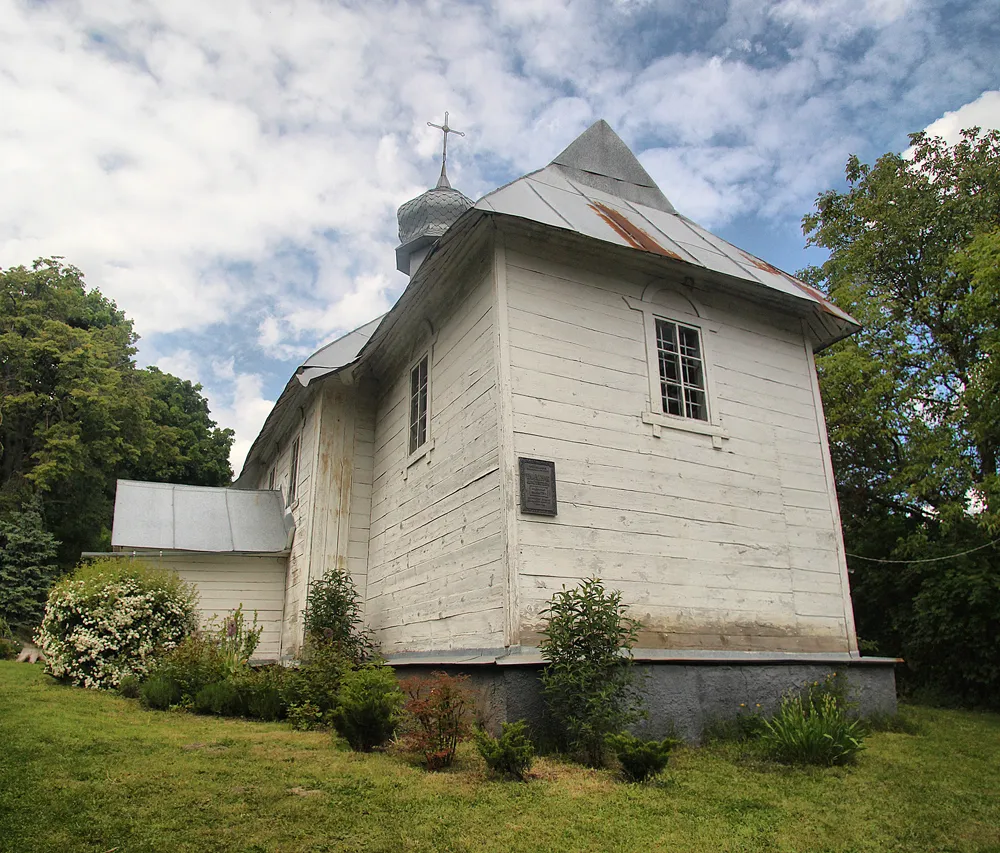
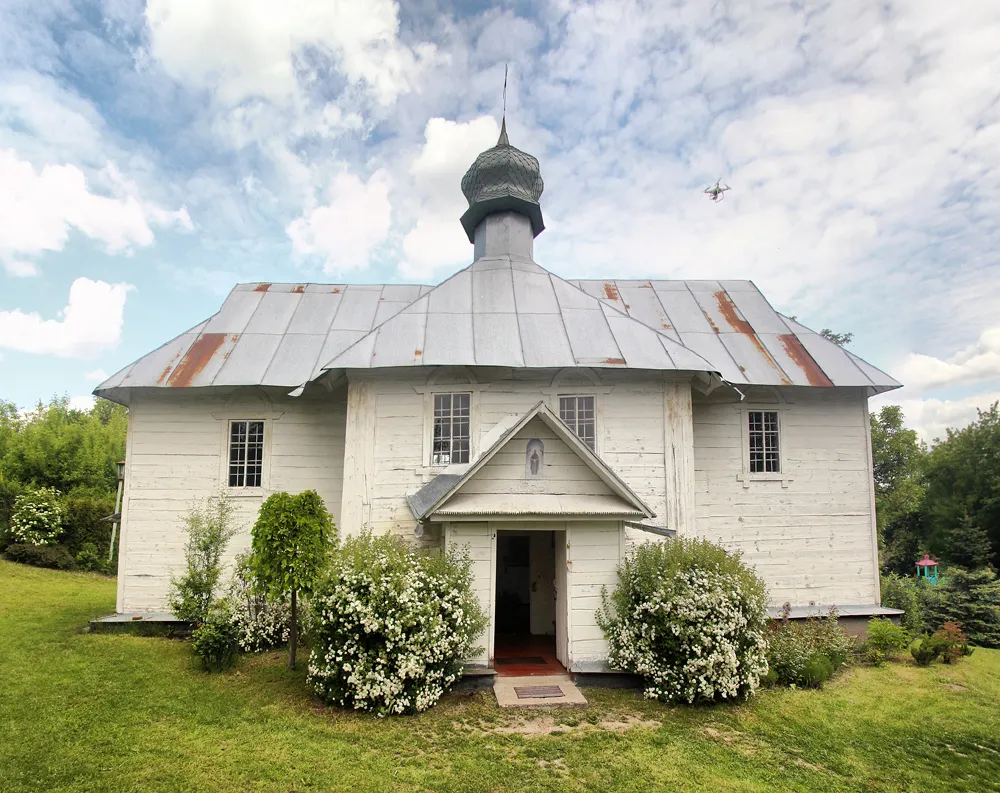
The bell tower has preserved an old bell and inscriptions (dates) that indicate routine repairs and the craftsmen who carried them out. But let us return to the church. In our opinion the type of the church is, after all, not the cage type (klet) but Cossack, with some features of the cage type. A typical cage-type church, quite a few of which survive in Russia, is in effect a large izba, or several izbas stuck together, with a clearly gabled roof and pediments. The church in Krenychi is by no means an izba, since its walls are inclined rather than straight. The log sections do not have such a clear division as in cage-type churches, and the roof has no pediments and ends in slopes at all four ends. The cage-type touches consist in the absence of a dome and the presence of a flat wooden ceiling, which is atypical for Cossack churches. On the whole, we classify the Church of the Nativity of the Mother of God as a Cossack church by style and forms, but without domes.
As for the domes, on a watercolour by Pierre de la Fliz from the mid-19th century depicting Krenychi, we see in the centre of the village a church with two tall domes. The domes are hyperbolically stretched upwards, but they still recall the pear-shaped tops of Cossack Baroque. Perhaps one is the dome of the church and the other of the bell tower.
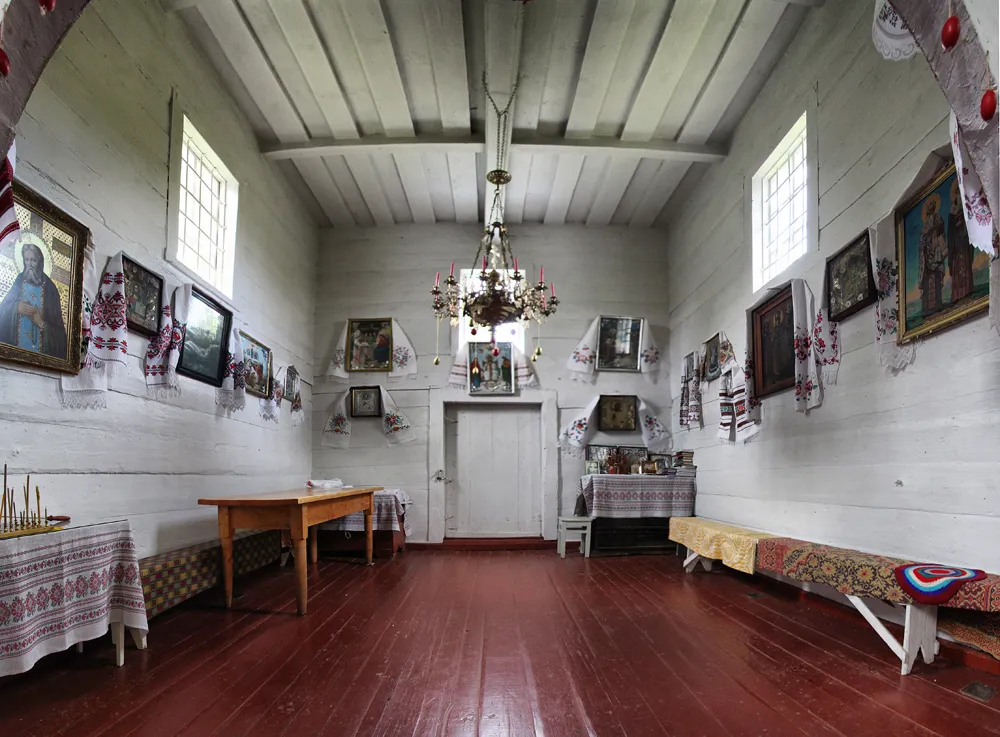
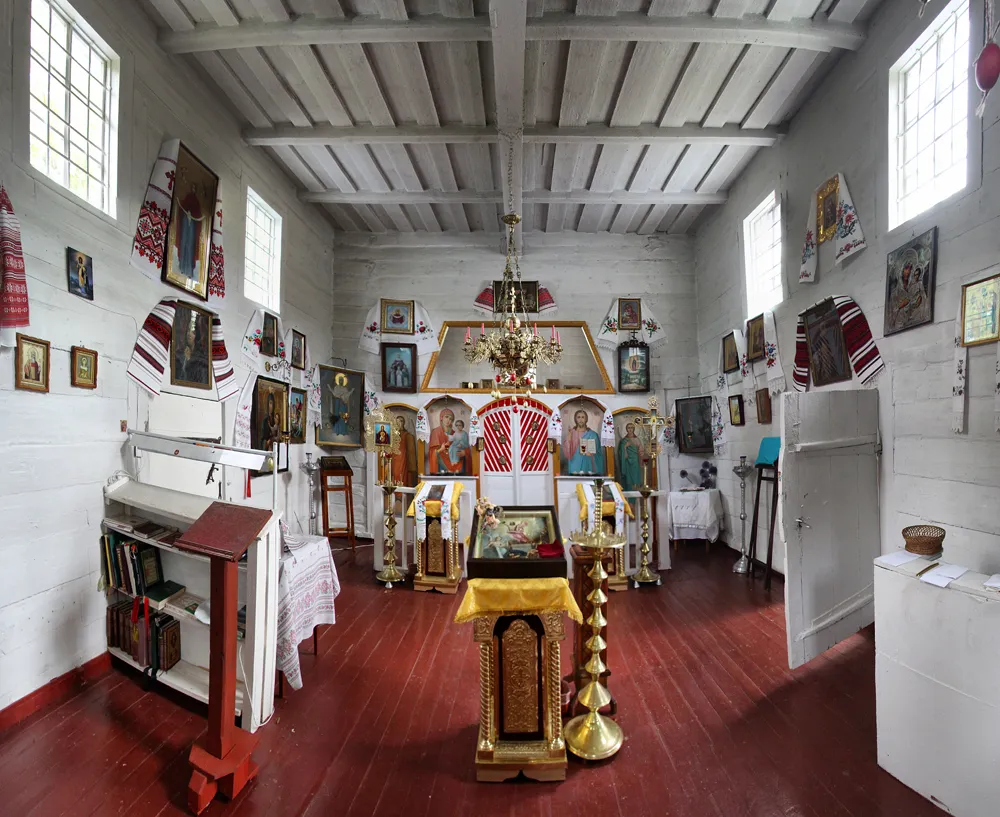
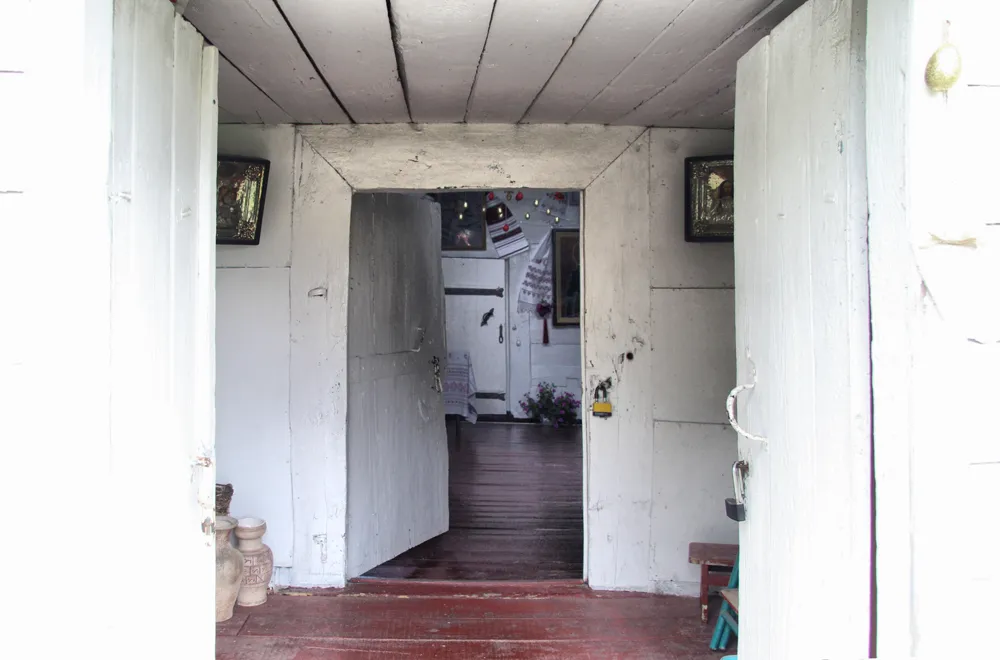
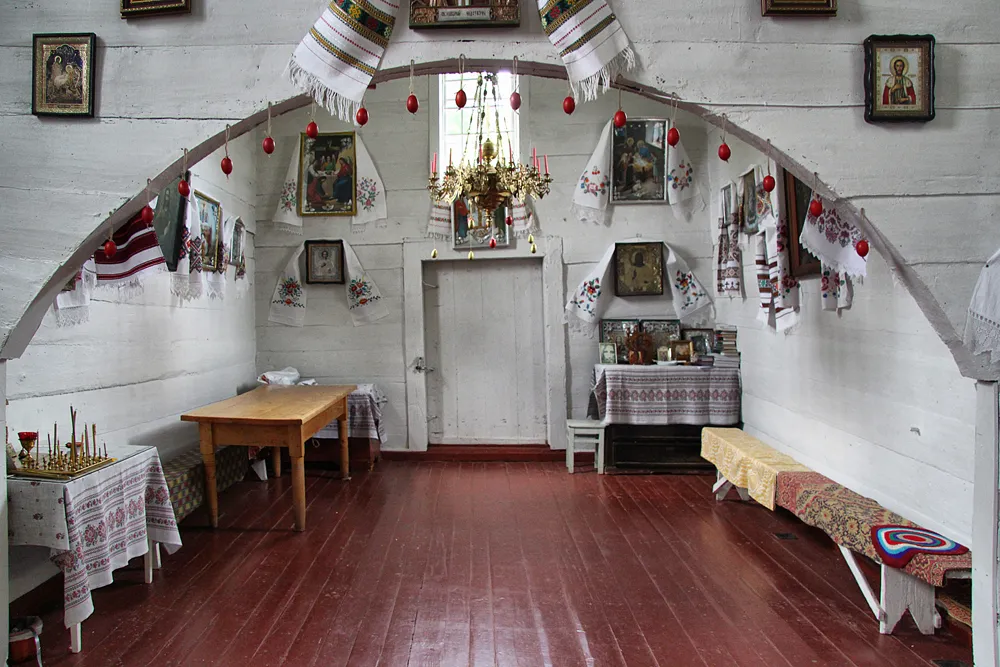
At the beginning of the 20th century the church needed repair, because its beams were damaged by woodworm. Along with replacing the beams, the village assembly decided to add side chapels to the church on both sides, 4 metres long and 5 metres wide. In that case the windows of the central part would have disappeared and the church would have become dark, so it was decided to take down the ceilings and add a dome with windows. The outbreak of the First World War prevented the extension of the church. Whether they managed to dismantle the roof is not known for certain.
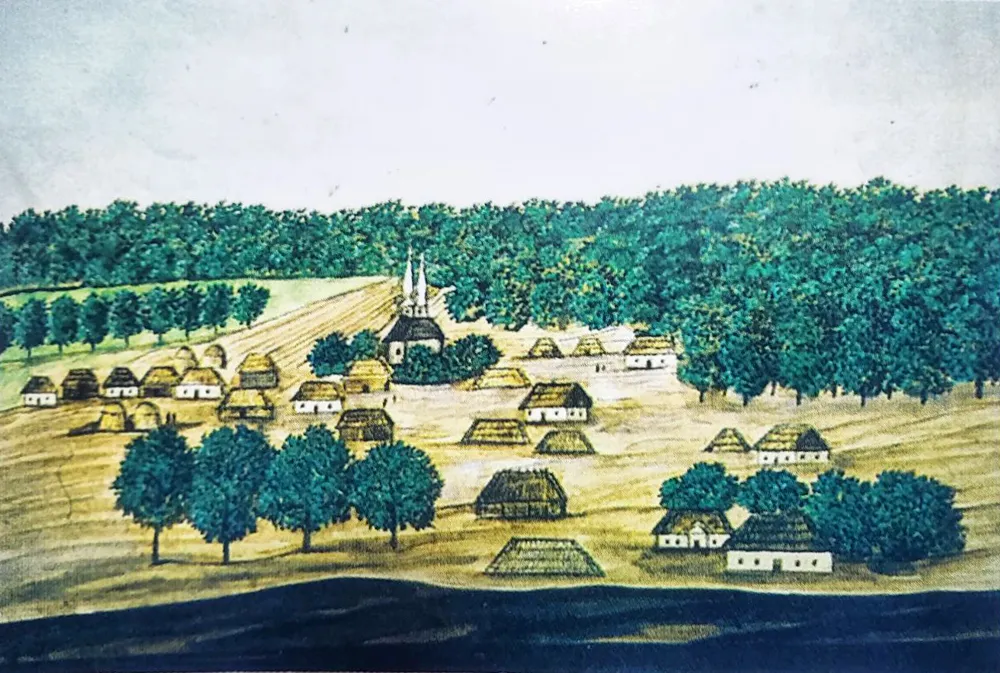
Krenychi in a watercolour by de la Fliz, mid-19th century
In the 1930s the Russian occupiers opened a club in the church building. The German occupiers restored the church, but already in the 1960s the building was used by a collective farm for raising silkworms.
The restoration of the church began in 1989. Filaret himself lent a hand in re-roofing it, but what the original dome was like nobody knows.
Since the 19th century the church roof has been covered with metal, but earlier, we may assume, it was covered with shingles, and if it were restored now, the church would become an incredible tourist magnet. Even so, it looks very colourful and interesting, both outside and inside. It has its own shrine, the icon of the Krenychi Mother of God.
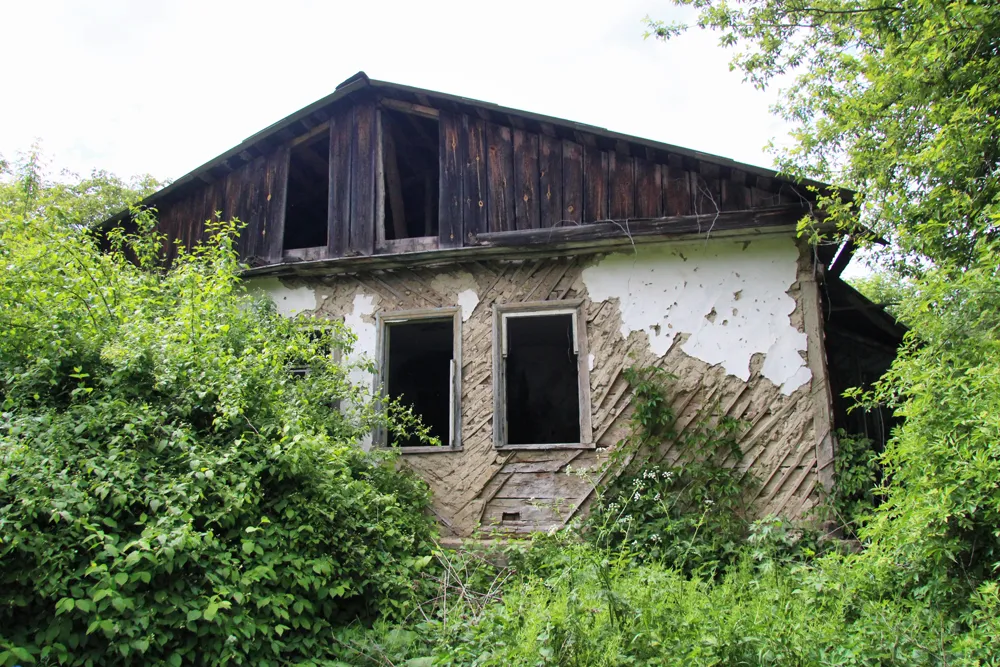
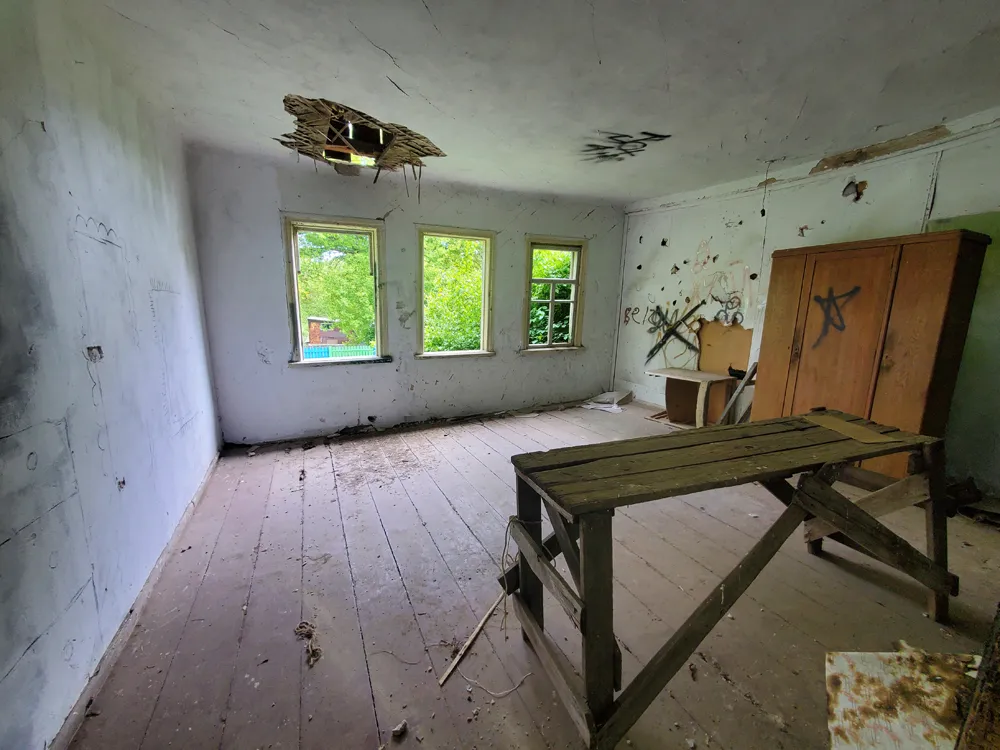
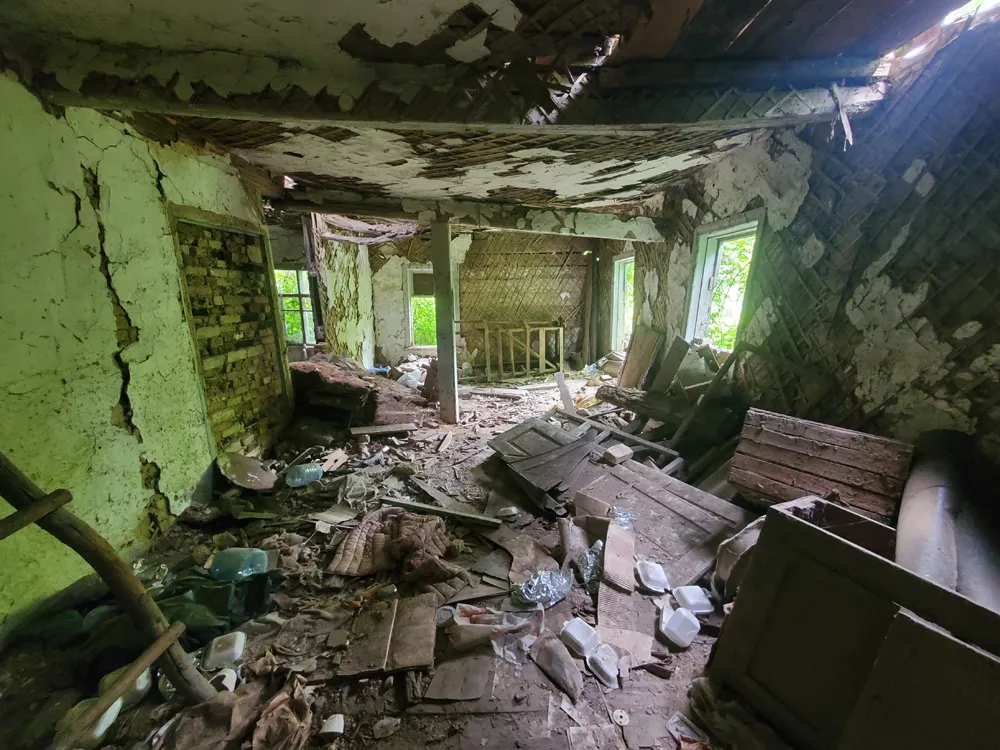
The former church parish school and German hospital
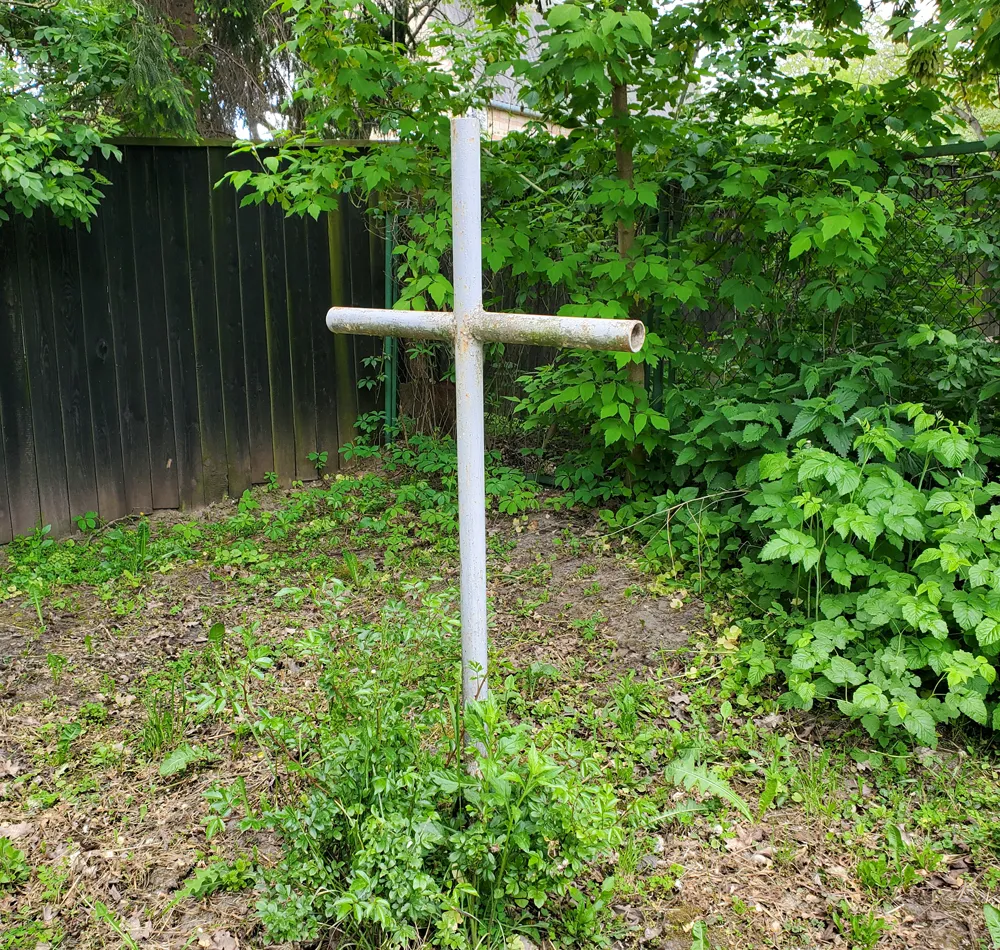
Mass grave
Next to the church stands a large wooden house plastered with clay. Today it is a half-ruin, standing empty without windows or doors. Most likely it was once a church parish school, and during the Second World War a military hospital was housed here. During the Soviet offensive of 1943 a significant number of wounded Germans were killed, and Soviet soldiers died too. All the bodies of the dead were buried in a large mass grave under the bell tower. A modest metal cross is a reminder of this.
The Church of the Nativity of the Mother of God in Krenychi is an architectural monument of national significance. It “starred” in the Soviet film “Babylon XX” alongside Ivan Mykolaichuk. It played its part beautifully.
Text by Roman Malenkov, photos by Roman Malenkov and Andrii Yarovyi (drone).
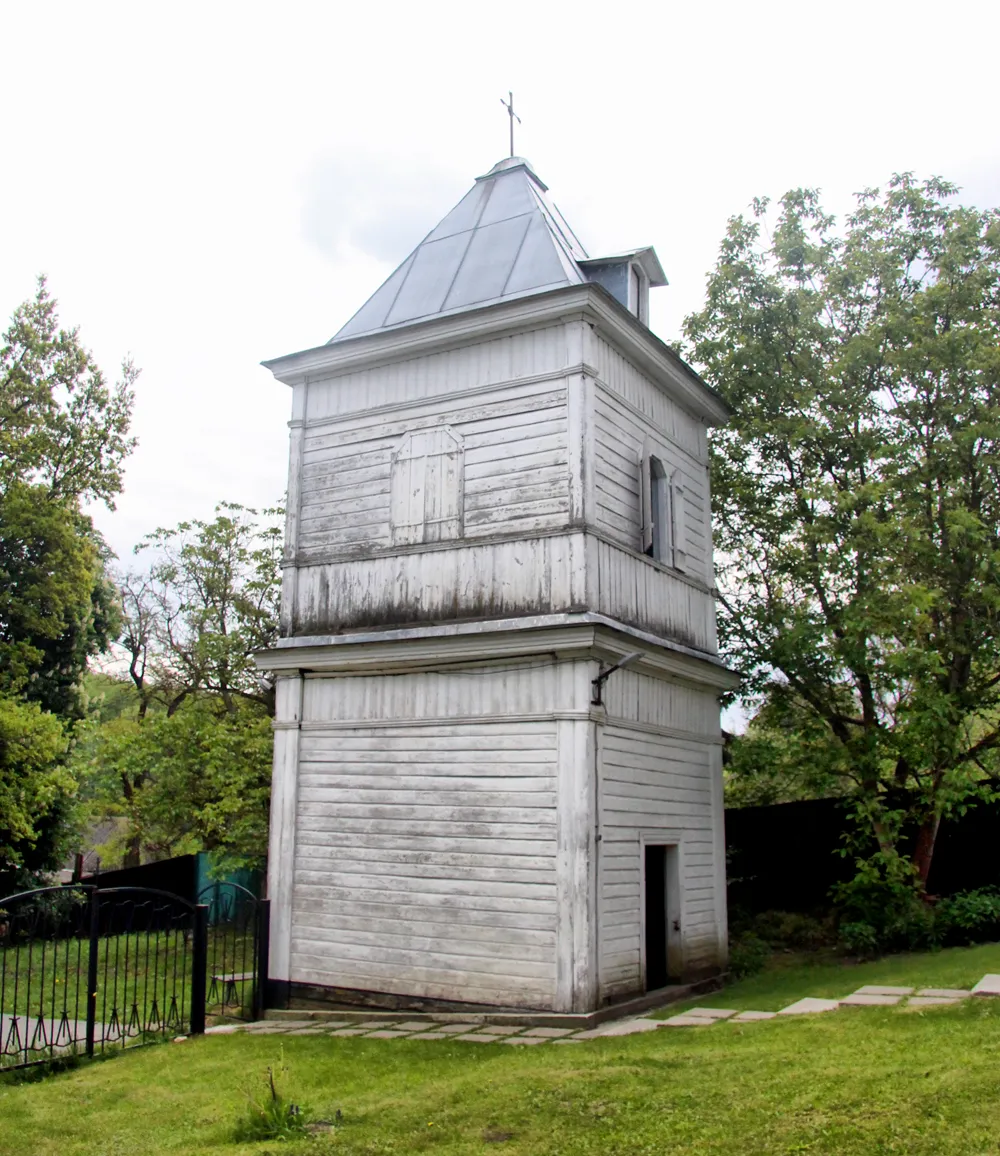
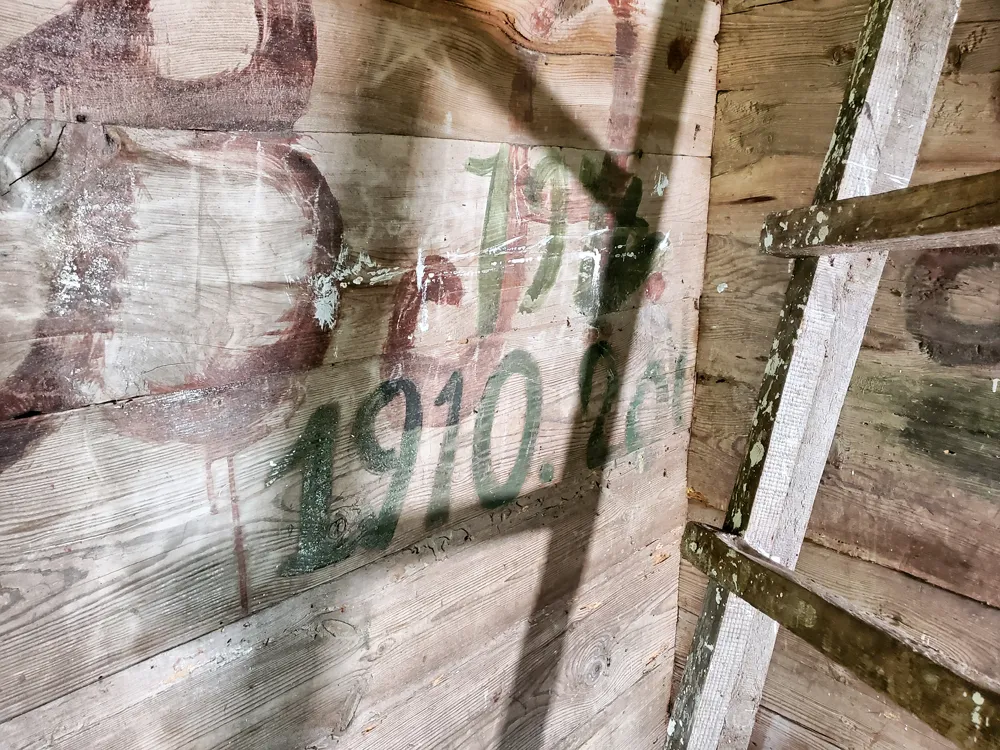
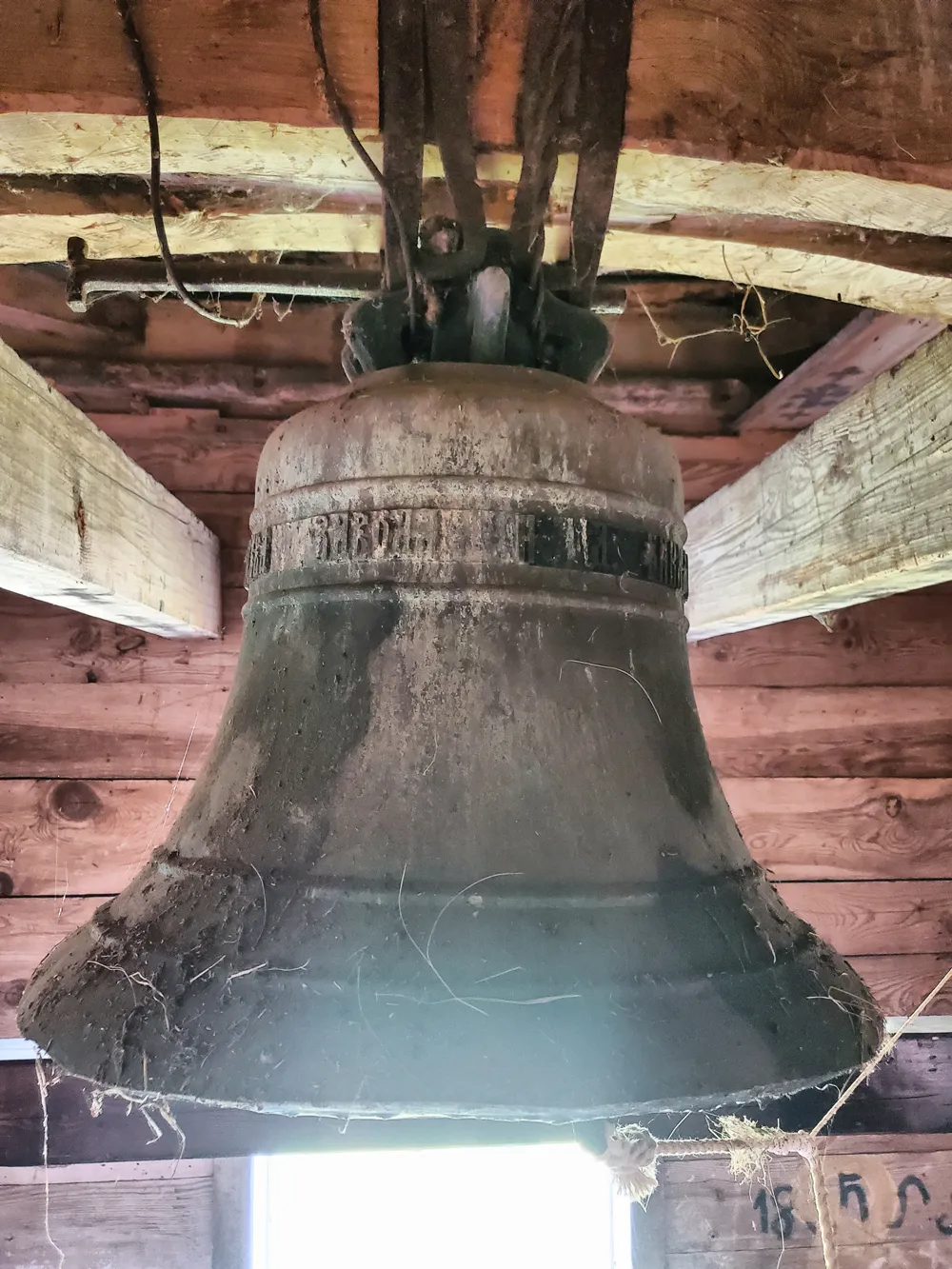
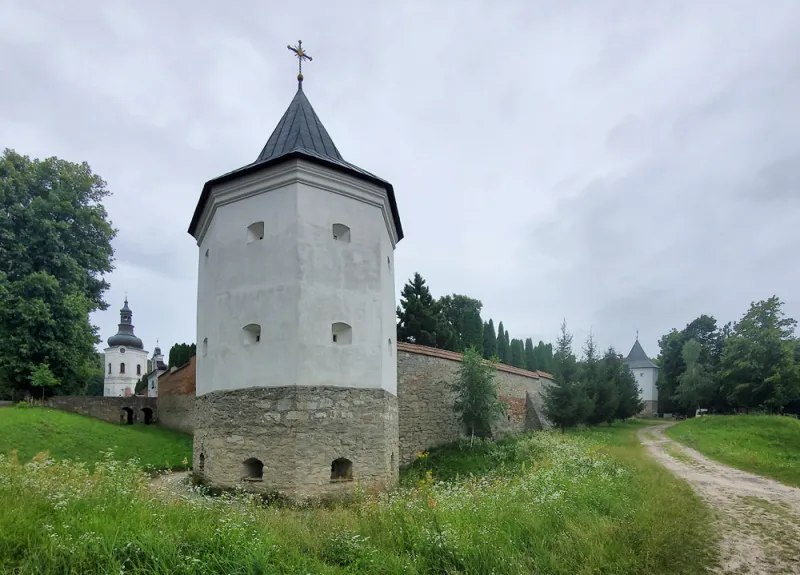
The bell tower, inscriptions and bell.