Lisovody. A mysterious cross with petroglyphs on Kopytok’s grave

· 4 min read
The village of Lisovody once resounded across the whole USSR as one of the most advanced farms in Ukraine. In 1970 the once-famous film comedy “Among the Tall Wheat” was shot in Lisovody, which, among other things, was meant to demonstrate happy and joyful collective-farm life.
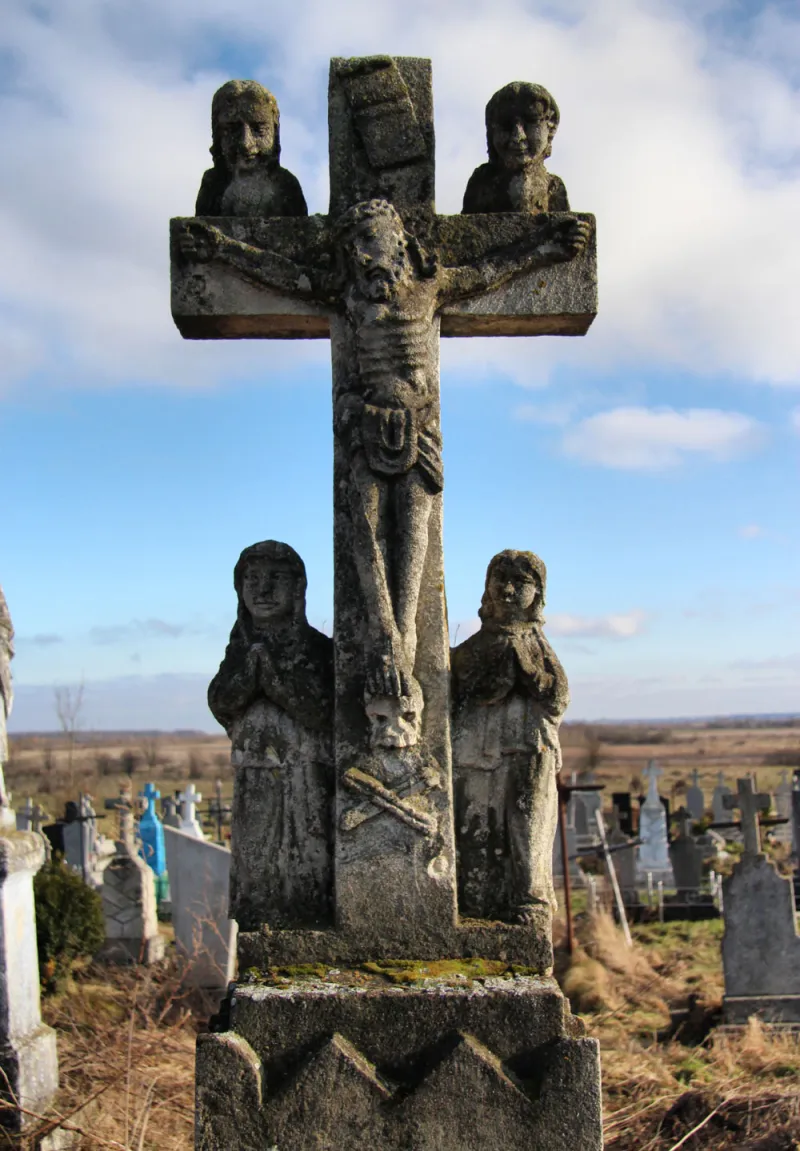
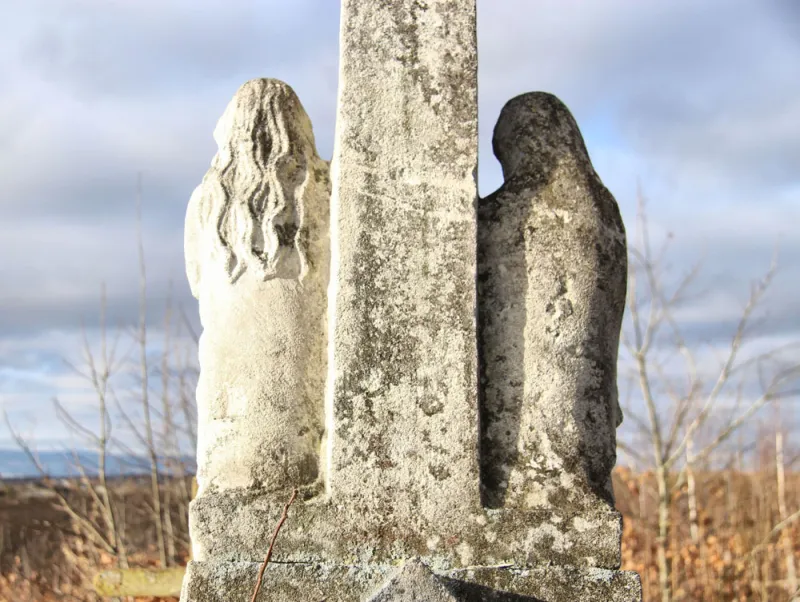
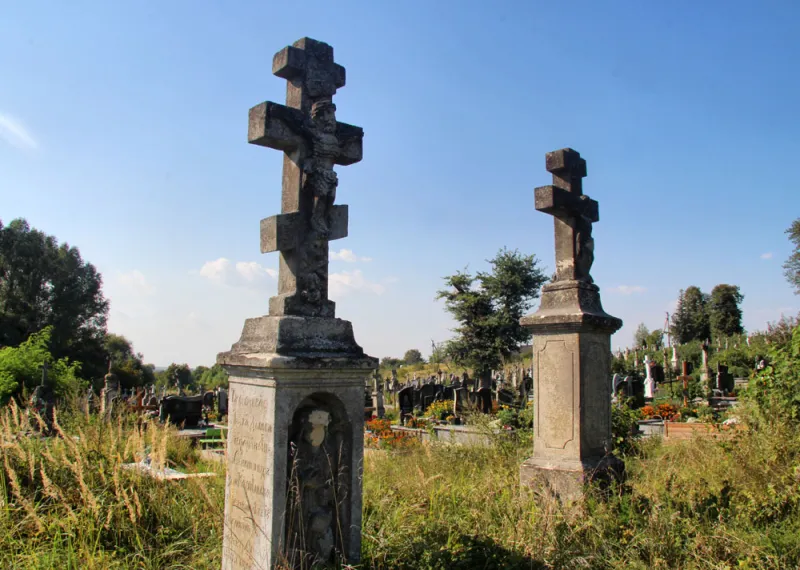
The old section of the Lisovody cemetery, however, could easily serve as the set for a thriller called “Among the Tall Bushes”. From the start the eye was caught by archaic flat “cross-ended” crosses, where each arm is itself a separate cross. In this part of Podolia they are the most widespread.
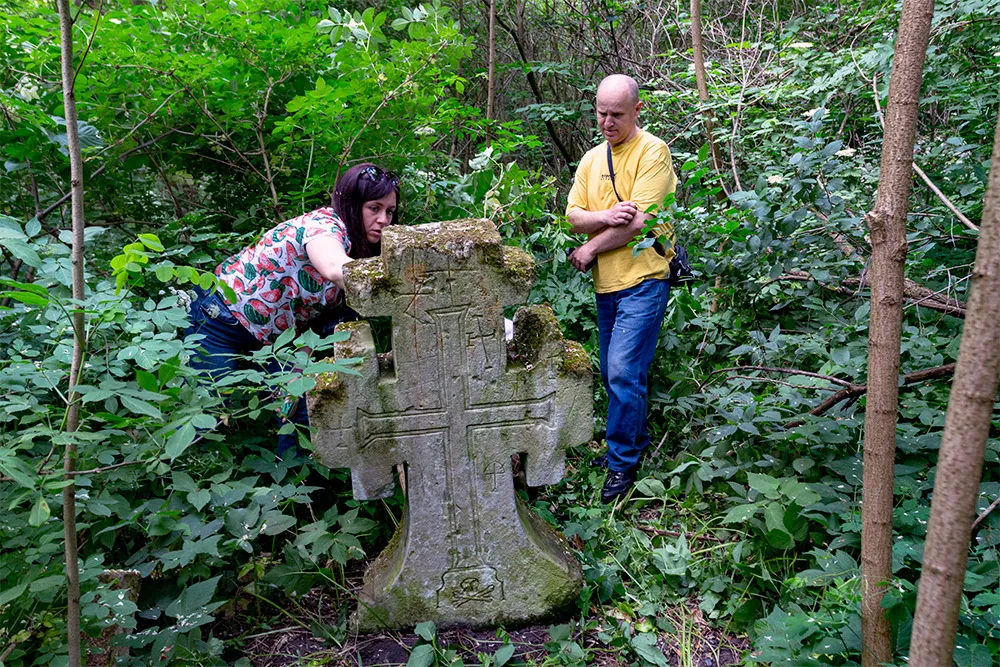
The oldest of the gravestones, dating from the early 19th century, were in the form of crosses that people call “Cossack”. The greatest discovery of the Lisovody cemetery was the gravestone on the grave of Pantylymon Kopytok, who lived 75 years and died in 1860.
The 3D model is best viewed full screen
Petroglyph crosses and graffiti were long signs of pilgrimage and attested that a particular person had once visited a Holy Place. In Ukraine they are usually dated to the 11th–18th centuries. It was also believed that a scratched little cross would bring the “scratcher” certain blessings in life and strengthen his prayers. Countless such marks can be seen on the walls of the Church of the Holy Sepulchre in Jerusalem.
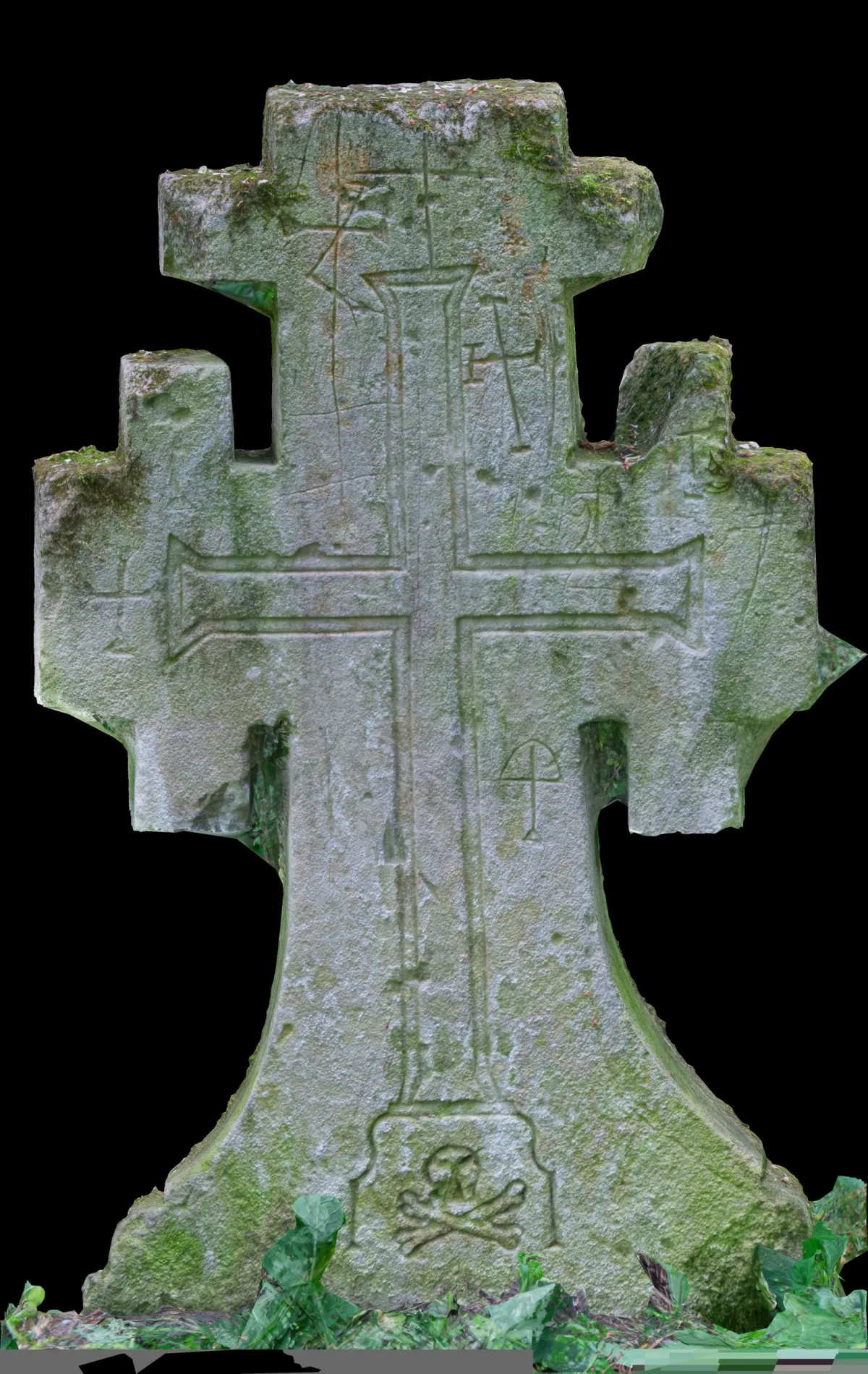
The gravestone on Pantylymon Kopytok’s grave also turned out to be covered with graffiti depicting various crosses (19 images in all). However, a real understanding of the scale of the find came later, after consultations with leading historians of Ukraine. The general conclusion from what was heard: the find is unique, amazing and one of a kind.
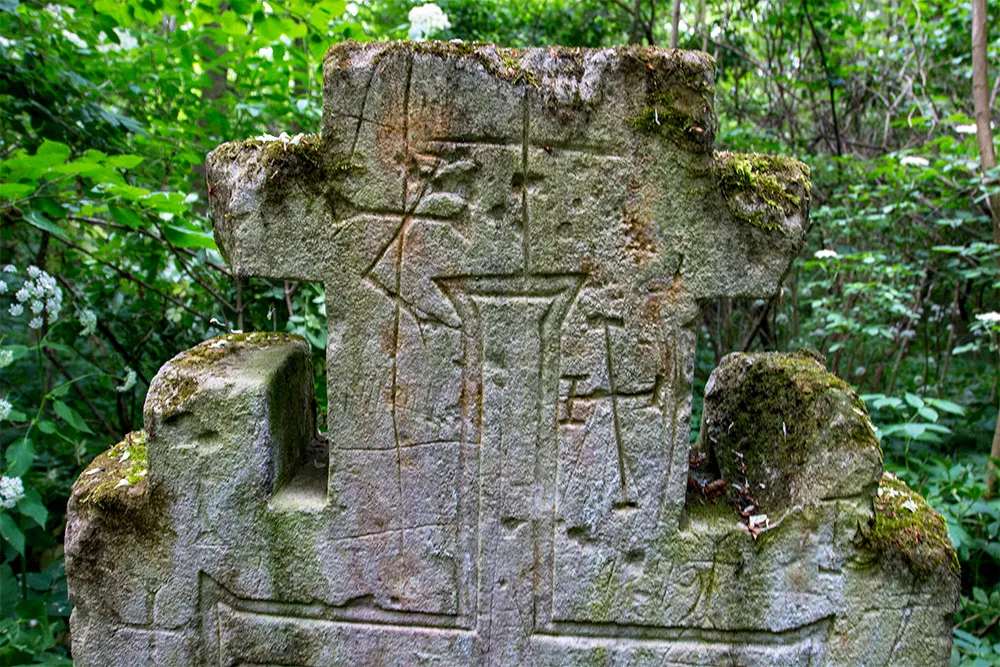
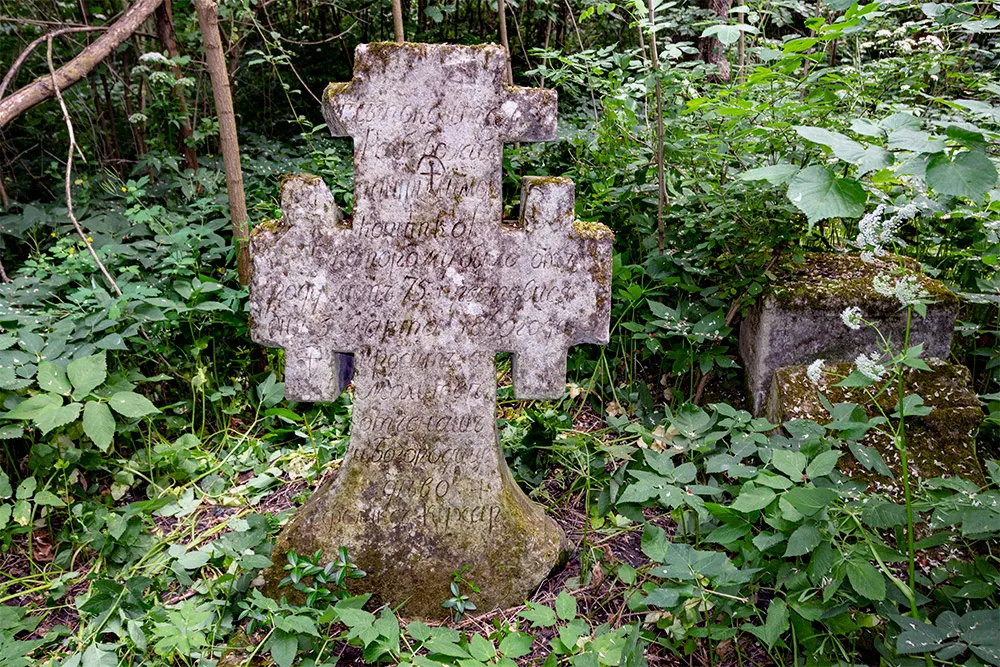
“The cross found in Lisovody has a feature that I have never once encountered in my practice,” comments the Podolian historian and archaeologist, Candidate of Historical Sciences Pavlo Nechytailo. “These are images of small crosses of various shapes carved on different planes of the cross. Notable are crosses with a semicircular canopy, crosses with T-shaped ends of the arms and of the vertical bar, and crosses with triangular widenings at the ends. These crosses occur in Christian rock-cut cave monuments of the Middle Dniester region and have a wide chronology (12th–18th centuries). Considering the age of the cross (1860), these are the latest relatively datable cross-shaped images of this kind in the region and, possibly, in Ukraine.”
The historian also added that “similar scratched crosses in Western Europe are called “pilgrim crosses”. They are found in churches and places of pilgrimage and are dated quite broadly, from the Middle Ages to modern times.” The historian and archaeologist Professor Bohdan Ridush, who has researched many cave sacral complexes in the Dniester region, including similar petroglyph crosses, also confirmed the extraordinary nature of the find and noted that photographs of the Lisovody graffiti should be published in academic journals so that scholars have them as a benchmark: which types of crosses were being drawn as late as the mid-19th century.
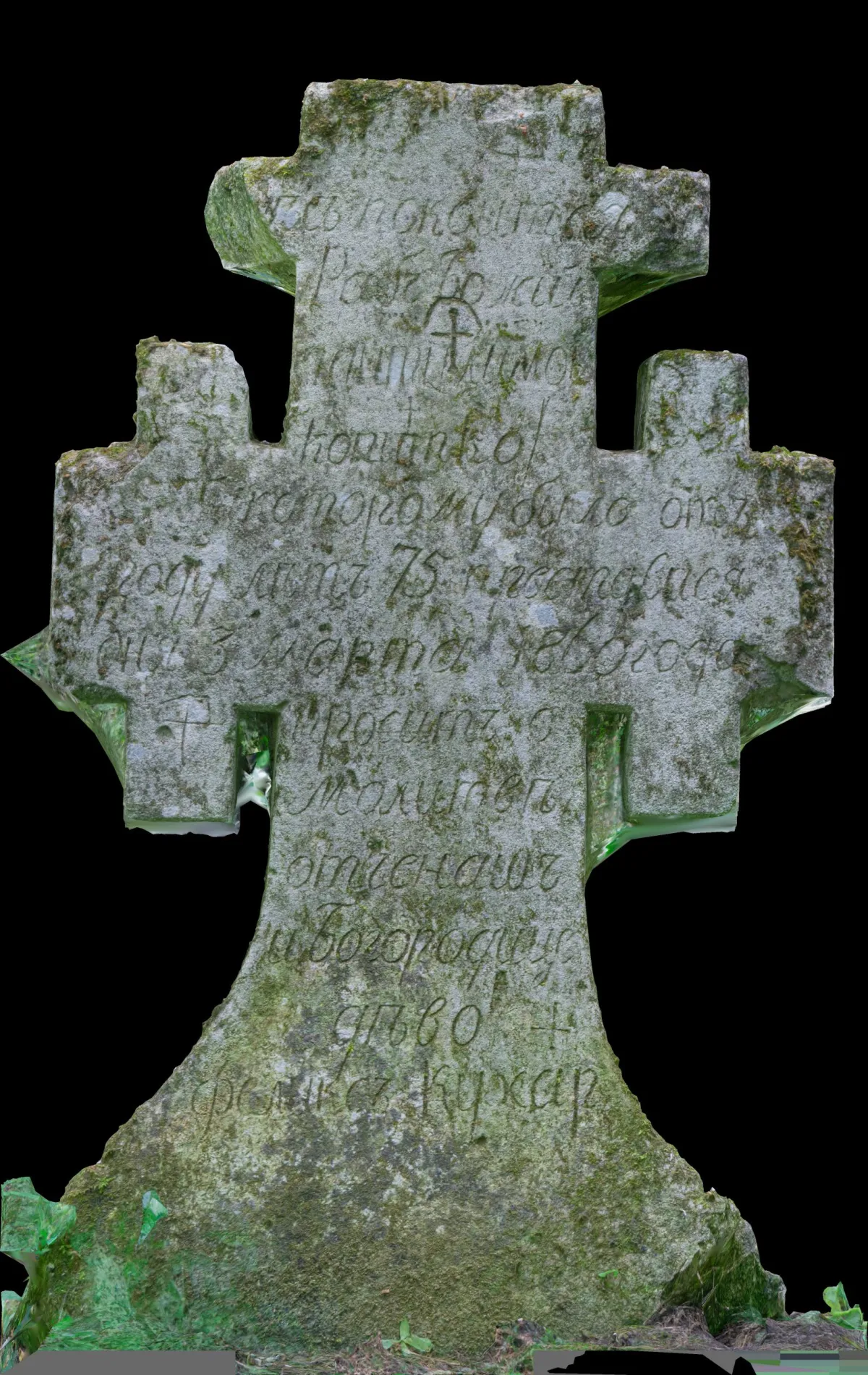
Unfortunately, the parish registers of Lisovody for 1860 specifically are missing, so it is impossible to find out who was buried here and why he was given such an honour. We plan to question the village’s old-timers; perhaps someone has heard something. The author leans towards the version that this is the grave of some very authoritative healer in these parts, to which people came with prayers for help even after his death. The version of some uncanonized local saint is not fantastic either.
Candidate of Historical Sciences Tymur Bobrovskyi, on the other hand, thinks this is not necessarily so: “These crosses may be like flowers brought to a grave. Perhaps that Pantylymon had many friends. Or each cross was scratched in fulfilment of the prayers requested in the text of the epitaph.” The historian means the request, stated in the epitaph, for the prayers “Our Father” and “Virgin Mother of God”.
“A cross may be a substitute for the ‘Our Father’ prayer,” the scholar continues, “since it is a Gospel prayer that Christ personally gave to the apostles.” But this still does not give an exhaustive answer to the question of why only this gravestone is covered with graffiti. Moreover, it stands not by the road but deep in the cemetery. That is, one could come to it only on purpose, and also had to carry some sharp object. The author reserves the version that these are “pilgrimage crosses”. Besides, one of the graffiti crosses is even dated (1872). Graffiti with dates are characteristic precisely of “pilgrimage” ones.
Dmytro Poliukhovych