Oleshkovychi. Kirche

· 2 min read
Oleshkovychi is a village in Ukraine, in Lutsk district of Volyn Oblast. Its population is 86.
The first mention can be read about in Oleksandr Tsynkalovskyi (in his work “Old Volhynia and Polissia”). He writes that Oleshkovychi is first mentioned in 1570, when it belonged to the village of Butyn, of Prince Andrii Masalskyi, and in 1577 to Stepan Kharlynskyi, who paid taxes on 6 households.
Later, in 1816, so-called “holendry”, that is, Dutch, moved here from the Buh River and began farming here. And this is where the curiosities begin. After some time they realise that they are in fact not Dutch but Poles! They attend the Roman Catholic church in Vyshenky.
And when German colonists, who received numerous privileges, flocked to Volhynia in the second half of the 19th century, the Polish-Dutch of Oleshkovychi changed their nationality again and became Germans.
Until the middle of the 20th century (until the start of the Second World War) the village was spread out in small farmstead settlements all the way to the lands of present-day Nosachevychi. The cottages were placed chaotically, not at all close to one another as they are now. According to Oleksandr Tsynkalovskyi, at the end of the 19th century there were 36 houses and 159 inhabitants here.
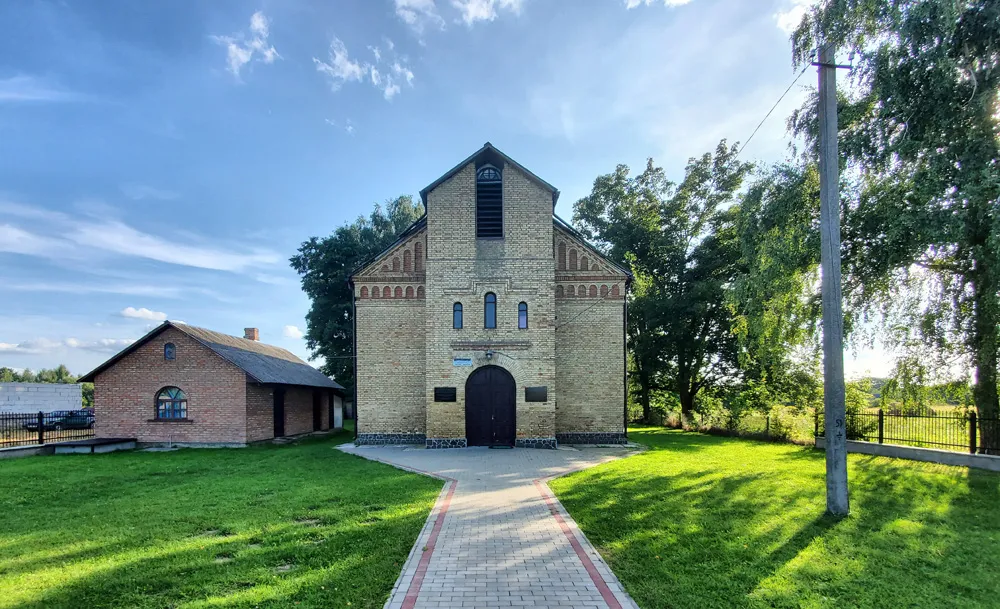
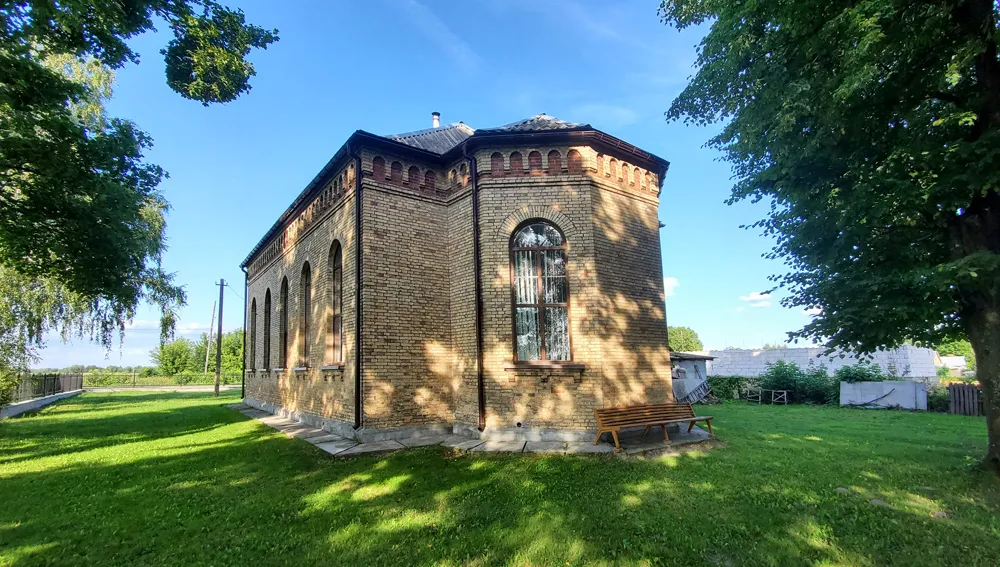
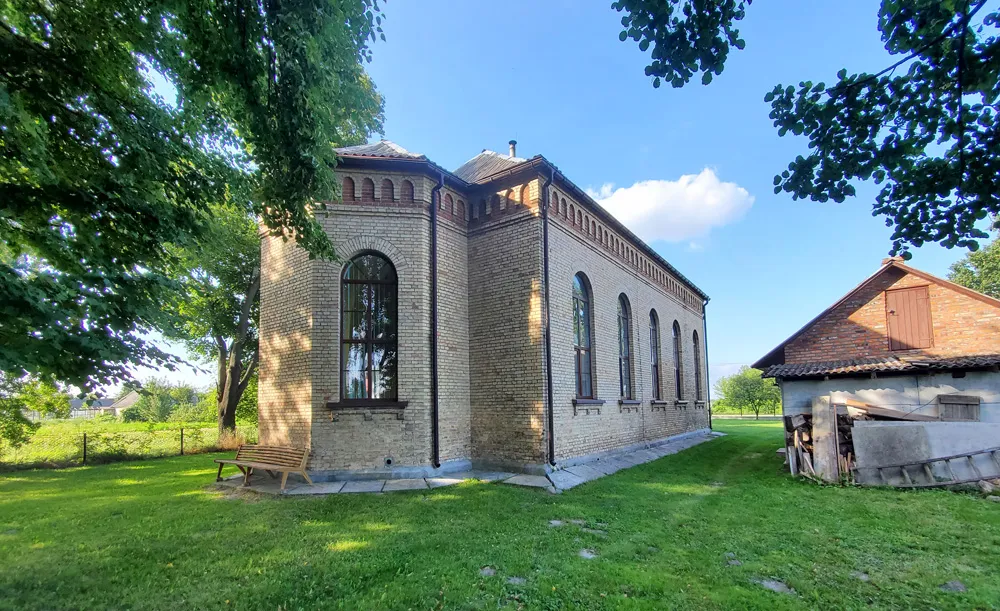
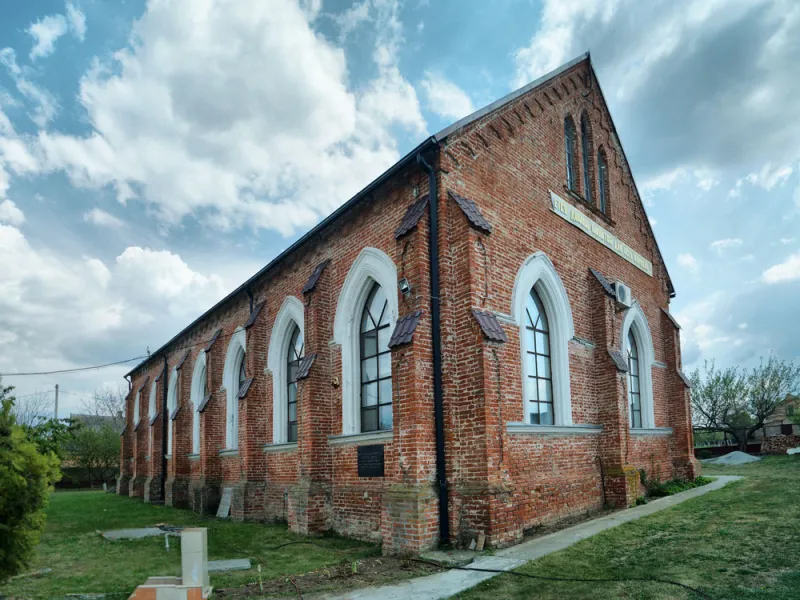
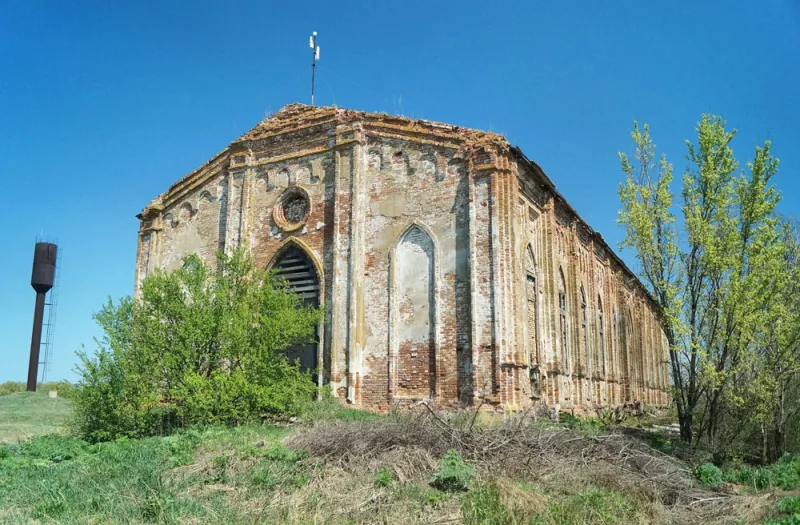
The village also has a few architectural curiosities. In particular, there is a brick Lutheran kirche, which was originally wooden. The building took its present appearance in the 1930s. As of 2016 this church belongs to Baptist Christians. Beyond the village there is also a German cottage from the interwar period (though in an extremely dreadful condition). Now it is in ruins, and someone has even stuffed hay into one of the rooms, turning what was once a dwelling into a barn. Even so, the cottage still keeps its original appearance.
In 1939, before the war, when most of the colonists had left the village, the empty cottages were settled by Ukrainians from the border villages along the Buh. Interestingly, there are almost no settlers from the Kholm region in the village. But Ukrainians from the Grodno Governorate (present-day Belarus) moved here in the 1920s.
The old colonists’ cemetery has survived to our time. And although nobody tends most of the graves, since there are no descendants, a monument was erected at the cemetery in 2001 that tells who is buried here. Interestingly, a modern Orthodox cemetery is also in use on the same site (next to it). What is more, there are graves of one family from supposedly different times. On one side are German inscriptions from the beginning of the century, on the other entirely modern Ukrainian ones. This is one of the few colonist families that have remained in Oleshkovychi to this day.
Photos by Roman Malenkov