

Ürgüp. Cappadocia
· 5 min read
Ürgüp and the three beauties
I read more about Ürgüp than I saw, and so for a long time I could not decide whether to write about it or not. The thing is that we were not let into the town’s fortress, so we will have to go again.
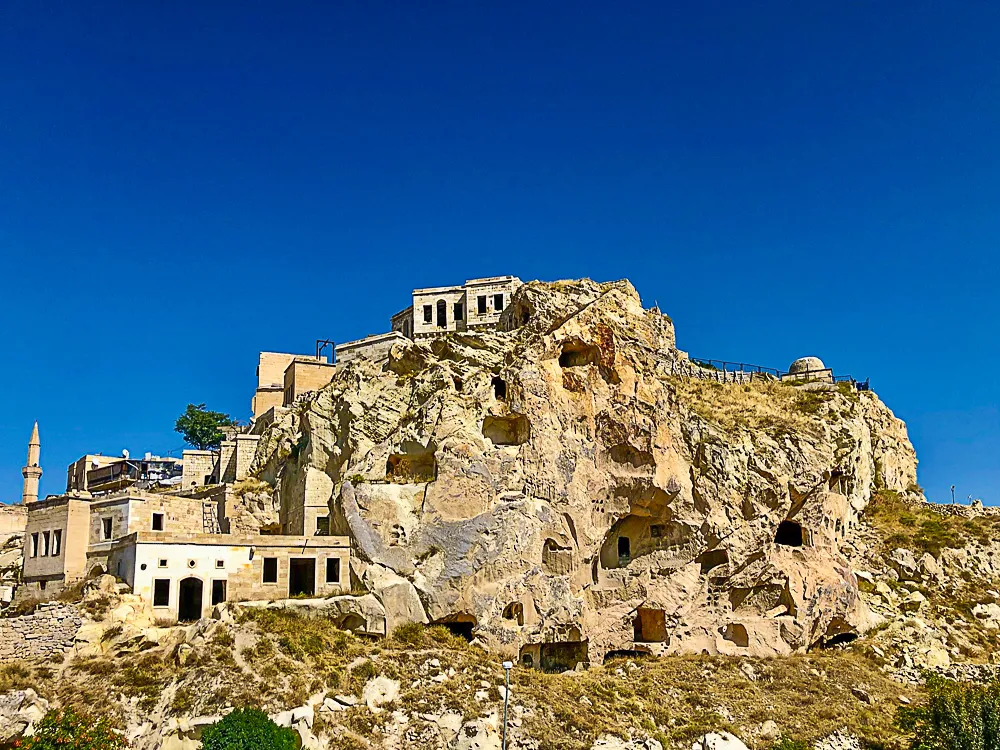
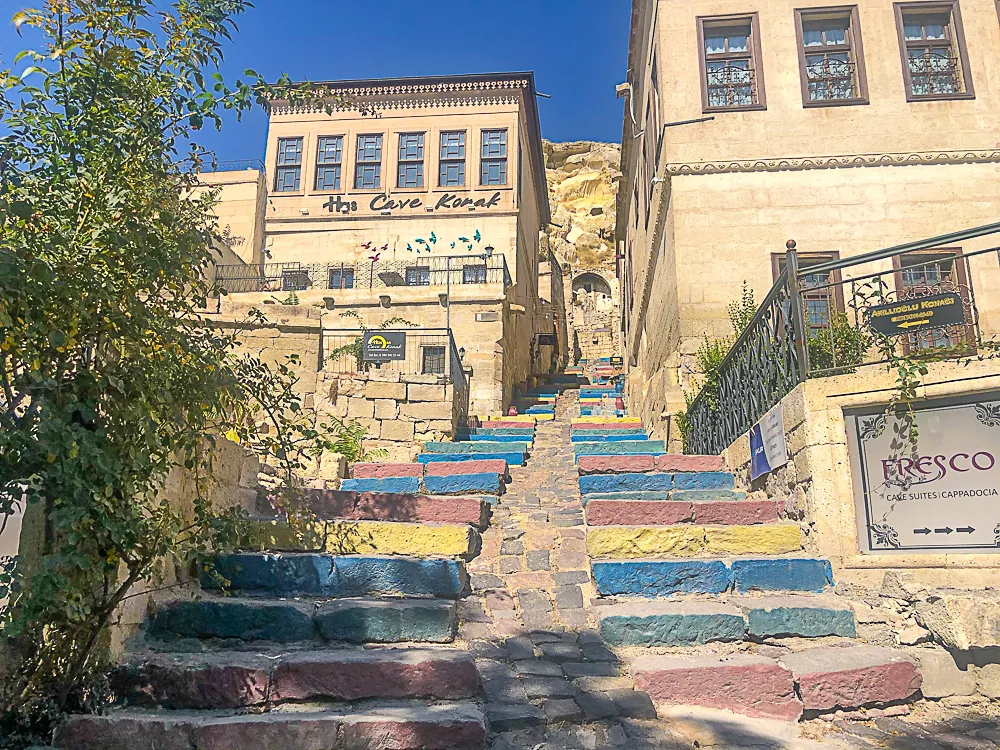
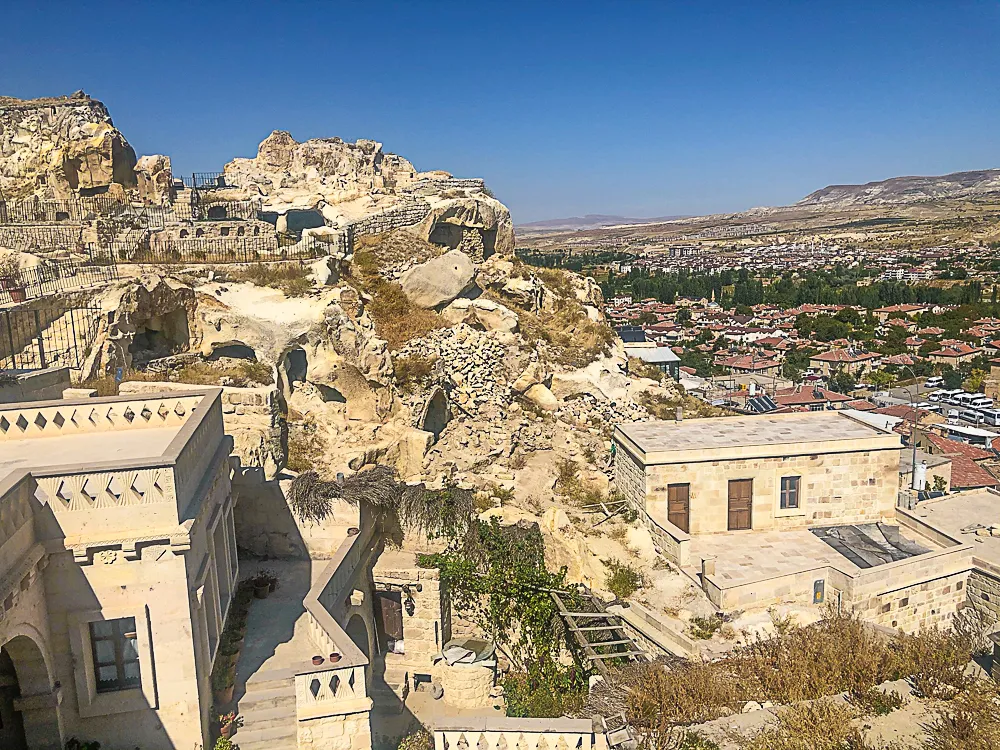
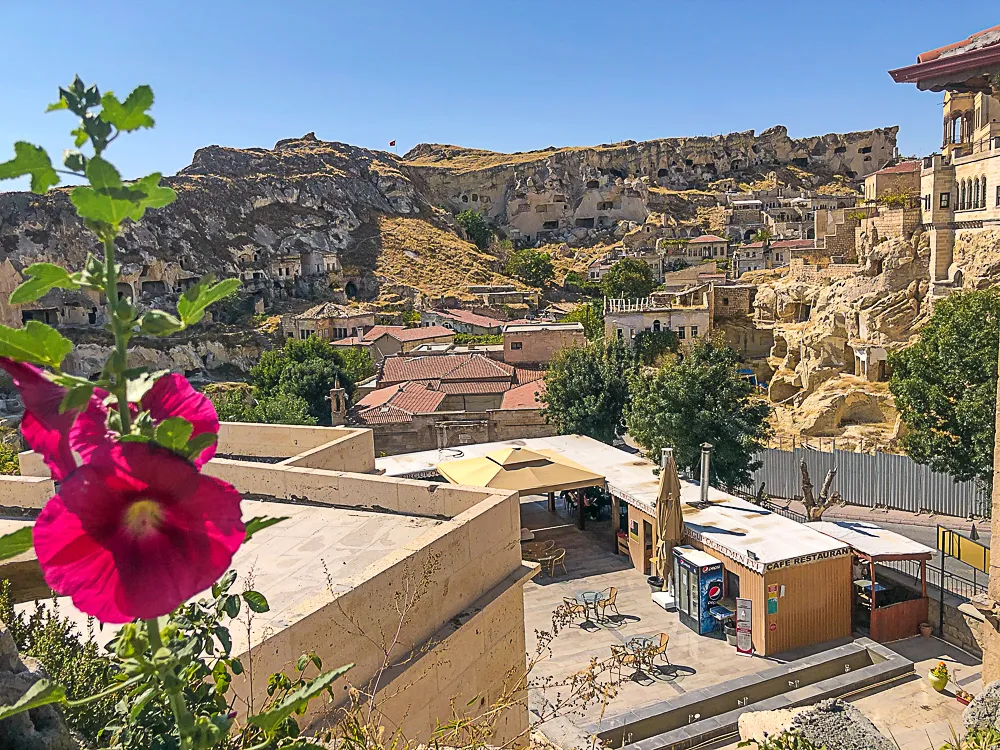
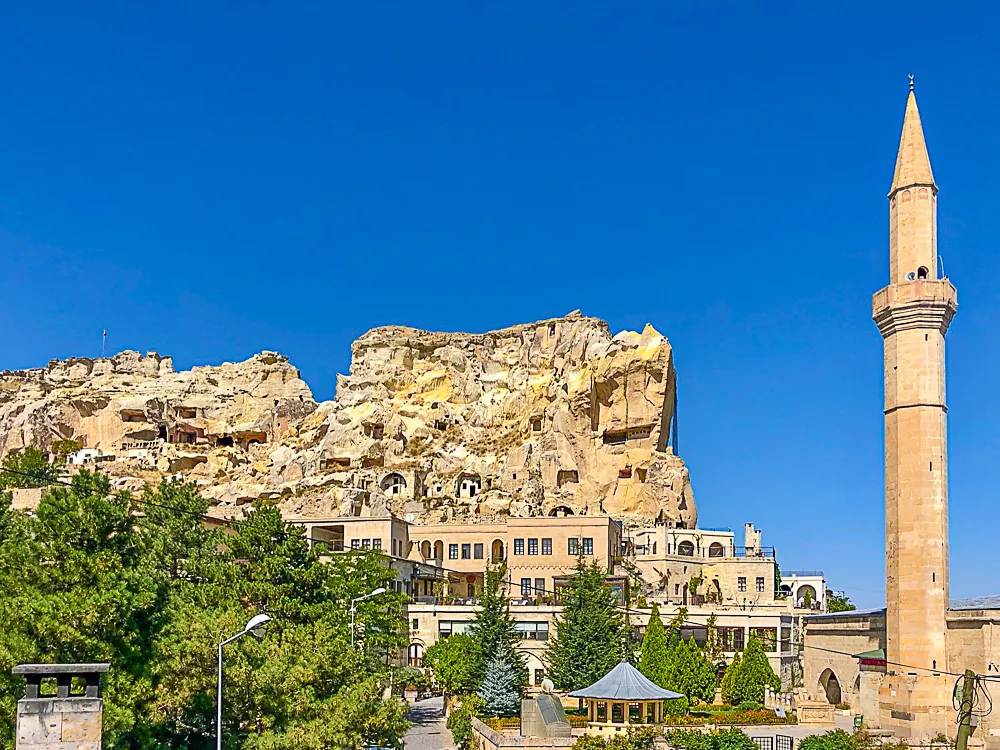
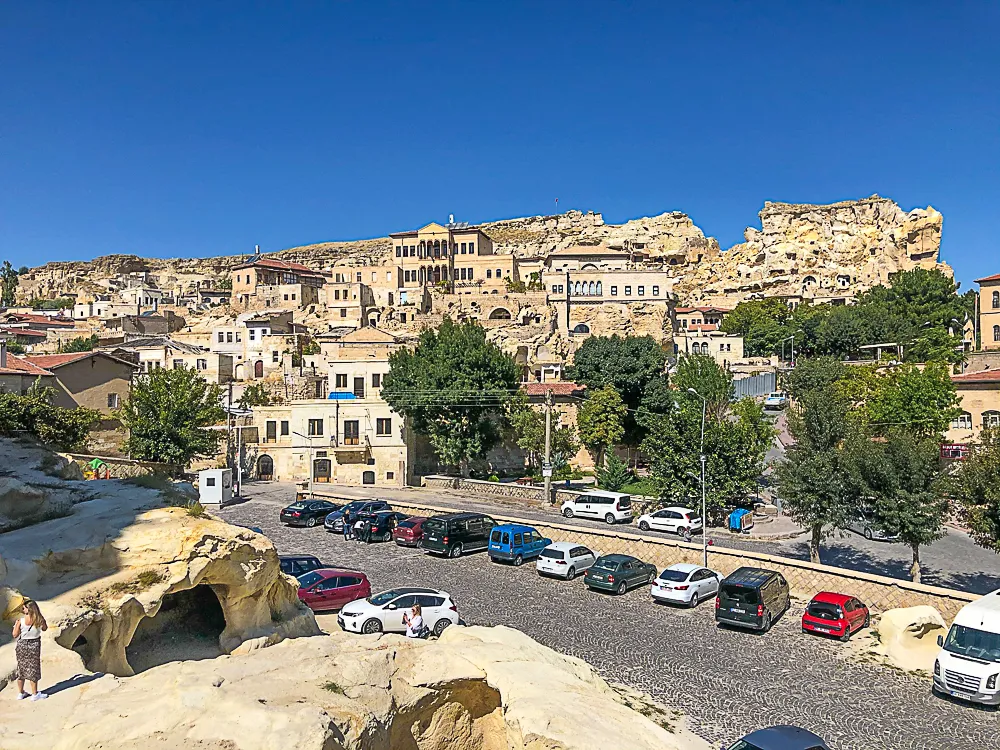
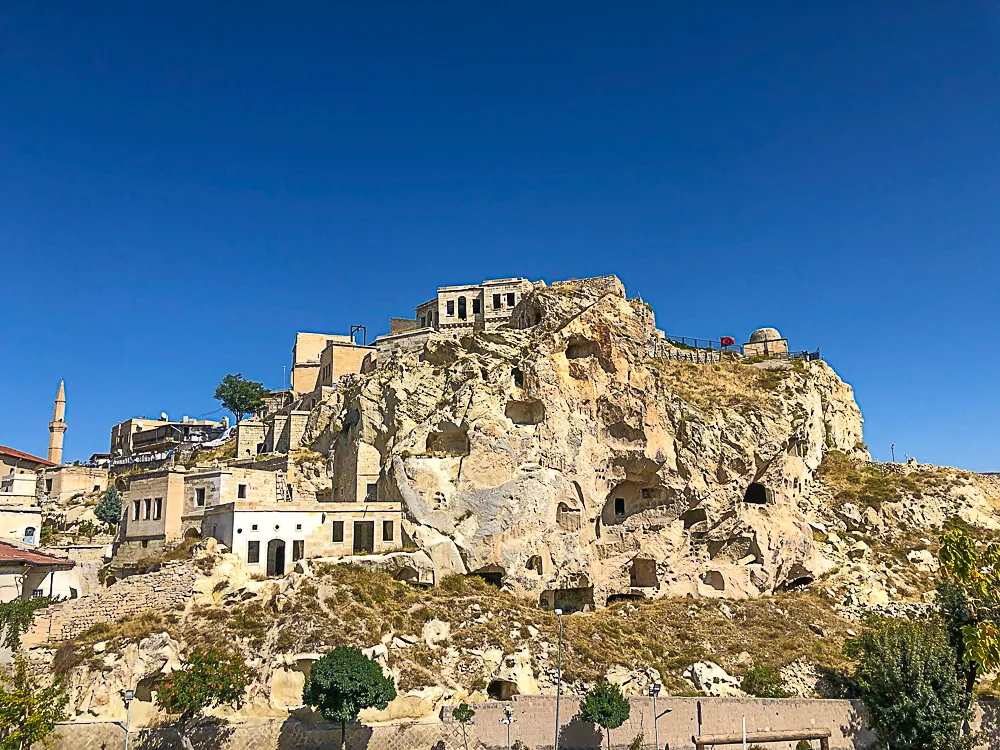
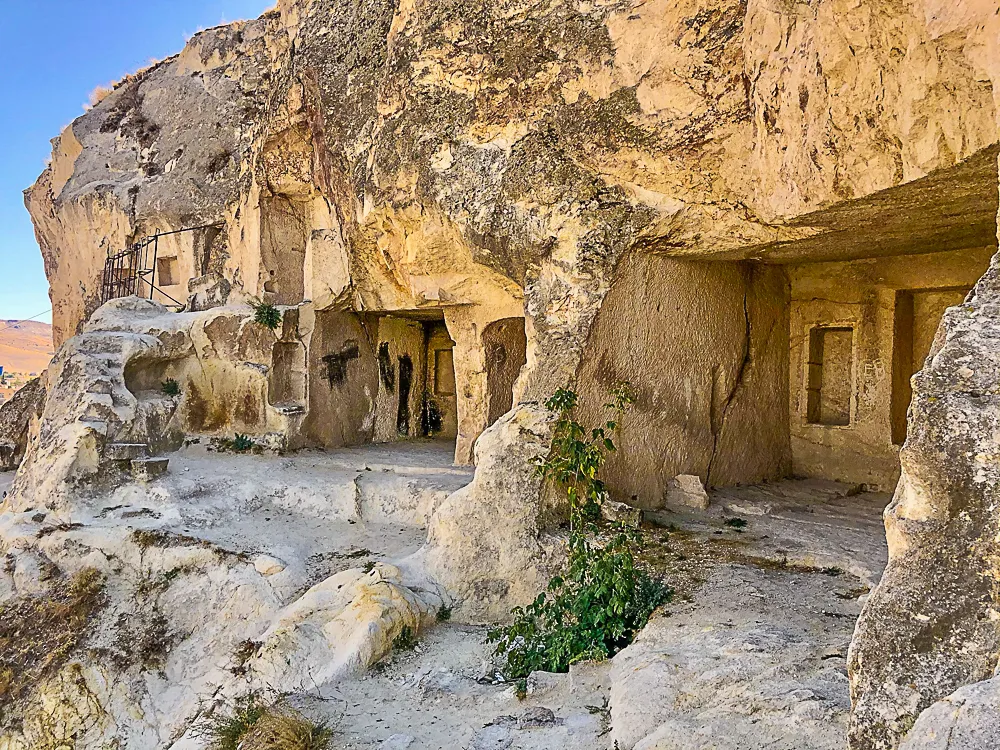
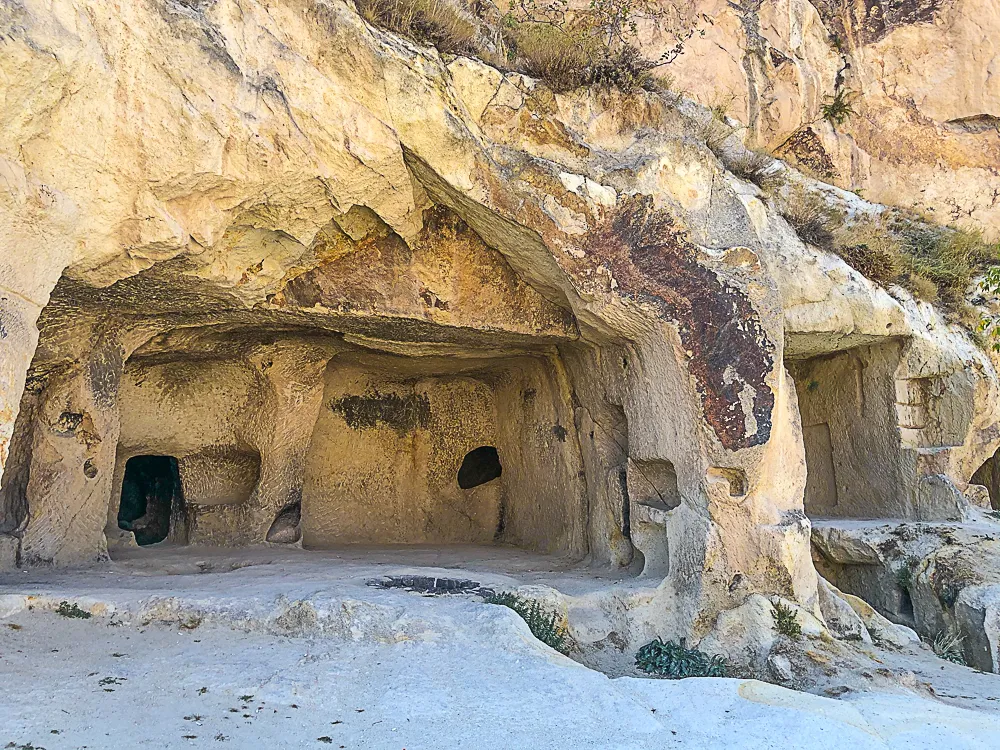
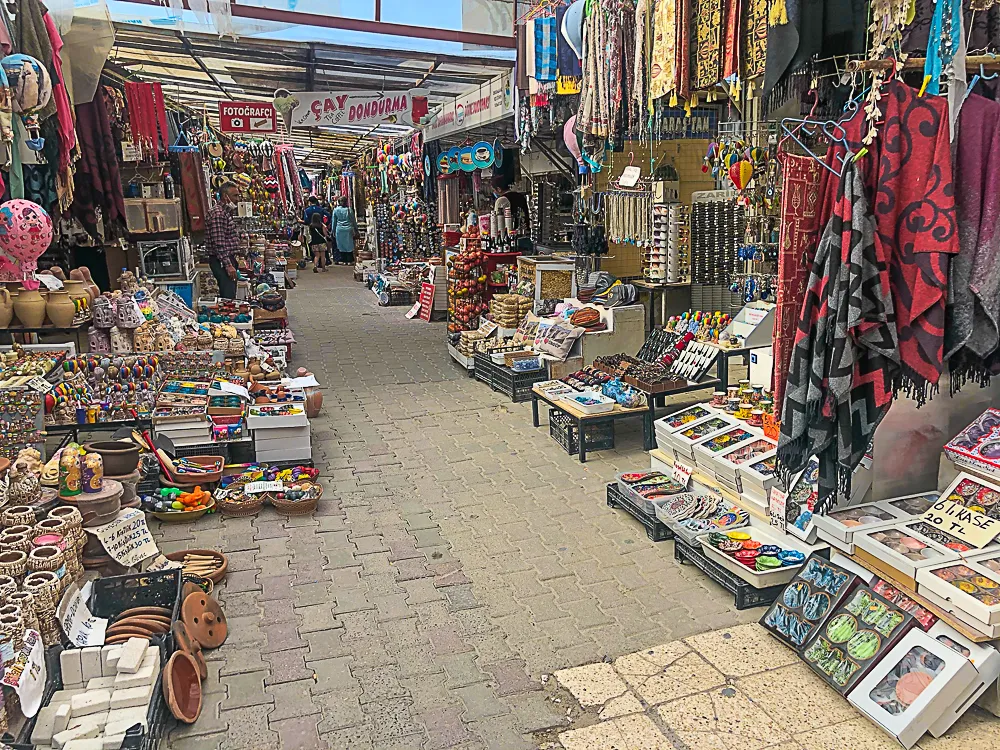
This town has had a multitude of names. In the Byzantine period it was called Osiana, then Hagios, then Prokopios or Prokopion; in Seljuk times Başhisar, which translates as head or central fortress (baş means head, hisar means fortress). Under both the Seljuks and the Ottomans, who renamed the town Burgut, it was the largest town in Cappadocia. Like many other towns, in the time of Mustafa Atatürk it received its present name. Ürgüp is supposedly from the Hittite “Ur-Kup”, that is, many fortresses.
Until the beginning of the 20th century a lot of Greeks lived in the town, who were then exchanged for Greek Turks. The Greeks, by the way, called Ürgüp simply Prokip or Prokopion.
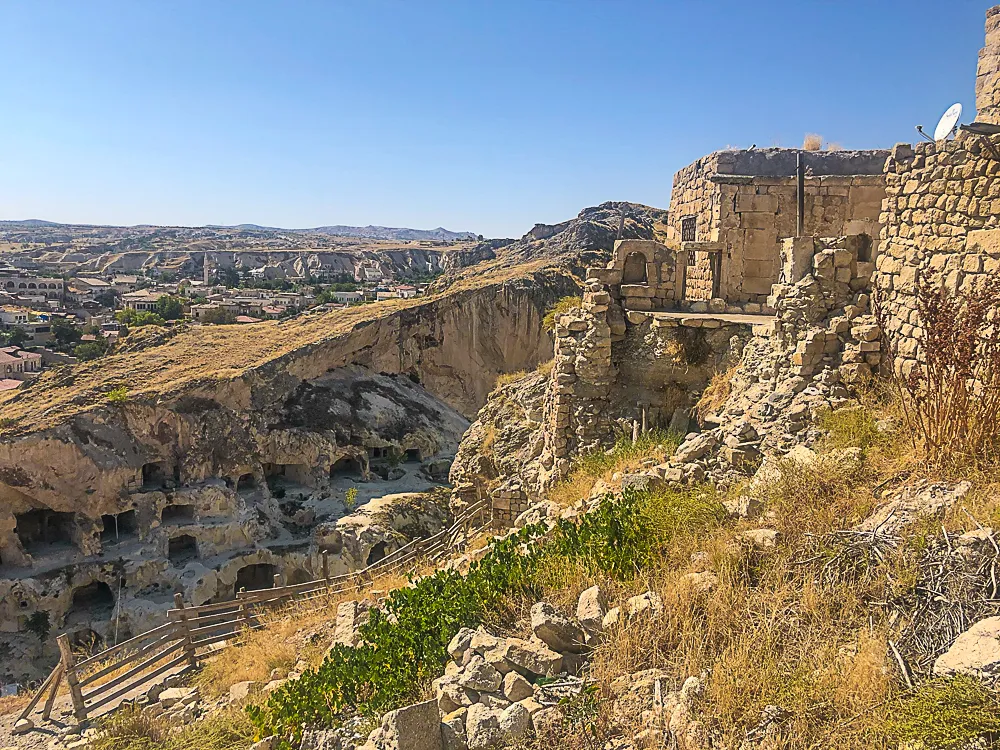
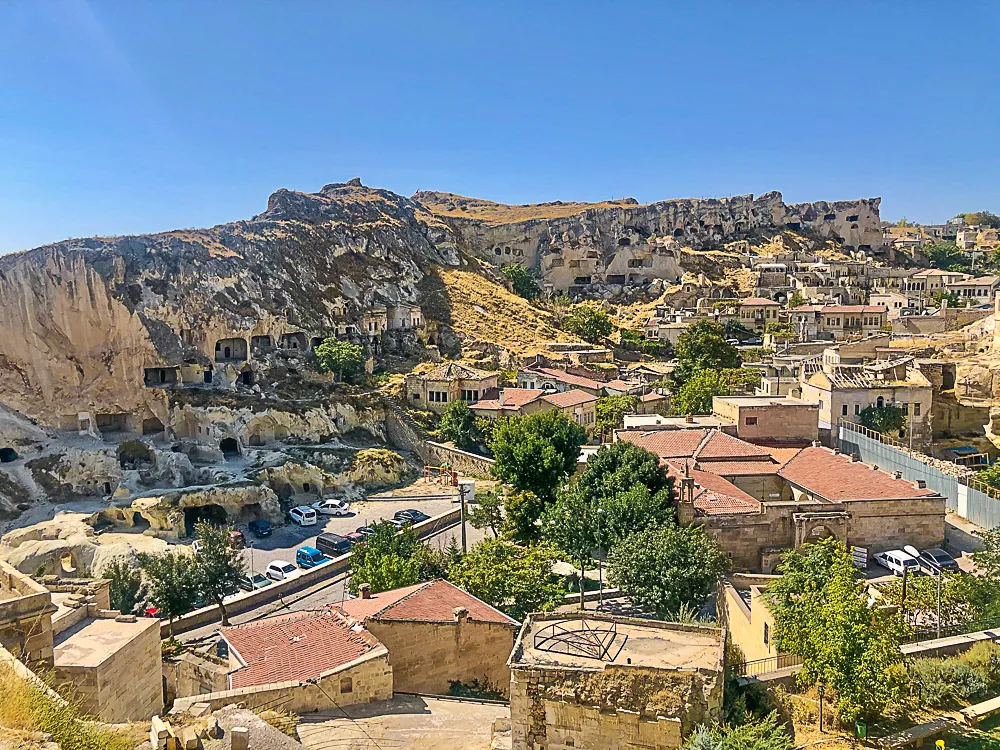
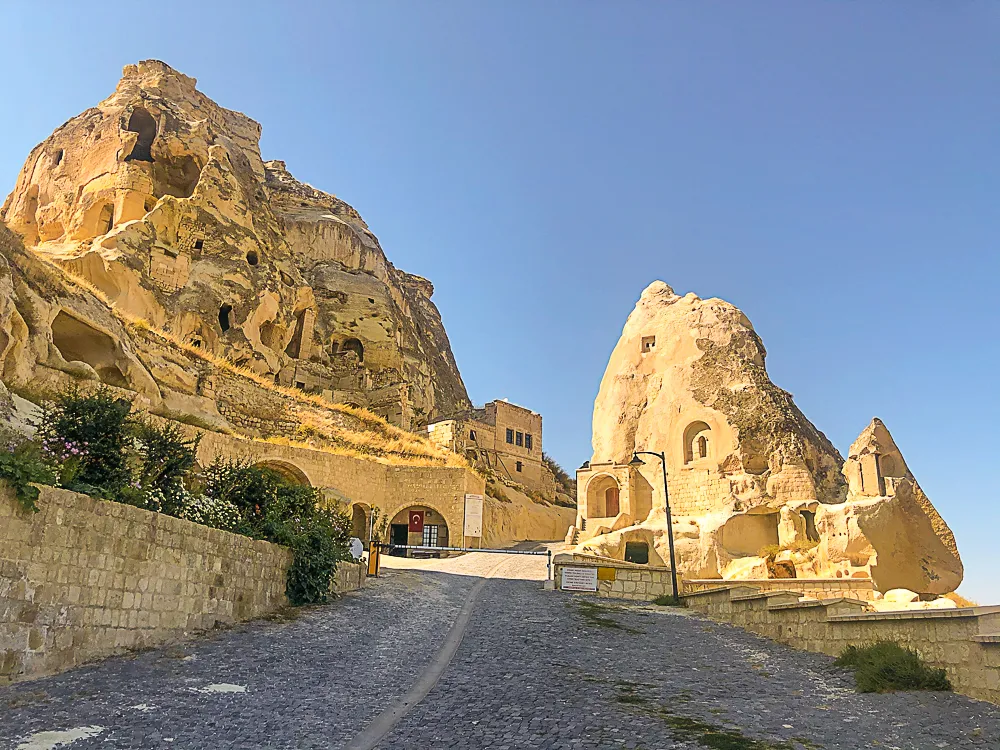
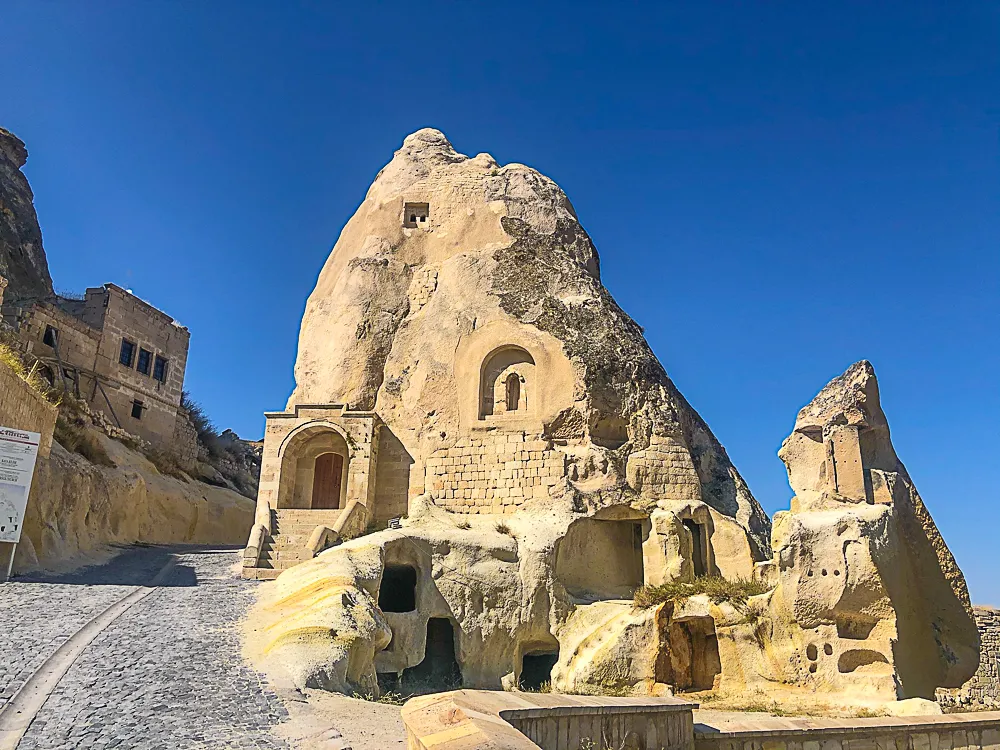
Tuff caves have survived in the town, in which people lived for a long time, right up to the 1970s, but constant collapses forced the authorities to resettle the residents. Now, right above the car park, the abandoned dwellings display their innards. Although it seems that some of the rock caves are still used as storerooms.
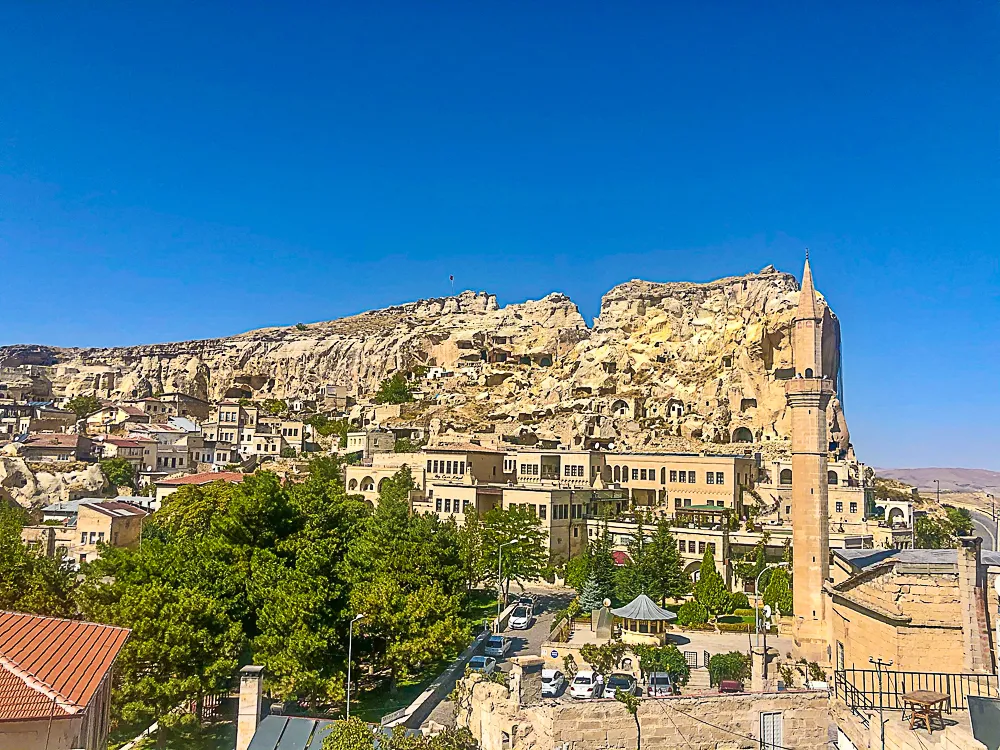
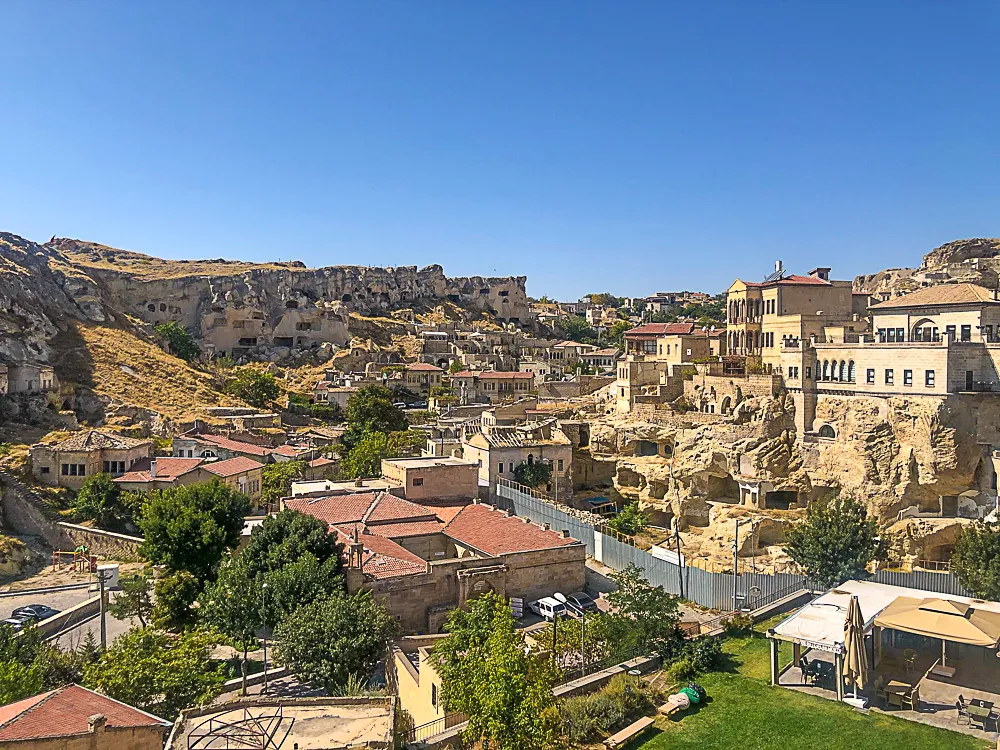
The other old part of the town that survived also stands on, or, it would be more correct to say, partly inside the mountain slope. Many dwellings are real caves, hollowed out in the thickness of volcanic tuff, while the facade and terraces are built of blocks of local pink and sandy-coloured tuff in the style of traditional local architecture.
From the Temenni Tepesi viewing platform another beautiful view of Cappadocia opens up. Nearby is the medieval mausoleum Kılıçarslan Gazi Türbesi (1268). Between the mountains lies the Cami Kebir Cami mosque (13th century). Somewhere I came across information that a seven-hundred-metre tunnel runs from it through the depths of the rock to a viewing platform on the other side, which we did not find.
Not far from Ürgüp lies the former Greek village of Mustafapaşa.
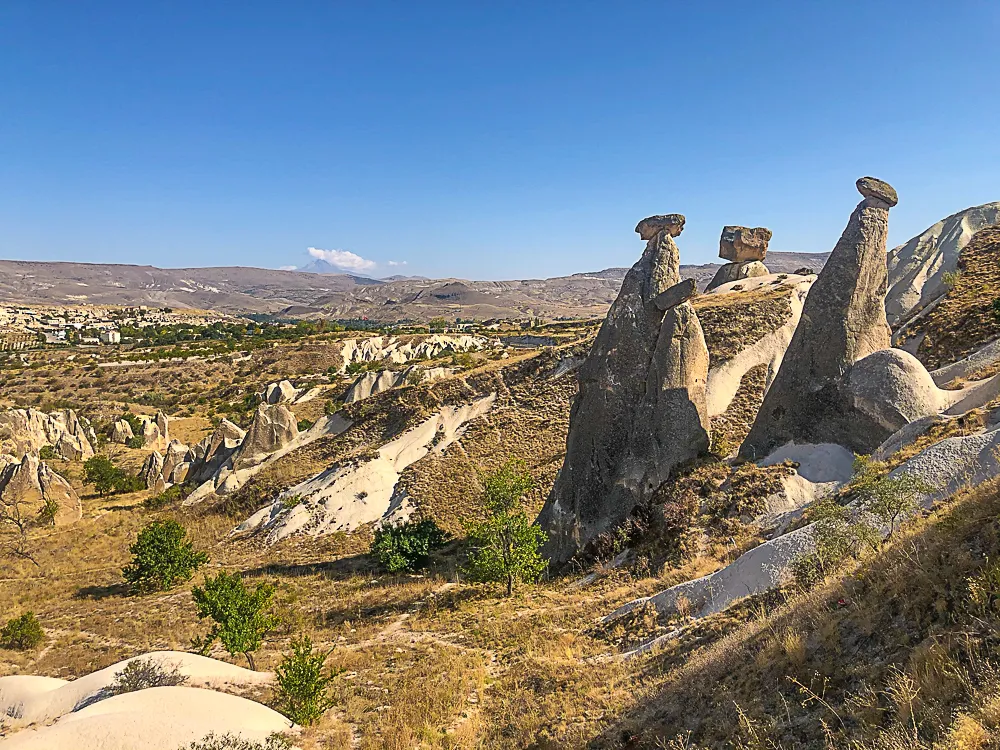
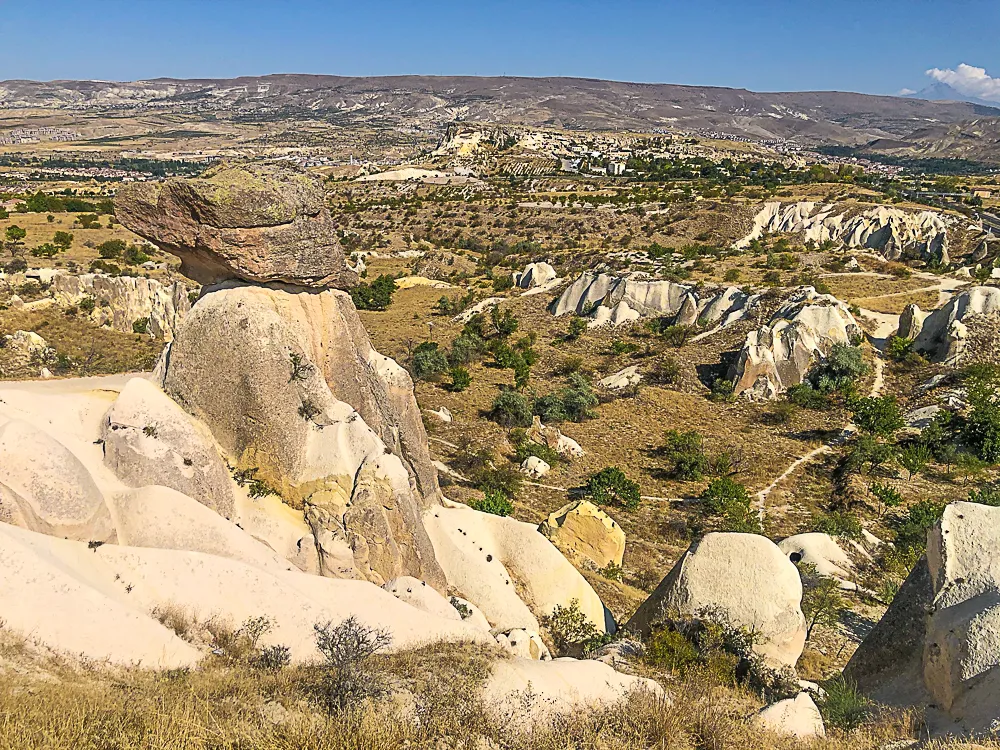
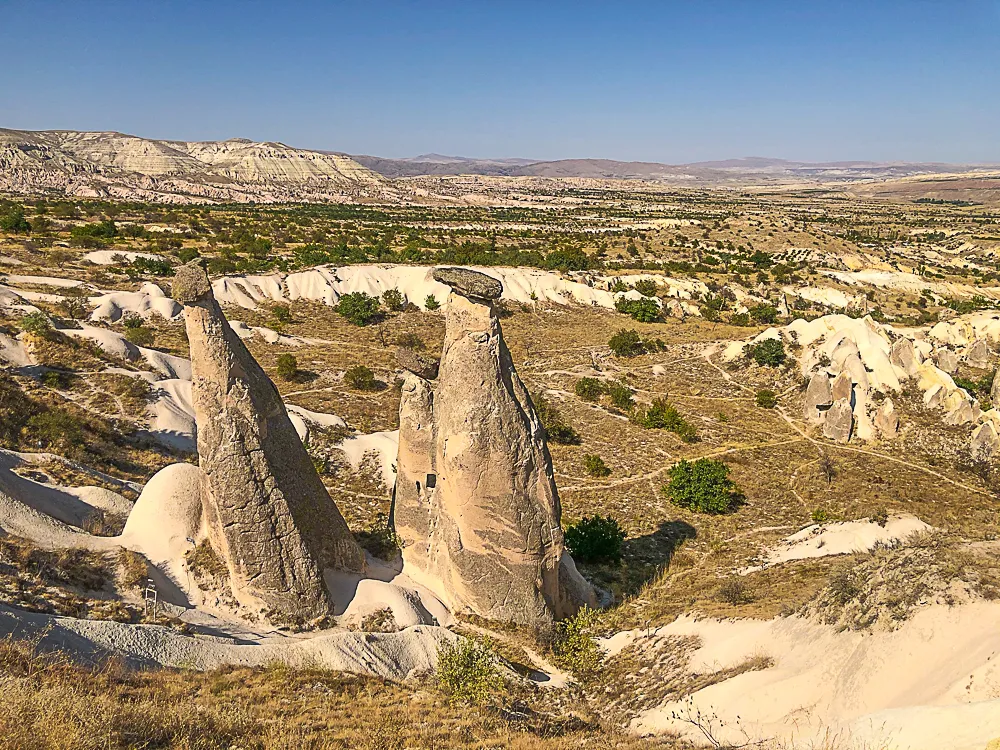
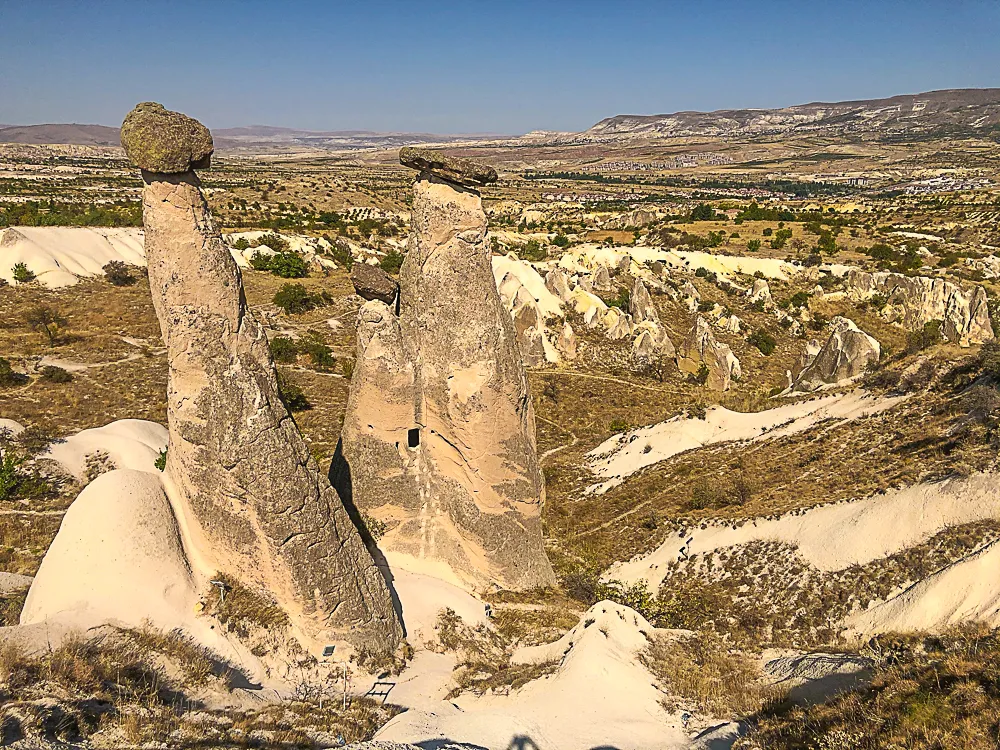
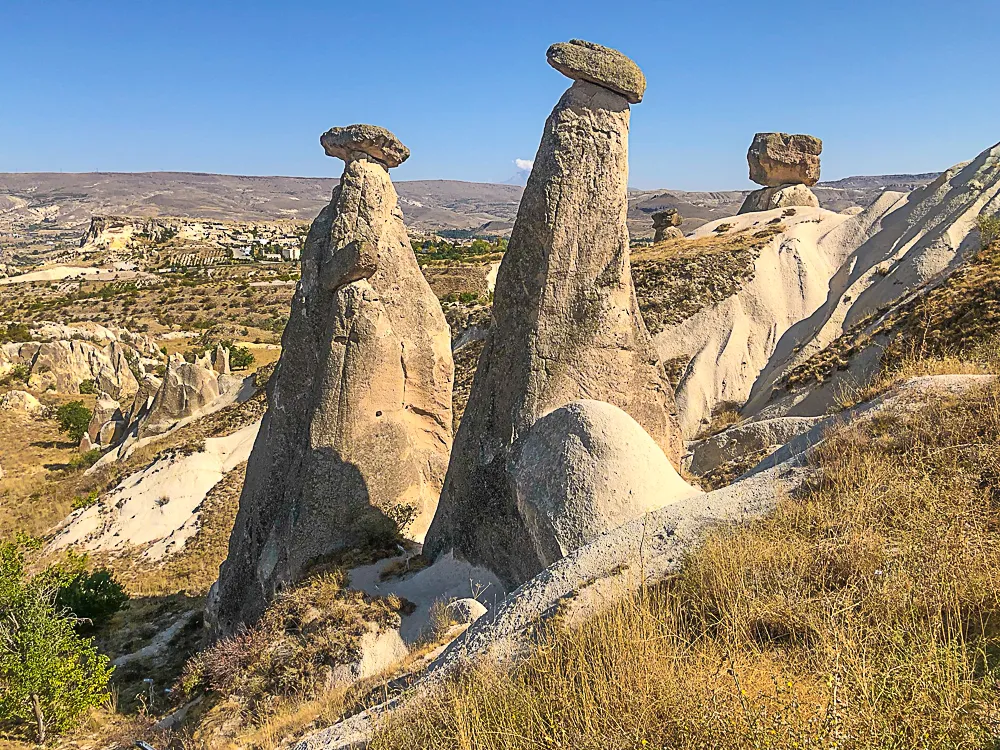
Probably the most famous sight on the outskirts of Ürgüp is the amazing stone mushrooms Üç güzeller, the Three Beauties. Crowds of tourists come here to see only 3 THREE! stone mushrooms, when there are thousands of them around Göreme. One of the legends tells: a king had a daughter who fell in love with a shepherd, secretly married him and bore a child. The angry father did not forgive. They had to flee, and the father, as is usual in fairy tales, sent out a pursuit. When the princess, the shepherd and their child were being overtaken, the girl began to beg God for help, and all three turned into stone.
But this is neither legend nor fairy tale.
Ivan or Ioann Rusyn or Ruskyi (“the Ruthenian” or “the Russian”) is our countryman from Poltava, who was captured by the Tatars near Azov in 1711 after Peter I’s unsuccessful Prut campaign. He was born in 1690 in the time of the Hetmanate. He was a Cossack and, as one cannot do without it in a saint’s life, in the army he grieved deeply, watching the cruelties of war, suffering and death. In captivity he was resold several times, until he ended up in Ürgüp, where he became the slave of a local Turkish agha.
The captive lived and looked after the cattle in the stable, and came to pray at the local Church of St. George. In time he gained a reputation as a miracle worker: he cast out demons and healed the sick, both Muslims and Christians. Even the Turks called Ivan a saint. When Ivan died, the Greeks begged the Turkish pasha for the slave’s body and buried it in their Orthodox cemetery. Since in mountain villages it is hard to hew new graves in the rock, a tradition took root over the centuries: after 3-4 years the grave is opened, the bones are washed and moved to a special repository at the church, and a newly deceased person is laid in the grave. They opened Ivan’s grave and were amazed. His body lay incorrupt, and a fragrance came from it. His relics were placed in the church so that he could go on healing. At that time there were no such fine ministers as Stepanov yet. They had to manage somehow. In 1881 part of the saint’s relics was transferred to the Monastery of St. Panteleimon on Holy Mount Athos. The second part of the relics was taken by the Greeks into exile and in 1924 was brought to the town of Chalcis on the island of Euboea, and a year later to the town of Nea Prokopi, where it remains to this day in the church built in 1951.
An old Orthodox church has survived in Ürgüp, whose walls remember our countryman, as well as his master’s house on the mountain slope.
A paradox: on Russian sites there is a sea of information about the “Russian saint”, but in Ukraine there is practically none. From Rusyn he became Russkiy, and the Cossack from near Poltava became a “simple soldier of Peter I from the southern borders of Russia”, and then a Russian wonder-worker. It seems that in Ukraine only in the town of Novohrad-Volynskyi is there a parish of St. John the Russian of the Ukrainian Orthodox Church, and in the Holy Dormition Sviatohirsk Lavra a church of St. John the Russian is being built in the Moscow style.
And this despite the fact that, according to the Russian Wikipedia alone, there are two churches mentioned: a church in Kuntsevo, a house church in Kostroma, a church and monument to the saint in Bataysk, and the lower side altar of a church in Novosibirsk.
Travelled, wrote the text and took the photos: Serhii Shcherbii



