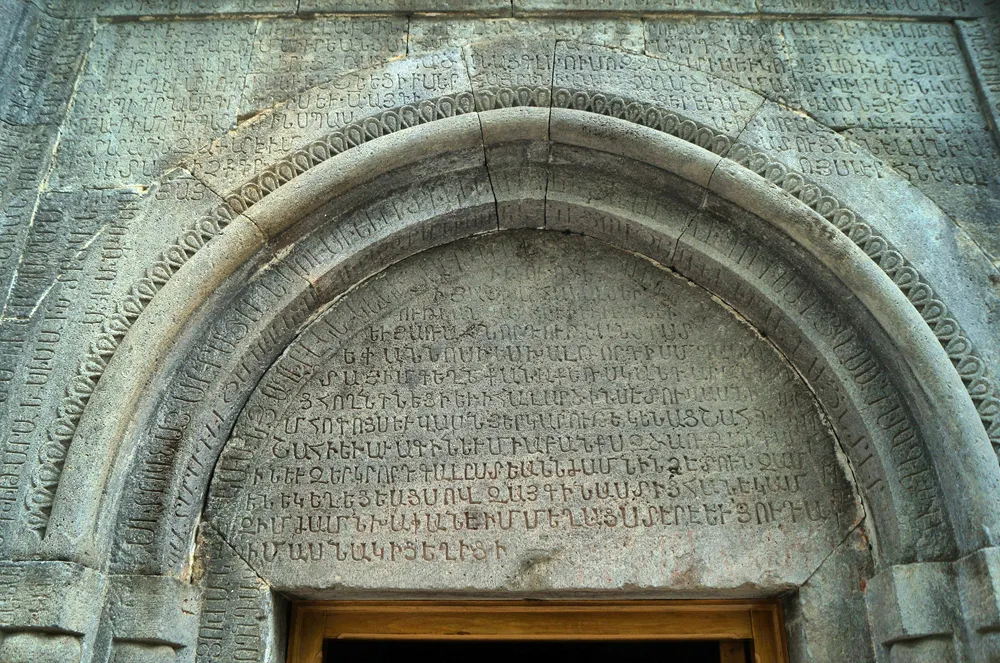
Armenia. Haghartsin

· 2 min read
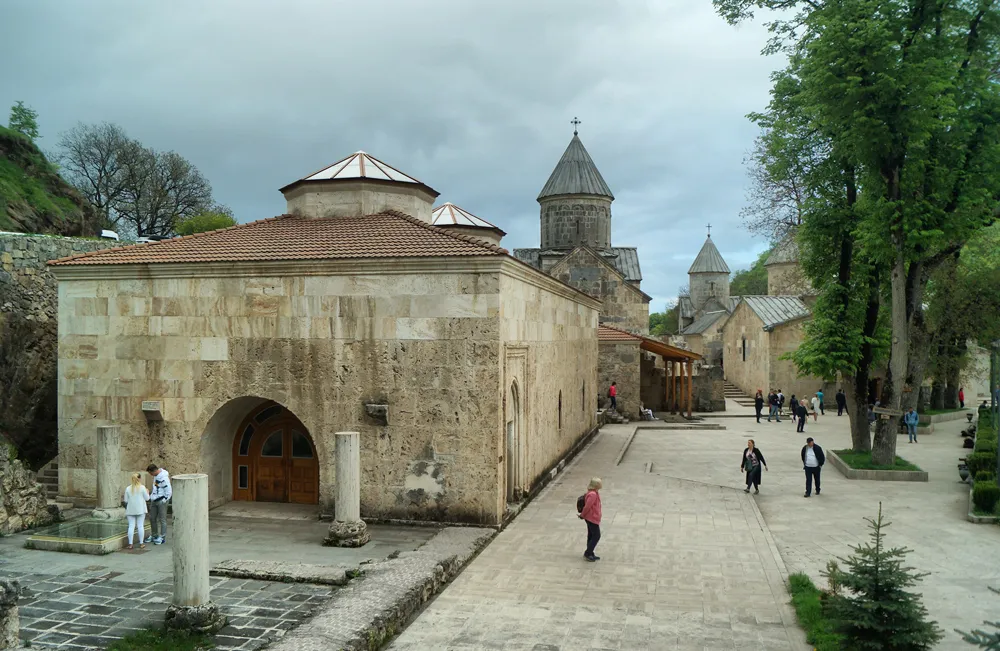
Haghartsin Monastery is located 14 kilometres from the town of Dilijan. Unlike most Armenian monasteries, where a single church has survived, this one has a large number of buildings – churches, chapels, refectories – and it is not dark, since it is built of light-coloured stone – probably the only one in Armenia.
We visited Haghartsin in May 2021. It was full of tourists, though in Dilijan we hardly met any. Mostly Russian tourists. The monastery buildings stood freshly restored, light and photogenic. It is strange that this monastery is much less known than Sevanavank or Hayravank, although in my opinion it is much more interesting. Fairy-tale and very European. It reminded me somewhat of the Venetian churches of the Adriatic coast – probably because of the Romanesque forms, of which there are quite a few in Armenian architecture of the 11th–12th centuries.
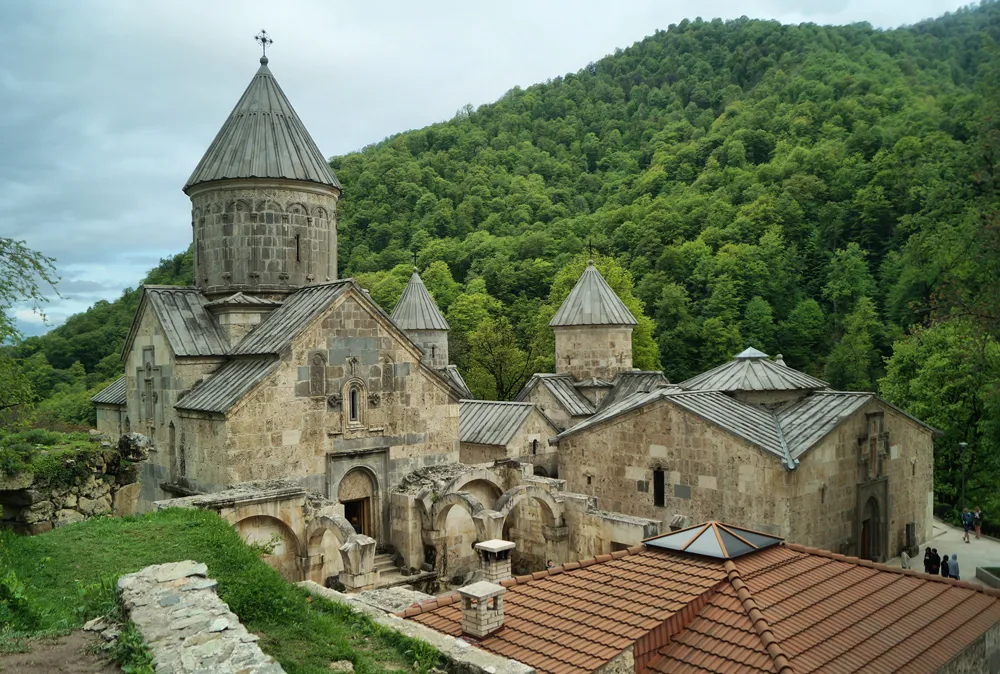
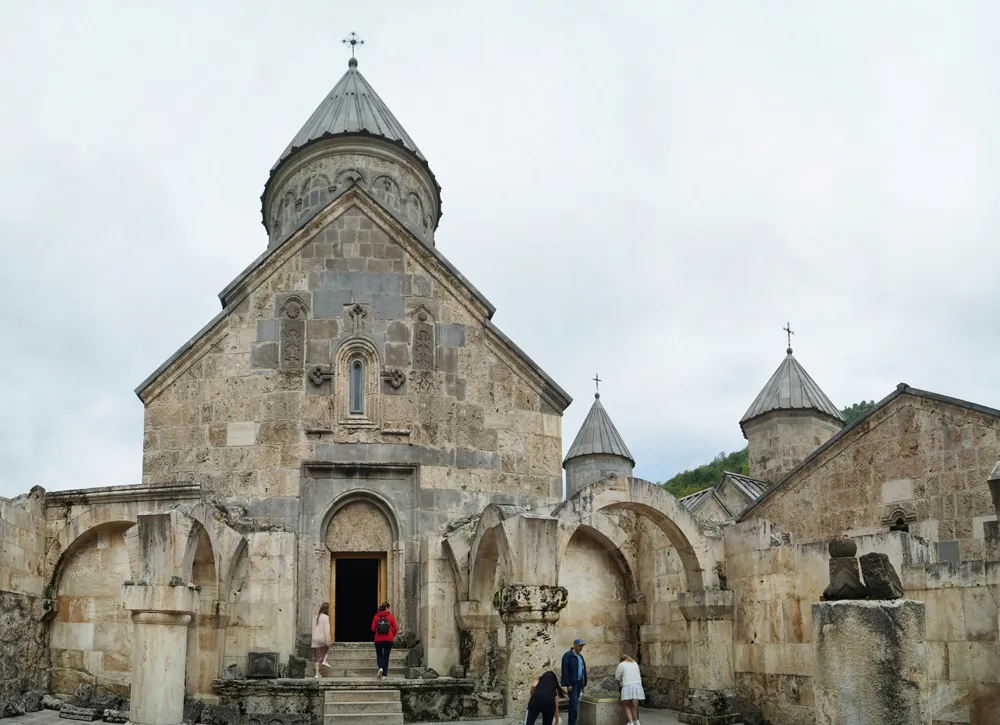
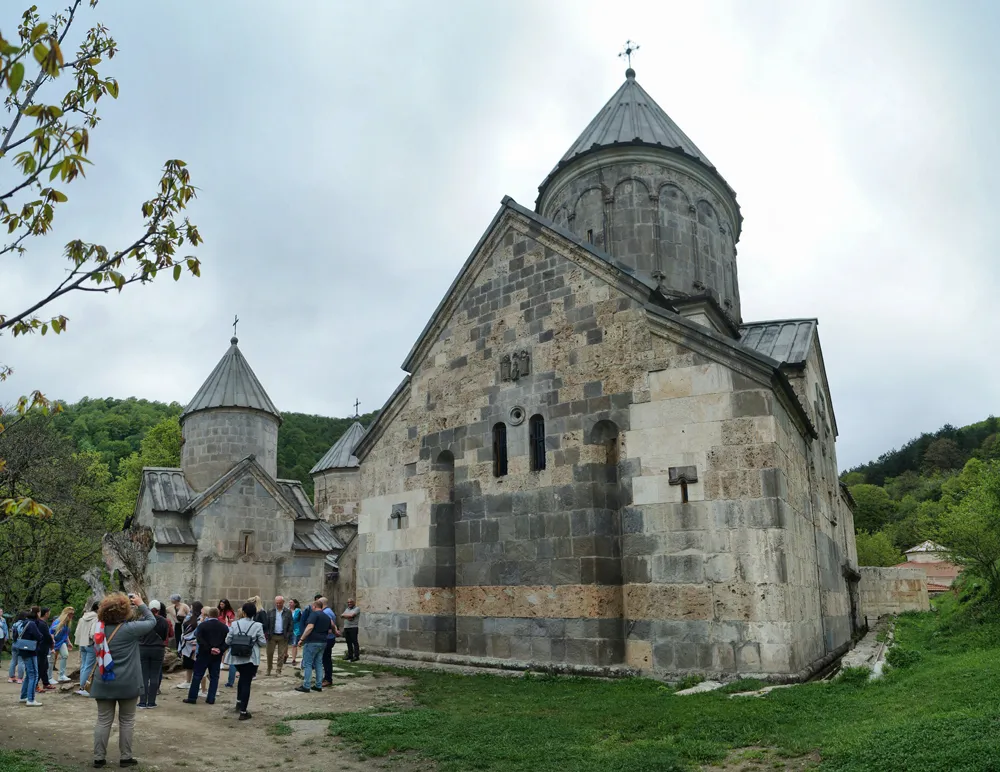
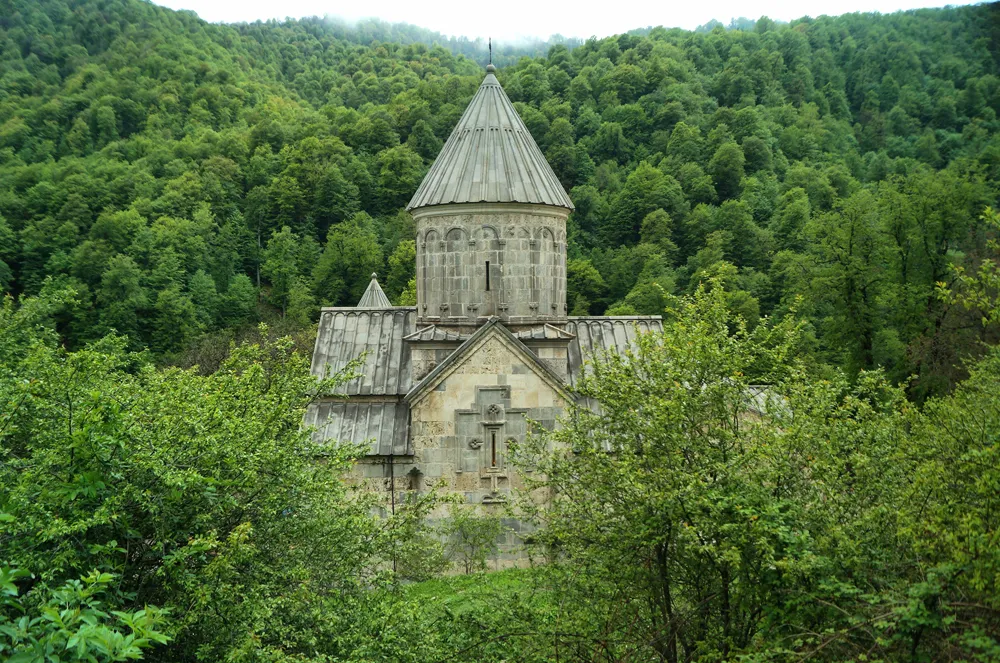
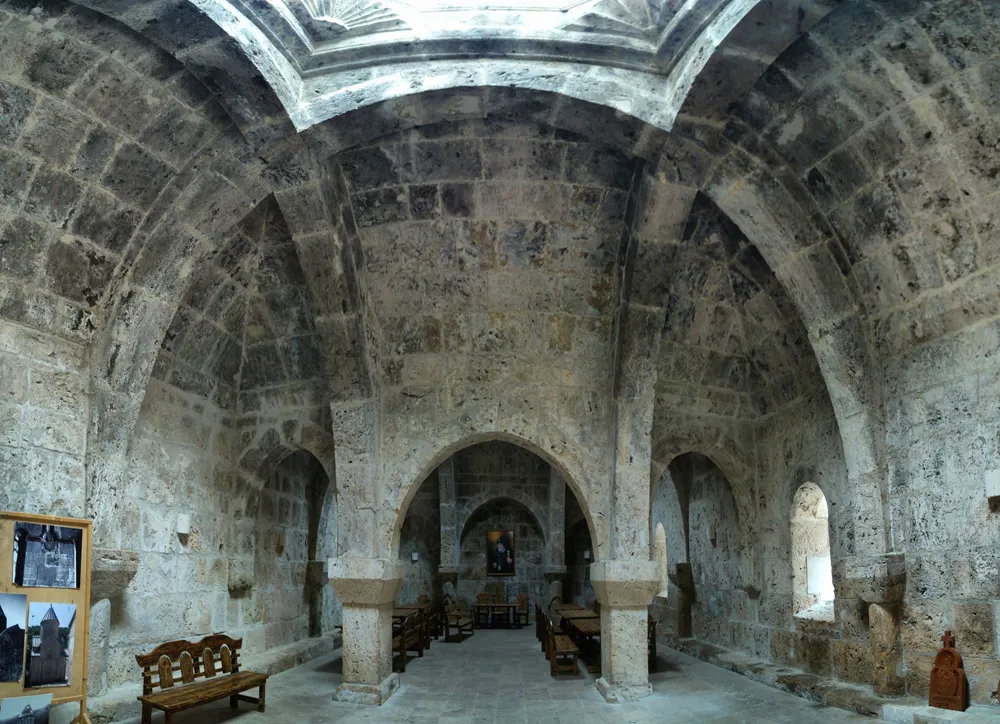
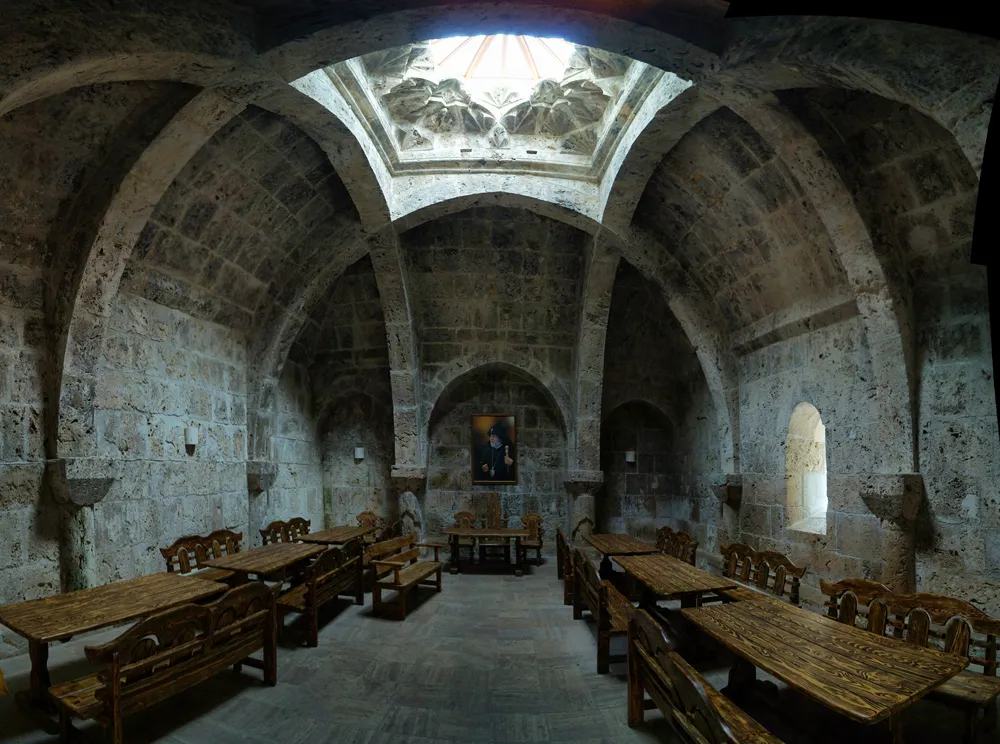
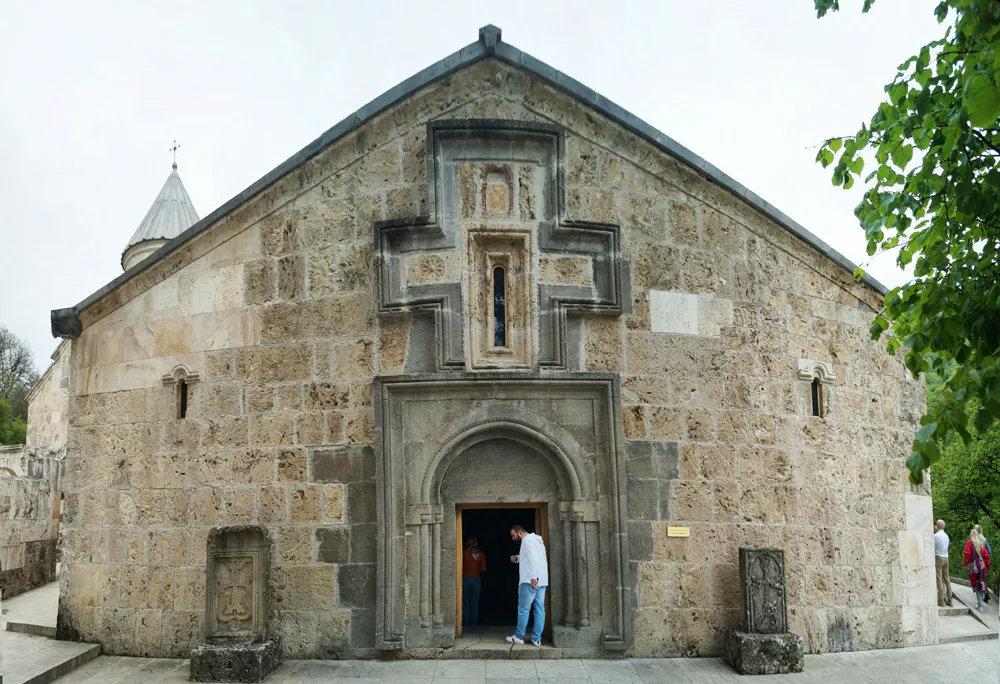
Haghartsin Monastery was founded in the 11th century, and from that time the Church of St. Gregory has survived, a very interesting building with an attached gavit – a large annex in front of the entrance, a distinctly Armenian element of sacred architecture, somewhat similar to a narthex but much larger. The main monastery church, quite unique, with a sixteen-sided drum – Surb Astvatsatsin (Holy Mother of God) – was consecrated in 1281. A little later an annex was added to it too. Another church of the monastery complex, Surb Stepanos, was built in 1244, and the refectory was erected in 1248. All the churches are compactly placed on a small terrace in a valley covered with dense forest, which enhances the character of the monastery.
For some time Haghartsin Monastery was one of the main ones in Armenia, since it housed the burial vault of the royal family, in which the kings Smbat and Gagik of the Bagratuni dynasty were buried. Also buried on the monastery grounds was the well-known Armenian theologian of the 12th–13th centuries, Khachatur Taronatsi.
The monastery was partly destroyed during Seljuk attacks. It was restored in the 13th century, after which it was again a shrine for Armenians. A pilgrimage centre was created here, which operates to this day. Solemn events are also held here, including weddings.
Text and photos by Roman Malenkov.