Armenia. Khnevank

· 2 min read
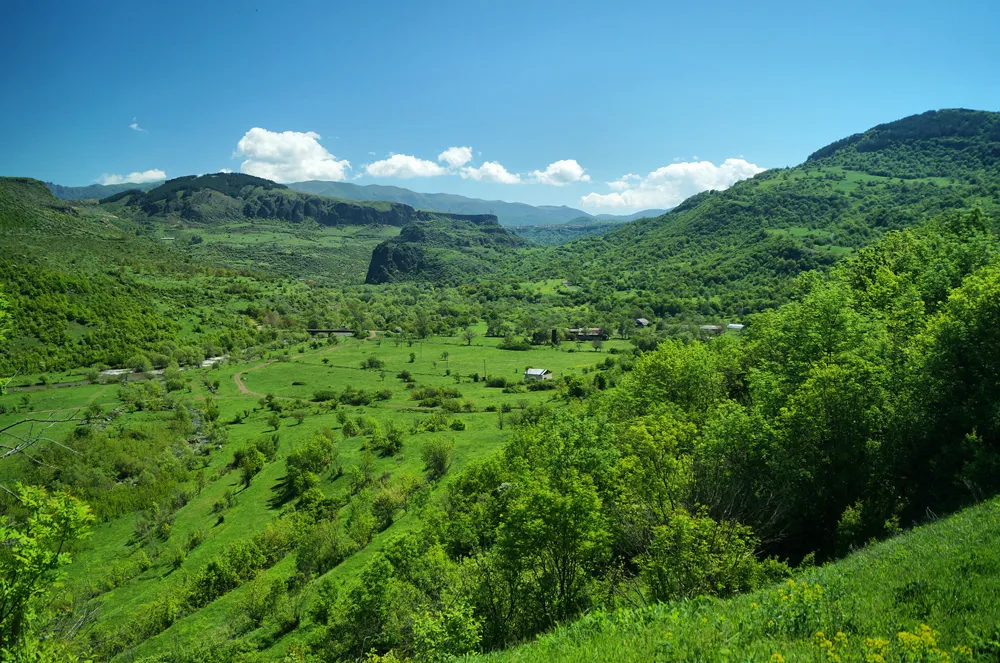
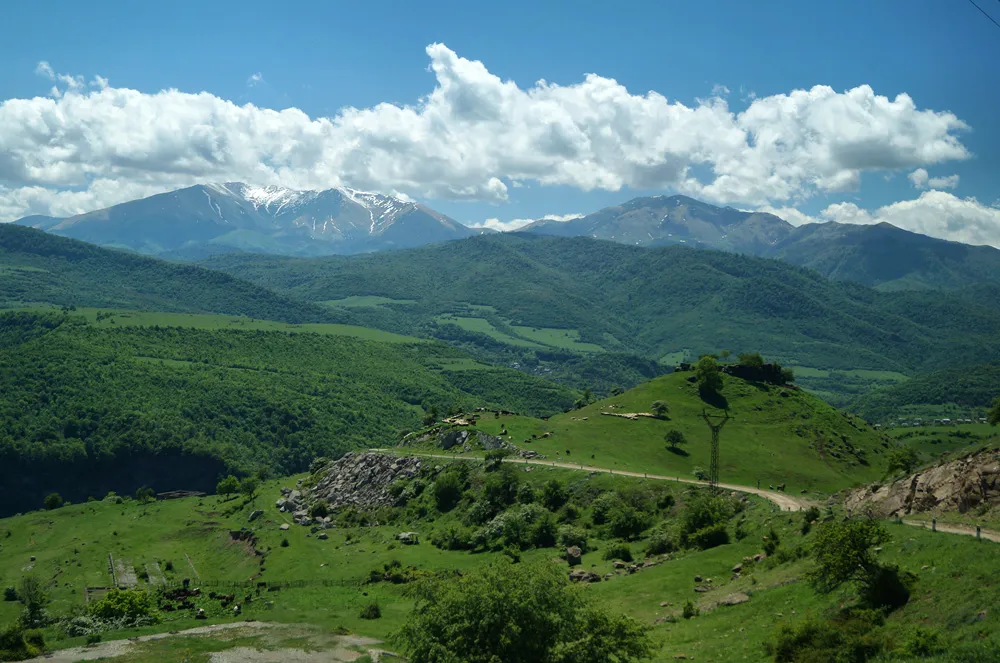
Our final destination was to be the Haghpat monastery, but on the way we decided to drop in at the remarkably picturesque half-ruined monastery of Khnevank – at least that is how photos online showed it. For this we turned off the highway leading from Vanadzor to Alaverdi, to the left, towards the village of Kurtan, and from there it is only a couple of kilometres to Khnevank. Those couple of kilometres turned into a real adventure, because there is effectively no road to the monastery – what was once a road has turned into a terrible serpentine, thickly strewn with potholes, puddles whose depth had to be measured with a stick, and boulders – well, these are mountains, what kind of road can there be when it has not been repaired for some forty years.
But it would all have been fine if I had not decided to drive on, across the mountains, to the Odzun monastery – I decided that a road must appear in the village of Arevatsag… At Arevatsag there was no way at all to descend in our minibus – there was such a steep drop that it was frightening to look at it, so we trudged across some mountain pastures and, in terrible nervous tension, through some nameless village (we cannot read Armenian), burst out onto the Vanadzor–Alaverdi highway.
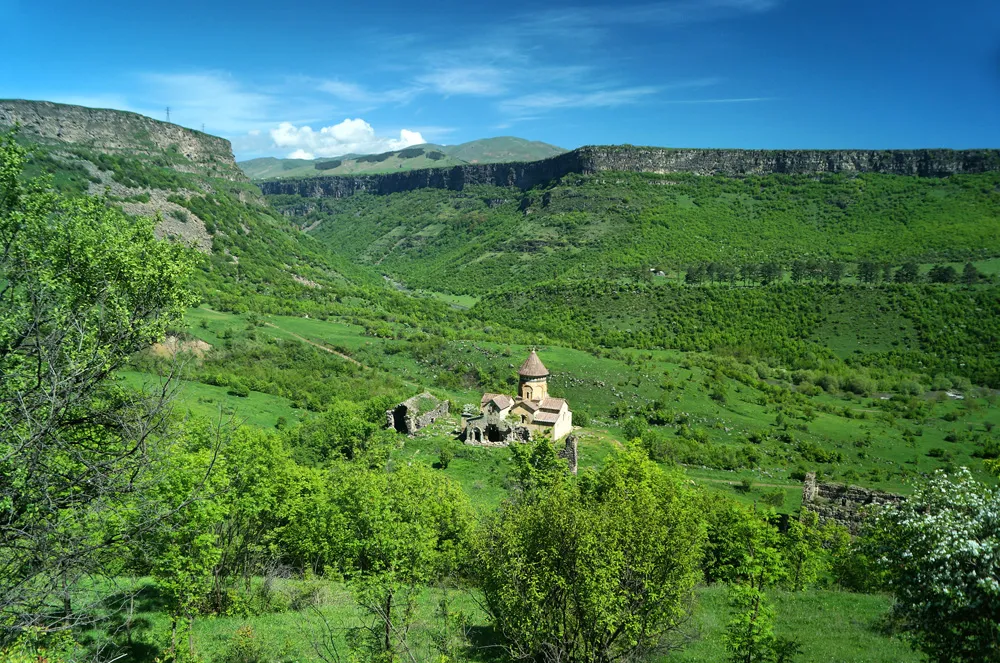
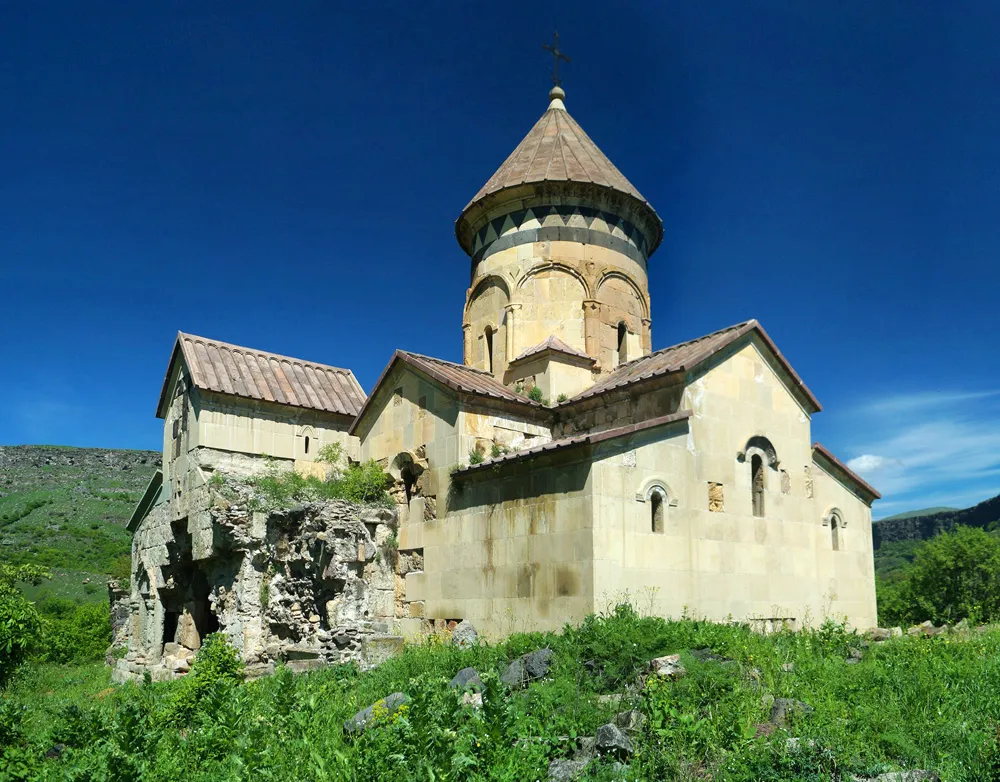
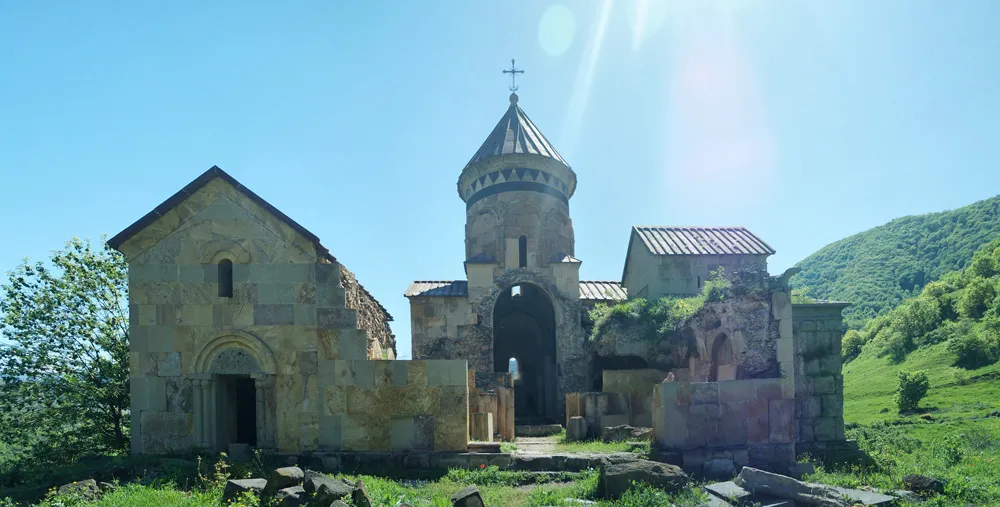
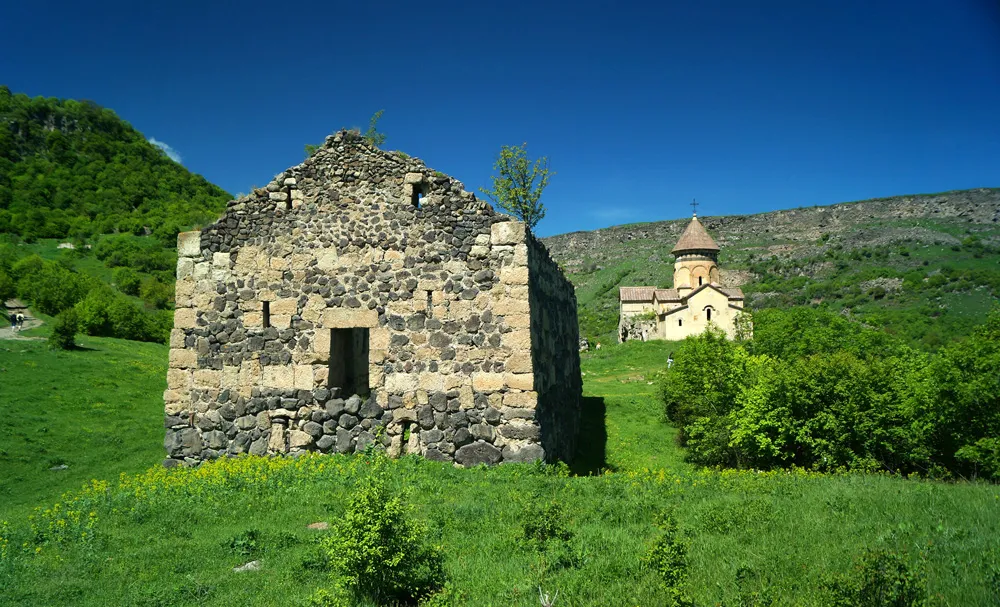
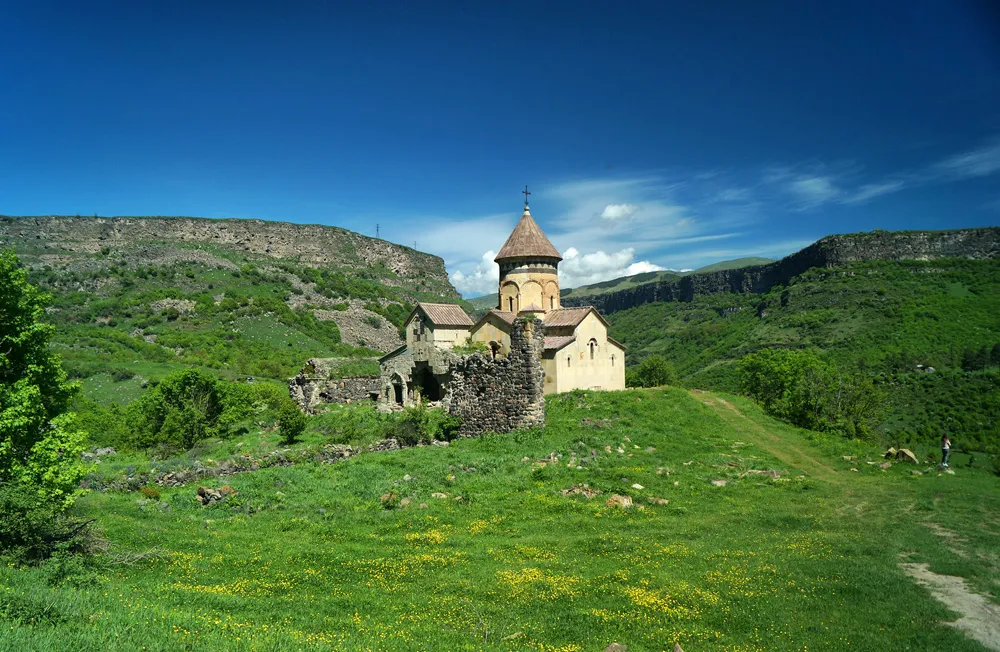
Do not think that we did not reach Khnevank monastery – the quality of the road did not stand in the way. The monastery is located in a fairytale mountain valley, at a place where the gorge of the Dzoraget (Debed) river widens, revealing to the eye bright green meadows among the steep rocky sides of the valley.
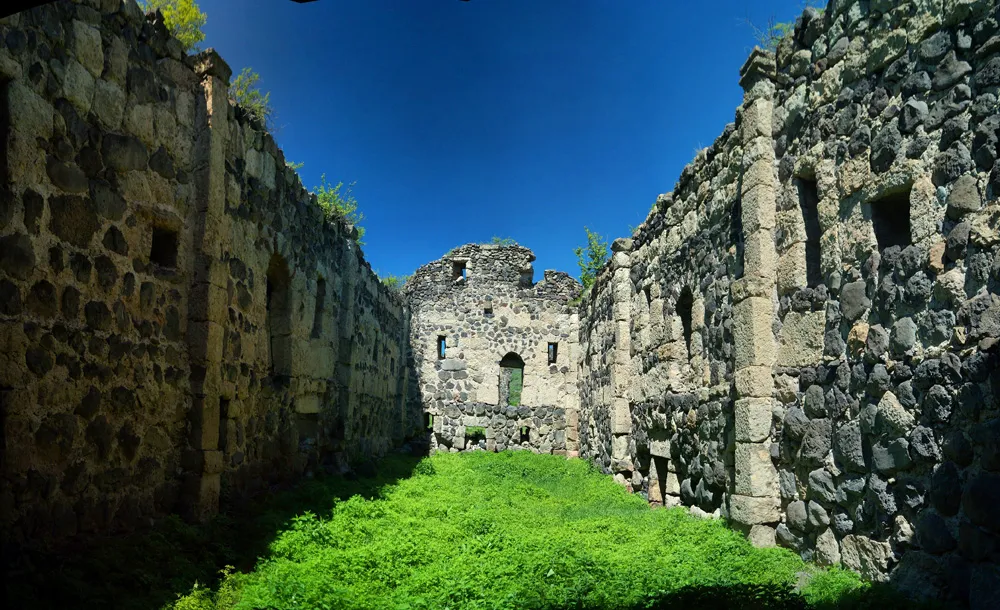
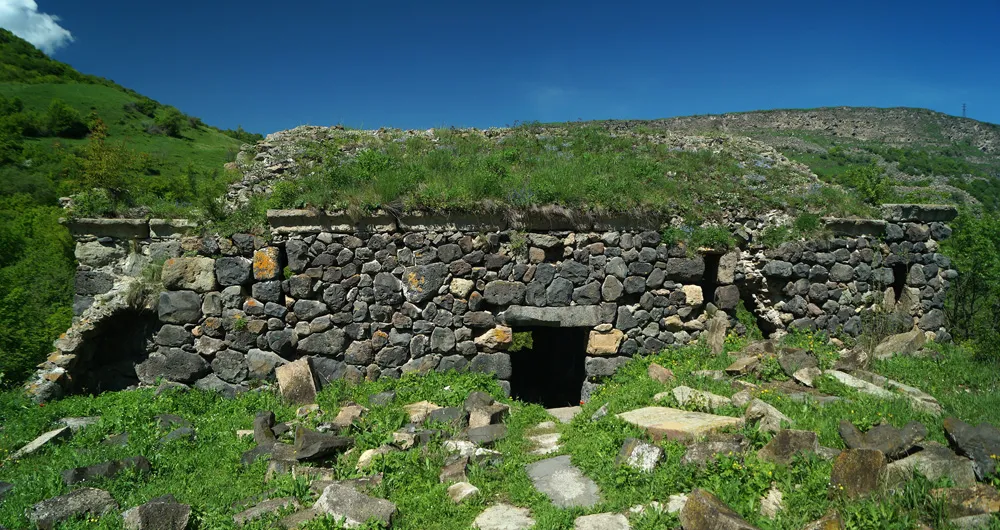
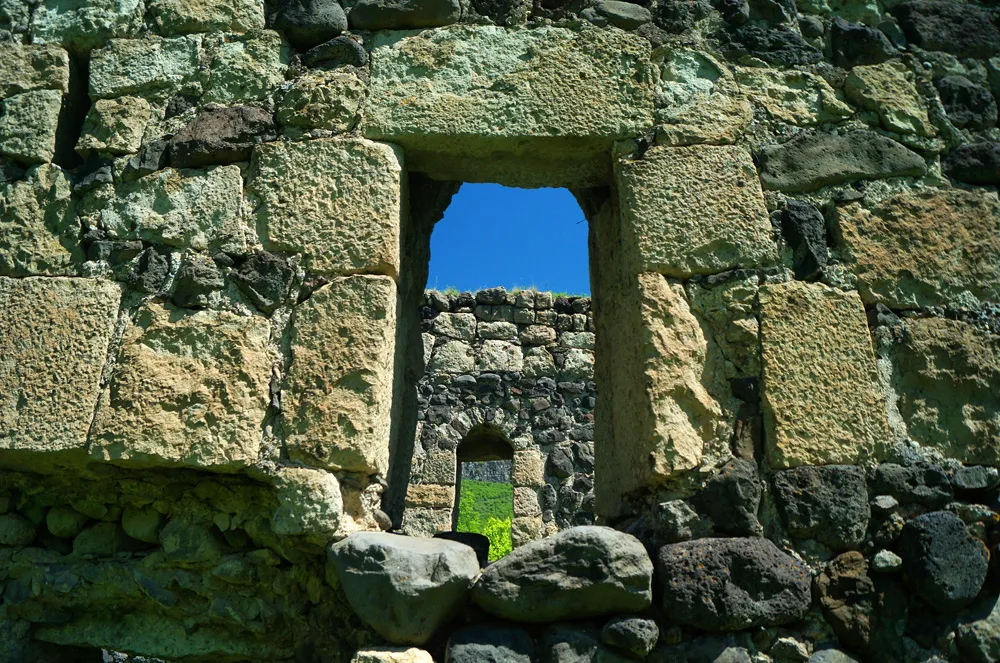
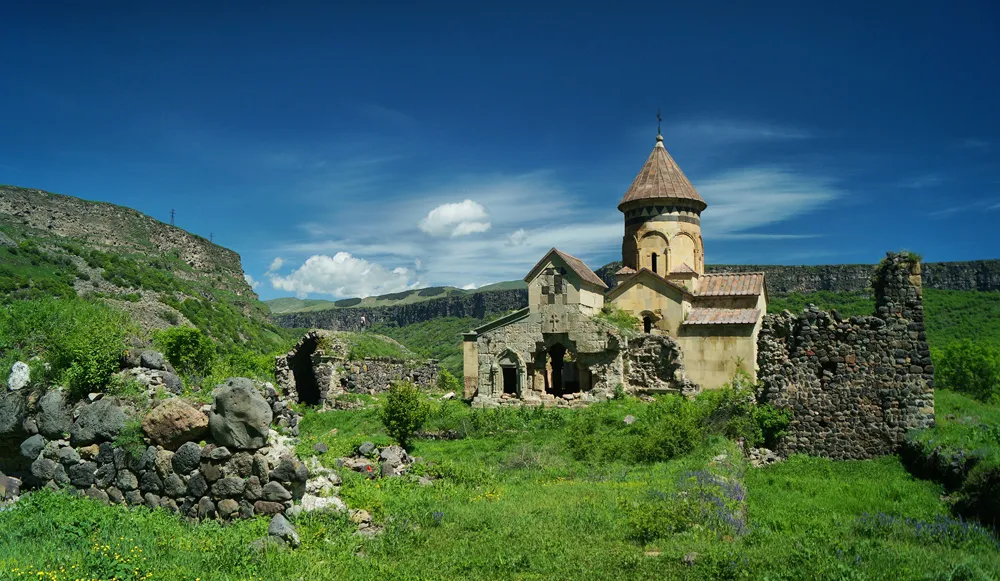
Khnevank monastery consists of the remains of defensive walls and several buildings that cannot be identified. Scholars suppose that one of these buildings, a two-storey structure with the remains of columns inside, was the abbot’s residence, and another, with the remains of a vaulted roof, was perhaps the refectory. There are also the remains of a chapel, a bell tower and a cemetery.
In the centre of the complex is a church built in the 7th century. To whom it was dedicated is not known for certain, but it is known that it was restored in 1144 by the Syunik prince Smbat Orbelian, and in 2006 representatives of the Armenian authorities tried to restore it. The prince’s attempt was better, since in 2006 they only rebuilt the cone-shaped dome and covered part of the walls with decorative stone, and then simply abandoned it – probably the money ran out. Some parts of the walls are missing altogether… Adjoining the main church are the ruins of two small churches, which form one complex with the main one. It is very picturesque and romantic, even in ruins. Especially against the backdrop of the surrounding landscapes. I do not regret at all that we went to Khnevank. A very colourful and atmospheric place.
Text and photos by Roman Malenkov.