Armenia. Noratus. Khachkars

· 2 min read
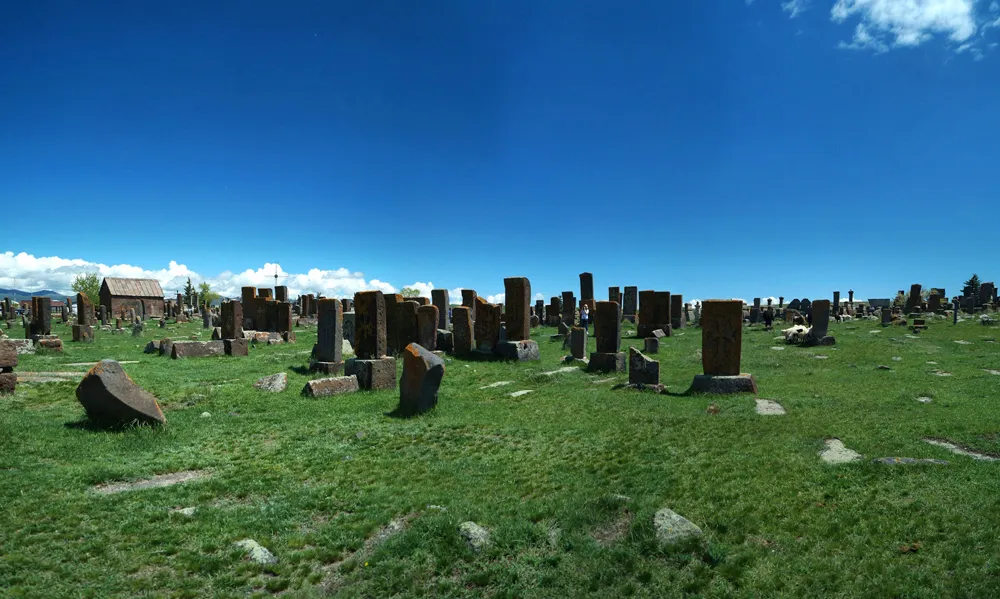
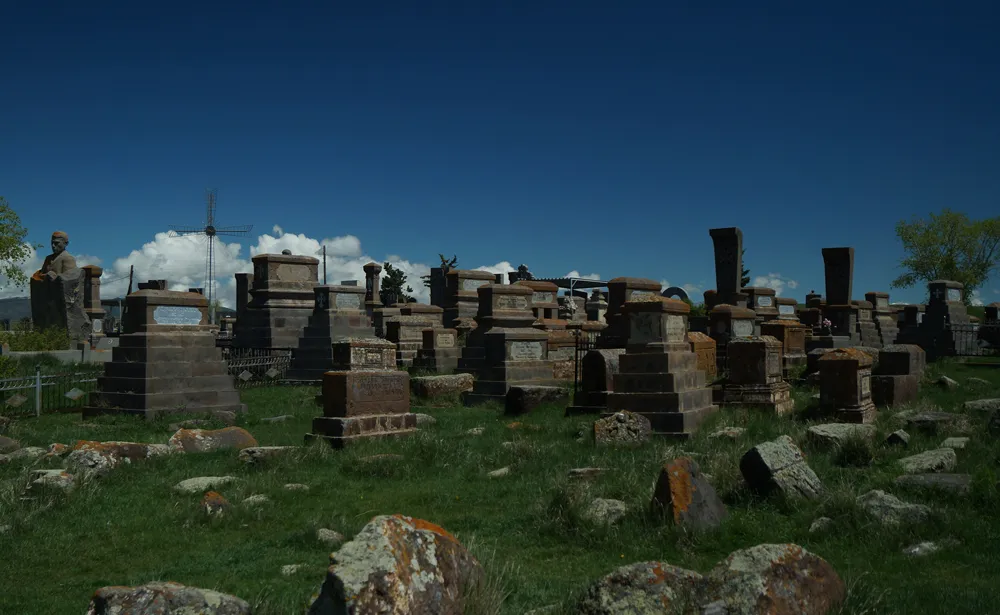
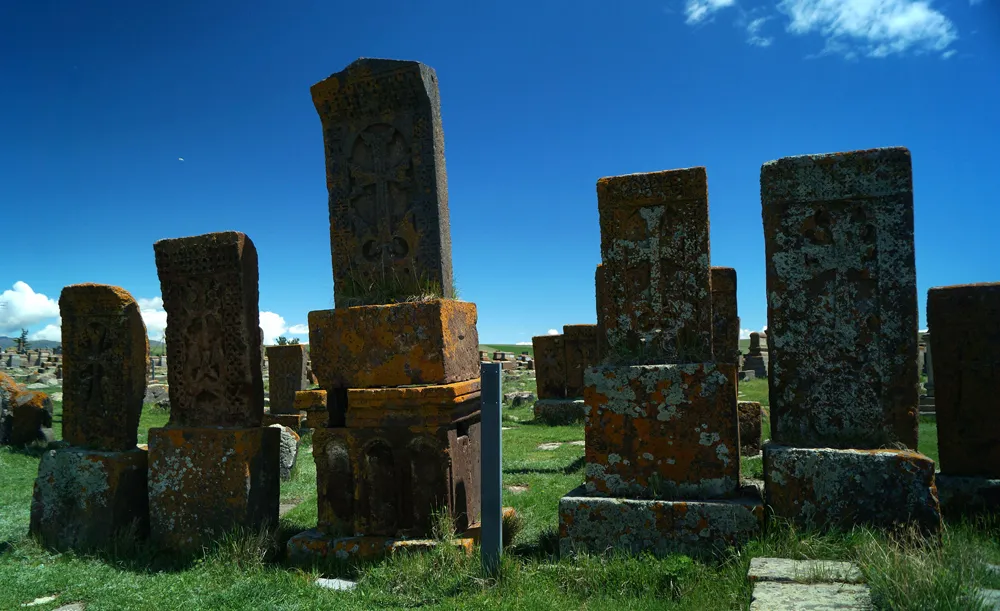
Noratus is a village with the largest cemetery of khachkars. Formerly the largest was the cemetery in the town of Julfa in the Nakhchivan region of Azerbaijan, but the local residents ruthlessly demolished it, smashed the masterpiece tuff khachkars and used them as building material. Today the Azerbaijanis there say that Armenians never lived there and there were no khachkars. So today the largest cemetery of khachkars is in Noratus.
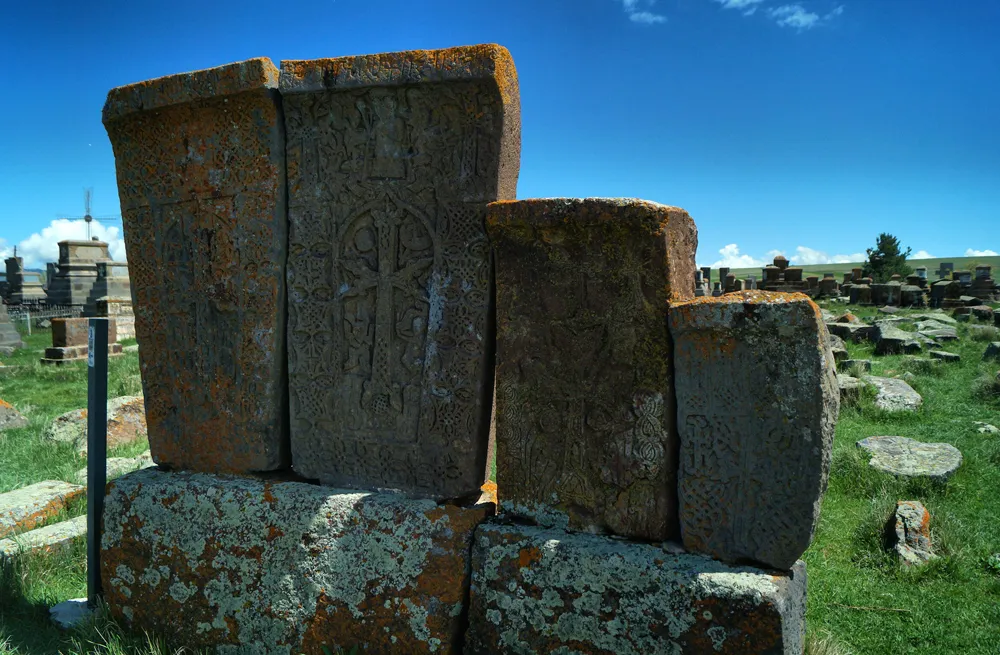
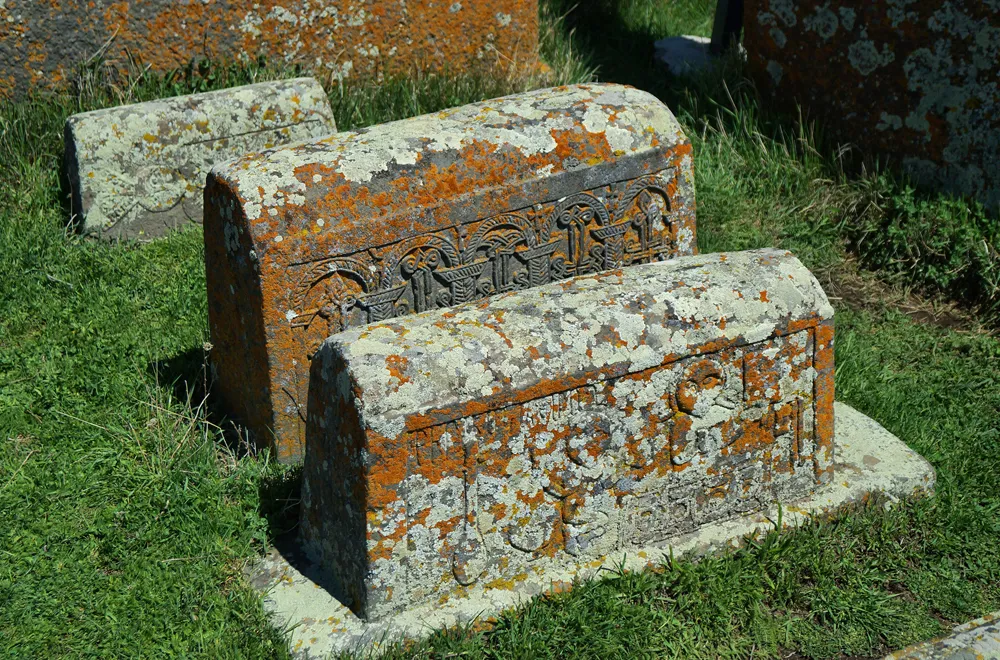
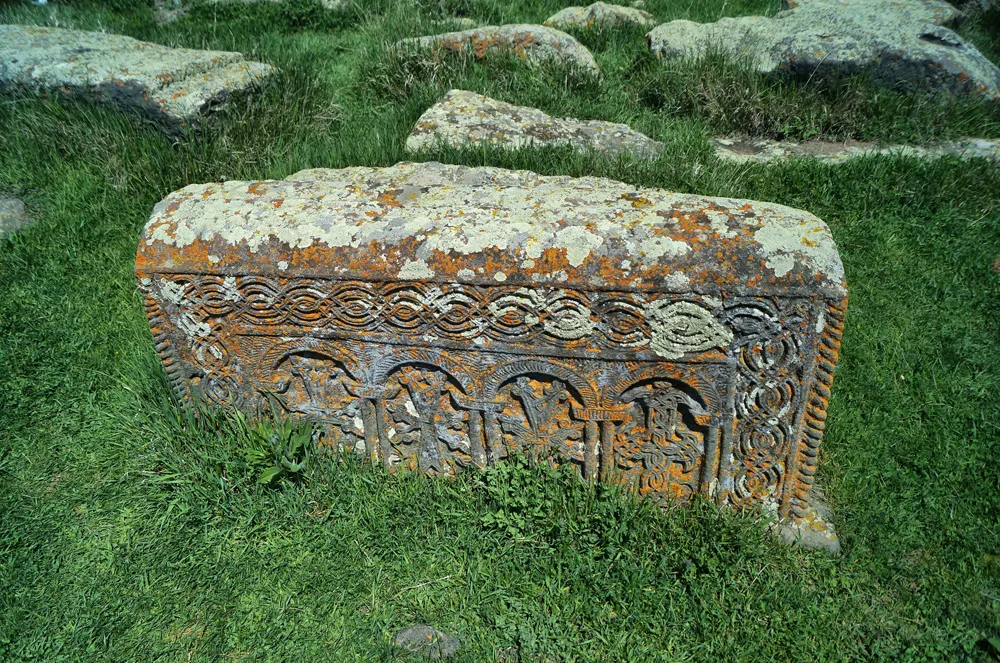
Khachkar comes from Armenian: khach means cross and kar means stone. A cross-stone is a stone stele with the image of a cross. The oldest surviving khachkars date from the 8th century; in those times they were not yet gravestones but steles with church inscriptions, signs set up at the entrances to settlements, memorial markers and so on. Later they began to be placed on graves, and today most of the gravestones can be found near monasteries and in cemeteries. The art of making khachkars is on the UNESCO List as an intangible cultural heritage of humanity.
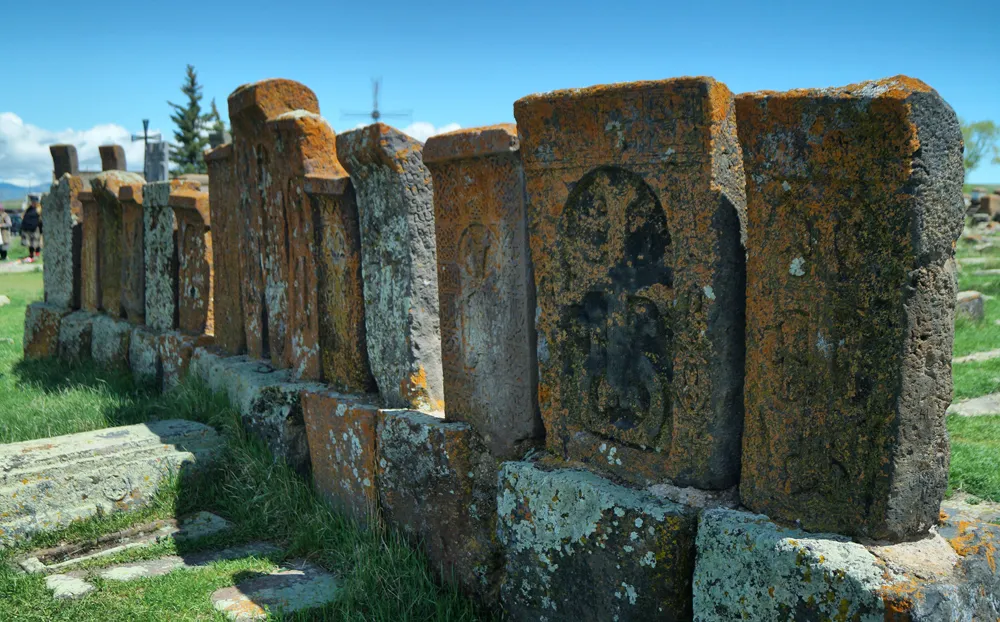
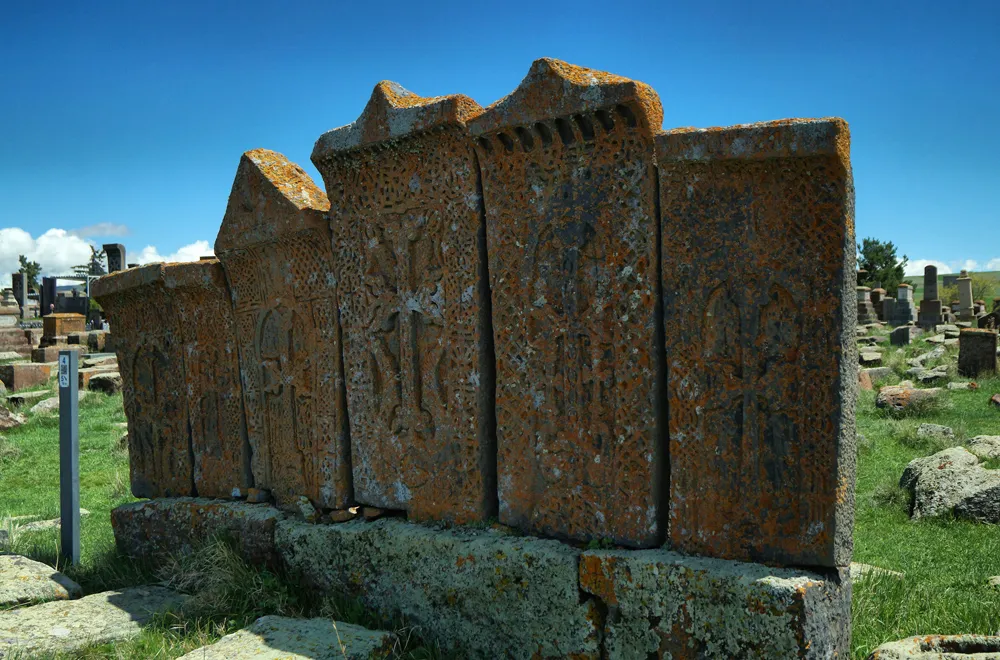
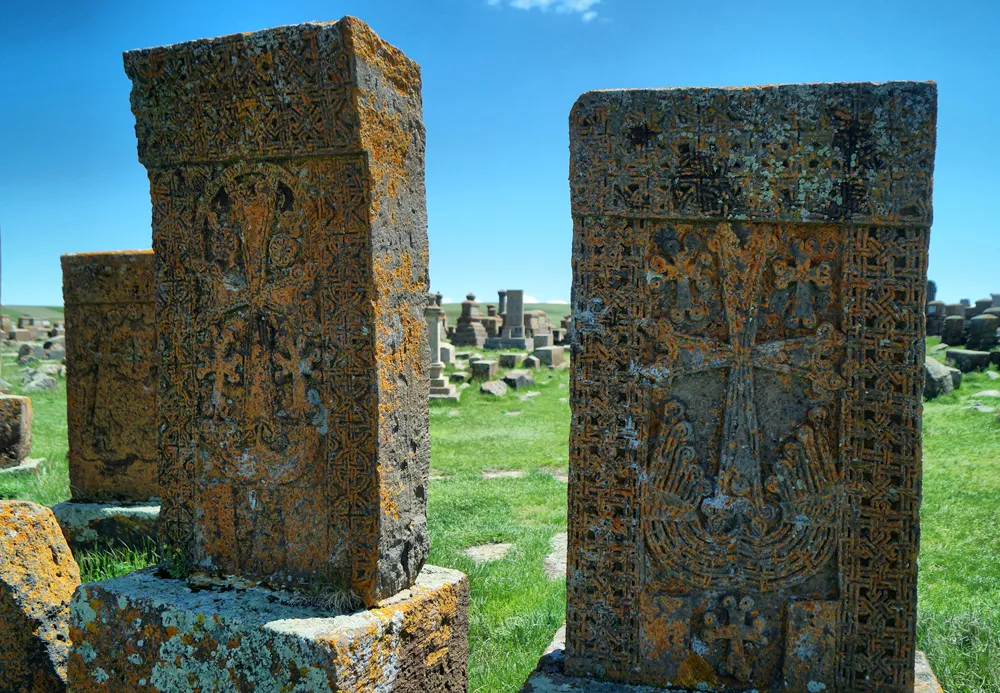
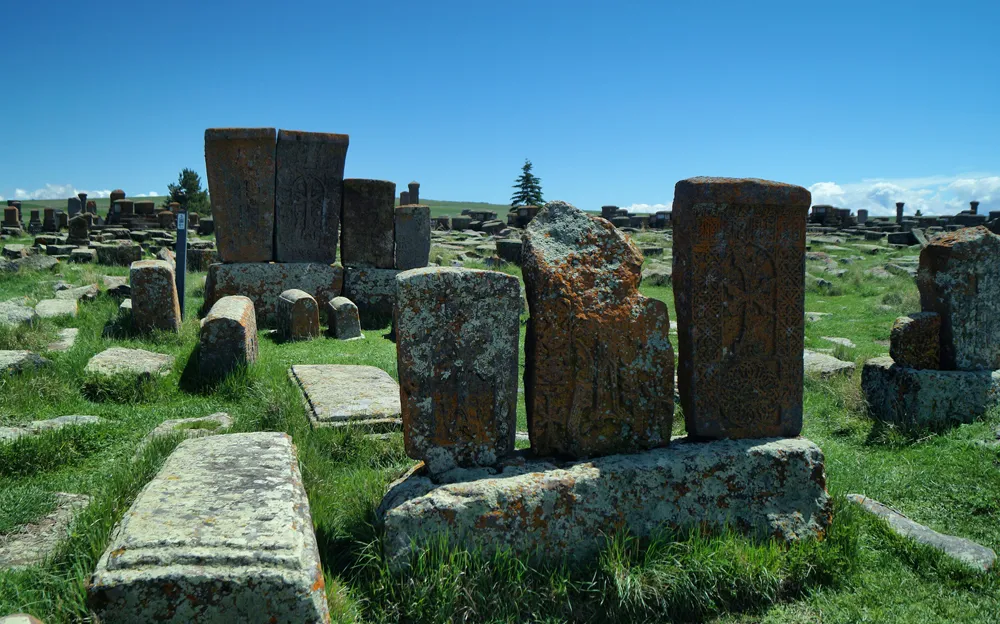
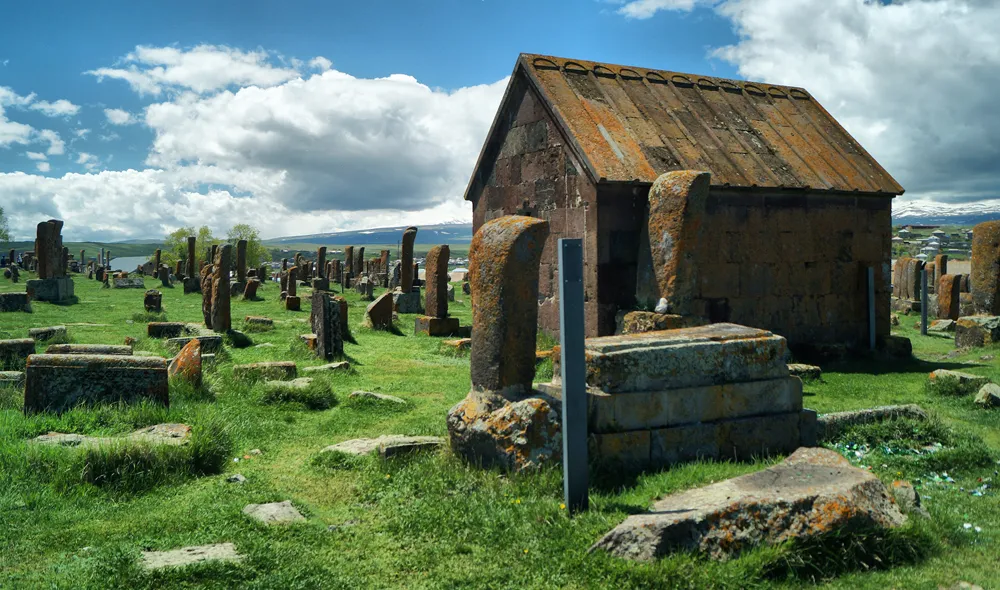
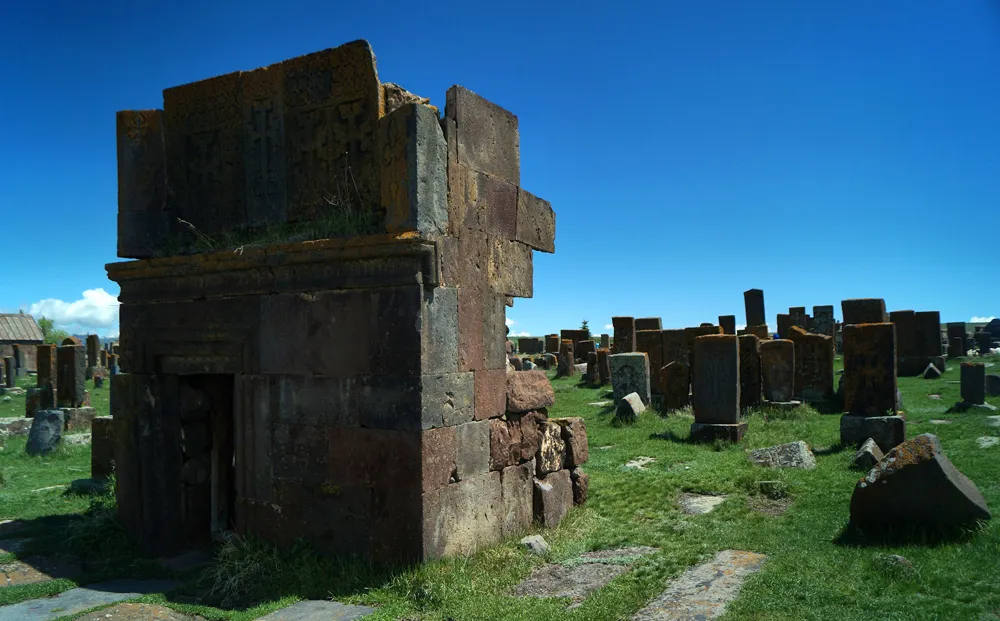
The village of Noratus lies 2 kilometres from Lake Sevan. Once the waters of the lake reached all the way to the village, but over time they receded. The local cemetery has preserved up to a thousand khachkars dating from the 10th to 18th centuries. They are something unreal; you are simply amazed by the masterful work of the carvers. Every stele has a cross, and the rest of the imagery can differ greatly: it may be just ornamental decoration, or an inscription, or a mixture of both.
Most khachkars were, and are, made of volcanic tuff. This rock is easy to work and quite durable. In Ukraine, in Armenian communities, khachkars were made of sandstone; such ones can be seen in the Armenian Cathedral in Lviv.
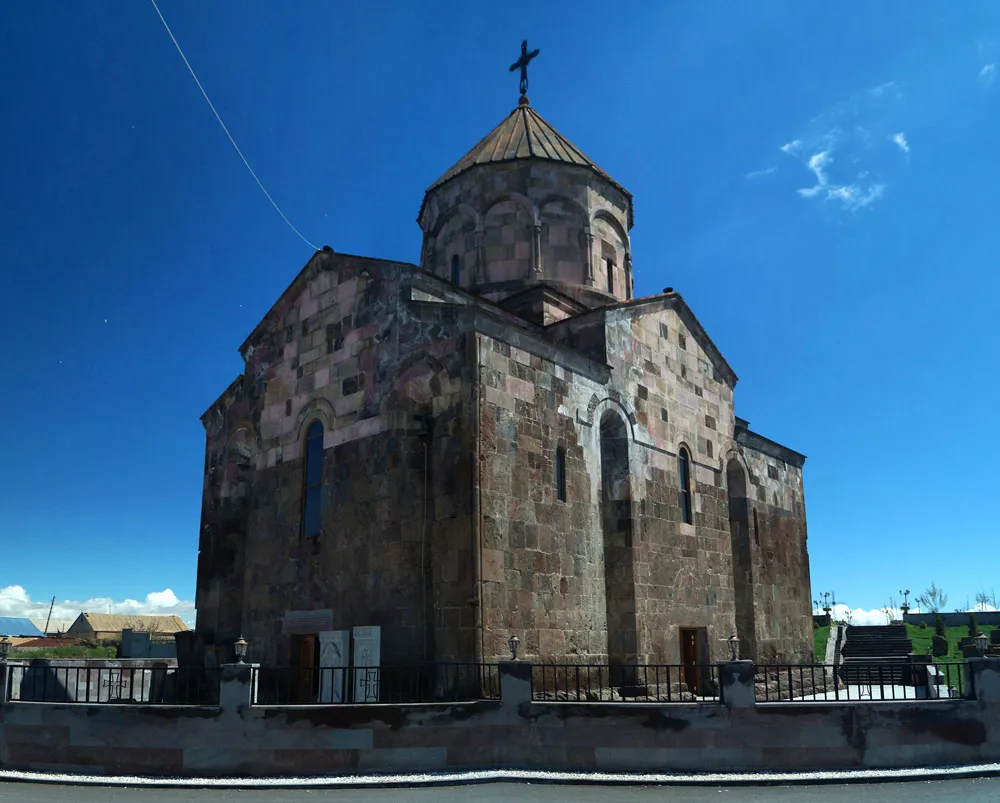
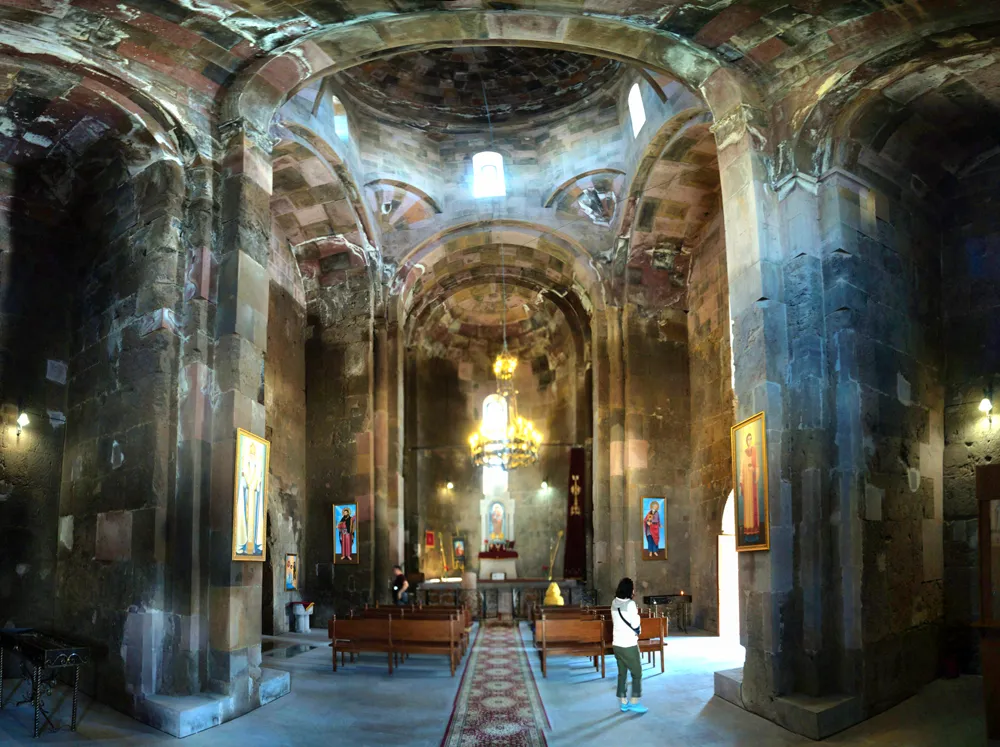
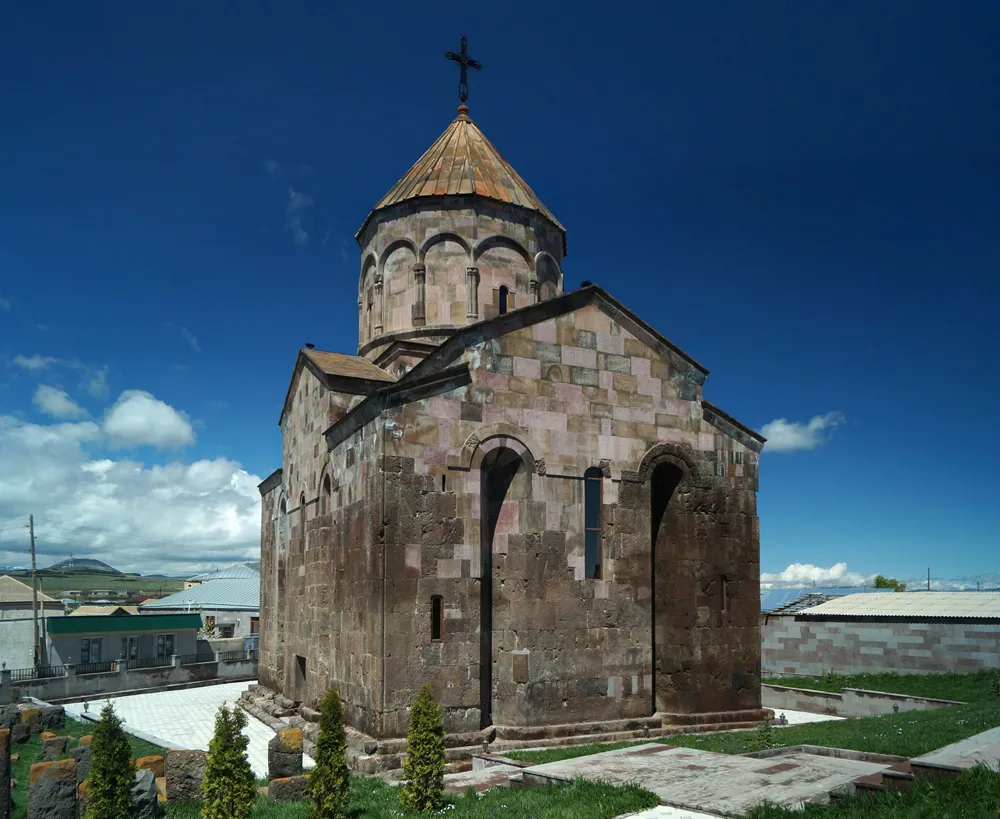
Besides the cemetery, Noratus also has an ancient church built in the 9th century by Prince Saak. It is clear that the upper part of the church was recently restored, as the stone has not yet had time to darken. The church is quite interesting and photogenic, and is dedicated to the Mother of God: Astvatsatsin.
The village of Noratus lies at an altitude of 1925 m above sea level. Tourist brochures list it as a must-visit in Armenia. And that is indeed so.
Text by Roman Malenkov, photos by Roman Malenkov and Hanna Nedielina.