Kolodyste. Kosoblyk’s cross. 3D model

· 2 min read
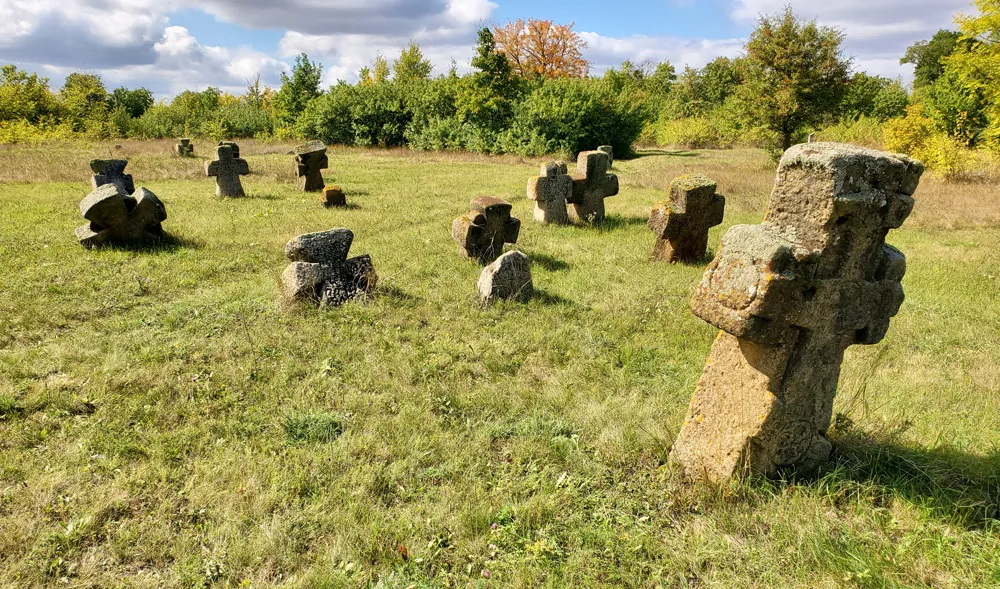
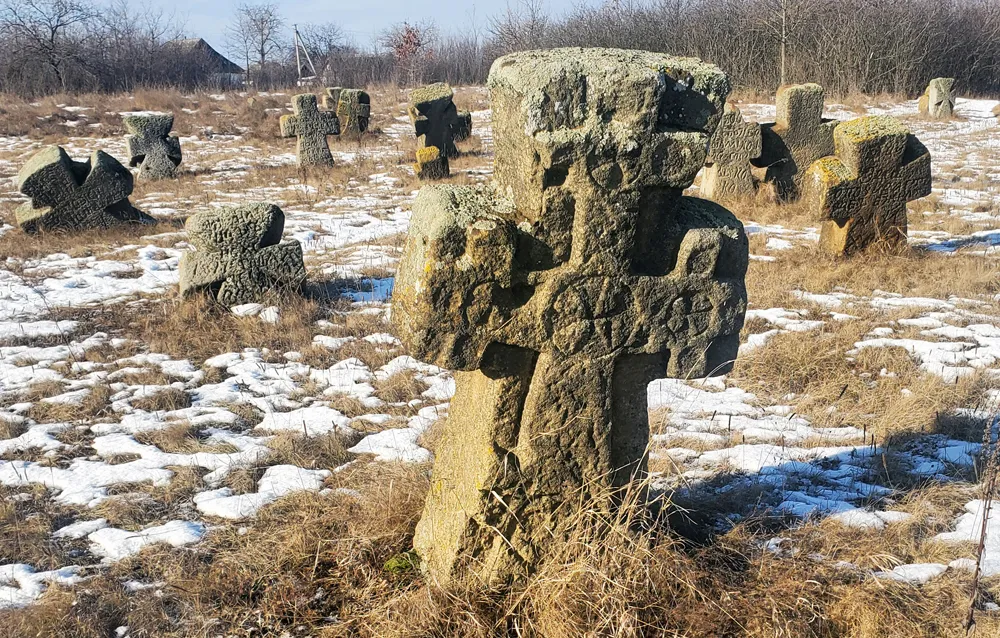
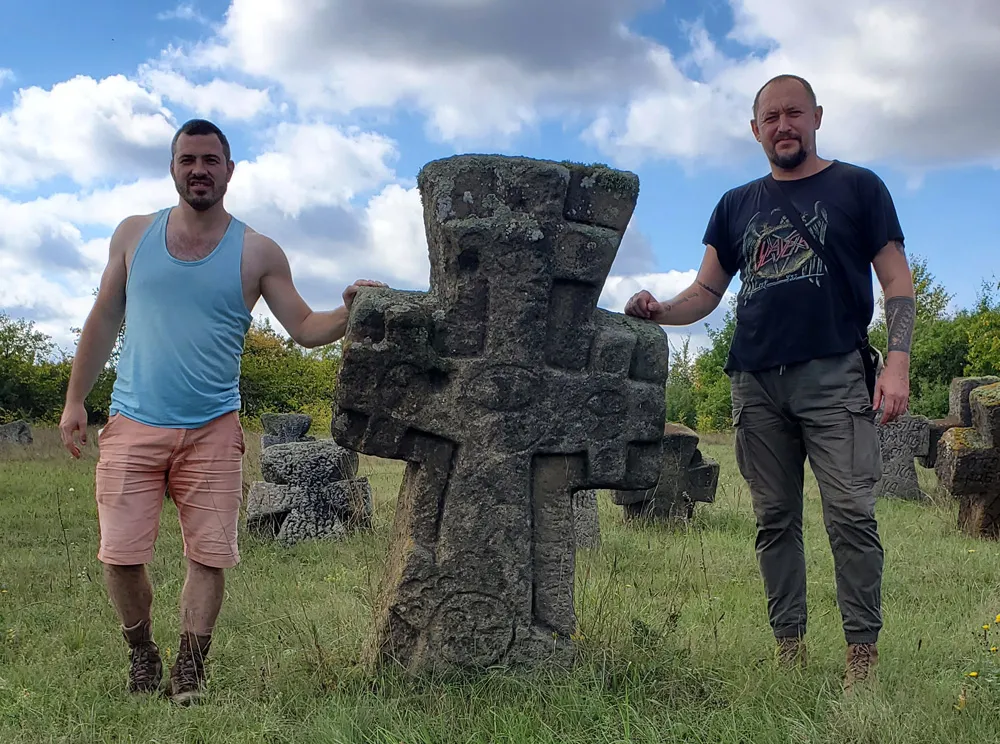
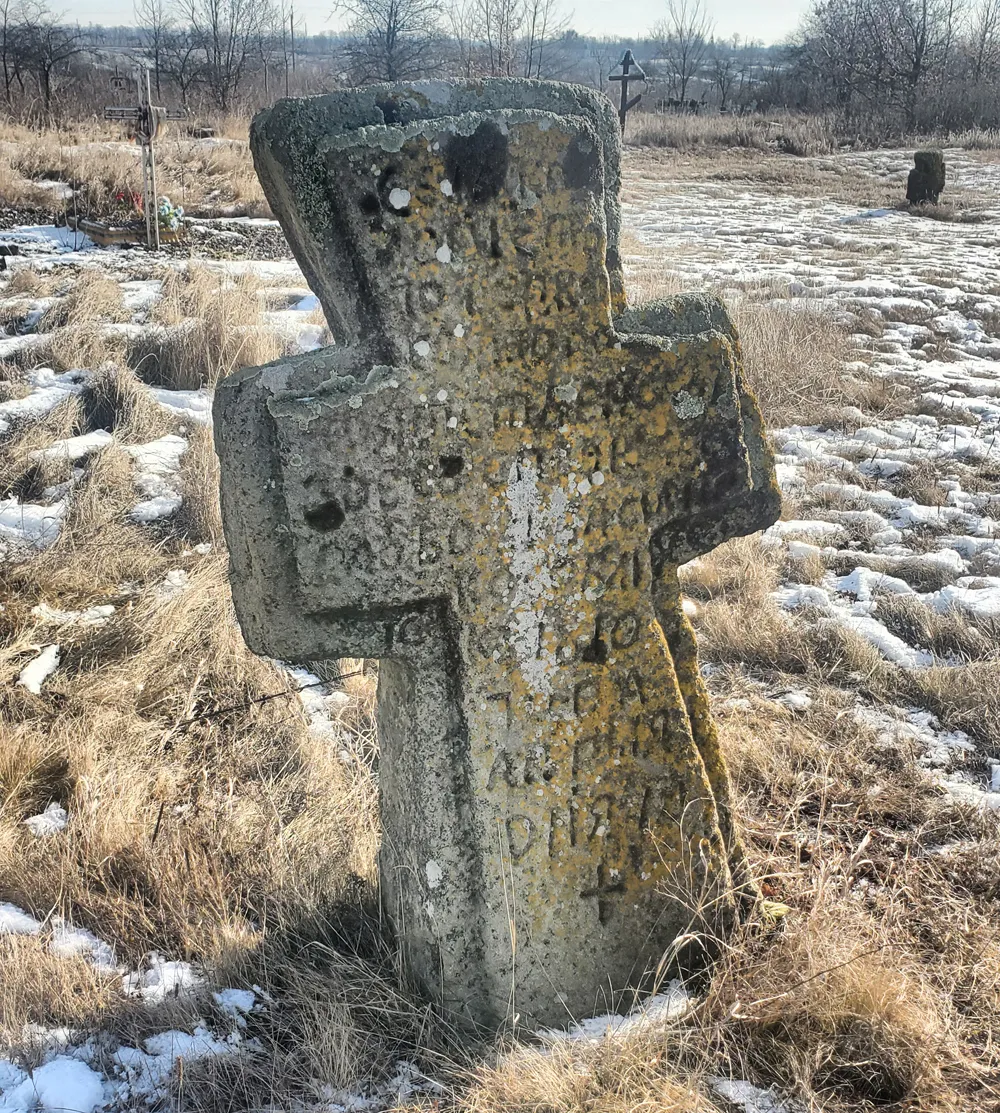
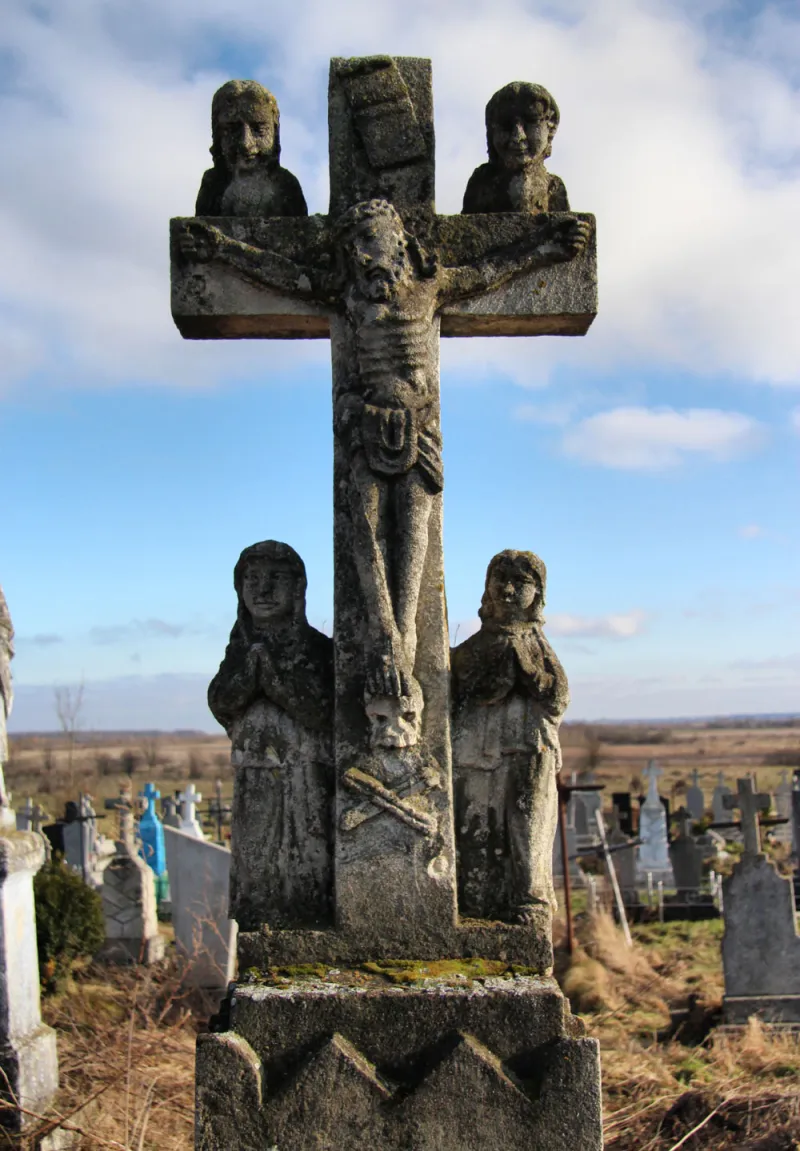
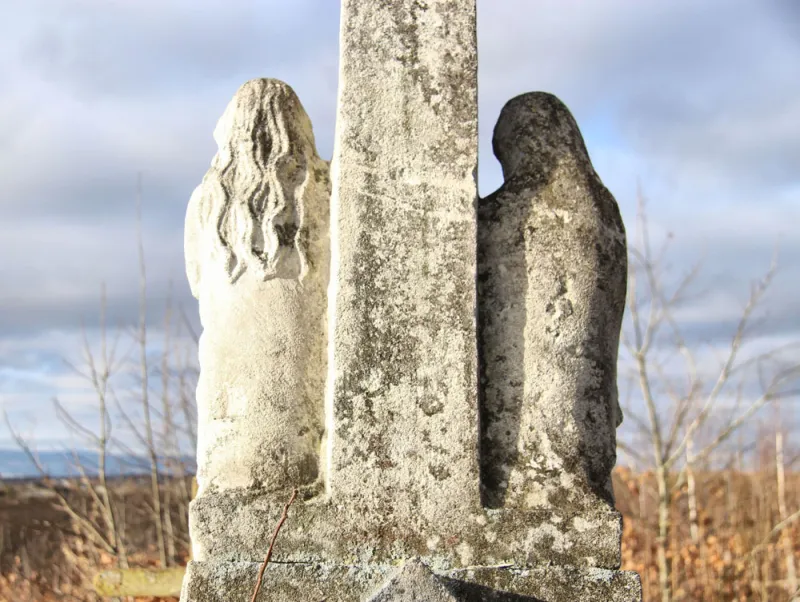
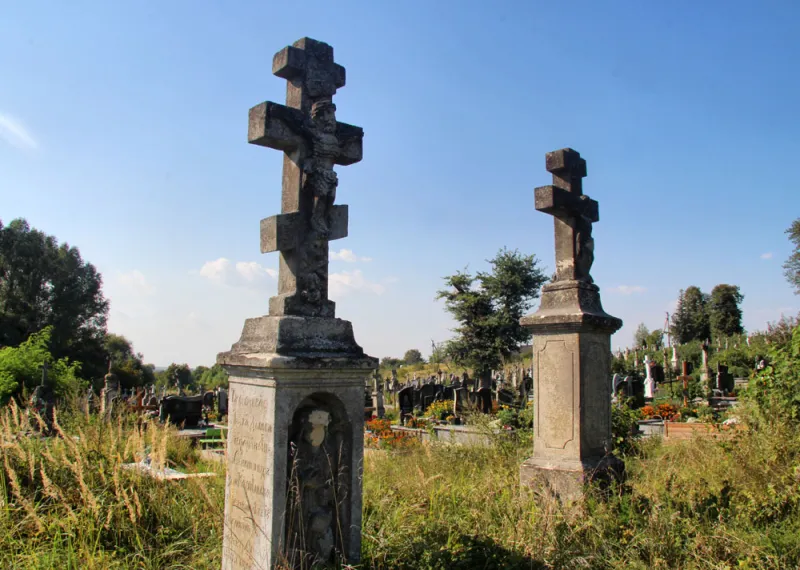
The biggest and most colourful cross in Kolodyste (Cherkasy Oblast, Zvenyhorodka district) seemed to us quite a mystery. Until we did a photogrammetric survey, created a three-dimensional model and then printed it on a 3D printer, we found it hard to read the epitaph. Help came from Roman Zakharchenko-Ushalieuski, one of the best archive researchers and trackers of all those we know.
It turns out to be a real historical detective story.
----
Beneath the cross lies Vasyl Kosoblyk (Kosoblik), judging by the cross, a very well-off man. Such a cross cost as much as a herd of cows. Vasyl died in 1810 (the date on the cross). Roman found documents stating that in 1795 Vasyl Kosoblyk was 80 years old, so he died at 95. Imagine: a man born in 1715 who lived through the whole of the 18th century. Who was he? The documents indicate that in 1795 he was a peasant, as in 1810, when he died. But Roman drew our attention to the fact that his wife was 30 years younger, and she bore him 5 children. Most likely it was these children who put up the cross for their father. Interestingly, the eldest son was born when Vasyl was already over 40. Where was he until then? Probably not in the village, for how could he have lived in those times for half a century (almost) in a village and had no wife? Where did he get the money? Big money, with which he raised and made wealthy a family that, after his death, put up such a cross for him. There are many options, but it immediately comes to mind that Vasyl was a Cossack and was at the Sich, where Kalnybolota, the town nearest to Kolodyste, had its own kuren. There is no documentary evidence, and all of it can be called fantasy. Roman, as a professional historian (now he is in the Armed Forces of Ukraine), asks us not to pile up fantasies, but we are entitled to express our hypotheses. So, in our opinion, it is most likely that Vasyl Kosoblyk was indeed a Cossack, saved up “Cossack bread”, and in old age (40 years in those times was already an old man) came to Kolodyste. With no small amount of money. He took a young (very young) wife, who bore him five children, developed his farm and, probably, worked stone, as many Kolodyste people did. He made millstones, troughs and crosses. He lived a very long life, unbelievable for those times.
We want to note that in the parish registers and revision lists of that time, errors in determining age are often found: 70 years were often lost or added. Even if a decade was added to Vasyl’s age, it still does not affect our logical assumption, even if he was older than his wife not by 30 but by 20 years.