Zhuchkivtsi

· 4 min read
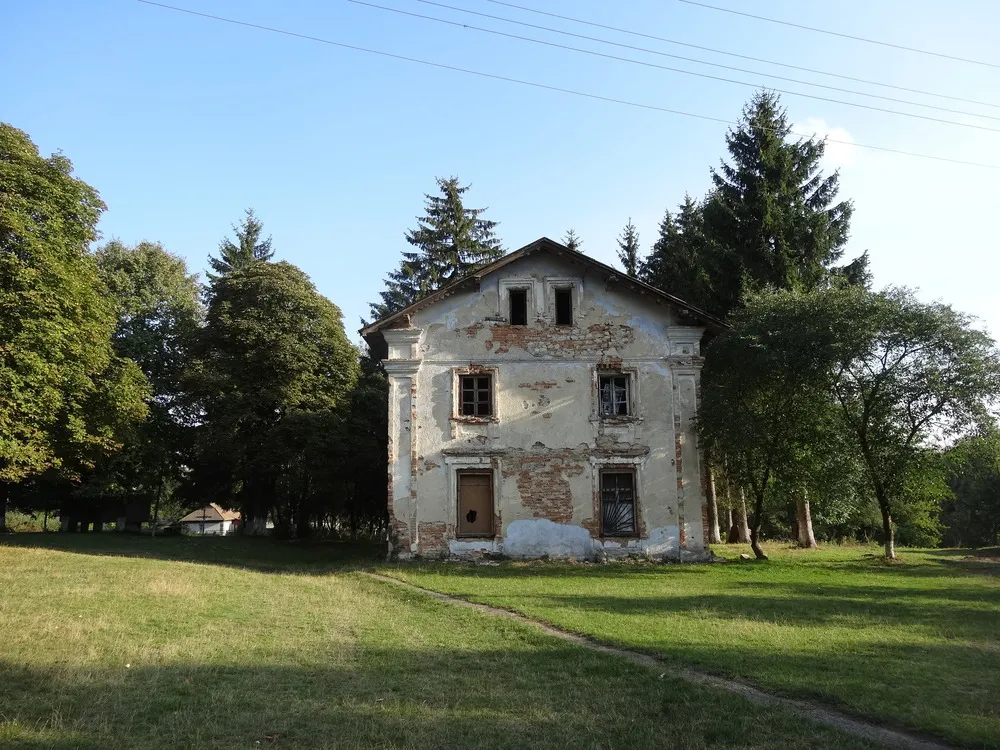
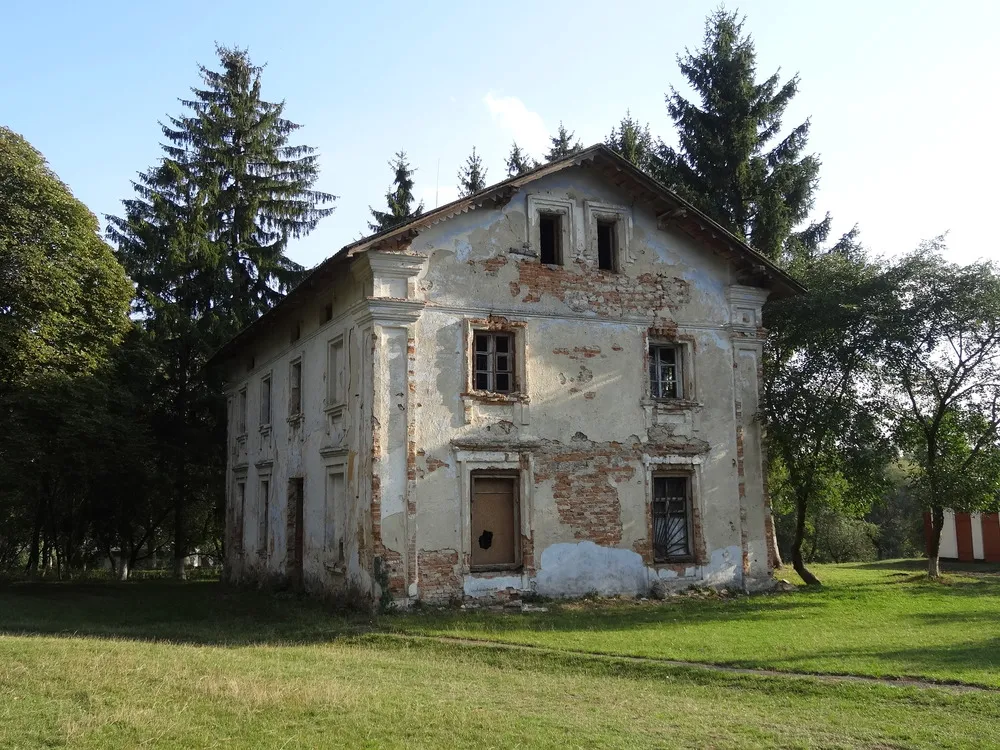
Ten kilometres west of the village of Hvardiiske, historically Felshtyn, in the Khmelnytskyi region, with its splendid St. Adalbert Church, well known to connoisseurs of architecture, lies the village of Zhuchkivtsi. There is very little information about it and its monuments online, and all of it is scattered. I had to “stitch” it together from scraps to get some sort of whole picture, but the gaps are still quite considerable. The first mention of the village dates from the 16th century; there was once a settlement called Zhuchok here, hence the altered name. For a certain period in the 18th–19th centuries it was the hereditary village of Count Michał Jerzy Wandalin Mniszech, the Polish Grand Marshal of the Crown, who owned ten settlements in the Proskuriv region altogether. By 1905 the estate already belonged to a certain gentleman of the Zhuravski family. I never found out exactly what this Mr. Zhuravski was called, but it is known that in 1917 the estate was plundered by the Bolsheviks. That included the two-storey house, which has survived to this day, though in a pitiful state. The building is stocky, heavy, and rectangular in plan. My assumption is that originally it looked different, with annexes, a pediment, bas-reliefs and mascarons, perhaps with porticoes and columns. When I look at the building, it seems to me that this is just how it was. The website of the local school says that in 1927 the building was repaired and a school was set up in it, and a seven-year school existed here until 1966. Now nobody cares about the building; as of 2015, when the photos were taken, one could see through the windows school supplies and other items from the Soviet period still inside. I suspect that nothing has changed since then. The same school website says that the building is about 150 years old.
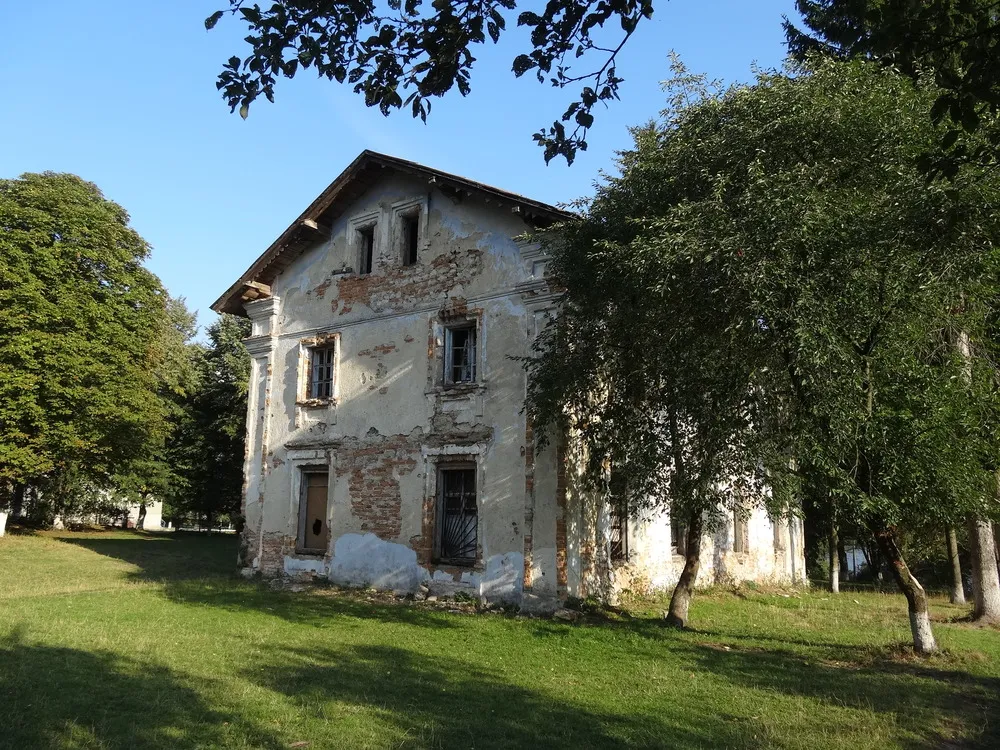
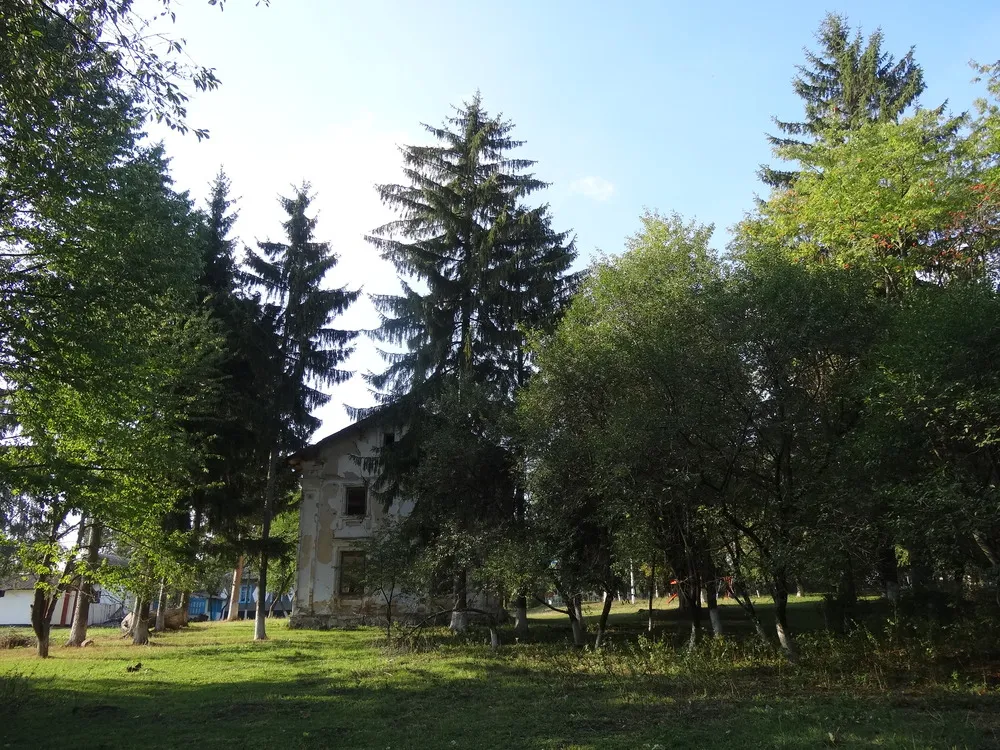
The Zhuravski manor
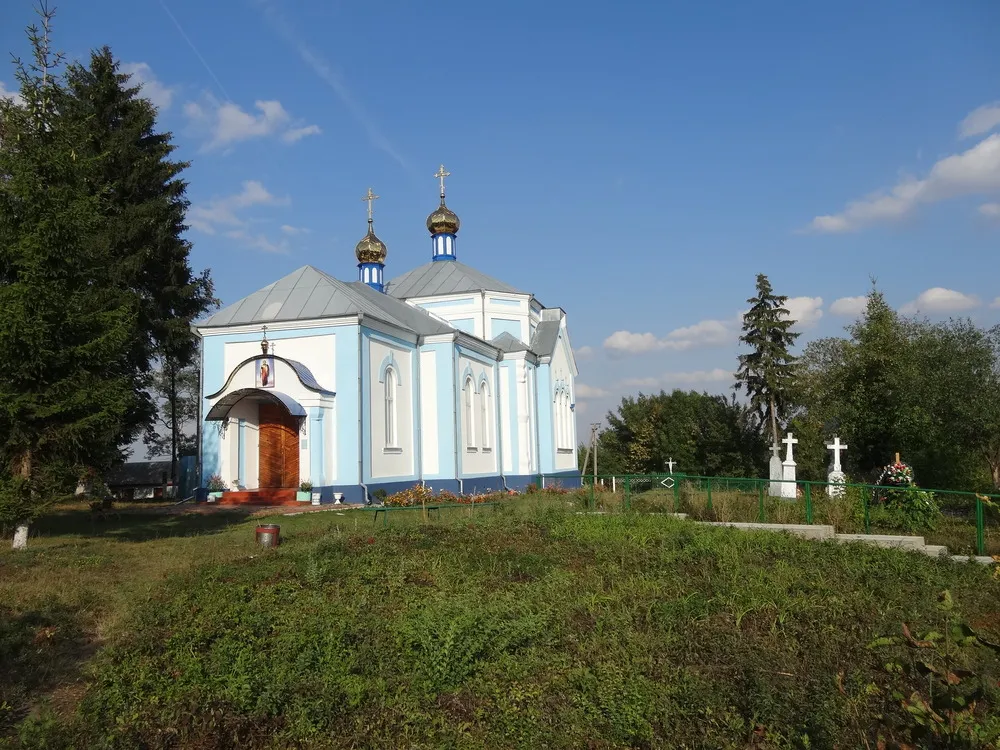
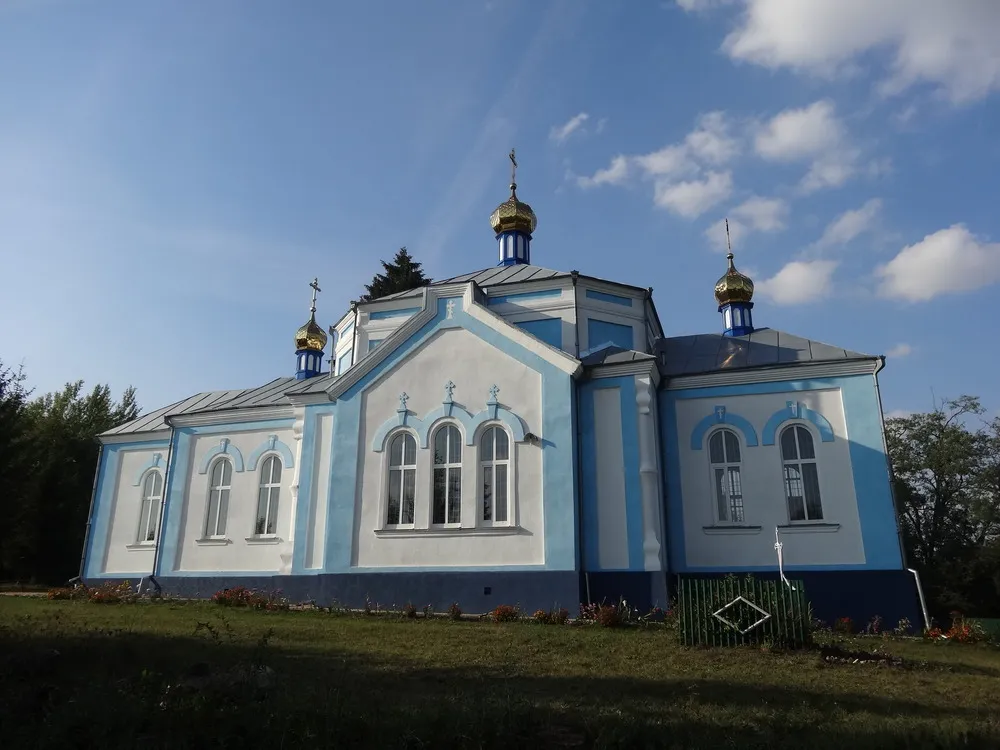
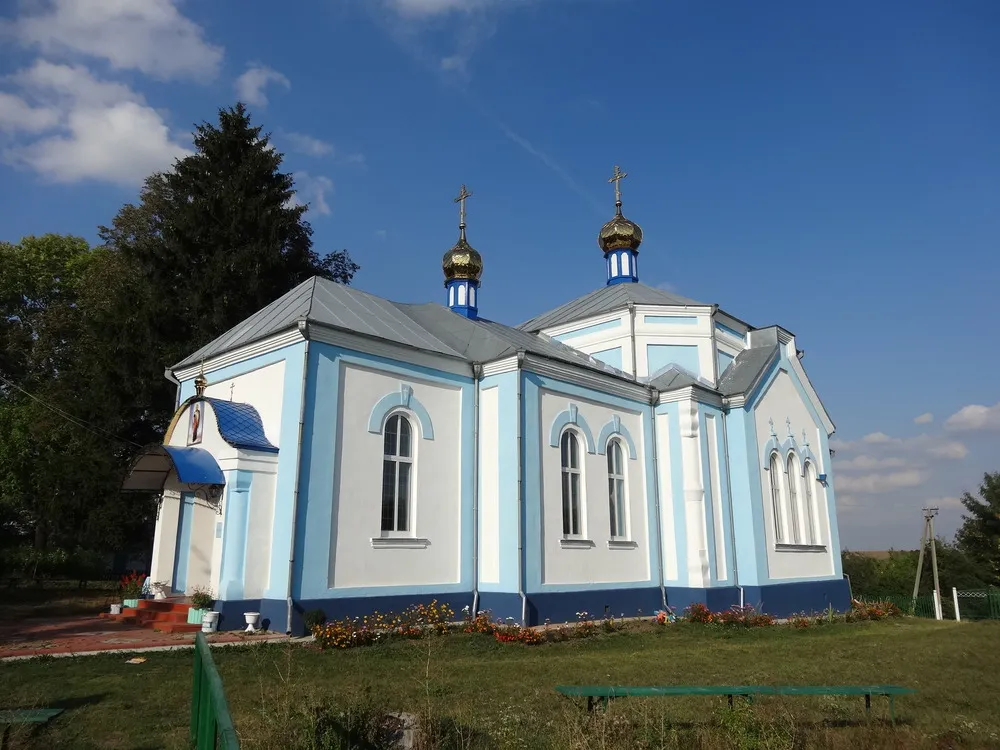
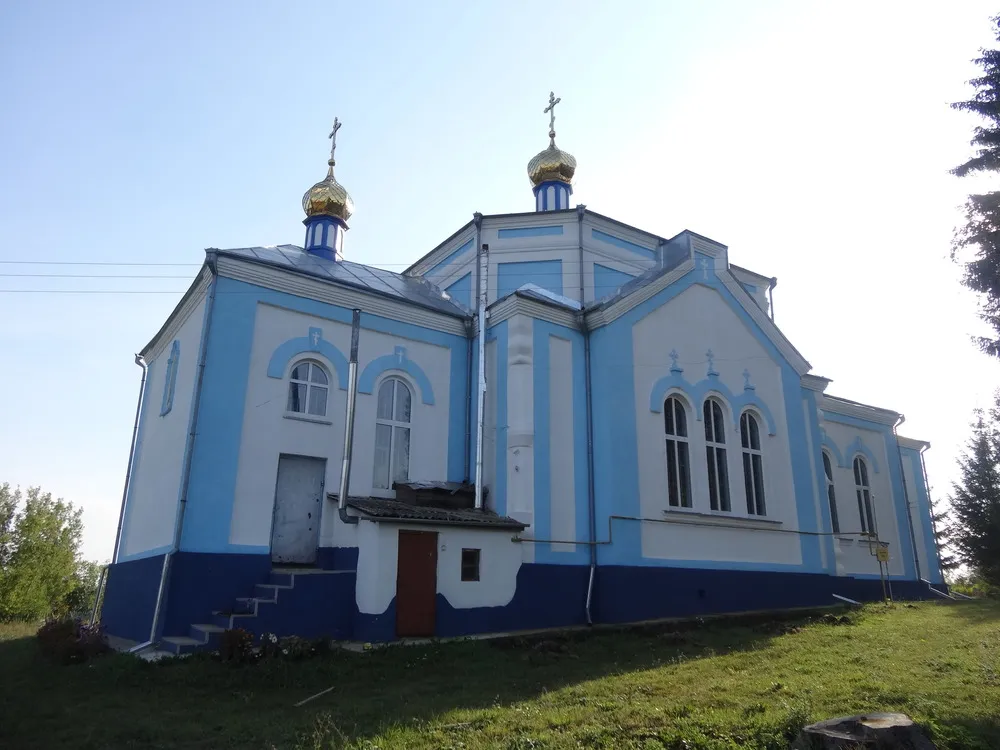
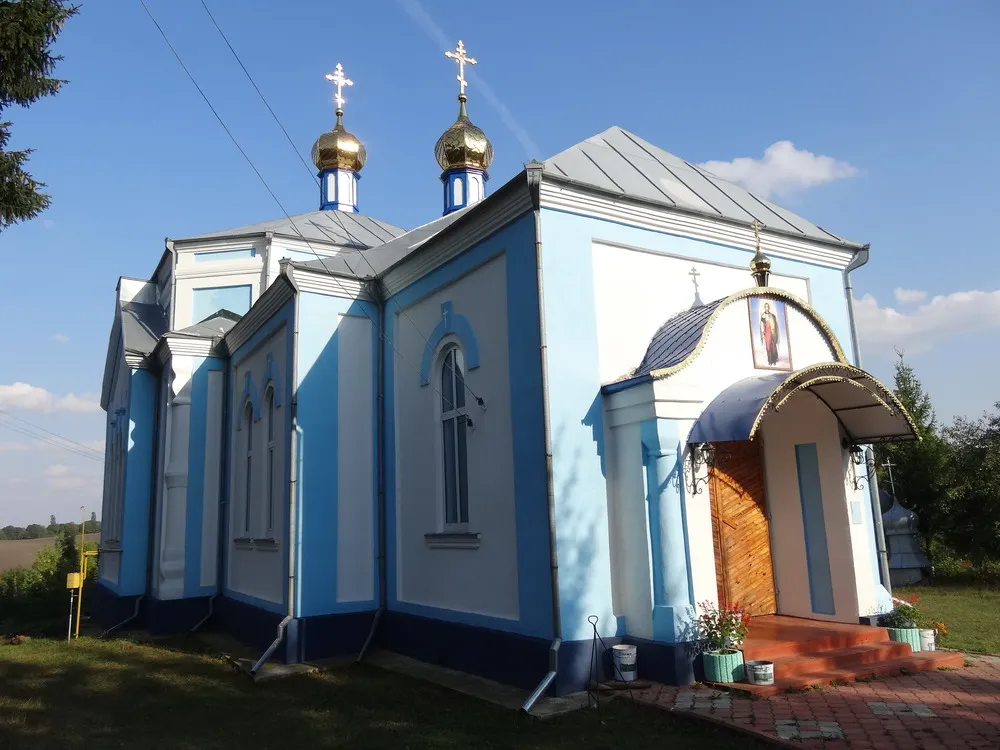
Among the village’s monuments there is also the brick St. Michael Church of 1895. It is already the third one; the previous two were wooden. According to data of the Podillia Diocesan Historical and Statistical Committee for 1901, the first known church here dated from 1740, and the second was built on the site of the old one in 1777. In the 1840s the church fell into decay and was closed until 1864, when it was repaired, and eight years later a bell tower was added. The new brick church has now stood for 128 years; repairs were carried out here in 2005, for its 110th anniversary. That is why one can see online photographs of the church at different times with different paint colours. A parish school existed in the village from 1885, that is, it arose while the previous church was still standing.
So we conclude that the manor house is older than the church building by at least 20 years.
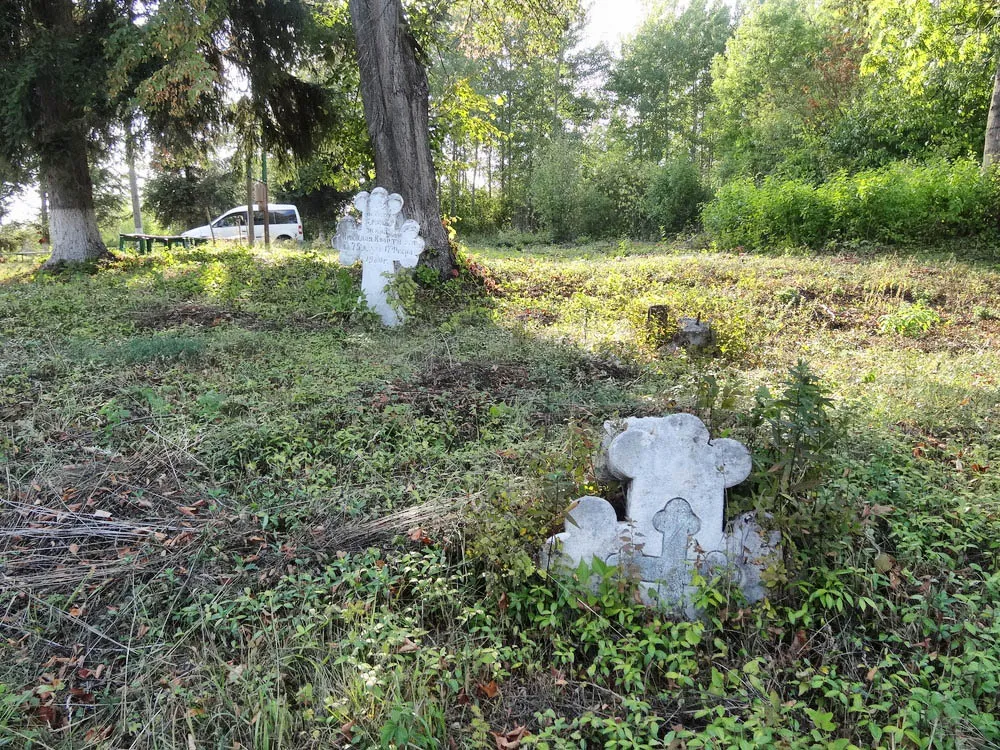
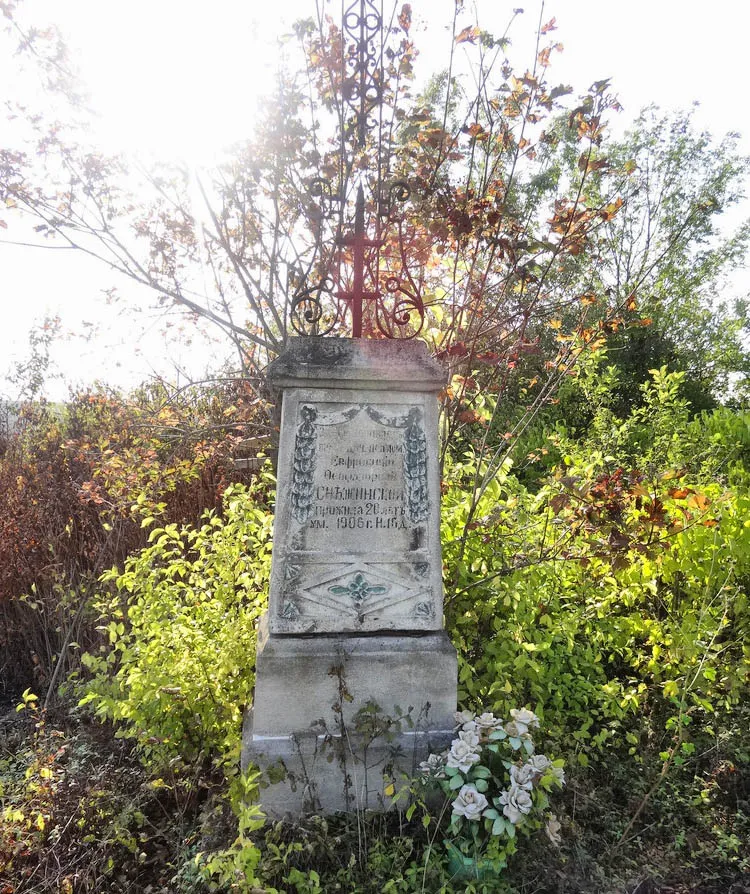
An interesting observation. In the old cemetery near the church there is the gravestone of Yefrosynia Feofanivna Snizhynska, who was the daughter of a psalmist and died in 1906 at the age of 20. At the time the church was built, that is, in 1895, services in Zhuchkivtsi were conducted by the priest Ferapont Sherotskyi, and his address was in Felshtyn. And in Felshtyn at the same time Father Hryhorii Snizhynskyi served. One could put forward theories about family ties between these clergymen, but without any evidence I will not.
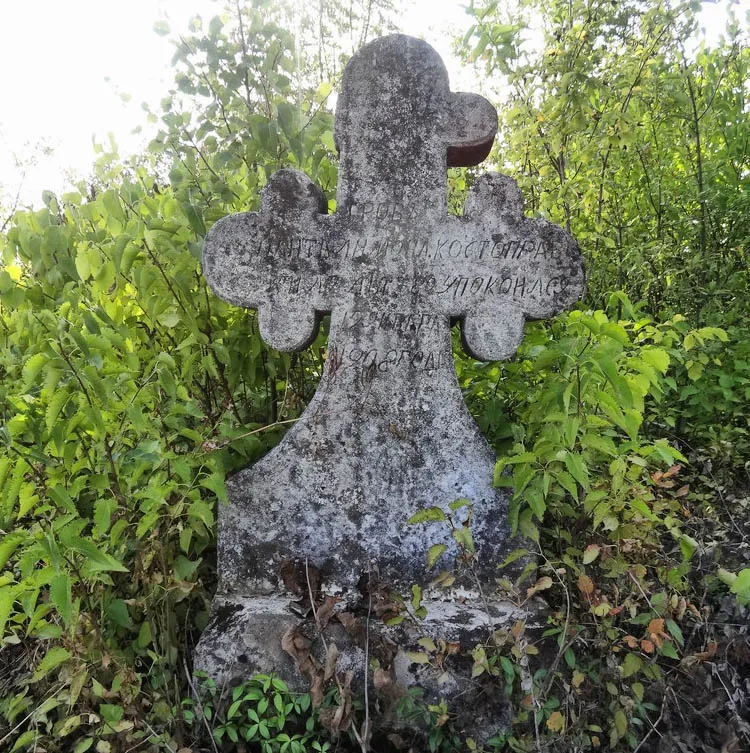
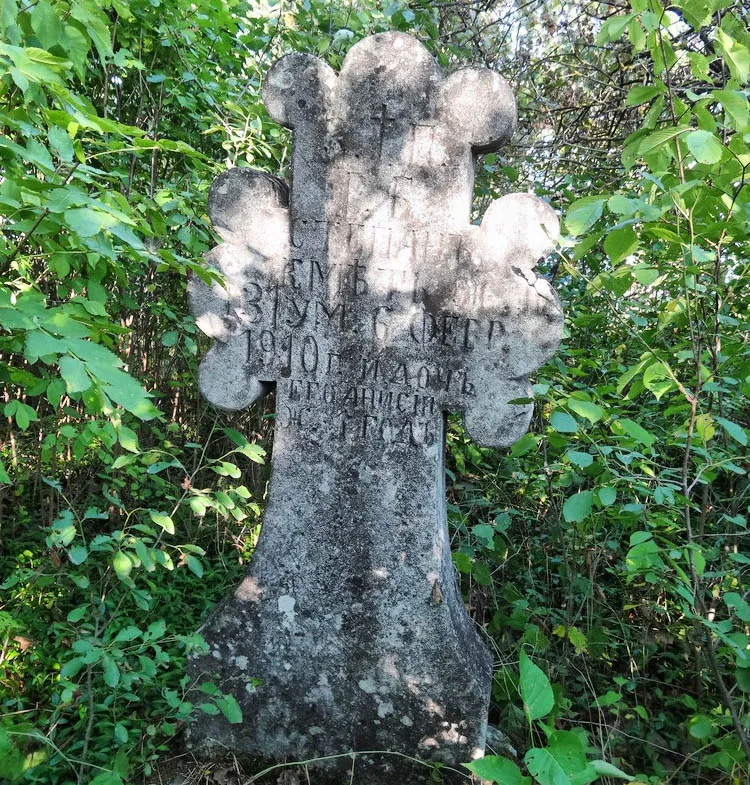
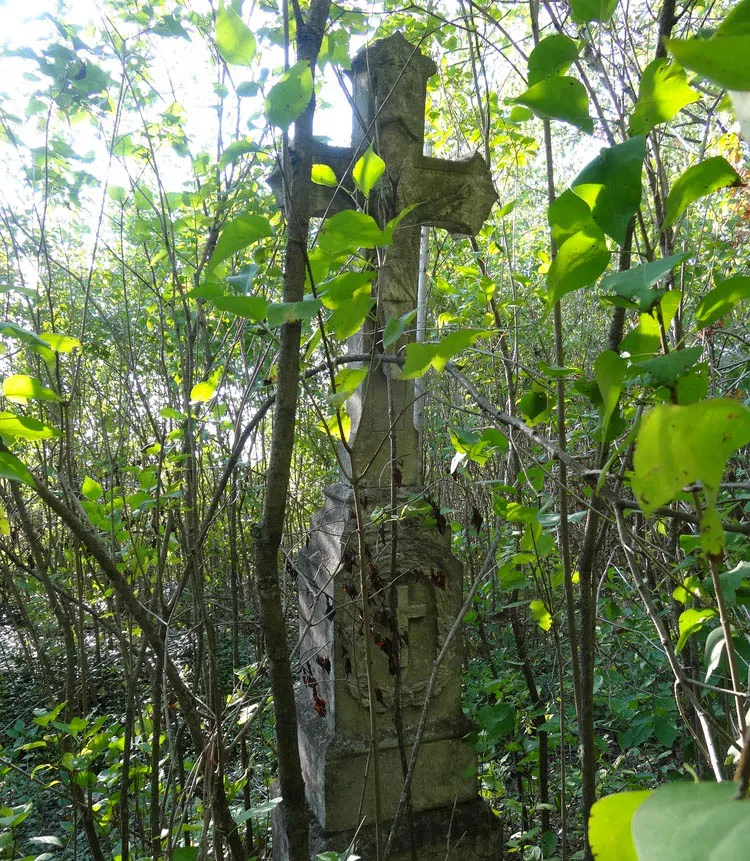
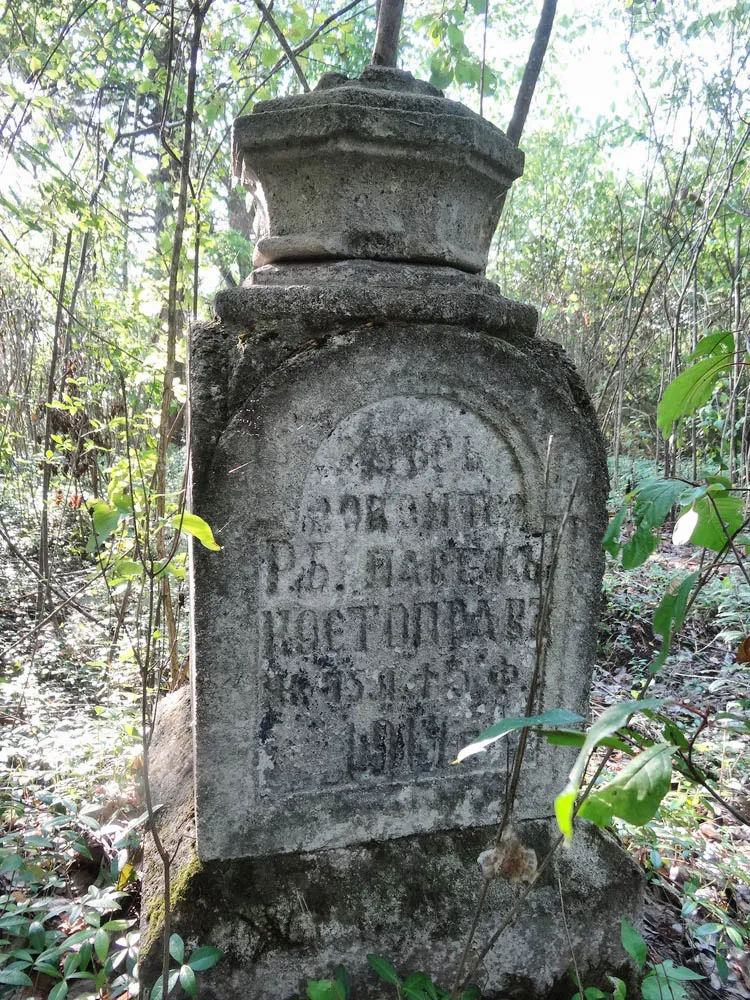
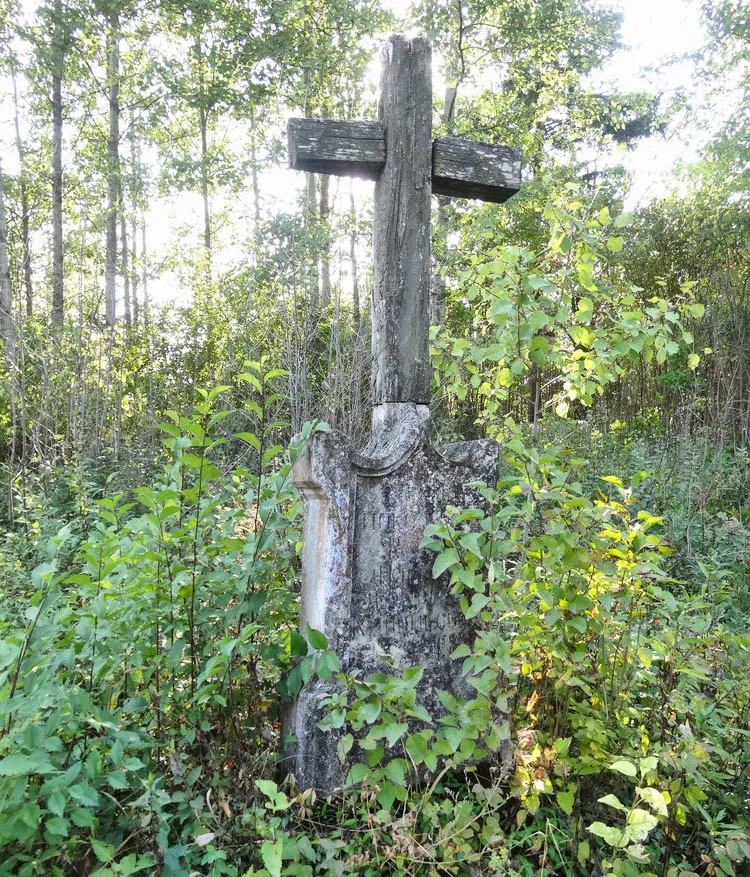
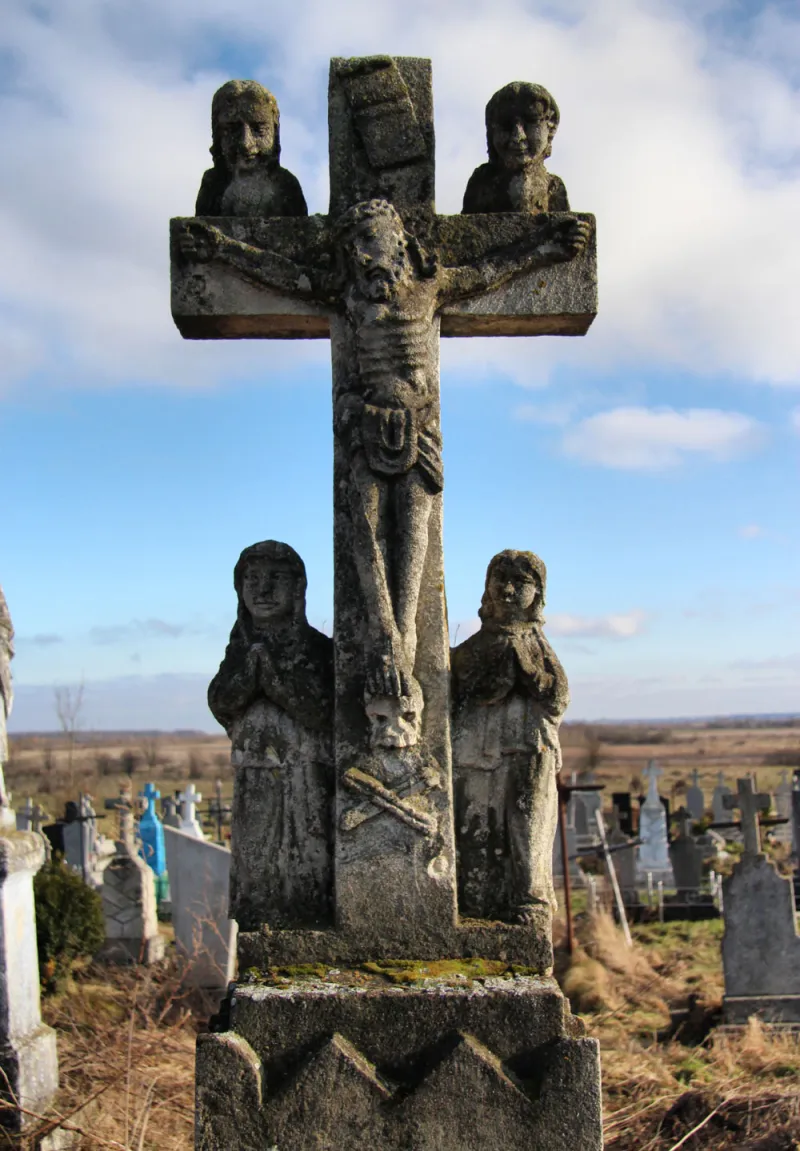
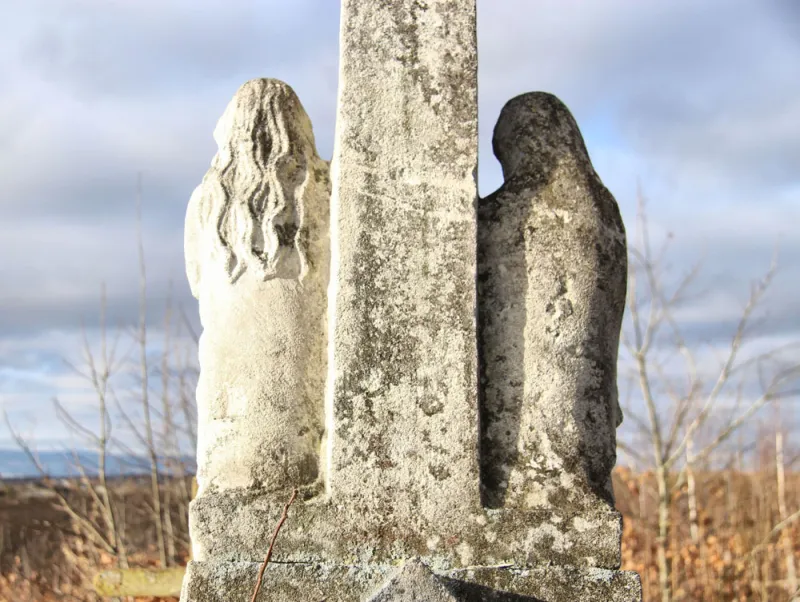
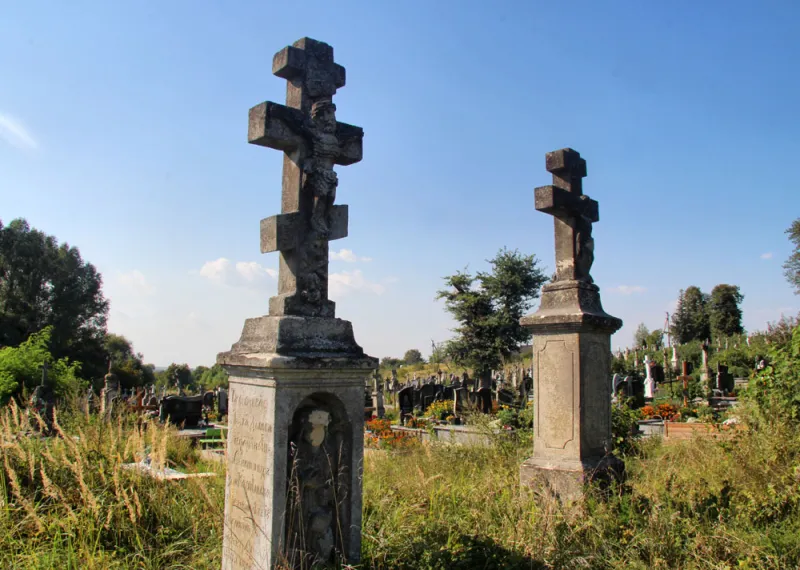
In general, the cemetery needs to be discussed separately. The old part is scattered across the terrain and overgrown with shrubs so thickly that in places you cannot manage without a machete. Here and there the tops of crosses can be seen. Characteristically, those gravestones that can still be approached have perfectly clear inscriptions; time has not affected them. Most of the graves I examined date from the early 20th century; there are probably older ones too, from the age of the church, but somewhere in impenetrable bushes. Many graves bear the surname Kostoprav, which was probably common in the village. Some crosses are of a very unusual shape that I had not seen before: the short side arms and the top arm of the cross each have three widely spread petals. It seems to be sandstone, although the soils here are mostly black earth and sometimes loam.
Perhaps someone will become interested in the history of the village, spend some time in the archives and be able to write about it in more detail. I hope so. All the more so as the Khmelnytskyi archive holds at least a register of births, marriages and deaths of the Zhuchkivtsi church for the years 1751–1797.
Text and photos by Ihor Dorozhko