Ukrainka (Pyniazevychi)

· 2 min read
Today this village has the not very original name of Ukrainka, and until 1960 it was called Pyniazevychi. In the 15th century, on the site where the village of Pyniazevychi was later founded, as on a likely invasion route of the Turkic-Tatar hordes, abatis fortifications were built, manned by “penezhni” men, that is, those who received a monetary reward from the royal treasury, the pieniądze. Their task was to warn the population of approaching enemies and to organise resistance. Between the villages of Pyniazevychi and Liubovychi, as evidence of those times, tall burial mounds have survived, where those killed after a Tatar raid were buried.
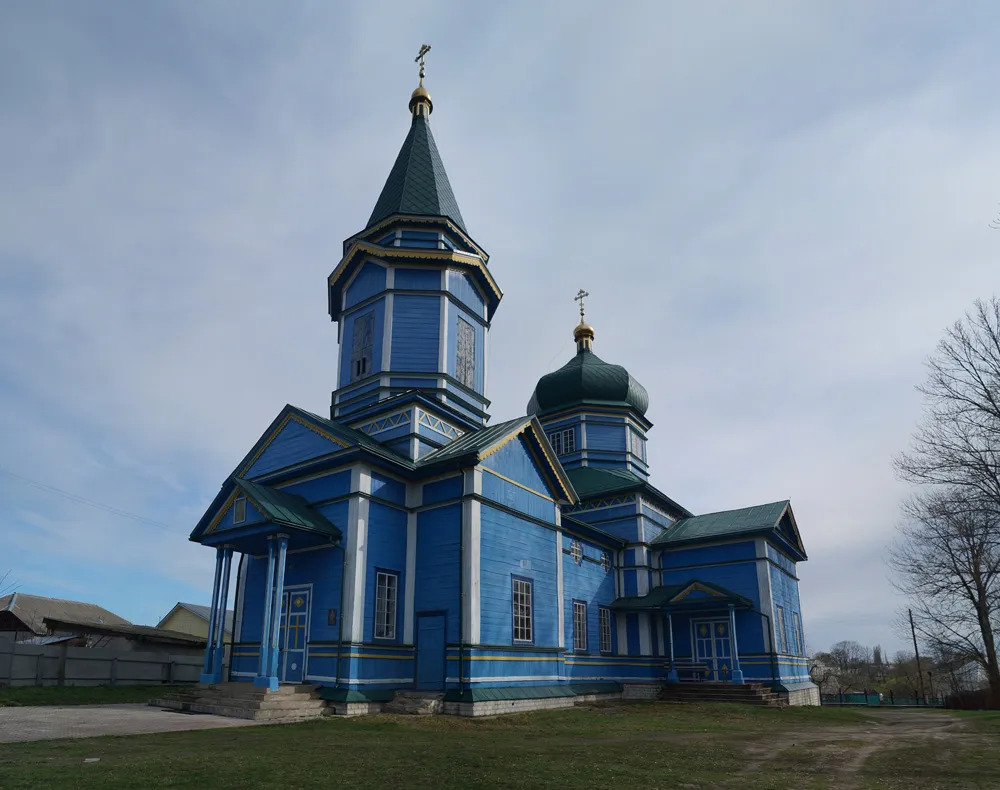
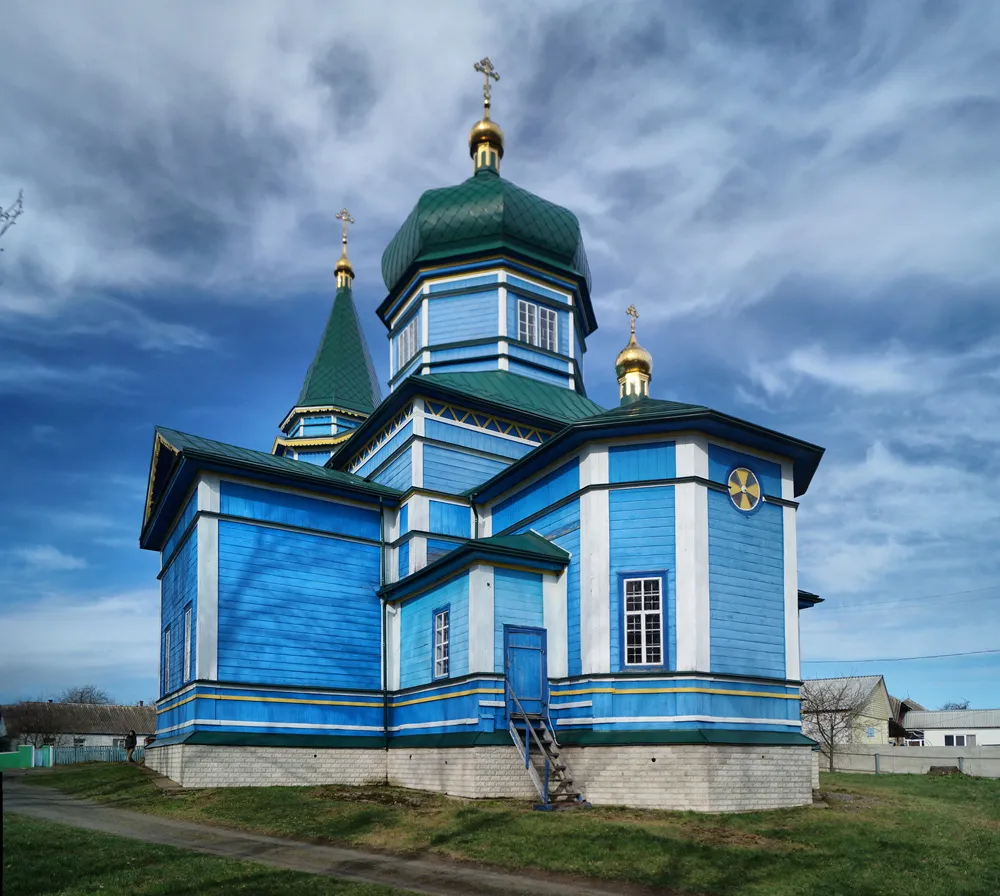
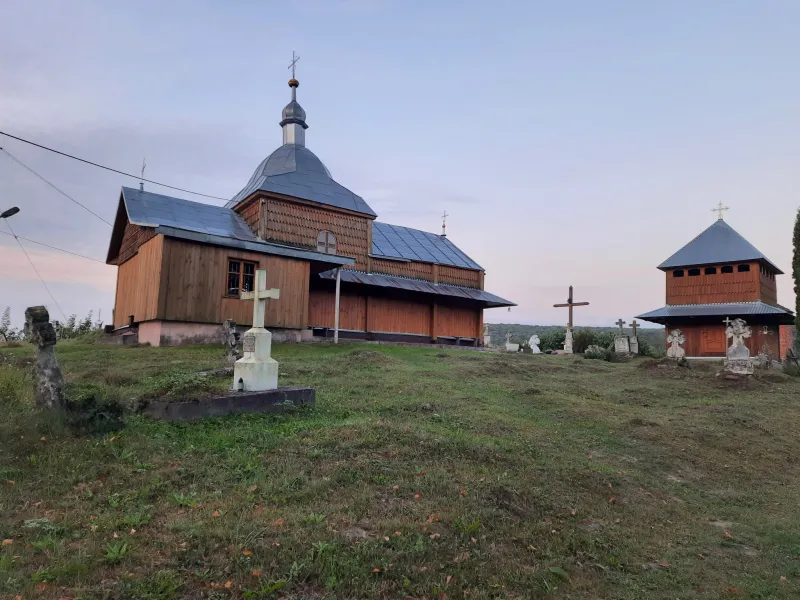
In 1768 a wooden church in the name of the Archangel Michael was built in the village on the site of an older one, and it still exists today. At the beginning of the 20th century the village had 309 households with 1,727 residents. Pyniazevychi had an Orthodox church, a parish school, a water mill and a shop. The landowner M. V. Maslov owned a brick and tile factory with a capacity of 5 thousand high-quality bricks. Since ancient times the residents of Pyniazevychi were also engaged in various trades, such as ironworking and tar distilling. Many villagers worked in granite quarries, a considerable number of which are located around the village. Granite blocks were turned into millstones, whetstones, well troughs, paving stones and kerbstones, gateposts, troughs for watering livestock, gravestones and so on. According to the well-known local historian L. Pokhylevych, the main building of Kyiv National University, the complex of structures of the Pechersk Fortress, the main military hospital of the Ministry of Defence of Ukraine and the main building of the Mykolaiv Junker School (now housing the Academy of the Armed Forces of Ukraine) were built of granite slabs from Pyniazevychi.
Photos by Roman Malenkov and Serhii Shcherbii.