Radovychi

· 4 min read
Radovychi is a village in Ukraine, in Kovel district of Volyn Oblast. Population – 382.
The village of Radovychi in Turiisk district is one of the old Volhynian villages. The first written mention of the village dates from 8 June 1544, in an agreement between Anastasiia Radovytska and Prince Fedir Andriiovych Sanhushko on the demarcation of her Radovychi estate from the estates of Prince Fedir – Turiisk, Bobol and Obenizh.
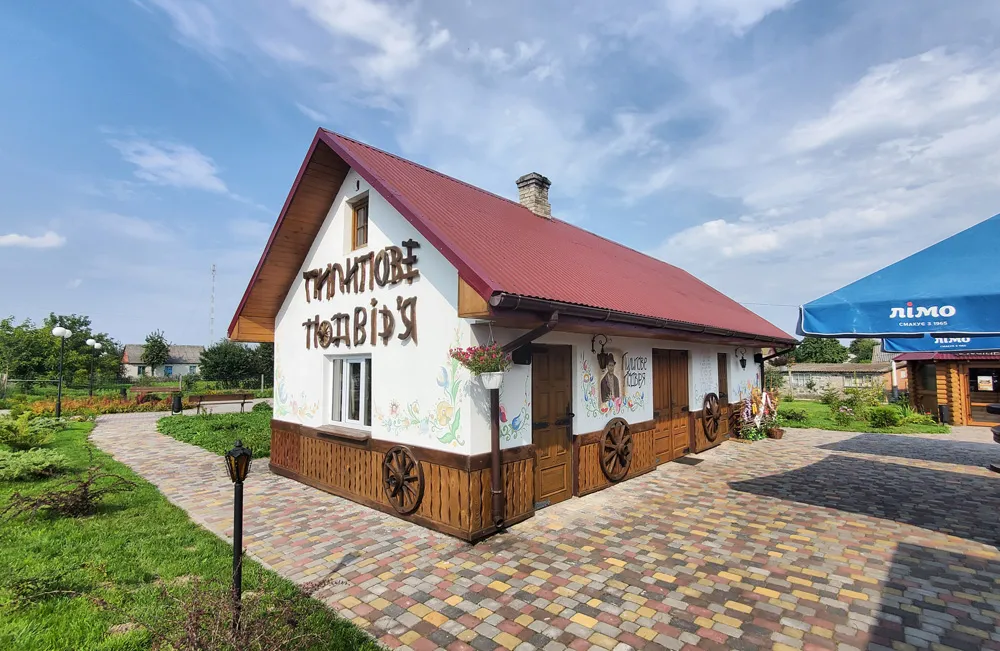
The Polissian Sich
In the first days of September 1943, near the village of Radovychi in Turiisk district, one of the largest battles between the UPA and the Germans in Volhynia took place.
On 5 September the insurgents fought in this area against Polish units of the Home Army and bases of the Polish “self-defence”. Several kurins of the UPA group “Turiv” had been brought in for the operation against the Poles.
On 7 September German army units appeared at the site of the Ukrainian–Polish fighting. At first a Wehrmacht company unexpectedly ran into ambushes organized by the sotnias of “Baida” and “Kubyk”.
In the first clash the Germans lost 5 killed and 11 captured. On 8 September the Germans sent a punitive expedition from Kovel consisting of an infantry battalion (470 soldiers), three armoured vehicles and an armoured train. Fierce fighting began, with artillery used by both sides.
The insurgents, who had numerical superiority but poorer weapons, fought for two days (until the end of 9 September), then withdrew deep into the forest. Nine UPA sotnias took part in the fighting (the kurin of Oleksii Hromadiuk (“Holoben”), the kurins of “Shchuka” and “Yarema”, as well as the artillery training sotnia under “Rozvazhnyi”, the sotnia of “Zaporozhets” (the sotnia commander, a native of Horokhiv district) and others) – over 1,000 insurgents in all, under the overall command of Oleksii Shum (“Vovchak”). The UPA men captured 59 weapons and reportedly killed 208 of the enemy (according to battle participant V. Novak (“Krylatyi”).
Particularly distinguished in the fighting were the commander of the 1st sotnia Tykhon Zinchuk (“Kubik”), the commander of the 2nd sotnia “Baida” (a former Red Army soldier), who kept commanding even after being wounded in the head, and the platoon commanders Chaikivskyi (“Trach”) and “Derkach”; the rifleman “Kalenyk”, who was killed; and the UPA machine-gunner Vasyl Sevastaniuk, a resident of the village of Osmyhovychi, who at a critical moment rose to his full height with his machine gun and with devastating fire forced the Germans to halt their attack. A resident of the village of Harusha (Turiisk district, Volyn Oblast), Ivan Vovk, knocked out a German tank (an armoured car?).
On the UPA side about 40 fighters were killed and 3 were wounded.
Veterans of the Polish underground claim that in this battle the Germans lost only 26 of their soldiers. However, they point out that the German bodies were badly mutilated. It is hardly likely that in such a battle the insurgents had the opportunity to abuse corpses.
The only ones who could have been mutilated were the 11 Germans taken prisoner on 7 September. Most likely the truth about German losses lies somewhere in the middle. If we assume that the number of Germans killed on 8–9 September equalled the number of weapons captured (59 men) and add to this the 11 killed prisoners and the 5 killed the day before, we get a fairly plausible figure – 75 men. Considering that the insurgents were more numerous and that the Germans were attacking in unfamiliar territory, they could quite easily have lost that many men in three days.
After the abolition of Turiisk district on 19 July 2020, the village became part of Kovel district.
Source: Wikipedia
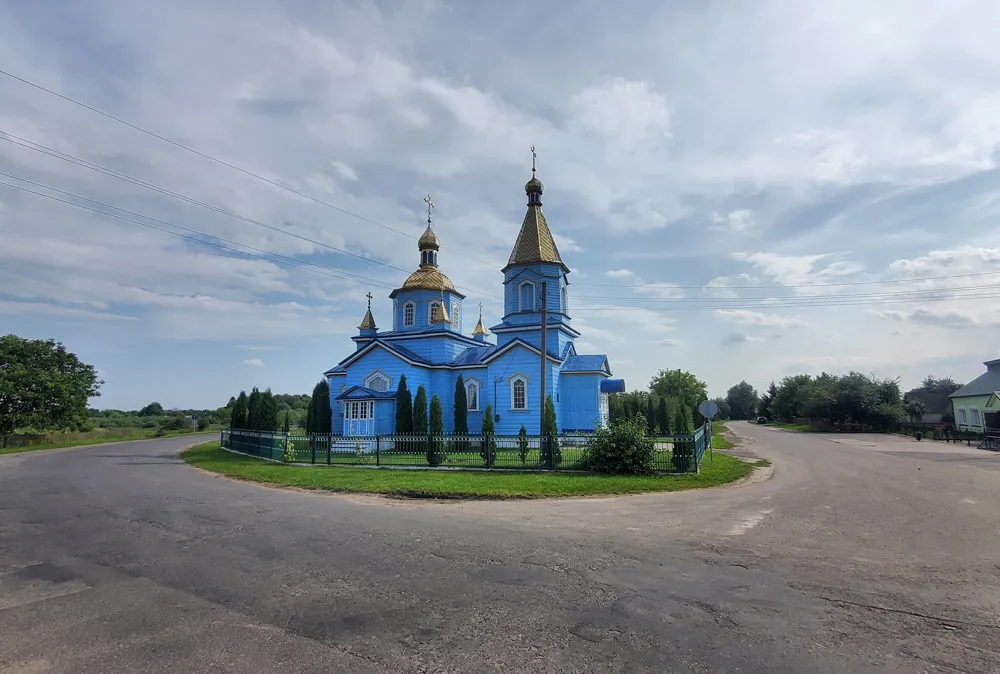
Trinity Church
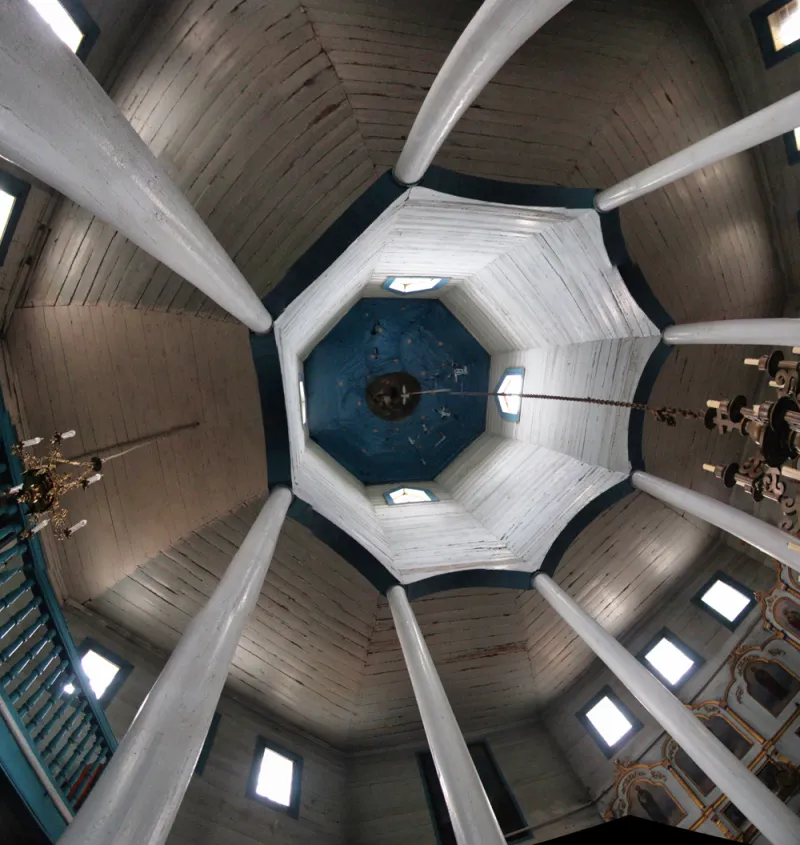
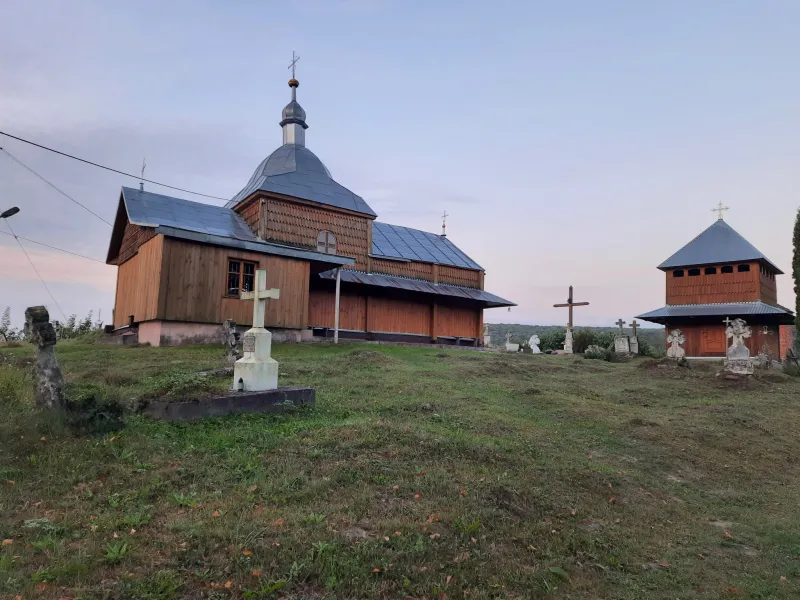
The wooden church that preceded the present one stood in a different place. The next one, also wooden, was built on a new site in 1888. From 1960 to 1989 the church was closed (it is not known whether it was adapted for another function). It has been in use again since 1989. It is an architectural monument of local significance. It is used by an Orthodox congregation of the Moscow Patriarchate.
It stands in the very heart of Radovychi, near a large crossroads. It is a typical example of the eparchial style. It rests on a brick foundation. It has annexes at the sanctuary, at the side arms of the nave, and a wooden two-tier bell tower. Four small turrets are set at the corners of the nave roof. The tops of the windows repeat the shape of the roofs. The church has been completely renovated on the outside.
Source: Wooden churches of Western Ukraine
Photos by Roman Malenkov