

Aphrodisias
· 6 min read
Aphrodisias, once a small ancient Greek city in western Anatolia, is today an ancient city on the UNESCO World Heritage List near the modern Turkish village of Geyre.
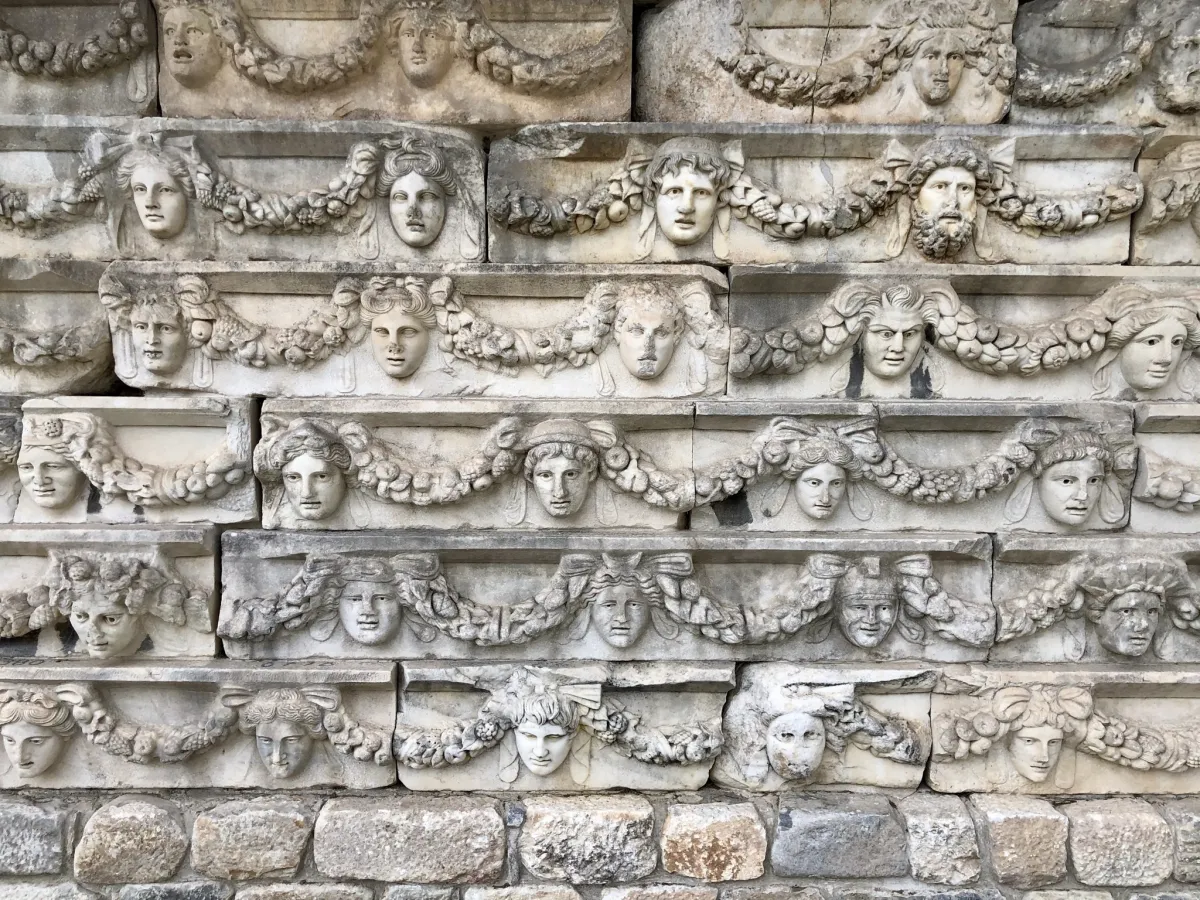
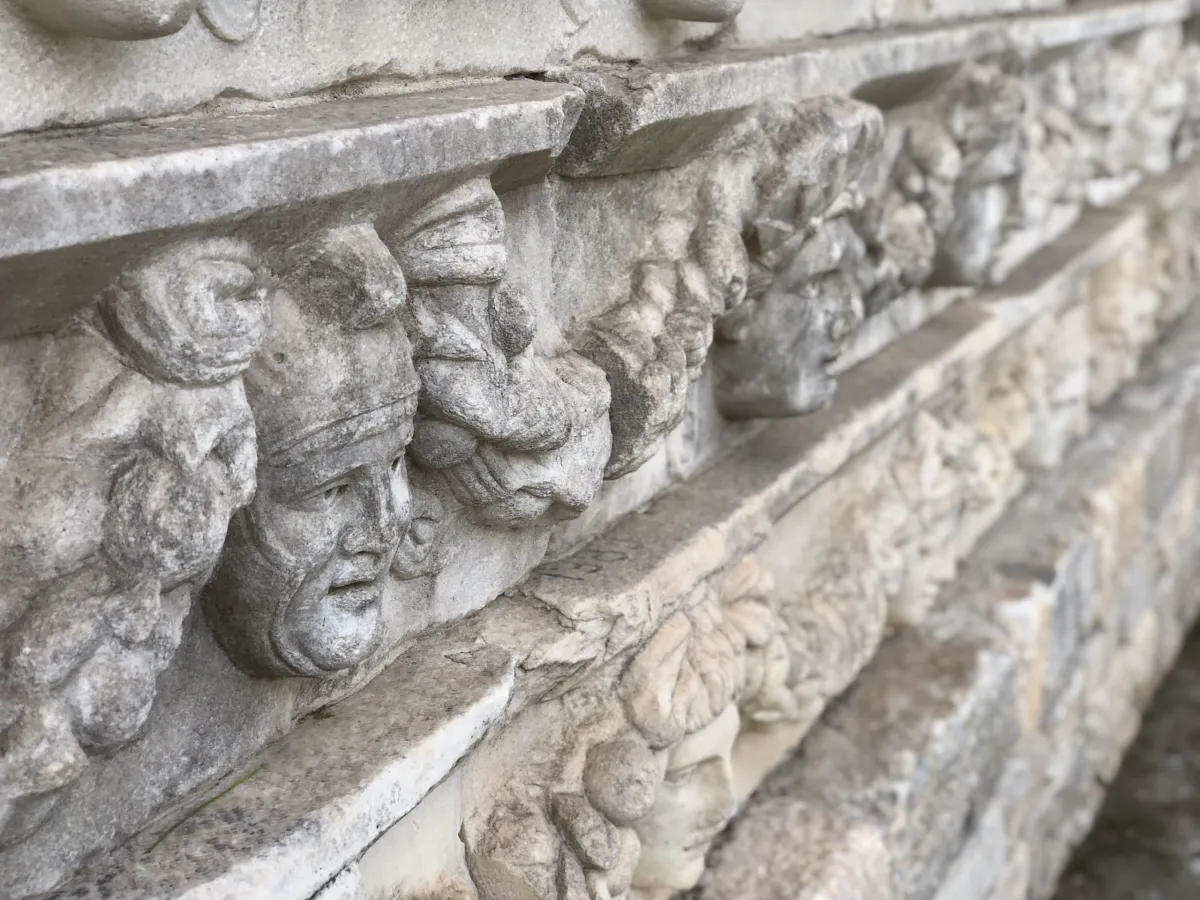
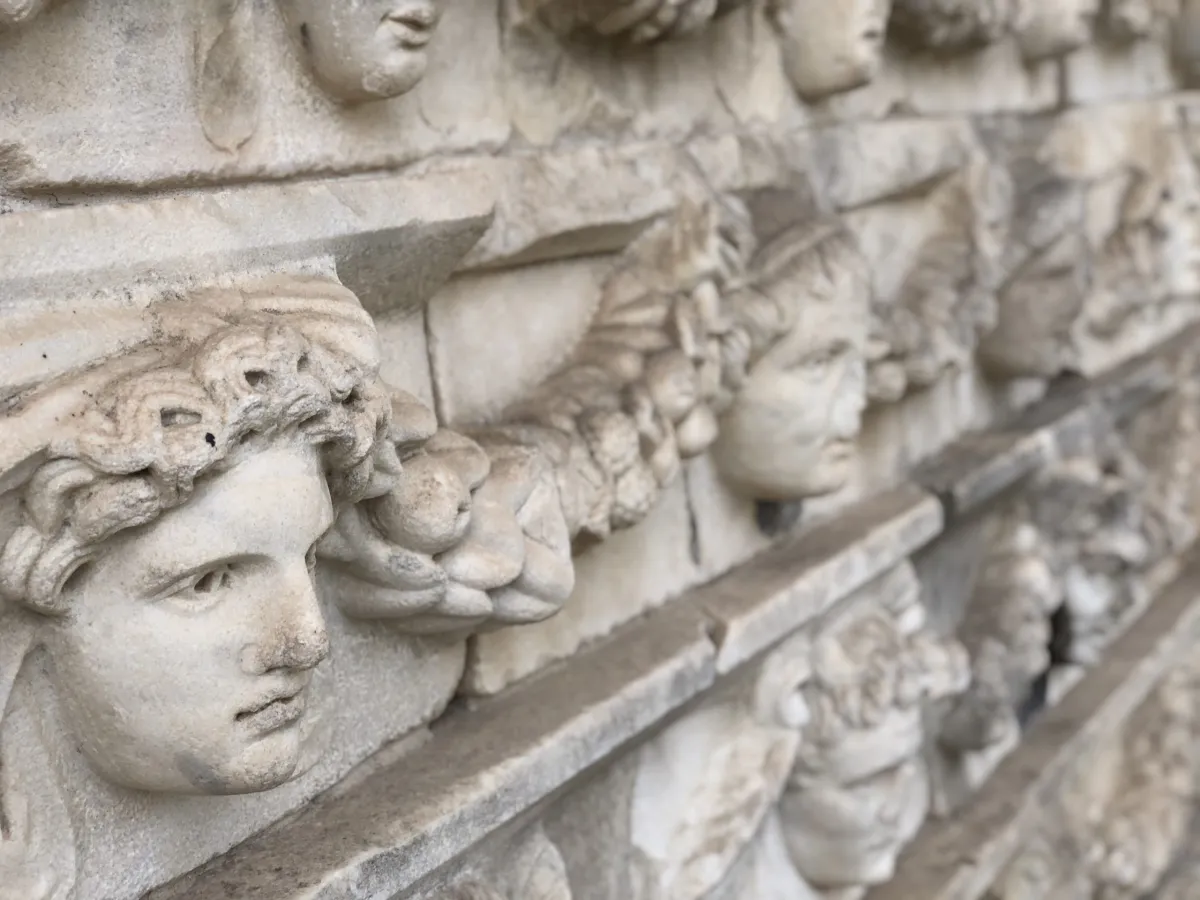
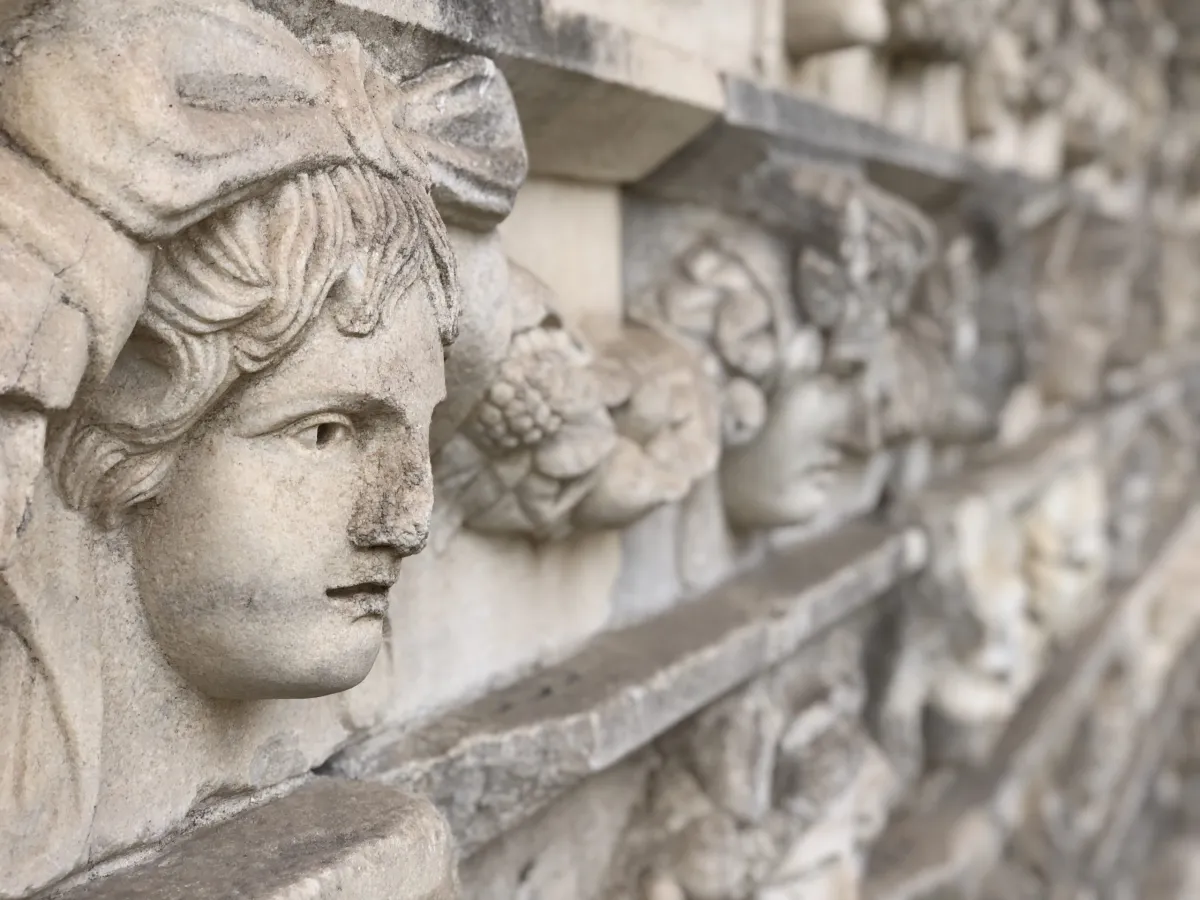
As one might guess, the city was named in honour of Aphrodite, the Greek goddess of love, the Roman Venus. The city began to flourish in the 1st century BC under the Julio-Claudian emperors, who traced their lineage to the mythical Aeneas, the mortal son of the goddess Aphrodite. So the emperors patronised in every way the city that housed the sanctuary of their divine great-great-grandmother, and after them ordinary mortals too sought to gain a little holiness or to make a politically correct visit to the right city.
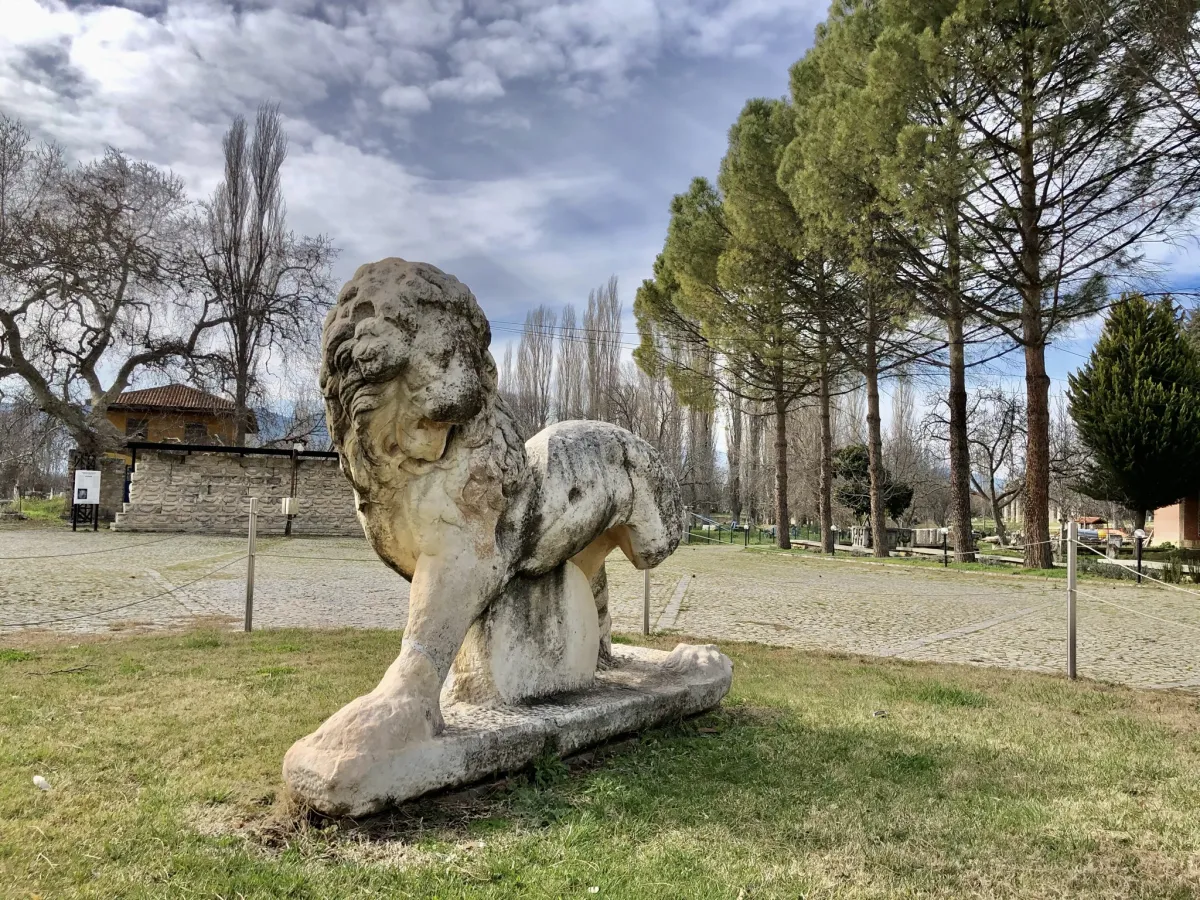
White and blue-grey marble was quarried here, and many temples and cemeteries throughout the Roman world were supplied with works from Aphrodisias. You may well have already seen the finest statues by the sculptors of Aphrodisias: copies of Hellenistic bronze originals of the 2nd century BC. Today they are known as the Red Faun and the Furietti Centaurs from the Capitoline Museums of Rome. A pair of dark marble centaurs: one bearded and old with a look of suffering on his face, the other young and drunk. They were found in 1736 during excavations at Hadrian’s Villa and ended up in the Capitoline Museum of the Roman popes. The inscriptions on the statues name Aristeas and Papias of Aphrodisias as their authors. The Red Faun, made to the commission of Emperor Hadrian, was possibly made by the same masters, from red marble. Not at all a hint at the faun’s degree of intoxication :). To his left is a goat looking at the drunken companion, with one foot resting on a wicker basket.
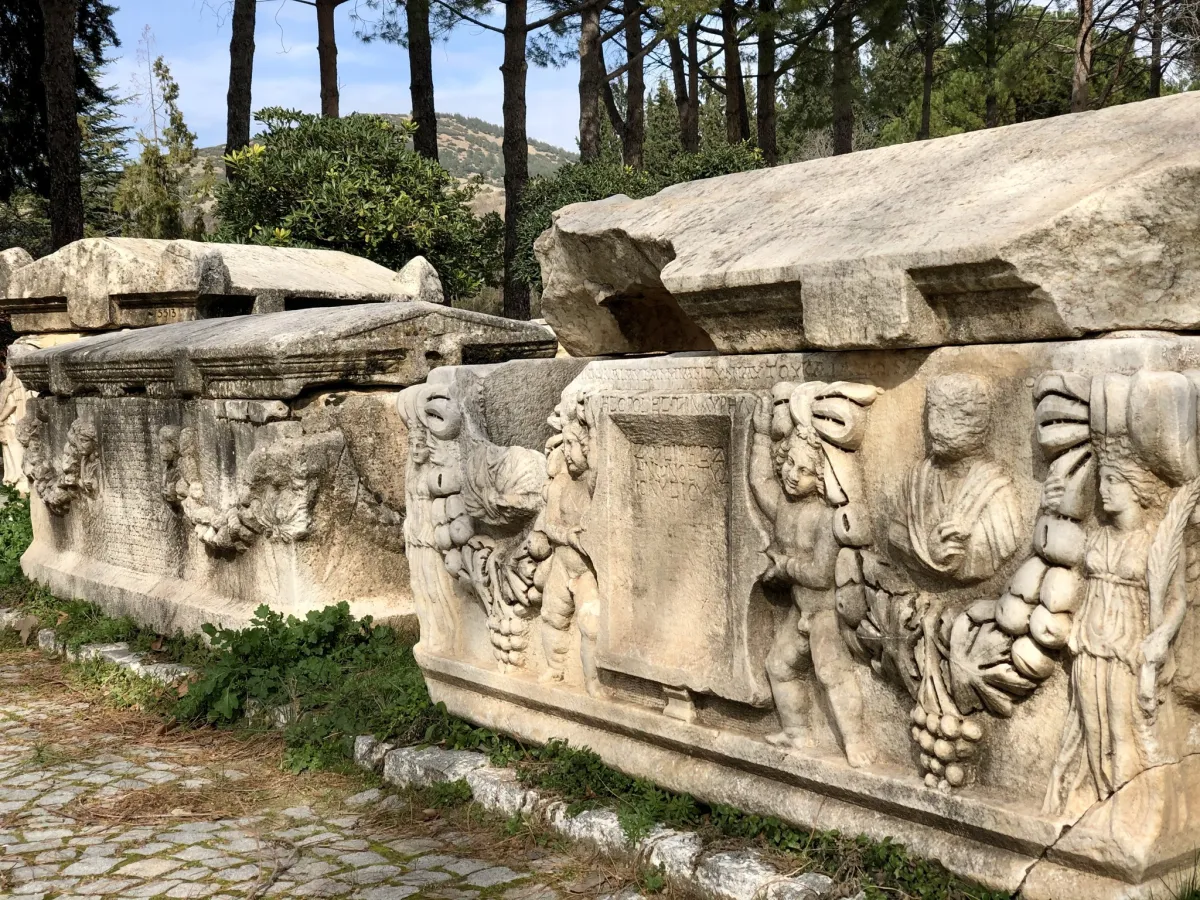
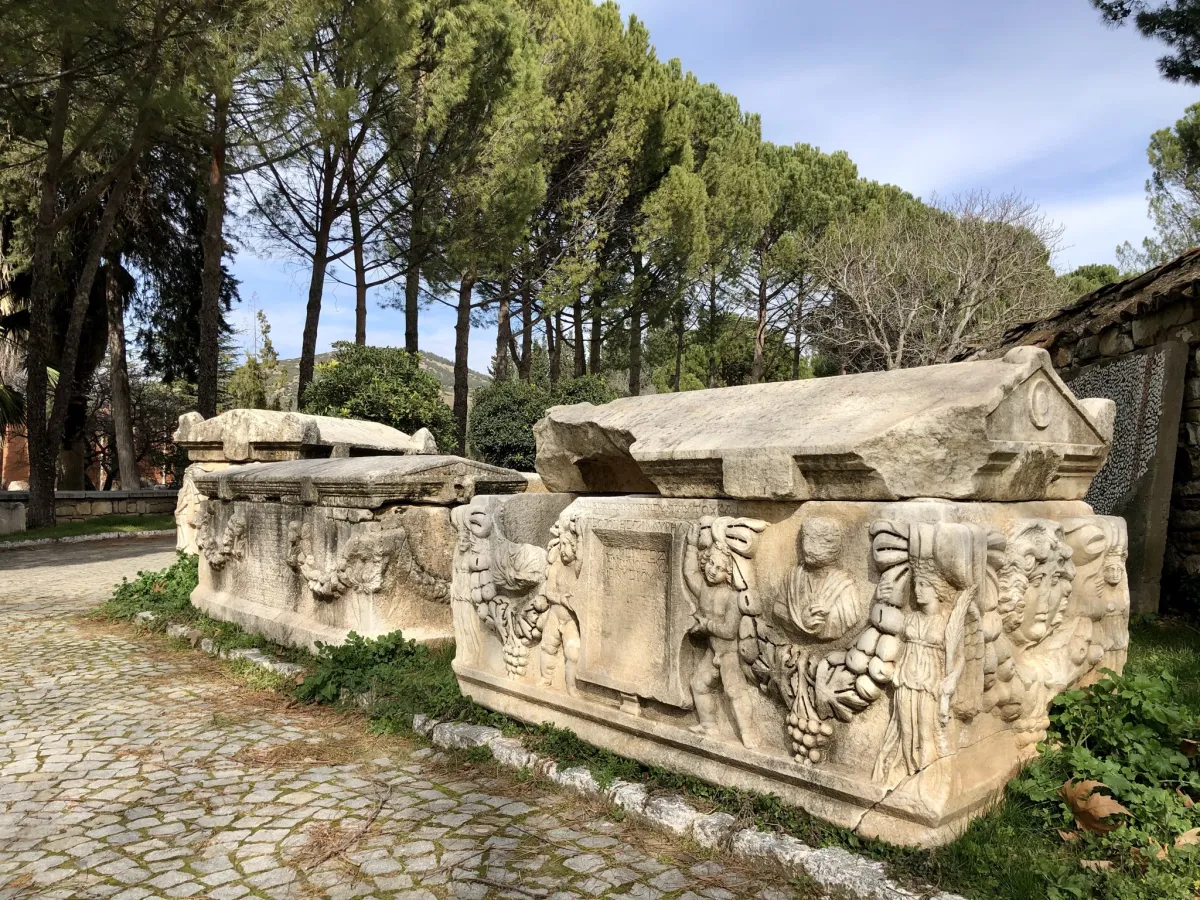
Aphrodisias, like other cities with important sanctuaries that brought considerable profit (and also foretold fates, etc.), resisted the spread of Christianity for a long time. Such was the struggle of business ideas. The city was destroyed by earthquakes several times. One of them even changed the courses of the groundwater, and part of the city was flooded. Alas, they should probably have prayed to the god who was in charge of shifts of the earth’s crust. At the beginning of the 7th century the city was once again destroyed by an earthquake and never regained its former importance. Only a few decades later the Byzantines renamed the city Stauropolis, that is, the City of the Cross, and turned the temple of Aphrodite into a church. To show physically that the building was no longer a temple, its shape was also altered. The sculpture workshops took up making the product that was in greatest demand: marble Christian sarcophagi.
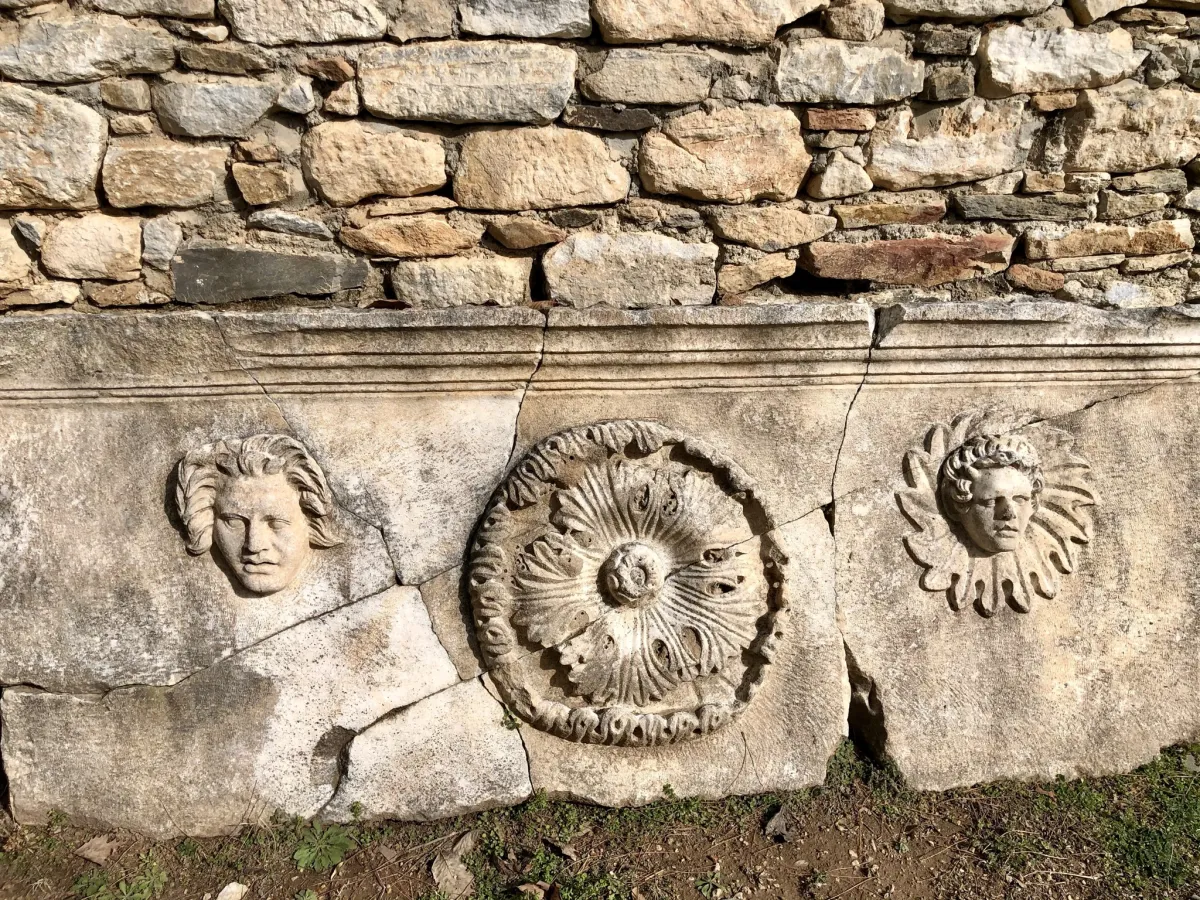
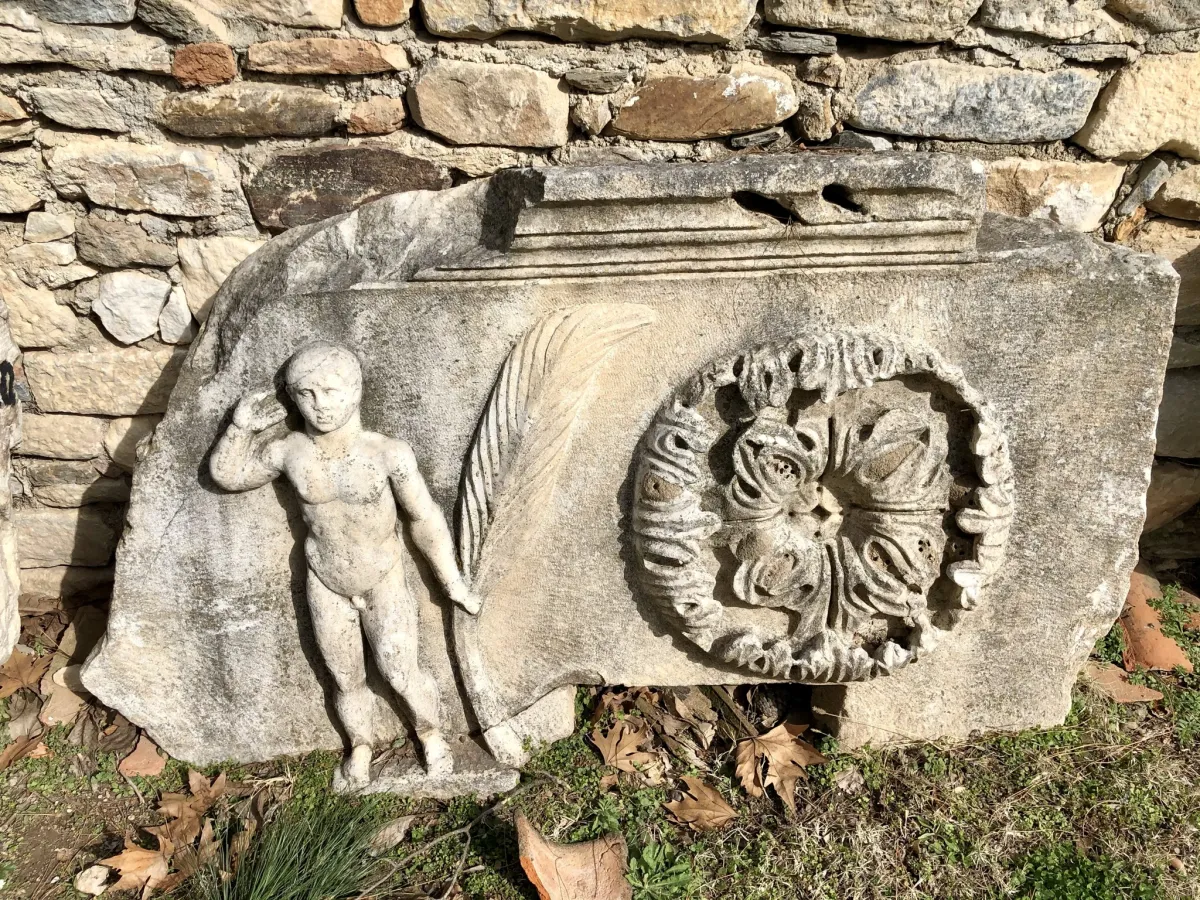
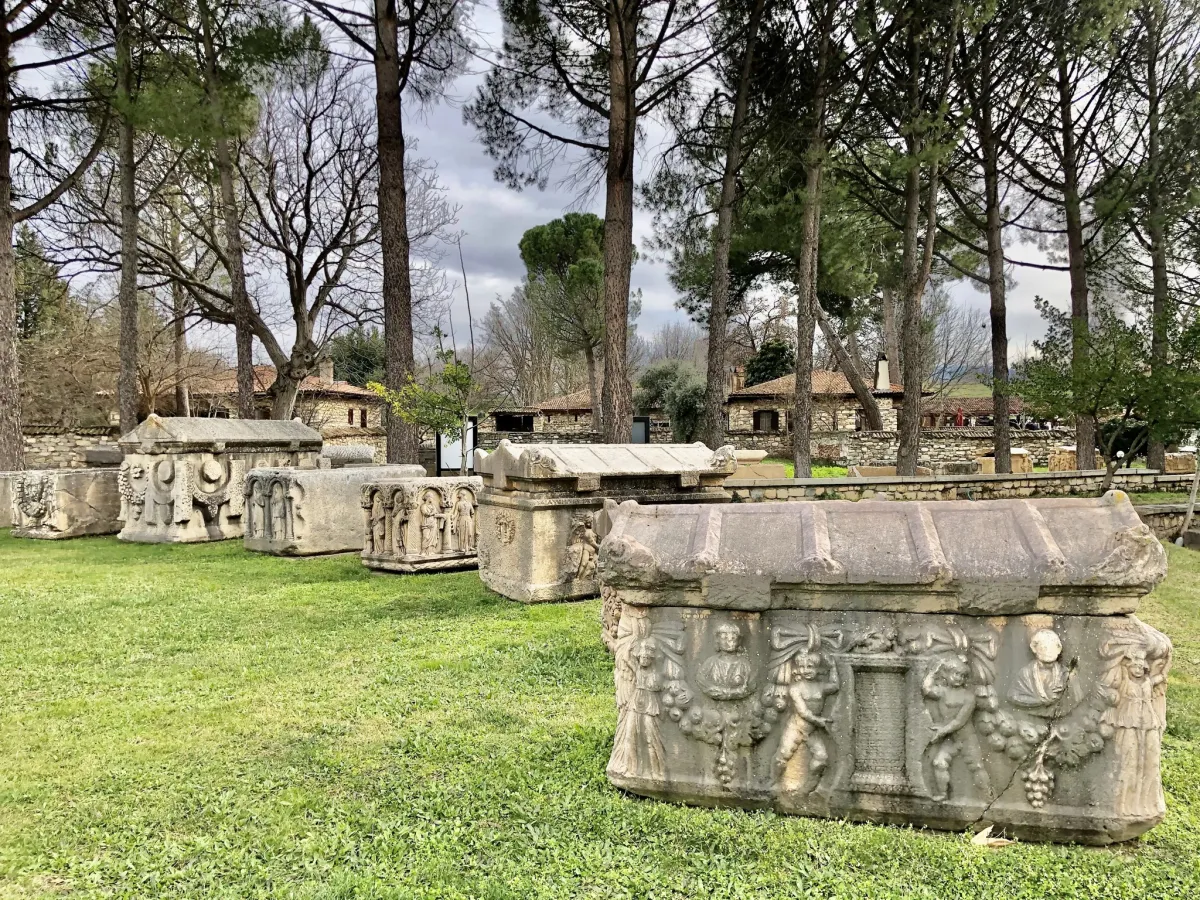
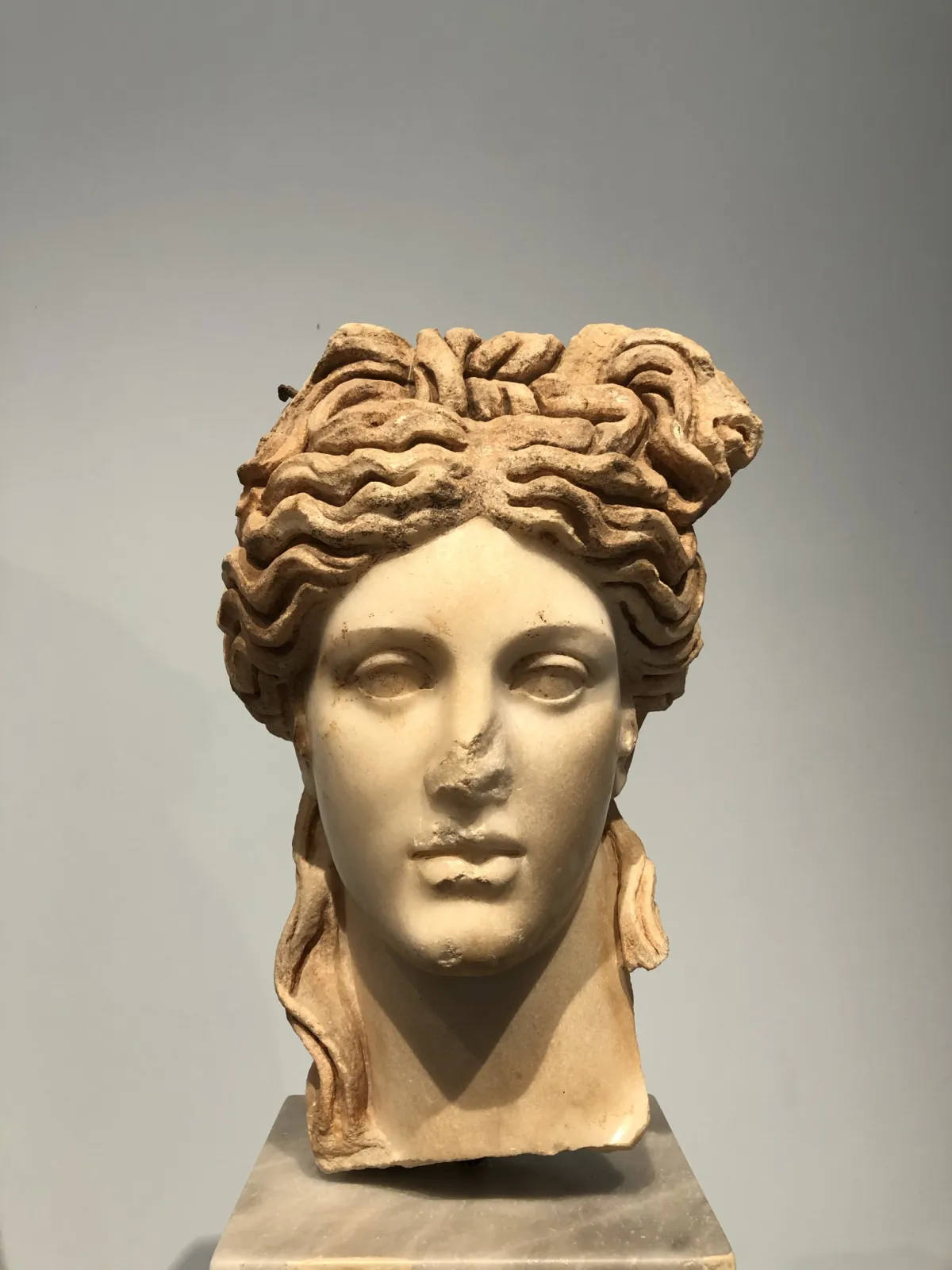
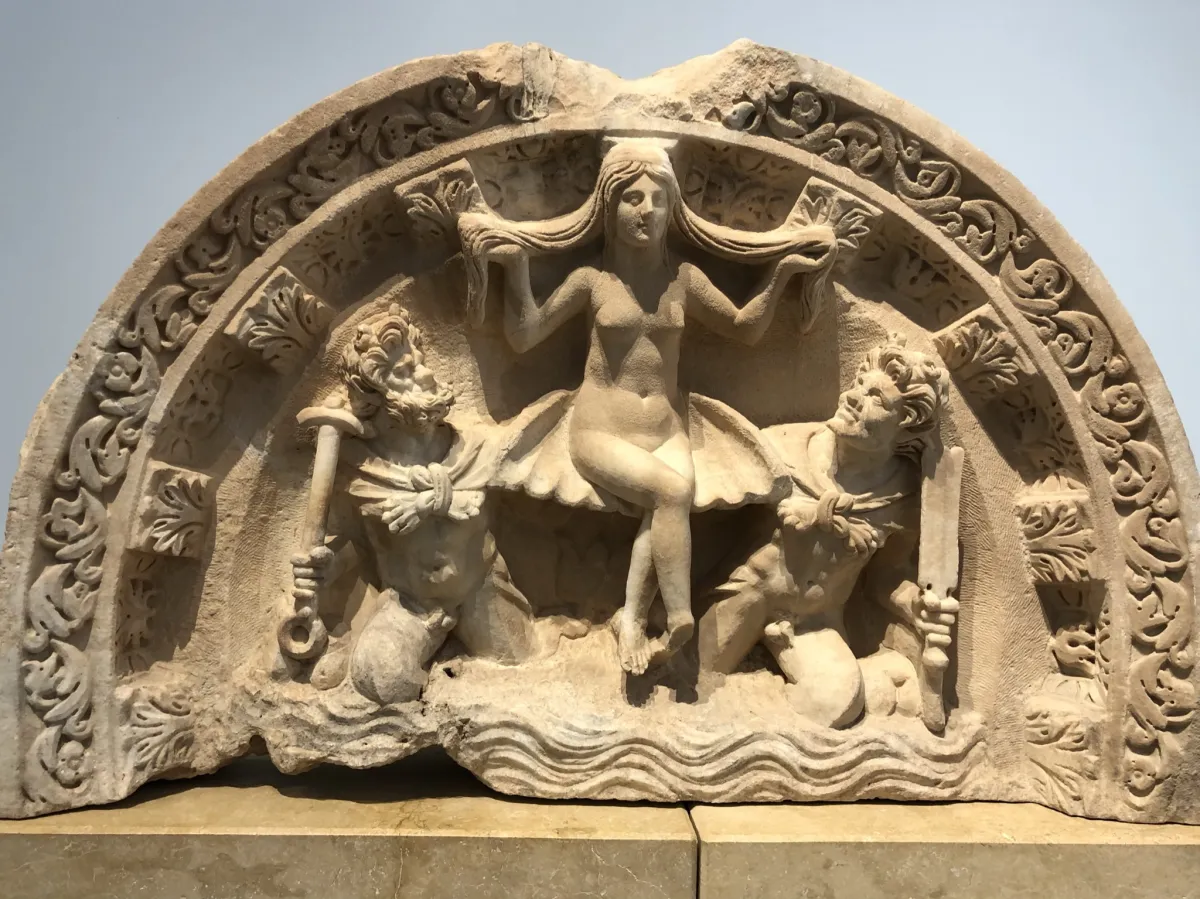
Aphrodite is usually associated with paintings and sculptures in which the naked goddess of beauty and desire rises from the sea in a scallop shell. The statue of the goddess in Aphrodisias is more reminiscent of the statue of Artemis of Ephesus: she is dressed in a tight chiton, which prompts no thoughts other than politically correct ones about the emperor and his great-grandmother.
It is interesting how Aphrodisias was “rediscovered” in the 20th century. In September 1958 the Prime Minister of Turkey went to Kemer to open the largest dam in Turkey. A photojournalist from Hayat magazine, Ara Güler, was sent to cover the event. The opening must have been a splendid one, because on the way he got lost and stopped for the night in the village of Geyre. In the café where he went in the morning for, mmm, a glass of ayran, the locals were playing cards on the capital of a Roman column.
Rubbing his eyes and picking up his camera, Güler found a sarcophagus overgrown with vines, with bas-reliefs carved on it, and an ancient hippodrome. In Istanbul he showed his photos to a writer and to the director of the National Archaeological Museum, and also sent his pictures to several magazines. From 1961, at the commission of New York University, excavations began at Aphrodisias.
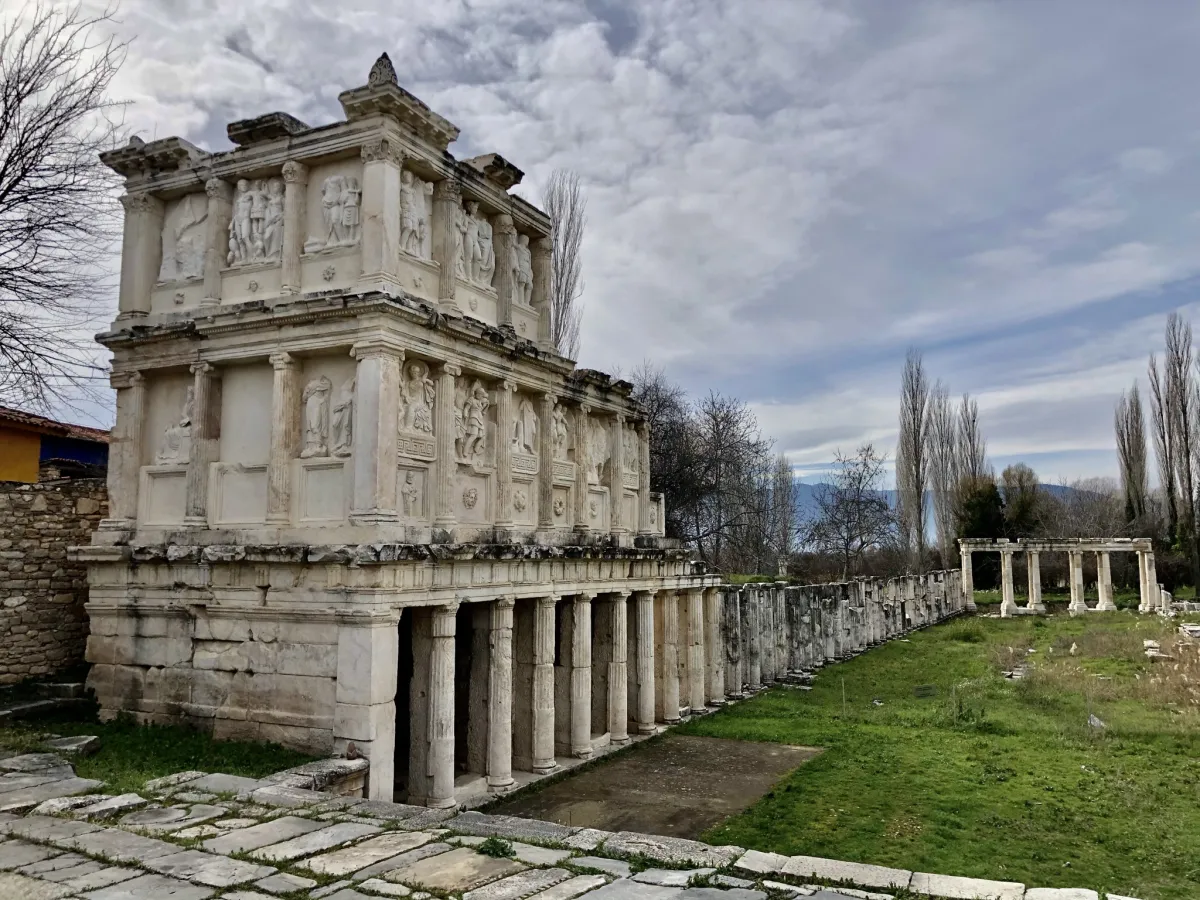
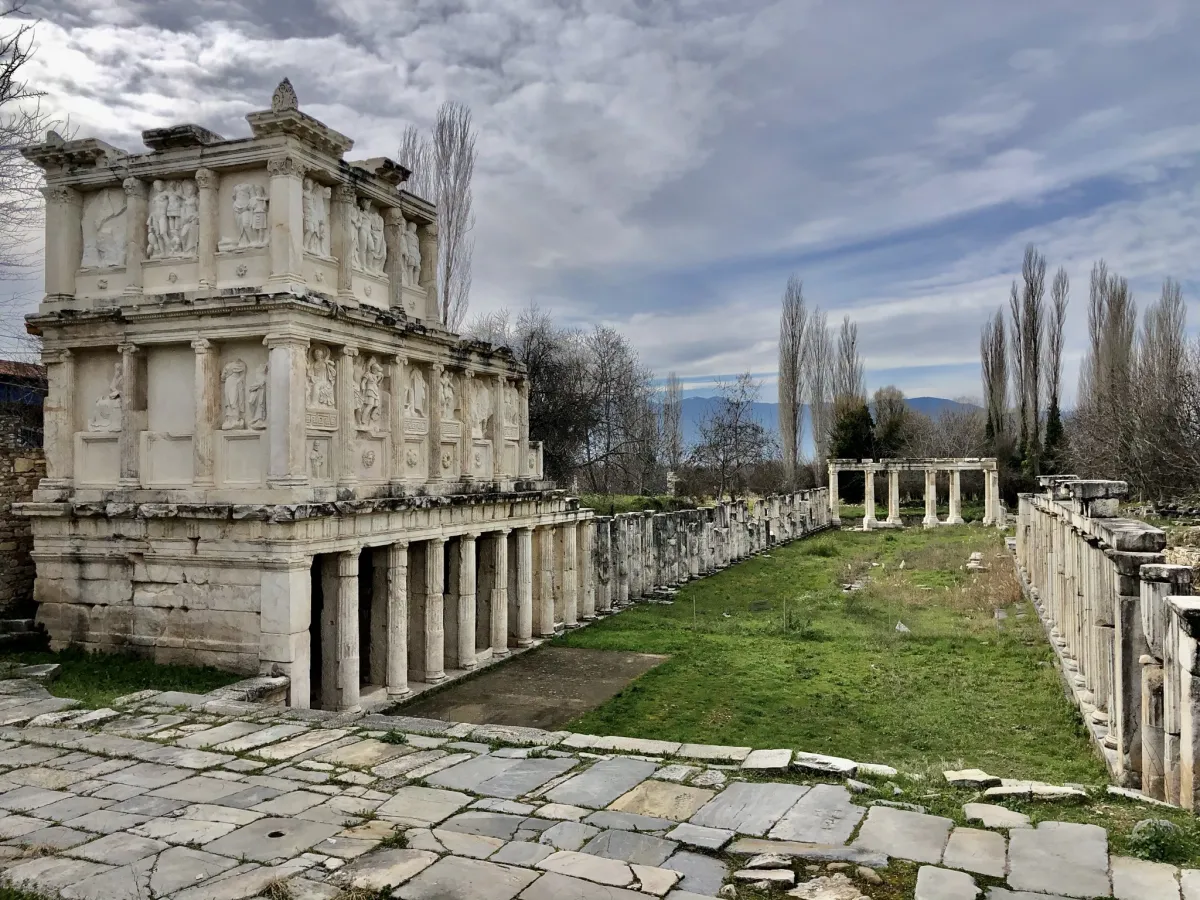
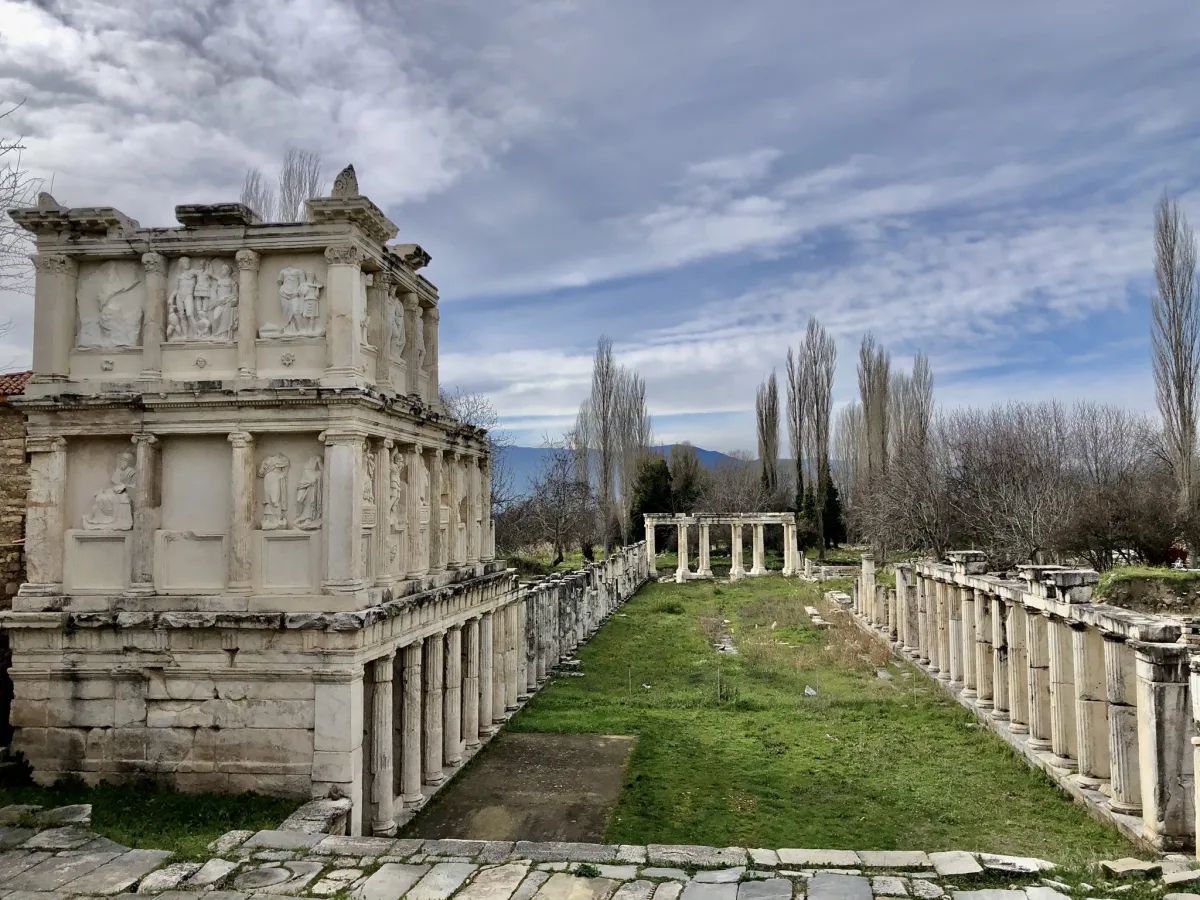
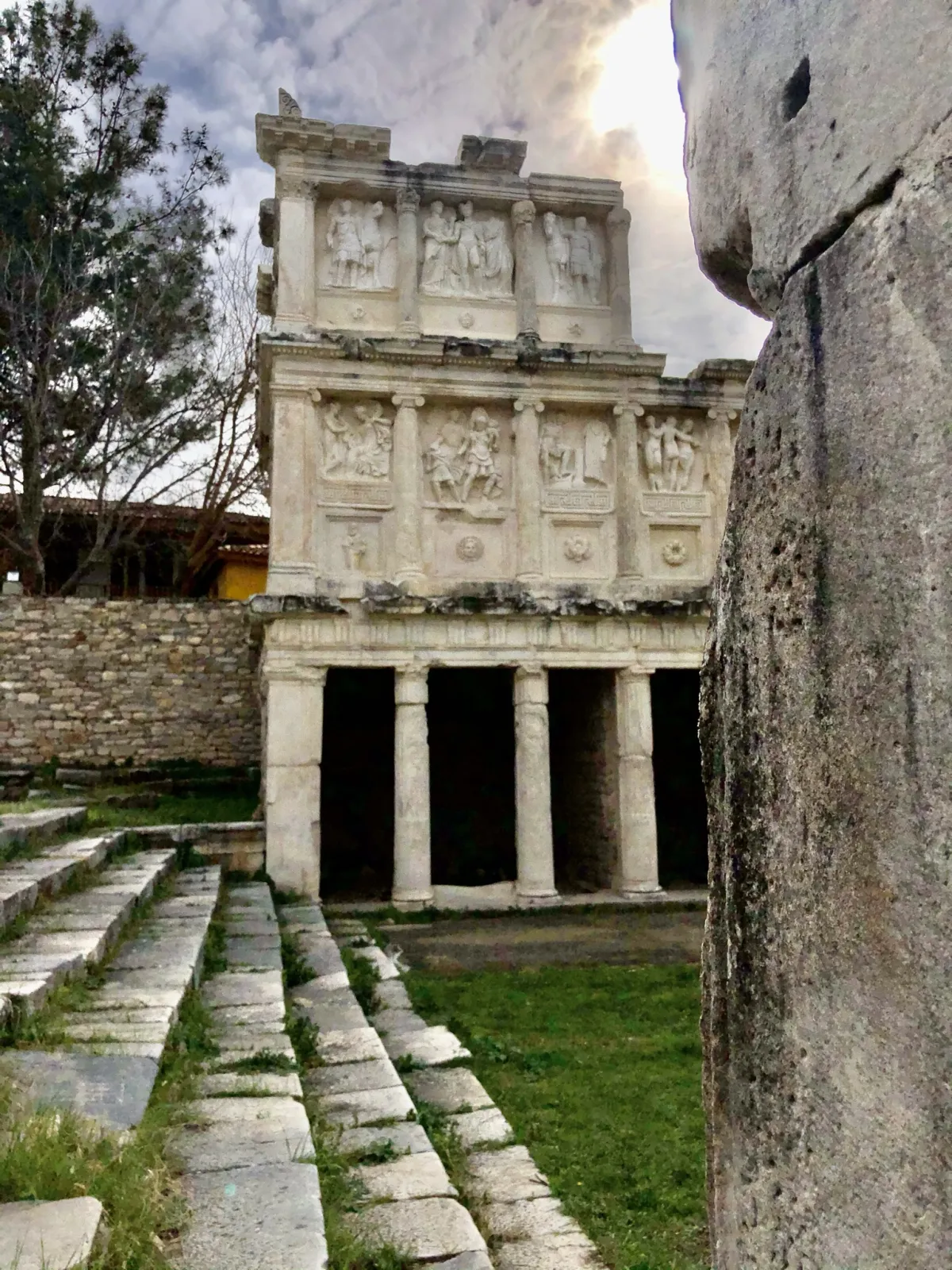
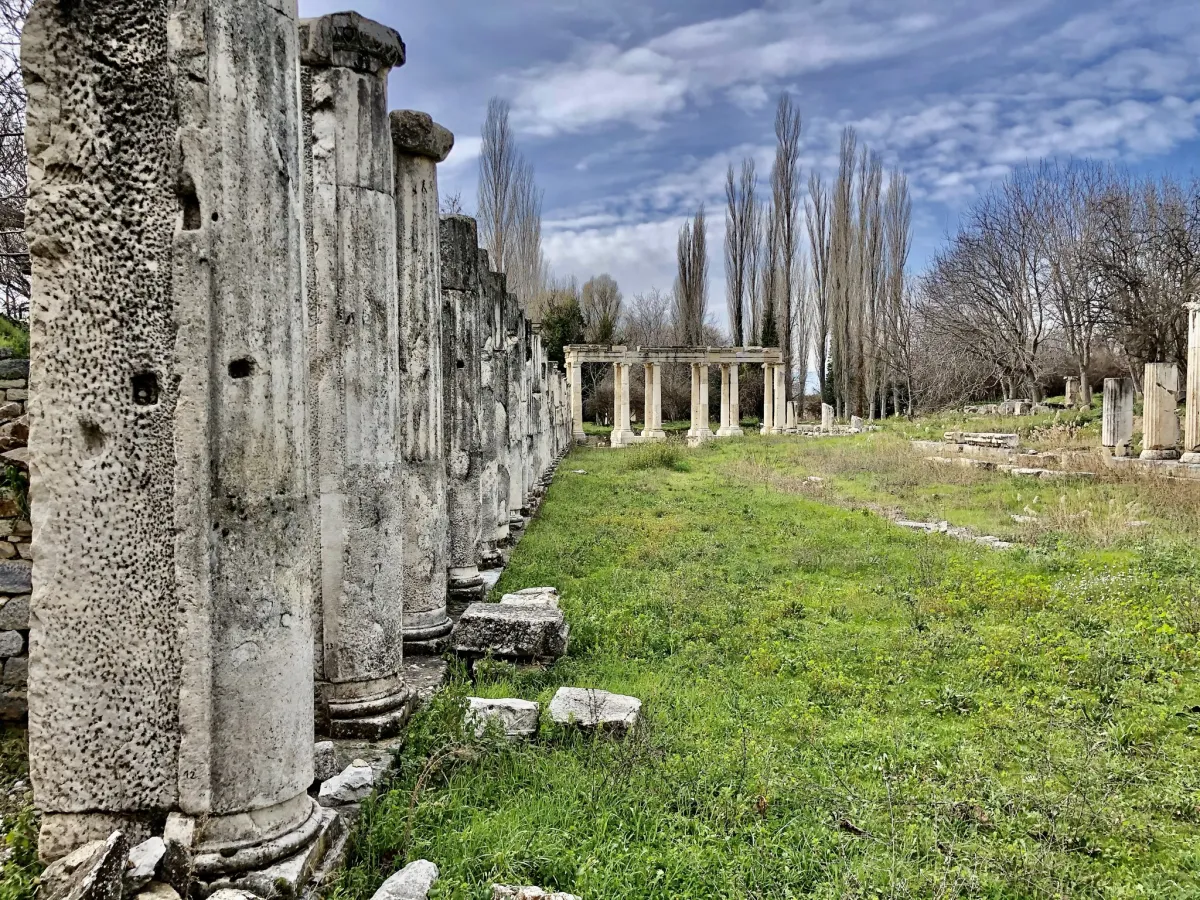
Despite their small size, the sights of Aphrodisias are quite interesting. First of all, this is the Sebasteion, or Augusteion, the Temple of Heroes. It was built in the 1st century AD in honour of relatives: the Roman emperors and the goddess Aphrodite. Its construction began in 20 AD under Emperor Tiberius and was finished under Nero. The Sebasteion consisted of two three-tiered portico galleries with reliefs on the upper tiers, which once depicted 200 life-size human figures of emperors, mythical characters and local aristocrats. The temple is designed in the classical style, just right for studying architectural styles: the first floor is the Doric order (plain columns), the second floor the Ionic order (columns with volutes) and the third floor the Corinthian order (columns with ornament).
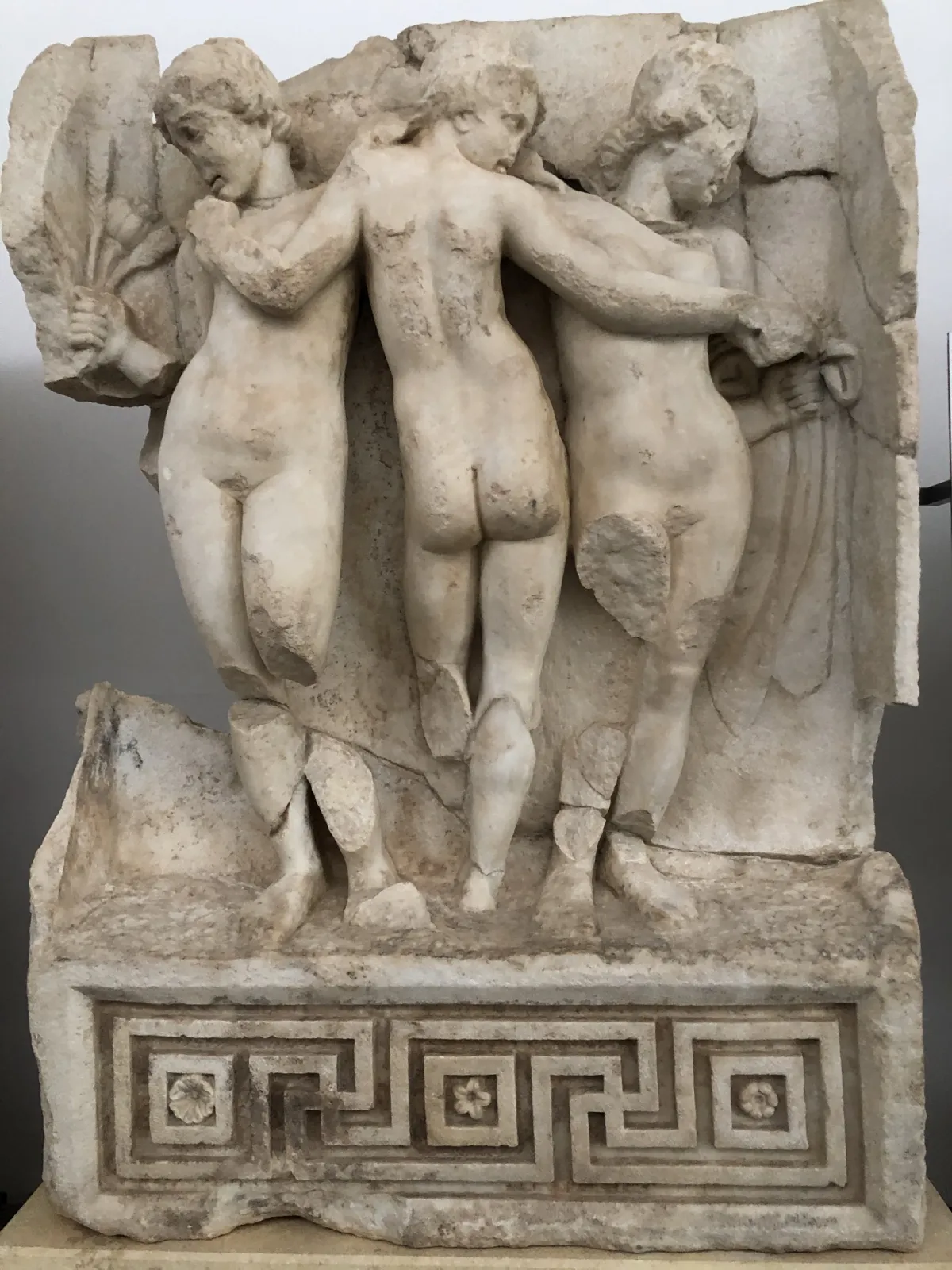
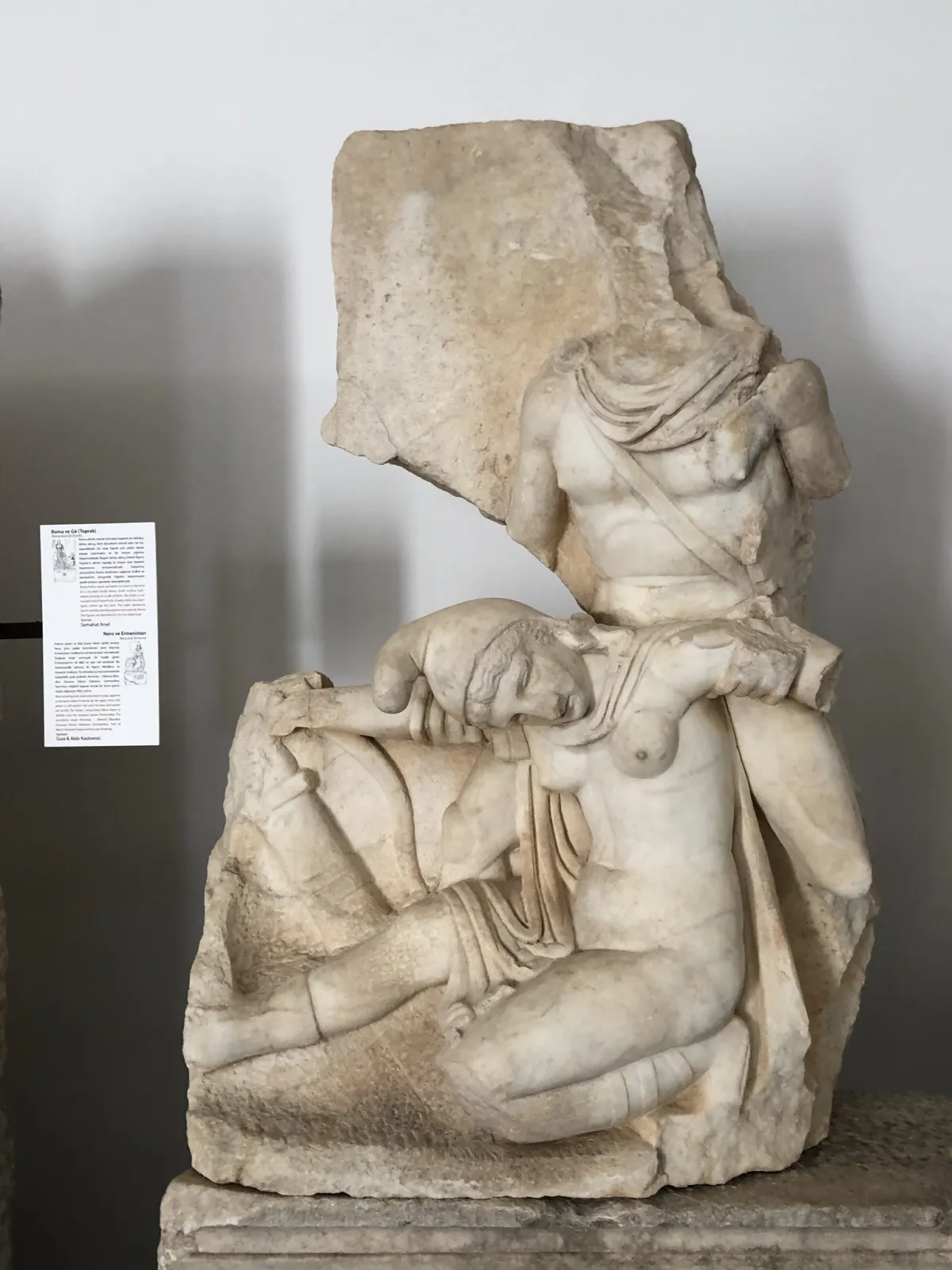
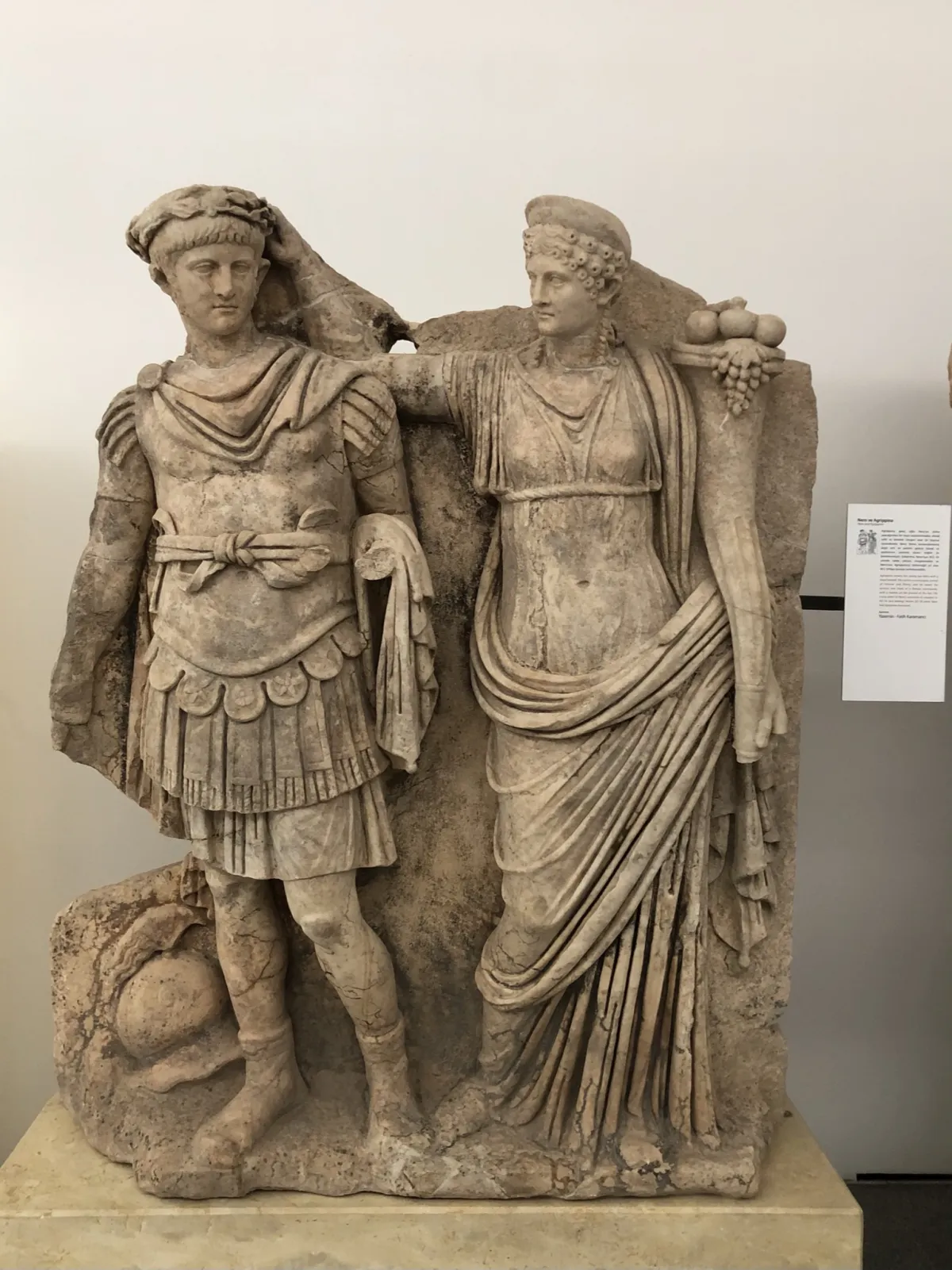
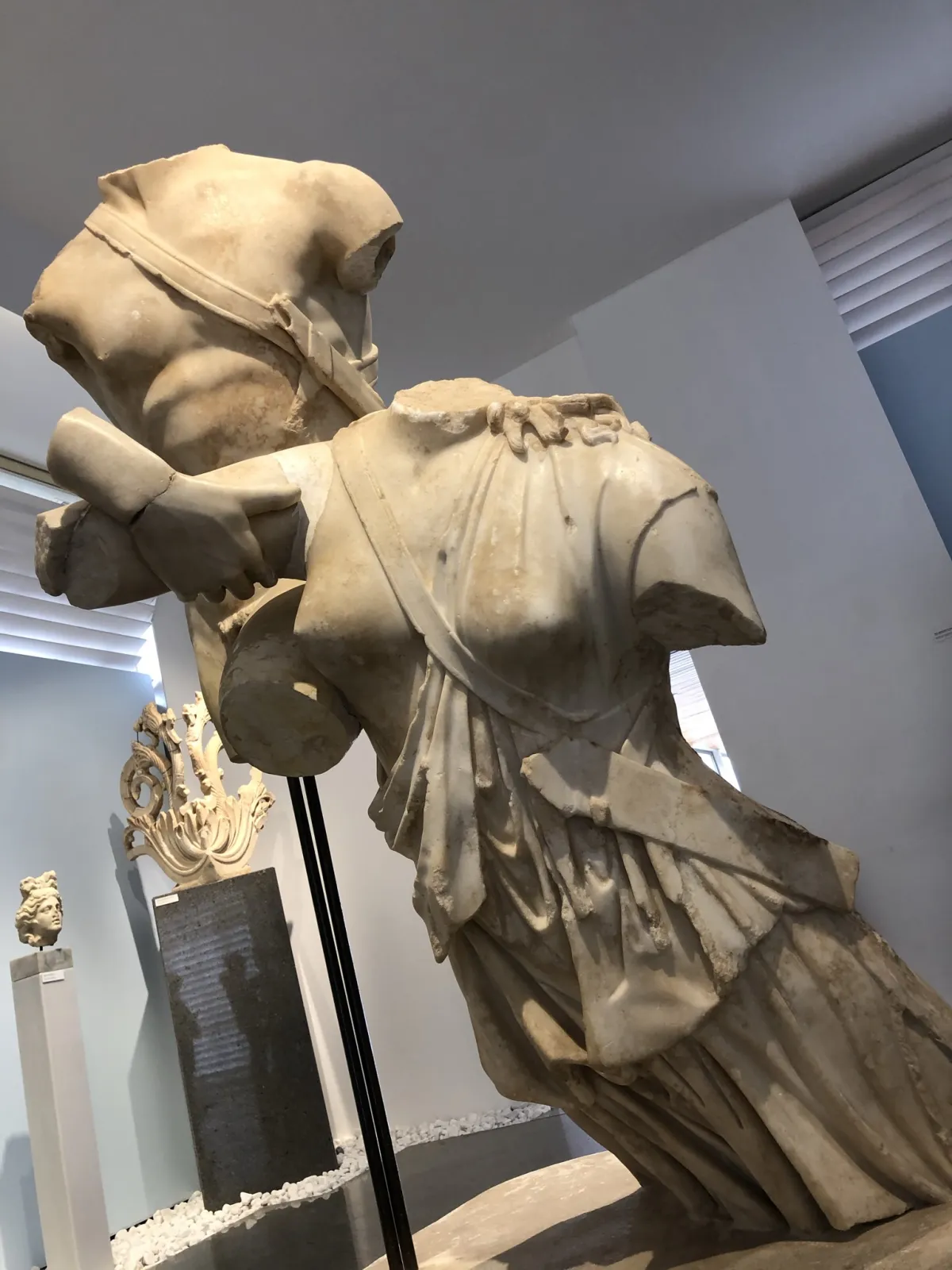
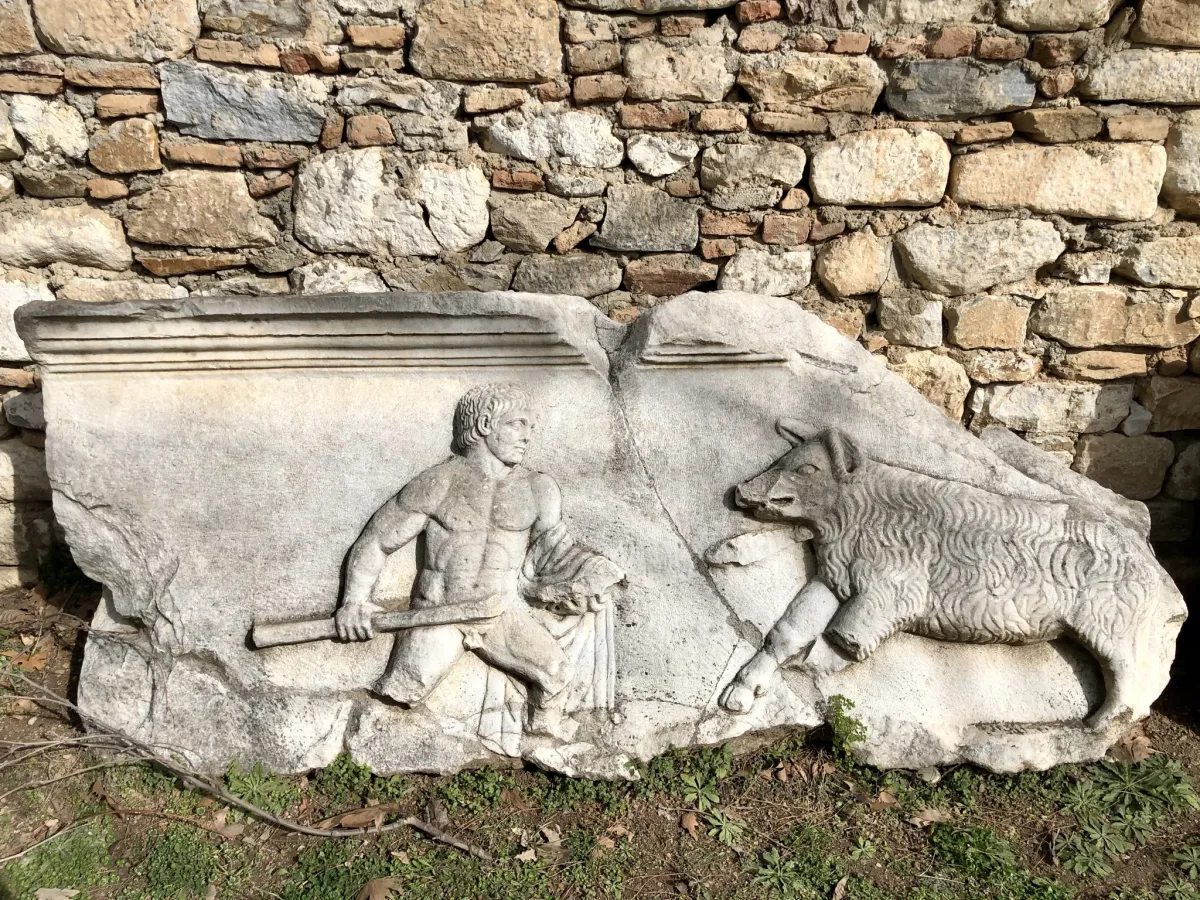
Some of the restored panels are displayed in the museum, while on the temple you will see copies. Honestly, I have never seen similar temples anywhere else.
What else to see in Aphrodisias. A fairly well-preserved theatre, which held 10,000 spectators and was built with the money of a wealthy townsman, Julius Zoilos, as is written on the marble colonnade. Julius Zoilos is an interesting and mysterious figure. Various sources mention him as a slave of Emperor Octavian Augustus, freed by him for special services. This citizen did a great deal for the city and built a great many things.
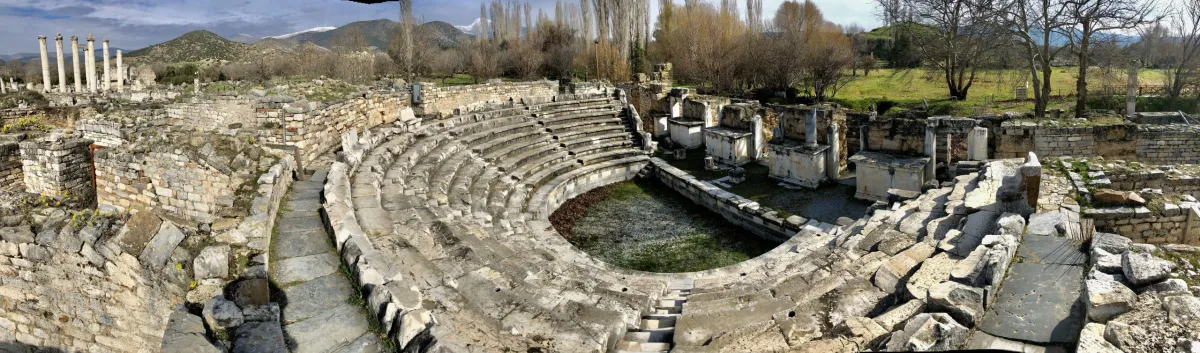
The theatre was dedicated to Aphrodite and the Demos, that is, the common people, for whose entertainment it was later adapted for gladiatorial fights. The seats in the theatre are marble, with numerous graffiti. In the front row, as is proper, were the seats for the city’s honoured citizens: comfortable benches with backs :), and in the centre the place of honour for the emperor (should he suddenly visit the city) or for the city’s chief person. You can sit in this place and imagine yourself Aphrodite, Apollo or Augustus, or perhaps a lion that has gorged on Christians.
The agora, the city square, has survived, as have the Baths of Hadrian and the odeon, which served both as a meeting place of the city’s administrative council and as a multipurpose covered theatre, concert hall and public assembly. On the stage there are “chairs” that are set somehow wrongly: you have to sit on them sideways to the audience. Perhaps the restorers were joking?
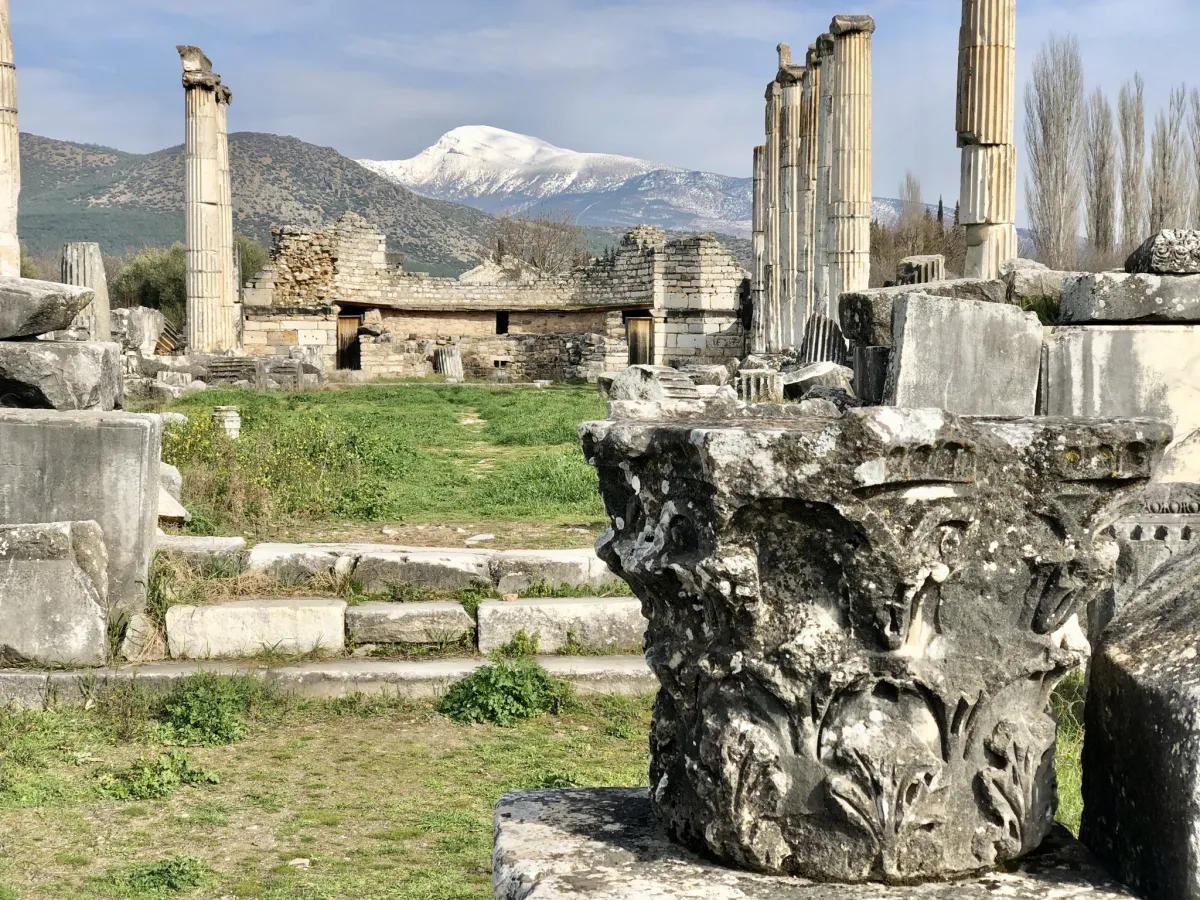
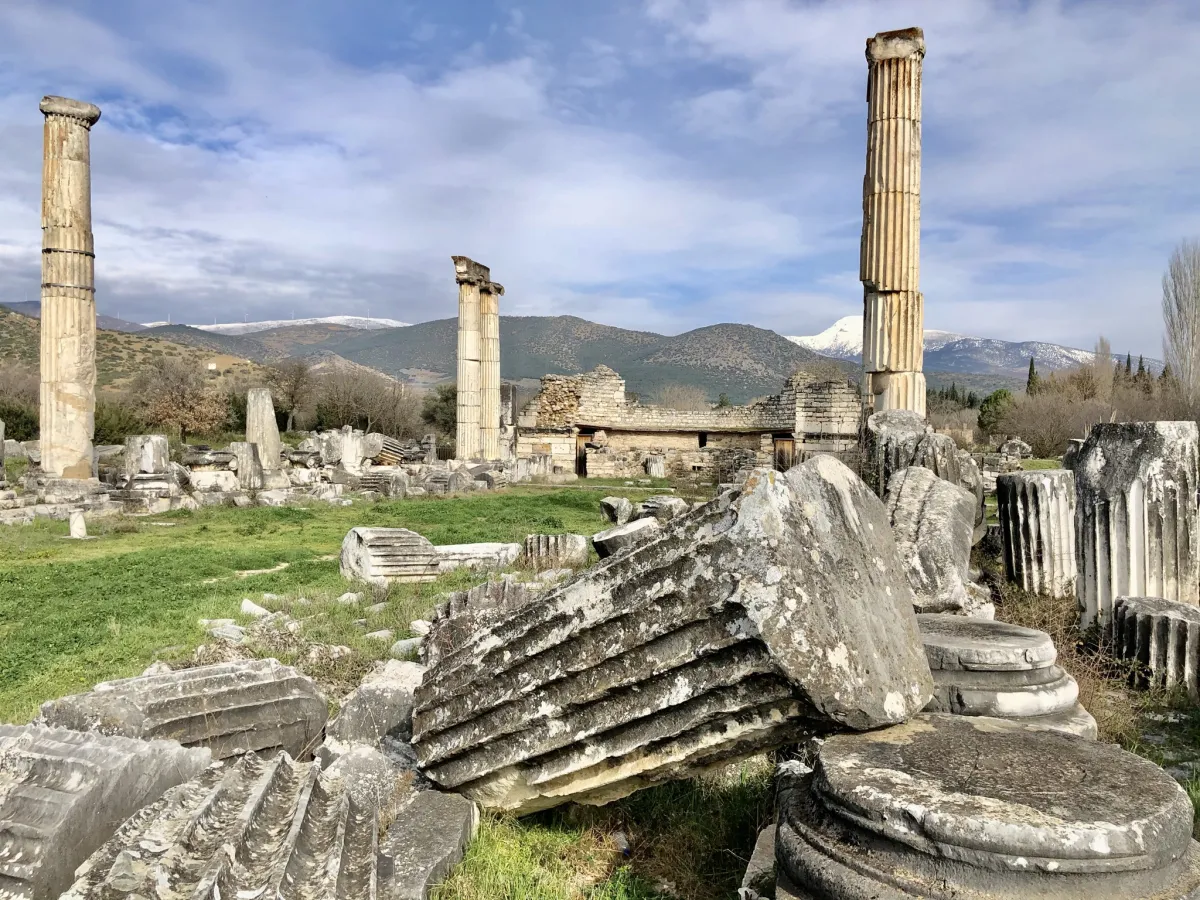
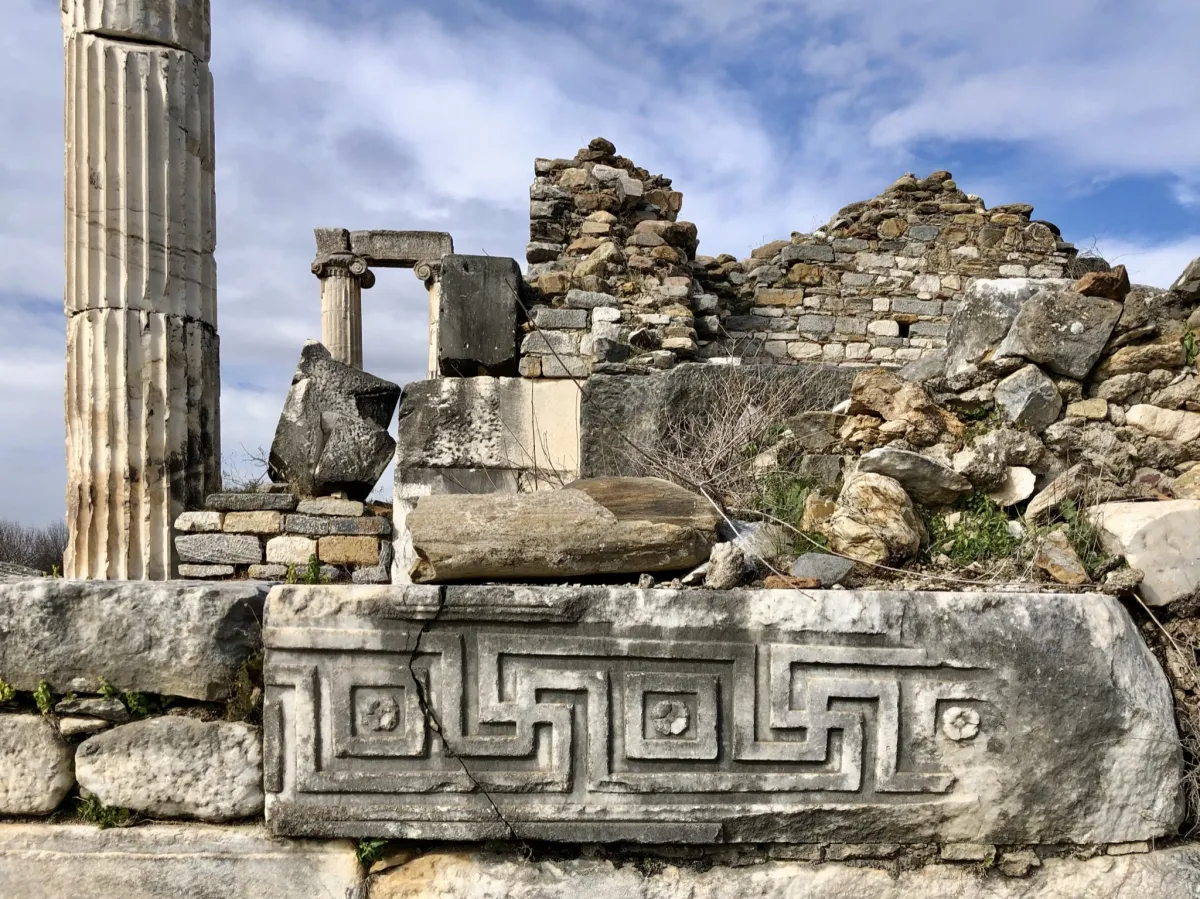
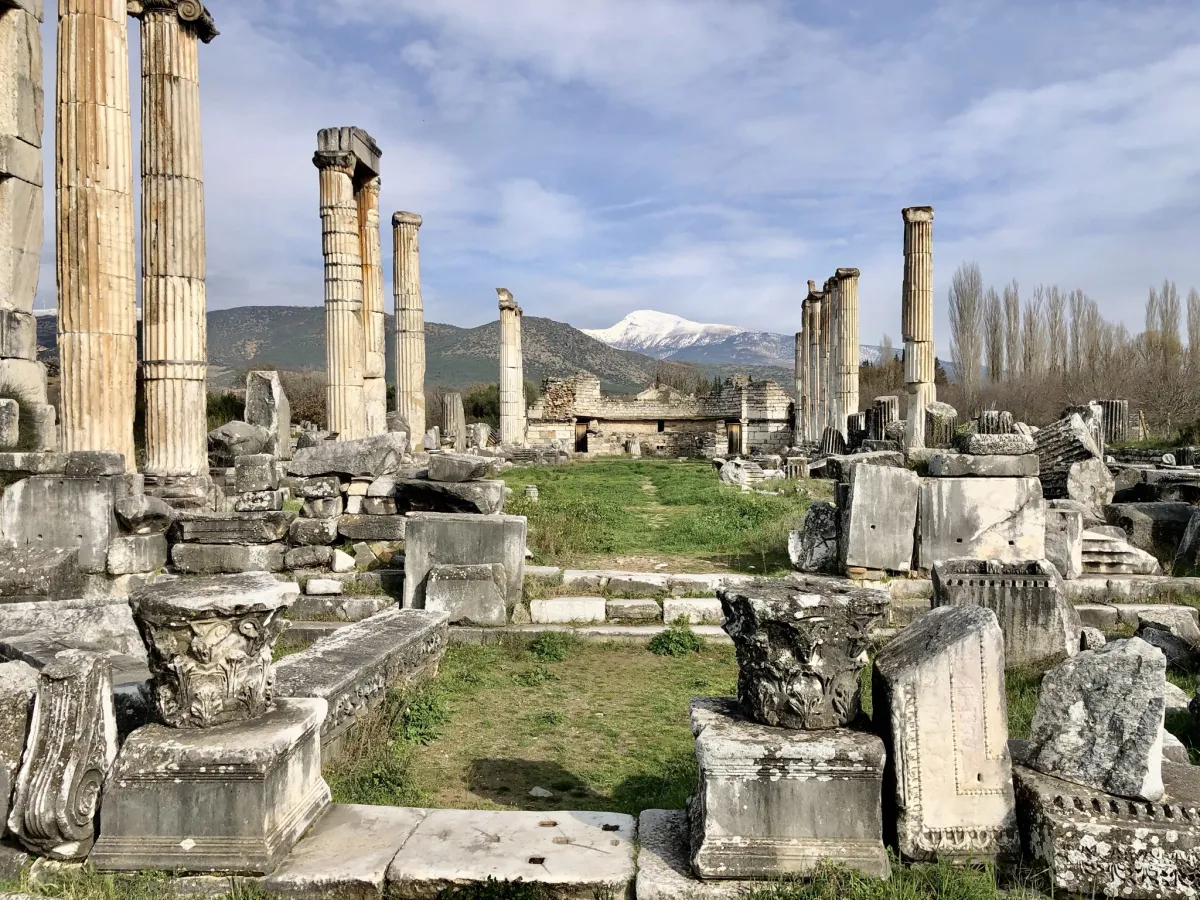
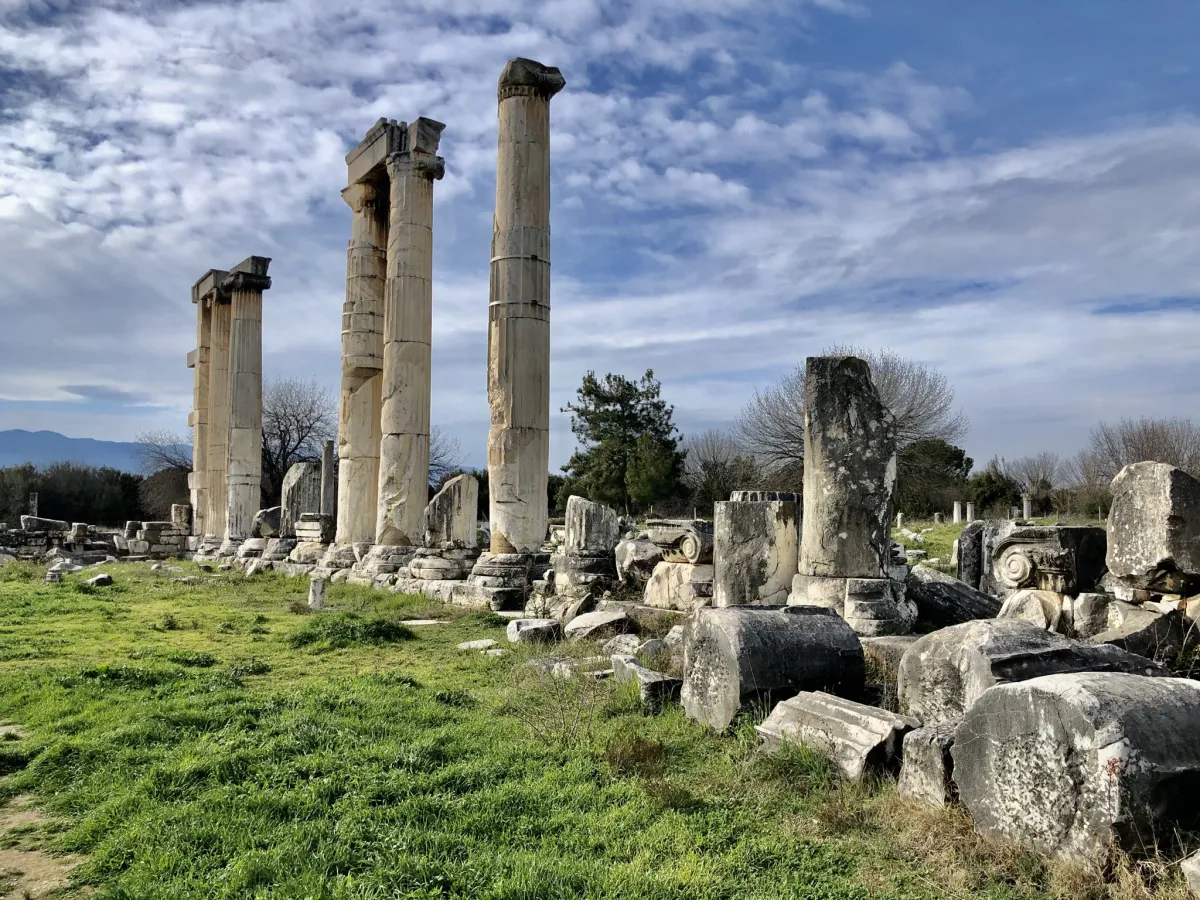
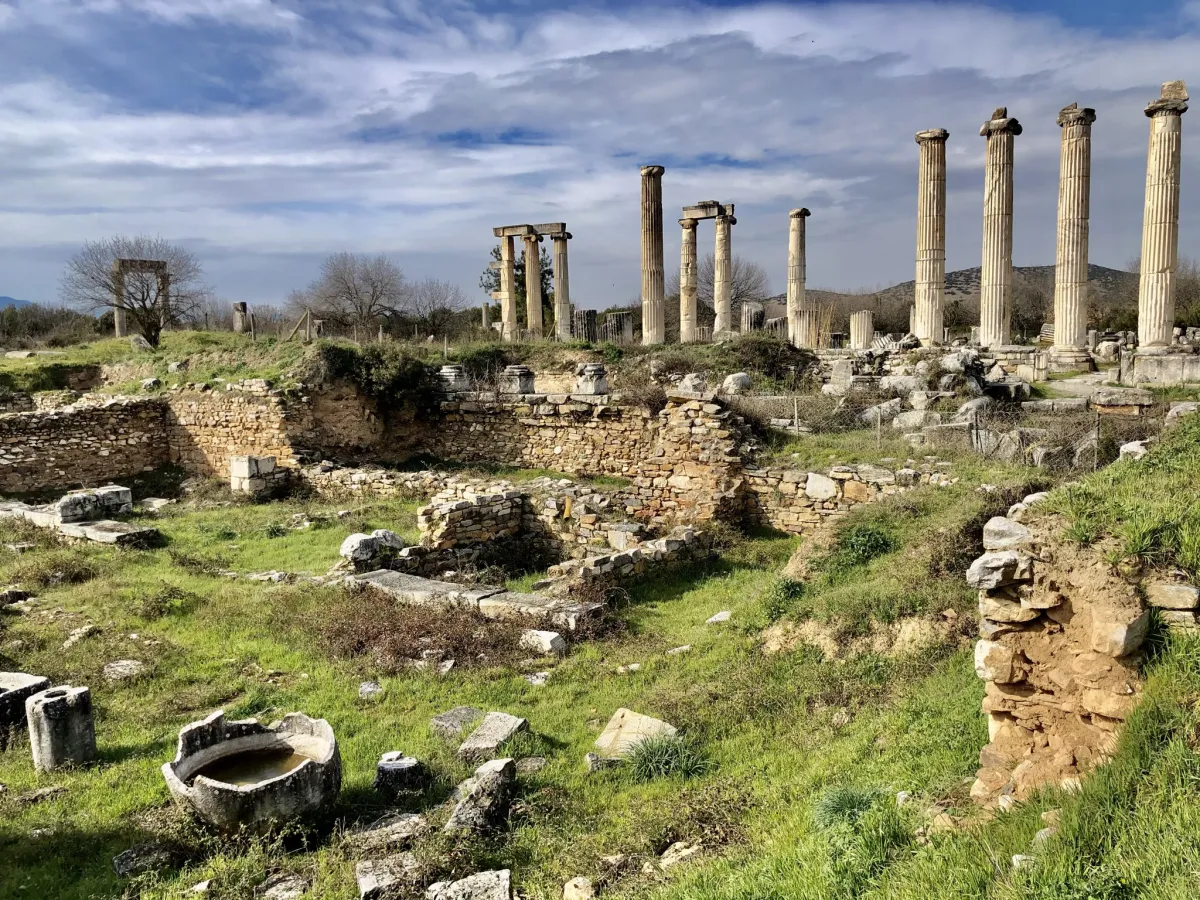
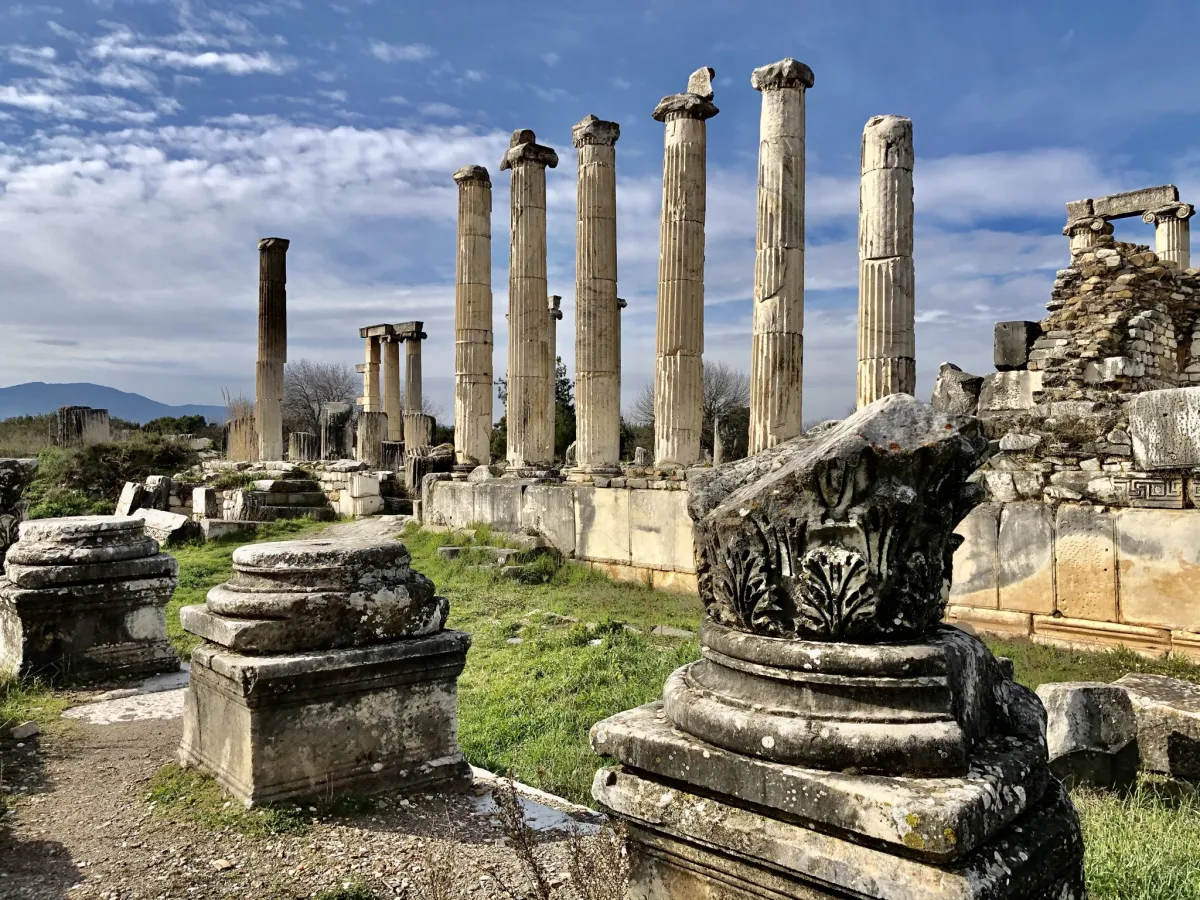
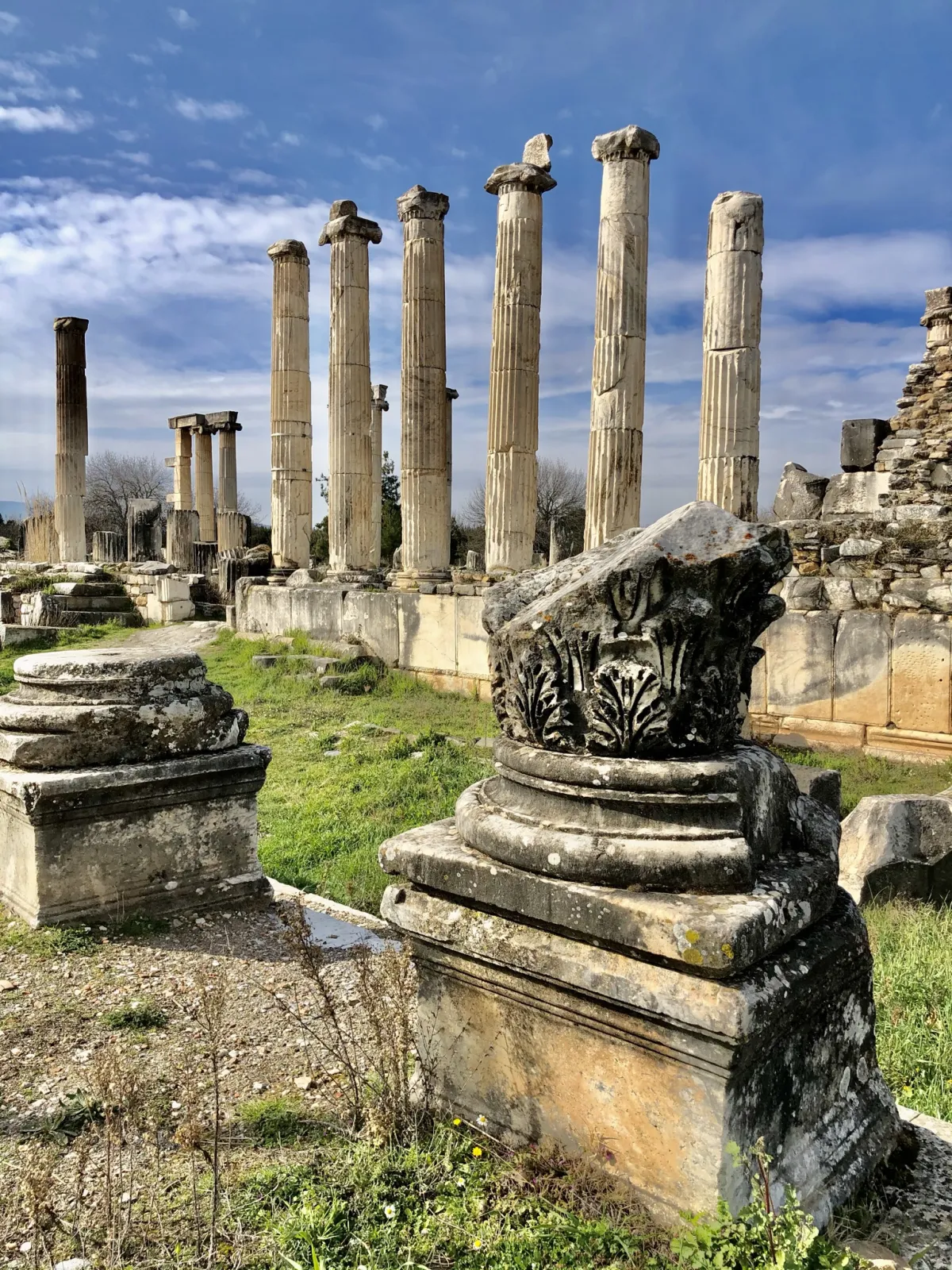
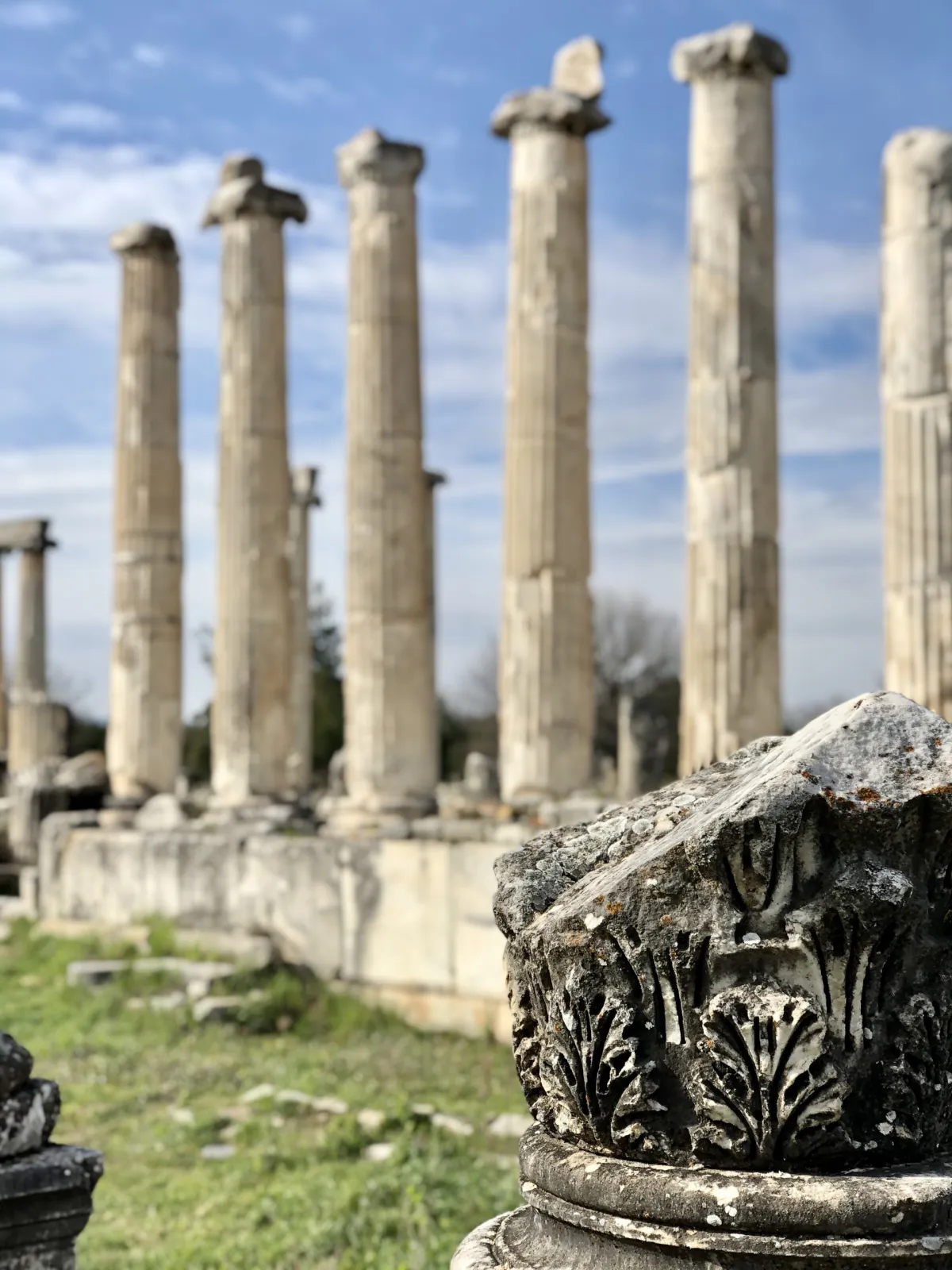
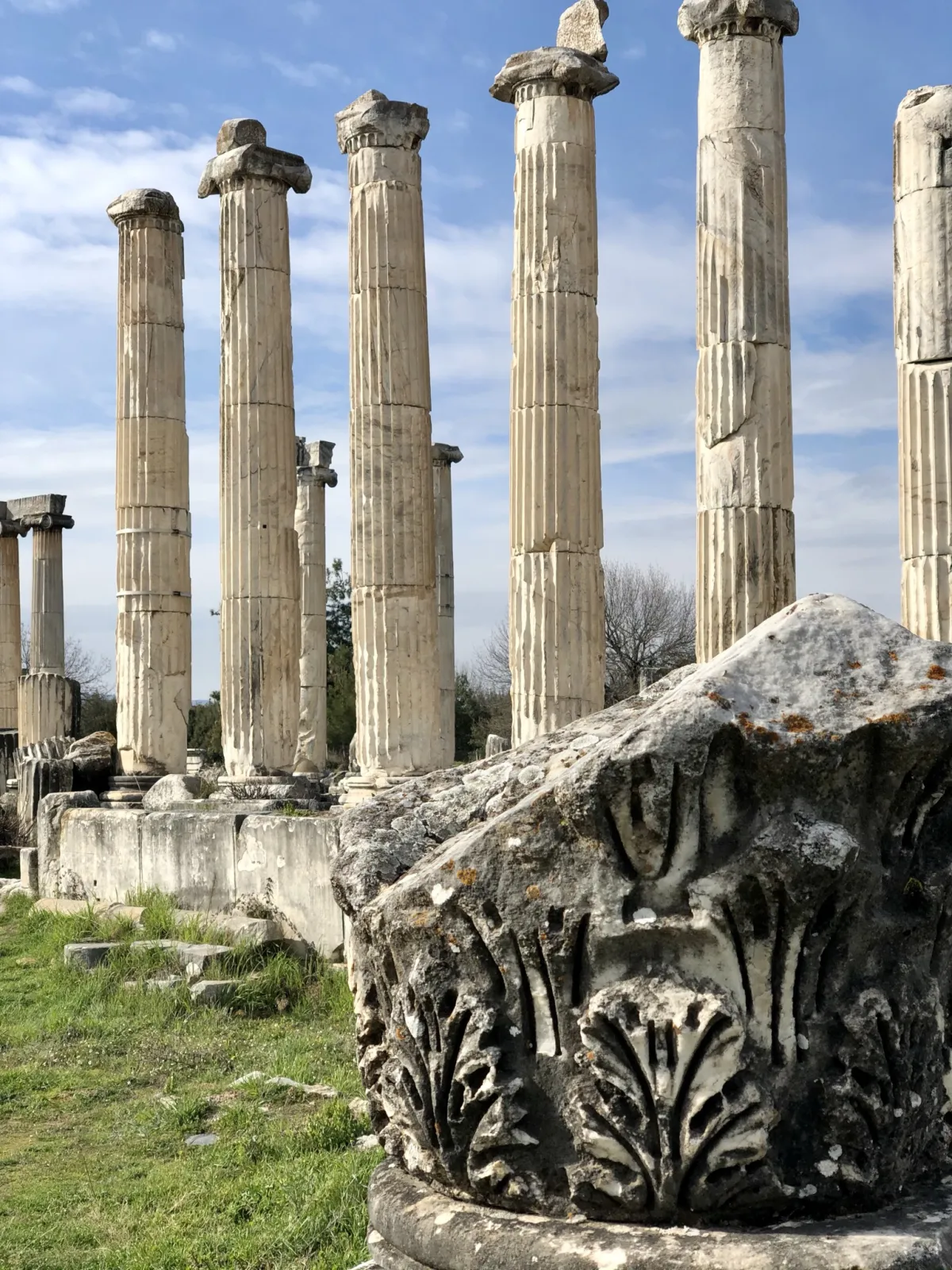
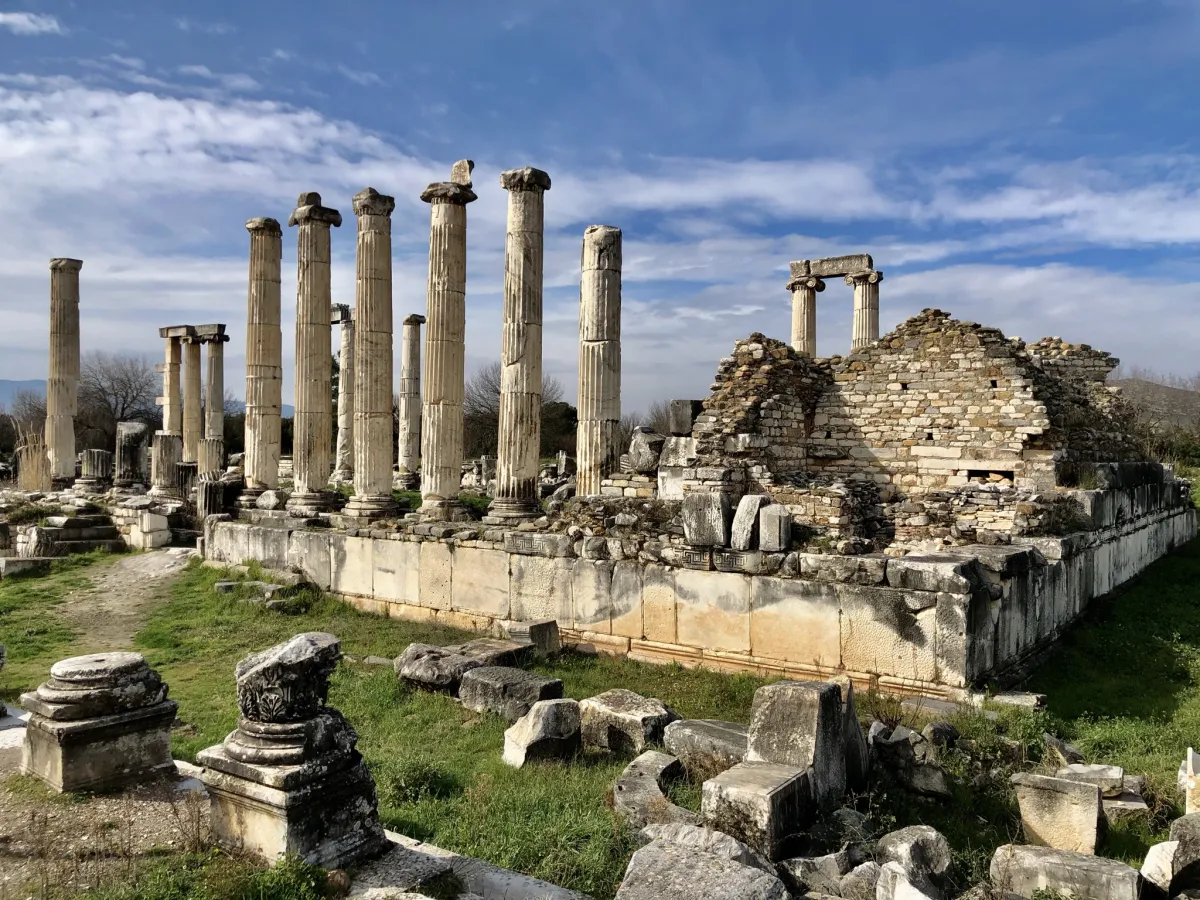
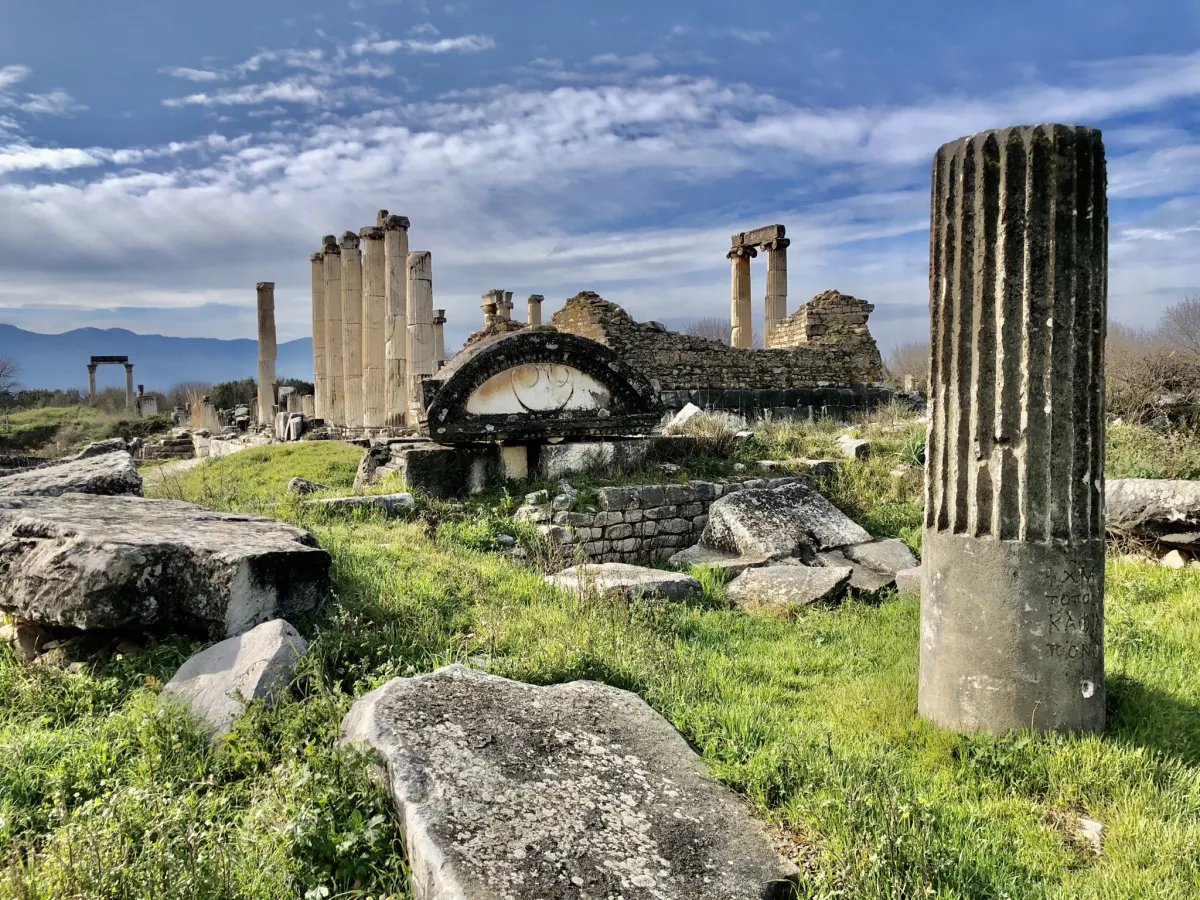
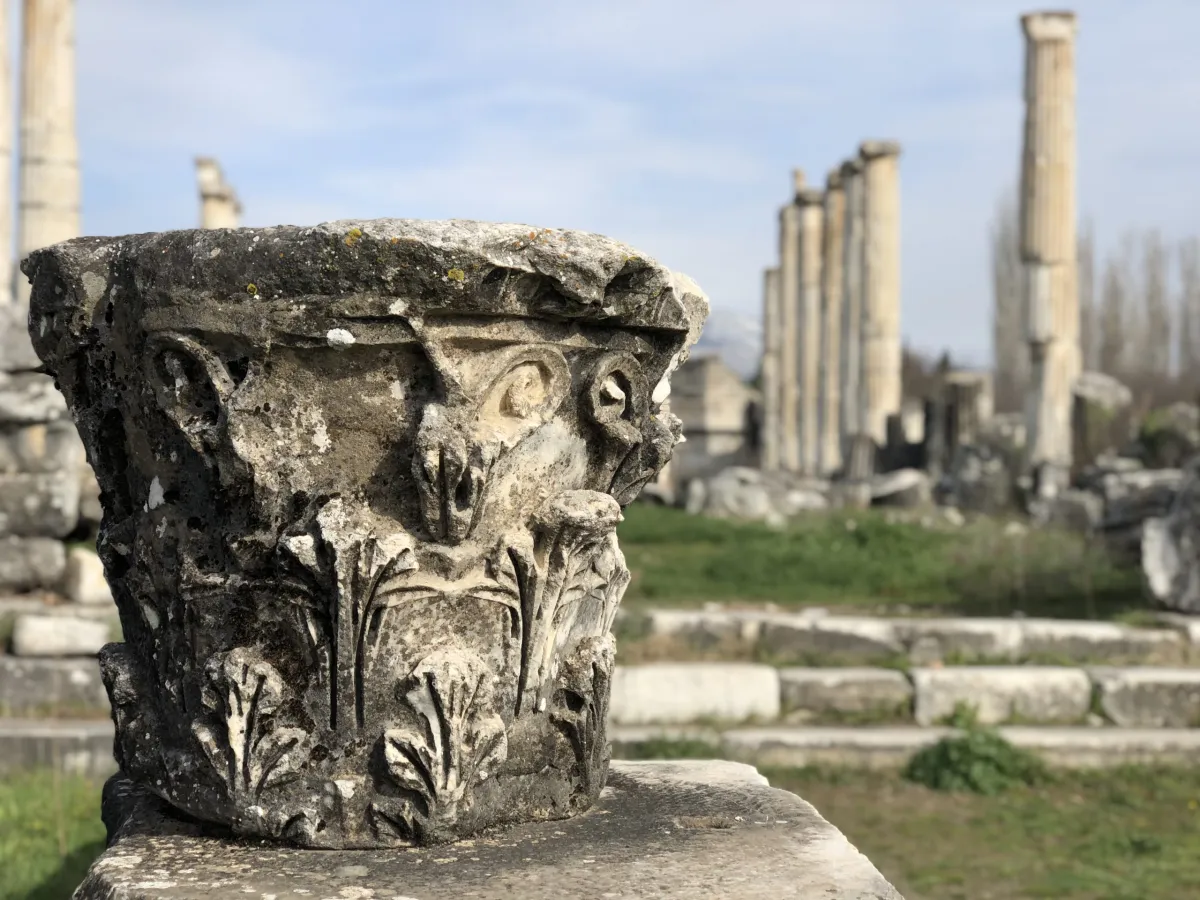
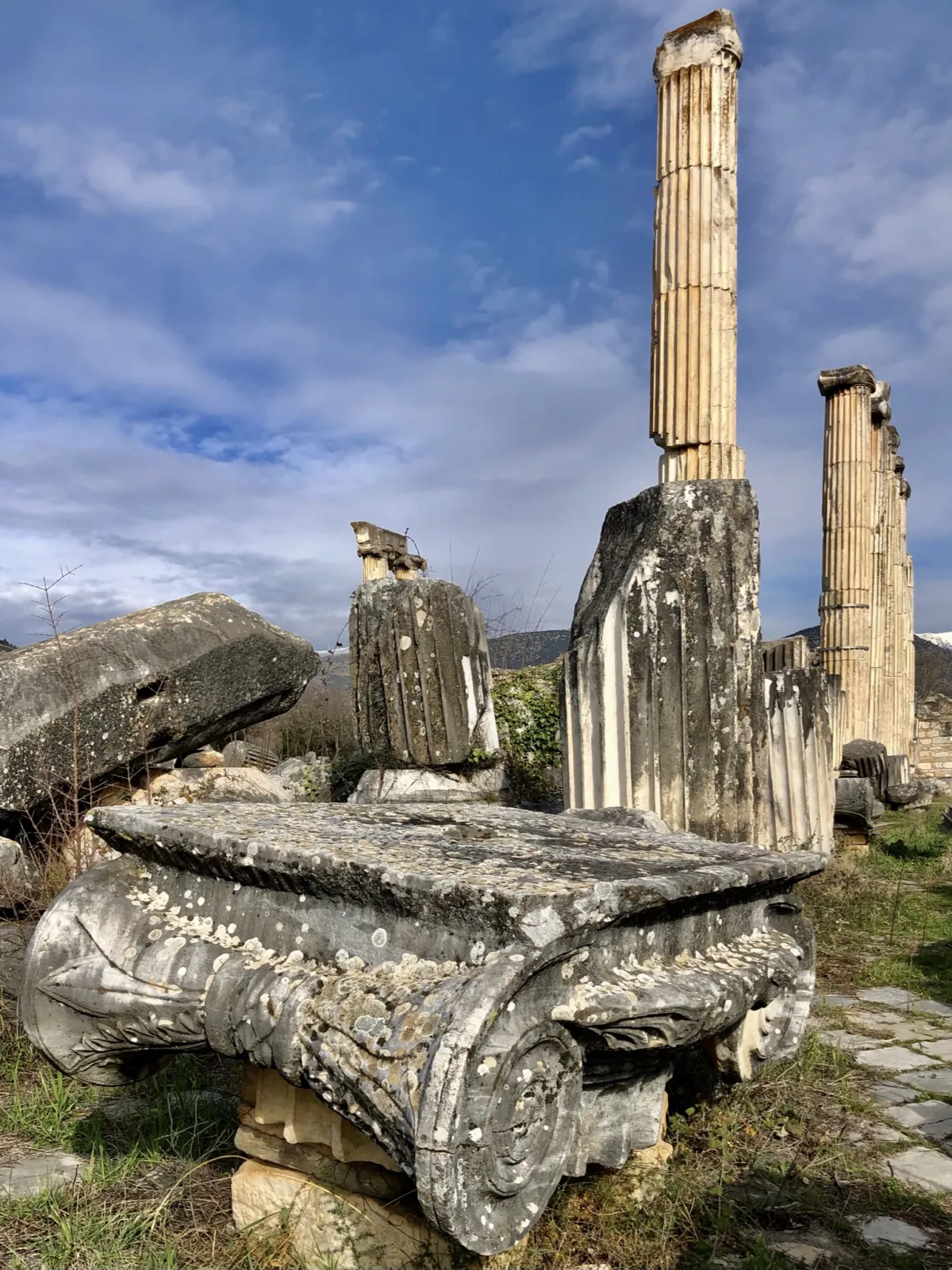
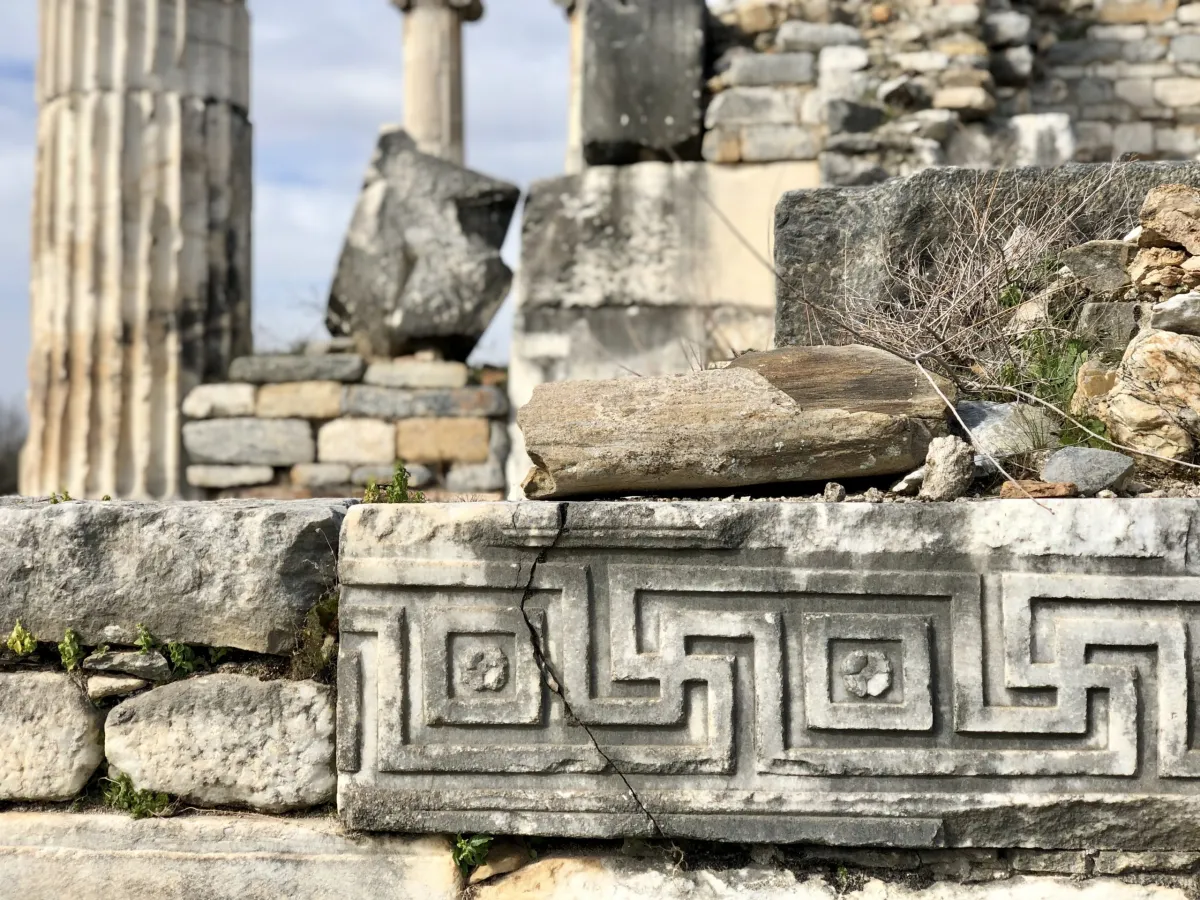
Finally, the temple of Aphrodite, of which only about ten columns have been restored. On some of the columns are written the names of the donors who gave them to the temple. It is hard for us to understand now, but “temple prostitution” existed here. Many pilgrims came here to pay homage to Aphrodite, the goddess of beauty and love. Not everyone could enter the sanctuary: only priests and priestesses were there.
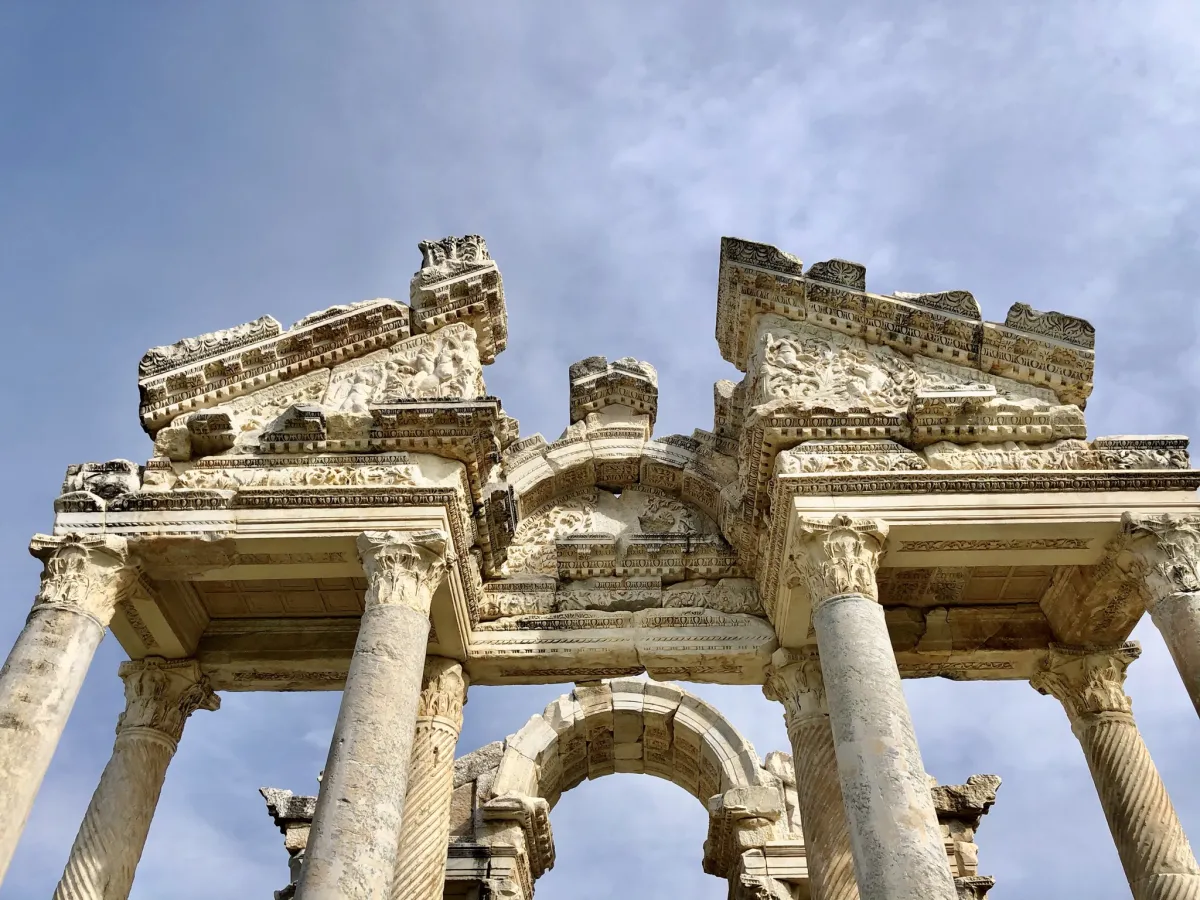
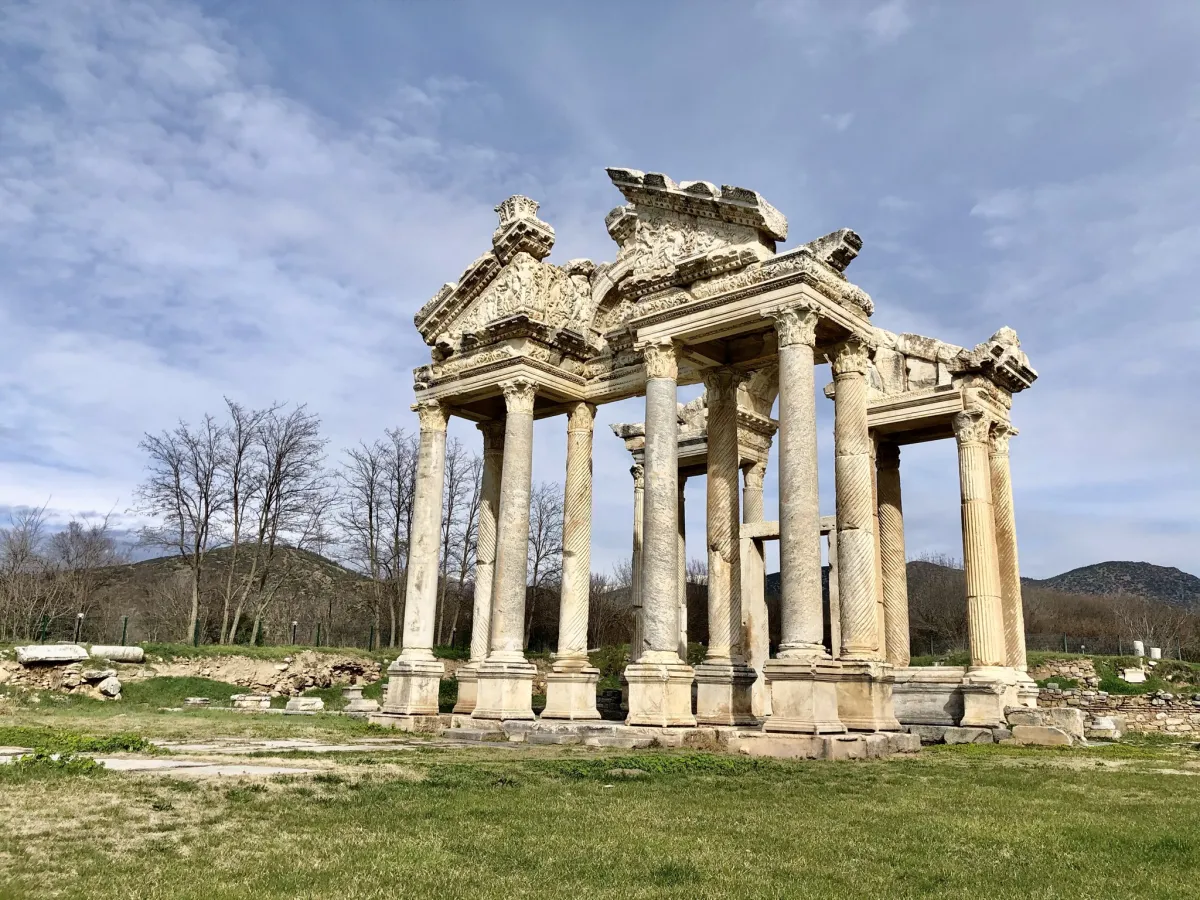
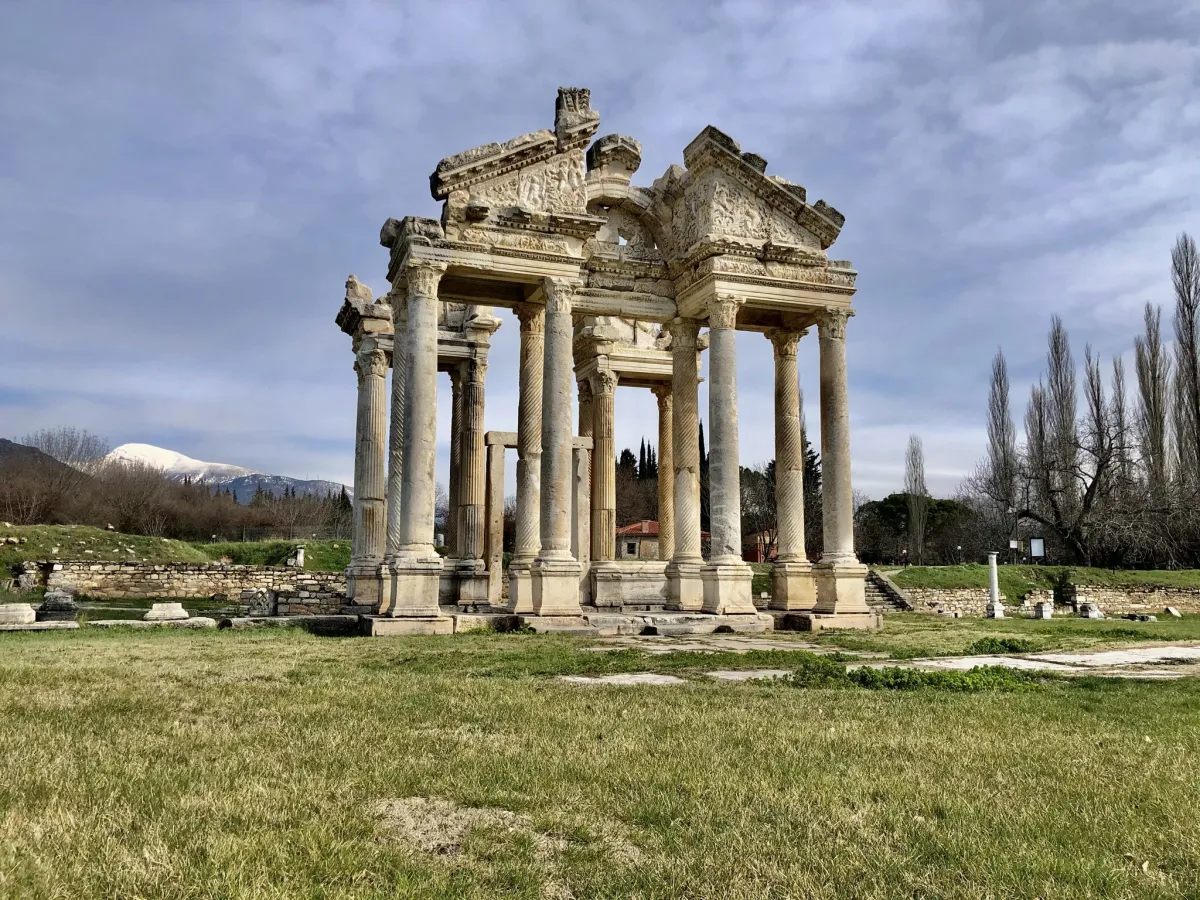
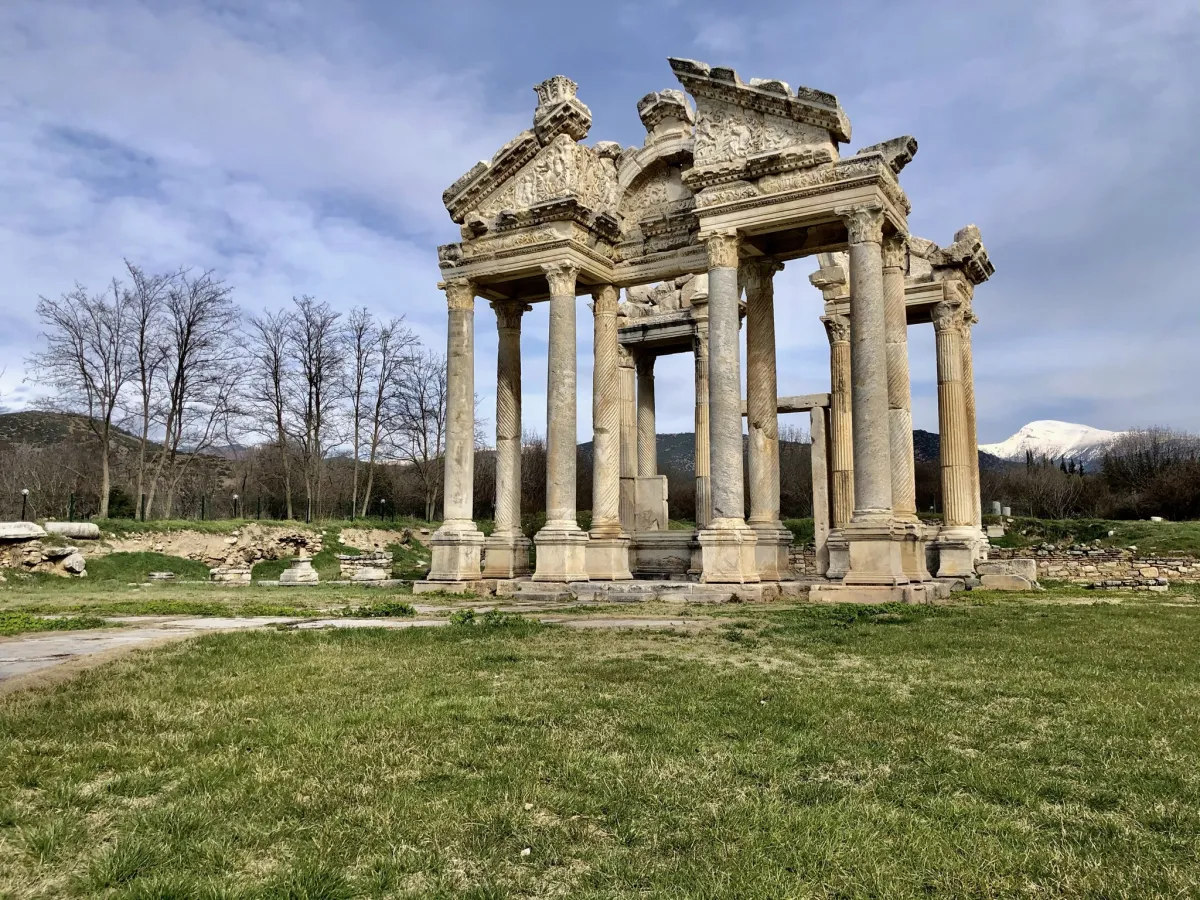
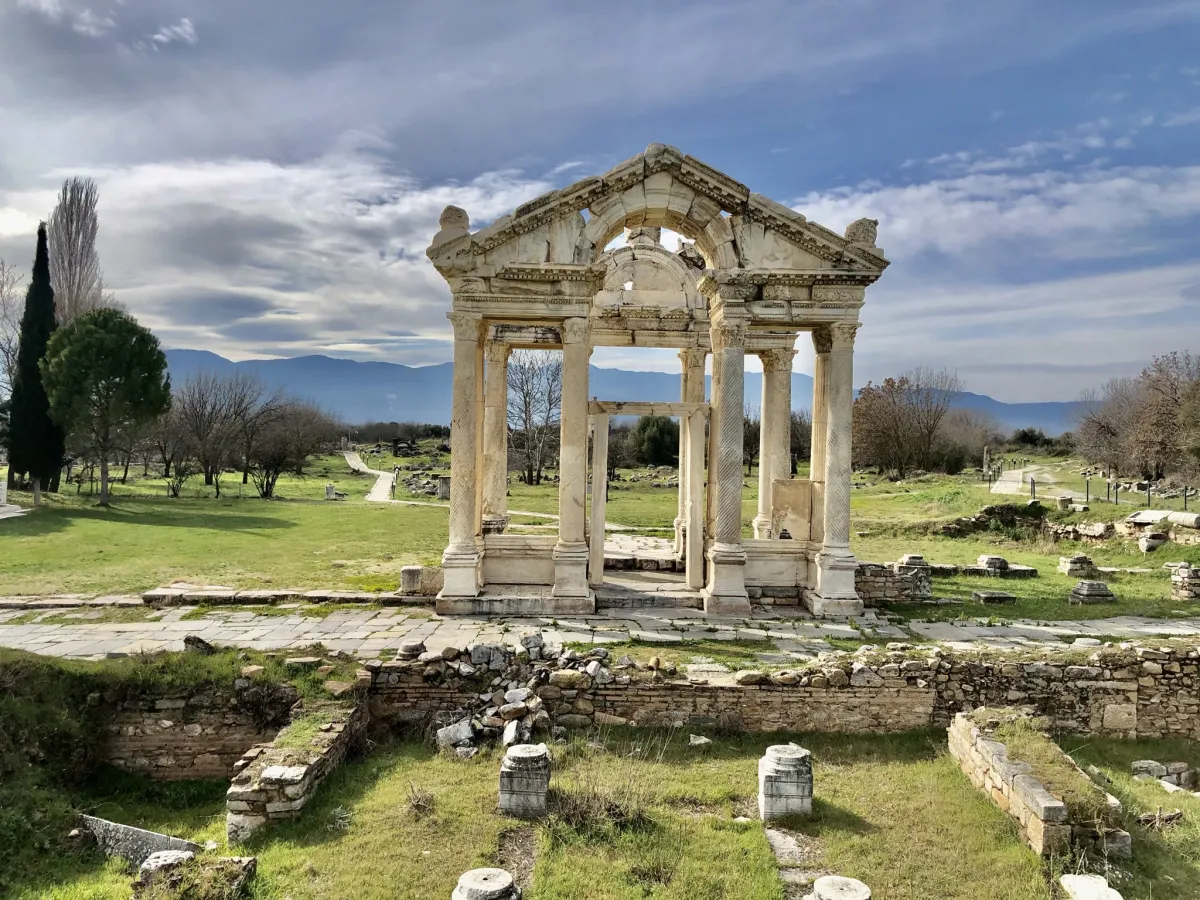
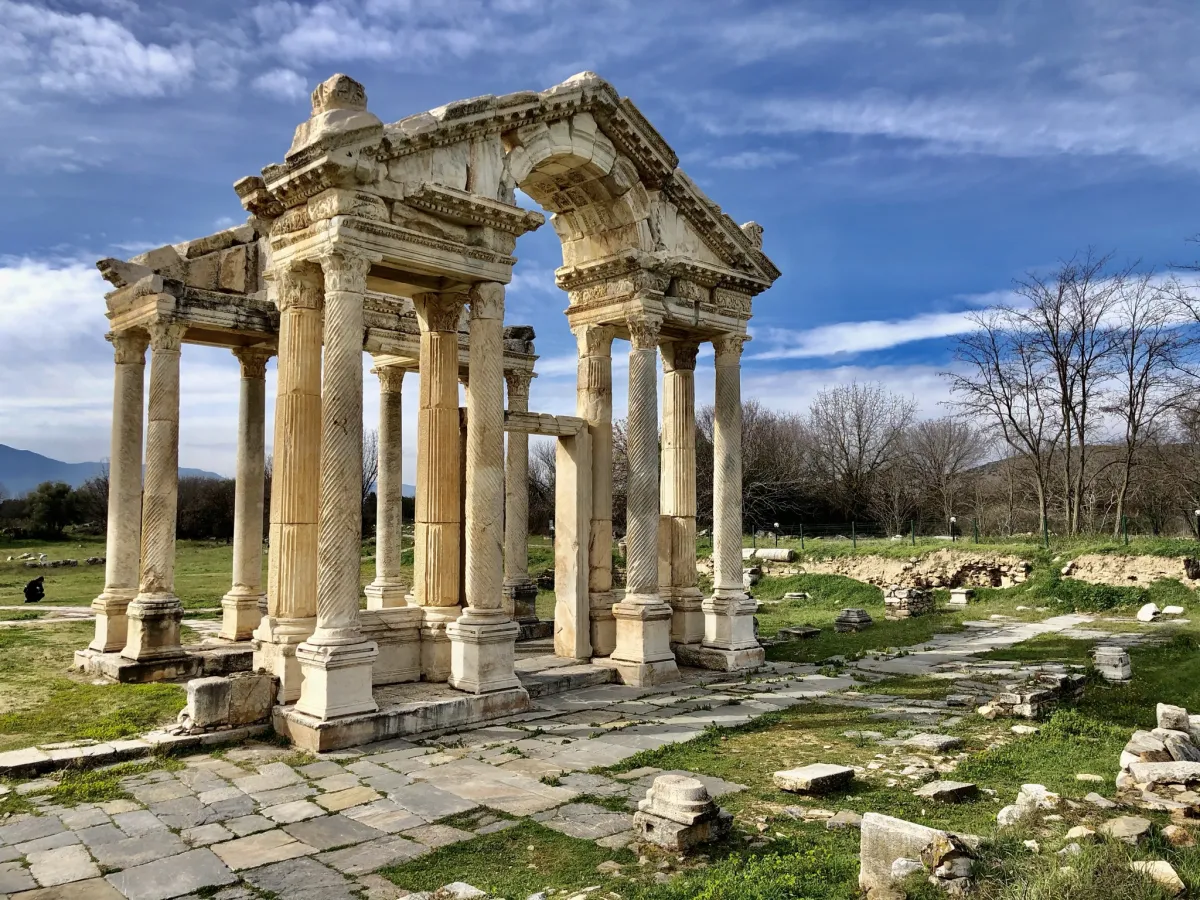
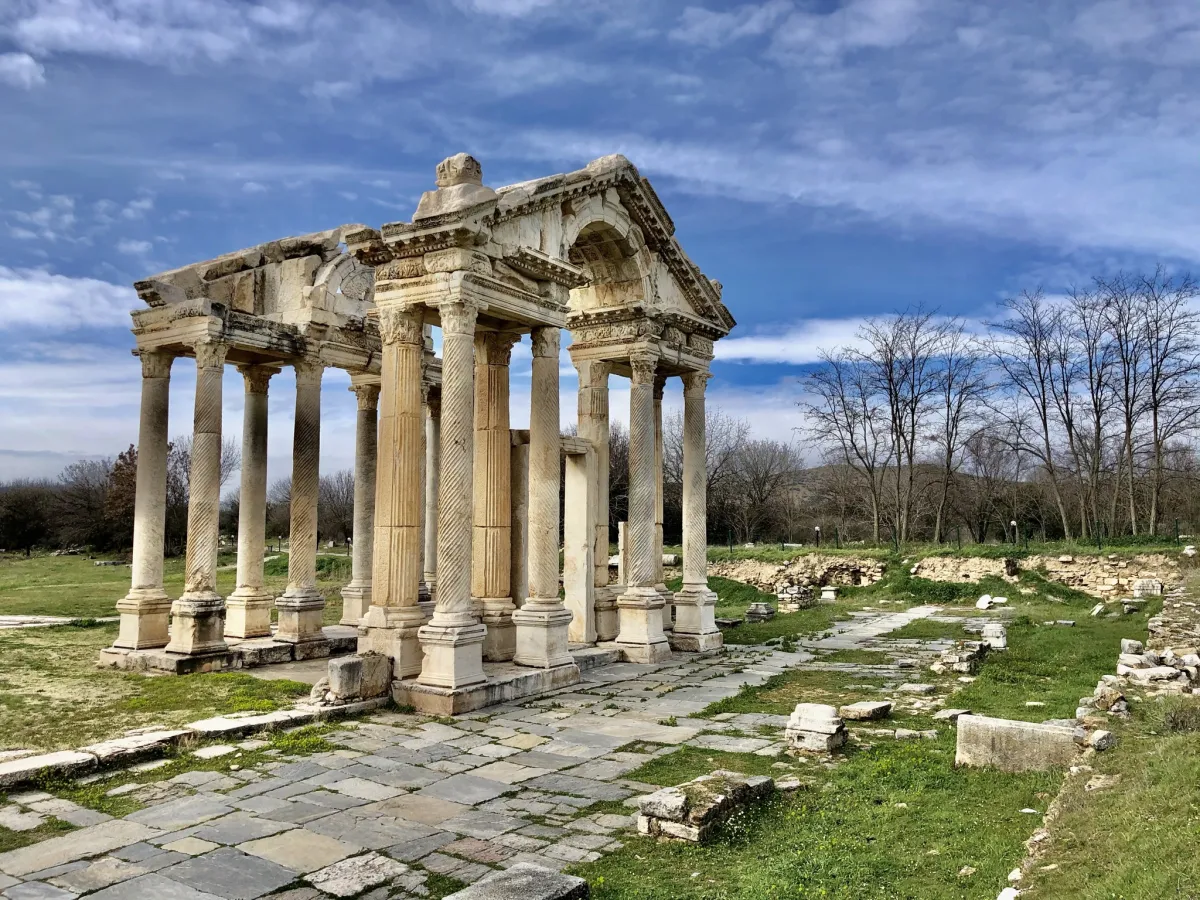
The ancient stadium for 30,000 people, of elliptical shape, and, finally, the tetrapylon, the memorial entrance gate, which is the main widely circulated picture of Aphrodisias.
If you have time, look round the museum, which has many interesting exhibits excavated nearby. Or pay homage to Alexander of Aphrodisias, a philosopher and commentator on Aristotle.
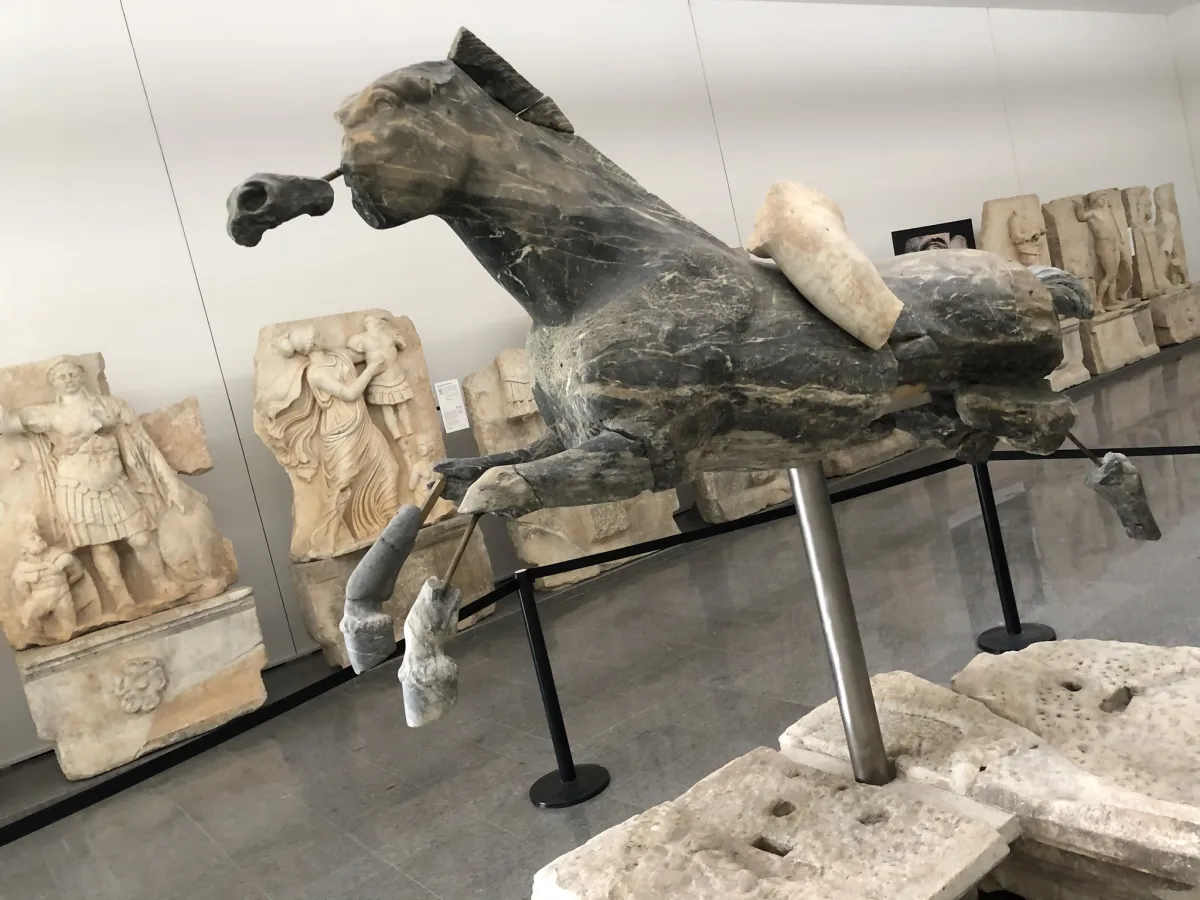
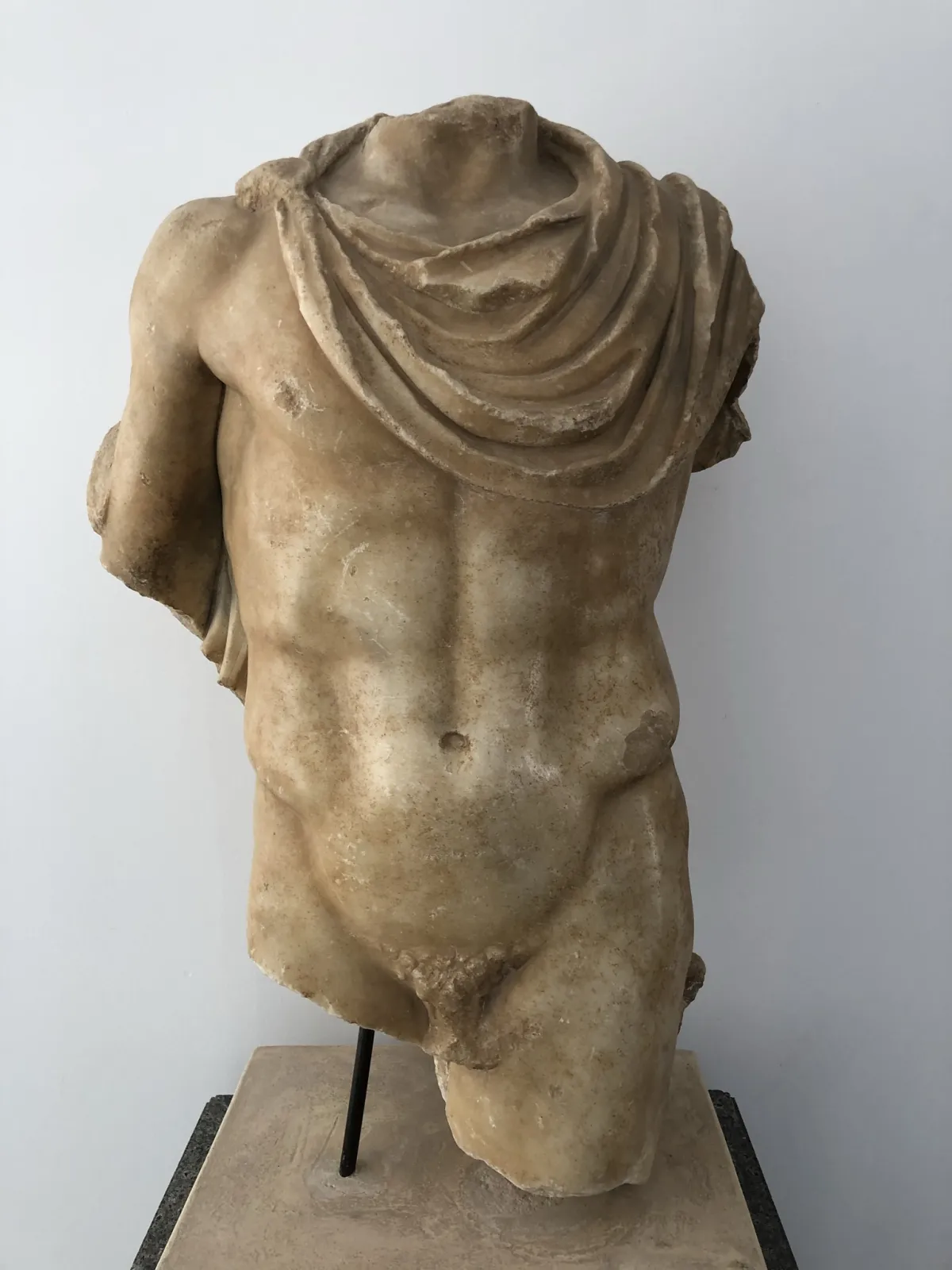
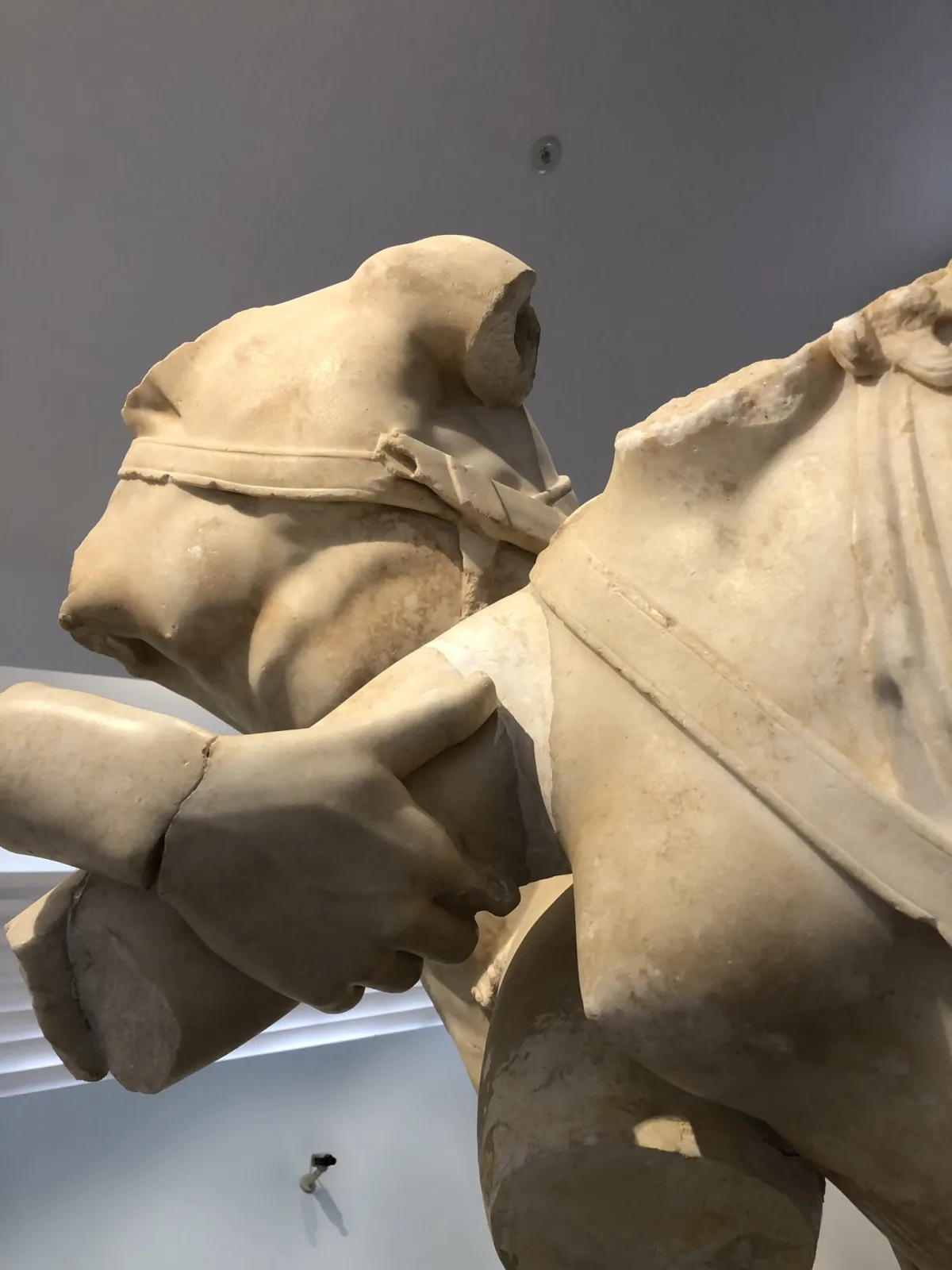
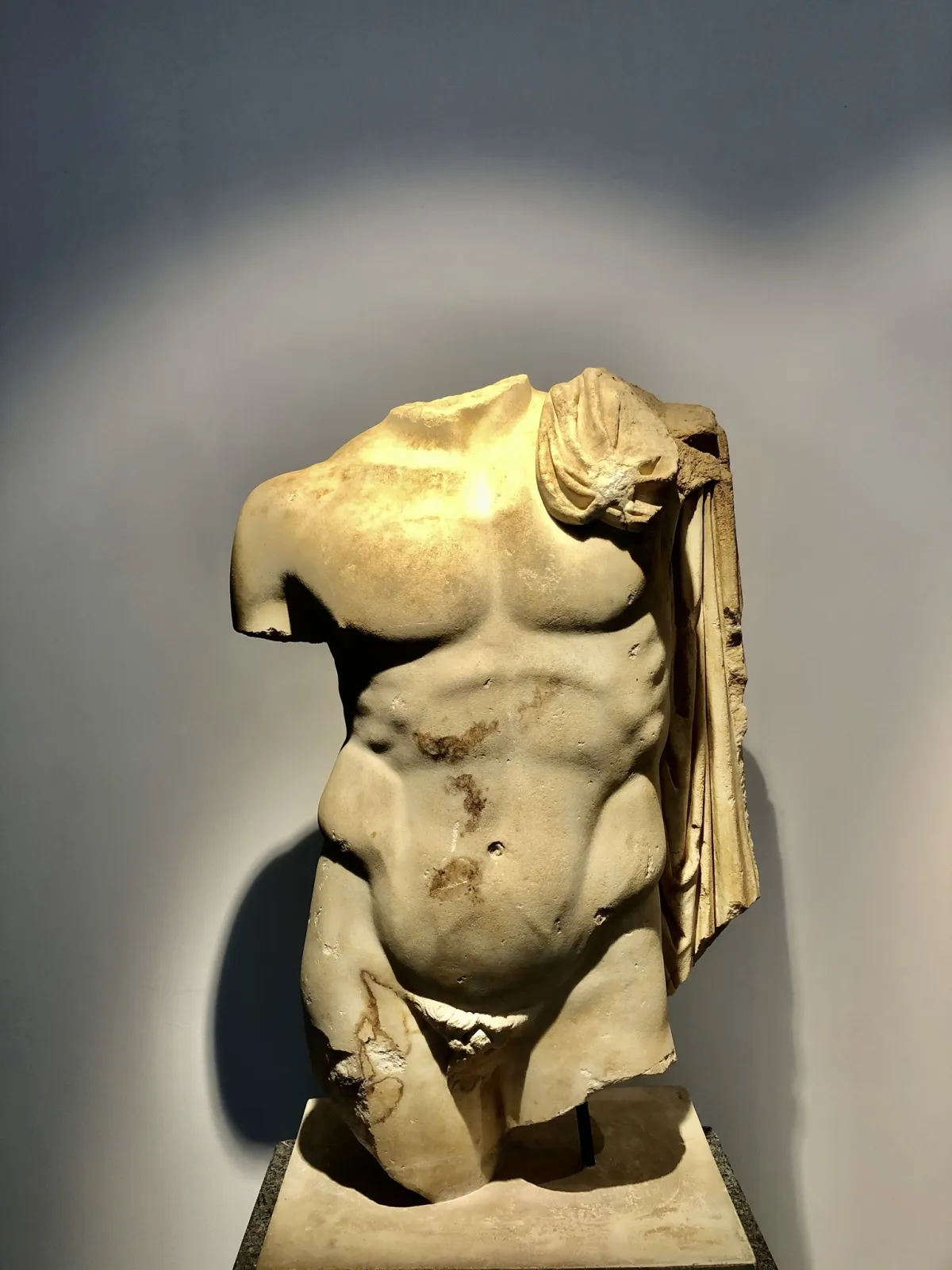
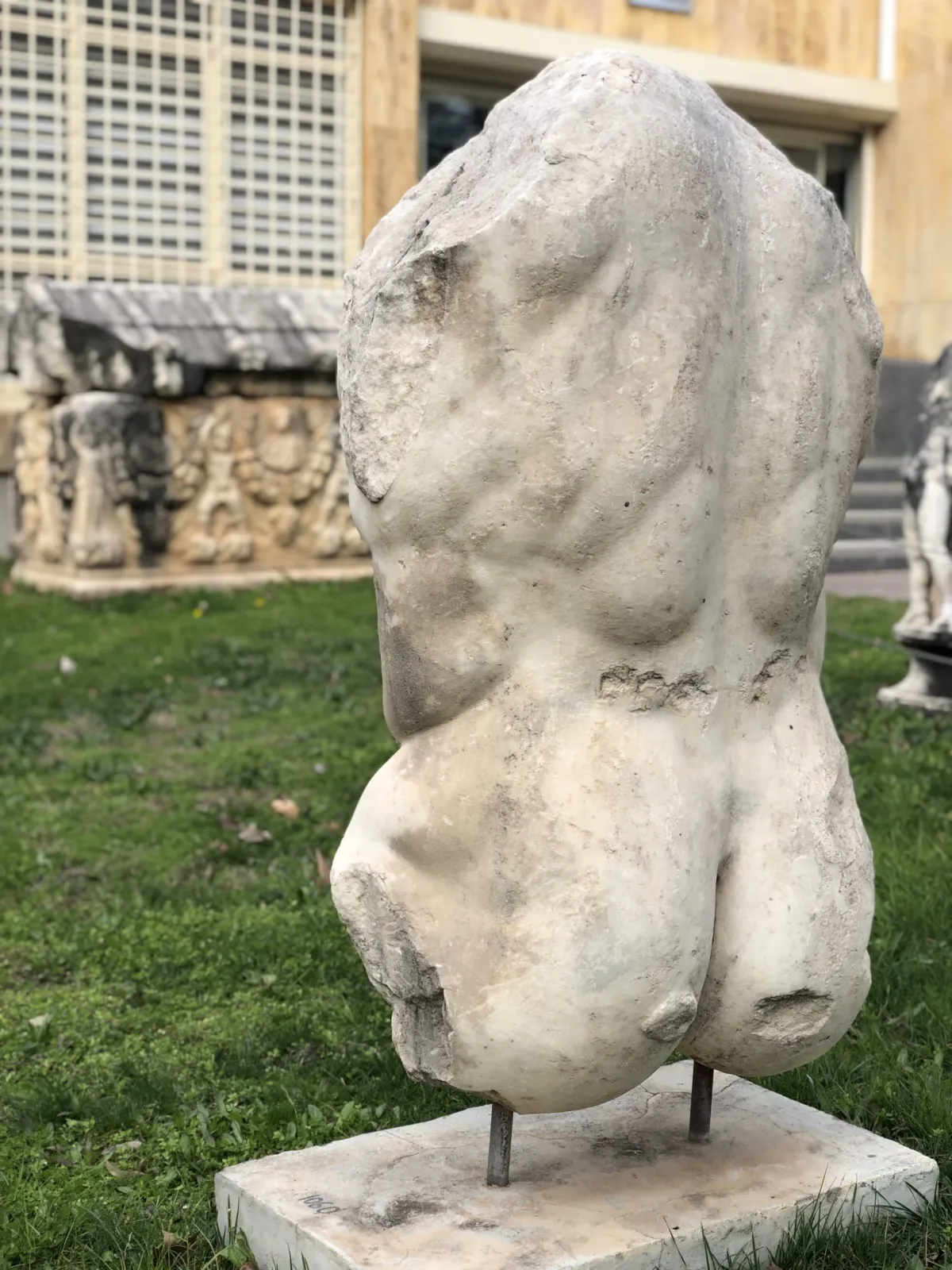
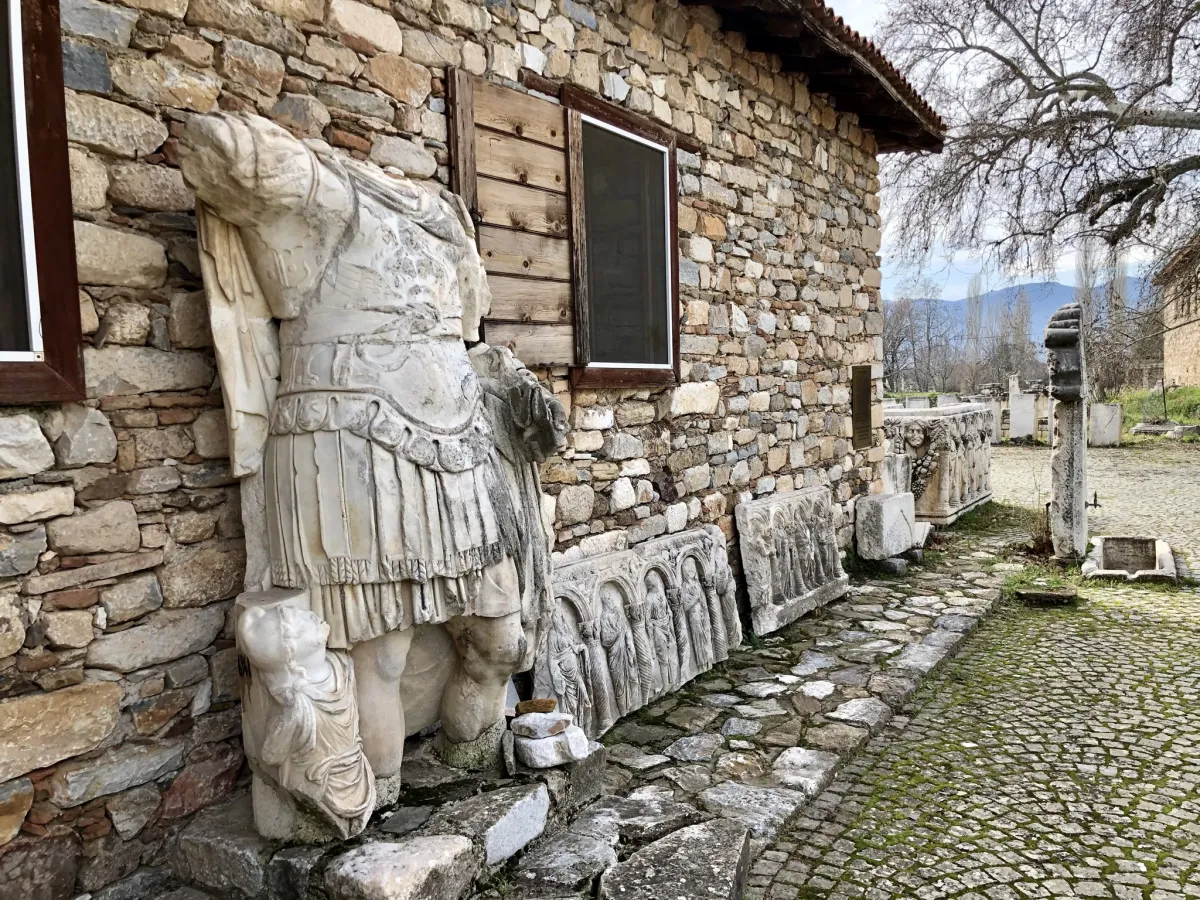
A snow-capped peak far on the horizon and the white marble of the ancient buildings: this is an incredible combination. Believe me.
Text and photos by Serhii Shcherbii



