

Miletus
· 6 min read
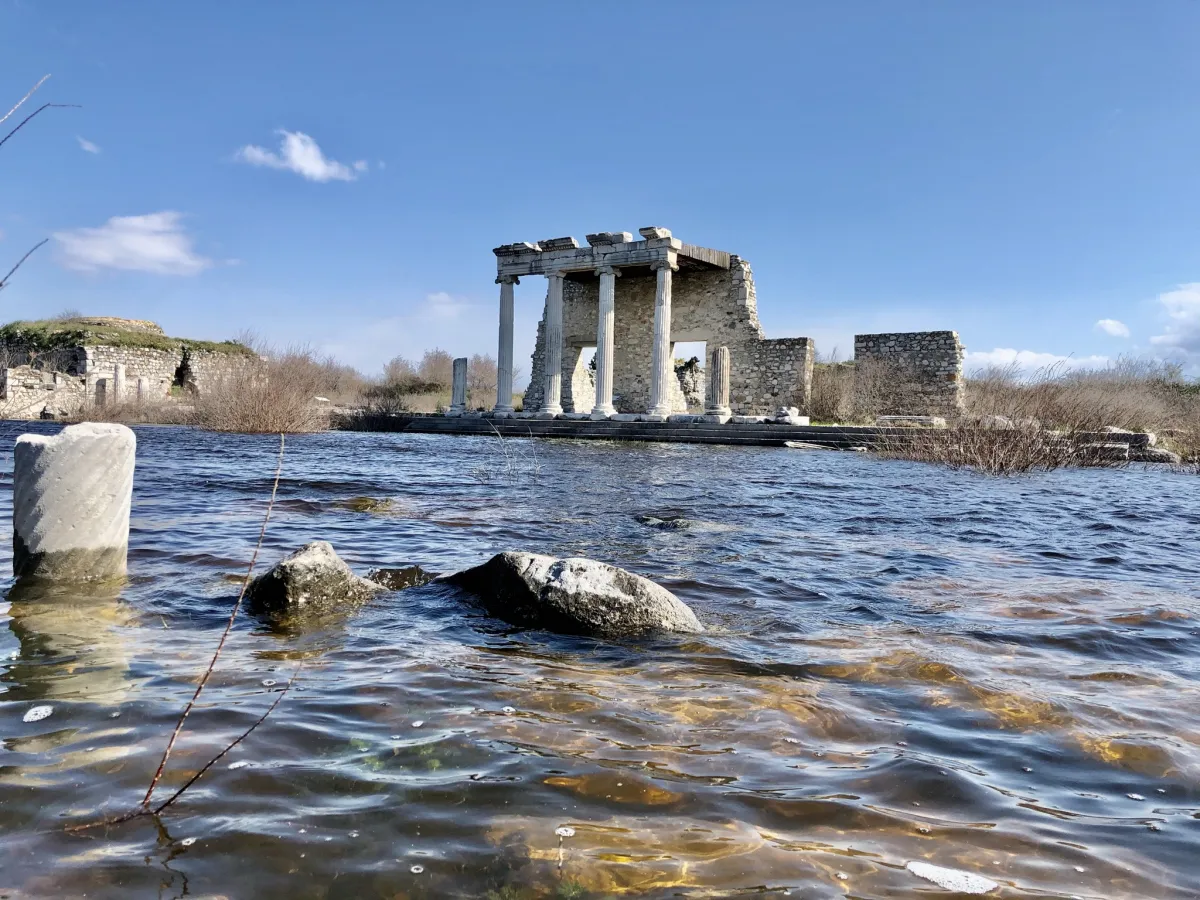
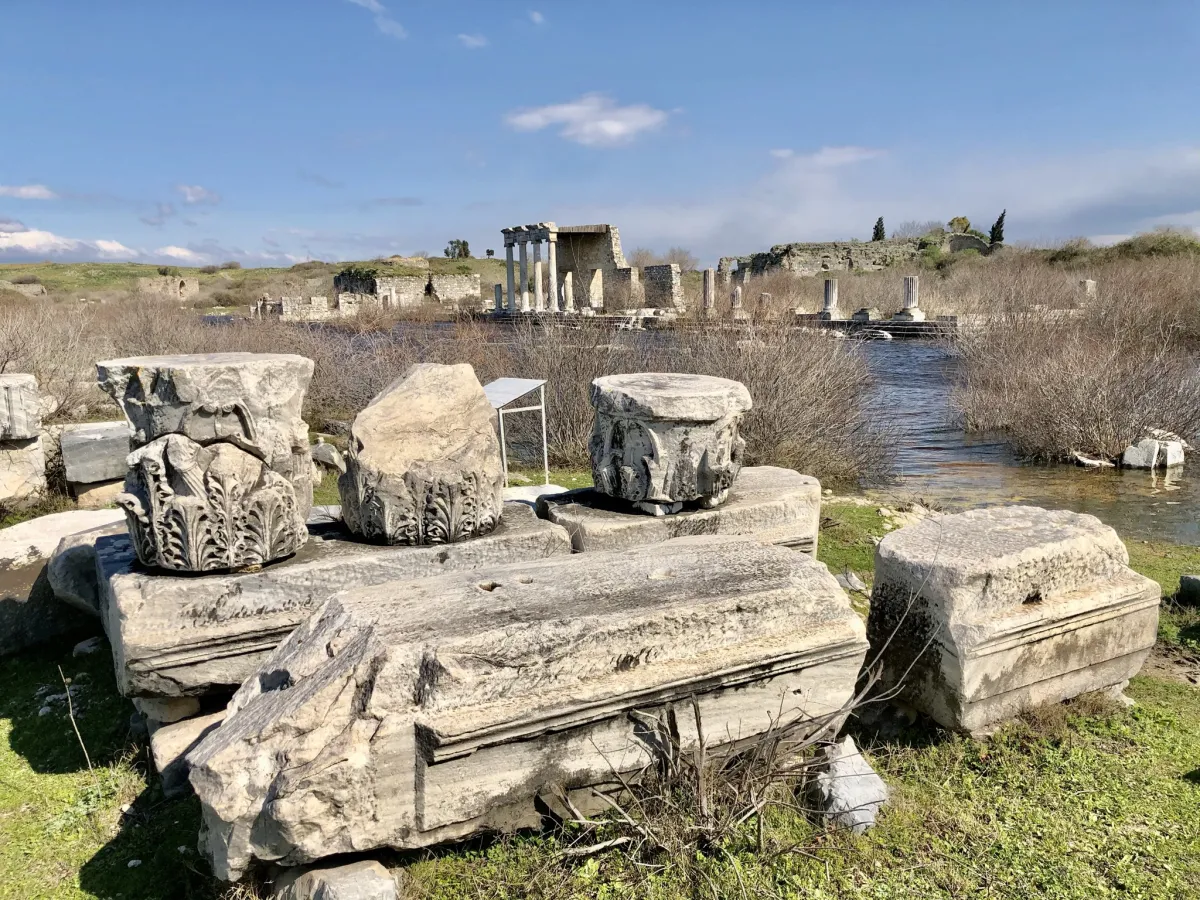
An ancient Greek city on the western coast of Anatolia, not far from the mouth of the Maeander River in ancient Caria. Its ruins lie between the villages of Batiköy and Balat on a dry, hilly plain. Today you would never guess that the sea brought it wealth and fame. Wandering among this marble building rubble in the middle of the plain, it is hard to imagine that Miletus, separated from the coast by kilometres of olive groves and fields, could have been the main port of the Ionian League of ancient Greek cities. Herodotus called it “the pearl of Ionia”. Standing on the upper rows of the theatre, which once stood on the seashore, however hard you look you will not see the sea. The sea retreated as a result of silting, and now the remains of the agora, flooded by water, look like a mockery.
Like any decent city of antiquity, Miletus was founded, as is easy to guess, by Miletus – the divine son of Apollo, patron of music, prophecy and healing, and the nymph Areia. He had to flee from Crete from the sons of Europa and Zeus. Minos (also a familiar character) and Rhadamanthus fell in love with the young Miletus – so he had to run away.
After the death of the Minoan civilisation on Crete from the volcanic eruption in Atlantis, now known as the island of Santorini, Miletus was settled by Greeks. For the new year of 1000 BC a new wave of settlers arrived here from Europe – Ionian Greeks, so many that the whole coast came to be called Ionia. Miletus was seized by Neleus, son of Poseidon, as he wrote on his business cards, although in fact he was the son of the last Athenian king, Codrus. Having killed all the local men, the Greeks took their women as wives.
Before the Persian invasion in the middle of the 6th century BC, Miletus, thanks to its favourable location, was rich and possibly the largest Greek city.
A Milesian, Μιλήσιοι, was among the Greeks a synonym for happy and successful people, favourites of fate.
All the surplus mouths were sent to seek their fortune and found colonies in the region of the Sea of Marmara and the Black Sea. Money flowed into the city like a river, and the river… went on bringing silt. Now, thanks to the Milesians, a little of the Milesian Lego set remains in Ukraine too. Here is a partial list of the towns founded by natives of Miletus in our land:
– Borysthenes, Borysthenis – the oldest Greek colony in the northern Black Sea region, on Berezan Island (at the mouth of the Dnieper-Borysthenes into the Black Sea, near the town of Ochakiv).
– Panticapaeum, now Kerch.
– Myrmekion – on the shore of the Kerch Strait, east of Panticapaeum.
– Tyritake – founded south of Panticapaeum, located at Kamysh-Burun (Arshintsevo), the southern district of modern Kerch.
– Nikonion – on the eastern shore of the Dniester Estuary, within the modern village of Roksolany (Ovidiopol district, Odesa Oblast).
– Kerkinitis, now Yevpatoriia.
– Kalos Limen – on the territory of the modern settlement of Chornomorske.
– Olbia – in the delta of the Hypanis (Buh) and the Borysthenes (Dnieper).
– Tyras – now under the walls of the Akkerman Fortress in Bilhorod-Dnistrovskyi
– Theodosia and Melitopol – these are Feodosiia and Melitopol.
Miletus and Corinth established de facto hegemony over Greece. They did not forget about dear father Apollo either. The priests of his temple at Didyma near Miletus issued ̶o̶r̶d̶e̶r̶s̶ ̶f̶o̶r̶ ̶a̶p̶a̶r̶t̶m̶e̶n̶t̶s̶ blessings for the founding of colonies.
At this time Miletus turned into a true cultural capital of the Hellas of the day, paradoxically in many respects thanks to the tyrant Thrasybulus, who seized power in the city. Perhaps good advice was given to him by his adviser and friend, the first Greek philosopher and mathematician Thales, guided by his own principle “The hardest thing is to know oneself, the easiest is to give advice to others”. After all, “one should remember friends not only in their presence but also in their absence”. “Know thyself” is a fine wish from him to everyone, although my favourite saying of his is another: “Who is happy? One who is healthy in body, endowed with peace of mind and develops his gifts”. Thales was the founder of the Milesian school of philosophy, and his most famous pupil was Pythagoras.
Hecataeus of Miletus was born in Miletus, the author of the treatise “Description of the Earth”, where information about Scythia, its rivers, the local population and the Greek colonies was first given.
The city loved sciences, crafts and art. Miletus was also the homeland of the philosophers Anaximander and Anaximenes, the logographers Cadmus, Hecataeus and Dionysius, and the writer Aristides.
The Milesians built warships and merchant ships and developed philosophy and theatrical art. They say it was they who created the Greek alphabet.
The Milesians voluntarily recognised the authority of Cyrus, but with Darius they miscalculated. Whether they were not as cunning as the Scythians, or relied more on the fleet than on open spaces, or were not as brave as the Greeks at Marathon, having rebelled against the Persians they suffered a terrible defeat. After a year-long siege the city was razed to the ground, and the remaining inhabitants were turned into slaves and sent deep into the Persian state.
Miletus was later rebuilt and the city received a regular layout, according to the so-called Hippodamian system, named after an architect who was a Milesian by birth. Now it seems obvious to us that streets should intersect at right angles, creating rectangular blocks and squares, but then it was very eccentric. So much so that the comedian Aristophanes in “The Birds” portrayed the geometer Meton, who tries to design a celestial city with compass and ruler – “making a circle a square” – but is driven out for boasting.
In Miletus was born a “Komsomol girl, activist and simply a beauty” – Aspasia, wife of the Athenian creator of the “golden age of Athens”, Pericles.
Persians, Athenians, Spartans and so on in turn up to Alexander the Great, who had to take the city by storm.
Between Miletus and Priene, located on the opposite side of the gulf, there used to be about 15 kilometres of open sea. But the Romans were less lucky. When they appeared on these shores, Miletus was already in decline because of the silting of the gulf by the river’s waters. The shoaling did not allow Miletus to receive ships, and later the sea retreated altogether by several kilometres. The city was deprived of the main source of its existence and the inhabitants abandoned it.
Isidore of Miletus the Elder, who was an architect of the Cathedral of Hagia Sophia in Constantinople, even managed to be born in the city.
Germans have been conducting excavations in Miletus for over 120 years, so it is no surprise that in the Pergamon Museum in Berlin the Market Gate of Miletus stands like new, having been moved piece by piece to Germany and reassembled. Next to the Temple of Zeus from Pergamon, but unlike Pergamon, which is carefully fenced off with a funicular and laid-out paths, Miletus has no boring geometric buildings, only simply majestic ruins.
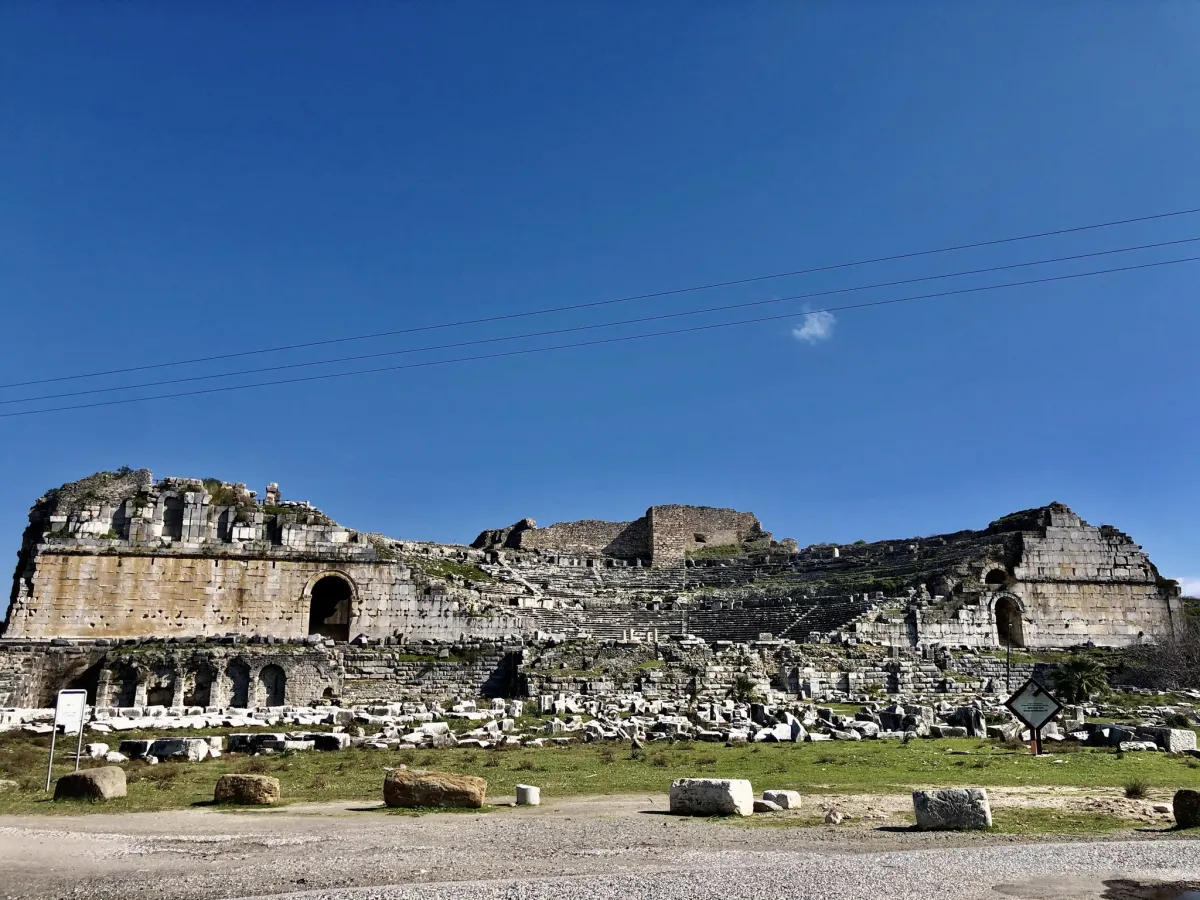
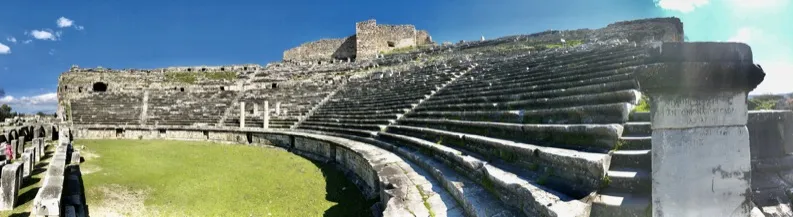
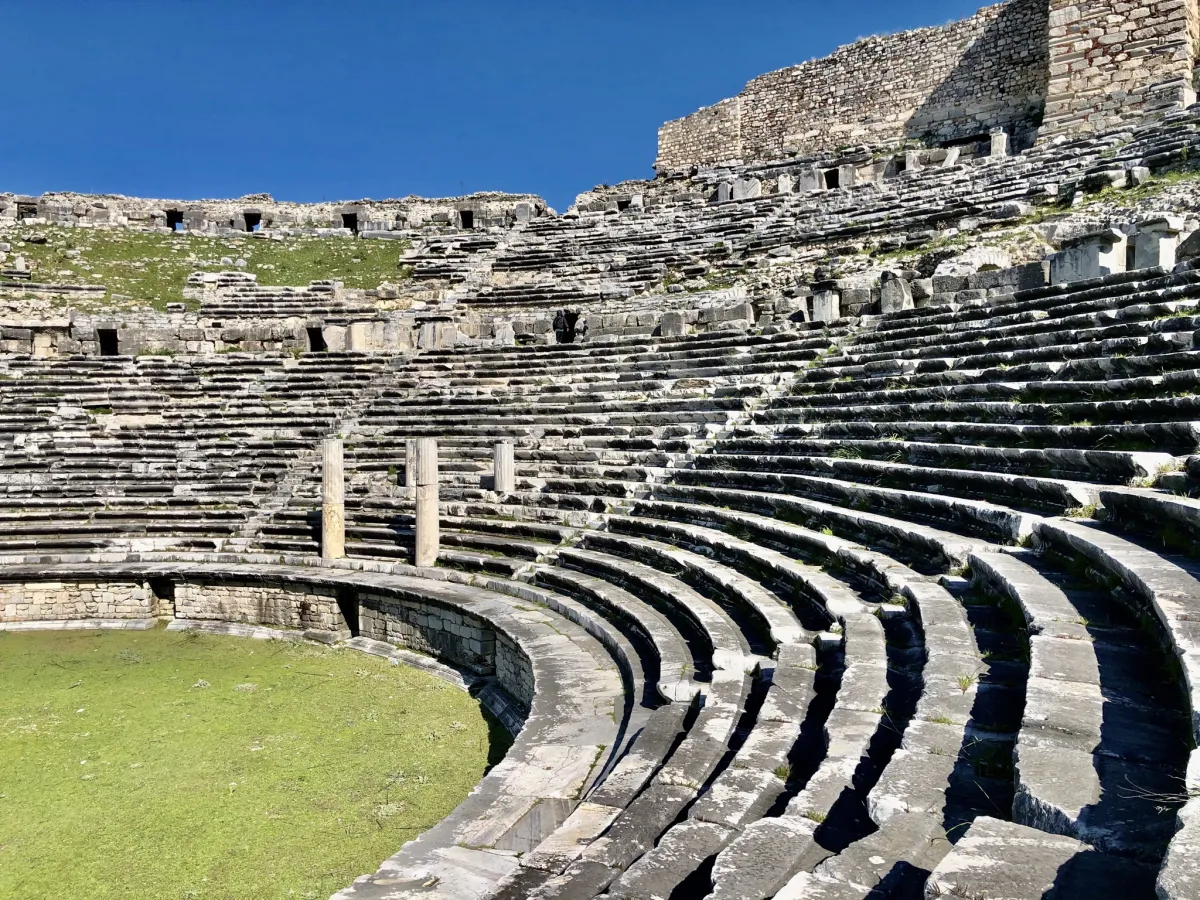
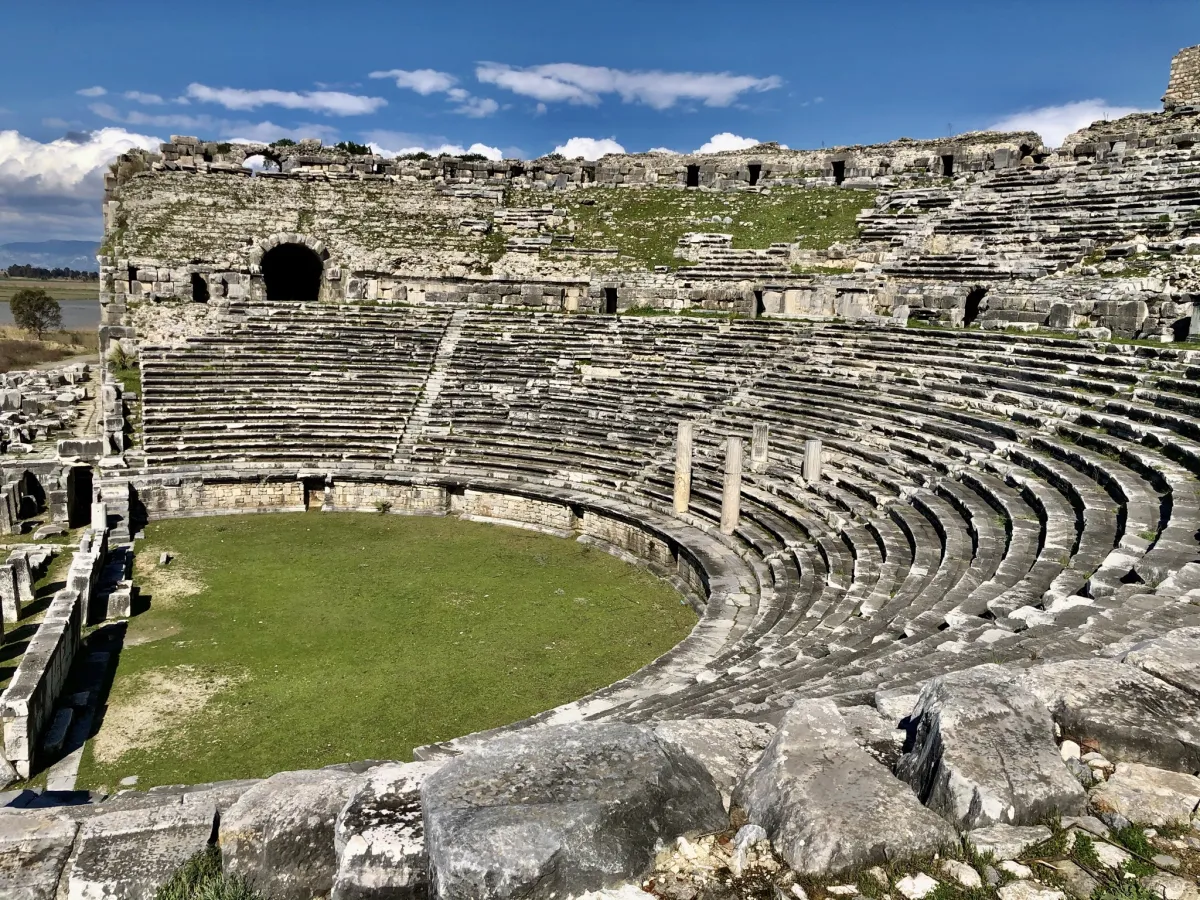
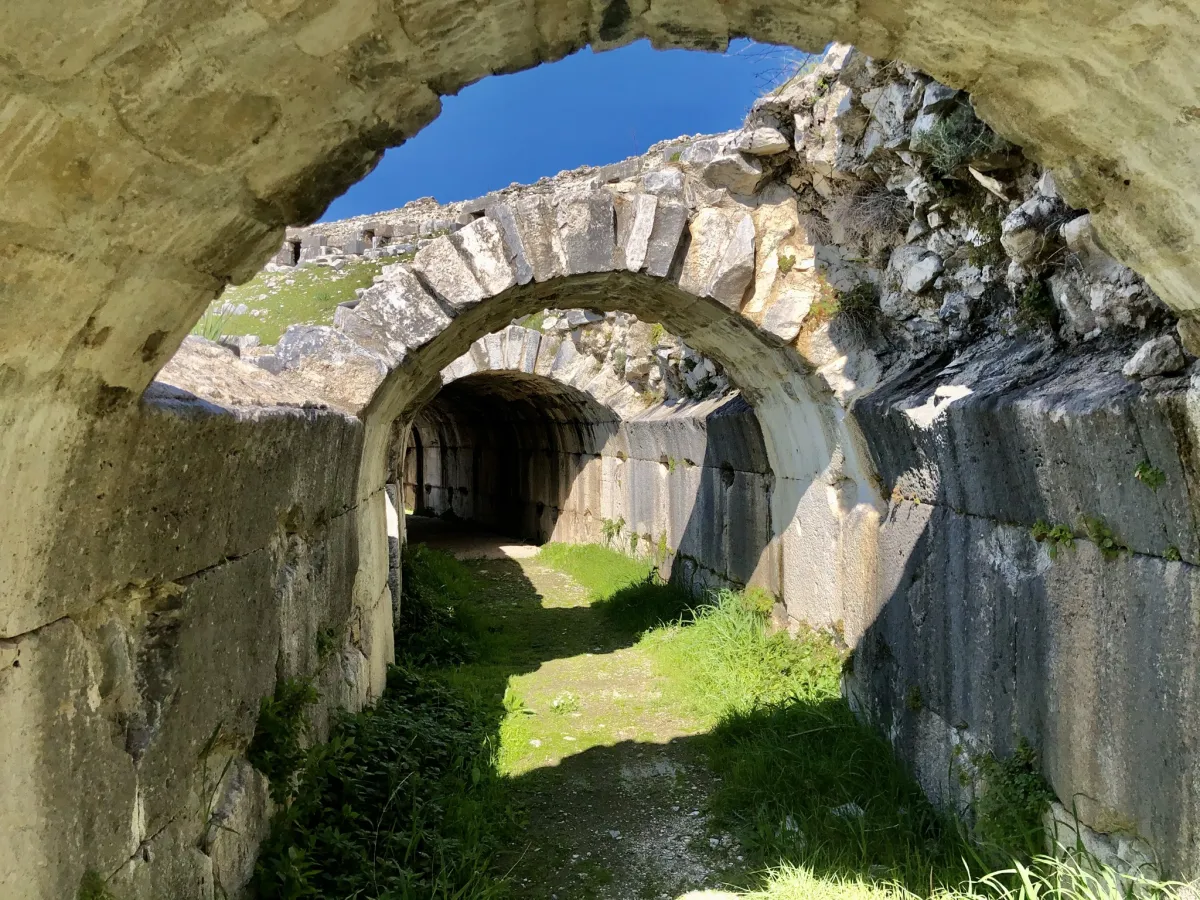
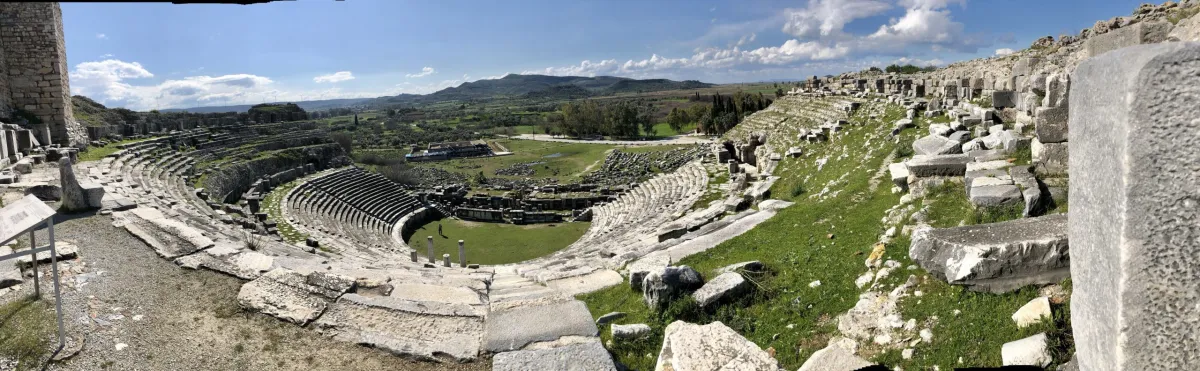
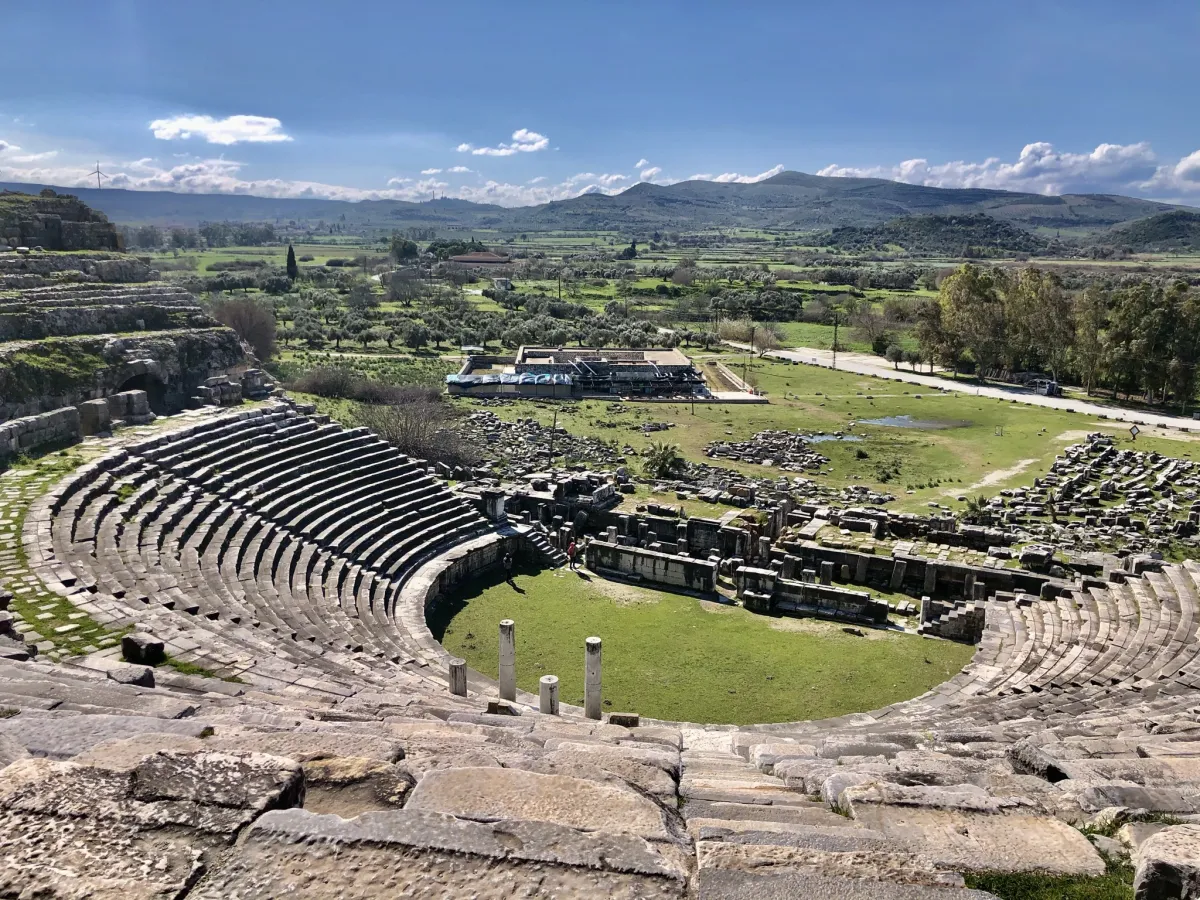
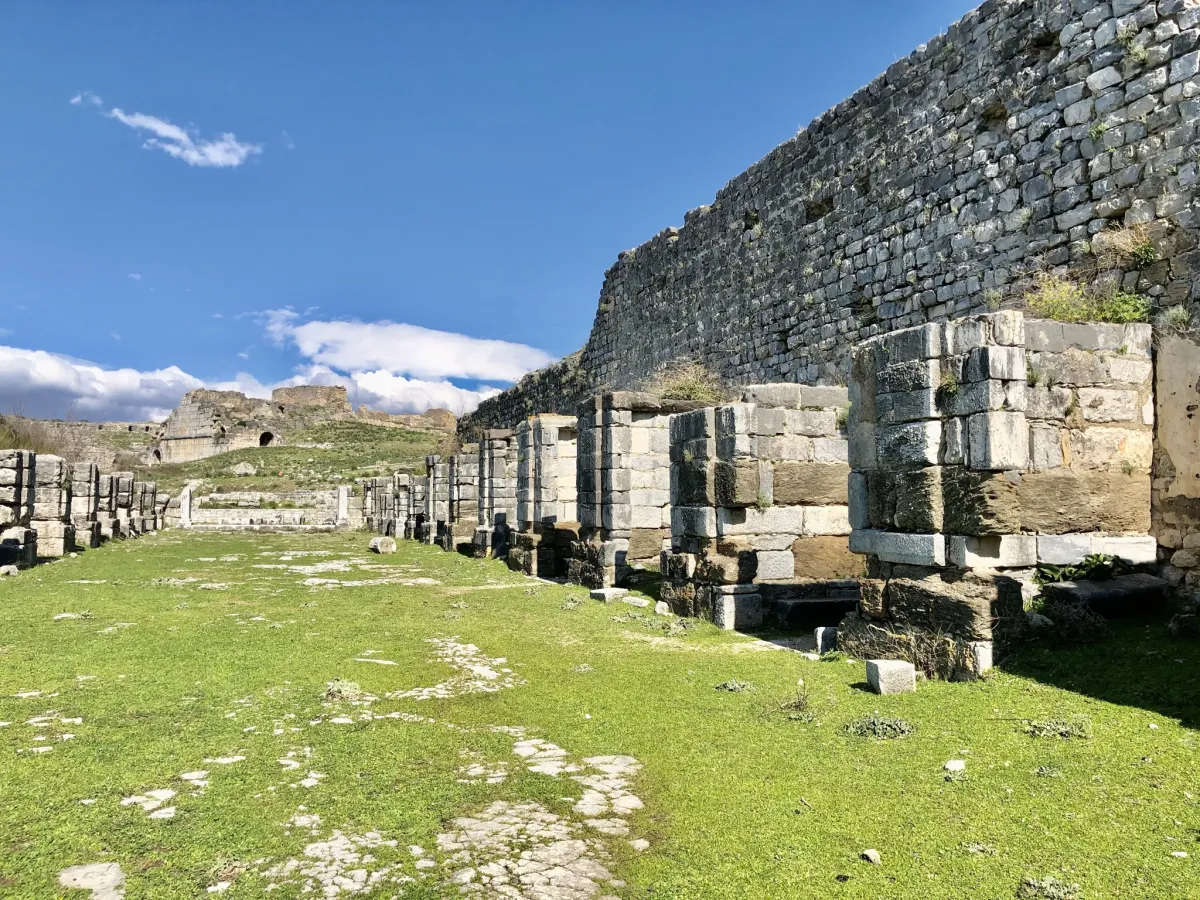
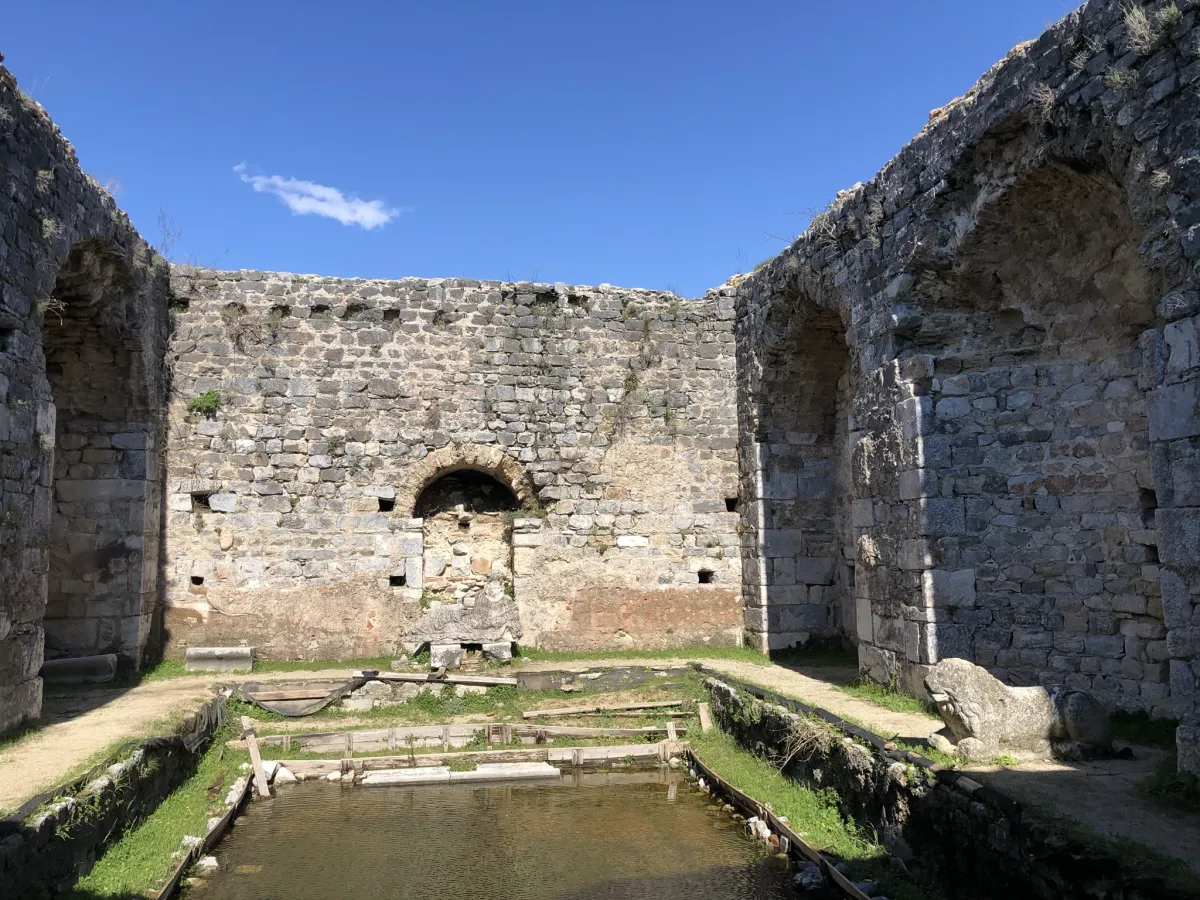
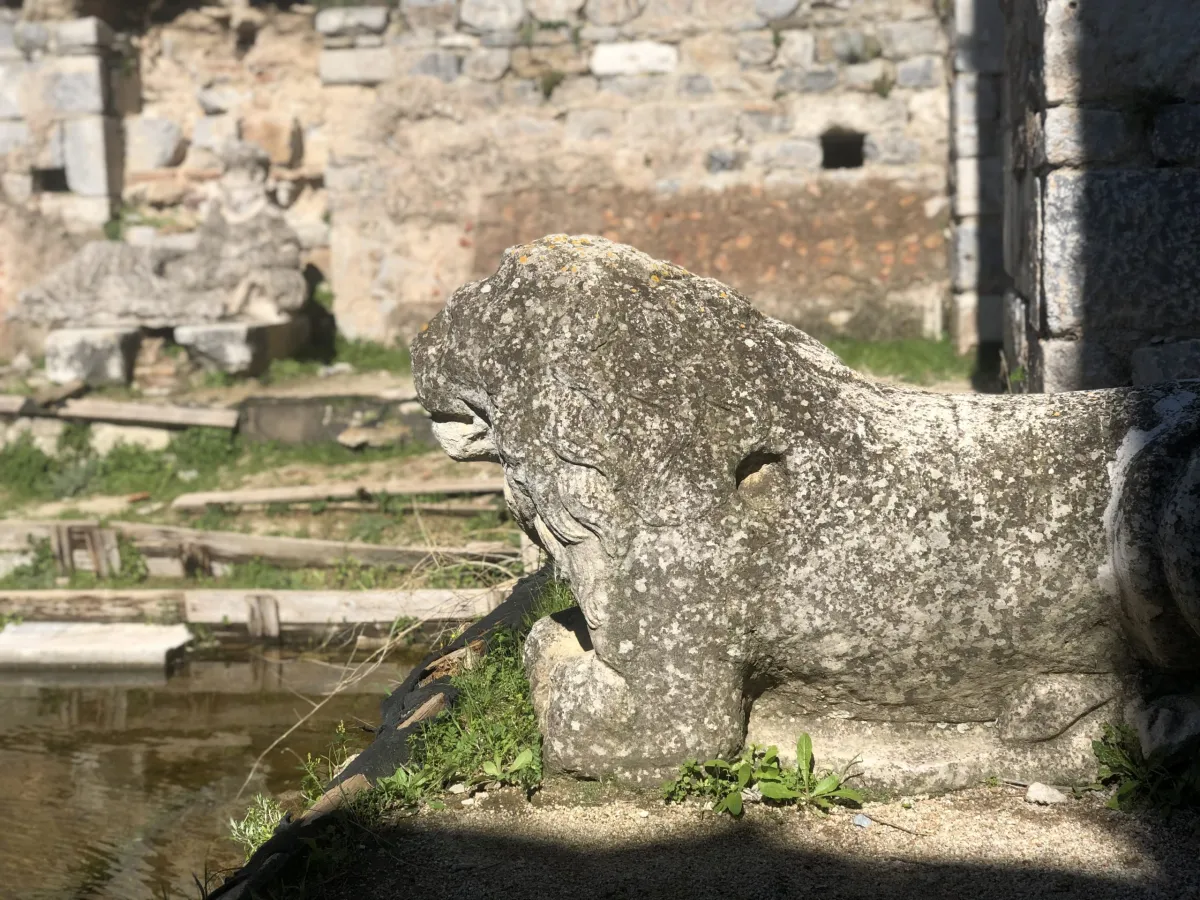
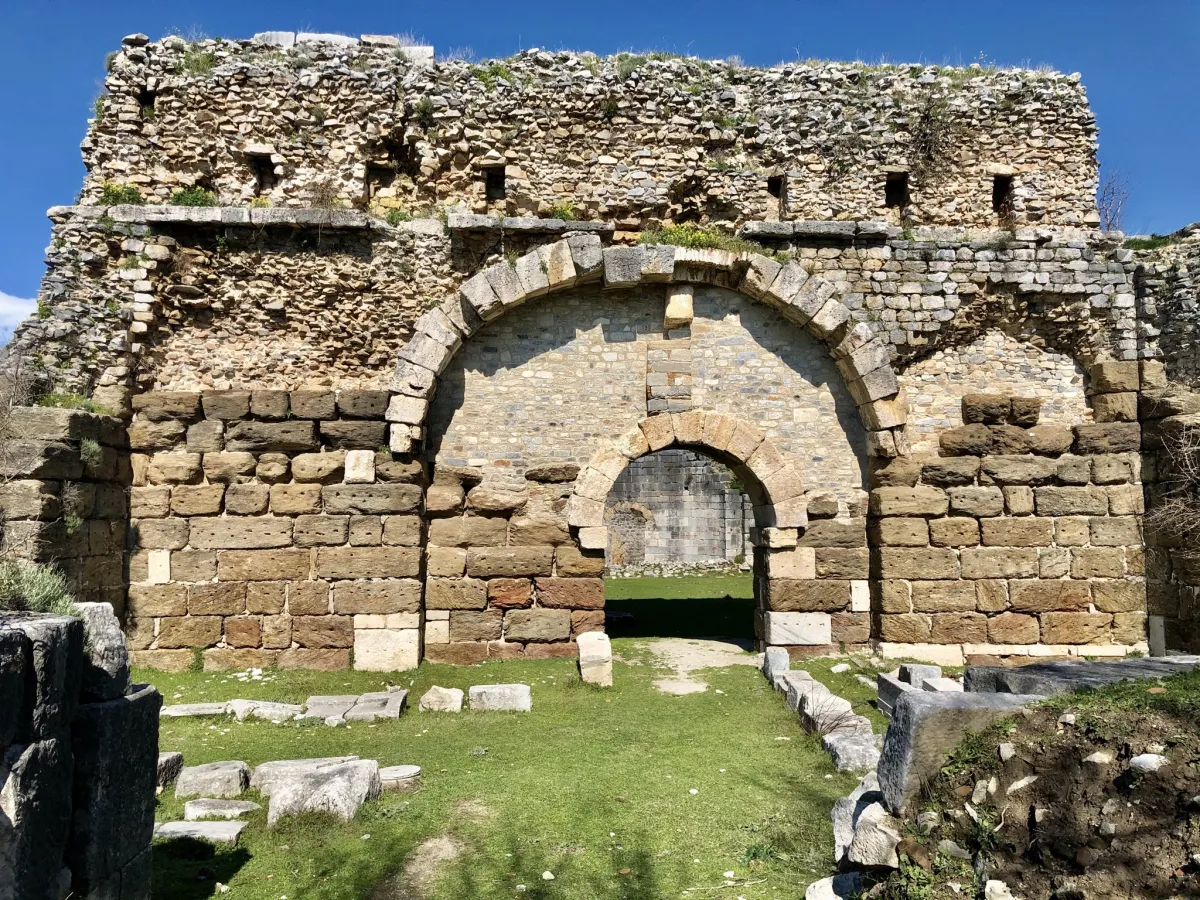
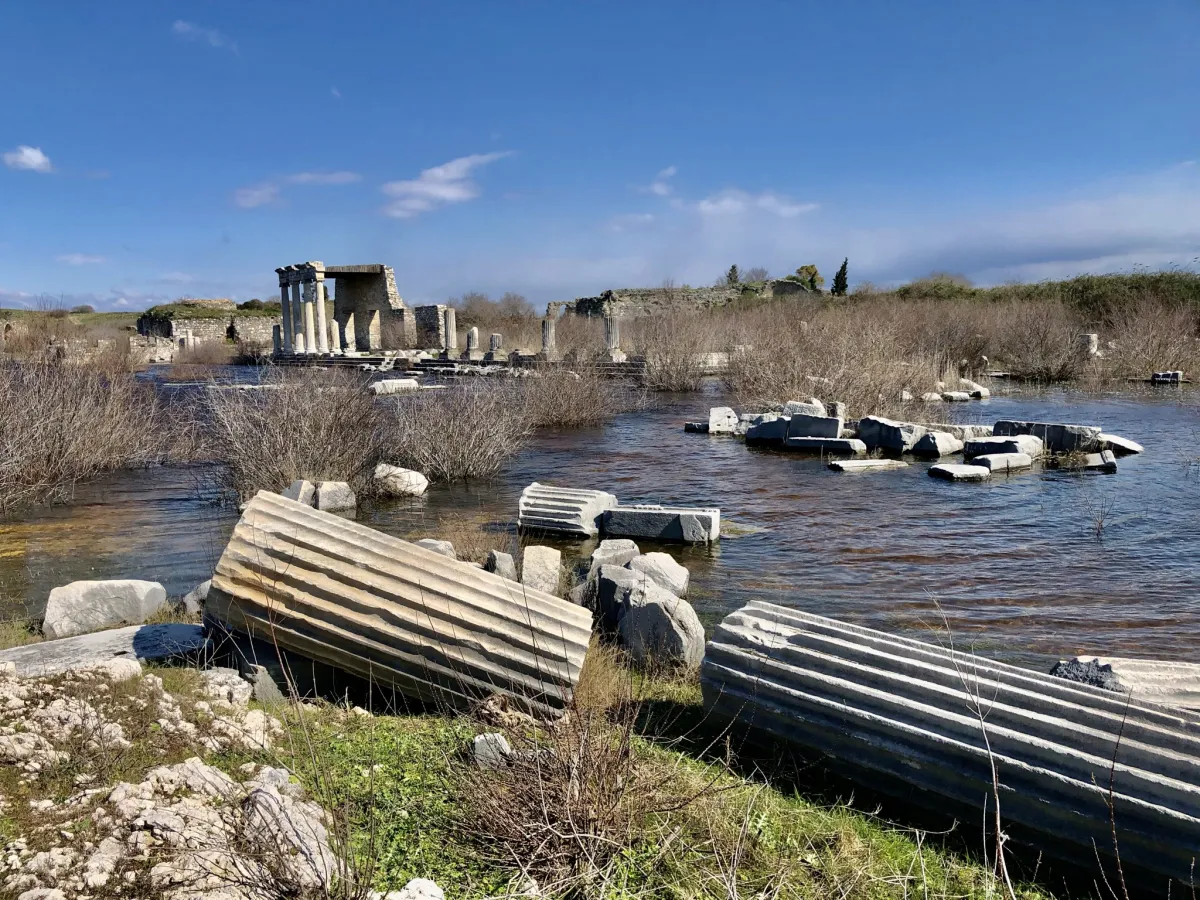
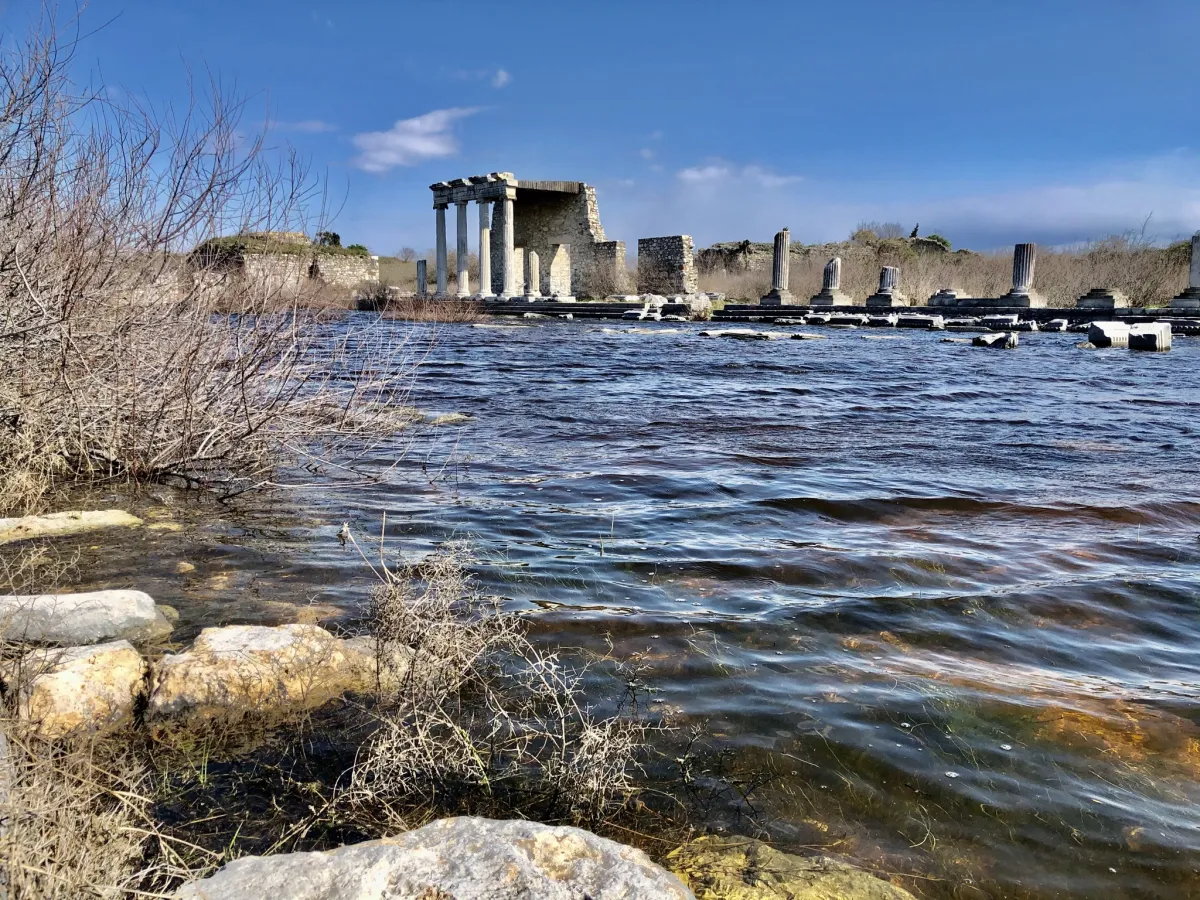
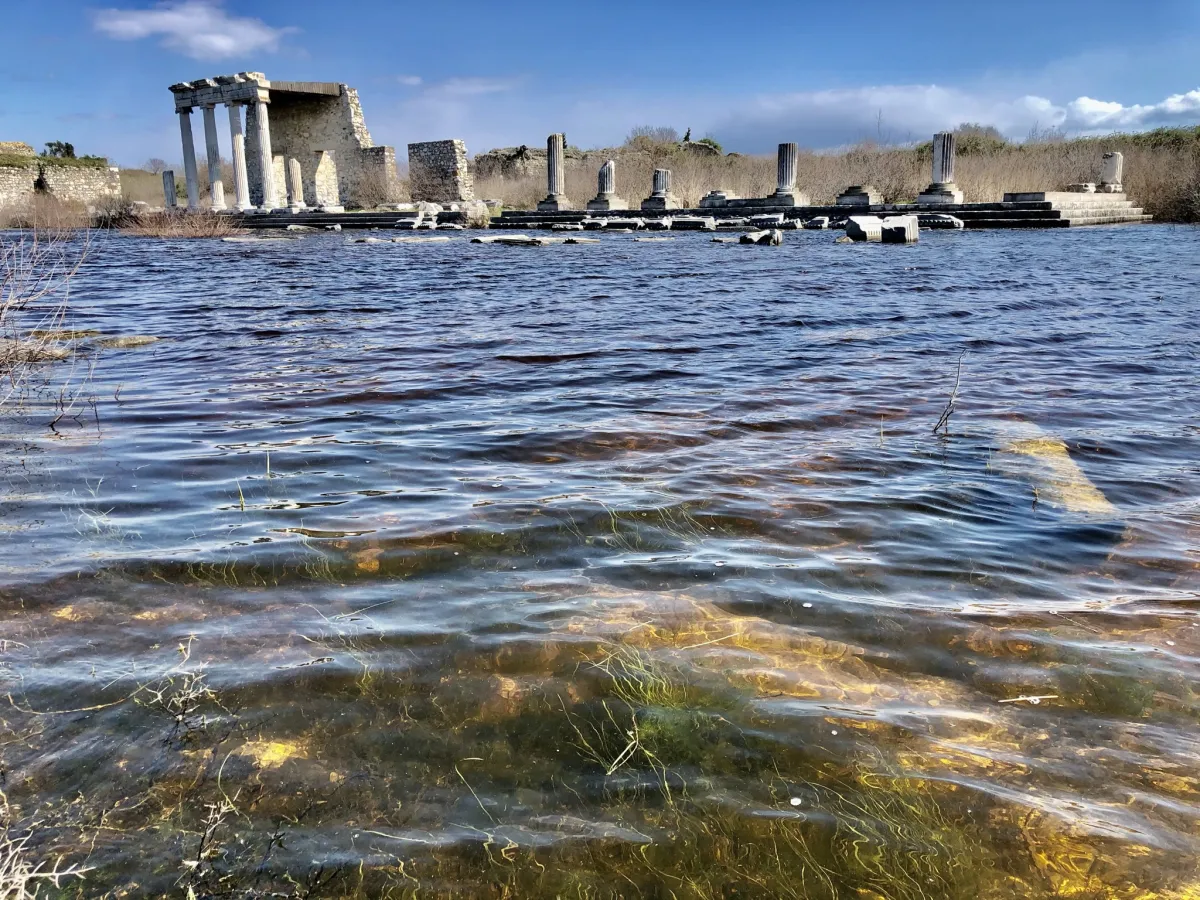
All the sights of Miletus are worth attention, but still the theatre is the top, as my children say. Built for 15,000 people in the 4th century BC, although its present appearance dates from Roman times. Previously all 4 ports of the city were visible from the upper rows of the theatre, although even now it impresses. Sit down and listen. Send greetings to distant Scythia-Ukraine.
Text and photos by Serhii Shcherbii



