Armenia. Yerevan

· 7 min read
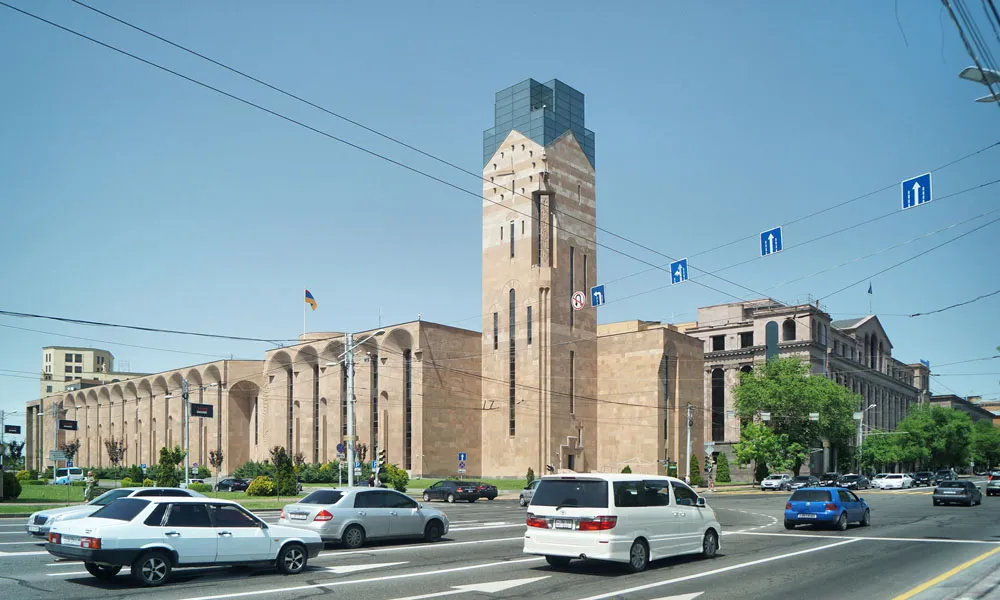
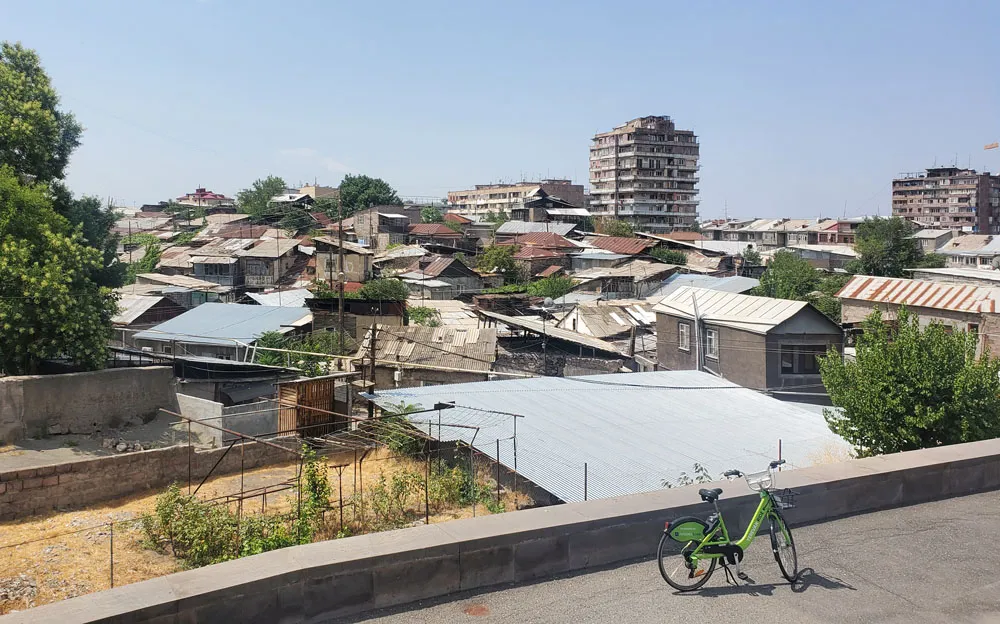
Around Yerevan there are plenty of incredible fairytale locations: Garni and Geghard, Ayrivank and Sevanavank, Khor Virap and Echmiadzin, so it seems that with such a province the capital must be exceptionally interesting. But do not expect scatterings of antiquity from Yerevan: you will not find it there at all, apart from a few churches. In the interwar period it was all demolished: Stalin and company wanted to create an exemplary showcase Socialist Realist city. The general plan, the structure and so on, the only plus is that all this is very geometrically correct and neat, and the extremely wide streets, avenues and boulevards are full of trees. Everyone says the city is very green; I confirm it, yes, very.
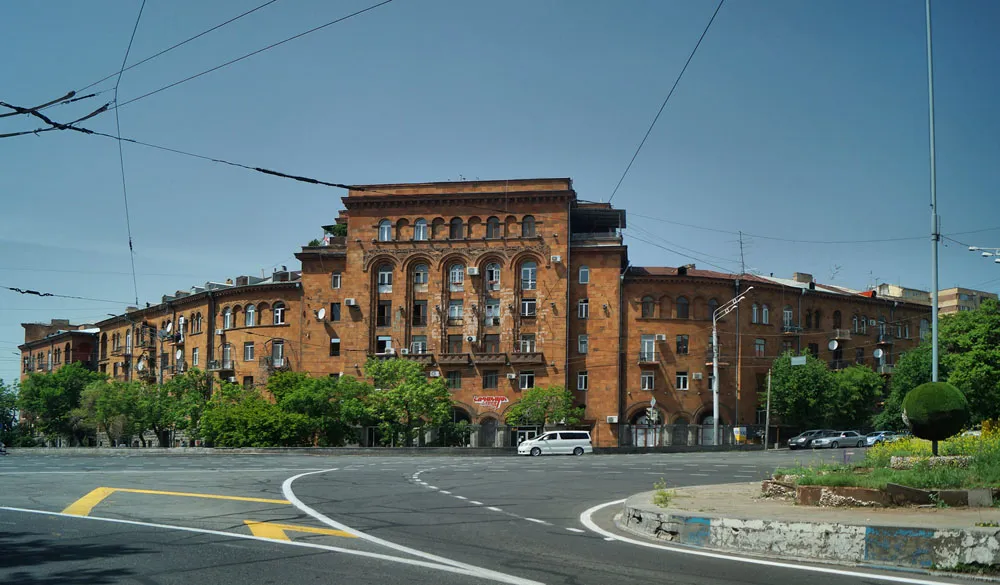
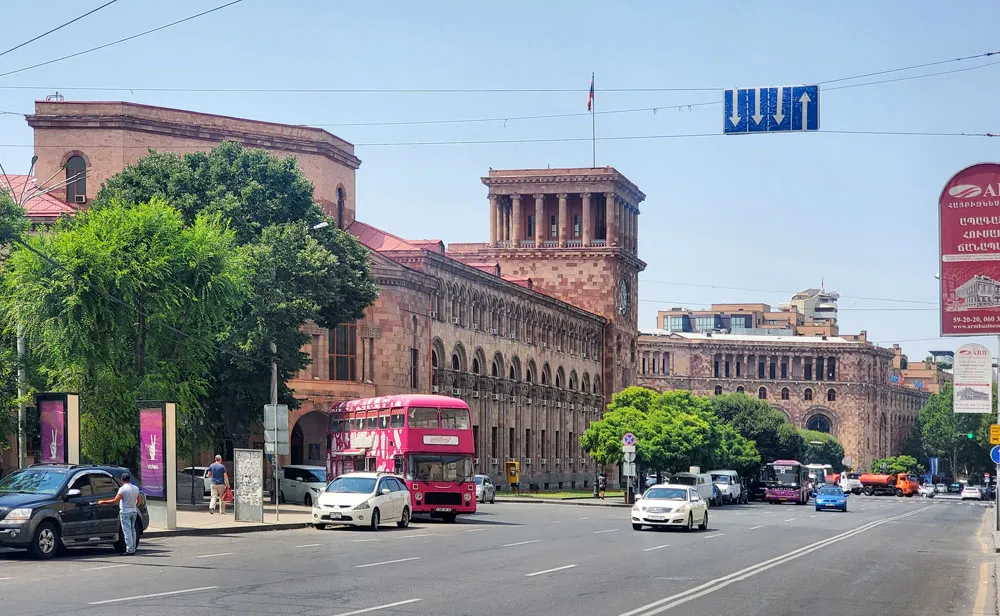
The central part of Yerevan was built up in the 1930s-1960s. Most of the buildings are very pleasant, erected in the style of Soviet pomp, “Stalinist Empire” as it is called. The building or cladding material is pink tuff, although in most cases it has lost its pinkness over 50-80 years and acquired rusty shades, but behind the trees this is hardly visible. Some residential buildings I would call masterpieces of Soviet Constructivism, but most are still quite plain.
The main landmark of Yerevan is the complex of stairs, the Cascade, which is 50 metres wide, 320 metres long and 118 metres high. In all there are 572 steps here, arranged between five terraces. Each terrace is a work in the Art Deco style, with sculptural, bas-relief and ornamental decoration, and a fountain. There are also exhibition halls here, and the composition is crowned by a monument to the 50th anniversary of the Russian socialist revolution, erected in 1967, 23 years before the Cascade was founded.
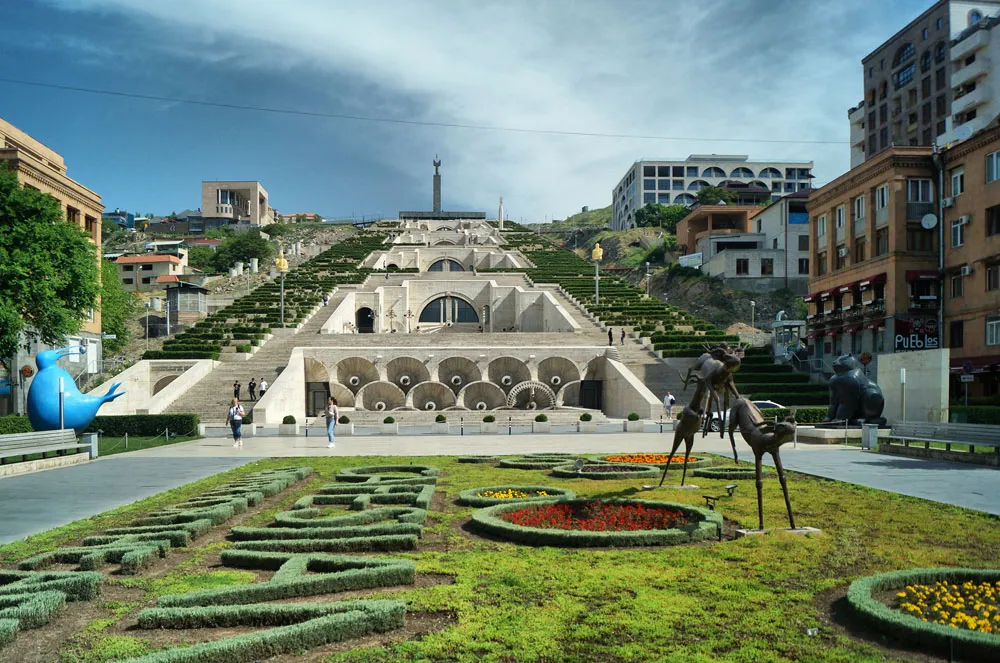
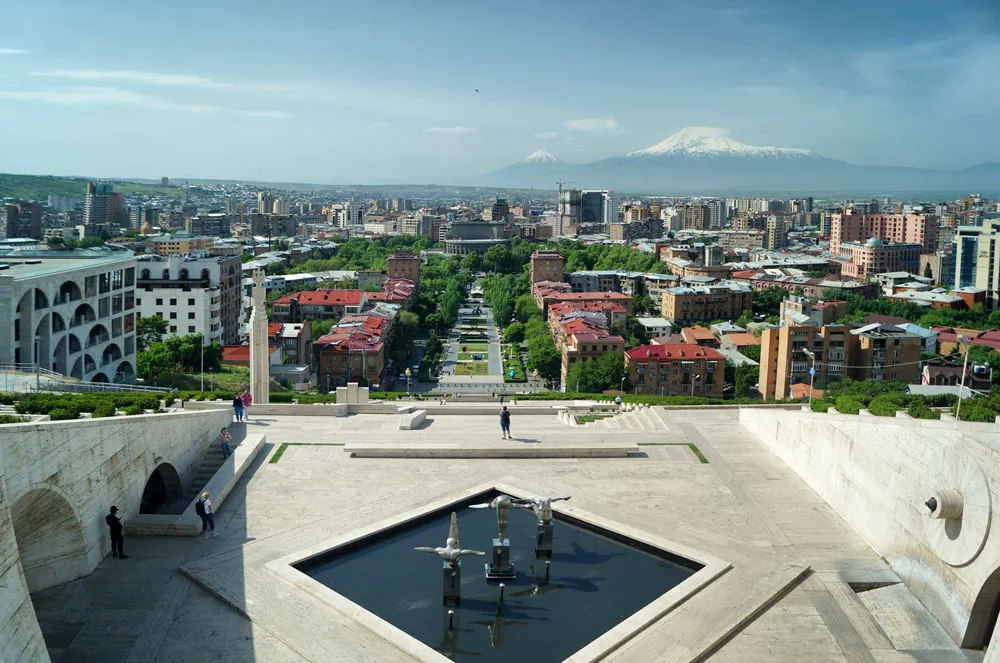
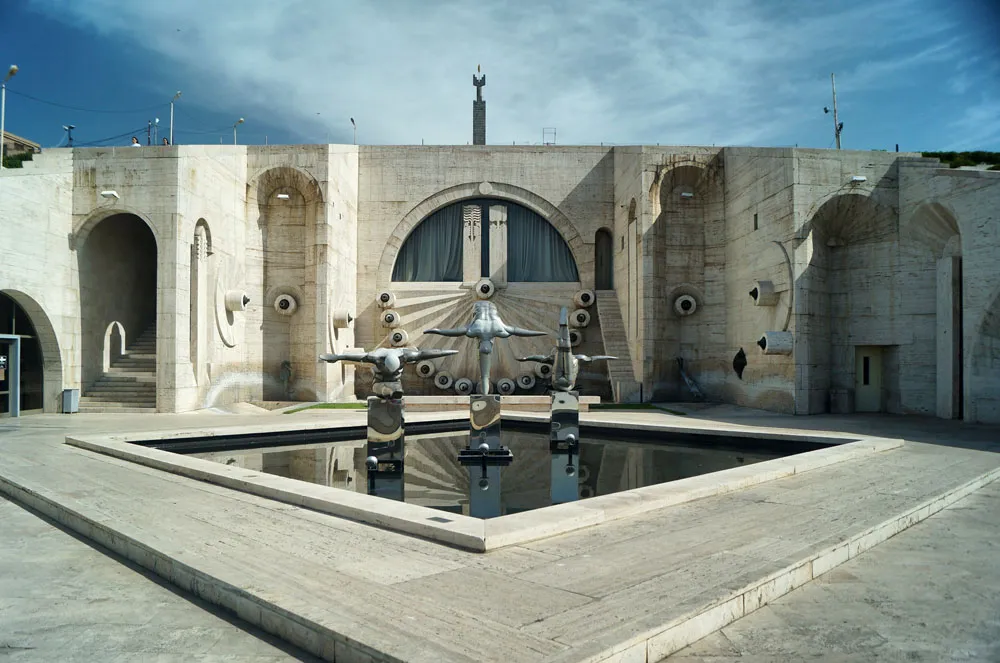
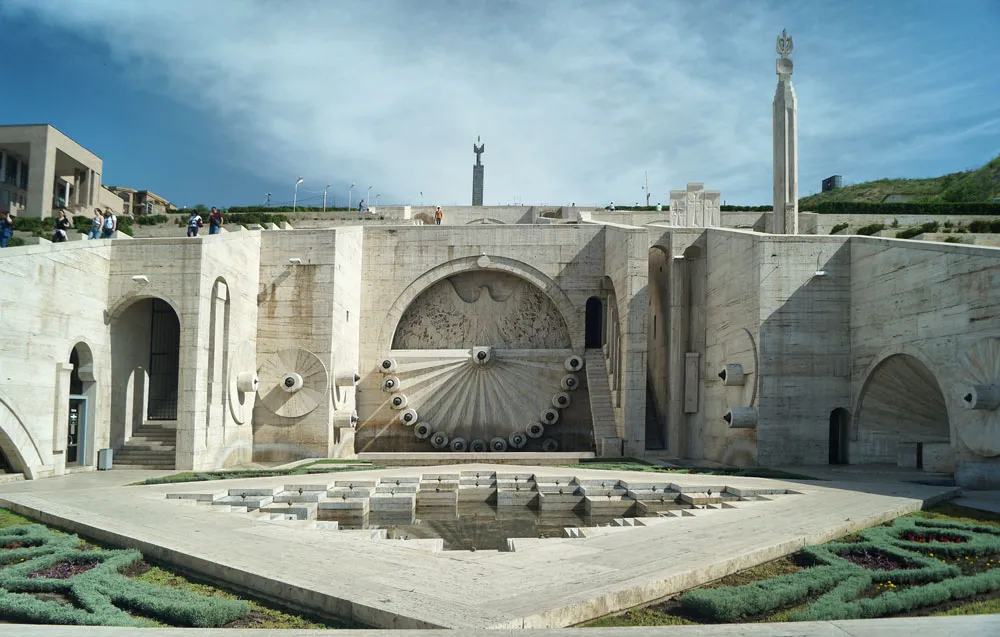
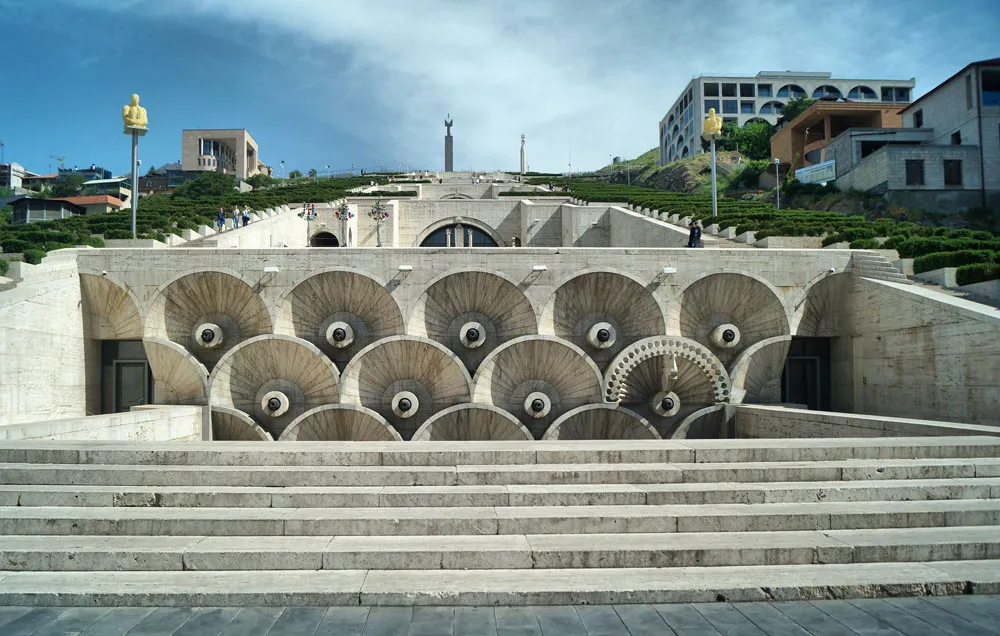
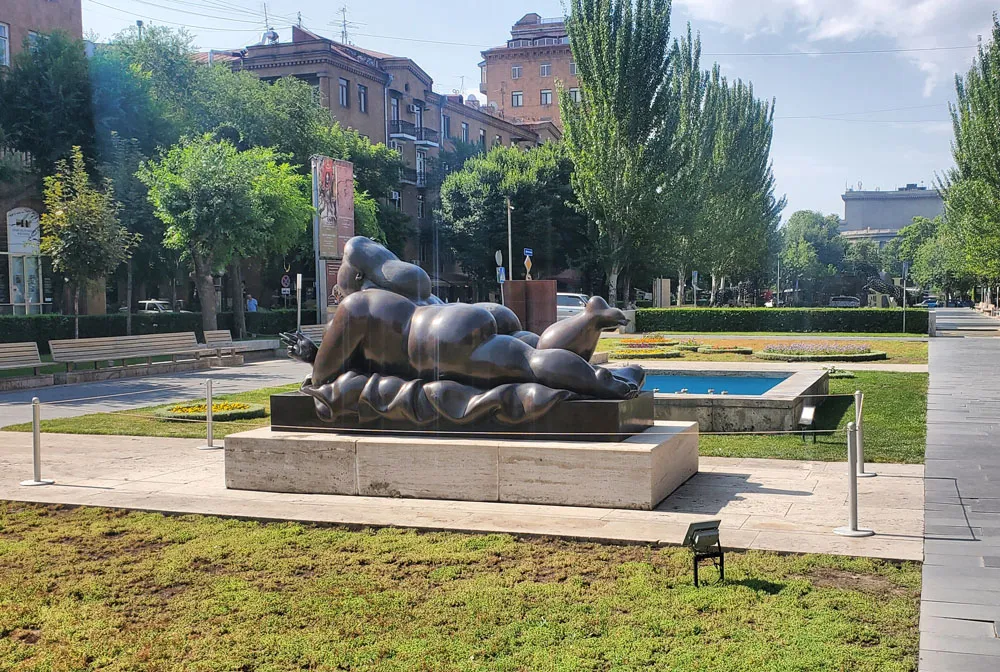
The Cascade. In the last photo, “Smoking Woman” by Fernando Botero.
Many people are delighted by the Cascade complex, but some do not accept this object, especially when the fountains are not working and when on either side of the stairs and terraces, instead of the planned gardens, there are heaps of construction waste and weeds. The Cascade has been under construction for 43 years and still has not been completed. The author of the idea of such stairs is said to be the author of the 1930s general plan of Yerevan, Alexander Tamanian, who died as early as 1936. This architect is greatly revered in Armenia, and is even depicted on a banknote, and in front of the Cascade there is an original monument: Tamanian with the plan. Between the monument and the stairs is a large park, no less interesting than the stairs themselves. Here there are three sculptures by the legendary contemporary Colombian sculptor Fernando Botero, “Cat”, “Roman Warrior” and “Woman with a Cigarette”, and also “Hare” by the no less legendary British sculptor Barry Flanagan. There are other sculptures too, and many police officers guarding the masterpieces and monitoring the behaviour of visitors.
On a hill to the right of the Cascade, on the slope of the same hill, stands another important landmark of Yerevan: the Matenadaran. Translated from Armenian this word means “repository of manuscripts”; it really is a place where ancient Armenian manuscripts are kept, collected from various monasteries after their nationalization in the 1920s, and mostly from Echmiadzin. The building, a gloomy palace-mausoleum of grey tuff, was erected in 1959. Today the Mesrop Mashtots Institute of Ancient Manuscripts, named after the creator of the Armenian script, works here.
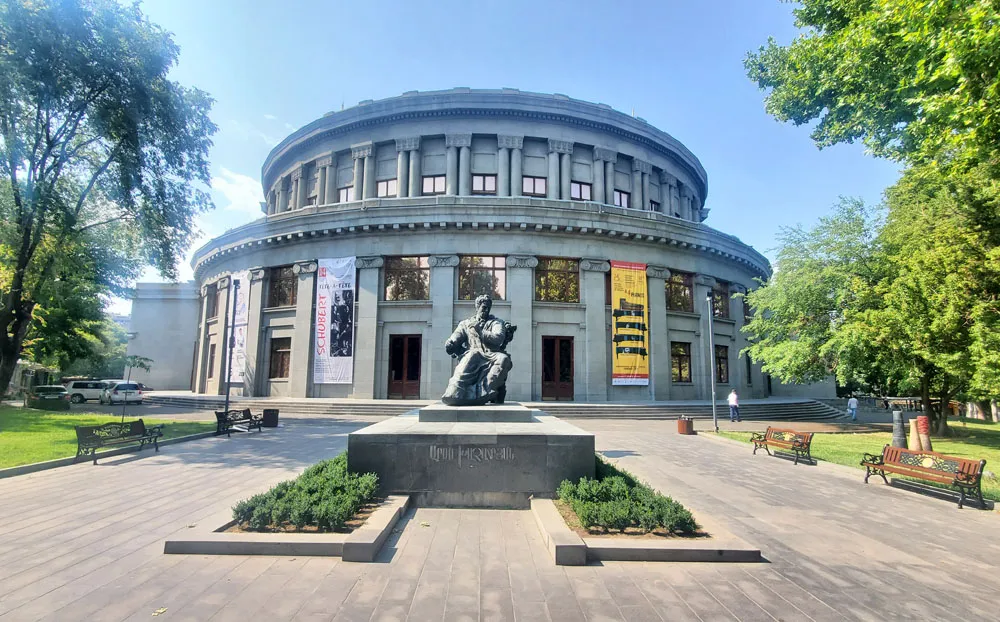
Directly below the Cascade stands the large grey building of the opera house, in front of which is the X-shaped intersection of the main streets of the centre of Yerevan, Mesrop Mashtots and Sayat-Nova. On Sayat-Nova Avenue, some five hundred metres from the theatre, is the residence of the Catholicos of All Armenians, which, besides the modern palace and the Cathedral of St. Anne, includes the old Church of the Mother of God Katoghike, built in 1284 and by some miracle preserved.
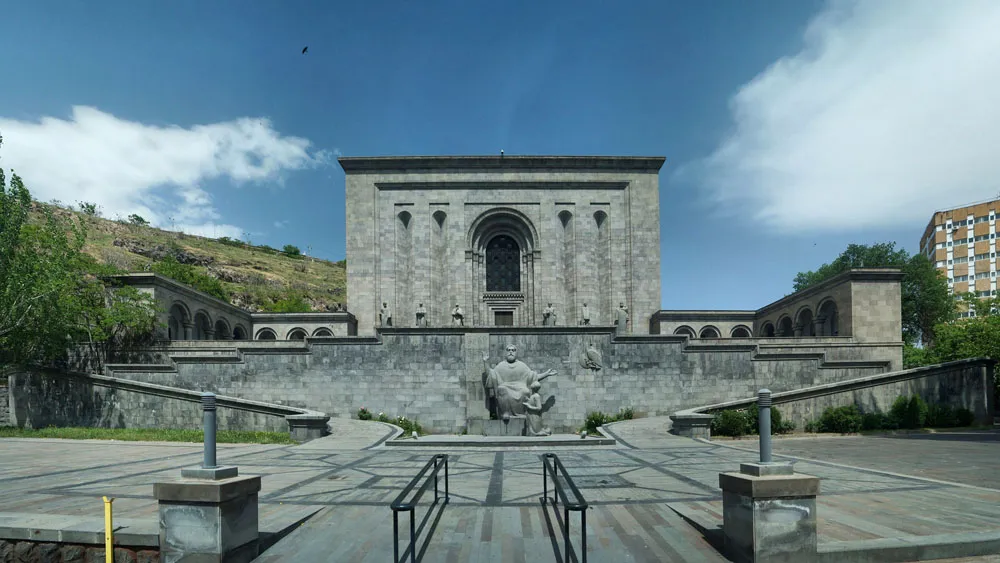
The Matenadaran
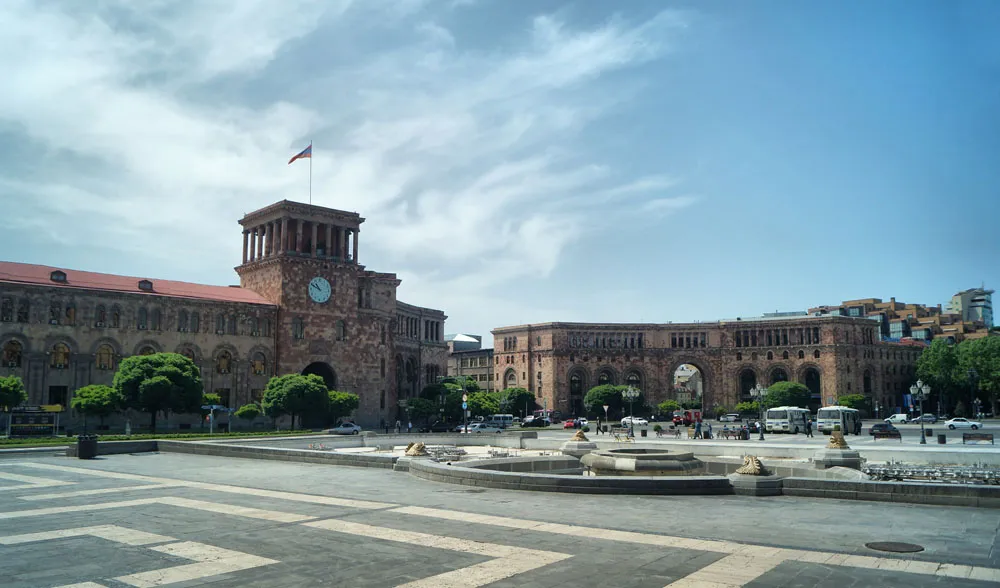
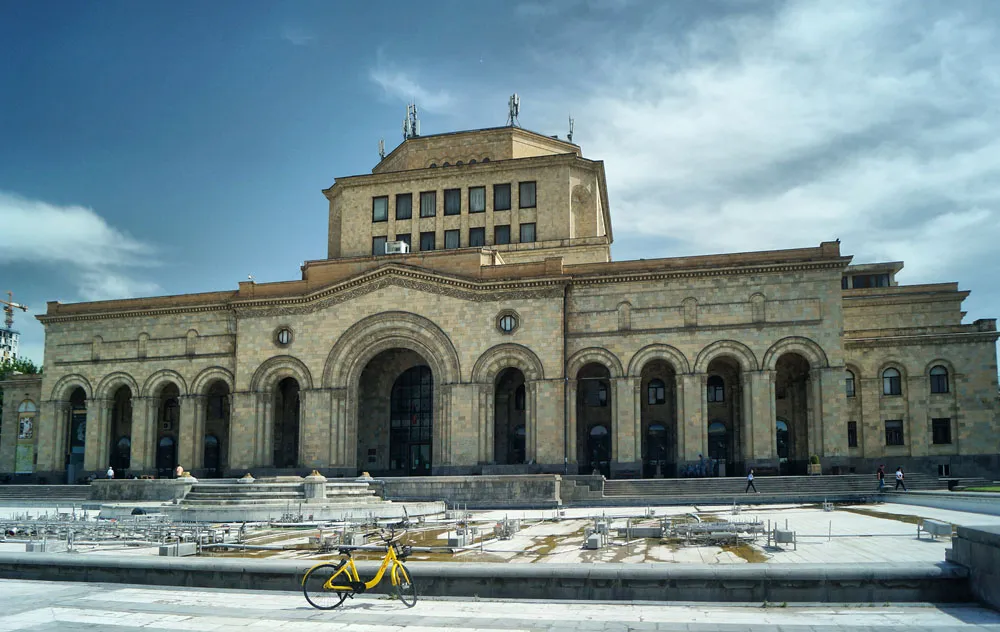
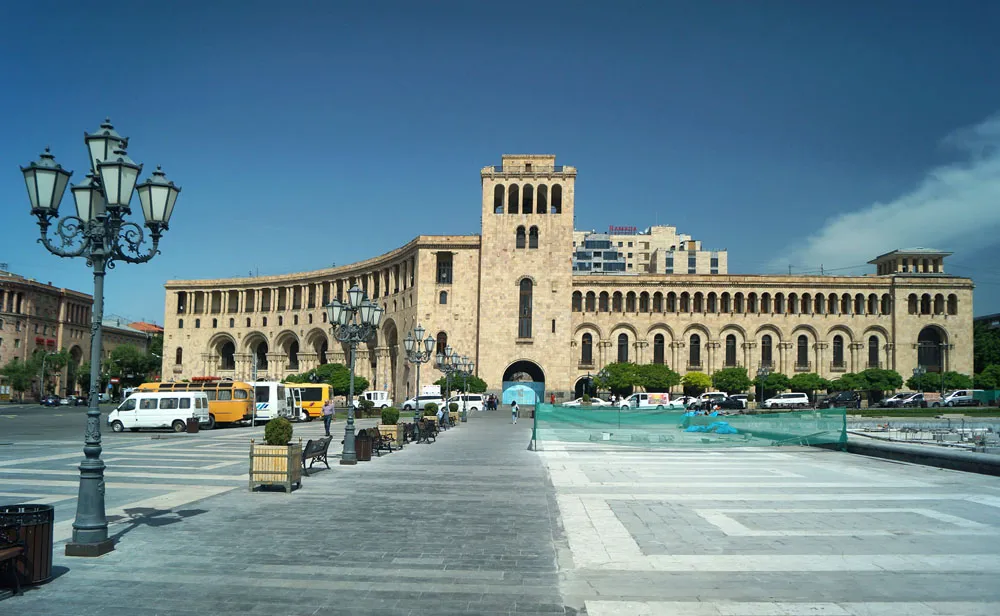
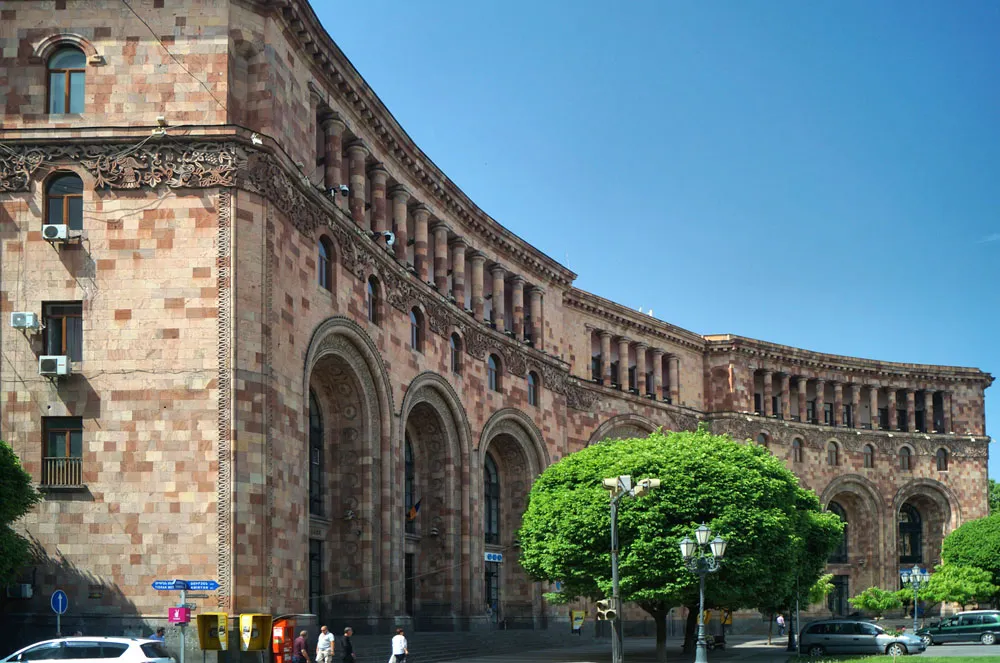
Republic Square
On Mesrop Mashtots street, a kilometre from the theatre, lies the main Muslim building of Yerevan, the Blue Mosque, a sort of piece of Iran in Armenia. It is decorated with decorative faience tiles and majolica, a whim of the Persian khan Hosseinali, who built the mosque in 1766. The mosque occupies an area of 7 thousand square metres and is built around on all sides with residential buildings of the Soviet period. It once had four 25-metre minarets, but after 1945 three were destroyed.
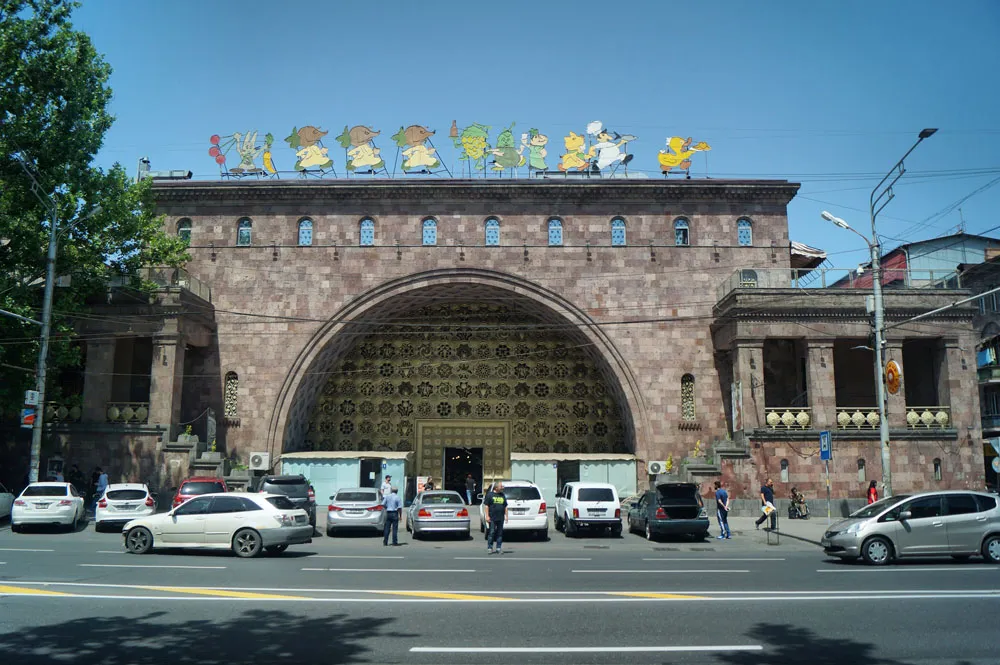
Opposite the mosque is a rather interesting market building, which today holds the remains of a bazaar and something like a supermarket, and farther along the same Mashtots street, on the site of the former village of Zoravor, stands the Church of St. Sarkis. The church was built in 1842 as the cathedral for the bishop of the Ararat Diocese. The tuff for facing the church was brought from the former capital, Ani. It is an interesting building, but also very squeezed among Soviet development, and it is almost impossible to photograph it in full. The church once stood on a high hill in the valley of the Hrazdan river and could be seen from afar, but now…
The main church of Yerevan is the Cathedral of St. Gregory, located on the other side of the central ring of the city, two kilometres from the Cascade (almost on a north-south line if you look at the map). It is a huge building to which the remains of St. Gregory the Illuminator were moved from Echmiadzin. The height of the church is 54 metres. It was built during 1997-2001, and its opening was timed to the 1,700th anniversary of the baptism of Armenia.
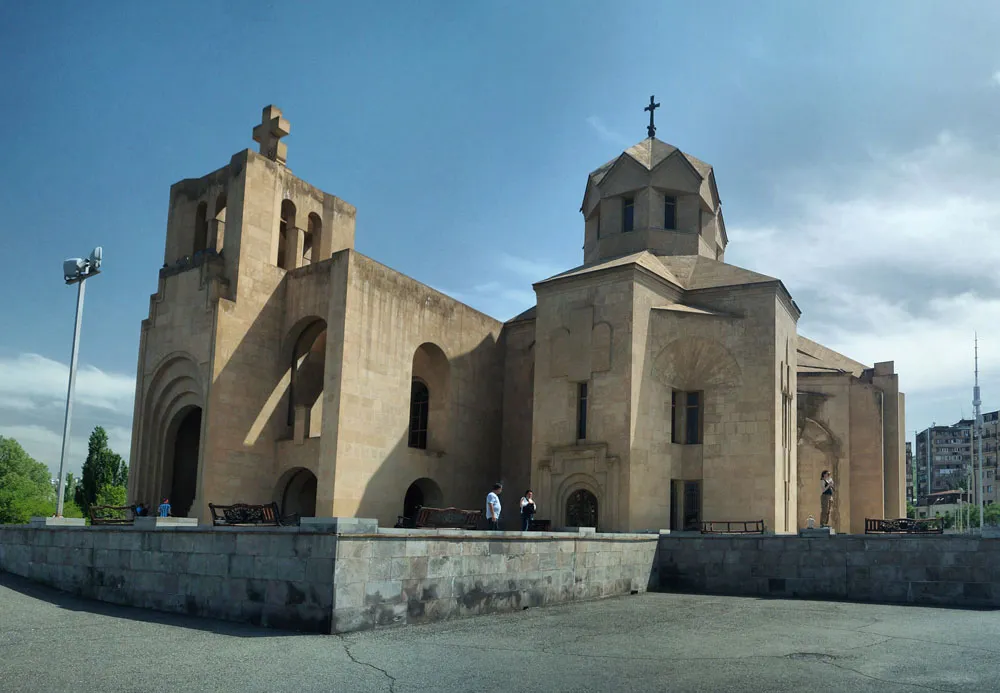
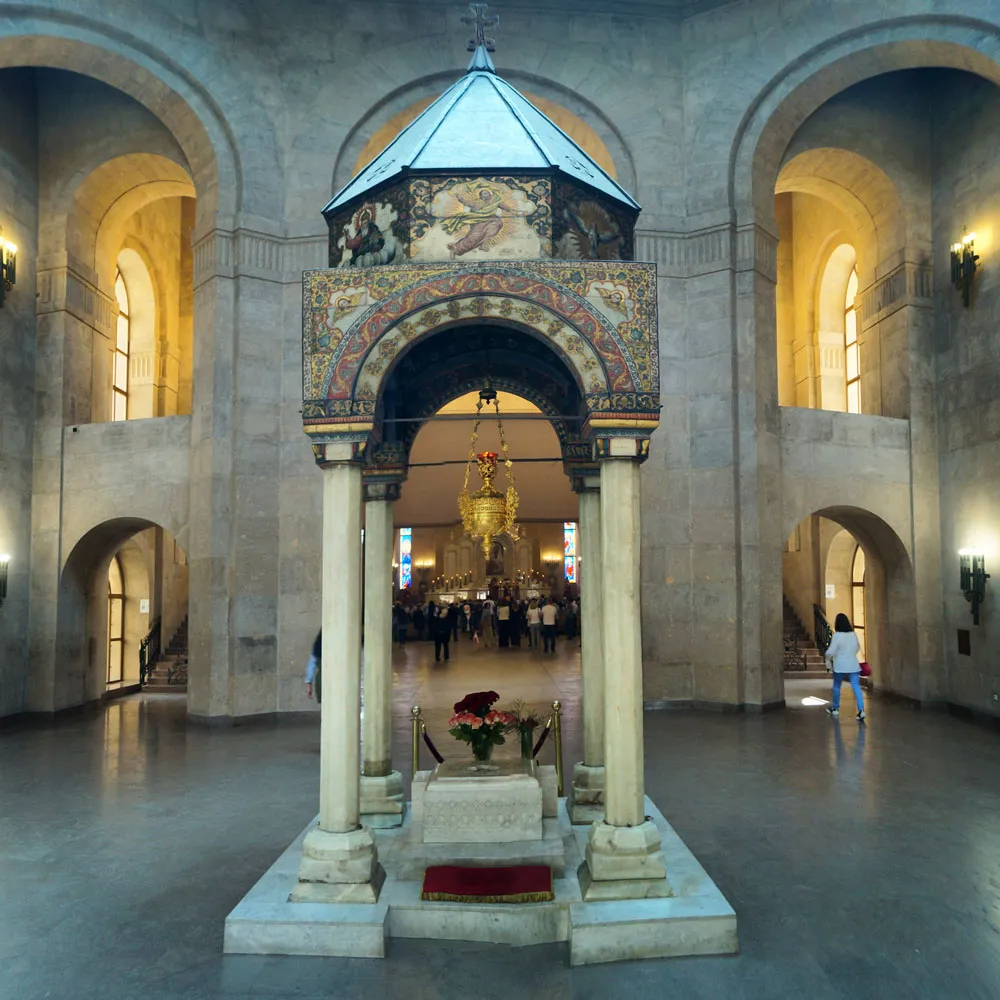
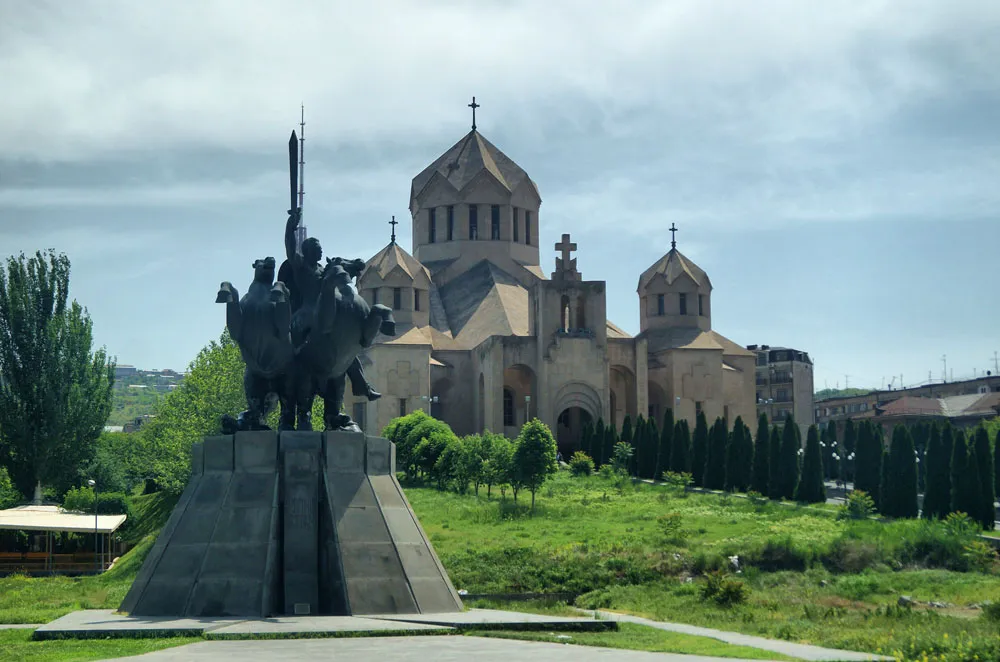
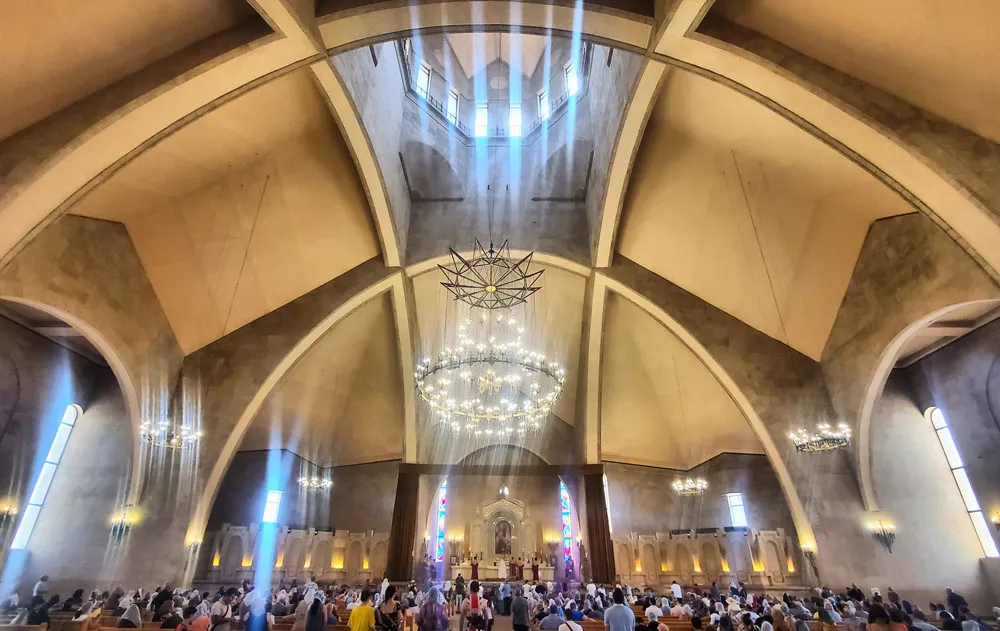
The cathedral
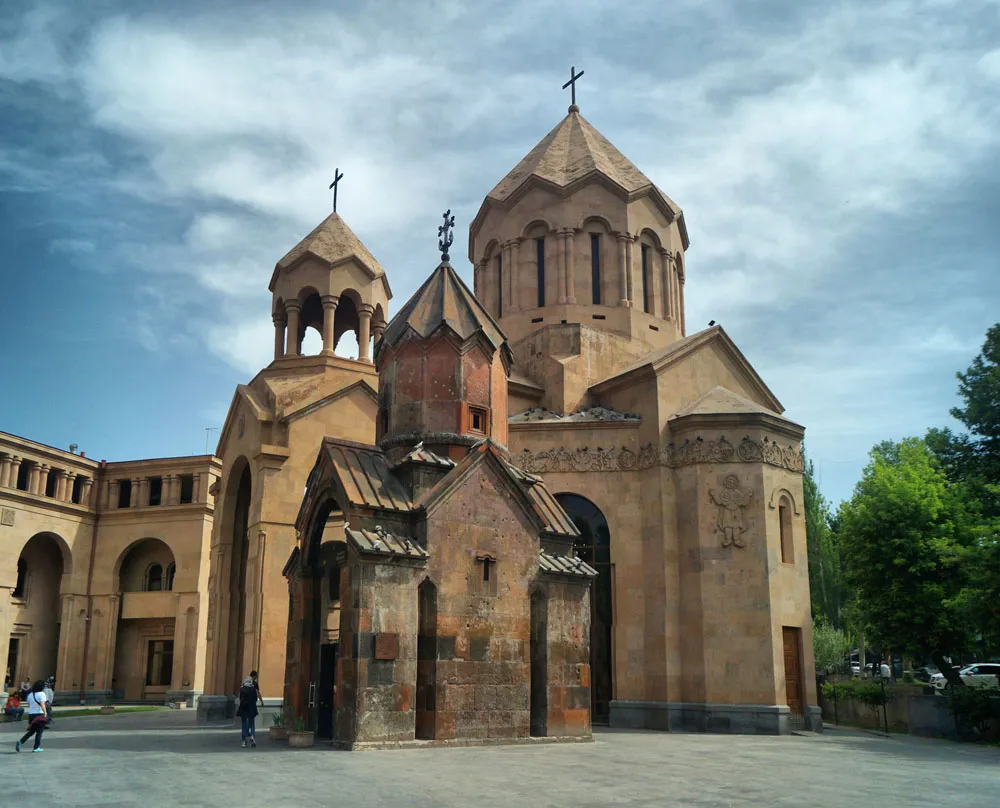
The Church of the Mother of God and the Cathedral of St. Anne
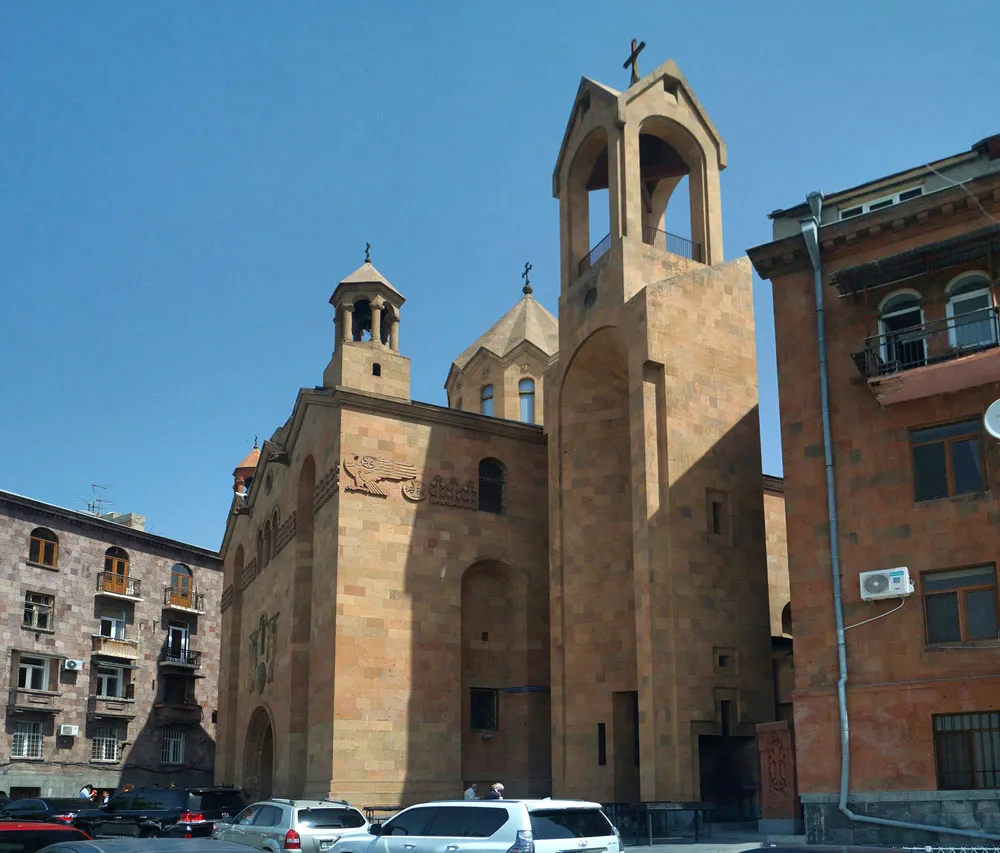
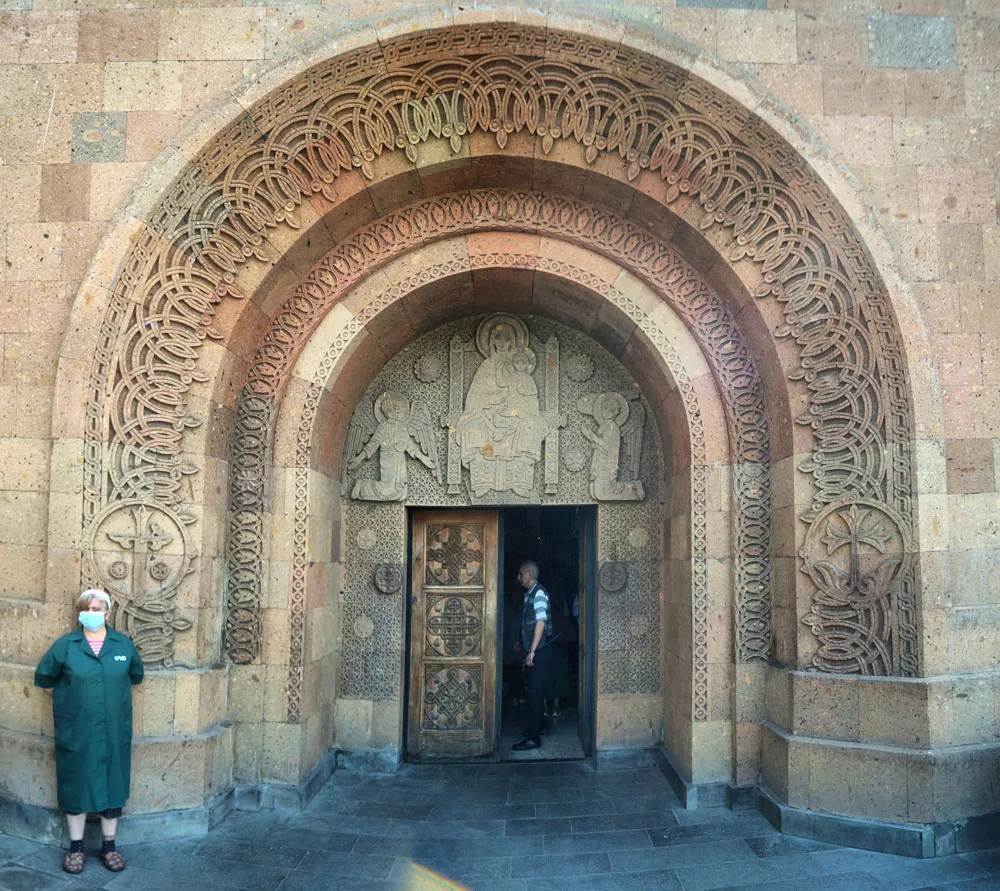
The Church of St. Sarkis
The heart of Yerevan is considered to be Republic Square. Its design was developed by Alexander Tamanian. Construction began in 1924. In 1958 the square was completed. It has a specific shape: a combination of an oval with a trapezoid. Around the square are five buildings: the Government of Armenia, the Main Post Office, the Marriott hotel, the Ministries of Foreign Affairs and Energy, and the History Museum of Armenia. All the buildings are built of tuff with a basalt lower part. The facades are faced with white and pink tuff. In front of the History Museum is a complex of fountains that completes the overall picture of Republic Square. A truly beautiful place.
Yerevan lies at an altitude of 900-1,300 m above sea level, which seems not so high, especially in comparison with the majestic Ararat, visible from most corners of the Armenian capital, although that mountain, located in Eastern Turkey, is a good 60 kilometres from Yerevan. The city is already more than 2,500 years old. It is believed to have been founded by the Urartian king Argishti I in 782 BC. He named the fortress city Erebuni, after the name of the Eri tribe who lived somewhere in these parts. Small ruins of the Erebuni fortress remain and can still be seen on one of Yerevan’s hills.
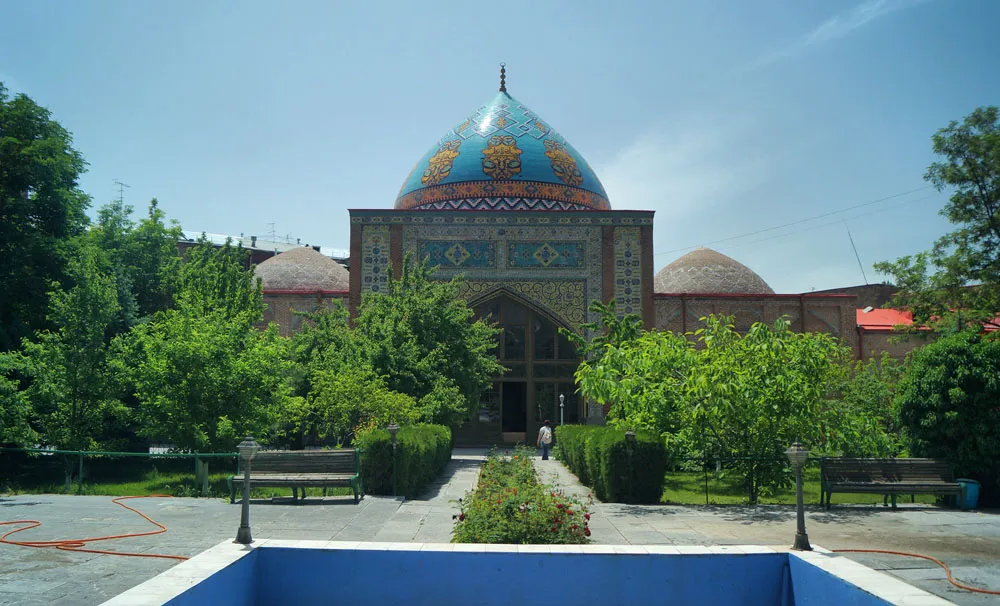
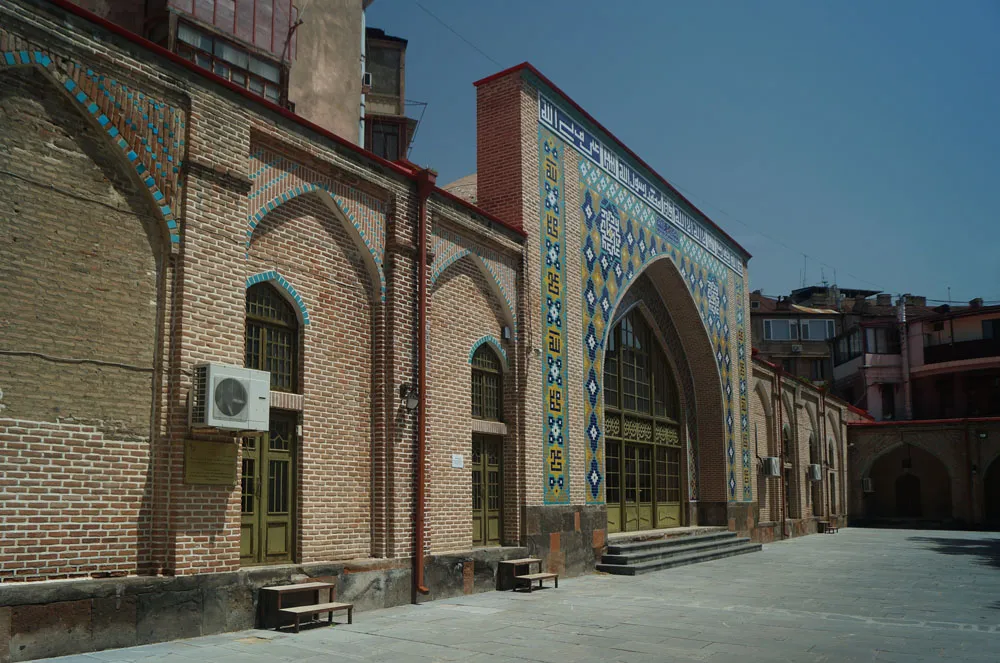
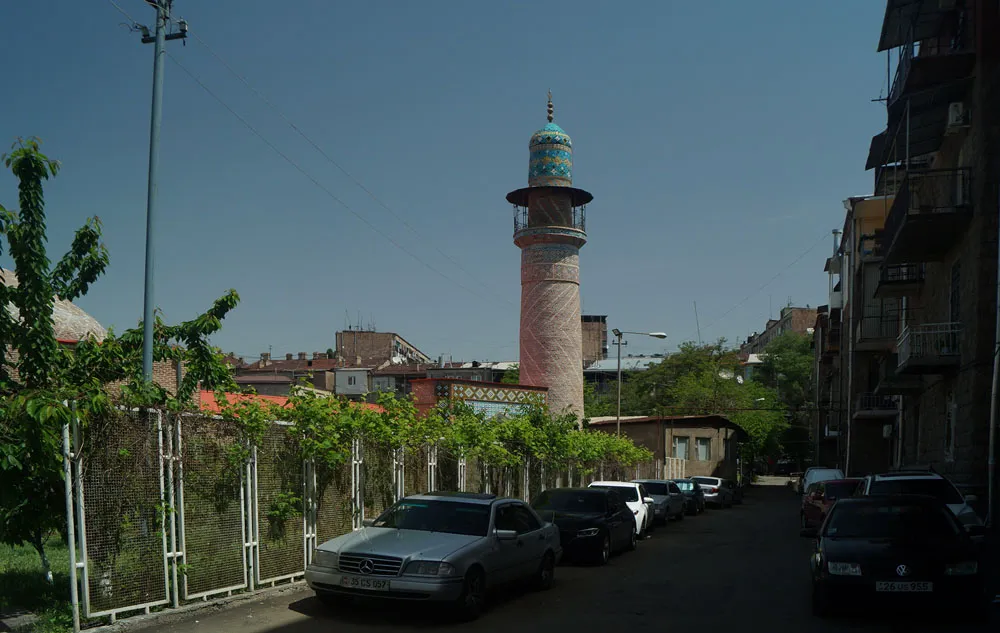
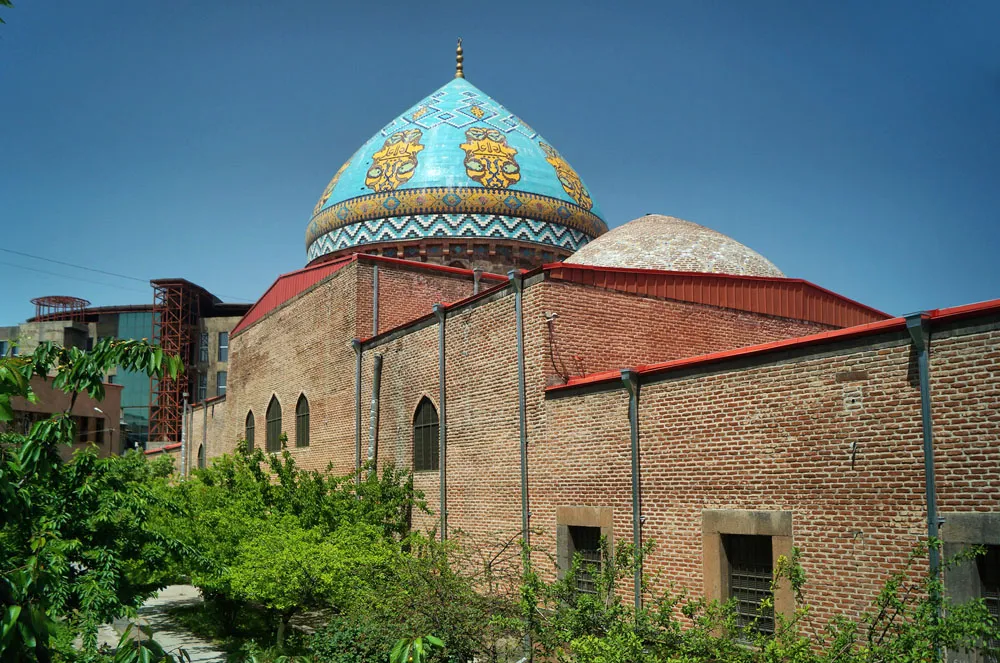
The Blue Mosque
Throughout its history Yerevan lived in the shadow of the great city of Echmiadzin (Vagharshapat), and in the 17th century it was very badly damaged by an earthquake. Yerevan (Erivan, as the Russians called the city) received new life in 1828, after Armenia became part of the Russian Empire. It should be noted that until the 20th century most of the population were Muslims, a consequence of the city’s centuries-long presence within Persia and the Ottoman Empire. In the 20th century, especially after the war with Turkey, Muslims almost disappeared from the Armenian capital, as did the mosques. And then the Soviet era began.
Today Yerevan has 1.1 million residents. Needless to say, for a country of three million this is a great deal, especially considering that only the city of Gyumri has over a hundred thousand inhabitants, and the other towns are quite small. Yerevan is full of traffic, including a great many old Soviet clunkers, although there are also many expensive VIP-class cars. People drive here in a very specific way: it seems that nobody knows the rules, or that they do not exist. But that is how it is. Tourists do not stay long in Yerevan, because there is so much that is interesting and beautiful around. Armenia is wonderful.
Text and photos by Roman Malenkov.