

Archaeologists to try to find the grave of Hetman Sahaidachny

· 2 min read
According to the official portal of Kyiv, on the grounds of the Kyiv-Mohyla Academy the municipal enterprise “Centre for the Conservation of Archaeological Objects”, together with the Institute of Archaeology of the National Academy of Sciences of Ukraine and the Academy, will carry out exploratory archaeological research to establish the location of the foundations of the monument “Remains of the Epiphany Cathedral of the Kyiv Brotherhood Monastery”.
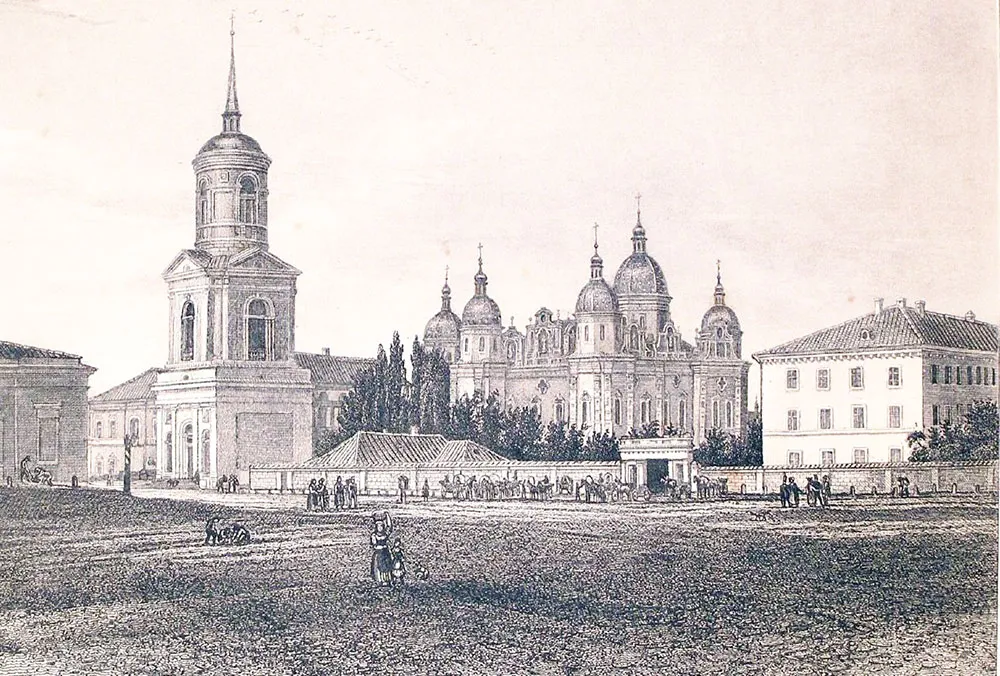
The Epiphany Cathedral and bell tower of the monastery in an engraving from the early 19th century
The work was initiated under Memoranda of Cooperation. This was announced by Maryna Soloviova, director of the Department for the Protection of Cultural Heritage of the Kyiv City State Administration.
“I want to stress that in 2022, at the request of the municipal enterprise “Centre for the Conservation of Archaeological Objects”, this monument was entered in the List of Cultural Heritage Sites of the City of Kyiv. And in 2023, on the submission of the Department for the Protection of Cultural Heritage, it was entered in the State Register of Immovable Monuments of Ukraine,” Maryna Soloviova said.
According to one hypothesis, the burial of Hetman Petro Sahaidachny was moved during the construction of the masonry Epiphany Cathedral.
According to Maryna Soloviova, archaeological study of the cathedral’s remains could help determine the location of the famous hetman’s grave.
Until its destruction in 1936, the Epiphany Cathedral was one of the most striking examples of Ukrainian Baroque Hetmanate churches, and its image appeared on postcards and photographs. The brick Epiphany Cathedral is associated with the names of two outstanding figures of Ukrainian history, the renowned Cossack hetmans Petro Sahaidachny and Ivan Mazepa. The masonry cathedral was built in 1690–1695 as the main church of the Kyiv Brotherhood Monastery. The cathedral is also mentioned in most guidebooks to Kyiv of the 19th and early 20th centuries, as it was one of the most popular churches in the capital.


