Bobrove. The ruined church

· 5 min read
Bobrove is a dying, depressed village in Lebedyn district of the Sumy region. There are grounds for saying so. In 1914, when the village was still the centre of a volost, 1,258 people lived in it, whereas now there would hardly be even 100.
Once, before the revolution, life was bustling here; there was a cloth factory, a saltpetre works, a church…
The founding of the village dates to the middle of the 17th century; soon after the Battle of Berestechko Cossacks resettled to this area, and according to documents for 1779 there were 346 souls of Cossacks and only one peasant in Bobrove. At the end of the 18th century the main landowner in the village was the titular councillor Neplyuev, who also owned a distillery; there were also less wealthy gentry. At various times the village had the estates of Ensign Oleksandr Vasyliovych Roslavtsev (or Roslavlev), Staff Captain Gorbovtsov, probably his relative Sub-Lieutenant Oleksii Vasylovych Gorbovtsov, and Actual State Councillor Babarykin.
Around 1780 the estates of all the landowners in Bobrove were bought out by the Bukharins, a very influential family. The first owner of the Bukharins in the village was Ivan Yakovych Bukharin (1772–1858), a privy councillor and governor of several provinces, including Kyiv (in 1821–1822) and also of the Grand Duchy of Finland.
He himself hardly ever visited the village; his wife, Lizaveta Fedorivna, née Poltoratska (1789–1828), lived here for the last 2 years of her life. They say she settled apart from her husband because she could not bear his behaviour…, well, let us say…, derived from his surname. Her death was tragic. Being in constant depression and without support, Yelyzaveta Fedorivna leapt out of a window, and since it was only the second floor, she merely broke a leg. To prevent gangrene the leg was amputated, and after that she eventually died. She was buried not far from St. Nicholas Church, about which more below. On the gravestone you can still read the inscription “Yelyzaveta Bukharina”.
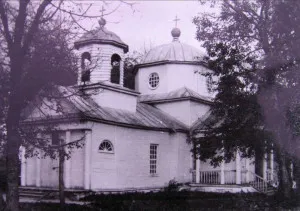
This is how the church looked in 1913.
The Bukharin couple had a daughter, Vira (1813–1902), and a son, Mykola (1815–1897). Mykola Ivanovych Bukharin became the city governor of Odesa.
Vira Ivanivna was, as one would say nowadays, a society lioness. A graduate of the Smolny Institute, she was constantly present at the capital’s balls, and first Pushkin and then Lermontov dedicated their poems to her.
In 1832 Vira Ivanivna married Mykola Mykolaiovych Annenkov (1799–1865), the future General of Infantry, Kyiv Military Governor, and Governor-General of Podolia and Volhynia. Bobrove became part of the dowry. From that time the estate came to be called the Bukharin-Annenkov estate. They had six children in the marriage. The estate went to the eldest son Mykhailo Annenkov (1835–1889), who built a three-storey water mill and a majestic Classicist manor house with columns and two marble lions at the entrance, and laid out a lime-tree park. After him the estate was inherited by his daughters Mariia and Vira, but they lived here only in summer, as they were maids of honour at the imperial court and spent almost all their time in the capital. They were childless, and both emigrated to France after 1917, where they died in the middle of the 20th century.
From the Annenkovs the village retains a public school of 1903, which in Soviet times served as a school, with a brief interruption when shops were housed here. After the school was closed in 1982 it was a canteen and a tractor brigade. In the late 1990s a fire broke out in the building, and it has not been restored since. In the Annenkovs’ manor itself in the 1920s–1930s there was an orphanage and a home for the elderly; after 1945 the building was dismantled and the bricks were used to build the collective farm’s pigsty and stable.
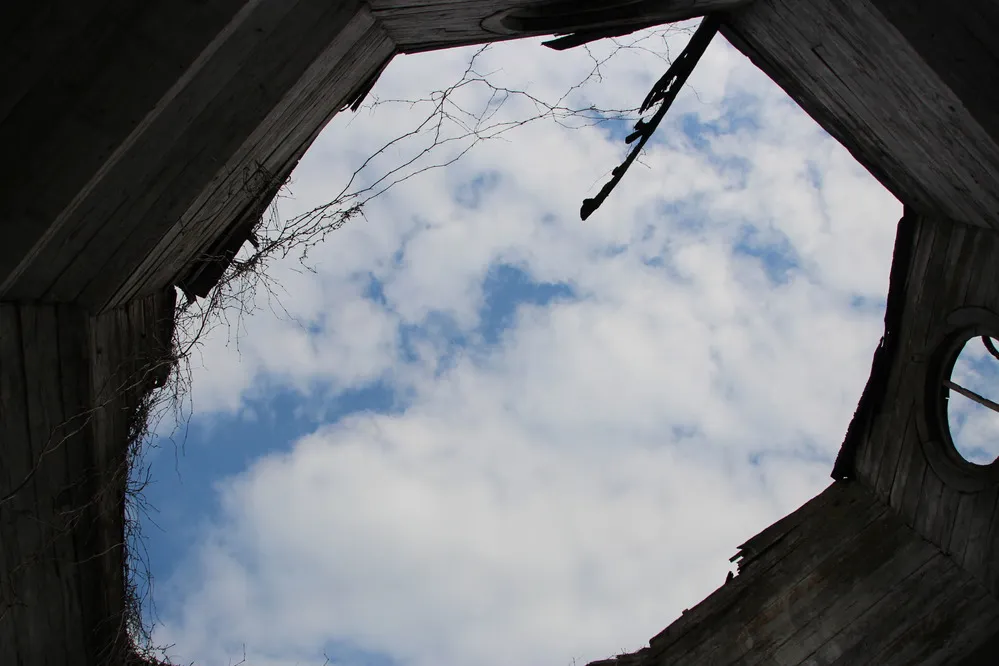
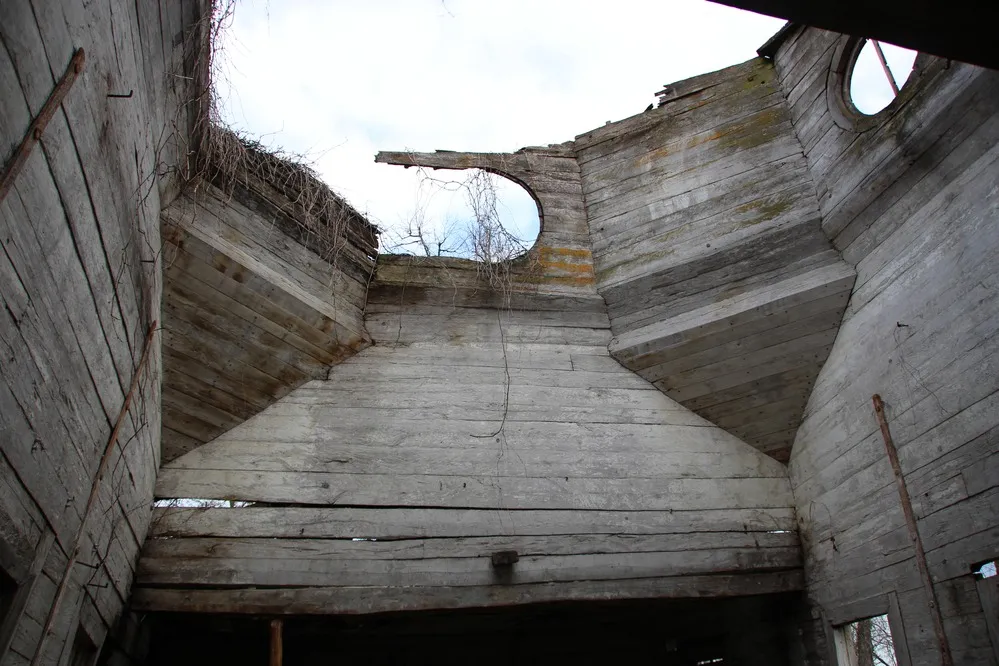
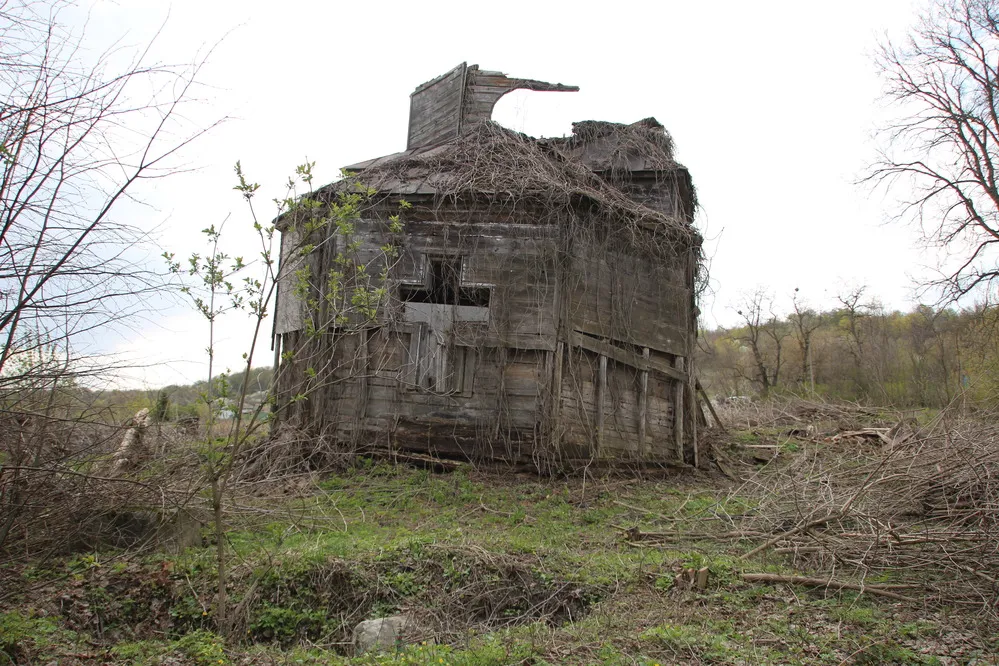
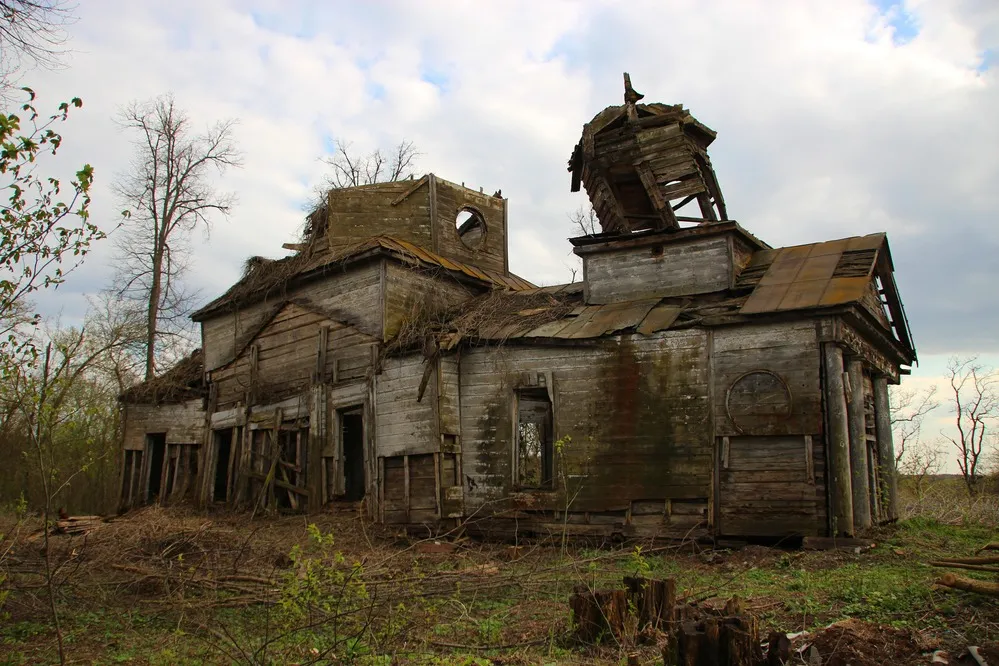
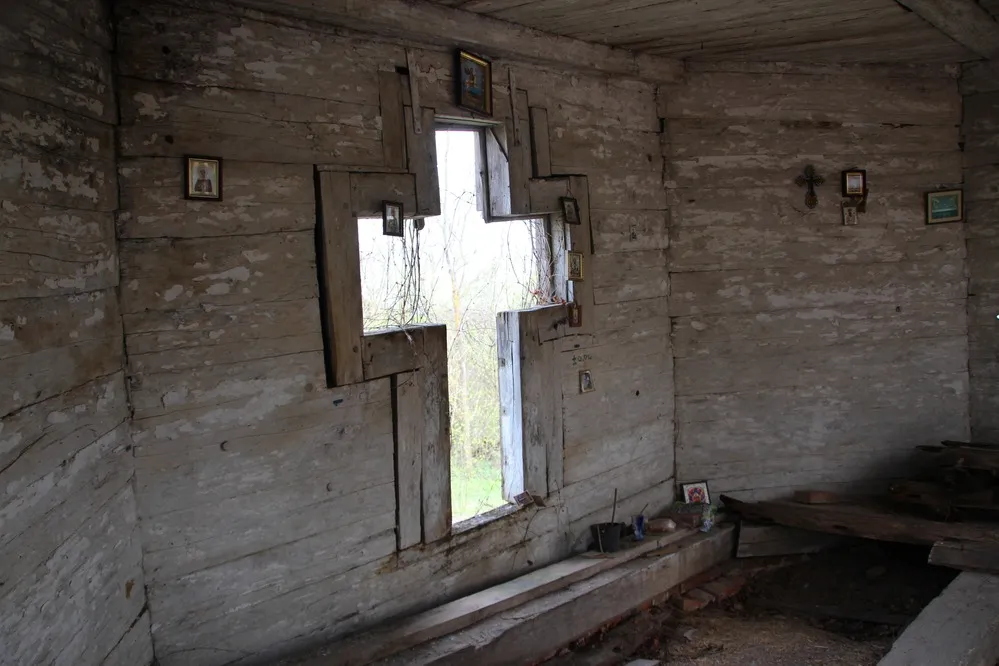
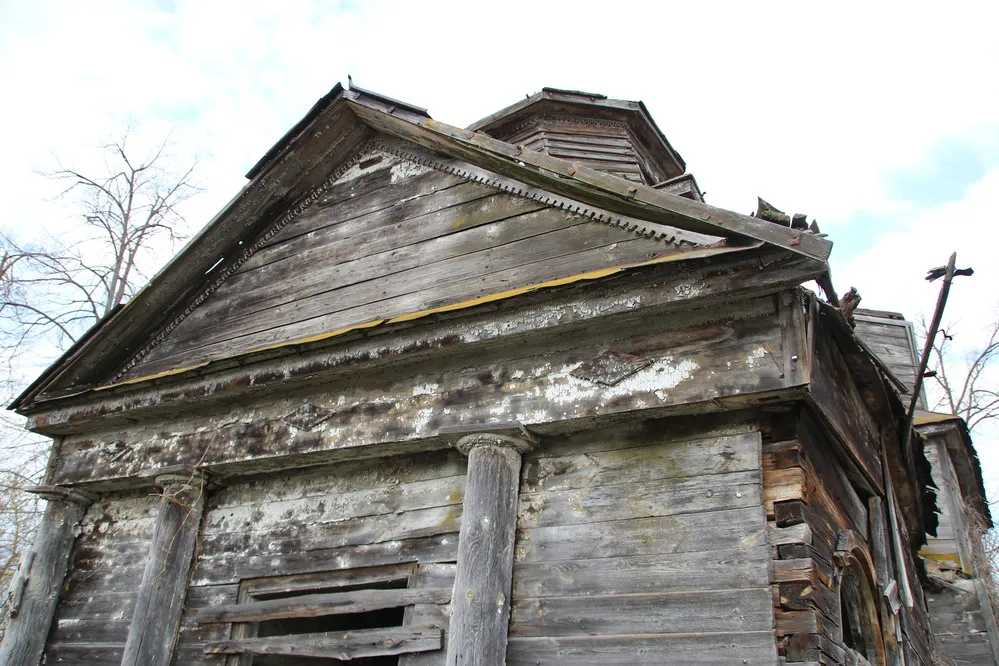
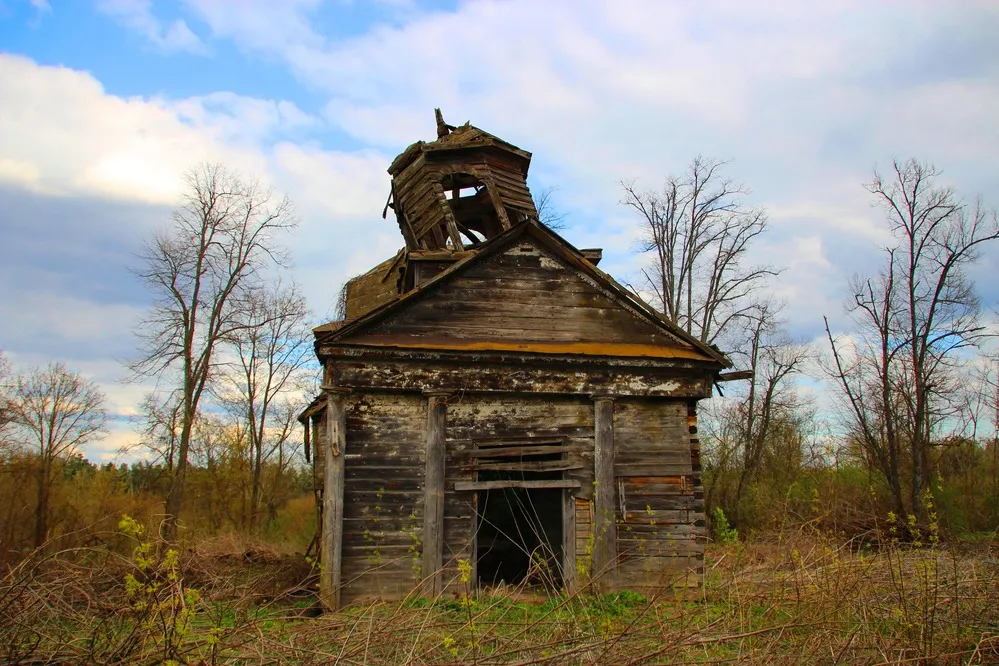
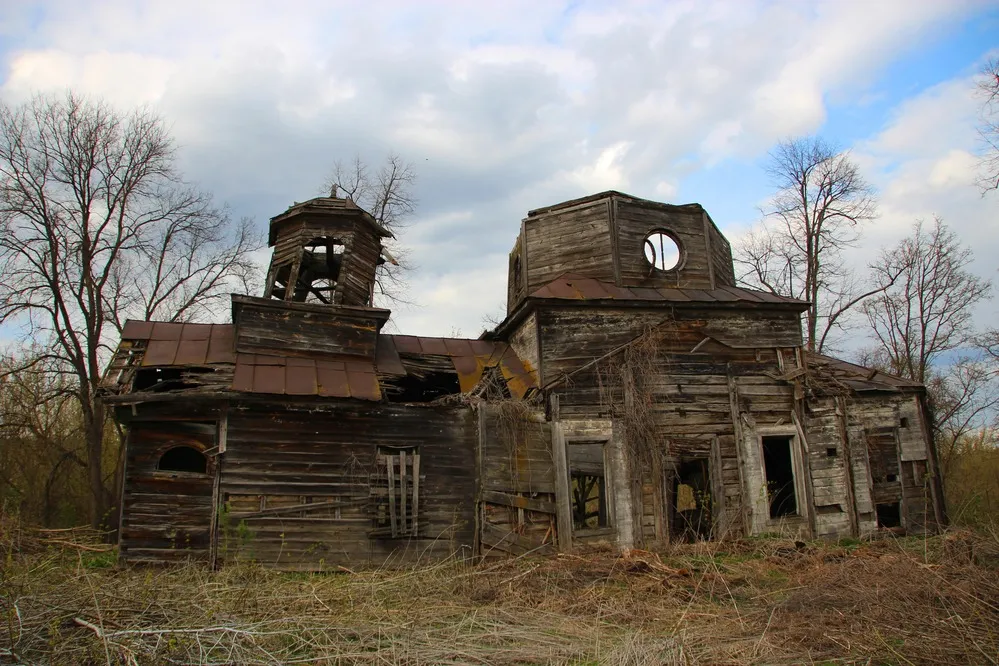
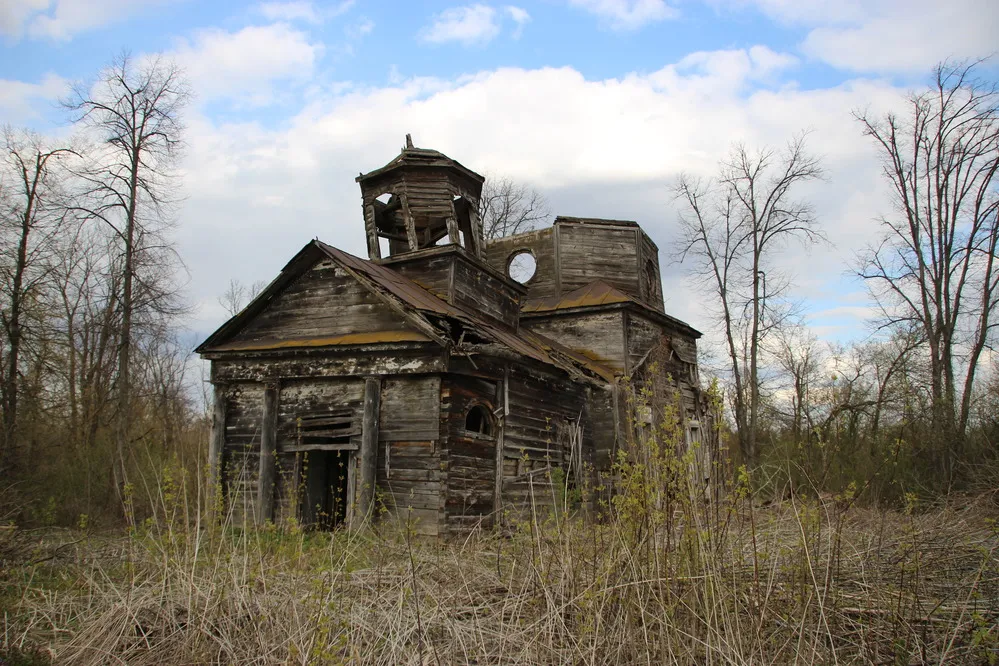
So, as promised, we have come to the history of St. Michael’s Church, the oldest in the Sumy region (1730). It is simply painful to look at this church now. It is like a thin, bent old grandmother with a stick, worn out by illness, abandoned by the ungrateful children she cared for when she was young and healthy, to whom she gave all her love down to the last crumb.
During its existence the church underwent several reconstructions. In 1831 the church was enlarged at the expense of Vira Annenkova.
The church was active until the end of the 1920s; in 1930 it was closed and used as a grain store, and then, until almost the end of the 1990s, as a hayloft. Despite this, according to eyewitnesses, as late as the 1980s the church looked very decent, and even in the 1990s artists came here to sketch the church from life.
Besides the burial of Lizaveta Fedorivna Bukharina, near the church there are many more wrecked gravestones on the graves of members of the Bukharin and Annenkov families. The family crypts were destroyed at the turn of the 20th–21st centuries.
An interesting story. We do not know whether it is true or not, but it is told that in the late 1950s one summer some tourist lived for a long time next to the church; when he left, the villagers found a pit in the middle of the church, and in it a chest with a broken lock. Somehow it was established that the chest had held gold and silver, and it is supposed that this tourist was one of the Annenkovs’ descendants, who took the treasure hidden before emigration by Mariia and Vira Mykhailivna.
Sad as it is, there are no prospects for restoring the church in sight. Especially considering that the village itself is also approaching a dismal end, like the neighbouring village of Kurdy, which was struck off the register back in 1988.
Text and photos by Ihor Dorozhko, Oleh Hodyna and Maksym Nazarenko.