

The house of a Nobel laureate in Kropyvnytskyi has turned into a rubbish dump
In the centre of Kropyvnytskyi (46 Shevchenka Street), a 19th-century house where the Nobel laureate Igor Tamm lived has turned into a spontaneous rubbish dump. Why this architectural monument has stood abandoned for 18 years, and whether anyone plans to deal with the problem, was looked into by journalists of the local outlet “Hrechka”.
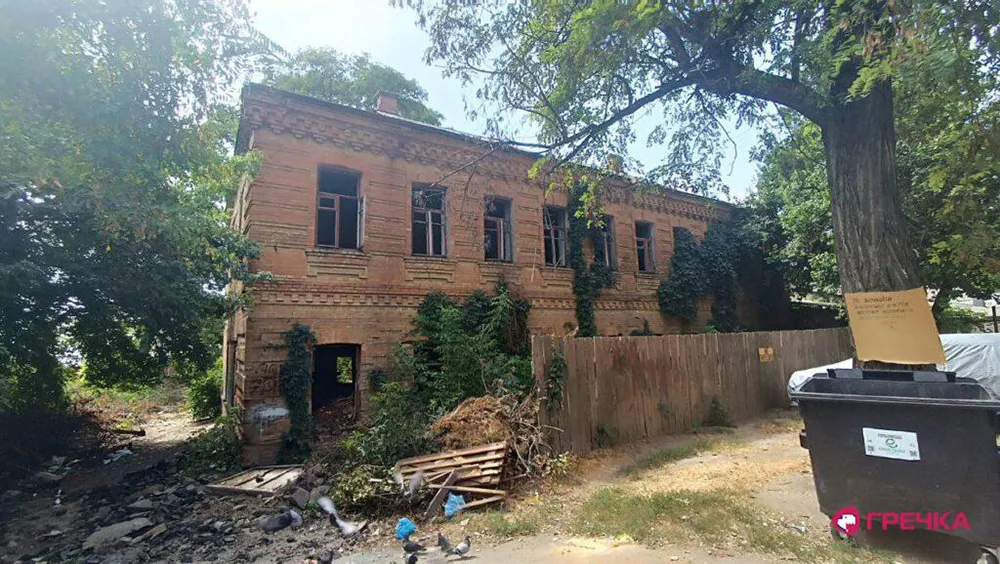
The Tamm family lived in this house from 1898 to 1913. The father, Yevgeny Tamm, made a considerable contribution to the development of the city as an engineer, and his son, Igor Tamm, later became a famous physicist and then a Nobel laureate.
In Soviet times the house was turned into an apartment building. People lived in it until September 2006, when 9 of its 10 apartments were bought by a citizen of the United States of America, Nachum Shalom.
After 2006 the house stood empty, began to fall apart and turned into a rubbish dump and a place for the homeless to spend the night.
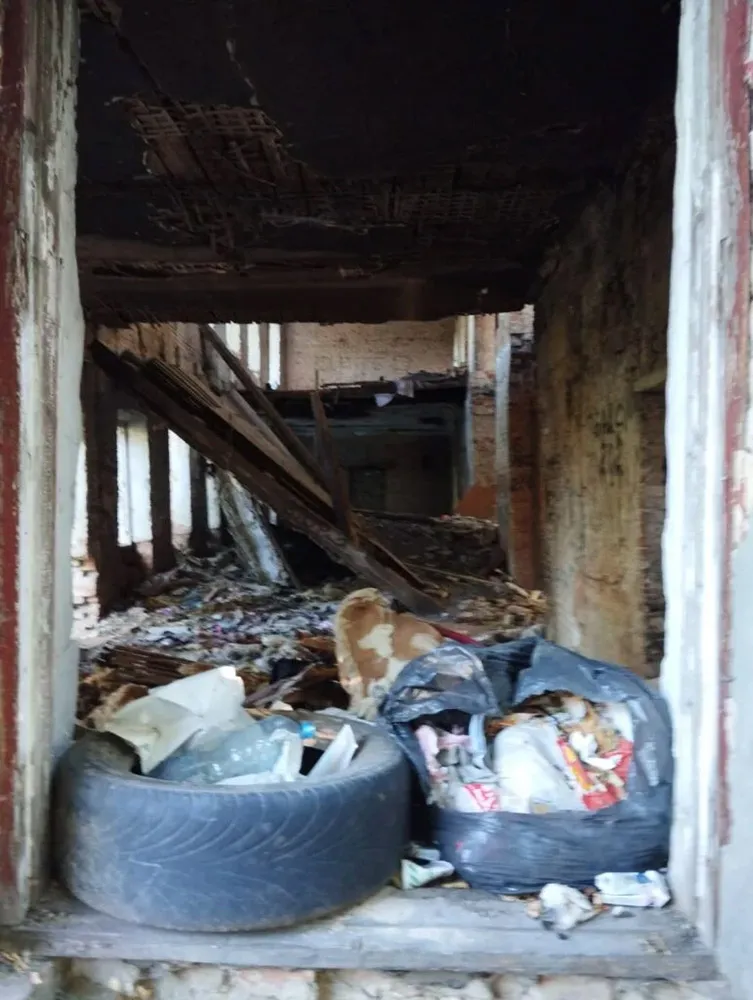
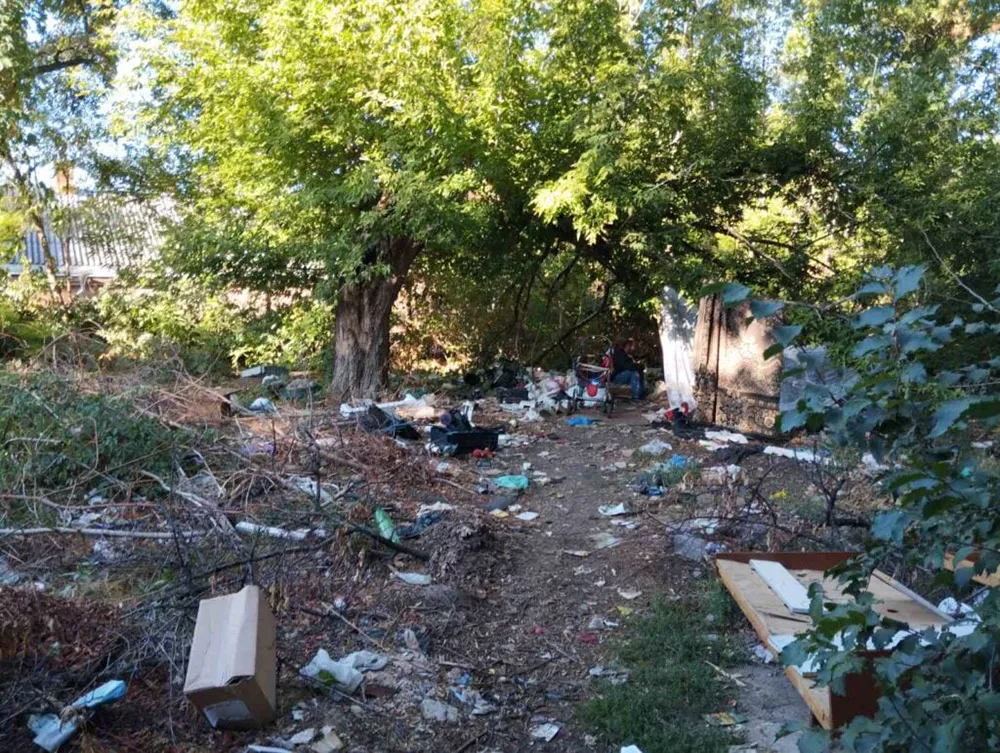
Neighbours say that this place now poses a danger to life because, in their opinion, the building may simply collapse at any moment, and they also claim that it has become a hangout for drug and alcohol users.
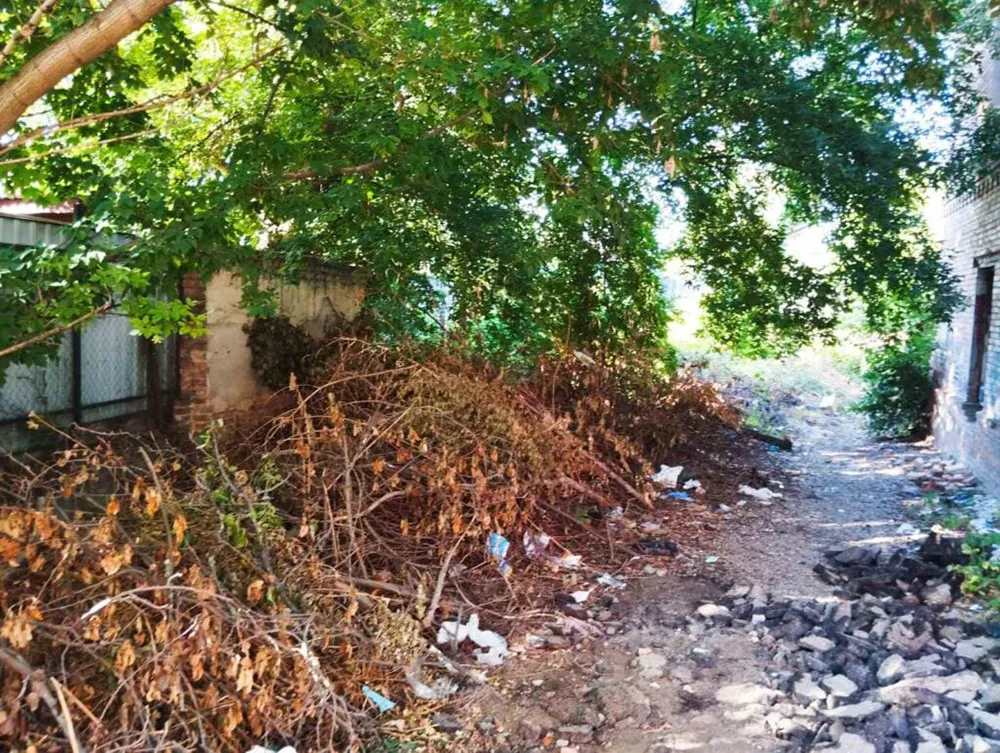
The neighbours are forced to put up with the stench and are afraid even to let their children play in the yard, because it is dangerous.
“Homeless people used to spend the night there. Then the house began to fall apart and now they live next to our building. The rubbish dump keeps growing and growing. Rats and cockroaches are starting to crawl from there into our house. There is no peace in the yard – constant filth, unsanitary conditions, a stench. You can neither walk with children nor can older people sit in the yard,” “Hrechka” quotes one of the local residents.
In response to an information request from “Hrechka”, the Kropyvnytskyi City Council said that the house in question is a cultural heritage site of the late nineteenth century, entered in the List of Monuments of Urban Planning and Architecture.
However, since it has an owner:
“The right of ownership is inviolable. No one may be unlawfully deprived of this right or restricted in exercising it. A person may be deprived of the right of ownership or restricted in exercising it only in cases and in the manner established by law. Compulsory alienation of objects of property rights may be applied only as an exception, on grounds of public necessity, on the basis and in the manner established by law, and subject to prior and full compensation of their value.”
Nevertheless, according to the reply, the house has been put on the register and is being checked for signs of escheated inheritance:
“If signs of escheated inheritance are found, a corresponding application will be filed with the court at the above address (Article 1277 of the Civil Code of Ukraine),” the reply letter says.
The house could have become a museum
In a comment to “Hrechka”, the local historian Volodymyr Polishchuk said that there had been an idea to create a Tamm museum in the house at 46 Shevchenka Street.
Professor Mykola Sadovyi, who researched the history of the Tamm family, noticed that a lot of correspondence for Tamm came to this address (29 Petrovska Street in the 19th century, now 46 Shevchenka Street – author’s note).
“Mykola Illich collected enough materials, including rare ones, for instance the correspondence of the Tamm family, to write a book about Igor Yevgenovych and to design the exhibitions of his museum in Kirovohrad. Previously it was believed that the only building in our city connected with Igor Tamm was the premises of the former boys’ gymnasium on Petrovska Street (now Shevchenka Street),” writes Volodymyr Polishchuk in an article published in the book “Made in Yelysavethrad”.
More than ten years ago Mykola Sadovyi proposed turning the house, which by then had already become a rubbish heap, into a museum.
Then, in 2013, the city authorities supported the professor’s proposal and even took certain steps to resolve the matter of transferring the house into city ownership, but found that the building was in a state of disrepair.
In 2013 specialists of the emergency situations and civil protection department of the city council inspected the house and concluded: “an emergency situation may arise” and “the building’s continued presence in a dilapidated state within the city is unacceptable.”
The participants in this inspection put forward a proposal to declare the house ownerless real estate and subsequently, through the court, obtain it into city ownership and urgently undertake repairs.


