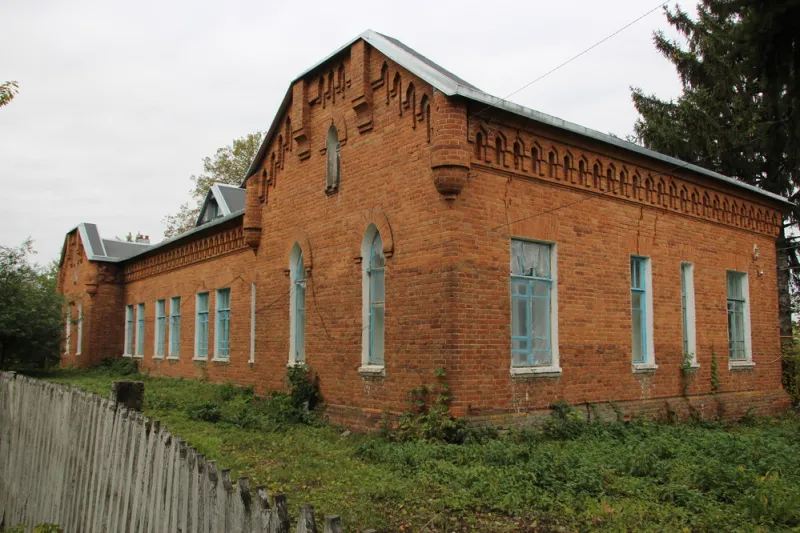
Petrivka. A Neo-Gothic church

· 3 min read
As is customary in decent expeditions, any research trip always has room for a surprise. On an expedition tour through the south of the Chernihiv Oblast, such a surprise turned out to be the Church of Saints Peter and Paul in the village of Petrivka in Bobrovytsia district (this is an important clarification about the district, because Snovsk district of the Chernihiv region also has a village called Petrivka with an interesting architectural object).
This village, it must be said, lies on the left bank of the Supii River and probably traces its history back to the days of Kyivan Rus, or even earlier. After all, the logic of human settlement has always been determined by the presence of water nearby. Ancient people simply could not have passed by such a river! And indeed, the hillfort discovered in the village, dating from somewhere around the 12th–13th century, confirms this. So we reject historical inventions like “this roadside post was put up at the place where Peter I dropped his hat and said ‘let there be a settlement here!’” as propaganda tricks of the 19th century, when Muscovy habitually grabbed for itself not only material valuables but also cultural and historical space, aggressively taking up a place in human memory.
Most likely the village got the name Petrivka from the feast of Saints Peter and Paul. Or, alternatively, from some local celebrity named Peter; we will certainly never find out. Nothing is left of its once resounding Cossack glory, and today Petrivka is a practically unremarkable village of five streets and a dozen houses, were it not for their church.
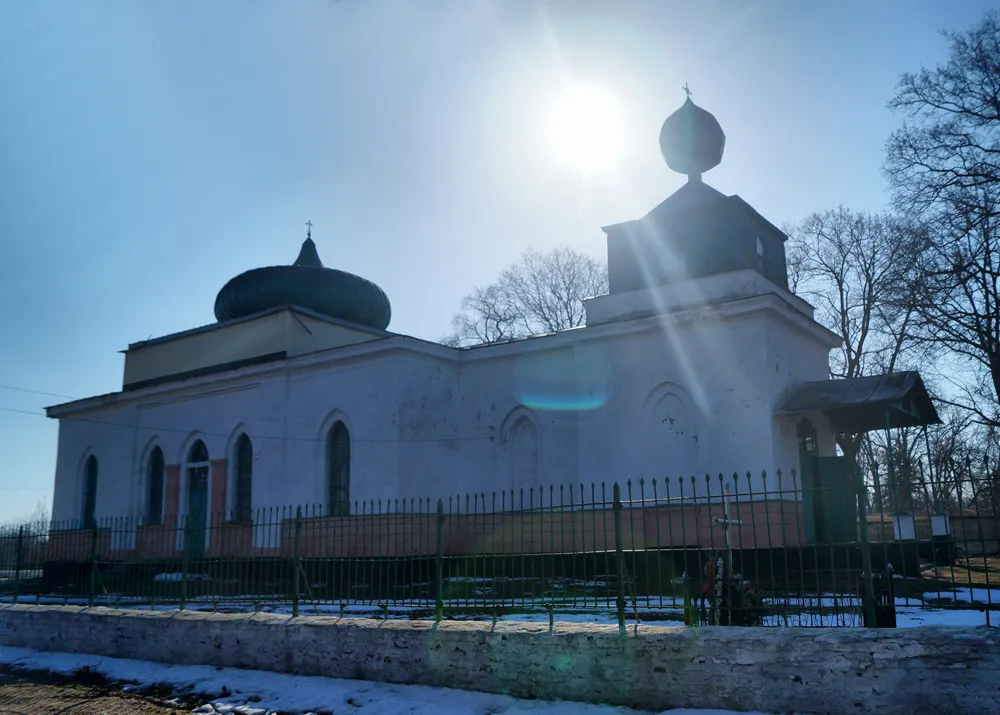
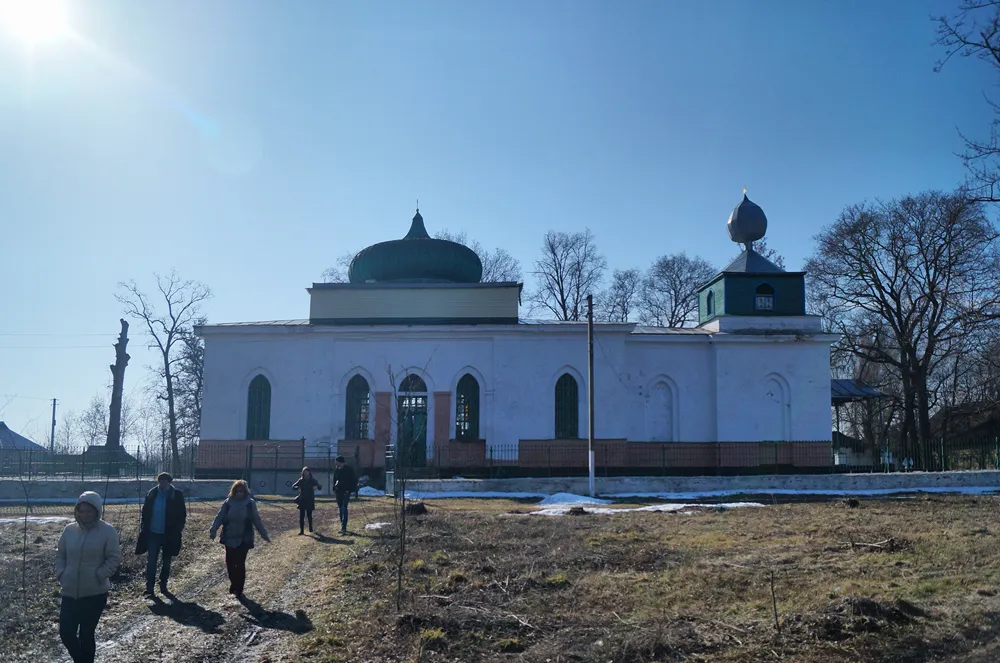
The Church of Saints Peter and Paul catches the eye at once with its domes. It has two: one in the shape of a Yalta onion, except that the colour is green rather than purple, and the other more like the antenna knob of some UFO from the days when cinematic fantasies of interstellar flight were born.
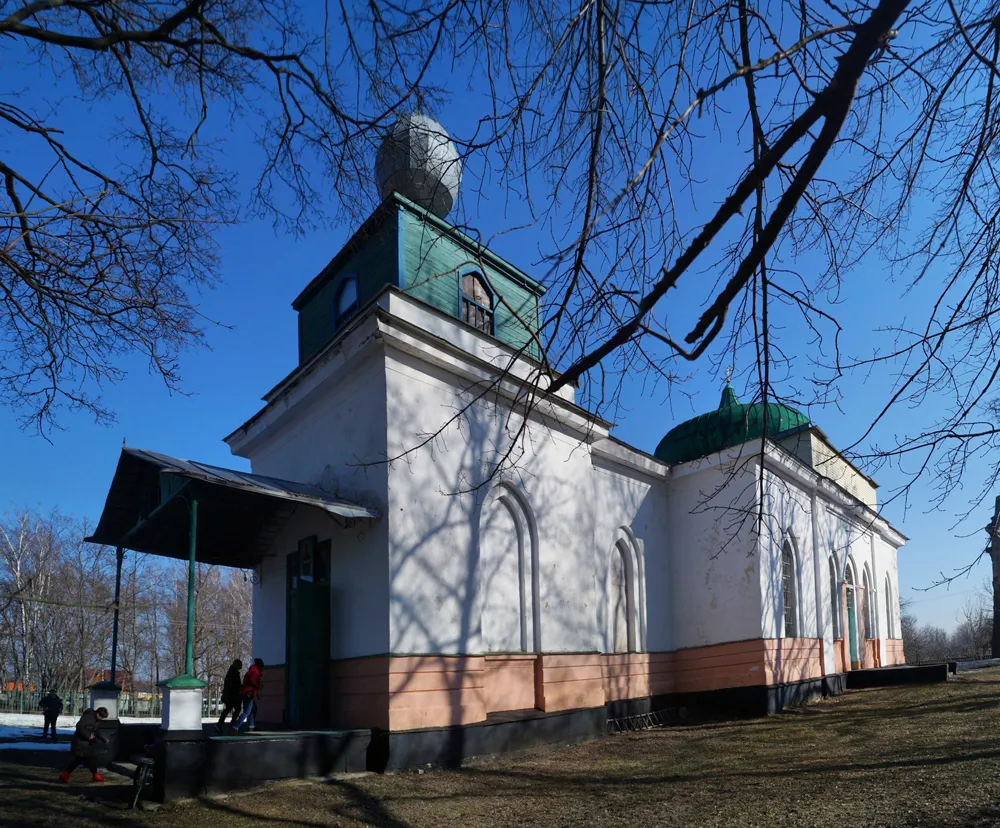
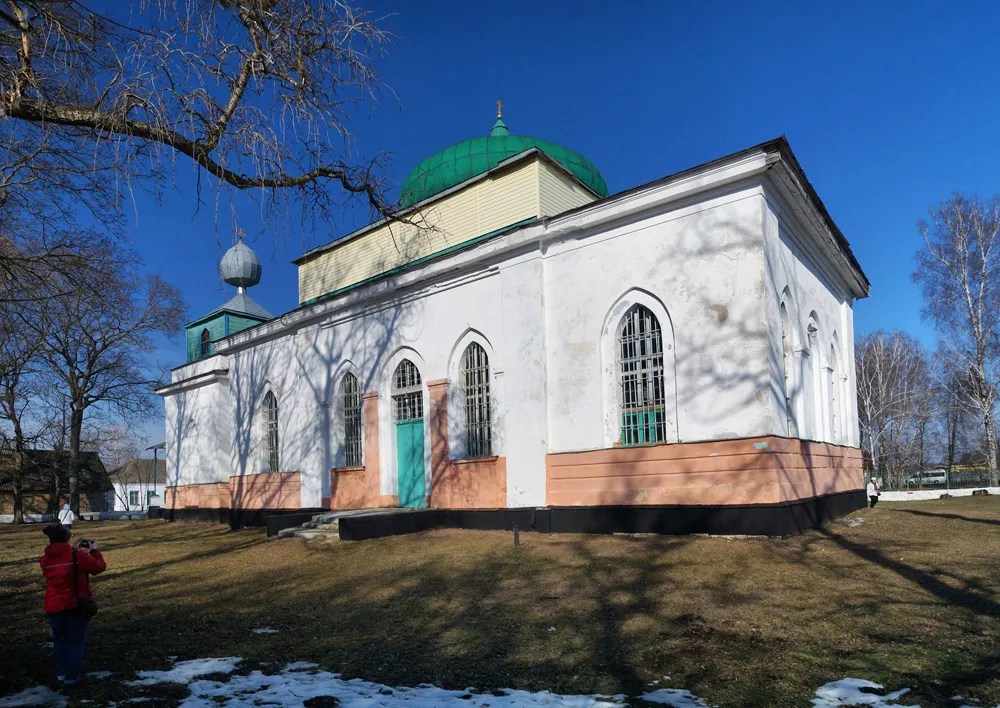
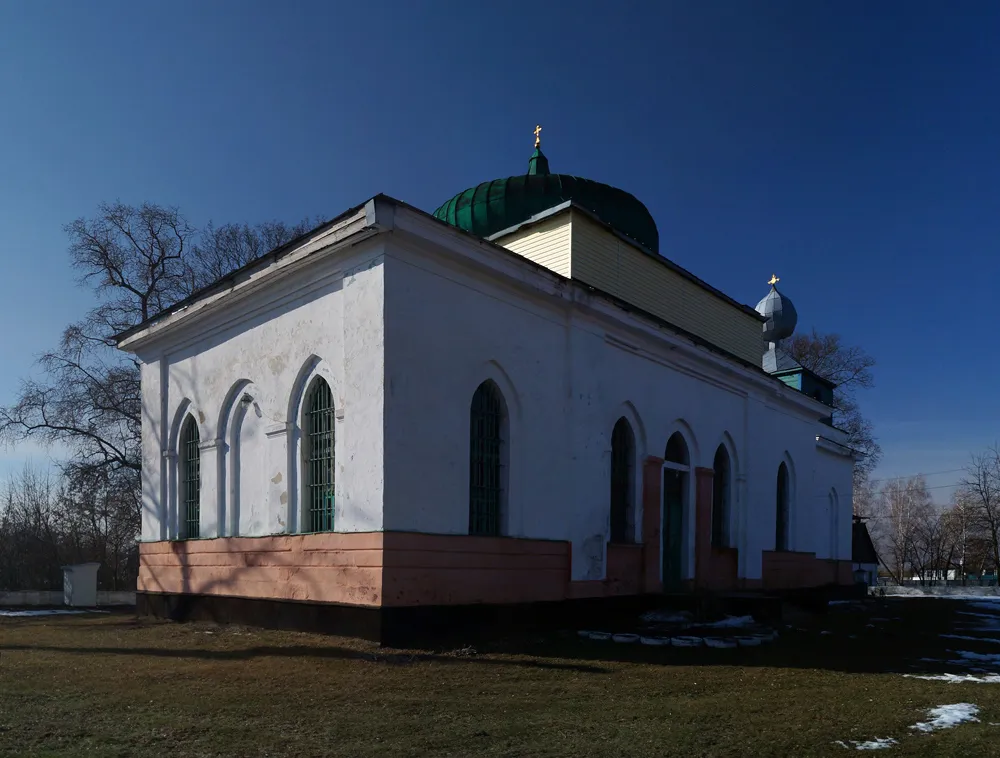
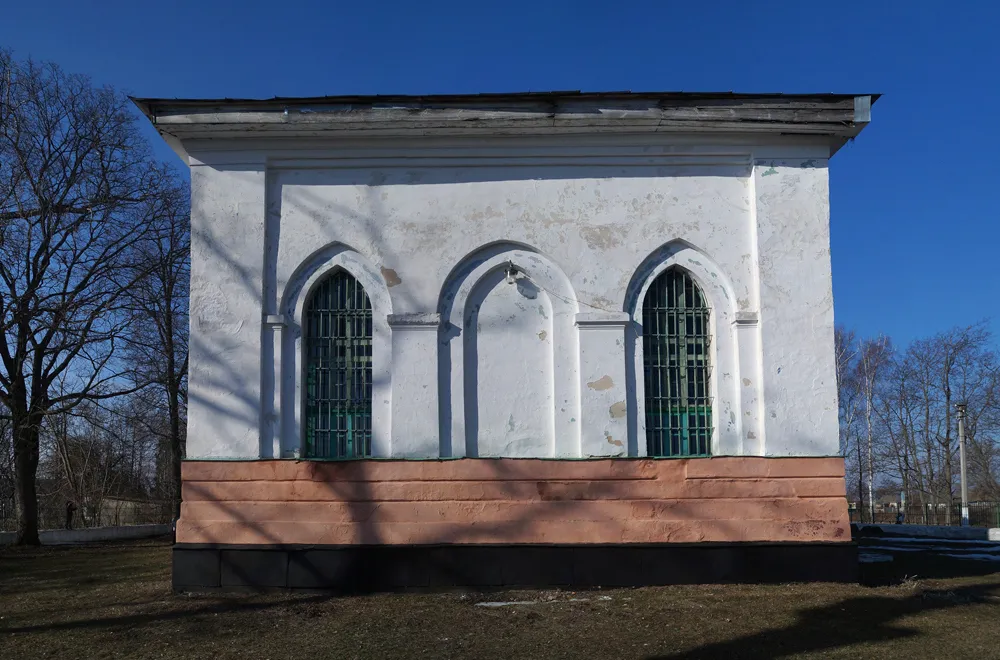
Today the “Yalta onion” is neatly clad in plastic siding, giving the building the incomparable flavour of a style so widespread in the Ukrainian village of the early 21st century, the “parade of gangster beggars”. With such innovative decorative solutions, in a few years one can quite expect the same siding around the entire perimeter of the church, so we were still in time to appreciate its original window openings.
The church was built in 1838, but who prompted the people of Petrivka to put up precisely such domes remains a secret behind seven seals. Nine years later a parish school opened at the church, which in those days in the Moscow empire was practically equivalent to an educational reform: a school? in a village of 600 souls? what for???
The church is active today. While we were running around it on our research, a landing party of the most inquisitive burst into the church right in the middle of a service and ran out delighted: “there are such little sheep in there!”
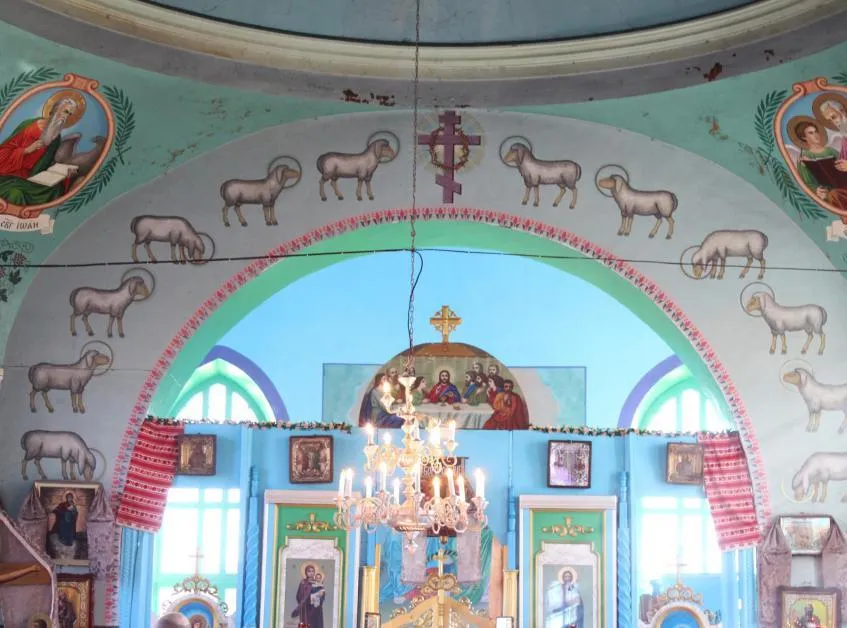
The little sheep turned out to be an unusual interior decoration: right above the altar, along the arch, 12 sheep walk towards the opening, six from each half. The locals did not appreciate at all our enthusiasm for discovering unique old interiors, so there are very, very few photographs of all this splendour. I was lucky: I managed to click the shutter once.
It is quite easy to reach the church: the village lies practically right on the Kyiv–Sumy highway, and the church can be seen from the road in the spring-winter season, when there are no leaves.
Text by Alla Komarova. Photos by Alla Komarova and Roman Malenkov