

A member of the “Ukraine Incognita” team has won the “Wiki Loves Monuments” photo contest
A member of the “Ukraine Incognita” team, the local historian, journalist and photographer Dmytro Poliukhovych, has become a winner of the “Wiki Loves Monuments” photo contest. His photograph of the old Jewish cemetery in Horodok (Khmelnytskyi Oblast) took third place in the special nomination “Jewish Heritage” (category “Cemeteries”).
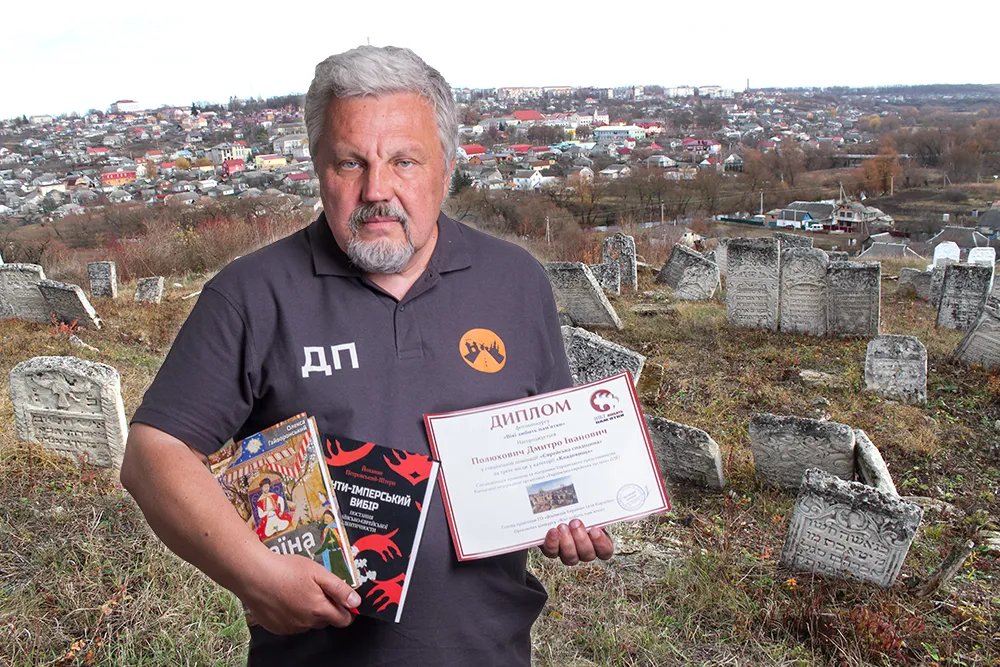
Dmytro Poliukhovych
This is not Dmytro’s first victory in this contest. In previous years he has already taken first and second places in various nominations.
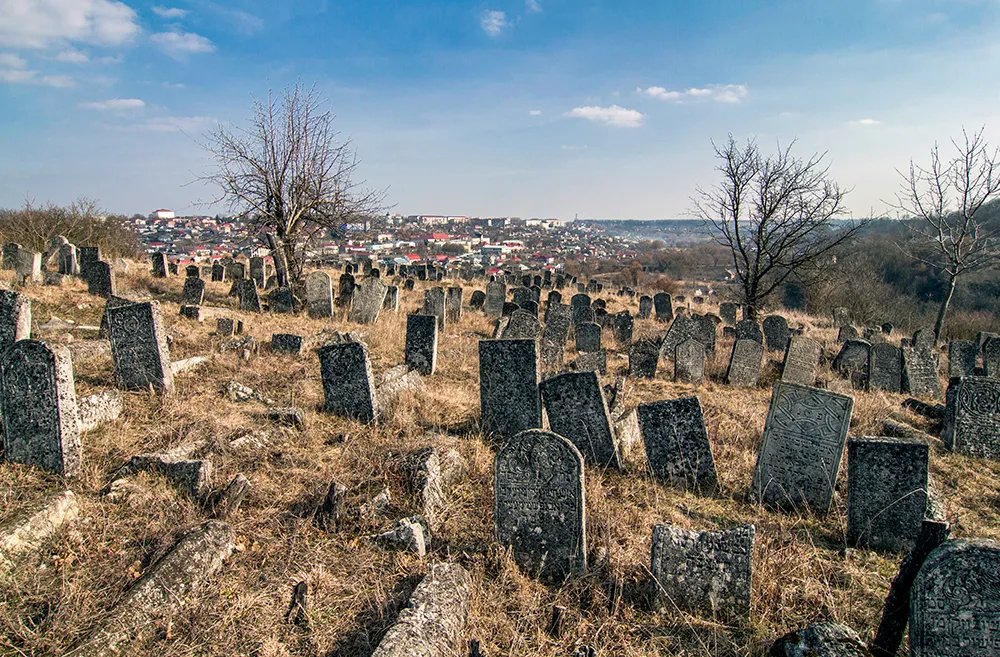
The winning photograph
“This award was somewhat unexpected for me,” says the local historian. “To be honest, I expected completely different photographs to be singled out. I sent the photo of the Horodok kirkut purely ‘just for the sake of it’, and here is such a result. Of course, I am very glad about it.”
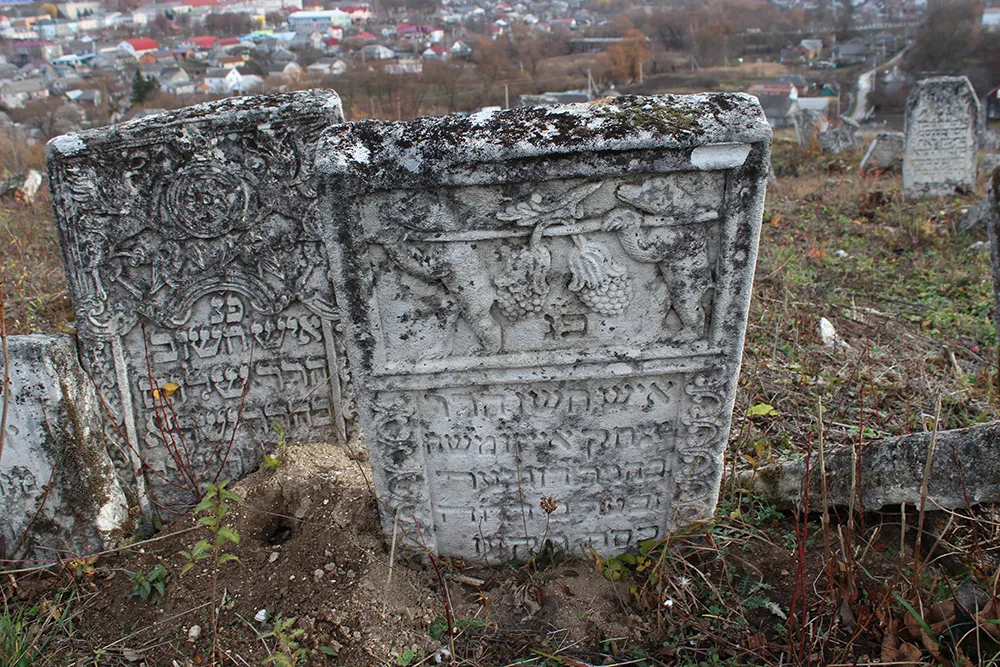
The little bears of the Horodok kirkut
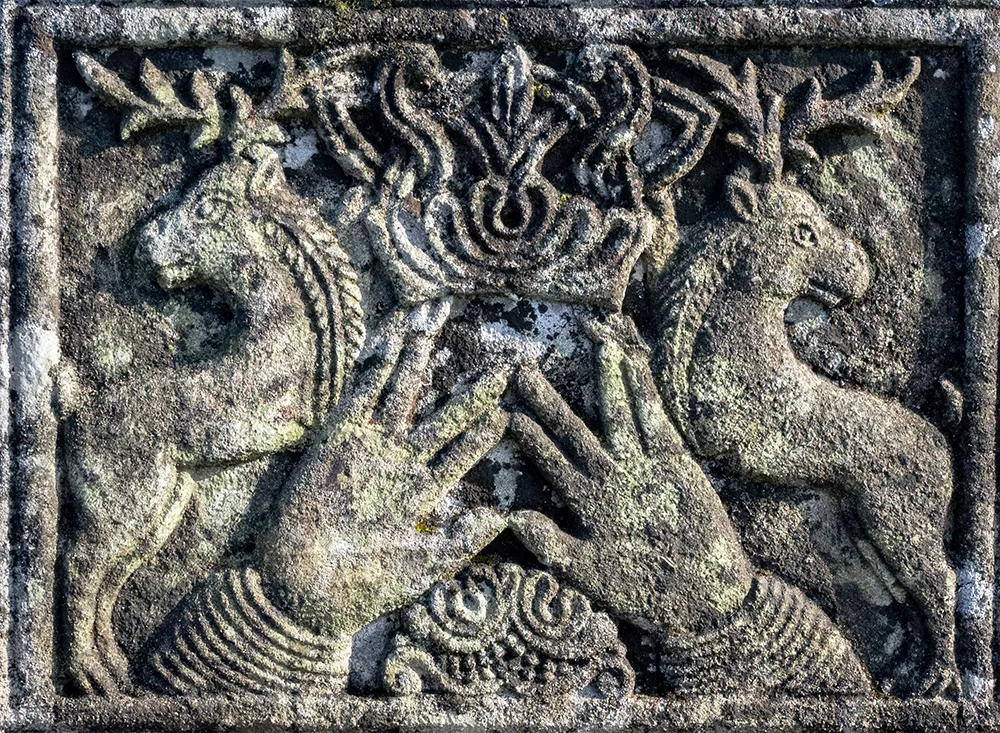
Deer from the necropolis in Horodok
Dmytro also expressed his thanks to the organizers of the photo contest Wiki Loves Monuments Ukraine and of the special nomination “Jewish Heritage” for the pleasant gifts received together with the diploma – above all for the books. These include, in particular, the monograph “Anti-Imperial Choice” by Yps Art and the very interesting and vivid book “Country Crimea” by Oleksa Haivoronskyi.
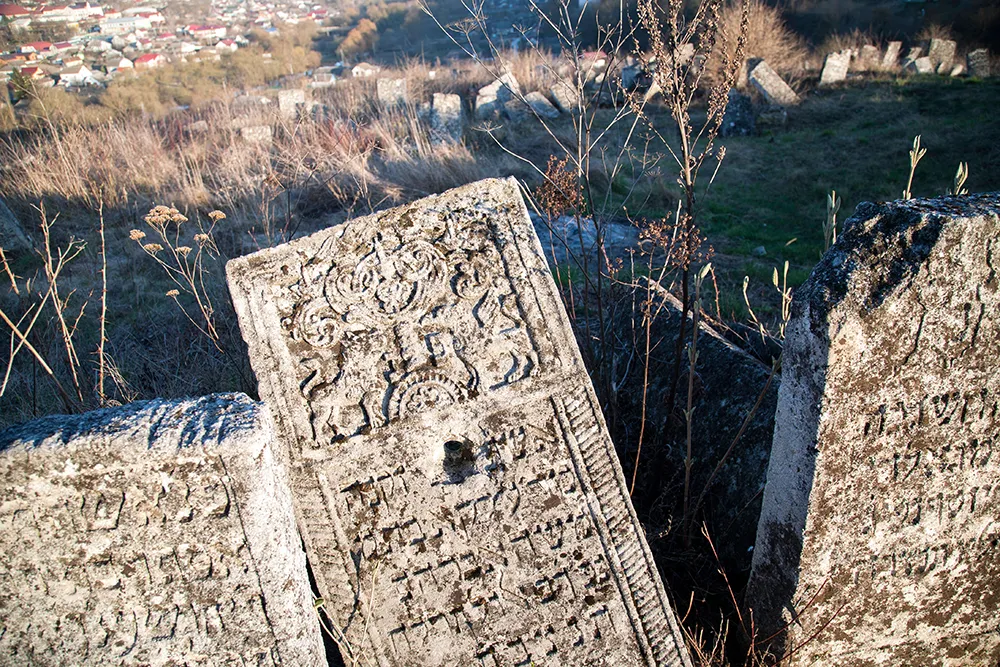
One of the riddles of necropolis studies. Similar holes were also punched, for some reason, in stone crosses.
Background
The Jewish cemetery of Horodok arose in the early 18th century and was used until the second half of the 20th century. It was established on the site of an older wooden and earthen fortification that was part of the defensive structures of medieval and Renaissance Horodok. At one time the Jewish community bought this land from the landowner because the territory, located on the top of a hill and cut by ditches and ramparts, was very cheap. The remains of the ramparts, by the way, can still be traced today.
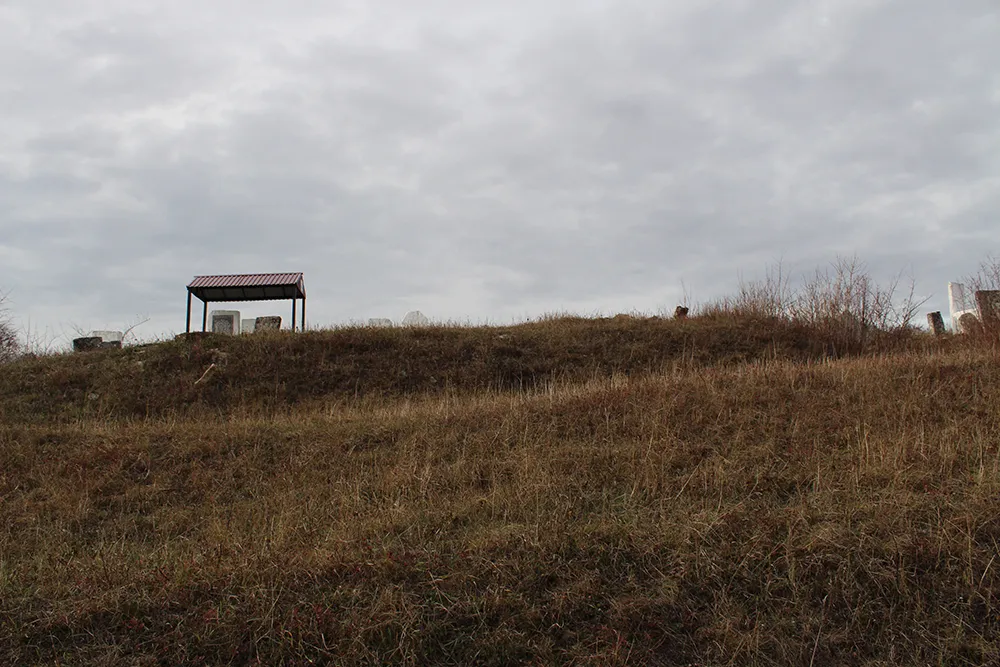
Ramparts of the ancient fortification
The cemetery has many interesting gravestones with delicate carving, which, moreover, tell the history of Horodok and Podillia.
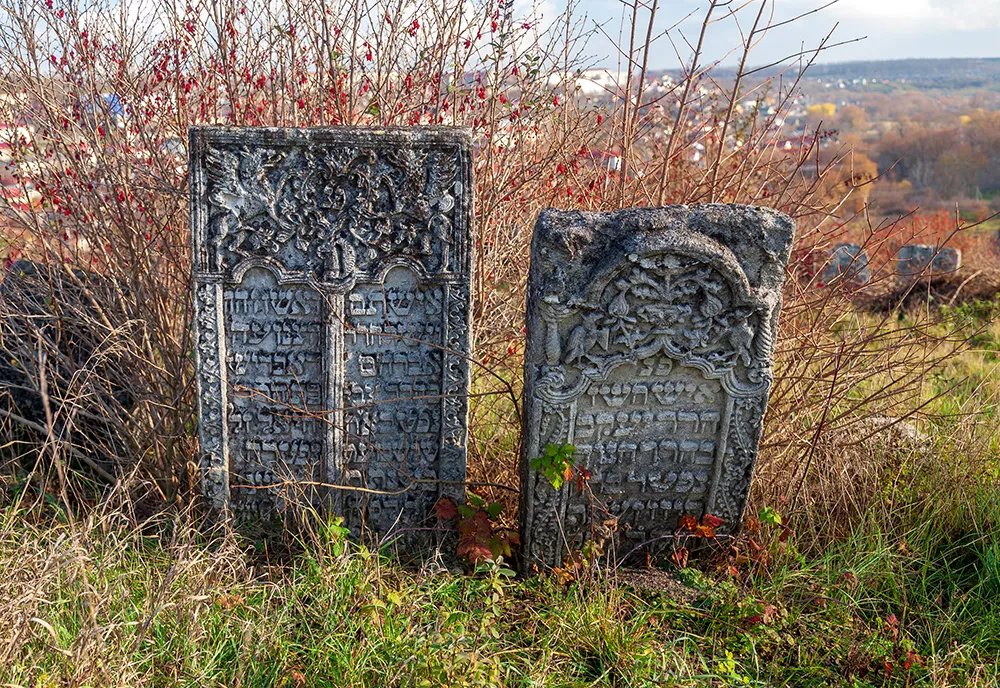
Burial of victims of a plague epidemic. 1770
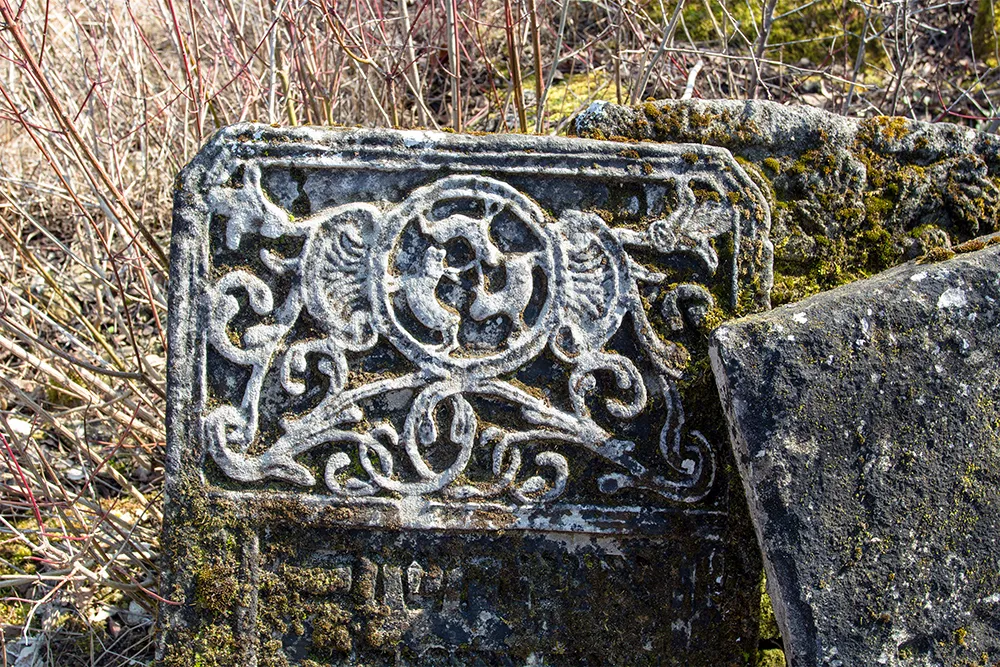
A very rare motif, “Three Hares”, originating from the Buddhist monasteries of China. Burial of the early 19th century.


