

A cultural and educational route, “Myronivka: the city that speaks”, created in Myronivka
In Myronivka, the project “Myronivka: the city that speaks” has been completed: a cultural and educational route that combines local history, cultural heritage, urban space and modern digital technology.
The project was carried out by the public organisation “COMMUNITY DEVELOPMENT HUB” in partnership with the municipal institution “Myronivka Local History Museum”, with the support of the Ukrainian Cultural Foundation and the MHP-Hromadi Charitable Foundation, within the “Partnership for Development” programme, LOT “Cultural Trails of Communities”.
The aim of the project is to research, preserve and present anew the history of Myronivka, to make it accessible to residents, young people and visitors to the community, and to create a modern cultural and tourism product that can be used independently.
The basis of the project is a route of 12 locations that tell about different chapters of Myronivka’s history: the formation of the settlement, the development of the railway and the sugar industry, religious life, the old market, the hydropathic clinic, historic buildings, local place names, natural places and the everyday life of townspeople.
The project has produced:
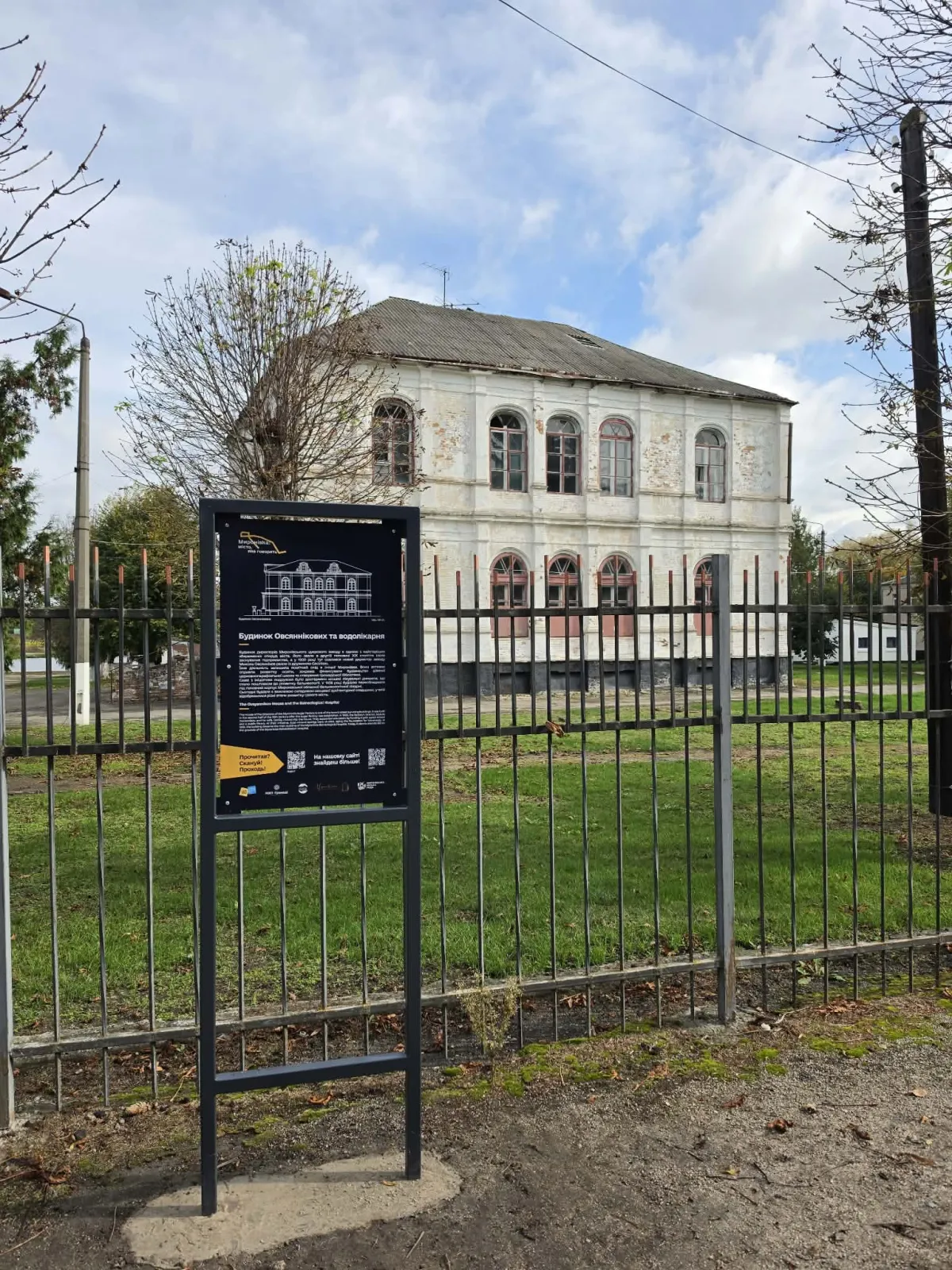
- 12 information stands with QR codes, installed at points along the route;
- a digital platform with extended materials about each location and an interactive map;
- an audio guide that lets you listen to the stories while walking the route;
- a gamified quest, “Artefacts of the City”, with 12 tasks and digital artefacts;
- a themed sticker pack that participants receive after completing the whole quest;
- 6 AI videos that visualise individual historical stories;
- 12 animated photographs created using artificial intelligence tools;
- a 3D model of the Ovsiannikov house, one of the oldest historic buildings in Myronivka;
- historical notes and photo, audio and video materials collected and processed during the research part of the project.
- A separate component of the project was research into local history. The team worked with archival materials, old photographs, maps, local history sources and the oral recollections of residents. As a result, the route tells not only about well-known sites but also returns to public space the local stories and popular names preserved in the community’s memory: the “House on the Garlic”, the “Red Shop”, the “Priest’s Dam”, the railway bakery and “Krasnosilske bread”.
The route does not follow a fixed sequence: on the interactive map you can choose any of the 12 points, walk only part of the way or continue getting to know the town on another day. The total length of the route is about 7.2 km, and the approximate time to complete it at a relaxed pace is 5 to 5.5 hours.
Particular attention has been paid to digital content. Artificial intelligence tools were used for artistic visualisation of historical stories and of lost or altered buildings, and for animating archival photographs.
After the project ends, the route will continue to function as a permanent cultural and tourism resource for the community, available to residents and guests of Myronivka.
The Ovsiannikov house and the hydropathic clinic in Myronivka
One of the most interesting sites in the project is a two-storey brick house built in the second half of the 19th century as the official residence of the sugar factory’s administration. The building’s name is linked to the process engineer Mykola Ovsiannikov and his wife Cecilia, who lived here from 1900. Cecilia Ovsiannikova was actively involved in education: a girls’ school was built at her expense, a library was founded, and she was awarded a gold medal for her educational achievements. According to legend, it was she who initiated the use of local mineral water from the factory’s springs for therapeutic baths.
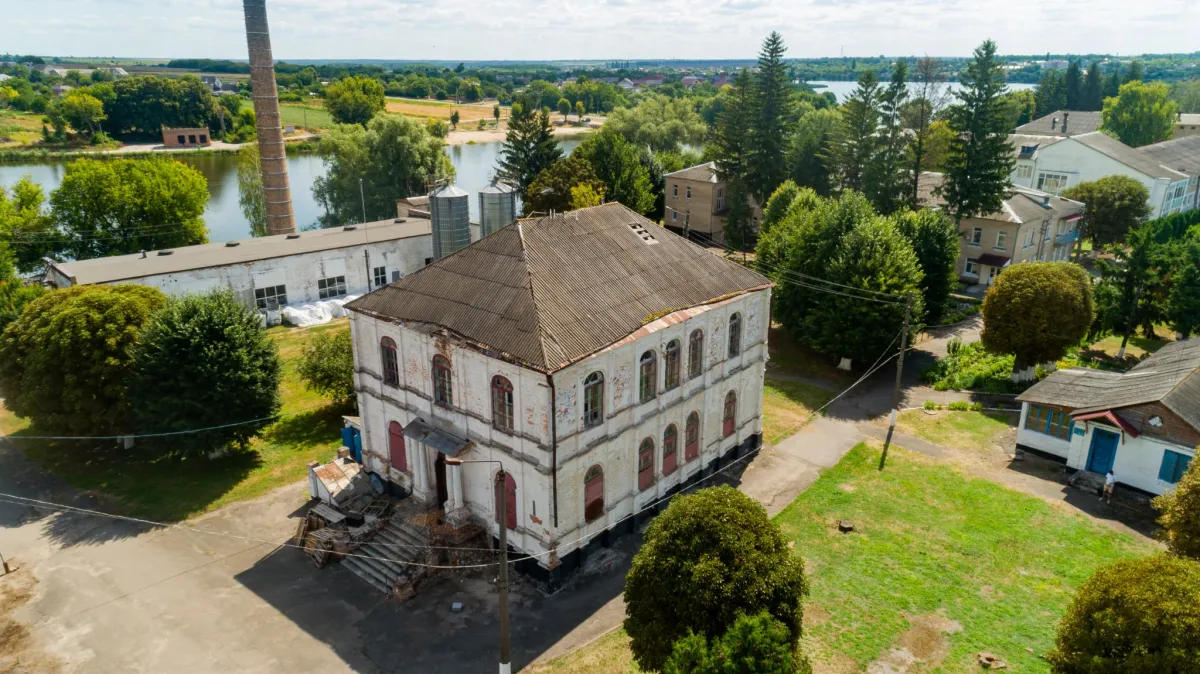
In 1957 a hydropathic clinic was opened on the basis of the explored radon waters, and the former director’s house became its main building (later the oblast rehabilitation hospital). Today a rehabilitation facility that uses the natural radon waters operates here. Despite its historical value, the building itself needs restoration.


