

A cross from a church destroyed in Soviet times donated to the Sarny Museum
A dome cross from a 19th-century church has joined the collection of the Sarny Museum of History and Ethnography in Rivne Oblast. It is a relic of the St. Michael’s Church in the village of Liukhcha in the Sarny community, which was dismantled in 1963. The cross was kept by the rector of the present-day church of the same name in the village, who has now handed it over to the museum. RISU reports this, citing Suspilne Rivne.
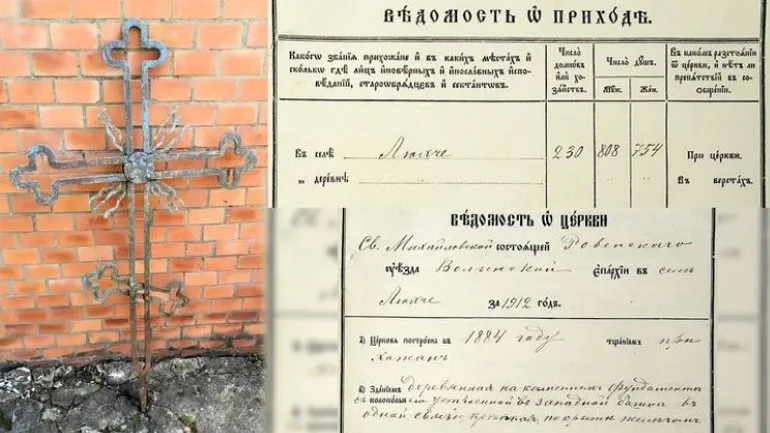
According to museum director Viktoriia Dashko, the cross that has joined their collection comes from the village of Liukhcha. It is from a 19th-century church that was dismantled in 1963, and its boards were used to build the local school. After 62 years, the cross from the destroyed church has joined the museum collection.
“This is already the second dome cross in our holdings. The first is from the old Holy Trinity Church of 1725 from the village of Dorotychi. And this one was donated to us by Father Leonid Lazarchuk, rector of the church in Liukhcha. Now we are looking for materials both on that destroyed church and on the cross that was given to us. It is typical of Polissia and was forged by a local craftsman,” Viktoriia Dashko said.
She explained the symbolism of the crosses that were set on the tops of Polissian churches, also called the “crown of the church”:
“They completed the architectural image of the shrine and, above all, had a sacred role. It was believed that as long as the cross stands, the community is under God’s protection. It was a spiritual shield over the village. The cross symbolized Christ’s victory over death, was a sign of God’s presence, and also a conduit between heaven and earth. It fixed the spiritual vertical that linked the community with higher powers.”
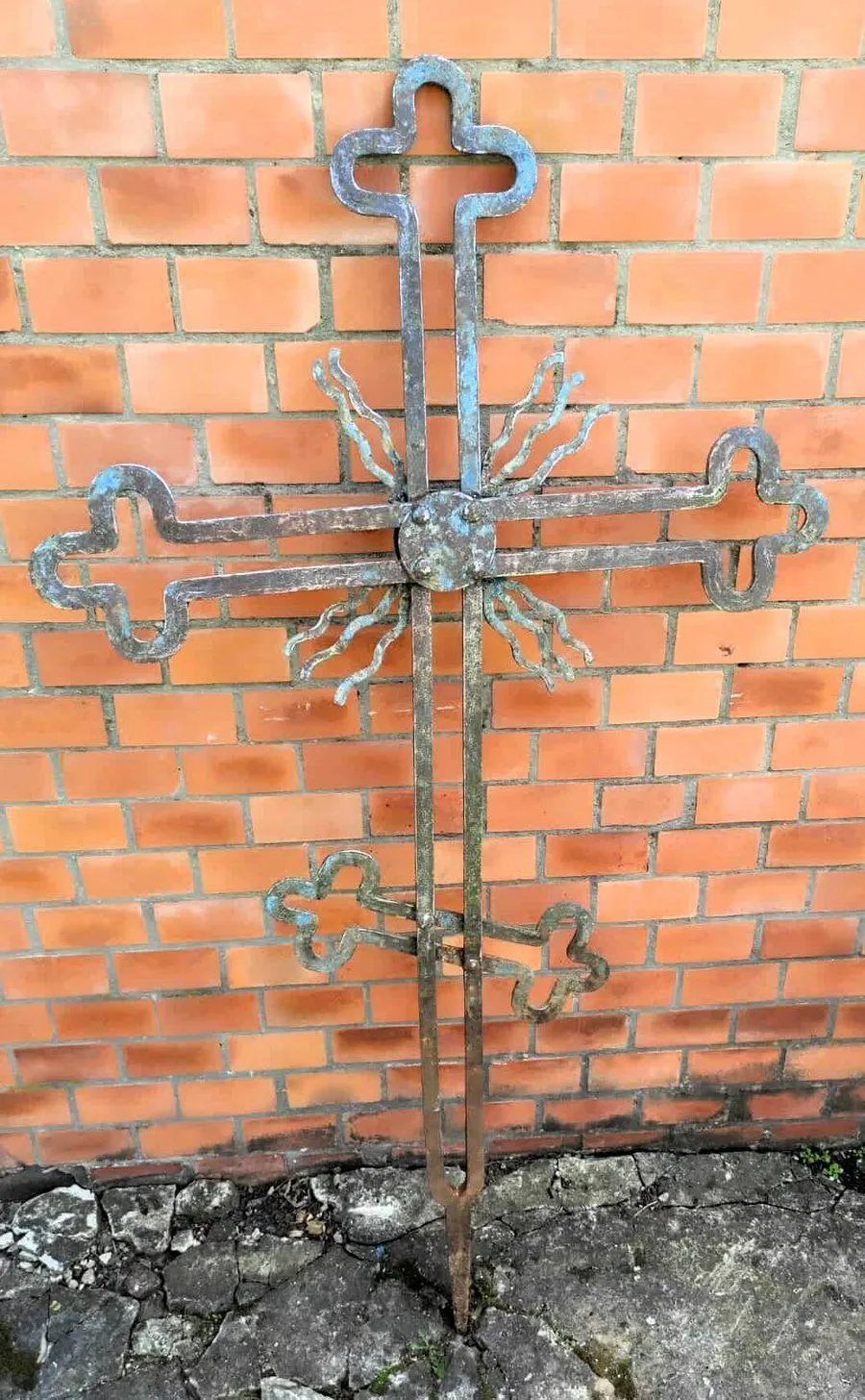
Viktoriia Dashko also noted that dome crosses in Polissia were of several types:
“Among the most common are four-armed Greek crosses, as a symbol of the Universe. Eight-pointed crosses with slanted crossbars are characteristic of the Orthodox tradition. Crosses with flared ends, resembling a flower or a flame, are a symbol of the Holy Spirit. The so-called little trees are crosses that sprout many decorative branches of rays. Polissian crosses also often had disproportionate upper parts stretched upward, a symbol of striving towards God. Some crosses ended with forged birds, as a sign of the Holy Spirit. On many crosses the initials or full names of the craftsmen who forged them have survived.”
Both dome crosses, from Liukhcha and Dorotychi, are planned to be placed in an open-air exhibition on the museum grounds, next to a wooden chapel from the mid-18th century.
As “Ukraine Incognita” reported earlier, an unknown “plague cross” of 1770 was found near Sataniv in Khmelnytskyi Oblast.


