

Photo exhibition in Sochaczew: a heritage that unites peoples
The “Graves of the Ancestors” project presents the Polish necropolises of Podillia.
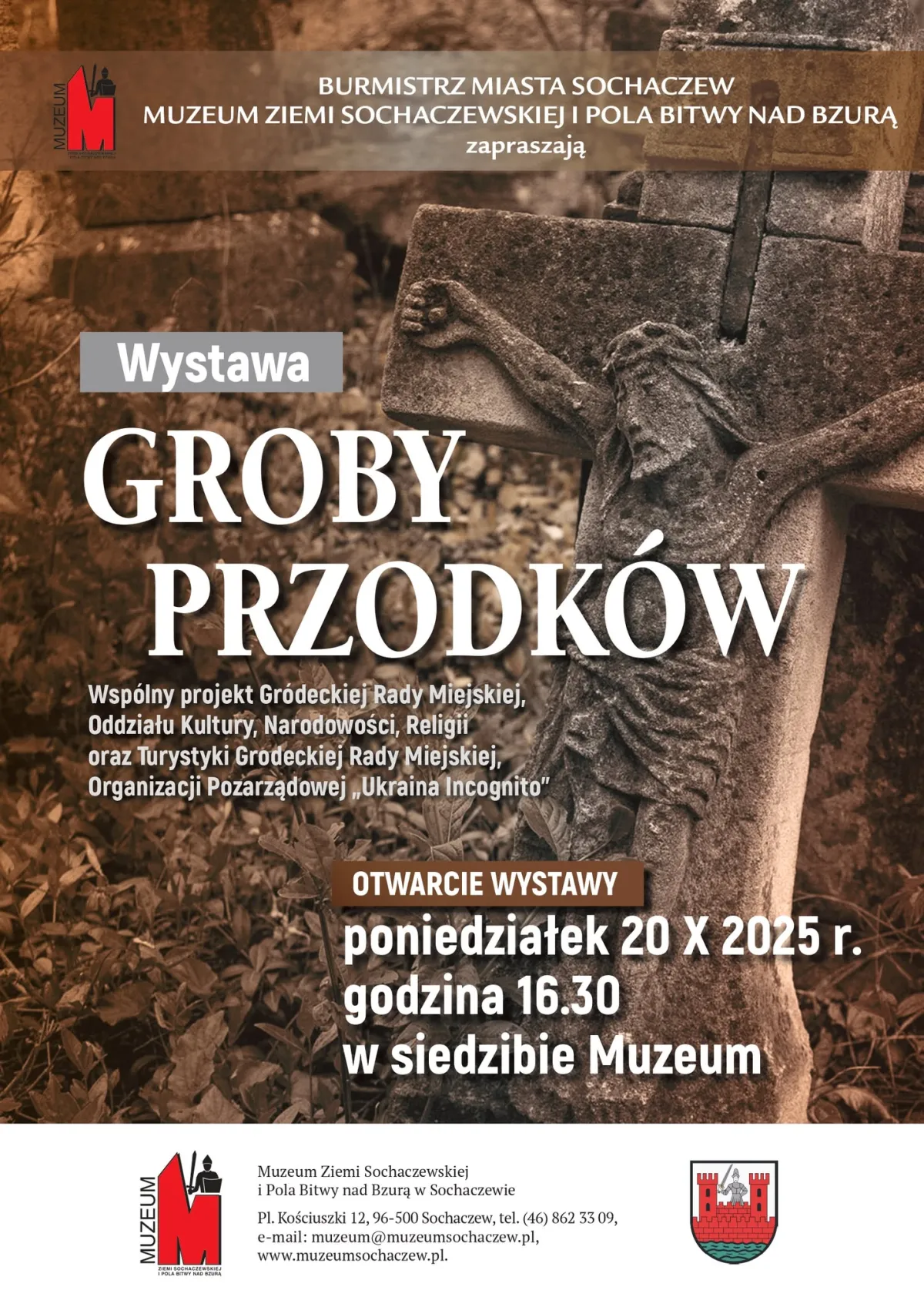
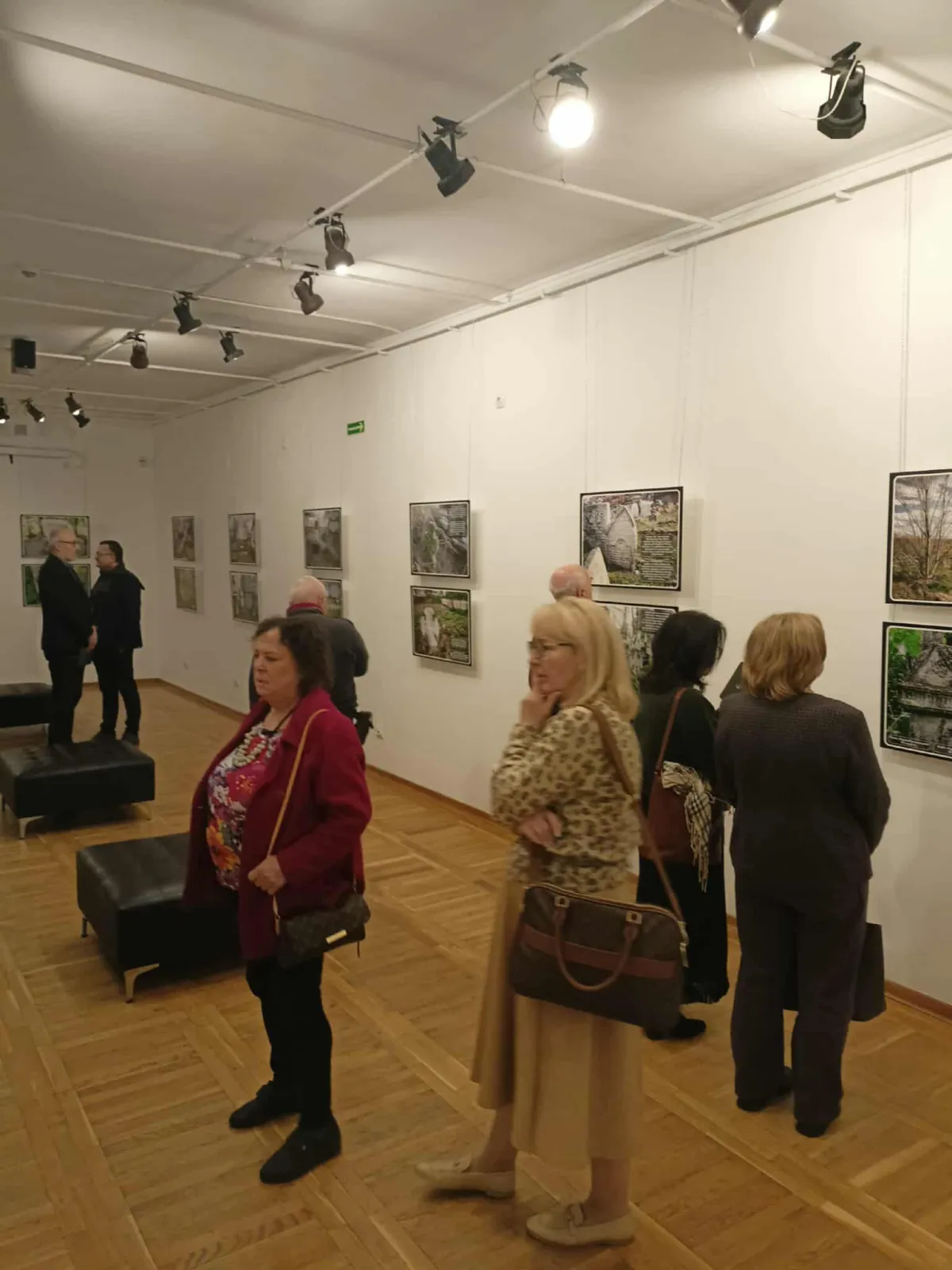
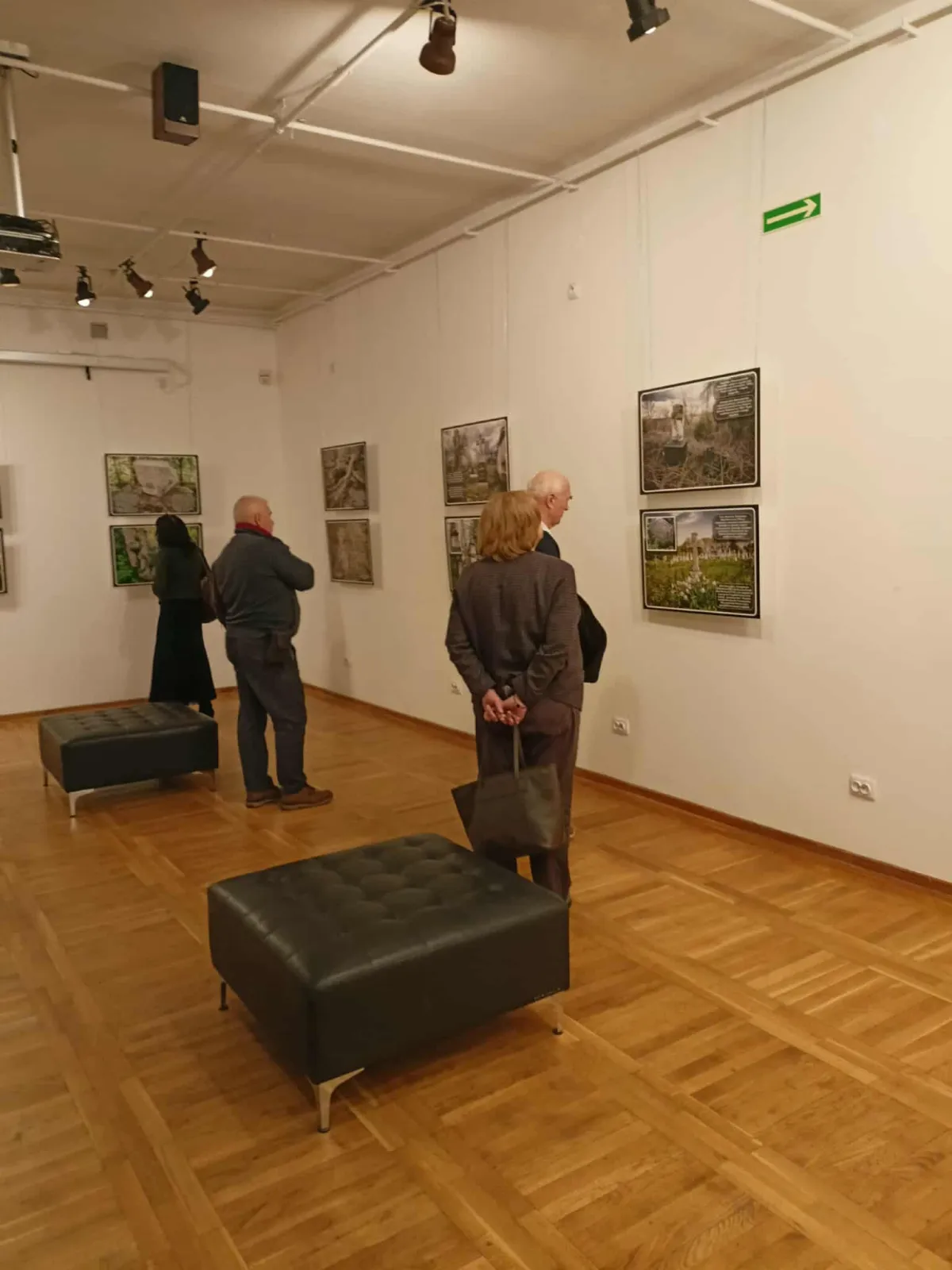
On 20 October, a photo exhibition devoted to the ancient Roman Catholic (Polish) necropolises of Podillia opened in Sochaczew (Poland), at the nationally renowned Museum of the Sochaczew Region and the Battle of the Bzura. It is the result of the local-history research project “Graves of the Ancestors”, carried out in partnership between the NGO “Ukraine Incognita” and the Horodok urban territorial community, represented by the Department of Culture, Nationalities, Religions and Tourism of the Horodok City Council.
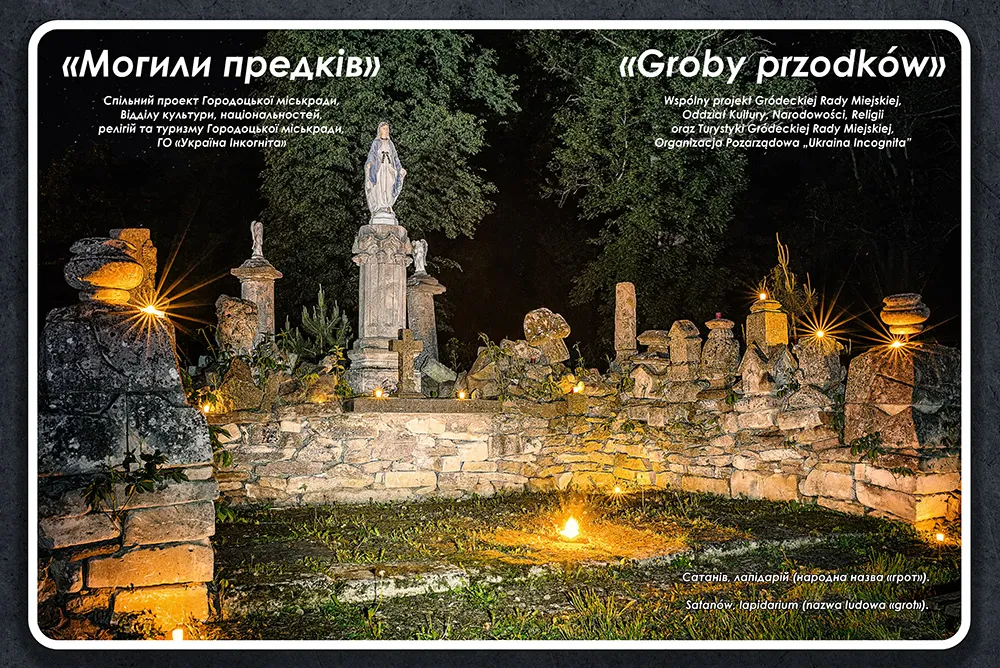
The project studies all the old cemeteries and burials outside cemeteries in the former Horodok district: Ukrainian, Polish and Jewish. Its aim is to study, preserve and popularize the multinational heritage of Podillia through the study of old necropolises. This contributes not only to a deeper understanding of the region’s past, but also to peace and harmony between nations, by revealing the culture of neighbouring peoples.
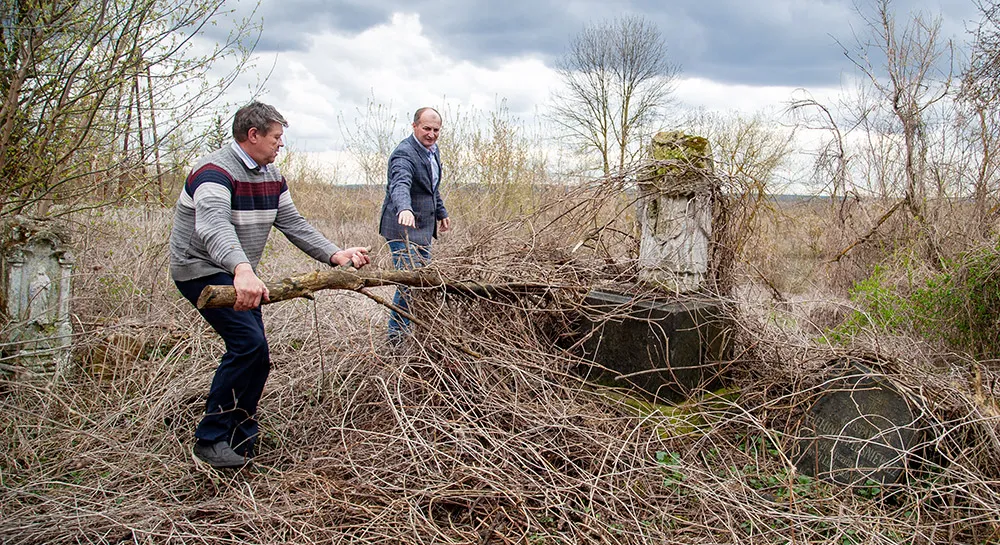
Valentyn Nyshchyi and Oleh Fedorov clean a monument for photographic documentation.
To date, more than forty necropolises and burials outside cemeteries have been surveyed, covering the period from the late 16th to the early 20th century. A number of unique discoveries have been made. In particular:
- A matzevah from the early 17th century was found with the oldest depiction of the Western Wall in Jerusalem in Ukraine (and possibly in Europe).
- A burial outside a cemetery (in a peasant’s vegetable garden) was found, belonging to a mixed Ukrainian-Polish family who died during the epidemic of 1770–1771. It is an archaic “Cossack” cross with inscriptions in Church Slavonic and Polish, containing not only an epitaph but also unique testimony about the political and religious situation of the time. There are no analogues to this monument in Ukraine.
The results of the expeditions have been covered in more than fifty publications in regional, national and foreign media. Three photo exhibitions have been created: a Jewish one, an international one (covering all types of necropolises) and a Roman Catholic one, which is the one presented in Sochaczew.
Interestingly, the exhibition includes photographs of both Polish and Ukrainian cemeteries. This is explained by Oleh Fedorov, head of the Department of Culture of the Horodok City Council:
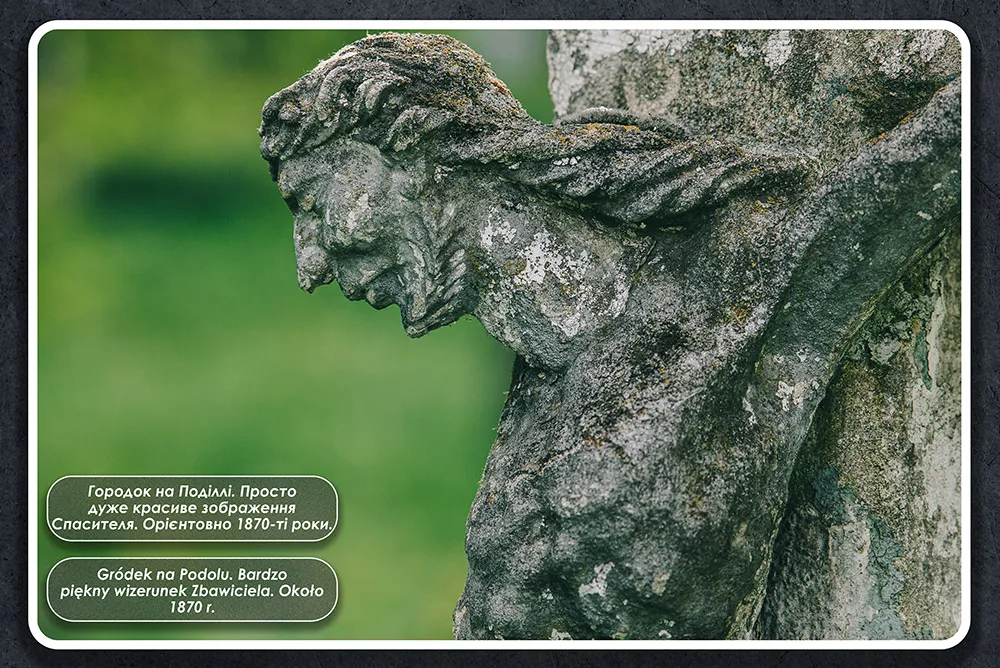
“The national cultures of Podillia did not develop in a vacuum,” the researcher says. “Each culture absorbed something from others and, at the same time, influenced its neighbours. For example, in Horodok we have an 18th-century matzevah decorated with a heraldic Polish eagle, probably copied from a coin. And in the Orthodox cemetery in the village of Kumaniv there are stone crosses with Roman Catholic symbols. And vice versa: in Sataniv, in the Polish cemetery, we found crosses made in the Ukrainian Orthodox tradition but with Polish epitaphs. One such cross, with two nails in the Saviour’s feet, is shown on the exhibition poster. Although in the Catholic tradition there should be one.”
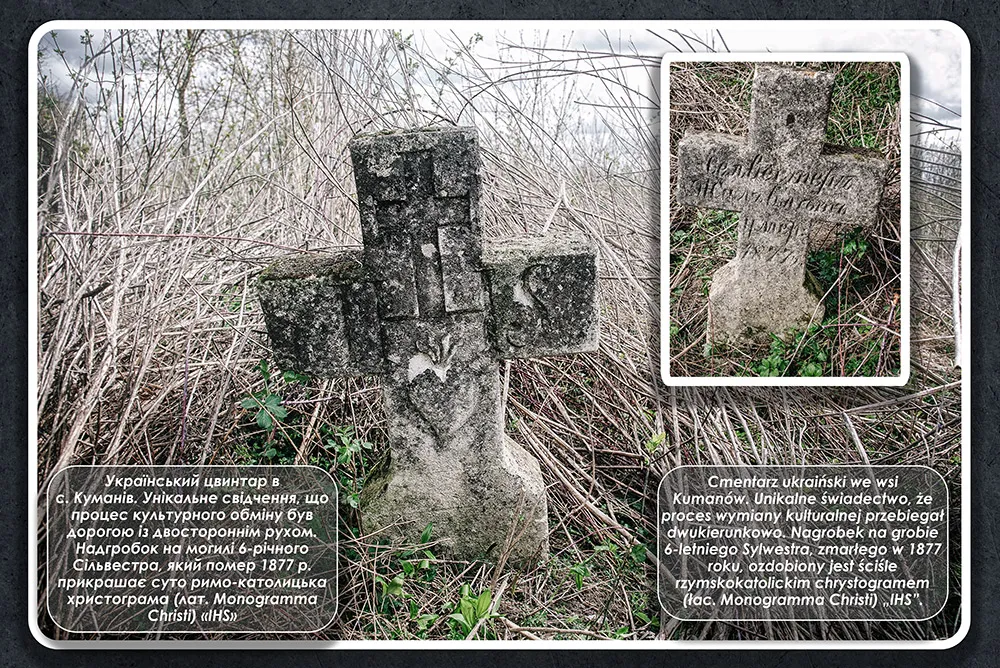
A cross from Kumaniv
The history of “Ukrainian-Polish” 19th-century gravestones is commented on by Dmytro Poliukhovych, the project coordinator from the NGO “Ukraine Incognita”:
“The fact that Ukrainians had no problem using gravestones in the Polish “design”, and Poles in the Ukrainian one, clearly testifies to the absence of religious or national hostility. People bought ready-made monuments from craftsmen and did not worry about their “non-canonical” nature. Because the Saviour is one for all. If relations between the communities had been even slightly hostile at the time, we would not see such tolerance. In reality, Ukrainians and Poles lived in harmony here. And it is important to emphasize this today,” the researcher stresses.
The photo exhibition is a gift from Horodok to its twin town of Sochaczew. The towns have had twinning ties for over three decades. The exhibition not only shows an interesting facet of the history of the Horodok area, but also demonstrates respect for the Polish component of the region, strengthening Ukrainian-Polish friendship.
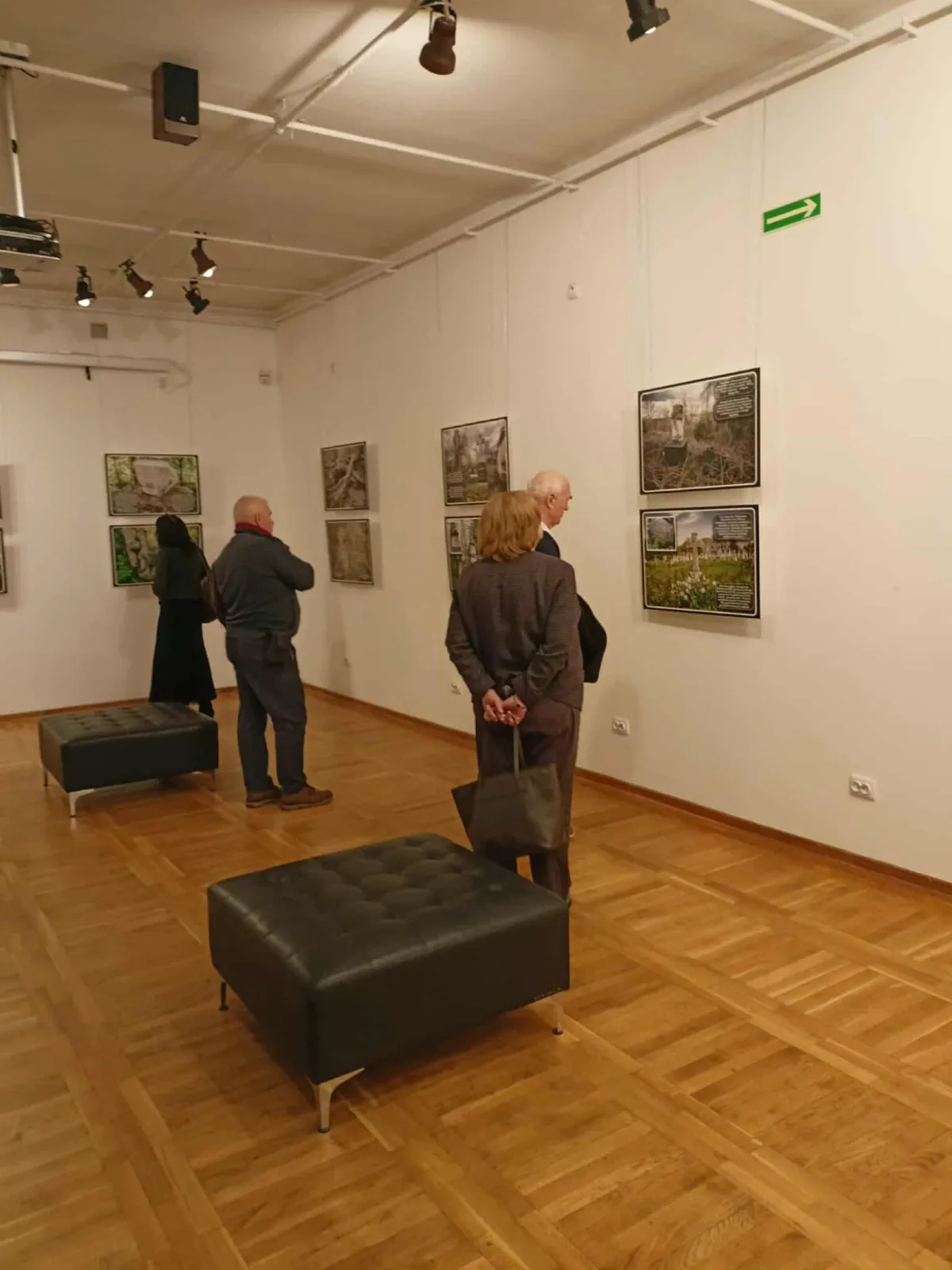
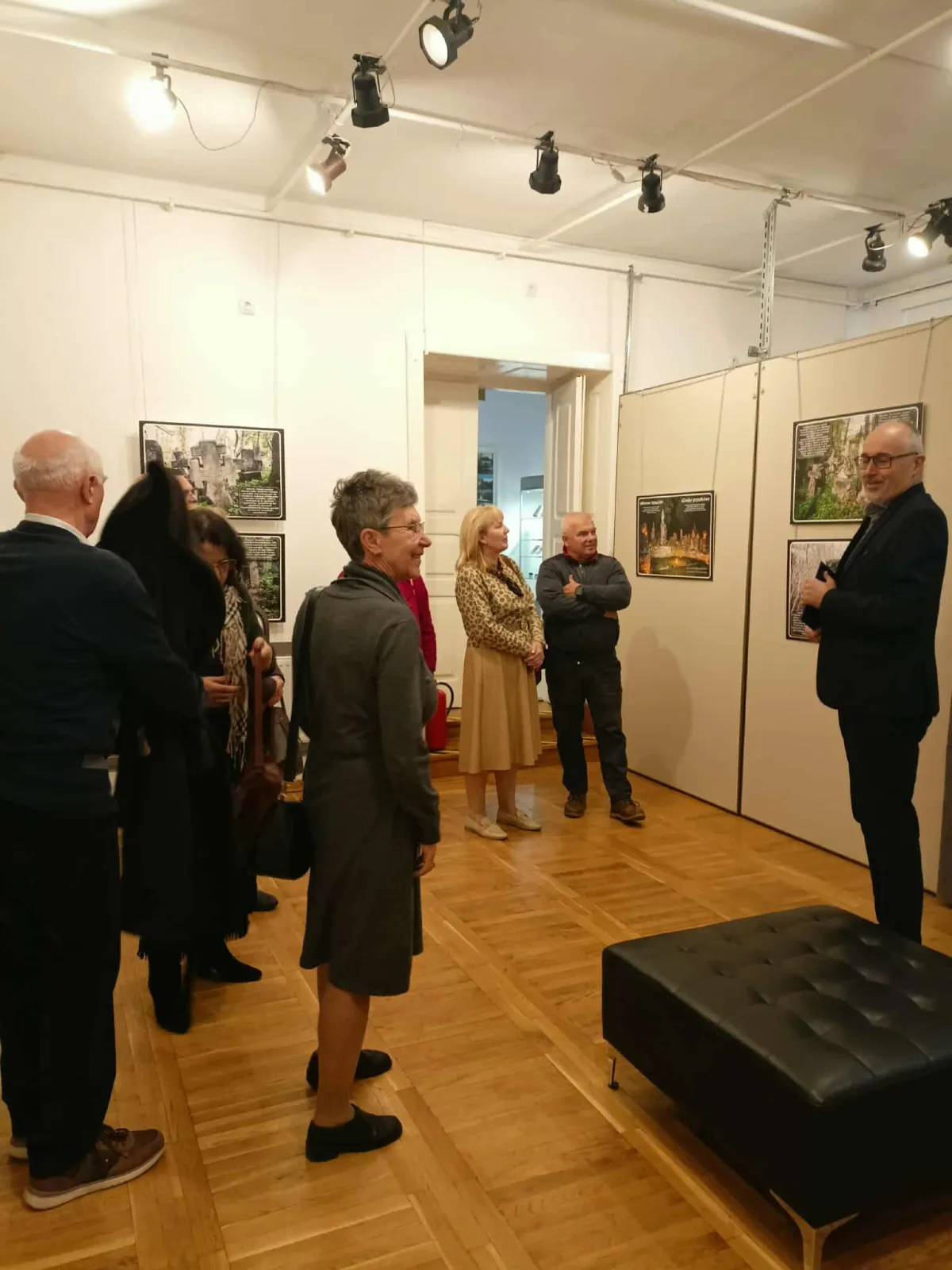
Radosław Jarosiński, director of the Museum of the Sochaczew Region and the Battle of the Bzura, spoke highly of the exhibition:
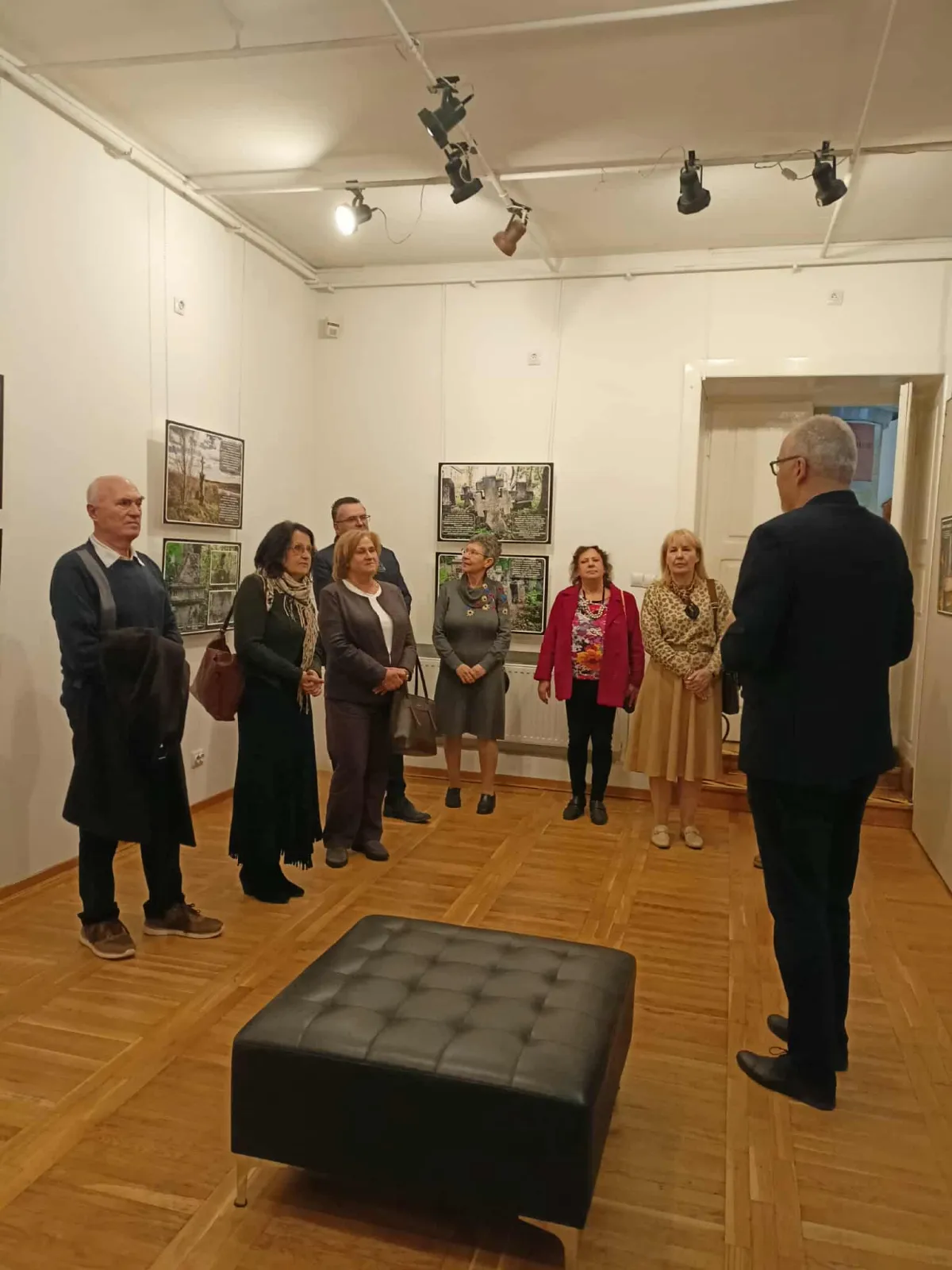
“The exhibition presented in Sochaczew not only demonstrates examples of fine sepulchral art (the art of arranging burial places and cemeteries – ed.), but also bears witness to a history that is the heritage of two nations, Polish and Ukrainian,” says Radosław Jarosiński, director of the Museum of the Sochaczew Region and the Battle of the Bzura. “Abandoned and neglected cemeteries, including Polish ones, drew the attention of a team of Ukrainian researchers who did extraordinary work: they documented and analysed a huge number of gravestones scattered across cemeteries where Poles are buried. Their work is not just a scholarly matter; it is an incredibly valuable, friendly gesture towards their past and present neighbours, whose heritage they have decided to preserve,” the Polish museum professional says of the project.
The exhibition in Sochaczew will be on display for several more months. Anyone who visits the town will be able to see it.
The “Graves of the Ancestors” project continues. A new expedition is planned for the near future:
“Recently we learned of three old stone crosses standing in one of the forest tracts,” says Dmytro Poliukhovych. “They are probably burials of victims of epidemics: either the plague of the 18th century or the cholera of 1830–1831. We need to find out. Perhaps there was once a farmstead there whose inhabitants were wiped out by disease. It cannot be ruled out that they may be evidence of ancient wars.”
This ambitious project, which long ago reached the international level, is carried out on an entirely voluntary basis by four enthusiasts: Oleh Fedorov, Dmytro Poliukhovych, Valentyn Nyshchyi and Ihor Motsnyi. Technical and organizational support is provided by the leadership of the Horodok urban territorial community.


