A historical route through Khmelnytskyi Oblast: from Sataniv to Kumaniv
We offer you a captivating weekend route that will take you into the heart of the history and culture of Khmelnytskyi Oblast. This route lets you not only enjoy the beauty of nature but also immerse yourself in the centuries-old history of the region.
Begin your journey in Sataniv, a town that has preserved monuments of medieval architecture, such as the old gate and the castle, known for their defensive history. Then head to Radkovytsia, where a unique old cemetery with stone crosses awaits you, striking in their detail. In Lisovody you will find the Zhurovskyi Palace, a majestic 18th-century building that has survived despite the passage of time.
Do not forget to visit Kamianka, Ivankivtsi and Kumaniv as well, small settlements that have preserved the atmosphere of past centuries and carry the mysteries of the history of Podillia. This route is a wonderful opportunity to see the best that Khmelnytskyi Oblast has to offer and to feel the spirit of ancient times.
Sataniv
Sataniv is a Podillian town known as a climatic and balneological resort, located on the left bank of the Zbruch, in the Podilski Tovtry National Nature Park. This ancient settlement, although it has a sinister name unconnected with otherworldly forces, is quite picturesque and rich in historical monuments.
One of the possible versions of the town’s name is a legend that in the year 105 the Roman legion of Tonilius, having stopped on the bank, asked: “Sat an non?” (Shall we stop or not?), to which the soldiers answered “Sat!”. However, another version is linked with the pagan past of these lands.
The first mention of the town dates from 1404, when the Polish king Jogaila gave Sataniv to Piotr Szafraniec. He was to reside permanently on the estates and defend the land from external threats. In 1431 the territory passed to the Podolian voivode Piotr Odrowąż, who began building a castle for defence against the Tatars. The oldest part of the castle, the Odrowąż Tower, has survived to this day. Later, for 100 years, part of the castle was used for the needs of a sugar factory.
What to see:
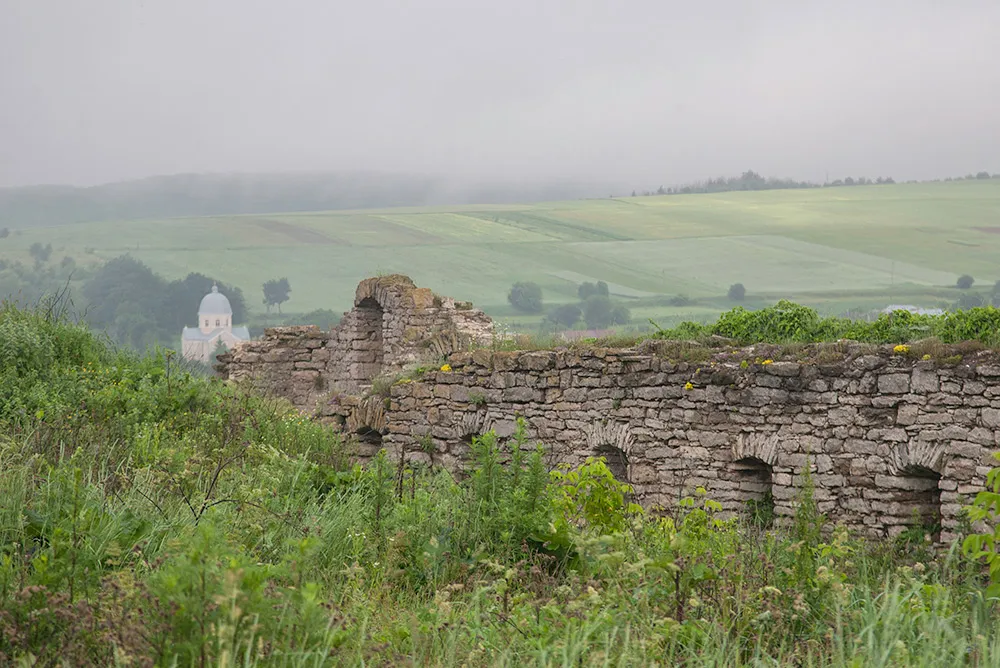
The remains of Sataniv Castle, an architectural monument of national significance, stand on a hill above the Zbruch River. The fortress still impresses with its grandeur and impregnability, especially from the river side.
Synagogue
The synagogue, built in the 16th century, is one of the oldest in Eastern Europe. After restoration by the Jewish community in the early 2000s it became a modern architectural work, combining Gothic and Renaissance elements.
A special atmosphere is added to the town by the Jewish cemetery, which belonged to the largest community in Podillia. This place is considered an open-air museum, where every gravestone carving is a true work of art, with unique symbols of deep meaning.
City gate
The city gate, built in the 15th century, served as the entrance to the town and as a customs house. In 1724 it was restored after damage. It is adorned with an inscription praising the rebuilding of the structure as a defence against Tatar attacks.
Holy Trinity Monastery and the underground church
The monastery, founded in the 9th century, is an important spiritual and tourist site. The restored Holy Trinity Church was built in 1600 on the site of a wooden church, and the monastery itself had the status of a lavra in the 16th century.
Kamianka
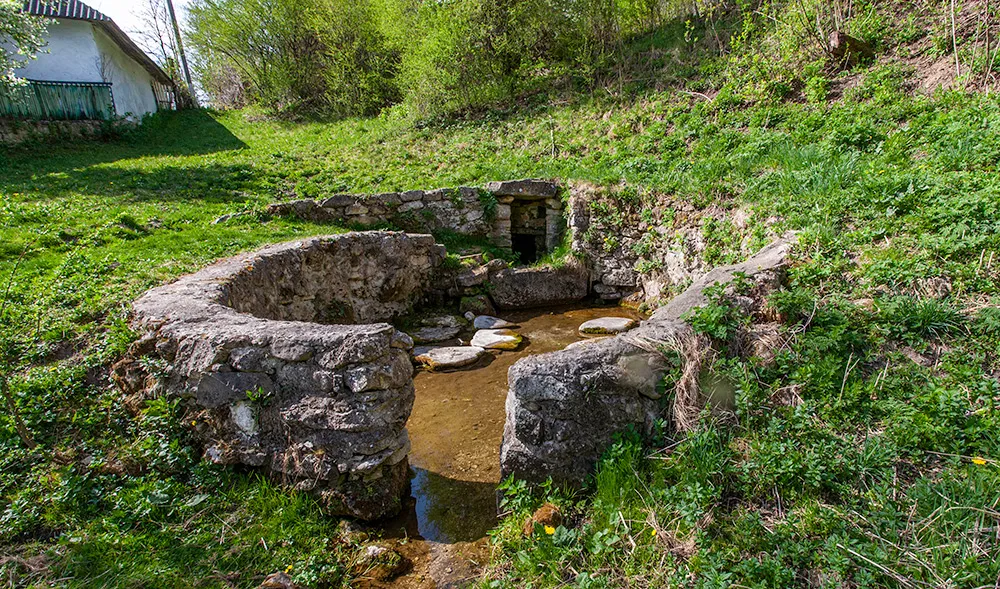
The Armenian spring in Kamianka
On the south-eastern outskirts of the village stands an interesting structure that locals call the “voit’s stone house” or the “Armenian spring”. It is a stone building surrounding a powerful spring at the foot of a hill, which forms a stream flowing into the Shondrova (Shmaivka) River. The spring is located in a small stone hut, and next to it is a pool with an even stone bottom, on which large flat boulders are scattered. This place, known as the “pralo” (washing place), was once used for washing clothes, and the stones became smooth after centuries of use.
Ivankivtsi
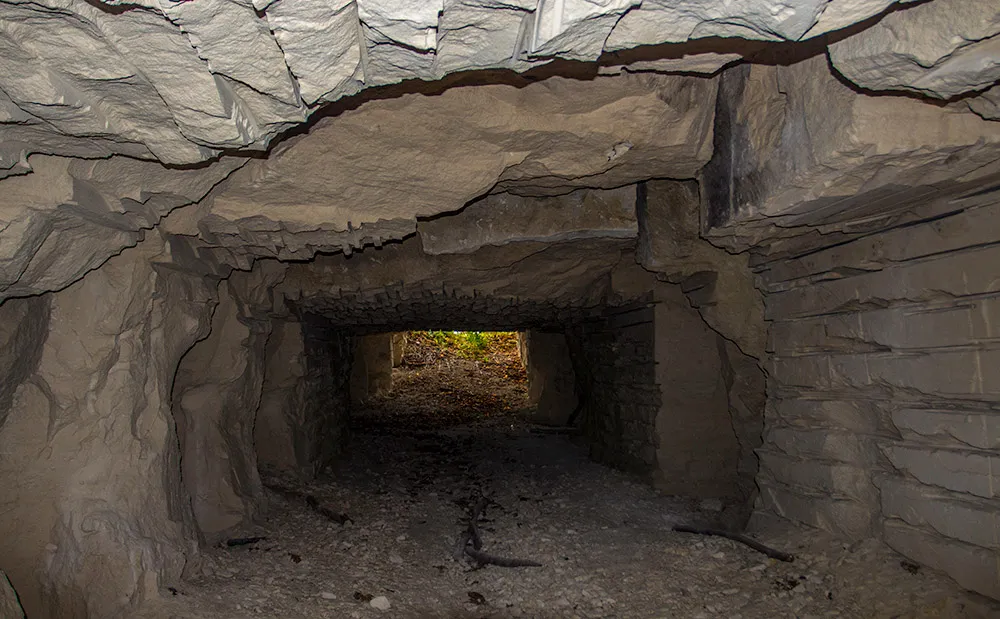
These underground adits are among the largest man-made underground workings in Khmelnytskyi Oblast. At first the stone was quarried in the open, creating a two-tiered amphitheatre that can still be seen. The stone was supplied to the sugar refinery in Sataniv for bleaching sugar.
From the mid-1950s the stone began to be extracted underground. Before that there may have been mini-adits for small-scale craft extraction. According to tradition, a UPA combat unit hid in these catacombs. The adits operated until the early 1970s, when they were closed because of their dangerous condition, but locals still sometimes visit them to extract stone. The total length of the underground passages is more than 20 km.
The entrance to the main adit is at the bottom of the old quarry. The central tunnel, about 250 to 300 m long, has numerous side branches. One of the tunnels leading north is interesting because the logs used to shore up the workings have survived. There is also a passage to the second level of the catacombs.
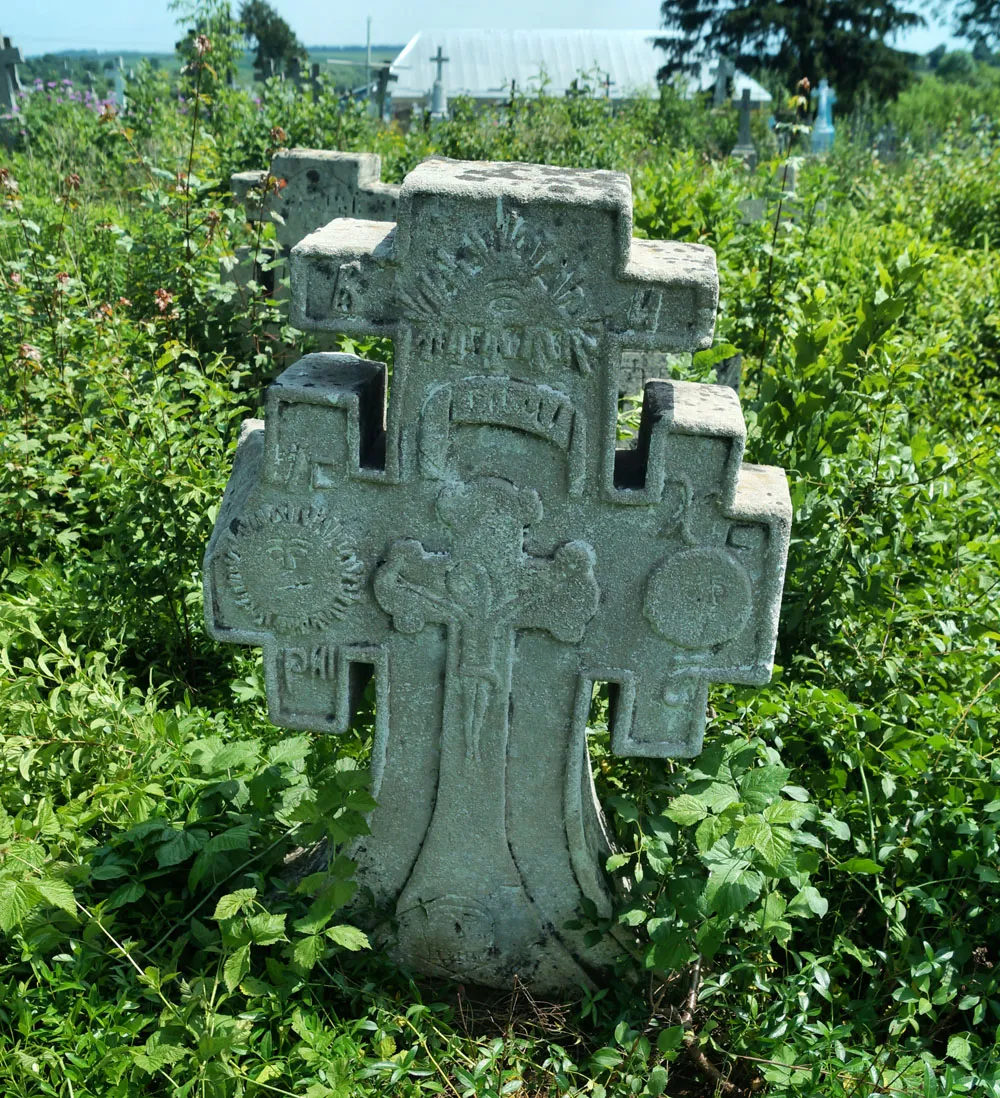
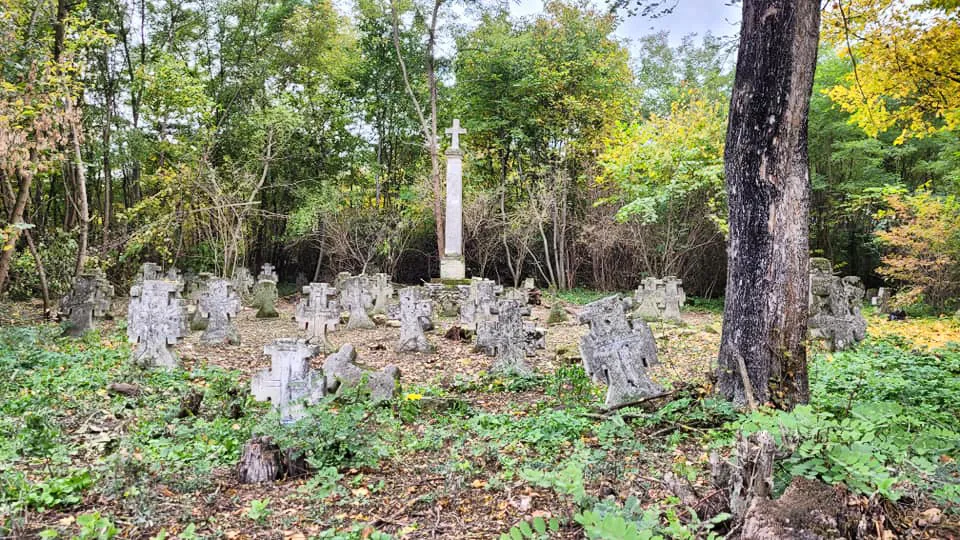
Judging by the epitaphs and dates on the crosses, the cemetery contains burials of the 18th and 19th centuries. The crosses are interesting because their lettering is rarely found in the Dnipro Ukraine and Black Sea regions, recalling the Catholic cemeteries of Galicia. They are of a cross-shaped type in which the arms carry separate small crosses, which is characteristic of the Cossack necropolises of the south but rarely occurs in Podillia.
These crosses probably came to us from Byzantium and Bulgaria and are not typical of the western lands.
Kumaniv
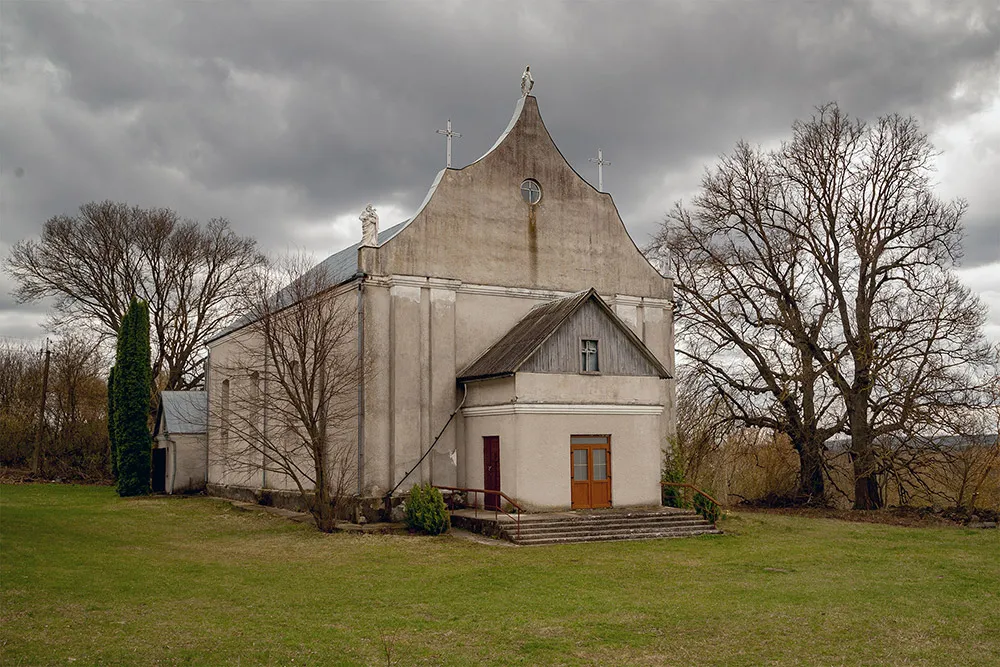
The Church of the Transfiguration (a Catholic kostel), on the top of a hill, was built around 1750 on the site of earlier structures, funded by the Stadnicki family. For a long time it was the centre of a large parish that united several surrounding villages.
After the territory was seized by the Russian Bolsheviks, the church suffered hardship: it was hostile to the occupying authorities because of its religious and Polish affiliation. The church was closed and used as a grain store, and later as a warehouse for agrochemicals.
Only after independence was the church returned to the faithful, and through the efforts of Fr. Władysław Wanags it was restored, although its rich architectural decoration could not be recovered because of the high cost and the lack of craftsmen.
Lisovody
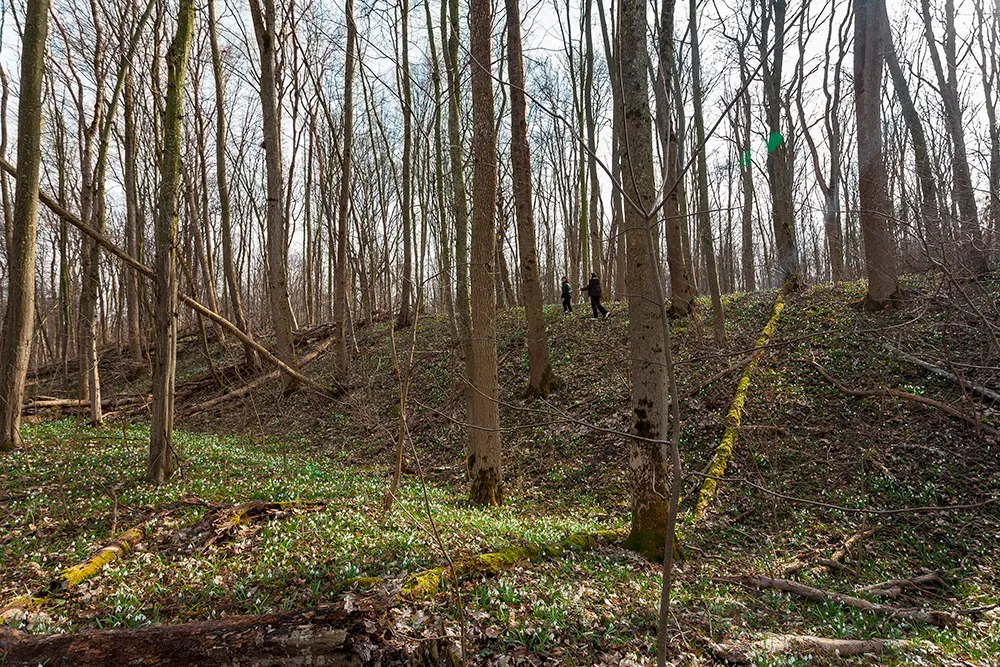
Trajan’s (or Troyan’s) Wall, stretching between the Smotrych and the Zbruch, is one of the largest and most enigmatic monuments of Khmelnytskyi Oblast. It runs through the villages of Sataniv, Zverkhivtsi, Borshchivka, Kreminna and Lisovody and on to the botanical reserve “Horodotska Dacha” between Horodok and Velyka Yaromyrka, covering more than 20 km. Although it is not the Great Wall of China, its significance is no less impressive.
The Zhurovskyi Palace in Lisovody
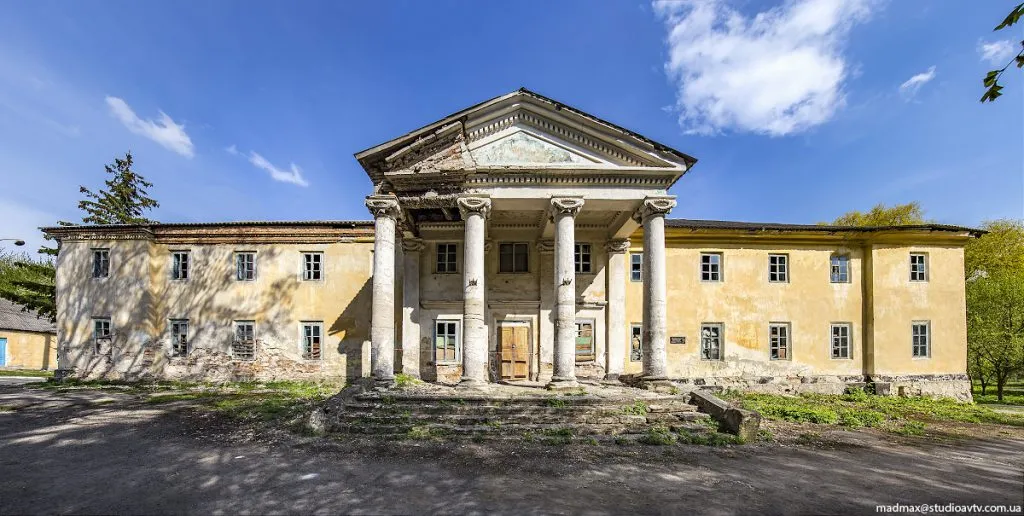
The main landmark of Lisovody is the half-ruined Zhurovskyi Palace. At first the village belonged to the Herburt family, but in 1675 Lisovody passed to the Stadnickis. The palace was built in the late 18th century by Ludwik Raciborowski, marshal of the nobility of the Kamianets district.
The palace had two storeys with a porch supported by four columns and a hipped shingle roof. The rear side was taller, with a terrace overlooking the park. The interiors were luxurious: parquet floors, fireplaces and tiled stoves. The palace had a large library, salons, a bedroom, a dining room and a ballroom.
Now the palace is in a neglected state on the grounds of a vocational school in Lisovody. The history of the palace is also linked with valuable objects, such as a crystal goblet given by the Polish king Stanisław August and a golden cup now kept by the Zhurovskyi heirs.
Radkovytsia
The old cemetery in Radkovytsia
The cemetery in Radkovytsia is famous for its large number of old crosses made of local limestone. Especially interesting are the cross-ended crosses with right-angled corners, characteristic of this part of Podillia. They are decorated with beautiful lettering and symbols such as the sun, the moon and the all-seeing eye.
At the end of your journey through Khmelnytskyi Oblast you will carry away vivid impressions of the historical and natural treasures of this land. From the majestic city gate and castle in Sataniv to the unique old cemetery in Radkovytsia, from the elegant Zhurovskyi Palace in Lisovody to the picturesque villages of Kamianka, Ivankivtsi and Kumaniv, every stop on this route reveals something new and unforgettable. Here history intertwines with the beauty of nature, giving an unforgettable journey through time and space.