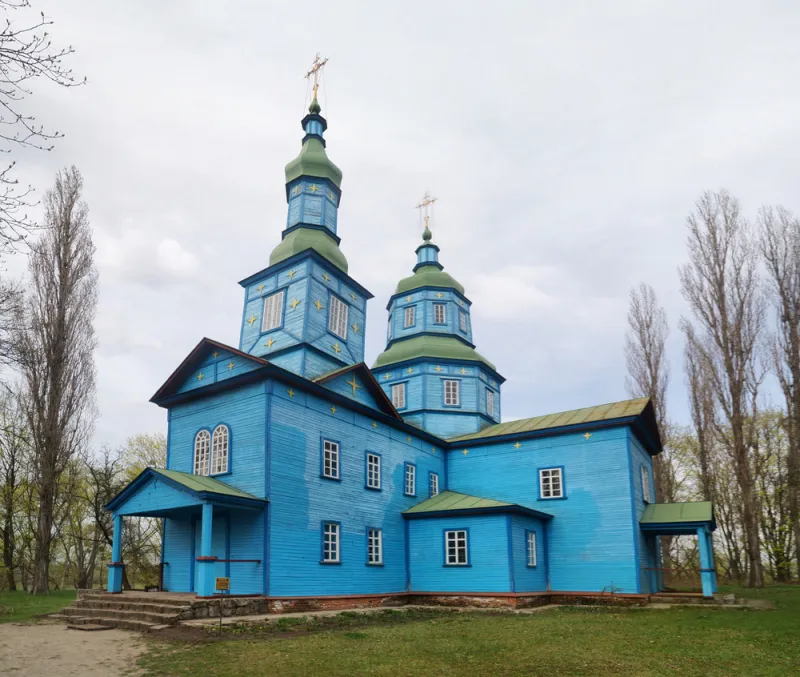
Krylos. Museum of Folk Architecture and Life of the Carpathian Foothills

· 2 min read
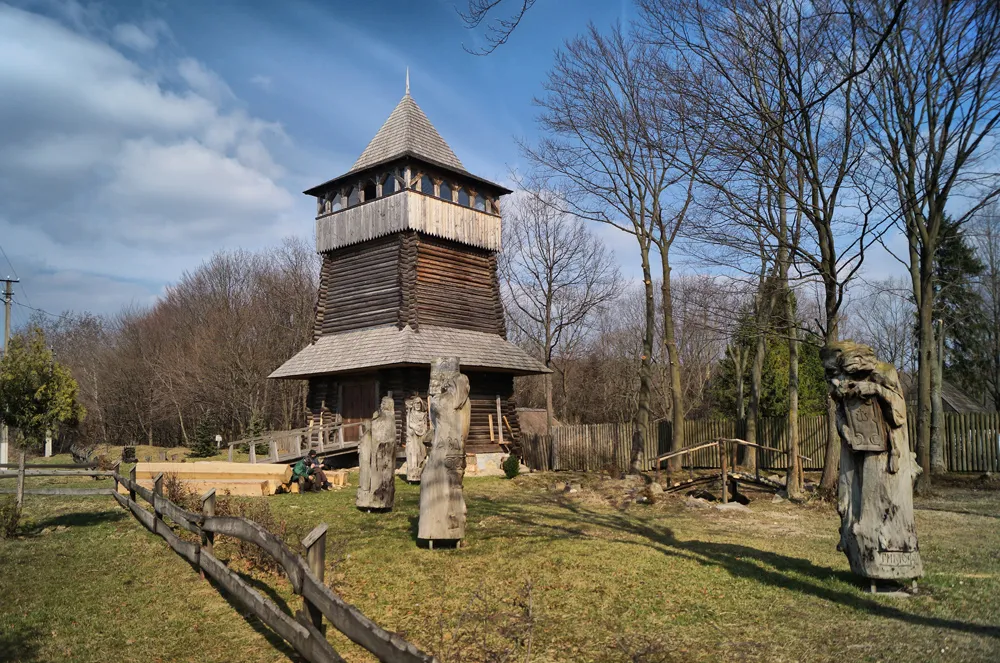
Krylos is an open-air museum in the village of Krylos (Halych district, Ivano-Frankivsk Oblast). It is part of the Ancient Halych National Reserve. The museum introduces visitors to the architecture and everyday life of the inhabitants of the Prykarpattia region from the end of the 17th to the early 20th century. It was founded in 1979.
The museum is located on the territory of an ancient hillfort, on the first line of the defensive ramparts, opposite the Prokalii Garden tract, by the H09 highway.
The museum covers 4.5 hectares. It contains four “micro-villages” representing the ethnographic regions of Prykarpattia: Pokuttia, the Hutsul region, the Boyko region and Opillia.
The museum’s exhibition includes a large collection of tableware (plates, mugs, jugs, pots), folk textiles, clothing, and Opillia embroidery (women’s and men’s shirts, tablecloths, sheets, folk dress).
The construction of a water mill, a Hutsul church, a fulling mill, an inn and an entrance tower is planned on the museum grounds.
Pokuttia
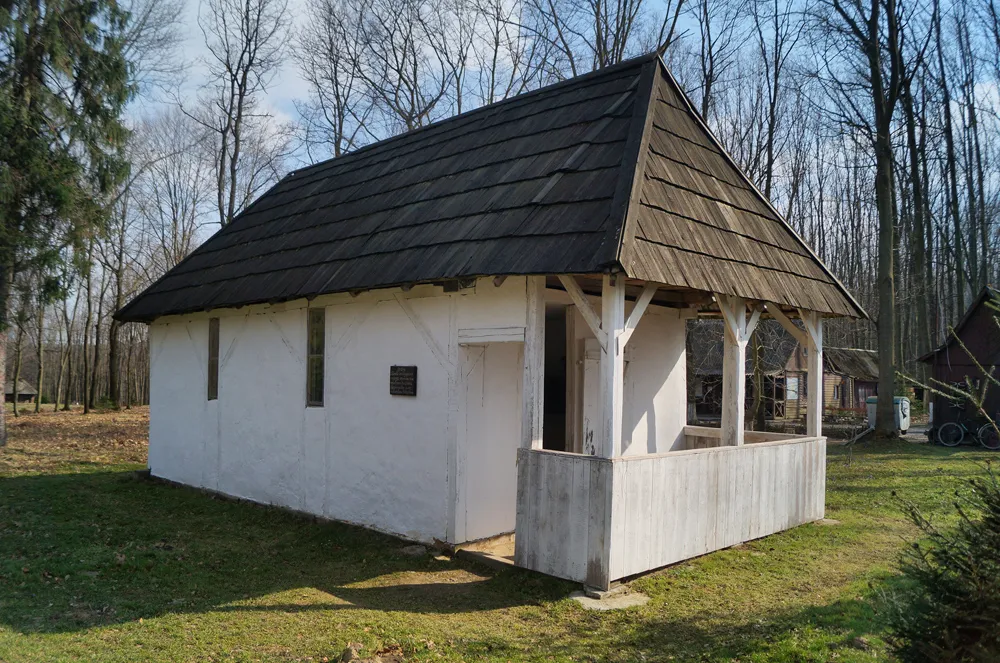
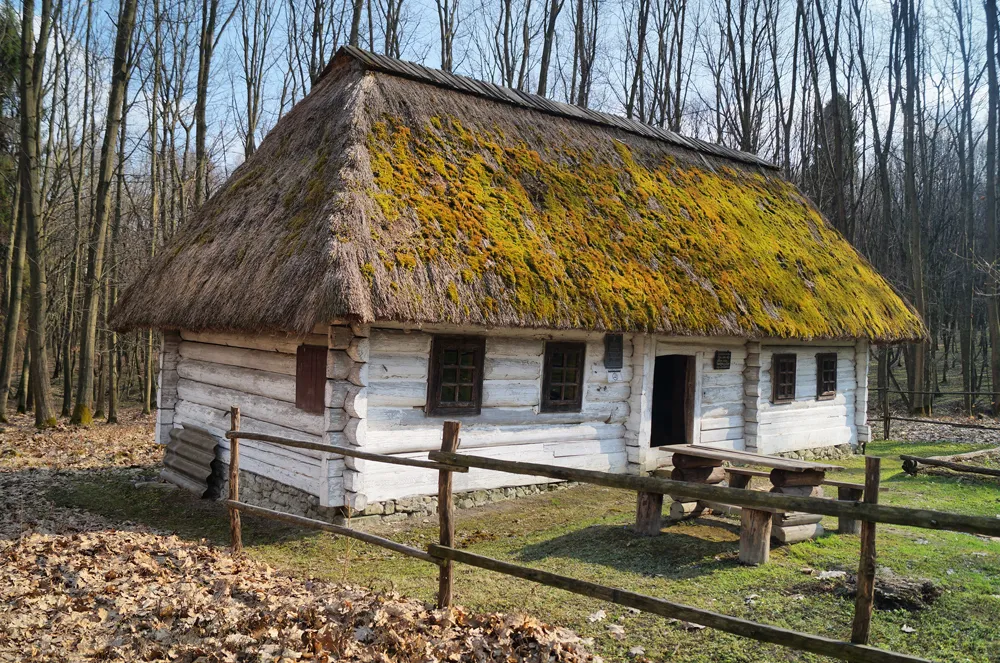
Pokuttia is represented by an oil mill and a Pokuttia house. The Pokuttia house (late 19th to early 20th century) was brought to the museum from the village of Torhovytsia in Horodenka district. The oil mill is a typical farm building, built at the end of the 19th century and moved from the village of Olesha in Tlumach district.
The Hutsul region
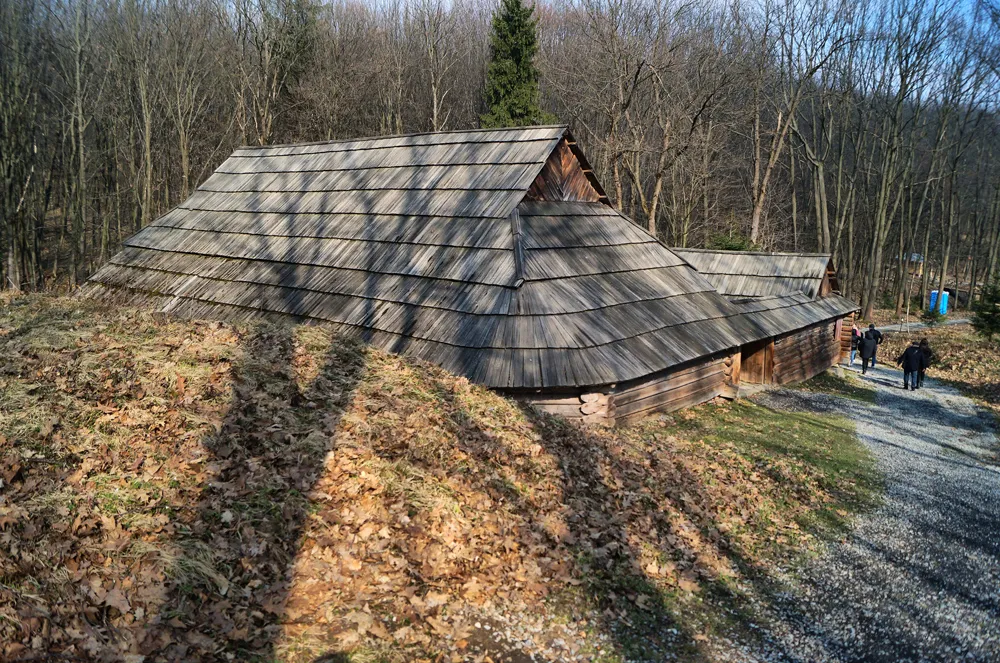
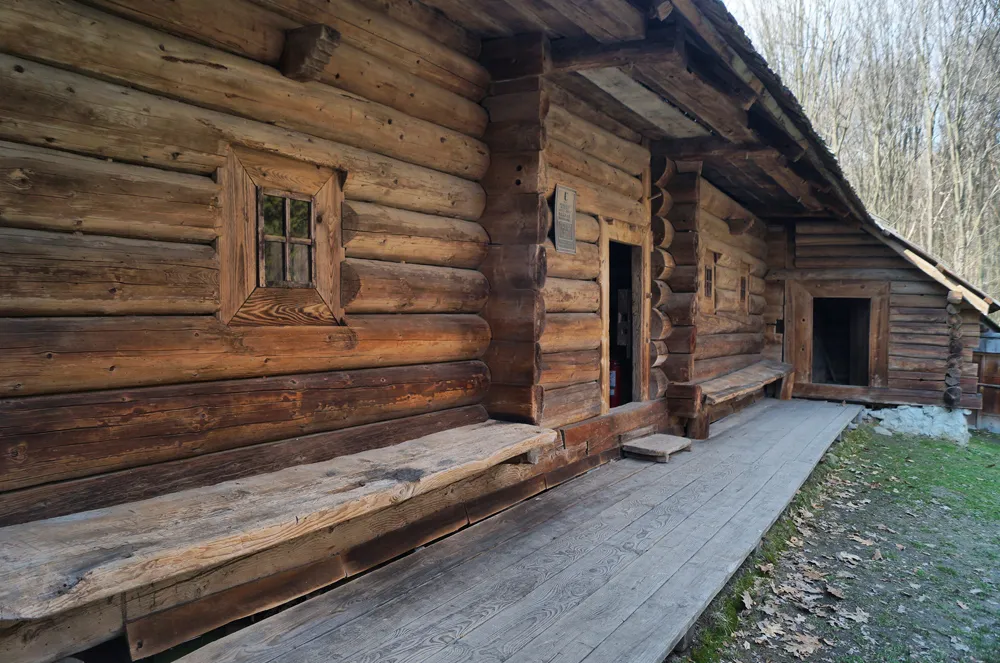
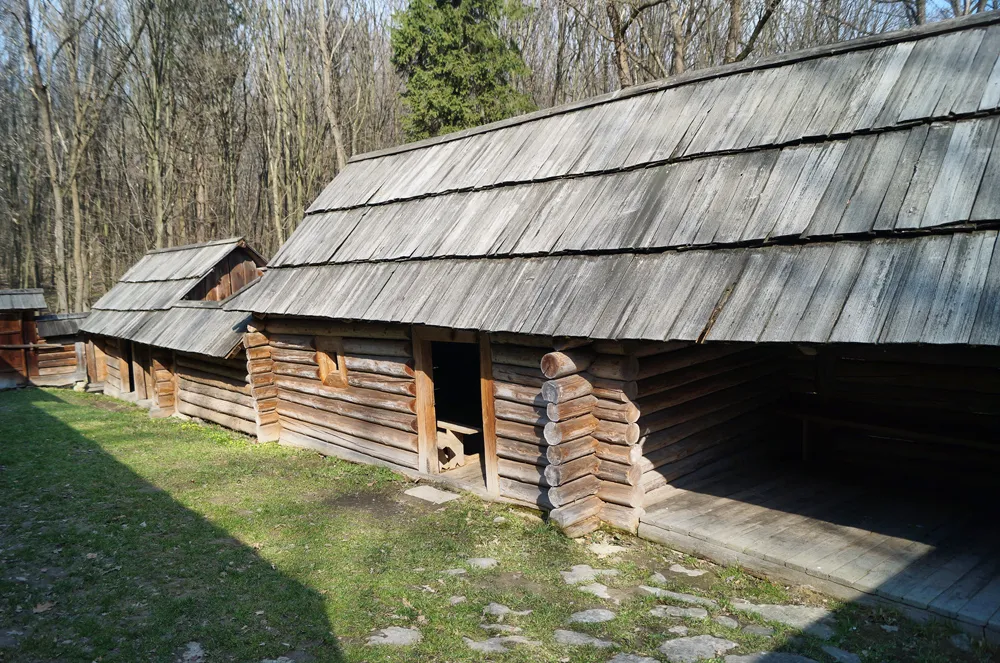
The Hutsul region is represented by two grazhdas from the village of Usteriky in Verkhovyna district (1889) and a Hutsul house.
A grazhda is a typical residential and farm complex of the local Hutsuls. It is a wooden architectural ensemble consisting of a dwelling house and a yard enclosed by a high wall with large gates. Besides serving as dwellings, grazhdas served the local inhabitants as a kind of fortress, where one could take shelter from wild animals, unwelcome guests and even from a snow avalanche.
The Boyko region
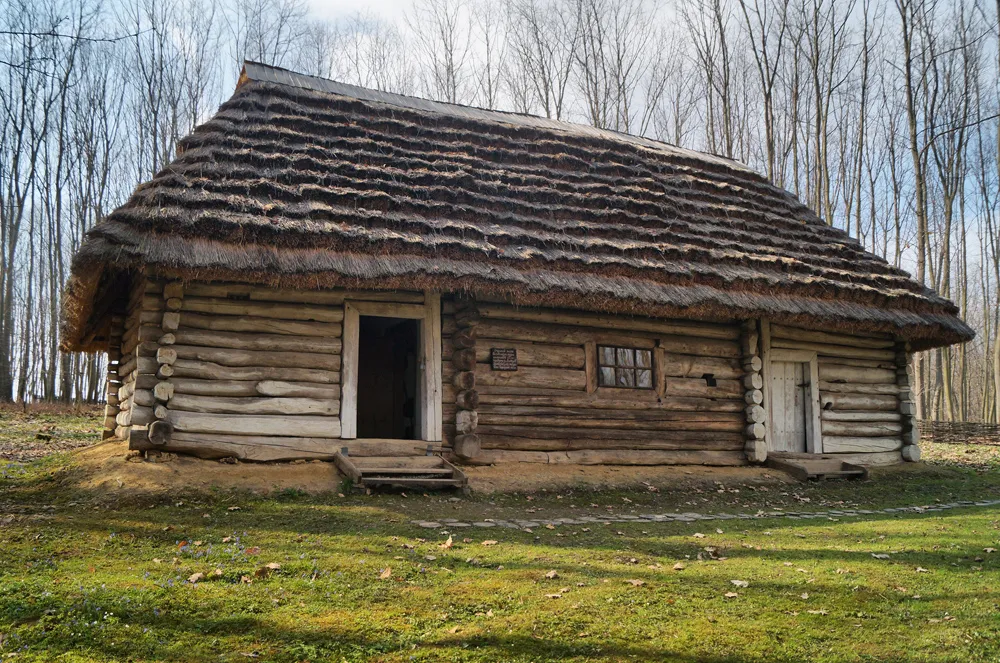
A Boyko smoke house (1787) was moved to the museum from the village of Polianytsia in Dolyna district. It is a three-room smoke house, the dwelling of a priest. Along with the living quarters, the house contained a church school and a workshop. Distaffs and spinning wheels are displayed in the workshop. The Boyko region is also represented by another, smaller house and a barn building.
Opillia
Opillia is represented by a house and a wooden church with a porch.
In the 17th-19th centuries the dwelling of the people of Opillia consisted of an entrance hall, a living room and a storeroom. The Opillia house was built in the middle of the 19th century and moved from the village of Viktoriv in Halych district.
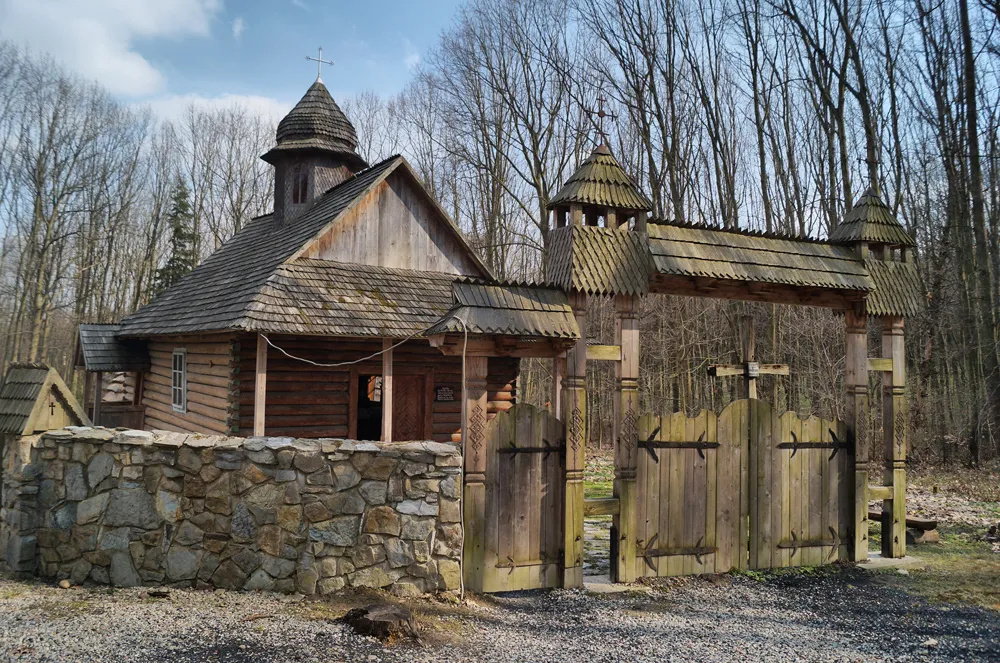
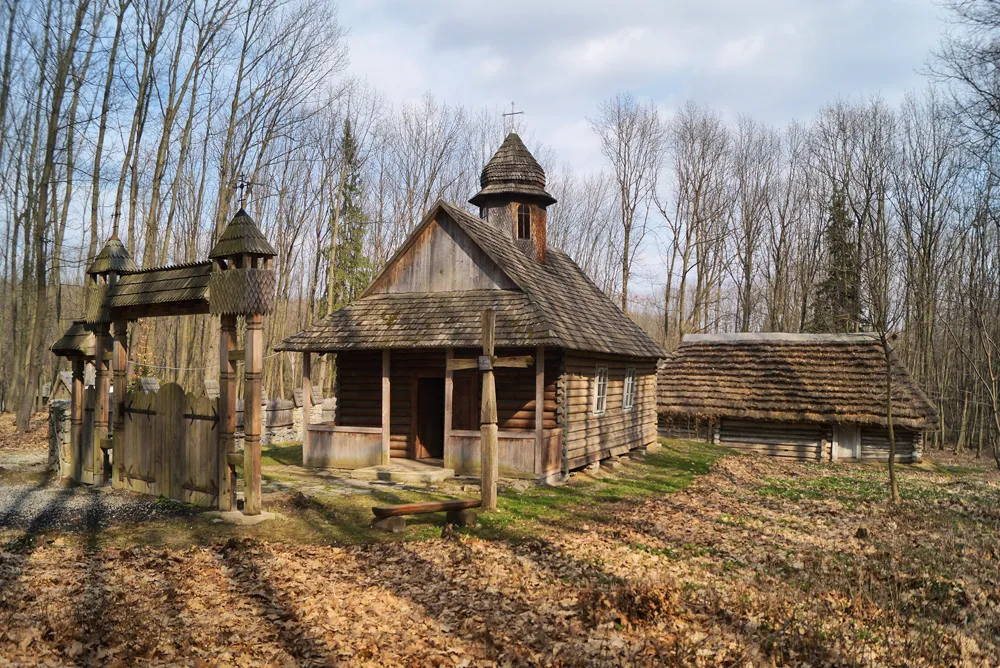
The wooden church of the early 20th century from the village of Poplavnyky in Halych district is the most interesting exhibit of the open-air museum.
Text from Wikipedia, photos by Roman Malenkov