Ivano-Frankivsk. The Armenian church

· 4 min read
Right after the founding of Stanisławów, two competing communities of merchants and craftsmen appeared in the Potockis’ town – Jews and Armenians. The history of the building I want to talk about is linked to both of these communities. So in 1663, a year after the town was founded, the Armenians built their first church. It was wooden and stood for almost a hundred years.
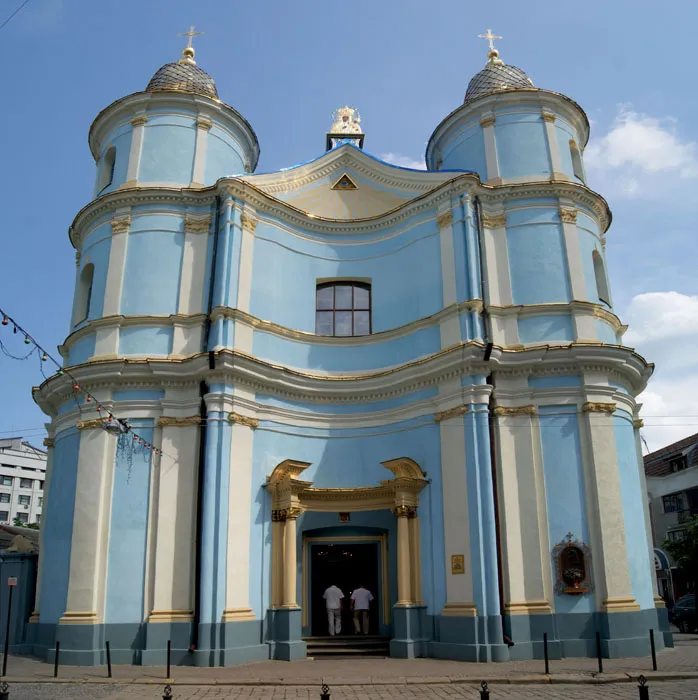
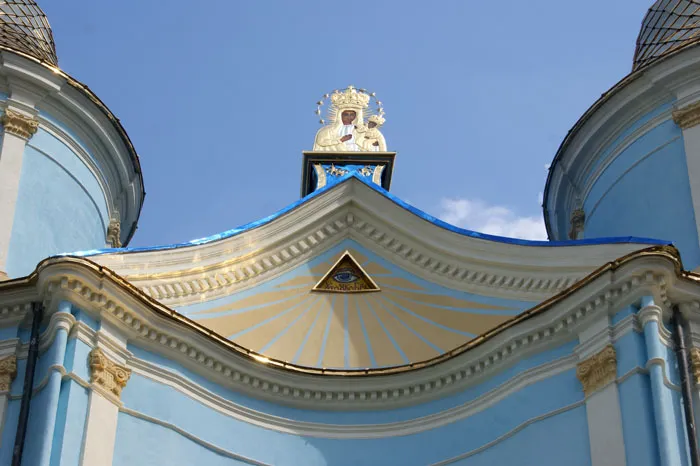
Photos from 2012 (in them the church is blue)
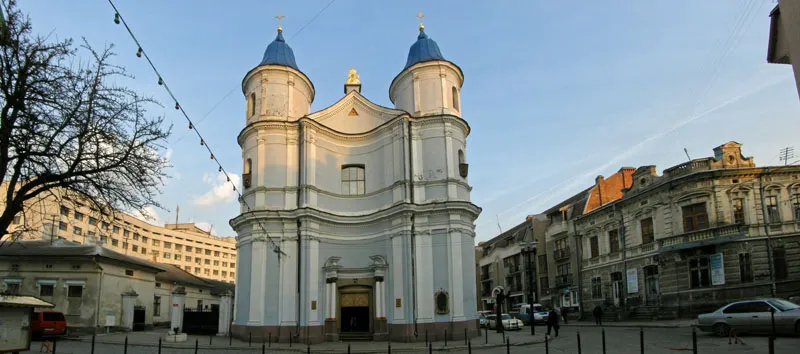
Photo from 2011 (the church is of an indeterminate light colour)
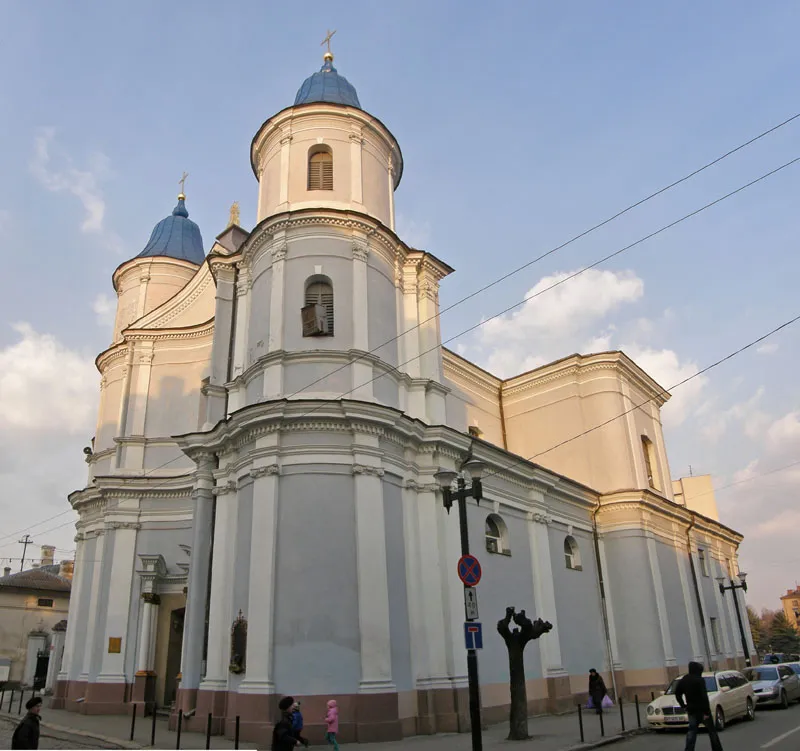
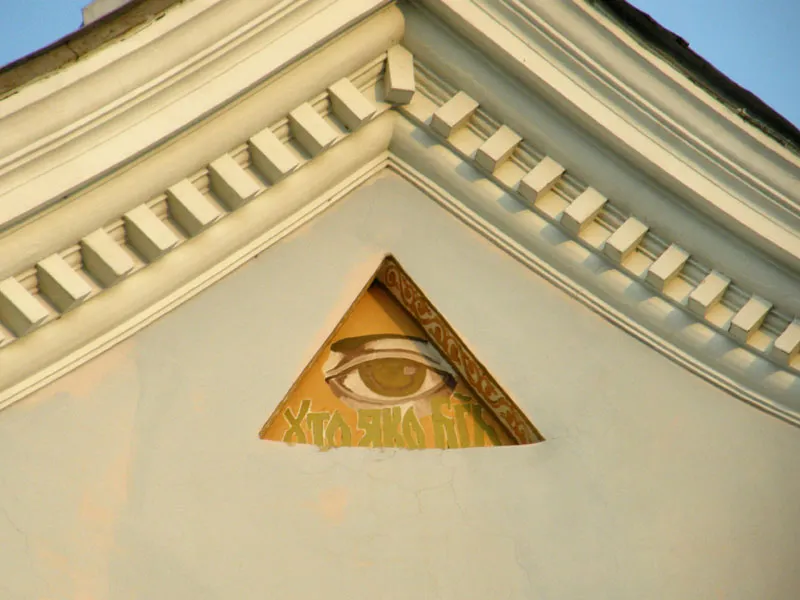
In the mid-18th century the Armenians played a significant role in the life of Stanisławów and occupied an entire quarter. They wanted to have their own large masonry church, and it was founded in 1743. The foundation stone was laid by the owner of the town, Grand Crown Hetman Józef Potocki, but he issued the official permission for construction only in 1748, and the building of the walls began five years later still – the cause of it all was a lack of funds. To make up for the shortfall Potocki issued a universal that forced the Jewish community to pay 1,000 zloty annually towards the construction of the Armenian church. And they paid, though not always the full sum and not always on time – although it is strange that they agreed to do so at all. It is unknown what leverage Potocki used, but the Jews financed the construction of the Cathedral of the Immaculate Conception of the Virgin Mary of the Armenian community. Construction lasted until 1763 – 20 years passed from the laying of the foundation stone. The murals of the church were painted by the well-known Polish artist Jan Sołecki.
The church was built in the European Baroque style and was even called a model of this style. The miraculous icon of the Mother of God was transferred here from the old church. It was a true holy relic for the Armenian community – it was copied from the Częstochowa icon, and for a hundred years it worked miracles and healed the faithful.
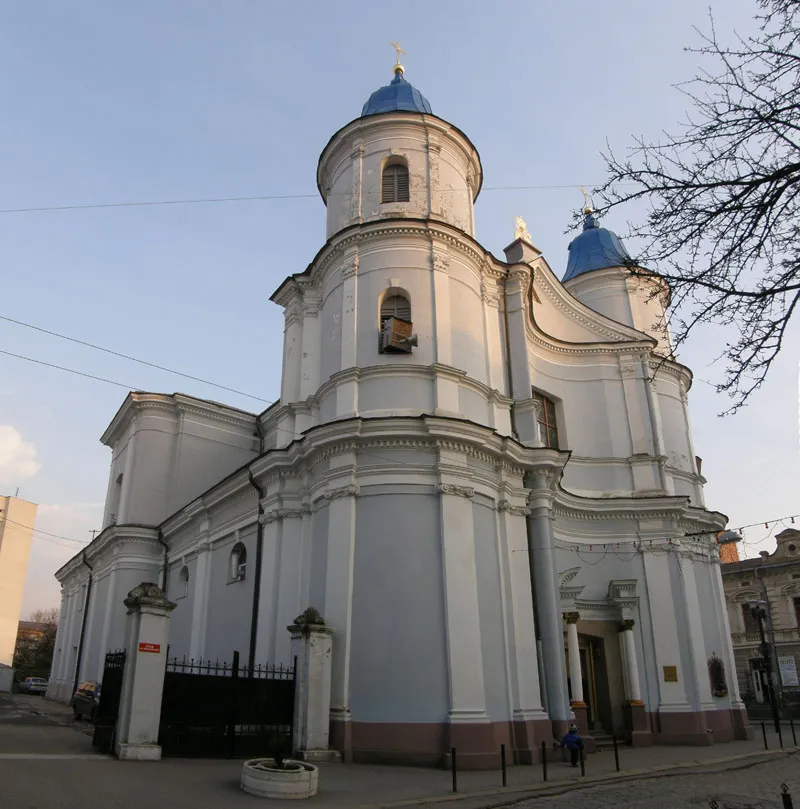
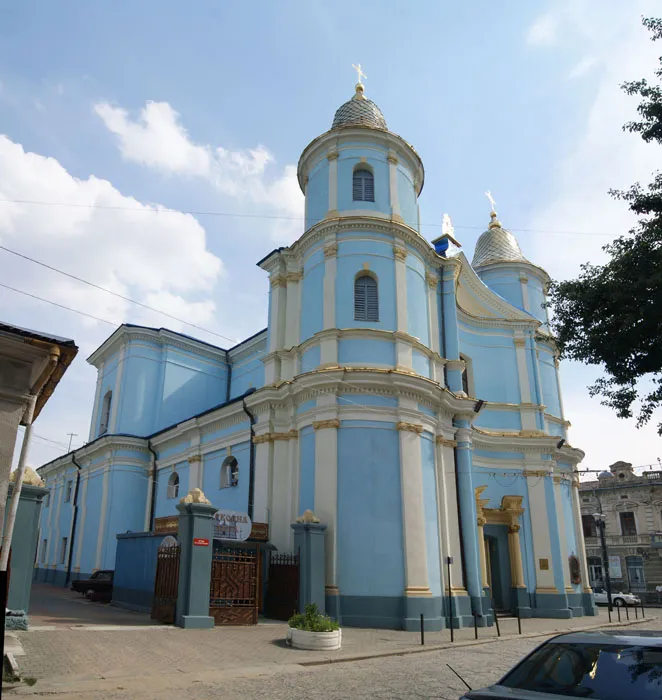
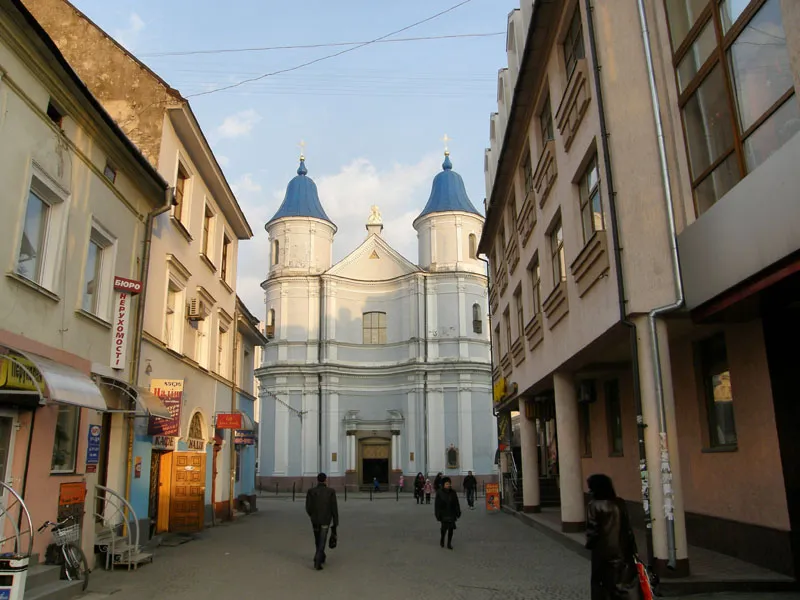
After the partition of Poland and the establishment of Austro-Hungarian rule, the Armenians began to move en masse to Hungary; very few of them were left in Stanisławów and the church had to be closed. From 1811 to 1826 it stood shut and gradually decayed. Then things went a little better, because a new parish priest, Antoni Borkowski, came to look after the church. This man was so active that in 1829 he was even able to carry out some restoration of the building.
In 1868 a terrible fire broke out in the city centre, where most buildings at that time were wooden. It was called the “marmalade fire”, because according to legend its source was boiling marmalade belonging to one of the cooks. In this fire the Baroque helmet-shaped tops of the Armenian church burned down and were replaced with new, bell-shaped ones. It is precisely these tops that now distinguish the Armenian church from hundreds of other Baroque buildings of Western Ukraine.
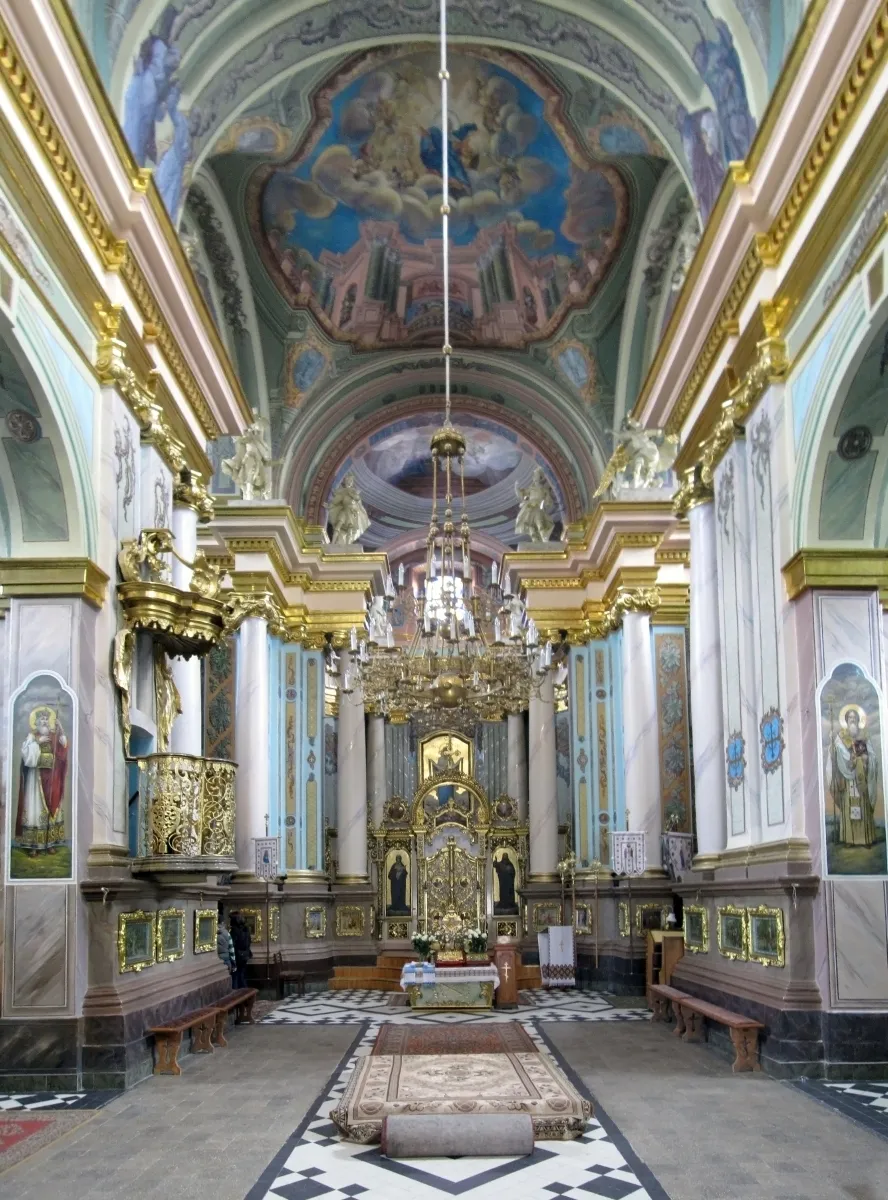
Interior of the church. Photo from Wikipedia
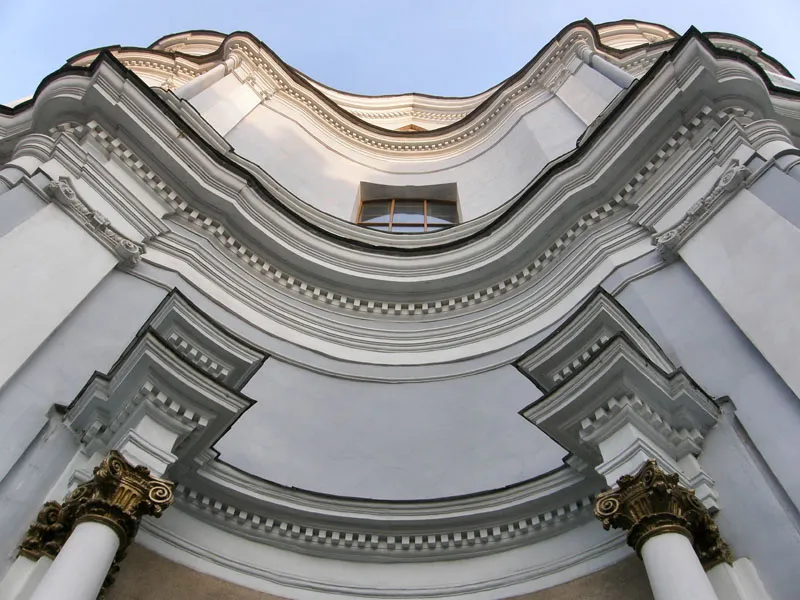
During the First World War the church suffered some destruction from German shells that were aimed at a Russian detachment stationed in the churchyard – the façade was damaged and the roof was pierced in many places. Then, until 1930, restoration work was carried out.
In 1937 the miraculous icon of the Mother of God was crowned. In 1946, after the arrival of Soviet power, the icon was taken to Poland, and it is now kept in Gdańsk. The Armenian cathedral was given to the Russian Orthodox Church, but in 1949 they too were driven out of here – artists’ studios were installed in it.
From 1971 the building of the church housed a museum of religion and atheism.
Today the Armenian cathedral can be called a former one, since it is now the Cathedral of the Intercession of the Ukrainian Autocephalous Church. Not long ago the restoration of the church was completed. In Frankivsk it is often called the “blue church”. They say that unique murals by Jan Sołecki have survived inside. And I would add that the Armenian church in Ivano-Frankivsk is probably the largest of the Armenian churches of Ukraine.
Text and photos by Roman Malenkov, Serhii Shcherbii