

The fairy-tale lime trees of Kuiava

· 3 min read
Some fifteen kilometres from the former district centre of Yarmolyntsi (Khmelnytskyi Oblast) lies the village of Sosnivka, which in the past was the small town of Kuiava. Getting here is not all that hard – the roads are relatively decent. However, so that life should not seem a bed of roses, the last 2–3 kilometres await the traveller with horrors of shattered cobblestones.
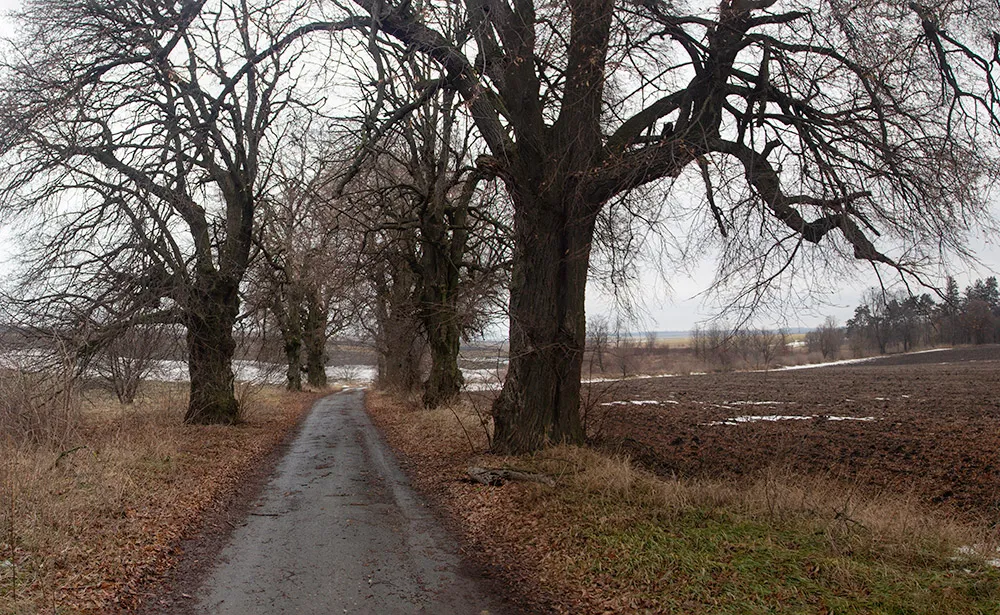
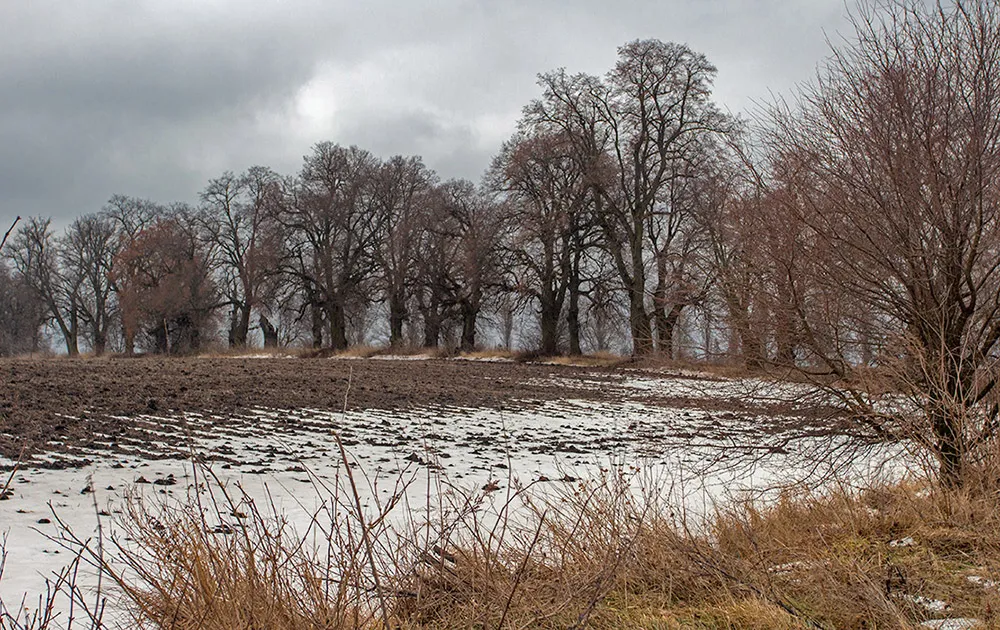
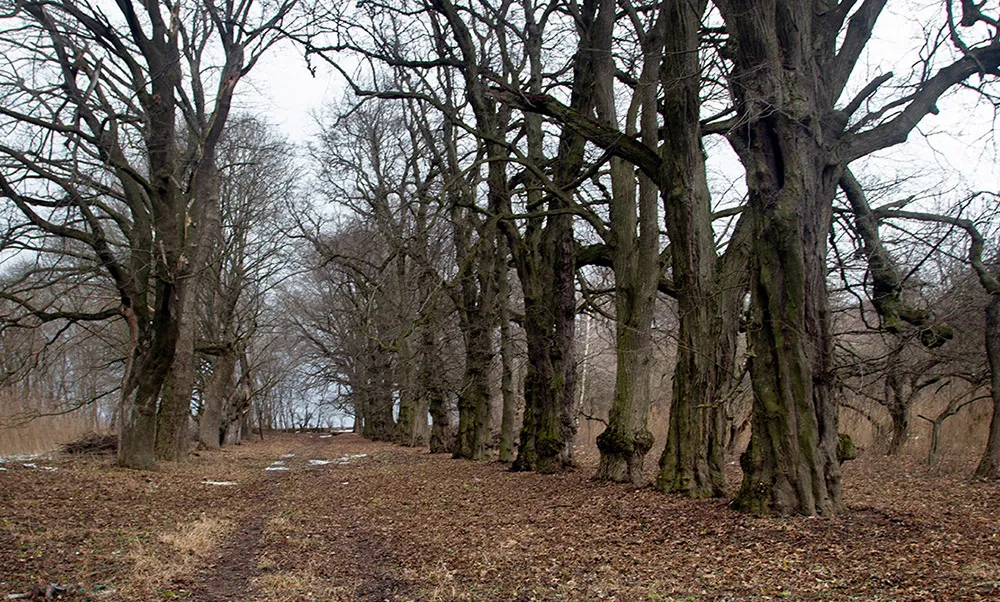
Sosnivka itself can actually be ignored – a few hundred metres before reaching the edge of the village you need to dive onto a side road lined on both sides with twisted, sometimes ancient lime trees.
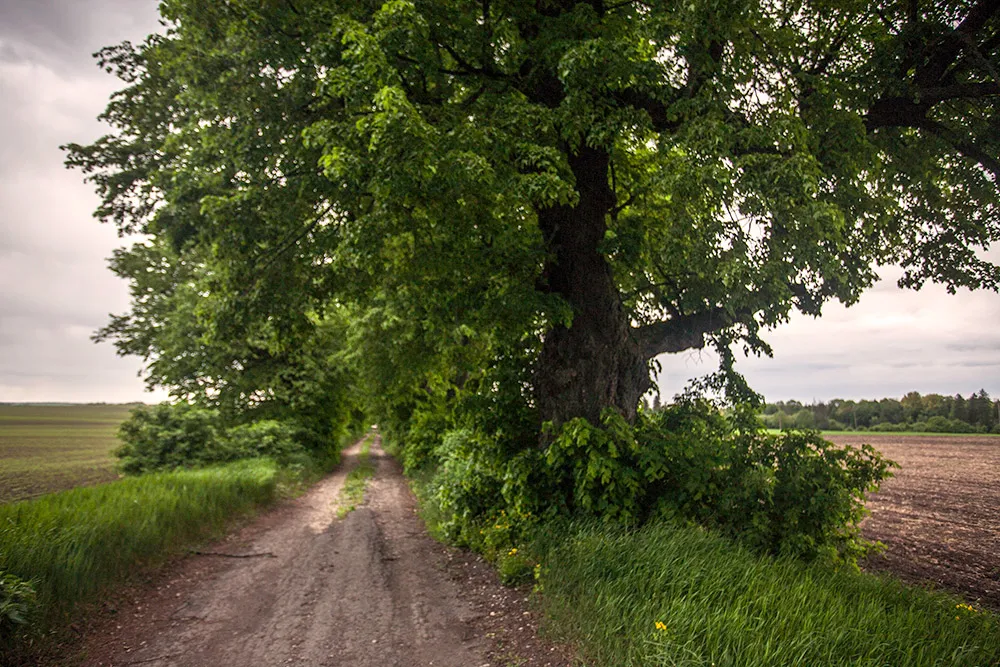
The “lime road” in winter (above) and in summer
Oh! Just for the chance to gaze at that amazing lime road it was worth dragging oneself to this backwater and rattling over cobbles that had known no repair since perhaps the dark days of tsarism. It (the avenue, not the backwater) is magical even in the middle of a snowless “London” winter. In summer it is pure fantasy, beside which the hyped and over-advertised “tunnel of love” nervously smokes bamboo in a corner.
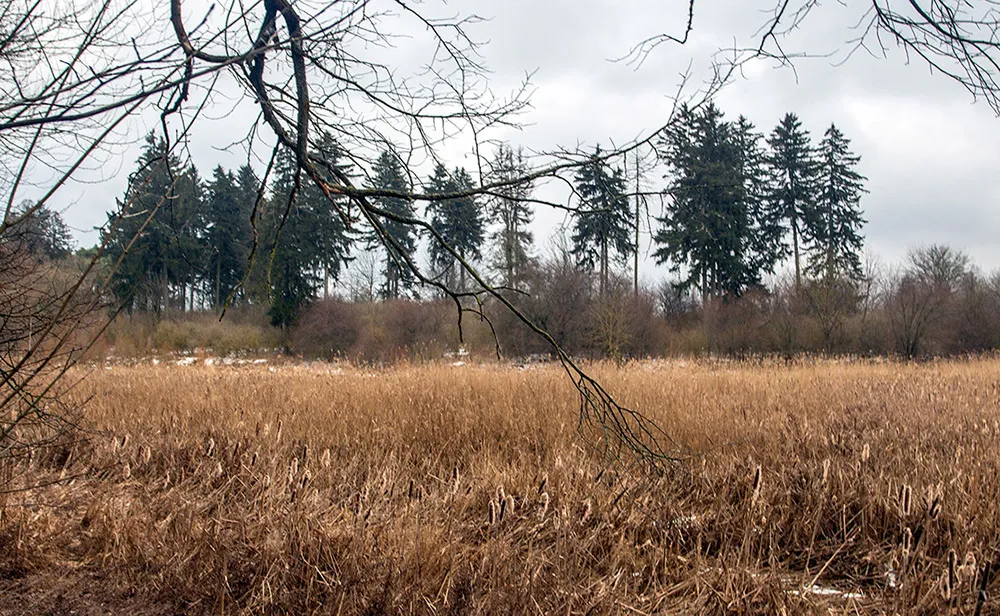
The park above the lake looked impressive, but…
The avenue leads to the Kuiava Park – a monument of landscape gardening art of local significance (27.7 ha). It was once the estate of the Tovkach landowners.
The palace and park were laid out in 1875–1877 by Juliusz Tovkach, and were finally completed and “planted out” by his son Kazimierz.
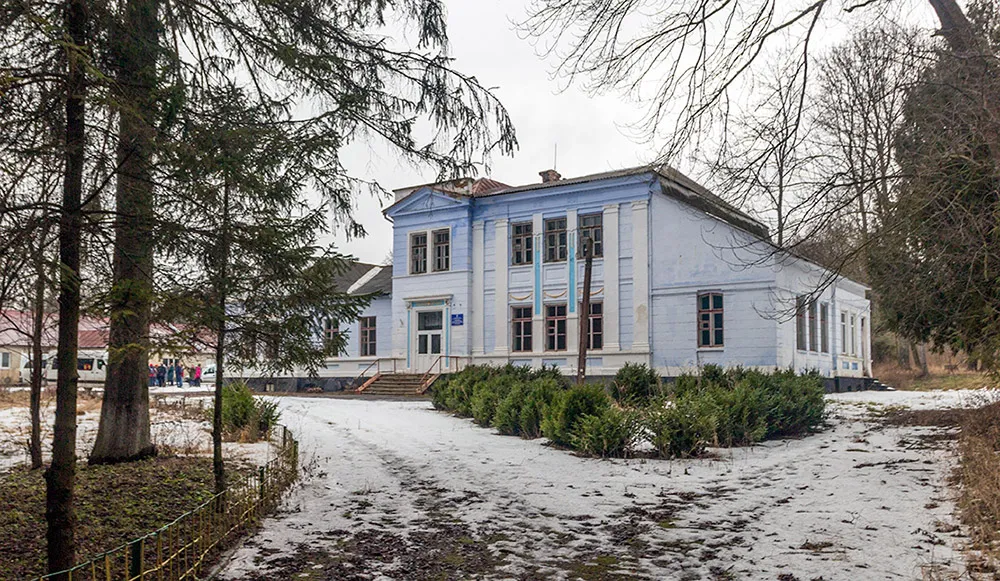
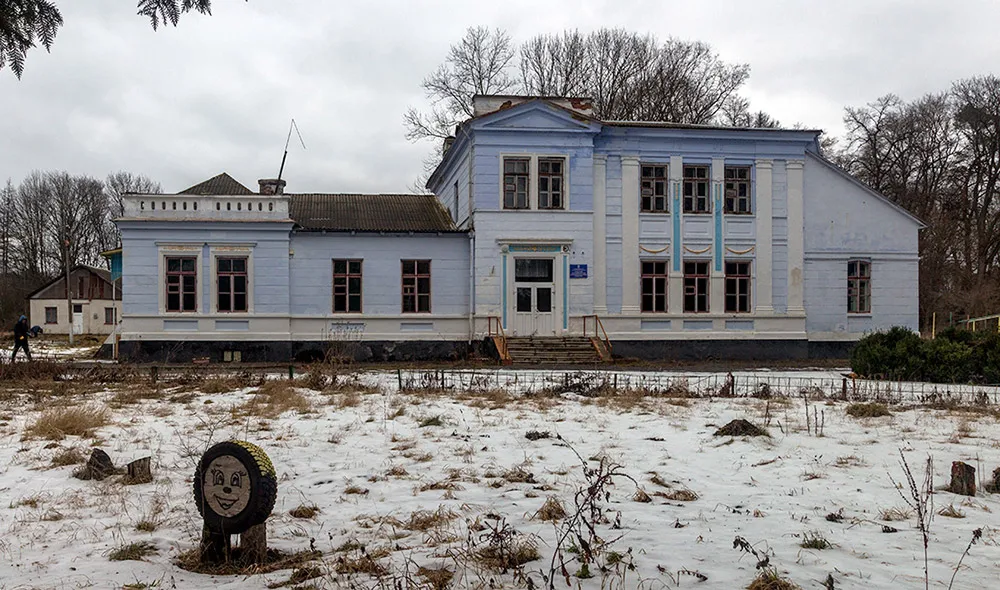
The palace has come down to our time practically in its original form. But there was a fly in the ointment too. In particular, in the 1980s builders somewhat disfigured its right wing. Above the ground floor there used to be a glazed orangery and an open terrace, fenced with beautiful wrought-iron railings, for drinking coffee and admiring the views.
In place of these whimsical manorial fancies, the new owners put up an awkward but practical extension under a sloping roof.
Inside, the little palace was re-planned far more radically. This happened when a children’s sanatorium was set up here – first an anti-tuberculosis one, and then the regional psychoneurological one. In recent years the institution has not been working, and the further fate of the palace is unknown.
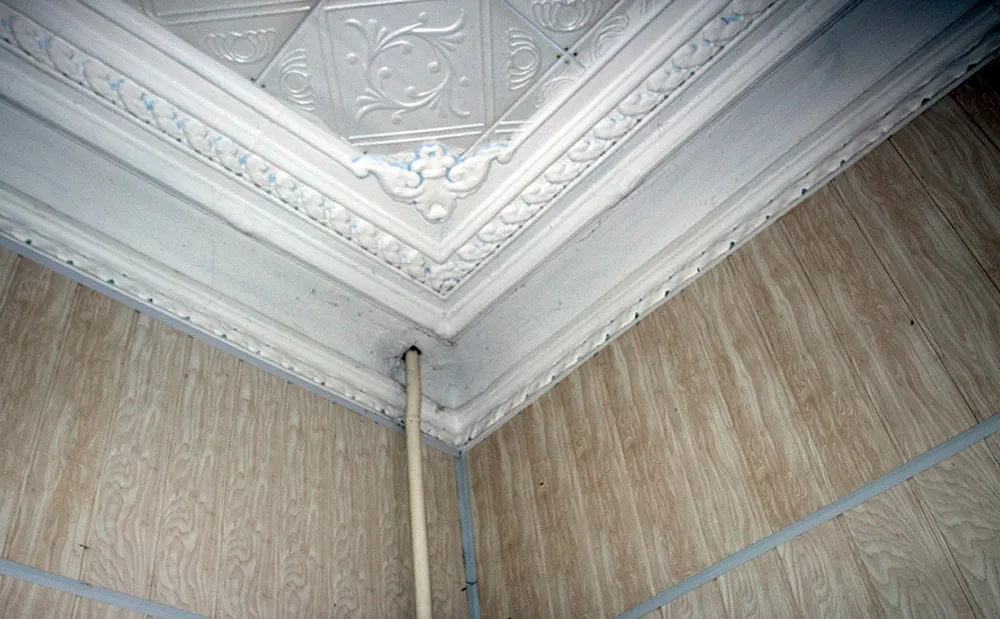
Remnants of stucco moulding
Despite repeated re-planning, some stucco moulding survives in the rooms, though “harmoniously” supplemented with modern plastic. In some rooms the old oak parquet has been preserved. On the ground floor one can see an old tiled floor dating from the second half of the 19th century and a wooden staircase of bog oak.
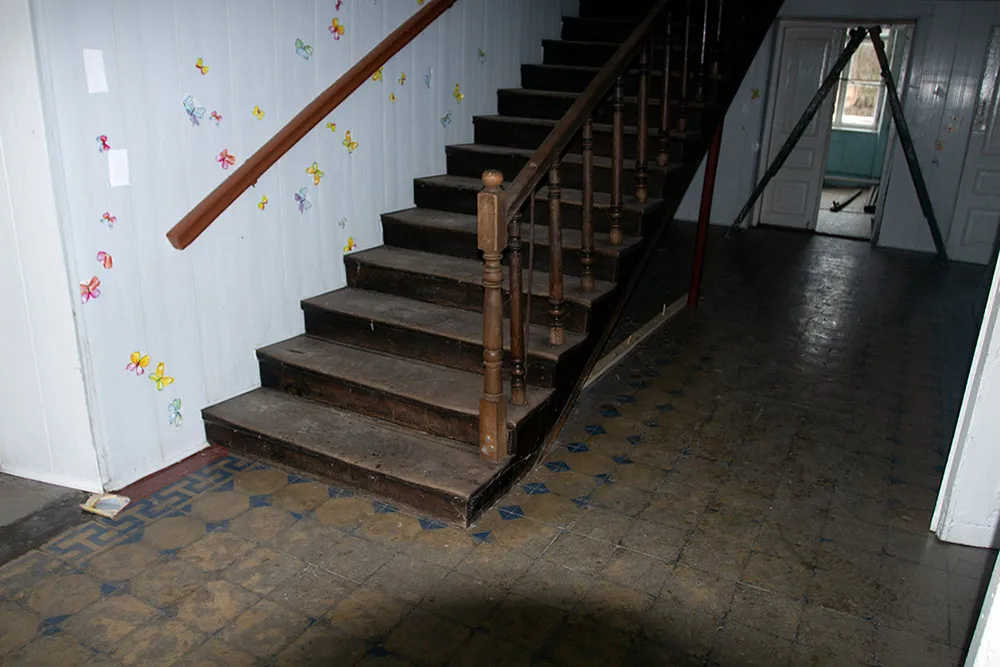
The staircase and “ancien régime” tiles
The most impressive thing is the old tiled stove. It is wonderful despite the hideous blue paint. Even the cast-iron door (or perhaps it is more correct to say “damper”?) survived.
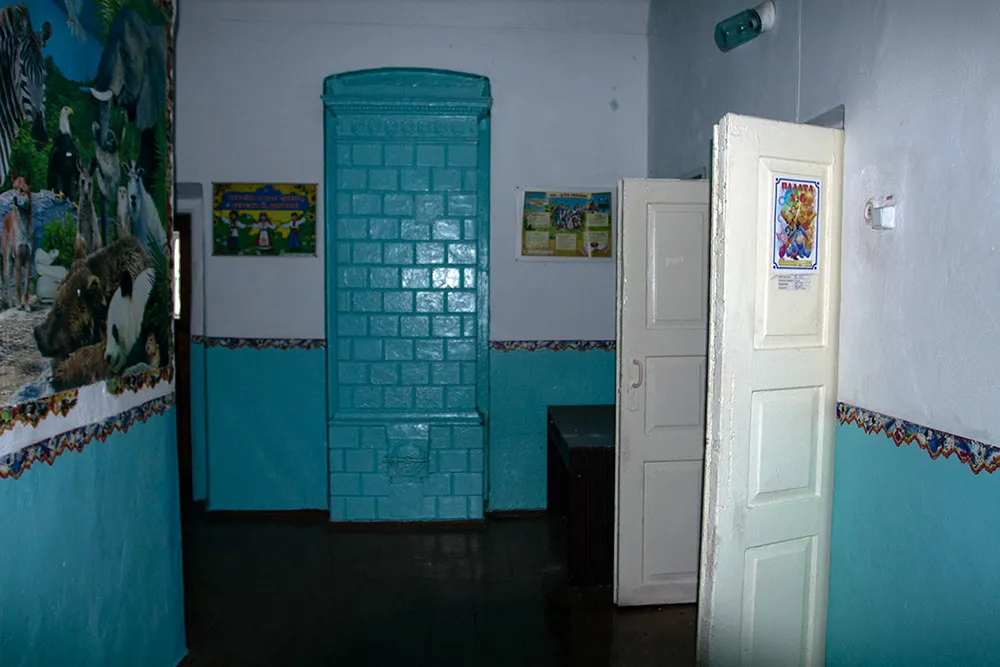
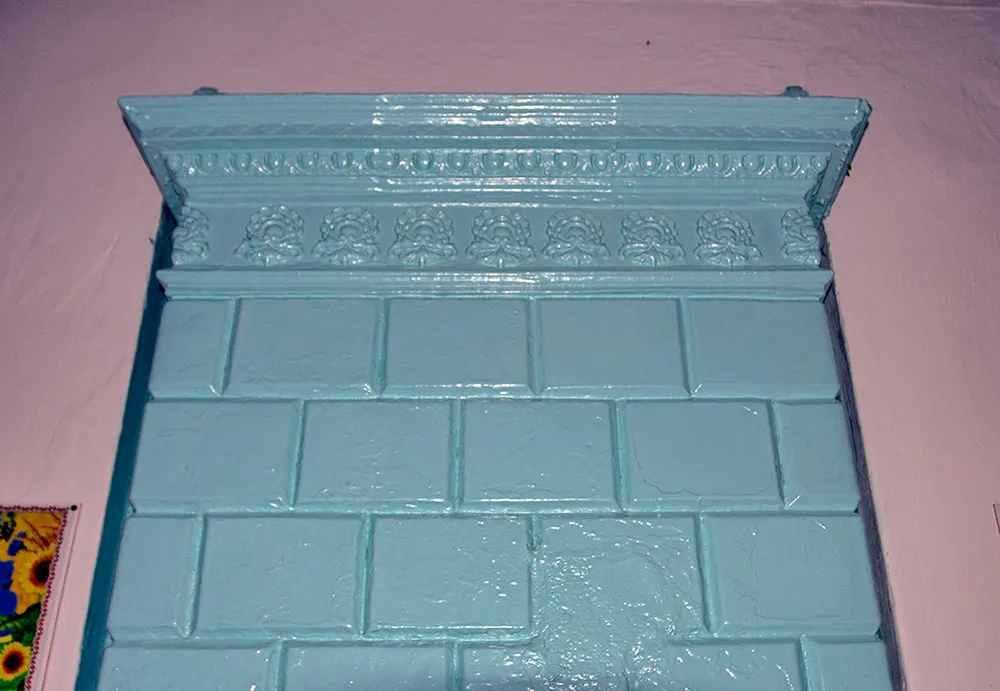
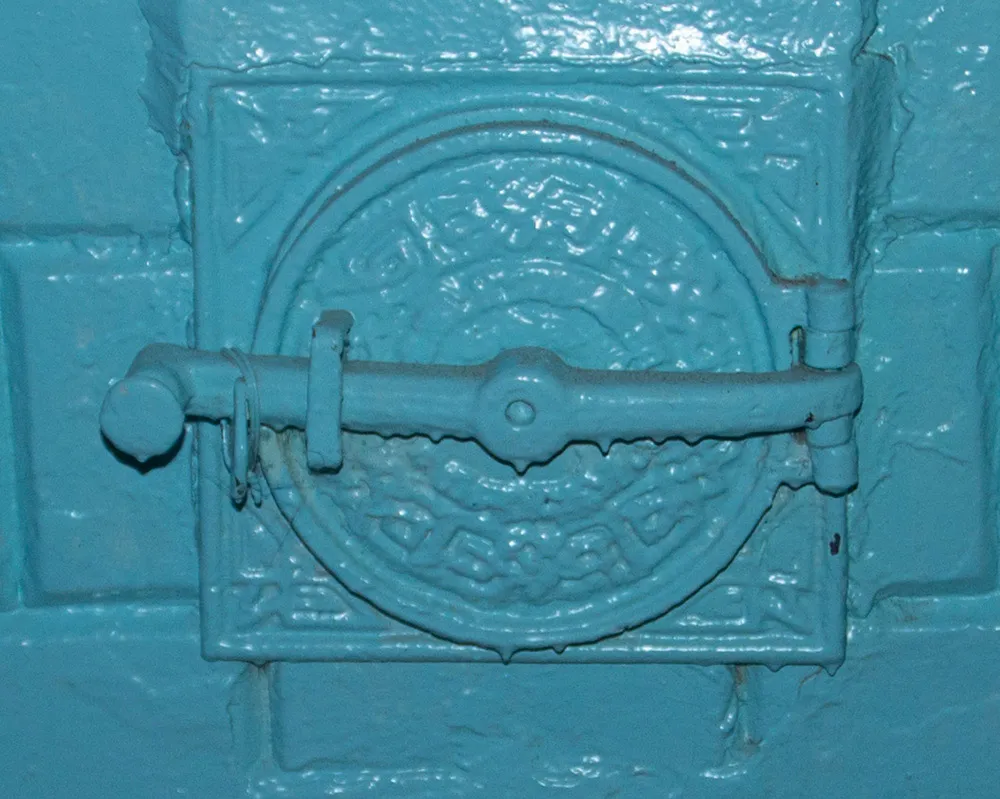
The park is huge and very beautiful. Unfortunately most of the ancient larches, pines and spruces have fallen victim to the bark beetle invasion that in recent decades has been destroying our conifer plantations en masse. Some trees have already fallen, some have dried up but are still standing. Sad…
The famous ponds that brightly complemented the park landscape have vanished too. Of the smaller one not a trace is left (only a hollow), and in the place of the larger one reigns a kingdom of reeds and cattails. It is rumoured that the last director of the sanatorium was to blame: already practically dismissed, he ordered the water drained in order to take out the considerable stocks of fish.
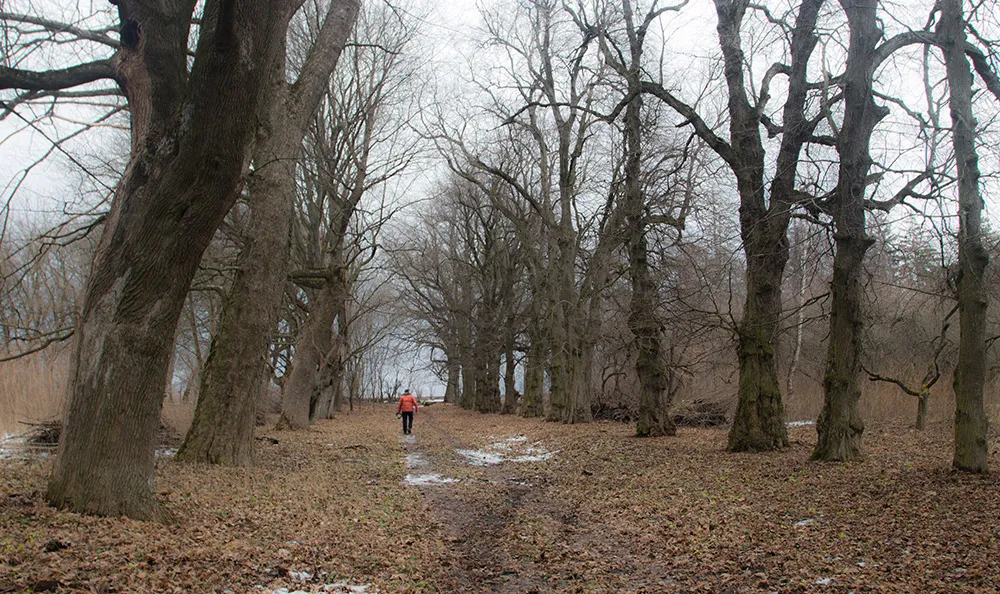
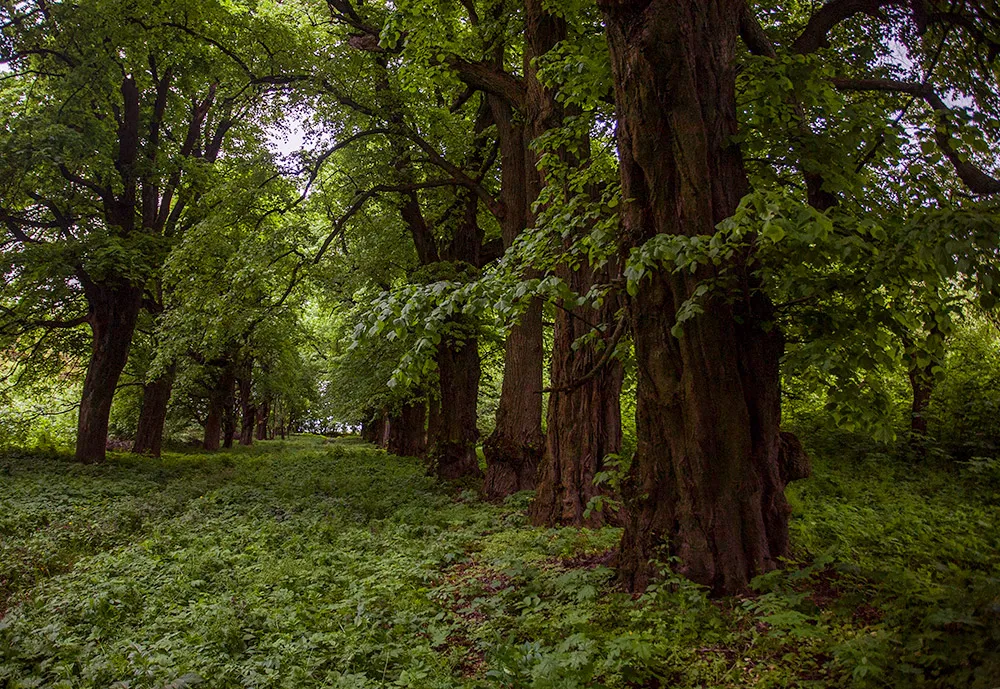
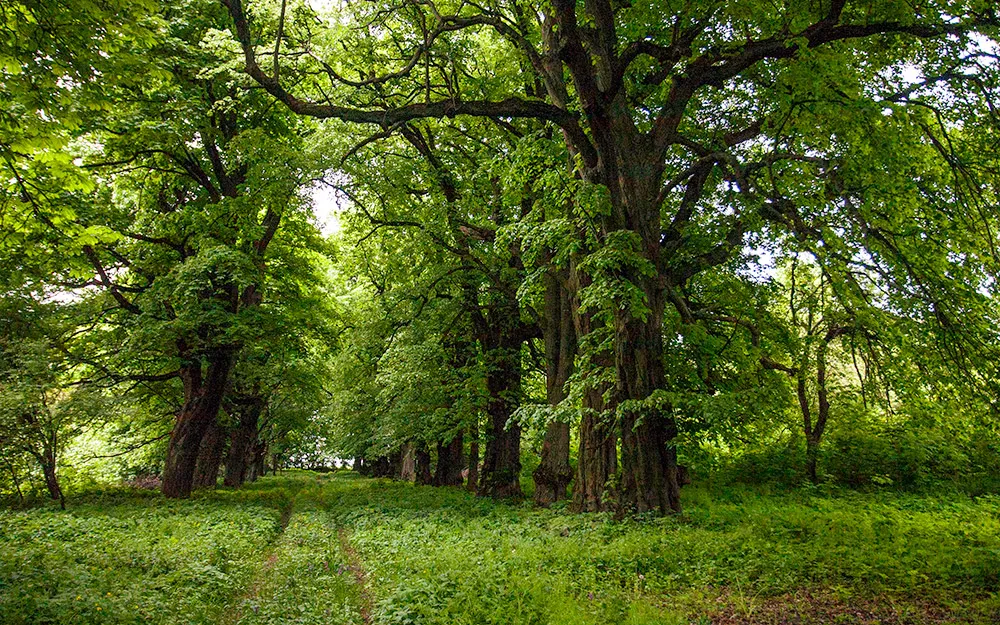
But the greatest impression in the park was made by the ancient, enormous and majestic LIME AVENUE (all in capitals). Beside it even the “lime road” mentioned earlier pales. It brings to mind the Great Forest from Tolkien’s novels, and you feel like a tiny hobbit.


