

The stone fences of Podillia: a tour of Khmelnytskyi Oblast
One of the distinctive features of Podillia is its stone fences. They are textured, individual and add vivid colour to the local villages and small towns. We offer our readers a short tour of the stone fences of Khmelnytskyi Oblast.
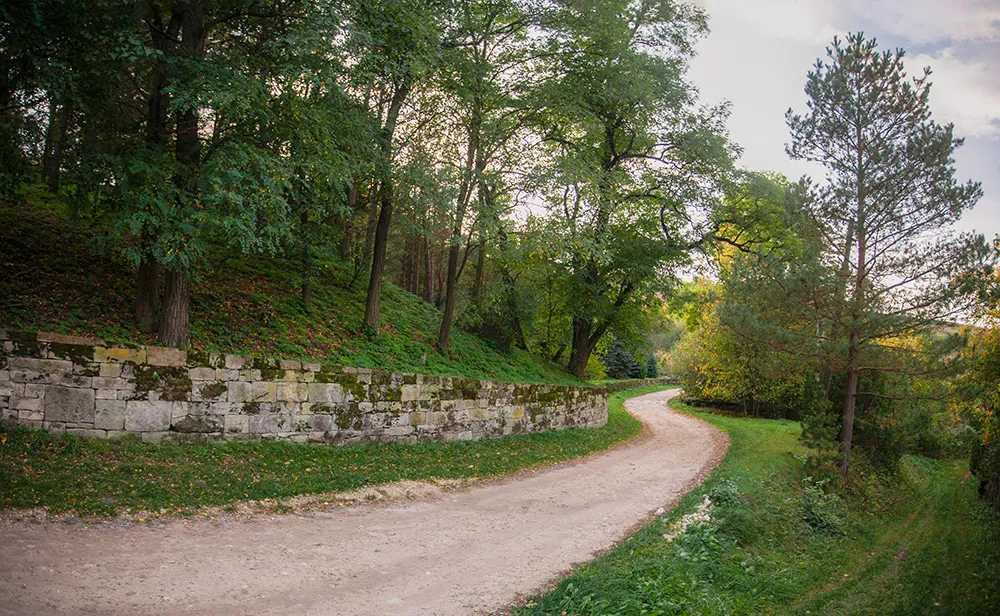
Zinkiv
Let us begin with famous Zinkiv, known for its renowned black sausage. Why Zinkiv? Because the local fences here are the most beautiful and charming. Whereas elsewhere fences are mostly built of plain “broken” stone, here they are made of very neatly dressed blocks. There is a strong suspicion that this stone comes from the grand local castle, which was dismantled for building materials at the end of the 19th century.
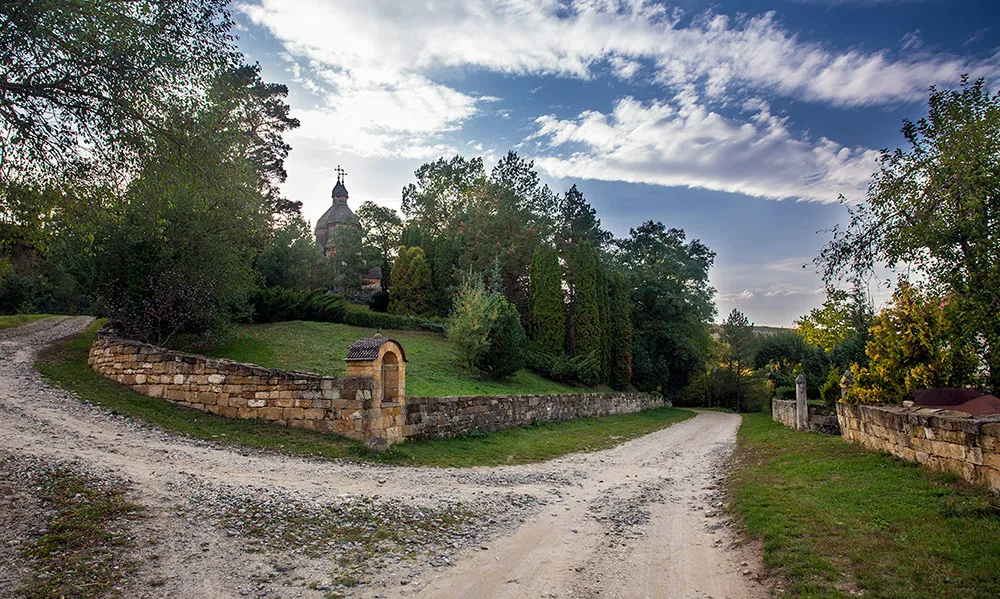
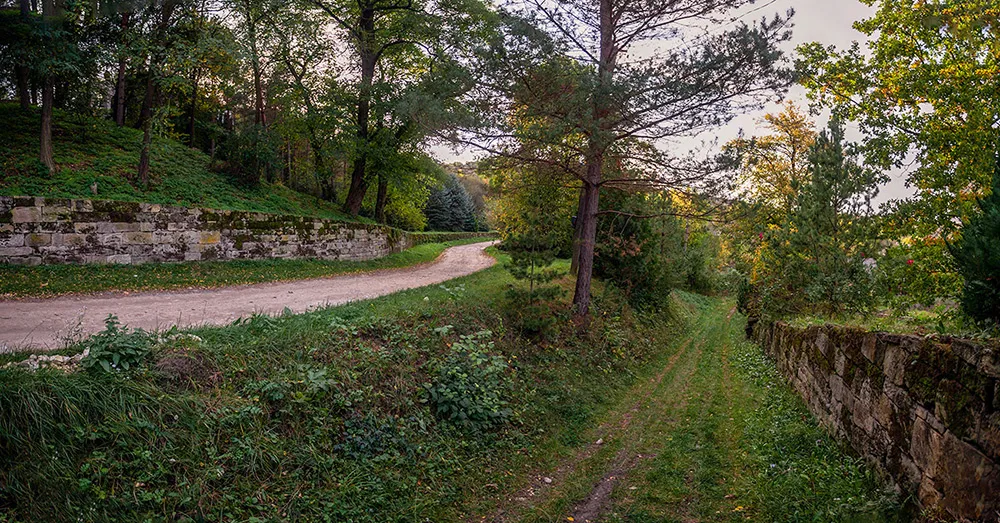
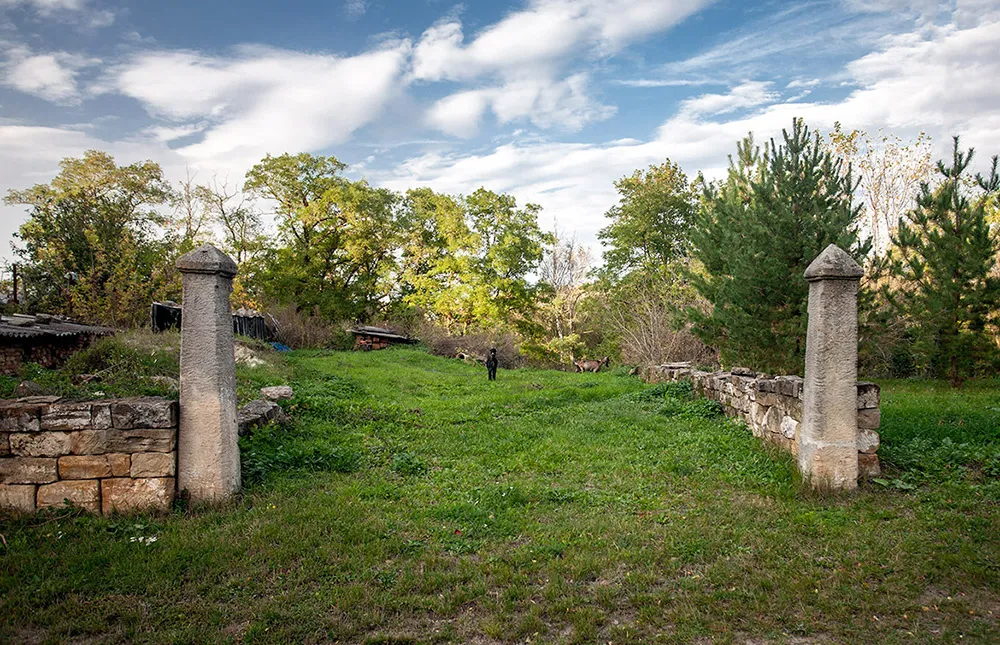
In Zinkiv the distinctive hewn stone posts, on which gates and wickets were once hung, also attract attention. In Khmelnytskyi Oblast such posts are common only in the Dniester area, closer to Vinnytsia Oblast, and just a few dozen kilometres from Zinkiv they are a rarity. Historians believe that, besides their practical function, such supports also served as protective talismans, a tradition stretching back to pre-Christian times. The author has seen posts of anthropomorphic shape, even with schematic faces on top, as well as frankly phallic ones. The photos, sadly, were lost along with a large archive when a laptop hard drive “gave up the ghost”. But that was in another corner of Podillia. How this “enclave of posts” arose in Zinkiv is a mystery.
The low stone fences running along the streets of Zinkiv even have their own name: “fosy”. Whether the name exists in other villages is unknown; the author has come across it only here.
Rudkivtsi
Similar posts and interesting fences can also be seen in the village of Rudkivtsi.
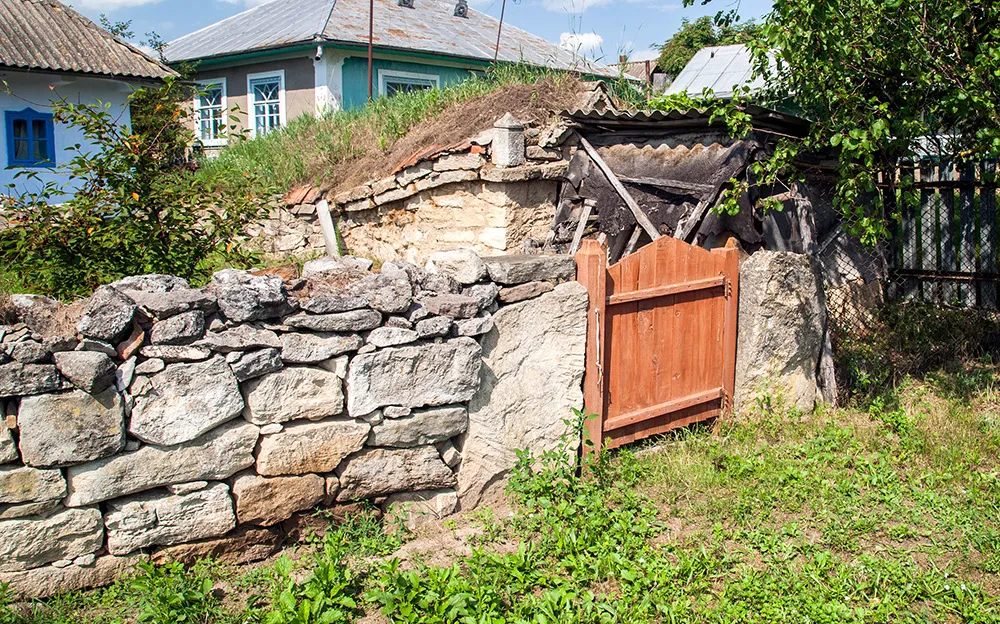
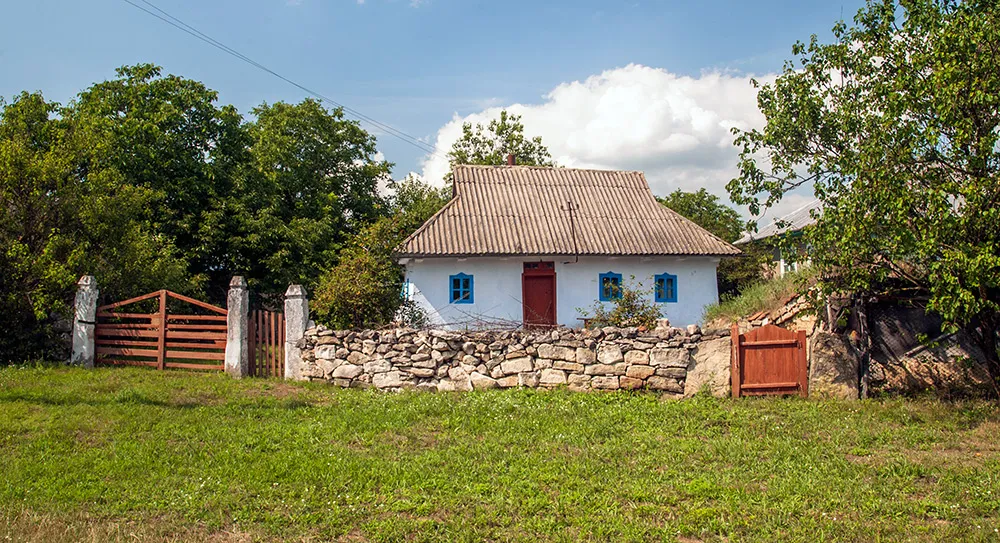
The village of Rudkivtsi. There is even a house here as if from an open-air museum!
In the small town of Satanivi on the Zbruch the fences are special. Until a series of bloody wars in the 17th century, Satanivi was one of the largest towns in the region, but it never fully recovered afterwards. Its fences still show traces of former glory and wealth: profiled stone beams, details of ancient buildings and even blocks with elaborate carving.
Satanivi
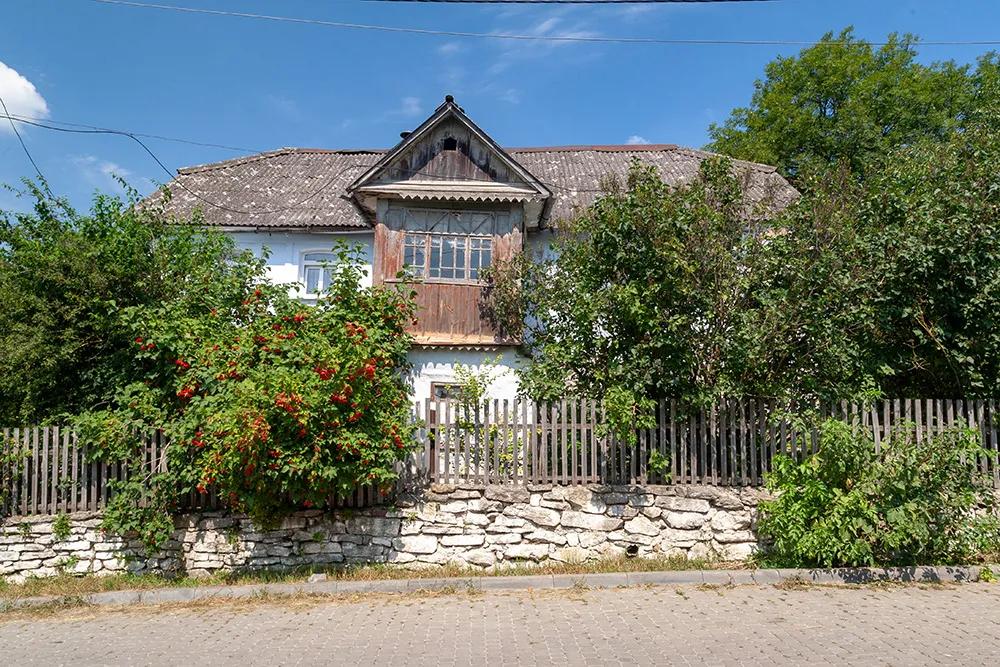
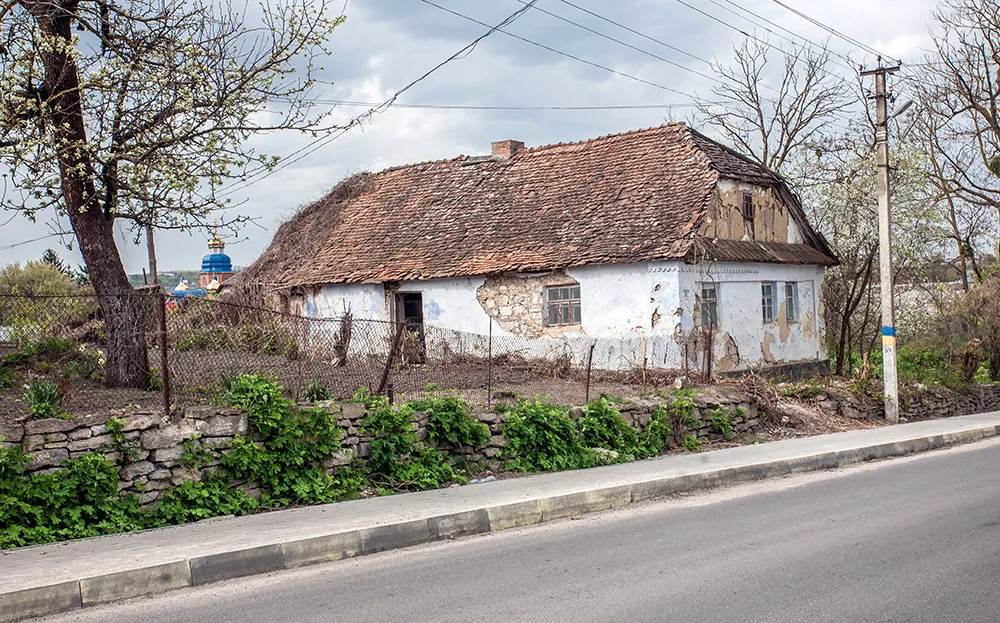
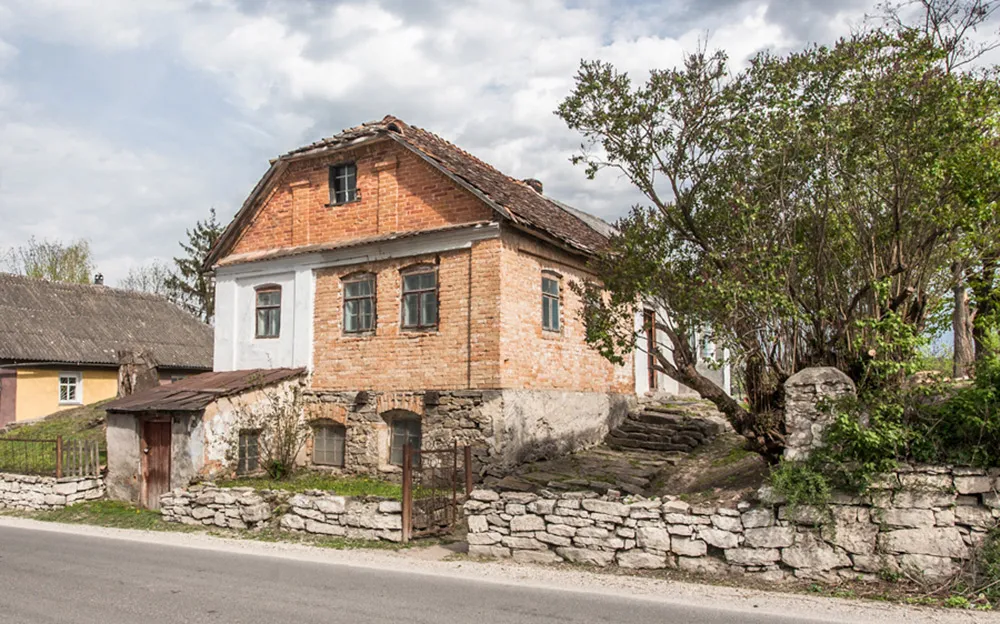
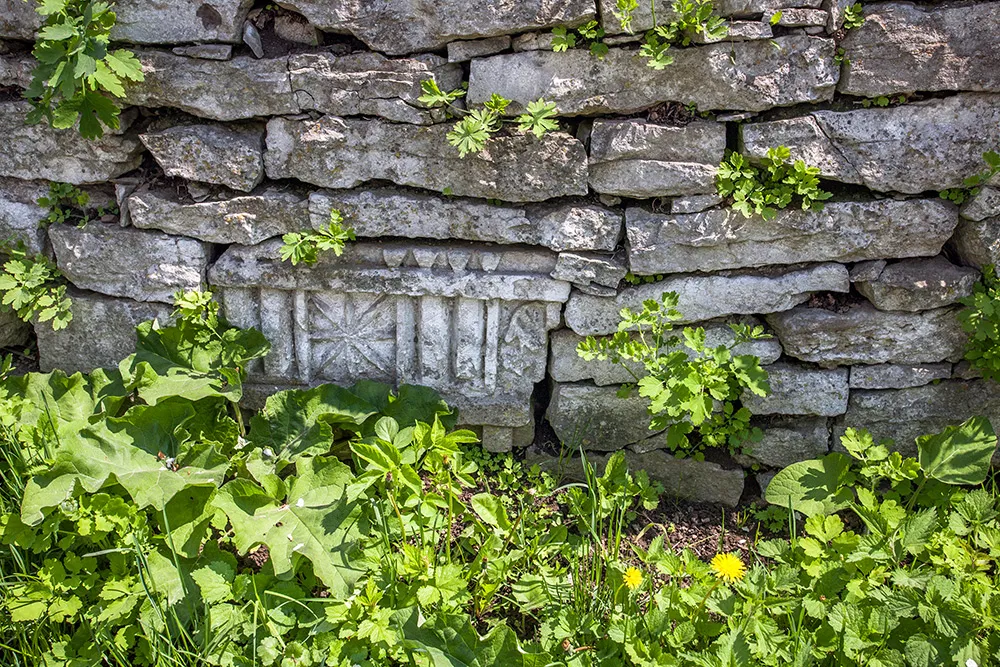
Satanivi. A carved block from a 17th-century building
Ivakhnivtsi
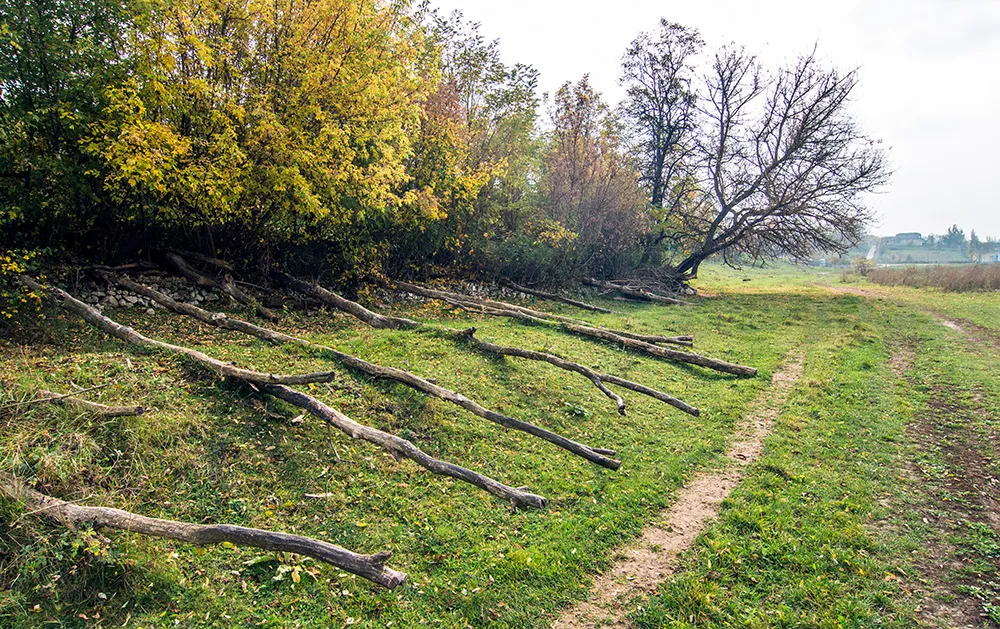
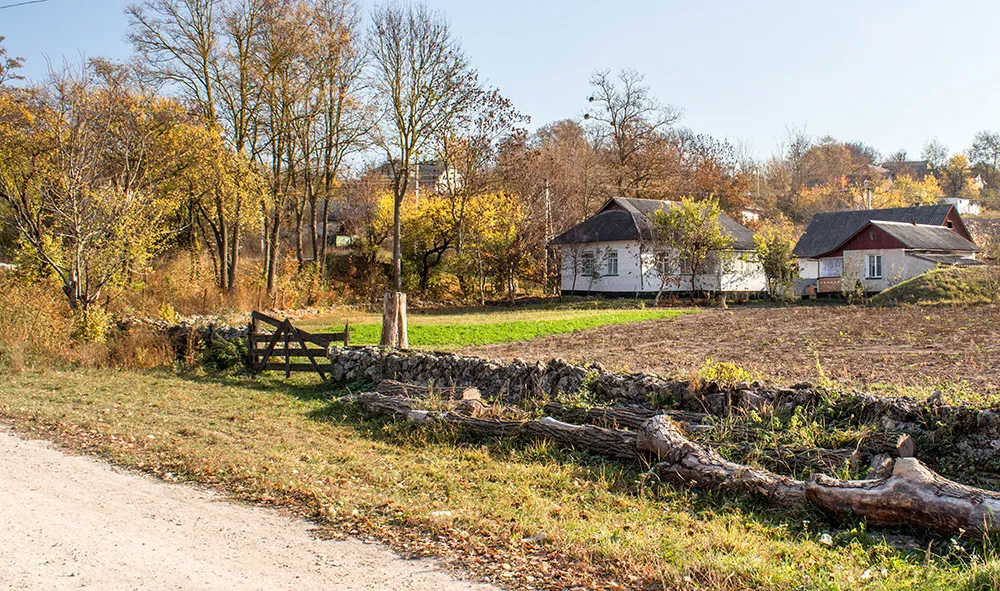
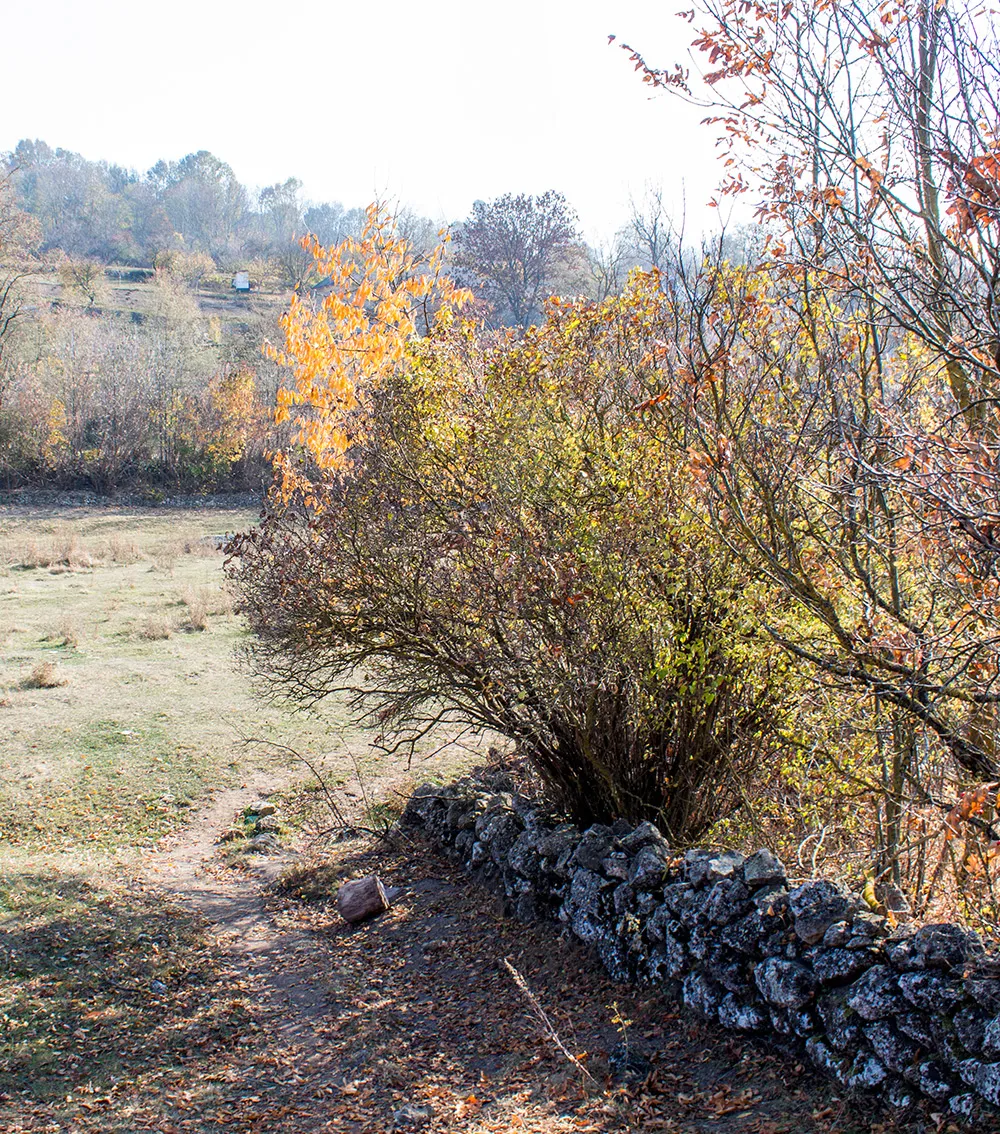
In the village of Ivakhnivtsi (formerly Chemerivtsi district), besides the traditional fences along the peasant farmsteads, there is also the Great Wall, which separates the village from the hills. A small ditch has also been dug in front of it on the hill side. The wall was built in the 19th century to protect the farmsteads from flocks of sheep grazing in the hills. Its length is at least four kilometres.
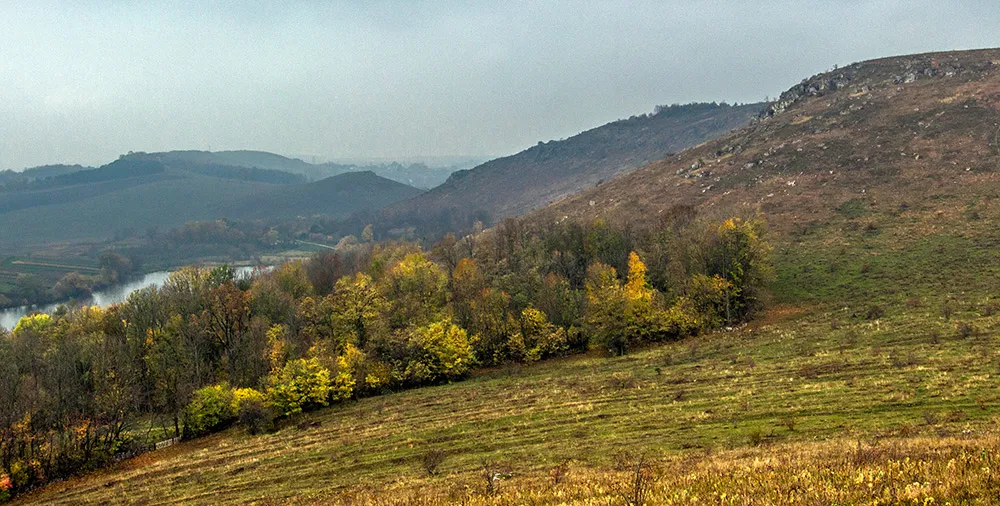
Ivakhnivtsi. If you look closely under the trees, the wall is clearly visible.
The fences in the village of Kryvchyk look very similar to those of Ivakhnivtsi, and the picturesque toltry hill of Hrabyna in the background only adds to the beauty.
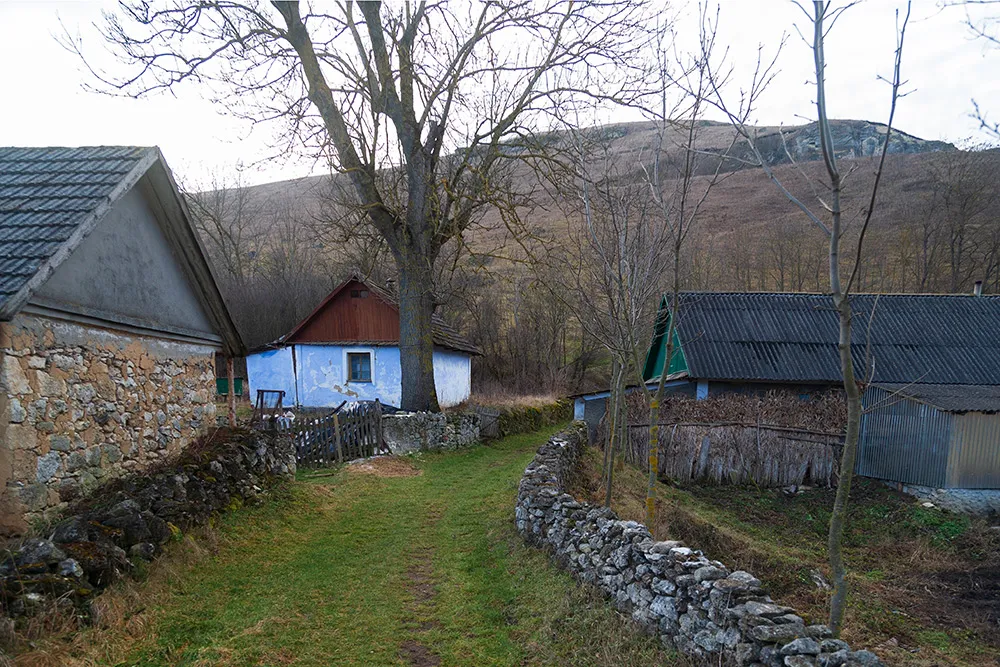
Kryvchyk
Nove Poriccha
In the village of Nove Poriccha near Horodok, besides the traditional peasant fences, there is also the “Great Podillia Wall” (the name is the author’s own and meant jokingly). It encircles the hill where one of the largest palace-and-park complexes in Podillia once stood. The wall, almost three metres high, served a protective function: it shielded the landowner’s park and palace from unwanted visits by “country bumpkins”. Its length is several kilometres.
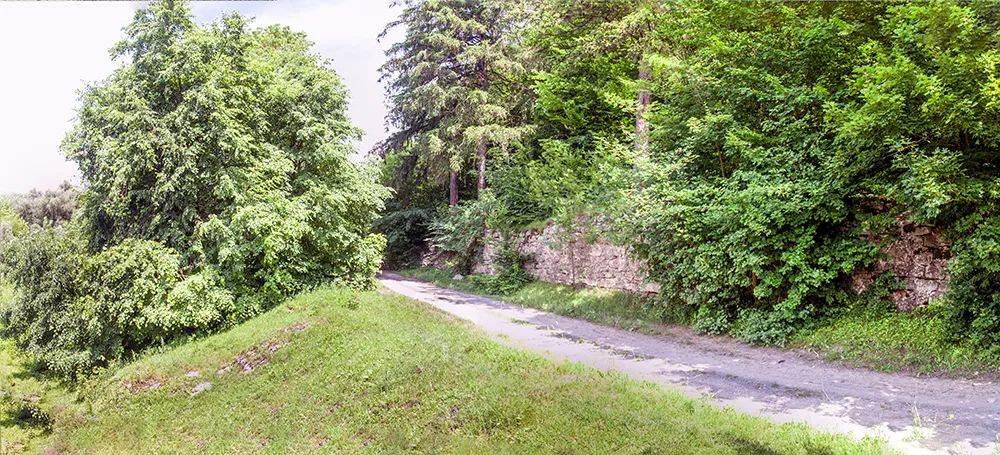
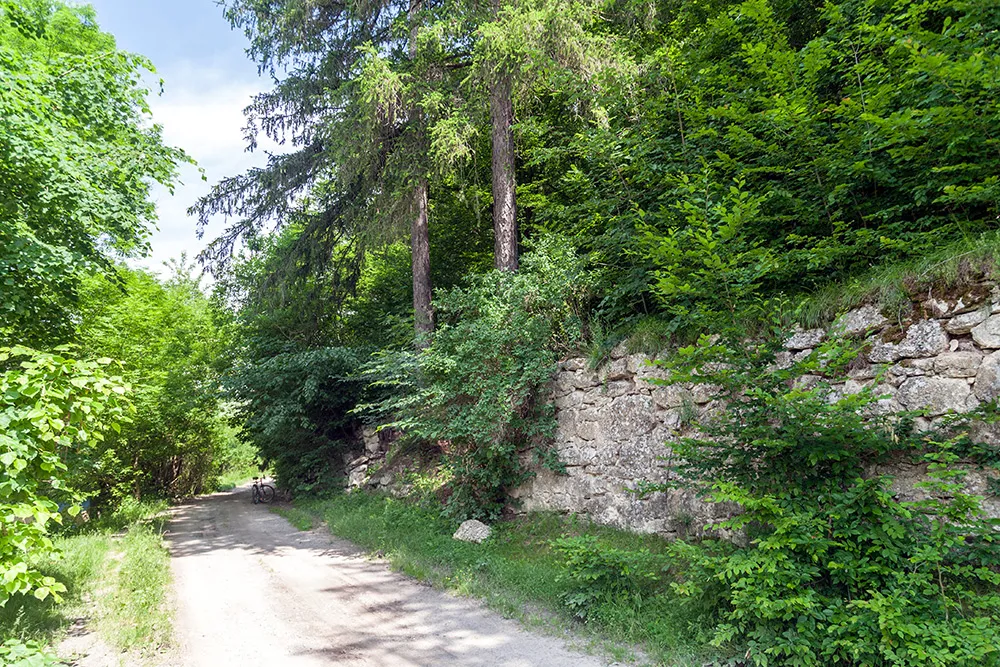
The wall was built on the orders of the village’s landlord Wiktor Skibniewski, one of the largest landowners in Podillia and a justice of the peace. Using his position, he begged convicts from the governor for work in Nove Poriccha. He fed them poorly but made them work hard. Those who died of exhaustion were buried right in the wall.
Zubrivtsi
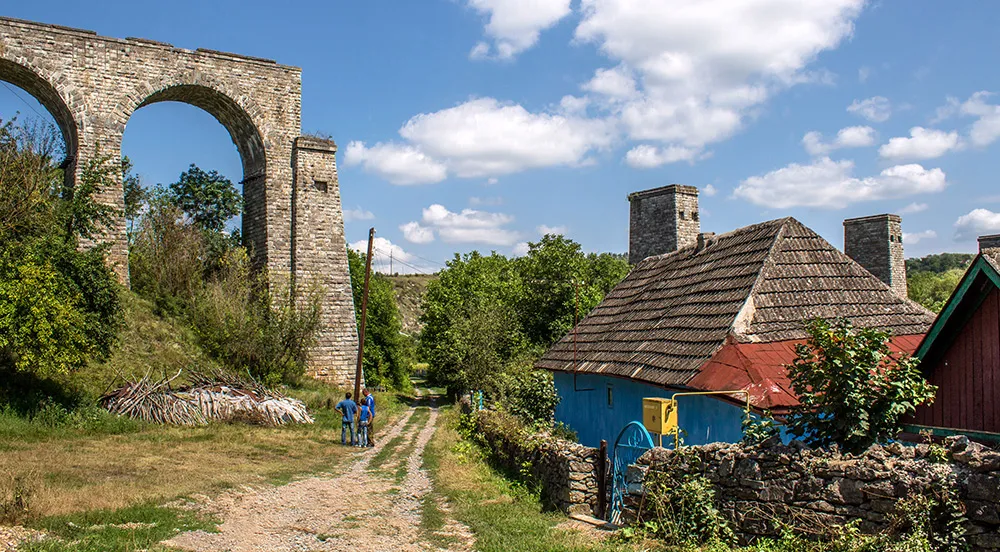
The fences in Zubrivtsi are nothing special, but in the Smotrych valley they combine nicely with the unfinished railway viaduct of 1915. As a “duo” they look extremely striking.
Kryntsyli/Krutyliv
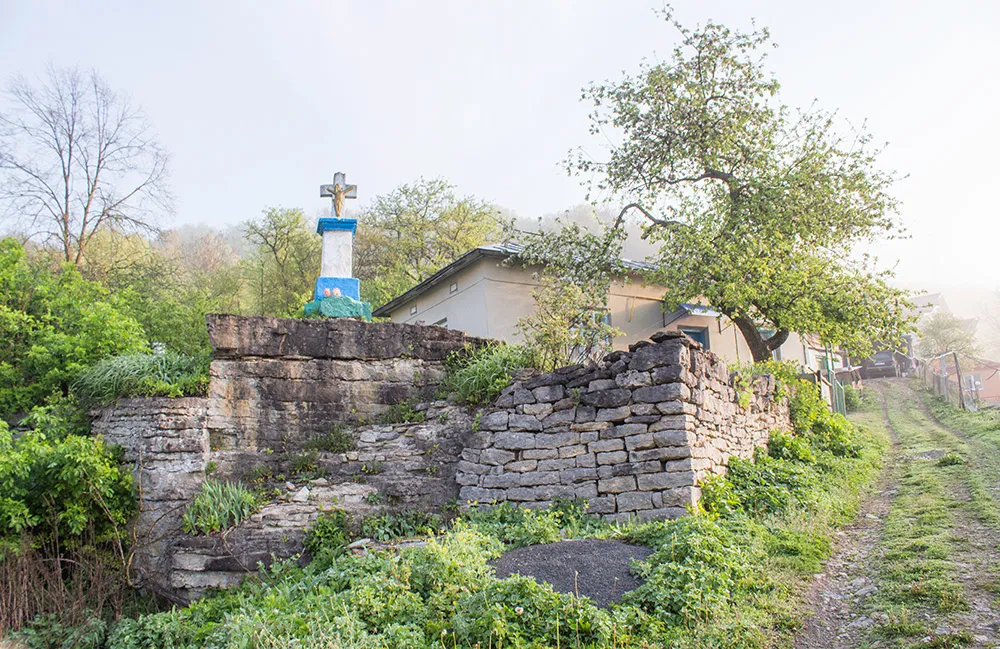
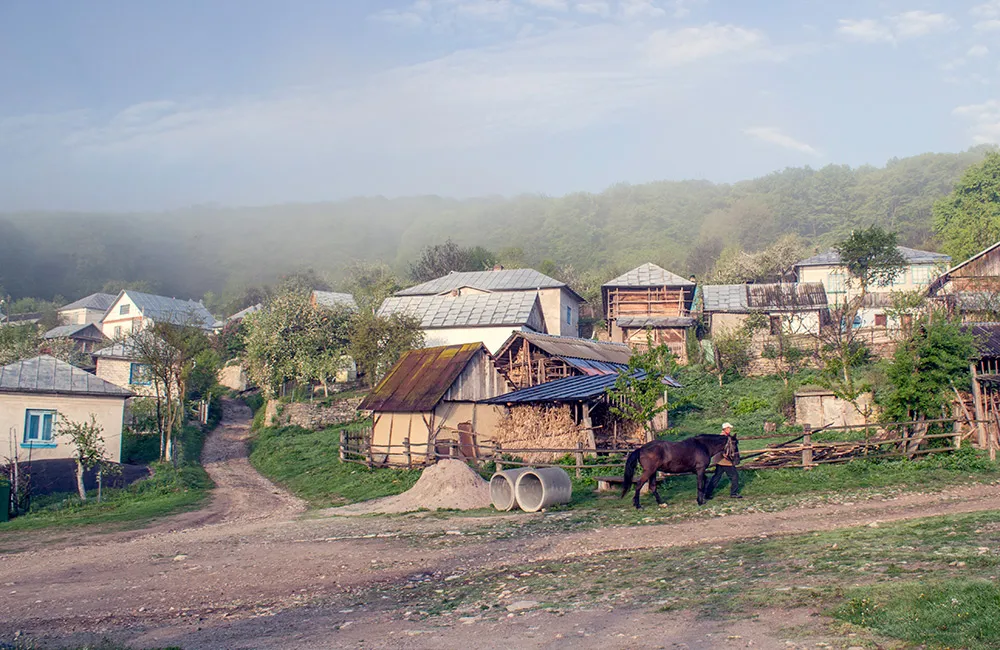
Very pretty fences are also found in the village of Kryntsyliv on the Zbruch. It was once a single village, but the border river Zbruch split it in two.
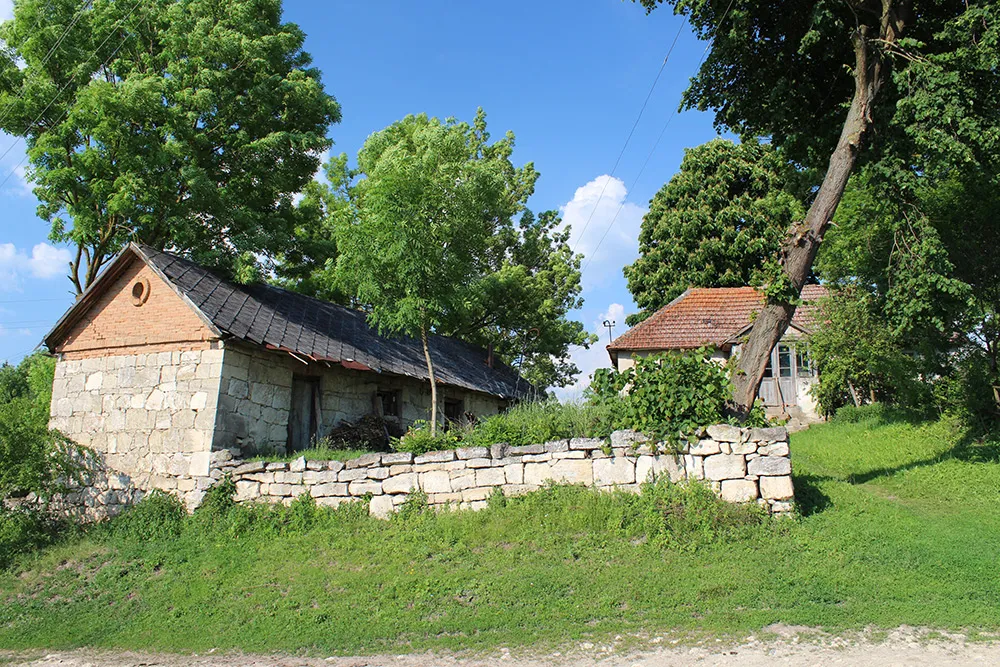
The village of Papirna, Horodok community
Here we will put a full stop for now… But there will definitely be a continuation.
Text and photos: Dmytro Poliukhovych


