

Hvardiiske. Felshtyn

· 5 min read
Text from Wikipedia:
Hvardiiske (until 1946 — Felshtyn; Polish: Felsztyn; Fulsztyn) is a village in Ukraine, the centre of the Hvardiiske rural territorial community of Khmelnytskyi district, Khmelnytskyi Oblast. It was founded by Mykolai Herburt as the small town of Felshtyn (Feldshtyn) in 1584.
The founder of the town — the Halych chamberlain Mykolai Herburt — was of Czech origin and arrived in Podillia from Polish-German Silesia. The Herburts’ ancestral seat in Moravia was called “Felshtyn” (now the municipality of Bohušov [cs]), and nostalgia for his native lands suggested this name to him for the new settlement.
The local historian Ihor Lazaryk in the book “The Dobromyl Land” refers to a Polish chronicler who described the chronologically first Felshtyn:
“To this day, in Austrian Silesia on the river Ossa, there exists a locality Fuelistain, once called Fulistein, Fulstyn, where in the year 1251 Herbord settled, at first as a bishop’s vassal, and later, that is in the year 1253, as an independent landholder.”
Hvardiiske received its present name in the second half of the 1940s in honour of the First Guards Combined Arms Army and the Third Guards Tank Army. After the collapse of the USSR the village community appealed to the authorities with a request to restore the village’s historical name, but without success.
Apart from Felshtyn in Podillia, the Herburts founded one more settlement with an identical name in Ukraine, but it too was renamed in Soviet times. It is now the village of Skelivka in Staryi Sambir district in the Lviv region.
The town was laid out on the site of the former settlement of Dobroshchany, which had earlier been destroyed by the Tatars. The permission to build the settlement and a wooden castle, as well as Magdeburg law, were granted by Stephen Báthory in Lublin on 24 August 1584. The castle was roughly like those of that time in Sataniv, Horodok, Husiatyn, Yarmolyntsi, Zinkiv and Chornyi Ostriv. On the feast of the Three Kings (Epiphany) and on Holy Trinity, fairs were held in the town; moreover, Stephen Báthory exempted the settlers from taxes and duties.
The remains of the castle ramparts can still be seen — they surround the school sports ground.
Felshtyn was destroyed by the Tatars several times, and in 1615 the khan’s camp was stationed here, and from here the Tatars attacked the surrounding villages in various directions. After the Herburts, parts of their inheritance (Kupyn, Kreminna, Lisovody) passed to the Stadnickis, while Felshtyn with the surrounding villages went to the wife of Jan Herburt.
In 1680 the village went to Ottoman Turkey, and the border ran across its fields.
On 17 February 1729 Felshtyn, together with 12 surrounding villages, was sold by Strzemeński to Bernard Grabianka. The Grabianka family took care of Felshtyn. In the town, associations called craft guilds acquired great importance.
In 1900 there were no industrial enterprises in the village, and many men and women hired themselves out for seasonal work at the sugar factories of Derazhnia.
The small town of Felshtyn became the centre of the Felshtyn district, which existed until 3 February 1931. According to a resolution of the All-Ukrainian Central Executive Committee of 3 February 1931, districts on the territory of present-day Khmelnytskyi Oblast were consolidated and the Felshtyn district became part of the Horodok district. By a resolution of the Central Executive Committee of the USSR of 22 September 1937 the Kamianets-Podilskyi Oblast was formed, within which the Felshtyn district was restored in October 1939.
A considerable share of Jews lived in Felshtyn. In the 19th century 2,994 people lived here, of whom 1,220 were Jews. The Jews in the town were mostly cattle dealers, shopkeepers, and tailors and leatherworkers. Felshtyn even had two village councils: a Ukrainian one and a Jewish one. Almost all of them were killed in 1942 in the Haletyn forest.
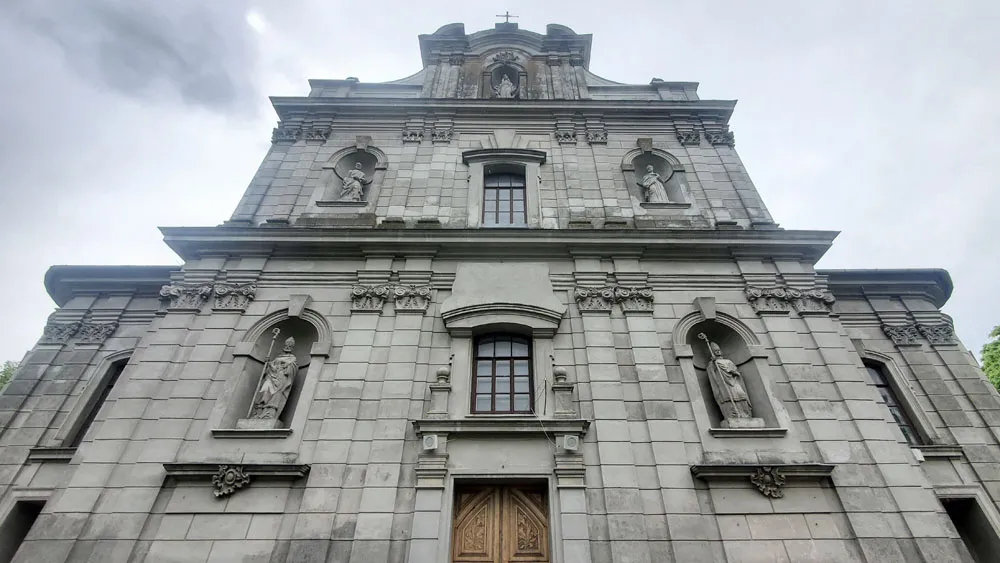
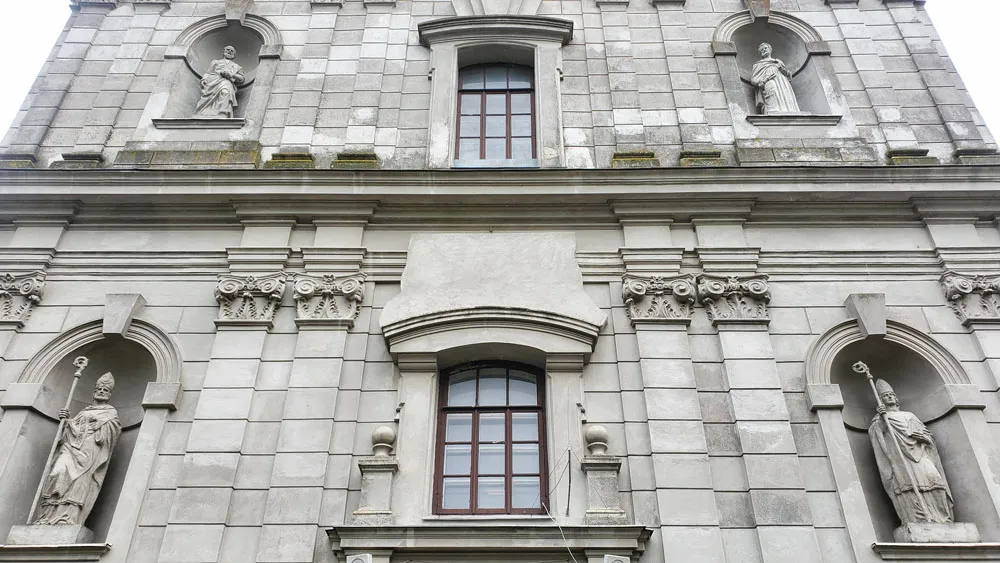
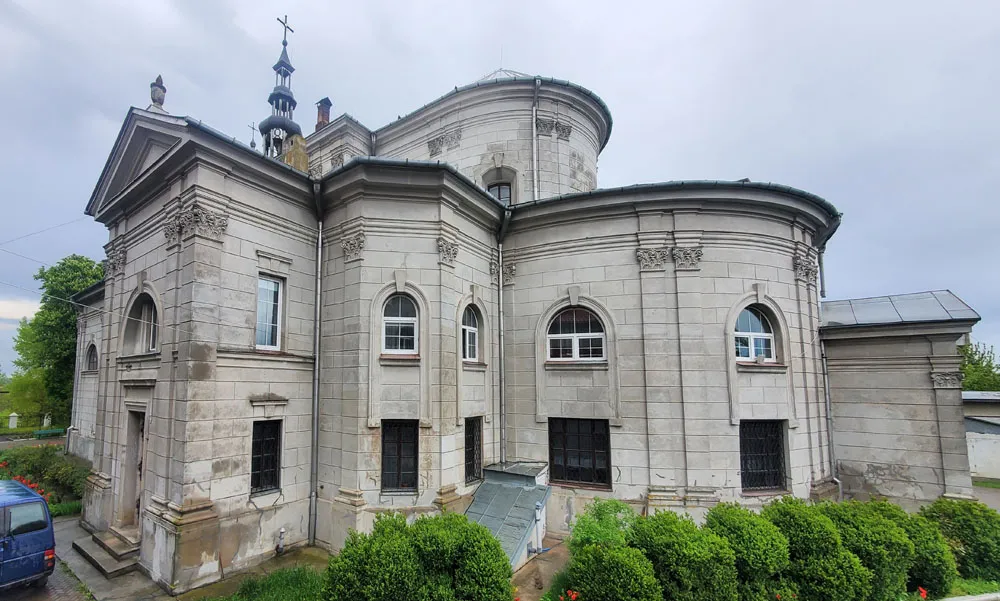
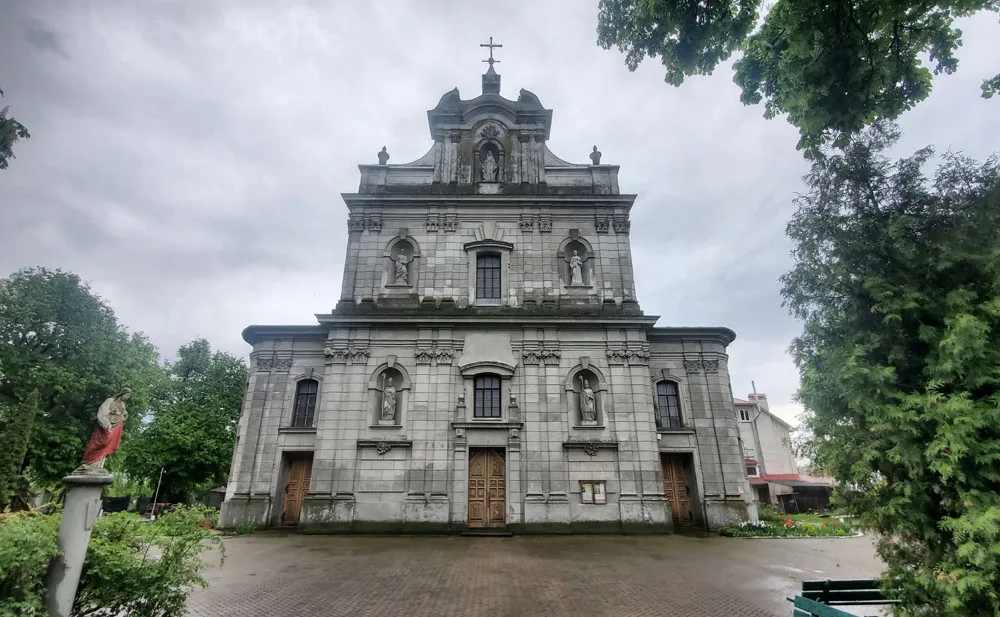
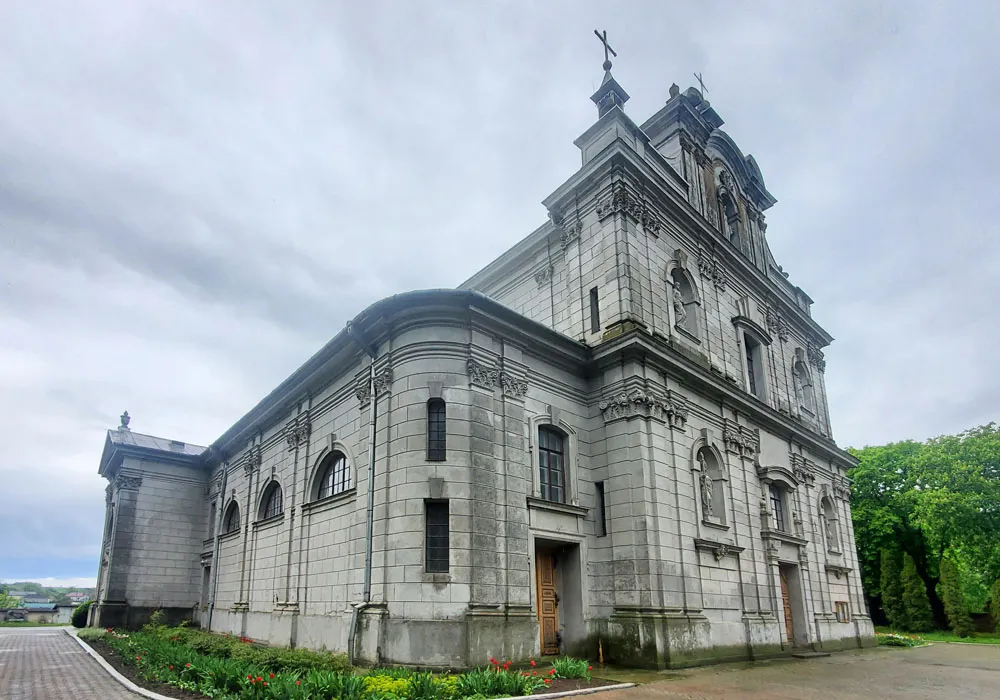
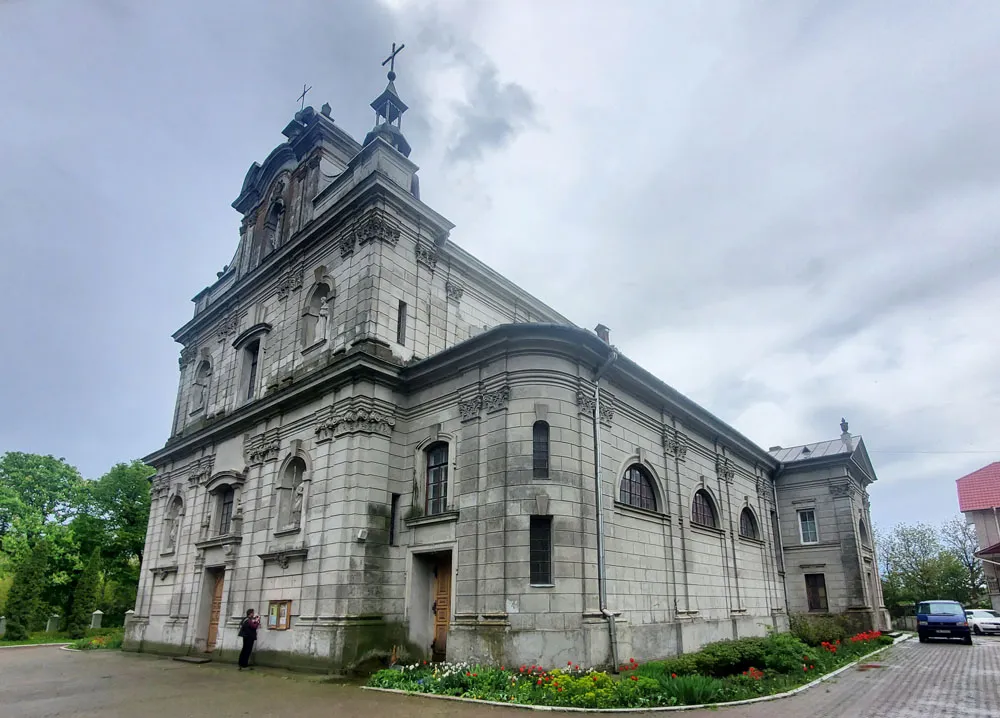
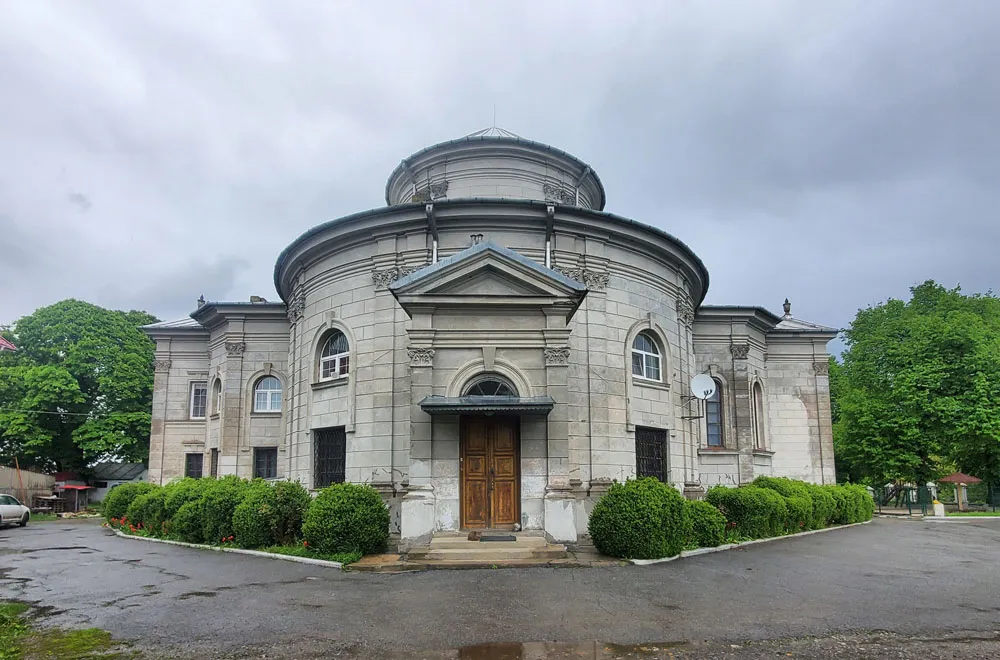
St. Adalbert’s Church
Around 1594 a wooden Church of St. Adalbert was built at the expense of the landowner Mykolai Herburt. The church was rebuilt in 1722 after the period of Turkish rule in Podillia. Construction of a stone church was begun in 1753 by Marianna Grabianka, née Kalinowska (wife of Józef Kajetan). In the same year a school and a hospital were founded at Marianna Grabianka’s expense. On 26 July 1791, in memory of the Constitution of 3 May, the church was consecrated by Adam Krasiński, the Ordinary Bishop of Kamianets. Onufry Morski and Teresa Grabianka provided funds to complete the construction. The church was given the title of Divine Providence.
At the beginning of the 20th century the Felshtyn parish had 30 villages in which 8,500 Catholics lived. In connection with the expansion of the parish, Father Antoni Troszczyński carried out an extension of the church in 1905. The years of Soviet power were hard for the parish, when cruel repressions were carried out against priests and believers. In 1933 the church was given over as a warehouse to the Raikovetskyi distillery, three years later a cinema and a district house of culture were opened in it. During the Second World War, under the German occupation, services in the church resumed — part of the church was returned to believers for worship. The church was closed a second time in August 1950, although parishioners demanded that it be opened. In 1979 the parish began to operate without registration, with services held in the home of one of the parishioners.
Because of the mineral fertilisers stored in the church, its walls suffered significant destruction. The believers managed to preserve only an icon of the Mother of God and a cross.
In June 1988, under the priest Viktor Tkach, construction of a chapel began. The building work lasted until the end of the summer, and on 15 September 1988 the bishop consecrated it. In January 1990 the church premises were returned to the parish and repairs began, while the chapel was given to an Orthodox parish. On 25 June 1994 Jan Olszański, Bishop of the Kamianets-Podilskyi Diocese, consecrated the church anew. In the same year, 1994, the 400th anniversary of the Felshtyn parish was marked.
Today the parish includes 23 villages in which more than two thousand Catholics live. The present rector of the church, Father Yaroslav Honsiorek, came to Ukraine from Poland in 2000.
Text from Wikipedia, photos by Roman Malenkov.


