

I walk from spring to spring… (c)
Inspired by recent events.
In the previous review we told about the amazing walls of Podillia. Today we will recall no less interesting springs that we came across on our travels. We list them not by ranking, because everything here is too subjective, but as the heart dictates.
The most powerful springs (Maliivtsi)
Maliivtsi in the Khmelnytskyi region is known first of all for the palace and park complex of the Orlowski count family. This landmark owes its beauty largely to two extremely powerful springs.
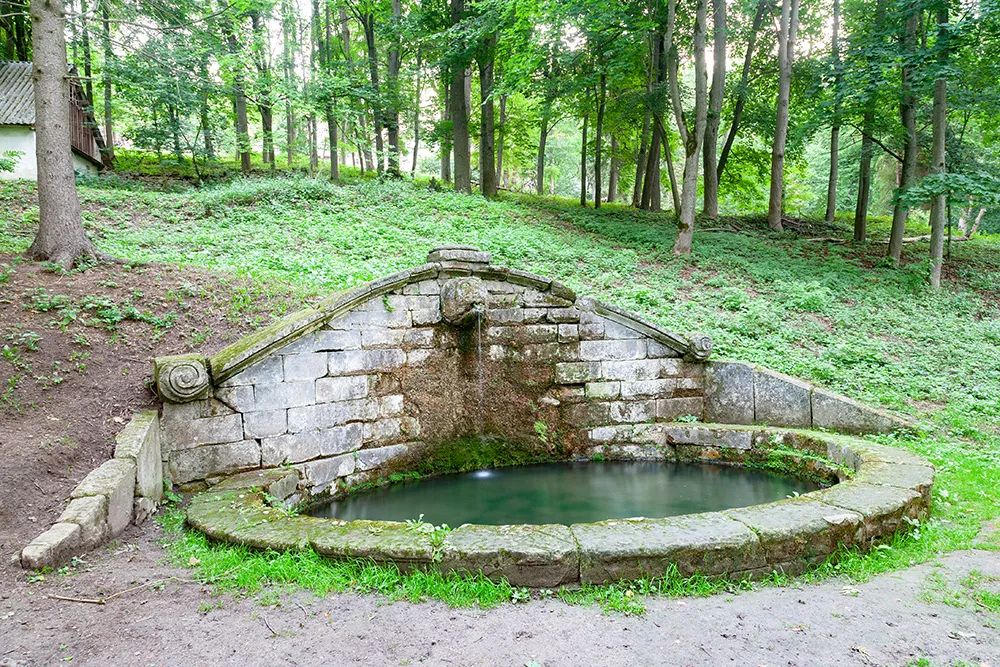
The “Lion” fountain. Behind it you can see the little house built over the spring.
The first spring is located right by the palace. If you go down from it towards the ponds, you will see an inconspicuous hut or shed. Inside is a spring that fills a sizeable reservoir. From there a pump draws water for almost the whole village. There is enough water for a small pond on the side and for the “Lion” fountain. The photo shows the lion’s head, from whose mouth a jet flows. It does not look much like a lion, but a year ago it was replaced with a new one, carved from stone after old photographs. Unfortunately, we do not have a more recent photo.
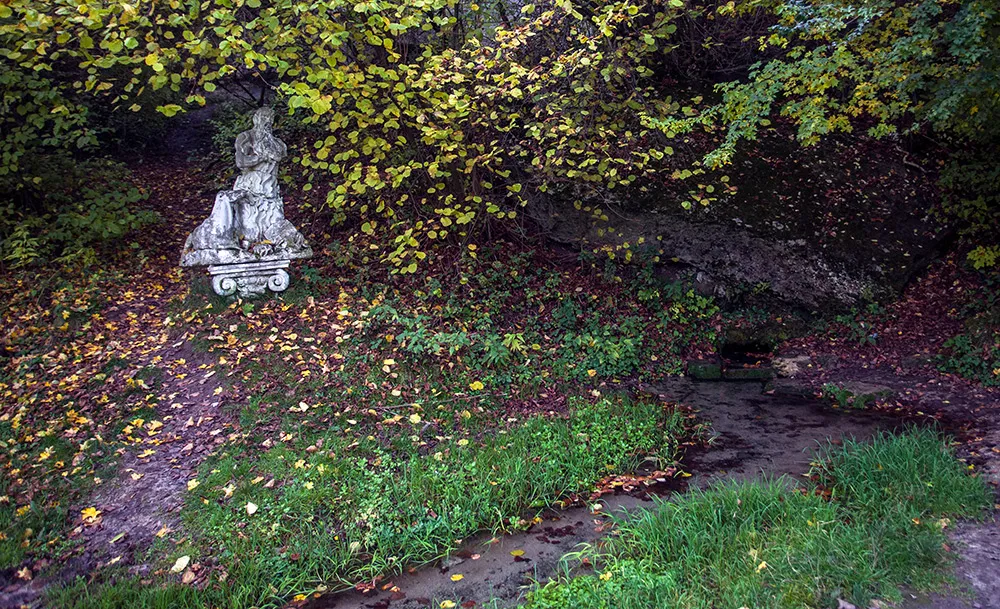
The spring that feeds the lake and the waterfall
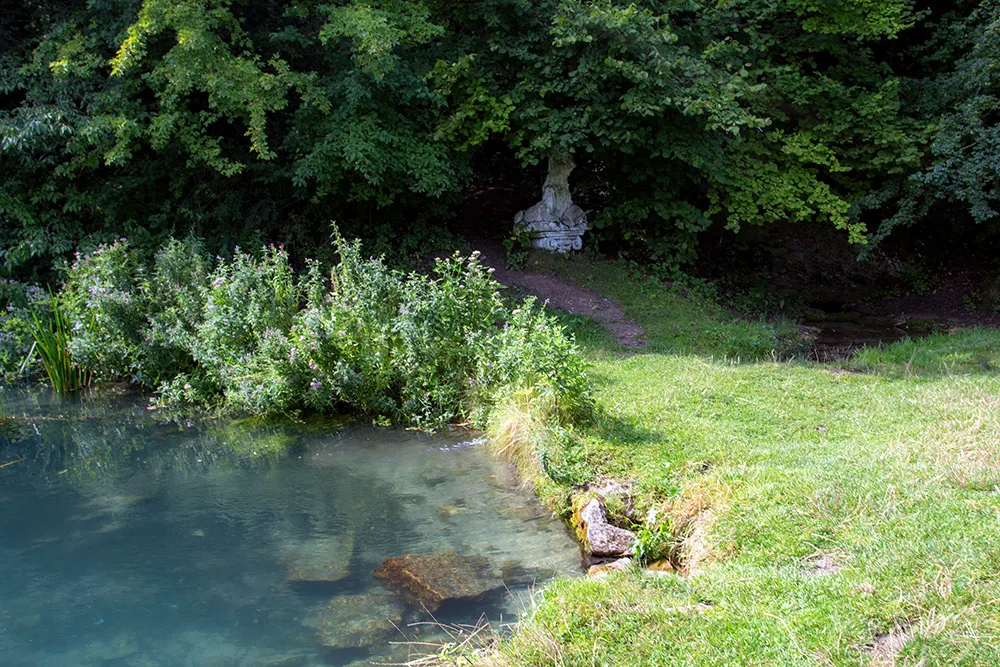
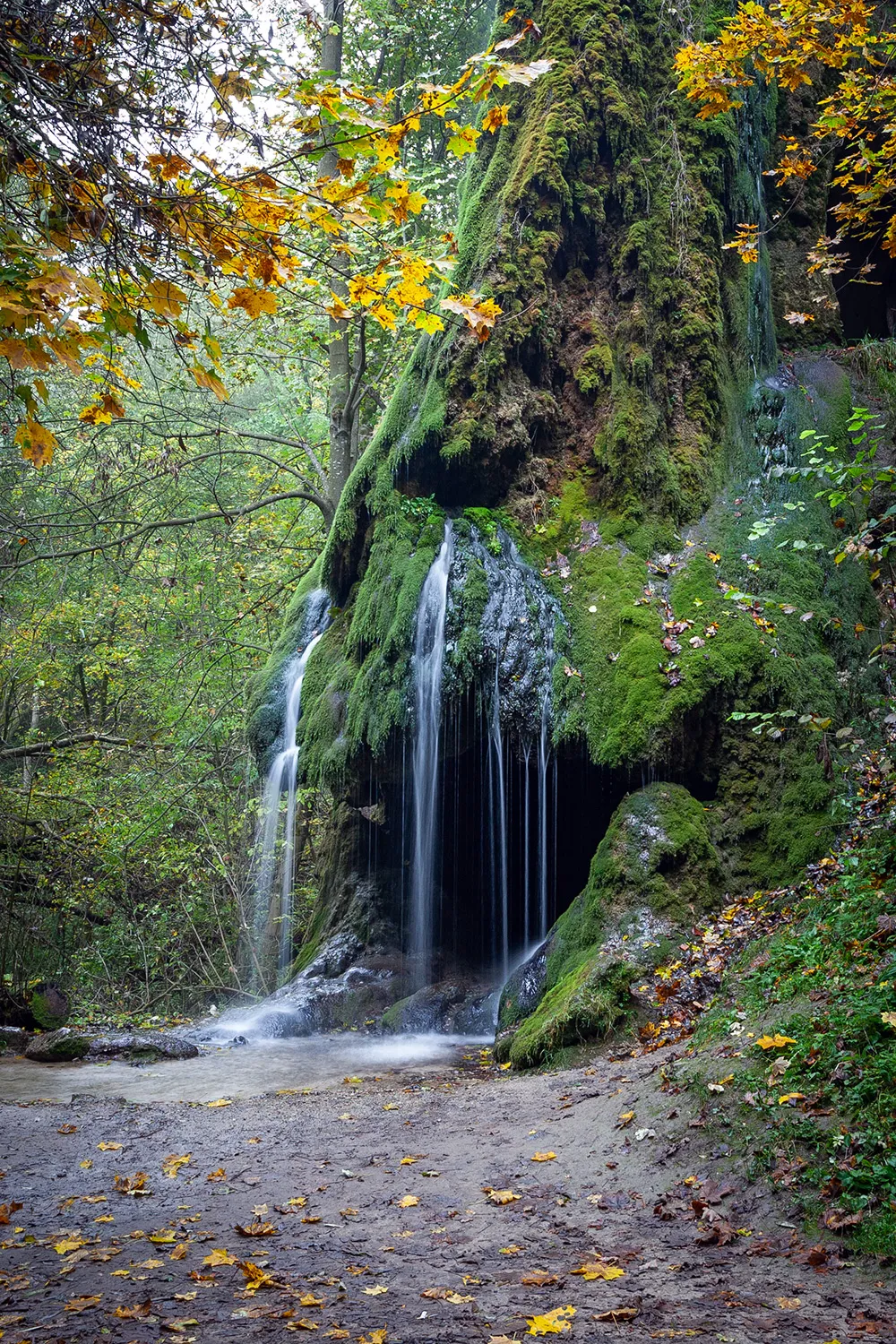
All of this is spring water
The second, no less powerful spring is on the opposite slope. Its water is enough to fill a pond and to give life to the famous Maliivtsi waterfall, one of the most picturesque and romantic in Ukraine. The waterfall is man-made: in the 18th century spring water was delivered to the top of the rock through a wooden trough, today through an iron pipe. The strength of the spring can be judged from the amount of water that streams ceaselessly down the rock.
Rudkivtsi. Springs and a well
Rudkivtsi, part of the Novyi Ushytsia settlement territorial community, is known in the Khmelnytskyi region as a popular holiday spot on the Dniester. But we will tell about the opposite “corner” of the village, which the recreation zone has not yet swallowed up.
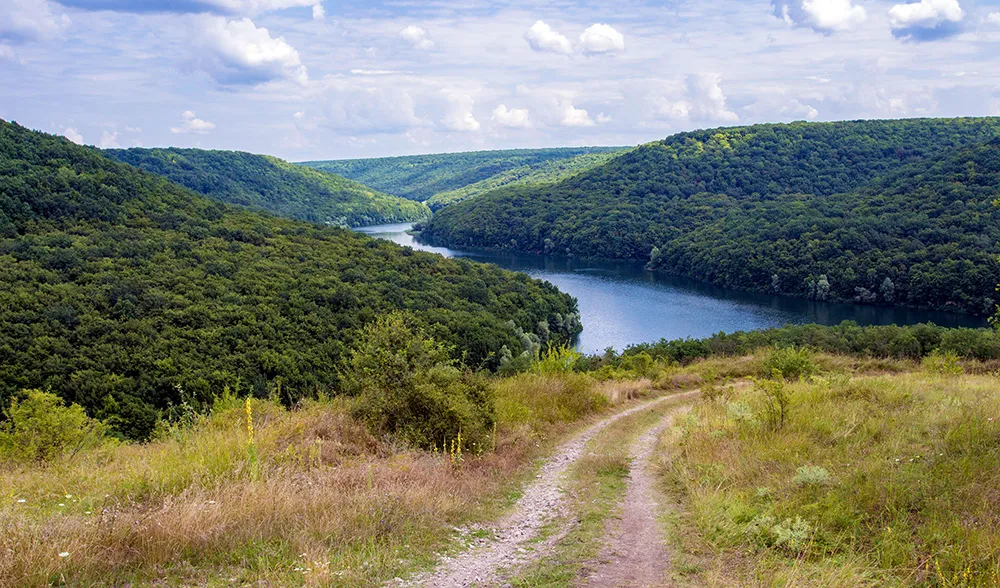
Materka canyon
The places here are extremely picturesque. This is where the Materka River, which once flowed through a deep canyon, falls into the Dniester. After the reservoir was created, the canyon turned into a beautiful bay resembling Norwegian skerries.
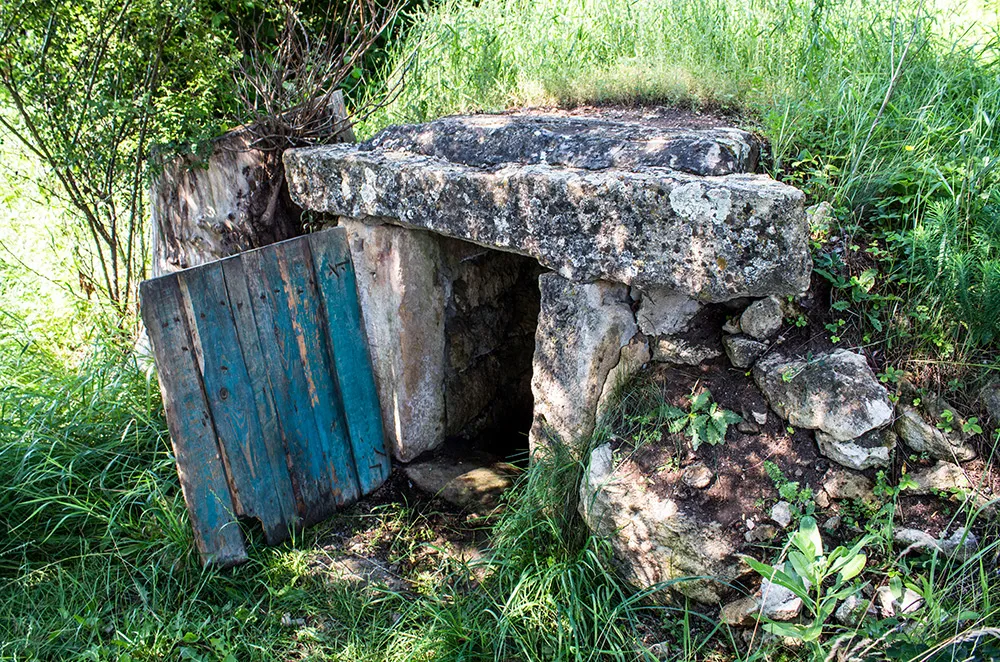
This part of Podillia was once famous for its stonemasons, so it is no surprise that the wells here are hidden in “little houses” made of dressed blocks. We came across one, but locals say there are quite a few such wells.
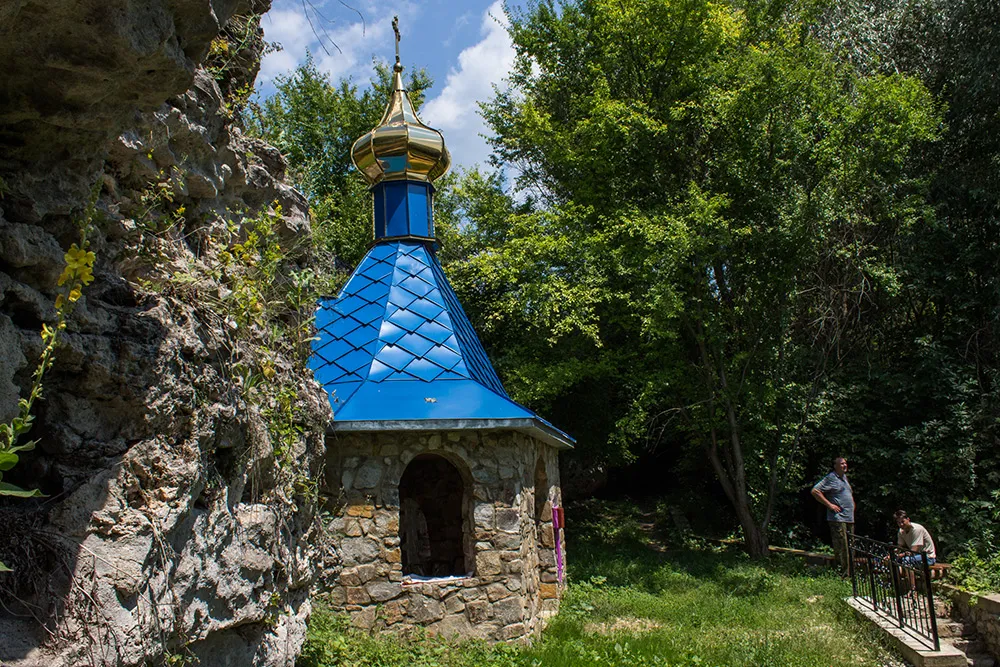
The most interesting spring is in a rock chapel-grotto (locals will tell you how to find it). It was once perhaps the most romantic spring chapel in Podillia. Sadly, after the “improvement” of 2012 it lost its charm.
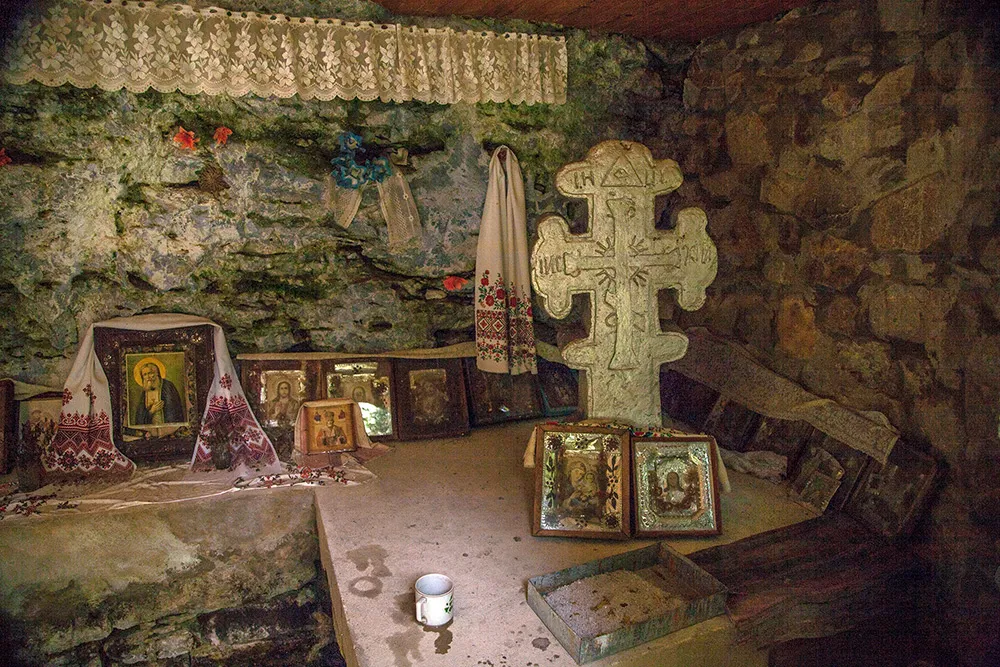
Earlier there was a small grotto here under a picturesque rock, from beneath which a spring with very tasty water flowed. In the early 20th century the grotto was turned into a chapel at his own expense and consecrated by a local peasant, Mykola Mykhailiuk.
However, it is not known who placed the two identical stone crosses on either side of the spring beneath the rock. It was hardly Mykhailiuk. By style they belong to the crosses typical of the first half of the 19th century.
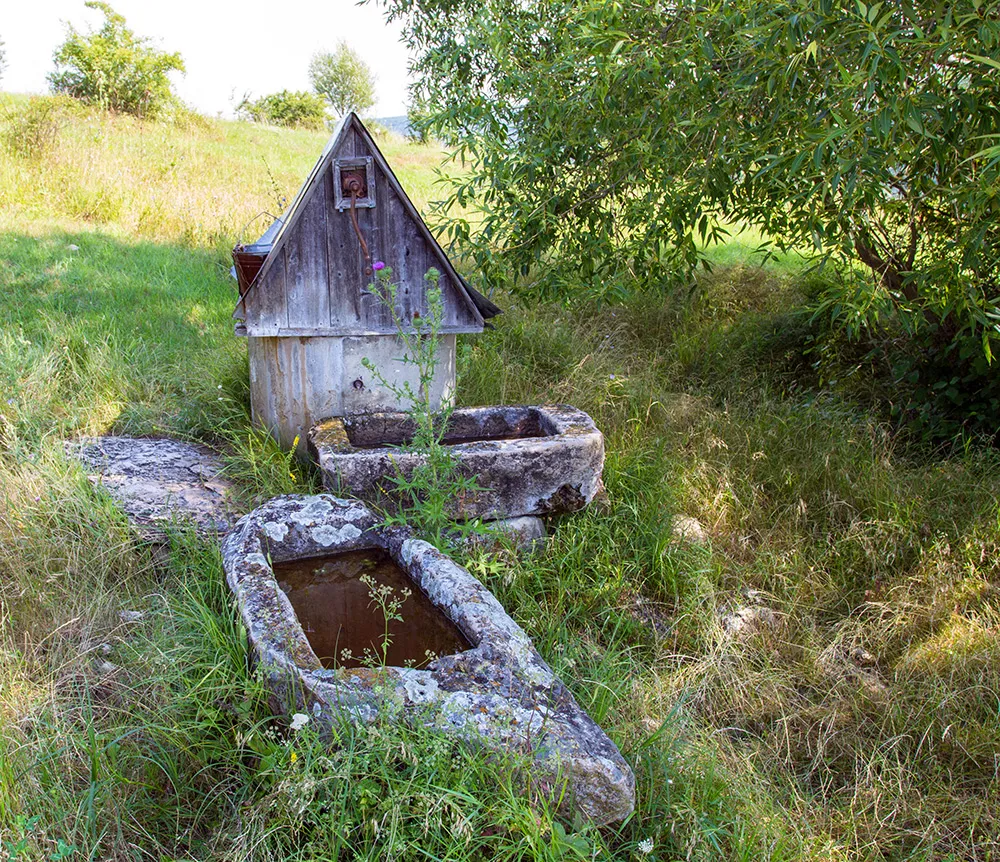
Unfortunately, the local Orthodox decided that the unique cave chapel was not what the village needed, and in its place put a standard “chasovnia” (wayside chapel) with a Muscovite tent roof and the same Muscovite “little onion” dome, of which there are hundreds (if not thousands) from the Donbas to Transcarpathia. The faithful also diligently painted the old crosses with revolting “silver paint”, like some provincial Lenin.
Above the ravine-bay, below the ramparts of the hillfort, stands a very picturesque well. This is slightly off topic, but still worth mentioning! It is interesting both for its picturesque backdrop and for two large old stone troughs for watering cattle.
The Armenian well near Sataniv
The village of Kamianka, formerly Viitovyna, belongs to the ancient town of Sataniv beyond the Zbruch. Once the town’s landlords gave this hamlet to the Sataniv viits (town magistrates) for their use: the income from the village was their salary. Under Soviet rule the toponymic reference to the former Magdeburg-law liberties was deemed “ideologically harmful” and replaced with Kamianka, evidently after the stones of all sizes on the neighbouring Usykova (Husykova) hill.
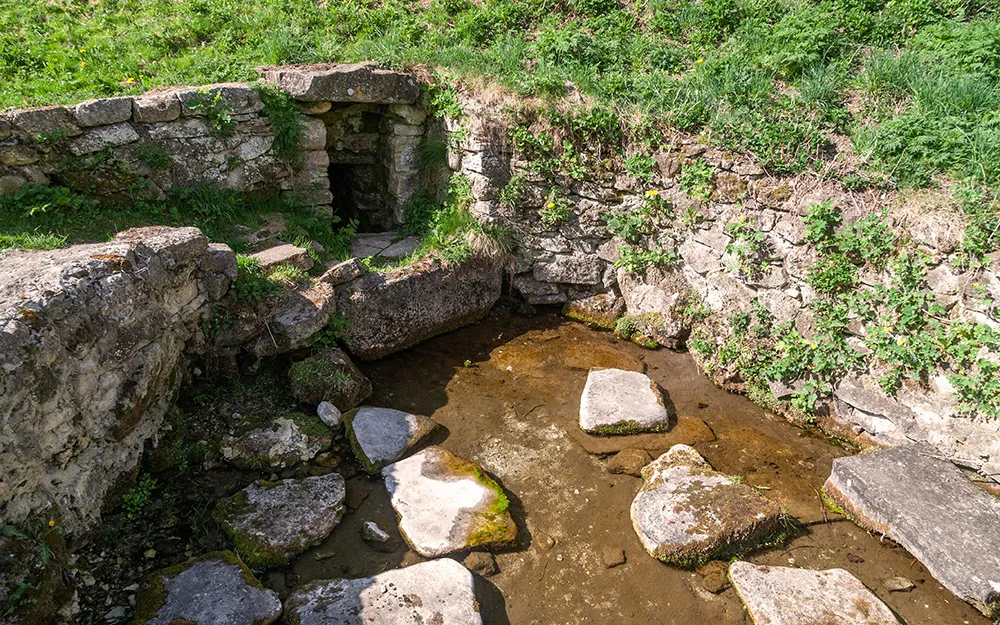
On the south-eastern outskirts of this village you can see an interesting site that local old-timers call the “viit’s stone house” or the “Armenian well” (49°13’17.1″N 26°16’56.8″E / 49.221405, 26.282442). This well-house is a structure of stone surrounding a powerful spring that wells up at the foot of the hill. The water forms a sizeable stream that flows into the Shondrova (Shmaivka) River, a tributary of the Zbruch.
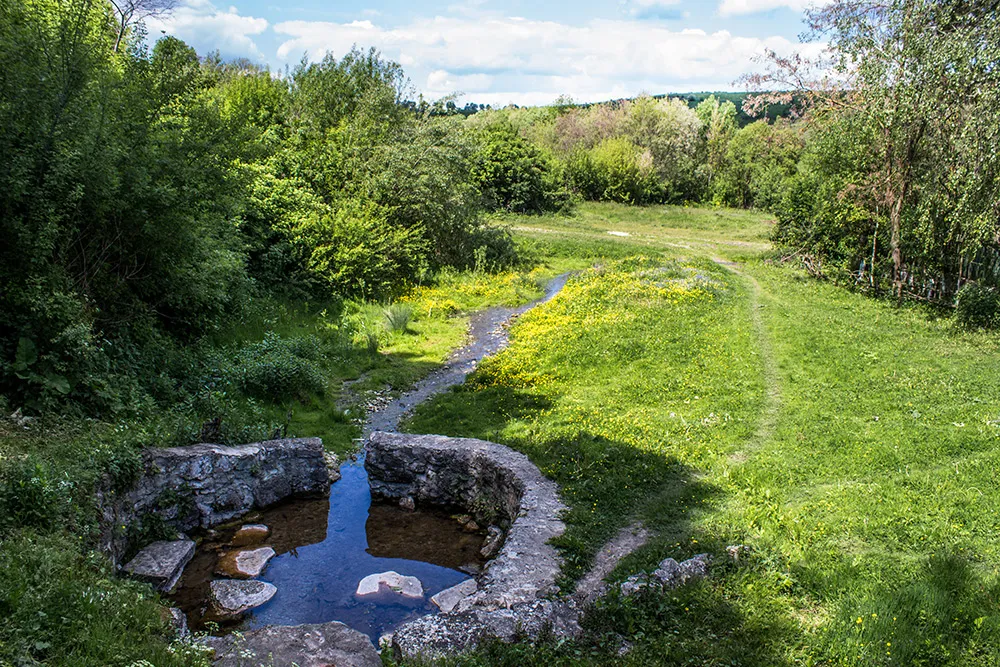
The point where the water emerges is in a small stone hut. Next comes a pool with a level stone bottom, surrounded by a low wall. Large flat slabs are scattered on the bottom: the so-called “pralo”, where women washed linen and clothes (and still use it for its purpose). Over centuries of active use the surface of these stones has become smooth as silk.
The point where the water emerges is in a small stone hut. Next comes a pool with a level stone bottom, surrounded by a low wall. Large flat slabs are scattered on the bottom: the so-called “pralo”, where women washed linen and clothes (and still use it for its purpose). Over centuries of active use the surface of these stones has become smooth as glass.
They say that long ago a plague epidemic came to Podillia, and this little well remained the only unpoisoned source of water. The greedy Sataniv viit, who held the village of Viitovyna for his use, decided to get rich and began taking huge sums from everyone who wanted to draw clean water. To keep out “freeloaders”, he ordered the spring to be fenced with a wall, hence the name “viit’s stone house”.
Suffering from the viit’s arbitrariness, the numerous Armenian community of Sataniv turned for help to their fellow tribesmen in Kamianets-Podilskyi. They decided to buy out the well. The viit demanded such a sum that the money (in gold coin) had to be carried on as many as two ox-drawn carts. Having bought the spring, the generous Armenians allowed anyone who wished to take water free of charge. That, supposedly, is how the name “Armenian well” arose.
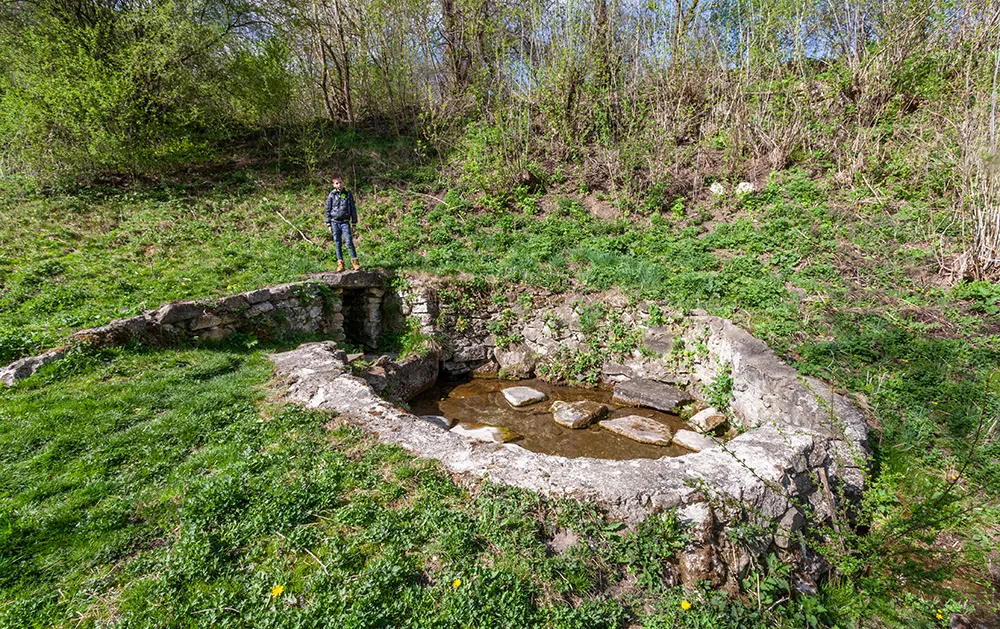
In fact it was called “Armenian” thanks to the Armenian masters who built this hydraulic structure. Despite its outward simplicity, it is quite complex and has almost no analogues in Ukraine. Something similar can be seen only in Yazlovets (now a village in Buchach district, Ternopil Oblast), where Armenians also worked. The Yazlovets Armenian well is known to have been built in 1611 (a record of this survives). So the Kamianka/Viitovyna structure can be dated to the same period.
Note that the walls around the perimeter of the pool were once much higher and ended in a vault. And the modern “pralo” arose on the ruins of a destroyed water-collection cistern.
Yazlovets. The hidden relic of the Armenian well
Yazlovets is a small village near Buchach, full of interesting and unique landmarks. Among them is the Armenian well.
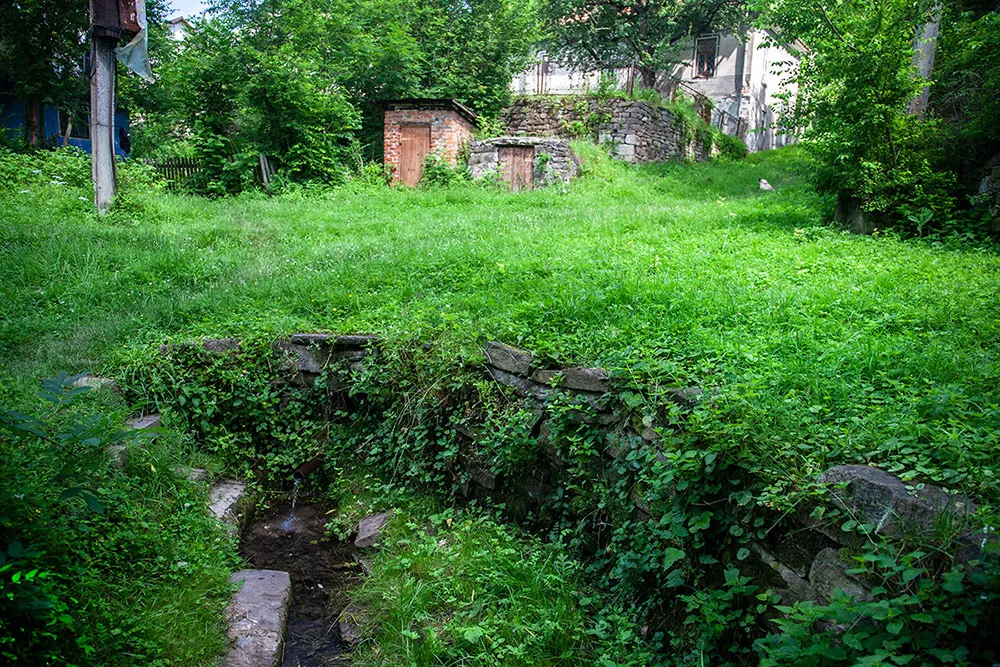
Outwardly it is a traditional spring that in Podillia is called a “tsiurkach”: a low stone wall with a cast-iron pipe from which water streams (“tsiurchyt”). In fact it is a complex hydraulic structure built by industrious Armenians as early as the 17th century. Its main part is hidden from the human eye. Before reaching the pipe, the water collects in a large underground reservoir. And it comes to it from a powerful spring hidden in a small masonry structure. From the outside it resembles the entrance to a village cellar. The door is locked, so few know what is inside.
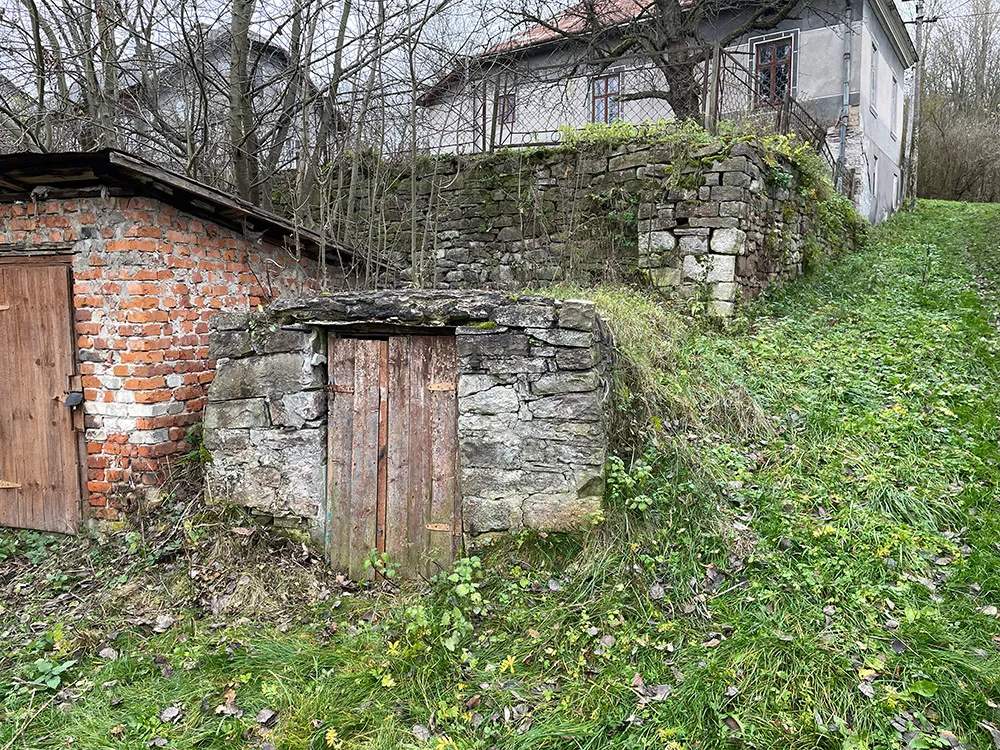
If one is lucky enough to look inside, one can see a carved slab with inscriptions in Latin and Armenian. Last year the expedition of the Ukraine Incognita NGO team managed to do so.
The top of the slab is decorated with an eagle (judging by a late 19th-century engraving, an angel?) with outspread wings, beneath which is depicted a cross?, adorned with fanciful plant decoration. Then comes an inscription in Latin: “The Armenian Akop built [this] for the public good in 1611.”
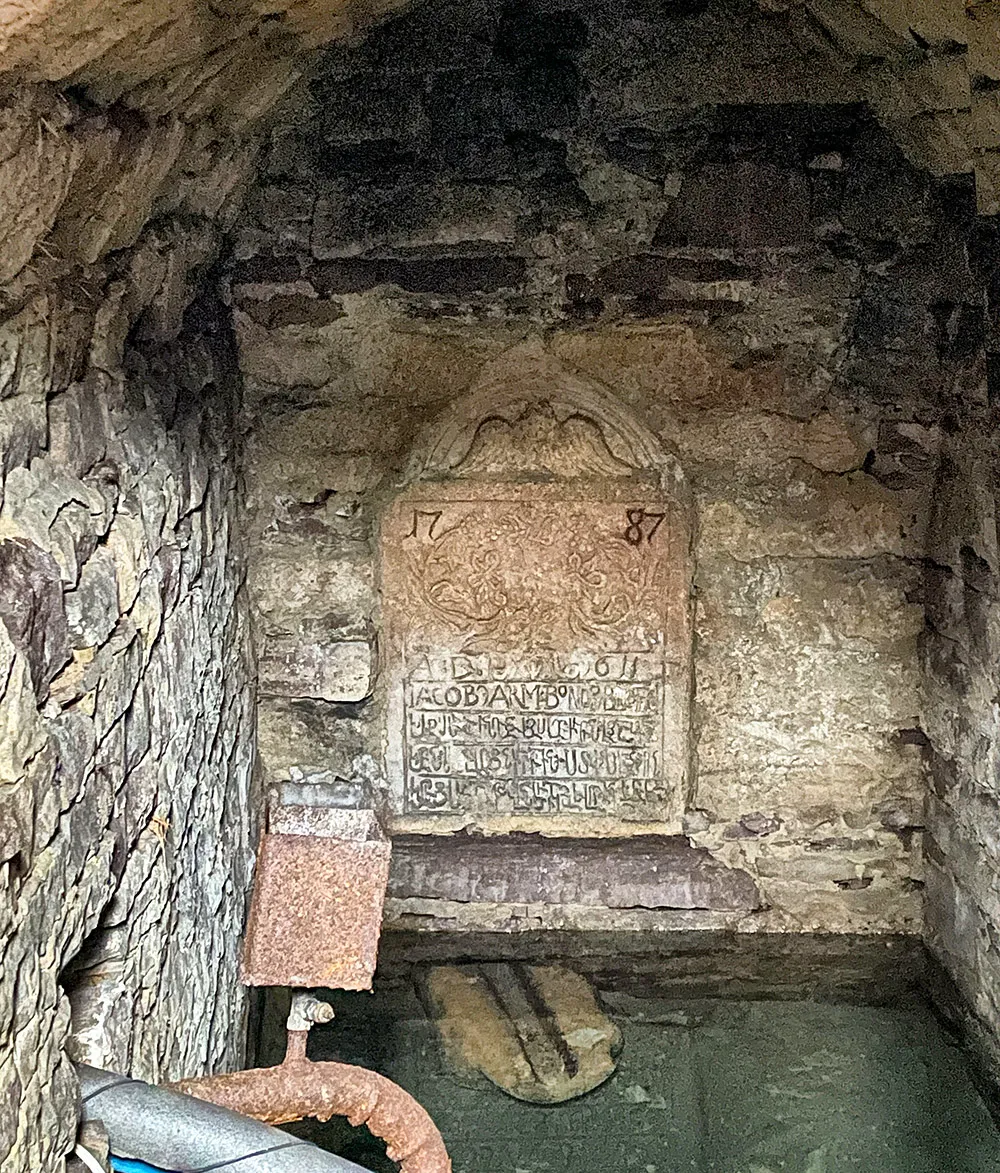
Below, in Armenian: “This cross and the spring built are the work of Akop and his brother Stepan. Completed in the year 1000 and 60 of the Armenian calendar. Abram [master stone carver] carried it out with devotion.”
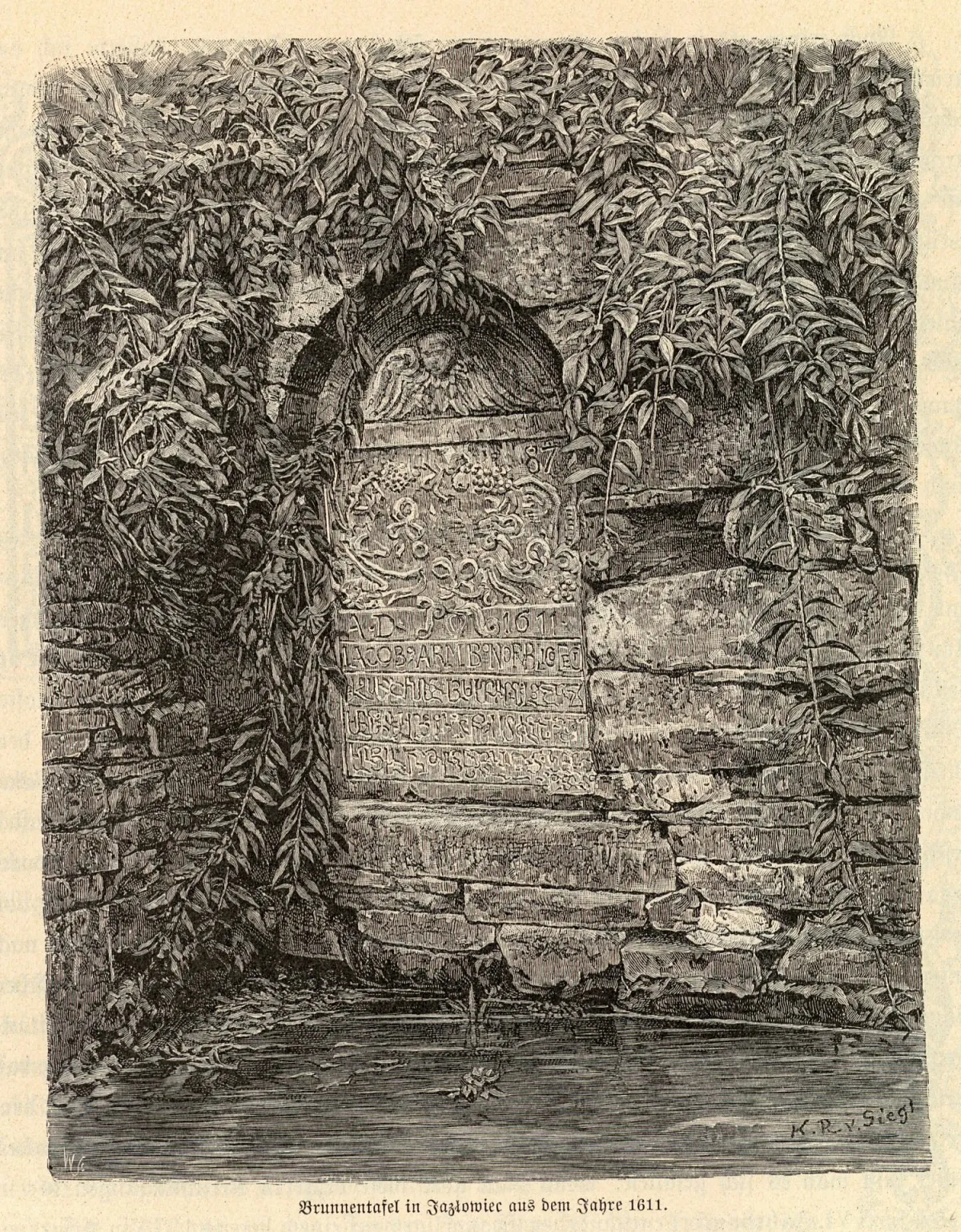
The date 1787 marks the year of another reconstruction.
A separate, extensive article on our site is devoted to this landmark.
The Husiatyn trough and gravestones
Husiatyn was once the only town lying on both banks of the Zbruch. In 1772 the river became a border and divided the town into two separate settlements with the same name. The spring we will tell about is located in “eastern” Husiatyn (in Khmelnytskyi Oblast).
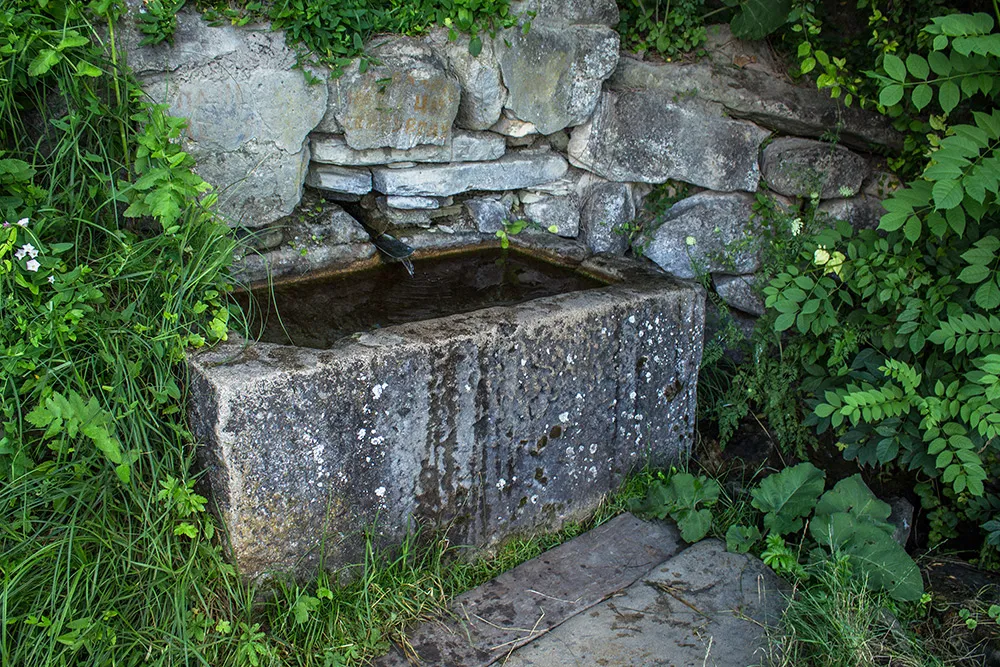
It is remembered above all because a stone trough has been placed in front of it. For this part of Podillia that is quite an unusual thing, although in the south of Khmelnytskyi Oblast and in the Vinnytsia region such troughs are found fairly often. For example, similar ones can be seen near the rock monastery in Bakota.
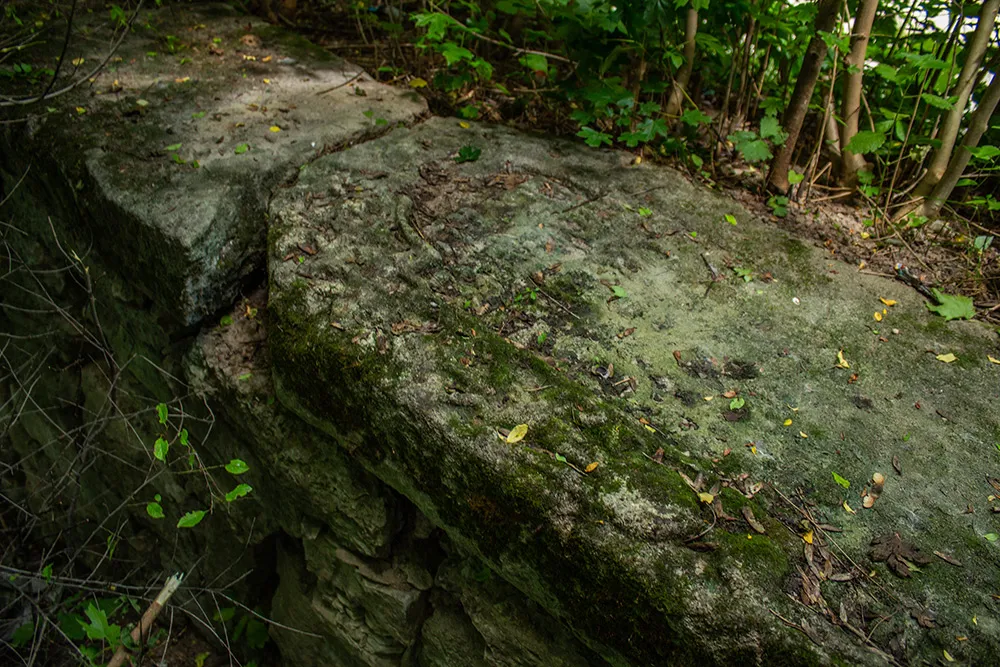
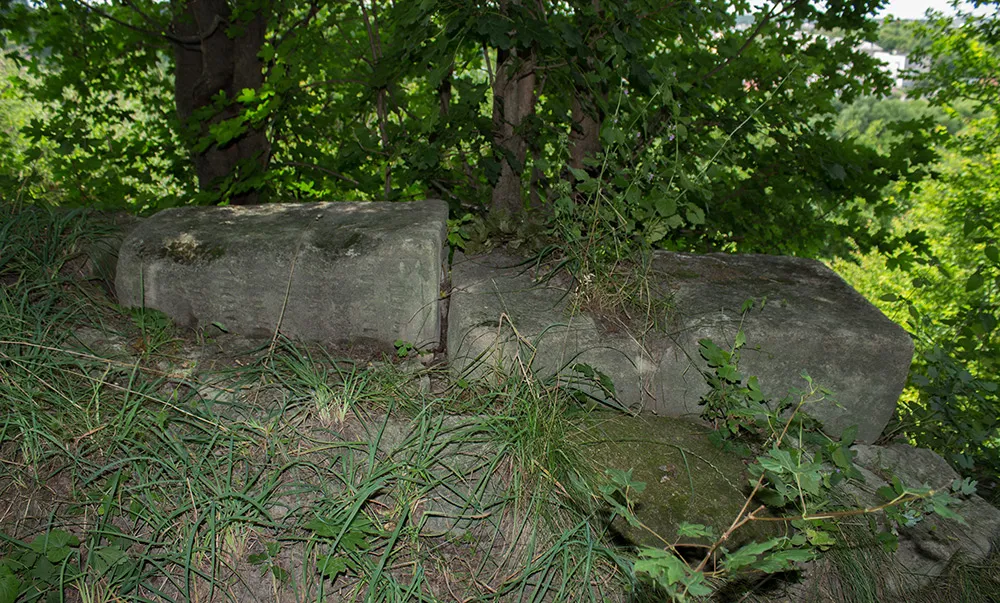
The road leading to the spring is interesting too. It stretches along the steep slopes of the Zbruch valley. In Soviet times gravestones were used for the retaining walls here. And it is a real “international”: Ukrainian, Polish and Jewish…
Kuzmyn. There used to be a mikveh and a pralo here
Kuzmyn is a former small town, now a village in the Horodok urban territorial community in the Khmelnytskyi region.
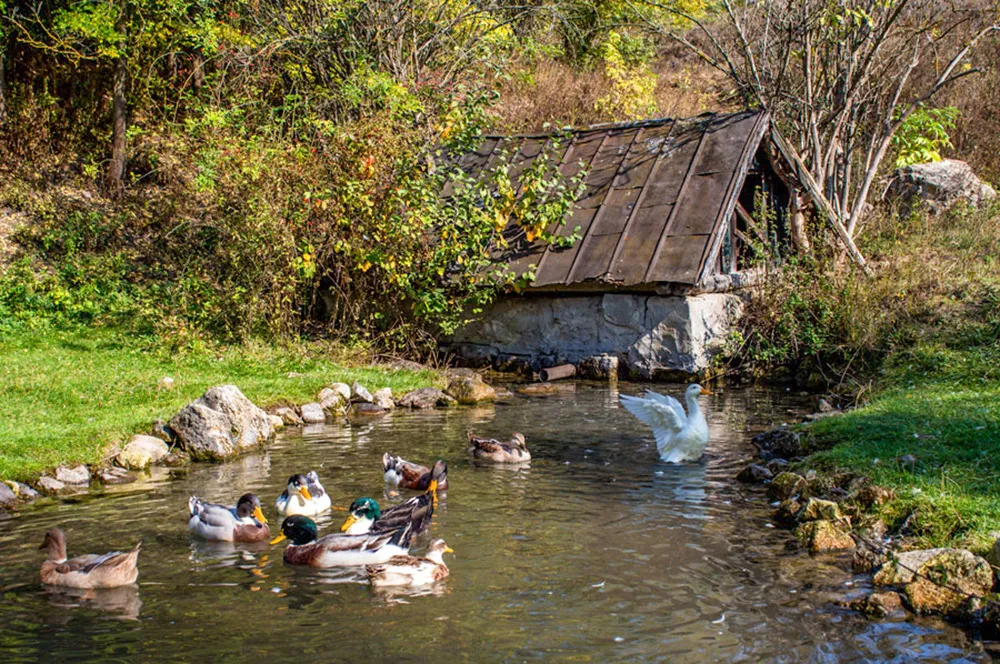
There are plenty of landmarks here: the Old Rus hillfort on the outskirts alone is worth attention. But our story is about springs.
Some twenty metres to the right of the old synagogue (first half of the 19th century) powerful springs well up. The largest of them forms a picturesque pond whose banks are lined with stones. Once there was a mikveh here, a place Jews used for ritual immersion. But it was dismantled long ago.
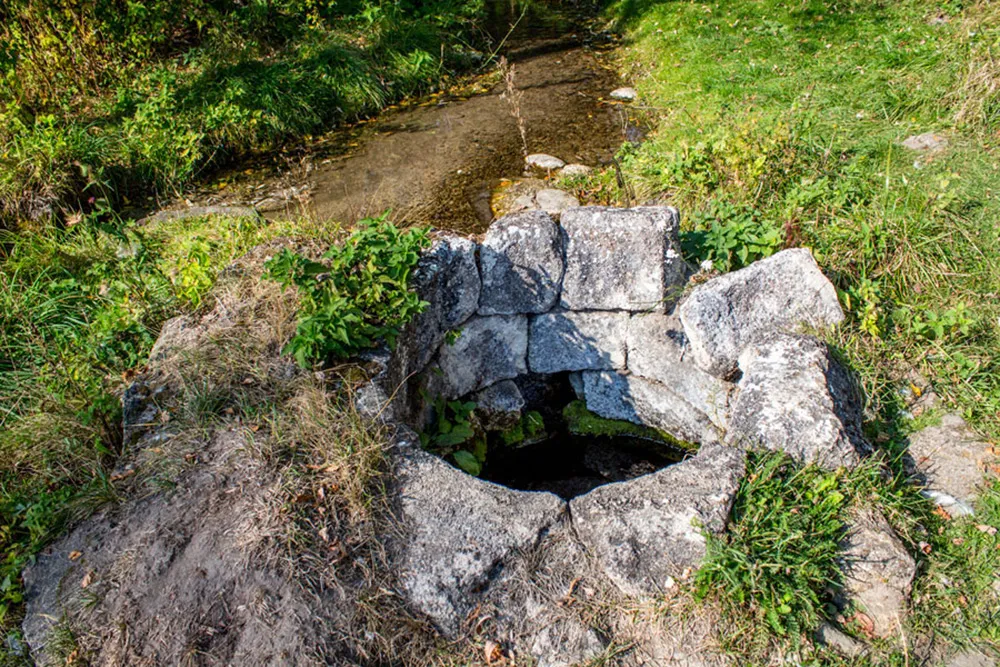
The second spring, enclosed in a ring of limestone blocks, still serves as an ordinary little well.
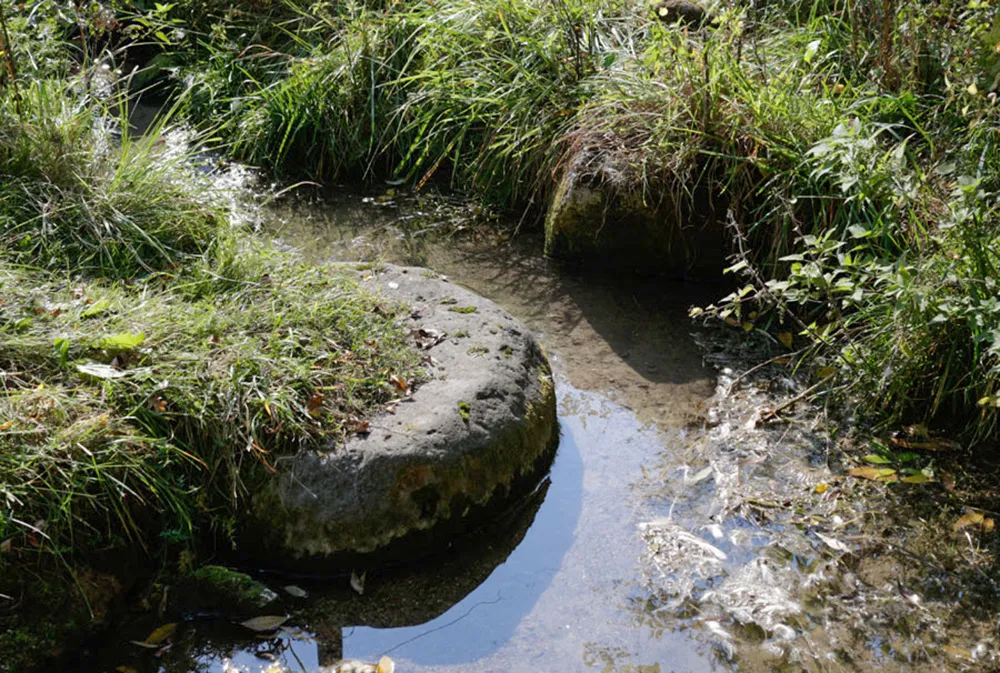
Near the springs a “pralo” was also once set up, a special place where Kuzmyn women washed linen. It is recalled by a distinctive flat stone resembling a large millstone.
The tastiest water. Nove Porichchia
Not far from Kuzmyn, in the same Horodok community, lies the village of Nove Porichchia. Here is a spring with perhaps the tastiest water not only in Podillia but possibly in all of Ukraine. This is not the author’s subjective opinion but the conclusion of several large groups of keen travellers who have been all over the country.
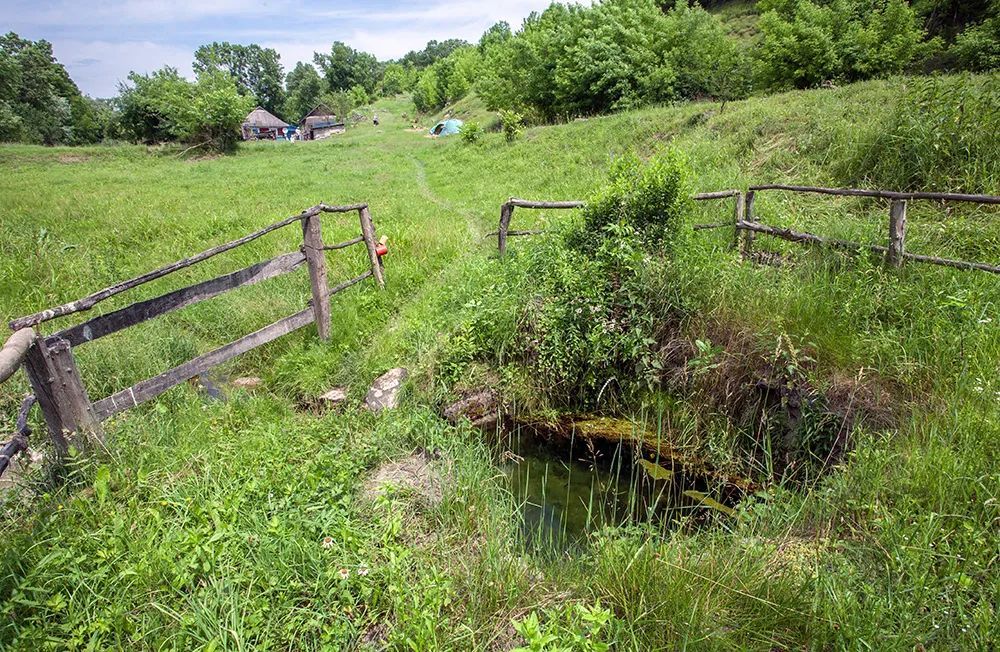
The quality of the local water was noticed very long ago. In 1876 the owner of the village, Henryk Skibniewski, built a large brewery here. It is known that the quality of beer depends chiefly on the quality of the water.
However, Mr Henryk did not enjoy his own beer for long. The very next year he sold his Nove Porichchia holdings to the Russian countess Catherine Ignatieva, a great-granddaughter of Field Marshal Kutuzov, the very one who so nicely burned Moscow (what a good man).
The countess did not bother with the business and immediately leased the brewery out, and later sold it to Leon Klave. Leon Henrykhovych was a brewer known throughout Podillia. Later, having sold the Nove Porichchia production, he built a brewery in Proskuriv (now Khmelnytskyi). Today beer connoisseurs know it as “Khmelpyvo”.
The products of the Porichchia brewery were known not only in Podillia but also in Kyiv, Petersburg, Vienna and Moscow.
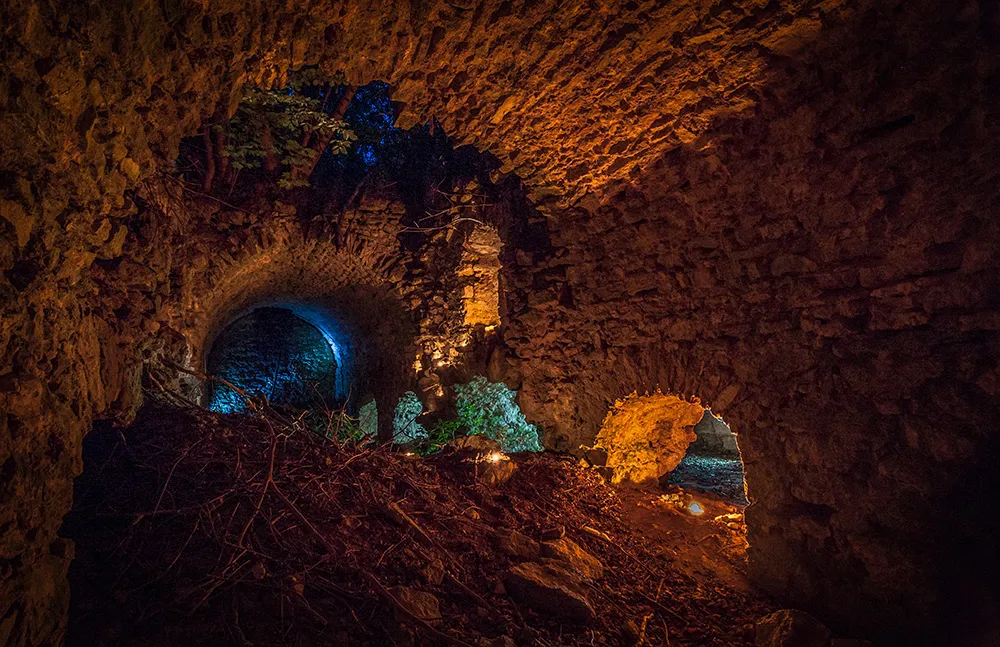
In 1914, with the outbreak of war, prohibition was introduced in the Russian Empire, and the brewery closed. In the post-revolutionary years the equipment disappeared first, and then thrifty Podillians took the buildings apart for building materials. Today all that remains of the brewery are grandiose and very picturesque cellars.
The most beautiful spring
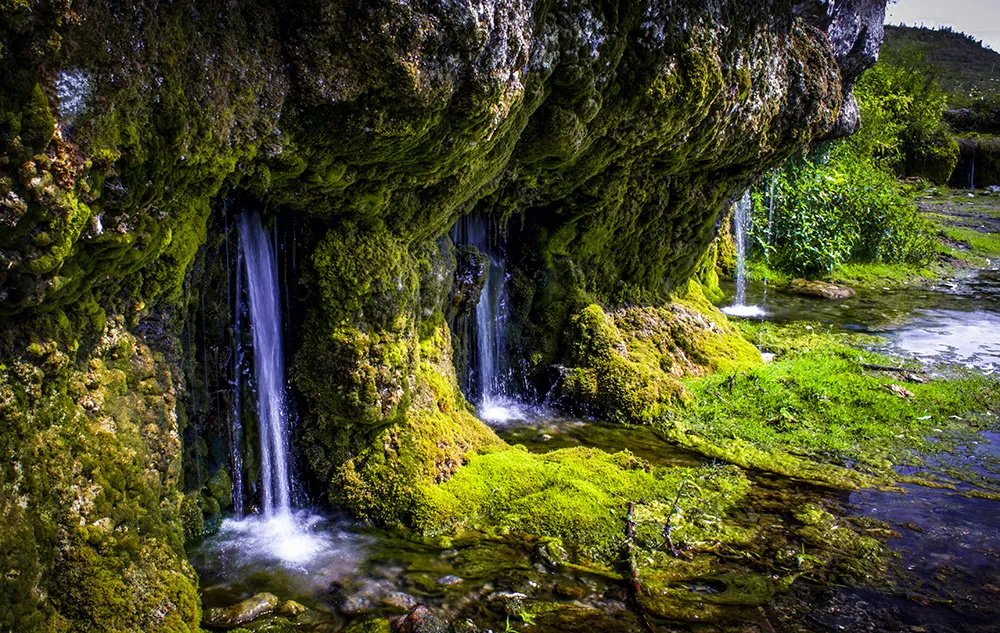
Perhaps the most beautiful spring of Podillia could be seen in the village of Sharivka (formerly the small town of Sharavka) in the Khmelnytskyi region. In the whole history of travelling around Ukraine (and not only Podillia), the team members of the Ukraine Incognita NGO have never met anything like it! It is possible that it could have claimed the title of the most beautiful spring in Ukraine.
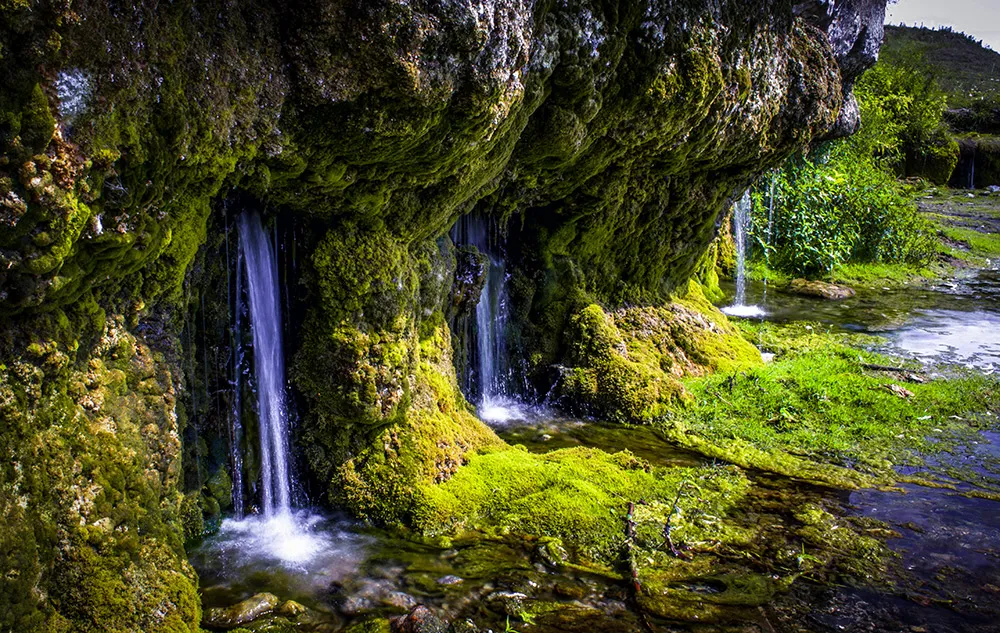
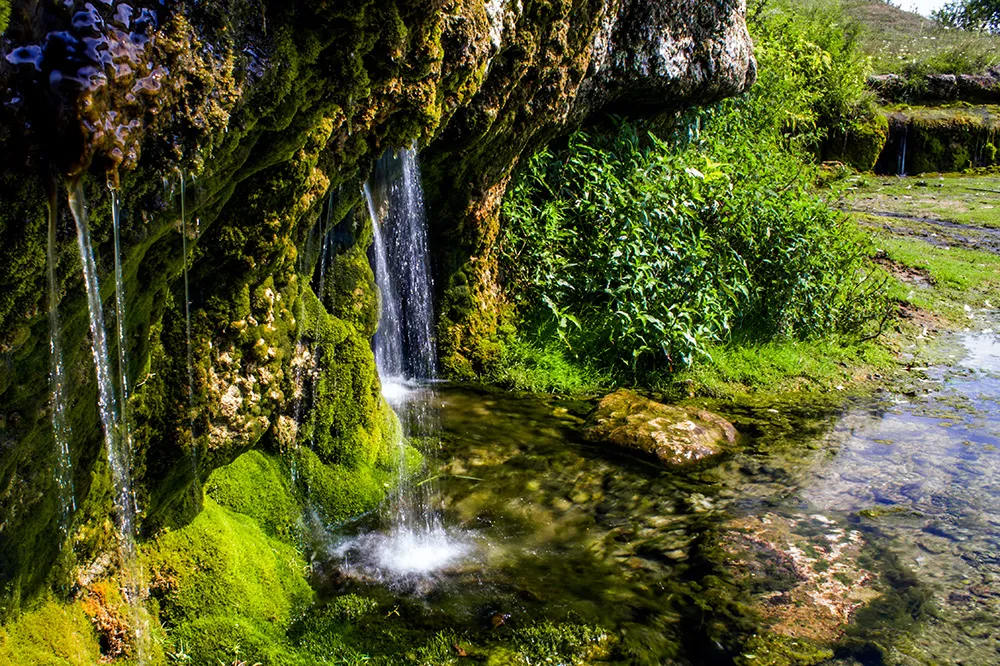
Imagine a rock amphitheatre about 20 metres long and 2.5–3 metres high. From this rock, from a height of half a metre, a dozen and a half silvery jets cascade. It is a truly grand natural fountain with very tasty and clean water. The jets form a small pond from which a sizeable stream flows. Unfortunately, photographs cannot convey the full wonder of this sight.
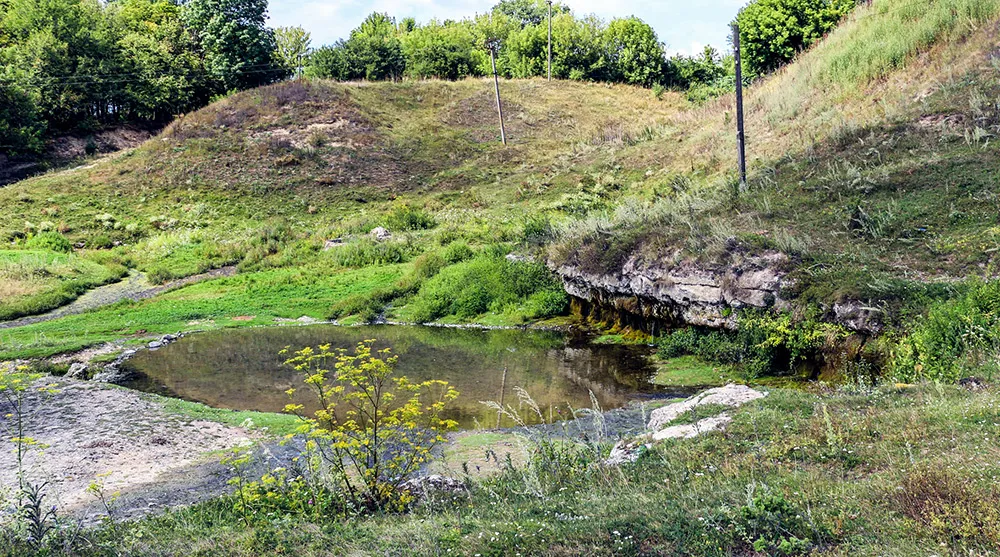
A few years ago local villagers decided to “improve” the spring. Now it is convenient to draw water from it, but the landmark itself has undergone significant changes and lost much of its original beauty.
Text and photos: Dmytro Poliukhovych


