

The King of the Illuminati has returned to his homeland
On 18 April, in the reading room of the Central Public Library of the Horodok Territorial Community (Horodok, Khmelnytskyi Oblast), a presentation took place of the study “Tadeusz Grabianka, King of the Illuminati” by Dmytro Poliukhovych, a member of the Ukraina Inkognita team, journalist and local historian, published by Ruslan Halikov’s publishing house (Kyiv).
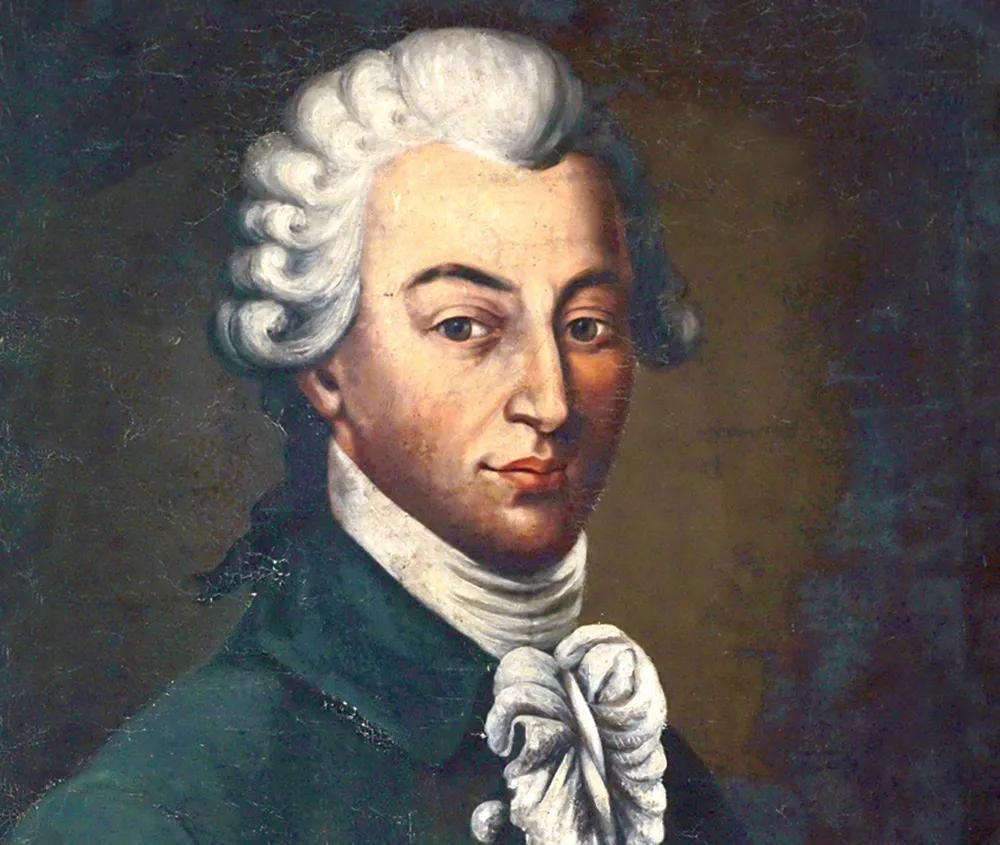
Tadeusz Grabianka. Portrait by an unknown 18th-century artist. Kept in the Lviv Historical Museum. It probably comes from the Grabianka house in the village of Kupyn
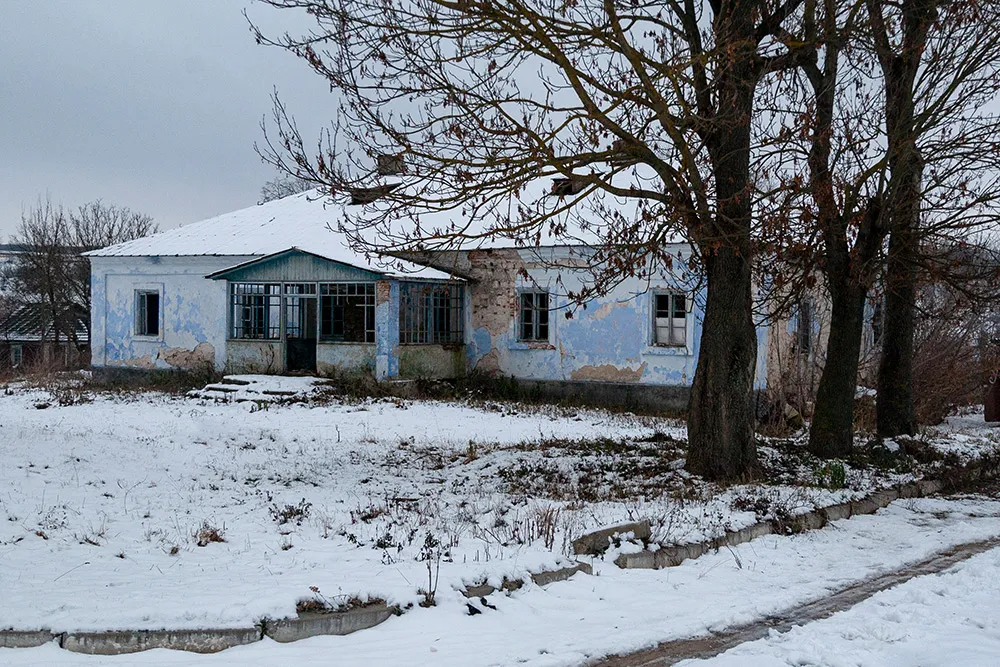
The Grabianka house in Kupyn, Khmelnytskyi Oblast, where the mystic’s portrait was most likely once kept
The book is devoted to the life of Count Tadeusz Grabianka, an outstanding Podillian, Freemason, mystic and Illuminatus.
The Podillian nobleman Tadeusz Leszczyc Grabianka is one of the few 18th-century historical figures connected with Ukraine to whom dozens of serious scholarly works and hundreds of popular-science publications have been devoted all over the world (the USA, Britain, Poland, Germany, France, Portugal, Russia and so on). And no wonder! It is enough to recall that in the second half of the 19th and even at the beginning of the 20th century a number of respected researchers of Masonic and occult societies expressed sincere conviction that the famous Count Cagliostro and the Podillian Count Grabianka were one and the same person!
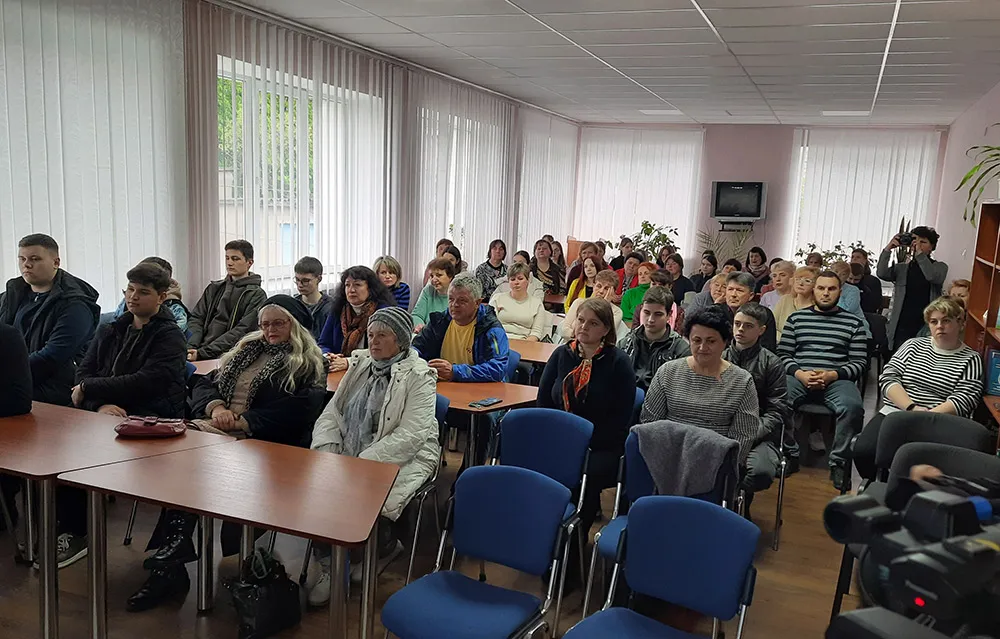
Many people came to the presentation. Here and below, photos from the presentation are by A. Savchenko. The others are by Ukraina Inkognita
Grabianka became the creator of a unique para-Masonic community, the Illuminati of Avignon (also known as the “New Israel” or the “People of God”), which had an enormous influence on the esoteric and occult thought of Europe at that time.
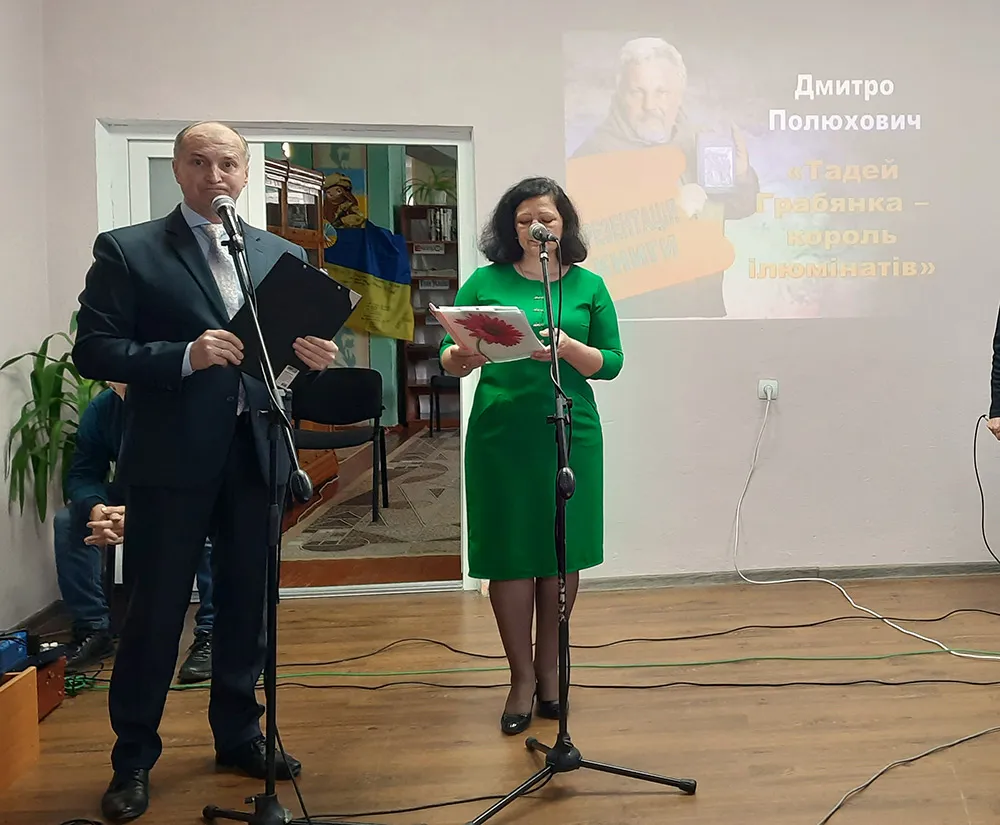
The event was hosted by Oleh Fedorov, head of the Department of Culture, Nationalities, Religions and Tourism of the Horodok City Council, and Nelia Humeiuk, chief bibliographer of the library
Grabianka managed to combine Swedenborgianism, esotericism, Hermeticism, theurgy, Kabbalah, spiritualism, alchemy, arithmomancy, “communication” with angels, Catholicism and more into a single harmonious system that had no analogues either before or after him.
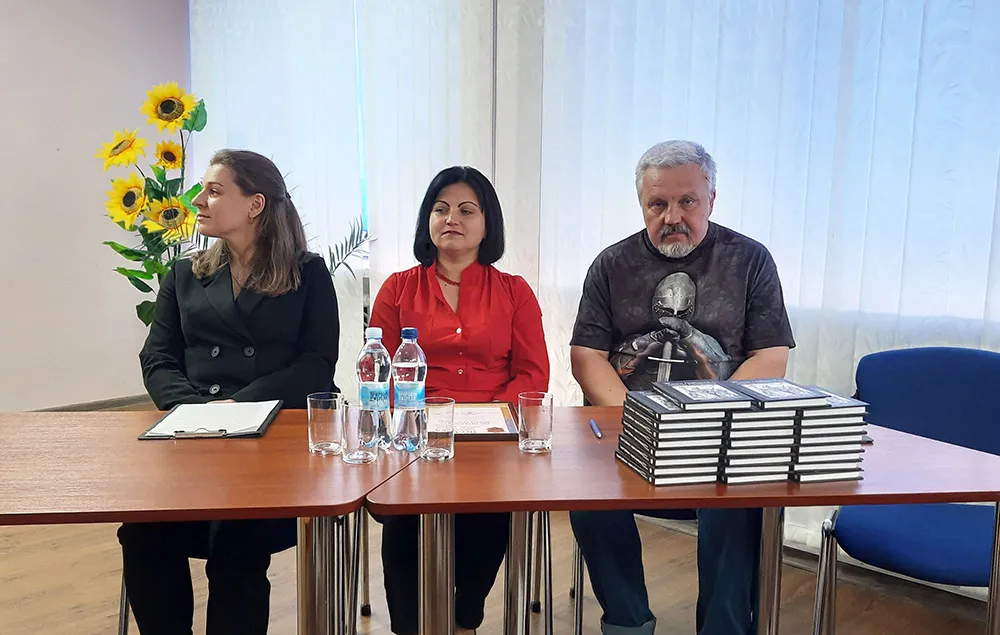
Nataliia Hotsuliak, director of the Horodok Local History Museum (G-museum), Olena Hrikh, secretary of the Horodok City Council, and Dmytro Poliukhovych.
The whole activity of the Illuminati of Avignon was subordinated to the idea of so-called millenarianism, which became the main reason for the existence of their secret community. This vision held that after some catastrophic events the face of the world would change and the new thousand-year cycle in human history foretold in the Book of Revelation would begin (Latin mille means “thousand”). Whoever was spiritually prepared for it would not only be saved in the whirlwind of future terrible events but would also take leading places in the renewed world. Accordingly, the main aim of the society was to lead its adepts into the thousand-year reign of Jesus prophesied in the Apocalypse and ultimately to create a new Kingdom of God, the “New Israel”. Grabianka was proclaimed its king in advance.
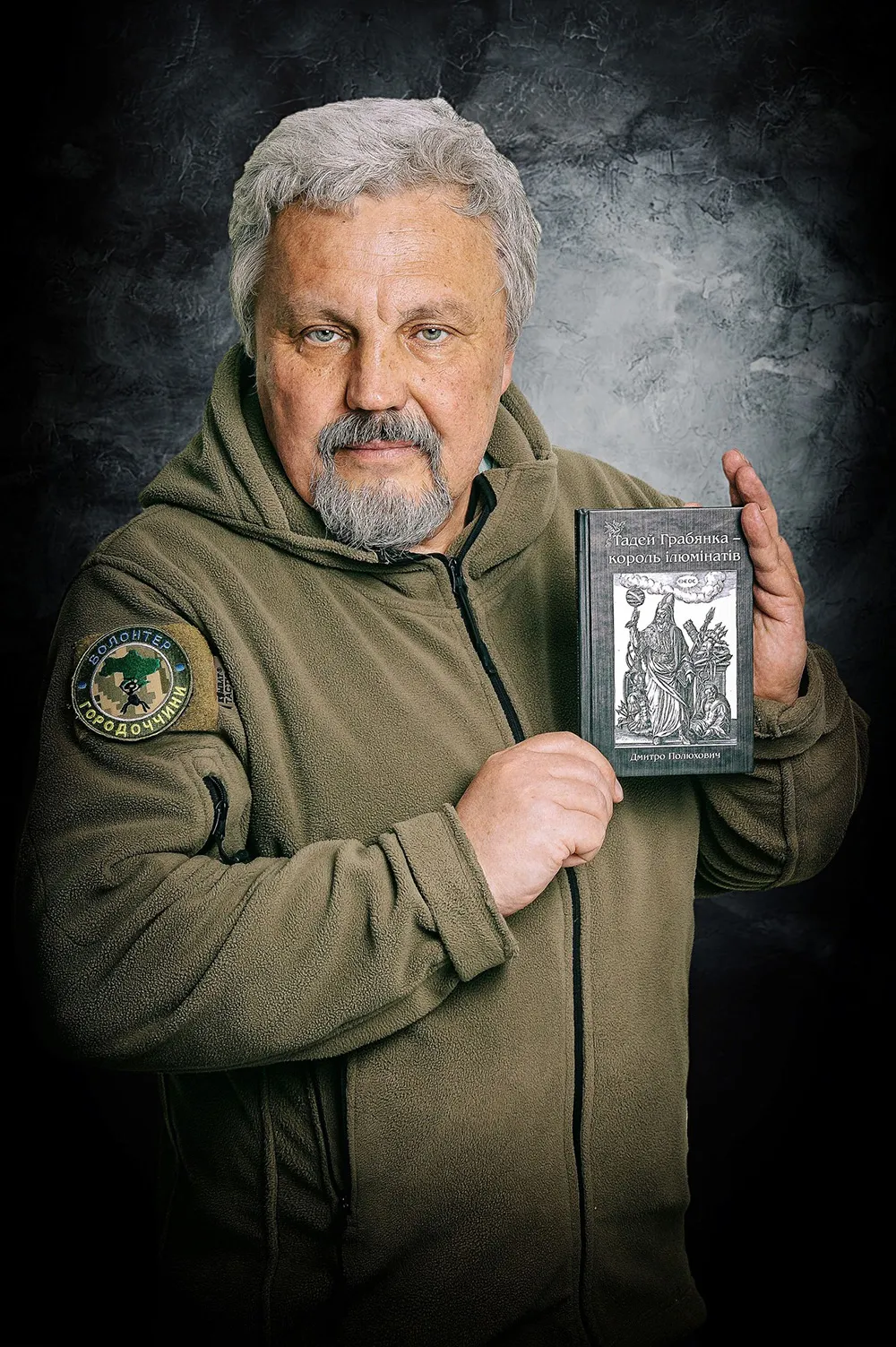
Dmytro Poliukhovych and his book. Photo by Ihor Motsnyi
As befits any respected prophet, the King of the People of God was tormented to death by the “kings of the earth”. By the personal order of the Russian emperor Alexander I, Grabianka was thrown into the casemates of the notorious Peter and Paul Fortress, where he died mysteriously (most likely of poison).
An irony of fate and a quirk of History. Soon after the prisoner’s death, not without the participation of adepts of the “People of God” in his immediate circle, the Russian tsar himself fell under the influence of the ideas professed by the Podillian he had tormented. This largely shaped Alexander I’s mystical worldview and became the foundation of the “Holy Alliance” of all the monarchs of Europe that he initiated, the world’s first international security structure, under whose aegis Europe lived from 1815 to 1853…
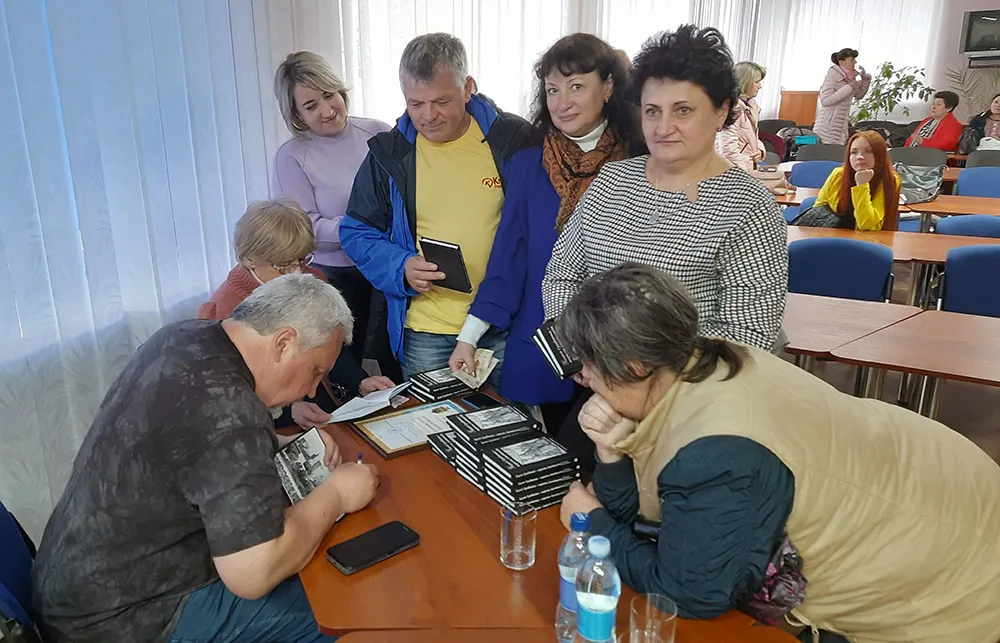
The autograph signing traditional for such events…
Despite the considerable interest in the figure of Tadeusz Grabianka around the world, in Ukraine practically nothing is known about him. We have a short article in Wikipedia (with a heap of mistakes) and a few dozen passing mentions in amateur local-history publications, often far from the truth. This book is the first fundamental attempt to bring Grabianka back to his homeland.
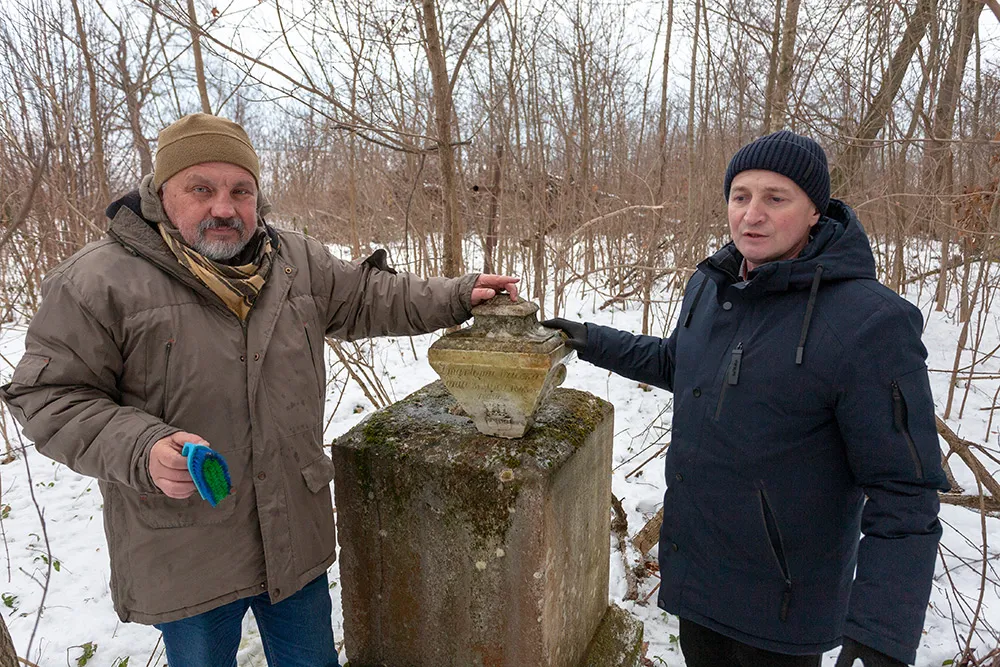
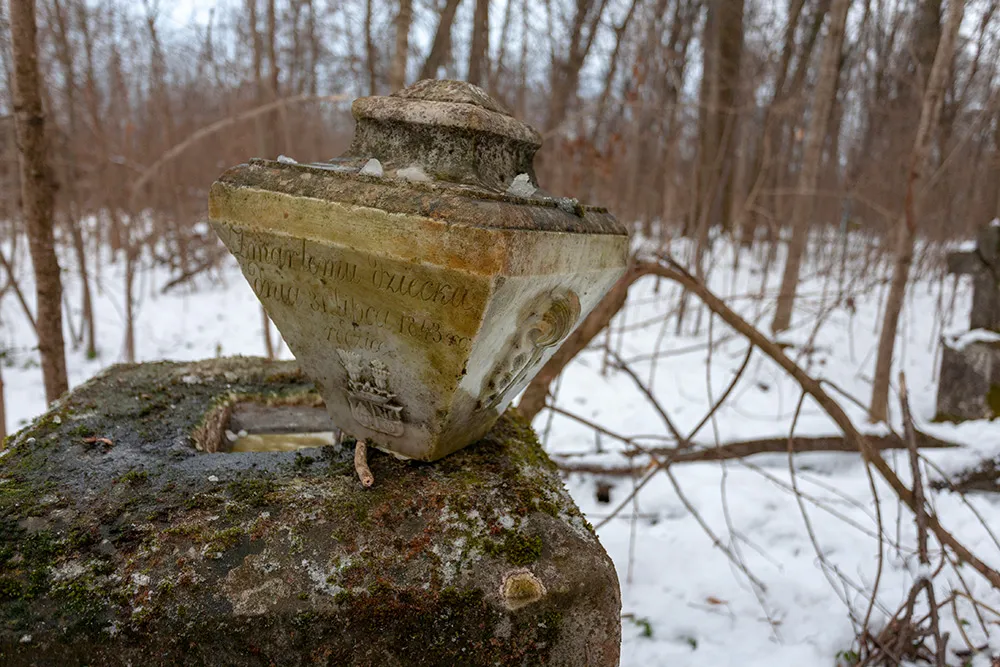
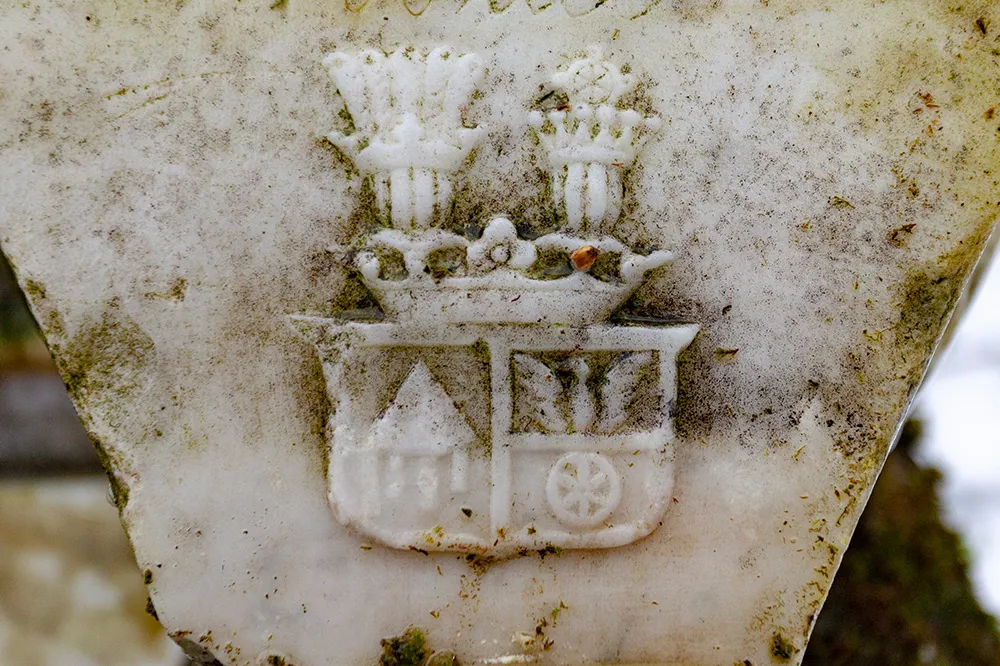
One of the mystical finds testifying to the “curse of Grabianka”. By this curse the mystic’s descendants meant all the misfortunes that pursued the family as punishment for the sins of their “heretic” ancestor. The grave of a yet unidentified great-grandson of the King of the Illuminati. Buried here is a child of his grandson Erasmus and Baroness Maria von Heismar. We see the Grabianka coat of arms “Leszczyc” and the coat of arms of the Barons Heismar. The find was made during a joint expedition of Ukraina Inkognita and the Department of Culture, Nationalities, Religions and Tourism of the Horodok City Council.
The book came into being in a largely mystical way. Mystical coincidences and chance events accompanied the author throughout his work on the study.
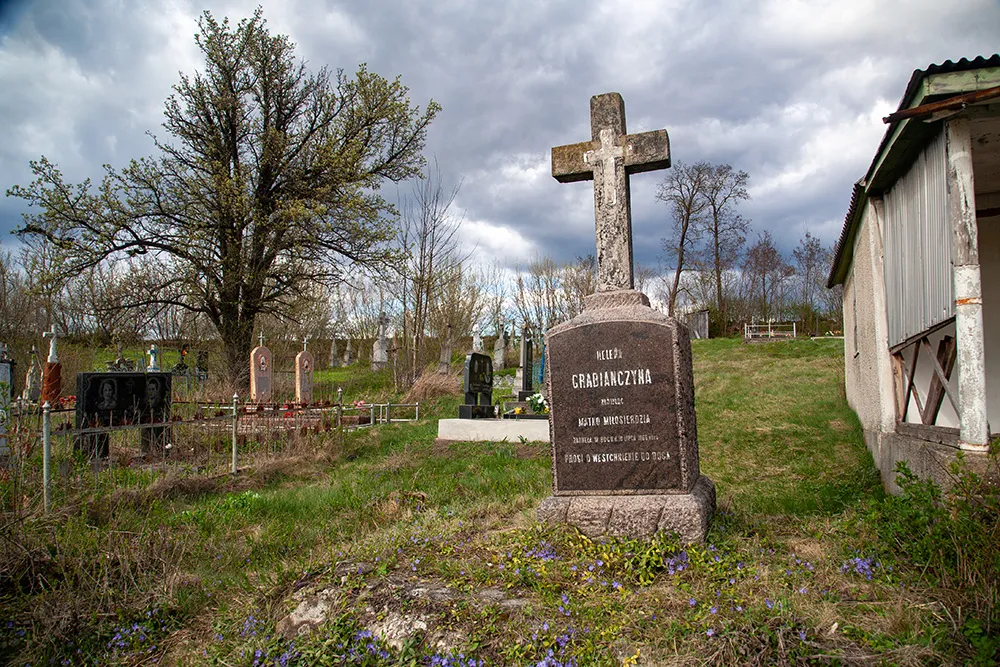
The grave of the mystic’s daughter-in-law (the wife of Erasmus, the wife of Tadeusz’s younger son). The find was made during a joint expedition of Ukraina Inkognita and the Department of Culture, Nationalities, Religions and Tourism of the Horodok City Council.
It all began with a request from the heads of the Horodok community to prepare brief profiles of well-known figures of the past connected with the Horodok area. When it came to Grabianka, it turned out that this was exactly the 215th anniversary of his death. The profile of the count was meant to take half an hour at most, but the work was so absorbing that in the end it grew into a whole book.
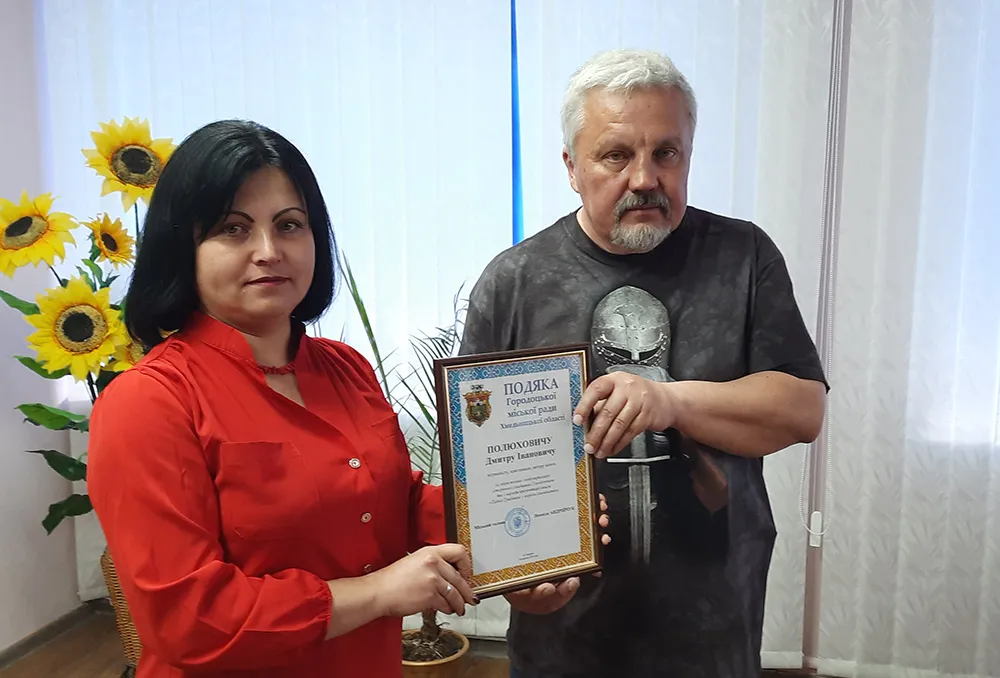
A letter of thanks from the mayor of Horodok, Neonila Andriichuk (presented by city council secretary O. Hrikh)
Then came a whole series of further mystical and astonishing coincidences and historical discoveries. Evidently the turbulent soul of Count Grabianka very much wanted to be remembered in his homeland.
Recall that Tadeusz Leszczyc Grabianka was born on 8 January 1740 in the village of Raikivtsi, Khmelnytskyi Oblast. He had residences in the villages of Ostapkivtsi, near Horodok, and Sutkivtsi, near Yarmolyntsi. In their honour he called himself Count Ostap and Count of Sutkivtsi. He was tormented to death on the orders of the Russian tsar in the casemates of the Peter and Paul Fortress on 6 October 1807.
The book can be ordered at halikoffr@gmail.com


