

Kuianivka

· 4 min read
It would probably not be an exaggeration to say that in Bilopillia district the village of Kuianivka is a must-see for tourists.
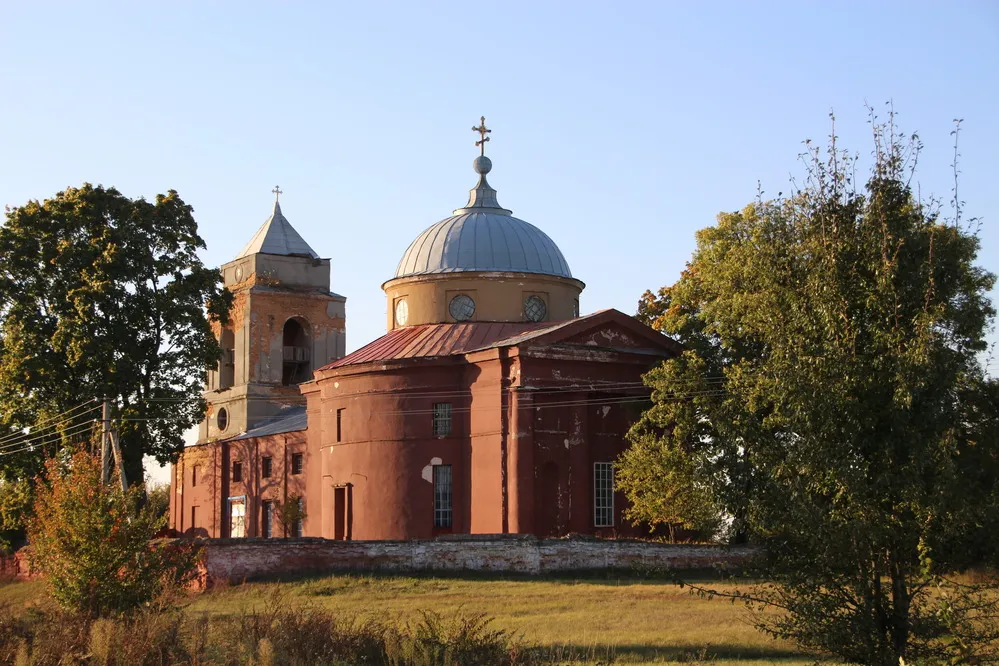
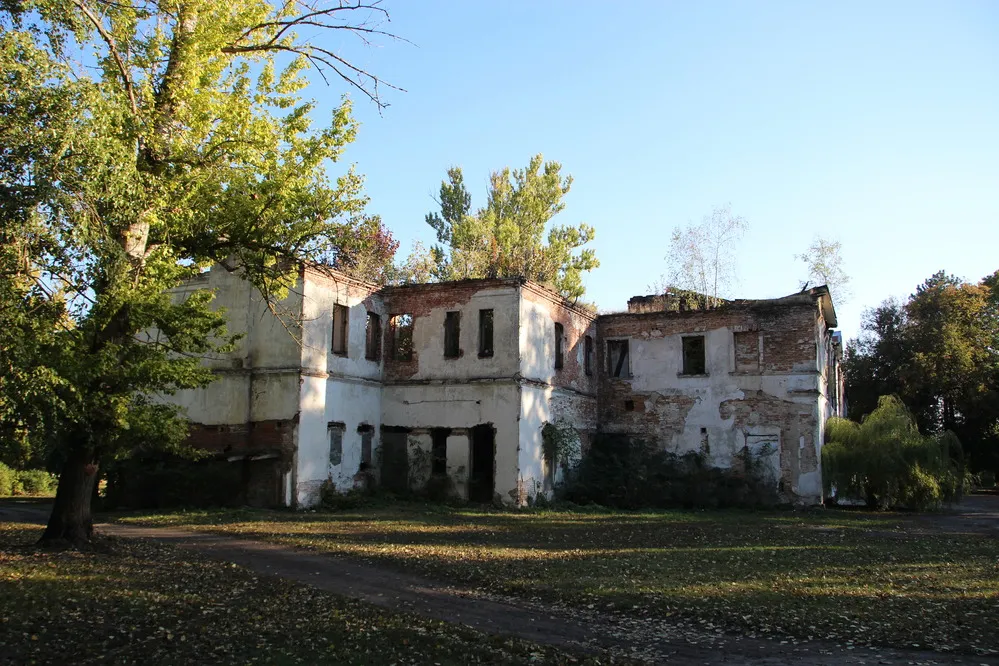
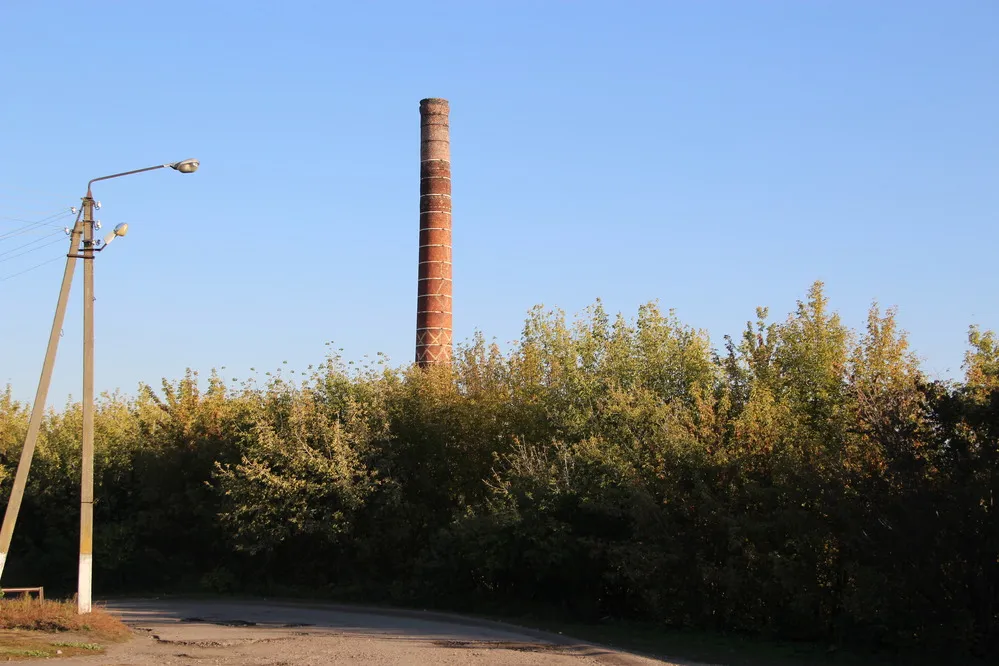
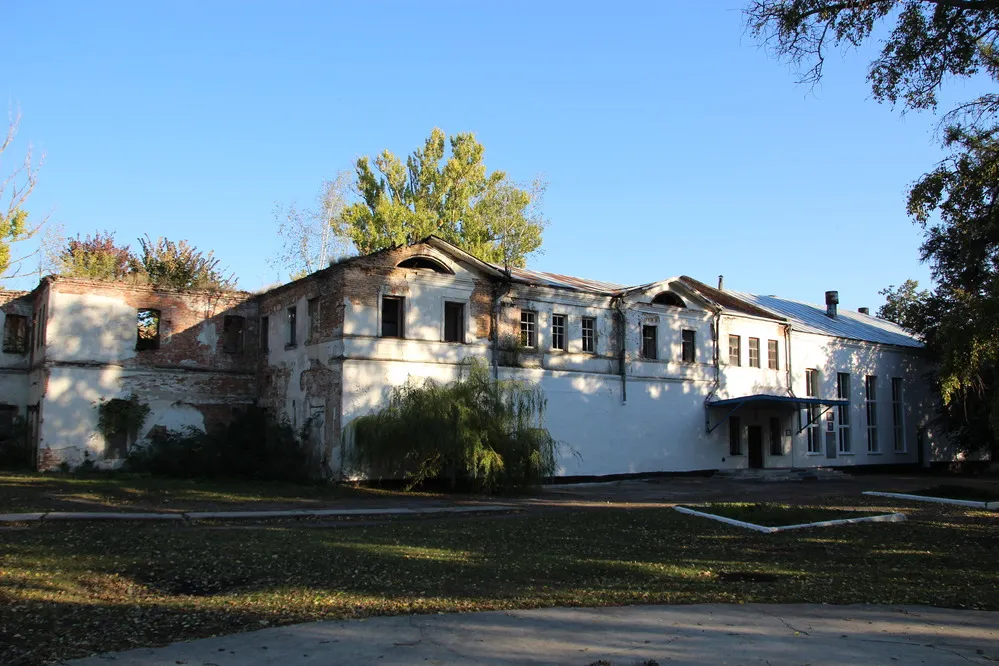
The village has preserved an entire palace and park complex and a majestic church as well (both, by the way, monuments of architecture of national significance), and they are closely linked to one family that owned lands in this village and the surrounding ones and had brick and sugar factories, estates and so on. For some, the word “preserved” may seem out of place in this case. But there is no way around it; we too would like all monuments to look as decent as possible. This does not diminish the significance and value of the Kuianivka monuments. Of the former ensemble there remain the manor house (practically a half-ruin), the church and part of the park. Oh, and the chimney of the sugar factory.
The first mention of Kuianivka dates from 1702. Unlike many free Cossack settlements on these lands, the village was a landowner’s and belonged to Stepan Kukil, the sotnyk of the Bilopillia company of the Sumy Sloboda Regiment, a native of Iași in Moldavia. The village was developed by Stepan’s son Fedir Kukil, who, by the way, was also a Bilopillia sotnyk. In 1750 a wooden church of St. John the Warrior was built in the settlement.
In the mid-18th century the Kukils became related to the Polish magnates, the Jasnopolskis, and since then their descendants have had a double surname. And when 15 years later Catherine II abolished the Cossack system, the Kukil-Jasnopolskis, as former Cossack officers, became nobles. The fortunes of the landowners grew more and more, as did the number of serfs (in 1773, of the village’s 835 inhabitants (men), 831 were landowners’ serfs).
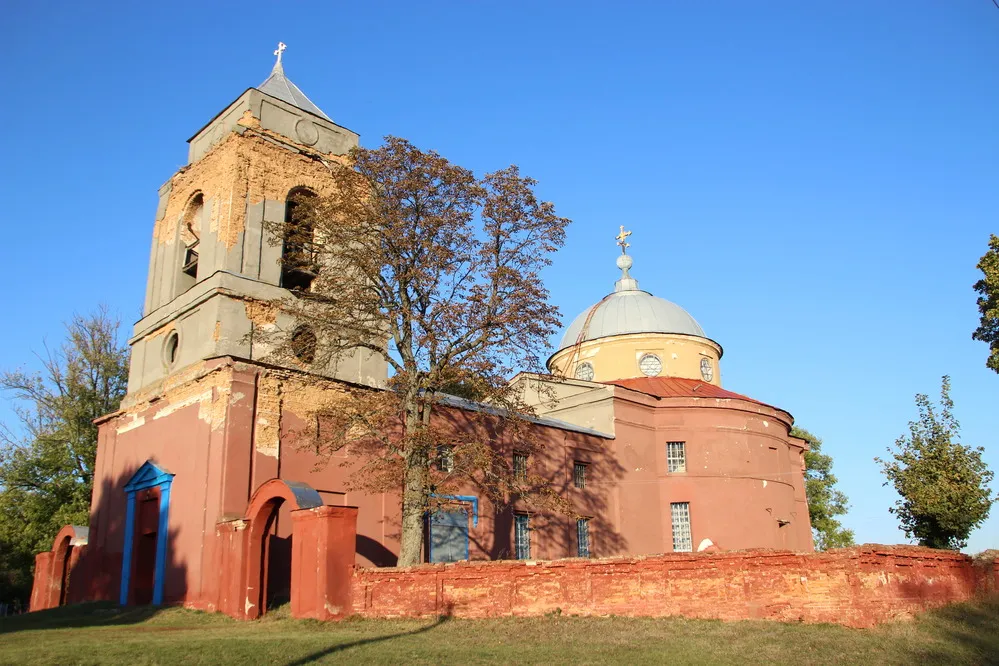
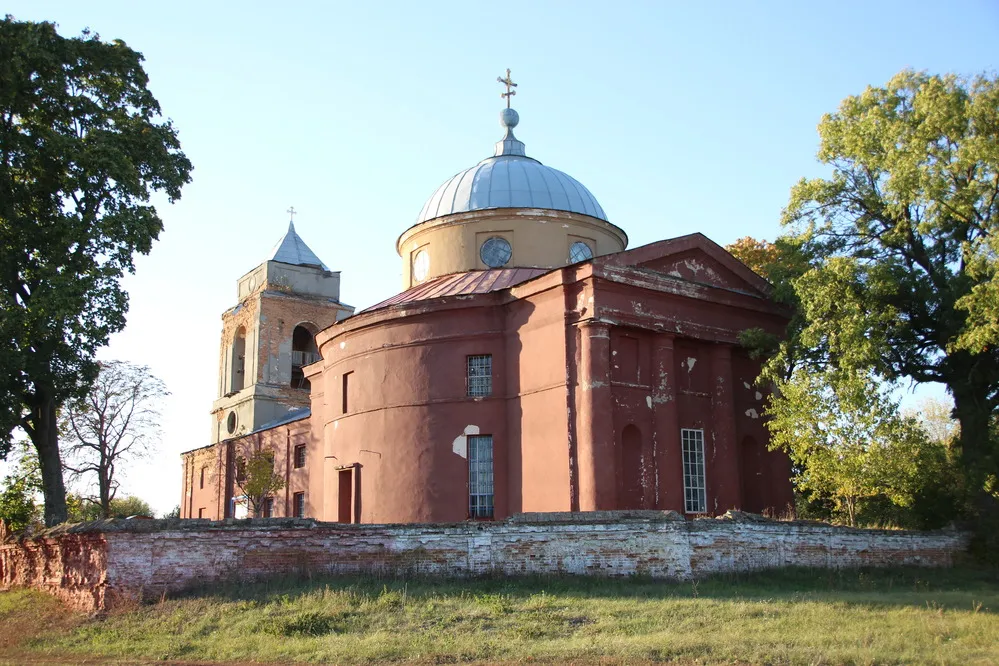
Stepan Kukil’s great-grandson, F. P. Kukil-Jasnopolski, built a new masonry Church of St. John the Warrior in 1812. There is a legend that the church was built by captured Frenchmen. The church is one of the finest examples of Classicism and impresses with its aesthetic completeness. At first the church and the bell tower stood separately, and in 1860 a reconstruction was carried out: the columned portico of the church was dismantled and the church was joined to the bell tower, and the arch of the main entrance was widened. Today the church needs repair (the walls have cracks and are crumbling, and the roof also leaks), though compared with the landowner’s manor it still looks much better.
The manor was built by the Kukil-Jasnopolskis in the 1840s, also in the Classical style. We could not describe it better than Yelyzaveta Novikova (Kapnist) did in her memoirs, so here is a quotation:
“I had never seen a better house than the one in Kuianivka. It was large and spacious, with many big high rooms with parquet floors, painted ceilings, a winter garden separated from the dining room by a glass wall, luxurious furniture, crockery, silver, paintings and statues. Around the house a magnificent park was laid out, in which stood the crypt of Kukil-Jasnopolski and his two sons.”
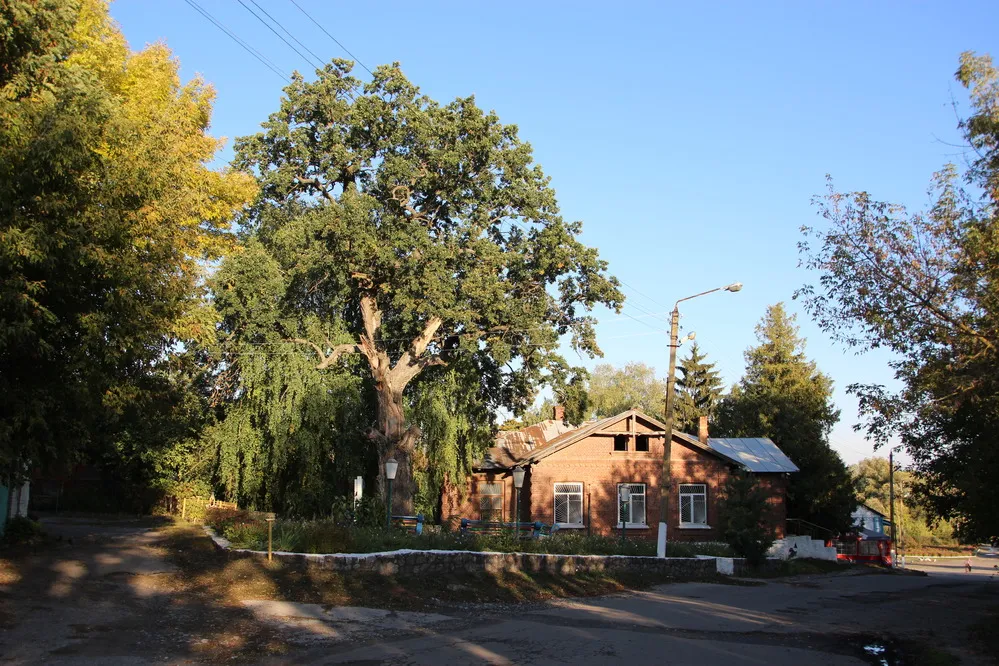
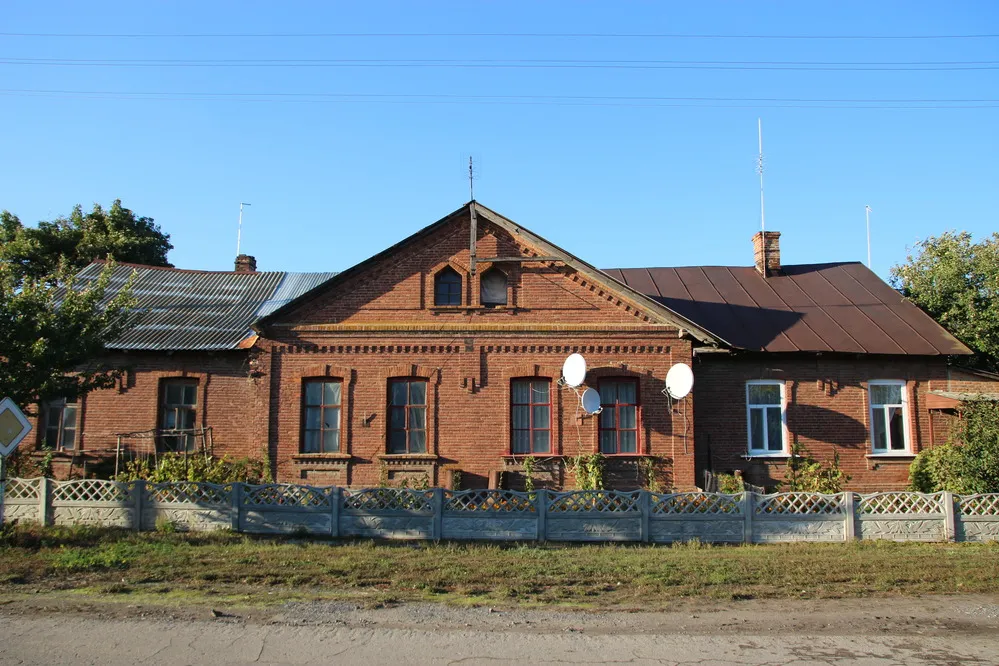
In 1842 Ivan Andriiovych Kukil-Jasnopolski built a sugar factory in the village, where mostly serfs worked. The factory was relatively small and probably satisfied the landowner’s needs. Everything began to change radically after Ivan Andriiovych’s death in 1869. His widow Eleonora Yakivna Kukil-Jasnopolska, because of her age, could no longer manage either the estate or the enterprise, so she leased them together with the land to a German named Bartels. Though not for long. Eleonora Yakivna gave her daughter Yelyzaveta in marriage to the landowner Oleksandr Petrovych Prianishnikov, to whom both the estate and the factory passed as a dowry. And then interesting things happened. The enterprise, which was insured for 250,000 roubles, was completely destroyed by fire in 1887. Although it was not proven, they say that Prianishnikov, an engineer by profession, realizing that the equipment was completely outdated and the capacity insufficient, organized the fire himself. Immediately after receiving the insurance money new buildings were built, the most modern equipment of the time was installed, and the new factory began operating in 1901. The Prianishnikovs owned the estate and the factory until 1918.
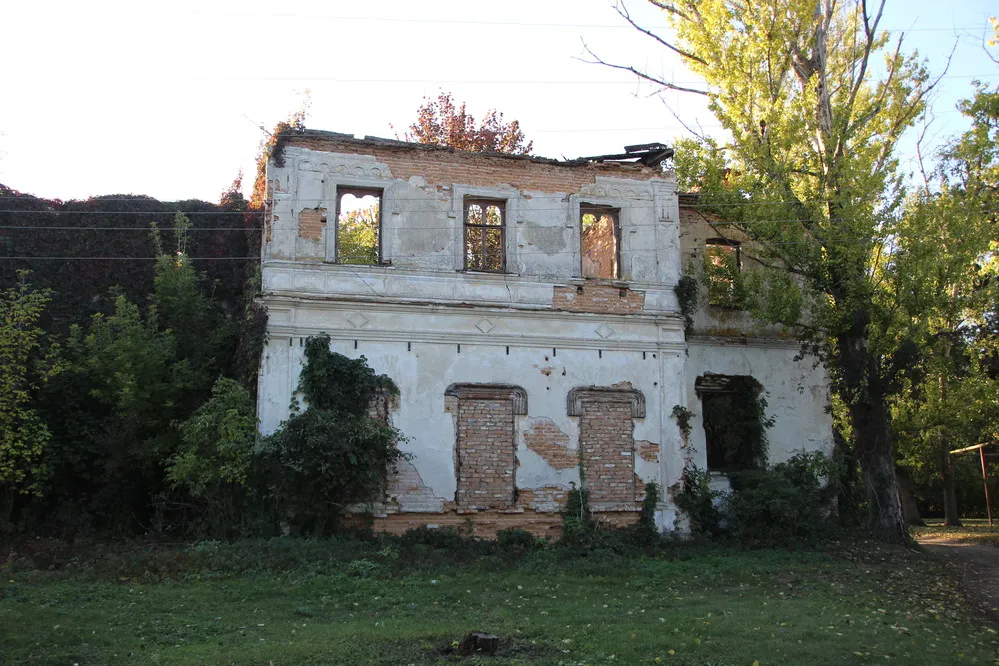
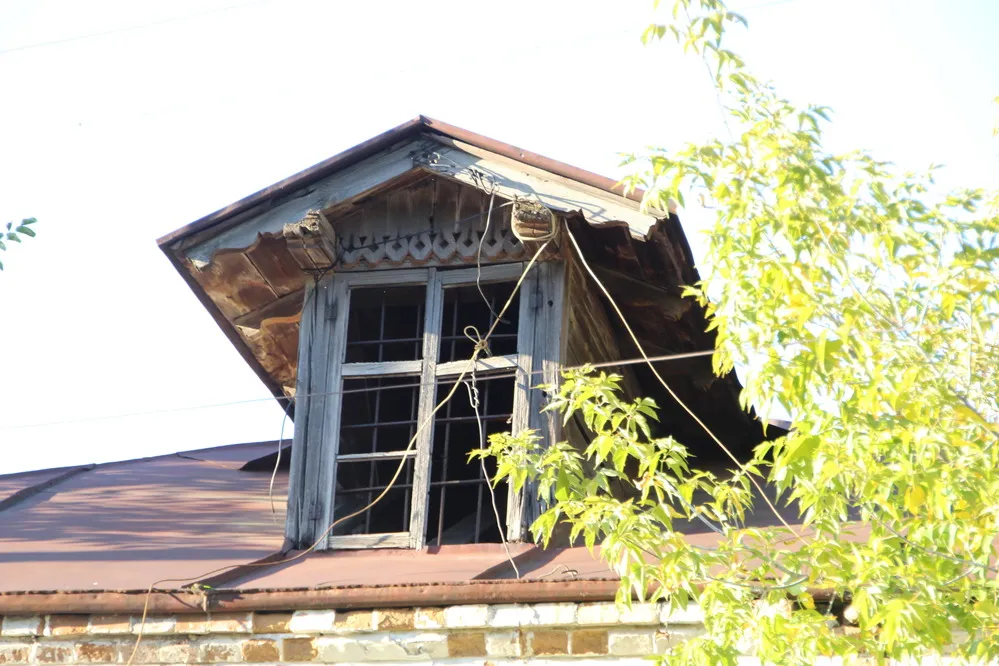
In 1922 a school was placed in the former landowner’s manor, and it stayed there until 1974, when a new one was built. The manor in turn housed a club, the building being on the balance sheet of the sugar factory. The factory itself, which was one of the leading ones in the Sumy region, was liquidated in 2001. Absolutely new equipment was dismantled and sold for scrap metal. Of the buildings only heaps of brick remain, and for now only the chimney towers alone. The manor, which was on the factory’s balance sheet, is also in the process of accelerated destruction (a national monument!!!).
In the park, which was laid out by the Kukil-Jasnopolskis, there once was a gazebo and a family crypt; where exactly, they will no longer tell you, it has been destroyed. The tombstone of Ivan Kukil-Jasnopolski, his wife and sons lies in the park not far from the manor, but, if one can put it so, it is not its “native” place. In all, according to tradition, there were five such slabs.
Text and photos by Ihor Dorozhko, Oleh Hodyna and Maksym Nazarenko.


