Nahuievychi

· 6 min read
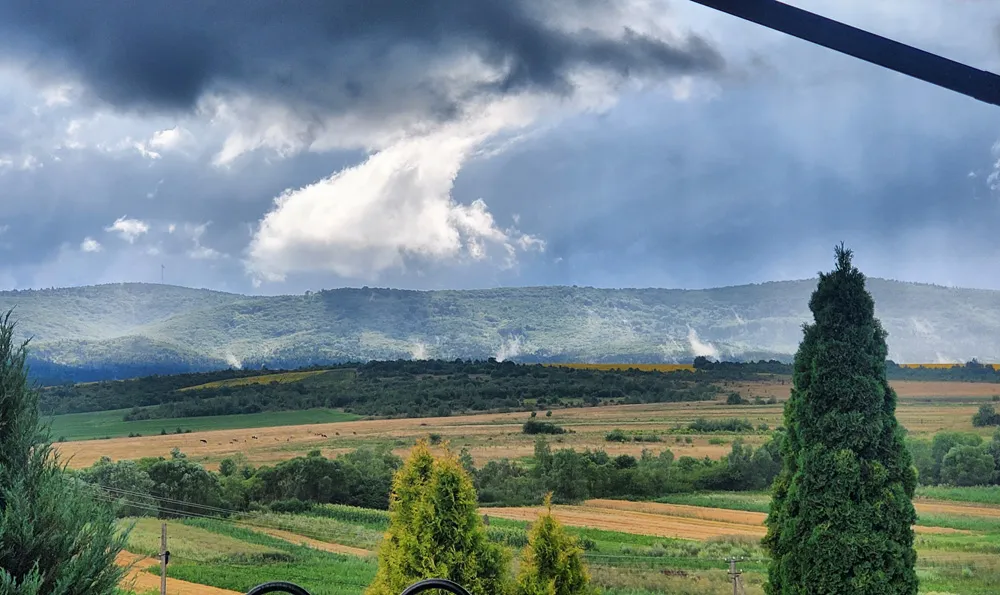
Nahuievychi (named Ivana Franka from 1951 to 2009) is a village in Drohobych district, Lviv Oblast. It is 10 km from Drohobych. Ivan Franko was born and spent his childhood here. He often visited Nahuievychi while studying in Drohobych and Lviv, and later came here with his family to rest and to work.
The village (first Solne, then Bashevo, later Nahuievychi) dates back to princely times. People here engaged in farming, salt-making (hence the first name) and, in the 19th century, oil extraction. The salt trades drew people here, the village began to grow and was called Bashevo. The Tatar invasion did not spare Bashevo: it was destroyed. Later a new village grew up here. Afterwards the Polish king granted it to a nobleman, Stanisław Nahuievskyi. There is a version that he named the village Nahuievychi to immortalise his own name. The name “Nahoiovychi” (“Nahuiovychi”, in Polish charters “Nahujowice”) is much older than the earliest Polish settlements in the region, so the opposite version is more probable: the owners of the manor farms took their surname from the name of the settlement they owned.
Nahuievychi (historical name “Nahoiovychi”) is a village known at least since the time of Galician Rus. Prince Lev Danylovych, by his charters (13th century), gave the villages of Babyna, Potik, Strashevychi, Spas, Lavriv, Torchanovychi, Lypie, Rozluch, Hnizdets, Nahuievychi and others to the bishops of Sambir: Abraham (1254), Euphemius (1291) and Hariyon (1292).
From 1349 the Principality of Galicia was annexed by Poland. From that moment the Polonisation of the region began. The Polish conquerors began to set up the first manor farms from the mid-15th century. The local population called those colonisers (“hereditary landlords”) by the name of the village.
Thus the opinion widespread among local residents that their village was once called Solne or Bashevo (or Dashevo) and was later renamed Nahuievychi after the surname of some Nahuiovskyi brothers, owners of a manor farm, is fundamentally mistaken.
In the 13th century the village had its own fortress and a Basilian monastery. The Polish researcher Ludwik Dziedzicki cast doubt on the authenticity of the grant charter for possession of part of the village, issued to the monastery by King Lev Danylovych in 1244. The charter uses the name Bashevo. This charter was confirmed in 1566 by King Sigismund II Augustus. Later this part of the village was in the possession of the Przemyśl Eparchy of the Ukrainian Greek Catholic Church. Bishop Maksymilian (Rylo) secured it for lay people.
In Polish times, until the partition of the Polish–Lithuanian Commonwealth, the village was a royal estate of the Pidbuzh “land” of the Sambir economy. In 1580 King Stephen Báthory forbade, by his order, the Sambir starost Stanisław Herburt to hinder Wiktor Kowalski, holder of the soltys office in Nahuievychi, from collecting taxes. In 1656 King John II Casimir confirmed Stanisław and Aleksandra Drohocki as holders of the soltys office in Nahuievychi.
According to records of 1686, the village had a saltworks (zhupa). The salt-extraction technology was simple. Brine was drawn in buckets from shallow shafts with the help of a horse-driven gin (kerat) and poured into large vats (cauldrons) – pans and hearths – placed in towers. There the brine was boiled down and, by firing, formed into cone-shaped lumps of salt, the so-called “tovpky” (“topky”). The Nahuievychi zhupa had 3 towers in which the topky were made, and one tower in which barrel salt was produced.
In 1764 one of the last “sorceresses” was surely burned in Nahuievychi.
In 1770 Eliasz Turkul, a colonel of the royal army, held the vogt office in Nahuievychi; in 1779 it was Piotr Turkul.
After Galicia passed under Austrian rule, salt-making in the Carpathian foothills declined owing to the introduction of the salt monopoly and competition from salt production in other parts of the Austrian state. In 1788 salt boiling in Nahuievychi ceased.
In 1880 the village had 1,638 inhabitants, of whom 1,614 were Greek Catholics.
Since the 1790s a seal of Nahuievychi with the settlement’s original coat of arms has been known: in the field of the seal is a sword, point downward and entwined with a grapevine with leaves; around the coat of arms is the Latin inscription “SIGILLUM COMUNITATIS NAHUJOWICE”.
The village lost its historical name Nahuievychi in 1952, when the Presidium of the Supreme Soviet of the Ukrainian SSR, without the consent of the villagers, renamed the village Ivana Franka. In 1989, at the crowded celebration of the 133rd anniversary of Ivan Franko’s birth, Ukrainian writers proposed restoring the name of the village Nahuievychi. Two village assemblies were held on returning the historical name to Nahuievychi. The village council deputies put the question to a village referendum. 75.4% of voters resident in the village answered “Yes” to the question “Do you wish to return the historical name Nahuievychi to the village of Ivana Franka?” On 25 June 2009 the Verkhovna Rada of Ukraine decided to return the name Nahuievychi to the village.
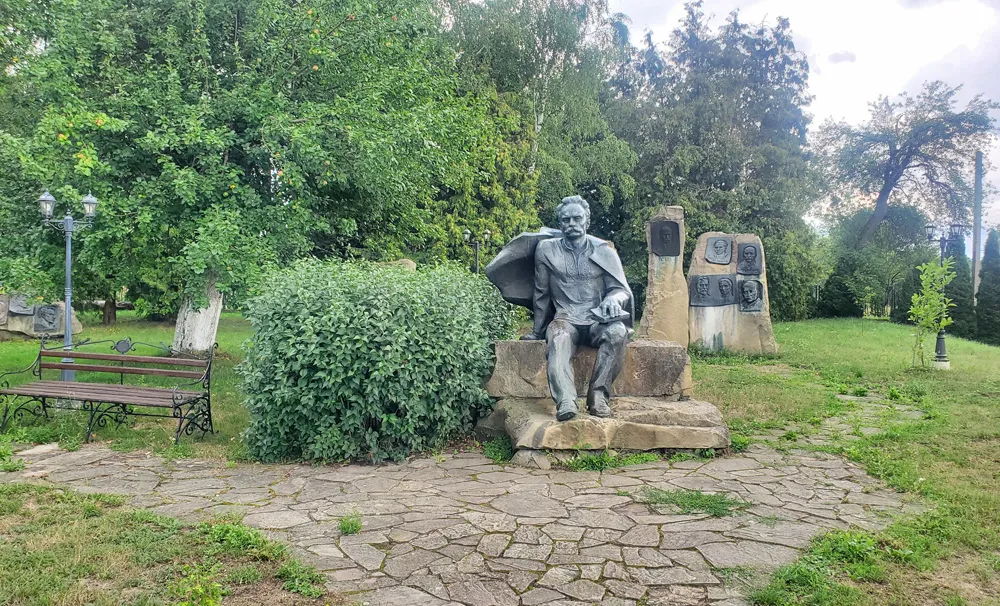
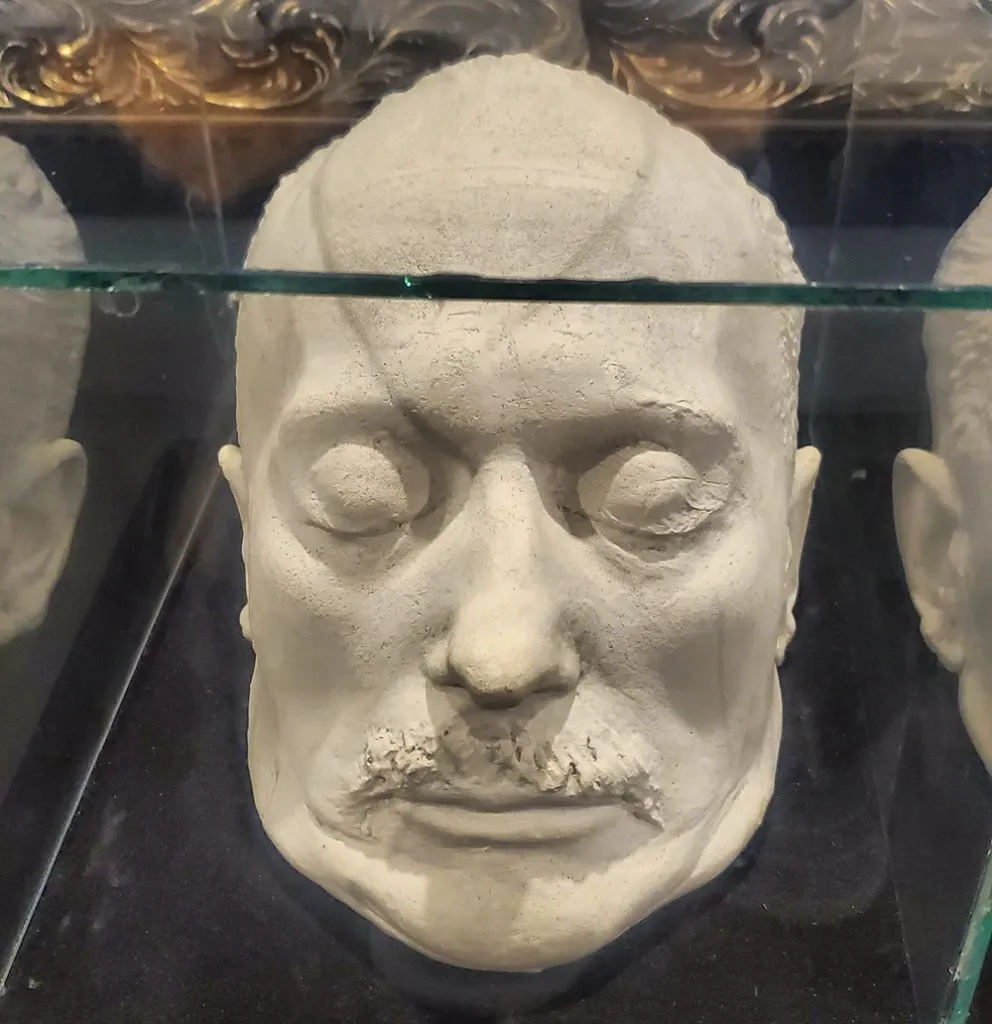
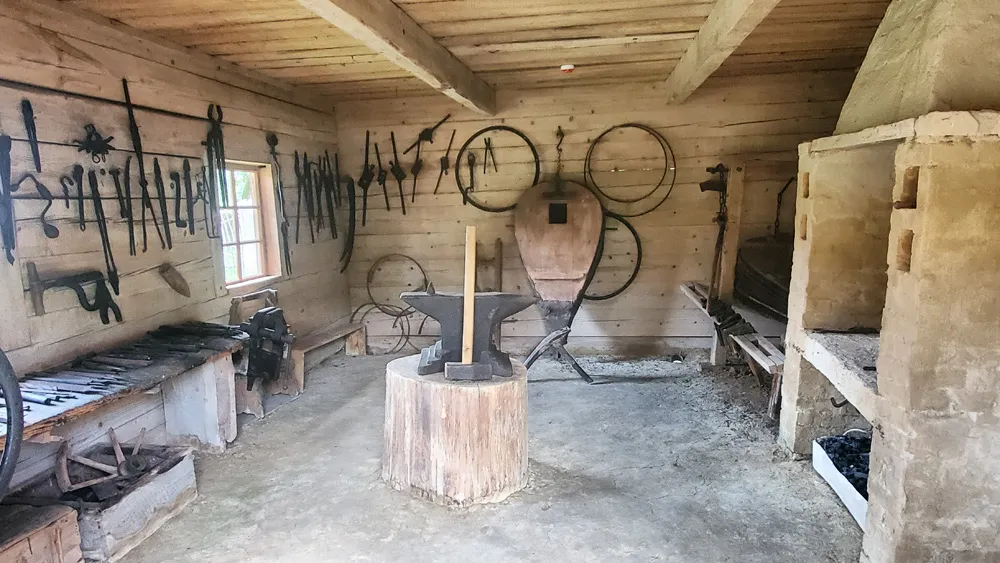
Ivan Franko often visited Nahuievychi. Many fellow villagers became heroes or prototypes of Franko’s works: the village priest Yosyp Levytskyi, the cantor Vasyl Hrom, the clerk Kost Dumiak, his own father Yakiv, a blacksmith. Ivan Franko devoted quite a few scholarly works to his village, for example “Neolithic finds in the vicinity of Nahuievychi and their modern uses”, “The koliada in Nahuievychi”, “The burning of vampires in the village of Nahuievychi in 1831”, “Forest damages, fines in Nahuievychi”, “Tatar raids on the Pidhiria”. And in general, of his colossal literary legacy he created a great deal in Nahuievychi, in particular the novel “Zakhar Berkut”, many stories and poems; he translated Shakespeare’s sonnets, Goethe’s “Faust” and Gogol’s “Dead Souls” into Ukrainian, studied Shevchenko and translated his works into German. At the same time he worked the land like an ordinary peasant, and often lived in poor material conditions, having neither shoes nor a lamp to work by in the evenings.
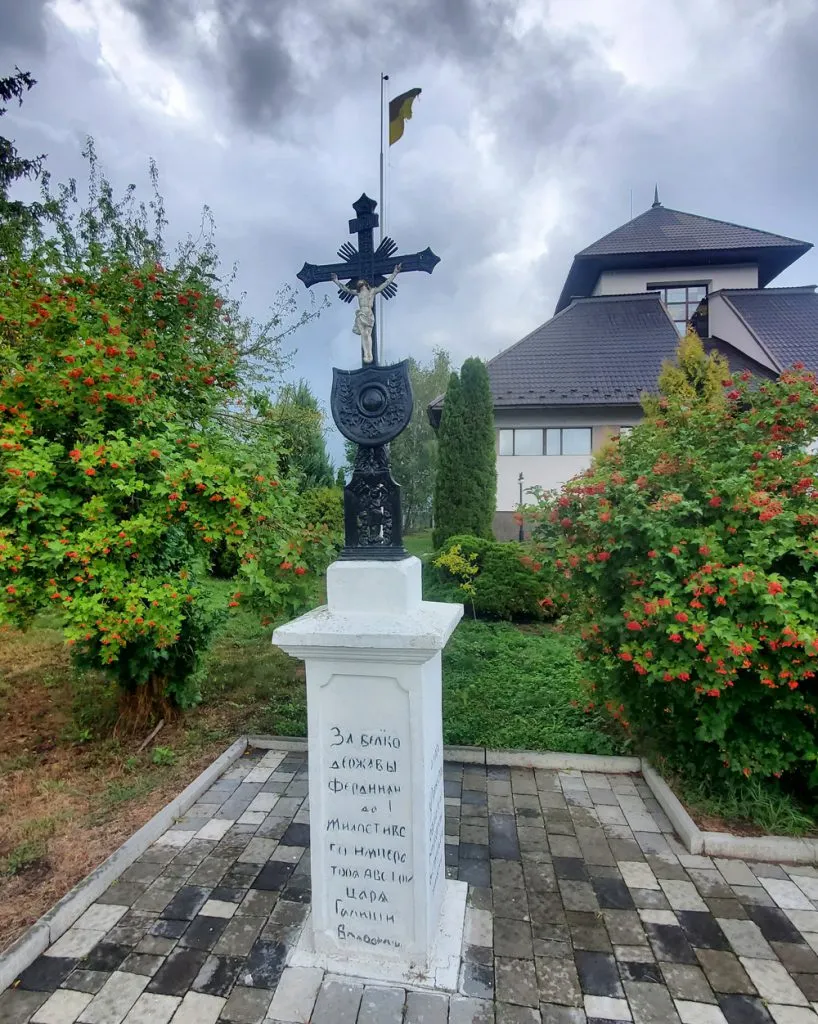
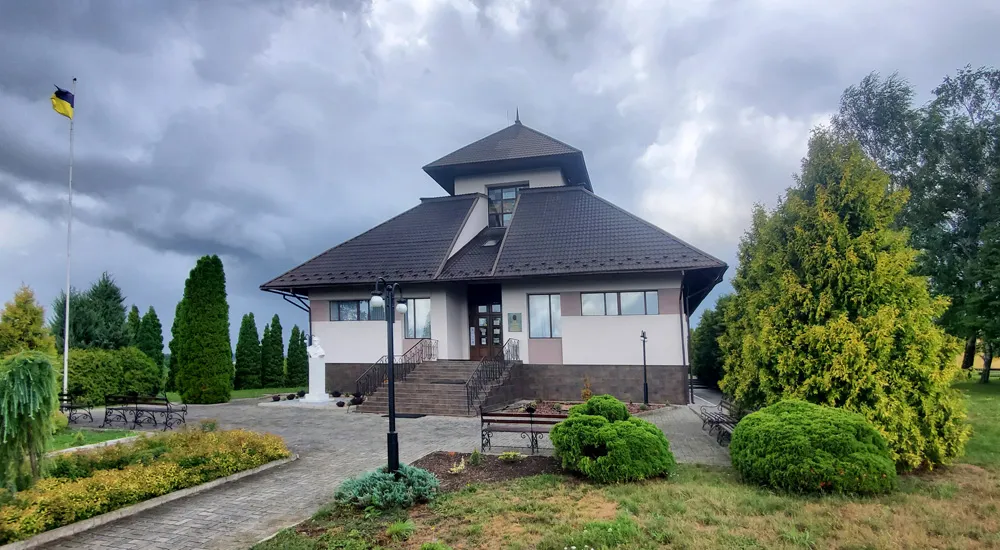
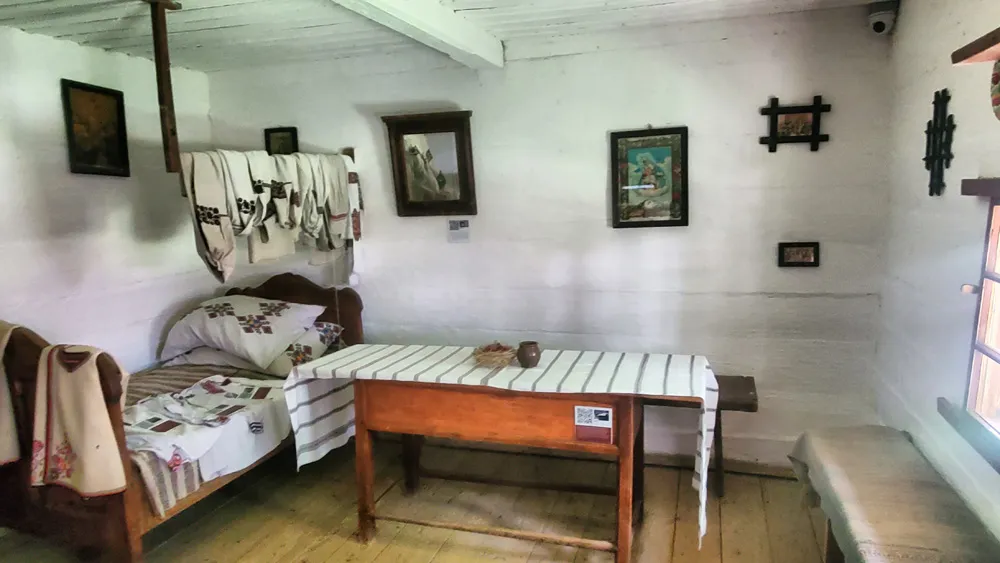
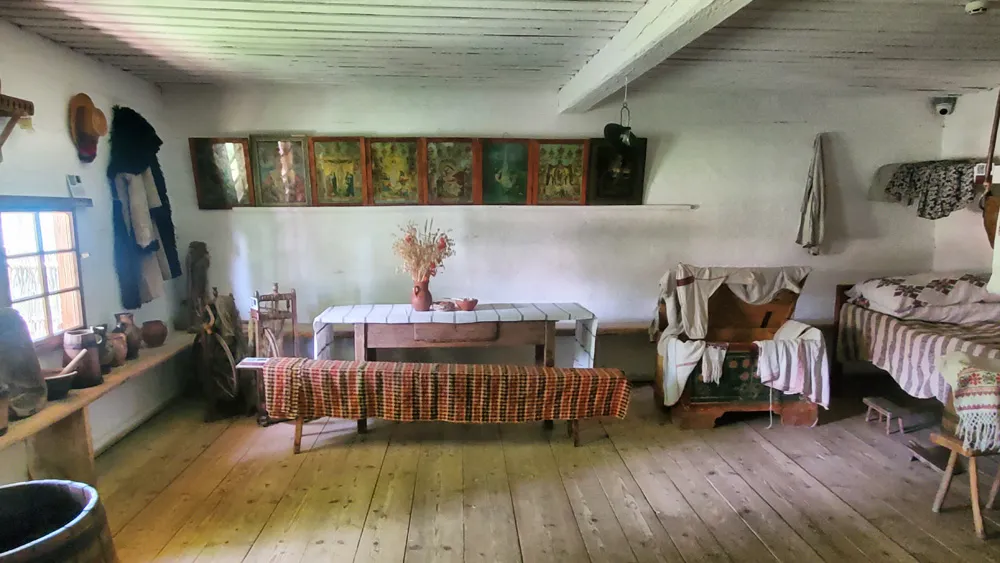
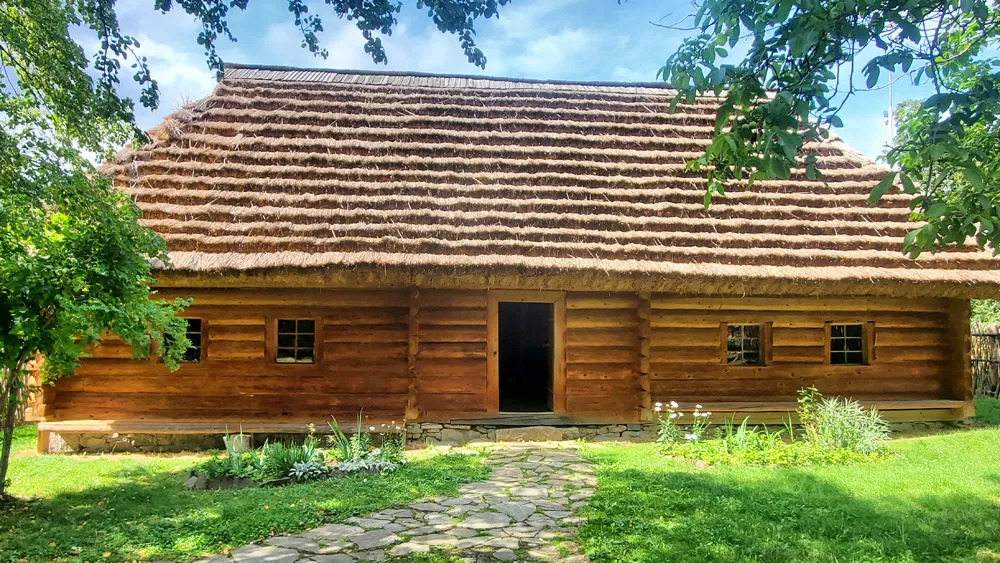
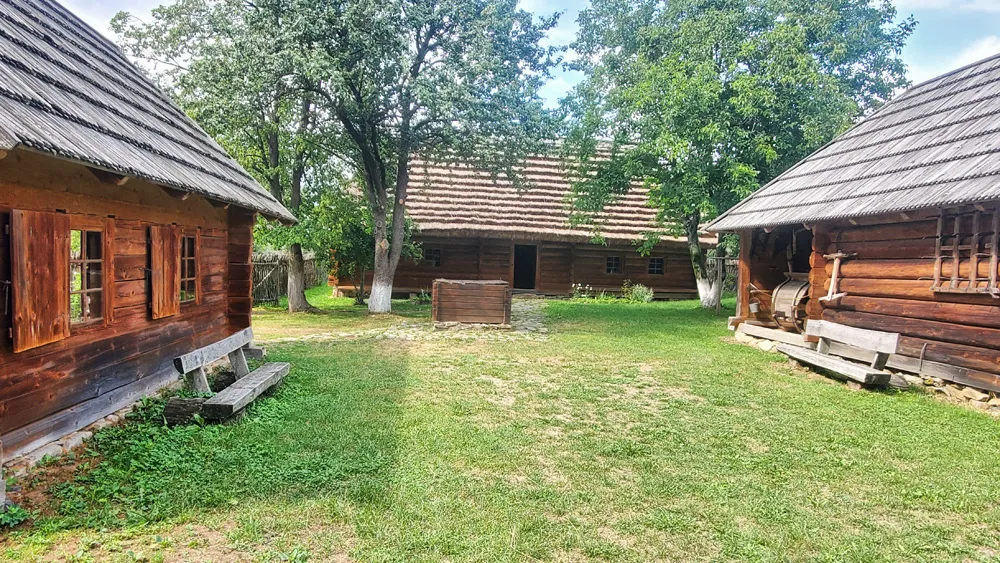
Today the museum-homestead has been recreated exactly as Franko described it in his memoir “My father’s house”. “My father’s house was under a thatched roof, trimmed with tassels of rye straw. It was probably built at the end of the 18th century, during the first settling of Nahuiv Sloboda, and my father’s mother bought it with the whole yard, 12 rods of field and all the farm implements in about the 1820s. Like almost all foothill houses, it faced south with its windows and had two cattle sheds… The house had two rooms, the lower one, where the clay stove stood, with a stove-bench and a corner behind the stove.”
On 27–29 July 2012 the “Franko Fest”, a music and arts festival dedicated to Ivan Franko, took place in Nahuievychi.
Text from Wikipedia, photos by Roman Malenkov.