

For Purim, on the Baroque
On Monday evening Jews begin the celebration of Purim, one of the merriest holidays, established in memory of the deliverance of the Persian Jews from the destruction planned by Haman, the favourite of King Ahasuerus (Xerxes, 5th century BC).
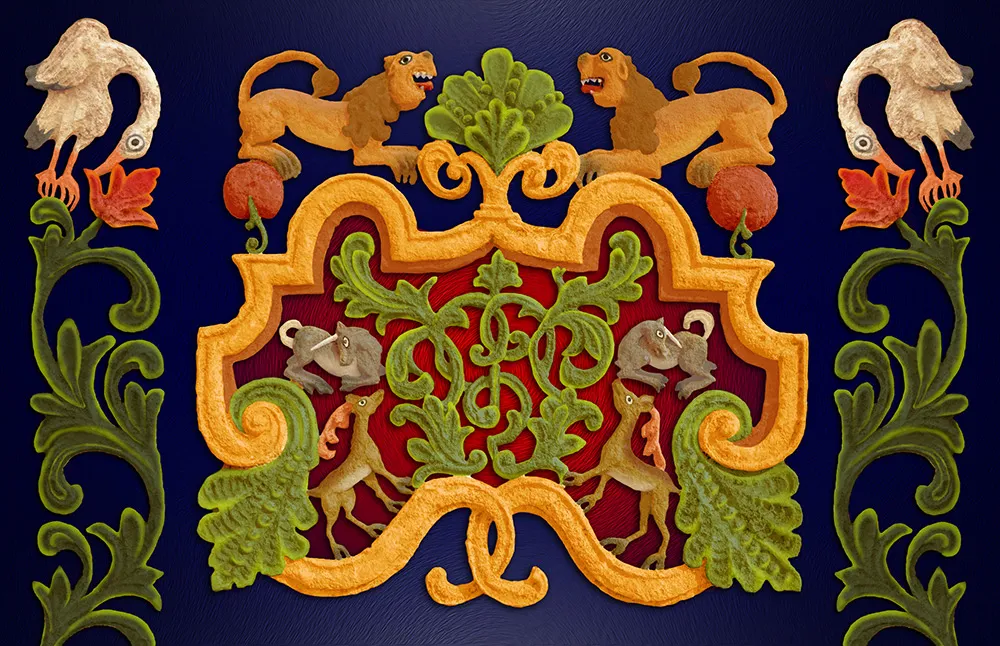
A work based on the decoration of the gravestone of Sarah, daughter of Rabbi Meir. 1783
On these days the Scroll of Esther, which tells of those ancient events, is traditionally read, and people make merry, including through generous consumption of wine. According to the commandment, Jews are to drink until they can no longer tell the difference between the words “cursed be Haman” and “blessed be Mordecai”. In synagogues, during the reading of the scroll, when Haman’s name is heard, the faithful drown it out with rattles.
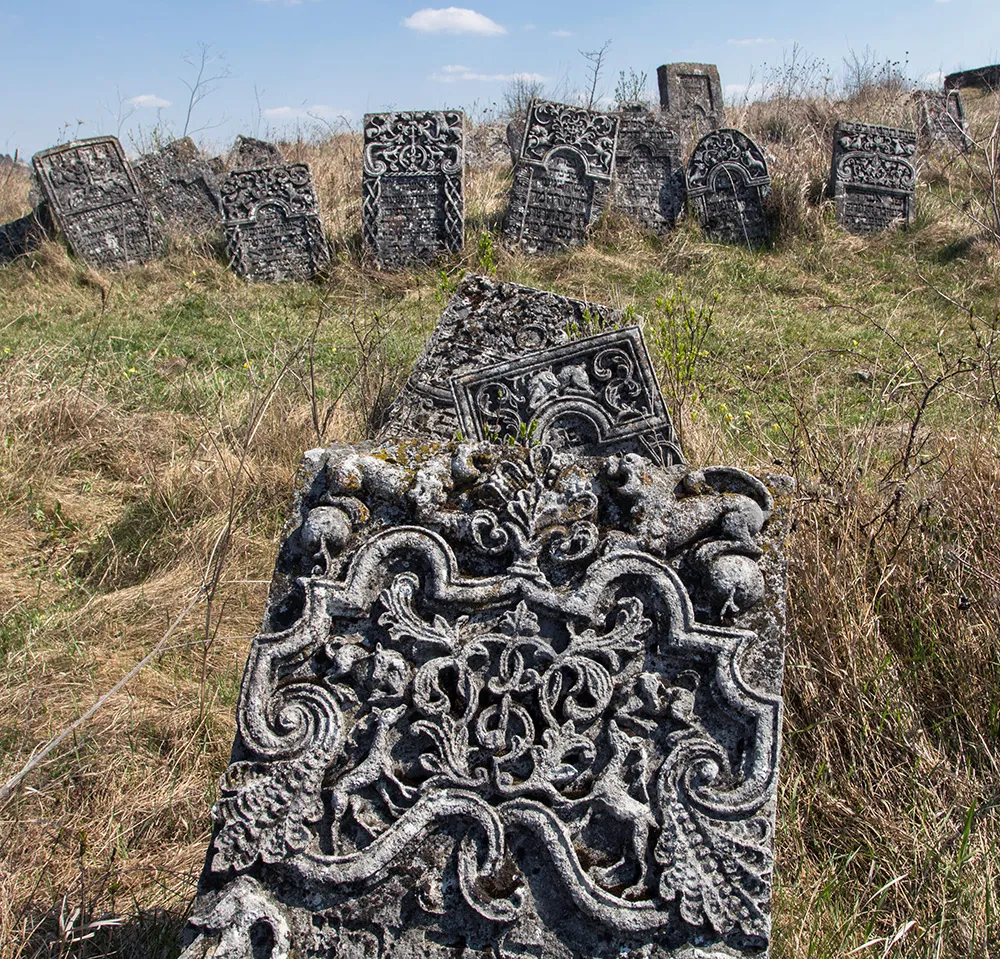
The same gravestone in real life
The central figure of Purim is Esther, who saved her people from destruction. So the holiday also has a feminine dimension, a kind of tribute to the Jewish woman.
However, this publication is not about Purim but about Jewish folk art. Purim is here merely an occasion for news.
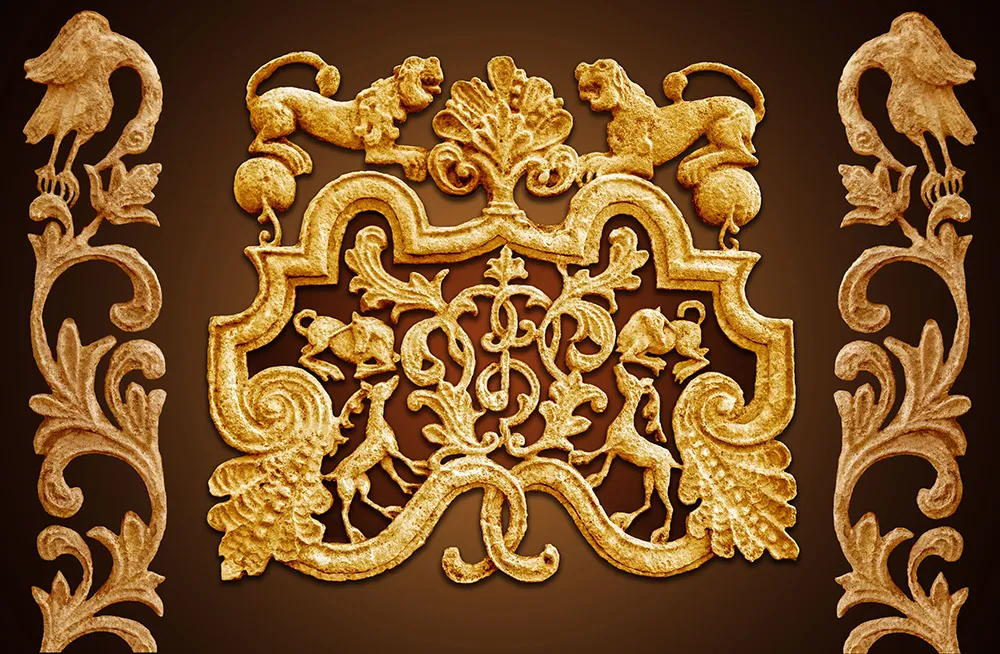
The monochrome version
“Ukraine Incognita” has long and fruitfully been studying the ancient necropolises of Ukraine. Mostly Ukrainian ones, but we do not pass over Polish and Jewish ones either, especially those distinguished by artistic value. Among them is the ancient Jewish necropolis of Sataniv, one of the most interesting monuments of its kind in Europe.
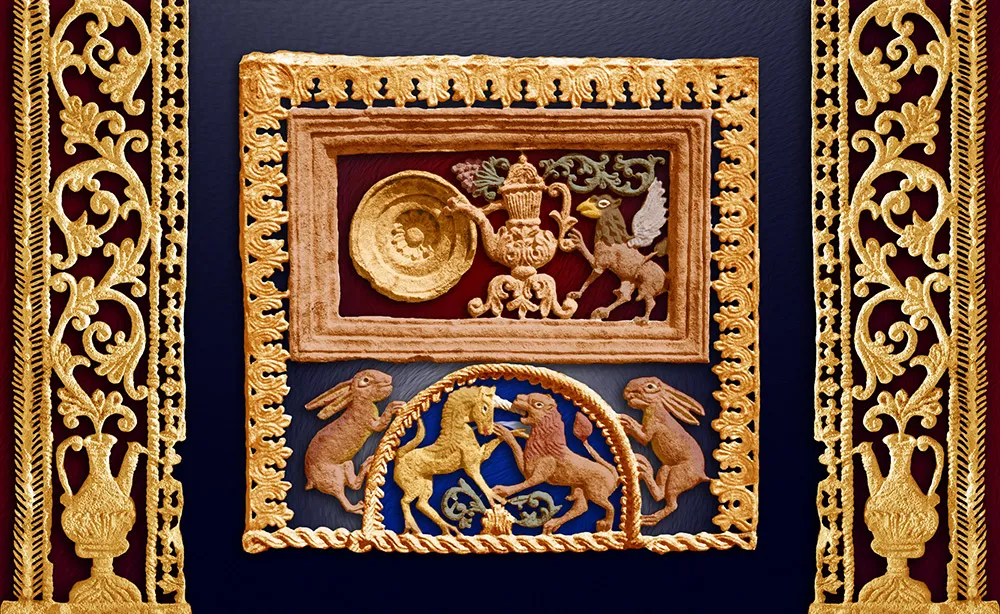
The duel of a lion and a unicorn on the gravestone of Tsvi-Hirsh, son of Naftali Segal, 1759. We also see hares here, the embodiment of a God-fearing person. The vessel for washing hands and the basin indicate that the deceased was a Levite. The griffin is a guardian.
It is being actively studied by Dmytro Poliukhovych, a member of the Ukraine Incognita team. Last year the publishing house “Dukh i Litera” released his book “The Jewish Cemetery of Sataniv. Stone Beasts and Mystical Rites”, which made the prestigious list of the best books of 2025 according to Ukrainian PEN. It has also been nominated for the prestigious Sholem Aleichem Prize. The results will be announced in a few days.
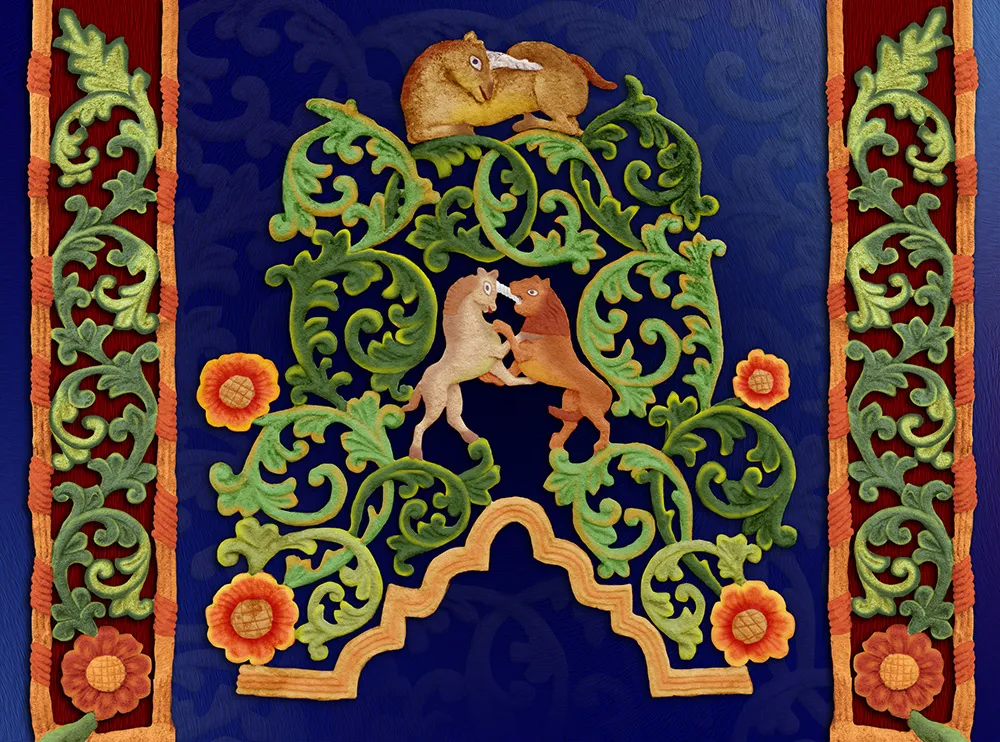
The gravestone of Leah, daughter of Menachem Naum, 1755
The research has also resulted in a series of artworks created on the basis of photographs of gravestone decoration from the 17th to the early 19th centuries.
“It is precisely this period that sees the peak of the flowering of Jewish stone carving,” explains Dmytro Poliukhovych. “Every matzevah of this time is a true artistic masterpiece. Such a concentration of Baroque carving as in Sataniv can be seen in Ukraine only in Lviv.”
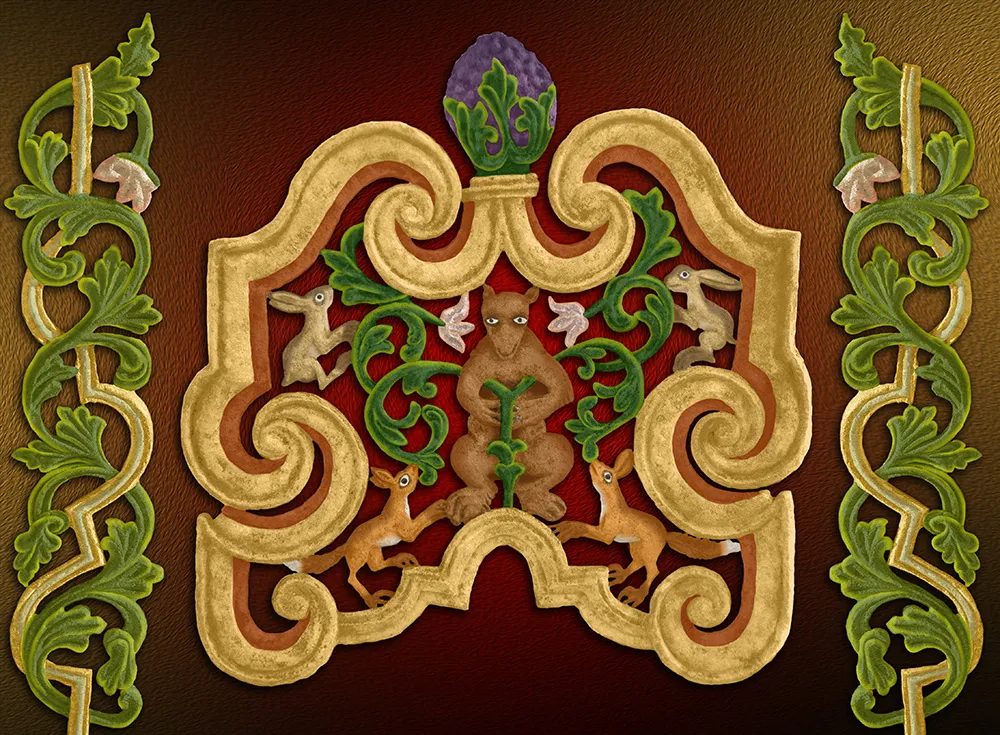
The gravestone on the grave of Braina (a literal translation from Yiddish: dark, brown), daughter of Aaron, who died in 1776. The brown bear here embodies the name of the deceased.
At first Dmytro only photographed the ancient carving, and later came up with the idea of making “cut-outs” (vytynanky) based on it.
“Photographs do not convey all the beauty of the ancient masters’ work,” he says. “The background overgrown with lichen and moss greatly interferes with perception. You would have to use special lighting and filters, which is difficult in field conditions. So I devised the ‘cut-out’: in computer programs the background is removed and only the decoration remains. Thanks to this, it was possible to reveal the beauty of the carving vividly.”
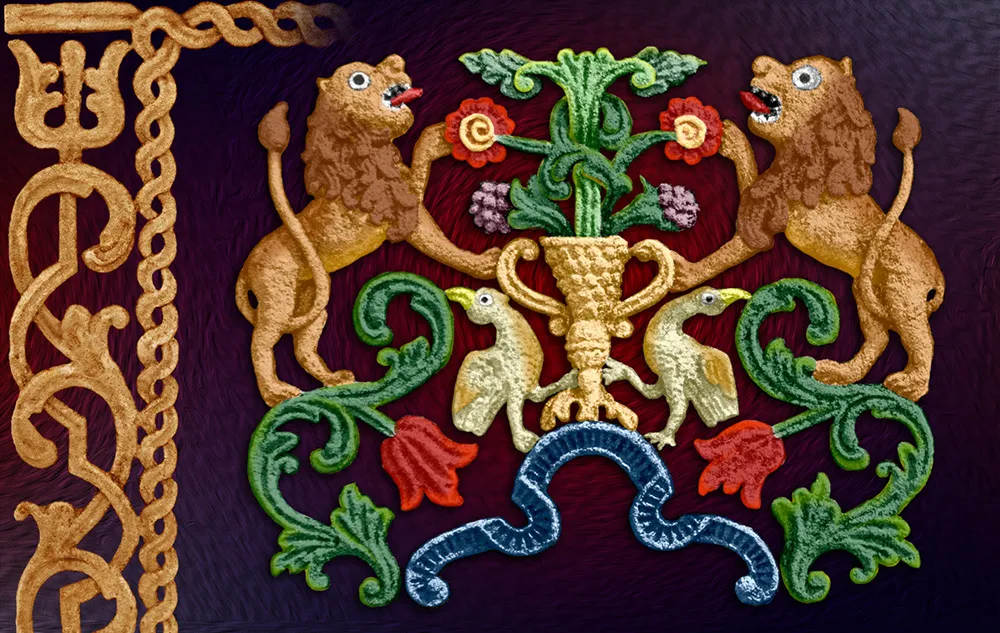
“Heraldic” lions on the gravestone of Gedaliah, son of Naftali Hirsch, died 1816.
With the support of the United Jewish Community of Ukraine and its executive director Vitalii Kamozin, a large-scale exhibition of the “cut-outs” entitled “Sataniv: The Lost World of an Ancient Jewish Cemetery” was organized. It was shown with success in Dnipro, Kharkiv, Odesa, Khmelnytskyi, Vinnytsia and a number of smaller cities. A particular source of pride was the display in the pavilion of the Babyn Yar National Historical Memorial Reserve in Kyiv.
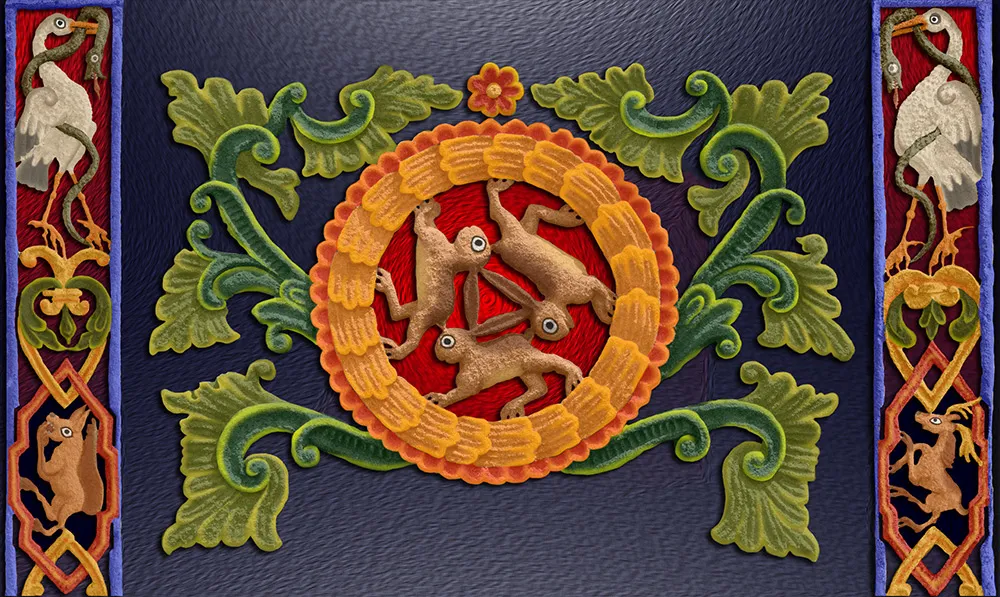
The central image is the decoration of the gravestone of a woman named Freyda, 1813. Interestingly, the medallion with three hares joined by their ears was devised in the 4th century AD by Buddhist monks in China.
Later Dmytro refined the technique and began to create compositions. And later still, he added colour.
“Originally the decoration was polychrome,” he explains. “This is confirmed by photographs from the late 19th and early 20th centuries and by remnants of paint on 18th- and 19th-century gravestones. At first I wanted to colour one of the gravestones with watercolours, but I realized that applying modern paints to carving of the 17th–18th centuries is vandalism. So I did it in computer programs. And the result turned out interesting.”
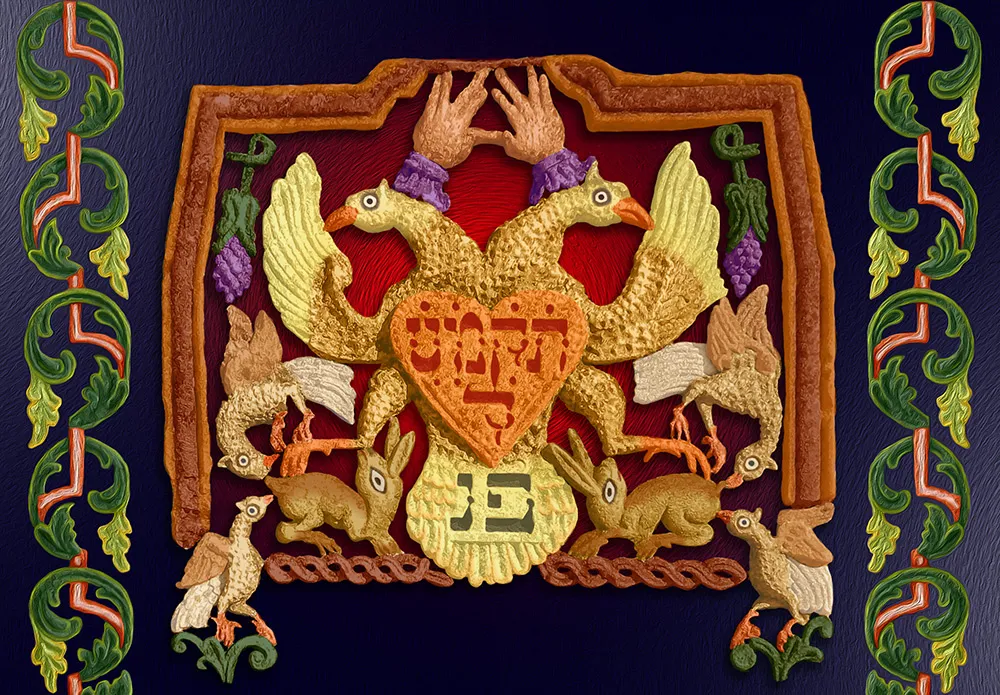
The gravestone under which rests “the elder, our teacher, rav” named Chaim, who died in 1788. Important: the eagle here is a metaphor for God and has nothing to do with the Russian one.
The researcher stresses that the colourings are not an invention or fantasy.
“I used the traditional Jewish colour palette known from the murals of Renaissance synagogues, manuscripts and pinkasim,” he says. “Of course, some imagination is present: matzevot had a more modest palette, 3–4 colours without half-tones. In my works the colour scheme is wider than in the cemeteries but poorer than in synagogue murals. It is something in between.”
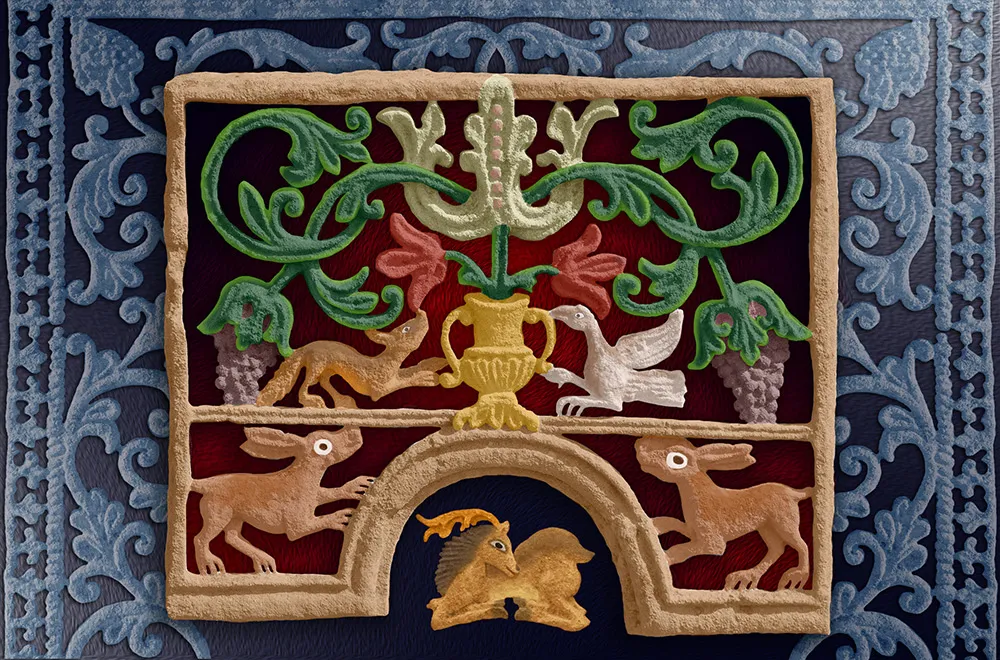
The little fox boy is carved on the gravestone placed on the grave of Esther and Abraham, a mother and her small son who died in 1776. Why mother and child died at the same time is hard to say. On the gravestone we see a dove/turtle-dove symbolizing the mother, and the fox cub, the son, surrounded by bunches of grapes (the garden of paradise). The plant ornament divided into two parts also symbolizes the Tree of Life.
“In fact this is not only about the Jewish art of Ukraine but about the Baroque in general,” the author adds. “The plant ornaments here are identical to the decoration of Ukrainian Baroque churches and 17th–18th-century Catholic churches. Who borrowed from whom is hard to say. Most likely everyone drew inspiration from the same source. The Jews only added zoomorphic motifs and filled them with meanings from the Torah and the Talmud. But above all this is the BAROQUE. And it is beautiful!”
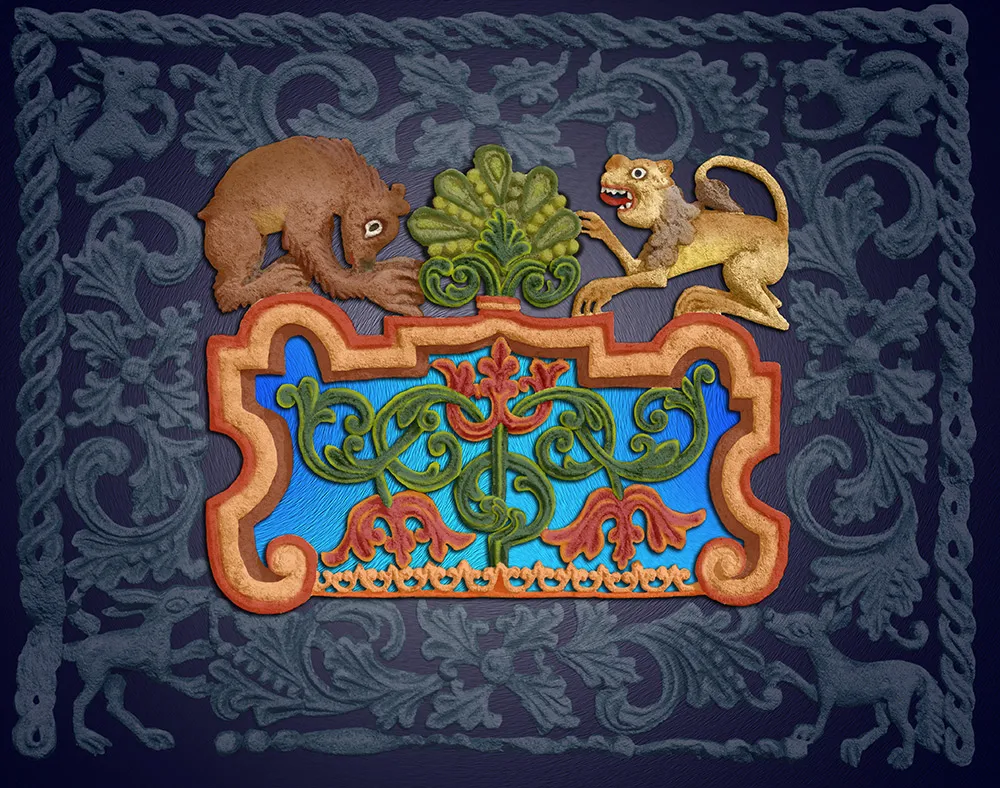
The epitaph states that Yeshayahu, son of Menachem, is buried here. The date is damaged, but one can say with confidence that it falls at the turn of the 18th and 19th centuries.
Besides resurrection from the dead and the expectation of messianic times, this bear is also a non-trivial reflection of the deceased’s name, Yeshayahu (Isaiah). The bear here is “tied” to the lines of the Book of the Prophet Yeshayahu (Isaiah) that after the coming of the Messiah: “…the cow and the bear shall graze together, their young shall lie down together, and the lion shall eat straw like the ox!” (Isaiah 11:7).
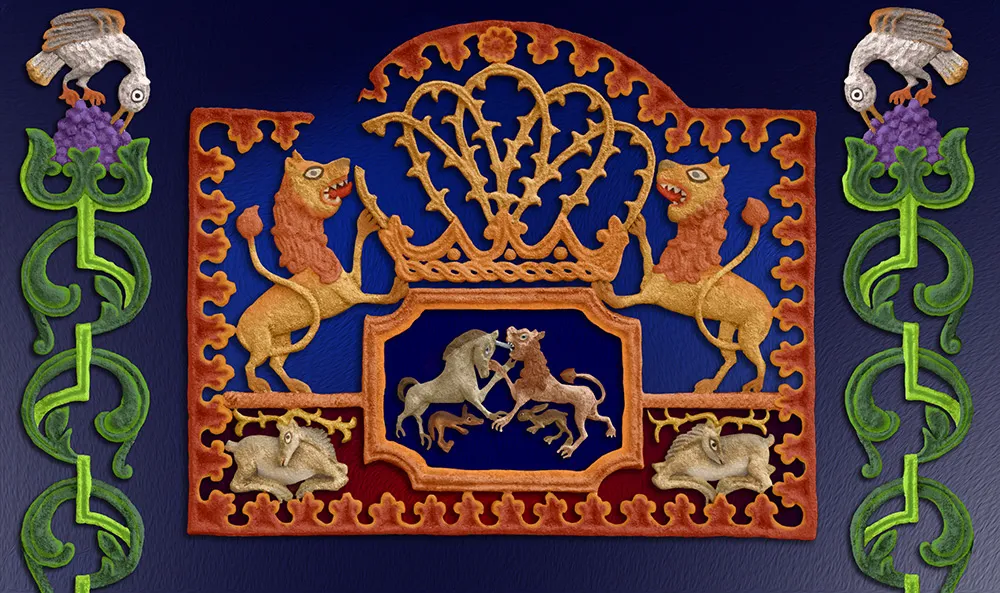
The gravestone of Tsvi, son of Simcha Bunem, 1794
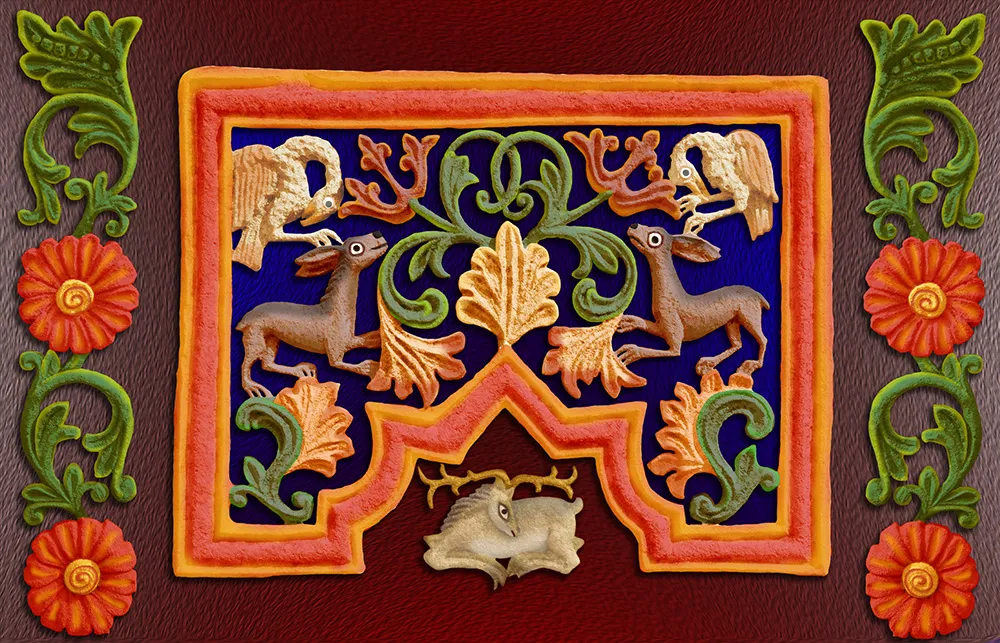
Paired hares, the symbolic Tree of Life and pelicans tearing at their own breasts. The gravestone of Eliezer, son of Yosef Yehuda, 1785. The pelicans, we note, are a borrowing from Christianity, where they are a metaphor for Christ. In the Jewish tradition they are a metaphor for resurrection from the dead.
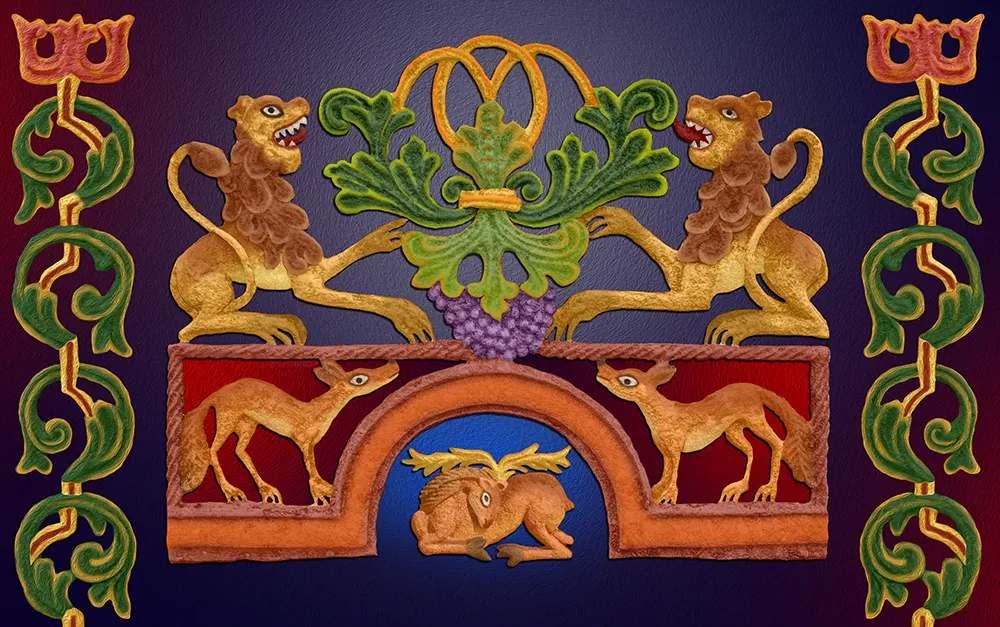
The gravestone of Ruchama, daughter of Moshe, 1782
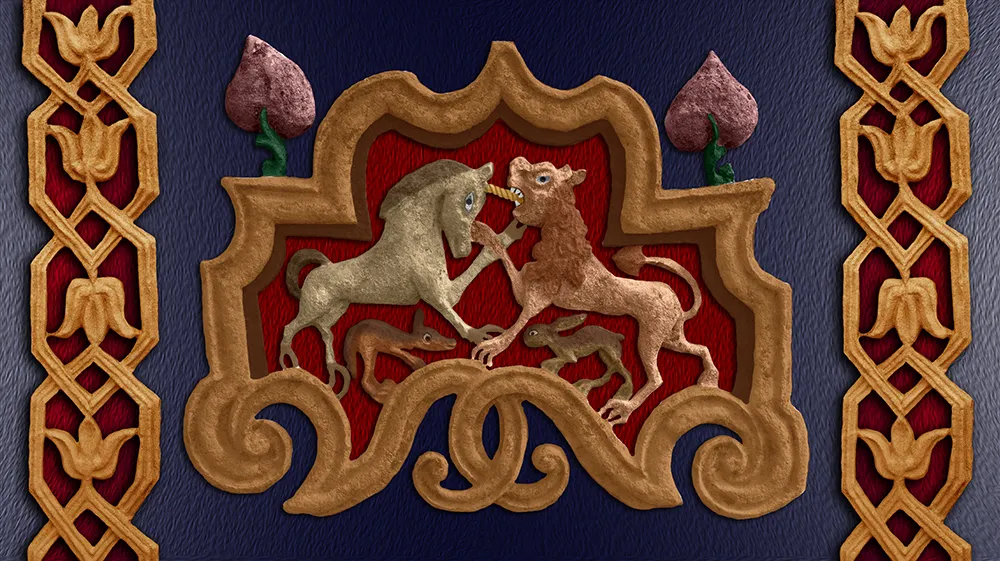
The burial of Raiza (Reiza), daughter of Tsvi Hirsch Segal, 1774
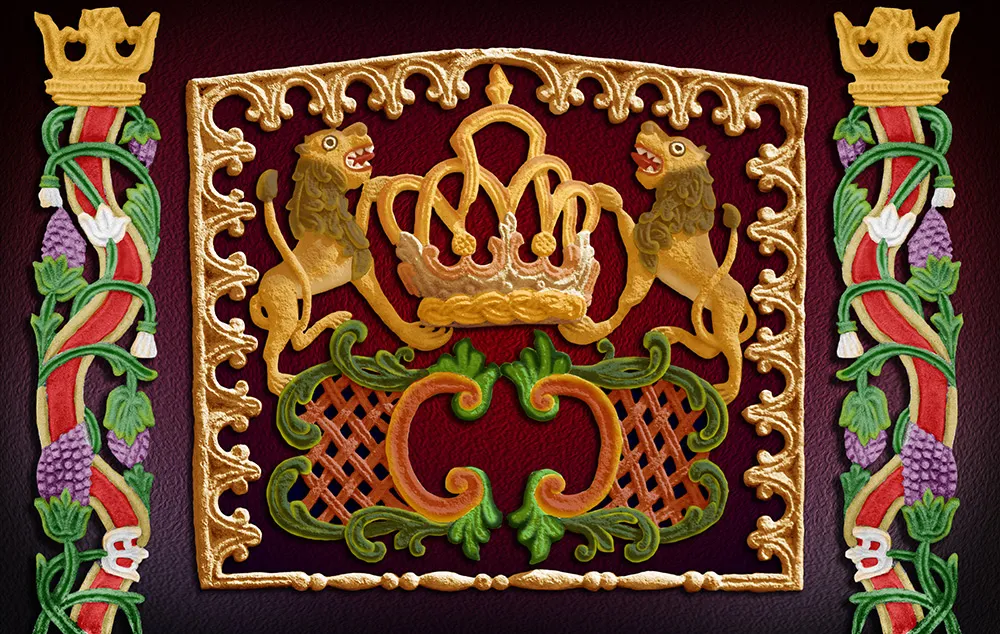
“Heraldic” lions on the matzevah from the burial of Yehuda-Leib, son of Tsvi-Hirsh, 1815. The lions correspond to the name Yehuda-Leib. The lavish decor and the large crown suggest that a rabbi is probably buried here.
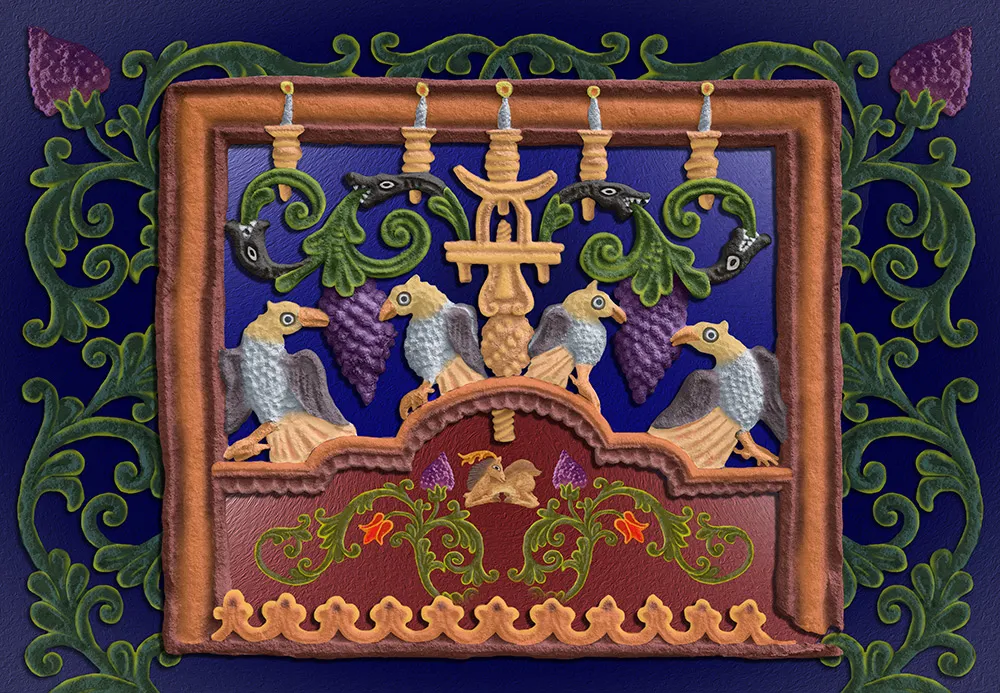
The “non-standard” matzevah on the grave of Simcha Bunim, son of Tsvi, 1798.
Here we have an interesting example. On one of the matzevot the main element is a rather elaborately shaped five-branched candelabrum, traditional for women’s graves, and some songbirds. Except that on either side of the candelabrum there are not one bird each, as usual, but two. Moreover, they are also pecking at bunches of grapes. That is, the birds here are no longer only keepers of the nest but at the same time righteous souls in the garden of paradise, enjoying its fruits. Probably we have here an artistic quotation of the biblical prophet Hosea: “Like grapes in the wilderness, I found Israel” (Hosea 9:10).
If you look closely, you will see images of snakes “built into” the candelabrum. Here the serpents serve not only as candle holders. Branches with bunches of grapes also grow from the snakes’ mouths, and the bird-souls peck at them. This is one of the most interesting and most optimistic metaphors of death in the Sataniv necropolis, and perhaps in Ukraine. The snake, the embodiment of that very death, ultimately gives the righteous soul the pleasure of feasting on the fruits of the Garden of Paradise. It would seem we have here a classic, indeed absolutely model women’s matzevah, yet the epitaph states that buried here is: “an old man, wise, righteous, simple-hearted, good, an outstanding expert in the Torah, our teacher Simcha Bunim, son of our teacher Tsvi of blessed memory…”, 1798.
This gravestone surprised not only Dmytro but also many respected specialists in Judaica to whom its photograph was sent. The well-known Judaica scholar Dr Borys Khaimovych cautiously suggested that for this burial a ready-made blank with standard “women’s” decoration was simply used. Why this happened is easy to guess. Teachers of the kheders, although they enjoyed enormous respect in the community, were usually very poor. Probably the gravestone was placed at the community’s expense, buying a ready-made one rather than commissioning an individual one.
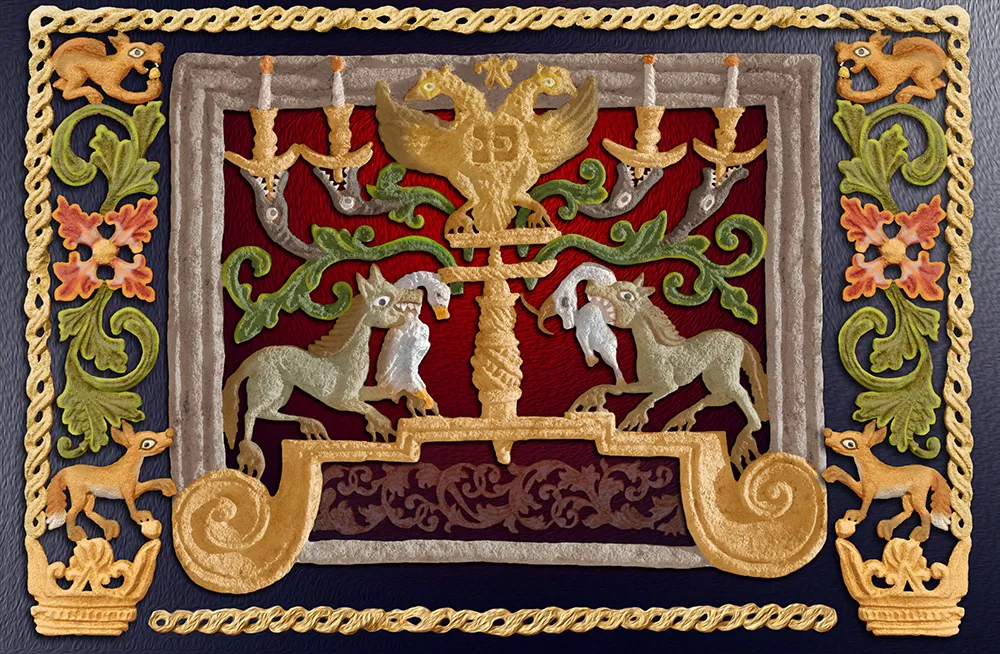
The most interesting members of the wolf tribe adorn a woman’s gravestone dated 1799. Unfortunately a considerable part of the epitaph is lost, so the name of the woman buried is unknown. Here we see two predators at once with prey in their jaws, a bird and a kid, embodying death. On the same matzevah there is one more metaphor of death. If you look closely at the five-branched candelabrum (the symbol of a virtuous woman, whose duties include lighting the candles for Shabbat), it is not entirely traditional here. The candle holders are made in the form of terrifying snakes. The snake is also an embodiment of death. It may be assumed that in this case the candles stuck into the snakes’ jaws symbolize the victory of light over darkness, of life over death, and hope for a future resurrection from the dead.
The whole composition is dominated by a two-headed eagle. It has nothing to do with Russia. It is an ancient Jewish symbol of God (why, we will explain below). The Lord, who stands above all the listed metaphorical images of death, embodies the hope that God will grant the soul of the deceased woman eternal life among the Bushes of Paradise and afterwards give resurrection from the dead.
Although this is probably one of the gravestones of Sataniv richest in symbols of death, in its meaning it is quite optimistic.
It was probably made by the same master who carved the previous one.
Dmytro already has almost three dozen colour compositions. Moreover, they come with extensive explanations of what all these images conceal and embody.
“I dream of an exhibition,” says the researcher. “There are a number of museums and exhibition venues ready to show it. But it traditionally comes down to money. Producing the exhibition boards requires at least about 30,000 hryvnias. But where to get them?”


