Horodok
A generalised dialogue over beer with a Pole (IQ above average) about Horodok (Lviv Oblast))):
– We must bring back the old name!!! (Trzeba powrócić stara nazwe)
– Which one?
– Horodok Jagiellonian (Gródek-Jagiełłoński)
– ??? Errr… Wait… When is the first mention of Horodok?
– I don’t remember, probably somewhere in the time of King Jagiełło (Nie pamiętam, gdzieś pewnie za czasów króla Władysława II Jagiełły)
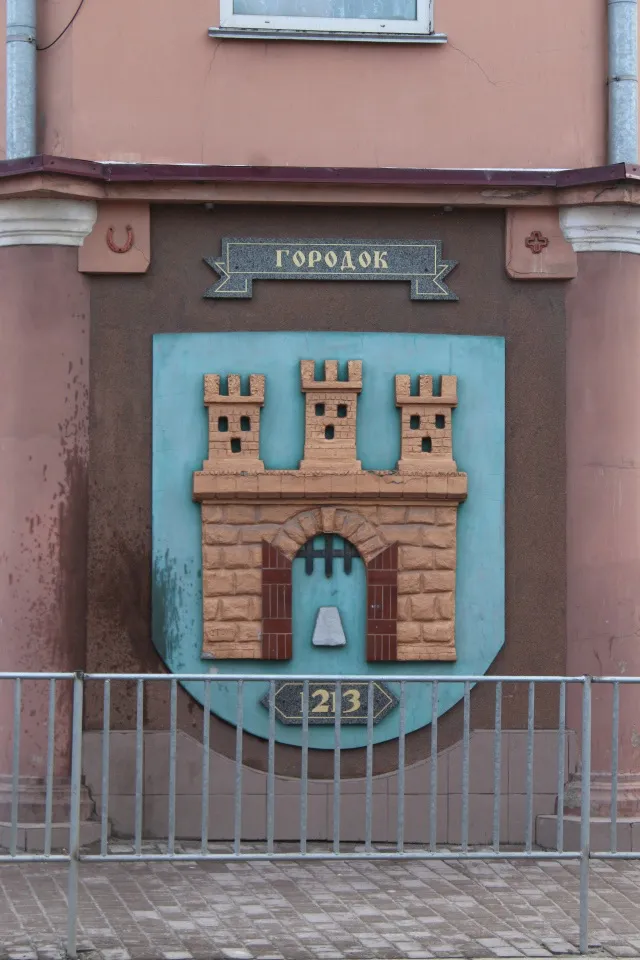
– The beginning of the thirteenth century (1213), the Rus Chronicle. Right? (you show the mentions, references, literature)
– Yes. (Tak)
– In the chronicle the settlement is called “Horodok”, right?
– Yes. (Tak)
– When did Jagiełło become king of Poland?
– 1386
– Bravo!!! A difference of 150 years between “Horodok” and Jagiełło, right?
– Yes (Tak)
– So what is the HISTORICAL name?
– Gródek Jagiełłoński
And so on in circles.
But let us return from “beer discussions” to the town itself.
The first mention of Horodok dates from 1213, in connection with the repulsion of a Polish-Hungarian attack on the Principality of Galicia. Unfortunately, the times of King Danylo are recalled in Horodok only by the hill with the town park on the banks of the Vereshchytsia (Hrabove Lake), where the “detinets” (citadel) and, tentatively, the Monastery of the Transfiguration once stood.
The history of the Studite Monastery of the Transfiguration is both ancient and recent. Archaeological research testifies that a church once stood on this spot “whose origins go back to the time of the Rus princes”. At the beginning of the 15th century, in order to Catholicise the local population, King Władysław II Jagiełło handed the church over to the Franciscan order, who built up their monastery here. Such conversion of Orthodox Rus churches into Roman Catholic ones was quite frequent. Suffice it to recall how the castle church in Przemyśl was dismantled and its stones, before a church was built from them, were deliberately carried to the San to wash away the “sins of the schismatics”.
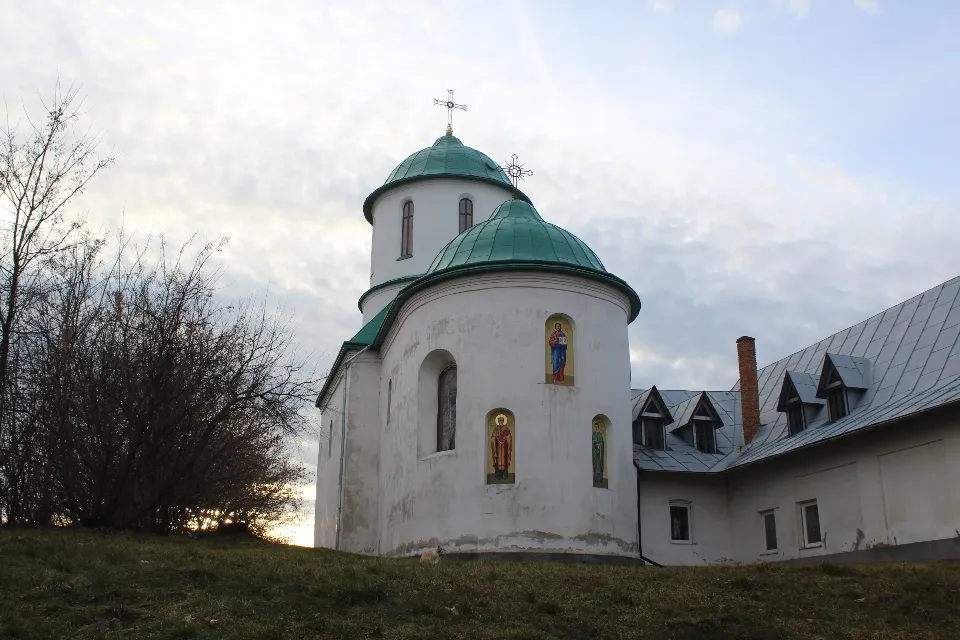
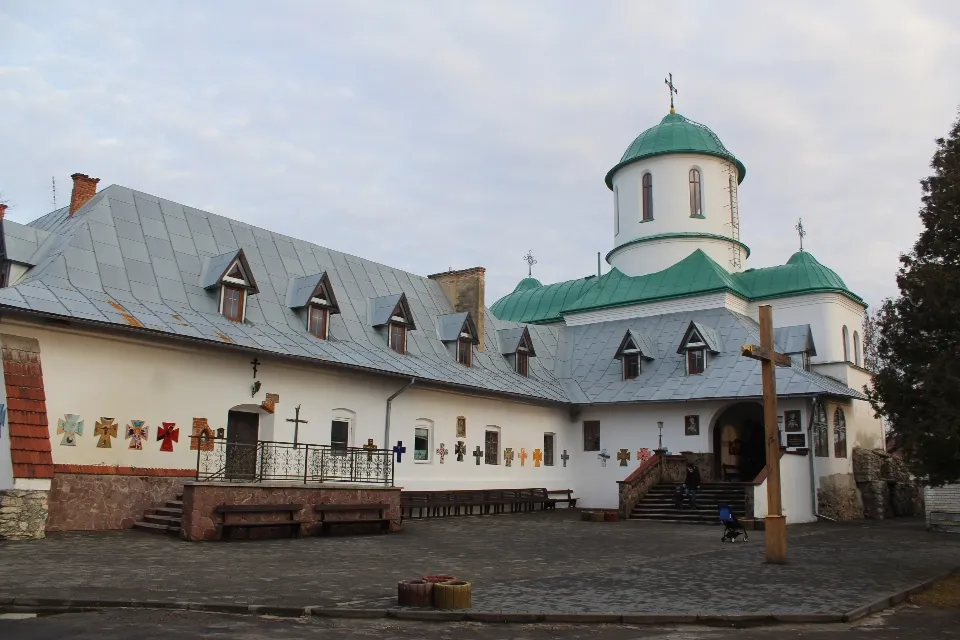
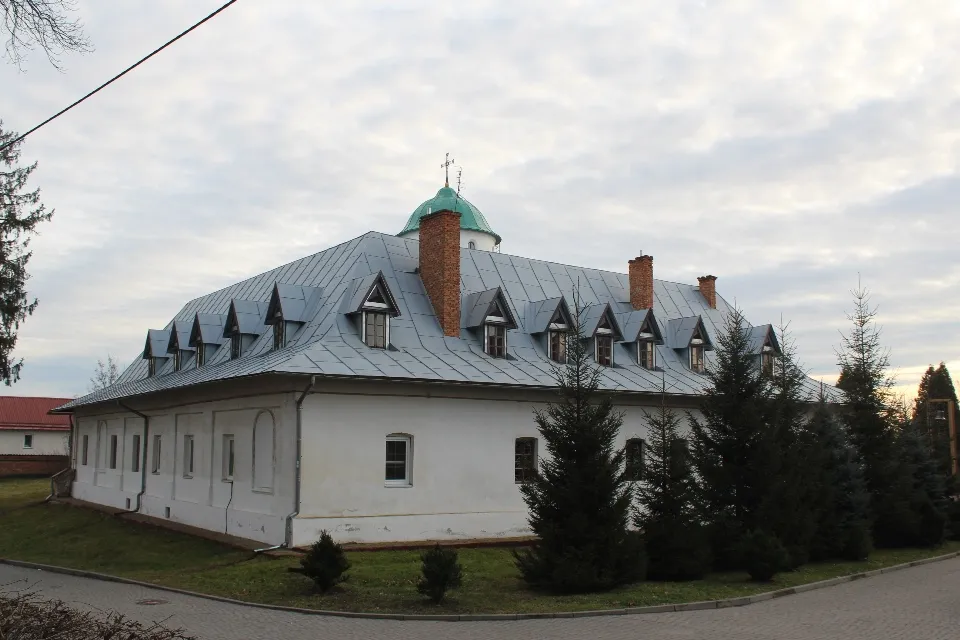
There is a legend that the heart of King Jagiełło, who died in Horodok in 1434, was buried in the walls of this monastery.
In its long history the monastery managed to serve as barracks (Austrian and Soviet), a prison and a warehouse. In 1994 the monastery was handed over to the Studite monks, who are restoring it in the Old Rus style.
As in every decent Galician town, in the centre of Horodok there is Rynok Square (now called Haidamaky Square). In “Soviet” times a road was laid diagonally across it, so it looks rather strange.
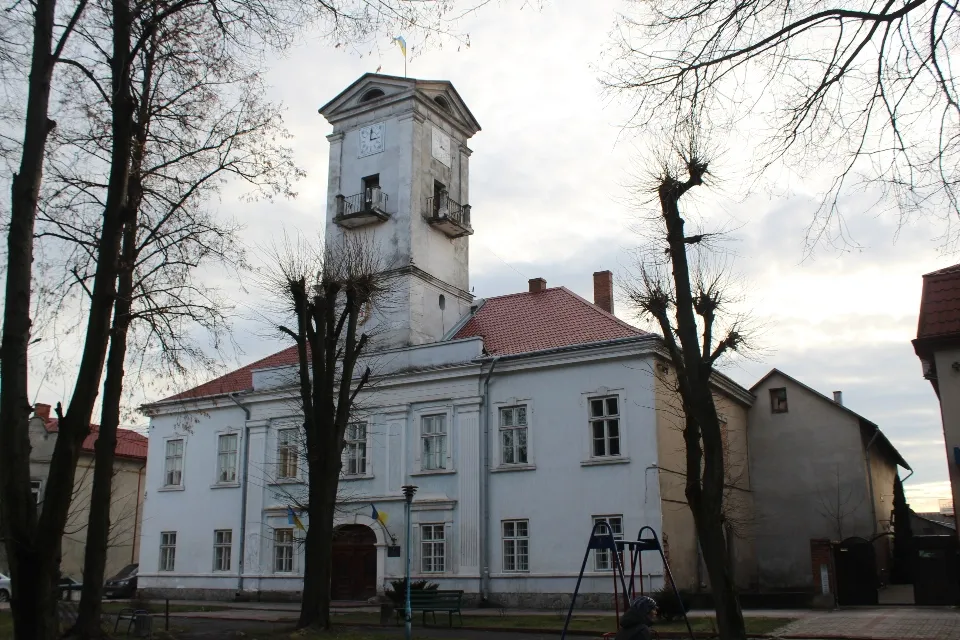
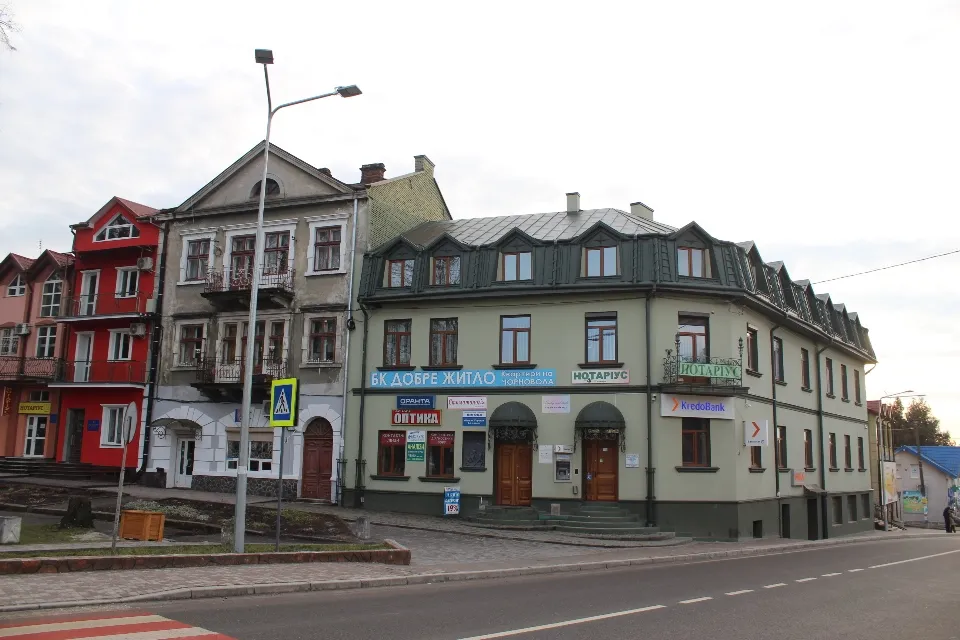
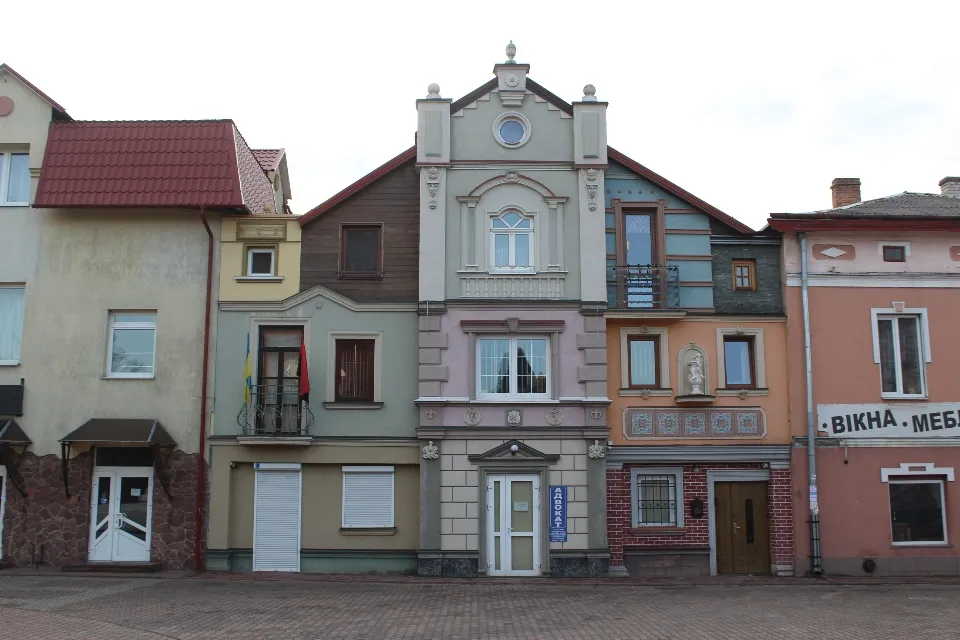
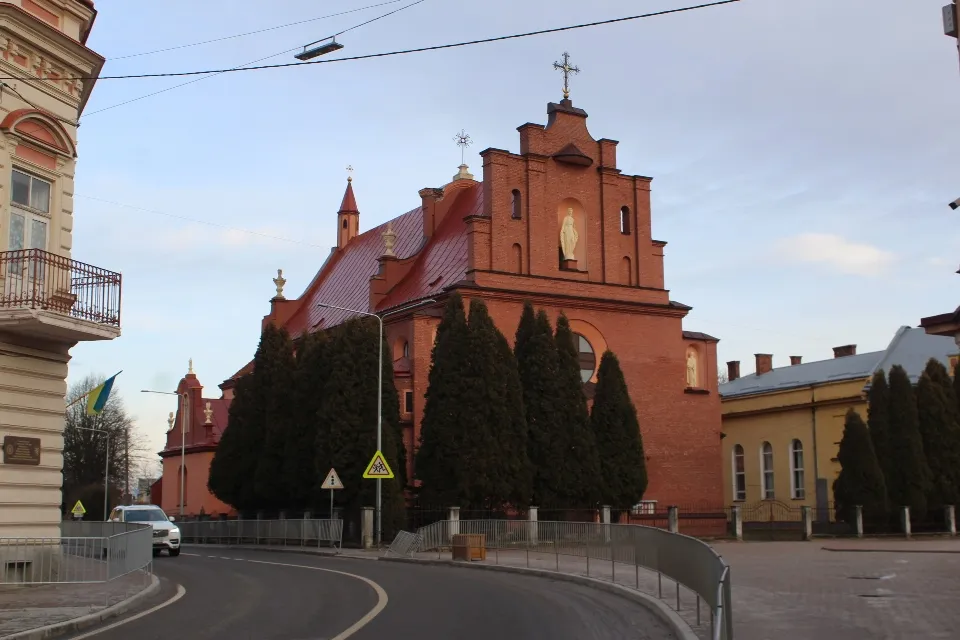
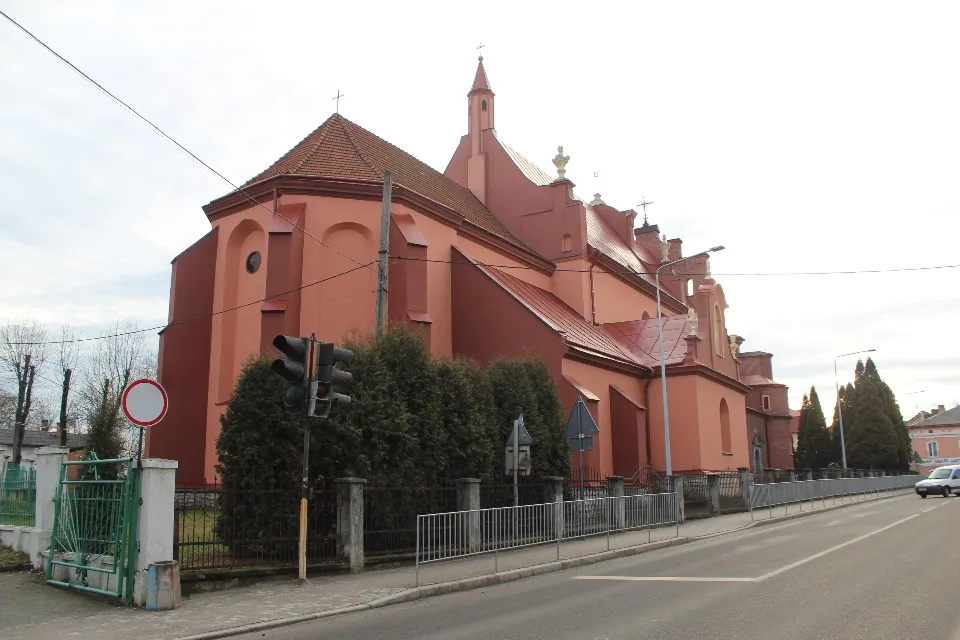
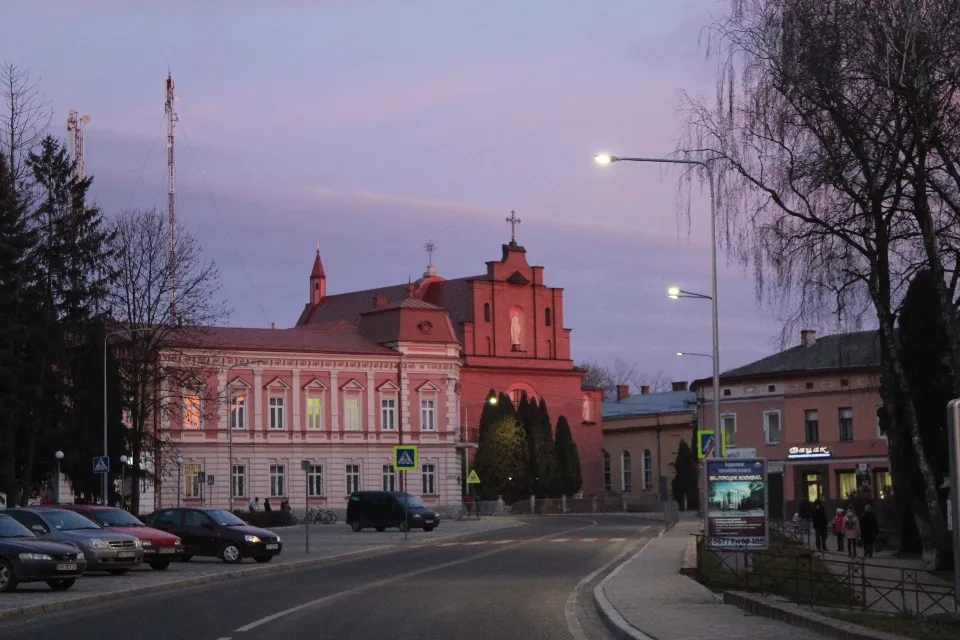
The dominant features of Rynok Square are the Roman Catholic Cathedral of the Exaltation of the Holy Cross (on the east) and the Classicist town hall (on the west). To the south, between Rynok Square and the Old Rus “detinets”, stands the Church of the Annunciation of the Most Holy Mother of God.
The first mention of the Roman Catholic church (wooden) dates from 1372. Considerable funds for building the masonry cathedral were provided by the same King Jagiełło. In 1616 the church was rebuilt almost from scratch after a great fire that destroyed the whole of Horodok. After that it was extended and rebuilt several more times. The side chapels in the 18th century may have been designed by the famous Bernard Meretyn. On one of the chapels one can see three coats of arms. In the middle is the white crowned Polish eagle with the Korybut arms on its breast of Michał Korybut Wiśniowiecki, King of Poland and Grand Duke of Lithuania (1669–1673). On the right is Junosza of Izabela Humiecka, starostina of Horodok (mid-18th century), and on the left Trach of Jan Gniński, starosta of Horodok (1668–1681).
The Church of the Annunciation of the Most Holy Mother of God was built in 1633 on the site of an earlier wooden one. From the outside it looks defensive, although the powerful buttresses were added only in 1869. At that time the wooden domes were replaced with masonry ones.
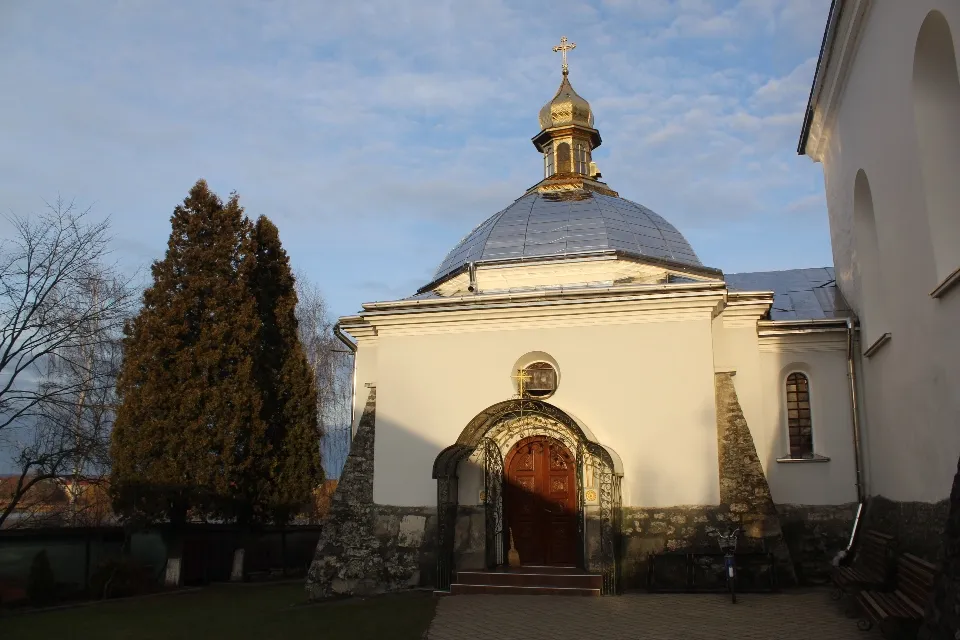
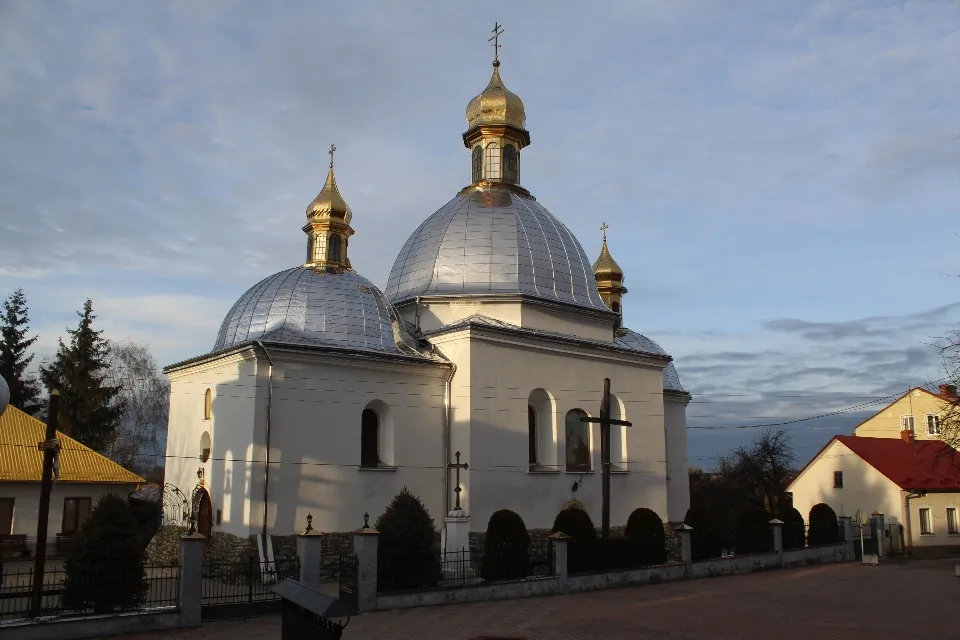
West of Hrabove Lake there is another church – St. Nicholas. There is not much information about it. It was built after 1991 on the site of a medieval church destroyed during the Second World War. At least the surviving bell tower is dated to the 16th century. It is said that in 1655 a thanksgiving Divine Liturgy was served in the St. Nicholas Church after the victory of Khmelnytskyi’s Cossacks over the crown army in the Battle of Horodok.
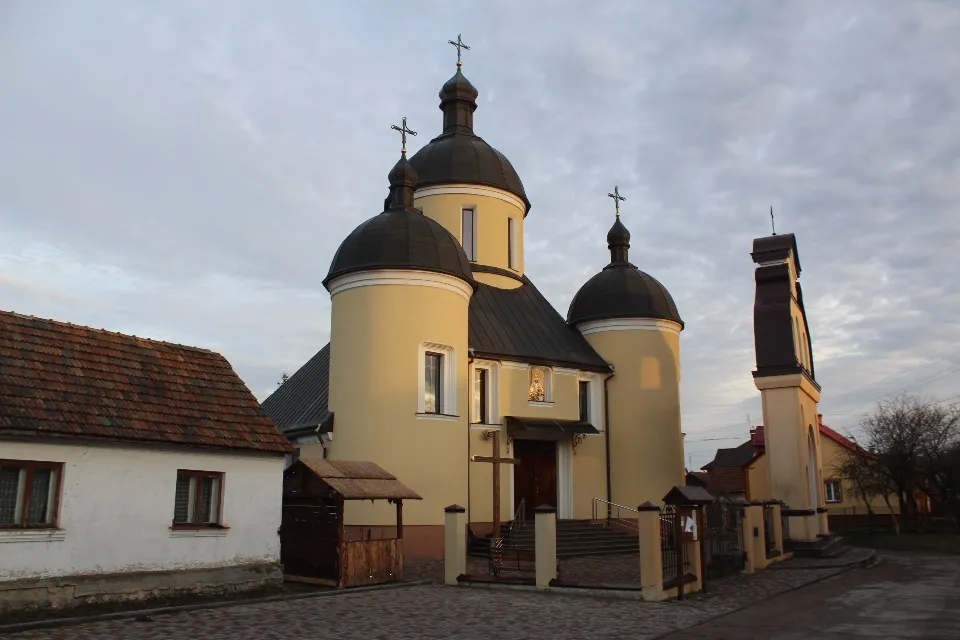
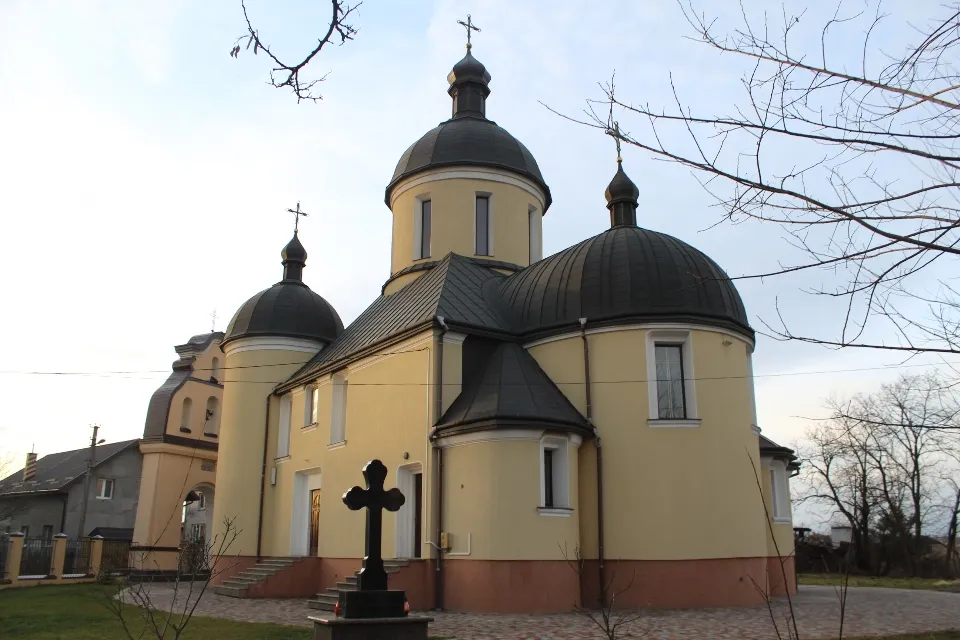
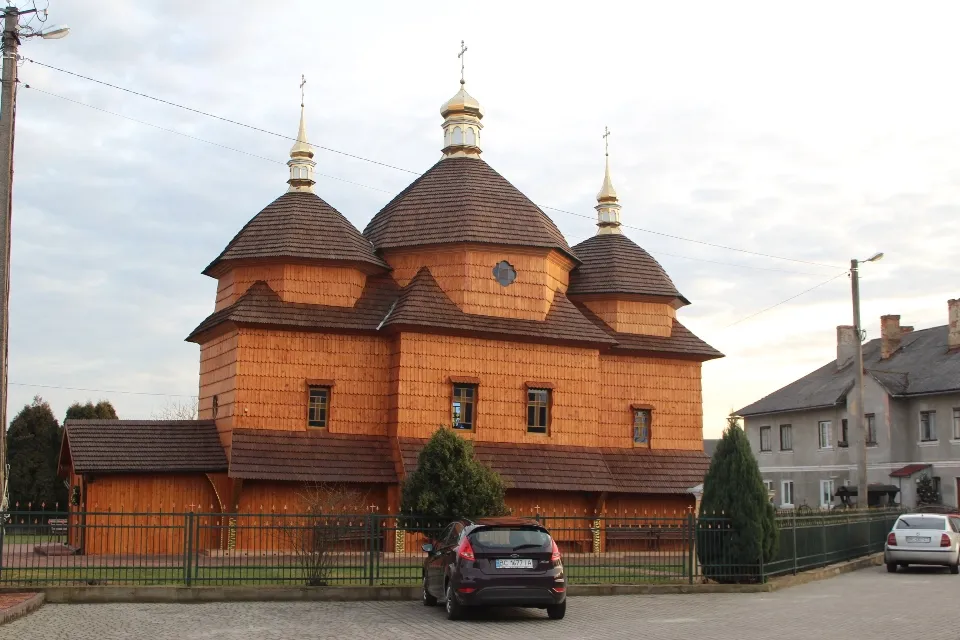
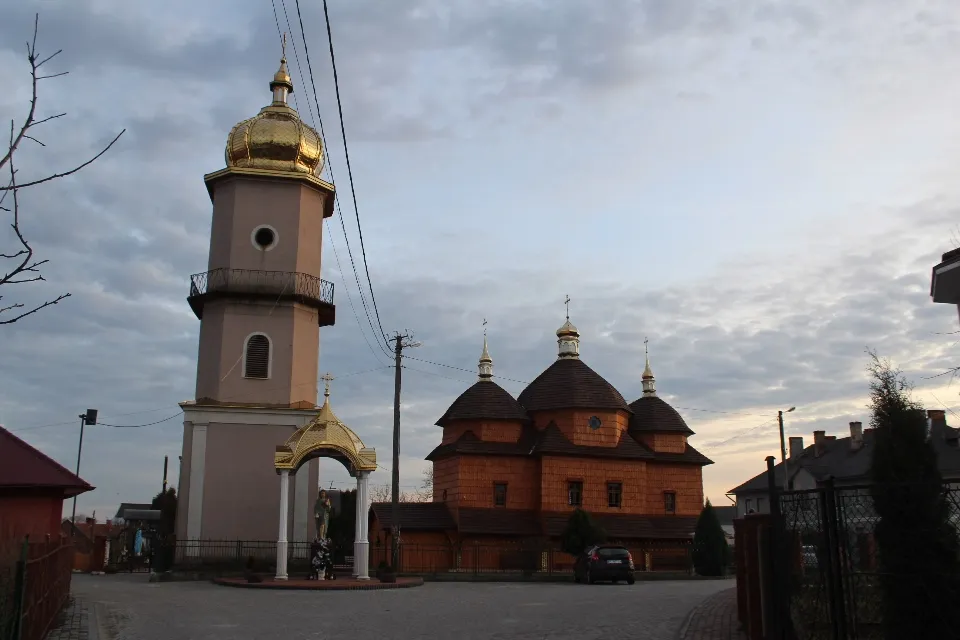
Another curiosity of Horodok is the three-domed wooden Church of St. John the Baptist (1755) west of the town centre. And, O MIRACLE, it is not clad in the traditional Galician plastic… Next to the church stands a masonry bell tower (1863), which is one of the symbols of the Town of Horodok.