

Kochetok

· 9 min read
The lands around the settlement of Kochetok were populated back in the days of the Wild Field. Even before the Belgorod Prikaz was formed, the Putivl stanichniks served here, and in 1571 Prince Mykhailo Tiufiakin and the deacon Matvii Rzhevskyi set up boundary posts along the frontier. The name Kochetok dates from the first half of the 17th century and comes from a well of the same name. After the Cossacks abandoned Chuhuiv and it was settled by servicemen, these lands came to belong to the boyar sons who served in Chuhuiv. According to records of 1647, the land was registered to the boyar sons Fedir Holobok and his 11 comrades (almost like the film, Ocean’s Eleven). The village of Kochetok was founded by them and by the monks of the Volodymyr Hermitage. It was inhabited by the monastery’s peasants, who after its closure in 1787 were reclassified as state peasants. From 1817 Kochetok belonged to the Ukrainian Military Settlement, whose administrative centre was in Chuhuiv.
Kochetok became known throughout Russia after the collegiate councillor Ye. Sledziievskyi opened a hydropathic establishment here in 1846. A very well-known physician in the southern provinces of the Russian Empire, he proposed to General Oleksii Petrovych Nikitin, head of the Ukrainian military settlements, that a medical institution be opened in Kochetok. To prepare for this, in 1845 Sledziievskyi went abroad to study in practice how mineral waters were organised and used under the Priessnitz system. Returning to Kharkiv, the doctor obtained, with Nikitin’s help, permission to open a spa with mineral waters in Kochetok. The establishment operated every year from 15 March to 15 October. At first a few families from the provincial capital Kharkiv came here, along with officers and officials of the Ukrainian military settlements and the local landowners. But word of mouth worked even then. Once military officials from Moscow and St Petersburg began to visit Kochetok, the number of noble families rose sharply.
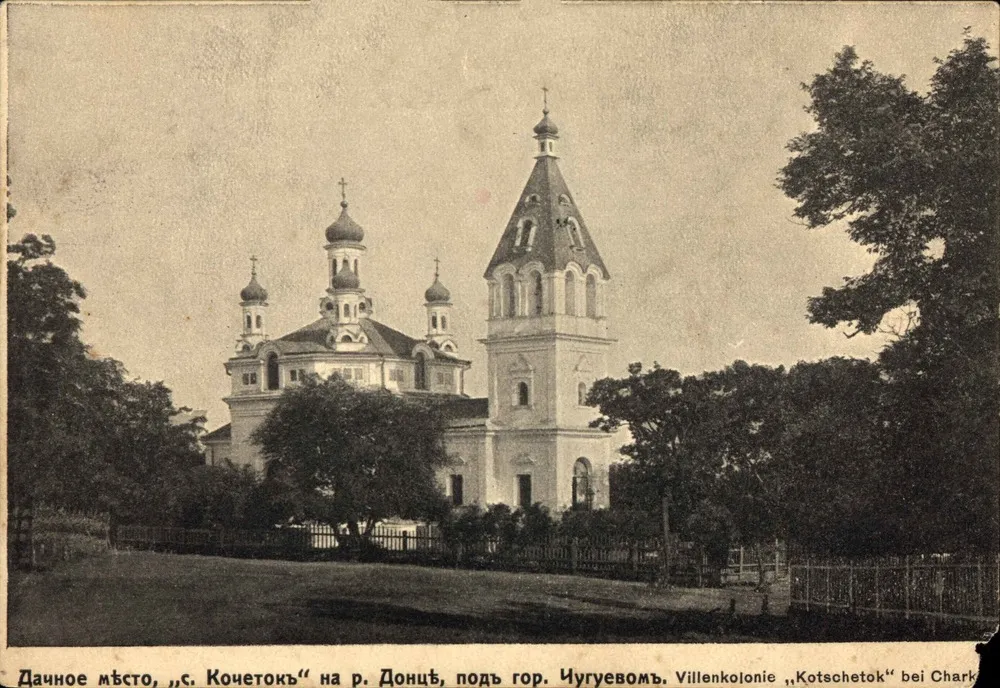
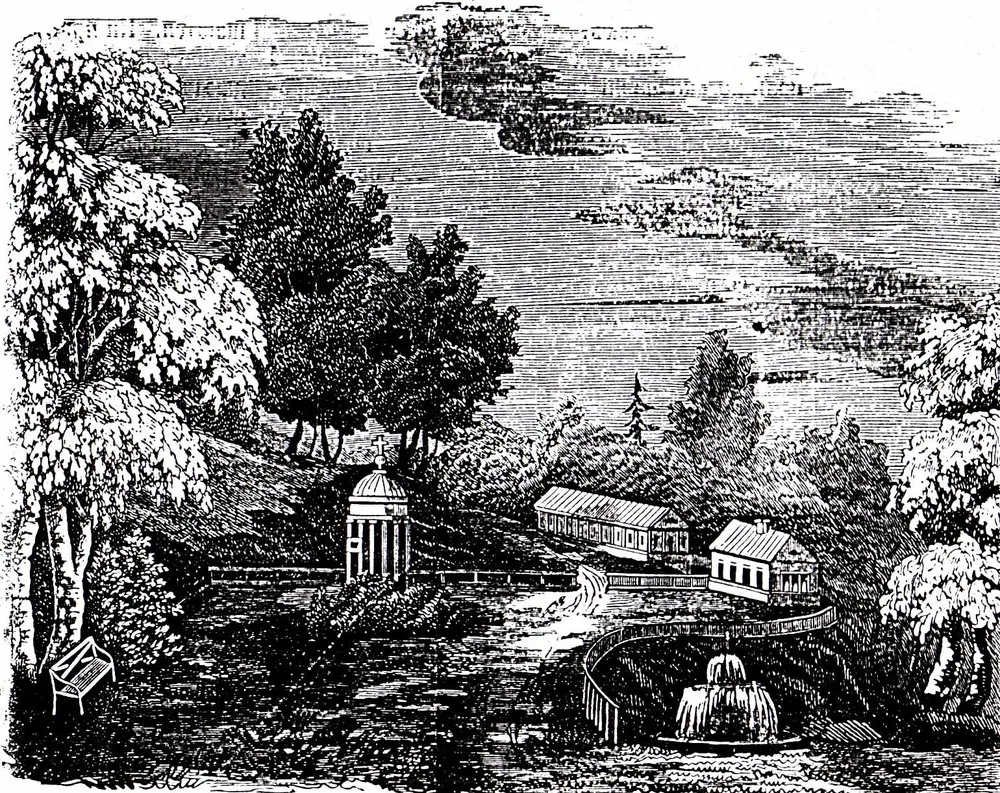
Several wide, almost avenue-like clearings leading to the spring were cut through the forest. Hospitals and bathhouses were built, a whole street of cottages with balconies and verandas was erected, and finally a rotunda was raised with a gallery for two orchestras and a large veranda. Wealthy landowners headed to the spa in the village of Kochetok, and not alone. They brought a whole staff of servants consisting of coachmen, grooms, cooks, hairdressers, governors and tutors of music and singing. Everyone wanted to show off his wealth to the others. Especially prominent among them were Stremoukhov’s string orchestra of 40 people and Fidler’s ball orchestra of more than 50 musicians. The parents of young marriageable girls also counted on a successful acquaintance, a romance and a marriage. Every year the spa season ended with several weddings.
As one of the spa’s visitors wrote in his memoirs: “The cheapness, the convenience of the lodgings, the climate, the picturesque setting, the proximity of Chuhuiv with its splendid society of officers, and finally the daily evenings with dancing in the pavilion and the fireworks – all this attracted clients here.”
The Kochetok spa developed, but after the military settlements were abolished in 1862 its activity declined somewhat: a mass of officers and their families left with their units for new places of service. The situation affected the spa too, which began to be visited by less important officials. Its owners changed often. At the end of the 19th century Old Kochetok and New Kochetok appeared in the vicinity of the village. These cottage settlements were laid out by officials from Kharkiv, and their residents used only the water from the spa and gathered in the evenings for dances and concerts. In the 1880s the Kochetok spa belonged to the noblewoman Maria Zubkova, and at that time many of its buildings began to fall into decay.
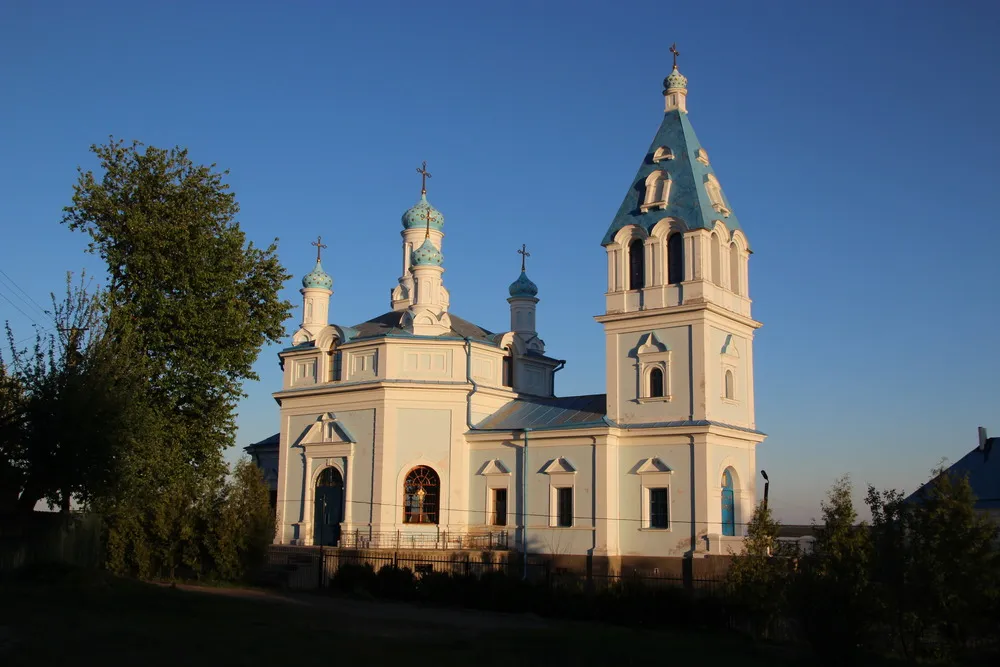
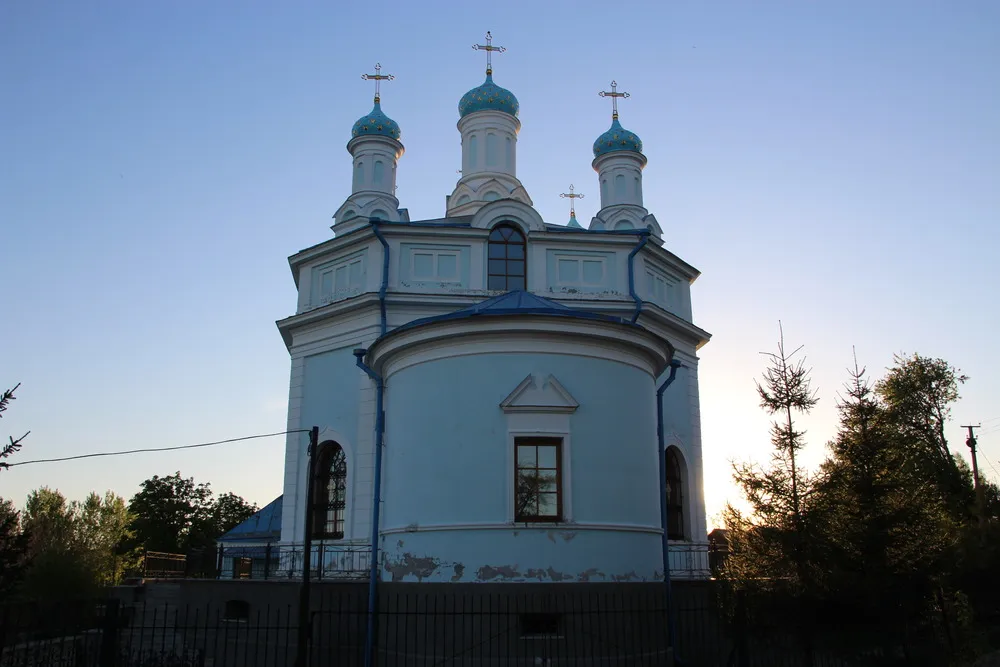
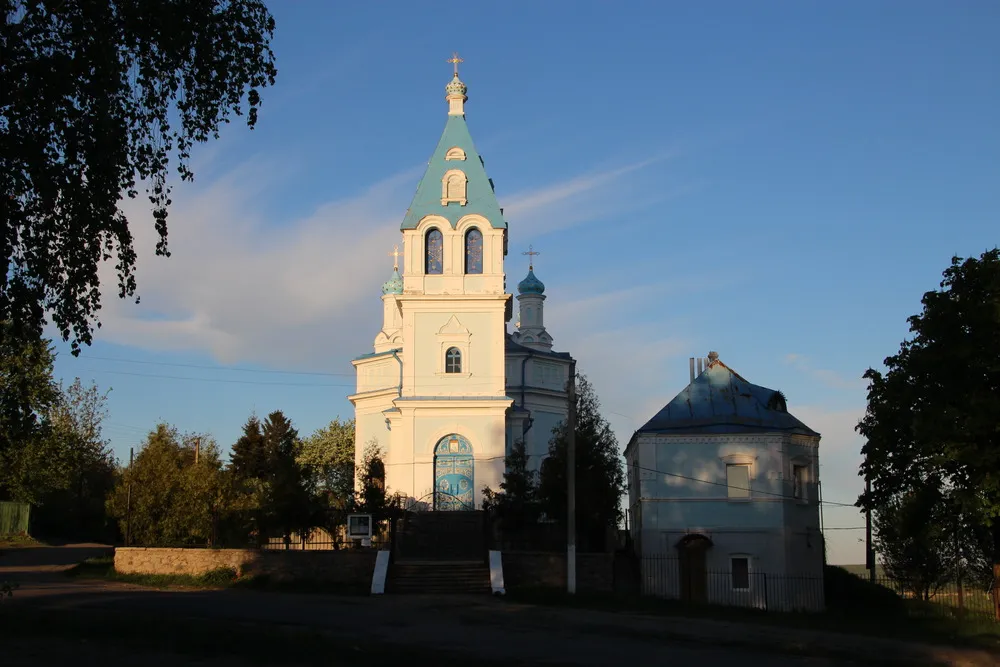
Kochetok has a beautiful church of the Volodymyr Icon of the Mother of God, visible from afar because it stands on a hill. Its history is as follows.
The first wooden church in Kochetok was built by servicemen in the name of the Archangel Michael between 1680 and 1700. In memory of that church, a chapel stood on its site in the 1850s, later moved to the parish cemetery.
A verst from the village, from the end of the 17th century, there was the Volodymyr Hermitage. By decree of Peter I land was allotted to it. Later, in 1730, a decree was signed addressed to Dymytrii, hegumen of the All Saints Monastery, to open a Mother of God monastery. The following year the Mother of God Hermitage was assigned to the Kharkiv College Monastery, from which its superiors were sent. In 1756 permission was given to build a new church on the site of the old one, and a year later it was consecrated. In 1787 the hermitage was closed at the petition of the landowner Major Stremoukhov to Aggei, Bishop of Belgorod; in 1789 the monastery church of the Volodymyr Icon of the Mother of God was permitted to be converted into the village parish church, and the former parish Church of St Michael was abolished. Hieromonk Vikentii from the dissolved monastery became the first priest of the church. Traces of the monastery itself were still visible at the end of the 19th century.
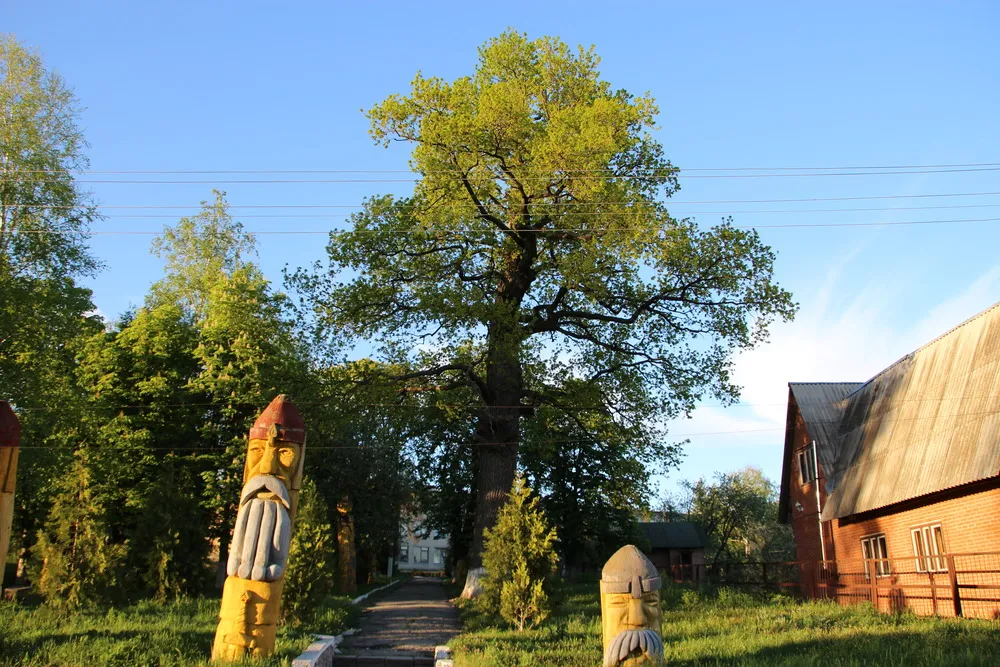
According to the clerical records, the new church in Kochetok was built with the parishioners’ money, but the priest H. Dukov reported that the building was nothing other than the old one renewed, that is, extended with side chapels and given a dome. The wooden bell tower was built in 1818.
In 1847 the commander of the cavalry corps of the Ukrainian Military Settlements appealed to the Archbishop of Kharkiv and Okhtyrka, noting that in the old wooden church in the village of Kochetok there was the miracle-working Icon of the Most Holy Mother of God of Volodymyr, to which a great number of pilgrims came, and that they had decided to raise funds for building a new stone church. The same year the design of the church was approved. The building committee was headed by the chief of the corps staff, Lieutenant General Borshchov. Construction lasted until 1854. Later a bell tower was added to the shrine.
In the early 1860s two wooden chapels were built: one over the spring where, according to legend, the icon of the Mother of God appeared, and the other at the cemetery. In 1884 a parish school was opened. It occupied a rented flat and was maintained at the expense of the priest, Archpriest Oleksii Illarionov, and the parish. A second parish school was opened in 1906, its trustee being Senator Mykola Kostiantynovych Kulchytskyi (formerly trustee of the Petrograd educational district). In addition, in 1903 a trade school for the deaf and mute was founded at the church. In 1910 an iron fence on a brick foundation was built around the church.
Under Soviet rule the church was closed and turned into a grain store. Only in 1984 was the church fully restored, and it was solemnly reopened in 1989. Since then the church has been active and receives parishioners and pilgrims. It has unusual architecture and resembles a fairy-tale palace, richly decorated with eight-pointed stars, various geometric ornaments and arches. In the interior the church is adorned with ancient icons.
The revival of the church is a wonderful example of how this could be done even in Soviet times. Let it take a little time, but we will tell you about it too (based on materials from the website otkudarodom.com)
In the 1960s and 1970s the church was used as a warehouse. According to eyewitnesses: “The walls were so damaged by damp that they looked black, as if burnt. The interior was stripped of its altar screen. Everywhere there were heaps of something resembling chemical fertiliser. No sign of paintings. Not the slightest! Only gloomy vaults, as if charred.”
In the 1980s the head of the Donets water management administration (VUVH Donets) was Mykhailo Nikolaienko, who decided to restore the church using the forces of the enterprise he headed. First, permission was needed to transfer the church building to the enterprise’s balance sheet; it was granted in 1984 by Uvarova, deputy chair of the Kharkiv regional executive committee, on her own responsibility, but even before that the Ukrainian Specialised Scientific Restoration Administration had carried out design and survey work.
During the restoration work, in the church’s basement, in the right corner of its western part under a concrete slab, a crypt with an arched vault about 1.8 m high was discovered. In the crypt was a coffin with the remarkably well-preserved remains of a priest. One of the old-timers said these were the remains of the rector and archpriest of the Nativity-of-the-Mother-of-God church, Oleksii Illarionov. The funeral took place in the winter of 1910, and the priest’s funeral service was held in the Pokrovskyi Cathedral of Chuhuiv, after which he was brought by sledge to Kochetok. Father Oleksii’s remains lay for almost a year in a closed room of the church and only in September 1986 were they reburied in the cemetery.
The crosses for the church were made from sketches by S. L. Komarov, director of the Water Museum, by employees of VUVH and the Chuhuiv fuel equipment plant. The metal for the crosses was delivered from the Donetsk metallurgical plant, and the stars were made at the Elektrotiazhmash plant. For putting the crosses on the church Nikolaienko received a severe reprimand. At the regional party committee, where he was summoned, he argued that an architectural monument must be restored to its original appearance.
In 1986 Nikolaienko was invited to Kyiv to a congress of the Society for the Protection of Monuments. In his speech he handed the presidium photographs of the church before and after restoration and stressed that the crosses were not gilded. P. Tronko, deputy chairman of the USSR Council of Ministers, responded to this, and a week later a car arrived from Kyiv to take the crosses for gilding. By then the scaffolding on the church had already been removed, so the crosses were taken down by Kharkiv mountaineers. Soon restoration artists arrived from Kyiv and began to restore the wall paintings.
After 1991 the time came to restore the bells; they could only be cast in Voronezh at a foundry and machine-building plant. Although orders were booked several years ahead, the director of the plant ceded to VUVH Donets bells from an order intended for Canada. Three bells weighing 248, 140 and 45 kg were transported around the customs post in the Dvorichna district, where the chairman of one collective farm helped, whose silage pits lay beyond the Ukrainian border, on Russian territory. The bells were covered with silage and so delivered to Ukraine.
Many employees of VUVH Donets worked on the restoration of the Volodymyr-Bohorodytsia church. By decision of the trade union committee, each worker put in 40 hours of voluntary Saturday work and donated part of his wages to buy materials needed for the church.
The settlement has a unique Water Museum, created in 1984, which already holds about 2000 exhibits.
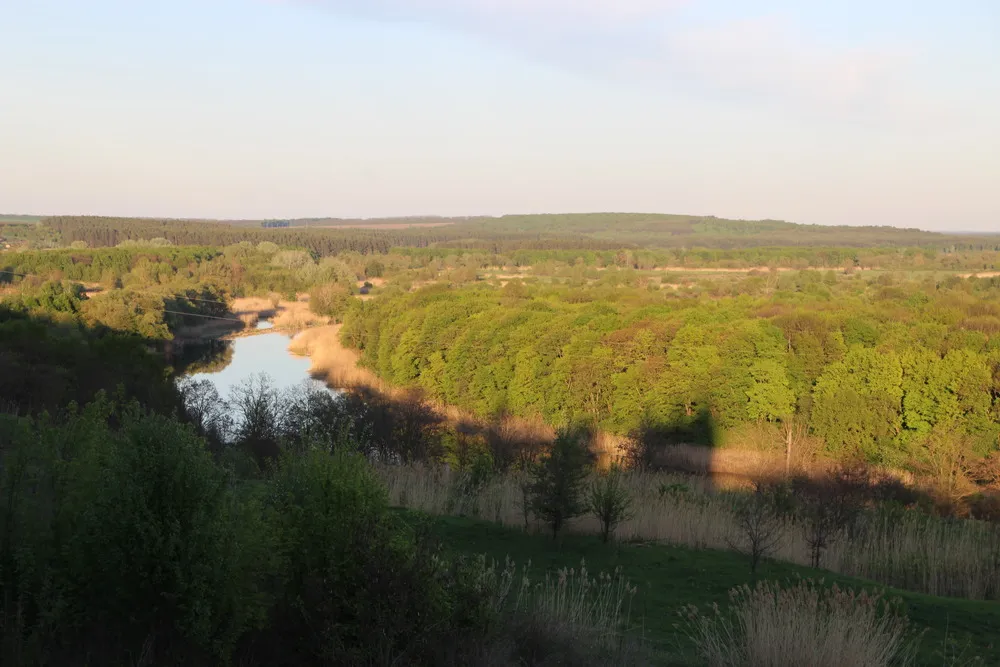
Near the settlement are several nature reserves with picturesque scenery. Ilya Repin painted several studies here for his “Religious Procession in an Oak Forest”.
Text and photos by Ihor Dorozhok, Maksym Nazarenko and Oleh Hodyna.


